

1640–1750
Restoration and the gold of Brazil
On 1 December 1640 Portugal threw off Spanish rule, and João IV took the throne. War with Spain dragged on until the peace treaty of 1668, in which Spain recognised Portugal's independence, and João's daughter Catarina married Charles II of England in 1662. In the next century gold from Brazil paid for João V's vast palace, basilica and convent at Mafra.
4 key moments · 36 in all
The 'Forty Conspirators' storm the Ribeira Palace in Lisbon, arrest the Vicereine Margaret of Savoy and kill her hated secretary of state Miguel de Vasconcelos, whose body is thrown from a window to the crowd. The Duke of Braganza is proclaimed King João IV, ending 60 years of Spanish Habsburg rule. Now a national holiday, it was scrapped in the 2013–2015 bailout years and restored in 2016.
After a siege of more than five months, the Dutch East India Company and its ally Johor capture Malacca, ending 130 years of Portuguese rule over the strategic port that Afonso de Albuquerque had seized in 1511.
Miguel Luís de Menezes, Duke of Caminha, is beheaded in Lisbon's Rossio square for conspiring against King João IV in favour of the Spanish Habsburgs, less than a year after Portugal restored its independence.
Four years into the Restoration War, Matias de Albuquerque's Portuguese army clashes with Spanish forces at Montijo, near Badajoz in Spanish Extremadura (not the Portuguese town across the Tagus from Lisbon). After a chaotic fight both sides claim victory — a fitting start to a war of independence that drags on until 1668.
Manuel Bernardes, Oratorian priest and author of 'Nova Floresta', is born in Lisbon. His devotional prose made him one of the great classics of the Portuguese language.
Portuguese and Brazilian forces defeat the Dutch at the Second Battle of Guararapes in Pernambuco, a decisive victory in the Pernambucan insurrection that helped end Dutch ambitions in colonial Brazil.
During the Portuguese Restoration War, a Spanish army under the Marquis of Viana defeats Portuguese forces led by the Count of Castelo Melhor at the Battle of Vilanova, near the River Minho, going on to capture Monção and other Portuguese strongholds in the months that followed.
Battle of the Lines of Elvas — Portuguese forces under António Luís de Meneses, Count of Cantanhede (later Marquis of Marialva), defeat the Spanish army besieging Elvas, a decisive victory in the Restoration War.
Portugal and the Dutch Republic sign the Treaty of The Hague, under which the Netherlands recognises Portuguese sovereignty over Brazil (formerly Dutch-held New Holland) in exchange for a substantial indemnity, ending decades of colonial conflict.
Catherine of Braganza, daughter of King João IV, marries Charles II of England at Portsmouth. Her dowry includes Bombay and Tangier, and as queen she is credited with making tea-drinking fashionable at the English court.
The Portuguese army achieves a decisive victory at the Battle of Ameixial, in the Alentejo. Commanded by Sancho Manuel de Vilhena, Count of Vila Flor, with an English contingent under Frederick Schomberg, the Portuguese rout the much larger Spanish force of Don Juan José of Austria. Évora, captured by the Spanish weeks earlier, is retaken within days, and the victory turns the Restoration War decisively in Portugal's favour.
At the Battle of Castelo Rodrigo (also known as the Battle of Salgadela), a Portuguese force under Pedro Jacques de Magalhães falls on the Spanish army of the Duke of Osuna, which had been besieging the fortress and its garrison of just 150 men. The Spanish are routed and lose their artillery — Osuna is said to have fled disguised as a monk — ending the invasion of the Beira frontier.
Portugal wins the decisive Battle of Montes Claros, near Borba in the Alentejo, under the command of António Luís de Meneses, Marquis of Marialva. An invading Spanish army under the Marquis of Caracena is destroyed, ending Madrid's hopes of reconquering Portugal and effectively closing the Restoration War.
At the Battle of Ambuíla in northern Angola, a Portuguese force from Luanda under Luís Lopes de Sequeira defeats the army of the Kingdom of Kongo. King António I is killed and beheaded, and the once-powerful kingdom slides into civil war.
Queen Luisa de Guzmán, widow of João IV, dies in Lisbon. Credited, perhaps apocryphally, with urging her husband to take the crown in 1640 because it was better to be queen for a day than duchess for life, she later ruled as regent and helped secure the Bragança dynasty.
Spain formally recognises Portuguese independence through the Treaty of Lisbon, ending the 28-year Portuguese Restoration War.
The Esnoga, the Portuguese Synagogue of Amsterdam, is inaugurated with great ceremony. It was built by a Sephardic community largely descended from Jews who had fled Portugal and its Inquisition, and it is still in use today, lit by candlelight during services.
Jesuit missionary Jerónimo Lobo dies in Lisbon. He had spent years in Ethiopia and in 1629 visited the source of the Blue Nile; an abridged English version of his account, 'A Voyage to Abyssinia' (1735), was the first book published by Samuel Johnson.
Death in Óbidos of Josefa de Óbidos, the Seville-born painter who became one of the very few women to make a professional career in 17th-century European art. Over nearly four decades she produced more than 100 works — luminous still lifes, devotional paintings and altarpieces — most of them signed and dated.
Zumbi, the last leader of the Quilombo dos Palmares — the largest community of escaped slaves in Portuguese Brazil, which held out in the hills of what is now Alagoas for most of the century — is ambushed and killed by colonial forces. Brazil marks the date as its Day of Black Consciousness.
An Omani army lays siege to Fort Jesus, Portugal's stronghold at Mombasa in today's Kenya. The siege lasts 33 months; hunger and disease kill almost all the defenders, and the fort's fall in December 1698 all but ends Portuguese power on the Swahili coast north of Mozambique.
Portugal and England sign the Methuen Treaty in Lisbon. English woollen cloth enters Portugal duty-free, while Portuguese wine pays a third less duty in England than French wine. Dubbed the 'Port Wine Treaty', it fuelled the British taste for port, though critics blamed it for ruining Portugal's own textile industry.
Birth in Coimbra of Carlos Seixas, the outstanding Portuguese keyboard composer of the 18th century. Cathedral organist at 14 and later organist of the royal chapel in Lisbon, he is said to have been sent to Domenico Scarlatti for lessons, only for the Italian to reply: 'You can give me lessons.' Most of his reputed 700 sonatas were lost in the 1755 earthquake.
Birth in Rio de Janeiro of António José da Silva, 'O Judeu' ('the Jew'), whose witty comic operas, performed by puppets at Lisbon's Bairro Alto theatre, made him the most popular playwright of his day. Accused of secretly practising Judaism, he was strangled and burned by the Inquisition at an auto-da-fé in 1739.
Joseph Vaz (José Vaz), a priest from Portuguese Goa, dies in Kandy after more than two decades secretly ministering to the Catholics of Ceylon, who were persecuted under Dutch Calvinist rule. Revered as the 'Apostle of Ceylon', he was canonised by Pope Francis in Colombo in 2015.
Birth at the Ribeira Palace in Lisbon of the Infanta Maria Bárbara, daughter of João V. A gifted keyboard player, she was the only pupil of the Neapolitan composer Domenico Scarlatti, who followed her to Spain when she married the future Fernando VI in 1729 and remained her music master for the rest of his life. She became Queen of Spain in 1746.
Battle of Cape Matapan. A Portuguese squadron under Lopo Furtado de Mendonça, Count of Rio Grande, fights alongside the Venetian fleet and its Papal and Maltese allies against the Ottoman navy off the southern tip of the Peloponnese. Sent in answer to Pope Clement XI's appeal for aid, the squadron bore the brunt of the fighting and raised King João V's standing with the Holy See.
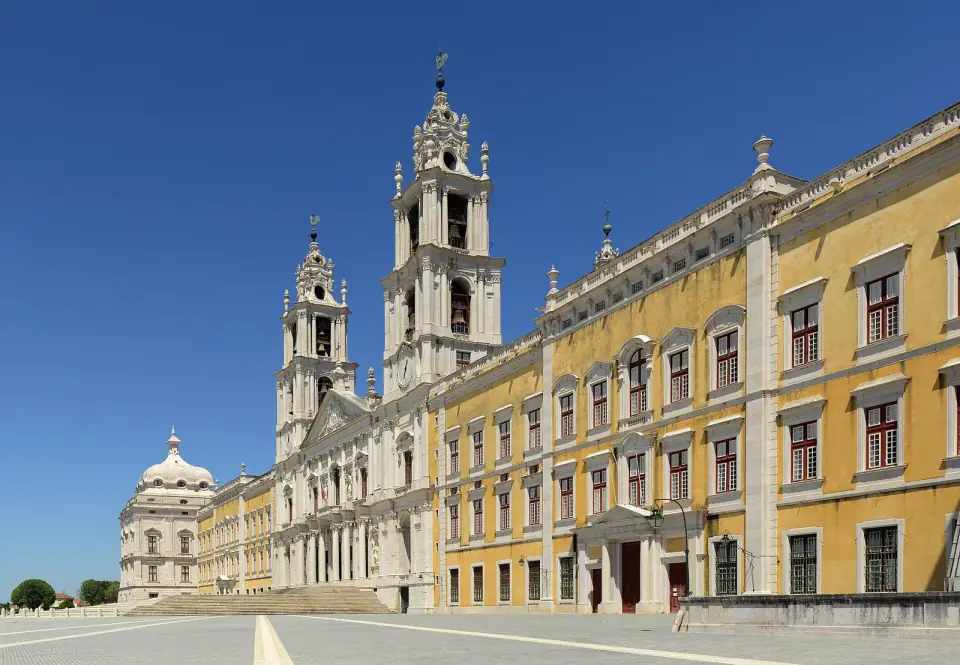
King João V lays the foundation stone of the Palace-Convent of Mafra, fulfilling a vow made for the birth of an heir. Paid for with Brazilian gold and raised by tens of thousands of workers, the vast Baroque complex was consecrated in 1730 and later inspired Saramago's 'Memorial do Convento'.
Death at the Convent of the Conception in Beja of Sister Mariana Alcoforado, 83, the nun traditionally identified as the author of the 'Letters of a Portuguese Nun', five anguished love letters to a French officer published in Paris in 1669. Whether she wrote them is still debated, but they became a European classic.
On his forty-first birthday, João V attends the consecration of the basilica of the Palace-Convent of Mafra, begun in 1717 and traditionally said to fulfil the king's vow for an heir. The vast building was paid for with gold from Brazil.
Birth in Coimbra of Joaquim Machado de Castro, Portugal's leading sculptor of the 18th century. His masterpiece, the bronze equestrian statue of King José I unveiled in 1775, still presides over the rebuilt Praça do Comércio — the symbolic centrepiece of Pombal's Lisbon after the earthquake.
In the early hours, lightning strikes the castle keep of Campo Maior in the Alentejo, which was being used as a gunpowder magazine holding some 6,000 arrobas (around 90 tonnes) of powder. The explosion and fire kill about 800 people and destroy roughly two-thirds of the town's buildings.
Diogo Inácio de Pina Manique is born in Lisbon. As Intendant-General of Police under Queen Maria I he introduced public street lighting and modern policing to Lisbon and founded the Casa Pia in 1780 to educate orphaned and abandoned children.
Maria Francisca, the future Maria I, is born at the Ribeira Palace in Lisbon. She became Portugal's first undisputed queen regnant in 1777, but by 1792 she was deemed insane — George III's doctor, Francis Willis, was summoned from London to treat her — and her son João ruled as regent.
The playwright António José da Silva, known as 'o Judeu', is sentenced as a relapsed Judaiser at an auto-da-fé in Lisbon's São Domingos church, then garrotted and his body burned. Born in Rio de Janeiro, he wrote comic operas for puppets that were staged with great success at the Bairro Alto theatre.
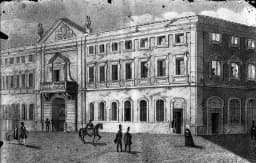 Long readThe Inquisition condemns 'o Judeu', Lisbon's comic playwright, in 1739
Tomás António Gonzaga, poet of 'Marília de Dirceu' and later a conspirator in Brazil's Inconfidência Mineira, is born in Porto. Exiled to Mozambique for his part in the plot, he died there in 1810.
Back to the full timeline of Portugal, with key moments, search and long reads.