

António Mega Ferreira and Expo '98: how Lisbon rebuilt its eastern riverside
A journalist and a poet had the idea over lunch in 1989. Nine years later Lisbon opened a world exposition on the oceans on land that had held a refinery, a slaughterhouse and a rubbish tip, and it left the city a new district and a large bill.
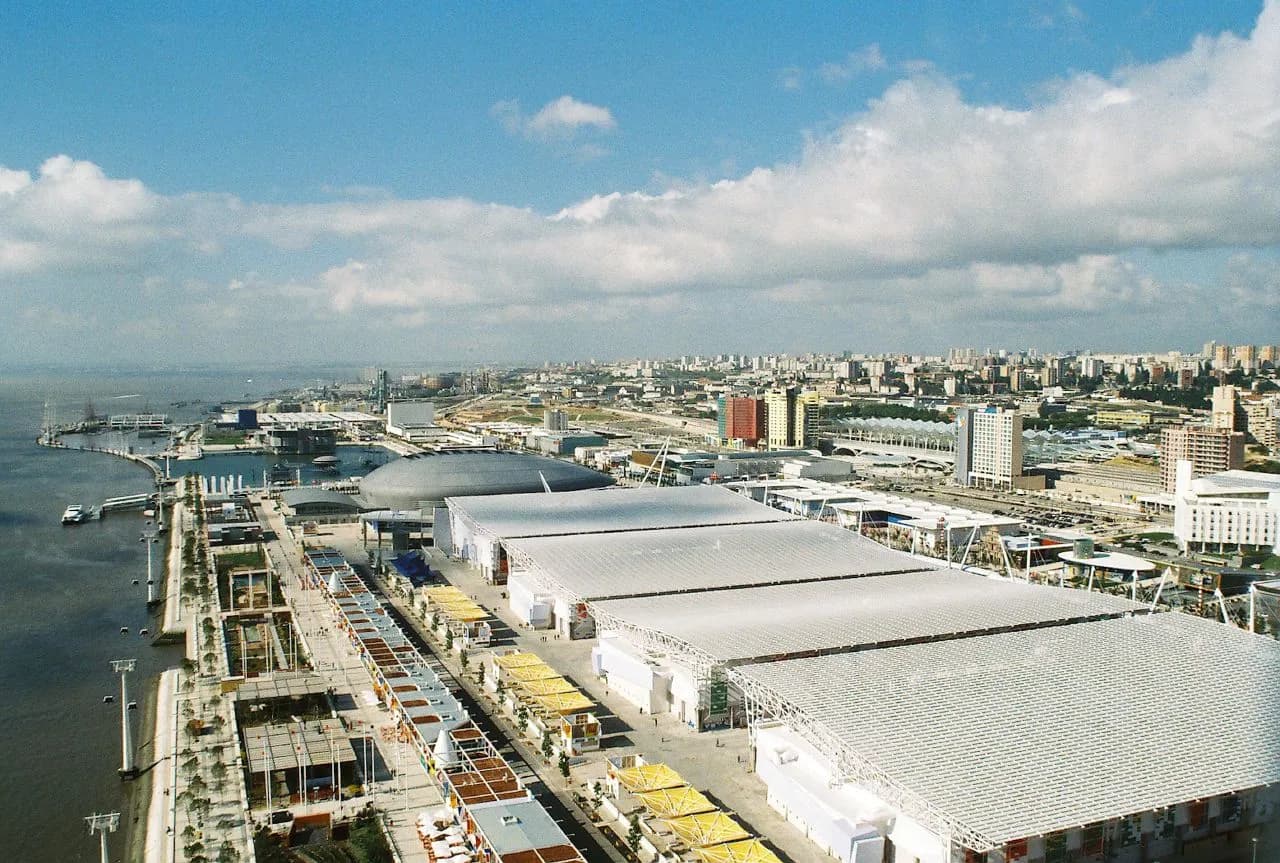
At a glance
- António Mega Ferreira, journalist, writer and cultural manager, died in Lisbon on 26 December 2022, aged 73. He is often called the father of Expo '98.
- He and the poet Vasco Graça Moura had the idea for a world exposition in 1989, while working for the national commission for the anniversaries of the Portuguese Discoveries. Lisbon beat Toronto for the event on 23 June 1992.
- Expo '98 ran from 22 May to 30 September 1998 on the theme of the oceans, marking 500 years since Vasco da Gama reached India. Organisers announced 10,023,759 visitors; the Tribunal de Contas counted 9,755,658 entries, against 15 million expected.
- The state company Parque Expo cleared a strip of eastern riverside of 330 to 340 hectares, once home to a refinery, fuel depots, a slaughterhouse and a landfill, and built what is now the parish of Parque das Nações.
- The Tribunal de Contas put the project's cost to the end of 1998 at about 421 million contos (about €2.1 billion), with a shortfall of 238.2 million contos. Mega Ferreira later ran Parque Expo and, from 2006 to 2012, the Centro Cultural de Belém.
A wake at the Teatro Camões
On the evening of Tuesday 27 December 2022, the Teatro Camões in Parque das Nações opened its doors for a wake. The theatre stands on Lisbon's eastern riverside, in a district that 30 years earlier had held oil tanks and a slaughterhouse. The man in the coffin had done as much as anyone to put it there.
António Mega Ferreira had died in Lisbon the day before, Monday 26 December, aged 73. The news agency Lusa had it from a source close to him. His funeral was held at the same theatre on the Wednesday afternoon, followed by cremation at the Olivais cemetery nearby.
The tributes came from the top of the state. President Marcelo Rebelo de Sousa called him one of the most dynamic figures in Portuguese culture of the past half-century. The Culture Minister, Pedro Adão e Silva, spoke of an extraordinary public intellectual and a brilliant cultural manager. The Prime Minister, António Costa, wrote about the Expo.
“He dreamed up Expo '98 and made it happen. Not as an event, but as a new part of the city he loved.”
A journalist from the Mouraria
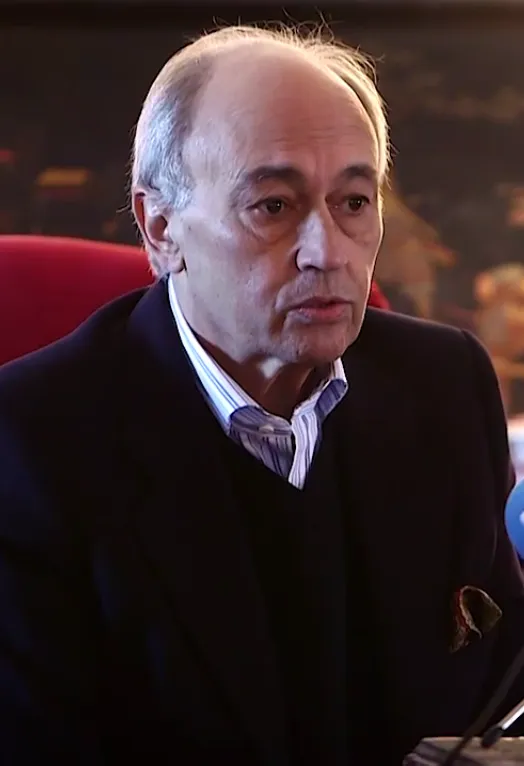
António Taurino Mega Ferreira was born on 25 March 1949 in the Mouraria, the old quarter below Lisbon's castle, where he grew up. His father, a republican opponent of Salazar, kept a stationer's shop in the Baixa and chose his son's first names by joining those of the two grandfathers. António studied law at the University of Lisbon, and his father's death in 1969 sent him out to work, first translating the foreign press for the dictatorship's information office.
In 1972 he went to Manchester to train as a journalist. He worked on the opposition paper Comércio do Funchal before the revolution of 25 April 1974; after it he served in the offices of two ministers of the provisional governments, then joined the new evening paper Jornal Novo, worked at the weekly Expresso until 1978, at the news agency ANOP (the forerunner of Lusa), at the state broadcaster RTP and at O Jornal. He ran the newsroom of JL, the arts fortnightly Jornal de Letras, Artes e Ideias.
He also wrote: his first work of fiction, O Heliventilador de Resende, came out in 1985. Then, in 1988, the poet and translator Vasco Graça Moura invited him to work at the National Commission for the Commemoration of the Portuguese Discoveries, the state body for the fifth centenaries of the Portuguese voyages. Graça Moura presided over the commission and was also Portugal's commissioner for the Seville Expo of 1992.
An idea over lunch, a vote in Paris
The idea, as both men later told it, came up at lunch in 1989, at the Martinho da Arcada, the old café under the arcades of the Praça do Comércio. Portugal would hold a world exposition in 1998, the 500th anniversary of Vasco da Gama's arrival in India.
Da Gama's fleet had left Belém on 8 July 1497 and reached Calicut, in India, on 20 May 1498. The opening date of 22 May 1998 fell two days after the quincentenary. The theme chosen for the fair looked forward rather than back: “The Oceans, a Heritage for the Future”. The United Nations, at the initiative of the Intergovernmental Oceanographic Commission, had proclaimed 1998 the International Year of the Ocean.
Aníbal Cavaco Silva's government backed the plan, and Mega Ferreira chaired the committee that promoted the bid. Lisbon's rival was Toronto. On 23 June 1992 the Bureau International des Expositions, the Paris body that sanctions world fairs, chose Lisbon. The press later called Mega Ferreira “o pai da Expo-98”, the father of Expo '98.
1988
Graça Moura invites Mega Ferreira to the Discoveries commission
1989
The two men propose a world exposition for 1998
End of 1990
The eastern riverside is chosen over Belém and the south bank
23 June 1992
The BIE picks Lisbon over Toronto
23 March 1993
The state company Parque Expo 98 is created
29 March 1998
The Vasco da Gama Bridge opens
19 May 1998
Gare do Oriente opens
22 May 1998
Expo '98 opens
30 September 1998
Expo '98 closes
2000
The Tribunal de Contas publishes its audit
8 November 2012
A new law creates the parish of Parque das Nações
30 September 2014
Parque Expo's liquidation formally begins
26 December 2022
Mega Ferreira dies in Lisbon
Lisbon's back yard
Three sites were studied for the fair: the western riverfront from the Torre de Belém towards Santo Amaro, near the site of the 1940 Exposição do Mundo Português; the south bank at Caparica; and the eastern riverside around the Olivais dock. Caparica was ruled out because the Expo had to be in Lisbon. At the end of 1990 the government chose the east, an area regarded, one study says, as Lisbon's “lixo”, its rubbish dump.
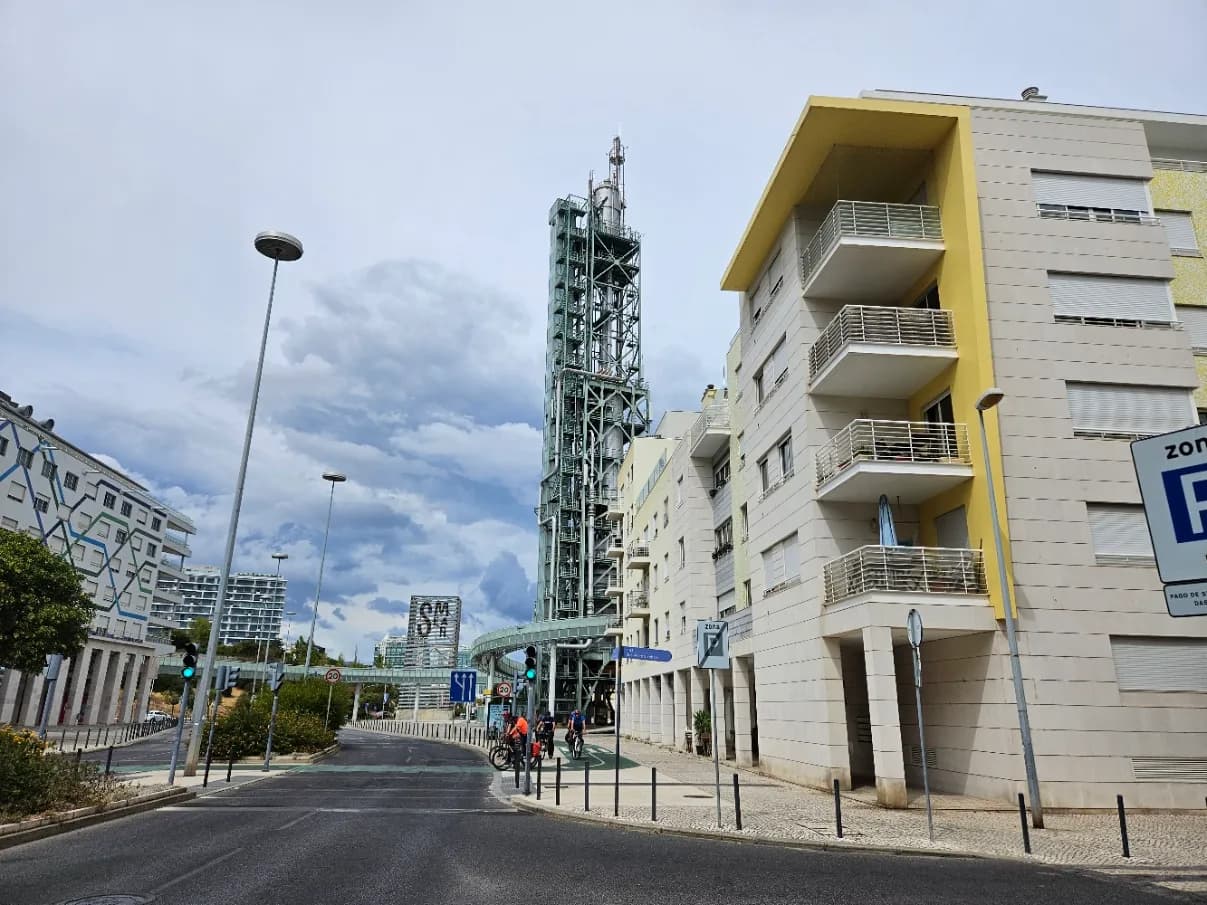
The Olivais dock had been built in the 1940s for the seaplanes that crossed the Atlantic. By the early 1990s the land between Cabo Ruivo and the mouth of the river Trancão was derelict and polluted. The oil refinery at Cabo Ruivo, where Portugal had begun refining petroleum, still had its tall Petrogal tower. Beside the Beirolas military depot stood a slaughterhouse, and the Trancão was a dead river with a nauseating smell.
Before anything could be built, the land had to be emptied. The list of what was removed includes the slaughterhouse, the refinery and its fuel depots, old military stores, scrap dealers, more than 15,000 damaged shipping containers, a shanty area with hundreds of residents and the Beirolas landfill. The residents were moved and rehoused. The soil was decontaminated and the Trancão cleaned up.
The government set up a company to do the job. Parque Expo 98, created by decree on 23 March 1993 with capital wholly owned by the state, was to design, build, run and finally dismantle the exposition, and to redevelop the surrounding zone. The plan had three stages: build from 1993 to 1998, hold the fair in 1998, then sell and develop the land until 2010.
Sources give different sizes, depending on what they measure. The intervention zone ran along about five kilometres of river and covered 330 hectares by one planner's count and 340 by others. The exhibition grounds inside it are given as anything from 25 to about 70 hectares: 25 was the first plan and the limit for a specialised expo, Portugal negotiated 60, and others give 50 or 70. The zone was planned for 25,000 residents and 20,000 jobs, so that the Expo's buildings would have a use once the visitors had gone.
Mega Ferreira sat on Parque Expo's first board, appointed in April 1993. He ran the area the company called Promark: the Expo's identity, contents, cultural and sports programme, marketing, sponsorship and ticketing. He also chaired the companies that would build and run the Oceanário and the big multi-purpose pavilion, and was the Expo's executive commissioner. The board's president, and the Expo's commissioner-general, was the engineer António Cardoso e Cunha. In February 1997 a new board took over under José Torres Campos, who also succeeded him as commissioner-general.
Only Mega Ferreira and one other director, António Manuel Pinto, kept their seats. Twenty years later he gave the credit elsewhere. Speaking about Cardoso e Cunha in 2018, he said: “Sem ele, a Expo não teria sido possível”. Without him, the Expo would not have been possible.
Buildings meant to last
The planners took Barcelona's redeveloped port as their model, not Seville's Expo '92, which the architect Norman Foster had called “the Jungle of Buildings”. Lisbon's main buildings were designed as public facilities for the district that would follow, and most of them are still in use.
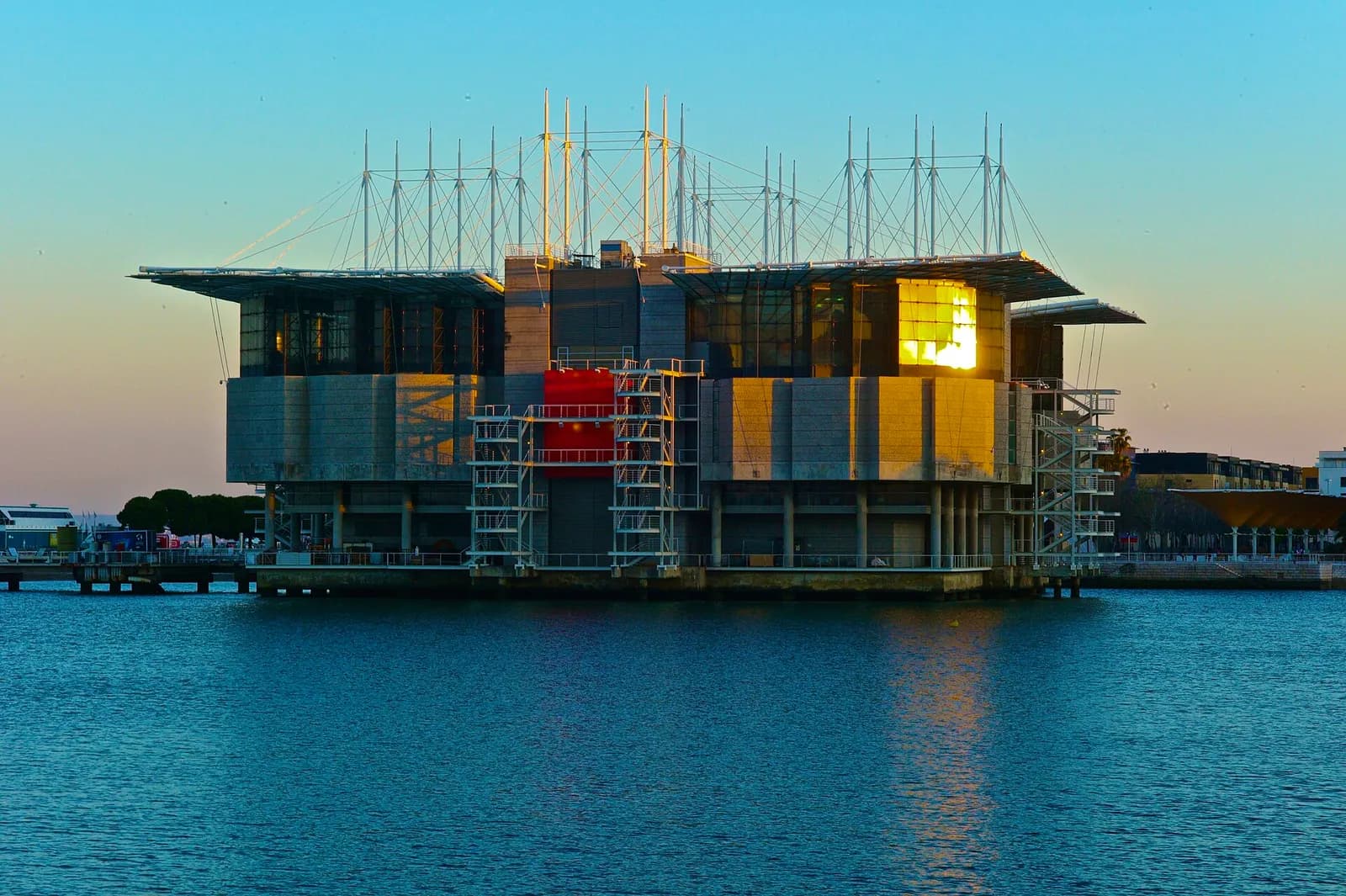
The Oceanário was the Expo's Oceans Pavilion. A team from Cambridge Seven Associates led by the American architect Peter Chermayeff designed it to stand in the water like an island or an anchored ship, and the Portuguese builder Engil put it up. Its main tank holds about 5 million litres, with four habitats around it: the North Atlantic, the Antarctic coast, the kelp forests of the temperate Pacific and the tropical Indian Ocean. It reopened as a permanent aquarium in October 1998.
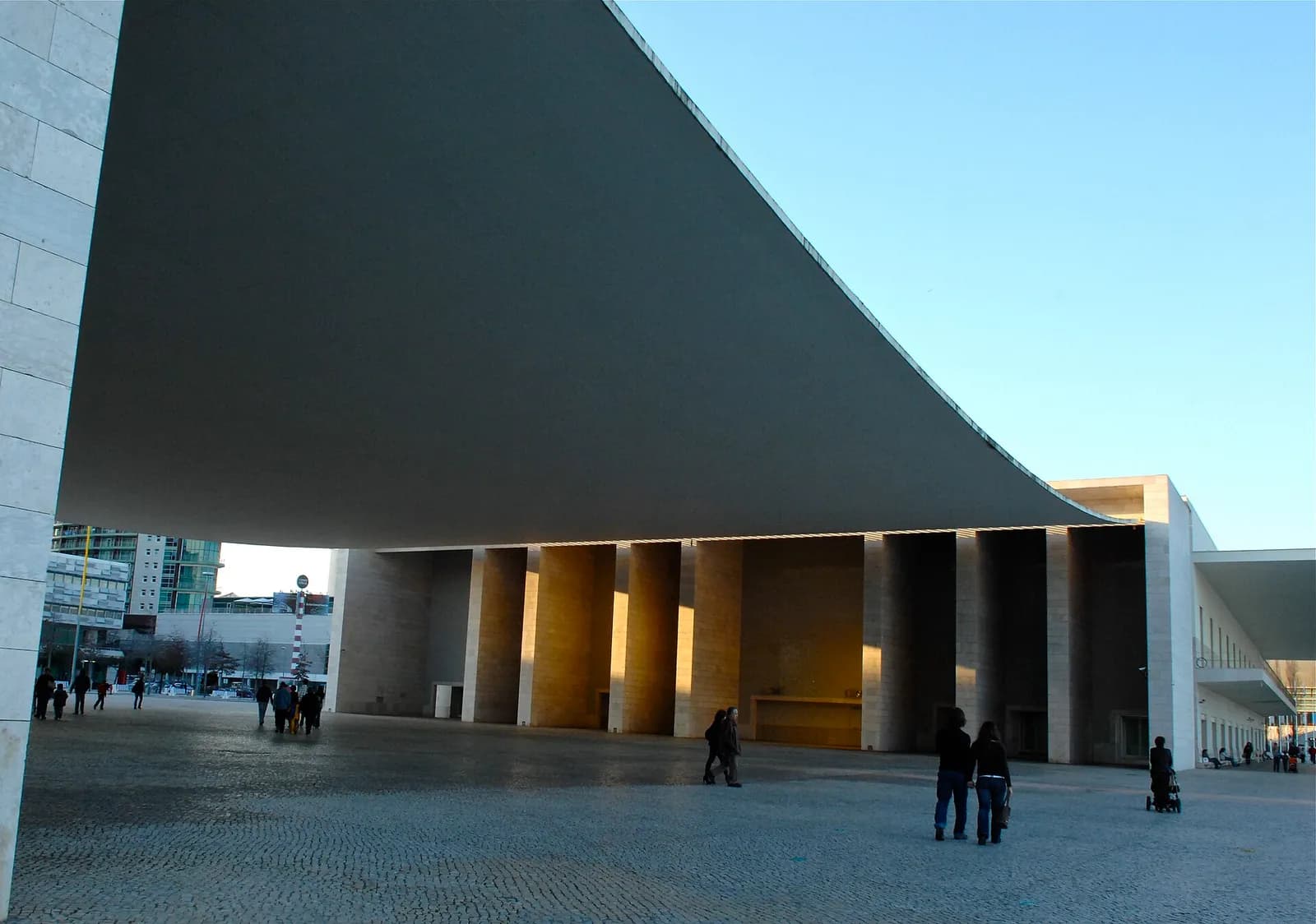
Álvaro Siza Vieira designed the Pavilhão de Portugal, the host country's pavilion. Its ceremonial square is covered by a single canopy of prestressed concrete, and the building won the Valmor architecture prize. After years of neglect, when Siza himself said demolition was the logical option, the University of Lisbon took it over in 2015 and reopened it in 2025.
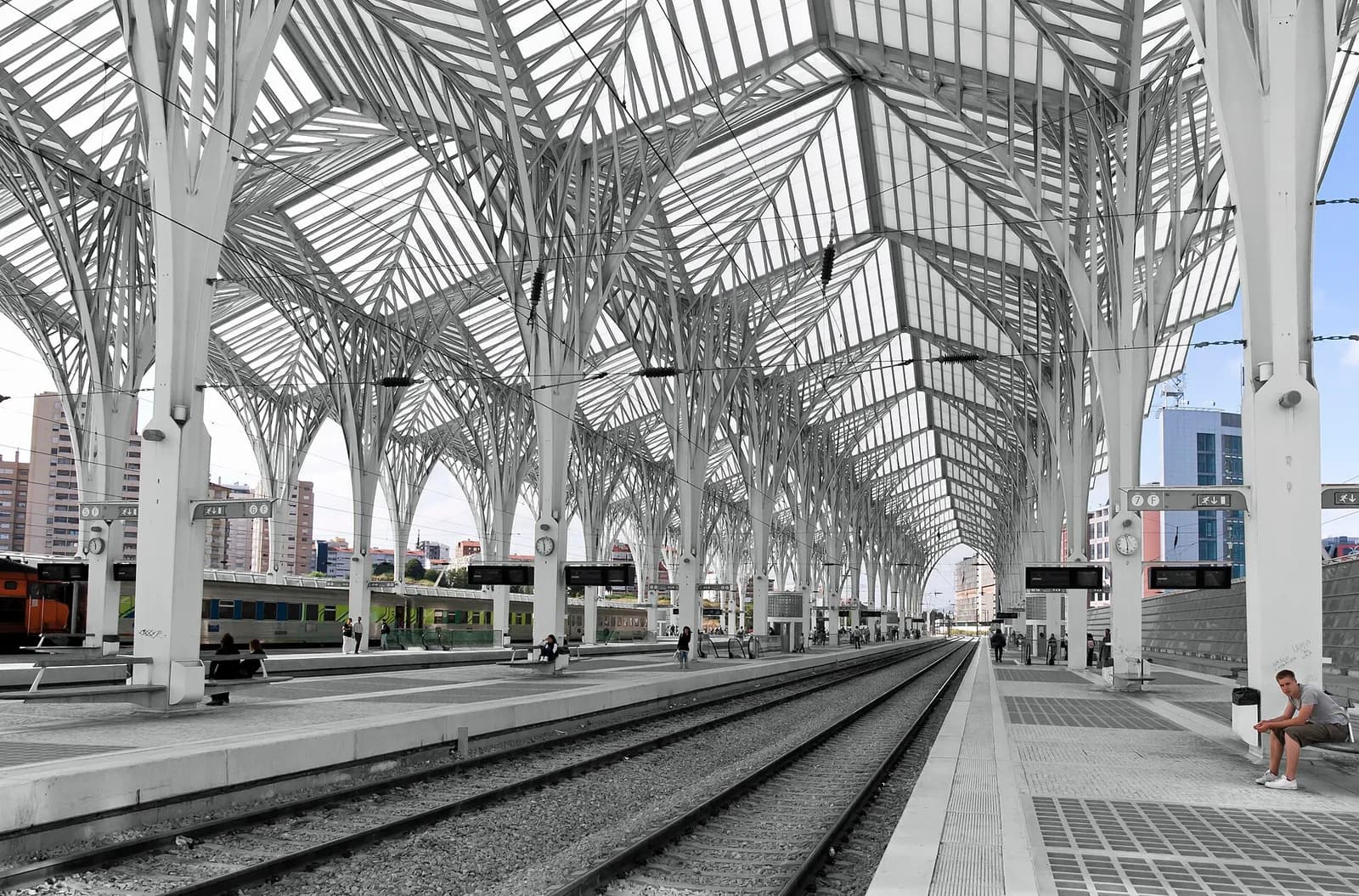
The Expo also paid for transport that the eastern city had lacked. A new metro line with seven stations reached the site. Santiago Calatrava's Gare do Oriente, opened on 19 May 1998, put trains, metro and buses under one roof; by 2018 more than 150,000 people a day used it. The Vasco da Gama Bridge across the Tagus estuary opened on 29 March 1998, after 37 months of work.
The bridge had its own financing. The main bridge and its viaducts are 12.3 kilometres long, and the whole crossing, with the access roads at each end, is 17.2 kilometres. It cost nearly €900 million: €319 million from the EU's Cohesion Fund and €299 million lent by the European Investment Bank, with €50 million raised from tolls on the older 25 de Abril Bridge.
| Building | Architect | In 1998 | Afterwards |
|---|---|---|---|
| Oceanário de Lisboa | Peter Chermayeff (Cambridge Seven Associates) | Oceans Pavilion | Public aquarium since October 1998, extended in 2011 |
| Pavilhão de Portugal | Álvaro Siza Vieira | Host country's pavilion | University of Lisbon since 2015; library and study rooms from 2025 |
| Pavilhão da Utopia | Regino Cruz | Expo pavilion | Renamed Pavilhão Atlântico; now a concert and events arena |
| Gare do Oriente | Santiago Calatrava | Rail, metro and bus station for the Expo, opened 19 May 1998 | Portugal's busiest station by passengers in 2018 |
The Pavilhão do Conhecimento, the Teatro Camões, the Torre Vasco da Gama and the cable car also stayed in use after the Expo.
Four months by the river
The Expo opened on 22 May 1998, on the date planned. President Jorge Sampaio received 3,900 official guests on the first day, and more than 100,000 people came that weekend. A day ticket cost 5 contos, 5,000 escudos or about €25. The mascot was Gil, named after the fifteenth-century navigator Gil Eanes and drawn from a design chosen in a competition among schools.
Counts of participants vary with who is counted. Lusa gives 143 countries and 14 international organisations; the BIE and a 2018 study list 146 countries; the Tribunal de Contas wrote of about 160 countries and organisations. About 5,000 musical events were staged, and more than 1.3 million people went aboard the frigate D. Fernando II e Glória and the sail training ship Sagres at the nautical exhibition.
- Dates
- 22 May to 30 September 1998
- Theme
- The Oceans, a Heritage for the Future
- Occasion
- 500 years since Vasco da Gama reached India (20 May 1498)
- Participants
- 143 to 146 countries, plus international organisations
- Visitors
- 10,023,759 announced by the organisers; 9,755,658 entries recorded by the Tribunal de Contas
- Last night
- 386,308 people on site, 215,198 of them arriving after 8 pm
The crowds were real, but smaller than planned. In 1997 the fair was expected to draw about 15 million visitors. At the close the organisers announced 10,023,759. The Tribunal de Contas, auditing the company's own entry records, found 9,755,658 entries between 22 May and 30 September. It called them 62 per cent of the most cautious forecast in the attendance studies Parque Expo had commissioned, and 4,567,128 short of forecasts, two figures that do not quite agree.
Expo '98 visits: expected and counted
visits
Expected: about 15 million, United Nations press release, August 1997. Announced total: organisers' figure reported by Lusa. Entries recorded: Tribunal de Contas audit, 22 May to 30 September 1998. The auditors did not publish the most cautious forecast itself, and the two ways they described the shortfall imply different figures, so it is not shown.
Show the data
| Visits | |
|---|---|
| Expected (1997) | 15,000,000 |
| Announced total | 10,023,759 |
| Entries recorded | 9,755,658 |
In June 1998, a few weeks into the fair, Mega Ferreira told Lusa what he thought its lesson was. He borrowed a slogan of the Maoist MRPP, which had attracted him as a law student before 1974: “ousar lutar, ousar vencer”, dare to struggle, dare to win.
The fair ended on the night of 30 September with shows that ran until sunrise. That last night, 386,308 people were on the site, more than half of them arriving after eight in the evening. In October the Oceanário reopened as a permanent aquarium, and Parque Expo turned to selling the land around it.
The bill and the debts
In 2000 the Tribunal de Contas, Portugal's court of auditors, published its audit of the project from 1993 to 1998. Its first conclusion was a compliment. Its next were less comfortable.
“Holding the Lisbon World Exposition of 1998 was a remarkable national success, despite the constraints and limitations that came from scant experience of running an event of this size and complexity.”
By the auditors' count, the whole project, including construction, access roads, shows, accommodation, promotion and green spaces, had cost about 421 million contos by the end of 1998, roughly €2.1 billion. Revenue over the same years came to about 183.2 million contos, which left a gap of 238.2 million contos, or about €1.19 billion at the euro's fixed rate of 200.482 escudos.
| Item | Million contos |
|---|---|
| Investment spending (Parque Expo, group companies and works for third parties) | 351.6 |
| Running costs of Parque Expo and group companies | 25.6 |
| Interest on loans | 40.4 |
| Assets awaiting invoices in the 1998 group accounts | 3.8 |
| Total spending | 421.4 |
| Revenue, 1993 to 1998 | 183.2 |
| Shortfall at the end of 1998 | 238.2 |
A conto was 1,000 escudos. The auditors rebuilt these figures from the accounts of Parque Expo and the companies it controlled. Revenue includes 17.5 million contos of share capital paid in by the state and EU grants; ticket sales brought in about 31.3 million contos and sponsorship about 10.2 million.
Most of the money had been borrowed from banks with state guarantees, and the land sales meant to repay it were planned for 1999 to 2010. At the end of 1998, with negative equity, the company was “tecnicamente falida”, technically bankrupt. Even if every planned property sale went through, the auditors calculated a remaining gap of about 96.6 million contos, before counting any investment, running costs or interest after 1998.
The audit also found waste. The works contracts it examined, worth 34.3 million contos when signed, ended up 85.7 per cent over, through 26.7 million contos of extra work and 2.6 million in bonuses and surcharges paid to builders to finish on time. The attendance forecasts had led to car parks that were too big and hotel ships that were barely used, and the accommodation business lost about 5.67 million contos.
Expo '98 project to the end of 1998
million contos
Figures from the Tribunal de Contas audit report no. 43/2000, covering 1993 to 1998. One million contos was 1,000 million escudos, about €5 million.
Show the data
| Million contos | |
|---|---|
| Total spending | 421.4 |
| Revenue | 183.2 |
| Shortfall | 238.2 |
The state stepped in. In 1999 it signed a programme contract with the company, agreeing to raise its capital in stages to 55 million contos and to take over 40 million contos of guaranteed loans. A company owned by the state holding Partest bought the Pavilhão de Portugal, the Pavilhão do Conhecimento and the Teatro Camões for about 13.5 million contos.
Parque Expo carried on for years, managing the district and selling land. In December 2010 its debt stood at €224.9 million, and in 2011 the PSD-CDS coalition government announced it would be wound up. The liquidation began formally on 30 September 2014. In 2018 the last of its assets, including the marina and the cable car, passed to the state and to Lisbon City Council. Winding it up cost 161 jobs.
After the Expo
Mega Ferreira stayed with the project after the gates closed. He was president of Parque Expo from 1999 to 2002, when the auditors were going through its books and the company was beginning to sell the land. In 1998 he received the Grand Cross of the Military Order of Christ, and in 2003 Lisbon City Council gave him its Medal of Honour.
He had created and edited the books magazine Ler for the book club Círculo de Leitores, and in 1997 he led Portugal's programme as guest country at the Frankfurt Book Fair. From 2006 to 2012 he was president of the Centro Cultural de Belém, the state arts centre in Belém. His years there were not easy: the CCB lost its Festa da Música, replaced in 2007 by the Dias da Música, and gave up its exhibition centre to the Berardo collection museum.
Later he became executive director of the association that runs the Orquestra Metropolitana de Lisboa and its schools. All the while he wrote. He published more than 30 books of fiction, poetry, essays and biography, most of them after 2000, and loved Italy above all. His Crónicas italianas (2021) won the Portuguese Writers' Association's grand prize for travel writing in 2022, and his last book, a dictionary of words that have fallen out of use, came out in October 2022, two months before he died.
Why it still matters
The Expo's land is now a neighbourhood of Lisbon in law as well as in fact. The reform of the city's parishes in 2012 created the freguesia of Parque das Nações and moved Lisbon's northern boundary to the river Trancão, the polluted river the Expo had cleaned up.
Mega Ferreira thought the Expo's bigger effect was on habits. Speaking in 2018, he said Lisboetas had discovered their riverside and the pleasure of public space, and that the example had spread to the rest of the city and the country, down to the design of park benches. Since 1998 the city has opened up much of its waterfront between Parque das Nações and Belém.
On 22 May 2025, the 27th anniversary of the opening, the restored Pavilhão de Portugal opened a city library under Siza's canopy. It holds Mega Ferreira's own books and carries his name.
FAQs
When did António Mega Ferreira die?
He died in Lisbon on Monday 26 December 2022, aged 73. His wake and funeral were held at the Teatro Camões in Parque das Nações, a theatre built for Expo '98, and he was cremated at the Olivais cemetery.
Who had the idea for Expo '98?
António Mega Ferreira and the poet Vasco Graça Moura proposed it in 1989, while working for the national commission for the anniversaries of the Portuguese Discoveries. Mega Ferreira chaired the bid committee, and the Bureau International des Expositions chose Lisbon over Toronto on 23 June 1992.
How much did Expo '98 cost?
The Tribunal de Contas put the total cost of the project to the end of 1998 at about 421 million contos, roughly €2.1 billion, including construction, access roads, shows and promotion. Revenue to that date was 183.2 million contos, leaving a gap of 238.2 million contos.
How many people visited Expo '98?
The organisers announced 10,023,759 visitors. The Tribunal de Contas counted 9,755,658 recorded entries, which it put at 62 per cent of the most cautious forecast; in 1997 about 15 million had been expected.
What happened to the Expo '98 site?
It became Parque das Nações, a district of homes, offices and public buildings, which has been a parish of Lisbon since 2012. The Oceanário, the Pavilhão de Portugal, the Gare do Oriente and the arena built for the Expo are still in use.
On the timeline
Open the timelineNearby moments from portugal in europe (1986–today).
Eunice Muñoz, the grande dame of Portuguese theatre, dies aged 93. Born into a family of travelling players, she made her debut at the Teatro Nacional D. Maria II at 13 and worked on stage, film and television for some 80 years, still performing in her nineties.
Death of Paula Rego in London, aged 87. Born in Lisbon in 1935 and settled in England, she became one of the great figurative painters of her time; her 'Abortion' series, painted after Portugal's 1998 referendum failed to liberalise the law, is credited with helping to shift opinion before the 2007 vote. The Casa das Histórias in Cascais is dedicated to her work.
Adriano Moreira dies aged 100, the longest-lived politician of Portuguese democracy. Briefly jailed in 1947 as a lawyer in the case of a general who died in prison, he later served Salazar as Overseas Minister in 1961–62, abolishing the 'indigenato' statute that had denied most Africans in the colonies citizenship, and after the revolution led the CDS.
Mega Ferreira and Expo '98
Death in Lisbon of António Mega Ferreira, aged 73. A journalist, writer and translator, he led Lisbon's bid for the 1998 World Exposition and served as executive commissioner of Expo '98, the project that turned an industrial wasteland into today's Parque das Nações; he later ran the Centro Cultural de Belém.
Portuguese legislative elections are held, with the Aliança Democrática coalition led by Luís Montenegro winning the most seats, ending eight years of governance by the Socialist Party.
Death in Lisbon of the poet Adília Lopes, aged 64. Writing in a deceptively simple voice about cats, nuns, desire and her own schizoaffective illness, she became a cult figure, and her collected poems, 'Dobra', went through several expanded editions.
Death of Eduardo Gageiro in Lisbon, aged 90. The Sacavém-born photojournalist, who had a photograph on the front page of the 'Diário de Notícias' at 12, documented Portuguese life from the Estado Novo to democracy — and his images of the 25 April 1974 revolution became part of the country's visual memory.
Coming up in history
All long reads 28 December 1989Salvador Sobral and Portugal’s first Eurovision win, 53 years on
 29 December 1959Lisbon goes underground: the Metro opens on 29 December 1959
 30 December 1958Pedro Costa, the Lisbon film-maker who stayed with Fontainhas
 31 December 1998200.482: the day the escudo's rate against the euro was fixed for ever
25 sources
Archives, scholarship and reporting this article was checked against.
- 1
Auditoria ao Projecto EXPO'98 (Relatório n.º 43/2000, 2.ª Secção), Volume ITribunal de Contas
- 2Morreu António Mega Ferreira, um dos mentores da Lisboa contemporâneaDiário de Notícias, 26 December 2022
- 3António Mega Ferreira, “um tipo que fez essas coisas todas” na culturaCorreio da Manhã (Lusa), 26 December 2022
- 4
A Expo 98 enquanto fator de renovação urbana e impacto para o turismoFernando Garrido, Raul Ribeiro Ferreira and Nuno Abranja, Tourism and Hospitality International Journal 11(1), 2018
- 5
Lisboa '88 '98 2008: da oportunidade à aptidãoLuís Viana Baptista, Portus (RETE), 2008
- 6Expo-98, a exposição que mudou Lisboa há 25 anosRTP Notícias (Lusa), 21 May 2023
- 7
Expo 1998 LisbonBureau International des Expositions
- 8
Escritor e gestor cultural António Mega Ferreira morre aos 73 anosDNoticias.pt (Lusa), 26 December 2022
- 9Morreu António Mega FerreiraRTP Notícias, 26 December 2022
- 10
Efeméride: chegada de Vasco da Gama à ÍndiaMuseu de Marinha, Portuguese Navy
- 11
United Nations to participate in Expo '98 in LisbonUnited Nations Department of Public Information, press release PI/1022, 28 August 1997
- 12
Das Exposições universais à Expo 98: o património dos OceanosInês da Costa Pessoa, Janus 1998, Universidade Autónoma de Lisboa
- 13
Expo'98, 25 anos depois: o que trouxe, o que deixou e quanto custouForbes Portugal, 2023
- 14
Parabéns Estação do Oriente pelos 20 anos de vidaInfraestruturas de Portugal, 2018
- 15
Lei n.º 56/2012, de 8 de novembro: reorganização administrativa de LisboaDiário da República, 1.ª série, n.º 216, 8 November 2012
- 16Marina e teleférico do Parque das Nações ficam nas mãos do EstadoDiário de Notícias, 20 August 2018
- 17A beleza cruel de uma terra de ninguémDiário de Notícias, 18 May 2018
- 18Expo 98 mudou Lisboa “mas sobretudo hábitos dos habitantes” - Mega FerreiraDiário de Notícias, 19 June 2018
- 19
HistoryOceanário de Lisboa
- 20
Pavilhão de PortugalUniversidade de Lisboa
- 21
O Pavilhão de Portugal é o novo espaço de cultura e estudo da cidade. Fomos conhecê-loTime Out Lisboa, 2 June 2025
- 22
Ponte Vasco da Gama: building Portugal's longest bridgeEuropean Investment Bank
- 23
Ponte Vasco da Gama. Projecto: principais característicasLusoponte
- 24
Introduction of the euroEuropean Central Bank
- 25
Relatório de Atividades e Autoavaliação 2012Comissão de Coordenação e Desenvolvimento Regional de Lisboa e Vale do Tejo, April 2013
Image credits
- The Expo '98 grounds on 29 May 1998, a week after the opening, looking south along the river Tagus (left). The grey dome near the water is the Pavilhão da Utopia, now a concert arena. Vitor Oliveira from Torres Vedras, PORTUGAL, CC BY-SA 2.0, via Wikimedia Commons.
- António Mega Ferreira on 14 March 2016, in a still from an ÓbidosTV video of a cultural agreement signed in Óbidos. ÓbidosTV, CC BY 3.0, via Wikimedia Commons.
- The tower of the old Cabo Ruivo refinery, kept as a piece of industrial archaeology when the refinery was dismantled, among the flats of Parque das Nações in 2023. GualdimG, CC BY-SA 4.0, via Wikimedia Commons.
- The Oceanário de Lisboa, the Oceans Pavilion of Expo '98, at sunset in April 2015. Pedro Ribeiro Simões from Lisboa, Portugal, CC BY 2.0, via Wikimedia Commons.
- The concrete canopy over the ceremonial square of Álvaro Siza's Pavilhão de Portugal, photographed in February 2009. Pedro Simões from Lisboa, Portugal, CC BY 2.0, via Wikimedia Commons.
- Santiago Calatrava's platform canopy at the Gare do Oriente, built for Expo '98, photographed in June 2009. Bert K. from Roermond, Netherlands, CC BY 2.0, via Wikimedia Commons.