

Pedro Costa, the Lisbon film-maker who stayed with Fontainhas
A film-maker from Lisbon carried letters from Cape Verde to a shanty town on the city's edge and kept returning for a quarter of a century, filming its people as their homes were bulldozed and after they were moved away.
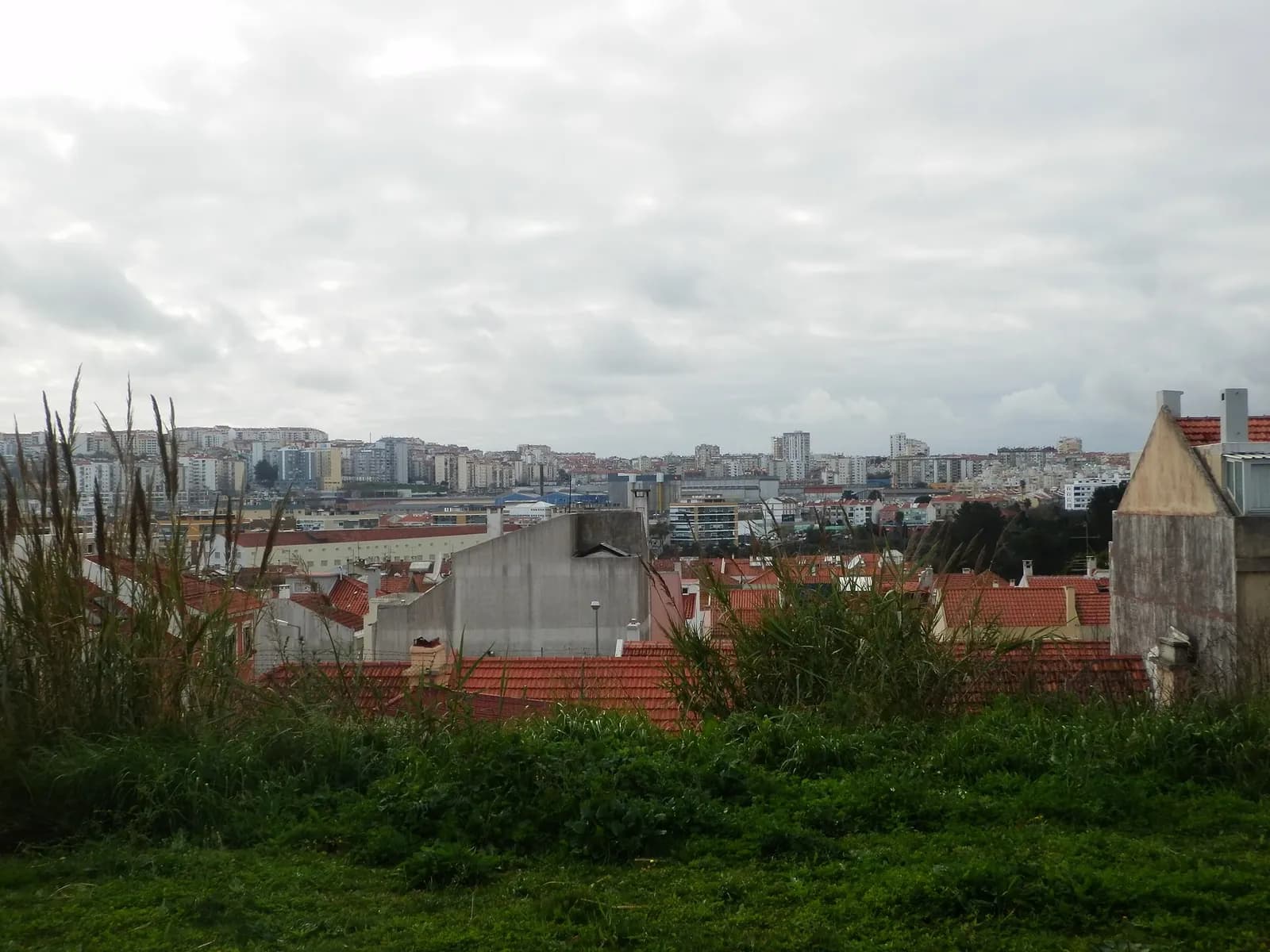
At a glance
- Pedro Costa was born in Lisbon; most film references give 30 December 1958, a date library records trace to IMDb and Wikipedia, while several Portuguese and French sources say 1959.
- He trained at the film school of Lisbon's National Conservatoire under the poet and film-maker António Reis, and made his first feature, O Sangue, in 1989.
- After shooting Casa de Lava (1994) on the Cape Verdean island of Fogo, he carried letters back to relatives in Fontainhas, a shanty town on the Lisbon–Amadora boundary, and filmed there for years.
- Fontainhas was demolished in phases from the late 1990s, as the 1993 Special Rehousing Programme (PER), which counted 48,416 families in shacks across 28 municipalities, cleared shanty towns around Lisbon.
- His films with Cape Verdean non-professional actors won the Best Director prize at Locarno for Cavalo Dinheiro (2014) and the Golden Leopard for Vitalina Varela (2019).
A postman from Cape Verde
After shooting his second feature, Casa de Lava, in Cape Verde, Pedro Costa came home with more luggage than he had left with. People he had met in the islands gave him parcels and letters for relatives and friends who had emigrated to Portugal. The addresses led him to Fontainhas, a warren of self-built houses on the boundary between Lisbon and Amadora where many of those migrants lived.
He described the place years later as a big, dark shanty town laid out like an African or Arab medina, with secret ways in and out and even guards. Nobody walked in, he said, unless they wanted to buy or sell something, often drugs.
Costa kept going back. Over the next 25 years he made five features with the people he met there and in the estates where they were later moved. Fontainhas became known to film audiences around the world in the same years that the bulldozers erased it.
Those films were selected at Cannes, won prizes at Locarno and were shown in retrospectives and exhibitions from Berkeley to Tokyo. They also left a record of people most Portuguese rarely saw: the Cape Verdean labourers who worked on Lisbon's building sites, and the shacks they lived in while they did it.
30 December 1958
Pedro Costa is born in Lisbon
The date in most film references; several Portuguese sources give 1959.
25 April 1974
The Carnation Revolution ends the Estado Novo
Costa, a teenager, joins school and factory occupations.
24 June 1975
Decree-Law 308-A/75
Cape Verdeans in Portugal, with some exceptions, lose Portuguese nationality; Cape Verde becomes independent on 5 July.
1989
O Sangue premieres at Venice
7 May 1993
The PER is created
Councils in the Lisbon and Porto areas that join must survey every shack.
1994
Casa de Lava shown at Cannes
Costa brings letters from Cape Verde to Fontainhas.
1997
Ossos, shot in Fontainhas on 35mm
2000
No Quarto da Vanda, shot on Mini-DV as the neighbourhood is torn down
2001 to 2004
Most Fontainhas residents rehoused in Amadora
Casal da Boba, Zambujal and Casal da Mira; the land goes to the CRIL ring road.
May 2006
Juventude em Marcha in competition at Cannes
2014
Cavalo Dinheiro wins Best Director at Locarno
August 2019
Vitalina Varela wins the Golden Leopard at Locarno
A Lisbon education
Costa was born in Lisbon at the end of the 1950s, when Portugal was still ruled by the Estado Novo, the authoritarian regime built by António de Oliveira Salazar. He was a teenager when the army overthrew it on 25 April 1974, and remembered himself as “a kid yelling in the streets”, joining school and factory occupations and discovering music, politics, films and girls all at once.
He began a history degree at the University of Lisbon, played guitar and came through the city's punk scene, then left for the new film school of the National Conservatoire in the late 1970s (sources give 1977 or 1979). The teacher who mattered was António Reis, a poet whose own films with his wife, Margarida Cordeiro, such as Trás-os-Montes (1976), mixed documentary and fiction in remote villages of the north-east.
“Don't be afraid of filming what surrounds you. If it's cars, it's cars. If it's rocks, it's rocks.”
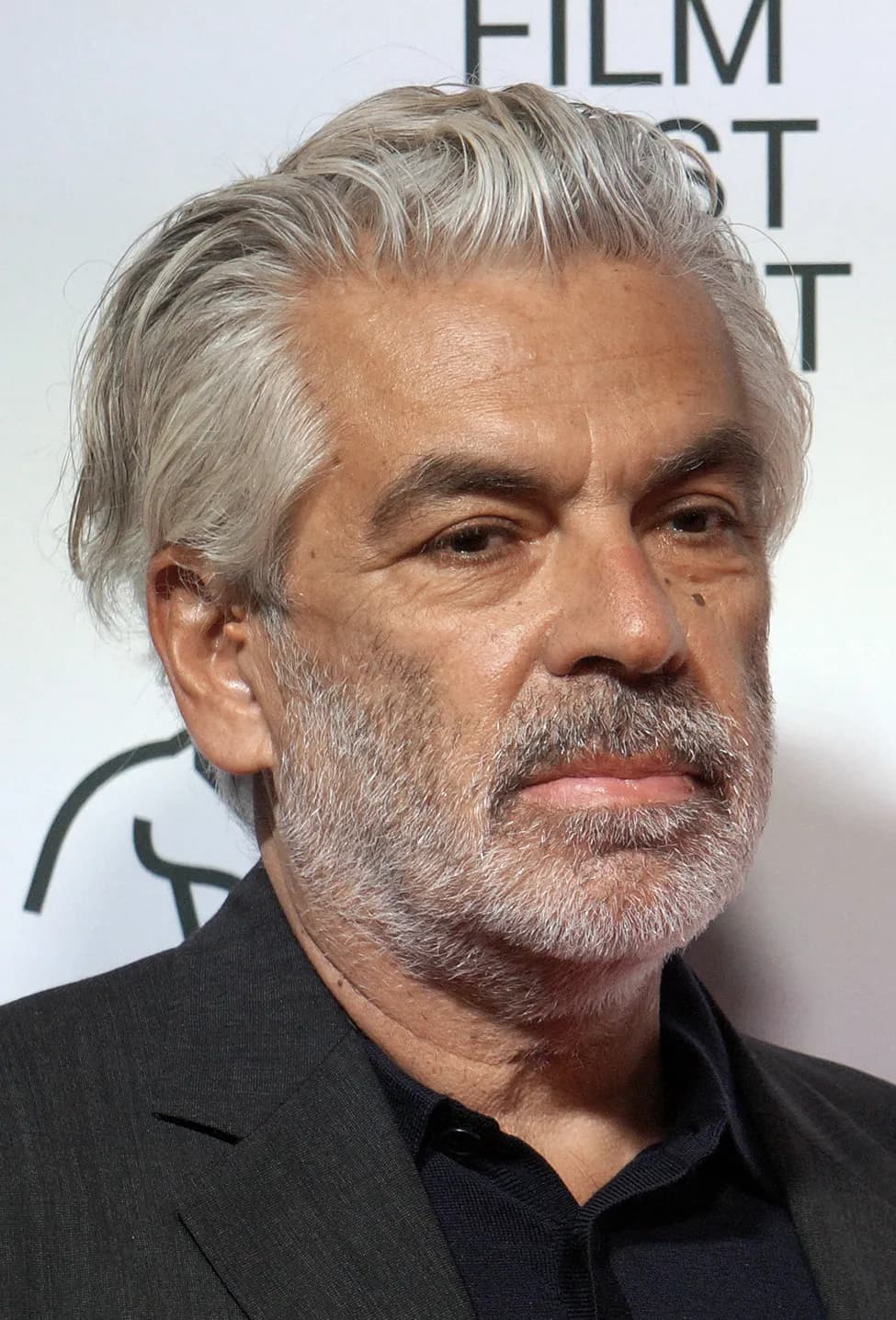
Reis taught from about a dozen films, from Eisenstein and Murnau to Ozu and Godard, with Bresson above all. He told his students to go and see Velázquez in the Prado, and to save up and travel alone.
Costa then worked as an assistant director to Jorge Silva Melo, Vítor Gonçalves and João Botelho, an experience he later called the worst of his life: big crews silencing a whole neighbourhood like a military police operation.
His first feature, O Sangue (1989), about two brothers left alone after their father's death, premiered at the Venice Film Festival. It was made the usual way, from a script, with Pedro Hestnes, Nuno Ferreira and Inês de Medeiros in the leads, and it marked Costa as a promising newcomer.
From the islands to the shacks
Cape Verde, an archipelago in the Atlantic, was a Portuguese colony until 5 July 1975. Cape Verdeans first came to Lisbon in numbers in the mid-1960s. Portugal was then losing many of its own workers to emigration to northern Europe, and young men to the colonial wars, so building firms, public works and shipyards recruited Cape Verdean labourers to fill the gap. Women followed from the late 1960s as domestic servants in middle-class Lisbon homes.
Independence brought a second, larger wave, and a third began in the mid-1980s, when Portugal joined the European Community and its structural funds paid for a construction boom. The men worked on those building sites; many women cleaned offices and homes. Most settled in the Lisbon metropolitan area, which held nearly 90 per cent of Cape Verdean residents.
Cape Verdeans as a share of legally resident foreigners in Portugal
% of legal foreign residents
Cape Verdeans were the largest foreign nationality throughout, but their share fell as Brazilians, Angolans, Guineans and, later, Eastern Europeans arrived. The total number of legal foreign residents grew from 54,414 in 1981 to 113,978 in 1991 and 223,602 in 2001 (not counting holders of the temporary stay permits introduced in 2001). In 1998 there were 40,093 Cape Verdean legal residents; Rocha-Trindade estimated that with undocumented migrants the real number could be nearly double. Data: SEF and INE, compiled by Horta and Malheiros; 1998 figure from Rocha-Trindade.
Show the data
| Cape Verdean nationals | |
|---|---|
| 1981 | 38.6 |
| 1991 | 26.1 |
| 2001 | 22.3 |
Wages were low and housing was scarce, so many families built their own. Shanty towns and illegal self-built quarters spread behind Lisbon in the 1970s and 1980s, in Damaia and Buraca in Amadora, in Charneca and in parts of Loures, often with materials bought or borrowed from the sites where the men worked. Fontainhas, behind the Portas de Benfica on the Lisbon–Amadora boundary, was one of them: a slum without water or electricity, settled in the 1970s by migrants from Cape Verde, Angola and Guinea-Bissau and by poor Portuguese from the interior.
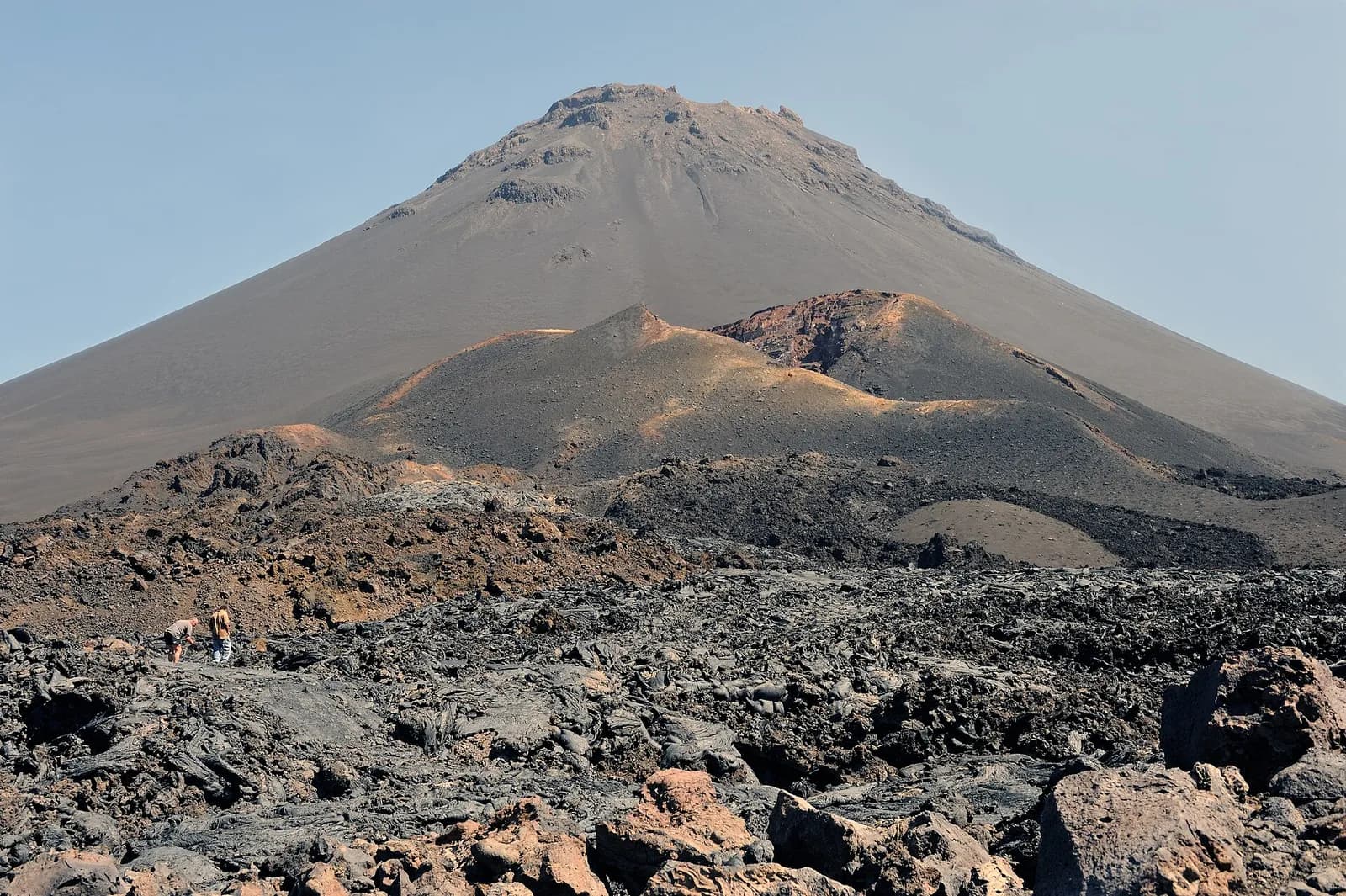
Casa de Lava (1994), the film that took Costa to the islands, follows a Lisbon nurse, played by Inês de Medeiros, who escorts a comatose Cape Verdean labourer home to the volcanic island of Fogo. It was inspired by Jacques Tourneur's I Walked with a Zombie (1943) and was shown in the Un Certain Regard section at Cannes. As of 2018 it was still the only one of his films shot in the islands.
Ossos, Vanda's room and a small camera
Ossos (Bones, 1997), the first of the Fontainhas films, was a normal production. Costa wrote a script about a suicidal teenage mother who cannot care for her baby, cast local people beside professionals, among them the sisters Vanda and Zita Duarte, and shot on 35mm in about six weeks with the veteran French cinematographer Emmanuel Machuel.
He was unhappy with the result, and so was Vanda. Film lights in tiny houses full of cracks lit up the whole neighbourhood at night; one construction worker came out at two in the morning to complain that he had to get up at four. The production solved every problem by paying for it, and the actors were paid, he said, in a “very chaotic, non-transparent way”.
“One day I just appeared with a small video camera, a backpack, a tripod and some Mini-DV tapes. I started like that.”
The result was No Quarto da Vanda (In Vanda's Room, 2000), a three-hour film shot mostly in Vanda Duarte's bedroom while she and her sister smoked heroin and talked about the neighbourhood as it was pulled down around them. Costa worked mostly alone. Thom Andersen counted 12 months of shooting; Thomas Austin says almost two years.
At first there was no money, and Costa did not pay her. Vanda sometimes bought the tapes herself. At the end, when German funding arrived to finish the film, he took a little from the post-production budget and paid her, her mother and the others, a sum he called merely symbolic. Costa calls the film a fiction, made of short sketches that were given a structure in the edit.
The bulldozers and the PER
The machines heard in In Vanda's Room belonged to a national programme. On 7 May 1993 the government of Aníbal Cavaco Silva created the Programa Especial de Realojamento (PER), or Special Rehousing Programme, for the metropolitan areas of Lisbon and Porto. Its stated aim was the final eradication of the barracas, the shacks, by rehousing their families in decent homes.
“The eradication of the shacks, a wound still open in our social fabric, and the consequent rehousing of those who live in them, require the creation of conditions that will allow their complete extinction.”
Councils that joined had to make an exhaustive survey of the shacks in their area. A state housing body, IGAPHE, gave them grants of up to half the cost of the land and the new flats, and the National Housing Institute could lend up to half more. Only families counted in that 1993 survey had a right to a new home, a rule that later left many households who arrived afterwards facing demolition with nowhere to go.
| Measure | Figure | Source |
|---|---|---|
| Municipalities in the programme (Lisbon and Porto areas) | 28 | Lusa, 2023 |
| Families identified living in precarious housing | 48,416 | Lusa, 2023 |
| Lisbon city, 1993: precarious dwellings and people counted | 10,030 dwellings, 37,299 people, 11,129 households | Lusa, 2023 |
| Lisbon city: households after the 1994 update | 13,596 | Lusa, 2023 |
| Lisbon city: new homes built | 9,135 in 42 developments | Lusa, 2023 |
| Amadora, 1993: shanty neighbourhoods and families | 35 neighbourhoods, 6,553 families | Lusa, 2005 |
| Amadora, December 2005: neighbourhoods cleared and still standing | 12 cleared, 23 left | Lusa, 2005 |
Lusa 2023 cites Lisbon council and the PER completion report. In Lisbon, 8,595 families were rehoused in council estates and about 3,200 counted families ended up outside the programme.
Amadora was the last council to sign up. By the end of 2005 it had cleared 12 of its 35 shanty neighbourhoods. Demolitions were by then reaching people who were not on the 1993 list, and residents of Fontainhas and Azinhaga dos Besouros in Amadora, with families from Cascais and Loures, had written an open letter to President Jorge Sampaio asking him to defend their right to housing.
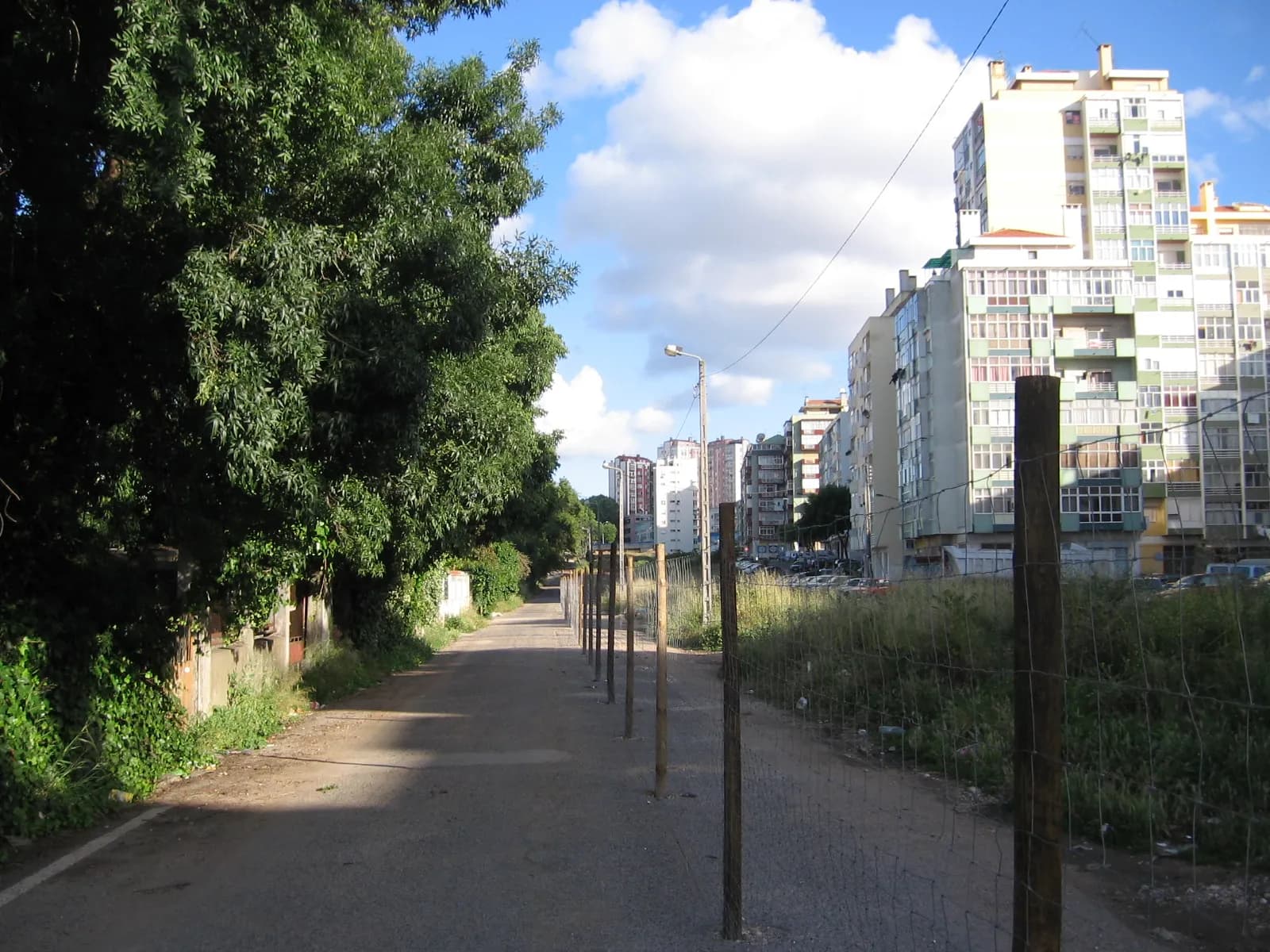
Fontainhas came down in stages from the late 1990s, its land needed for the CRIL ring road. Between 2001 and 2004 most of its people were moved to new social housing in Amadora, at Casal da Boba, Zambujal and Casal da Mira. In Costa's words, the place where he had shot his films was gone: “Now it's a set of highways.”
Ventura and the white blocks
Juventude em Marcha (Colossal Youth, 2006) moved between the two places. Its centre is Ventura, a Cape Verdean labourer who has lived in the old quarter for 34 years and whose wife has left him. He drifts between the ruins and his bare new flat at Casal da Boba, visiting Vanda, now rehoused too, and young people he treats as his children. The real Ventura was born on the island of Santiago in the 1950s and came to Portugal in the 1970s to work in construction. The film was selected for the main competition at Cannes.
Ventura became Costa's closest collaborator. The scenes in his shack were staged as he remembered his life 20 or 30 years earlier, even to the timing: two hours of cards, then straight to bed. Costa paid him the same as he paid himself, because he was on set every day whether or not he was in the shot. Andersen counted 15 months of shooting.
In one scene Ventura walks into the galleries of the Calouste Gulbenkian Foundation in Lisbon, a building he had worked on as a labourer. He sits on an old red sofa, and stands among paintings by Rubens and other European masters until a guard whispers to him and he leaves. Costa said Ventura told him “I built this” and pointed out the scaffold he had fallen from. The point, Costa added, was that he had the right to be there.
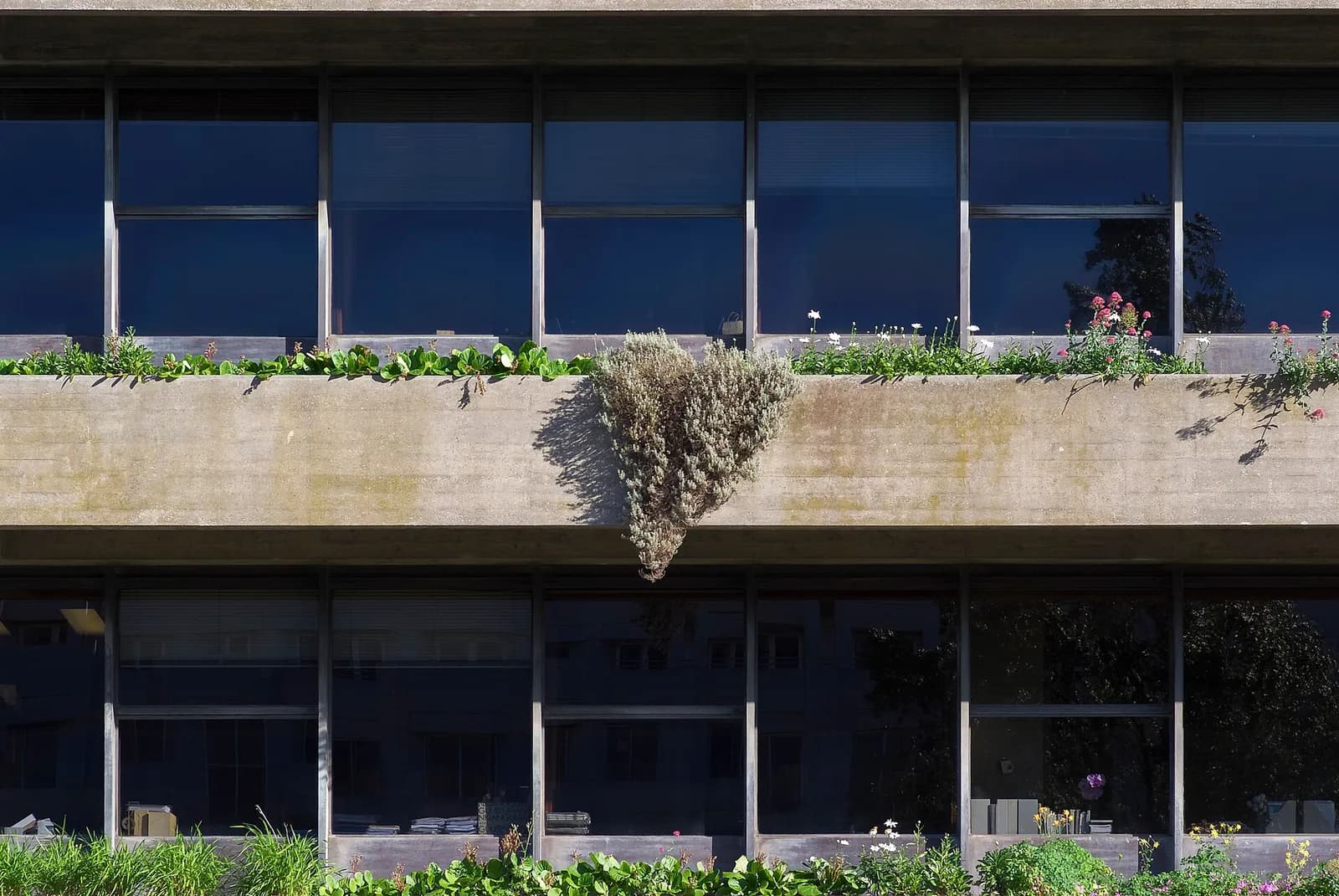
Cavalo Dinheiro (Horse Money, 2014) sent Ventura back in memory to the revolutionary months of 1974 and 1975 and a knife fight with his friend Joaquim, with the old man now playing his younger self in hospital corridors and a lift. It won Costa the Best Director prize at Locarno.
Vitalina's arrival
While making Horse Money, Costa wanted to film people inside traditional houses like those of Fontainhas but could find few left. In 2013 a friend took him to Cova da Moura, another Amadora neighbourhood, to a house shut up since its owner died. The door opened and a woman dressed in black stood there, afraid they were the police or immigration. She was Vitalina Varela, the dead man's widow, who had come from Cape Verde after his death five or six months earlier.
She appears briefly in Horse Money. Vitalina Varela (2019) is her own film: the story of a woman who waited 25 years for a plane ticket to join her husband and lands in Lisbon three days after his burial. It draws on her life without reproducing it, and Costa credited her as a co-writer.
The method had become settled. In the mornings she told Costa about her life; in the afternoons they walked around a little. A crew of three, later four, shot from Monday to Saturday for at least a year, in her house, the nearby streets and a makeshift studio in an abandoned suburban cinema. Lighting a single shot could take a week or two, and a scene could run to 30 takes.
At Locarno in August 2019 the film won the Golden Leopard, the festival's top prize, and Vitalina Varela won Best Actress. Sight and Sound called it the standout of the festival by common consent, though the German critic Rüdiger Suchsland attacked it as a “mandarin” winner of art cinema's insiders' game.
| Year | Film | Made with or where | Festival |
|---|---|---|---|
| 1989 | O Sangue (Blood) | Two brothers; 35mm, conventional crew | Premiered at Venice |
| 1994 | Casa de Lava (Down to Earth) | Fogo, Cape Verde | Cannes, Un Certain Regard |
| 1997 | Ossos (Bones) | Fontainhas; 35mm, about six weeks | |
| 2000 | No Quarto da Vanda (In Vanda's Room) | Vanda Duarte, Fontainhas; Mini-DV | |
| 2002 | Onde Jaz o Teu Sorriso? (Where Does Your Hidden Smile Lie?) | Jean-Marie Straub and Danièle Huillet at work | |
| 2006 | Juventude em Marcha (Colossal Youth) | Ventura, Fontainhas and Casal da Boba | Cannes, Competition |
| 2009 | Ne Change Rien (Change Nothing) | The singer Jeanne Balibar | |
| 2014 | Cavalo Dinheiro (Horse Money) | Ventura | Locarno, Best Director |
| 2019 | Vitalina Varela | Vitalina Varela, Cova da Moura | Locarno, Golden Leopard and Best Actress |
Year of Where Does Your Hidden Smile Lie? as given by the Lisbon Film Festival; some filmographies date it to 2001. A blank cell means no festival selection is listed here.
Actors who write the script
Costa rarely uses a written screenplay. He takes notes, phrases and beginnings and endings from what his actors tell him, then rehearses on camera until a scene settles. He calls the actors his screenwriters and says the films depend on their health and their mood, since there are no conventional contracts, only trust.
He compares them to actors in ancient Greece, who did not pretend to be someone else but brought news of themselves and their city. Ventura and Vanda, he said, mixed their own stories with the social story of their country and their neighbourhood. Equal pay and a crew small enough to fit the alleys belong to the same idea; he once called it “a little bit of communism”.
Why it still matters
Abroad, Costa became a festival and museum name. Jacques Rivette called him “genuinely great”; the Berkeley Art Museum gave him a retrospective in 2008, Serralves in Porto an exhibition in 2018, and the Tokyo Photographic Art Museum another in 2025. In 2017 the Hollywood Academy invited him to join, and in 2020 the San Francisco film festival gave him its Persistence of Vision award.
The New Left Review noted in 2019 that outside cinephile circles he remained largely unknown. Their value for Portugal is partly as evidence. In Vanda's Room and Colossal Youth are a record of a shanty town and its demolition that few Portuguese ever saw, made with its residents rather than about them.
In Lisbon the PER rehoused most of the families it counted, and the city no longer greets visitors with what one councillor called “a sea of favelas”. Costa's films show the other side: communities broken up between estates, families left off the 1993 list, and men like Ventura, who helped build its museums, still living at its edge. Cova da Moura, excluded from Amadora's 1993 rehousing talks with the government, became the setting of Vitalina Varela.
FAQs
When was Pedro Costa born?
In Lisbon, but the date is uncertain. Most film references, and the German and US library catalogues, give 30 December 1958, a date those catalogues took from IMDb and Wikipedia. Lusa, the Lisbon Film Festival and other Portuguese sources say 1959, and the French National Library gives 3 March 1959, also from IMDb. No birth registration has been published.
Where was Fontainhas?
It was a self-built shanty town behind the Portas de Benfica, on the boundary between Lisbon and Amadora; Lusa placed it in Amadora, the Mensagem de Lisboa in Lisbon, and Costa called it “on the border of Lisbon”. It was settled from the 1970s by migrants from Cape Verde, Angola, Guinea-Bissau and rural Portugal. It was demolished in stages from the late 1990s, partly for the CRIL ring road, and between 2001 and 2004 most of its residents were rehoused in Amadora estates such as Casal da Boba.
What was the PER?
The Programa Especial de Realojamento, created by Decree-Law 163/93 of 7 May 1993, aimed to eradicate shacks in the Lisbon and Porto metropolitan areas by rehousing their families. Its 1993 survey counted 48,416 families in 28 municipalities.
Are the people in Pedro Costa's films actors?
Mostly not professionals. Vanda Duarte, Ventura and Vitalina Varela play versions of themselves and help shape the scenes from their own memories, through long rehearsal on camera. Vitalina Varela won Best Actress at Locarno in 2019.
Which Pedro Costa film should I watch first?
Critics often start with In Vanda's Room (2000) or Colossal Youth (2006), the films that made his name. Vitalina Varela, which won the Golden Leopard at Locarno in 2019, is the most recent feature.
On the timeline
Open the timelineNearby moments from dictatorship and the estado novo (1926–1974).
Radiotelevisão Portuguesa (RTP) begins regular broadcasting at 21:30 from its Lumiar studios in Lisbon, six months after trial transmissions at the city's Feira Popular. The first night's programme ran for about two hours, closing at around 23:30.
At a press conference in Lisbon's Café Chave d'Ouro, opposition presidential candidate General Humberto Delgado is asked what he would do with Salazar if elected. His reply — 'Obviamente, demito-o!' ('Obviously, I'll sack him!') — electrifies the country and becomes one of the most famous phrases in Portuguese politics.
Birth of Rosa Mota in Porto's Foz Velha. A pioneer of women's distance running, she won the first ever women's marathon at a European Championships in 1982 and, at Seoul in 1988, became the first Portuguese woman to win Olympic gold.
Pedro Costa and Fontainhas
The film director Pedro Costa is born in Lisbon (some sources say 1959). His slow, luminous films with Cape Verdean immigrants, many made in Fontainhas, a shanty town on the Lisbon–Amadora boundary, won international acclaim; 'Vitalina Varela', shot in Amadora's Cova da Moura, took the Golden Leopard at the Locarno Film Festival in 2019.
Fernando Chalana is born in Barreiro. Nicknamed 'o pequeno genial' (the little genius), the Benfica winger dazzled at Euro 1984, Portugal's first European Championship finals, where they reached the semi-finals, and then moved to Bordeaux.
The Cristo Rei monument in Almada is inaugurated, nearly ten years after its first stone was laid, before a crowd the Church put at 300,000. Overlooking the Tagus opposite Lisbon, the statue by the Madeiran sculptor Francisco Franco (no relation to the Spanish dictator) fulfils the bishops' 1940 vow to build it if Portugal was spared the Second World War.
Birth in Lisbon of Pedro Ayres Magalhães, guitarist and founder of Madredeus. Built around the voice of Teresa Salgueiro, the group fused fado, folk and classical music into a sound that made it Portugal's most internationally successful act of its generation, immortalised in Wim Wenders's film 'Lisbon Story' (1994).
Coming up in history
All long reads 1 January 1962The Beja revolt: a New Year's night attack on Salazar's army, 1962
 2 January 1955Norton de Matos, the general who founded Huambo and defied Salazar
 3 January 1917The convention that sent Portugal to the trenches of Flanders, 1917
 4 January 1961The Baixa de Cassanje revolt: cotton, “Maria” and the bombs of 1961
32 sources
Archives, scholarship and reporting this article was checked against.
- 1
Interview with Pedro Costa (Ruben Desiere, London, 7 and 8 January 2014)Sabzian
- 2
Cinema as disquiet: the ghostly realism of Pedro Costa (Emma Fajgenbaum)New Left Review 116/117, March–June 2019
- 3
Bigger than life, or stranger: Pedro Costa's Vitalina Varela, Part II (Thomas Austin)Senses of Cinema 101, 2022
- 4
Os cabo-verdianos em Portugal: processo de consolidação, estratégias individuais e acção colectiva (Ana Paula Beja Horta and Jorge Macaísta Malheiros)Instituto de Estudos Estratégicos e Internacionais (IEEI)
- 5
Decreto-Lei n.º 163/93, de 7 de Maio (Programa Especial de Realojamento)Diário da República, I Série-A, n.º 106, 7 May 1993
- 6Lisboa acabou com “mar de favelas” e construiu 36 bairros no âmbito do PERCorreio da Manhã / Lusa, 7 May 2023
- 7
Representações da violência no cinema de Pedro Costa (Guilherme Figueiredo)Studia Iberystyczne 15 (2016), Jagiellonian University
- 8
Locarno 2019 report: films forged in fire (Kieron Corless)Sight and Sound, British Film Institute
- 9
Ventura, o herói dos filmes que levou o bairro das Fontaínhas a Cannes (Ana da Cunha and Ismael Andrade)Mensagem de Lisboa, 5 March 2024
- 10
Pedro Costa's Fontainhas films (film series, 2015)Arsenal – Institut für Film und Videokunst, Berlin
- 11
In Transit: Vitalina Varela (review)Reverse Shot, Museum of the Moving Image
- 12
Realizador português Pedro Costa premiado nos Estados UnidosDNoticias.pt / Lusa, 30 April 2020
- 13
Still Lives: The Films of Pedro Costa (retrospective, 1 March to 12 April 2008)Berkeley Art Museum and Pacific Film Archive
- 14
Pedro Costa: Innervisions (exhibition announcement)Tokyo Photographic Art Museum, via e-flux, 2025
- 15
Costa, Pedro (GND 137223188)Deutsche Biographie / Deutsche Nationalbibliothek
- 16
Pedro Costa (guest biography)Lisbon Film Festival (LEFFEST)
- 17
Casa de Lava (Un Certain Regard, 1994)Festival de Cannes
- 18
- 19
Costa, Pedro, 1958- (name authority no2018003793)Library of Congress Name Authority File
- 20
Costa, Pedro (1959-....): notice de personneBibliothèque nationale de France
- 21Museu no Japão dedica exposição ao realizador português Pedro CostaObservador / Lusa, 7 August 2025
- 22
Interview: Pedro Costa, dir. Vitalina Varela (Ben Nicholson)CineVue, March 2020
- 23
Pedro Costa, o português que poderá votar nos ÓscaresTime Out Lisboa, August 2017
- 24
História da imigração em Portugal (II) (Maria Beatriz Rocha-Trindade)Janus 2001, Universidade Autónoma de Lisboa
- 25
Casa de Lava (programme note)Close-Up Film Centre, London, 2018
- 26
Colossal Works: The Films of Pedro Costa (programme note by Thom Andersen)Harvard Film Archive
- 27Ainda falta erradicar 23 bairros na AmadoraRTP Notícias / Lusa, 28 December 2005
- 28
Vitalina Varela: booklet excerpt, Daniel Kasman in conversation with Pedro Costa at LocarnoSecond Run
- 29
Pedro Costa on Vitalina Varela and the importance of “everything that goes unsaid”Hyperallergic, 2020
- 30
- 31
- 32
The BuildingCalouste Gulbenkian Museum
Image credits
- Damaia and Amadora seen from Matinha da Venda Nova in 2016. The Cape Verdean labourers who came to Lisbon from the 1960s settled in suburbs like these, many of them first in self-built shanty towns such as Fontainhas. Threeohsix, CC BY-SA 4.0, via Wikimedia Commons.
- Pedro Costa at Film Fest Gent in October 2020, where he presented Vitalina Varela. Joost Pauwels, CC0, via Wikimedia Commons.
- Pico do Fogo, the volcano on the Cape Verdean island of Fogo, in 2011. Casa de Lava (1994) follows a Lisbon nurse who takes a comatose labourer home to this island. Cayambe, CC BY-SA 3.0, via Wikimedia Commons.
- The Estrada da Circunvalação, the old boundary road between Damaia in Amadora and the Santa Cruz quarter of Benfica in Lisbon, in May 2008. Fontainhas stood on this edge of the two municipalities, behind the Portas de Benfica, until it was cleared for the CRIL ring road. CorreiaPM, Public domain, via Wikimedia Commons.
- The concrete headquarters of the Calouste Gulbenkian Foundation in Lisbon, photographed in 2023. Ventura worked on its construction, and in Colossal Youth he returns to sit in the museum galleries. Jules Verne Times Two, CC BY-SA 4.0, via Wikimedia Commons.