

The Beja revolt: a New Year's night attack on Salazar's army, 1962
In a storm on New Year's night, a handful of officers and several dozen workers, Catholics and communists broke into an infantry barracks in the Alentejo. General Humberto Delgado had crossed the border in secret to lead the rising that was meant to follow.
At a glance
- At about 2 a.m. on 1 January 1962, Captain João Varela Gomes and a few fellow officers entered the barracks of the 3rd Infantry Regiment (RI3) in Beja, and civilians led by Manuel Serra climbed the wall behind them.
- The plan, agreed with the exiled General Humberto Delgado, was to seize the regiment's weapons and spark a rising across the south; Delgado had slipped into Portugal on a false passport to lead it.
- The regiment's second-in-command, Major Henrique Calapez, shot Varela Gomes at the door of his quarters and then fired on the rebels for about an hour; two civilians, David Abreu and António Vilar, died.
- The under-secretary of state for the army, Jaime Filipe da Fonseca, was shot dead outside the barracks at dawn. The regime's deputies blamed the rebels; most later accounts say he was hit by government forces who did not recognise him in civilian clothes.
- In 1964 a political court convicted 65 people: Serra got ten years and Varela Gomes six. Delgado escaped abroad and was murdered by the PIDE in Spain in February 1965.
A knock at the major's door
A storm had blacked out Beja. The rebels were meant to meet at eight in the evening of 31 December 1961, but the journeys down from Lisbon went badly and the group only came together after midnight. Raul Zagalo, a 20-year-old clerk in the statistics office of CP, the railway company, who was supposed to fire a bazooka he had seen only in drawings, said nobody suggested turning back. As the civilian leader, Manuel Serra, had told them, you could not move more than seventy people from Lisbon to the Alentejo on empty roads without leaving a trace.
At about two in the morning of 1 January 1962, two cars stopped at the gate of the 3rd Infantry Regiment. The officers inside were met by Captain Francisco Vasconcelos Pestana, who was in on the plot. The officer of the day, Ensign Arantes de Oliveira, said he was not ready to join a revolution and handed over his pistol; by Zagalo's account it was given back to him once he had given his word of honour to stay neutral. RTP's 2022 account says instead that he joined them.
That left the regiment's second-in-command, Major Henrique Calapez, who also commanded the Beja district of the Portuguese Legion, the regime's militia. The colonel was away in Lisbon for New Year. At around 2.20 a.m. Captain João Varela Gomes, the military leader of the rising, climbed to the major's quarters and knocked. Asked who it was, he gave the name of the sergeant of the guard, a man with a strong Alentejo accent.
Calapez opened the door a crack and fired twice. Varela Gomes fell with wounds to the upper abdomen and left thigh. He later admitted that, as the operation's leader, he should not have gone to arrest the major himself.
A dictatorship shaken by the 'fearless general'
Portugal in 1961 was the Estado Novo, the authoritarian regime of António de Oliveira Salazar, with censorship, a single official party and a political police, the PIDE. Elections were held but not fairly fought. In 1958 that routine broke: General Humberto Delgado, an air force officer who had served the regime in Washington and at NATO, stood for president against the official candidate, Rear-Admiral Américo Tomás.
Asked by a journalist what he would do with Salazar if he won, Delgado answered “Obviamente, demito-o!”: “Obviously, I'll sack him!”. Hundreds of thousands filled squares in Porto and Lisbon for him, and he became known as the “General sem Medo”, the fearless general. The official count on 8 June 1958 gave Tomás more than three times his votes; the Panteão Nacional today says plainly that he lost by fraud.
Official result of the presidential election, 8 June 1958
votes
Official figures, as published by the regime and reproduced by the Hemeroteca Municipal de Lisboa. The opposition contested them, and the Panteão Nacional says he lost the election fraudulently.
Show the data
| Votes (official count) | |
|---|---|
| Américo Tomás (regime) | 758,998 |
| Humberto Delgado (opposition) | 236,528 |
The regime suspended Delgado from the army in January 1959. Fearing arrest, he took refuge in the Brazilian embassy and left for Rio de Janeiro on 21 April. From exile he called openly for armed revolt and scorned the “oposição sentada”, the opposition that sat and talked. One of the men who came to him was Manuel Serra, a former merchant navy officer from the Catholic workers' movement who had been arrested after the failed Cathedral Revolt of March 1959 and had escaped from prison.
Varela Gomes, an artillery officer born in Lisbon, had backed Delgado in 1958 and was sent to the Azores for it. He was also involved in the Cathedral Revolt. In the parliamentary election of November 1961 he stood as an opposition candidate and was the loudest voice of that campaign.
8 June 1958
Delgado loses a presidential election the opposition denounced as rigged
21 April 1959
Delgado leaves the Brazilian embassy in Lisbon for exile in Rio
22 January 1961
Galvão's commando seizes the liner Santa Maria
4 February and 15 March 1961
Attacks in Luanda and northern Angola open the colonial war
13 April 1961
Botelho Moniz's attempt to remove Salazar collapses
10 November 1961
A hijacked TAP plane drops leaflets over Lisbon, Barreiro, Beja and Faro
19 December 1961
Goa falls to India
Late December 1961
Delgado crosses the border in secret (on 30 December, by one account)
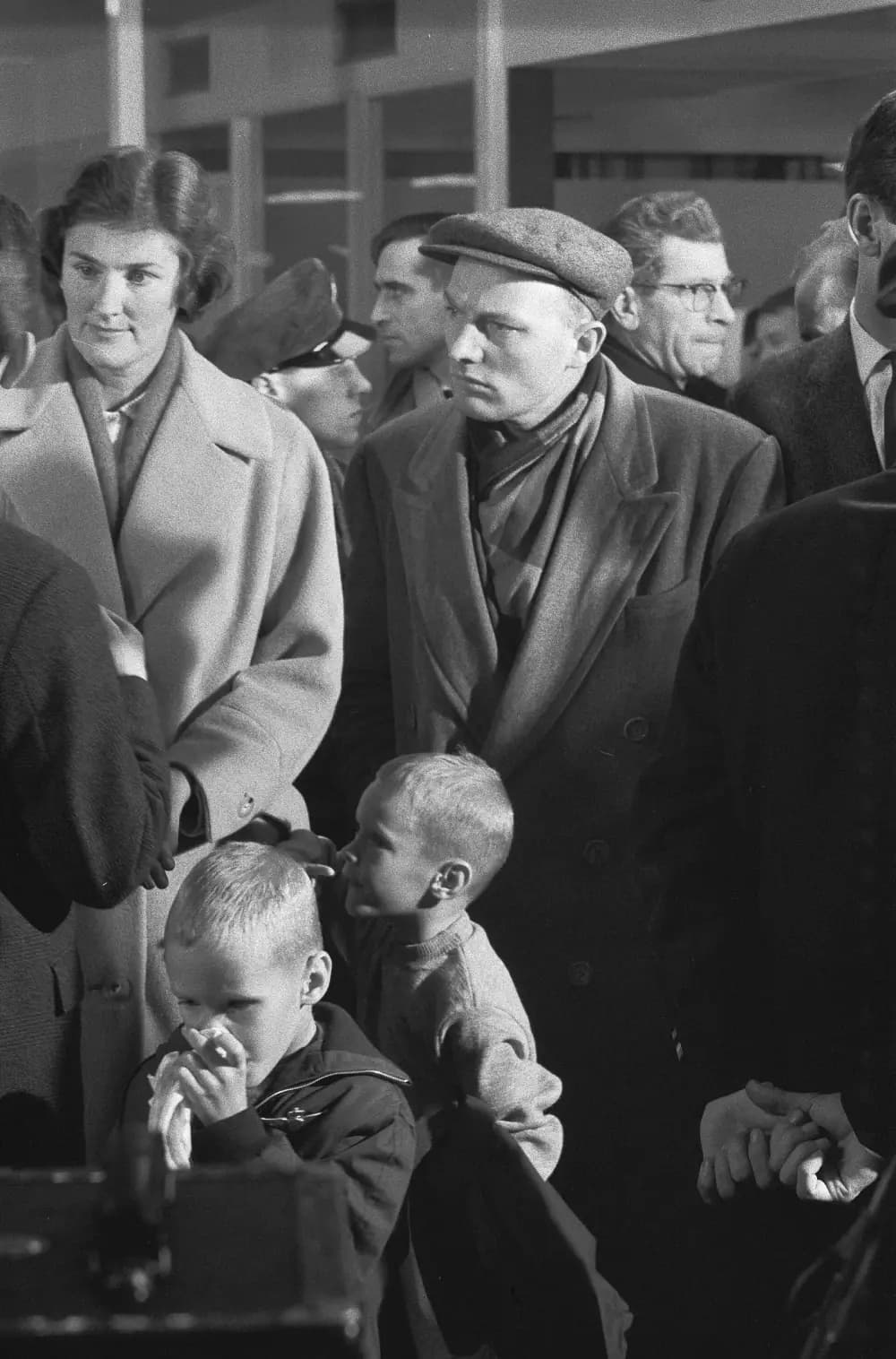
The Santa Maria affair and the fall of Goa have their own articles in this series. For the Beja conspirators, Goa mattered in one specific way: Varela Gomes recalled, as Pimentel quotes him, that the “military disaster in Goa, on 19 December” gave some hesitant officers “the argument that was missing” to join.
A barracks, a radio station and a general in hiding
The idea was Delgado's. In exile he and Serra drew up what they called Operation Íkaro: take a barracks in the south, arm civilians with its rifles and use it as a base from which Delgado would call the country to rise. Serra entered Portugal clandestinely in 1961 with two companions, Raul Marques and José Silva Graça, to organise it. After looking at the ground, the two judged that a national movement could not succeed in the short term. Serra carried on.
If the barracks fell, one column would take Beja's Republican National Guard (GNR) post, a commando would head for Barreiro, and the rest would make for the Caldeirão hills on the edge of the Algarve to wait for other units to join. Delgado was to broadcast an appeal from the state radio transmitter at Faro. Conspirators in Alentejo villages would try to bring people into the streets, and others would blow up the bridge at Alcácer do Sal to slow the regime's response. There was no agreed political programme beyond ending the dictatorship.
Recruiting was hard. Serra's men came from the working-class districts of Lisbon such as Bairro da Liberdade and Campolide, from the industrial towns of Almada and Barreiro across the Tagus, and from the opposition circle around the magazine Seara Nova. José Hipólito dos Santos, one of the plotters, described communists, Catholics, a priest, republicans and even a monarchist among them. The communists joined as individuals: the Communist Party's leadership replied that it did not take part “in adventures”.
Who the Beja rebels were: occupations of the 65 people convicted
people
Count made by the participant Raul Zagalo and cited by the historian Irene Flunser Pimentel in a 2012 talk. It covers the 65 defendants convicted for direct involvement, not everyone who took part.
Show the data
| Convicted in 1964 | |
|---|---|
| Workers | 42 |
| Shopkeepers and clerks | 13 |
| Military (6 of them officers) | 8 |
| University graduates | 2 |
Twice the civilians went to Beja and turned back. On 2 December there were too few of them. On 9 December (8 December in Pimentel's account) contacts failed again, too few people turned up and a car broke down. Varela Gomes, unimpressed by such amateurism, at first stayed out. He changed his mind when he learned, through the brothers José and Alexandre Hipólito dos Santos, that several officers inside the Beja regiment opposed the regime, among them the commander of its public order company. He agreed on 15 December to lead the military side.
Delgado was supposed to wait for a second signal before entering Portugal. Around Christmas a messenger phoned him in Morocco to say the rising was close. Delgado, who had sworn to be in Portugal by the end of the year, set off at once: he went to Spain, took a scheduled coach from Seville to Lisbon and crossed the border on a false passport at the PIDE post of Vila Verde de Ficalho, on 30 December, according to a 2012 article in the local newspaper A Comarca. The officers in the plot did not know he was in the country.
One hour of shooting in the dark
- Date
- Night of 31 December 1961 to 1 January 1962, from about 2 a.m.
- Target
- Barracks of the 3rd Infantry Regiment (RI3), Beja
- Leaders
- Captain João Varela Gomes (military), Manuel Serra (civilian), with General Humberto Delgado as political chief
- Attackers
- Five to eight military men and about 50 to 80 civilians, by different counts
- Dead
- Two civilian rebels and the under-secretary of state for the army
- Weapons brought
- A few pistols (between two and seven) and a grenade, by different accounts
Even the size of the attacking force is disputed. Zagalo counted about 50 men and one woman, the nurse Mariana Esteves, inside the walls, with 25 more waiting in Alentejo towns; RTP's 2022 account gives five military men and about 80 civilians, and other reports mention some 20 or nearly 100. Pimentel names six officers who entered; Pedroso Marques, one of them, later spoke of eight military men in all.
After Varela Gomes fell, Lieutenant Jaime Carvalho da Silva, a reserve officer and medical student, held Calapez at gunpoint. By the account Carvalho da Silva later gave Zagalo, his cellmate, the major dropped his weapon and begged for his life. Carvalho da Silva locked him in his room and went to help Varela Gomes, whom Alexandre Hipólito dos Santos and Pedroso Marques drove to the city hospital. The room had a window, and Calapez climbed out.
Meanwhile about fifteen civilians under Serra had gone over the wall at around 2.40 a.m. and taken the guardhouse with almost bare hands, disarming the sergeant and the sentries. The three officers in the mess, probably still celebrating New Year, were locked in there, and so was a fourth who arrived later. When Zagalo picked up a Mauser rifle and could not load it, he asked the soldier he had just disarmed to show him how; the young conscript said he had first taken them for terrorists.
Calapez knew the huge building and the rebels did not. Firing from positions they could not see, he shot David Abreu, a barber, from about two metres away. He then hit Zagalo in the knee and António Vilar, a driver, in the abdomen as they came round the chapel to help. Vilar lay in the yard all night and died in hospital. The exchange of fire lasted about an hour, until Calapez got out of the barracks and went to the GNR.
Jornal de Notícias reported in 2019 that the rebels hit Calapez in the chest; RTP's 2022 account says Varela Gomes's return shots missed him. Participants and RTP agree on one point: apart from Calapez, almost nobody in the garrison resisted. The court of 1964, RTP found, avoided naming him as the only man who fired on the insurgents.
The rebels held part of the barracks for some hours, but without their military leader the operation had no direction. Believing a siege was imminent, the remaining civilians slipped away in the dark. By Zagalo's account the GNR commander refused to move until daylight; by Pimentel's account, officers in the mess had already told the city police at around 3 a.m., and word reached the government in Lisbon that night.
And Delgado? According to the account later written by his Brazilian secretary and companion, Arajaryr Campos, they reached Beja late at night and drove around for about forty minutes, surprised to find everything calm, until police waved them down and their driver sped off. Other sources say he waited in the village of Vila de Frades, some 25 kilometres away. Either way, he was close by when the rebels lost their commander, and the two sides never made contact.
c. 20:00
Planned meeting time; the storm and troubled journeys delay the group until after midnight
c. 01:30
Varela Gomes, about to call it off, sees the civilians' cars arrive
c. 02:00–02:10
Officers enter by the main gate; the officer of the day surrenders his pistol
c. 02:20
Calapez shoots Varela Gomes at the door of his quarters
c. 02:40
Serra's civilians climb the wall and take the guardhouse
From c. 02:45
For about an hour Calapez fires on the rebels; Abreu is killed and Vilar mortally wounded, then Calapez escapes
c. 03:00
Officers in the mess alert the city police; Lisbon is informed
c. 06:30
Under-secretary Jaime Filipe da Fonseca shot dead outside the gate
c. 08:00
Government forces retake the barracks
The death of the under-secretary
Lieutenant-Colonel Jaime Filipe da Fonseca had recently become under-secretary of state for the army, replacing Francisco da Costa Gomes after the failed Botelho Moniz coup of April 1961. Warned by telephone at home, he drove to Beja so fast, a deputy later said, that his car nearly crashed. He arrived with a single companion, Captain Alves Ribeiro, both in civilian clothes.
At around 6.30 a.m., in pouring rain, he walked towards the gate of the barracks, which by then was surrounded by the GNR and other forces. He was shot and killed on the spot. Who fired is the most contested question of the whole affair, and the answer changed with who was speaking and when.
“Unhappily, a victim of his own heroism, Lieutenant-Colonel Jaime da Fonseca exposed himself too far and met his death in a burst of fire treacherously fired by the enemy.”
Not every loyalist was so sure. Speaking in the same session, Beja's own deputy, Meneses Soares, said Fonseca was struck down “by murderous bullets” as he was about to enter the barracks, “perhaps between the crossfire of besieged and besiegers”. By Zagalo's account the other rebels had left by then; he and the dying Vilar lay wounded in the yard, and he surrendered after daybreak.
| Who | When | What they said |
|---|---|---|
| Henrique Tenreiro, deputy | 5 January 1962 | Killed by a burst “treacherously fired by the enemy” |
| Meneses Soares, deputy for Beja | 5 January 1962 | Shot “perhaps between the crossfire of besieged and besiegers” |
| Francisco da Costa Gomes, his predecessor | Later recollection | Went to Beja in civilian clothes and was shot, “in all probability”, by a GNR man who did not recognise him |
| Colonel Stadlin Baptista, regimental commander, at the trial | 1964 (as recalled by Raul Zagalo) | Accepted under questioning that the GNR hit him by accident |
| 22 surviving rebels, declaration reported by RTP | 2011 | Hit by friendly fire from the GNR; regime propaganda blamed the rebels |
| Jofre Alves, in the local newspaper A Comarca | 2012 | Friendly fire from a tower; the besiegers did not identify the two officers in plain clothes |
Zagalo says the prosecution had prepared to blame him, as the only rebel captured alive inside the barracks. Pedroso Marques rejected a rumour that Fonseca had meant to join the rebels.
The regime buried Fonseca as a hero. The President of the National Assembly paid tribute to him on 3 January, and a deputy described thousands following his coffin in his home city of Leiria. Participants and RTP call his death friendly fire that propaganda pinned on the insurgents. The son of one of the Lisbon doctors sent to Beja, writing in 2017, says the circumstances were never fully cleared up.
Manhunt, hospital and a political trial
Varela Gomes reached the Misericórdia hospital in Beja in a grave state. Local surgeons operated on him, and so did Sérgio Sabido Ferreira, who had come from Lisbon with an emergency team sent on the health minister's orders. The PIDE wanted to interrogate him first; the doctors said he would die if they waited, refused to let the agents into the operating theatre and threw them out. Sabido Ferreira also refused to go back to Lisbon until the wounded rebels had been treated.
Police set up vehicle checks across the Alentejo, the Algarve, Setúbal and Lisbon. An official note of 3 January announced that the officers involved had been dismissed as “unworthy to wear the same uniform” as the soldiers fighting overseas. Pimentel points out what that did: once they were no longer soldiers, they could be handed to the PIDE instead of a military court. Serra was caught in Tavira; Maria Eugénia Varela Gomes, the captain's wife, was arrested too.
Hundreds of people were detained, whether or not they had taken part, and at the end of June 1962 close to a hundred were still in prison; Pedroso Marques later put the arrests at more than a thousand. Some escaped into Latin American embassies. Pedroso Marques himself spent almost three years in the Brazilian embassy in Lisbon, then slipped past the police watching it and reached France clandestinely.
Delgado got away. By Arajaryr Campos's account they hid, reached Porto on 3 January, and Delgado left the country on 10 January through the PIDE post at Barca d'Alva; the A Comarca article gives 2 January instead. That article also says he later mocked the police by telling how he had slipped past them in disguise. In Pimentel's summary of his own report, he called the PIDE a “paper tiger”.
On 3 January Salazar came to the National Assembly to give his statement on the loss of Goa and asked its president to read it for him. The record has him explaining that “with the emotions of recent weeks” he had suffered a mishap that took his voice. The rebels' declaration of 2011 claimed Beja was what struck the dictator dumb; the president of the Assembly said comments on Beja would have to wait for a later session.
The trial before the Plenary Court, the special court for political crimes, ran from 28 January to 29 July 1964. For the first time civilians and soldiers sat together in the dock. Pimentel counts 82 defendants, of whom 49 received major sentences, 16 correctional prison terms and 17 were acquitted; the rebels' 2011 declaration, Zagalo and Pedroso Marques all speak of 87 accused. In a linked case, Zagalo recalls, seventeen defendants charged with belonging to the Communist Party were all acquitted of that charge.
| Defendant | Role | Sentence |
|---|---|---|
| Manuel Serra | Civilian leader, Delgado's delegate | 10 years |
| João Varela Gomes | Military leader | 6 years |
| Edmundo Pedro | Civilian organiser | 3 years 8 months, plus 1 year |
| Eugénio de Oliveira | Captain | 3 years, increased to 4 and a half |
| Manuel Pedroso Marques | Captain, tried in absentia | 3 years |
| Most other defendants | Civilians | 2 to 3 years, or acquitted |
Zagalo notes that only half of the time spent in custody before the 1964 sentence was counted, so most served longer than their terms.
By the standards of the Plenary Court these were mild terms, and the defendants were allowed to attack the regime from the dock while foreign newspapers followed the sessions. Zagalo thought Salazar chose leniency once it was clear the revolt had not come from the Communist Party. Calapez, the obvious witness for the prosecution, never appeared.
“May others triumph where we were defeated.”
A revolt half-forgotten
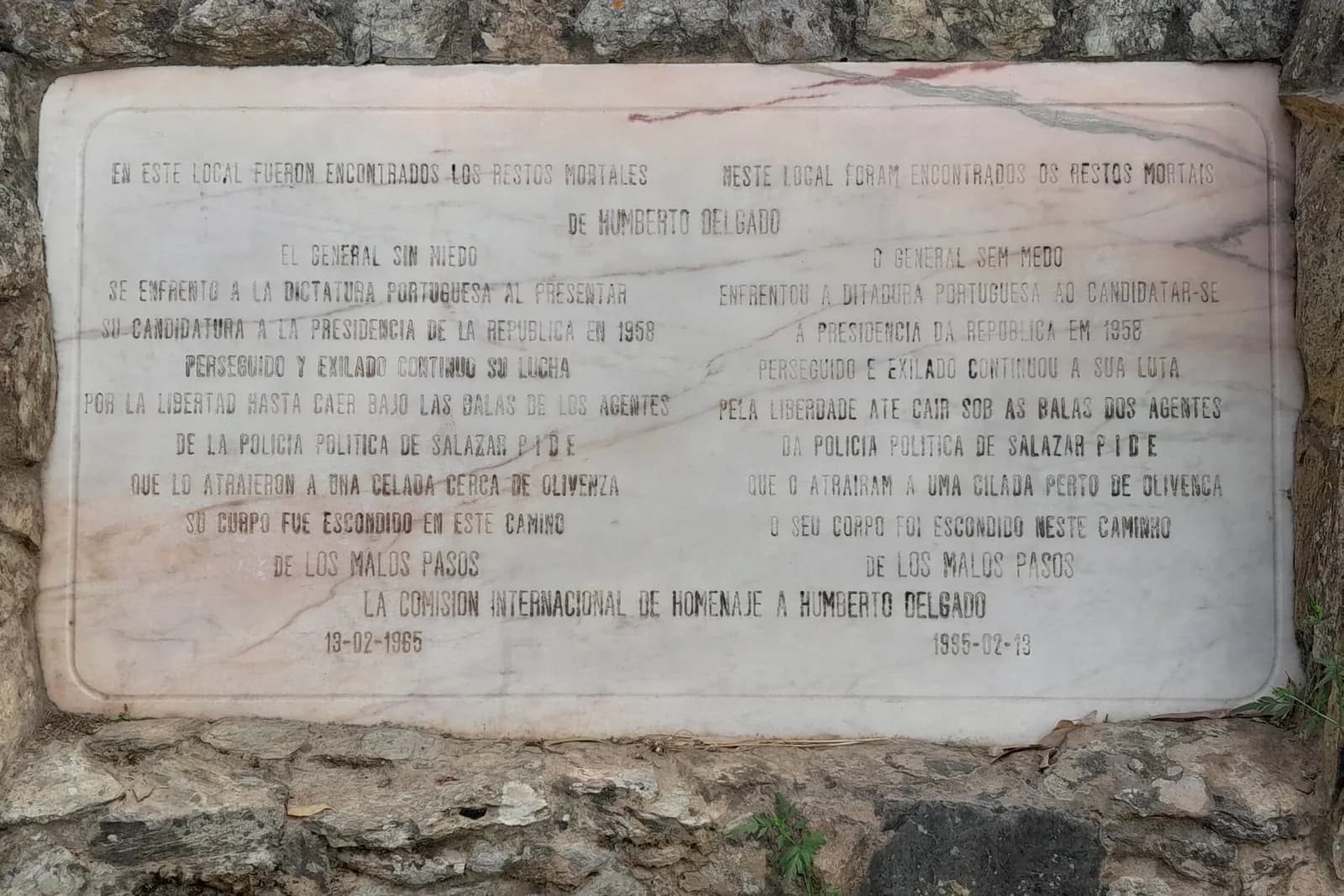
The PIDE did not forget Delgado. The historian Luís Farinha, a former director of the Museu do Aljube, writes that the PIDE's plan to lure him to the border was drawn up after Beja. On 13 February 1965 a PIDE squad killed the general and Arajaryr Campos near Olivenza in Spain, and hid their bodies near Villanueva del Fresno. His remains were brought to Lisbon in 1975 and to the National Pantheon in 1990.
Serra was released in 1972. After the Carnation Revolution of 25 April 1974, Varela Gomes was taken back into the army as a colonel and became the leading figure of the Fifth Division of the armed forces staff, which ran the Armed Forces Movement's information and cultural campaigns during the revolutionary period. After 25 November 1975, when moderate officers defeated the radical left of the army, he went underground and into exile in Cuba and Angola, returning in 1979. He died on 26 February 2018, aged 93; parliament passed a vote of condolence with only the CDS-PP voting against, though four of its deputies abstained.
Calapez's career went the other way. He sat in the National Assembly for Beja in its last legislature, from 1973 to 1974, and later refused a decoration offered under Prime Minister Cavaco Silva. In 1987, visiting Beja as President, Mário Soares remarked, as Jornal de Notícias recalled, that without “a certain Major Calapez” the 25 April would have come fifteen years earlier.
For decades the revolt sat in a historical footnote. Pimentel argues that its memory was erased by the regime and also by the part of the opposition that had stayed away and preferred to see the rebels as reckless. In 2011, twenty-two survivors signed a declaration to rescue what they called its “erased memory”, and in January 2012 most of the surviving participants met at the Museu da República e Resistência in Lisbon. Zagalo has argued that Varela Gomes and his officers deserve to be called the first “captains of April”.
FAQs
What was the Beja revolt?
An armed attempt to overthrow Salazar's Estado Novo. In the early hours of 1 January 1962, Captain João Varela Gomes, a few other officers and several dozen civilians led by Manuel Serra entered the barracks of the 3rd Infantry Regiment in Beja, meaning to seize its weapons and start a rising in the south led by General Humberto Delgado. It failed within hours.
Why did the Beja revolt fail?
The rebels were few and barely armed, the officers and civilians did not know each other's plans, and a storm and late arrivals threw out the timing. Above all, the second-in-command, Major Calapez, shot Varela Gomes at the start and then escaped to raise the alarm, and no other army unit moved to join them.
Who killed Jaime Filipe da Fonseca?
One regime deputy said in January 1962 that the rebels shot him; another spoke of crossfire. Most later accounts, including his predecessor Costa Gomes and, by one participant's account, the regiment's commander at the 1964 trial, say he was hit by government forces, probably the GNR, who did not recognise him in civilian clothes at dawn.
Was Humberto Delgado in Beja during the revolt?
He was nearby. He had entered Portugal secretly on a false passport days before. His companion Arajaryr Campos wrote that they drove around Beja that night and found it calm; other sources place him in Vila de Frades, about 25 kilometres away. He escaped abroad in January 1962.
What happened to the rebels?
Hundreds were detained. In 1964 the Plenary Court convicted 65 people: Manuel Serra got ten years and Varela Gomes six, while most others got two to three years. The officers were expelled from the army and reinstated after the revolution of 25 April 1974.
On the timeline
Open the timelineNearby moments from dictatorship and the estado novo (1926–1974).
Benfica win the European Cup for the first time, beating Barcelona 3–2 at the Wankdorf Stadium in Bern. It is the first final not won by Real Madrid, and Benfica would retain the trophy the following year.
Hermínio da Palma Inácio and fellow opponents of the Salazar regime hijack a TAP Super Constellation flying from Casablanca to Lisbon, throw thousands of anti-regime leaflets over Lisbon and other parts of the country, then make the crew fly on to Tangier, in Morocco. It was the first political hijacking of a plane in Portugal.
Governor-General Manuel Vassalo e Silva surrenders Goa, Daman and Diu to the Indian army, which had crossed the borders on 17 and 18 December, ending 451 years of Portuguese rule in Goa. Salazar had ordered his roughly 3,500 soldiers to fight to the death against an Indian force put at 30,000 to 45,000 or more; Vassalo e Silva chose to save lives and was later expelled from the army.
The Beja revolt of 1962
In the early hours of New Year's Day, several dozen civilian and military rebels led by Captain João Varela Gomes and Manuel Serra storm the 3rd Infantry Regiment barracks in Beja, hoping to spark a rising against Salazar. General Humberto Delgado had slipped secretly into Portugal to lead it, but the assault fails and Varela Gomes is gravely wounded.
The Salazar regime bans the 'Dia do Estudante' (Students' Day) celebrations in Lisbon, setting off the 1962 academic crisis — months of strikes, protests and police charges that shaped a generation of opponents of the dictatorship. Portugal still marks 24 March as National Student Day.
Benfica retain the European Cup, beating Real Madrid 5–3 in the final at Amsterdam's Olympic Stadium. Despite a Puskás hat-trick for the five-time champions, two goals from the 20-year-old Eusébio seal Benfica's second consecutive title.
Before dawn, PAIGC guerrillas fire on the Portuguese barracks at Tite, in Portuguese Guinea. The PAIGC and Portuguese military historians date the war from that night, though there had been smaller clashes in 1961 and 1962.
Coming up in history
All long reads 3 January 1917The convention that sent Portugal to the trenches of Flanders, 1917
 4 January 1961The Baixa de Cassanje revolt: cotton, “Maria” and the bombs of 1961
 5 January 2014Eusébio: from Mafalala to the National Pantheon, 1942–2014
 6 January 1973Expresso's first issue: a weekly that tested Caetano's censors, 1973
25 sources
Archives, scholarship and reporting this article was checked against.
- 1
No 50.º aniversário da Revolta de BejaIrene Flunser Pimentel (historian of the Estado Novo and the PIDE), personal blog
- 2
Testemunhos da História: sessenta anos após a revolta de Beja (interview with Raul Zagalo)Seara Nova
- 3
Revolta de Beja: o assalto ao quartel de infantaria, by Jofre de Lima Monteiro Alves; and interview with Colonel Manuel Pedroso MarquesA Comarca (Figueiró dos Vinhos), 14 January 2012, pp. 12–14
- 4Ensaio para o 25 de Abril. Completam-se 60 anos da Revolta de BejaRTP Notícias
- 5
Diário das Sessões da Assembleia Nacional, n.º 11, session of 5 January 1962Assembleia da República, Debates Parlamentares
- 6
As ações armadas revolucionárias na degradação do Estado Novo (master's dissertation), by Duarte Amador CarrasquinhoISCTE – Instituto Universitário de Lisboa, 2019
- 7Morreu Varela Gomes, figura histórica da resistência à ditaduraRTP Notícias
- 8
Henrique Calapez da Silva Martins: biografia e carreira parlamentarAssembleia da República, Deputados da Assembleia Nacional 1935–1974
- 9
Humberto Delgado: biografia, by Rita CorreiaHemeroteca Municipal de Lisboa
- 10
Humberto DelgadoPanteão Nacional
- 11
Review of António Louçã, Varela Gomes: “Que outros triunfem onde nós fomos vencidos” (Parsifal, 2016), by Ivo VeigaAnálise Social, 222 (2017), Instituto de Ciências Sociais, Universidade de Lisboa
- 12Insurrectos de Beja evocam revolta contra a ditaduraRTP Notícias
- 13Morreu o coronel Varela GomesDiário de Notícias (Lusa)
- 14Morreu José Hipólito Santos, participante na Revolta de BejaRTP Notícias
- 15A Revolta de Beja (documentary by Edgar Feldman)RTP
- 16
Finalmente a Revolta de Beja, by José Hipólito dos SantosA Viagem dos Argonautas
- 17
Assalto ao quartel foi há 58 anos. “Intentona de Beja”, o 25 de Abril adiadoJornal de Notícias
- 18
O assalto ao quartel de BejaDossier de Lutas
- 19
- 20
Manuel Pedroso MarquesMuseu do Aljube Resistência e Liberdade
- 21
13 de fevereiro de 1965: o assassinato do general Delgado, by Luís FarinhaEsquerda.net (news site of the Bloco de Esquerda party), 13 February 2021
- 22Coronel Varela Gomes morre aos 93 anosObservador
- 23CDS-PP rejeita voto de pesar pela morte do coronel Varela GomesDiário de Notícias (Lusa)
- 24
Visita a 5 monumentos públicos da autoria de Jorge Vieira (visit leaflet, 2022)Museu do Neo-Realismo, Vila Franca de Xira
- 25
Image credits
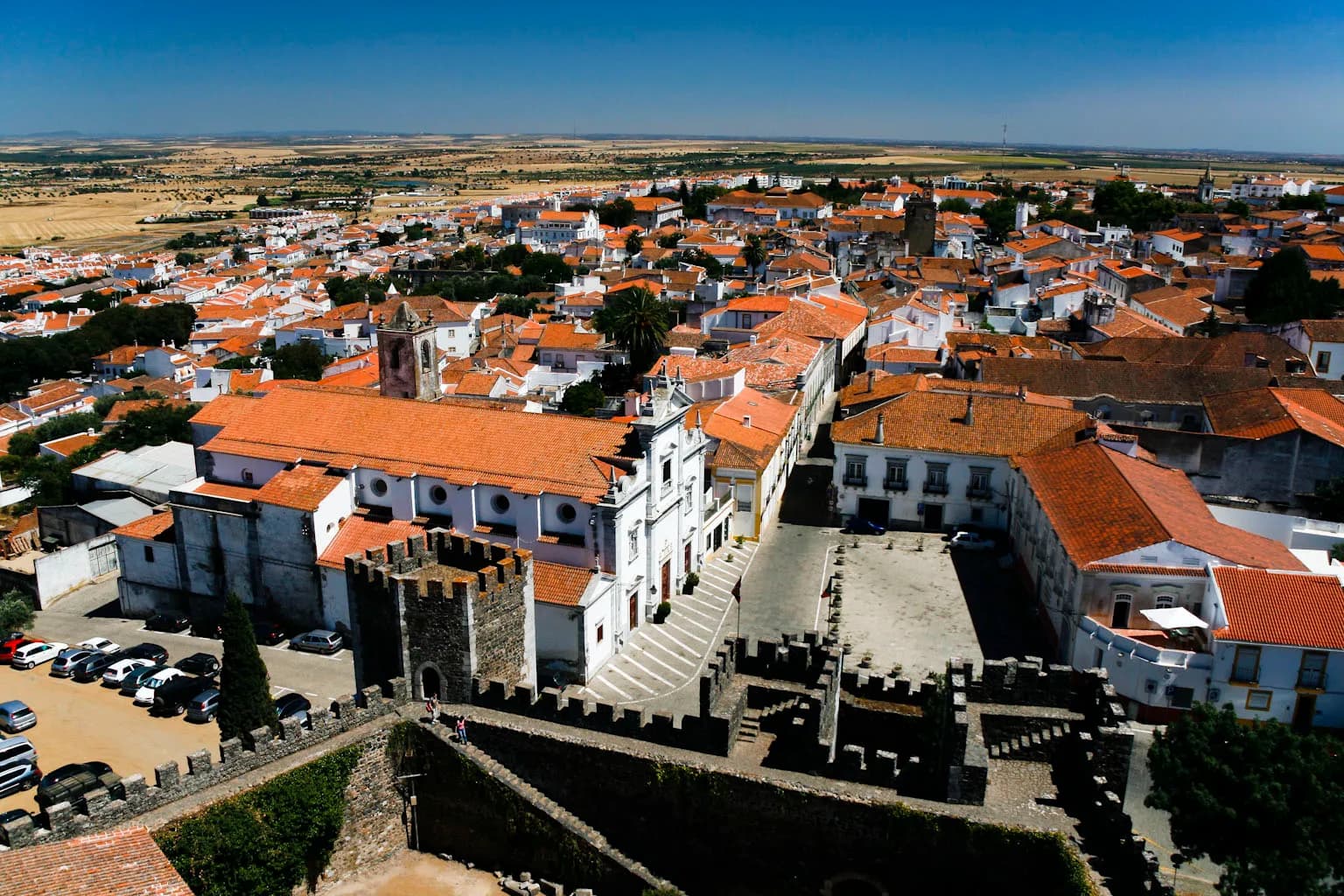
- Beja seen from the castle keep in 2009. The city, capital of the Lower Alentejo, was chosen for the attack because officers in its infantry regiment were opposed to the regime. Digitalsignal, CC BY-SA 3.0, via Wikimedia Commons.
- Passengers from the hijacked liner Santa Maria arrive at Schiphol airport, Amsterdam, on 3 February 1961. The seizure of the ship by Henrique Galvão's commando, in Delgado's name, opened the year of crises that led to Beja. Anefo, CC0, via Wikimedia Commons.
- The plaque at Los Malos Pasos, near Villanueva del Fresno in Spain, where Delgado's remains were found, photographed in 2024. The plaque, from an international committee in his honour, is dated 13 February 1995, thirty years after his murder. Cardoazul, CC BY-SA 4.0, via Wikimedia Commons.
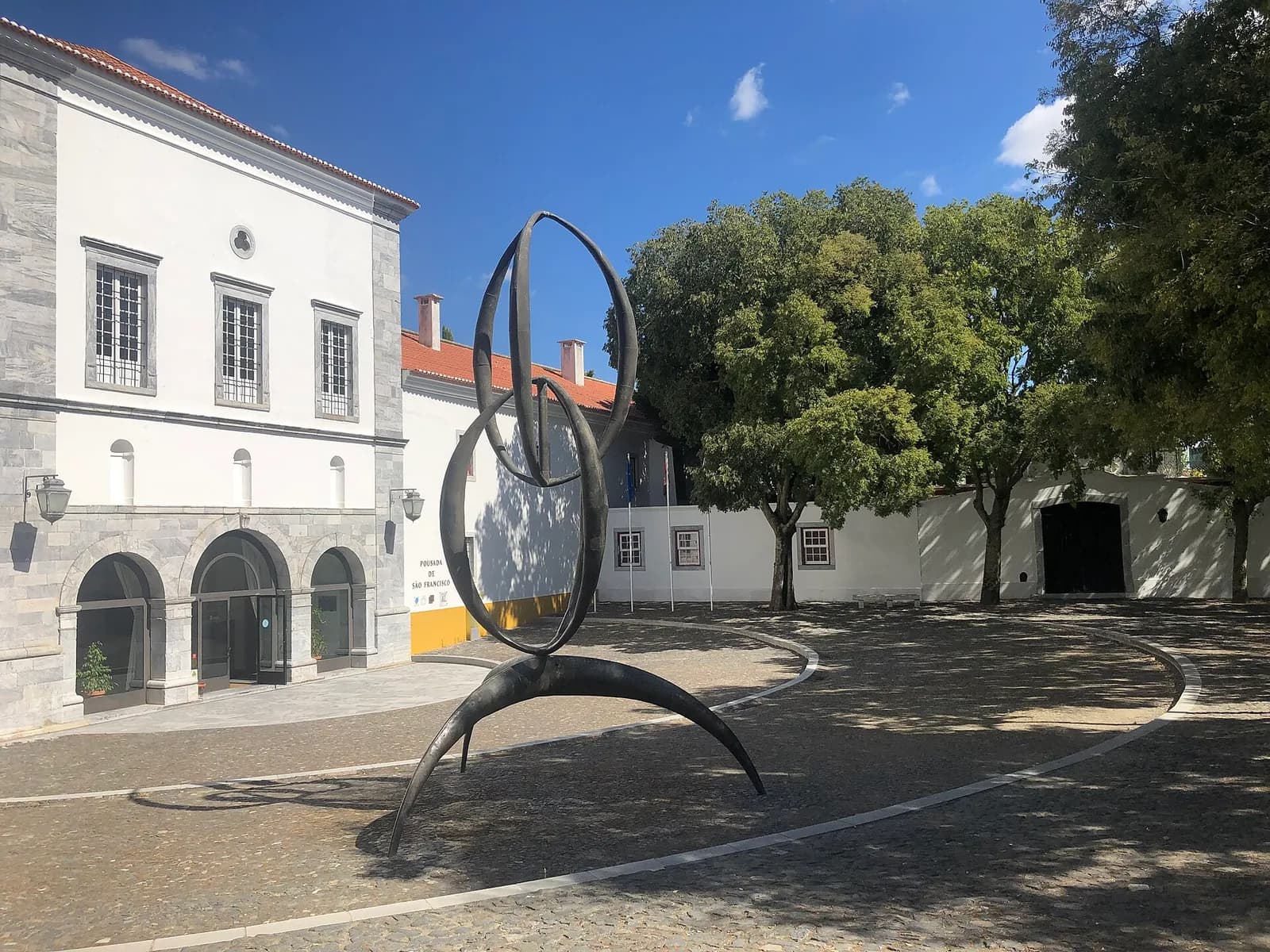
- Jorge Vieira's Monument to the Unknown Political Prisoner in Beja, photographed in 2021 in front of the Pousada de São Francisco. It was erected in 1994 for the twentieth anniversary of the 25 April revolution and moved to this square in 2011. Femagap, CC BY-SA 4.0, via Wikimedia Commons.