

200.482: the day the escudo's rate against the euro was fixed for ever
At 1.40 p.m. on New Year's Eve 1998, the EU Council turned the escudo into a fixed fraction of a currency that did not yet exist in anyone's pocket. The currency was 87 years old, and had lived through four decades of dictatorship-era hard money and twenty years of high inflation.
At a glance
- On 31 December 1998 the Council of the European Union adopted the irrevocable conversion rates for the euro: one euro equals 200.482 Portuguese escudos, in force from 0.00 on 1 January 1999.
- The euro became Portugal's currency on 1 January 1999 for accounts and electronic payments; euro notes and coins arrived on 1 January 2002, and escudo cash stopped being legal tender after 28 February 2002.
- The escudo was created by a decree of the republican Provisional Government on 22 May 1911, replacing the real at 1,000 réis to the escudo.
- Under the Estado Novo the escudo was kept strong and the Banco de Portugal piled up gold; after 1974, inflation passed 25% in several years and the escudo was devalued steadily under a crawling peg from 1977 to 1990.
- The escudo joined the European exchange rate mechanism in April 1992, was devalued three times in the turmoil of 1992 to 1995, and met the Maastricht tests in early 1998.
Eleven numbers on New Year's Eve
At 11 o'clock on the morning of Thursday 31 December 1998, Central European Time, the central banks of the European Union held a teleconference. For half an hour they watched the currency markets and calculated the rates of their national currencies, making sure that the rates between the currencies about to join the euro matched the central rates announced months before.
At 11.30 the European Commission turned those rates into the day's official values of the ecu, the basket unit the euro was about to replace one for one, and sent them to the new European Central Bank in Frankfurt for a cross-check. Shortly after noon the ECB's Governing Council, chaired by its president, Wim Duisenberg, approved its opinion by teleconference. At 12.30 the Commission proposed the rates in a televised session.
At 1.40 p.m. the Council announced that it had adopted them. The regulation, signed in Brussels for the Council, listed eleven rates to six significant figures. The tenth line, written with a continental decimal comma, read: 1 euro = 200,482 Portuguese escudos.
“the irrevocable conversion rate for the euro for each participating currency is the only rate to be used for conversion either way between the euro and the national currency unit and also for conversions between national currency units.”
Nobody in Lisbon could spend a euro that evening. No euro notes existed in circulation and none would for three years. What changed at midnight was that the escudo stopped being a currency with its own price. From then on it was a fixed fraction of the euro, and the same calculation would hold until the last escudo note was handed in.
- Adopted
- 31 December 1998, announced at 1.40 p.m. CET
- Legal act
- Council Regulation (EC) No 2866/98
- Rate
- 1 euro = 200.482 Portuguese escudos
- In force
- 0.00 on 1 January 1999
- Currencies fixed
- Eleven, from the Belgian franc to the Finnish markka
- Euro cash
- From 1 January 2002
Fixed, launched, in your pocket: three different dates
The changeover happened in steps, and the dates are easy to blur. On 31 December 1998 the rate was fixed. On 1 January 1999 the euro became the currency of the eleven founding countries, Portugal among them, but for three years it existed only in accounts, electronic payments and the financial markets. On 1 January 2002 euro notes and coins went into circulation.
| Date | What happened |
|---|---|
| 3 May 1998 | The Council finds that Portugal and ten other countries fulfil the conditions to adopt the single currency on 1 January 1999 |
| 31 December 1998 | The Council adopts the irrevocable rate: 1 euro = 200.482 escudos |
| 1 January 1999 | The euro becomes Portugal's currency; the escudo carries on as a national unit of the euro, used in cash |
| 1 January 2002 | Euro notes and coins go into circulation alongside escudo cash |
| 28 February 2002 | Last day escudo notes and coins are legal tender in Portugal |
| 30 June 2002 | Last day to exchange escudo notes and coins at banks and tax offices |
| 31 December 2002 | Last day to exchange escudo coins at the Banco de Portugal |
| 28 February 2022 | Last day the Banco de Portugal pays out euros for the final series of escudo notes |
Portuguese dates from Decree-Law 117/2001, which allowed 20 years from 28 February 2002 for the Banco de Portugal to redeem the last series of notes. Notes withdrawn before the euro had their own deadlines: several issues taken out of circulation in the late 1990s could be exchanged until 29 December 2017.
A currency for the Republic, 1911
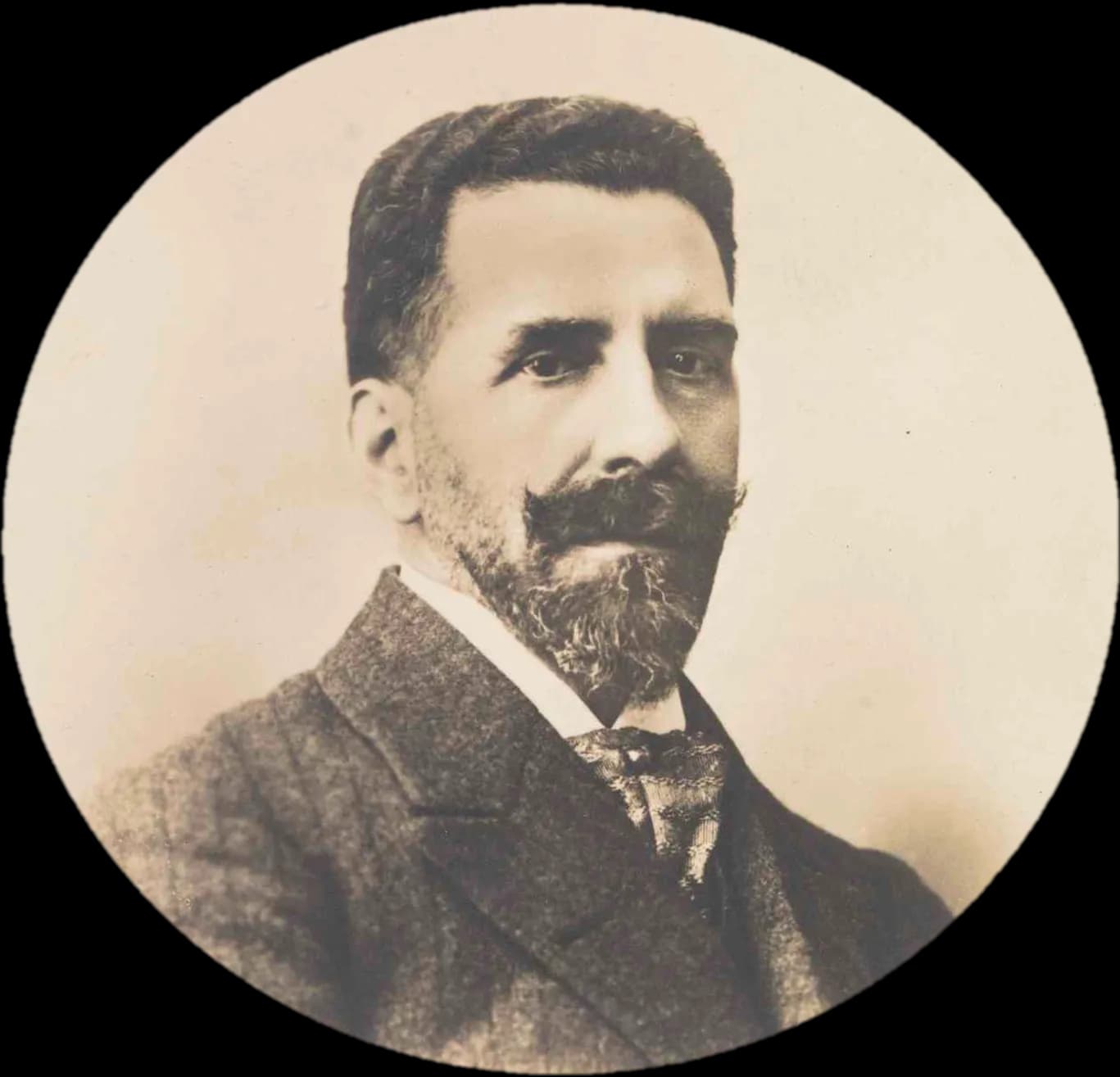
The escudo was born with the Republic. The monarchy fell on 5 October 1910, and on 22 May 1911 a decree of the Provisional Government replaced the old unit, the real, with the escudo. The minister behind the reform was José Relvas, the Ribatejo landowner who, with Eusébio Leão, had proclaimed the Republic from the balcony of Lisbon's City Hall.
The real was tiny, and Portuguese had long counted in mil-réis, thousands of réis. The new unit was worth exactly that: one escudo for 1,000 réis. Amounts were written with the cifrão, a dollar-like sign placed where English puts a decimal point, so that the 1998 rate appears in Portuguese law as 200$482.
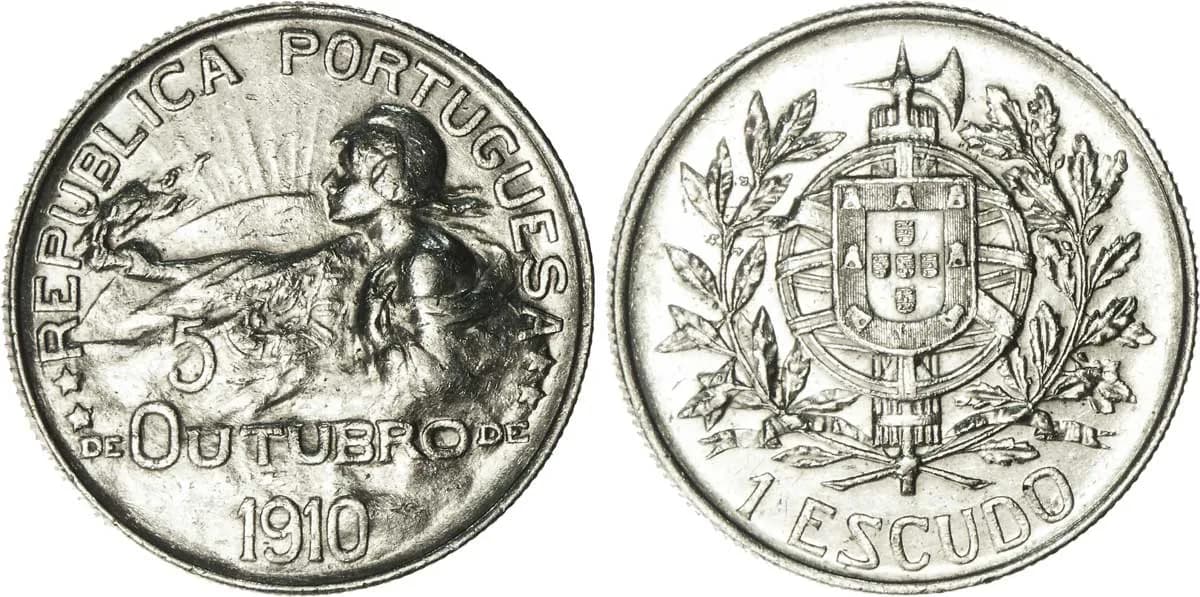
The first one-escudo coin appeared only in 1914, a silver piece commemorating the revolution of 5 October 1910. It had the same weight, 25 grams, and diameter, 37 millimetres, as the monarchy's 1,000-réis coin, but less silver: its fineness fell from 916.6 to 835 thousandths.
The young currency then went to war. Portugal's part in the First World War was paid for partly by printing money. Banco de Portugal notes in circulation rose from 87,070 contos in 1914 to 1,603,162 contos in 1924, a conto being a thousand escudos. A pound sterling cost 5$521 in 1914, 7$82 in 1918 and 131$563 in 1924.
Salazar's hard escudo
Under the military dictatorship that followed the coup of 1926, António de Oliveira Salazar became finance minister in 1928 and made balanced budgets and a stable exchange rate his priorities. In 1933 he founded the Estado Novo (New State), the authoritarian regime that lasted until 1974, under a constitution he had drafted.
In 1931 a reform put the escudo back on the gold standard, suspended since 1891, with a new gold parity. It also limited the Banco de Portugal's power to issue notes and redrew its ties with the government so that deficits could not be financed by printing money.
The return to gold was brief. When Britain abandoned gold on 21 September 1931, Portugal, which traded heavily with Britain and earned much of its foreign income in sterling, suspended convertibility too and kept the escudo pegged to the pound. From 1949 the escudo was tied to the US dollar.
The Second World War made Portugal rich in reserves. Neutral, crowded with refugees and selling goods such as wolfram, the ore used to harden steel, it ran large balance-of-payments surpluses. Much of what Germany paid for wolfram came in gold. The Banco de Portugal held 65 tonnes of gold in 1939 and 306 tonnes in 1945.
After the war the policy stayed the same: stable prices, a strong escudo and the steady accumulation of gold and foreign currency. In the 1960s, money sent home by emigrants kept the current account in surplus despite chronic trade deficits. By the revolution of April 1974, Portugal held about 866 tonnes of gold.
Portugal's gold reserves
tonnes
Euronews (22 January 2026) gives 65 tonnes in 1939, 306 tonnes in 1945 and about 866 tonnes at the time of the April 1974 revolution, which it elsewhere rounds to “more than 800”. The 2026 figure, 382.66 tonnes, is the World Gold Council figure quoted by the same report.
Show the data
| Gold held | |
|---|---|
| 1939 | 65 |
| 1945 | 306 |
| 1974 | 866 |
| 2026 | 382.7 |
Inflation, the IMF and the crawling peg, 1974 to 1990
Prices were already rising before the Carnation Revolution: consumer inflation was 13.0% in 1973. Then came the end of the dictatorship, the independence of the colonies, the collapse of the Bretton Woods system of fixed exchange rates and the oil shock. Inflation reached 26.2% in 1974 and stayed above 15% every year until 1985.
The Banco de Portugal's own account blames demand that outran what the economy could produce, financed by borrowing abroad. Twice, in 1977–78 and in 1983, balance-of-payments crises sent Portugal to the International Monetary Fund. The remedies were higher interest rates, credit ceilings, capital controls and a cheaper escudo. In August 1977 the government introduced a crawling peg, a regime of small, regular monthly devaluations.
| Arrangement | Type | Agreed | Drawn |
|---|---|---|---|
| 25 April 1977 to 24 April 1978 | Stand-by | SDR 42.4 million | SDR 42.4 million |
| 5 June 1978 to 4 June 1979 | Stand-by | SDR 57.35 million | None |
| 7 October 1983 to 28 February 1985 | Stand-by | SDR 445 million | SDR 259.3 million |
| 20 May 2011 to 30 June 2014 | Extended Fund Facility | SDR 23,742 million | SDR 22,942 million |
The SDR (special drawing right) is the IMF's unit of account. The 2011 IMF loan was one part of the joint EU, euro area and IMF programme.
Devaluation worked by stealth. Real wages, pensions and savings fell sharply, and wealth moved from creditors to debtors, chief among them the state. The Banco de Portugal's governor said in 2019 that money illusion hid the costs and their unequal sharing. Inflation averaged 21.4% a year from 1978 to 1985 and reached 28.5% in 1984.
Consumer price inflation in Portugal, 1960 to 2025
% change on previous year
Annual rate of change of the consumer price index (total), from INE via PORDATA, last updated 11 February 2026. Highlighted: the revolution (1974), the escudo's entry into the exchange rate mechanism (1992), the launch of the euro (1999) and euro cash (2002).
Show the data
| Consumer price index, total | |
|---|---|
| 1960 | 2.6 |
| 1961 | 0.5 |
| 1962 | 2.4 |
| 1963 | 1.7 |
| 1964 | 3.1 |
| 1965 | 4.7 |
| 1966 | 6.6 |
| 1967 | 4.5 |
| 1968 | 5.8 |
| 1969 | 8.6 |
| 1970 | 4.3 |
| 1971 | 11 |
| 1972 | 11.1 |
| 1973 | 13 |
| 1974 | 26.2 |
| 1975 | 17.3 |
| 1976 | 19.9 |
| 1977 | 26.7 |
| 1978 | 20.8 |
| 1979 | 21.7 |
| 1980 | 16.1 |
| 1981 | 19.2 |
| 1982 | 21.5 |
| 1983 | 24 |
| 1984 | 28.5 |
| 1985 | 19.5 |
| 1986 | 12.6 |
| 1987 | 9.7 |
| 1988 | 9.9 |
| 1989 | 12.5 |
| 1990 | 13.6 |
| 1991 | 11.8 |
| 1992 | 9.6 |
| 1993 | 6.8 |
| 1994 | 5.4 |
| 1995 | 4.2 |
| 1996 | 3.1 |
| 1997 | 2.3 |
| 1998 | 2.6 |
| 1999 | 2.3 |
| 2000 | 2.9 |
| 2001 | 4.4 |
| 2002 | 3.6 |
| 2003 | 3.2 |
| 2004 | 2.4 |
| 2005 | 2.3 |
| 2006 | 3.1 |
| 2007 | 2.5 |
| 2008 | 2.6 |
| 2009 | -0.8 |
| 2010 | 1.4 |
| 2011 | 3.7 |
| 2012 | 2.8 |
| 2013 | 0.3 |
| 2014 | -0.3 |
| 2015 | 0.5 |
| 2016 | 0.6 |
| 2017 | 1.4 |
| 2018 | 1 |
| 2019 | 0.3 |
| 2020 | 0 |
| 2021 | 1.3 |
| 2022 | 7.8 |
| 2023 | 4.3 |
| 2024 | 2.4 |
| 2025 | 2.3 |
The 1983 programme balanced the current account, but in 1985, the year before Portugal joined the European Economic Community, inflation was still around 20%, the budget deficit exceeded 8% of GDP and income per head was about half the Community average.
Into the exchange rate mechanism, 1992 to 1998
Membership of the Community from January 1986 changed the policy. Bringing inflation down became the main goal, and a stable escudo the means. The monthly devaluations were made smaller and smaller, and in October 1990 the crawling peg was dropped in favour of an escudo measured against a basket of five European currencies.
On 6 April 1992, two months after the Maastricht Treaty was signed, the escudo joined the exchange rate mechanism (ERM) of the European Monetary System. Members kept their currencies within a band around agreed central rates against each other; the escudo was allowed to move 6% either way. Joining was also a condition for adopting the single currency from the start.
At first the escudo was the strongest currency in the grid. Then came the currency crisis of 1992, which drove the pound and the lira out of the mechanism. Portugal brought in exchange controls on 24 September 1992, and the Banco de Portugal spent heavily to defend the escudo. It was devalued three times in the next two and a half years, each time alongside the Spanish peseta.
6 April 1992
The escudo joins the ERM with a band of 6% either side
24 September 1992
Portugal introduces exchange controls during the ERM crisis
22 November 1992
Portugal and Spain announce a 6% devaluation of the escudo's and peseta's central rates
13 May 1993
Spain devalues the peseta by 6.5%; the escudo quickly follows by the same amount
August 1993
ERM bands are widened to 15% either side
6 March 1995
The escudo's rate against the ecu is cut by 3.5%, the peseta's by 7%
March 1996 to February 1998
The escudo trades close to its central rates through the two-year test period
After 1995 the escudo held. Markets came to believe Portugal would make it into the single currency, and that belief pulled interest rates down: between 1993 and 1998 the gap between Portuguese and German ten-year bond yields narrowed from about 5 percentage points to about 0.3.
Passing the Maastricht test
The Maastricht Treaty set four entry tests: low inflation, sound public finances, a stable exchange rate and low long-term interest rates. In March 1998 the European Monetary Institute, the forerunner of the ECB, published its verdict on each candidate. Portugal passed on inflation, the exchange rate and interest rates, and its deficit was below 3% of GDP; its public debt was just above the 60% ceiling but falling.
| Criterion | Portugal | Reference value |
|---|---|---|
| HICP inflation, year to January 1998 | 1.8% | 2.7% |
| Long-term interest rate, year to January 1998 | 6.2% | 7.8% |
| Government deficit, 1997 | 2.5% of GDP | 3% of GDP |
| Government debt, 1997 | 62.0% of GDP (forecast 60.0% for 1998) | 60% of GDP |
| Exchange rate | In the ERM since 6 April 1992; no devaluation on its own initiative in the two years to February 1998 | Two years in the ERM without severe tension |
On 3 May 1998 the Council, meeting as heads of state or government, decided that eleven countries, Portugal among them, fulfilled the conditions for the single currency on 1 January 1999. The same weekend, ministers and central bankers announced that the existing ERM central rates between those currencies would become the final ones.
That is why the escudo's rate against the other ten currencies was settled months before New Year's Eve. What remained open was its value in ecus, and so in euros, which depended on the market rates of 31 December. Dividing the two fixed rates gives 102.505 escudos to the Deutsche Mark, the escudo's last central rate against the anchor currency of the system.
Two currencies in the wallet, 2002
For three years the euro was a unit on bank statements while Portuguese still paid in escudos. In September 2001 euro notes and coins were delivered to the banks. Large companies and shops received them in December, and from 17 December the public could buy starter kits worth 10 euros, with every denomination of coin.
Some 537 million euro banknotes had been printed for Portugal by 1 January 2002, out of 14.89 billion for the twelve countries changing over. Portuguese law required prices to be shown in both currencies around the changeover, as in Austria and Greece. Escudo cash remained legal tender until 28 February 2002.
Many people felt the euro made things dearer. The Banco de Portugal estimated that the changeover added about 0.2 percentage points to consumer price inflation in the first quarter of 2002, and about 0.5 points to services, with larger rises for some frequently bought goods and services usually paid in cash. The standard VAT rate also rose from 17% to 19% that June, which muddied the picture.
The last escudos took twenty years to disappear. Coins could be exchanged at the Banco de Portugal until the end of 2002. For the last series of notes, the Discoveries series with portraits from João de Barros on the 500 to Henry the Navigator on the 10,000, the bank had until 28 February 2022. On 28 February 2002, 15.1 million of those notes were in public hands; by late 2021 about 11.4 million, worth around 95 million euros, had never come back.
The euro years
The euro gave Portugal what the escudo rarely had: low inflation and cheap credit. Inflation stayed between about 2% and 4.5% a year until 2008. Borrowing boomed instead. From 1995 to 2007 the deficit on the current and capital account went from near balance to 8.6% of GDP, households saved less and the state spent windfall revenue rather than paying down debt.
When the financial crisis hit, the budget deficit rose above 11% of GDP in 2010. In spring 2011 Portugal could no longer borrow on the markets. On 6 April, after the finance minister, Teixeira dos Santos, admitted the country needed outside help, Prime Minister José Sócrates announced a request for assistance. The EU, the euro area countries and the IMF lent up to 78 billion euros, and Portugal left the programme in June 2014.
“With the single currency and the single monetary policy it is no longer possible to use currency devaluation to offset productivity differentials or real appreciations resulting from inflation differences and to restore the competitiveness and employment of a given economy.”
That was the trade sealed on 31 December 1998. The escudo had let governments cut wages and debts quietly, through inflation and devaluation. The euro took that tool away. In 2022, when inflation jumped to 7.8%, Portugal had no currency of its own to devalue, and monetary policy was set for the whole euro area.
FAQs
How many escudos was one euro worth?
One euro equals 200.482 Portuguese escudos. The rate was adopted by the Council of the European Union on 31 December 1998, in Regulation (EC) No 2866/98, and took effect at midnight on 1 January 1999. It is irrevocable and was used for every conversion afterwards.
When did Portugal stop using the escudo?
The euro replaced the escudo as Portugal's currency on 1 January 1999, but escudo notes and coins stayed in use. Euro cash arrived on 1 January 2002, and escudo cash remained legal tender alongside it until 28 February 2002.
Can I still exchange old escudo notes or coins?
No. Escudo coins could be exchanged at the Banco de Portugal until 31 December 2002. The last series of notes could be exchanged until 28 February 2022, and older series had earlier deadlines. Escudos now have only collector value.
When was the escudo created?
By a decree of the Provisional Government of the First Republic on 22 May 1911, prepared by the finance minister José Relvas. One escudo replaced 1,000 réis. The first one-escudo coin was struck in 1914.
Why did Portugal devalue the escudo so often?
After 1974 high inflation and external deficits led to IMF programmes in 1977–78 and 1983 and a crawling peg of regular devaluations from August 1977 to October 1990. Inside the European exchange rate mechanism the escudo's central rate was cut three times, in November 1992, May 1993 and March 1995.
On the timeline
Open the timelineNearby moments from portugal in europe (1986–today).
Portuguese voters narrowly reject the decriminalisation of abortion in the country's first national referendum since the 1933 Estado Novo constitution. With turnout below the 50% threshold, the result is constitutionally non-binding, but the political debate it opens shapes a decade of family-law reform leading to the 2007 referendum that finally liberalises the law.
Expo '98 closes in Lisbon after 132 days and more than ten million visits. The world's fair left a lasting mark on the city: its once-derelict industrial riverside site became the Parque das Nações district, home to the Oceanário and Santiago Calatrava's Gare do Oriente.
The Swedish Academy announces that José Saramago has won the Nobel Prize in Literature, the first Portuguese-language writer to receive it, for work that 'with parables sustained by imagination, compassion and irony continually enables us once again to apprehend an elusory reality'.
The escudo's last rate, 1998
The European Union fixes the irrevocable conversion rates for the euro, which launches the next day: one euro equals 200.482 Portuguese escudos. The escudo, created in 1911, stayed legal tender in notes and coins until 28 February 2002, two months after euro cash arrived.
Amália Rodrigues, the queen of fado, dies at her home in Lisbon's Rua de São Bento aged 79. The government declares three days of national mourning, the parties suspend campaigning for the general election four days later, and in 2001 she becomes the first woman laid in the National Pantheon.
António Guterres's Socialist Party wins the legislative election with exactly half the seats in parliament, 115 of 230, one short of an absolute majority, in a vote held days after the death of Amália Rodrigues had paused the campaign.
SATA Air Açores Flight 530M, a turboprop on the inter-island route from Ponta Delgada to Horta and Flores, flies into the slopes of Pico da Esperança on São Jorge in heavy rain and cloud, killing all 35 people on board. It remains the deadliest accident involving the BAe ATP and the worst in SATA's history.
Coming up in history
All long reads 2 January 1955Norton de Matos, the general who founded Huambo and defied Salazar
 3 January 1917The convention that sent Portugal to the trenches of Flanders, 1917
 4 January 1961The Baixa de Cassanje revolt: cotton, “Maria” and the bombs of 1961
 5 January 2014Eusébio: from Mafalala to the National Pantheon, 1942–2014
27 sources
Archives, scholarship and reporting this article was checked against.
- 1
Council Regulation (EC) No 2866/98 of 31 December 1998 on the conversion rates between the euro and the currencies of the Member States adopting the euroEUR-Lex, Official Journal of the European Communities L 359, 31 December 1998
- 2
Determination of the euro conversion rates (press release, 31 December 1998)European Central Bank
- 3
Two decades with the euro: Portugal's perspective, lecture by Carlos da Silva Costa, Governor of the Banco de Portugal, Zagreb, 20 September 2019Bank for International Settlements, Central bankers' speeches (text from the Banco de Portugal)
- 4
- 5
Stock monetário e desempenho macroeconómico durante o Estado Novo, by Fernando Teixeira dos SantosAnálise Social, vol. XXIX (128), 1994, pp. 981-1003
- 6
Decreto-Lei n.º 117/2001 sobre a introdução das notas e moedas em eurosCVCE.eu, University of Luxembourg (text from Diário da República, I série-A, n.º 90, 17 April 2001)
- 7
Taxa de inflação (taxa de variação do índice de preços no consumidor): total e por consumo individual por objetivoPORDATA (source: INE), last updated 11 February 2026
- 8
- 9
- 10
- 11
- 12Adeus definitivo ao escudo. Últimas 11,4 milhões de notas vão prescrever, by Elisabete TavaresDiário de Notícias, 9 November 2021
- 13Tem destas notas de escudo em casa? Pode ganhar dinheiro com elas até sexta-feiraObservador, 26 December 2017
- 14
Museu aberto 127: Moeda de Escudo, Portugal, século XX (1914)Museu de Angra do Heroísmo
- 15
José Relvas: um político republicano, by Vítor NetoRevista de História das Ideias, vol. 34 (2016), Universidade de Coimbra
- 165 de Outubro. A “aliança da carbonária com o republicanismo radical” que derrubou a monarquia, by Rui Miguel GodinhoDiário de Notícias, 5 October 2025
- 17
O Estado Novo (1933-1974)Assembleia da República
- 18
From colonial trade to Nazi gold: why Portugal holds vast reserves, by Joana Mourão CarvalhoEuronews, 22 January 2026
- 19
Fernando Santos (faculty profile)Porto Business School, University of Porto
- 20
Fernando Teixeira dos Santos new Governor for PortugalEuropean Investment Bank, 8 August 2005
- 21
Portugal pediu ajuda externa há cinco anosSábado, 6 April 2016
- 22
Portugal: history of lending arrangementsInternational Monetary Fund
- 23
Financial assistance to PortugalEuropean Commission, Economy and Finance
- 24
Interpreting the ERM Crisis: Country-Specific and Systemic Issues, by Willem H. Buiter, Giancarlo M. Corsetti and Paolo A. PesentiPrinceton Studies in International Finance No. 84, Princeton University, March 1998
- 25
¿La peseta, en crisis?, by M.ª Teresa MeraRazón y Fe, tomo 231 (1995), pp. 641-647
- 26
- 27
Museu do DinheiroTime Out Lisboa
Image credits
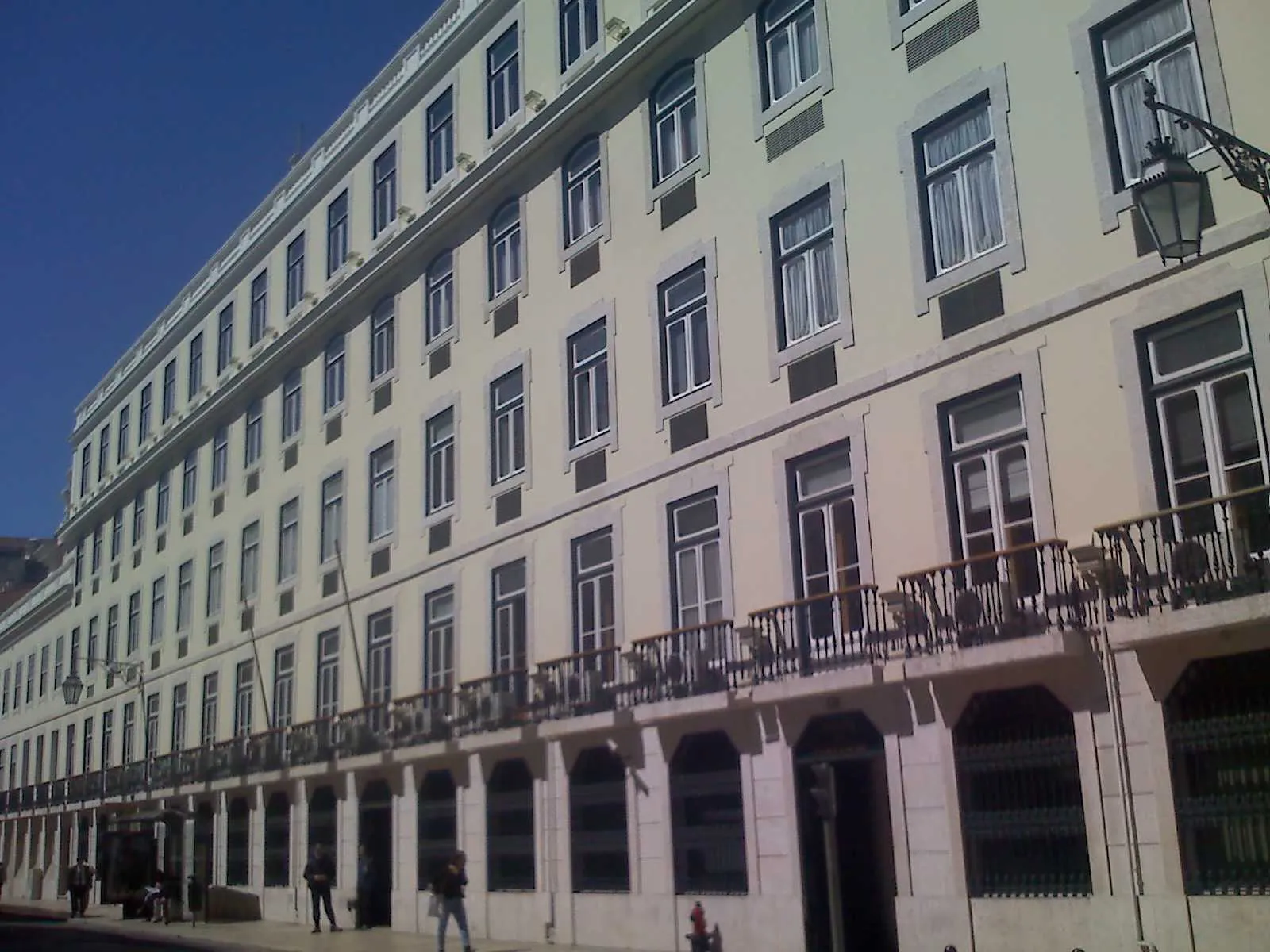
- The headquarters of the Banco de Portugal in Lisbon, which issued escudo banknotes until euro cash arrived in 2002 and went on paying out euros for the last series of escudo notes until 28 February 2022. Photographed in 2008. Jsobral, CC BY-SA 3.0, via Wikimedia Commons.
- José Relvas, photographed in 1911 as Minister of Finance in the Provisional Government that created the escudo. Unknown author, Public domain, via Wikimedia Commons.
- The first one-escudo coin, struck in 1914 to mark the revolution of 5 October 1910, with the national arms and the new unit on the reverse. cgb, CC BY-SA 3.0, via Wikimedia Commons.