

Norton de Matos, the general who founded Huambo and defied Salazar
He founded a city in the Angolan highlands, trained an army for the Western Front and led Portugal's freemasons. At 81 he challenged the dictatorship for the presidency, then withdrew on the eve of the vote.
At a glance
- José Norton de Matos died at his home in Ponte de Lima, the Minho town where he was born, on 2 January 1955, aged 87. Some records give 3 January.
- As governor-general of Angola from 1912 to 1915 he ordered the founding of Huambo, on the Benguela Railway; the city was renamed Nova Lisboa in 1928 and took back its old name after independence.
- As war minister from 1915 to 1917 he organised the Corpo Expedicionário Português, the corps Portugal sent to the Western Front, and staged the training camp at Tancos as a national showpiece.
- As high commissioner in Angola from 1921 to 1924 he pushed white settlement and road building, banned African languages from mission schools and African associations, and held that work was compulsory for Africans. The historian Fernando Rosas says forced labour soon returned and spread.
- Grand Master of the Grande Oriente Lusitano from 1930 to 1935, he was the democratic opposition's first presidential candidate against the Estado Novo, and withdrew on 12 February 1949, the day before the vote.
An obituary passed by the censor
On the afternoon of Monday 3 January 1955, the front page of the Diário de Lisboa carried a short, unsigned piece headed “Um exemplo”, An example, beside a photograph of an old man in round glasses. “General Norton de Matos has died,” it began. Further down the page, a small box told readers that the issue had been seen by the Censorship Commission.
The general had died at his home in Ponte de Lima, the town on the river Lima where he had been born in 1867. Six years earlier he had stood for president against the regime's own head of state. Now the Lisbon paper gave him most of page 3, praising the soldier and colonial administrator and passing quickly over the opposition leader.
“One could disagree with his political ideas, but never with the worth of what he did for his country.”
Norton de Matos was a republican and a freemason who opposed Salazar to the end. He was also, in the words of the historian René Pélissier, the most striking example of the governors who ruled Angola like proconsuls, and historians have judged that record more harshly than his obituarists did.
From the Minho to Goa and Macau
José Mendes Ribeiro Norton de Matos was born in Ponte de Lima on 23 March 1867 into a liberal, middle-class family with an English line on his father's side. He studied mathematics at Coimbra from 1884, where he read pamphlets summarising Marx and then the works of Proudhon, which he later said influenced him more than anything else he read as a student. He trained as a staff officer at the Army School and was commissioned in 1890.
In 1898 he sailed for Portuguese India. On 4 August that year the governor-general, Joaquim José Machado, made him director of a new surveying department, and for ten years he mapped Goa's territory and drew up its land register, while also running the forests and public works. In 1901 he served as military governor of Satari to put down a revolt there.
Back in Lisbon in October 1908, he sailed again in May 1909, for Macau, as secretary of Machado's mission to negotiate the territory's borders with China. The talks stalled. By 1910 he was home again, and from 1911 he taught geodesy and topography at the Instituto Superior Técnico in Lisbon.
Governor-general of Angola, 1912 to 1915
In April 1912 the young Republic named the 45-year-old major governor-general of Angola. On 17 May, before sailing, he was initiated into the Lisbon lodge Pátria e Liberdade under the masonic name Danton, and pledged to abolish slavery in practice. He left on the steamer Beira on 1 June.
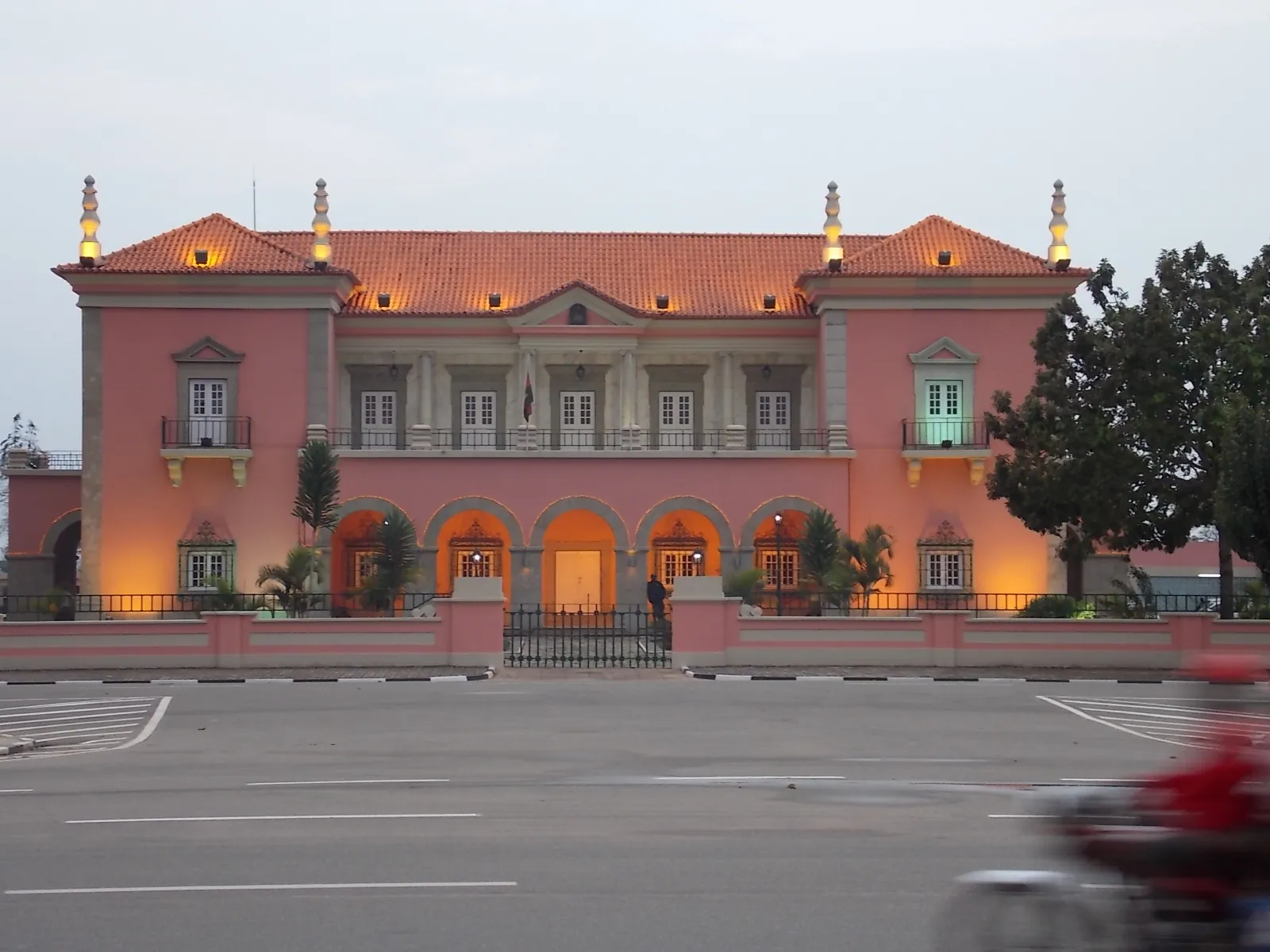
In his memoirs he recalled finding, on arrival, that the camp at Huambo, on the central plateau where the Benguela Railway was heading, was being called by an English name, Pauling town, after the railway's contractor, Pauling & Co. He ordered the post office to send back letters addressed that way. On 8 August 1912, by his own account, he signed the order creating the city of Huambo.
Those details come from a history of the Benguela Railway by Elísio Romariz Santos Silva, which quotes the memoirs. It dates the opening of the railway section to Huambo to 21 September 1912 and the city's formal inauguration, in Norton's presence, to 23 November. A later high commissioner, Vicente Ferreira, renamed the city Nova Lisboa, New Lisbon, in 1928. Since independence it has been called Huambo again.
His first labour measures were remembered as reforms. A colonial history of 1933 credited him with banning corporal punishment, tightening the contracts under which Africans were hired and forbidding officials to take fees for supplying workers. The historian Cláudia Castelo points out that his plans for Angola's economy also depended on those measures. Rui Ramos, as summarised by Paulo Cesar Gonçalves, describes a governor who wanted Portuguese rural families to emigrate to Angola as well as Brazil while defending forced labour for Africans.
He was also convinced Germany would invade. On 1 January 1913 he wrote to the colonial minister that within months Germany would start a war and attack Angola and Mozambique. He resigned in early 1915 under the dictatorship of Pimenta de Castro and was back in Lisbon on 8 March.
War minister and the “miracle of Tancos”
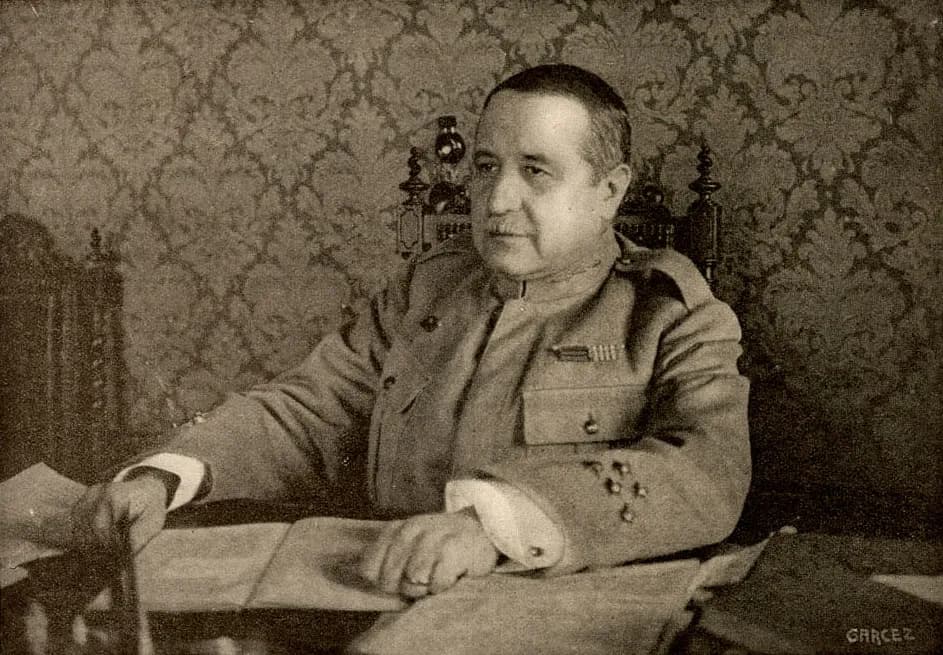
Norton de Matos helped plan the revolt of 14 May 1915 that overthrew Pimenta de Castro. He was elected deputy for Ponte de Lima for the Democratic Party, served briefly as colonial minister and took the war ministry on 22 July 1915. He held it through the governments of Afonso Costa and the Sacred Union cabinet, until December 1917.
After Germany declared war on Portugal on 9 March 1916, about 20,000 men were gathered at the army camp at Tancos between April and June to be trained as a division. Norton de Matos made the camp a national spectacle, publicised with film and photographs under tight censorship, ending in a parade at Montalvo on 22 July 1916. The press soon hailed it as the “miracle of Tancos”.
The historian Helena Pinto Janeiro calls it the largest public relations and propaganda operation the army had ever organised in Portugal, and letters opened by censors that summer show that opinion was not won over. The article on the convention of 3 January 1917 tells how the corps reached Flanders.
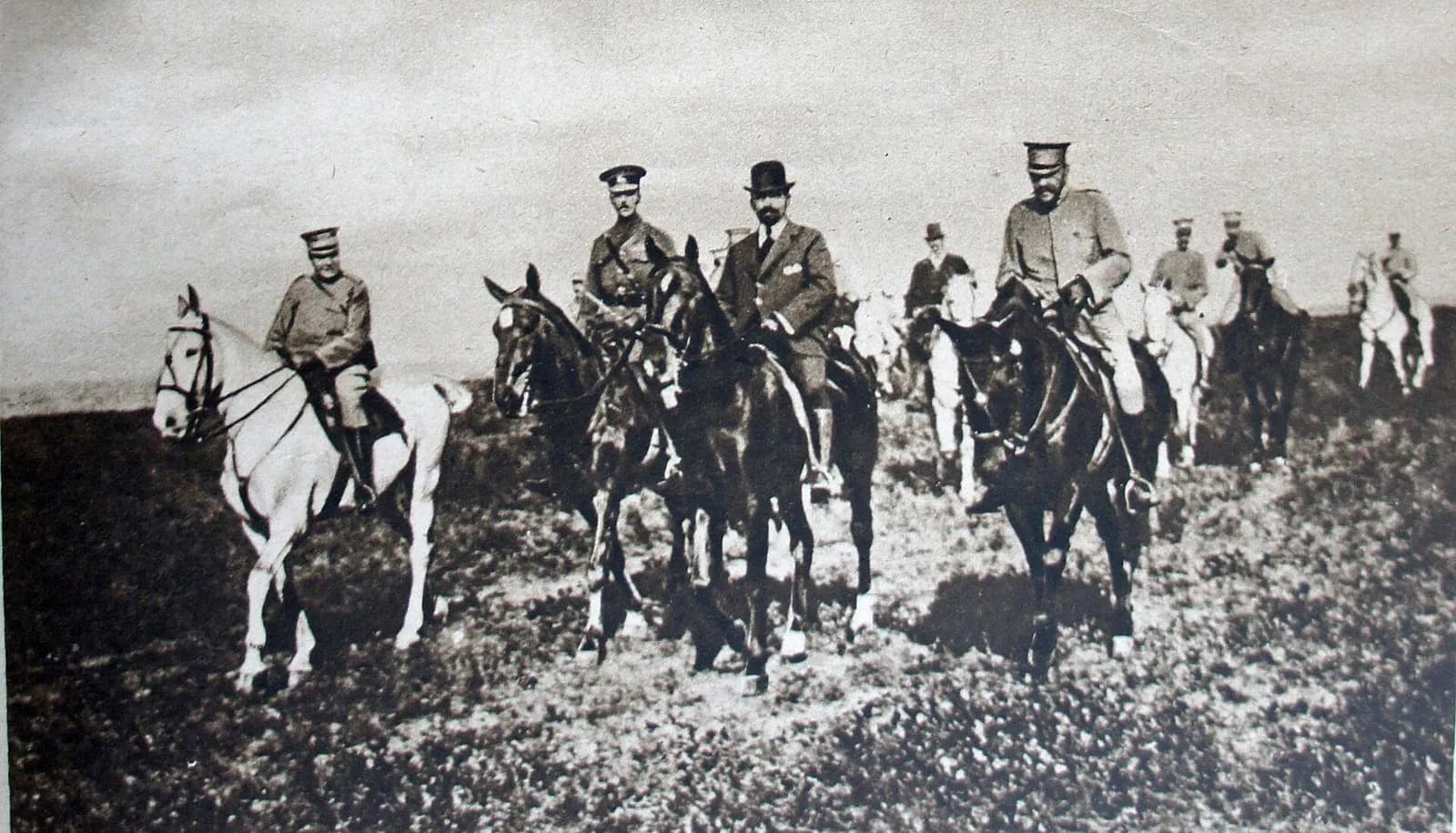
When Sidónio Pais seized power on 5 December 1917, Norton de Matos was acting prime minister and could not stop him. His house on the Avenida Miguel Bombarda was ransacked, he took refuge on a British warship and he spent the next year in exile in London. Reinstated after Sidónio's assassination, he was promoted to general on 4 September 1919, received the grand cross of the Tower and Sword and sat in Portugal's delegation to the Paris Peace Conference.
High commissioner, 1921 to 1924
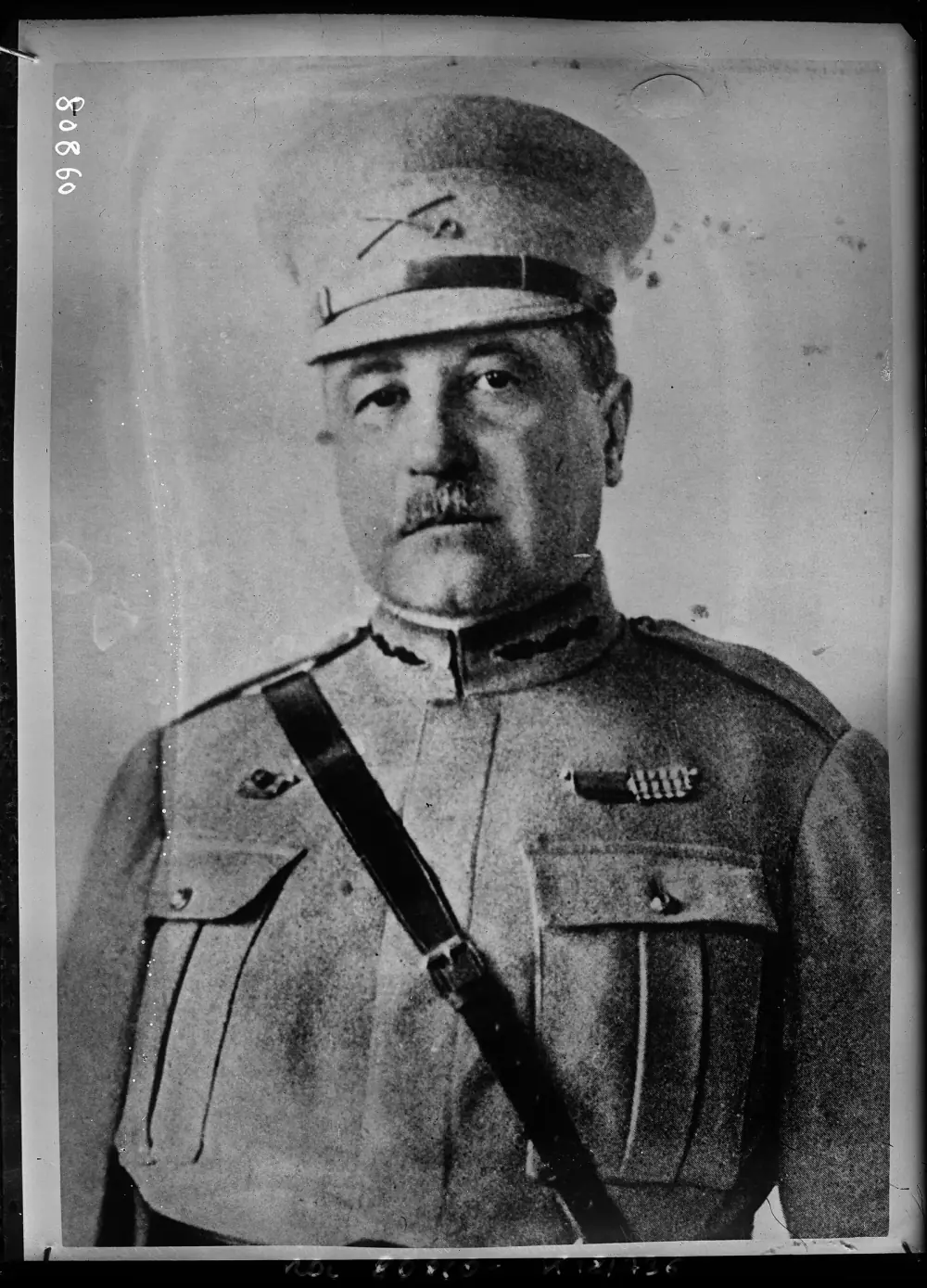
In 1920 he was offered a new post, high commissioner, which gave the holder wide legislative and financial powers over the colony. He governed Angola with it from April 1921 to 30 June 1924. His programme was huge: railways, ports, roads and housing first, then hospitals, telegraph lines and radio stations, then geological and scientific services, all funded largely from the colony's own resources and loans.
Settlement by white Portuguese families was at its core. Decrees from 1921 to 1923 reserved some 30 million hectares of the Benguela plateau for white farmers and 5 million for capitalist companies. The historian Fernando Rosas notes that he planned 600 villages for whites only, kept entirely apart from Black Africans, and credits him with about 23,000 kilometres of roads.
White population of Angola, 1900 to 1960
people
Norton de Matos's settlement plans were followed by slow growth: about 30,000 whites by 1930. Figures from René Pélissier's table, which marks those for 1900 to 1930 as approximate. For 1950 his table and another footnote give 78,826; one passage of his main text gives 78,286.
Show the data
| White residents | |
|---|---|
| 1900 | 9,000 |
| 1910 | 12,000 |
| 1920 | 20,700 |
| 1930 | 30,000 |
| 1940 | 44,083 |
| 1950 | 78,826 |
| 1960 | 172,529 |
He spent far more on schools than his predecessors: by his own account he found the education budget cut to 26 contos in 1921 and raised it to 2,662 contos in 1923-24. But the education historian Sílvia de Oliveira notes that he saw Africans as little more than “simple instruments of labour”, a phrase from his 1926 book on Angola. His schools for Africans were meant to be workshops more than places of learning, turning out cheap skilled labour.
His Decree no. 77 of 1921 made Portuguese compulsory in every mission and barred mission schools from teaching African languages. Those languages could be spoken only in catechism, and as a temporary aid while pupils learned Portuguese; writing them, in pamphlets or newspapers, was forbidden.
Money ran out first. The deficit already stood at half a million pounds in 1921. His plan to borrow and build, meant to run for at least ten years, lasted three without the results he wanted, and the Banco Nacional Ultramarino, the colony's bank of issue, obstructed him. Francisco Cunha Leal attacked him in a book titled Calígula em Angola, accusing him of despotism and losing control of the finances. After clashes with the colonial minister, Rodrigues Gaspar, he resigned in 1924.
Forced labour and its critics
Norton de Matos always presented himself as the enemy of forced labour. Writing in 1953, he said decrees issued in Angola between 1915 and 1921 had almost established forced labour there, and that undoing them earned him campaigns from those who exploited African workers. After he left in 1924, he wrote, his protective laws were torn up so fast that Afonso Costa warned Lisbon of the bad impression it made at the League of Nations in Geneva.
Outside observers saw something else. Edward Alsworth Ross, a sociologist from the University of Wisconsin, gathered evidence in Angola between 19 July and 3 September 1924, weeks after Norton de Matos left, questioning the villagers themselves first of all. His report, sent to the League's Temporary Slavery Commission in June 1925, described road gangs, two-thirds of them women in one case, often working without pay or food, and called the labour system “virtually state serfdom”.
“To clear of trees, grade, smooth and surface with ant-hill clay these broad strips imposes a crushing burden on natives without picks, spades, shovels, wheel barrows or road scrapers.”
Later historians have been blunt too. In his RTP documentary series on Africa, Fernando Rosas sums up Norton's view as “work educates and gives value and is, therefore, compulsory” (translated from Portuguese). Rosas argues that the contracts he drew up for African workers soon lapsed and forced labour returned and spread. He calls him the first political figure to use indígena, native, as a rank below both whites and wage-earning Africans, and says he defended an apartheid-style racial regime.
René Pélissier calls him autocratic. He writes that in 1922, citing rumours of a plot, Norton banned the Liga Angolana and the Grémio Africano, associations of educated Africans and people of mixed descent, and jailed or deported activists such as António de Assis Júnior.
Cláudia Castelo adds that his scheme to settle Portuguese civil servants, workers, fishermen and small farmers pushed Angola's creole elites down the social ladder. The historian Armando Malheiro da Silva, who has worked through his private papers, describes his ideas as liberal and philanthropic but markedly ethnocentric and nationalist, and notes that only a small part of his plans was carried out.
London, prison and the Grand Orient
The Republic made amends by sending him to London as its ambassador. The University of Lisbon's social history archive dates his appointment to 1 July 1924; Malheiro da Silva says he left for London in August 1925. The military dictatorship born on 28 May 1926 dismissed him on 21 June. After taking part in the failed republican revolt of February 1927 he was arrested and sent to live in Ponta Delgada, in the Azores, until 1929.
Portuguese freemasonry then gave him a platform. Elected Grand Master of the Grande Oriente Lusitano on 31 December 1929, he took office on 30 April 1930 and travelled to masonic congresses in Antwerp and Brussels. In early 1935 he protested publicly against the bill banning secret societies. That year he gave up the grand mastership, on the eve of the law's publication, was forced out of the Instituto Superior Técnico on 16 May and retired from the army.
He had already paid for his opposition: during the Madeira revolt of April 1931 he was held for about a month at the Estrela military hospital in Lisbon. After 1935 he went into business to earn a living and wrote four volumes of memoirs. In 1943 he became president of MUNAF, the anti-fascist unity movement, and he later chaired the advisory board of the Movement of Democratic Unity, the MUD, formed to contest the 1945 election.
The candidate of 1949
In April 1948 his supporters lodged his candidacy with the president of the Supreme Court, for the presidential election that was eventually held on 13 February 1949 against Marshal Carmona. He was the democratic opposition's first presidential candidate against the Estado Novo. His Manifesto to the Nation appeared in July 1948, and his platform drew in republicans, socialists, liberals, communists, Catholics and even a few monarchists.
His conditions for a fair vote were the regime's pillars in reverse: the abolition of the political police and of the prison regime that allowed torture, the closure of the Tarrafal camp in Cape Verde, an amnesty for political prisoners, the end of censorship and freedom for political parties. His house was kept under guard, his post was read by censors and supporters were arrested.
Who signed his nomination papers, 1948: the largest groups
signatories
The candidacy's own provisional tally of the documented signatories, quoted by Malheiro da Silva. These six groups made up 65 per cent of the total. Nomination needed at least 200 registered voters.
Show the data
| Signatories by profession | |
|---|---|
| Merchants | 147 |
| Lawyers | 91 |
| Property owners | 85 |
| Doctors | 54 |
| Industrialists | 48 |
| Teachers | 41 |
The campaign ran through January 1949, with rallies in Lisbon, Porto, Évora and Beja. In Porto on 23 January he spoke to a crowd that the Museu do Aljube puts at about 10,000. But the coalition split over whether to go to the polls at all, with the communists pressing for withdrawal. His great-nephew and biographer, José Norton, records family accounts of scenes close to physical violence at his house in the days before the vote, meant to force him to pull out.
On the evening of 11 February Mário de Azevedo Gomes, who ran the candidacy's central office, told the press that the general would withdraw the next day because the government had not given enough guarantees. On 12 February Azevedo Gomes himself handed the withdrawal to the Supreme Court, and Carmona was re-elected unopposed.
The bitterness of never reaching the polls, Castelo writes, estranged Norton de Matos from the communists for good. A year later Azevedo Gomes wrote to him that he still did not know whether withdrawing had been a grave mistake, although few around the general had left him any other choice. The earlier MUD campaign is covered in the article on the 1945 election.
Death and memory
In August 1953, at 86, he made what Malheiro da Silva calls his last public appearance, at an opposition meeting in Aveiro during the legislative campaign. He urged a fight against communism and called on the head of state and on Salazar to bring in real freedom. In the same speech he said that, had he been elected, he would have expelled communists from the colonies, so that no communist propaganda could reach Africans he described in the racial language of his age.
He had been ill for some time at his house in Ponte de Lima, and he died there on 2 January 1955. The Diário de Lisboa noted that he had kept his lucidity to the end and was still writing about colonial affairs. Its obituary praised the “miracle of Tancos” and his work in Angola, and dealt with the 1949 campaign in a few lines.
After the revolution of 1974 he won a posthumous rematch on the map. Lisbon's first street-naming edict after 25 April, No. 161 of 30 December 1974, changed only five names. One turned the Avenida Vinte e Oito de Maio into the Avenida das Forças Armadas; another turned the Avenida Marechal Carmona, named after the man he had run against, into the Avenida General Norton de Matos.
In Huambo, a square built between 1935 and 1940 and first named after Manuel de Arriaga was home to a monumental statue of him, with figures of four virtues: justice, wisdom, temperance and prudence. In 1975 and 1976 it was known as Largo 11 de Novembro, after the day of independence, and since its rebuilding in 2006 it has been Praça Doutor António Agostinho Neto, with a bronze of Angola's first president. The Angolan news site Ver Angola still calls Norton de Matos the creator of the city.
| Years | Post |
|---|---|
| 1898–1908 | Director of surveying and land registry, Portuguese India; military governor of Satari (1901) |
| 1909–1910 | Secretary of the Macau boundary mission to China |
| 1912–1915 | Governor-general of Angola |
| 1915 | Minister of the colonies |
| 1915–1917 | Minister of war (acting prime minister for spells in October and December 1917) |
| 1919 | Delegate to the Paris Peace Conference |
| 1921–1924 | High commissioner and governor-general of Angola |
| 1924–1926 | Ambassador in London (appointed July 1924; Malheiro da Silva dates his departure to August 1925) |
| 1930–1935 | Grand Master of the Grande Oriente Lusitano |
| 1948–1949 | Opposition candidate for president |
FAQs
When and where did Norton de Matos die?
He died at his home in Ponte de Lima, in the Minho, on 2 January 1955, aged 87. That is the date given by the town's cultural service and the University of Lisbon's social history archive; the district archive of Viana do Castelo and Lisbon's toponymy service give 3 January.
Did Norton de Matos found Huambo?
Yes. As governor-general of Angola he ordered the creation of the city of Huambo, on the line of the Benguela Railway; by his own account, quoted in a history of the railway, he signed the order on 8 August 1912. The railway section to Huambo opened that September. The city was renamed Nova Lisboa in 1928 and is called Huambo again today.
Why did Norton de Matos withdraw from the 1949 presidential election?
He said the government had refused the guarantees of a free campaign and a fair count, such as an end to censorship and the political police. His coalition was also split, and the communists pressed him to pull out. His withdrawal was handed to the Supreme Court on 12 February 1949, the day before the vote, and Carmona was re-elected unopposed.
Was Norton de Matos against forced labour?
He said so, and he banned corporal punishment and tightened labour contracts in his first term. But he also held that work was compulsory for Africans. The historian Fernando Rosas argues that his labour contracts soon lapsed and forced labour returned and spread, and in 1924, weeks after he left, the American sociologist Edward Ross found unpaid road gangs, many of them women, in Angola.
On the timeline
Open the timelineNearby moments from dictatorship and the estado novo (1926–1974).
Aristides de Sousa Mendes dies in poverty and disgrace at the Franciscan Hospital in Lisbon. As consul in Bordeaux in June 1940 he had defied Salazar's orders and issued visas to thousands of refugees fleeing the Nazis — 'perhaps the largest rescue action by a single individual during the Holocaust', in historian Yehuda Bauer's words.
Catarina Eufémia, a 26-year-old harvest worker from Baleizão in the Alentejo, is shot dead by a GNR lieutenant during a strike for higher wages, as she and other women approach workers brought in to break it. Most accounts say she was carrying her baby son. She became a symbol of resistance to the Estado Novo.
The Ponte de Santa Clara over the Mondego at Coimbra, designed by the engineers Edgar Cardoso and António Franco de Abreu, is inaugurated by Salazar, replacing the iron bridge of 1875.
Death of General Norton de Matos
General José Norton de Matos dies in his home town of Ponte de Lima aged 87. As war minister he built the expeditionary force sent to Flanders in 1917, as governor of Angola he founded the city of Huambo, and in 1949 he stood as the first opposition candidate for president against the Estado Novo, withdrawing before the vote.
Death of Artur Alves dos Reis, author of one of history's boldest frauds. In 1925, with forged contracts, he persuaded the London printers Waterlow & Sons to print genuine-looking Bank of Portugal 500-escudo notes, flooding the country with money worth about 1% of GDP. The scandal shook the First Republic months before the 1926 coup.
Death of Calouste Gulbenkian in Lisbon, aged 86. The Armenian oil magnate — known as 'Mr Five Per Cent' for his stake in Middle Eastern oil — had taken refuge in neutral Portugal in 1942, living at the Hotel Aviz, and left most of his fortune and his celebrated art collection to a foundation based in the city.
Carmen Miranda, the Portuguese-born singer and actress who became a Hollywood and Brazilian music icon, dies in Beverly Hills aged 46. Born in Marco de Canaveses in northern Portugal, she was for a time the highest-paid woman in American show business.
Coming up in history
All long reads 4 January 1961The Baixa de Cassanje revolt: cotton, “Maria” and the bombs of 1961
 5 January 2014Eusébio: from Mafalala to the National Pantheon, 1942–2014
 6 January 1973Expresso's first issue: a weekly that tested Caetano's censors, 1973
 7 January 1355The killing of Inês de Castro: Coimbra, 7 January 1355
21 sources
Archives, scholarship and reporting this article was checked against.
- 1
General Norton de Matos (1867-1955): aspectos maiores de um perfil histórico-biográfico (Armando B. Malheiro da Silva)Africana Studia 6 (2003), Faculdade de Letras da Universidade do Porto
- 2
Diário de Lisboa, n.º 11523, 3 January 1955: “Um exemplo” and “A morte do general Norton de Matos”Fundação Mário Soares e Maria Barroso, Casa Comum (Ruella Ramos archive)
- 3
Para a história da oposição ao Estado Novo: a candidatura à Presidência da República do general Norton de Matos e o Boletim Eleições Livres no distrito de Braga (1949) (Armando B. Malheiro da Silva)Bracara Augusta, Câmara Municipal de Braga, 2001/02; Repositório Aberto da Universidade do Porto
- 4
Angola e Moçambique no crepúsculo do Império (René Pélissier, translated by Daniel Gouveia)Centro de Estudos Africanos da Universidade do Porto, 2022 (PDF)
- 5
Report on Employment of Native Labor in Portuguese Africa (Edward Alsworth Ross)The Abbott Press, New York, 1925; digitised by the Internet Archive
- 6
Review of José Norton, Norton de Matos: Biografia (Cláudia Castelo)Análise Social, vol. 39 (169), 2004
- 7
Norton de Matos em AngolaRTP Ensina, from the series História a História: África (Fernando Rosas, RTP and Garden Films, 2017)
- 8
Matos, José Norton de (1867-1955): authority recordArquivo de História Social, Instituto de Ciências Sociais da Universidade de Lisboa
- 9
José Norton de MatosPonte de Lima Cultural, Município de Ponte de Lima
- 10
155 anos do nascimento do General Norton de MatosArquivo Distrital de Viana do Castelo (DGLAB), 23 March 2022
- 11
1949 ElectionsMuseu do Aljube Resistência e Liberdade, 13 February 2025
- 12
Avenida General Norton de Matos no 1.º Edital após o 25 de AbrilToponímia de Lisboa, 20 March 2014
- 13
Companhia do Caminho de Ferro de Benguela: uma história sucinta da sua formação e desenvolvimento (Elísio Romariz Santos Silva)Author's history of the Benguela Railway Company, Lisbon, 2008
- 14
Praça Doutor António Agostinho Neto classified as ‘Site of Historical Interest’Ver Angola, January 2025
- 15
A emigração como força civilizadora: portugueses nas colônias africanas e no Brasil independente (Paulo Cesar Gonçalves)Revista de História (São Paulo), n. 177, 2018
- 16Viver em Tancos (III) (Sílvia Alves)RTP, Portugal na 1.ª Grande Guerra, 2016
- 17
Norton de Matos e o milagre de Tancos: entre o mito e a realidade (Helena Pinto Janeiro)Instituto de História Contemporânea, NOVA FCSH (Ponte de Lima: do passado ao presente, no. 3, 2018)
- 18
A implantação do modelo formal de ensino em Angola (séculos XV-XX) (Sílvia de Oliveira)Revista Brasileira de História da Educação, vol. 15, n. 2, 2015
- 19
Identidade linguística: debate das políticas educativas em Angola (Eduardo David T. Ndombele)Pontos de Interrogação, vol. 6, n. 2, Universidade do Estado da Bahia, 2016
- 20
- 21
Seara Nova, February 1949: contents, including the speech by General Norton de Matos to the crowd gathered in Porto on 23 JanuaryRevistas de Ideias e Cultura, digital archive of Portuguese periodicals
Image credits
- José Norton de Matos, then minister of war, at his desk, in a photograph by Garcez printed in the first issue of the magazine Portugal na Guerra on 1 June 1917. Garcez, Public domain, via Wikimedia Commons.
- The governor's palace in the Cidade Alta of Huambo, the city Norton de Matos founded in 1912, photographed in 2012. Abanul, CC BY-SA 4.0, via Wikimedia Commons.
- A photograph in issue 162 of the French weekly Le Miroir, during the First World War. The magazine named the riders, from left, as Norton de Matos, then war minister, Barnardiston, head of the Allied military mission, the finance minister Afonso Costa and General Tamagnini. Garitan, CC BY-SA 3.0, via Wikimedia Commons.
- Norton de Matos in a press portrait by the Paris agency Rol, catalogued in January 1923 while he was high commissioner. The agency filed it as “General Norton de Mattos, Portuguese dictator in Angola”. Agence Rol. Agence photographique (commanditaire), Public domain, via Wikimedia Commons.