

The Baixa de Cassanje revolt: cotton, “Maria” and the bombs of 1961
Farmers forced to grow cotton for a Luso-Belgian company stopped work, burned their seed and defied the colonial state. Soldiers and aircraft answered them, and nobody knows how many died.
At a glance
- On 4 January 1961, near the Milando administrative post in Angola's Malanje district, cotton growers seized two foremen of the Luso-Belgian company Cotonang and refused to grow cotton or pay tax.
- Families in the Baixa de Cassanje had to grow cotton on plots the company chose and sell the whole crop to it at fixed prices, with no wages; a messianic movement called “Maria”, linked to António Mariano, spread the strike.
- From 6 February army companies and Air Force PV-2 Harpoon bombers broke the revolt. Nobody knows how many died: the army counted 243 insurgents killed, and other estimates range from about 200 to 20,000.
- Whether napalm was used is disputed: Portuguese historians such as Anabela Silveira say it was, while the military historian John P. Cann says pilots' log books show none.
- Angola marks 4 January as the Day of the Martyrs of Colonial Repression, a date of national celebration under its 2011 holidays law; the revolt came weeks before the Luanda prison attacks of 4 February and the northern rising of 15 March.
Two foremen tied up near Milando
The rains had come to the Baixa de Cassanje, and January was planting time. On 4 January 1961, in the village of the soba (chief) Quivota, about ten kilometres from the Portuguese administrative post of Milando, villagers took hold of two foremen of the cotton company Cotonang and tied them up.
They shouted against the whites. According to the colonial records summarised by the historian Aida Freudenthal, they said they would attack anyone who made them grow cotton or work for the state, that they would no longer obey the chefe de posto, the local administrator, and that they would pay no more tax.
Across the plain, growers burned the cotton seed the company had handed out and piled their hoes by the roadside. A note found in a Cotonang foreman's pocket explained the new order in the language of prophecy.
“Lumumba, the woman Maria and the son Pessa order that nobody is to work, and that only the women may cook.”
Within six weeks the strike had become an uprising across the Baixa, and the Portuguese state had answered it with infantry companies, bombers and the political police. The growers who died in the repression were never counted. Estimates written since range from about 200 to 20,000.
Cotton by order
In 1961 Angola was a Portuguese colony, officially an “overseas province”, ruled from Lisbon by António de Oliveira Salazar's Estado Novo dictatorship. Most Black Angolans were classed as indígenas, natives, under a statute that kept them outside Portuguese citizenship until it was repealed on 6 September 1961.
The Baixa de Cassanje (also spelt Cassange or Kassanje) is a wide plain along the Cuango river in what was then Malanje district, on the border with the former Belgian Congo. Its people had resisted Portuguese conquest until 1911. By 1961 it was Angola's main cotton-growing region.
The company that ran the cotton zone was the Companhia Geral dos Algodões de Angola, known as Cotonang. Cann describes it as a Luso-Belgian company founded in 1926; Silva calls it Belgian. Its concession east and west of Malanje covered some 80,000 square kilometres. A second, more recent firm, Lagos & Irmão, held another.
- Company
- Companhia Geral dos Algodões de Angola (Cotonang), Luso-Belgian, founded 1926
- Concession
- About 80,000 km² in the Malanje and Lunda districts
- Growers
- 31,652 registered producers in Malanje district (Freudenthal); about 50,000 farmers and their families (Freudenthal, cited by Silveira); 150,000 people in 35,000 families (Cann)
- Plot
- About 1 hectare per family, chosen by the company (Pélissier)
- Wages
- None; the whole crop had to be sold to the concessionaire at a fixed price
- Price
- Five to six times below the world price, according to Cann
The system worked like this. Families were moved to plots the company designated, about a hectare each by René Pélissier's reckoning, and told to grow cotton there instead of cassava, maize, beans and groundnuts. They received seed and advice but no wages and no food. At the end of the season they had to sell the whole crop to the concessionaire at a fixed price, far below the world market.
The risk fell on the growers. A Portuguese witness quoted by Anabela Silveira wrote that if a flood ruined a field, the company paid nothing for the lost year, and that when the soil was worn out the foremen moved families to plots fifteen or twenty kilometres from their huts. Grading cheated them too: first-class cotton was often bought as second class.
Even some of the officers sent to restore order said so. Major Rebocho Vaz, who later led the operation, reported that the people of the Baixa lived in “absolute moral and material misery”. The commander of the 3rd Company of Special Caçadores, light infantry, wrote that villagers at Lundo showed him fresh scars from the whip and the hippo-hide cavalo-marinho.
“Maria's war”
What turned grievance into revolt was a movement its followers called simply Maria. Its best-known figure was António Mariano, a man from the region who had left Malanje in 1959 for the Congo. According to Cann, he worked there as a chauffeur, met members of the UPA, the Union of the Peoples of Angola, in Léopoldville and came back in December 1960.
The movement mixed nationalism with religion. PIDE, the political police, reported catechists arriving at the end of 1960 with the “Good News of Maria”, the protecting goddess of Black people, who had come to free the people of Angola from the white man's yoke. Initiates were baptised with “Maria water” and told to keep fifteen commandments, the first of which was not to work for whites. Many believed Portuguese bullets would turn to water.
Several of the names came from across the border. The Congo had become independent in June 1960, and the rebels invoked the authority of President Joseph Kasavubu, Patrice Lumumba and Maria. Agents of the Congolese African Solidarity Party, the PSA, known locally as pessis, crossed the Cuango; the Maholo people of the Baixa had kin on both banks.
“All this trouble is not ours. We want nothing from you whites, except that you let us live our own lives apart. Today we obey only Kasavubu, whose order came to us from emissaries he sent.”
Who organised it is still argued over. Rosário Neto, a UPA leader, wrote in 1966 that Mariano led the revolt, and that the strike planned in Léopoldville had been set for 15 March 1961 but the cotton season began in January. Silveira leans towards UPA involvement; Cann, relying on a company commander's recollections, blames PSA agents and notes that no nationalist movement claimed it at the time.
Valentim Alexandre, in his 2021 history of the Angolan revolts, rejects single explanations. As Pedro Aires Oliveira summarises the book, the cotton system gave the peasants strong reasons to rebel, the Maria cult belonged to a wider current of messianic protest, and Congo's independence galvanised the north, but Alexandre does not accept colonial officials' claims that the revolt was stirred up or orchestrated from outside.
From strike to uprising
In January the strike spread village by village. Growers refused to work the cotton or pay the personal tax, and destroyed their cadernetas, the passbooks every indígena had to carry. On the night of 11 January a Cotonang foreman was shot dead with a muzzle-loader at Ganga Moxica, for reasons the records do not give; Freudenthal suggests a link with the strike and the company agents' violence. “We do not want to kill; but if the white man comes to kill us, we kill too,” a soba told the administration.
A letter written in Luanda in February 1961 and seized by PIDE, cited by Freudenthal, spoke of 85 striking peasants massacred in mid-January. Missionaries reported that Cotonang foremen had beaten strikers with clubs.
The colonial authorities hesitated. Angola was under scrutiny at the United Nations, and a Cotonang administrator later complained that the Governor-General “did not want a single shot fired” for fear of the international repercussions. Patrols of the 3rd Company of Special Caçadores tried to talk villagers back to work. By late January the revolt had reached Tembo Aluma, Cunda-Ria-Baza, Quela, Marimba and Xá-Muteba, and some villagers were fleeing across the border.
The rebels cut the roads with felled trees, destroyed bridges and burned the barges at river crossings. They broke into shops and missions and harassed the few white traders and Cotonang agents. On 30 January white women and children were evacuated, and on 3 February rebels set fire to a company warehouse at the Quiria market.
December 1960
First signs of resistance
Growers stay away from the cotton plots and refuse to pay tax; António Mariano returns from the Congo.
4 January 1961
Foremen seized near Milando
Villagers at soba Quivota's village tie up two Cotonang foremen and refuse cotton work and tax.
11 January
A foreman is killed
Shot at Ganga Moxica, near Milando.
12 January
First army patrol
A patrol of the 3rd Company meets about 200 armed men near Milando and negotiates.
Late January
The revolt spreads
Tembo Aluma, Cunda-Ria-Baza, Quela, Marimba, Iongo and Xá-Muteba.
3 February
Major Rebocho Vaz arrives in Malanje
Military and civil chiefs meet in the district governor's office.
4 February
Ambush and Luanda attacks
Two soldiers of the 4th Company are killed; in Luanda, nationalists attack the prisons.
6 February
Clash near Quela; first air strike
About 70 villagers killed in one encounter; a PV-2 Harpoon bombs settlements on the road north of Quela.
18 to 24 February
Grenades from the air
Auster crews drop hand grenades into crowds, including at Milando on the 24th.
2 March
Air operations end
15 March
UPA rising in the north
The colonial war begins in earnest.
2 May 1961
Cotton decree
Decree 43 639 makes cotton growing free in the cotton zones.
Bombs from the sky
On 3 February the governor of Malanje met the commander-in-chief, the Air Force commander and the PIDE delegate. The PIDE record of the meeting shows them weighing the cost abroad of using force. The next day an attack on the 4th Company of Special Caçadores killed two soldiers, and the hesitation ended.
Major Camilo Rebocho Vaz took command of a battalion made up of the 3rd, 4th and 5th companies. On 6 February, at Teca-Ria-Quinda beyond Quela, the 4th Company met a crowd of several thousand armed mostly with catanas, bush knives, and canhangulos, home-made muzzle-loaders. The figures of the officer-historian António Lopes Pires Nunes, cited by Cann, are 71 dead and 41 wounded among the villagers, and one soldier killed and four wounded.
Freudenthal's reading of the military reports for the same day at Quela gives 70 dead, 39 wounded and 21 prisoners, and two casualties in the company. The same day the Air Force went into action for the first time, with a PV-2 Harpoon from Luanda bombing the settlements that blocked the road north.
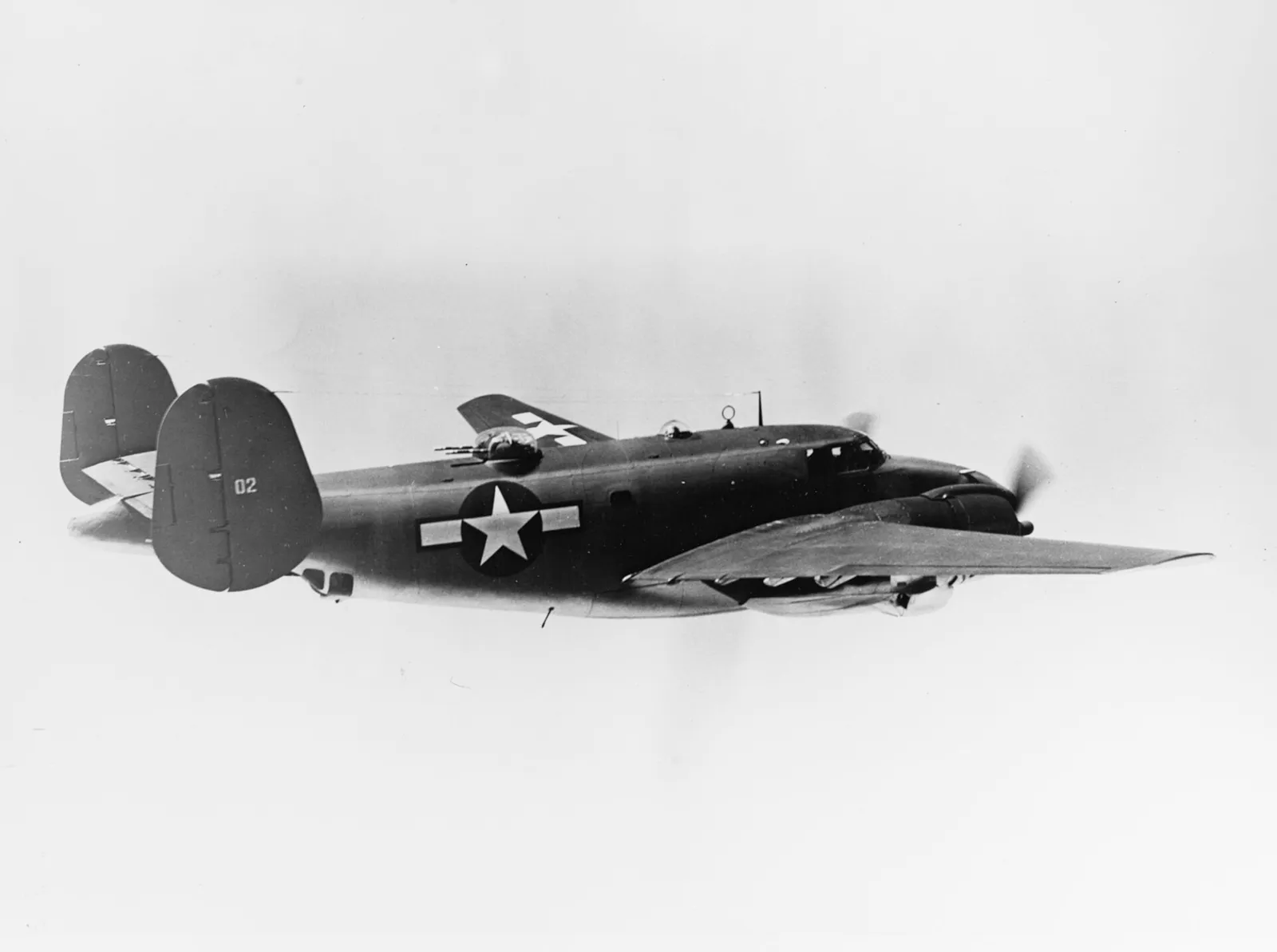
The Harpoons were maritime patrol aircraft whose crews had trained to hunt submarines. During the operation they flew 28 missions. The pilots' log books record machine-gun and bombing runs against what the crews identified as rebel concentrations; on 9 February one pilot dropped a 100-pound bomb near Marimba from 500 feet. Small Auster spotter planes based at Malanje joined in: on 18, 23 and 24 February army officers aboard them dropped hand grenades into crowds, which Cann says caused grave wounds.
“We made them cotton farmers, clearly by force, and now we are bombing them from the sky.”
A military intelligence bulletin of 28 February, quoted by Silva, lists PV-2 and T-6 aircraft bombing the areas of the posts of Quela, Cunda, Sunginge, Cambo, Cahombo, Bange-Angola, Marimba and Tembo Aluma, where large numbers of people had gathered. From 8 February the troops ran what they called “clean-up operations”. They ended, Silveira writes, in the death, imprisonment and punishment of many insurgents, among them the revolt's leaders; António Mariano died in prison in Bié.
When the 4th Company reached Tembo Aluma on the Cuango on 17 February, it found the village of Bumba, the Maholo king, freshly abandoned, with cooking pots still on the fires; the last villagers were climbing out of the river on the Congo side. Whole villages emptied into the bush or across the border. Many had killed their cattle, and after the operation the army had to bring in food to stop people starving.
Counting the dead
Nobody counted the victims of the Baixa de Cassanje with care, and the regime worked to keep the whole affair quiet. The figures that exist come from people with very different vantage points, from the army that did the shooting to nationalist movements, missionaries and historians who worked from fragments.
| Who | Figure | Notes |
|---|---|---|
| Portuguese Army, Resenha Histórico-Militar (1998), and the journalist Francisco Camacho (2002), cited by Cann | 243 insurgents killed; 2 soldiers killed and 4 wounded | The army's own tally for the operation; Cann calls the losses relatively light |
| António Lopes Pires Nunes, army officer and historian, cited by Silveira | 200 to 300 killed, about 100 wounded | Silveira calls it truly unrealistic |
| Canon Manuel das Neves, vicar of Luanda cathedral, letter to UPA leaders of February 1961, cited by Silveira | 524 shot, 795 wounded, 879 arrested | Adds 34 prisoners he believed were executed; written while the revolt was under way |
| René Pélissier, historian (1978), cited by Silveira | A few hundred to 7,000 killed | Not counting those detained; Cann quotes him as “hundreds, perhaps thousands” |
| José Ervedosa, Africasia (1970), cited by Cann | 5,000 burned alive in 17 villages | Cann rejects the account |
| UPA nationalist movement, cited by Cann | 7,000, later 10,000 | Cann doubts it, since he holds the UPA was not involved |
| Missionaries' documents, as reported in a military bulletin of 28 February 1961 cited by Silva | 5,000 to 10,000 peasants, plus about 1,000 Congolese | Also reports prisoners executed after PIDE interrogation |
| Anabela Silveira, historian (2013, p. 50) | Probably 10,000 | Killed by the army, the Air Force and the political police |
| Aida Freudenthal's survey of the literature, cited by Silva | From some hundreds to 20,000 | The full spread of published estimates |
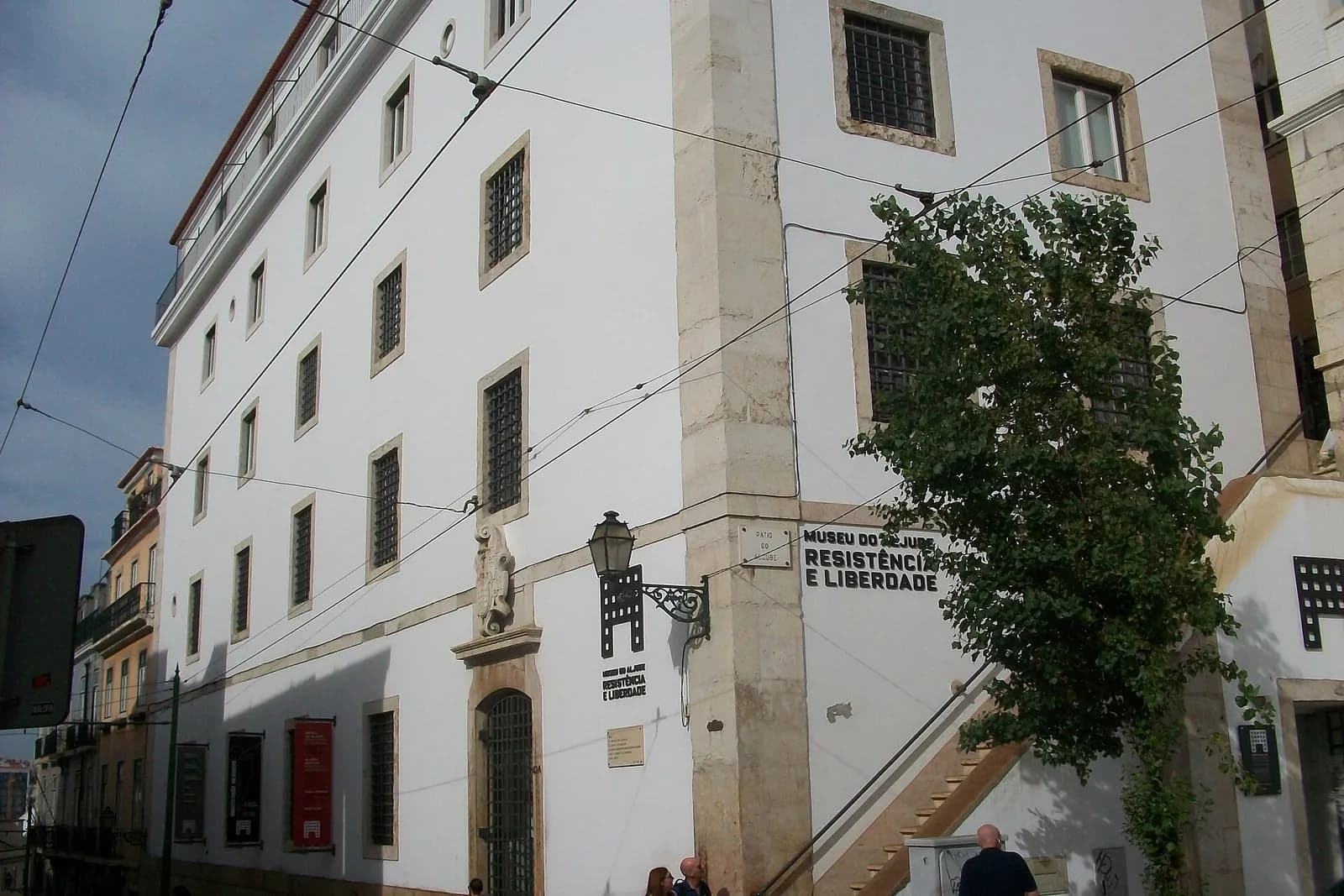
Several figures reach us only through later historians, as marked. The Museu do Aljube in Lisbon gives a range from several hundred to 10,000. Silva also quotes a PIDE tally of 5,524 shot, whose figures closely echo Canon das Neves's; it is left out here.
The army's figure covers its own operation. Silveira's estimate also counts the victims of the political police. Freudenthal found that prisoners handed by the army and the posts to PIDE in Malanje, among them the alleged ringleaders, mostly disappeared from the record, and that there are signs of summary executions. Some survivors were sent to Luanda, where they disappeared into the wave of arrests and shootings that followed 4 February and 15 March.
Some accounts published abroad were harsher still. Mário Moutinho de Pádua, a Portuguese army doctor whose campaign diary appeared in Brazil in 1963, wrote that strikers near Malanje had been buried up to their necks and run over by tractors. Silveira quotes his testimony; none of the other sources used here repeats it. Cann rejects Pélissier's description of mass graves dug by bulldozers, arguing that no such machines worked in the Baixa during the rains.
By early March the growers were back at work. The army's staff summary for Salazar noted only that the rebel sobas had gradually given themselves up with their guns and that the area was “practically pacified from the military point of view”.
A prelude to 4 February and 15 March
The Baixa was the first of three shocks to Portuguese Angola in 1961. On 4 February, while troops were moving into the Baixa, armed men attacked the prisons of Luanda to free political prisoners and seize weapons. On 15 March the UPA launched an uprising in the north, with massacres of white settlers and of Black workers on the farms that left thousands dead.
From April Salazar sent troops to Angola “quickly and in force”, and for Portugal this marked the start of thirteen years of colonial war. Despite the secrecy, refugees' accounts of Cassanje reached the United Nations, where they were used against Portugal in the debates on Angola that March.
Inside the regime, the Baixa was taken more seriously than Lisbon ever admitted. A report for the Ministry of the Overseas by the inspector Manuel Alfredo de Morais Martins, dated 7 March 1961, called it the “first large-scale subversive action in the overseas territories in the last forty years”, one that had grown beyond a reaction against cotton into “a true uprising against national sovereignty”.
The cotton system itself did not survive the year. Decree 43 639 of 2 May 1961, signed by President Américo Tomás, Salazar and the new Overseas Minister Adriano Moreira, made cotton growing free in the existing cotton zones and barred administrators from any role in it; Cann calls it corrective legislation that came four months too late. On 6 September 1961 the native statute was repealed and all natives of the colonies became, at least on paper, Portuguese citizens.
Martyrs' Day in Angola
Independent Angola calls 4 January the Dia dos Mártires da Repressão Colonial, the Day of the Martyrs of Colonial Repression. Under its law on holidays of 16 February 2011 it is a date of national celebration, not a public holiday, alongside 15 March, the Day of the Expansion of the Armed Struggle. The 2018 revision kept it in that list; 4 February, the start of the armed struggle, is a holiday.
That ranking is itself contested. In 2022 the opposition parties UNITA and CASA-CE called for 4 January to become a public holiday, and CASA-CE's leader, Manuel Fernandes, said thousands of Angolans had died. Giselda Brito Silva, citing the Angolan historian Maria da Conceição Neto and others, argues that official memory has centred on the MPLA's 4 February, leaving the peasants of the Baixa and the UPA's 15 March in its shadow.
Each year the state holds a central ceremony in the region: at Quela in 2023, at Xá-Muteba in Lunda Norte in 2024, at Kiwaba Nzoji in 2025 and in Malanje in 2026, the 65th anniversary, when the defence minister, João Ernesto dos Santos, spoke and a wreath was laid at the Tomb of the Unknown Soldier. In 2024 a defence ministry official spoke of thousands of dead and of plans for a memorial in the Baixa, subject to the budget.
In Portuguese archives and history books
For decades Portugal said little about the Baixa. Franco Nogueira, Salazar's last foreign minister, wrote of some disturbances and attacks in north-west Angola, after which “the firm intervention of the security forces” restored calm. Silveira describes a curtain of silence that the regime tried, not wholly successfully, to draw over the events.
“The revolt of the Baixa de Cassange, a movement of the poor, is one of those skeletons in the cupboard that the history of Portuguese-speaking Africa drags along. We know vaguely that they exist, but it is impossible to find the key, which stayed in the drawers of the administration or the political police.”
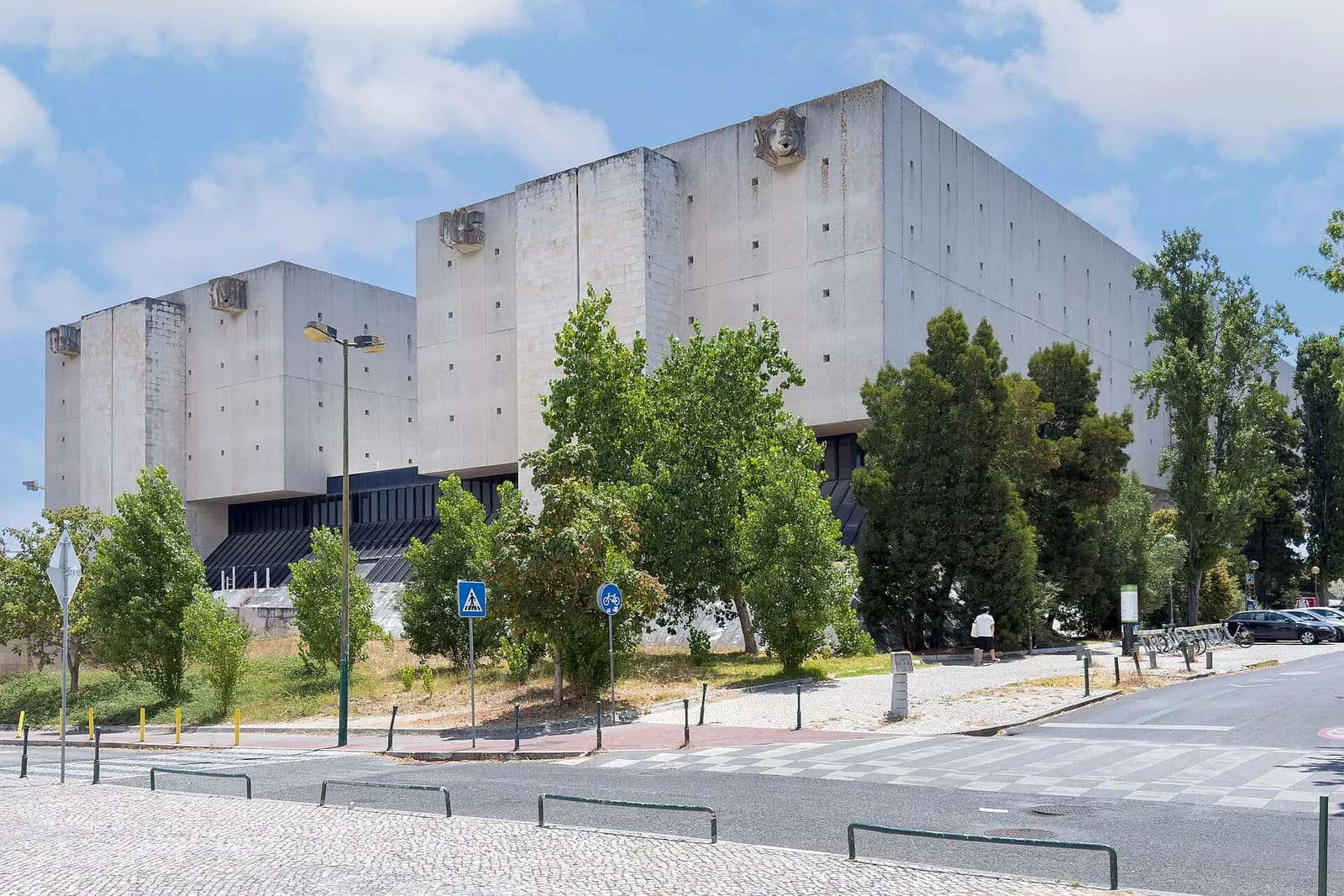
The drawers are now open. The Salazar archive and the PIDE files in the Torre do Tombo, Portugal's national archive in Lisbon, hold the army's intelligence summaries, the police reports and the Ministry of the Overseas inquiry. Aida Freudenthal used them in the late 1990s, and in 2012 Diogo Ramada Curto and Bernardo Pinto da Cruz read the inspector's report for what it reveals about colonial terror and colonial knowledge.
Portuguese historians still disagree about what the Baixa was. Anabela Silveira argues it went beyond a labour dispute to become the first armed rising against Portuguese sovereignty in the second half of the twentieth century. Valentim Alexandre's 2021 book, in Oliveira's reading, restores to the colonial reprisals of 1961 the weight that memories of the UPA's massacres had long crowded out. John P. Cann's account, published by the Portuguese Commission of Military History, counts 243 dead, calls the casualties relatively light and stresses the army's food aid.
Television and fiction have reached a wider public. Fernando Rosas's documentary for RTP in 2017 told of nearly twenty villages bombed with napalm and thousands dead, and Pedro Aires Oliveira counts Joaquim Furtado's RTP series A Guerra (2007 to 2012), which Alexandre cites and praises, among the most important efforts to bring the colonial reprisals of 1961 back into view. In A Outra Margem do Mar (2019), the novelist António Lobo Antunes, a former army doctor in Angola, has a senior officer, a district administrator and a planter's daughter look back on the crushing of the cotton workers' protest in the Baixa in January 1961.
FAQs
What happened in the Baixa de Cassanje on 4 January 1961?
Cotton growers working under the Cotonang concession in Angola's Malanje district stopped work. Near the Milando post they seized two company foremen and said they would no longer grow cotton, pay tax or obey the local administrator. Growers burned their seed, and the strike spread across the region in January.
How many people died in the Baixa de Cassanje massacre?
Nobody knows. The Portuguese army counted 243 insurgents killed; the officer-historian Pires Nunes gave 200 to 300. Canon Manuel das Neves wrote in February 1961 of 524 people shot. René Pélissier estimated a few hundred to 7,000, missionaries 5,000 to 10,000, and Anabela Silveira probably 10,000. The published estimates range up to 20,000.
Did Portugal use napalm in the Baixa de Cassanje?
It is disputed. Anabela Silveira, the Museu do Aljube and Fernando Rosas's RTP documentary say villages were bombed with napalm. John P. Cann says pilots' log books show only machine-gun and bombing runs and that napalm reached Angola only in late April 1961. Both sides agree that Air Force PV-2 Harpoons bombed and machine-gunned the area from 6 February.
Who was António Mariano and what was the Maria movement?
António Mariano was a man from the Cassanje region who went to the Congo in 1959, met UPA nationalists in Léopoldville and returned in December 1960. The movement known as Maria, or Maria's War, mixed nationalism with a messianic faith: initiates were baptised with “Maria water”, told not to work for whites and assured that Portuguese bullets would turn to water. Silveira writes that Mariano died in prison in Bié.
Why is 4 January a commemoration in Angola?
Angola marks 4 January as the Day of the Martyrs of Colonial Repression in memory of the peasants killed after the Baixa de Cassanje revolt. Under the 2011 holidays law, amended in 2018, it is a date of national celebration rather than a public holiday, and the state holds a central ceremony in the region each year.
On the timeline
Open the timelineNearby moments from dictatorship and the estado novo (1926–1974).
Birth in Lisbon of Pedro Ayres Magalhães, guitarist and founder of Madredeus. Built around the voice of Teresa Salgueiro, the group fused fado, folk and classical music into a sound that made it Portugal's most internationally successful act of its generation, immortalised in Wim Wenders's film 'Lisbon Story' (1994).
RTP broadcasts the first edition of the Telejornal at half past eight in the evening, presented by the journalists Mário Pires and Alberto Lopes. Subject to the Estado Novo's censors in its early years, it is today the longest-running programme in the history of Portuguese television.
The Lisbon Metro is inaugurated after more than four years of work, opening to the public the next day. The first network had 11 stations on a Y-shaped line running from Restauradores, splitting at Rotunda towards Sete Rios and Entre Campos, served by two-carriage trains. Almost every station carried azulejos by the painter Maria Keil.
The Baixa de Cassanje revolt
Cotton growers in the Baixa de Cassanje, in Angola's Malanje region, rise against the forced-cultivation regime of the Cotonang company, refusing to work and burning their seed. The colonial repression that follows kills hundreds, by some estimates thousands, and 4 January is now marked in Angola as the Day of the Martyrs of Colonial Repression.
Exiled opposition leader Henrique Galvão and a band of Portuguese and Spanish rebels seize the liner 'Santa Maria' in 'Operation Dulcineia', killing one officer. Broadcasting denunciations of Salazar's dictatorship from the ship, they hold the world's attention for eleven days before landing at Recife on 2 February and receiving asylum in Brazil.
About 200 men armed mostly with machetes attack the São Paulo prison, the military prison and a police barracks in Luanda, trying to free political prisoners. Claimed by the MPLA, whose role historians dispute, the attack is regarded as the start of the Angolan War of Independence and of Portugal's 13-year Colonial War.
The UPA (Union of the Peoples of Angola) launches a large-scale uprising in northern Angola, killing settlers and African workers on the coffee farms. Six weeks after the Luanda attacks of 4 February, it turns the revolt into full-scale war, the first front of Portugal's 13-year Colonial War.
Coming up in history
All long reads 6 January 1973Expresso's first issue: a weekly that tested Caetano's censors, 1973
 7 January 1355The killing of Inês de Castro: Coimbra, 7 January 1355
 8 January 1455Romanus Pontifex: the papal bull that gave Portugal the African coast
 9 January 1822The Dia do Fico: the day Prince Pedro refused to leave Brazil, 9 January 1822
17 sources
Archives, scholarship and reporting this article was checked against.
- 1
A Baixa de Cassange: o prenúncio da luta armada (Anabela Silveira)Revista Porto, n.º 3, 2013, pp. 39-57, Universidade Federal do Rio Grande do Norte
- 2
As revoltas na Baixa de Cassange e o direito à memória e história nas lutas de libertação de Angola: entre o 04 de janeiro e o 15 de março de 1961 (Giselda Brito Silva)Cadernos do Tempo Presente, vol. 12, n.º 2, 2021, pp. 13-33, Universidade Federal de Sergipe
- 3
Baixa do Cassange (John P. Cann)Revista Portuguesa de História Militar, ano I, n.º 1 (December 2021), Comissão Portuguesa de História Militar
- 4
Review of Valentim Alexandre, Os Desastres da Guerra. Portugal e as Revoltas em Angola (1961: janeiro a abril) (Pedro Aires Oliveira)Análise Social, vol. LVII, n.º 243, 2022, pp. 441-445
- 5
Lei n.º 10/11, de 16 de Fevereiro: Lei dos Feriados Nacionais e Locais e Datas de Celebração NacionalAssembleia Nacional de Angola, via Lex.AO
- 6
Baixa do Cassange Revolt (#Inthisday, 4 January 2021)Museu do Aljube Resistência e Liberdade, Lisbon
- 7
Angola, 1961: o início do fim (História a História: África, episode 8, by Fernando Rosas)RTP Ensina
- 8
O Estado Novo português e a reforma do Estado colonial em Angola: o comportamento político das elites brancas (1961-1962) (Fernando Tavares Pimenta)História (São Paulo), vol. 33, n.º 2, 2014, pp. 250-272
- 9
Decreto n.º 43 639, de 2 de Maio de 1961 (cotton regime in the overseas provinces)Diário do Governo, via Diário da República Eletrónico
- 10
- 11
Oposição defende passagem do dia 4 de Janeiro a feriado nacionalVer Angola, 4 January 2022
- 12
- 13
Revolta da Baixa de Cassanje aconteceu há 63 anosEmbassy of Angola in South Africa, Ministério das Relações Exteriores
- 14
- 15
- 16
António Lobo Antunes, Am anderen Ufer des Meeres (German edition of A Outra Margem do Mar, 2019)Luchterhand Literaturverlag (Penguin Random House), 2024
- 17
Image credits
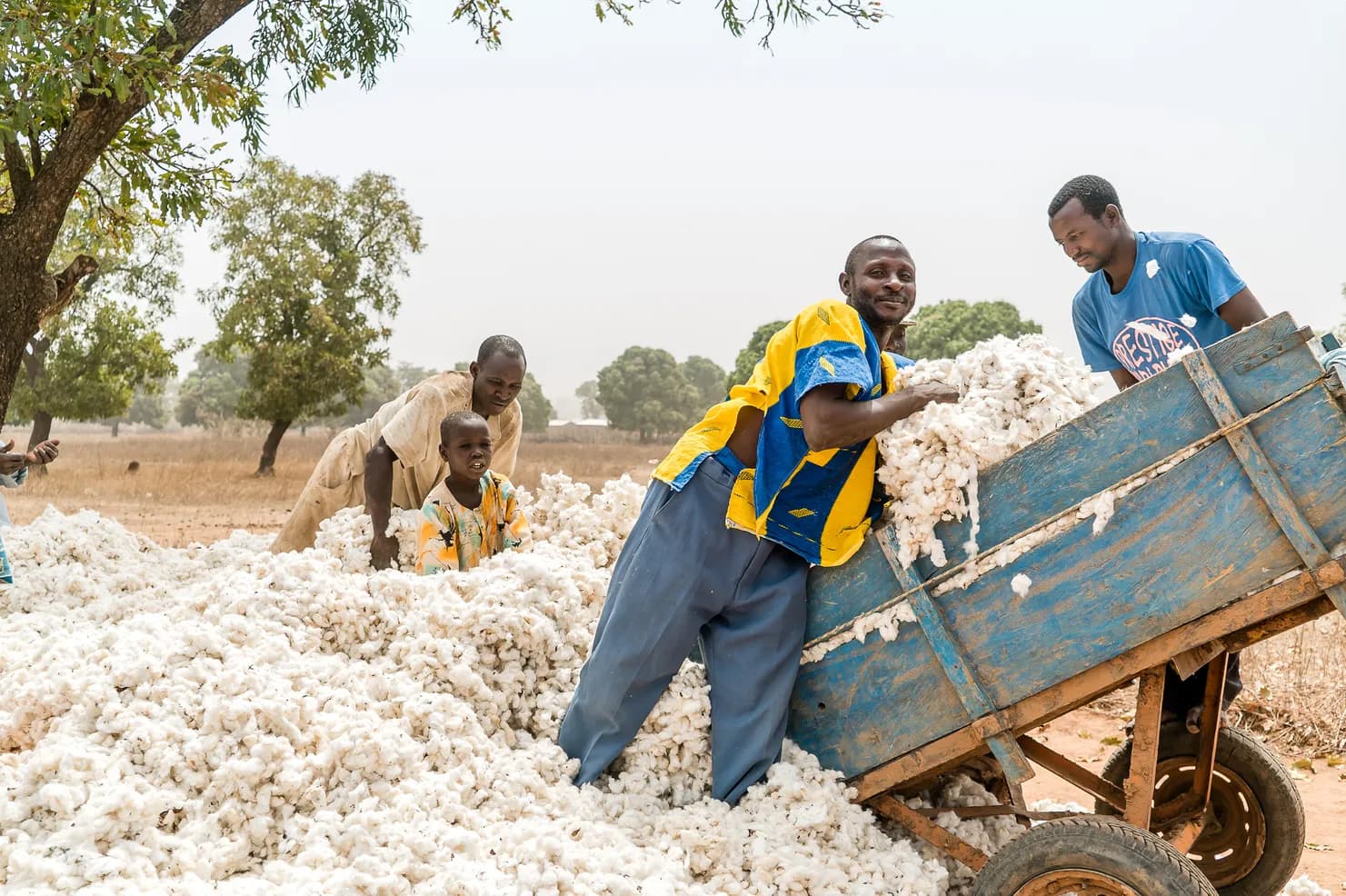
- This photograph is from Mali, not Angola: farmers loading harvested cotton at Fama, Mali, in February 2016. No freely licensed photograph of the Baixa de Cassanje's cotton fields in 1961 could be found. There, under the Cotonang concession, families had to grow cotton and sell the whole crop at fixed prices. Ewien van Bergeijk - Kwant, CC BY-SA 4.0, via Wikimedia Commons.
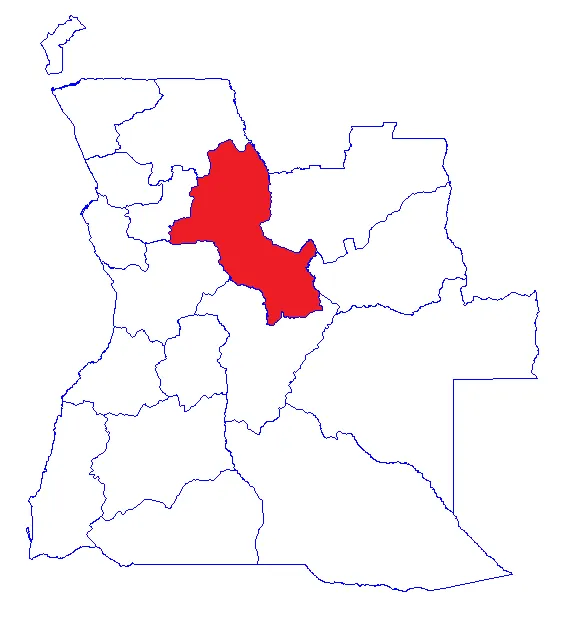
- Malanje province (red) on a map of Angola's provinces at the time of the 2014 census. The Baixa de Cassanje lies in its north-east, along the Cuango valley; the Cotonang concession also reached into the Lunda districts to the east. Syanarion62, CC BY-SA 4.0, via Wikimedia Commons.
- A United States Navy Lockheed PV-2 Harpoon around 1944. Portugal's Air Force flew this Second World War patrol bomber type from Luanda over the Baixa de Cassanje in February 1961, adapted for ground attack. USN, Public domain, via Wikimedia Commons.
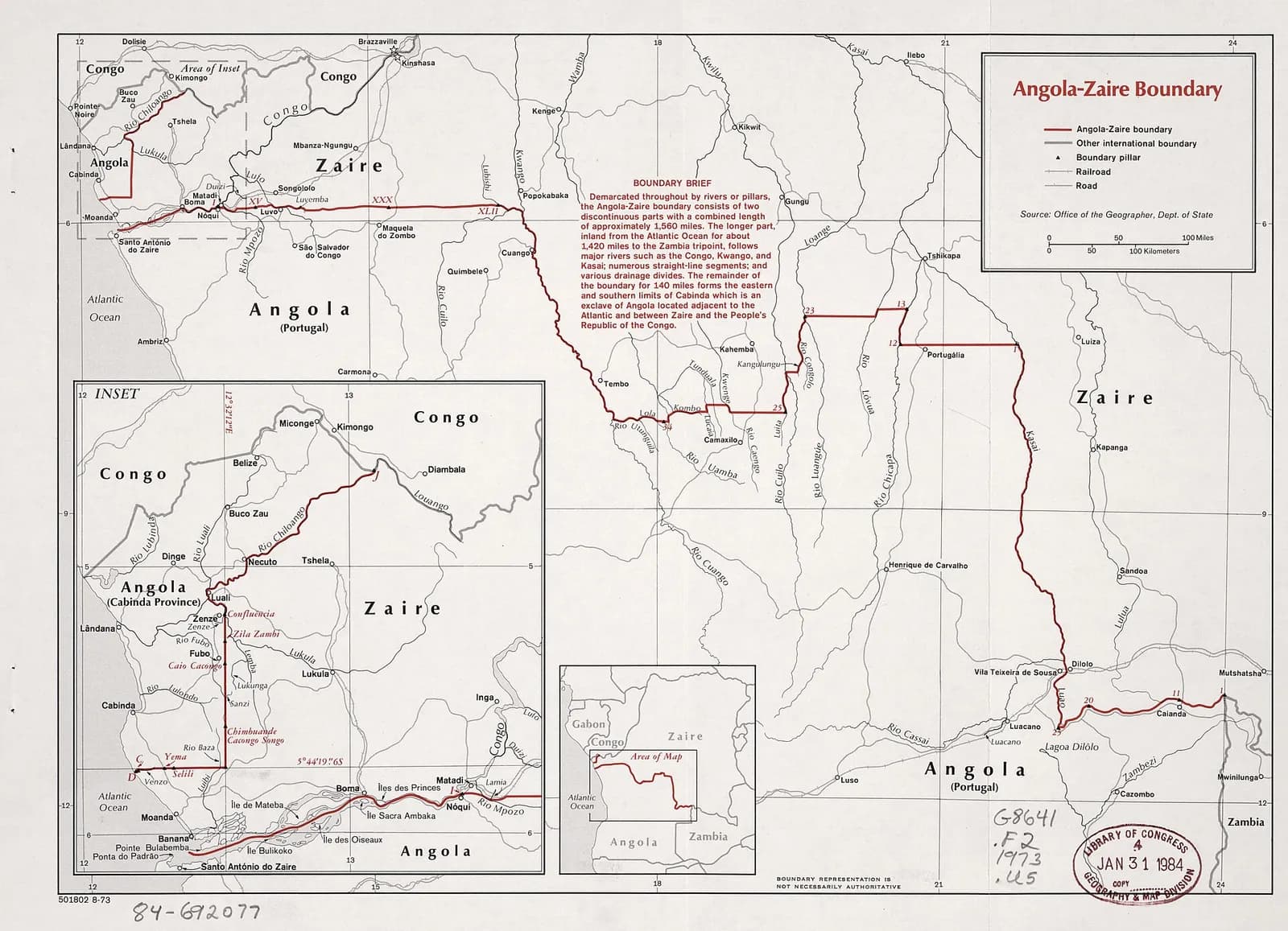
- The Angola–Zaire (Congo) boundary mapped by the US State Department's Office of the Geographer in 1973. For much of its length in the north the frontier follows the Kwango, or Cuango, the river villagers of the Baixa crossed into the Congo in February 1961. United States. Central Intelligence Agency; United States. Department Of State. Office Of The Geographer, Public domain, via Wikimedia Commons.
- The Arquivo Nacional Torre do Tombo in Lisbon, photographed in 2026. It holds the Salazar archive and the PIDE files on which historians of the Baixa de Cassanje revolt rely. Kent Wang, CC BY 4.0, via Wikimedia Commons.
- The Museu do Aljube Resistência e Liberdade in Lisbon, the city's museum of the resistance to the dictatorship, which recalled the Baixa de Cassanje revolt on its 60th anniversary in 2021. Hipersyl, CC BY-SA 4.0, via Wikimedia Commons.