

The Dia do Fico: the day Prince Pedro refused to leave Brazil, 9 January 1822
Lisbon's new parliament had ordered the heir to the throne home from Rio de Janeiro. Rio's council asked him to stay, and within two days the city had read two different versions of his answer.
At a glance
- On 9 January 1822 Prince Regent Pedro, heir to the Portuguese throne, refused to obey the Cortes' order to return from Rio de Janeiro to Lisbon, after Rio's municipal council presented petitions asking him to stay.
- The Cortes, elected after the liberal revolution of 1820, had decreed on 29 September 1821 that Brazil's provinces would answer directly to Lisbon and that Pedro was to come home and then tour Europe incognito.
- Petitions came from Rio, where more than 8,000 people signed, and from São Paulo, whose government's letter José Bonifácio de Andrada e Silva signed. Minas Gerais sent its deputation only in February.
- The council's first printed notice had Pedro merely delaying his departure. A second notice the next day gave the famous words, “tell the people that I am staying”, which also appear in his letter to his father.
- Portuguese troops under General Jorge de Avilez took up arms on 11 January and were shipped home on 15 February. Pedro proclaimed Brazil's independence on 7 September 1822.
Noon at the palace
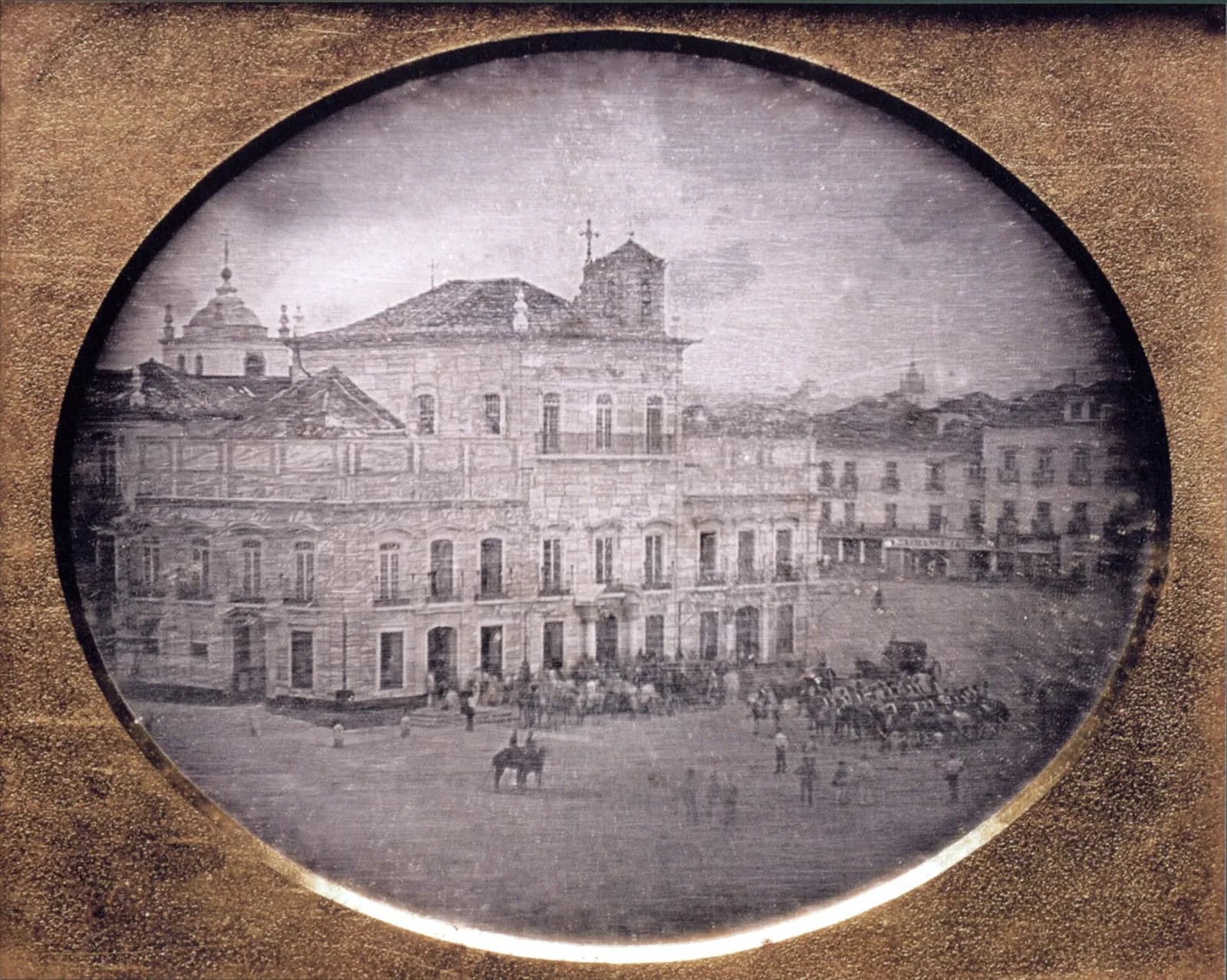
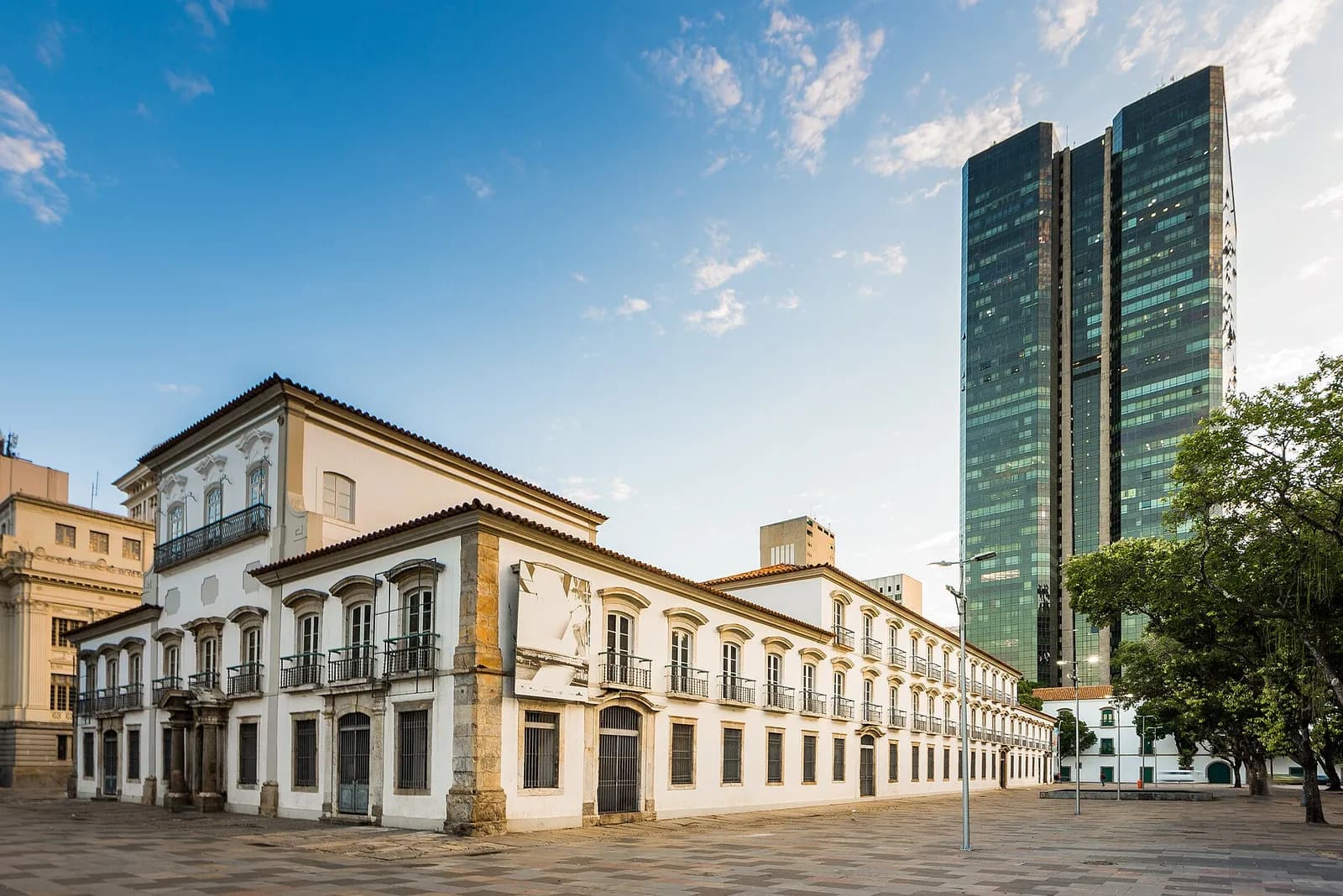
At ten in the morning of Wednesday 9 January 1822, the procurador of Rio de Janeiro's municipal council, the Senado da Câmara, came to the palace on the city's waterfront square. The council's old and new members had met together, he told Prince Regent Pedro, and asked for an audience. Pedro, 23 years old and heir to the throne of Portugal, said he would receive them at noon.
The councillors set out at eleven, with the city's notables and the masters of its trades. They carried petitions asking the prince to put off the journey to Lisbon that Portugal's new parliament, the Cortes, had ordered. A large crowd filled the square outside.
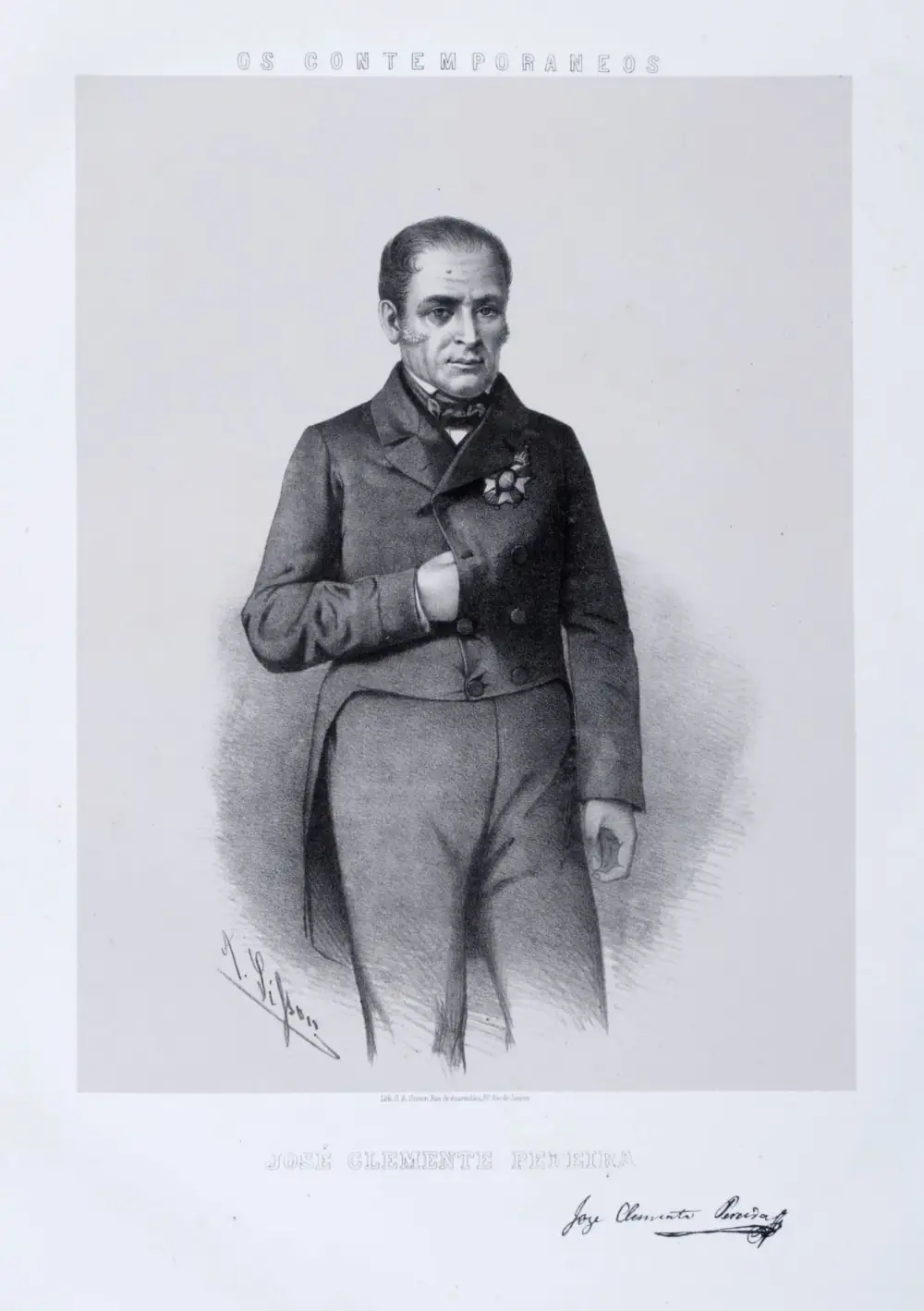
In the audience hall the council's president, the judge José Clemente Pereira, read an address. Its first sentence set the tone.
“Sir, Your Royal Highness's departure from the States of Brazil will be the fatal decree that sanctions the independence of this Kingdom!”
A colonel spoke for the province of Rio Grande do Sul, and a letter from the councils of two nearby towns, Santo António de Sá and Magé, was handed over. Then Pedro answered. In the record the council drew up that day he said: “As it is for the good of all and the general happiness of the Nation, I am ready: tell the people that I am staying.” Fico, “I stay”, gave the day its name.
From a window he told the crowd: “Now I have only to recommend union and tranquillity to you.” Clemente Pereira led the cheers, in this order: for religion, the constitution, the Cortes, the constitutional king, the constitutional prince and the union of Portugal and Brazil. The crowd cheered the assembly whose orders the prince had just declined to obey.
A kingdom ruled from Rio
Pedro had grown up in Brazil. He was born at Queluz, outside Lisbon, on 12 October 1798, and was nine when the royal family sailed for Rio as French troops invaded Portugal in November 1807, a story Lisboeta tells in a separate article. From March 1808 Rio was the seat of the monarchy, and Prince Regent João built there the ministries, courts and offices of a state.
On 16 December 1815 a royal law raised Brazil from a state to a kingdom, joined to Portugal and the Algarve in a United Kingdom. The Brazilian Câmara dos Deputados' bicentenary exhibition calls this Brazil's legal independence, because from then on the two kingdoms were equals under one crown.
On 24 August 1820 a liberal revolution broke out in Porto, and Lisbon followed on 15 September. The revolutionaries summoned Cortes to write a constitution and asked the king to come home. In Rio the Portuguese troops of the Divisão Auxiliadora forced João VI to swear in advance to that constitution on 26 February 1821.
On 22 April 1821 João VI made Pedro regent of Brazil, with wide powers, and on 26 April he sailed. He landed in Lisbon on 4 July and swore the constitution at once. Pedro stayed in Rio with his wife, the Austrian archduchess Leopoldina, whom he had married in 1817. Her part in his decision is told in Lisboeta's article on her death in 1826; the Câmara exhibition credits her with seeing, before her husband did, that the Bragança dynasty could keep Brazil only if Pedro led the resistance to Lisbon.
Lisbon recalls the prince
Brazil elected deputies to the Cortes in 1821, in its first general elections. They reached Lisbon slowly. The first, from Pernambuco, arrived on 29 August 1821, and the decrees on Brazil of September 1821 were voted when few Brazilian deputies had arrived. Historians disagree on how many were elected, but several agree that 46 sat.
How many deputies did Brazil send to the Cortes?
deputies
Deputies elected by Brazil's provinces according to five historians (Marcello Caetano, Rui Ramos, Francisco Adolfo de Varnhagen, Raymundo Faoro and Casimiro Pedro da Silva Neto), and the 46 who took their seats in Lisbon, the figure Varnhagen and several other authors give. Totals marked * include substitutes. Compiled by Tomás Brandão de Macêdo.
Show the data
| Deputies | |
|---|---|
| Caetano | 64 |
| Ramos | 65 |
| Varnhagen | 69 |
| Faoro* | 79 |
| Silva Neto* | 97 |
| Took seats | 46 |
On 29 September 1821 the Cortes decreed a new government for the Brazilian provinces. Each would be run by an elected provisional junta answering to Lisbon, alongside a governor of arms, the military commander, who was independent of the junta and answerable to the government in Lisbon and to the Cortes. With Rio reduced to one province among many, a second decree that day judged the prince's stay there “not only unnecessary but even unbecoming”. He was to return as soon as possible and then travel incognito in Spain, France and England, escorted by men of “enlightenment, virtue and devotion to the constitutional system”. The king signed both on 1 October.
The motion to take Pedro out of Brazil, proposed on 20 September by the deputy Francisco Soares Franco, passed unanimously; the deputies of Pernambuco and Rio already seated did not object. On what should happen next, 53 deputies voted for the tour of instruction and 46 for simply bringing him back to Portugal.
The brig Infante D. Sebastião brought the decrees into Rio at three in the afternoon of 9 December 1821, and the Gazeta printed them in an extraordinary issue on the 11th. Pedro's first letter to his father promised to carry out the order to leave “without delay” once a junta was elected. Four days later he was reporting what people were saying in the streets.
“If the constitution means doing us harm, the devil take such a thing; we will draw up a document so that the Prince does not leave, on pain of his being held responsible for the loss of Brazil to Portugal.”
| Measure | Date | What it did | Answer from Rio |
|---|---|---|---|
| Decree on provincial government | 29 September 1821 (law of 1 October) | Juntas and governors of arms in each province, answering to Lisbon | Rio's petition asked for it to be suspended; São Paulo's junta refused to obey it |
| Decree recalling the prince | 29 September 1821 (law of 1 October) | Pedro to return as soon as possible, then tour Spain, France and England incognito | The Fico, 9 January 1822 |
| Law abolishing Rio's tribunals | 11 January 1822 (law of 13 January) | Every court and tribunal created in Rio since 1808 abolished | A general reply to Lisbon's laws: from 21 January none went out until Pedro had approved it, and from 4 May no Cortes decree was carried out without his “Cumpra-se” |
| Decrees on the Rio government | 23 July 1822 | Pedro might stay to govern the southern provinces under the king and the Cortes; his council of provincial procurators annulled | Overtaken by the declaration of independence on 7 September |
The law on the tribunals came later still. Voted on 11 January 1822 and signed on the 13th, it abolished the courts and boards set up in Rio since 1808 and reduced its supreme court, the Casa da Suplicação, to a provincial appeal court. Rio knew it was coming: Clemente Pereira's address complained of the motion, and São Paulo's council cited the news of it.
Petitions from Rio, São Paulo and Minas
Opposition organised within days. On 15 December, in the convent of Santo António, Friar Francisco de Sampaio drafted a petition for Rio after meetings of a group known as the Clube da Resistência. According to the historian Lúcia Bastos Pereira das Neves, more than 8,000 people signed it within a few days.
Clemente Pereira did not think Rio should act alone while a strong Portuguese force was quartered in the city, and asked for the support of the provisional governments of São Paulo and Minas Gerais. Rio's petition took the form of a manifesto of the People of Rio de Janeiro, dated 29 December 1821, and its most quoted line looked across the Atlantic.
“The People of Rio de Janeiro believe that the ship that carries His Royal Highness back will appear on the Tagus flying the flag of the Independence of Brazil.”
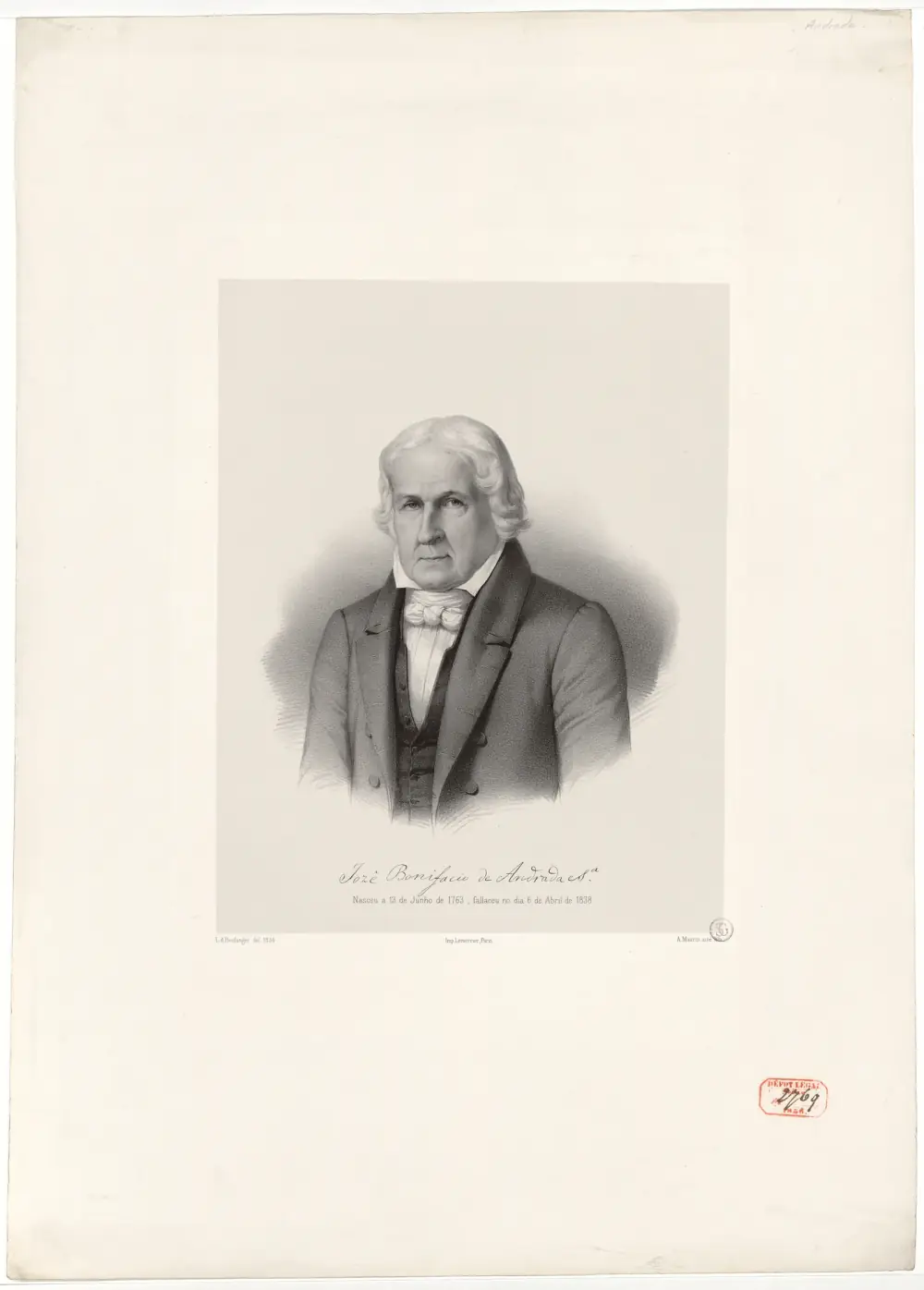
São Paulo was blunter. Its provisional government, whose signatories included its president João Carlos Augusto de Oeynhausen and José Bonifácio de Andrada e Silva, wrote to Pedro on 24 December. The decrees, it said, would leave Brazil “in miserable orphanhood”, and if he obeyed them he would answer before heaven for “the river of blood” that would flow. A courier put the letter into Pedro's hands at eight in the evening of 1 January, and with his consent the Gazeta printed it on 8 January.
On 31 December São Paulo's municipal council named three men to carry its plea to Rio: José Bonifácio, Colonel António Leite Pereira da Gama Lobo and Marshal José Arouche de Toledo Rendon. Paulistas, the council wrote, would rather die than be enslaved.
Minas Gerais moved more slowly. José Teixeira da Fonseca Vasconcelos, vice-president of its provisional junta, left for Rio on 5 January, but the Minas deputation addressed Pedro only on 15 February, and historians still debate how far it spoke for the junta.
In Rio the ministers wanted no part in the decision. On 7 and 8 January they all asked to resign and were excused from the ceremony. On the 8th the council announced it would receive the petitions the next day and asked people to keep calm and to raise no cries or cheers of any kind, while a printed notice told anyone who wished to sign to go that day to number 137, Rua da Ajuda. An unconfirmed tradition has Clemente Pereira sounding Pedro out in the royal chapel on Christmas Eve and hearing that he would stay.
What did Pedro actually say?
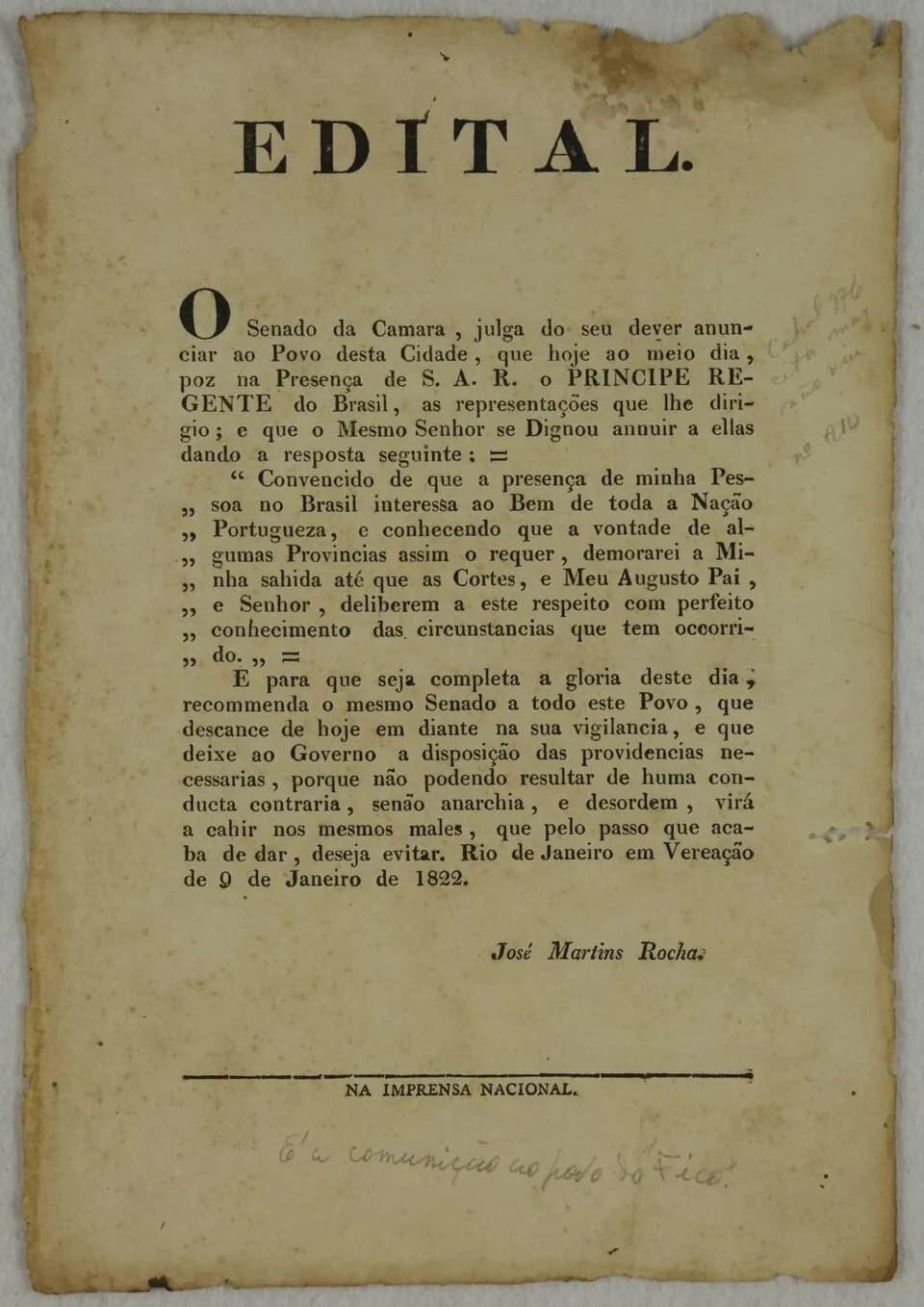
Within two days Rio had read two different answers. The first notice, printed on 9 January over the signature of the council's clerk, José Martins Rocha, was careful. Pedro, “convinced that the presence of my person in Brazil is in the interest of the whole Portuguese Nation, and knowing that the will of some provinces requires it”, would “delay my departure until the Cortes and my August Father and Lord deliberate on this matter with full knowledge of the circumstances”.
On 10 January Clemente Pereira signed a second notice. The council, it said, had published the prince's answer “with a notable alteration of words”, and the original words were the ones now famous. The error was not deliberate, the notice pleaded, but “born solely of the transport of joy that seized everyone who was in the audience hall”. Confusingly, it added that all who had accompanied the council agreed the notice “just published” gave the prince's own words “with some small difference”. The newspaper A Malagueta told of everyone's astonishment when the Diário of the 11th printed the answer “in words different from those of the day before”.
| Document | Dated | Pedro's answer |
|---|---|---|
| Council notice signed by the clerk, José Martins Rocha | 9 January 1822 | He would delay his departure until the Cortes and his father decided |
| Record of the council session, as certified and sent to Lisbon | 9 January 1822 | “As it is for the good of all and the general happiness of the Nation, I am ready: tell the people that I am staying” |
| Pedro's letter to João VI | 9 January 1822 | The same words as the record |
| Second council notice, signed by José Clemente Pereira | 10 January 1822 | The same words, declared to be the original ones |
Quotations translated from Portuguese. All four texts were printed in Lisbon in 1822 by order of the Cortes.
Historians interviewed by DW for the bicentenary in 2022 called the famous phrase probably a later invention. It cannot have been invented decades later: it is in Pedro's own letter to his father, dated that day, and in the certified copy of the council's record, both printed in Lisbon in 1822. But the cautious notice came first. The biographer Paulo Rezzutti told DW that the cautious wording is the true one, the version recorded in the council's book, although the certified copy of that book's entry carries the famous phrase. Which words Pedro actually spoke cannot now be proved.
In substance the two versions agree. Either way Pedro would stay until Lisbon reconsidered, and on 17 January his government told the provinces simply that he had decided to “suspend his departure for Portugal”.
Avilez and the Portuguese troops
The decision set Pedro against the Divisão Auxiliadora, the Portuguese division in Rio under Lieutenant General Jorge de Avilez Zuzarte de Sousa Tavares. Its regiments had fought the French in the Peninsular War. It had forced João VI's oath in February 1821, and on 5 June 1821 it had made Pedro swear to the Bases and send his chief minister, the Count of Arcos, to Portugal.
Pedro's account, sent to his father on 23 January, runs like this. At four in the afternoon of 11 January Avilez went to the barracks of the 11th and 15th battalions and told the men, falsely, that he had been relieved of his command. That night, while Pedro was at the theatre, soldiers went through the streets breaking windows and knocking out the celebration lamps with sticks. The two battalions and the artillery took up arms; the 3rd battalion of caçadores, light infantry, stayed in barracks on Pedro's order.
Avilez told it differently. In a manifesto of 14 January he wrote that news of his dismissal made the division fear it would be disarmed and shipped off by force, as Portuguese troops in Pernambuco had been. On the night of the 11th, he wrote, he found the local troops already armed and in position, and had his own battalions take up arms “to prevent all disorder”. Then, he complained, “the rabble” hurled insults at them.
By dawn on the 12th the Campo de Santana, a large square inland, had become an armed camp of loyal regiments, militia and townspeople; Avilez reported armed friars and priests among them. The division held the Morro do Castelo, the hill above the old city.
How many gathered is disputed. The historian Adriana Barreto de Souza gives 8,000 to 10,000 men, but a 1922 estimate she cites put Rio's whole garrison, Avilez's men included, at about 3,000, so most of the rest were militia and civilians, and she allows that the figures may be exaggerated. The Câmara dos Deputados' bicentenary exhibition speaks of several hundred armed civilians beside the loyal regiments.
Nobody fired. On the afternoon of the 12th, after Pedro sent an officer to each side, the division agreed to cross the bay to Praia Grande, today's Niterói, and wait there for the troops coming from Portugal to relieve it. Pedro dismissed Avilez as governor of arms and that evening asked São Paulo and Minas Gerais to send armed men.
At Praia Grande the division refused to embark. Pedro set a deadline of 5 February, threatened to cut off its pay, food and water, and placed the frigate União and gunboats in the bay. “They will embark, or they will die,” he wrote to his father on 2 February. The division sailed for Portugal on 15 February 1822.
“With armed force it is impossible to unite Brazil to Portugal; with commerce and mutual reciprocity, union is certain.”
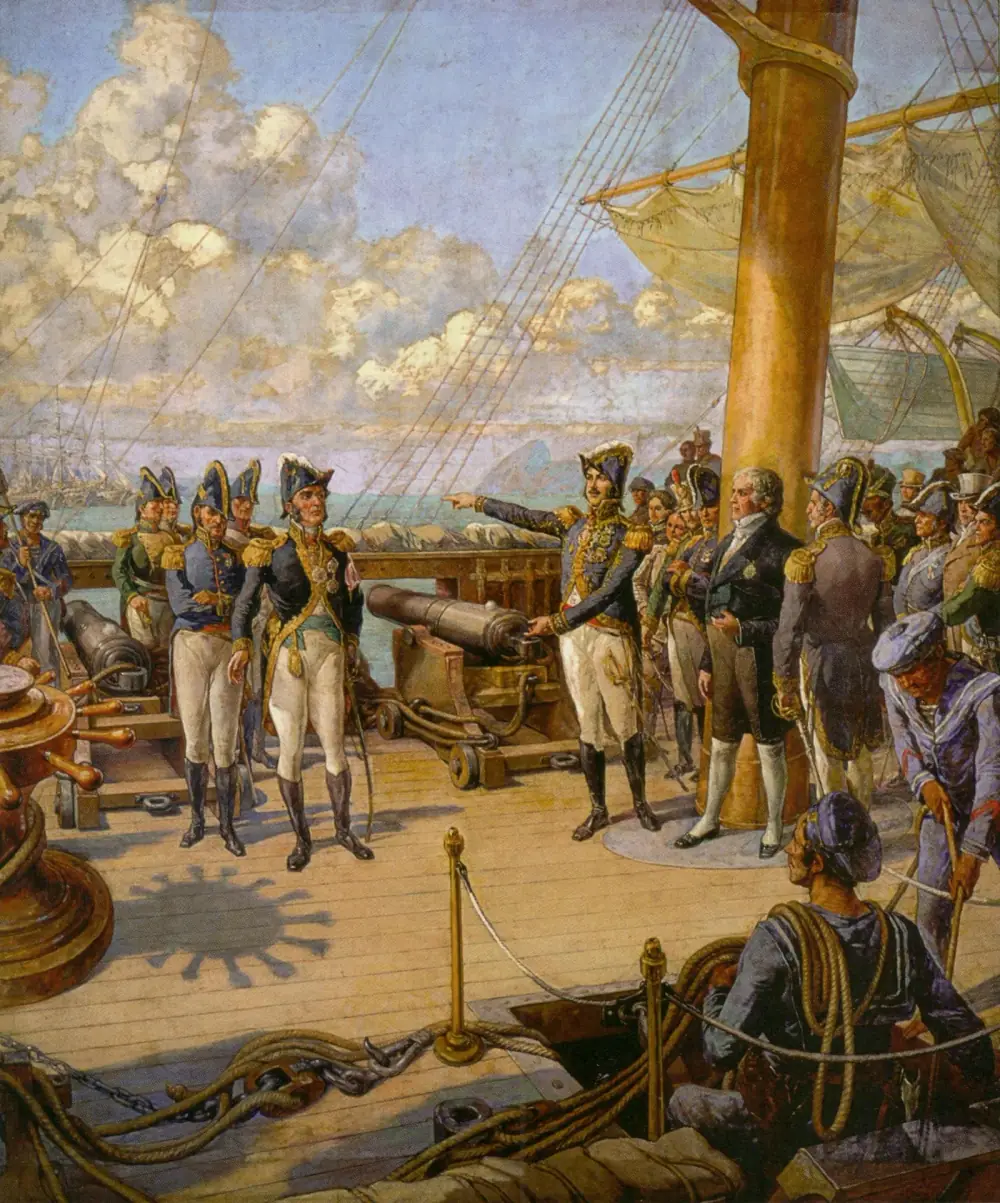
In the same letter of 23 January Pedro reported a new ministry, with José Bonifácio in charge of the Kingdom and Foreign Affairs. On 21 January Bonifácio ordered that no law arriving from Portugal be sent to any office until the prince had judged it suited to Brazil. On 4 May 1822 he went further: no decree of the Cortes would be carried out without the prince's “Cumpra-se”, “let it be done”.
From the Fico to the Ipiranga
On 16 February Pedro created a council of procurators-general of the provinces, the “centre of union” the petitions had asked for; the Minas deputation had requested it the day before. In March and April he rode to Minas Gerais, whose junta had been defying Rio, and had a new one elected. On 13 May he took the title of Perpetual Defender of Brazil, and on 3 June he called a Brazilian constituent assembly.
In Lisbon, São Paulo's letter was read in the Cortes in March 1822 and deputies called it treason. On 23 July the Cortes allowed Pedro to stay in Rio to govern the southern provinces, under the king and the Cortes, annulled his council of procurators and ordered São Paulo's junta held to account. On 7 September 1822, by the Ipiranga stream near São Paulo, Pedro proclaimed Brazil independent. He was acclaimed emperor on 12 October and crowned on 1 December.
24 August 1820
Liberal revolution in Porto
26 January 1821
The Cortes first sit in Lisbon
26 February 1821
Portuguese troops in Rio make João VI swear to the future constitution
22 April 1821
João VI names Pedro regent of Brazil
26 April 1821
João VI sails for Lisbon, landing on 4 July
29 August 1821
The first Brazilian deputies, from Pernambuco, reach Lisbon
29 September 1821
The Cortes create provincial juntas and recall the prince
9 December 1821
The decrees reach Rio
24 December 1821
São Paulo's provisional government writes to Pedro
9 January 1822
The Dia do Fico
11 and 12 January 1822
Avilez's division takes up arms, then withdraws to Praia Grande
15 February 1822
The Divisão Auxiliadora sails for Portugal
16 February 1822
Council of procurators of the provinces created
4 May 1822
No Cortes decree to be carried out without Pedro's “Cumpra-se”
13 May 1822
Pedro becomes Perpetual Defender of Brazil
3 June 1822
A Brazilian constituent assembly is called
7 September 1822
Independence proclaimed by the Ipiranga
12 October 1822
Pedro acclaimed emperor in Rio
Why it still matters
For Portugal the Fico was the point at which its liberal revolution began to lose Brazil. Most deputies in Lisbon wanted one nation run from Lisbon on both sides of the Atlantic. The petitions of December 1821 asked instead for a centre of government in Rio under the same king, and threatened independence in order to avoid it. Eight months later the United Kingdom of 1815 had split.
Brazilian historians now read the day less as the first step to independence than as a bid for autonomy inside the Portuguese monarchy. Marcelo Cheche Galves of the State University of Maranhão argues that the heroic version was built over the nineteenth century and part of the twentieth, as part of an effort to “invent the Brazilian nation”.
The man who asked Pedro to stay was Portuguese by birth. José Clemente Pereira was born at Trancoso in 1787 and came to Brazil in 1815. He gave Pedro the title of Perpetual Defender in the council's name, was deported in December 1822 by José Bonifácio's government, returned in 1824 and ended his career in the Brazilian Senate.
Pedro came back too. When João VI died in March 1826 he became Pedro IV of Portugal, granted a constitutional charter and abdicated in favour of his daughter Maria. In 1832 he landed in the Azores to fight his brother Miguel for her throne, and he died at Queluz, where he had been born, on 24 September 1834.
FAQs
Did Pedro really say “Diga ao povo que fico”?
Two versions were printed within two days. The council's first notice, on 9 January 1822, had him only delaying his departure until the Cortes and his father decided. A second notice on 10 January said the first had altered his words and gave “As it is for the good of all and the general happiness of the Nation, I am ready: tell the people that I am staying.” That phrase also appears in Pedro's own letter to his father dated 9 January, so it is contemporary, but no one can now prove which words he spoke.
Why did the Cortes order Pedro back to Portugal?
On 29 September 1821 the Cortes put each Brazilian province under a junta and a military governor answering to Lisbon. With no central government left in Rio, they judged the prince's stay there unnecessary and unbecoming, and ordered him to return and then travel incognito in Spain, France and England with constitutionalist tutors.
Was the Dia do Fico a declaration of independence?
No. The crowd cheered the Cortes, the constitutional king and the union of Portugal and Brazil, and the petitions asked Pedro to stay in order to keep the two kingdoms together. Pedro declared independence eight months later, on 7 September 1822, after the Cortes had annulled his council of provincial procurators and insisted that his government answer to Lisbon.
What happened to the Portuguese troops in Rio?
General Jorge de Avilez's Divisão Auxiliadora took up arms on the night of 11 January 1822, faced the loyal regiments, militia and armed townspeople gathered at the Campo de Santana, and agreed on the 12th to cross the bay to Praia Grande. After Pedro blockaded them and set a deadline, they sailed for Portugal on 15 February 1822.
On the timeline
Open the timelineNearby moments from invasions, brazil and the liberal wars (1807–1851).
The Liberal Revolution begins in Porto, where army officers and citizens demand a constitution and the return of King João VI from Brazil — the uprising that leads to Portugal's first constitutional monarchy.
The Liberal Revolution that began in Porto on 24 August reaches Lisbon, where a military pronouncement backed by the populace rallies the capital to the constitutional cause, paving the way for Portugal's first constitution in 1822.
King João VI disembarks at Terreiro do Paço at noon and swears the bases of the new liberal constitution before the Cortes Gerais. The act formally extinguishes the Regency of the Kingdom and inaugurates Portugal's first constitutional period, which would unravel within two years.
The Dia do Fico, 1822
On the 'Dia do Fico' (the 'I'm Staying' Day), Prince Regent Pedro defies orders from the Cortes in Lisbon to return to Portugal, reportedly declaring 'Diga ao povo que fico' — 'Tell the people I'm staying'. Eight months later he proclaimed Brazil's independence and became its first emperor.
On the banks of the Ipiranga stream near São Paulo, Prince Regent Dom Pedro proclaims Brazil's independence from Portugal with the celebrated 'Grito do Ipiranga', ending three centuries of Portuguese rule in Brazil.
The Constituent Cortes approve the Portuguese Constitution of 1822, the country's first constitution, which sought to end absolutism and establish a constitutional monarchy; King João VI swore his oath to it on 1 October.
On his twenty-fourth birthday, Prince Regent Pedro is acclaimed Constitutional Emperor and Perpetual Defender of Brazil at the Campo de Santana in Rio de Janeiro, a month after the Cry of Ipiranga had proclaimed the country's separation from Portugal.
Coming up in history
All long reads
18 sources
Archives, scholarship and reporting this article was checked against.
- 1
Cartas, e mais peças officiaes dirigidas a Sua Magestade o Senhor D. João VI pelo Principe Real o Senhor D. Pedro de Alcantara (Lisbon: Imprensa Nacional, 1822)Wikisource, transcription of the edition printed by order of the Cortes
- 2
Termo de vereação do dia do fico (9 de janeiro de 1822), transcription with notesArquivo Nacional (Brazil), História Luso-Brasileira
- 3
Lei de 1º de Outubro de 1821: determina a viagem do Principe Real por algumas Cortes da Europa (publicação original)Câmara dos Deputados (Brazil), Legislação Informatizada
- 4
“Para o bem do Povo e Felicidade geral da Nação.” Povo, Nação, Felicidade e Soberania no Dia do Fico, chapter 4 (Paula Rodrigues Belem, MA dissertation)Pontifícia Universidade Católica do Rio de Janeiro, 2011
- 5
Perspectivas políticas e jurídicas acerca do Brasil nas Cortes Constituintes de 1821-1822 (Tomás Brandão de Macêdo, MA dissertation)Faculdade de Direito, Universidade de Coimbra, 2015
- 6
Collecção das Decisões do Governo do Imperio do Brazil de 1822Câmara dos Deputados (Brazil), Biblioteca Digital (facsimile of the Imprensa Nacional edition)
- 7
“Tropas de fora” versus “tropa da terra”: exército, milícias e povo nas lutas pela Independência no Rio de Janeiro (Adriana Barreto de Souza)Revista do Instituto Histórico e Geográfico Brasileiro, vol. 184, no. 492 (2023)
- 8
- 9
D. Pedro IV e a Independência do Brasil (documents and chronology for the bicentenary)Arquivo Nacional Torre do Tombo, 2022
- 10
- 11
- 12
- 13
Lei de 13 de Janeiro de 1822: extingue os Tribunaes creados no Rio de Janeiro e estabelece a fórma de Administração das Provincias do BrazilPresidência da República (Brazil), Casa Civil
- 14
Atas do Conselho de Estado, vol. 1: Conselho dos Procuradores Gerais das Províncias do Brasil, 1822–1823Senado Federal (Brazil)
- 15
A “deputação de Minas Gerais” de 15 de fevereiro de 1822: um fato histórico em discussão (Marcus Caetano Domingos)Anais do XXIX Simpósio Nacional de História, ANPUH
- 16
Dia do Fico: há 200 anos, o Brasil desobedeceu PortugalDeutsche Welle, 9 January 2022, republished by IstoÉ
- 17
José Clemente Pereira: dados pessoais e biografiaSenado Federal (Brazil)
- 18
Rio: palácio sede do Império recebe exposição de mais de 100 artistas (Bruno de Freitas Moura)Agência Brasil, 28 March 2026
Image credits
- The palace on Rio de Janeiro's waterfront square where Pedro received the Senado da Câmara on 9 January 1822, in a daguerreotype attributed to Louis Compte, 1840. A cavalry battalion is drawn up in front. Attributed to Louis Compte, Public domain, via Wikimedia Commons.
- José Clemente Pereira, the Portuguese-born judge who presided over Rio's Senado da Câmara in 1822, in a lithograph by Sébastien Auguste Sisson published in 1861. Sébastien Auguste Sisson, Public domain, via Wikimedia Commons.
- José Bonifácio de Andrada e Silva, who signed São Paulo's letter of 24 December 1821 and became Pedro's minister of the Kingdom and Foreign Affairs in January 1822. Lithograph by A. Maurin after an 1834 drawing by L. A. Boulanger, printed after Bonifácio's death in 1838. Unknown author, CC0, via Wikimedia Commons.
- The Senado da Câmara's printed notice of 9 January 1822, with the cautious version of Pedro's answer: he would delay his departure until the Cortes and his father decided. A second notice replaced it the next day. Unknown author, Public domain, via Wikimedia Commons.
- Pedro orders Avilez to take his troops back to Portugal, aboard the frigate União in February 1822, as Oscar Pereira da Silva imagined the scene a century later, in 1922. The painting hangs in the Museu Paulista in São Paulo; the older civilian beside the prince is identified as José Bonifácio. Oscar Pereira da Silva, Public domain, via Wikimedia Commons.
- The Paço Imperial on Praça XV in Rio de Janeiro in 2022. Donatas Dabravolskas, CC BY-SA 4.0, via Wikimedia Commons.