

The Lines of Elvas: how a plague-struck town was relieved in 1659
For three months a Spanish army sat around Elvas while plague emptied the town. Then, on a foggy January morning, a relief army of veterans, militia and boys marched out of Estremoz to break the siege lines.
At a glance
- On 14 January 1659 a Portuguese relief army under António Luís de Meneses, Count of Cantanhede, stormed the Spanish siege lines around Elvas, the main fortress on the road from Madrid to Lisbon.
- The Spanish army of Luis de Haro, Philip IV's chief minister, had dug in around the town since 22 October 1658, expecting hunger to force a surrender.
- Inside, disease killed up to 300 people a day at its worst, and modern estimates put deaths in the town during the siege at about 5,000.
- Almost every casualty figure comes from Portuguese sources: about 200 Portuguese dead and 600 to 700 wounded, about 2,500 Spanish dead, and anything from over 2,000 to over 5,000 Spanish prisoners.
- The war went on until 1668. Elvas's bastioned walls and forts were inscribed as a UNESCO World Heritage Site on 30 June 2012.
Fog over the Murtais
At sunrise on Tuesday 14 January 1659 a thick fog lay over the hills west of Elvas. From inside the Spanish siege lines an officer, named by the Portuguese chronicler as D. João Pacheco, went out with some troops to look at the Portuguese army camped on the heights. It had not broken camp, and its men were not under arms. He rode back and told his commander, Luis de Haro, that nothing would happen that day.
The infantry regiments and cavalry that had guarded that stretch of the lines all night went back to their quarters, leaving only the small earth forts manned. At about eight the fog lifted. Drums and trumpets sounded in the Portuguese camp, and some 11,000 men began to march on a stretch of low ground called the Murtais, between the Spanish positions on the hill of Graça and at São Francisco.
Behind the walls, the garrison that was meant to help could barely stand. After nearly three months of siege and plague it could put only 1,000 infantry and 160 horsemen into a sortie, according to Luís de Meneses, later Count of Ericeira. He was inside the town as a young cavalry captain, commanded the Portuguese artillery at Montes Claros six years later and wrote the fullest Portuguese history of the war. By nightfall the Spanish lines were broken and Haro was on his way back to Badajoz.
A kingdom at war on its border
Portugal had broken away from the Spanish Habsburg monarchy on 1 December 1640, when a group of nobles proclaimed the Duke of Bragança King João IV; our article on the Restoration of 1640 tells that story. Keeping the crown meant war with Spain. For most of the next 16 years Madrid was tied down in Catalonia and in Europe, and the frontier saw raids, sieges and one big battle, at Montijo in 1644.
Things grew worse after João IV died in November 1656. His heir, Afonso VI, was 13, and the regent was his widow, Luísa de Gusmão, who had been born a Spanish noblewoman in Andalusia. In 1657 Spanish troops took Olivença and Mourão on the Alentejo border. In 1658 the Portuguese answered by besieging Badajoz, the main Spanish base across the frontier, and failed.
Elvas was the obvious target in reply. It guarded the main border crossing on the road between Madrid and Lisbon, and Portugal had spent the 1640s turning it into a fortress. Work on new walls began in 1643 to designs by Cosmander, a Jesuit engineer whom UNESCO calls Dutch. He fitted the geometry of the Dutch school of Samuel Marolois to the town's uneven hills: twelve fronts of low, sloping bastions, surrounded by a dry ditch and outworks, replaced medieval walls that could not stand up to cannon.
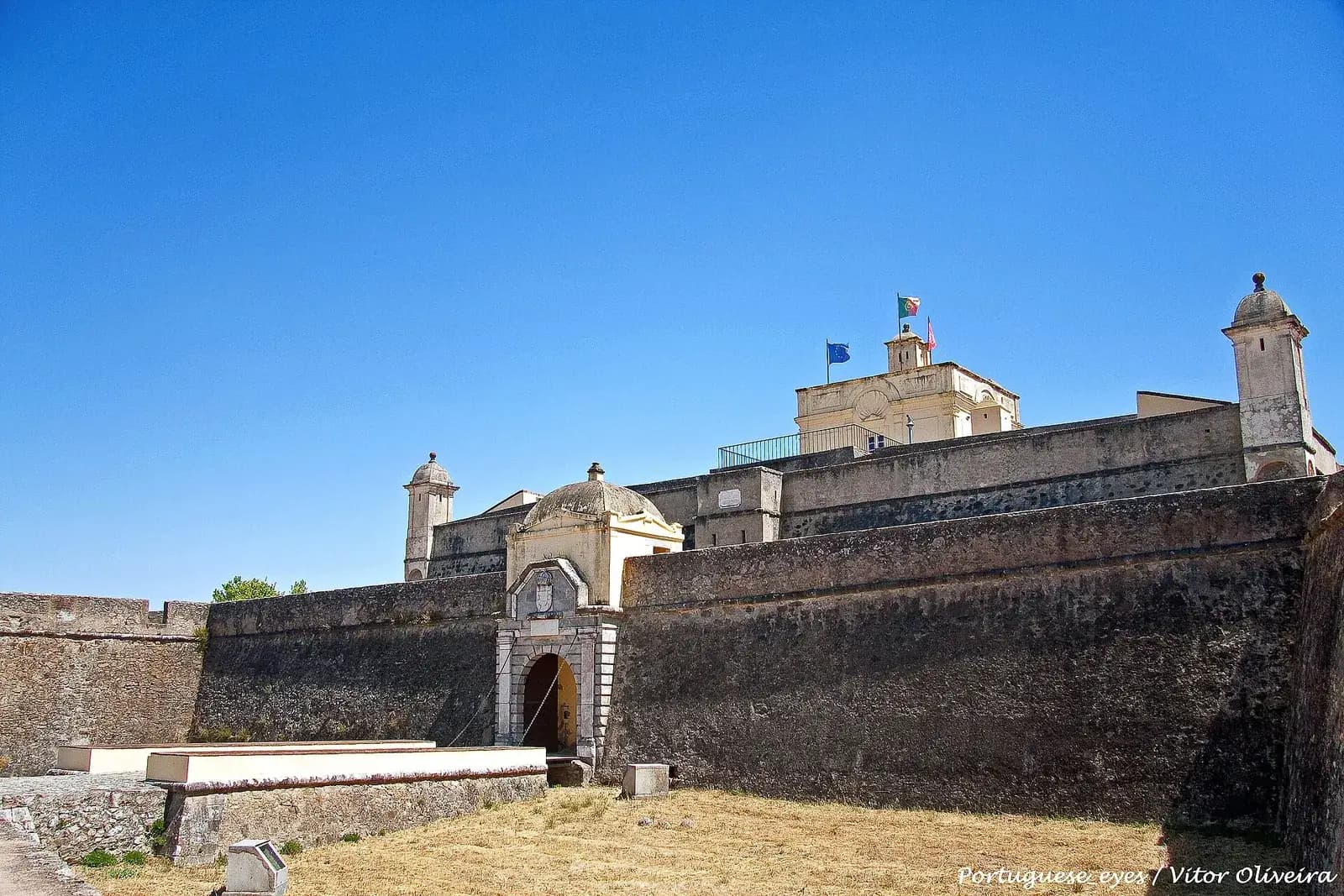
So that no enemy could plant guns on the hill 410 metres south-east of the town, the Portuguese also built the Fort of Santa Luzia there between 1641 and 1648. It was a square of four bastions joined to the town by a covered way, with two cisterns that could supply 300 to 400 men for two or three months. It had already held out when a Spanish army under the Marquis of Torrecusa besieged Elvas in 1644.
Three months behind the lines
Haro was the most powerful man at Philip IV's court, a minister who in Ericeira's words dominated the Spanish monarchy with absolute power, and he had come to Extremadura with the army that saved Badajoz. He was a politician rather than a soldier. The Duke of San Germán, the experienced governor of arms of Extremadura, wanted to pick off weaker towns such as Estremoz, Borba and Évora first. Haro listened instead to courtiers who told him that Elvas would fall as soon as it was surrounded.
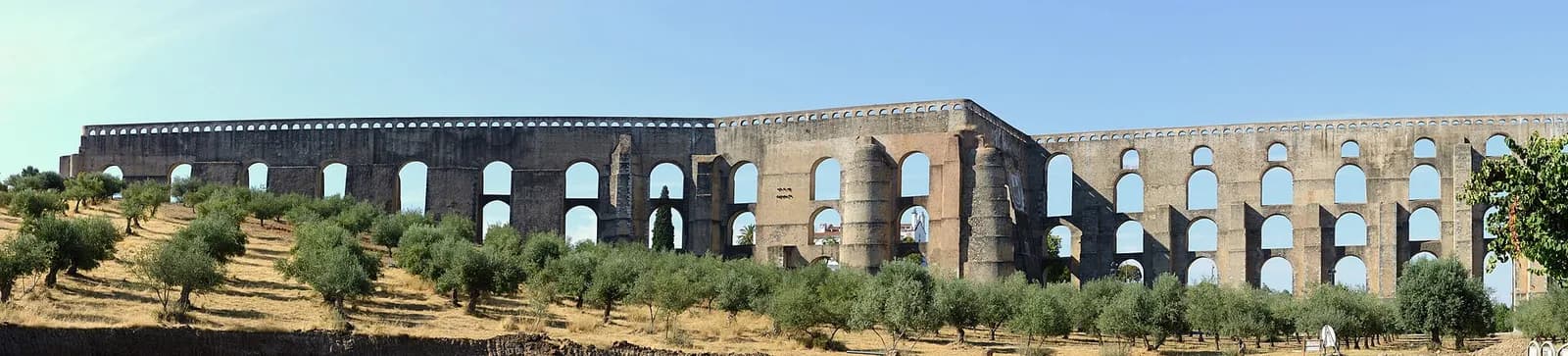
His army crossed the Caia, the river that marks the border, and camped on the Portuguese bank on 15 October 1658: 14,000 infantry and 5,000 horse, by Ericeira's count. Before dawn on 22 October it appeared west of Elvas and seized the Franciscan monastery of São Francisco, on a rise beside the aqueduct that brought the town its water, and turned it into a fort. Two days later the Spaniards began to dig.
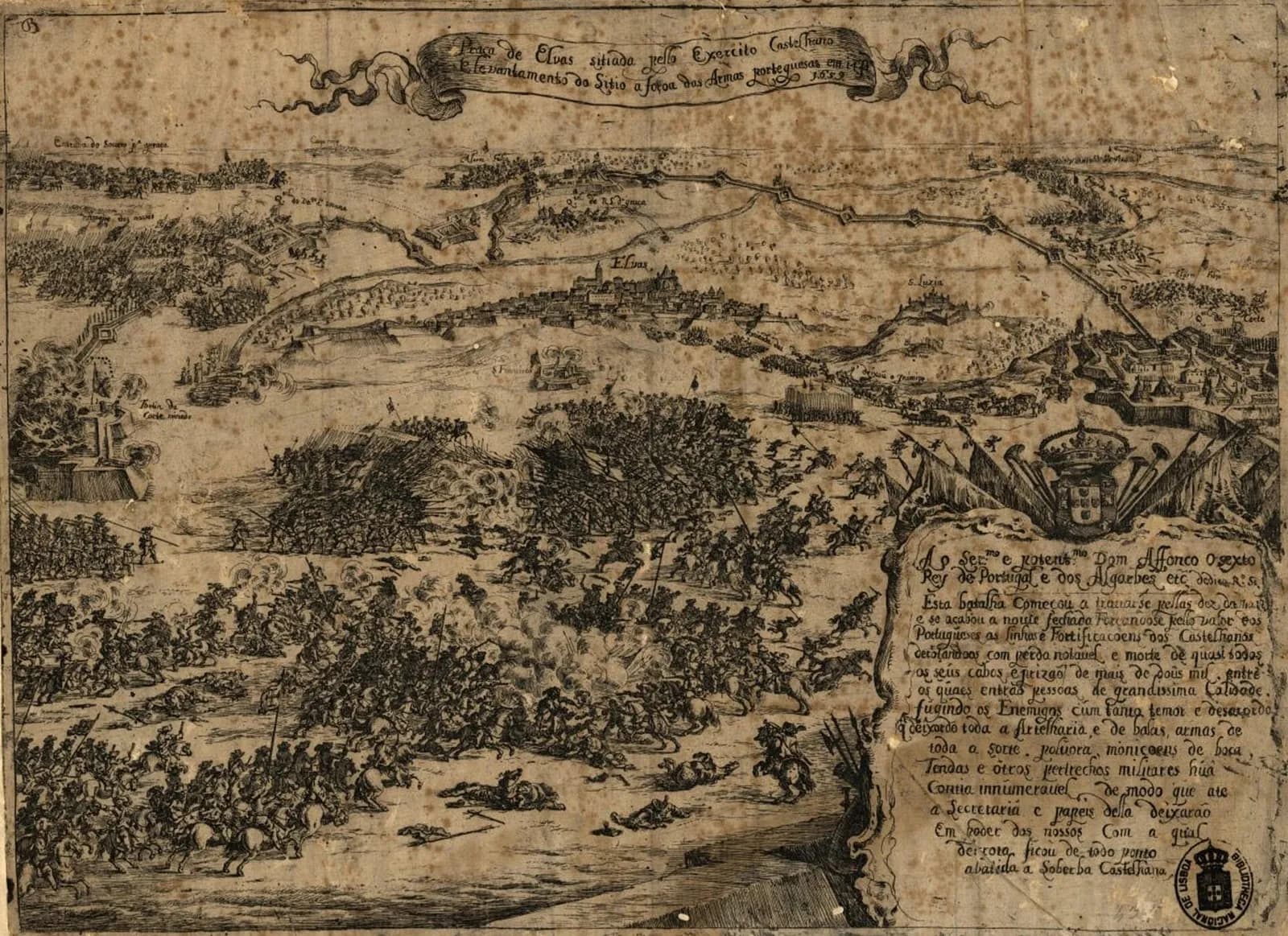
Their line of contravallation, a trench and earth rampart behind a ditch, ran for 15 to 18 kilometres around the town. Along it stood the forts of São Francisco and Graça, six large camps and a string of small forts, placed to stop sorties from the town and relief from outside. The Fort of Santa Luzia stayed in Portuguese hands, and the town council's history of the fort credits its garrison with a central part in the defence. For reasons that are still unclear, the Spaniards never cut the Amoreira aqueduct, and water kept flowing into Elvas.
“His intention is to make it surrender through hunger, as he understands there are many people inside and little to eat. The enterprise is great and of the highest importance for the conquest of Portugal, but difficult, and the weather does not help.”
Hunger turned out to be the lesser enemy. Bread never ran out, Ericeira wrote, though men used to more than bread suffered on it. Disease did the damage. Ericeira describes fever and weakness and says the contagion killed like plague, though it was not true plague; modern accounts simply call it plague. Soldiers who had come back sick from the Badajoz campaign were packed into the town with auxiliaries and militiamen who had no quarters, and some of them slept in church porches under the clothes of the dead.
“As the sicknesses multiplied with the days, there were many in the last of them when the number of dead reached three hundred, and this excess had monstrous effects: the living so lost their horror of the dead and unburied that at the guard posts the corpses served them as seats for their games.”
The dead could not be buried outside the walls without showing the Spaniards how few defenders were left, and the rock floor of the ditch could not be dug. Once the churches were full, bodies went into the earth of the ramparts. By the eve of the battle one infantry regiment, Agostinho de Andrade's, was down to 90 men even after absorbing auxiliary and militia companies. Modern accounts put the deaths in the town during the siege at about 5,000, mostly from plague.
A regent, a count and a scratch army
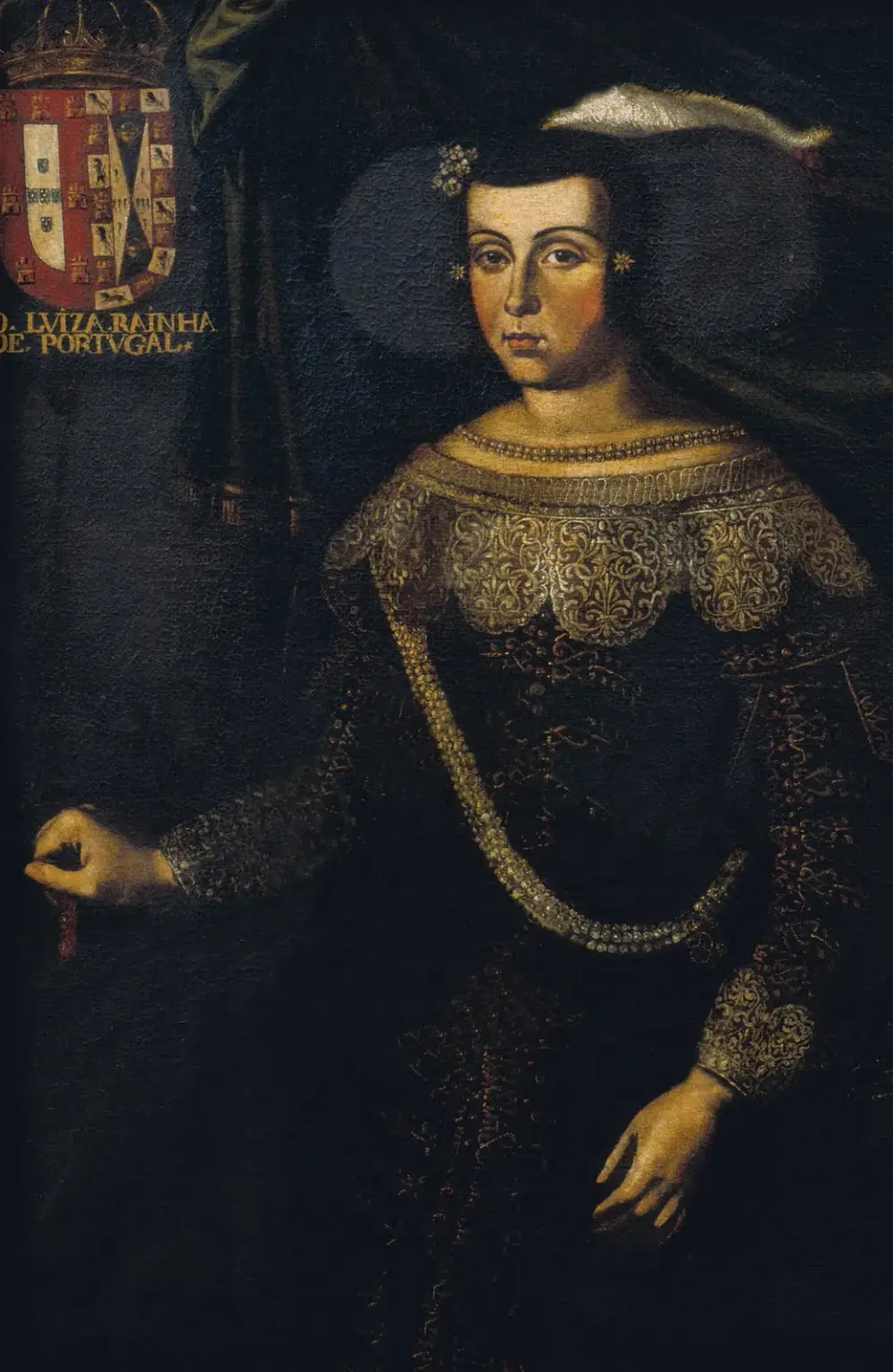
In Lisbon the regent took the siege personally. Luísa de Gusmão wrote often to the governor of Elvas, Sancho Manoel, urging him to hold on and promising that help was coming. He was a veteran who had fought in Spanish armies in Italy and Flanders, and he had been made governor of Elvas in 1658, during the attack on Badajoz.
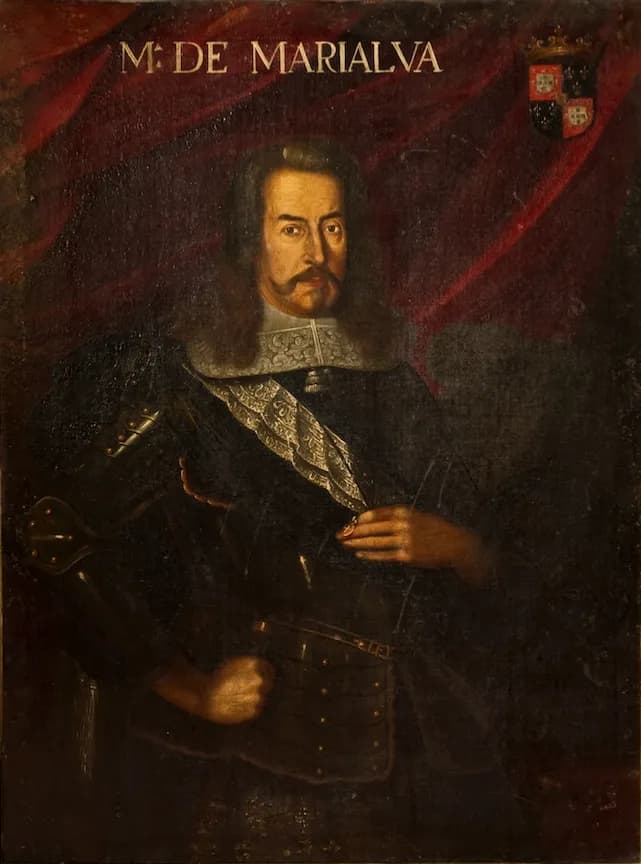
To lead the relief she first named the Duke of Aveiro, who accepted and gave the post up within days. Her second choice was António Luís de Meneses, Count of Cantanhede, then in his mid-fifties, whom she made governor of arms of the Alentejo in November 1658. He was an administrator more than a soldier, one of the heads of the royal treasury.
Cantanhede reached Estremoz, where the army was gathering, in late November and leaned on professionals, above all André de Albuquerque Ribafria, the general of cavalry. Albuquerque had slipped out of besieged Elvas by night with a small cavalry escort. Ericeira dates his escape to 14 November, with 180 horsemen, and has him waiting at Estremoz for the count; Mareco puts it on the night of 24 November, the day Cantanhede arrived, with 200.
In about six weeks they scraped an army together from Alentejo garrisons, survivors of Badajoz and the militia of the surrounding districts. Ericeira counted 8,000 infantry, of whom only 2,500 were paid regulars, 2,500 horse, 400 mares and seven field guns, followed by 2,000 loads of ammunition and food and 2,000 head of livestock to drive into the town. Carlos Mareco's account for the Fundação Batalha de Aljubarrota puts it at 11,000 men, half of them too young, too old or too green for battle.
Breaking the lines
The army left Estremoz on Saturday 11 January 1659 and on the 13th reached the Serra do Bispo, in sight of Elvas. It drew up opposite the Murtais, the weakest stretch of the Spanish line, where the forts of Graça and São Francisco stood too far apart to support each other. That evening Haro's council voted against marching out to fight in the open and chose to wait inside the lines.
The plan, a single concentrated blow, was argued inside Elvas by the veteran Diogo Gomes de Figueiredo and adopted by Cantanhede's council. Mareco says Sancho Manoel approved it. Ericeira, who had proposed a night attack on the Graça fort instead, says the governor preferred his plan.
The assault was led by 1,000 picked men under Figueiredo, followed by about 1,000 pioneers with tools to fill in the Spanish ditch. Behind them came three bodies of infantry, each with cavalry on its flanks. Portuguese guns on a knoll at the Murtais and some 20 heavy pieces on the town's Prince bastion caught the Spanish line in a crossfire.
The defenders fired three volleys, and the Portuguese still got over the rampart, first on the left, near Graça. Several hundred Spanish horse (500 in Ericeira, about 700 in Mareco) charged down from the hill. Cavalry from the Elvas garrison hit them in the flank, more Spanish horse came up from the camp at Vergada, and the Portuguese vanguard cavalry joined in until the Spanish horsemen broke and fled. By ten the whole army was inside the lines.
The rest of the day was a fight for one small fort after another. André de Albuquerque was killed in one of these attacks, aged 39 by Ericeira's account. By three in the afternoon every fort on the Murtais had fallen; São Francisco fell later in the day, with Cantanhede taking part in the attack in person. Haro, who had watched from the Graça hill without taking part, left for Badajoz with most of the surviving cavalry, and the supply convoy rolled into the town.
Sunrise, 14 January
Fog
A Spanish patrol reports that the Portuguese will not attack; troops leave that stretch of the lines.
c. 08:00
The fog lifts
Drums and trumpets sound in the Portuguese camp and the Spanish see the army advancing.
c. 09:00
Assault on the Murtais
The vanguard crosses the ditch and rampart near the Graça hill. The victory etching says the fighting began at ten.
c. 10:00
Inside the lines
The Spanish cavalry is routed and the whole relief army is through.
c. 15:00
Haro leaves
The Murtais forts have fallen; Haro rides for Badajoz with the surviving cavalry.
Night, 14 to 15 January
Retreat
A Portuguese attack on the Graça redoubt fails; the Spanish abandon the Corte camp and flee towards the Caia.
15 January
Surrender
The Graça redoubt and one other fort surrender; Sancho Manoel's cavalry reaches the Caia.
At nightfall the Spaniards still held the redoubt on the Graça hill and the camp called the Corte. A night attack on Graça failed because the attackers had brought no ladders or fascines. In the dark the Spaniards abandoned the Corte and other camps, and many drowned trying to cross the Caia and the Guadiana. On the morning of the 15th the commanders of the Graça redoubt, with some 600 men, and of one other fort surrendered, and Sancho Manoel's cavalry rode to the Caia, picking up two guns, ammunition and five of Haro's wagons.
In the abandoned camp the soldiers found the wooden huts Haro had lived in, his officers' tents full of valuables and his secretariat with all its papers, including his private correspondence with the king. The etching made to celebrate the victory gloats over that detail.
“The enemy fled with such fear and disorder that they left all the artillery, and of shot, arms of every sort, powder, food supplies, tents and other military stores a countless quantity, so that even the secretariat and its papers they left in the power of our men.”
Counting the cost
Nobody agrees on the numbers, and almost all of them, including nearly every figure in the table below, come from the Portuguese side. Ericeira's, written down within forty years of the battle by a man who had been inside the town, are the most detailed. The Spanish army that held the lines on 14 January was 17,500 strong in his account, and when it mustered in Badajoz the next day only 6,300 men answered. The gap of 11,200, often quoted as Spanish losses, is the difference between two musters, so it takes in the dead, the prisoners and everyone else who failed to answer.
| Source | Portuguese relief army | Spanish army on the lines | Spanish losses | Portuguese losses |
|---|---|---|---|---|
| Count of Ericeira, História de Portugal Restaurado (first published 1698) | 8,000 infantry, 2,500 horse, 7 guns | 14,000 infantry, 3,500 horse | Over 5,000 prisoners, plus 600 wounded and sick sent to Badajoz; 17 guns, 3 mortars and 15,000 arms taken; dead not counted | 27 officers and 177 soldiers killed; 97 officers and sergeants and 600 soldiers wounded |
| Etching dedicated to Afonso VI (c. 1662) | Not given | Not given | Almost all their officers killed and over 2,000 taken prisoner; all the artillery left behind | Not given |
| Carlos Mareco, Fundação Batalha de Aljubarrota (2007) | 11,000 (2,500 paid soldiers, 5,500 auxiliaries and militia, 3,000 horse), plus about 700 from the garrison | 14,500 (11,000 infantry, 3,500 horse) | About 2,500 dead, 4,000 prisoners, 15,000 arms and 20 guns | About 200 dead and 600 wounded, plus about 5,000 dead in the town during the siege |
| José Hermano Saraiva, RTP (2006) | 11,000 | About 14,500 | About 2,500 dead and 4,000 wounded; about 20 guns | About 200 dead and 600 wounded; about 5,000 dead in the town during the siege |
| ICOMOS evaluation for UNESCO (2012) | About 11,000 | About 14,000 | Not given | Not given |
| Moisés Cayetano Rosado | 11,000 | 19,000 | Not given | Not given |
All these figures come from Portuguese sources (ICOMOS took its numbers from Portugal's nomination dossier), except Rosado's, which he gives without a source. Ericeira's officer totals are counted from his list of names and ranks. RTP gives 4,000 Spanish wounded where the Fundação gives 4,000 prisoners. Rosado's 19,000 equals Ericeira's count of Haro's army when it camped on the Caia in October 1658.
Haro's army before and after the battle, by Ericeira's count
men
- Infantry
- Cavalry
Figures from the Count of Ericeira. He adds that 36,000 men in all had joined the Spanish army in the course of the campaign, so the October and January totals hide heavy losses, and that many of the survivors at Badajoz died soon afterwards of illnesses caught in the winter camp.
Show the data
| Infantry | Cavalry | |
|---|---|---|
| On the Caia, 15 Oct 1658 | 14,000 | 5,000 |
| On the lines, 14 Jan 1659 | 14,000 | 3,500 |
| At Badajoz, 15 Jan 1659 | 5,000 | 1,300 |
On the Portuguese side, Ericeira's roll of the dead adds up to about 200, among them André de Albuquerque, the former admiral Fernando da Silveira, a regimental commander, two cavalry captains and ten infantry captains. His wounded come to almost 700. Those battle losses were small beside the deaths inside the town during the siege.
The Spanish account survives mostly in private letters. A few weeks earlier Philip IV had told his confidante, the abbess Sor María de Ágreda, that the siege was going slowly because of heavy rain but that, according to Haro, no relief had got in. His next letter, printed in the 1886 edition with the date 2 January 1659 although it describes the battle of the 14th, broke the news.
“God did not will that so much as has been laboured and spent on the enterprise of Elvas should succeed, though it seemed so just and against rebels and tyrants; for when we had already overcome the greatest difficulties and hoped soon to reap the fruit of our labour, Our Lord permitted that on Tuesday the 14th of this month the enemy should attack us with such good fortune that he routed us and relieved the place.”
The king saw in it, as he put it, a manifest scourge for our sins. Sor María replied on 30 January that she was grieved and astonished that such great human means had failed and that so many prayers had gone unheard, from which she concluded it was a punishment from God.
From Elvas to peace
Within the year Spain made peace with France. On 7 November 1659, on a small island on the Basque border between the two kingdoms, the two crowns signed the Treaty of the Pyrenees, ending a war that had lasted since 1635. Peace with France was what Spain needed to reconquer Portugal. France broke off diplomatic relations with Lisbon, and Portugal was left to find another ally.
It turned to England. The regent negotiated an alliance and a marriage treaty, and on 21 May 1662 João IV's daughter Catarina married Charles II, taking Bombay and Tangier as her dowry. French officers led by Schomberg had also come to Portugal in 1660 to reorganise the army on the French model.
The big Spanish invasions came in the 1660s, and the men of Elvas met them. Sancho Manoel, by then Count of Vila Flor, commanded the Portuguese army that beat Don John of Austria at Ameixial, near Estremoz, on 8 June 1663. Cantanhede, now Marquis of Marialva, commanded alongside Schomberg at Montes Claros on 17 June 1665. Peace came in 1668, with Charles II of England as mediator.
7 November 1659
Treaty of the Pyrenees
Spain and France make peace; Portugal is left out.
1660
Schomberg arrives
French officers come to reorganise the Portuguese army.
21 May 1662
English alliance
Catarina of Bragança marries Charles II of England.
23 June 1662
End of the regency
Afonso VI takes power from his mother, Luísa de Gusmão.
8 June 1663
Ameixial
Sancho Manoel, Count of Vila Flor, defeats Don John of Austria near Estremoz.
17 June 1665
Montes Claros
The Marquis of Marialva and Schomberg defeat a Spanish army that had besieged Vila Viçosa.
5 January and 13 February 1668
Peace
Signed for Spain in Madrid and ratified by Afonso VI in Lisbon, with English mediation.
The fortress town today
On 30 June 2012, at its session in Saint Petersburg, UNESCO's World Heritage Committee inscribed the Garrison Border Town of Elvas and its Fortifications on the World Heritage List. The committee called it the largest bastioned dry-ditch system in the world, and Cosmander's design a masterpiece of its time. The listed property takes in the walled town, the aqueduct, the forts of Santa Luzia and Graça and three smaller forts.
The Amoreira Aqueduct, which Haro's army left running, is 7,504 metres long, partly underground and partly on arches more than 30 metres high. Begun in the sixteenth century under the architect Francisco de Arruda, it only brought water into the town in 1622. The Fort of Santa Luzia was converted into a military museum in 1999 and 2000.
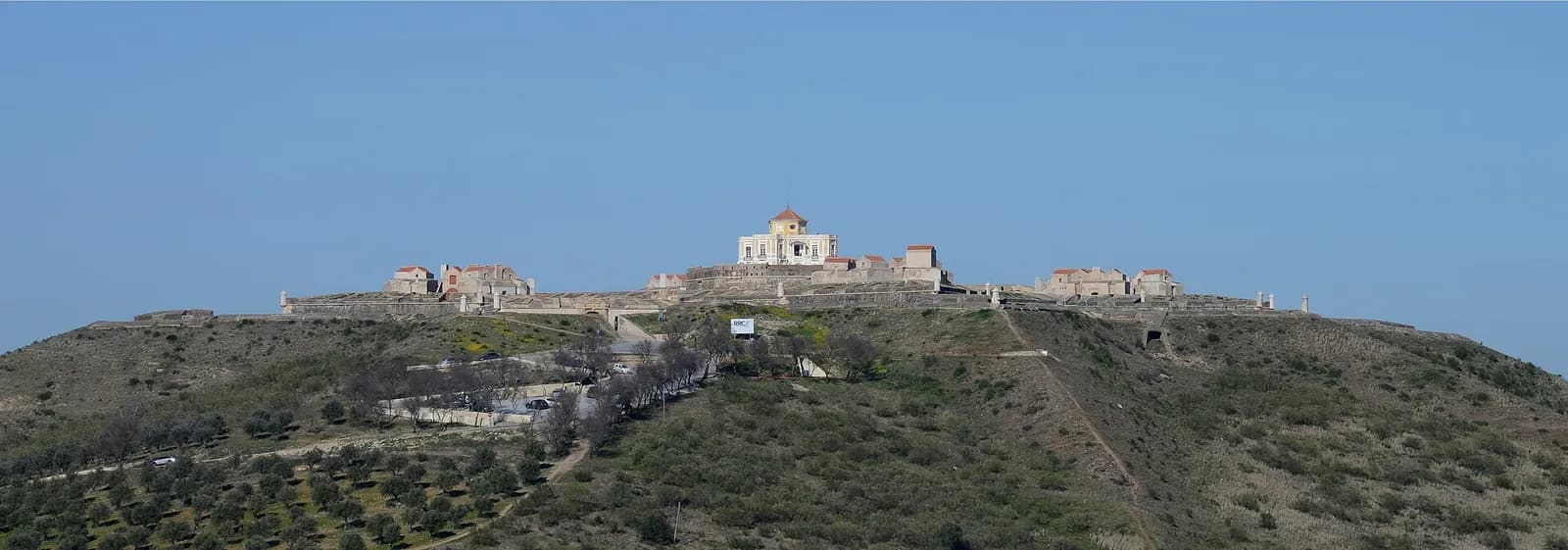
The hill of Graça, where the Spaniards built their redoubt in 1658 and Haro watched his army break, was fortified much later. As cannon grew longer in range, Wilhelm, Count of Schaumburg-Lippe, whom King José had put in charge of reorganising the Portuguese army, began the Forte da Graça there in 1763; the work was finished only in 1792. From 1894 it housed a military disciplinary depot, where political prisoners were held from the First Republic until 1974. It reopened to visitors on 27 November 2015 after restoration.
FAQs
When was the Battle of the Lines of Elvas?
It was fought on Tuesday 14 January 1659, during the Restoration War between Portugal and Spain. The Spanish had besieged Elvas since 22 October 1658, and the last Spanish post, the redoubt on the Graça hill, surrendered on the morning of 15 January.
Why is it called the battle of the Lines of Elvas?
The lines were the Spanish siege works: a trench, rampart and ditch running 15 to 18 kilometres around the town, with forts and camps along it. The Portuguese relief army won by storming those lines at their weakest point, the Murtais, rather than by fighting in open country.
Who commanded the two armies?
The Portuguese relief army was led by António Luís de Meneses, Count of Cantanhede, later Marquis of Marialva, with André de Albuquerque Ribafria as his senior general; Sancho Manoel commanded the garrison of Elvas. The Spanish army was led by Luis de Haro, Philip IV's chief minister, with the Duke of San Germán directing much of the fighting.
How many people died at Elvas in 1658 and 1659?
Almost all the figures come from Portuguese sources. They give about 200 Portuguese killed and 600 to 700 wounded in the battle. Spanish losses are less certain: about 2,500 dead in modern Portuguese accounts, and anything from over 2,000 to over 5,000 prisoners in seventeenth-century ones. About 5,000 people are thought to have died inside Elvas during the siege, mostly of plague.
Can you visit the battlefield and fortifications?
Yes. Elvas's walls, the forts of Santa Luzia and Graça and the Amoreira Aqueduct are a UNESCO World Heritage Site, inscribed in 2012. The Fort of Santa Luzia houses a military museum and the Forte da Graça has been open to visitors since 2015.
On the timeline
Open the timelineNearby moments from restoration and the gold of brazil (1640–1750).
Manuel Bernardes, Oratorian priest and author of 'Nova Floresta', is born in Lisbon. His devotional prose made him one of the great classics of the Portuguese language.
Portuguese and Brazilian forces defeat the Dutch at the Second Battle of Guararapes in Pernambuco, a decisive victory in the Pernambucan insurrection that helped end Dutch ambitions in colonial Brazil.
During the Portuguese Restoration War, a Spanish army under the Marquis of Viana defeats Portuguese forces led by the Count of Castelo Melhor at the Battle of Vilanova, near the River Minho, going on to capture Monção and other Portuguese strongholds in the months that followed.
Battle of the Lines of Elvas
Battle of the Lines of Elvas — Portuguese forces under António Luís de Meneses, Count of Cantanhede (later Marquis of Marialva), defeat the Spanish army besieging Elvas, a decisive victory in the Restoration War.
Portugal and the Dutch Republic sign the Treaty of The Hague, under which the Netherlands recognises Portuguese sovereignty over Brazil (formerly Dutch-held New Holland) in exchange for a substantial indemnity, ending decades of colonial conflict.
Catherine of Braganza, daughter of King João IV, marries Charles II of England at Portsmouth. Her dowry includes Bombay and Tangier, and as queen she is credited with making tea-drinking fashionable at the English court.
The Portuguese army achieves a decisive victory at the Battle of Ameixial, in the Alentejo. Commanded by Sancho Manuel de Vilhena, Count of Vila Flor, with an English contingent under Frederick Schomberg, the Portuguese rout the much larger Spanish force of Don Juan José of Austria. Évora, captured by the Spanish weeks earlier, is retaken within days, and the victory turns the Restoration War decisively in Portugal's favour.
Coming up in history
All long reads 16 January 1711Saint Joseph Vaz, the Goan priest who rebuilt Ceylon’s banned church
 17 January 1995Miguel Torga, doctor and poet of Trás-os-Montes, dies: 17 January 1995
 18 January 193418 January 1934: the general strike and the night in Marinha Grande
 19 January 1919The Monarchy of the North: Porto's 25-day kingdom of 1919
20 sources
Archives, scholarship and reporting this article was checked against.
- 1
História de Portugal Restaurado, vol. III (Luís de Meneses, 3rd Count of Ericeira), Lisbon, 1759 editionInternet Archive (University of Toronto copy)
- 2
Batalha das Linhas de Elvas (versão desenvolvida) (Carlos Mareco)Fundação Batalha de Aljubarrota, Centro de Interpretação da Batalha de Aljubarrota, 2007
- 3
- 4
Decision 36 COM 8B.34: Garrison Border Town of Elvas and its Fortifications (Portugal)UNESCO World Heritage Committee, 36th session, Saint Petersburg, 2012
- 5
- 6
A batalha das Linhas de Elvas (José Hermano Saraiva, from the series Portugal Restaurado, 2006)RTP Ensina
- 7
Praça de Elvas sitiada pello exercito castelhano e levantamento do sitio a força das armas portuguesas em 14 de Janeiro de 1659 (Dirk Stoop, etching, c. 1662)Biblioteca Nacional de Portugal, Biblioteca Nacional Digital
- 8
- 9
A short story of 1st December (José Miguel Sardica)Universidade Católica Portuguesa
- 10
Forte de Santa LuziaCâmara Municipal de Elvas
- 11
Las fortificaciones de frontera del corredor Madrid-Lisboa en los dibujos de Pier Maria Baldi (Moisés Cayetano Rosado)Dialnet, Universidad de La Rioja
- 12
Review of Michel and Annie Bougain, La partició de Catalunya: història rocambolesca del Tractat dels Pirineus (Rafael Cerro Nargánez)Índice Histórico Español, no. 135 (2022), pp. 180-182, Universitat de Barcelona
- 13
Diplomacy in the Restoration Period (Pedro Nobre)Encyclopaedia of Portuguese Expansion (EVE), CHAM, NOVA FCSH, 2009
- 14
Casamento de D. Catarina de Bragança com Carlos II de InglaterraArquivo Nacional Torre do Tombo
- 15
- 16
Espetáculo multidisciplinar assinala 350 anos da morte do Marquês de MarialvaCâmara Municipal de Cantanhede
- 17
- 18
Elvas recebeu 1,2 milhões de turistas desde a distinção da UNESCO em 2012 (Lusa)24 Notícias (SAPO), 2017
- 19
- 20
Image credits
- The relief of Elvas on 14 January 1659 in an etching dedicated to King Afonso VI by the Dutch artist Dirk Stoop. The National Library of Portugal dates it to about 1662 (Wikimedia Commons says about 1660). The Spanish siege lines zigzag across the hills behind the town. Dirk Stoop, Public domain, via Wikimedia Commons.
- The gate of the Fort of Santa Luzia, built between 1641 and 1648 on a hill south-east of Elvas. It now houses the town's military museum. Photographed in 2020. Vitor Oliveira from Torres Vedras, PORTUGAL, CC BY-SA 2.0, via Wikimedia Commons.
- The Amoreira Aqueduct, finished in 1622, crossing the valley west of Elvas. The besiegers held the Fort of São Francisco beside it but never cut the water supply. Photographed in 2013. Alvesgaspar, CC BY-SA 3.0, via Wikimedia Commons.
- Luísa de Gusmão, queen of João IV and regent for her son Afonso VI from 1656 to 1662. Seventeenth-century portrait attributed to José de Avelar Rebelo. Attributed to José de Avelar Rebelo, Public domain, via Wikimedia Commons.
- António Luís de Meneses, Count of Cantanhede and later first Marquis of Marialva, painted between 1673 and 1675 by Feliciano de Almeida. The portrait is in the Uffizi Gallery, Florence. Feliciano de Almeida (1635-1694), Public domain, via Wikimedia Commons.
- The Forte da Graça, begun in 1763 on the hill north of Elvas where the Spanish besiegers had their redoubt in 1658 and 1659. Photographed in December 2016. Alvesgaspar, CC BY-SA 4.0, via Wikimedia Commons.