

Saint Joseph Vaz, the Goan priest who rebuilt Ceylon’s banned church
When the Dutch banned Catholic priests from Ceylon, a Brahmin priest from Portuguese Goa went in dressed as a beggar. He spent 24 years on the island: in hiding, in a Buddhist king’s prison and finally under that king’s protection.
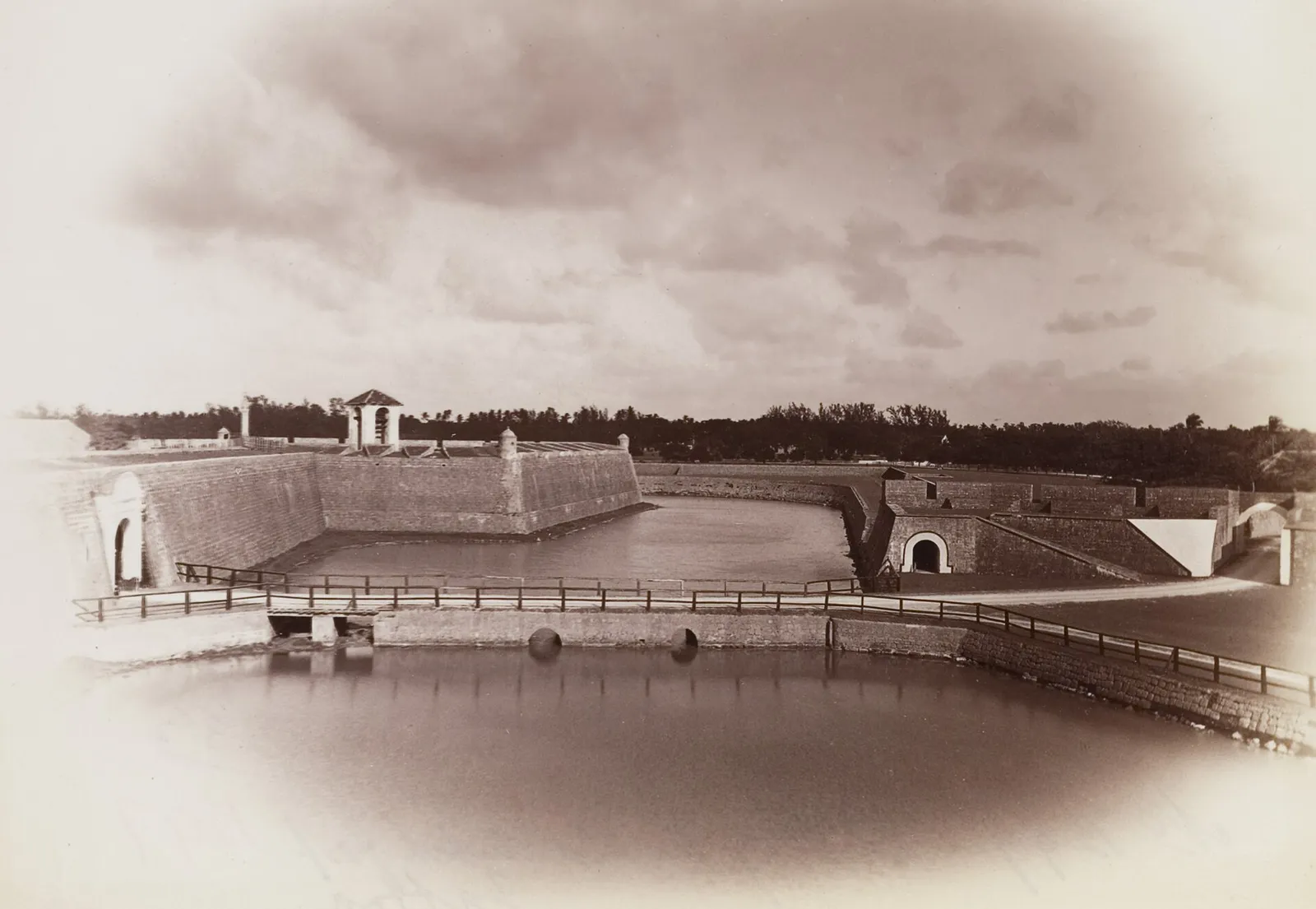
At a glance
- Joseph Vaz, a Catholic priest from a Brahmin family of Portuguese Goa, born in 1651, died in Kandy, Sri Lanka, on 16 January 1711 after some 24 years rebuilding the island’s outlawed Catholic church.
- The Dutch East India Company (VOC) expelled Catholic priests after taking the last Portuguese forts of Ceylon between 1656 and 1658, and a proclamation of 1658 made harbouring a priest a capital offence.
- Vaz entered the Jaffna peninsula in about 1687 disguised as a beggar or labourer, said Mass in secret at night, and was later held in Kandy for about two years as a suspected Portuguese spy.
- The Buddhist king Vimaladharmasūriya II freed him and let him build a church; Vaz’s work in the smallpox epidemic of 1697 won him more freedom, and priests of the Goa Oratory joined him in the late 1690s.
- John Paul II beatified him in Colombo on 21 January 1995, and Pope Francis canonised him there on 14 January 2015 as Sri Lanka’s first saint.
A beggar with a rosary
The beggar who came ashore in northern Ceylon in the 1680s wore rags, and he fell ill almost at once. He was Joseph Vaz, a priest from Goa in his mid-thirties. Catholic tradition says he lay half dead by the roadside for days, like the man in the parable of the Good Samaritan, until some local women nursed him back to health.
Then he went begging from door to door with a rosary round his neck. The beads were a signal. Under the Dutch East India Company (VOC), Catholic priests were banned, and many Catholics went to the Protestant church in public and kept their old faith at home. When one family showed interest in the rosary and he was sure of them, he told them who he was.
So began a clandestine mission that lasted until Vaz died in Kandy, capital of the island’s last independent kingdom, on 16 January 1711. Ceylon’s Catholics had gone some three decades without a resident priest. When he died they had a vicar general, a team of Goan priests and chapels across the island.
- Born
- 21 April 1651, Benaulim or Sancoale, Salcete, Portuguese Goa
- Died
- 16 January 1711, Kandy, aged 59
- Congregation
- Oratory of the Holy Cross of Miracles, Goa (Oratory of St Philip Neri)
- In Ceylon
- From about 1687 until his death
- Beatified
- 21 January 1995, Galle Face Green, Colombo, by John Paul II
- Canonised
- 14 January 2015, Galle Face Green, Colombo, by Pope Francis
- Feast day
- 16 January
Ceylon after the Portuguese
The Portuguese had held forts and lands on the coasts of Ceylon, now Sri Lanka, since the sixteenth century. In 1638 the Kandyan king Rājasiṃha II allied with the Dutch to drive them out, and the VOC took the forts one by one: Colombo fell in 1656, Jaffna and Mannar in 1658. The Dutch kept the coast; the king of Kandy kept the hills of the interior.
The new rulers belonged to the Dutch Reformed Church, a Calvinist church, and they feared the island’s Catholics would side with Portugal. Catholic priests were expelled at once, and the Reformed church became the only recognised form of Christianity. In Jaffna the Dutch took over the Catholic churches and set up a school beside each one.
A proclamation dated 19 September 1658 forbade anyone, on pain of death, to harbour or hide a Catholic priest. James Emerson Tennent, a British colonial official writing in 1850, judged the threat “too iniquitous to be carried into execution”; priests kept working in defiance of it. Office and land under the Company went only to baptised members of the Reformed church.
Kandy had its own rules. The 1638 treaty said the king “should not allow Roman Catholic monks and priests and other ecclesiastics to domicile themselves in his dominions”. Rājasiṃha II took in Catholic refugees from the Dutch lowlands all the same, and his son Vimaladharmasūriya II, who reigned from 1687 to 1707, apparently ignored the clause.
A Brahmin from Salcete
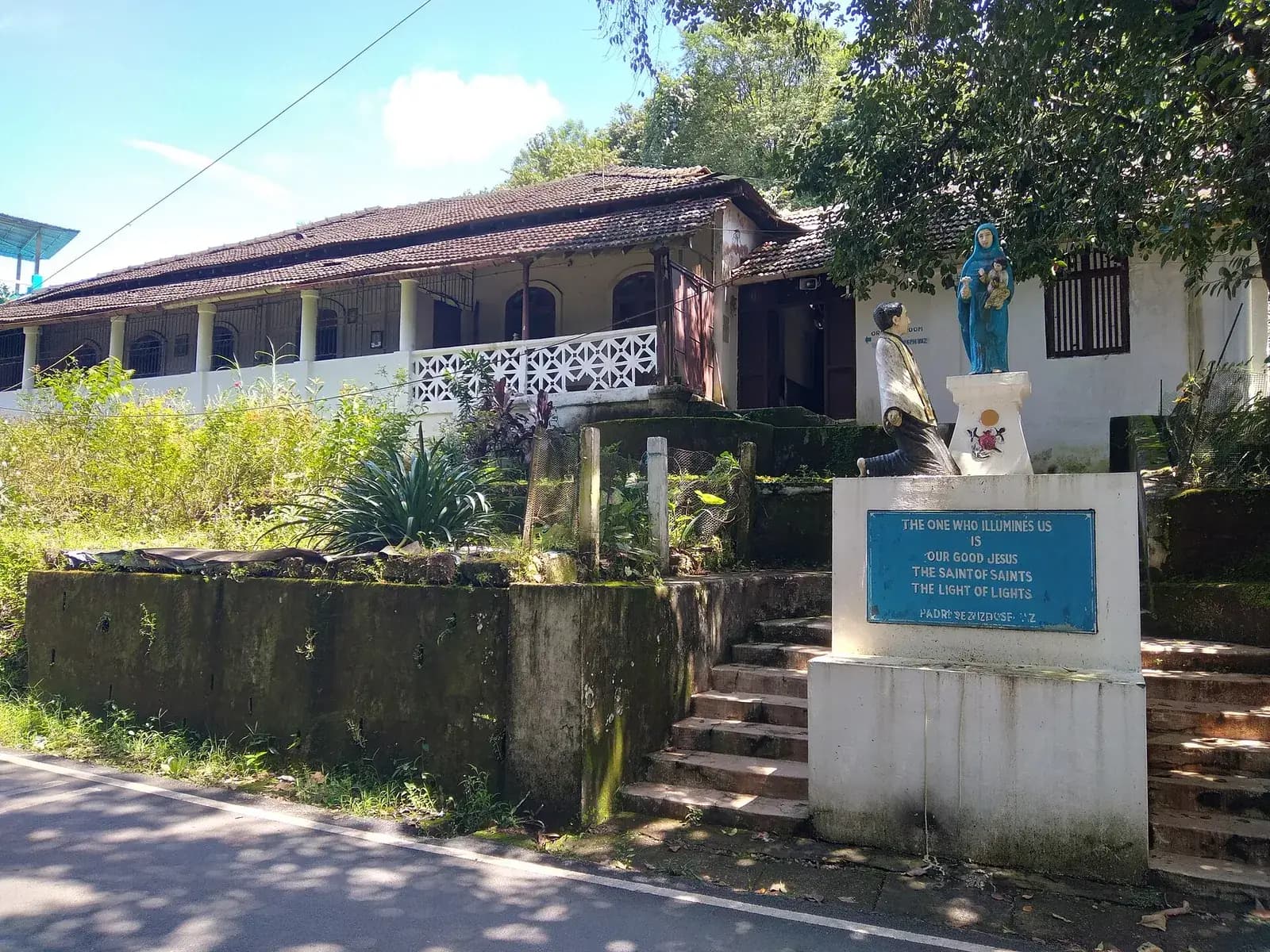
Joseph Vaz was born on 21 April 1651, the third of six children of Cristóvão Vaz and Maria de Miranda. Most modern accounts, including the Archdiocese of Colombo and the New Catholic Encyclopedia, place his birth at Benaulim, his mother’s village in the Goan province of Salcete. His early biographer, the Oratorian Sebastião do Rego, made him a native of Sancoale, his father’s village. He grew up between the two.
Both parents were Catholics of the Konkani-speaking Brahmin caste. Brahmins sat at the top of Goa’s caste order, and Christian Brahmins gained more than any other group from the posts the colonial state opened to native Christians, in medicine, the treasury, the Inquisition and the Church.
He studied at the Jesuit College of St Paul in Goa and then philosophy and theology with the Dominicans at the College of St Thomas Aquinas. He was made subdeacon and deacon in 1674 and 1675 by Custódio de Pinho, himself a Brahmin bishop from Salcete, and the archbishop of Goa, António Brandão, ordained him priest in 1676.
Kanara and a quarrel over jurisdiction
In 1681 the archbishop of Goa sent Vaz to Kanara, the coast around Mangalore in today’s Karnataka, as vicar forane, the priest in charge of a church district. The post was a move in the Padroado quarrel. Rome had named another Goan Brahmin, Thomas de Castro, vicar apostolic of Kanara for Propaganda Fide, and Goa refused to recognise him.
Vaz recognised de Castro’s authority instead. Gomide, citing the historian Inês Županov, writes that Goa quickly revoked his appointment and called him back, though other accounts keep him in Kanara for three or four years. There he repaired the church at Mangalore and built three new ones, at Barcelor, Gangolim and Kallianpur, all dedicated to the Virgin.
Ceylon was already on his mind. From Kanara, Rego says, Vaz asked Father Nicolau de Gamboa to let him be sold as a slave to the Dutch so that he could enter the island without arousing suspicion. Gamboa refused and ordered him back to Goa.
The Oratory of the Holy Cross of Miracles
In October 1682 Pascoal da Costa Jeremias, a priest from Margão, and a few companions, all Brahmin priests from Salcete, had begun living as a community at a hermitage near Batim, with the archbishop’s approval. They later moved to the abandoned church of the Holy Cross of Miracles (Santa Cruz dos Milagres) on the hill of Boa Vista near the city of Goa, where Christ was said to have appeared on a cross.
Vaz joined them on his return, in 1684 or 1685, and was soon elected superior. Under him the group took the Oratory of St Philip Neri as its model. Its members were all Goan Brahmins, and the Oblates of Mary Immaculate call it the first fully native religious community of the Latin rite in Asia. The established orders, Vatican News notes, recruited Europeans, not Indians.
Its backers turned that origin into an argument. Francisco Simões, the Jesuit rector of the college at Rachol, supported the statutes because the priests were “helped by colour, language, customs and temperament like those of the people they will deal with” (translated from Portuguese). The archbishop raised the community to a congregation in 1698, the Portuguese crown took it under its protection in 1703, and a papal bull confirmed it in 1707.
Underground in Jaffna
Vaz left Goa in 1686 with one companion, a lay brother according to the New Catholic Encyclopedia. Dates for his landing run from spring 1686 (New Catholic Encyclopedia) and late 1686 (Vatican News) to April 1687 (the Oblates); the Archdiocese of Colombo gives 1687. Goan tradition has him coming ashore at Mannar as a coolie.
The Catholics he found had not been wholly abandoned. Carmelite friars slipped in now and then to baptise, and in 1680, Gomide notes, the Dutch found seven Catholic schools and churches in Jaffna where about 600 people met for Mass. But since 1658, when by the Oblates’ count some 120 missionaries left, no priest had been free to live among them.
Vaz settled at Sillalai, a village where Catholics were many and resolute. He said Mass at night, administered the sacraments in secret and trained catechists to keep the faith going when he moved on.
The VOC noticed. On Christmas night 1689, the Oblates’ account says, the commander of Jaffna learned a priest was at work. Some 300 Christians were jailed. Vaz got away. That year the Company’s high commissioner for India and Ceylon, Hendrik Adriaan van Rheede, lord of Mydrecht, had the peninsula’s Catholic churches pulled down.
“It is remarkable that this should have occurred after His late Excellency Governor van Mydregt in 1689 had caused all Roman Catholic churches and secret convents to be dismantled and abolished, and instead of them founded a Seminary or Training School for the propagation of the true religion, incurring great expenses for this purpose.”
For the Company the problem was bigger than one priest. Hendrick Zwaardecroon, commander of Jaffna, also wrote that the Company had kept up 35 churches in Jaffna for 38 years, yet in 1693 nearly all of them were found “stocked with heathen books” beside the catechisms. Dutch ministers called many converts Christians in name only. In a colony taken from Portugal, a wandering priest also looked like a Portuguese agent.
Vaz moved south to the coastal town of Puttalam, then under the king of Kandy and outside Dutch control, and worked there for about a year. Then he set out for Kandy, hoping to make the royal capital a safe base.
A prisoner of the king of Kandy
He reached Kandy in about 1692 and was arrested as a Portuguese spy. Simon Casie Chitty, a Ceylonese civil servant who in 1848 abridged Rego’s life of Vaz into English, blamed a French Protestant at court, de la Nerolle, for denouncing him to King Vimaladharmasūriya II. Vaz spent nearly two years in prison.
The prison was not sealed. Kandy’s Catholics could reach him. Vatican News says reports of his conduct made the king curious to meet him.
“Before he had even arrived he learned the Tamil language, and later when he was imprisoned in Kandy he learned Sinhala, so as to make the name of Jesus Christ resound in the languages and culture of your country.”
He was freed in 1693 by the Oblates’ date. Tennent says that in 1694 the king let him rebuild the Catholic churches in the Bogambara quarter of Kandy that an earlier king had ordered destroyed. Vaz built a simple church there dedicated to Our Lady.
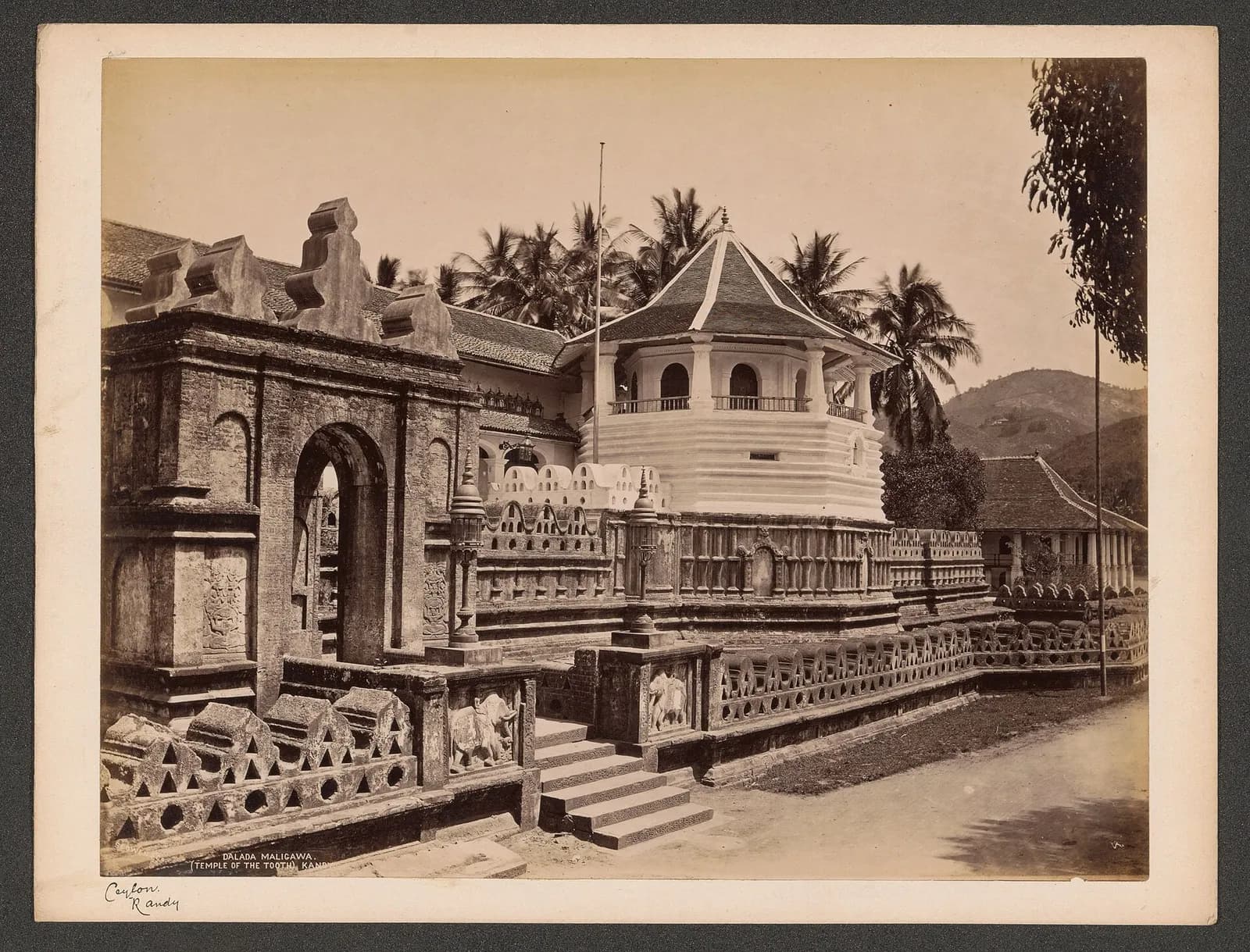
From the palace, tolerating a Christian holy man was no conversion. Kandyan kings had long sheltered several faiths. The Buddhist chronicle known as the Cūḷavaṃsa describes Vimaladharmasūriya II’s many Buddhist works at length, and a Catholic report of 1701 confirms them. The anthropologist Gananath Obeyesekere concludes that today’s Catholics of the old Kandyan kingdom and much of the lowlands “owe considerably” to this royal toleration.
Rain, smallpox and a mission
Catholic accounts place a turning point in 1696. During a long drought, they say, Buddhist ceremonies failed to bring rain, the king asked Vaz to pray to his God, Vaz set up an altar in a public square, and the rain came down. Rego tells the story, and the historian Ramesha Jayaneththi, quoted by Scroll, traces it to Catholic sources in the Ajuda library in Lisbon.
The smallpox epidemic of 1697 is the episode both popes chose to cite. When the disease swept Kandy, Vaz nursed the sick, and Vatican News says he proposed rules of hygiene to limit contagion. Pope Francis said in 2015 that the king valued this work so much that Vaz was given greater freedom to minister.
Church authority followed. In a letter of 10 February 1696, the Padroado bishop of Cochin, who claimed jurisdiction over Ceylon, named Vaz his vicar general for the island. Oratorians followed from Goa in 1696, 1697 or about 1699, depending on the source: Joseph de Menezes, Pedro Ferrão and Joseph Carvalho first, then Pedro Saldanha, Jacome Gonçalves and others. Vaz divided the island into districts and gave each priest one.
He travelled constantly, often barefoot, from Kandy into Dutch territory, as far as Colombo, Jaffna and Batticaloa. Priests still could not live openly in Dutch lands, so they stayed in frontier villages and slipped into the coast in disguise, by night. In 1705 he enlarged the small shrine of Our Lady of Madhu, in the northern forest.
In 1703 the papal legate in India, Mgr de Tournon, proposed making Vaz bishop or vicar apostolic of Ceylon. Vaz talked him out of it.
Death in Kandy
By 1710 Vaz was worn out and could no longer leave Kandy. He died there on 16 January 1711, aged 59, and was buried in the church he had built. Casie Chitty’s 1848 sketch gives the date as 17 January, against the 16th in Church sources.
Vimaladharmasūriya II had died in 1707. His son Narēndrasinha, king until 1739, seems to have known Vaz since childhood and regarded him with some veneration. Joseph de Menezes succeeded Vaz as vicar general, but the next phase of the mission was dominated by Jacome Gonçalves, another Konkani Brahmin, who wrote fluently in Sinhala and Tamil and was openly hostile to Buddhism. Obeyesekere argues that Kandyan hostility to Catholics grew only in this second phase.
In 1743 King Śrī Vijaya Rājasiṃha banned Catholic worship in his kingdom and had the main church at Kandy razed. The church Vaz was buried in has since been destroyed and his remains lost, the New Catholic Encyclopedia notes.
On the coast the Company tightened its laws. A 1715 proclamation banned Catholic meetings. Two years later, Casie Chitty reckoned, the mission counted about 70,000 converts since Vaz’s arrival, with 15 large and more than 400 small churches. Later edicts taxed Catholic marriages, from 1758, and in 1776 declared them void. When Dutch rule ended in 1796, Catholicism was banned but tolerated, and Catholics outnumbered Protestants.
The saint’s life and the record
Almost everything known about Vaz passed through Oratorian hands. Sebastião do Rego, a Goan Oratorian who is not known to have served in Ceylon, wrote a life of Vaz from the congregation’s letters and archives, the Vida do Veneravel Padre Joseph Vaz of 1745, and finished a chronicle of the Goa Oratory in 1746.
The historian Ana Paula Sena Gomide shows how Rego shaped his subject on the model of a saint’s life: a father’s dream before the birth, a bright star at the hour he was born, an elephant that swerved away, healings and the rain at Kandy. He also quoted missionaries who had known Vaz.
“His dress is a cassock, which he takes off only in the lands of the Dutch, and he will not put on another until the one he wears is no longer of any use. It has so many patches that the Christians, unable to bear seeing it so patched, beg him for the love of God to wear another; they give him one ready made on purpose, and take the patched one out of devotion and keep it as a relic.”
Saldanha added that he had noticed “nothing extraordinary” in Vaz beyond what he had described, “which is not little”, and that “the Father’s life is a miracle” (translated from Portuguese). Vaz’s own letters, kept in the Ajuda library in Lisbon and published by M. da Costa Nunes in 1966, give historians a check on the biographies.
| Claim | Where it comes from | How firm it is |
|---|---|---|
| Born 21 April 1651 | Church sources and Rego | Date agreed; Benaulim or Sancoale |
| Ordained priest in 1676 | Rego; Catholic Encyclopedia; Oblates | Agreed in the sources used here |
| Entered Ceylon disguised | Rego and all later Catholic accounts | Agreed; year given as 1686 or 1687 |
| Jailed in Kandy as a spy | Rego; Casie Chitty; Archdiocese of Colombo | Agreed; about 1692 to 1693 or 1694 |
| Rain after his prayer, 1696 | Rego; missionaries’ letters | Miracle story from mission sources only |
| Nursed smallpox victims, 1697 | Mission sources; cited by two popes | Widely accepted; details from mission sources |
| Refused a bishopric | Catholic Encyclopedia; Oblates | Agreed; dated about 1703 |
No Kandyan or Dutch document naming Vaz was found for this article. The Dutch sources cited describe the measures against Catholics, not Vaz himself.
From Kandy to Galle Face Green
The Archdiocese of Colombo dates the first moves towards beatification to 1713. A formal cause opened in about 1737, but Benedict XIV cancelled it in 1742 over missing formalities. In 1894 Mgr Zaleski, the papal delegate to the East Indies, wrote that Vaz had “unfortunately been almost entirely forgotten”.
The cause was revived in the twentieth century. The Vatican approved a miracle attributed to his intercession on 6 July 1993, and John Paul II beatified him at Galle Face Green, the seafront park in Colombo, on 21 January 1995, calling him “the second founder of the Church” in Sri Lanka.
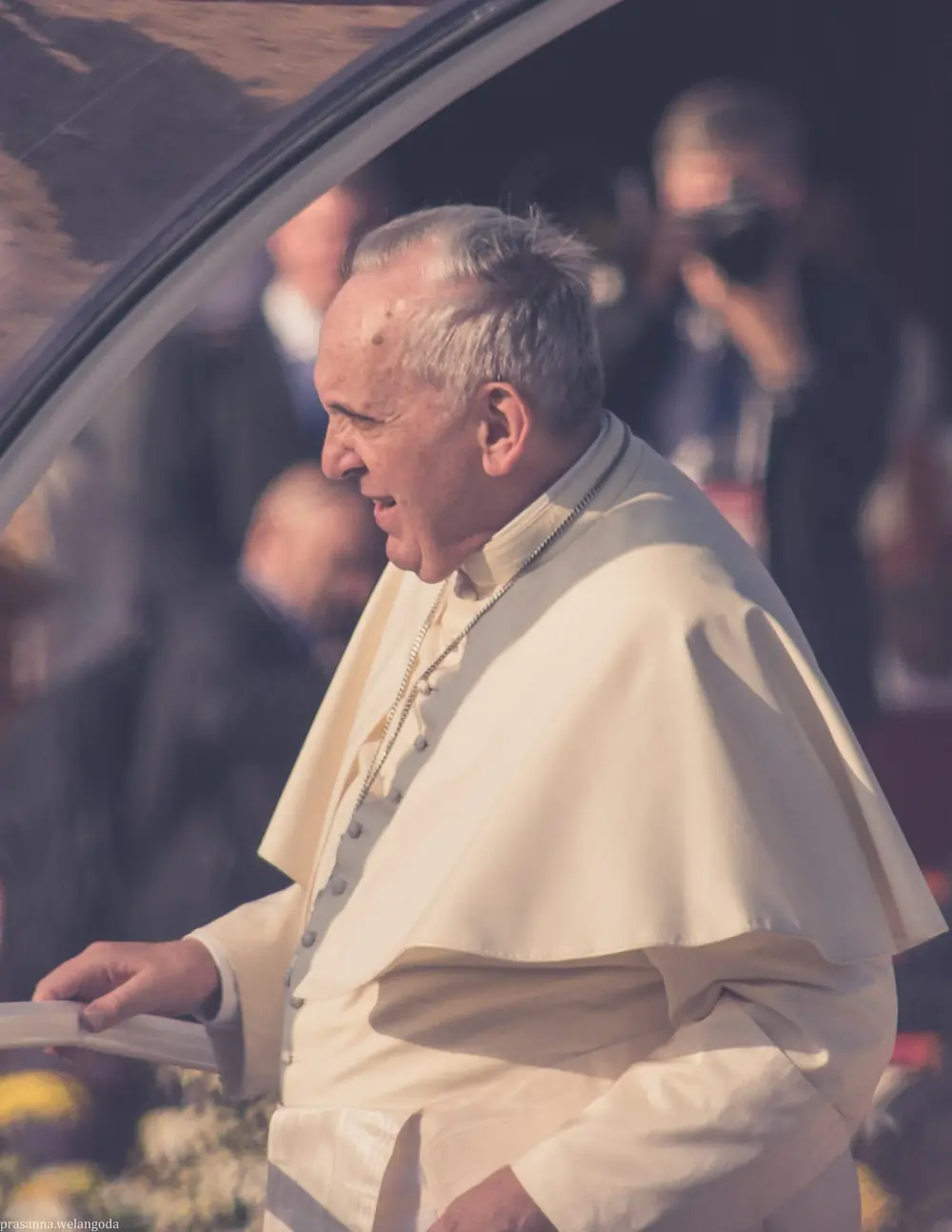
On 17 September 2014 Pope Francis waived the usual requirement of a second miracle. On 14 January 2015, on the same green, he canonised Vaz as Sri Lanka’s first saint.
“As the life of Saint Joseph Vaz teaches us, genuine worship of God bears fruit not in discrimination, hatred and violence, but in respect for the sacredness of life, respect for the dignity and freedom of others, and loving commitment to the welfare of all.”
21 April 1651
Born in Salcete, Goa
At Benaulim in most accounts; Rego says Sancoale.
1656 to 1658
The VOC takes the Portuguese forts
Colombo in 1656, Jaffna and Mannar in 1658. Priests are expelled.
1676
Ordained priest in Goa
1681
Sent to Kanara
As vicar forane for the Padroado; he recognises Propaganda’s vicar apostolic.
1684 or 1685
Joins the Holy Cross of Miracles community
Elected superior of the Goan Brahmin priests who become the Goa Oratory.
1686 to 1687
Enters Ceylon in disguise
Works in secret around Jaffna, then at Puttalam.
1689
Dutch crackdown in Jaffna
Catholic churches are dismantled; some 300 Christians jailed, by the Oblates’ account.
c. 1692
Arrested in Kandy as a spy
Held for nearly two years.
1693 or 1694
Freed
Builds a church in Kandy.
10 February 1696
Vicar general for Ceylon
Named by the bishop of Cochin. Oratorians follow in the late 1690s.
1697
Smallpox in Kandy
His nursing wins the king’s favour.
c. 1703
Declines to be made a bishop
16 January 1711
Dies in Kandy, aged 59
1743
Kandy church razed
Śrī Vijaya Rājasiṃha bans Catholic worship.
21 January 1995
Beatified by John Paul II in Colombo
14 January 2015
Canonised by Pope Francis in Colombo
Why it still matters
In Goa, Vaz is the patron of the archdiocese. Sri Lanka has about 1.6 million Catholics, Sinhala and Tamil, and his feast in Kandy each January also draws pilgrims from Goa: 125 came in January 2026.
For Portugal the story sits at an odd angle. Vaz worked under the Padroado, and the Dutch hunted his flock partly as suspected friends of Portugal. Yet his mission grew where Portuguese power had ended, run by Goan priests whom the Portuguese had long kept in second place. The Padroado in India ended by agreement with the Holy See on 25 October 1953.
FAQs
Who was Saint Joseph Vaz?
A Catholic priest from a Brahmin family of Portuguese Goa, born in 1651, who entered Dutch-ruled Ceylon in disguise in about 1687 and rebuilt its banned Catholic church from a base in Kandy. He died there on 16 January 1711 and is known as the Apostle of Ceylon.
Why were Catholics persecuted in Dutch Ceylon?
The VOC took the island’s coast from Portugal between 1656 and 1658. Its officials belonged to the Calvinist Dutch Reformed Church and feared Catholics would side with Portugal, so they expelled the priests, made the Reformed church the only recognised one and made harbouring a priest a capital offence.
Was Joseph Vaz Portuguese?
He was a Goan, born a subject of Portuguese India, of a Konkani-speaking Catholic Brahmin family. He worked under Portugal’s royal patronage of the Asian church, but his congregation, the Goa Oratory, admitted only Goan Brahmin priests.
Where is Joseph Vaz buried?
He was buried in the church he built in Kandy. King Śrī Vijaya Rājasiṃha had the main Kandy church razed in 1743, and the New Catholic Encyclopedia says the church has since been destroyed and his remains lost.
When was Joseph Vaz made a saint?
John Paul II beatified him in Colombo on 21 January 1995. Pope Francis waived the usual second miracle in September 2014 and canonised him at Galle Face Green in Colombo on 14 January 2015, making him Sri Lanka’s first saint.
On the timeline
Open the timelineNearby moments from restoration and the gold of brazil (1640–1750).
Portugal and England sign the Methuen Treaty in Lisbon. Portugal lifts its ban on English woollen cloth, while Portuguese wine is to pay a third less duty in England than French wine. It helped make port Britain's wine, though critics blamed it for ruining Portugal's own textile industry.
Birth in Coimbra of Carlos Seixas, the outstanding Portuguese keyboard composer of the 18th century. Cathedral organist at 14 and later organist of the royal chapel in Lisbon, he is said to have been sent to Domenico Scarlatti for lessons, only for the Italian to reply: 'You can give me lessons.' Most of his reputed 700 sonatas were lost in the 1755 earthquake.
Birth in Rio de Janeiro of António José da Silva, 'O Judeu' ('the Jew'), whose witty comic operas, performed by puppets at Lisbon's Bairro Alto theatre, were a great success. Condemned by the Inquisition as a relapsed Judaiser at an auto-da-fé in 1739, he was handed to the secular courts, strangled and burned.
Saint Joseph Vaz, Apostle of Ceylon
Joseph Vaz (José Vaz), a priest from Portuguese Goa, dies in Kandy after more than two decades secretly ministering to the Catholics of Ceylon, who were persecuted under Dutch Calvinist rule. Revered as the 'Apostle of Ceylon', he was canonised by Pope Francis in Colombo in 2015.
Birth in Lisbon of the Infanta Maria Bárbara, daughter of João V. A gifted keyboard player, she was taught by the Neapolitan composer Domenico Scarlatti, who followed her to Spain when she married the future Fernando VI in 1729 and remained her music master for the rest of his life. She became Queen of Spain in 1746.
Battle of Cape Matapan. A Portuguese squadron under Lopo Furtado de Mendonça, Count of Rio Grande, fights alongside the Venetian fleet and its Papal and Maltese allies against the Ottoman navy off the southern tip of the Peloponnese. Sent in answer to Pope Clement XI's appeal for aid, the squadron bore the brunt of the fighting and raised King João V's standing with the Holy See.
The first stone of the Palace-Convent of Mafra is laid in the presence of King João V, in fulfilment of a vow he had made for children. Paid for with Brazilian gold and raised by tens of thousands of workers, the vast Baroque complex was consecrated in 1730 and later inspired Saramago's 'Memorial do Convento'.
Coming up in history
All long reads 18 January 193418 January 1934: the general strike and the night in Marinha Grande
 19 January 1919The Monarchy of the North: Porto's 25-day kingdom of 1919
 20 January 1554Sebastião the Desired: the king born in Lisbon on 20 January 1554
 21 January 1951Castelo do Bode, 1951: the dam that lit Lisbon and now fills its taps
17 sources
Archives, scholarship and reporting this article was checked against.
- 1
Um santo brâmane: a trajetória do oratoriano José Vaz e sua missão em Ceilão (Ana Paula Sena Gomide)Revista Maracanan, n. 20 (2019), Universidade do Estado do Rio de Janeiro
- 2
Between the Portuguese and the Nāyakas: the many faces of the Kandyan kingdom, 1591–1765 (Gananath Obeyesekere), chapter 8 of Sri Lanka at the Crossroads of History, ed. Zoltán Biedermann and Alan StrathernUCL Press, 2017 (open access, CC BY 4.0); read and linked via Wisdom Library's reproduction
- 3
Memoir of Hendrick Zwaardecroon, Commandeur of Jaffnapatam, 1697, translated by Sophia Pieters (Colombo, 1911)Project Gutenberg
- 4
Christianity in Ceylon (James Emerson Tennent, London, 1850)Internet Archive
- 5
- 6
Vaz, Joseph, Bl.New Catholic Encyclopedia, via Encyclopedia.com
- 7
Eucharistic celebration for the beatification of Father Joseph Vaz: homily of John Paul II, Galle Face Green, Colombo, 21 January 1995Holy See
- 8
- 9
São José Vaz (saint of the day, 16 January)Vatican News
- 10
Saint Joseph Vaz (1651–1711): biographyMissionary Oblates of Mary Immaculate (OMI World)
- 11
- 12
Blessed Joseph Vaz (Ernest Hull), The Catholic Encyclopedia, vol. 15 (1912)New Advent
- 13
Joseph Vaz: the Goan priest who helped save Catholicism in Sri Lanka, 3 March 2026Scroll.in
- 14
- 15
St. Joseph VazArchdiocese of Colombo
- 16
Canonization of Blessed Joseph Vaz celebrated in Mudipu, January 2015Diocese of Mangalore
- 17
Pope Francis uses fast-track move to canonize first Sri Lankan (Ann Schneible), 17 September 2014Catholic News Agency
Image credits
- The Dutch fort at Jaffna, photographed by W.L.H. Skeen & Co. around 1890. The VOC took Jaffna, one of the last Portuguese strongholds in Ceylon, in 1658; Joseph Vaz began his secret mission in the Jaffna peninsula in about 1687. W.L.H. Skeen & Co. (Colombo), CC BY-SA 4.0, via Wikimedia Commons.
- The Vaz family house at Sancoale, Goa, photographed in 2021. The house, with Vaz’s oratory room, is now the centre of devotion to him in Goa. RoyenFernandes, CC BY-SA 4.0, via Wikimedia Commons.
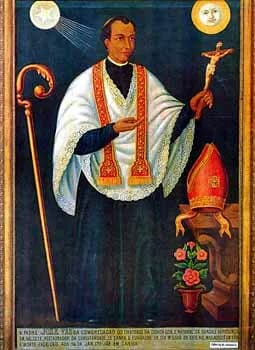
- A portrait of Joseph Vaz by an unknown painter, dated 1720 on Commons. A crozier and mitre are painted beside him, although he refused to become a bishop. Zeitgenössischer Maler, Public domain, via Wikimedia Commons.
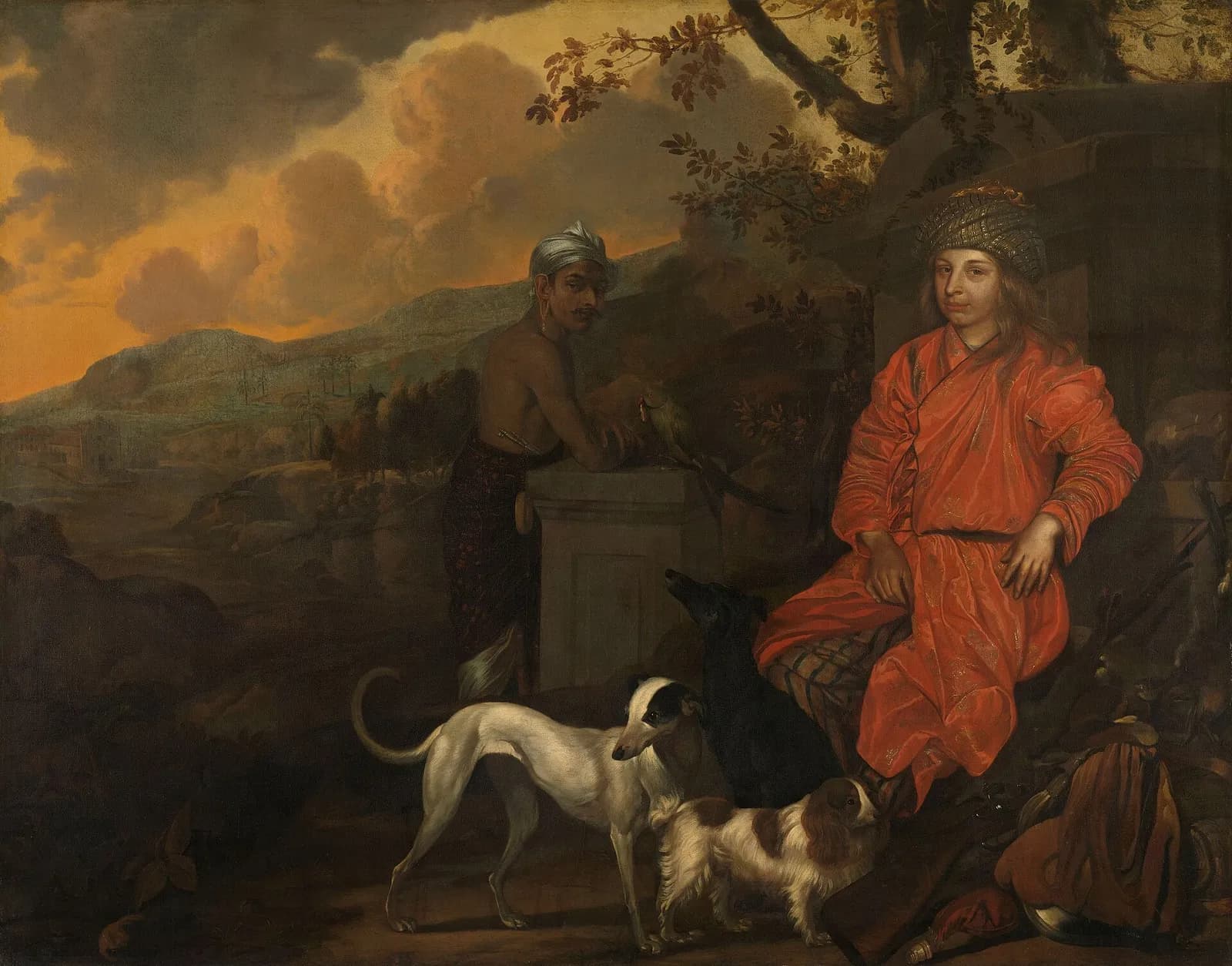
- Philippus Baldaeus, a Reformed minister in Jaffna in the 1660s, with his interpreter Gerrit Mossopotam, painted by Johan de la Rocquette in 1668. Baldaeus reported 12,387 children baptised in Jaffna by 1663, five years after the Dutch conquest. Johan de la Rocquette, Public domain, via Wikimedia Commons.
- The Temple of the Tooth Relic in Kandy, the kingdom’s chief Buddhist shrine, photographed by Charles T. Scowen & Co. in the second half of the nineteenth century. Vimaladharmasūriya II built a temple for the relic and his son Narēndrasinha rebuilt it with two storeys; the octagonal pavilion in front was added in the early nineteenth century. Rijksmuseum, CC0, via Wikimedia Commons.
- Pope Francis in Colombo on 14 January 2015, the day he canonised Joseph Vaz at Galle Face Green. Prasanna Welangoda, CC BY-SA 2.0, via Wikimedia Commons.