

Castelo do Bode, 1951: the dam that lit Lisbon and now fills its taps
A country that burned imported coal for light staked its future on the rivers. One of the first big dams of the Estado Novo's electrification plan drowned a valley of mills and hamlets, and 75 years later it is Lisbon's main reservoir.
At a glance
- On Sunday 21 January 1951, President Óscar Carmona and the head of government, António de Oliveira Salazar, inaugurated the Castelo do Bode dam on the River Zêzere, between Tomar and Abrantes.
- It was one of the first two great works of the 1944 electrification law, Lei n.º 2002, which made hydropower the base of Portugal's electricity, until then mostly made in steam plants burning imported coal.
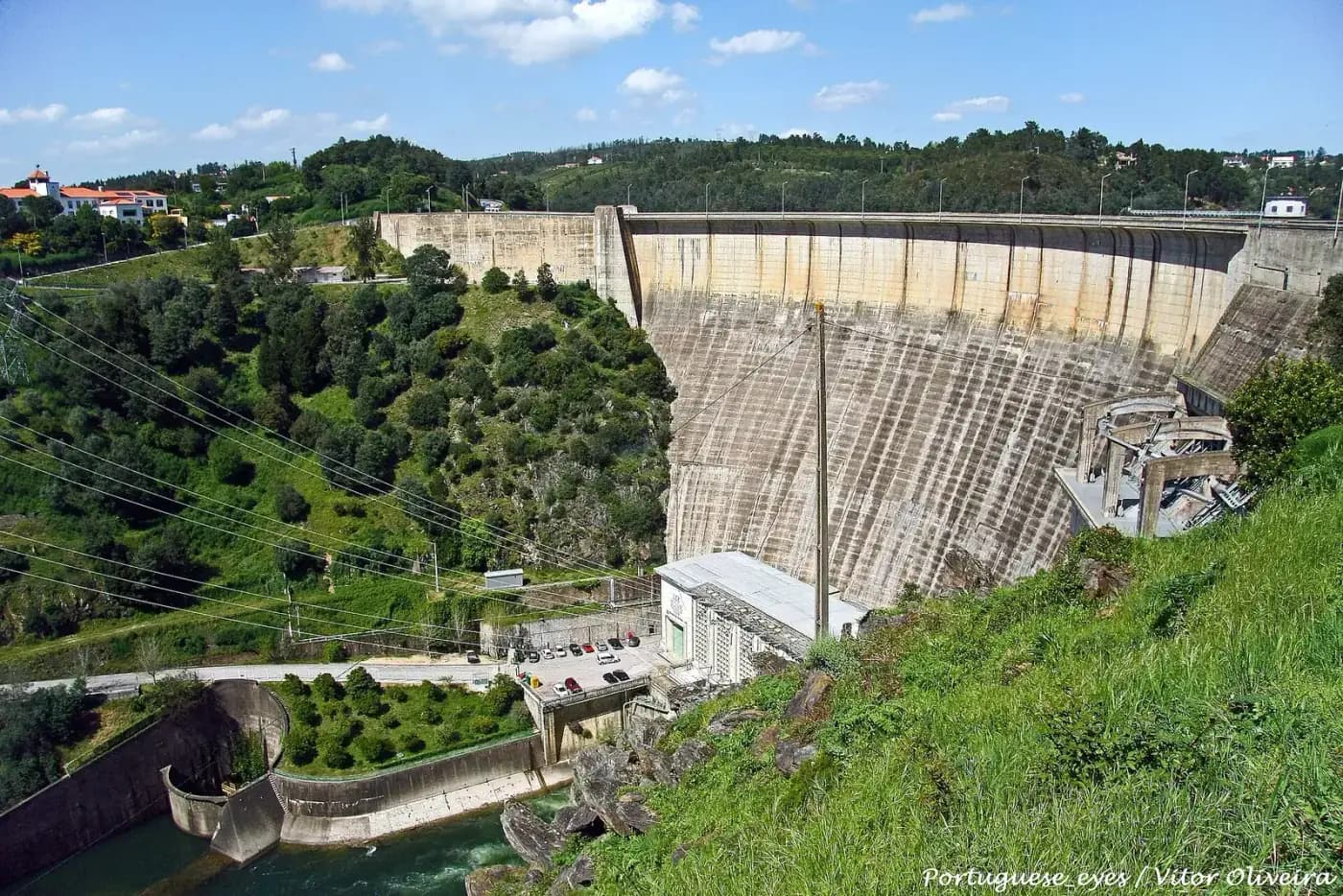
- The concrete arch-gravity dam is 115 metres high with a 402-metre crest. Its reservoir stretches about 60 km, covers about 3,300 hectares and holds 1,070 to 1,100 million cubic metres, depending on the source.
- Filling it meant expropriating about 3,500 hectares, 1,000 buildings and 250 rural works such as mills and presses, and some 1,400 landowners were compensated; families in hamlets such as Foz da Ribeira and Conqueiro lost their homes.
- Since 1987 an EPAL pipeline has carried its water to Lisbon. It supplies about 86 per cent of the water EPAL captures, for 2 to 3.5 million people depending on the measure.
A Sunday on the Zêzere
On Sunday 21 January 1951, people came in their thousands to a gorge on the River Zêzere, between Tomar and Abrantes. Across the valley stood a curved wall of concrete 115 metres high. Behind it, a lake that had begun filling the previous April already covered fields, mills and the old footpaths that had linked the villages of the two banks.
The two men who ran the country came to open it: Marshal Óscar Carmona, head of state since 1926 and elected President of the Republic in 1928, and António de Oliveira Salazar, President of the Council of Ministers. That month the first generating set in the power station at the foot of the dam had started to turn. Carmona was 81, and he died in Lisbon three months later, on 18 April 1951.
“On 21 January 1951 an event of the greatest importance took place (...) the Castelo do Bode dam was inaugurated.”
The local paper called it a festive day for all the Portuguese, a great national aspiration justified by the burden of importing coal. The dam was one of the first two large projects of a plan to light the country with its own rivers. It also drowned a valley, and seventy-five years on, its reservoir is where most of Lisbon's drinking water comes from.
A country that ran on coal
Portugal came late to electricity. The first official statistics counted 314 power stations in 1927 and 395 at the end of 1928, only five of them with more than 7,000 horsepower. In 1927 hydropower made only about a quarter of the country's electricity. Most of the rest came from steam plants burning coal shipped from Britain, while Portugal's own mines and rivers lay largely unused.
Electricity was also scarce. In 1928 Portugal produced a third as much per head as Spain and about a ninth as much as Italy. Consumption was concentrated around the two big cities: in 1937 the districts of Porto and Lisbon used 60 per cent of the country's electricity, though in 1940 they held only 26 per cent of its people. In 1940 Portugal produced 460 GWh, of which only 40 per cent came from water.
| Year | Portugal | Spain | Italy | France |
|---|---|---|---|---|
| 1922 | 20 | 50 | 151 | 149 |
| 1928 | 31 | 99 | 262 | 341 |
| 1937 | 52 | 103 | 343 | 469 |
| 1946 | 79 | 200 | 377 | 567 |
From Isabel Bartolomé Rodríguez, Ayer 122 (2021), Cuadro 1, compiled from Etemad and Luciani, World Energy Production 1800–1985, and Angus Maddison's population data.
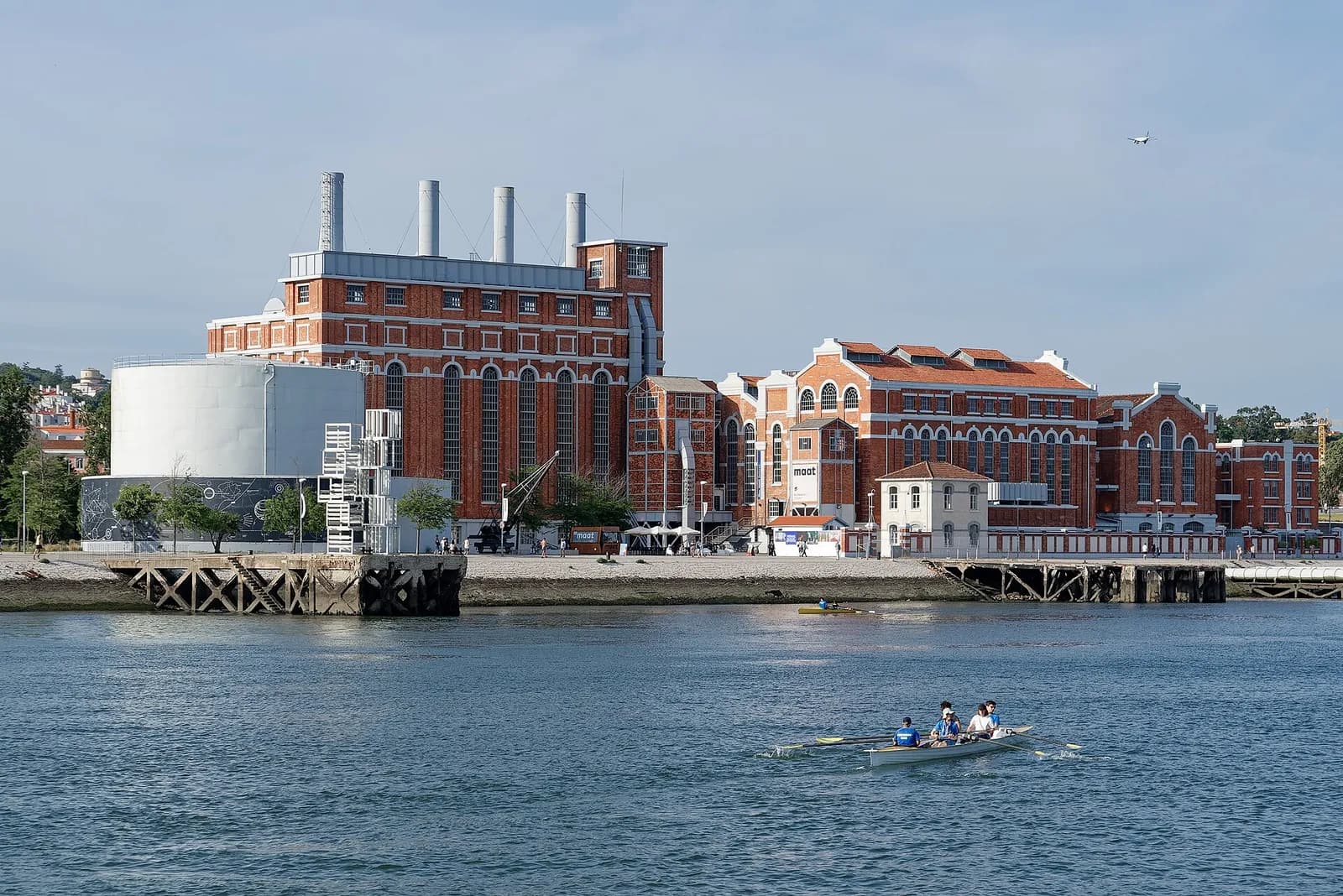
Lisbon's light came largely from the Central Tejo, a coal-fired power station on the riverbank at Belém owned by the Companhias Reunidas de Gás e Electricidade (CRGE). It supplied the whole Lisbon region and ran continuously from 1909 to 1954. After the Second World War broke out, coal prices rose fivefold.
The engineer José Nascimento Ferreira Dias Júnior (1900–1966), a professor of electrical engineering at the Instituto Superior Técnico, spent the 1930s saying so in print. As head of the state's electrical services from 1931 and of the Junta de Electrificação Nacional from 1936, he wrote reports on what he called the four evils of Portuguese electricity: scattered production, narrow distribution, poor consumption and dependence on foreign energy.
“The present situation of Portuguese electricity is so paltry that it is almost painful to speak of it (...) we are in the age of chipped stone in a great part of our territory.”
Law 2002 and the river companies
Ferreira Dias got his chance in August 1940, when he joined the government as under-secretary of state for Commerce and Industry. With the backing of the economy minister, Rafael Duque, he carried his own project into law as Lei n.º 2002, on the electrification of the country, published in the Diário do Governo on 26 December 1944.
The law set out a national grid and a clear rule: electricity would be produced “mainly from hydraulic sources”, with thermal stations kept for reserve and support. Generation was to be concentrated in large plants, the transmission network extended, and consumption encouraged with tariffs that fell as use rose. The state would take a share in the companies given the big river concessions.
The government first cancelled two old concessions whose holders had missed the deadlines for starting work: the Cávado and Rabagão rivers in the north, and the Zêzere, held by a Lisbon transport and electricity company. In 1945, according to the historian José Martinho Gaspar, a British commission of seven technical experts came to study the schemes, and Castelo do Bode interested them most.
Two companies with mixed state and private capital were then created by deed: the Hidro-Eléctrica do Cávado, known as HICA, on 24 October 1945, and the Hidro-Eléctrica do Zêzere six days later. A third, the Companhia Nacional de Electricidade (CNE), founded on 14 April 1947 with Ferreira Dias as its chairman, was to build the high-voltage lines carrying their power to Lisbon and Porto. Marshall Plan aid paid for almost a third of its first stage.
Five years in the gorge
Work began in March 1946 on the last stretch of the Zêzere, upstream of its confluence with the Nabão, on the border between the municipalities of Tomar and Abrantes. For five years the valley was a building site. Engineers chose a concrete arch-gravity dam, a curved wall that resists the water partly by its own weight and partly by pushing it sideways into the rock of the gorge, here gneiss and mica schist.
26 December 1944
Lei n.º 2002 published
Hydropower becomes the base of Portuguese electricity.
30 October 1945
Hidro-Eléctrica do Zêzere founded
March 1946
Works begin
March 1947
Excavation starts
By September the riverbed has been dried.
July 1948
First concrete poured in the permanent works
October 1949
Installation of equipment in the power station begins
The CNE's first Zêzere to Lisbon line enters service the same month.
April 1950
The reservoir begins to fill
January 1951
First generating set starts
The Zêzere substation and the first transformer at Sacavém, near Lisbon, enter service.
21 January 1951
Inauguration by Carmona and Salazar
Some of the machinery had to come by road. The March–April 1950 issue of the magazine of the Automóvel Club de Portugal told how a lorry carrying a 64,500 kg rotor took 30 days to crawl from Lisbon to the dam. Centenarian trees were cut down, roads reinforced and bridges improvised; the truck knocked down walls and posts and broke down more than once. People organised outings to watch it pass.
The design changed along the way: the power station was planned for five turbines and received three. Newspapers of the 1950s put the total cost at 600,000 contos, the old unit of a thousand escudos. How many people built the dam, and how many were hurt doing it, is not recorded in the sources used here.
| Feature | Figure | Sources |
|---|---|---|
| Type | Concrete arch-gravity dam | LNEC; Gaspar |
| Height above foundation | 115 m | LNEC; Jornal de Abrantes |
| Crest length and elevation | 402 m, at 123 m above sea level | LNEC |
| Catchment area | About 3,950 km² | APA |
| Total storage | 1,070 to 1,100 million m³ (1,095 in the 2005 data sheet) | Jornal de Abrantes; IST; LNEC; CCDR-LVT |
| Useful storage | About 900 million m³ (EDP gives a storage capacity of 902.5) | IST; EDP |
| Reservoir area and length | About 3,300 ha, about 60 km | CCDR-LVT; Jornal de Abrantes |
| Generating units | 3 Francis turbines (5 planned) | IST and EDP; Gaspar |
| Installed power | 139 MW or 159 MW | LNEC and IST; EDP and Jornal de Abrantes |
| Electricity per year | About 390 GWh in an average year; 305.6 GWh on average in 2020–2025 | LNEC and IST; APA |
Sources round the reservoir differently: 1,070 million m³ is an older figure quoted by the Jornal de Abrantes, 1,095 comes from a 2005 Instituto Superior Técnico data sheet and about 1,100 from LNEC and the CCDR-LVT. EDP, which runs the power station, and the Jornal de Abrantes give 159 MW; LNEC's 2025 visit notes and the 2005 data sheet give 139 MW. The sources do not explain the difference. All the power figures describe the station today, not in January 1951, when only the first set was running.
The scale was new for Portugal. In 1943 all 54 of the country's commercial hydroelectric stations, leaving aside factories' own plants, together had about 89,000 kW of capacity. Today Castelo do Bode alone is rated at 139 to 159 MW, between one and a half and nearly twice as much, though in January 1951 only the first of its three sets was turning.
The villages under the lake
When the dam was finished in 1950 the water rose fast, surprising people who had watched the works for years and still doubted there would be a lake. To make room for it, about 3,500 hectares of land, 1,000 urban buildings in several villages and 250 rural works such as mills and presses were expropriated. Some 1,400 landowners on the two banks were compensated.
In the municipality of Abrantes alone more than 30 water mills and presses went under, on the Zêzere and on tributaries such as the Brunheta, Souto and Ferraria streams. Families from Foz da Ribeira, Conqueiro, Pombeira, Videiral and Casal da Barca lost their houses. Others kept their homes but lost the fertile riverside fields, called nateiros, that the winter floods of streams such as the Codes had enriched.
The lake also cut old crossings. A week before the inauguration, on 14 January 1951, a resident of Souto complained in the Jornal de Abrantes that the rising water had severed paths, left villages almost isolated and that no real alternative routes had been built. A few ferries ran, but loading animals on them was hard and had already caused accidents.
“From Constância to the top of the Zêzere, I say it lightly: nowhere is there joy, everywhere there is sadness.”
Many people left the region with the money from expropriations that were, Gaspar writes, sometimes unclear. Some went to the Alentejo or the Tagus lezírias, the flat farmland of the Ribatejo, and some to South America. Those who stayed turned scrubland into fields and had to look for the water their riverside land had never lacked. Gaspar, who was born in Água das Casas beside the reservoir, found that some old people still preferred not to talk about it six decades later.
Power for Lisbon and a chain of dams
The first aim of Castelo do Bode was to supply Lisbon. The CNE's first line from the Zêzere to the capital had entered service in October 1949, and the Zêzere substation and the first transformer at Sacavém, on the city's northern edge, were working in January 1951. A line from the Zêzere to Porto followed in October 1951. From 1954 the Central Tejo stopped running continuously and stayed in limited service until the 1970s.
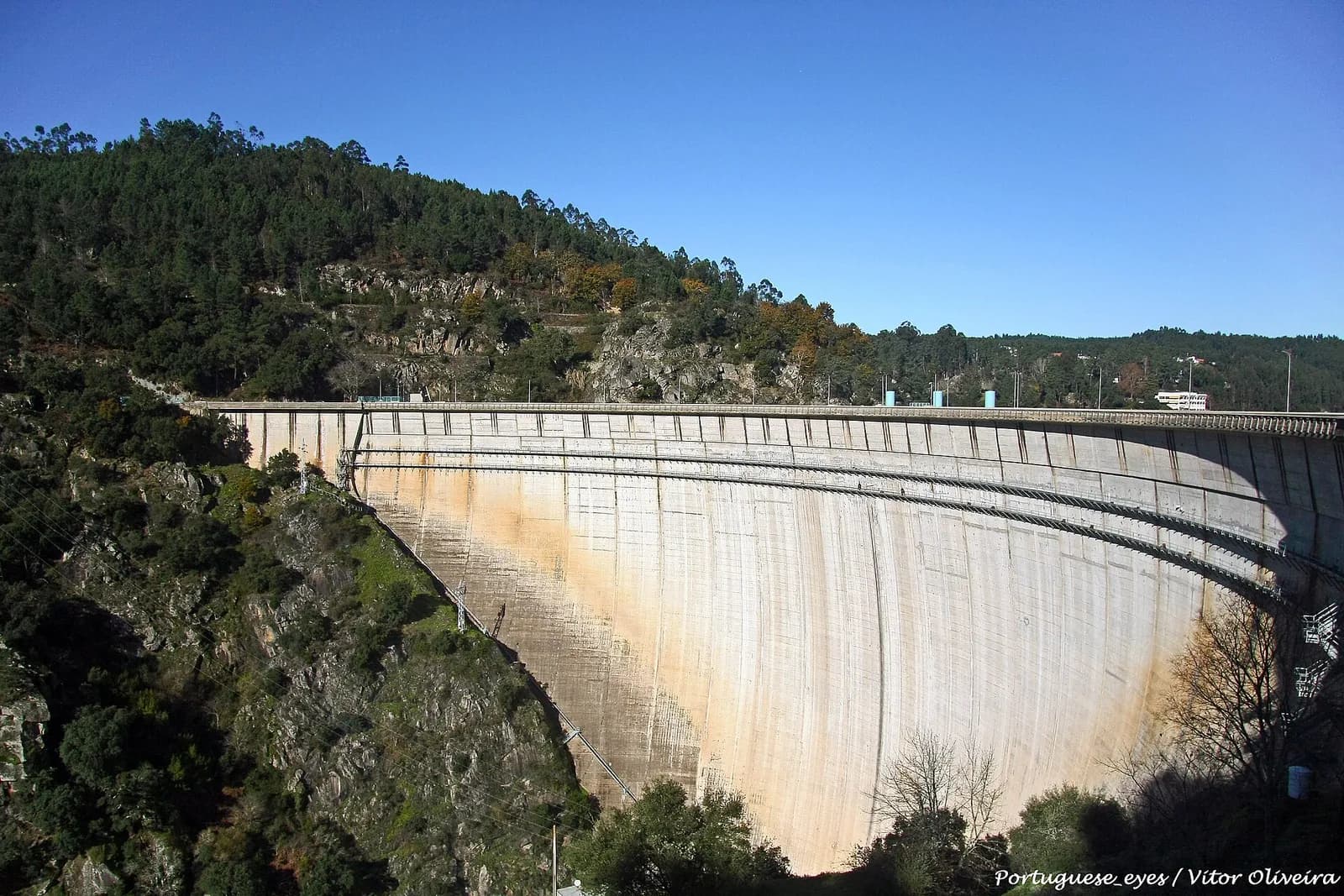
Castelo do Bode was the lowest step of a cascade. Upstream, the Cabril dam, also built by the Hidro-Eléctrica do Zêzere, opened in 1954, and the Bouçã dam in 1955. In the north, HICA's Venda Nova scheme in the Cávado basin opened in the same year as Castelo do Bode. A 2015 talk to Portugal's water-resources association called the 1950s the golden decade of hydroelectricity.
The result showed in the national figures. Hydropower, about 40 per cent of production in 1940, made about 95 per cent of Portugal's electricity in 1960. Its share then fell, to about half by 1980, and since 1990 it has swung with the rainfall from about a tenth (2005) to more than two-fifths (1996).
Hydropower's share of Portugal's electricity production
% of production
World Bank World Development Indicators, from IEA statistics: 1960 to 1985 from the October 2018 archived edition, 1990 to 2025 from the current edition (where the two editions overlap they differ by up to two points). Single years depend heavily on rainfall. Earlier estimates are about 25 per cent in 1927 and 40 per cent in 1940 (Bartolomé Rodríguez).
Show the data
| Hydro share | |
|---|---|
| 1960 | 95.1 |
| 1965 | 85.2 |
| 1970 | 78 |
| 1975 | 59.9 |
| 1980 | 52.7 |
| 1985 | 56.8 |
| 1990 | 32.6 |
| 1995 | 25.4 |
| 2000 | 26.8 |
| 2005 | 11 |
| 2010 | 30.6 |
| 2015 | 18.7 |
| 2020 | 25.7 |
| 2025 | 34.5 |
In 1969 the Zêzere, Cávado and Douro companies were merged with others into the Companhia Portuguesa de Electricidade. Today EDP runs the power station. Between 2020 and 2025 it produced an average of 305.6 GWh a year, according to the Portuguese Environment Agency (APA), equal to the consumption of about 230,000 people. In 2025 its output was about 1 per cent of the electricity Portugal used.
It still matters in a crisis. Hydro stations need little power to start and can do so in minutes, so Castelo do Bode is one of the plants kept ready to restart a dead grid. After the Iberian blackout of 28 April 2025 it helped re-energise the network, restoring power first around Abrantes.
Lisbon's tap
For more than three decades the dam's main job was electricity. Lisbon drank from the Alviela aqueduct, opened in 1880, and from the Tagus at Valada, piped to the city from 1932. In the 1980s the reservoir's main purpose changed. In 1987 EPAL, Lisbon's water company, opened the Castelo do Bode system: an intake on the reservoir, a treatment plant at Asseiceira, near Tomar, and about 90 km of mains 1.8 metres wide to reservoirs at Vila Franca de Xira.
- In service
- 1987
- Production capacity (2023)
- 625,000 m³ of water a day
- Produced at Asseiceira (2018 figures)
- 542,000 m³ a day
- Share of EPAL's water (2018 figures)
- 86.5 per cent of all water captured, about 198 million m³ a year
- People served
- 2 million to 3.5 million, depending on the measure
Estimates of how many people depend on it vary with what is counted. The regional planning body CCDR-LVT says more than 2 million in Greater Lisbon and neighbouring towns, about a fifth of the population; LNEC says about 2.5 million. In 2021 EPAL's innovation director told the Lusa news agency, in a report carried by Observador, that the Asseiceira plant supplies 3.5 million people; the report put that at Lisbon and more than 80 municipalities, about a third of the country.
The APA calls Castelo do Bode the largest source of public water supply and the second-largest reservoir in Portugal by storage. Only Alqueva, filled from 2002, holds more, about 4,150 million m³. Releases from the dam also push back the salt water that the spring tides carry up the Tagus in summer, which helps farmers irrigating downstream.
A lake for weekends
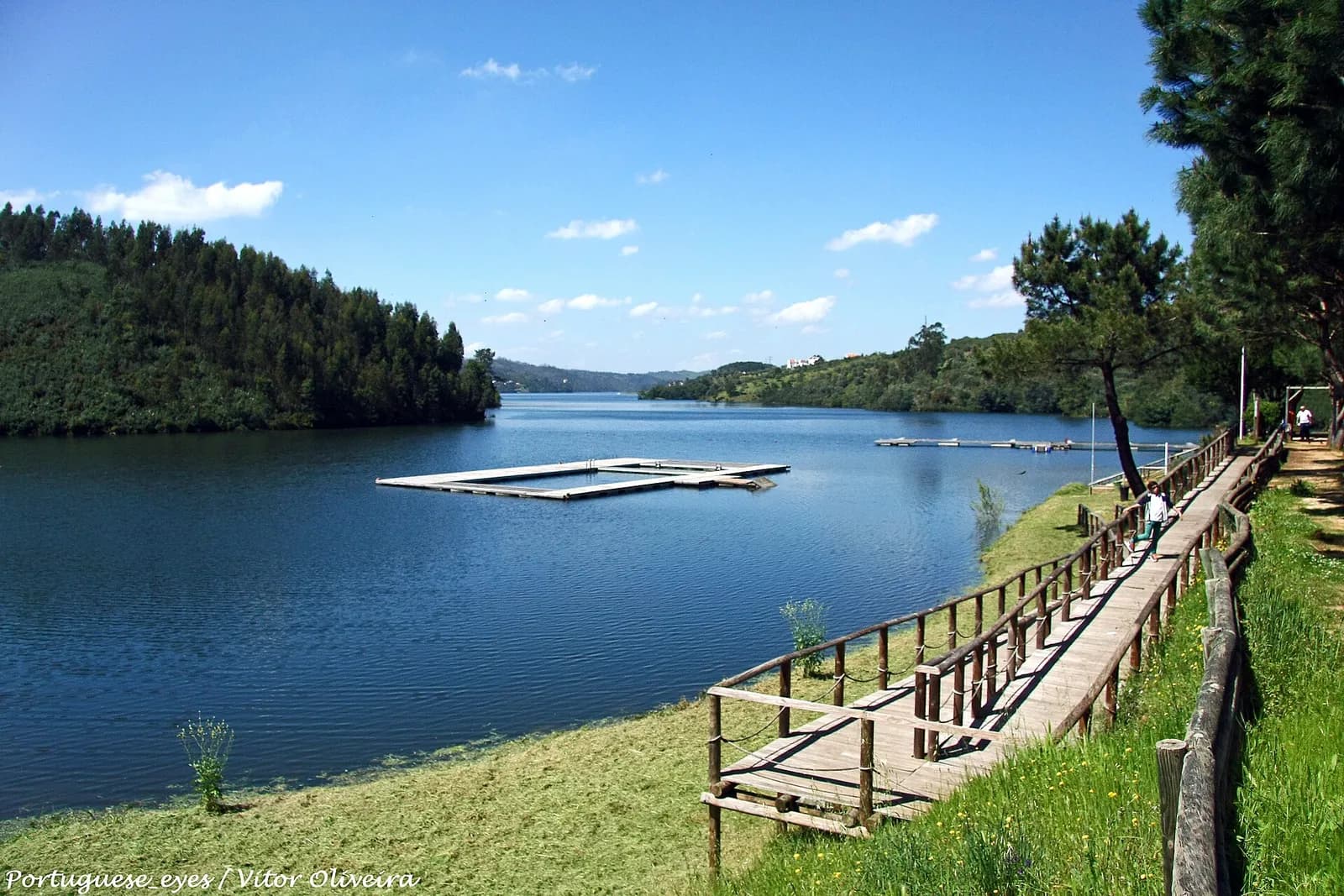
The lake that ended a way of life on the Zêzere is now a place people drive to for fun. River beaches line its shores at Aldeia do Mato and Fontes in Abrantes, Lago Azul and Dornes in Ferreira do Zêzere, Alverangel and Montes in Tomar, Trízio in Sertã and three more in Vila de Rei. There are wakeboarding stations at Dornes, Castanheira, Trízio and Aldeia do Mato.
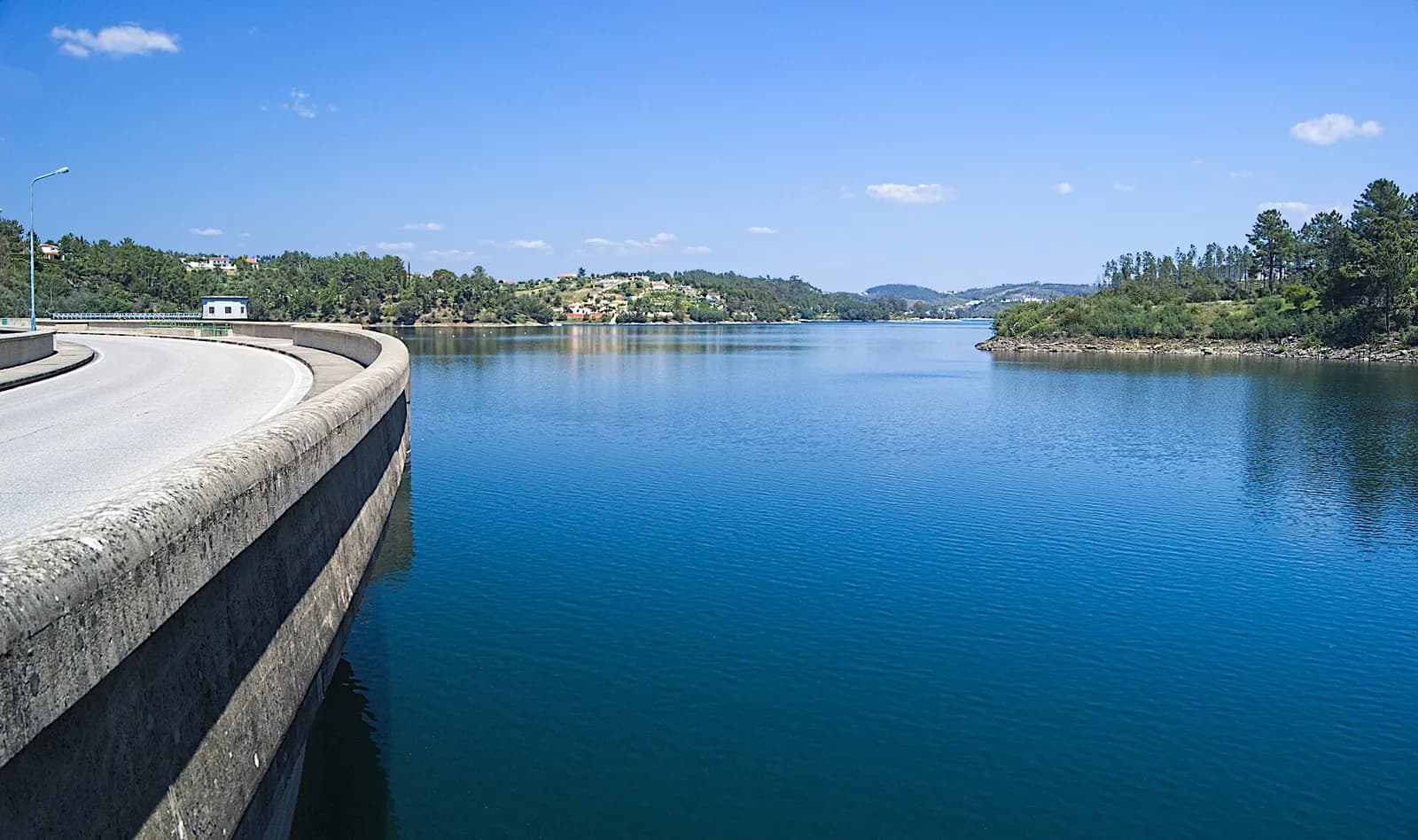
The road along the top of the dam is one of the busiest crossings of the Zêzere, linking Abrantes and Tomar. Even so, the reservoir cut many of the old links between the two banks. The reservoir is classified as a protected public reservoir because its water supplies the population, a status set out in a Council of Ministers resolution of 2003.
FAQs
When was the Castelo do Bode dam inaugurated?
On Sunday 21 January 1951, by President Óscar Carmona and the head of government, António de Oliveira Salazar. Work had begun in March 1946, the reservoir started filling in April 1950 and the first generating set began working in January 1951.
Does Lisbon's tap water come from Castelo do Bode?
Mostly, yes. Since 1987 EPAL has taken water from the reservoir, treated it at Asseiceira near Tomar and piped it about 90 km towards Lisbon. In figures presented in 2018, the reservoir provided 86.5 per cent of all the water EPAL captured. Smaller amounts still come from the Tagus, the Alviela springs and wells.
How big is the Castelo do Bode dam and reservoir?
The concrete arch-gravity wall is 115 metres high with a crest 402 metres long. The reservoir is about 60 km long, covers about 3,300 hectares and holds 1,070 to 1,100 million cubic metres, depending on the source; about 900 million of that can be used.
Were villages flooded to build it?
Yes. About 3,500 hectares, 1,000 buildings and 250 rural works such as mills and presses were expropriated and some 1,400 owners compensated. People from hamlets such as Foz da Ribeira, Conqueiro, Pombeira, Videiral and Casal da Barca lost their homes, and many left the region, some for the Alentejo and some for South America.
Is it Castelo do Bode or Castelo de Bode?
Both are used, often in the same document. The APA's 75th-anniversary note has Castelo de Bode in its title and Castelo do Bode in its text, and the EDP and LNEC pages also mix the two. EPAL and the 1951 local press wrote Castelo do Bode. They name the same dam.
On the timeline
Open the timelineNearby moments from dictatorship and the estado novo (1926–1974).
António Egas Moniz is awarded the Nobel Prize in Physiology or Medicine, shared with Walter Hess, for the prefrontal leucotomy. He remains Portugal's only Nobel laureate in the sciences, though the operation is now discredited.
José Ramos-Horta is born in Dili, Portuguese Timor, to a Portuguese father and a Timorese mother. A founder of Fretilin, he spent 24 years in exile as the voice of East Timor's resistance to the Indonesian occupation, sharing the 1996 Nobel Peace Prize with Bishop Ximenes Belo; he survived being shot in 2008, was President from 2007 to 2012 and was elected again in 2022.
Death in Porto of Guilhermina Suggia, aged 65, the cellist who studied with Pablo Casals in Paris, shared his life and stage for six years and built a career as one of the leading cellists of her time. Augustus John's dramatic portrait of her at the cello hangs in Tate Britain.
The Castelo do Bode dam
Salazar and President Óscar Carmona inaugurate the Castelo do Bode dam on the River Zêzere near Tomar, then the largest hydroelectric scheme in Portugal. Its 115-metre concrete wall holds back a reservoir of more than a billion cubic metres that still supplies much of Lisbon's drinking water.
Francisco Craveiro Lopes, a military aviator, is sworn in as President of the Republic, succeeding the late Óscar Carmona while Salazar keeps real power as head of government. Dropped by the regime in 1958, the former loyalist drew close to the opposition and was linked to the failed Botelho Moniz coup of 1961.
Death of the painter Mário Eloy, aged 51, at the Casa de Saúde do Telhal near Sintra, where Huntington's disease had confined him since 1945. A leading figure of Portugal's second modernist generation, he absorbed German Expressionism in Berlin and left only about 100 paintings, among them haunted self-portraits and 'Bailarico no Bairro', a Lisbon neighbourhood dance.
Portugal and the United States sign the defence agreement in Lisbon granting the US Air Force use of the Lajes base in the Azores, cementing the islands' strategic role in the early Cold War.
Coming up in history
All long reads 23 January 1963The attack on Tite and Portugal's war in Guinea, 1963 to 1974
 24 January 1969António Sérgio dies in 1969: essayist, minister, exile, co-operativist
 25 January 1554A thatched hut on the plateau: the founding of São Paulo, 25 January 1554
 26 January 1531The Lisbon earthquake of 1531 and Gil Vicente's rebuke to the friars
19 sources
Archives, scholarship and reporting this article was checked against.
- 1
Ferreira Dias e a constituição da Companhia Nacional de ElectricidadeMaria Fernanda Rollo and José Maria Brandão de Brito, Análise Social, vol. 31 (1996), pp. 343–354
- 2
Tan solo algunos distritos iluminados: el espejismo de la electrificación portuguesa hasta 1944Isabel Bartolomé Rodríguez, Ayer 122 (2021), pp. 67–97
- 3
Barragem de Castelo do Bode inaugurada há 70 anosJosé Martinho Gaspar, mediotejo.net, January 2021
- 4
Barragem começou a ser construída em 1946 e foi inaugurada a 21 janeiro de 1951Jornal de Abrantes, January 2026
- 5
Barragem de Castelo de Bode faz hoje 75 anos: a maior origem de água para abastecimento público (Nota à Comunicação Social n.º 006/2026, 21 January 2026)Agência Portuguesa do Ambiente (APA)
- 6
Technical visit: Castelo de Bode Dam (Dam World 2025)Laboratório Nacional de Engenharia Civil (LNEC)
- 7
EPAL: visão do futuro, conscientes do passado (presentation, 15 March 2023)EPAL, at the Ordem dos Engenheiros, Região Centro
- 8
Aldeias submersas em Portugal: Vilarinho da Furna, Aldeia da Luz e as “outras aldeias [que] ficaram debaixo de água”André Pereira, Análise Social, n.º 256 (2025)
- 9
António Óscar de Fragoso Carmona, President of the RepublicArchontology.org
- 10
Água & Energia (2.ª Conferência sobre as Políticas Públicas para a Água, 10 December 2015)Victor Baptista, Associação Portuguesa dos Recursos Hídricos
- 11
About MAAT: Central TejoMAAT, Museu de Arte, Arquitetura e Tecnologia (Fundação EDP)
- 12
The Five Residential Settlements Built by Hidroeléctrica do Cávado: The Formation of a New LandscapeCésar Machado Moreira, CLARA, n.º 8 (2023), pp. 122–139
- 13
Rio Zêzere / Albufeira de Castelo de Bode (Estrutura Regional de Proteção e Valorização Ambiental)Comissão de Coordenação e Desenvolvimento Regional de Lisboa e Vale do Tejo (CCDR-LVT)
- 14
Energia hídrica: aproveitamentos hidro-eléctricos em Portugal (conference “As energias do presente e do futuro”, 21–22 November 2005)António Gonçalves Henriques, Instituto Superior Técnico
- 15
Hydro energy: Castelo de BodeEDP
- 16
Electricity production from hydroelectric sources (% of total): Portugal, WDI Database Archives, October 2018 editionWorld Bank, from IEA statistics
- 17
Electricity production from hydroelectric sources (% of total): Portugal, World Development IndicatorsWorld Bank, from IEA statistics
- 18
- 19Estação de tratamento de águas que fornece água a 1/3 dos portugueses vai ser neutra e produzir hidrogénioObservador, 5 April 2021
Image credits
- The Castelo do Bode dam on the River Zêzere, between Tomar and Abrantes, seen from downstream in 2014. The power station sits at the foot of the 115-metre wall. Vitor Oliveira from Torres Vedras, PORTUGAL, CC BY-SA 2.0, via Wikimedia Commons.
- The Central Tejo at Belém, the coal-fired power station that lit Lisbon before the Zêzere dams, seen from the Tagus in 2025. It is now part of the MAAT museum. Jakub Hałun, CC BY 4.0, via Wikimedia Commons.
- The Cabril dam, the next step up the Zêzere, which the Hidro-Eléctrica do Zêzere opened in 1954. Photographed in 2014. Vitor Oliveira from Torres Vedras, PORTUGAL, CC BY-SA 2.0, via Wikimedia Commons.
- The river beach at Aldeia do Mato, Abrantes, on the Castelo do Bode reservoir, in July 2014. Vitor Oliveira from Torres Vedras, PORTUGAL, CC BY-SA 2.0, via Wikimedia Commons.
- The road across the crest of the dam, with the reservoir behind it, in April 2009. Juntas, CC BY-SA 4.0, via Wikimedia Commons.