

The Lisbon earthquake of 1531 and Gil Vicente's rebuke to the friars
Before dawn on a Thursday in January 1531, a fault under the Tagus valley shook Lisbon, Santarém and the river towns. When friars preached that it was God's punishment, the playwright Gil Vicente told them they were wrong.
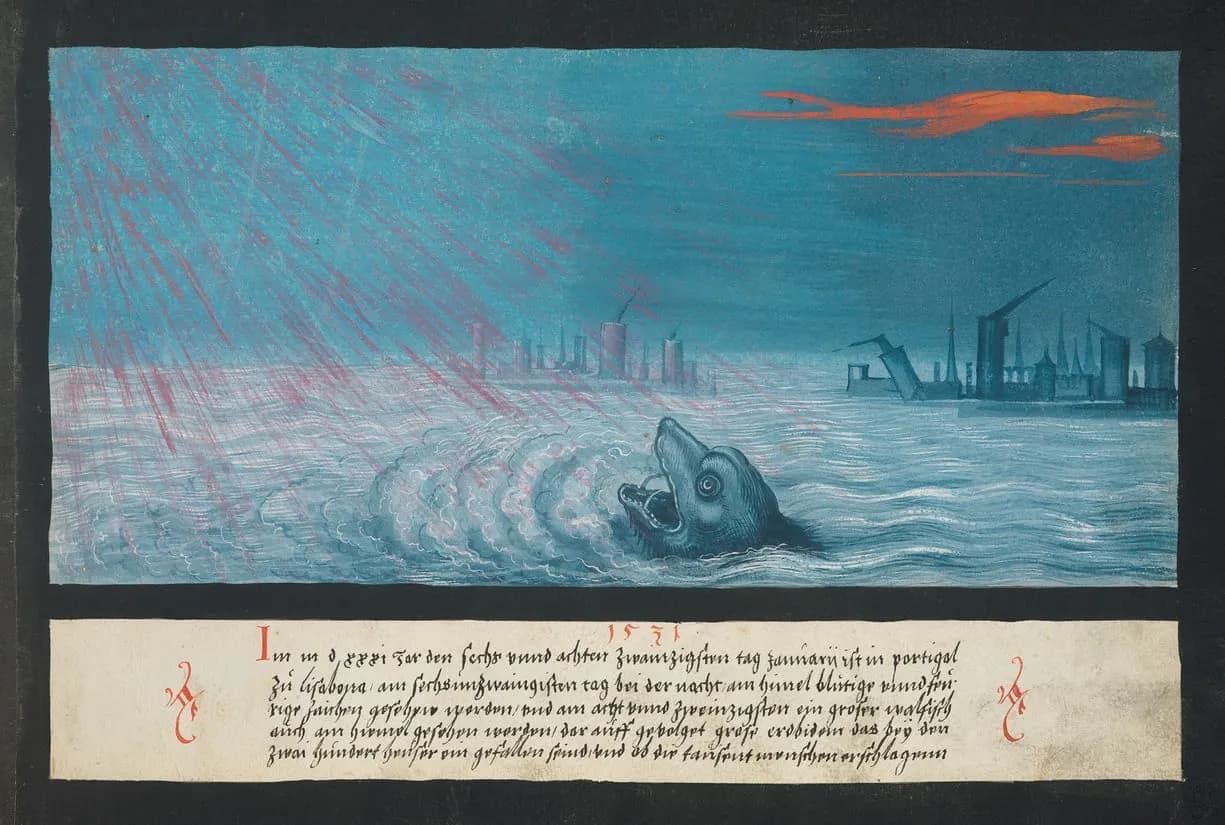
At a glance
- The earthquake struck between 4 and 5 in the morning of Thursday 26 January 1531 (5 February on the modern calendar), after foreshocks that began around 7 January.
- Its source was a fault in the Lower Tagus Valley, north-east of Lisbon. Modern estimates of its magnitude run from about 6 to 7.4.
- In Lisbon a 1758 history counted more than 1,500 houses fallen. Reports of the dead run from 1,000 to 30,000; most modern studies settle on about 1,000.
- Azambuja, Vila Franca de Xira, Castanheira, Santarém and Almeirim were badly hit, the ground cracked and spouted sand and water, and the Tagus drew back and surged.
- When friars in Santarém preached that the quake was God's wrath and the New Christians fled in fear, the playwright Gil Vicente rebuked them and reported it to King João III.
A flash, then thunder, then the ground
Garcia de Resende, a poet and royal secretary, began his account with a flash like lightning. Thunder followed, and then a great earthquake, “so great that it made people faint”. It struck between four and five in the morning of Thursday 26 January 1531, when most of Lisbon was asleep. It lasted, Resende wrote, about as long as it takes to say the Creed; any longer and everything would have fallen.
In the city, royal palaces were badly damaged. The rooms of Queen Catarina, a sister of the Emperor Charles V, crumbled, and so did those of the king's brother, Prince Henrique. In the house of a Valencian lady, Juana de Acuña, every room fell except her own bedroom, and four women of her household were killed. A street the letter calls the rua dos hornos, the street of the ovens, sank.
Up the river it was worse. At Azambuja not one house was left standing, according to a letter sent from Portugal to a Castilian nobleman. The ground shook again at seven, and once more after midday.
It was the first Portuguese earthquake whose damage was written down town by town, which is why seismologists can still map it. It also brought out something uglier. In Santarém, friars preached that God had sent it to punish Portugal's sins, and the town's New Christians, the descendants of forcibly baptised Jews, went into hiding. Gil Vicente, the court playwright, gathered the friars in a cloister and told them they were wrong.
A kingdom of Old and New Christians
João III had been king since 1521, and not all his Christian subjects were trusted equally. In December 1496 his father, Manuel I, had ordered the Jews of Portugal to leave, then made leaving almost impossible; in 1497 most were baptised by force. Their descendants were called New Christians, cristãos-novos, to set them apart from Old Christians.
The label could be deadly. In April 1506, with Lisbon hit by plague and hunger, a mob urged on by two Dominican friars hunted New Christians through the city for three or four days. Estimates of the dead run from about 1,000 to 4,000. Lisboeta tells the story of the expulsion and the massacre in a separate article.
João III wanted an Inquisition on the Spanish model, with inquisitors chosen by the crown. He opened negotiations with Rome around 1527, and the popes held out for years. So when the earth shook in 1531, the question of what to do with the New Christians was already on the king's desk.
Lisbon: palaces, churches and a sunken street
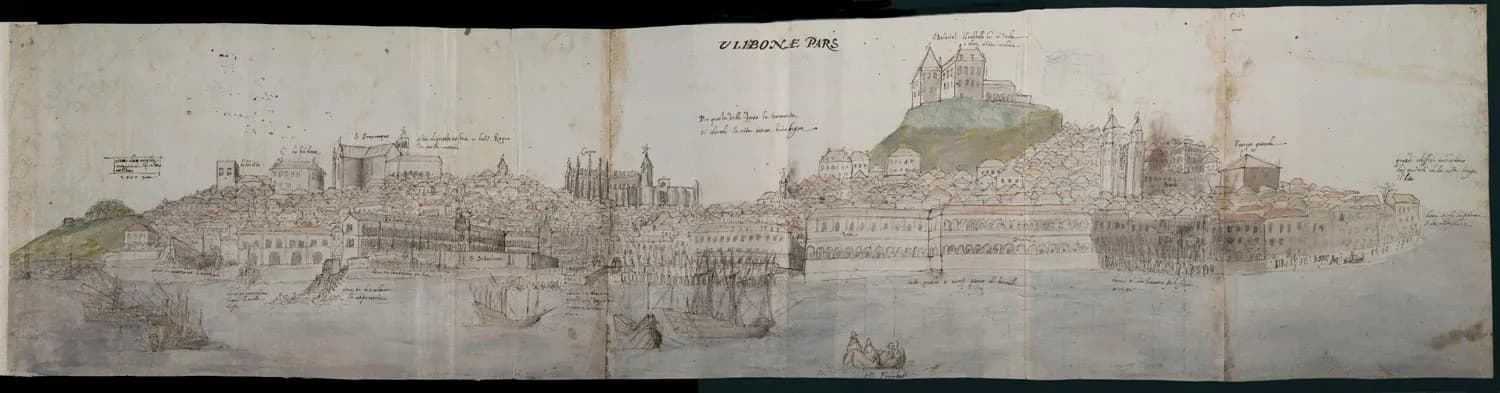
One of the earliest descriptions of the damage is an unsigned letter from Portugal to Fadrique Enríquez de Rivera, Marquis of Tarifa, which a Burgos printer published in 1531 in a broadsheet called Traslado de dos cartas. It names the Ribeira palace on the waterfront and the churches of Nossa Senhora da Escada and São João da Praça among the buildings shattered. Statues fell in the monastery at Belém; the monastery and the tower beside it cracked but stood. The Carmo and the cathedral got off lightly.
The letter is not a neutral report. The historian Marta Albalá Pelegrín calls it tabloid-like, keen on signs and portents, and it takes a close interest in which Castilians in the queen's service died and who survived. Many at court, it says, slept in their day clothes so they could run.
More than two centuries later, Joachim Joseph Moreira de Mendonça, writing after the 1755 disaster, put a number on it. The 1531 shock, he wrote, brought down many churches and palaces and more than 1,500 houses, and left almost all the rest uninhabitable. He reckoned 1,500 houses were a quarter of the city as it then was, and argued that, measured against the size of Lisbon, 1531 had done more damage than 1755.
Nobody counted the dead. Resende wrote only that “countless people died”, and sources from the period, Sá and colleagues note, give anything from 1,000 to 30,000 in Lisbon. A 1988 study of the documents by Henriques and colleagues estimated that a tenth of the houses collapsed and 2 per cent of the population died. Most later studies settle on about 1,000 dead.
In 2018 Sá and colleagues rebuilt the city of 1531, its geology and its houses, in a computer model. Their simulation gave 46 deaths at the moment of the shock, 158 to 397 in the first week and about 1,000 in all. The worst damage fell on the low town near the river. A 2021 review notes that Baptista and colleagues had already blamed soft, infilled ground there, which amplified the shaking, and weak foundations.
| Source | Written | Damage in Lisbon | Deaths |
|---|---|---|---|
| Anonymous letter to the Marquis of Tarifa | 1531 | Ribeira palace, two churches and the queen's rooms damaged; a street sank | Countless lives; four women in one house; some Castilians in the queen's service |
| Garcia de Resende, Miscelânea | Printed 1545 | Not specific to Lisbon: walls, towers, palaces, monasteries, churches and houses fell | “Countless people died” |
| Moreira de Mendonça, Historia universal dos terremotos | 1758 | More than 1,500 houses, about a quarter of the city, plus churches and palaces | “A great number” |
| Henriques and others, compilation of sources | 1988 | 25% of houses damaged, 10% collapsed | 2% of the population |
| Vogt; Justo and Salwa | 1985; 1998 | Not summarised | About 1,000 |
| Baptista, Miranda and Batlló | 2014 | Downtown and neighbouring areas heavily struck | About 1,000 |
| Sá, Morales-Esteban and Durand Neyra, loss model | 2018 | Worst in the low town near the Tagus | 46 at once, 158 to 397 in the first week, about 1,000 in all |
Sá and colleagues give the spread of figures in sources of the period as 1,000 to 30,000. The 1531 letter is cited as summarised by Albalá Pelegrín (2025); the 1988 compilation and the estimates of Vogt and of Justo and Salwa as summarised by Teves-Costa, Batlló and Cabral (2017); Baptista and colleagues as quoted by Albalá Pelegrín.
Santarém, Almeirim and the river towns
Lisbon was not the centre of the shaking. Seismologists put the epicentre somewhere between Vila Franca de Xira and Azambuja, upstream on the Tagus. Justo and Salwa assigned intensity IX, on a scale that tops out at XII, along more than 70 kilometres of the valley, from Lisbon to Santarém.
The letter to Castile runs through the river towns. At Vila Franca forty houses were said to have sunk, burying thirty people. At Castanheira sixty died. In Santarém the houses along the river were flattened, so that the king and queen could not go there, and Almeirim, across the river, fared no better. At Tancos, further upstream, the princess and her ladies escaped through the windows in their underclothes when the prince's residence fell. In Setúbal the houses of a marquis and of his son split open.
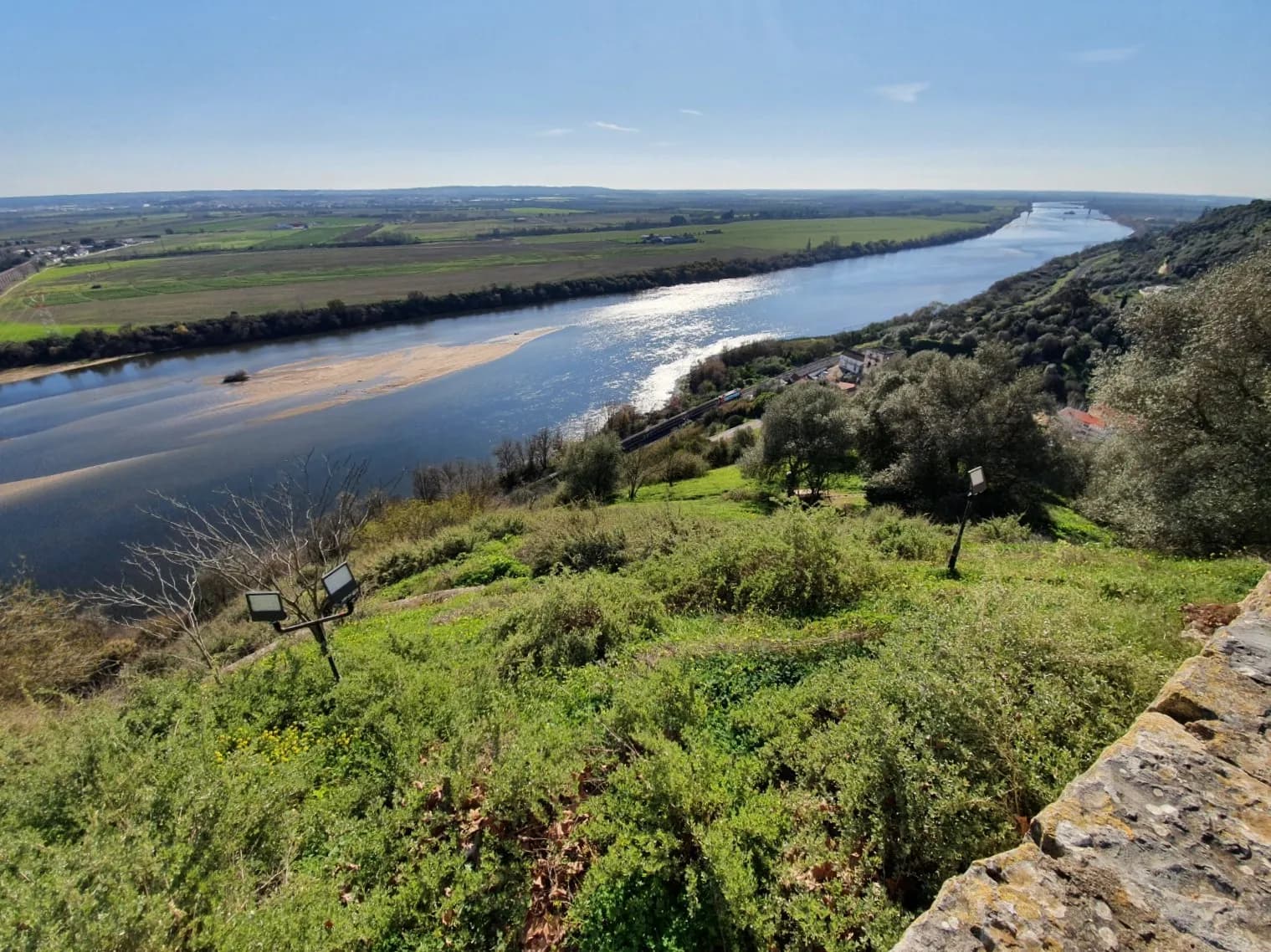
At Almeirim, Resende wrote, the ground cracked and opened holes, and water and sand came out that stank of sulphur; heavy rain in the following days filled the holes and they were never seen again. Modern seismologists read this as liquefaction, when waterlogged sand loses its strength and spurts to the surface. It was also reported at Vila Franca, Azambuja and Santarém, and on the south bank, at Setúbal and Alcácer do Sal, water poured from cracks in the soil.
Some tales grew in the telling. The letter has a fountain running with blood, and Mendonça heard that whole villages had been swallowed. He did not believe it, since no place in the kingdom kept any such tradition. Justo and Salwa likewise rejected reports of damage far from the epicentre.
Did the Tagus have a tsunami?
Something happened to the river. Mendonça wrote that the Tagus uncovered its bed as its waters ran towards the banks, and that ships were lost. Reports summarised by Teves-Costa and colleagues describe boats lying about 90 metres from the shore left dry, or touching the riverbed with their keels. The letter to Castile has ships rising to the sky and the Tagus splitting in two.
Baptista, Miranda and Batlló gathered these accounts in 2014. Witnesses reported large waves, damage to boats anchored in the upper estuary and changes to the riverbed. They proposed that the quake lifted part of the riverbed, most probably along the Vila Franca de Xira fault, and modelled the wave that would follow. Their model reproduced the flooding described in the inner estuary but gave only minor flooding in downtown Lisbon.
So the answer is a qualified yes: a tsunami inside the estuary, which the Euro-Mediterranean Tsunami Catalogue lists as definite, not an ocean wave like that of 1755. In Santarém, Gil Vicente reported, some were telling the people that the sea would rise on 25 February.
Two months in tents
The ground had warned them. Strong tremors began around 7 January across the kingdom, and many people moved out of the towns into the fields. The historian Maria de Deus Manso argued that this saved lives when the main shock came.
After the 26th the shaking went on. Resende counted further strong shocks, one of them on a later Thursday before dawn that was as frightening as the first, and wrote that the land trembled for fifty days and, more gently, for a whole year. Mendonça wrote that the king and queen camped in the open, as did the people of Lisbon. When it was over, the king went to a monastery at Azeitão to commend himself to God, and Gil Vicente's letter found him at Palmela, south of the Tagus.
“Out of the fear they had, all left their houses and estates: they slept in fields and squares, in pavilions and in tents, and built houses of branches; most nights they kept watch, because the trembling did not stop. People went about stunned, in fear, waiting for death.”
c. 7 January 1531
Foreshocks
Tremors felt across the kingdom; people leave the towns for the fields.
26 January, 4 to 5 am
Main shock
Lisbon and the Lower Tagus Valley are struck.
26 January, 7 am
A second strong shock
26 January, after midday
A third, smaller shock
After 26 January
Friars in Santarém preach that the quake was God's wrath and that a bigger one will follow on a Thursday
The following Saturday
After Gil Vicente's speech, the town's preachers change their message
25 February
The day some predicted the sea would rise
Two months
People sleep outdoors in tents and huts in the depth of winter
A year
Smaller tremors continue
23 May 1536
Pope Paul III authorises the Portuguese Inquisition
The fault under the valley
Because so many towns described their damage, 1531 can be mapped. Moreira, in 1985, estimated intensities at 18 places, the first such map for a Portuguese earthquake. Justo and Salwa added a few records from Portugal and Spain and judged the maximum intensity probably X on the MSK scale.
The likely source is the Lower Tagus Valley fault zone, a set of faults mapped for about 80 kilometres along the valley. In 2021 Carolina Canora and colleagues dug a trench across it at Alviela, near Santarém. Sediments laid down roughly between 1450 and 1635 had been broken by a surface rupture, most probably that of 1531. Their ground-motion models fitted the recorded damage best with a rupture about 40 kilometres long and a magnitude of about 7.
Not everyone agrees on the size. Estimates since 2001 run from about 6 to 7.4, depending on the method and on how much weight is given to the damage in Lisbon, which looks too severe for the distance unless the ground or the buildings made it worse.
Magnitude estimates for the 1531 earthquake
magnitude
Martins and Mendes-Víctor used a different magnitude scale from the others, which give moment magnitude (Mw). Canora and colleagues found scenarios of 6.8 to 7.4 consistent with the damage and preferred about 7.0. The EPICA value is 6.7 ± 0.42 and Baptista's 6.06 ± 0.31, rounded here.
Show the data
| Estimated magnitude | |
|---|---|
| Martins and Mendes-Víctor 2001 (other scale) | 7.1 |
| Vilanova and Fonseca 2007 | 6.9 |
| Stucchi and others 2013 | 6.5 |
| Baptista and others 2014, from intensities | 6.1 |
| Baptista and others 2014, tsunami model | 6.6 |
| EPICA catalogue 2021 | 6.7 |
| Canora and others 2021, preferred scenario | 7 |
The valley's last large earthquake, on 23 April 1909 near Benavente, was smaller, about Mw 6.0, and killed 46 people (47 in another count). Sand and water again spouted from cracks in the flood plain.
“God's wrath”: the friars of Santarém
Many people in 1531 read an earthquake as a message from God; Resende himself blamed “our sins”. A broadsheet printed in Burgos ended with a song calling on Christians to burn and destroy “any damaging sect”. In Santarém, as Gil Vicente told the king, the friars went further.
“The friars here did not satisfy me, in the pulpit or in conversation, on this storm of the earth that has just passed, because the people's terror was not enough for them: they also told them two things that dismayed them even more. The first, that the wrath of God had done this for the great sins committed in Portugal, and that it was not the course of nature; and they named straight away the sins it was for.”
The second claim was a forecast: as the earthquake left, another was already on its way, bigger still, and it would come on Thursday an hour after midday. “The people believed this so much,” Vicente wrote, “that they went out at once to meet it in the olive groves, and they are still waiting for it there.”
Vicente does not record which sins the friars named, but the end of his letter leaves little doubt about who was meant. After the first sermon, he told the king, “the New Christians disappeared and went about dying of fear of the people”. It was 25 years since the Lisbon massacre of 1506, which friars had also urged on.
Gil Vicente in the cloister
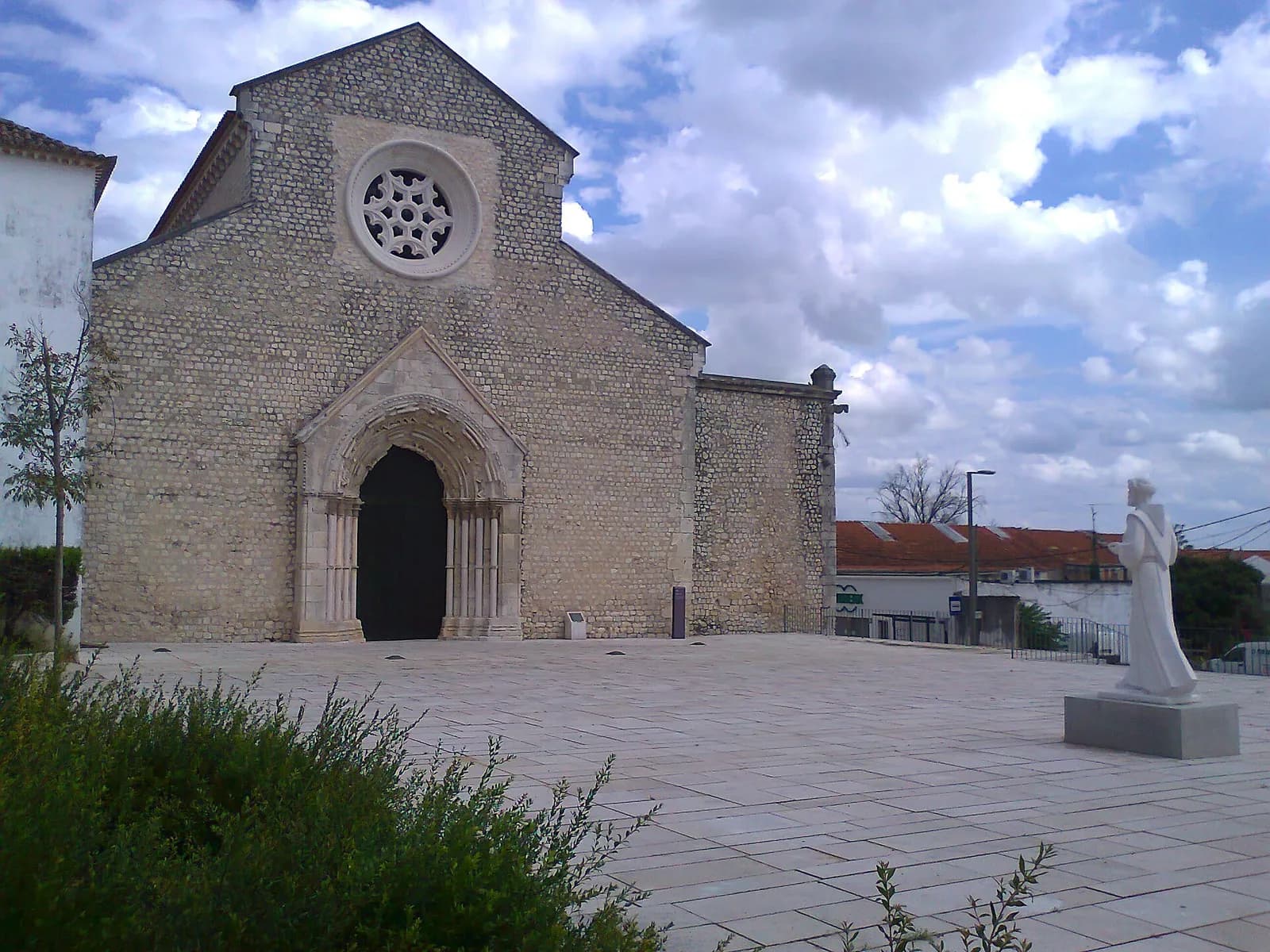
Gil Vicente was the leading playwright of the Portuguese court, whose plays, among them the Auto da Barca do Inferno of 1517, were written for court occasions. In 1531 he described himself as “so near death”. He asked the friars to meet him in the cloister of the convent of São Francisco in Santarém, and there he gave them a speech, which he then wrote out for the king.
His first argument was about nature. God, he told them, made two worlds: heaven, which is perfect and lasting, and this one, built on purpose to be unstable, so that everything here has its contrary. Against beauty comes sickness, against strength old age, against tall trees the storm, and against fine temples and sumptuous buildings the earthquake. Writers recorded the disasters that were miracles, such as the destruction of Sodom; they did not record earthquakes, because those came from nature and would always come back.
“I conclude that this fearful tremor of ours was not ira Dei; and I will even let them burn me if I do not prove that the mercy of the Lord God was as plain and manifest in this case as the fury of the elements and the damage to buildings.”
His second argument was against prophecy. God had forbidden men to meddle in what is to come, and nobody knows how an earthquake happens, let alone when or how big. Astrology was too deep to master, magic mere appearance, and the last prophet had been crucified. Then came his pun: pregar não há de ser praguejar, preaching is not meant to be cursing.
“And if there are some here who are still strangers to our faith and are tolerated, we must suppose that it is done, perhaps, with such holy zeal that God is well served by it; and it seems a juster virtue in the servants of God and their preachers to encourage these people, hear their confessions and draw them in than to scandalise them and chase them away to please the wild opinion of the mob.”
It worked, by his own account. The friars praised the speech, and “on the following Saturday all the preachers followed this view of mine”. Vicente presented it to the king as a service.
Readers have argued about what he meant. The scholar Andrée Crabbé Rocha saw a man who sensed a pogrom coming and staked the prestige of his name on a protest. Ana Carolina Ferreira and Manoel Santiago-Almeida are more cautious: Vicente defended scripture and the order of nature more than the New Christians themselves, and his plays mock Jewish characters. His solution, after all, was to convert them by kindness.
From the earthquake to the Inquisition
The earthquake did not create the Portuguese Inquisition; the king had been asking for one for years. In 1531 the pope did issue a bull granting it and naming the friar Diogo da Silva as inquisitor-general, but it was suspended the following year. The tribunal came five years later. On 23 May 1536 Pope Paul III signed the bull Cum ad nihil magis, and on 22 October it was proclaimed in Évora cathedral before the king and the court.
The tribunal sat first in Évora and moved to Lisbon in 1537; Évora and Coimbra had tribunals of their own from 1541. Between 1536 and 1605 these and the tribunal in Goa tried more than 10,000 people. Their main target was secret Judaism among the New Christians, the people the friars of Santarém had frightened into hiding. The Inquisition lasted until 1821; Lisboeta tells the story of one of its victims, António José da Silva, in a separate article.
1531, 1755 and the faults under Lisbon
When Lisbon fell again in 1755, people remembered 1531. In an official letter of April 1756, Sebastião José de Carvalho e Melo, the future Marquis of Pombal, called the new earthquake equal to the one Garcia de Resende described, except that this time fires followed, and he put the dead at 6,000 to 8,000. The two were different in kind: the 1755 earthquake came from offshore, south-west of Portugal, was much larger, with a recent estimate of Mw 7.7 and older ones of 8.5 or more, and brought an ocean tsunami and days of fire, a story told in a separate Lisboeta article.
The 1531 kind of earthquake is the one under Greater Lisbon's own feet. The Lower Tagus Valley has the highest seismic hazard in western Iberia, and Canora and colleagues framed their trench study in terms of the hazard to the Greater Lisbon area. Justo and Salwa wrote theirs partly with building design in the fast-growing estuary in mind.
The faults are quiet now compared with their history, with at least three moderate to large earthquakes in 1344, 1531 and 1909. At Alviela, Canora and colleagues roughly estimated one surface-rupturing quake every 350 years, but they note that faults inside plates often have clusters of earthquakes separated by long silences, not regular intervals.
FAQs
When was the 1531 Lisbon earthquake?
Between 4 and 5 in the morning of Thursday 26 January 1531 by the Julian calendar then in use, which is 5 February on the modern calendar. Foreshocks had begun around 7 January, and aftershocks went on for weeks.
How many people died in the 1531 earthquake?
Nobody knows. Sources from the period give 1,000 to 30,000 dead in Lisbon. Most modern studies, including Justo and Salwa (1998), Baptista and colleagues (2014) and a 2018 loss model, put the toll at about 1,000.
Was there a tsunami in 1531?
Accounts describe the Tagus drawing back, boats left dry and waves damaging anchored ships, mainly inside the estuary. A 2014 study modelled a small tsunami raised by movement of the riverbed, with real flooding in the inner estuary but little in downtown Lisbon.
What did Gil Vicente say about the earthquake?
In a speech to the friars of Santarém, which he sent to King João III, he argued that earthquakes are natural and not God's wrath, that nobody can predict them, and that preachers should encourage the New Christians rather than turn the mob against them.
How does the 1531 earthquake compare with 1755?
1531 came from a fault under the Tagus valley close to Lisbon, with a magnitude of roughly 6 to 7. The 1755 earthquake came from far out in the Atlantic, was much larger and was followed by an ocean tsunami and fires.
On the timeline
Open the timelineNearby moments from the age of discoveries (1415–1580).
The Victoria, sole surviving ship of the expedition led by the Portuguese navigator Fernão de Magalhães (Ferdinand Magellan), reaches Sanlúcar de Barrameda in Spain, completing the first circumnavigation of the globe three years after setting out.
Vasco da Gama dies in Cochin (Kochi) after a short illness, on his third voyage to India, barely three months after arriving as viceroy. He was buried in Cochin, probably in the Franciscan church now called St Francis; his remains were taken home to Vidigueira in 1538, and bones believed to be his were moved to Lisbon's Jerónimos Monastery in 1880, though the historian José Manuel Garcia says the true remains arrived only in 1898.
The Treaty of Zaragoza is signed between Portugal and Spain, fixing a demarcation line in the Pacific 17 degrees east of the Moluccas. Charles V pledges Spain's claim to the Spice Islands to Portugal for 350,000 ducats, keeping a right to buy it back that Spain never used.
The Lisbon earthquake of 1531
A powerful earthquake strikes Lisbon and the Tagus valley before dawn, bringing down more than 1,500 of the city's houses as the river draws back and surges. When friars in Santarém preached that it was God's wrath and New Christians fled in fear, the playwright Gil Vicente rebuked them.
In a chapel on the hill of Montmartre in Paris, Ignatius of Loyola and six companions — among them Simão Rodrigues, a young Portuguese nobleman from Vouzela — take vows of poverty and chastity, forming the nucleus of the Society of Jesus. Rodrigues went on to establish the Jesuits in Portugal, the springboard for their missions across the Portuguese empire.
The Treaty of Baçaim (Bassein) is signed aboard the galleon São Mateus in Bassein harbour. Through his envoy, Sultan Bahadur of Gujarat cedes Bassein with its lands, islands and seas, among them the islands of Bombay, to make peace with Portugal while under Mughal pressure. Bombay later passed to England in Catherine of Braganza's dowry and is today the heart of Mumbai.
Pope Paul III issues the bull 'Cum ad nihil magis', establishing the Inquisition in Portugal at the insistence of King João III; the tribunal would shape Portuguese religious and cultural life for nearly three centuries.
Coming up in history
All long reads 28 January 1908The plot at the library lift: Lisbon's failed coup of 28 January 1908
 29 January 1678Jerónimo Lobo, the Lisbon Jesuit who saw the springs of the Blue Nile
 30 January 1574After the Inquisition: the death of Damião de Góis, 30 January 1574
 31 January 189131 January 1891: the sergeants' revolt that proclaimed a republic in Porto
19 sources
Archives, scholarship and reporting this article was checked against.
- 1
A carta de Gil Vicente a D. João III (Ana Carolina de Souza Ferreira and Manoel Mourivaldo Santiago-Almeida)Linguasagem 25 (1), 2016, Universidade Federal de São Carlos
- 2
O terremoto de 1531 segundo a poesia de Garcia de Resende (Fabio Mario da Silva)Historiæ 8 (1), 2017, Universidade Federal do Rio Grande
- 3
On Floods and Earthquakes: Iberian Political and Religious Readings of Natural Disasters (1530–1531) (Marta Albalá Pelegrín)Humanities 14 (9), 176, 2025
- 4
The Lower Tagus Valley (Portugal) earthquakes: Lisbon 26 January 1531 and Benavente 23 April 1909 (Paula Teves-Costa, Josep Batlló and João Cabral)Física de la Tierra 29 (2017), Universidad Complutense de Madrid
- 5
- 6
The 1531 Lisbon Earthquake: A Tsunami in the Tagus Estuary? (Maria Ana Baptista, Jorge Miguel Miranda and Josep Batlló), Bulletin of the Seismological Society of America 104 (5), 2014, pp. 2149–2161Repositório Científico do Instituto Politécnico de Lisboa (abstract)
- 7
Historia universal dos terremotos (Joachim Joseph Moreira de Mendonça, Lisbon, 1758), paragraphs 269–271Internet Archive (digitised copy)
- 8
Earthquake of 26 January 1531, Lisboa: studies and parametersAHEAD, European Archive of Historical Earthquake Data (INGV)
- 9O dia em que os judeus foram expulsos de PortugalMaria José Oliveira, Observador, 29 December 2016
- 10
The Massacre of the New Christians of Lisbon in 1506: A New Eyewitness AccountFrançois Soyer, Cadernos de Estudos Sefarditas, no. 7, 2007, pp. 221–244 (repository record, University of New England)
- 11
Documento do Mês – Julho: Lei de adoção do calendário gregorianoArquivo Nacional Torre do Tombo, 1 July 2011
- 12
Dating documents: Julian and Gregorian calendarsManuscripts and Special Collections, University of Nottingham
- 13
The 1531 earthquake revisited: loss estimation in a historical perspective (Luís Sá, Antonio Morales-Esteban and Percy Durand Neyra), Bulletin of Earthquake Engineering 16 (10), 2018Ulysseus Science repository, Universidad de Sevilla (abstract)
- 14
- 15
Notas sobre a Inquisição portuguesa: história e historiografiaGrayce Mayre Bonfim Souza, Politeia: História e Sociedade (Uesb), v. 20, n. 1, 2021
- 16
- 17
Roteiro da Inquisição em Lisboa: uma possibilidade cultural?João Miguel Cabral Borges Capela, master's dissertation, Iscte – Instituto Universitário de Lisboa, 2021
- 18
Ofício de Sebastião José de Carvalho e Melo a Gomes Freire de Andrade [1756]Teresa, revista de Literatura Brasileira 21 (2021), Universidade de São Paulo
- 19
Image credits
- Lisbon in 1531 as imagined in the Augsburg Book of Miracles, painted around 1552. The German caption reports bloody and fiery signs in the sky over Lisbon on 26 January, a great whale on the 28th and then earthquakes in which, it says, about two hundred houses fell and more than a thousand people were killed. Heinrich Vogtherr the Younger, Public domain, via Wikimedia Commons.
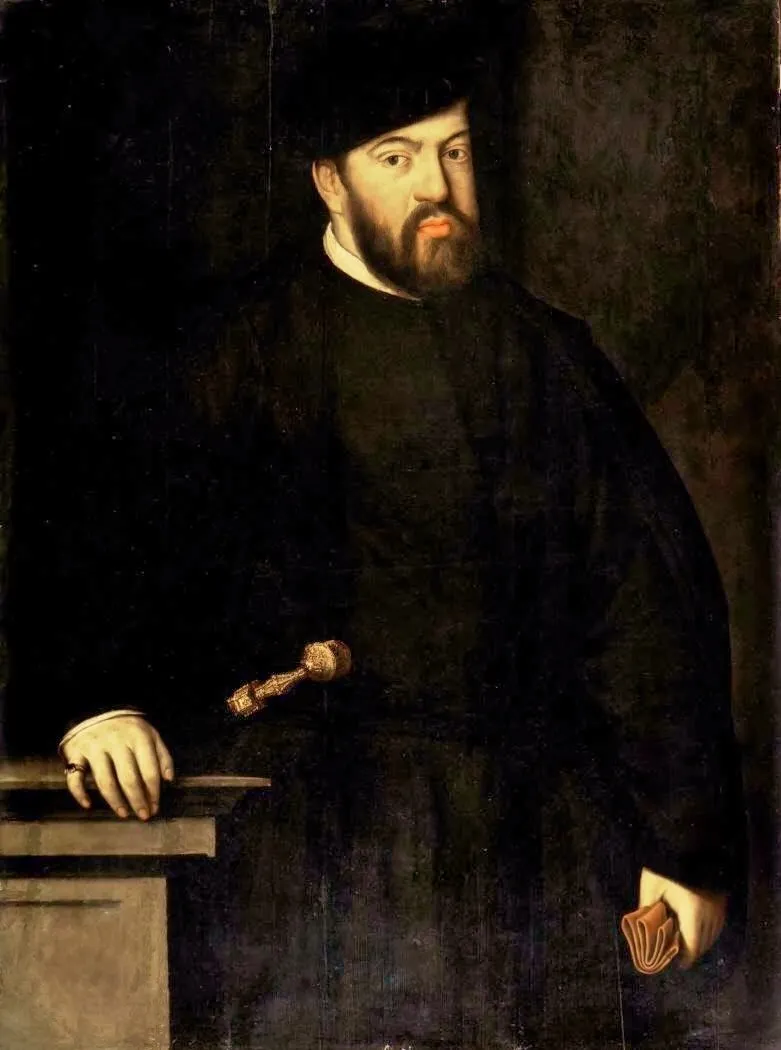
- King João III, who reigned from 1521 to 1557, painted by Anthonis Mor in 1552, two decades after the earthquake. Antonis Mor, Public domain, via Wikimedia Commons.
- Part of Lisbon's waterfront around 1580, half a century after the earthquake, in a drawing attributed to Simão de Miranda. The long arcaded building on the river is the Ribeira royal palace, one of the buildings the 1531 letter reports damaged. Simão de Miranda, Public domain, via Wikimedia Commons.
- The Tagus and its flood plain, the lezíria, seen from the Portas do Sol garden in Santarém in 2022. Almeirim lies on the far side of the plain. Waterlogged river sands like these are where the ground spouted water and sand in 1531. GualdimG, CC BY-SA 4.0, via Wikimedia Commons.
- The church of the former Franciscan convent of São Francisco in Santarém, photographed in 2014. Gil Vicente gathered the town's friars in the convent's cloister in 1531. GualdimG, CC BY-SA 4.0, via Wikimedia Commons.
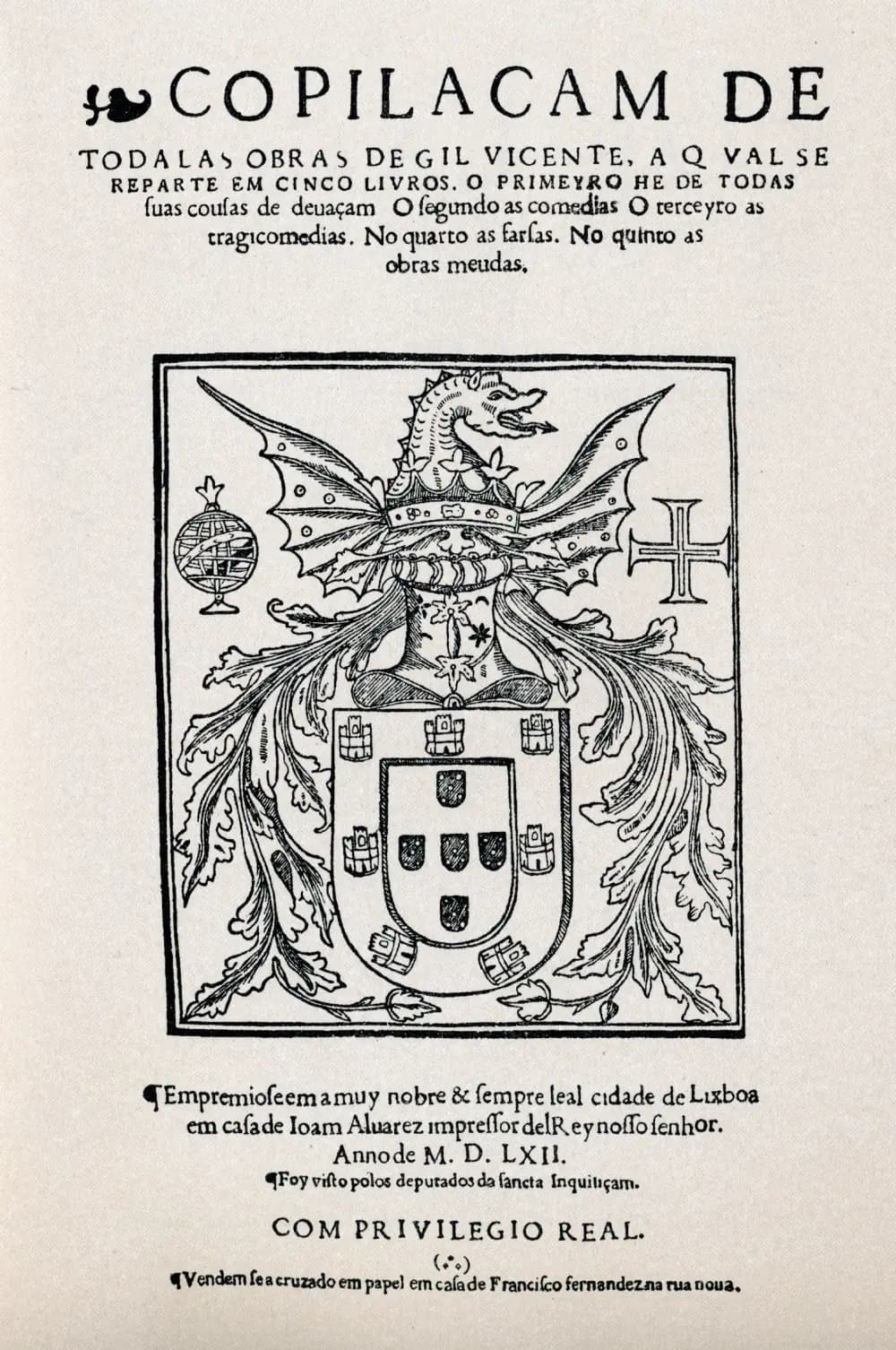
- Title page of the Compilaçam of Gil Vicente's works, printed in Lisbon by João Álvares in 1562. Its fifth book, the obras meudas or short works, contains the letter about the earthquake. The imprint notes that the book was seen by the deputies of the Inquisition. Victorcouto, Public domain, via Wikimedia Commons.