

Miguel Torga, doctor and poet of Trás-os-Montes, dies: 17 January 1995
For more than fifty years a Coimbra ear, nose and throat doctor called Adolfo Rocha wrote as Miguel Torga, defying the censors of the Estado Novo. When he died in 1995 he went home to a flat grave in his mountain village.
At a glance
- Miguel Torga, the pen name of the doctor Adolfo Correia da Rocha, died of cancer in Coimbra on 17 January 1995, aged 87, and was buried in his native village of São Martinho de Anta, in Trás-os-Montes.
- Born to poor peasants in 1907, he worked as a house servant in Porto, spent a year at a seminary and five years on his uncle's coffee farm in Brazil before studying medicine in Coimbra.
- He took the name in 1934: Miguel for Cervantes and Unamuno, Torga for the heather of his hills. He practised as an ear, nose and throat specialist in Coimbra for more than fifty years.
- The Estado Novo seized several of his books and held him in Lisbon's Aljube prison from late 1939 to 2 February 1940 over O Quarto Dia, which described Franco's Spain.
- He wrote Bichos, the Contos da Montanha, a six-part autobiographical novel and a 16-volume Diário, was nominated eight times for the Nobel Prize by 1975 and won the first Camões Prize in 1989.
Death in Coimbra, burial in the mountains
Adolfo Correia da Rocha died on 17 January 1995 at the Portuguese Institute of Oncology in Coimbra, the city where he had practised medicine for more than half a century. He was 87. He had cancer, an illness he had lived with for several years and set down in the last volume of his diary, published in 1993. Most Portuguese knew him by the name on his books: Miguel Torga.
Tributes followed within days. A motion passed on 26 January by the council of Terras de Bouro, in the Gerês mountains where Torga went every year to take the waters, lists three: a minute of silence in the European Parliament in Strasbourg on 18 January, a day of national mourning on the 20th, and a page in the French daily Le Monde, which called him the writer who identified most deeply with Portugal.
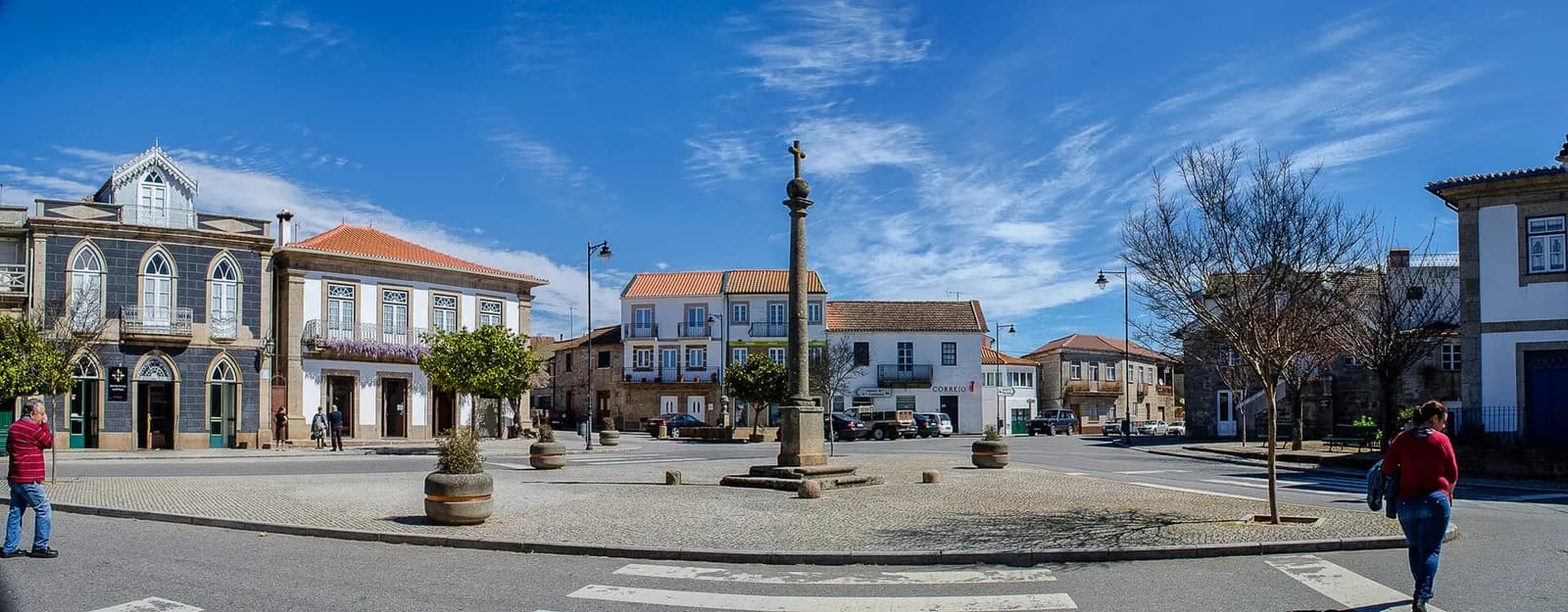
He was not buried in Coimbra. His body went north-east to the cemetery of São Martinho de Anta, the village in Trás-os-Montes where he was born, a place he described as “not a place where, but a place from where” (translated from Portuguese). He lies there in a flat grave, and beside it grows a torga, the mountain heather whose name he took.
Plainness was a habit with him. He did not sign autographs or give his books away, so that readers would be free to choose; he published almost everything at his own expense, in austere author's editions; and he opposed the dictatorship for decades without joining a party.
- Real name
- Adolfo Correia da Rocha (Adolfo Rocha)
- Born
- 12 August 1907, São Martinho de Anta, Sabrosa
- Died
- 17 January 1995, Instituto Português de Oncologia, Coimbra
- Profession
- Doctor; ear, nose and throat specialist in Coimbra
- Books
- More than 50: poetry, stories, novels, plays, essays and a 16-volume diary
- Buried
- Cemetery of São Martinho de Anta, in a flat grave
- Main prize
- First Prémio Camões, 1989
A village, a city kitchen and a coffee farm
Adolfo was born on 12 August 1907 in São Martinho de Anta, a small village in the district of Vila Real, in Trás-os-Montes. His parents, Francisco Correia Rocha and Maria da Conceição Barros, were poor peasants. He admired his father's stubbornness and sense of justice, and his mother appears again and again in his diary and his autobiographical novel.
After primary school in the village he spent a year in Porto as a house servant. In 1918 he went, like many poor boys of the region, to the seminary at Lamego. He stayed a year, long enough to absorb the Bible that later gave titles to his books, and showed no vocation for the priesthood.
In 1920, aged 13, he was sent to Brazil to work on the Fazenda de Santa Cruz, his uncle's coffee farm in the state of Minas Gerais. The uncle spared him nothing: the boy hoed coffee, lassoed venomous snakes and kept the farm's accounts. In 1924 he attended the Ginásio Leopoldinense, a secondary school in the town of Leopoldina.
In 1925, aged 18, he came home with his uncle, who had noticed how bright he was and offered to pay for his studies in Coimbra as a reward for five years of work. Brazil stayed with him. He went back with his wife in 1954 to see the places of his adolescence.
12 August 1907
Born in São Martinho de Anta
Son of the peasants Francisco Correia Rocha and Maria da Conceição Barros.
1918
Seminary at Lamego
After a year as a house servant in Porto. He leaves after a year.
1920–1925
Brazil
Works on his uncle's coffee farm in Minas Gerais.
1928
Medical school in Coimbra
Publishes his first book of poems, Ansiedade.
June 1930
Breaks with presença
With Edmundo de Bettencourt and Branquinho da Fonseca.
1933
Qualifies as a doctor
1934
Becomes Miguel Torga
A Terceira Voz is the first book under the new name.
30 November 1939
O Quarto Dia seized
Arrested in Leiria and held in the Aljube in Lisbon until 2 February 1940.
27 July 1940
Marries Andrée Crabbé
Bichos is published the same year.
1941
Diário I
The first of 16 volumes, the last in 1993.
1959
Diário VIII seized
First Nobel nomination the same year.
10 June 1989
First Prémio Camões
Presented in Ponta Delgada.
17 January 1995
Dies in Coimbra
Buried in São Martinho de Anta.
Coimbra, presença and a new name
He finished secondary school in three years and in 1928 enrolled in the Faculty of Medicine of the University of Coimbra, where he studied until 1933. He lodged in a república, one of the city's shared student houses, called Estrela do Norte. In 1928 he also published his first book of poems, Ansiedade, which he later withdrew from sale and disowned.
Coimbra had a new literary magazine. Presença, a “sheet of art and criticism” launched in March 1927 by José Régio, Branquinho da Fonseca and João Gaspar Simões, printed Fernando Pessoa and other modernists alongside younger writers, and from its fourth issue spelled its title with a small p. Adolfo Rocha wrote for it in 1929 and 1930, and his book Rampa (1930) appeared under its imprint.
It did not last. In June 1930 he, Edmundo de Bettencourt and Branquinho da Fonseca left the group, sending Régio and Gaspar Simões a letter that objected to “the perspective of a single kind of freedom” and to a magazine that treated its contributors as masters and pupils (translated from Portuguese). Rocha and Branquinho then produced Sinal, which lasted one issue.
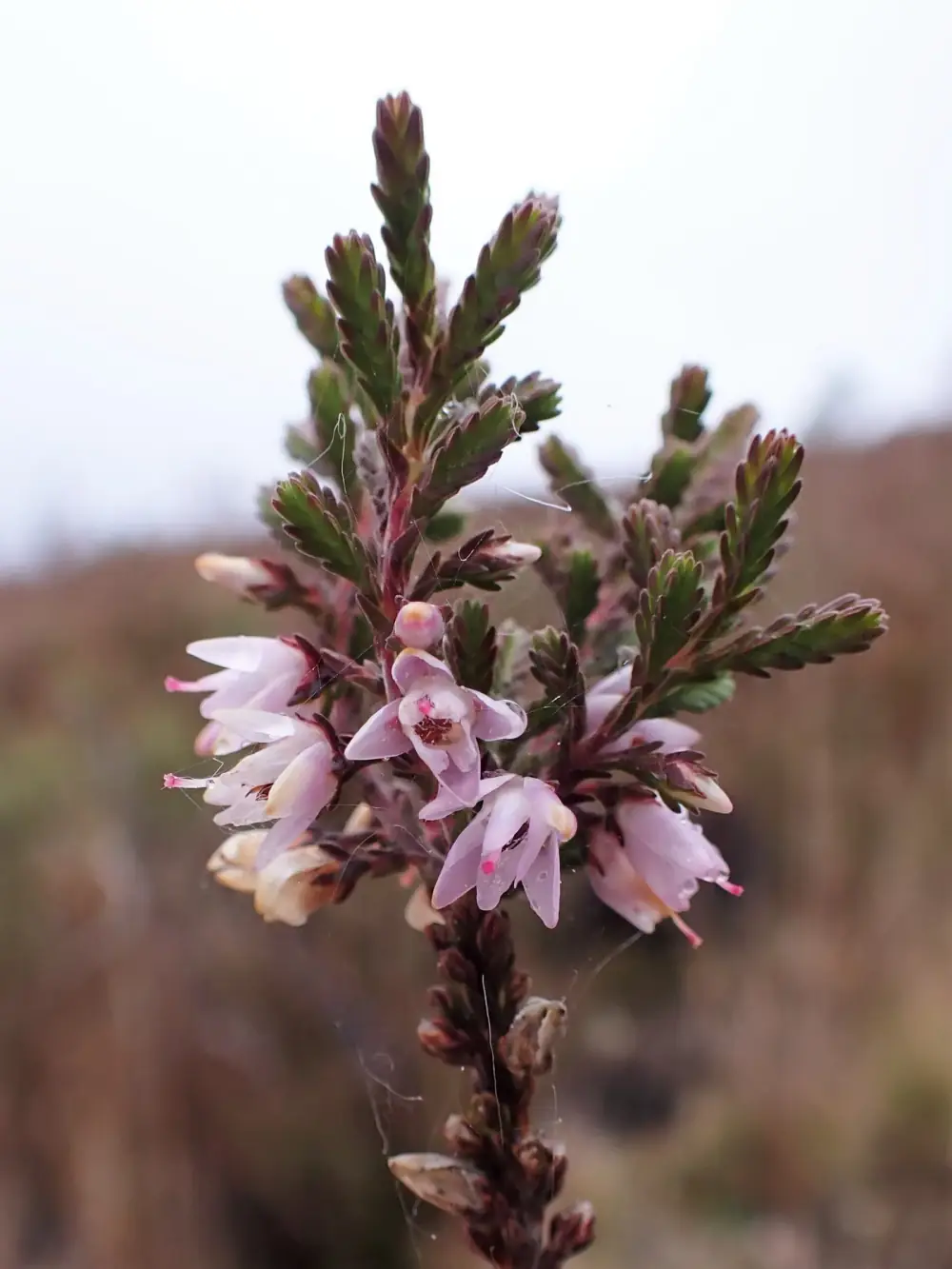
In 1934, by then a qualified doctor, he published A Terceira Voz (The Third Voice) under a new name. Miguel was for Miguel de Cervantes and Miguel de Unamuno, two writers of the Iberian Peninsula he admired. Torga was the hardy heather of his native hills. Critics have also seen in the first name Michelangelo and the archangel Michael. The doctor stayed Adolfo Rocha; the writer was Miguel Torga.
Dr Adolfo Rocha, ear, nose and throat
After graduating he went back to São Martinho, then worked as a general practitioner in Vila Nova, in the municipality of Miranda do Corvo. He trained as an ear, nose and throat specialist in Coimbra, and in 1939 moved to Leiria to practise, while travelling to Coimbra every weekend.
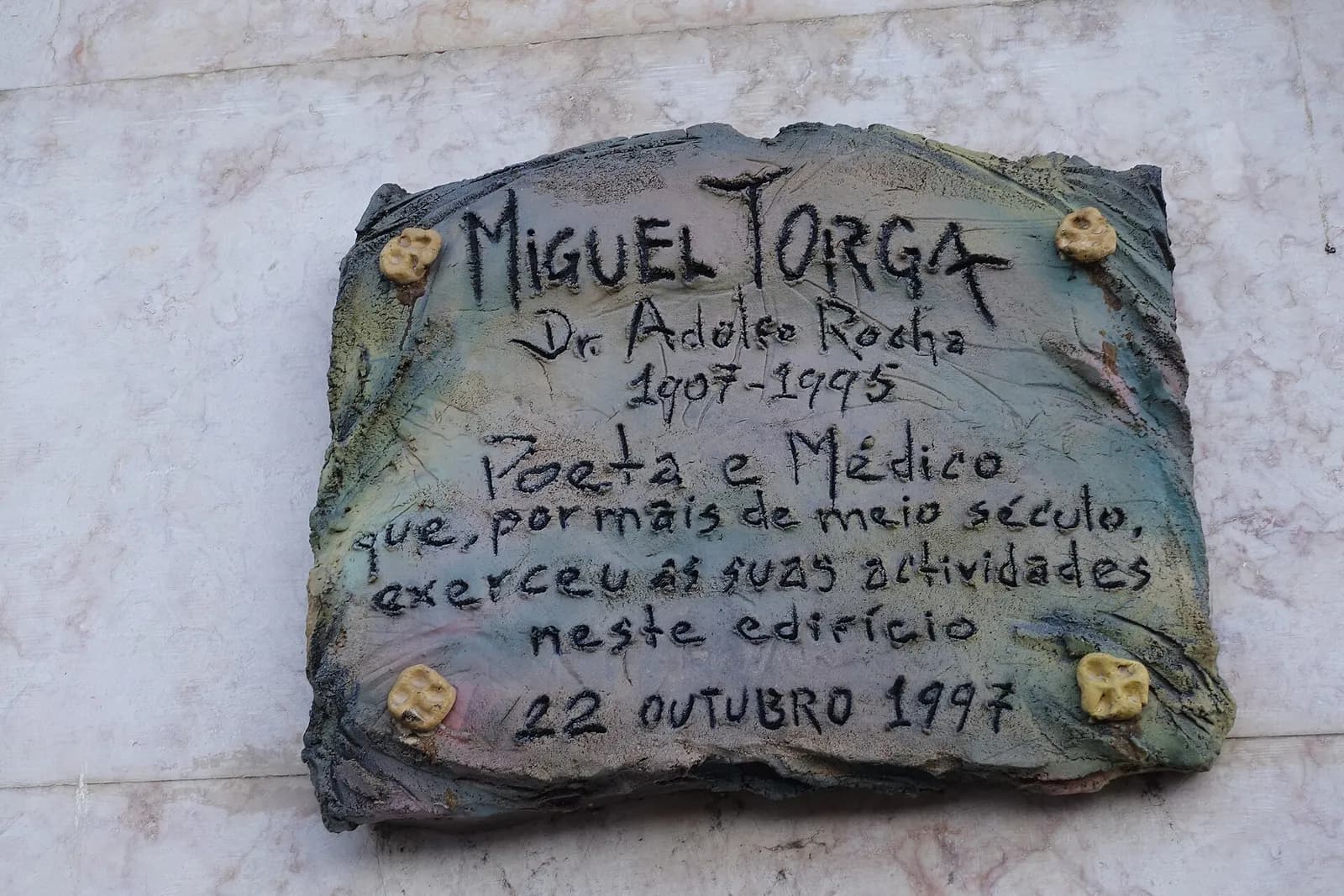
From the early 1940s his surgery was at Largo da Portagem 45, by the bridge over the Mondego in Coimbra, in a building later taken over by a bank. He worked there for more than fifty years. His patients came for their ears and throats, but when the need arose he also acted as paediatrician, orthopaedist and psychiatrist. He went there every day by public transport, stopping at the bookshops of the Baixa, the lower town.
Medicine paid for the writing. He brought out his books in plain author's editions, for reasons, his biographer writes, that had more to do with his readers' pockets than his own, and the Lisbon publisher Dom Quixote began his collected works only in 1999, four years after his death.
The Fourth Day and the Aljube
Between December 1937 and January 1938, Adolfo Rocha crossed northern Spain on his way to Italy, France, Switzerland and Belgium. The Spanish Civil War was still being fought, and the whole of the north was held by Franco's Nationalists. In Portugal the state radio openly backed them. He wrote what he saw into the third volume of his autobiographical novel A Criação do Mundo, titled O Quarto Dia (The Fourth Day), published in April 1939.
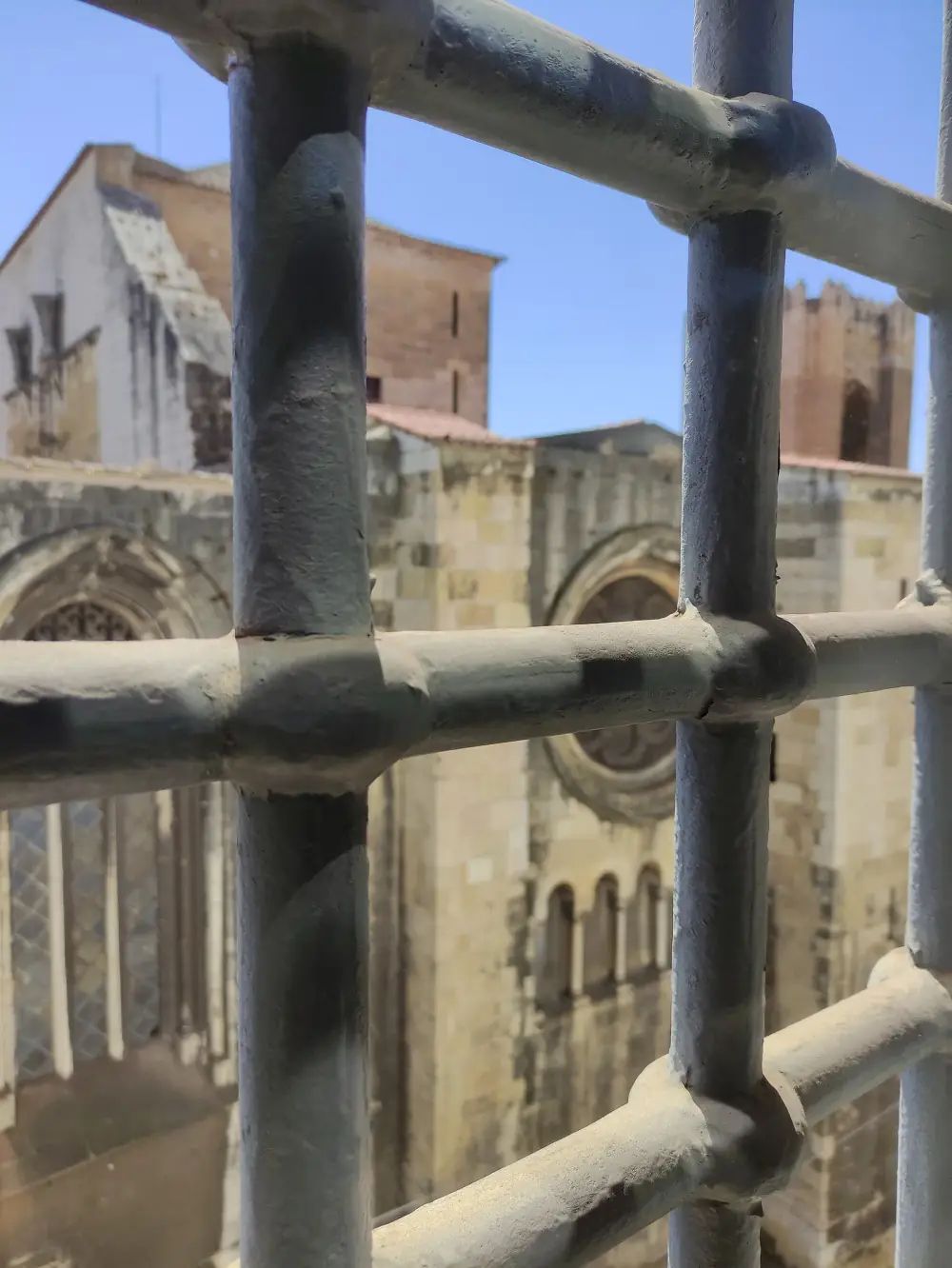
The book is, in the words of the Coimbra scholar António Apolinário Lourenço, “the vigorous portrait of a land brutally pacified”. On 30 November 1939 it was seized. The PSP, the public security police, detained its author in Leiria and passed him to the headquarters of the PVDE, and he was held in the Aljube until 2 February 1940.
Accounts of the length differ. The dates in the scholarship give about two months. The Museu do Aljube, now a museum of the resistance in the old prison, says he was arrested in December 1939 and spent three months in its cells. On its second floor it shows “Canção”, a poem he dated in the Aljube on 30 December 1939; his police file is kept in the national archive, the Torre do Tombo.
Another, “Ariane”, written in the Aljube in 1940, became his best-known poem of resistance. A sailing ship has anchored in the Tagus, close enough for the prisoner to see. The poem ends with him unable to walk out of the prison and into the arms of the ship.
“Ariane is a ship. It has masts, sails, and a flag at the prow; and it came on a white, cold day to this river Tagus of Lisbon.”
His friends in Leiria stood by him while he was held. On 27 July 1940 he married Andrée Crabbé, a Belgian student of the Azorean writer Vitorino Nemésio whom he had met at Nemésio's house when she came to a summer course in Coimbra. They settled in Coimbra, where their only child, Clara, was born in 1955.
The prison stayed in the work. In 1974, thirty-five years after O Quarto Dia, he published O Quinto Dia (The Fifth Day), which dwells on his time in the Aljube. The political police watched him until the end of the regime.
Animals, mountains and a diary
Torga wrote in almost every form: poems, stories, novels, plays, essays and a diary, more than 50 books in all. Most of his prose falls into a few large groups, written over six decades with little change of direction.
Bichos (Animals, 1940) is a book of short stories about animals and a few people, read as fables about rebellion, birth and death. In “Cega-Rega” a cicada sings through its short life because, Torga wrote, “to sing was to believe in life and defeat death” (translated from Portuguese). The preface invites the reader aboard a Noah's Ark.
“It is time to receive you at the gangway of my little Noah's Ark.”
Montanha (Mountain, 1941), stories of the villages of Trás-os-Montes, was seized by the censors. A Rio de Janeiro edition of 1955, retitled Contos da Montanha (Mountain Tales), circulated cautiously in Portugal. With Novos Contos da Montanha (1944) the collections hold 45 stories of humble mountain people, such as the leper Julião, killed by the villagers of Loivos.
A Criação do Mundo is an autobiographical novel in six “days”, published between 1937 and 1981. Its narrator, by the later volumes a young doctor of peasant origins whose studies are paid for by an uncle in Brazil, closely follows Torga's own life. The Diário, 16 volumes published between 1941 and 1993, mixes dated entries, poems, speeches and travel notes. In 1982 the French critic Pierre Veilletet greeted a French selection with the headline “Today, Montaigne is Portuguese. It is Miguel Torga” (translated from French).
Portugal (1950) is a tour of the provinces, from the “green nightmare” of the Minho to Sagres, with “Um Reino Maravilhoso” (A Marvellous Kingdom), a lecture of 1941 on Trás-os-Montes. Poemas Ibéricos (1965) grew out of Alguns Poemas Ibéricos (1952) with eleven new poems, and one line changed so that a poem about Spain's suffering became one about the whole peninsula under dictatorship.
| Work | Form | Published | Note |
|---|---|---|---|
| Ansiedade | Poems | 1928 | First book, later withdrawn |
| A Terceira Voz | Essay | 1934 | First book signed Miguel Torga |
| A Criação do Mundo | Autobiographical novel, six “days” | 1937–1981 | O Quarto Dia (1939) seized; O Quinto Dia (1974) on the Aljube |
| Bichos | Short stories | 1940 | Animal fables |
| Diário | Diary, 16 volumes | 1941–1993 | Volume VIII (1959) seized |
| Montanha / Contos da Montanha | Short stories | 1941; Rio de Janeiro 1955 | 1941 edition seized |
| Novos Contos da Montanha | Short stories | 1944 | With the Contos, 45 stories |
| Portugal | Essays on the provinces | 1950 | Includes “Um Reino Maravilhoso” |
| Alguns Poemas Ibéricos | Poems | 1952 | Expanded as Poemas Ibéricos, 1965 |
| Orfeu Rebelde | Poems | 1958 | Poems of resistance |
Dates of first editions. Torga published most of them himself in Coimbra.
Censors, prizes and a Nobel that never came
The regime kept interfering. Manifesto, a magazine Torga founded with Albano Nogueira in 1936, closed after trouble with the censors, its fifth and last issue filled only with his own texts. In 1947 Salazar had his wife dismissed from her teaching post at the Faculty of Letters in Lisbon. The censors stopped a planned magazine, Rebate, and in 1959 seized the eighth volume of the Diário.
Torga took sides openly. He signed “Dos Escritores ao País” (From the Writers to the Country), a manifesto demanding freedom, took part in the second Republican Congress in Aveiro and refused the Grande Prémio Nacional de Literatura because the regime awarded it. After the revolution of 25 April 1974 he spoke at Socialist Party rallies, always as an independent.
His name also went forward for the Nobel Prize in Literature. The Nobel archive, which releases nominations after 50 years, lists eight between 1959 and 1975; Hernâni Cidade proposed him three times. His biographer Isabel Vaz Ponce de Leão records another proposal in 1978. Some Portuguese accounts speak of only two or three candidacies. He never won.
Nobel Prize in Literature nominations of Miguel Torga, 1959–1975
nominations
Counted from the Nobel Prize nomination archive, which shows nominations once 50 years have passed. Nominators: Jean-Baptiste Aquarone (1959, 1966), Emile Planchard and a group of professors (1960), Hernâni António Cidade (1961, 1962, 1975) and Göran Hammarström (1965).
Show the data
| Nominations | |
|---|---|
| 1959 | 1 |
| 1960 | 2 |
| 1961 | 1 |
| 1962 | 1 |
| 1963 | 0 |
| 1964 | 0 |
| 1965 | 1 |
| 1966 | 1 |
| 1967 | 0 |
| 1968 | 0 |
| 1969 | 0 |
| 1970 | 0 |
| 1971 | 0 |
| 1972 | 0 |
| 1973 | 0 |
| 1974 | 0 |
| 1975 | 1 |
Prizes came late. He received the Prémio Montaigne at the Gulbenkian Foundation in Lisbon on 10 March 1981. In 1989 he was the first winner of the Prémio Camões, the prize for literature in Portuguese that the governments of Portugal and Brazil had set up in 1988. It was presented in Ponta Delgada, in the Azores, on 10 June 1989, during the national day celebrations, at a ceremony presided over by President Mário Soares.
After 1995: the houses and the village
Coimbra opened his home at Praceta Fernando Pessoa 3, where he lived from 1953 until his death, as the Casa-Museu Miguel Torga on 12 August 2007, the centenary of his birth. In January 2020, for the 25th anniversary of his death, the city held a tribute there and poetry readings at the oncology institute where he died.
In São Martinho de Anta, the Sabrosa council commissioned a cultural centre from the architect Eduardo Souto de Moura, designed and built between 2007 and 2011. The Espaço Miguel Torga is a one-storey building of about 1,500 square metres, clad in slate from Vila Nova de Foz Côa and set among vineyards, with a 110-seat auditorium.
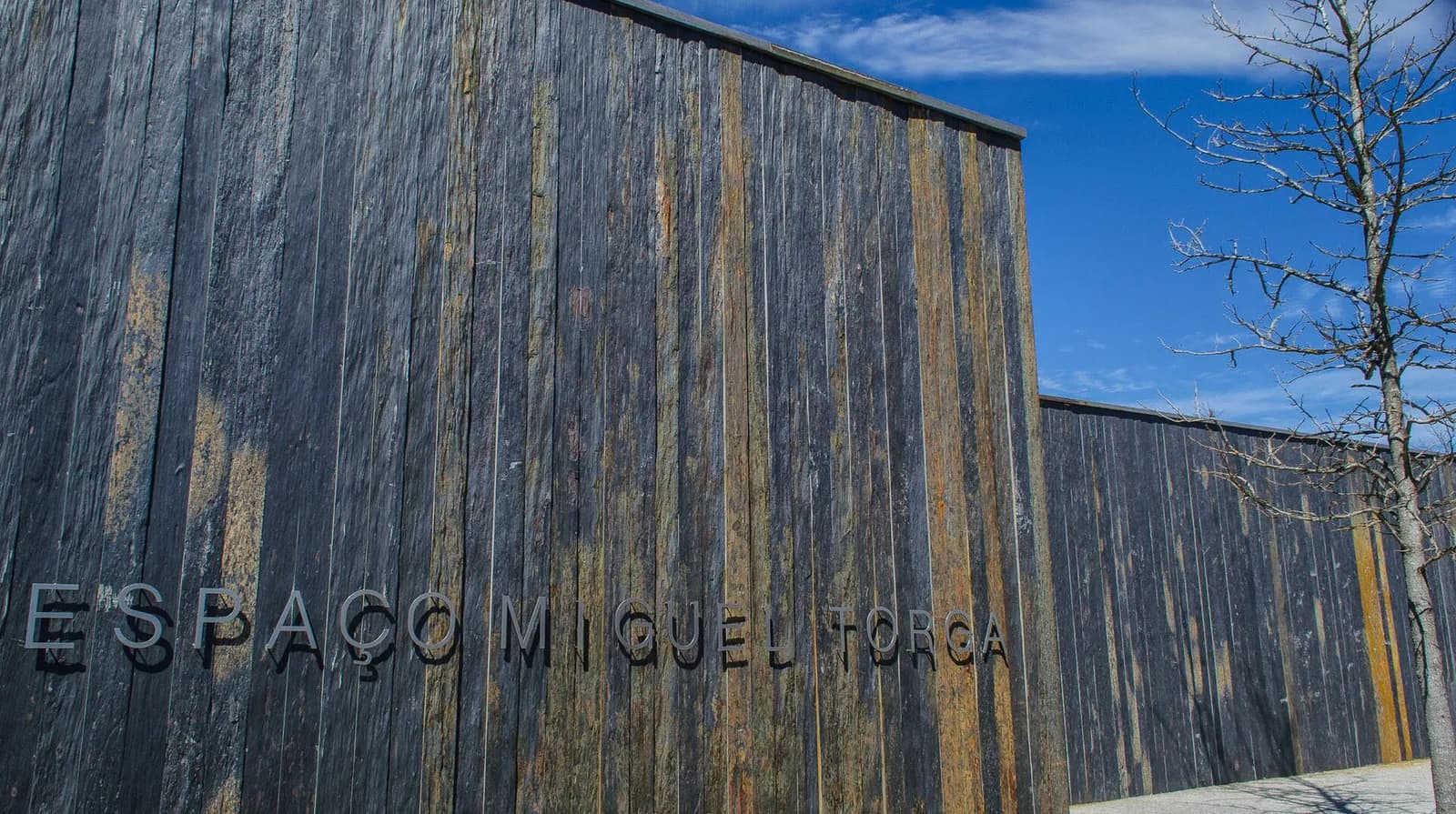
On 17 January 2022, the 27th anniversary of his death, his birth house opened as a museum. His daughter, Clara Crabbé Rocha, had given it to the Regional Directorate of Culture for the North. The project cost about €340,000, 90 per cent of it paid by Turismo de Portugal, and the rooms show his passport, hunting licence, diploma and manuscripts.
In the middle of the village stood the negrilho, the old elm that appears in his poems. It dried up in the year he died. Its dead trunk still stands, and his bust has been set beside it.
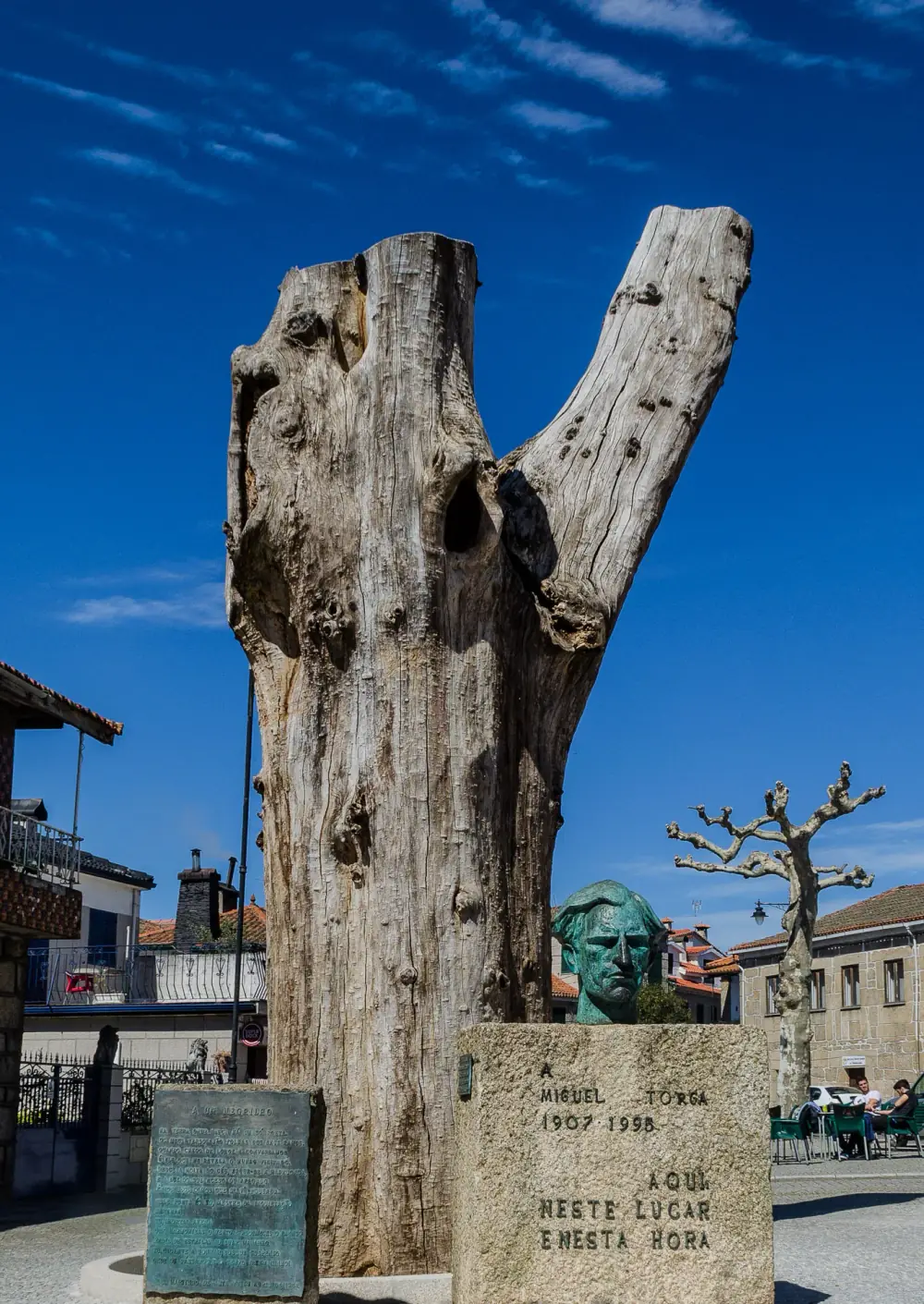
He has been part of the Portuguese school canon since 1976, and his books have been translated into many European languages and into Chinese and Japanese. Schools and libraries across the country carry his name.
FAQs
Why did Adolfo Rocha call himself Miguel Torga?
He adopted the name in 1934 with A Terceira Voz. Miguel honoured two Iberian writers he admired, Miguel de Cervantes and Miguel de Unamuno. Torga is the local name for common heather, a tough shrub of the Trás-os-Montes hills.
Why was Miguel Torga arrested?
O Quarto Dia, a volume of his autobiographical novel published in April 1939, described a journey through Franco's Spain during the Civil War. The censors seized it on 30 November 1939; he was arrested in Leiria and held in Lisbon's Aljube prison until 2 February 1940, according to the scholarship. The Aljube museum says he spent three months there.
Did Miguel Torga win the Nobel Prize?
No. The Nobel archive lists eight nominations for him between 1959 and 1975, and his biographer notes another in 1978. He did win the first Prémio Camões, the main prize for literature in Portuguese, in 1989.
Where is Miguel Torga buried?
In the cemetery of São Martinho de Anta, the village in the municipality of Sabrosa where he was born. He lies in a flat grave with a torga, or heather plant, growing beside it.
On the timeline
Open the timelineNearby moments from portugal in europe (1986–today).
Death of Captain Fernando José Salgueiro Maia, hero of the Carnation Revolution. On 25 April 1974 he led the armoured column from the Santarém cavalry school to Lisbon, occupied the Terreiro do Paço and surrounded the Carmo barracks, where Marcelo Caetano surrendered. He died of cancer aged 47.
Martinair Flight 495, a DC-10 carrying 340 people, mostly Dutch holidaymakers from Amsterdam, crashes while landing at Faro Airport in a thunderstorm with strong, shifting winds. It hits the runway so hard that the fuselage splits in two and catches fire. Fifty-six people are killed and 106 badly injured.
The composer Fernando Lopes-Graça dies in Parede, aged 87. A lifelong opponent of the Estado Novo, he came top in the 1931 competition for a piano-teaching post at the National Conservatory but was arrested and banished to Alpiarça before he could take it up, lost a Paris scholarship in 1937 for political reasons, and built much of his music on Portuguese folk song.
The death of Miguel Torga
Miguel Torga, pen name of the Coimbra doctor Adolfo Correia da Rocha, dies aged 87. The fiercely independent author of 'Bichos' and of a 16-volume 'Diário' was the first winner of the Camões Prize, in 1989, and lies in a simple grave in his native village of São Martinho de Anta, in Trás-os-Montes.
The Schengen Convention takes effect for Portugal and six other countries — Spain, France, Germany and the Benelux states — lifting routine passport checks at their shared borders, including Portugal's long frontier with Spain.
The Socialist Party under António Guterres wins the legislative election with 43.8 per cent of the vote, ending ten years of Social Democrat government under Aníbal Cavaco Silva, though falling short of an absolute majority.
Death of Mário Viegas, aged 47, one of Portugal's greatest actors and poetry reciters. He founded three theatre companies and was celebrated for his recordings of Fernando Pessoa and other major Portuguese poets. A hall of Lisbon's São Luiz theatre bears his name.
Coming up in history
All long reads 19 January 1919The Monarchy of the North: Porto's 25-day kingdom of 1919
 20 January 1554Sebastião the Desired: the king born in Lisbon on 20 January 1554
 21 January 1951Castelo do Bode, 1951: the dam that lit Lisbon and now fills its taps
 22 January 1961Operation Dulcineia: Galvão's rebels seize the liner Santa Maria
20 sources
Archives, scholarship and reporting this article was checked against.
- 1
O essencial sobre Miguel Torga (Isabel Vaz Ponce de Leão)Imprensa Nacional-Casa da Moeda
- 2
Terra de Ninguém. A Guerra Civil de Espanha visitada e revisitada por escritores portugueses (António Apolinário Lourenço)RUA-L. Revista da Universidade de Aveiro, n.º 7 (II série), 2018
- 3
Adolfo Correia da RochaMuseu do Aljube Resistência e Liberdade, 2024
- 4
Miguel Torga (Figuras da cultura portuguesa)Camões, Instituto da Cooperação e da Língua
- 5
Nomination archive: Miguel TorgaNobel Prize Outreach
- 6
Quem quiser conhecer-me leia-me: Tributo a Miguel Torga (1907–1995)Câmara Municipal de Coimbra, 2020
- 7
PresençaModernismo: Arquivo Virtual da Geração de Orpheu
- 8
Este mês lemos… Miguel TorgaBiblioteca Municipal de Coimbra, August 2025
- 9
Miguel Torga, Antologia (Diário): extractos relativos a Terras de BouroCâmara Municipal de Terras de Bouro, 2nd edition 1999
- 10
29th anniversary of death of Miguel TorgaMuseu Nacional Soares dos Reis, 17 January 2024
- 11
- 12
Prisão políticaMuseu Nacional Resistência e Liberdade, Peniche
- 13
- 14
- 15
Torga, o último “bicho” de S. Martinho de AntaJL, Jornal de Letras, Artes e Ideias, n.º 2, 17–30 March 1981
- 16Prémio Camões: lista dos 31 distinguidosDiário de Notícias (Lusa), May 2019
- 17
Casa Museu Miguel TorgaVisit Portugal (Turismo de Portugal)
- 18
Miguel Torga Cultural Center, SabrosaArquitectura Viva
- 19Casa Miguel Torga é inaugurada na segunda-feira, dia 17, em São Martinho de AntaObservador (Lusa), 12 January 2022
- 20Contemporâneo de Miguel Torga destaca homem solitário, íntegro e duroRTP Notícias (Lusa), January 2007
Image credits
- The main square of São Martinho de Anta, in the municipality of Sabrosa, in 2015. Torga was born in the village in 1907 and is buried in its cemetery. Turismo En Portugal, CC BY 2.0, via Wikimedia Commons.
- Common heather (Calluna vulgaris) in flower near Arganil, central Portugal, in 2023. In Trás-os-Montes the plant is called torga. Krzysztof Ziarnek, Kenraiz, CC BY-SA 4.0, via Wikimedia Commons.
- The plaque on the building at Largo da Portagem, Coimbra, where he had his surgery, photographed in 2018. Dated 22 October 1997, it records that Miguel Torga, Dr Adolfo Rocha (1907–1995), poet and doctor, worked in the building for more than half a century. Joseolgon, CC BY-SA 4.0, via Wikimedia Commons.
- Lisbon Cathedral seen through the bars of a window in the former Aljube prison, now the Museu do Aljube Resistência e Liberdade, in 2021. CrisLuiz, CC0, via Wikimedia Commons.
- The slate-clad Espaço Miguel Torga in São Martinho de Anta, designed by Eduardo Souto de Moura, photographed in 2016. Turismo En Portugal, CC BY 2.0, via Wikimedia Commons.
- Torga's bust beside the dead trunk of the negrilho in São Martinho de Anta, photographed in 2016. Turismo En Portugal, CC BY 2.0, via Wikimedia Commons.