

The British Ultimatum of 1890: how Portugal lost its Pink Map
Lord Salisbury gave Portugal one evening to order its troops out of the Shire valley and Mashonaland, lands it claimed between Angola and Mozambique. Lisbon gave way within hours, and the anger that followed shook the monarchy and left the country a new song.
At a glance
- On 11 January 1890 Lord Salisbury's government demanded that Portugal withdraw all its forces from the Shire valley, the Makololo country and Mashonaland, with a satisfactory answer due that evening.
- The demand ended Portugal's plan, drawn on the 1886 Pink Map, to join Angola and Mozambique with a belt of land across central Africa, now Zambia, Zimbabwe and Malawi.
- The Council of State gave way the same night. The government fell, crowds stoned the British consulate in Lisbon, and merchants across the country boycotted British goods.
- Alfredo Keil and Henrique Lopes de Mendonça wrote the march A Portuguesa in protest; it became the national anthem of the Republic on 19 June 1911.
- A first treaty, of 20 August 1890, was never ratified; the treaty of 11 June 1891 fixed the borders, and the anger helped the republicans who overthrew the monarchy in 1910.
Stones and flags in the Baixa
On the evening of Sunday 12 January 1890 a crowd began to gather outside the Café Martinho da Arcada in Lisbon's Baixa. That morning the newspapers had broken the news, and O Século, a republican daily, ran it under the headline “Lisboa será bombardeada”, Lisbon will be bombarded.
By the time it had marched up the Rua Augusta to the Rossio, the crowd numbered between 1,500 and 5,000, depending on the newspaper. People shouted “Down with the pirates” and “Down with the Braganças”, the royal family. At the British consulate they threw stones and tore down the British coat of arms. Stones also hit the house of the foreign minister, Henrique de Barros Gomes.
At the Geographical Society, its secretary Luciano Cordeiro spoke from a balcony. Protesters pushed into the São Carlos opera house, lowered the national flag to half mast and told the startled audience that this was no day for a show but a day of mourning. Demonstrations were still going at one in the morning, and more than fifty people were arrested.
The cause was a memorandum handed to the Portuguese government the day before. Britain had told Portugal to pull its troops out of a stretch of central Africa that Lisbon had coloured pink on its maps, and to say so that evening. Portugal had given way within hours.
A pink belt across Africa
In the middle of the nineteenth century Portugal held little more than scattered points on the two coasts of southern Africa: Angola in the west, Mozambique in the east. Between them lay an interior it did not govern, though Portuguese travellers had crossed into it many times; the historian Nuno Severiano Teixeira counts twelve documented journeys between 1785 and 1877.
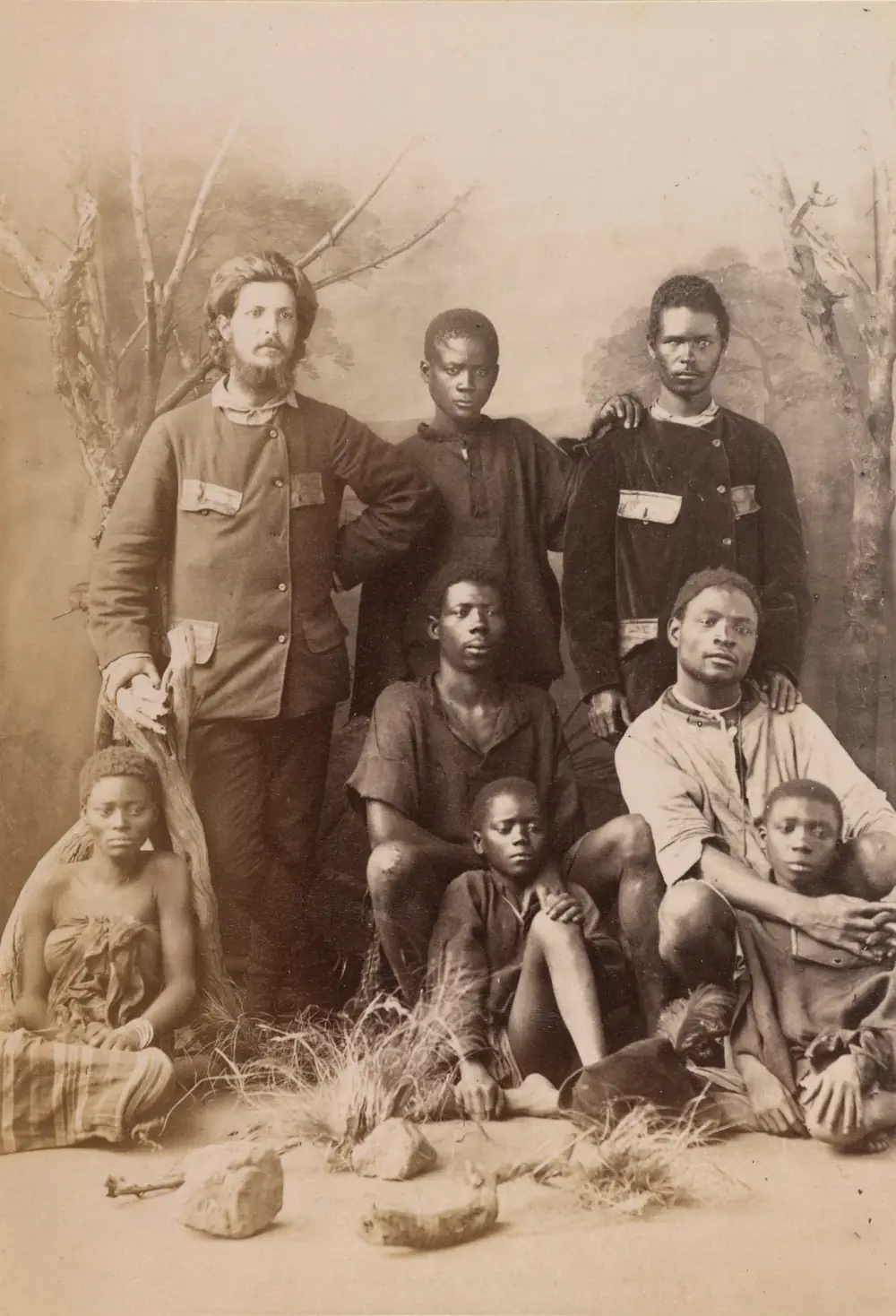
In the 1870s the European powers began racing each other for African land, a contest the Times popularised as the “scramble for Africa”. The Lisbon Geographical Society, founded in the mid-1870s, pushed for Portuguese exploration. In 1877 Alexandre de Serpa Pinto, Hermenegildo Capelo and Roberto Ivens set out together from Benguela; Serpa Pinto struck south to Durban while Capelo and Ivens went north. In 1884 and 1885 Capelo and Ivens crossed from the Angolan coast to Tete on the Zambezi.
Then the rules changed. At a conference that opened in Berlin on 15 November 1884, the powers agreed that holding land would require occupying it. Portugal had always argued from priority of discovery, which now counted for little. Britain wanted the new rule to apply to the whole continent; the others would accept it only for the coasts, so inland the race turned to claiming “spheres of influence”.
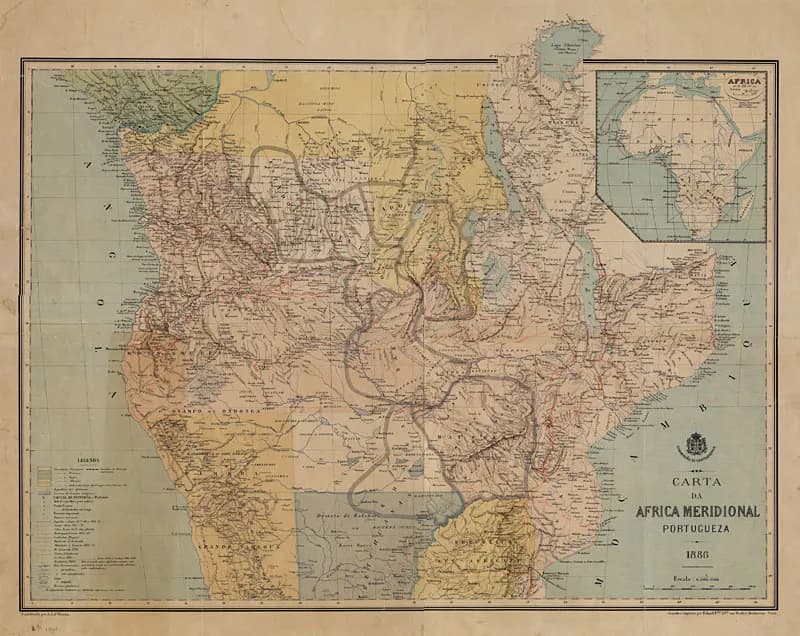
Portugal tried to secure the interior on paper. In a convention of 12 May 1886, France recognised “the right of His Most Faithful Majesty to exercise his sovereign and civilizing influence in the territories which separate the Portuguese possessions of Angola and Mozambique”, saving rights already acquired by other powers. Germany said much the same in a declaration of 30 December 1886. Barros Gomes then presented maps with a pink band running from the Atlantic to the Indian Ocean: the Mapa Cor-de-Rosa, or Pink Map.
Britain had signed no such agreement. Scottish missionaries had settled by Lake Nyasa in 1875 and at Blantyre, in the Shire Highlands, in 1876, and a trading firm, the African Lakes Company, worked alongside them. Further south, Cecil Rhodes wanted a band of British territory running north from the Cape, across the same belt. London protested that Portugal did not occupy what it claimed.
The people under the pink
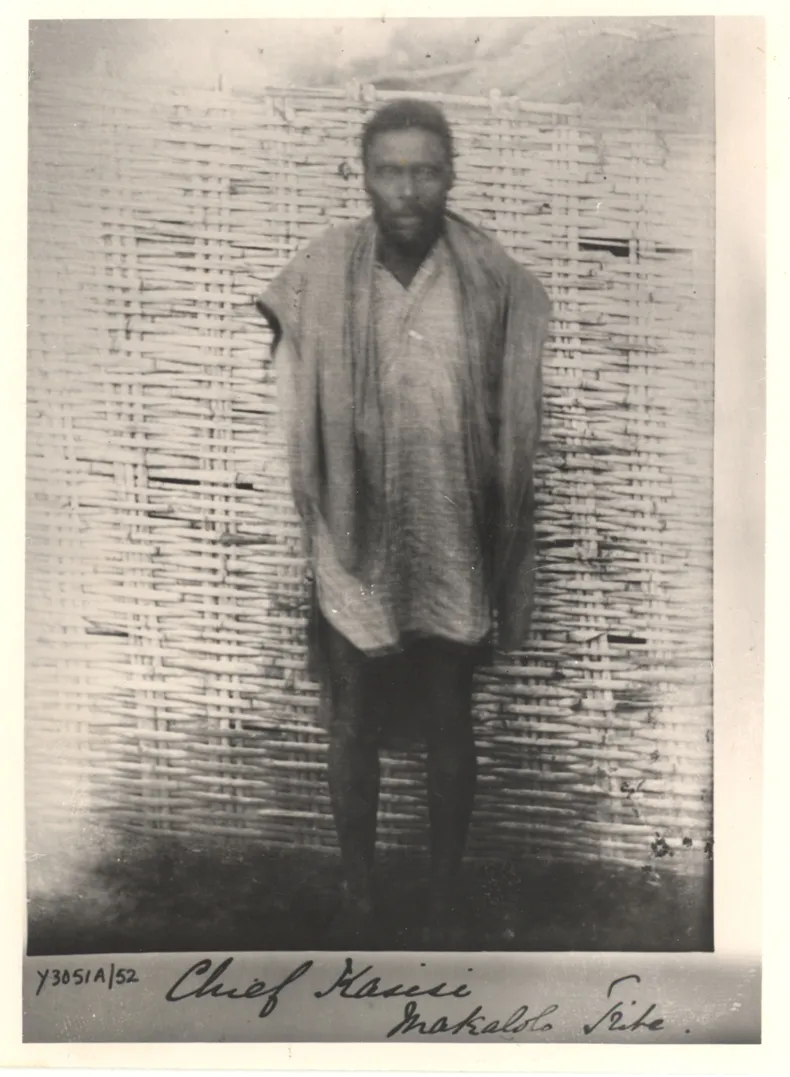
The pink band crossed land that already had rulers. In the Shire valley, south of Lake Nyasa, power lay with the Makololo chiefs. Their founders had followed David Livingstone down the Zambezi as porters from the Barotse country; many had in fact been slaves of peoples of the upper Zambezi. When Livingstone withdrew in 1864 he left those in the Shire valley armed, and they soon made themselves chiefs over the Mang'anja people, holding off Yao and Ngoni raiders and slave traders from the Portuguese Zambezi.
By 1889 the strongest Makololo chief on the river was Mlauri, who had succeeded Chipatula. From his stronghold at Mbewe, below Katunga's, his men fired on passing steamers until they stopped and handed over presents. He resented the British for refusing to recognise him as paramount chief, and told the British consul Harry Johnston, by Johnston's account, that he thought the British and Portuguese were in league and that all white men were equally bad.
Further south, the Ndebele (Matabele) king Lobengula claimed authority over the Shona of Mashonaland. On 30 October 1888 he granted Rhodes's partner Rudd exclusive mining rights in return for £100 a month and 500 rifles, with 500 more promised. When he found he had been cheated, he had Lotshe, the councillor who had persuaded him to sign, put to death, and two of his indunas, or councillors, travelled to London to ask Queen Victoria's wishes. On 29 October 1889 Queen Victoria chartered Rhodes's British South Africa Company. Barros Gomes answered by insisting on Portugal's historic claims and arguing that the Shona were a people separate from the Ndebele.
Showdown on the Shire
In 1889 both sides moved. Serpa Pinto, now a major, led an expedition up the Shire with more than 700 African soldiers, many of them men from Gaza and Inhambane in southern Mozambique. Lisbon called it a scientific expedition. In August, Johnston, whom Salisbury had sent out as consul at Mozambique, met him in camp below the meeting of the Ruo and the Shire and warned him that Britain regarded the Ruo, provisionally, as the Portuguese limit.
The acting consul, John Buchanan, then made treaties with Makololo chiefs at Katunga's on 14 and 15 August, in which the chiefs undertook not to cede land or make treaties with any other power. Mlauri was not among them, though Johnston says he later made a treaty of his own, and Hertslet's list records one signed at Mbewe on 24 September. After a first clash between Portuguese troops and Makololo just below the Ruo, Buchanan declared at Mlomba on 21 September that the Makololo, Yao and Machinga countries were under the Queen's protection “with the consent and at the desire of the Chiefs and People”.
On 8 November Mlauri's men attacked the Portuguese column on the west bank of the Shire. The historian Teresa Pinto Coelho places this battle at Mupassa; Johnston, who was by then far to the north, gives a similar name, Mpatsa, for the earlier skirmish. Mlauri said afterwards that the Portuguese had raided his villages on the other bank. The attack was beaten off with heavy losses: Johnston called it “a very sanguinary defeat”, and Eça de Queirós, as summarised by Andrew Shepherd, put the Makololo dead at about a hundred.
Serpa Pinto left for Mozambique, and his second-in-command, João de Azevedo Coutinho, pushed on. He crossed the Ruo, seized and burned Chiromo, the village of the young chiefs Mbengwa and Makwira, hauled down the British flag at Katunga's and drove Mlauri upriver. The other Makololo chiefs took refuge at Blantyre, which the Portuguese, by Johnston's account, were preparing to occupy. Johnston believed Lisbon had not sanctioned the advance; the governor-general at Mozambique had announced that the Shire was annexed and named Coutinho its governor. In Lisbon, Barros Gomes defended the fighting as self-defence and restated Portugal's rights of discovery.
The memorandum of 11 January
Lord Salisbury, who was both Prime Minister and Foreign Secretary, had decided to force the issue. He had already told the German government that he might take a Portuguese territory in India or on the Atlantic coast “as a material guarantee”. Rhodes and the Church of Scotland pressed him from two sides. On Saturday 11 January 1890 George Petre, the British minister in Lisbon, handed over a memorandum with this demand:
“What Her Majesty's Government require and insist upon is the following: that telegraphic instructions shall be sent to the governor of Mozambique at once to the effect that all and any Portuguese military forces which are actually on the Shire or in the Makololo or in the Mashona territory are to be withdrawn.”
- Date
- Saturday 11 January 1890
- Delivered by
- George Petre, British minister in Lisbon
- Demand
- Telegraph the governor of Mozambique to withdraw all forces from the Shire, the Makololo country and Mashonaland
- Deadline
- A satisfactory answer “in the course of this evening”
- Threat
- The British legation would leave Lisbon; HMS Enchantress waited at Vigo for Petre's orders
- Answer
- The Council of State agreed to yield the same night, under protest
Without this, the memorandum said, Portugal's assurances were “illusory”. That night the Council of State met under King Carlos, who had reigned for less than three months, since his father Luís died on 19 October 1889. The government resolved to “yield” to the demands, reserving the Crown's rights and protesting that Article 12 of the Berlin Act entitled Portugal to mediation or arbitration. The orders went to Mozambique.
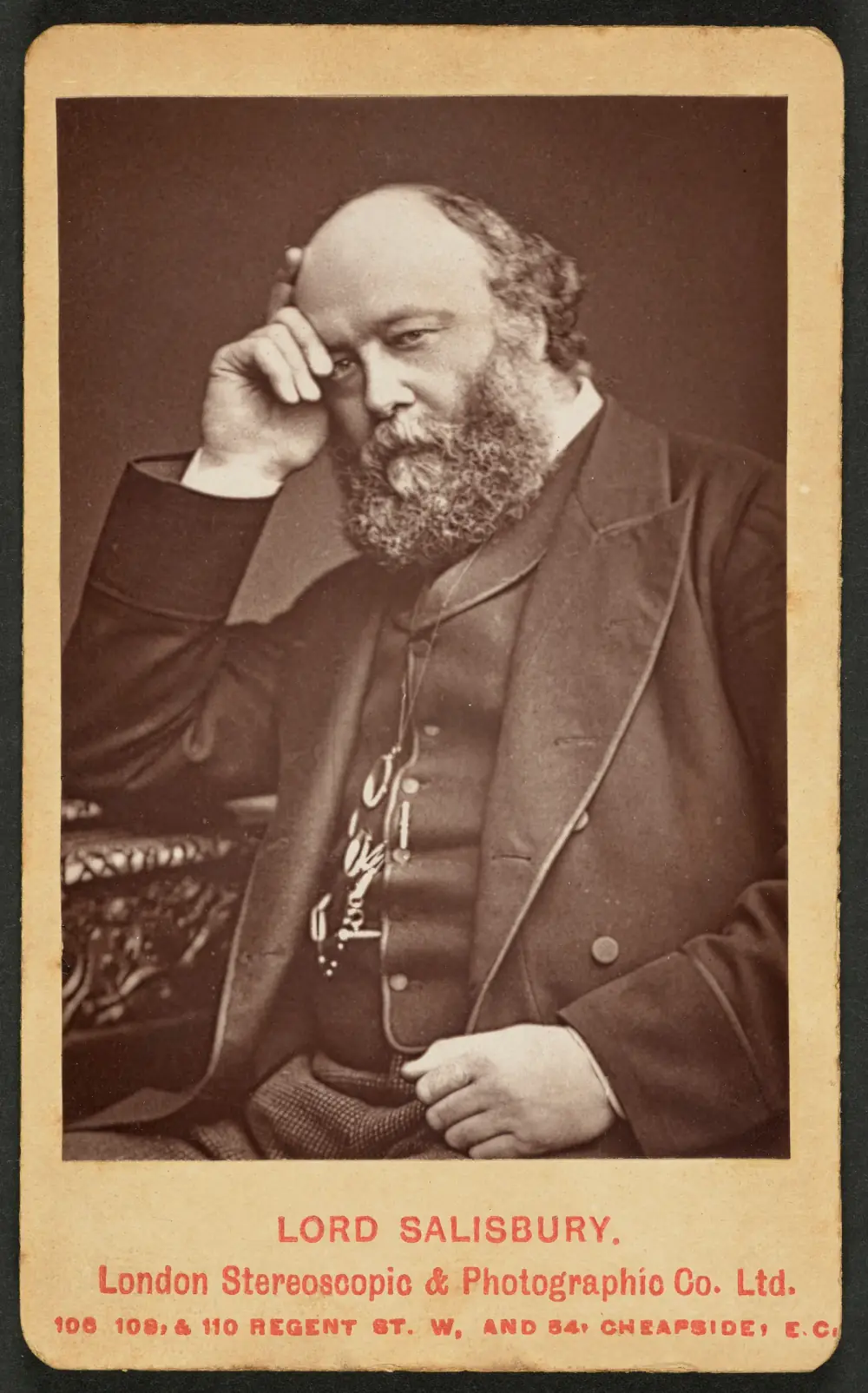
Portugal's two monarchist parties, the Progressives and the Regenerators, took turns in office. The Progressive prime minister, José Luciano de Castro, resigned, arguing that resisting a power like Britain would only cost Portugal more of its colonies. On 15 January António de Serpa Pimentel presented a Regenerator cabinet. Britain then refused mediation or arbitration in notes of 28 January and 21 March.
A country in mourning
The anger of 12 January spread through the country. Every commercial association except Porto's, where British trade weighed heavily, cut back dealings with Britain, and shops put up signs reading “We neither buy from nor sell to the English”. Tailors dropped English fashion plates, boatmen refused to carry cargo to British ships, and the circus at the Coliseu dos Recreios swore off English performers. In the first week depositors pulled 3,000 contos out of British banks.
Lisbon renamed three streets after the explorers Paiva de Andrade, Vítor Cordon and António Maria Cardoso, and Évora gave its main street to Serpa Pinto. Crowds made their own changes: the Travessa dos Inglesinhos became the Travessa dos Ladrões, the Lane of Thieves. A Grande Subscrição Nacional, set up under a huge Pink Map on the side of the Teatro D. Maria II, collected money “from the capitalist to the beggar” to buy a warship.
The Republican Party, shut out of government, made the cause its own. Its papers, O Século and Os Debates, blamed the British alliance and the House of Bragança. On 11 February, when republicans tried to lay a wreath on the statue of Camões, lancers broke up the crowd amid a deafening din of whistles, and the day became the Campanha dos Apitos, the whistle campaign. At the election of 30 March three republicans, standing on a joint protest ticket with dissident Progressives, won seats in Lisbon. The government answered with decrees on 11 March, which dissolved Lisbon's city council, and on 7 April, the Lei das Rolhas or gag law, which silenced the revolutionary press and closed republican clubs.
Writers took sides in print. The Generation of 1870, the circle around the poet Antero de Quental that included Eça de Queirós, Oliveira Martins and Guerra Junqueiro, had long argued that Portugal needed modernising. Antero now presided over a Patriotic League of the North. Junqueiro, who had cursed “cynical England”, turned on the king in Finis Patriae, published in early April 1890.
“Republican and patriot have become synonyms. Today, whoever says Fatherland says Republic.”
Eça, a diplomat in England from 1874 to 1888, wrote a long letter for the Portuguese press that began by denouncing the English and went on to argue that the boycott was futile. Portugal had sold Britain goods worth 30,000 contos in 1888, he pointed out, against 4,920,750 contos of trade across the British Empire, so a boycott would hurt only Portugal. Hatred, he wrote, was a “negative sentiment which creates nothing and sterilises everything”.
“It must surely be more important for Portugal to possess life, warmth, energy, an idea, a purpose, than to possess the land of Masona.”
A march against the cannons
The protest also produced a song. According to an account in the magazine O Occidente of 21 March 1890, the composer Alfredo Keil improvised a tune at a dinner with friends on 12 January and asked the poet and former naval officer Henrique Lopes de Mendonça to write the words. They called it A Portugueza, and it was handed out free as a printed leaflet.
According to Teixeira, it was first heard in public on 6 March 1890, at a benefit for the national subscription at the Teatro Avenida. Under the decrees of March and April it was banned. It returned to the streets that September in the protests against a new treaty, and the Porto rebels of 31 January 1891 took it as their march. After the Republic was proclaimed in October 1910, the Constituent Assembly made it the national anthem on 19 June 1911, and an official version of the music and words was fixed in 1957.
Two treaties and a border
Talks moved to London, where the Portuguese envoy Barjona de Freitas signed a convention with Salisbury on 20 August 1890. Britain was to have the Shire Highlands and Mashonaland; Portugal would keep the Manica plateau and what Teixeira calls a kind of trans-African corridor along the Zambezi. When its terms reached the Lisbon papers on 22 August, the protests began again, and the full text followed on 30 August.
Parliament reopened on 15 September with Lisbon's shops shut and most factories idle. Police charges led to 53 arrests and left an 18-year-old worker, known as António Pardal, dead. Serpa Pimentel's government resigned, and the convention was never ratified. After 28 days without a cabinet, the elderly general João Crisóstomo formed one that belonged to no party.
The collapse suited Cecil Rhodes, by then prime minister of the Cape Colony. On 23 September he urged the Foreign Office to “drop this wretched treaty, under which we get nothing and give away a great deal”, complaining that it surrendered Manica, Gazaland and half the Barotse country.
A six-month modus vivendi, signed on 14 November by Salisbury and the Portuguese diplomat Luís de Soveral, froze the lines while the two sides talked. The final treaty was signed in Lisbon on 11 June 1891 by Petre and the foreign minister, the Count of Valbom, and ratifications were exchanged in London on 3 July. It was harsher than the first in places: Portugal gave up the Manica plateau, coveted by Rhodes's company, for a somewhat larger but far less valuable zone. This time the country accepted it quietly.
| Area and its rulers | Convention of 20 August 1890 (not ratified) | Treaty of 11 June 1891 | Today |
|---|---|---|---|
| Shire Highlands: Makololo and Yao chiefs | British; the line followed the Ruo to the Shire, then ran straight to a point halfway between Tete and the Cahora Bassa rapids | British; the line follows the Ruo and the Shire to just below Chiwanga, then the watershed with the Zambezi | Malawi |
| Mashonaland: the Shona, claimed by the Ndebele king Lobengula | British | British | Zimbabwe |
| Manica plateau | Portuguese; the line ran down the 33rd meridian, then west to the Masheke river | Split along the eastern slope; Mutassa British, Massi-Kessi Portuguese; one stretch settled by arbitration in 1897 | Zimbabwe and Mozambique |
| Middle Zambezi: Tete and Zumbo | Portuguese, with Zumbo and a 10-mile radius | Portuguese up to the mouth of the Luangwa | Mozambique |
| Barotse kingdom of King Lewanika | Line along the Upper Zambezi and the Kabompo; Rhodes said it gave away half the Barotse country | British; western limit left open, fixed by the King of Italy's award of 1905 | Zambia |
Lines summarised from the texts of 1890 and 1891 printed by Hertslet. “Today” gives the modern countries the contested lands became, after Coelho and Shepherd; later commissions adjusted the lines locally.
One line depended on an African king. The 1891 treaty put the Barotse kingdom on the British side but left its western limit open. When the two governments could not agree, they asked Victor Emmanuel III of Italy to decide what land King Lewanika had ruled as paramount chief on 11 June 1891.
His award of 30 May 1905 went people by people. The Balovale had paid tribute to Lewanika, but they had their own paramount chief and were not conquered until 1892, so most of their land counted as independent. The Bampukush, Bamarshi, Mambunda and Bamakoma were “absolutely independent”. Where no natural line could be found, the arbiter drew straight ones along the 22nd and 24th meridians and the 13th parallel.
From Porto to the Republic
On 31 January 1891 a republican revolt in Porto was crushed within the day. Petre wrote privately to Salisbury that “the Oporto affair was a most serious one” and had “revealed a source of weakness”.
The monarchy lasted another two decades, but its parties never recovered their credit. One had accepted the ultimatum, the other had signed the August treaty, and both had put down the protests. The republicans came out of 1890 as the party of the wounded nation. King Carlos and his heir were shot dead in Lisbon in February 1908, and the monarchy fell on 5 October 1910.
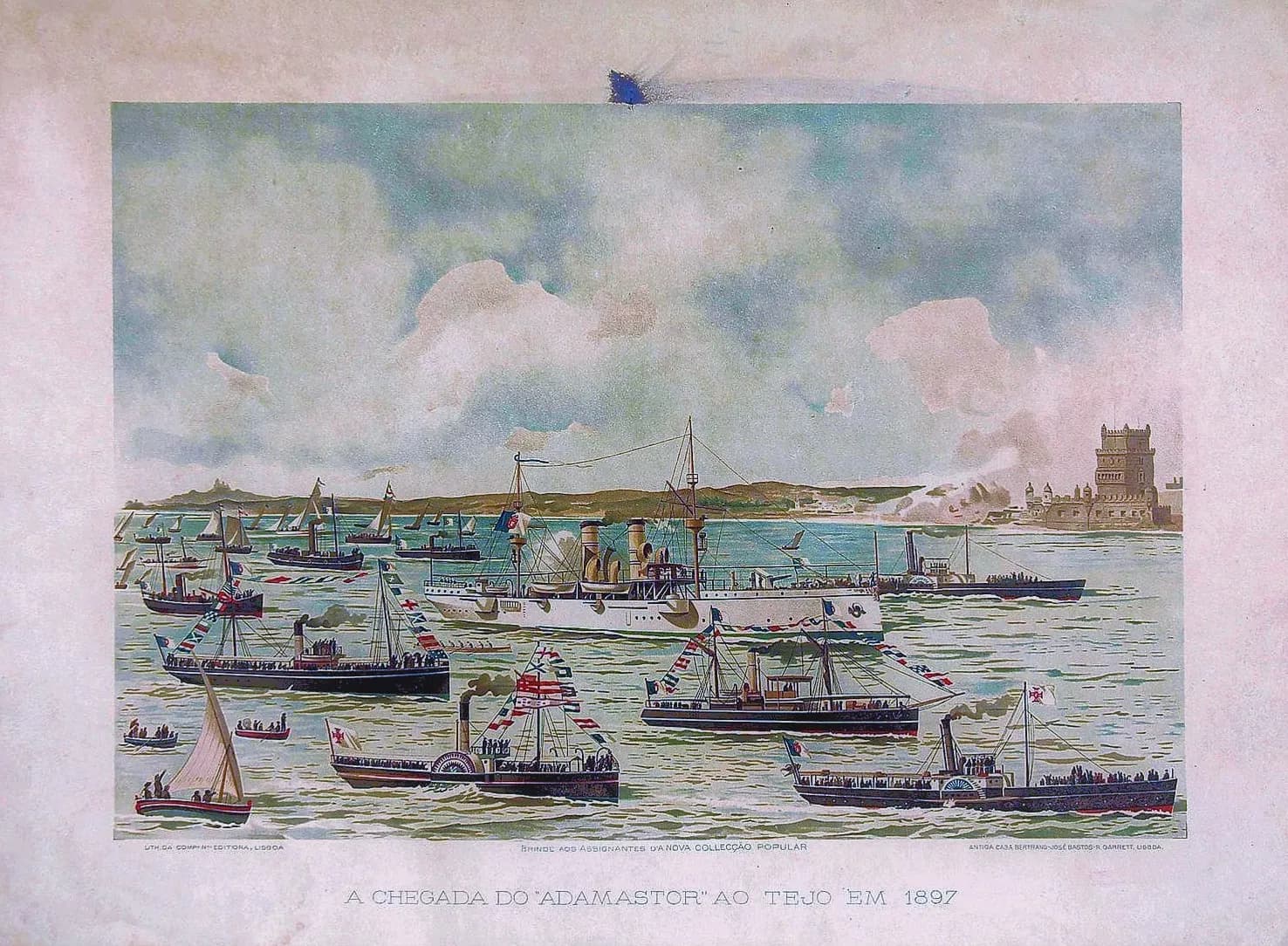
The national subscription did buy its warship. The cruiser Adamastor, built by the Orlando yard at Livorno, joined the Portuguese navy in 1897. On 4 October 1910 she fired the three shots that signalled the start of the revolution.
Why it still matters
The treaty of 1891 drew the borders that still separate Mozambique from Malawi, Zambia and Zimbabwe. Two European governments signed it. The Makololo, Ndebele, Shona and Barotse rulers whose lands it divided were not parties to it.
A Portuguesa is still the national anthem. The alliance with Britain survived too: in October 1899, during the Boer War, the two countries signed a declaration reaffirming the old treaties. But the memory of humiliation lasted. Writing in 1932, the Marquis of Lavradio said men of his generation still felt their faces redden at “the brutal blow of January 1890”.
15 November 1884
Berlin Conference opens
Its General Act of 26 February 1885 sets the rule of effective occupation on the coasts.
12 May and 30 December 1886
France and Germany recognise Portugal's interior claim
The Pink Map follows.
30 October 1888
Rudd Concession
Lobengula grants mining rights to Rhodes's partner.
14 August 1889
Treaties with Makololo chiefs at Katunga's
21 September 1889
Buchanan declares a British protectorate
Over the Makololo, Yao and Machinga countries.
8 November 1889
Mlauri attacks Serpa Pinto's column and is defeated
11 January 1890
Salisbury's memorandum
Portugal yields the same night.
12 January 1890
Riots in Lisbon
11 February 1890
The whistle campaign
20 August 1890
Convention signed in London
Never ratified; the government falls in September.
14 November 1890
Modus vivendi
31 January 1891
Republican revolt in Porto crushed
11 June 1891
Treaty signed in Lisbon
Ratifications exchanged on 3 July.
FAQs
What was the British Ultimatum of 1890?
It was a memorandum from Lord Salisbury's government, delivered in Lisbon on 11 January 1890, demanding that Portugal order all its forces out of the Shire valley, the Makololo country and Mashonaland, in today's Malawi and Zimbabwe. If no satisfactory answer came that evening, the British legation would leave Lisbon. Portugal gave way the same night.
What was the Pink Map?
The Mapa Cor-de-Rosa was a map of 1886 on which Portugal coloured pink a belt of land from Angola to Mozambique that it claimed. France and Germany recognised the claim in 1886, but Britain did not, and it clashed with Cecil Rhodes's plans and with Scottish missions near Lake Nyasa.
Why did Portugal give in so quickly?
Britain was far stronger, and the government argued that resisting would only lead Britain to seize more Portuguese colonies. Germany, the one power that had backed the Portuguese claim, was seeking good relations with Britain. Britain also refused Portugal's request for mediation or arbitration.
Did the Portuguese national anthem originally say “against the British”?
Probably not. A Portuguesa was written in protest at the Ultimatum, and a popular story says its refrain first said “contra os bretões”, against the Britons. Visão reports that the printed 1890 version already said “contra os canhões”, against the cannons, and the historian Rui Ramos calls the Britons version a legend.
How did the Ultimatum lead to the Republic?
Both monarchist parties were blamed, one for accepting the ultimatum and the other for signing the treaty of August 1890, and both repressed the protests. The republicans presented themselves as the true patriots, won three seats in Lisbon in 1890 and attempted a revolt in Porto in January 1891. The monarchy fell on 5 October 1910.
On the timeline
Open the timelineNearby moments from regeneration and the last kings (1851–1910).
Birth of Fernando Pessoa in Lisbon. Educated in Durban and steeped in English-language literature, he would invent dozens of 'heteronyms' — Alberto Caeiro, Ricardo Reis, Álvaro de Campos and others — and is now considered one of the most significant literary figures of the 20th century. His masterwork 'Livro do Desassossego' was published only decades after his death.
Death of Eduardo Coelho, the Coimbra-born typesetter turned journalist who in December 1864 co-founded the 'Diário de Notícias' with the printer Tomás Quintino Antunes. He ran it until his death; still published today, the 'DN' is regarded as Portugal's newspaper of record.
King Luís I dies at the Citadel of Cascais at the age of 50. A translator of Shakespeare, he had reigned for almost 28 years and was succeeded by his son Carlos I.
The British Ultimatum of 1890
Lord Salisbury's government delivers the British Ultimatum, demanding that Portugal pull its forces out of the Shire valley and Mashonaland, lands it claimed in the 'Pink Map' linking Angola and Mozambique. Lisbon's swift capitulation is felt as a national humiliation and fuels the republican movement that would topple the monarchy twenty years later.
Death of Camilo Castelo Branco at his home in Seide, near Vila Nova de Famalicão. Facing progressive blindness from neurosyphilis and overwhelmed by years of personal misfortune, the prolific Romantic novelist takes his own life with a revolver. His vast catalogue — more than 260 works, including 'Amor de Perdição' — secures his reputation as one of the founders of the modern Portuguese novel.
The Coliseu dos Recreios, Lisbon's great iron-domed performance hall on the Rua das Portas de Santo Antão, is inaugurated with a performance of Franz von Suppé's operetta 'Boccaccio'.
In the aftermath of the British Ultimatum, Portugal and Britain sign the Treaty of London defining the frontiers of Angola and Mozambique; public outrage prevents its ratification in Lisbon, brings down the government, and forces its replacement by a new treaty in 1891.
Coming up in history
All long reads
15 sources
Archives, scholarship and reporting this article was checked against.
- 1
Política externa e política interna no Portugal de 1890: o Ultimatum Inglês, by Nuno Severiano TeixeiraAnálise Social, vol. XXIII (98), 1987, pp. 687–719
- 2
British and Portuguese Attitudes Towards the British Ultimatum of 1890, by Maria Teresa Pinto CoelhoBritish Historical Society of Portugal, Report 21 (1994)
- 3
Lord Salisbury's 1890 Ultimatum to Portugal and Anglo-Portuguese Relations, by Teresa Pinto CoelhoSt John's College, Oxford / Universidade Nova de Lisboa (conference paper)
- 4
The Map of Africa by Treaty, 3rd edition, vol. III, by Sir Edward HertsletHis Majesty's Stationery Office, 1909 (digitised by Internet Archive)
- 5
- 6
- 7
The Barotseland Boundary Case (Great Britain, Portugal), award of 30 May 1905United Nations, Reports of International Arbitral Awards, vol. XI, pp. 59–69
- 8
- 9
- 10
- 11
History of Robert Gascoyne-Cecil, 3rd Marquess of SalisburyGOV.UK, Past Prime Ministers
- 12Guilherme d'Oliveira Martins: “O que distingue e une a Geração de 70 é a ideia de modernizar Portugal”Diário de Notícias, 11 August 2025
- 13
Era a pensar nos bretões, mas a marcha é contra os canhões: a história do hino nacional, composto ao jantar, entre a sobremesa e um caféVisão, 14 January 2023
- 14
“Bretões” ou “canhões”? A história do hino de PortugalRFM
- 15
Cruiser AdamastorMuseu de Marinha, Portuguese Navy
Image credits
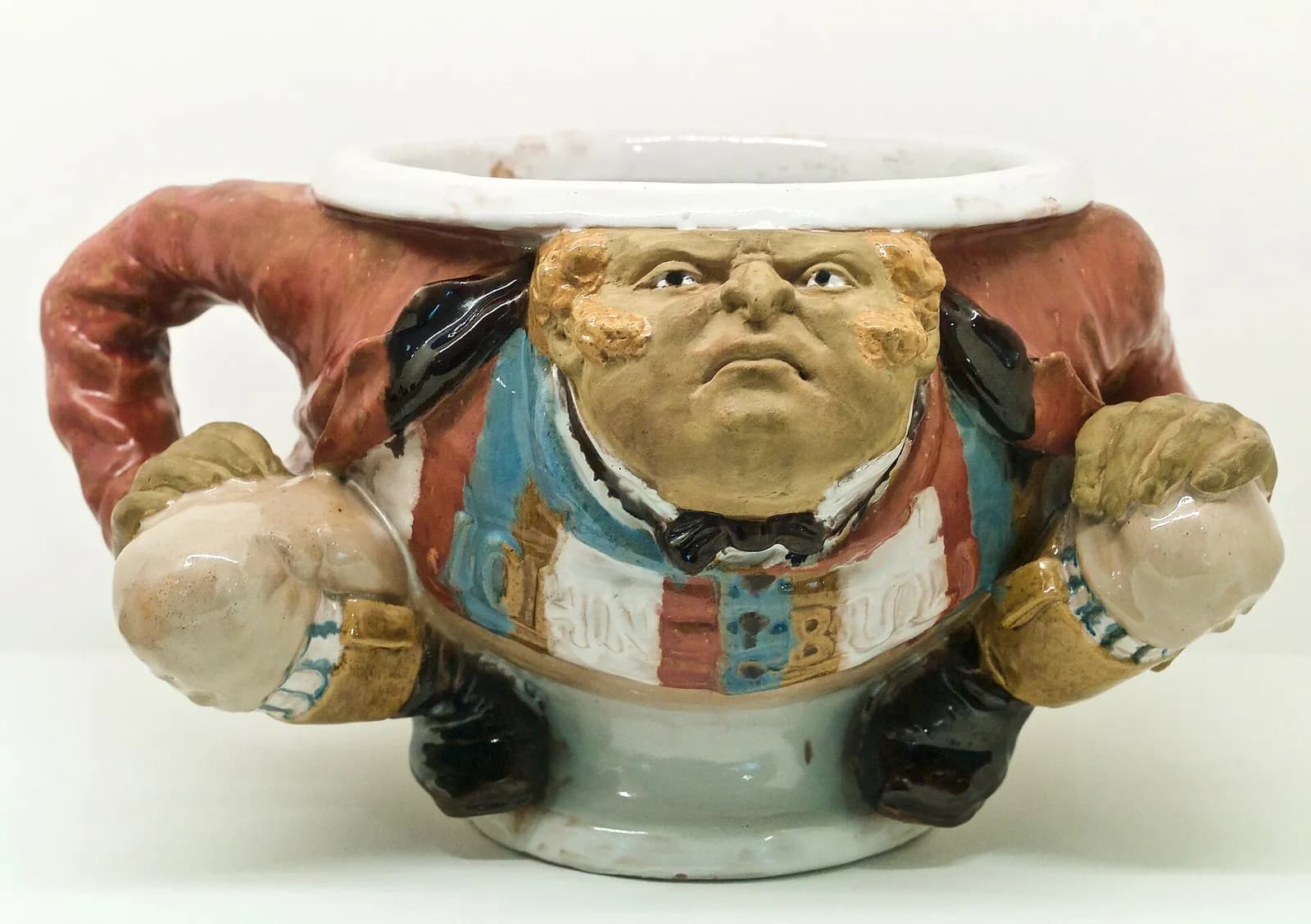
- A chamber pot in the shape of John Bull, the cartoon Englishman, by Rafael Bordalo Pinheiro, made at the Caldas da Rainha faience factory and dated 1890, the year of the Ultimatum, which Bordalo mocked in his cartoons all that year. It is now in the Museu Bordalo Pinheiro in Lisbon. Pedro Ribeiro Simões from Lisboa, Portugal, CC BY 2.0, via Wikimedia Commons.
- Alexandre de Serpa Pinto (standing, left) with the African survivors of his 1877 to 1879 crossing of the continent, photographed about 1879. Their names were not recorded with the picture. Unknown author, Public domain, via Wikimedia Commons.
- The Carta da Africa Meridional Portugueza of 1886, the original Pink Map. The pale pink wash joining Angola to Mozambique marks the land Portugal claimed. Sociedade de Geografia, Public domain, via Wikimedia Commons.
- Chief Kasisi of the Makololo, from the photograph collection of the Society of Malawi. The date of the picture is not recorded. Society of Malawi, Historical and Scientific, CC BY-SA 4.0, via Wikimedia Commons.
- Lord Salisbury, British Prime Minister and Foreign Secretary in 1890, photographed by the London Stereoscopic and Photographic Company, probably in 1886. London Stereoscopic and Photographic Company, restored by Adam Cuerden, Public domain, via Wikimedia Commons.
- The cruiser Adamastor, paid for by the national subscription of 1890, arrives in the Tagus in 1897, in a print given to subscribers of a Lisbon publisher's popular series. Unknown author, Public domain, via Wikimedia Commons.