

Isabel of Portugal and the Golden Fleece: Bruges, 10 January 1430
A Portuguese princess crossed a winter sea to marry the Duke of Burgundy. At the wedding feast he founded an order of knighthood that still exists, and she became one of the shrewdest negotiators of her century.
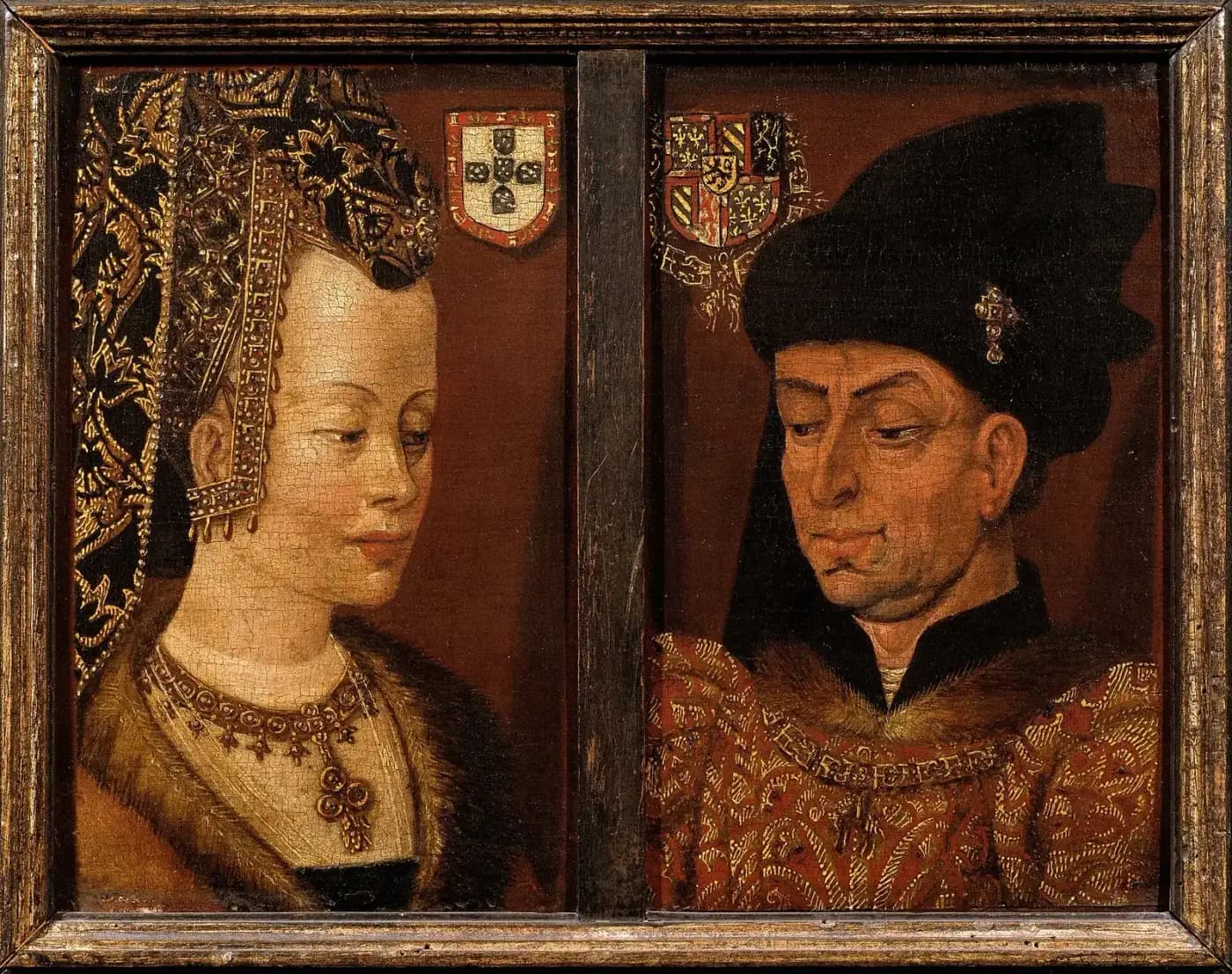
At a glance
- On 10 January 1430, during the Bruges festivities for his wedding to Isabel of Portugal, Philip the Good, Duke of Burgundy, founded the Order of the Golden Fleece, a brotherhood of 24 knights under his leadership.
- Isabel, born in 1397, was the daughter of João I and Philippa of Lancaster and the sister of the princes Camões called the ‘Illustrious Generation’, among them Henry the Navigator.
- Jan van Eyck travelled to Portugal with the duke's embassy in 1428 and painted her portrait at Avis early in 1429. The painting is lost.
- She sailed from Lisbon on 8 October 1429 with 14 ships and about 2,000 people, reached Sluis in Flanders on Christmas Day after storms scattered the fleet, and married Philip there on 7 January 1430.
- As duchess she governed in his absence and negotiated with France and England, including the trade agreement of 1439. She died at Aire-sur-la-Lys on 17 December 1471, aged 74. The order survives in a Spanish and an Austrian branch.
Christmas Day at Sluis
Around midday on Christmas Day 1429, a Portuguese fleet sailed into the harbour of Sluis, the port of Bruges on the Flemish coast. On board was Isabel, the 32-year-old daughter of King João I of Portugal, married by proxy five months earlier to Philip, Duke of Burgundy. She had left Lisbon in October. For weeks nobody in Flanders had known where she was, and rumours spread that she had come to grief on the way.
She came ashore the next morning, the feast of Saint Stephen, among barges hung with cloth and the noise of trumpets and minstrels. The crowd on the quay was so thick that there was hardly room to walk, and woollen cloth was laid on the ground all the way from the landing place to her lodgings.
Philip visited her several times. On 7 January 1430, at about six in the morning, in her lodgings at Sluis, the Bishop of Tournai said Mass and married them in person, with her brother Fernando, her nephew the Count of Ourém and the Bishop of Évora present on her side. That afternoon she went by water to Damme. The next day, a Sunday, she landed near the gates of Bruges, where Philip had a litter covered with cloth of gold waiting for her.
Days of feasting followed. Before they ended, Philip announced a new order of chivalry, the Golden Fleece. Isabel, for her part, would become one of the busiest negotiators in Burgundian politics.
A princess of the House of Avis
Isabel was born in Évora in 1397, the sixth of eight children of João I, founder of the House of Avis, and his English queen, Philippa of Lancaster, granddaughter of Edward III. Her brothers included Duarte, the future king, Pedro, later regent, and Henrique, the prince remembered as Henry the Navigator. Luís de Camões later called them the ‘ínclita geração’, the Illustrious Generation.
Philippa died in 1415, the year Portugal took Ceuta. From then until Duarte married in 1428, Isabel was the only princess living at her father's court, and she carried out many of the duties that would normally fall to a queen. She was past thirty when she married, late for a princess, and brought experience of government and close kinship with England's Lancastrian kings.
Philip, born in 1396, had ruled Burgundy since 1419. His lands ran from the duchy of Burgundy around Dijon to the cloth towns of Flanders and lived on wool, cloth, wine and grain, though for Burgundy itself he was a vassal of the French crown. He had married twice, to Michelle of France, who died in 1422, and to Bonne of Artois, who died in 1425, and had no legitimate heir.
A painter in the embassy
On 19 October 1428 Philip's embassy sailed from Sluis in two Venetian galleys. It was led by Jean, lord of Roubaix, his first chamberlain, with Baudouin de Lannoy, governor of Lille, the squire André de Toulongeon and the canon lawyer Gilles d'Escornaix. With them went the duke's valet de chambre and painter, Jan van Eyck.
The voyage was slow. They waited at Sandwich until 13 November for two more galleys from London, then contrary winds drove them into Plymouth and Falmouth, and only on 2 December did they head south. They reached Lisbon on 18 December, only to find the king and the princes in the Alentejo, preparing to receive Duarte's bride, Leonor of Aragon. The envoys waited at Arraiolos until 12 January 1429, when João summoned them to Avis. The next day he heard them in council with his sons and handed the negotiations to Duarte and his brothers.
“the said ambassadors, by one master Jan van Eyck, valet de chambre of my said lord of Burgundy and an excellent master in the art of painting, had the likeness of my said lady the Infanta Isabel painted very much to the life.”
Around 12 February the ambassadors sent four messengers home, two by sea and two by land, with letters and the portrait. Weale, who edited the account, concluded that there were two portraits, one for each pair of messengers, and later historians agree. Neither survives. While they waited, Roubaix, Lannoy and Toulongeon rode off on pilgrimage to Santiago de Compostela and on to the courts of Castile and Granada.
On 4 June, at Sintra, one of the messengers came back with the duke's answer. The terms were settled there within a week. The marriage contract was signed before a notary in Lisbon on 23 July 1429, the date on the deed itself. On the Sunday morning that followed, at about seven, Roubaix took Isabel as Philip's wife by proxy in the royal castle, in front of the king and four of her brothers. The embassy's account puts the signing on the 24th and the proxy wedding on ‘Sunday the 25th’, but in 1429 the 25th fell on a Monday, so the dates in the published deed fit better.
João promised a dowry of 154,000 gold crowns, of which 100,000 were to be deposited with money-changers in Bruges and paid once the marriage was solemnised. He would also pay for her clothes, jewels and journey. A receipt for the full sum was issued on 25 October 1433.
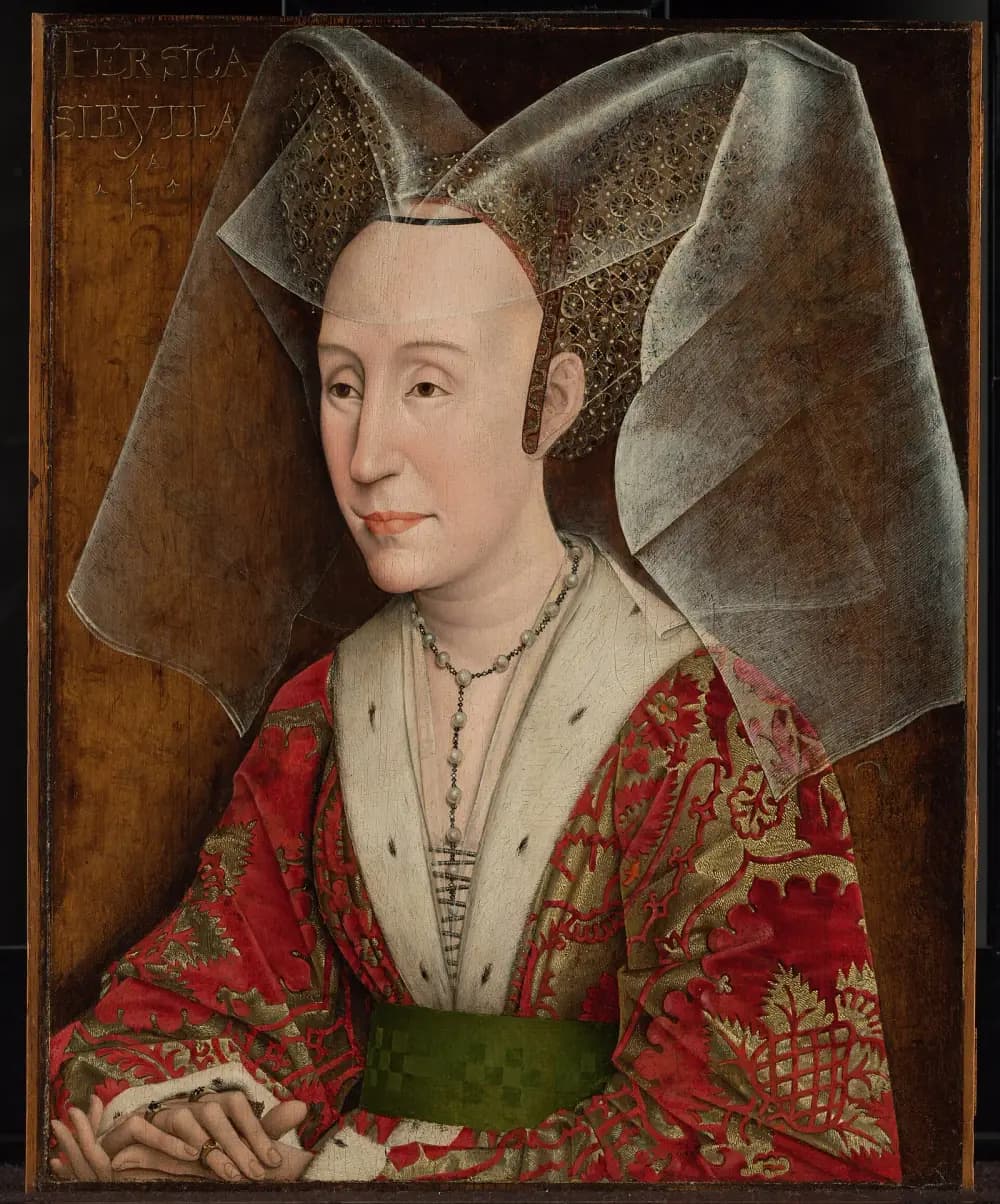
Fourteen ships and a winter sea
Duarte gave a farewell supper for his father and sister on 26 September in Lisbon, in a hall of the royal galley yards hung with tapestries, and knights jousted in the Rua Nova for two days. On 30 September the king took his daughter aboard her ship. The other vessels were not ready, and she stayed on board, visited by her family, for more than a week.
On 8 October she sailed with her brother Fernando, her nephew the Count of Ourém and about 2,000 people in fourteen large ships. The voyage took eleven weeks, and storms scattered the fleet.
8 October
Leaves Lisbon
Fourteen ships anchor off Restelo the next day.
13 October
Puts to sea from Cascais
Contrary winds drive the fleet back on the 15th; it sails again on the 17th.
22 October
Takes refuge at Viveiro, Galicia
Only four of the fourteen ships are still with her; one more arrives days later.
6–9 November
Sails on, then shelters at Ribadeo
The sick lord of Roubaix leaves her ship; on 25 November the fleet sails on with him aboard a Florentine galley bound for Flanders.
29 November
Reaches Plymouth
Roubaix lands at Sluis on 6 December and brings the duke news that she is safe.
25 December
Arrives at Sluis
She lands on 26 December.
The Bruges feast and the new order
Bruges had hung its main streets with rich cloth and tapestries. When Isabel landed near the city on 8 January, the burghers came out to meet her with 164 trumpeters. Philip's sisters, the duchesses of Bedford and Cleves, were there, with the Bishop of Liège and much of the Burgundian nobility, changing their liveries each day.
The festivities lasted about eight days. The chronicler Enguerrand de Monstrelet described tables loaded with meat and wine, models of unicorns and other beasts spouting rose-water and wine, and jousting by knights and squires day after day. In his view the duke had never put on such a display at either of his earlier weddings. Monstrelet dated the solemn wedding in Bruges to 9 January; the embassy's account places the marriage itself at Sluis two days earlier.
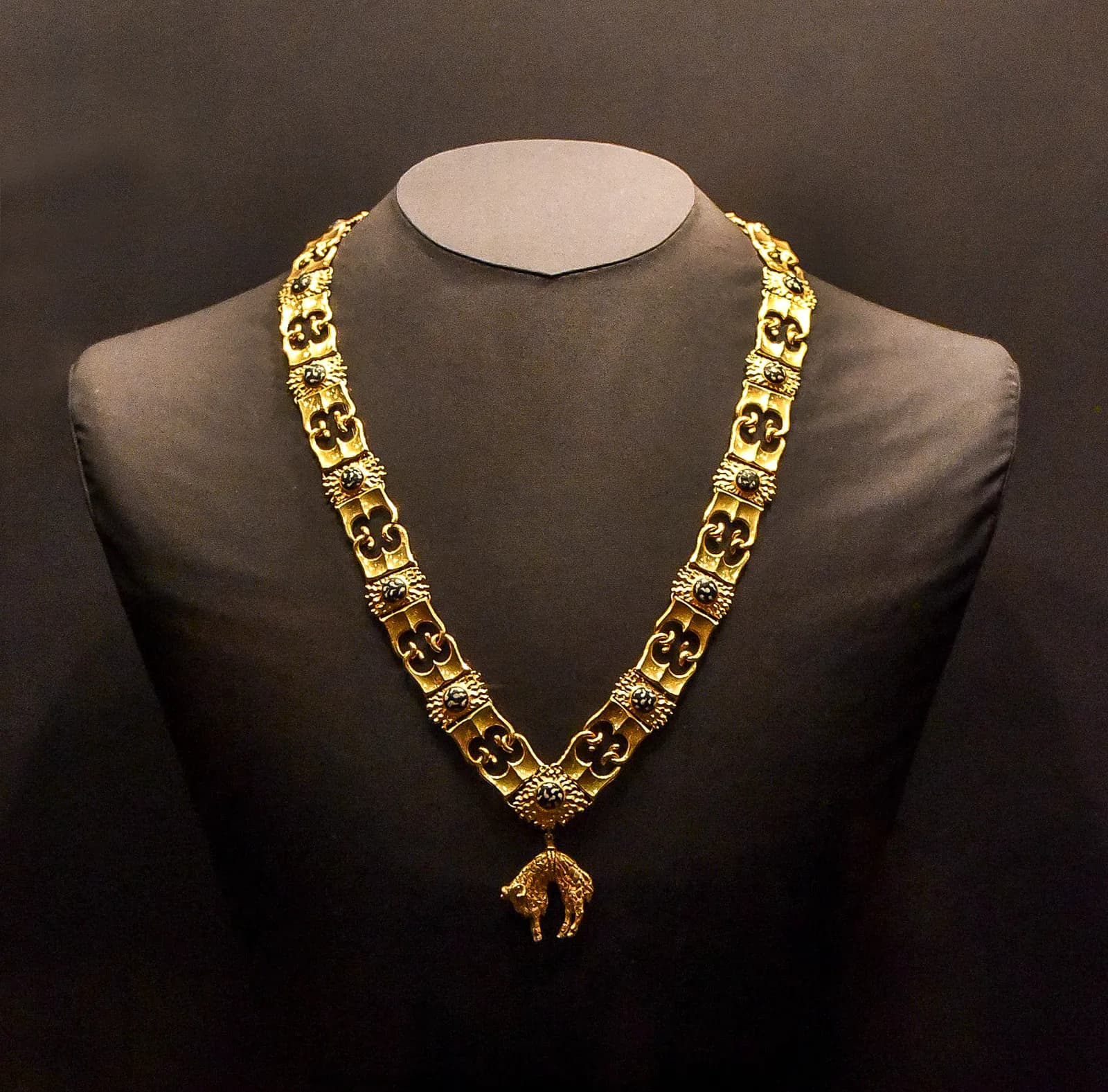
On 10 January Philip founded the Order of the Golden Fleece. Its badge was a golden ram's fleece hanging from a collar of fire-steels and flints, Philip's personal device. The fleece recalled the one Jason and the Argonauts carried off from Colchis, a story Burgundian readers knew from the romances of Troy.
“In this year the duke of Burgundy established, in honour of God and St. Andrew, whose cross he bore in his arms, an order or fraternity of twenty-four knights without reproach, and gentlemen from four generations.”
The first knights were great lords of the duke's lands, among them Roubaix and Baudouin de Lannoy, who had fetched the bride. Membership was for life and could not be inherited: when a knight died his heirs had to return the collar so that the duke could give it to someone else. A pagan hero who had broken his word to Medea sat awkwardly at the head of a Christian brotherhood, and the chancellor of the order, Jean Germain, later had the biblical Gideon put in Jason's place.
Philip's purpose was political. His lands were scattered, and their nobles owed him different loyalties. The order bound them to him personally, through oaths, ceremonies and a shared honour, and raised his standing beside the King of France and the Holy Roman Emperor. In the 1420s he had turned down the English Order of the Garter, which would have tied him to the English king by oath.
- Founded
- Bruges, 10 January 1430, during the duke's wedding festivities
- Founder and head
- Philip the Good, Duke of Burgundy, as sovereign of the order
- Patrons
- The Virgin Mary and Saint Andrew, patron of Burgundy
- Badge
- A golden fleece hanging from a collar of fire-steels and flints
- Members
- 24 knights besides the duke at first; the statutes of 1431 set 31
- Statutes
- Dated at Lille, 27 November 1431; most surviving copies give the 66-article version revised in 1446
- Meetings
- Chapters on Saint Andrew's Day, 30 November, until 1445; the first at Lille in 1431
The statutes followed at the first chapter, held at Lille in November 1431. Their first article fixed the order at 31 knights, the sovereign among them, and four officers ran its business: a chancellor, a treasurer, a king of arms and a secretary. Each new knight received the collar and his own copy of the statutes, which bound him by a solemn oath.
The duchess who governed
Isabel did not wait long for responsibility. When Philip left for Dijon on 21 January 1432, she was given authority to govern the Low Countries with a council at Ghent. She was pregnant, and her first son, Antoine, was gravely ill; she was in council and could not be with him when he died. In 1433 she had another son, Charles, who was made a knight of the Golden Fleece as a baby at the chapter held at Dijon that year.
Her household began with 260 people to feed and reached a peak of 480 in 1445, by Monique Sommé's count from the ducal accounts; Sommé is also cited for a total of 320 people when Philip set it up in February 1430, about a third the size of his own. Many of her people were Portuguese. She signed her charters ‘Ysabel, daughter of the king of Portugal’ before her Burgundian title.
The marriage was not a romance. Philip had 33 known mistresses and 26 acknowledged illegitimate children, and Isabel took several of both into her own circle. Sommé worked out from their itineraries that the couple spent about 55 per cent of their time together, and called the relationship ‘a long friendship’.
Her family background made her useful in the long war between France and England. At the Congress of Arras in 1435 she held talks with the Pope's envoy, Cardinal Albergati, and then with the English envoy, her uncle Cardinal Beaufort. The treaty signed on 21 September 1435 reconciled Philip with Charles VII of France and soon brought Burgundy into open war with England.
The break with England brought a trade war and piracy that hurt Flanders. Philip's attack on Calais failed in 1436, and that August the rebels of Bruges stopped Isabel at the city gate, threw her baggage on the ground and held her for hours. In January 1439 she met Beaufort near Gravelines, and from July to September she mediated at a peace conference at Oye, between Gravelines and English Calais.
The peace talks failed, but the trade talks did not. In the autumn of 1439 envoys meeting at Calais agreed a three-year truce for trade and fishing between England, Ireland and Calais on one side and Brabant, Flanders and Mechelen on the other. Henry VI's writ ordering it proclaimed in London described it as concluded with the Duchess of Burgundy; it ran on land from 29 September and at sea from 1 November.
On 21 January 1440 the truce was extended to 1 November 1447, and a further truce with England followed on 23 April 1443. The Flemish towns paid both Beaufort and his niece handsomely for their work.
| Date | Where | What she did |
|---|---|---|
| 1432 | Low Countries | Governed with a council at Ghent while Philip was in Burgundy |
| 1433–1434 | Duchy of Burgundy | Governed and raised troops during the war with France |
| 1435 | Arras | Held talks with cardinals Albergati and Beaufort before the peace with France |
| 1436–1438 | Bruges | Detained by rebels in 1436; later received the city's submission |
| 1439 | Gravelines and Oye | Mediated peace talks with Beaufort; secured the Anglo-Flemish trade truce |
| 1440 | Gravelines | Raised money for the ransom of the Duke of Orléans and received him on 11 November |
| 1441 | Laon | Met Charles VII to press Philip's complaints |
| 1443 | Through envoys | Concluded a further truce with England, dated 23 April |
| 1467 | Burgundy and England | Negotiated the terms of her son Charles's marriage to Margaret of York |
Dates and roles as given by Parisoto (2011), largely after Monique Sommé (1998).
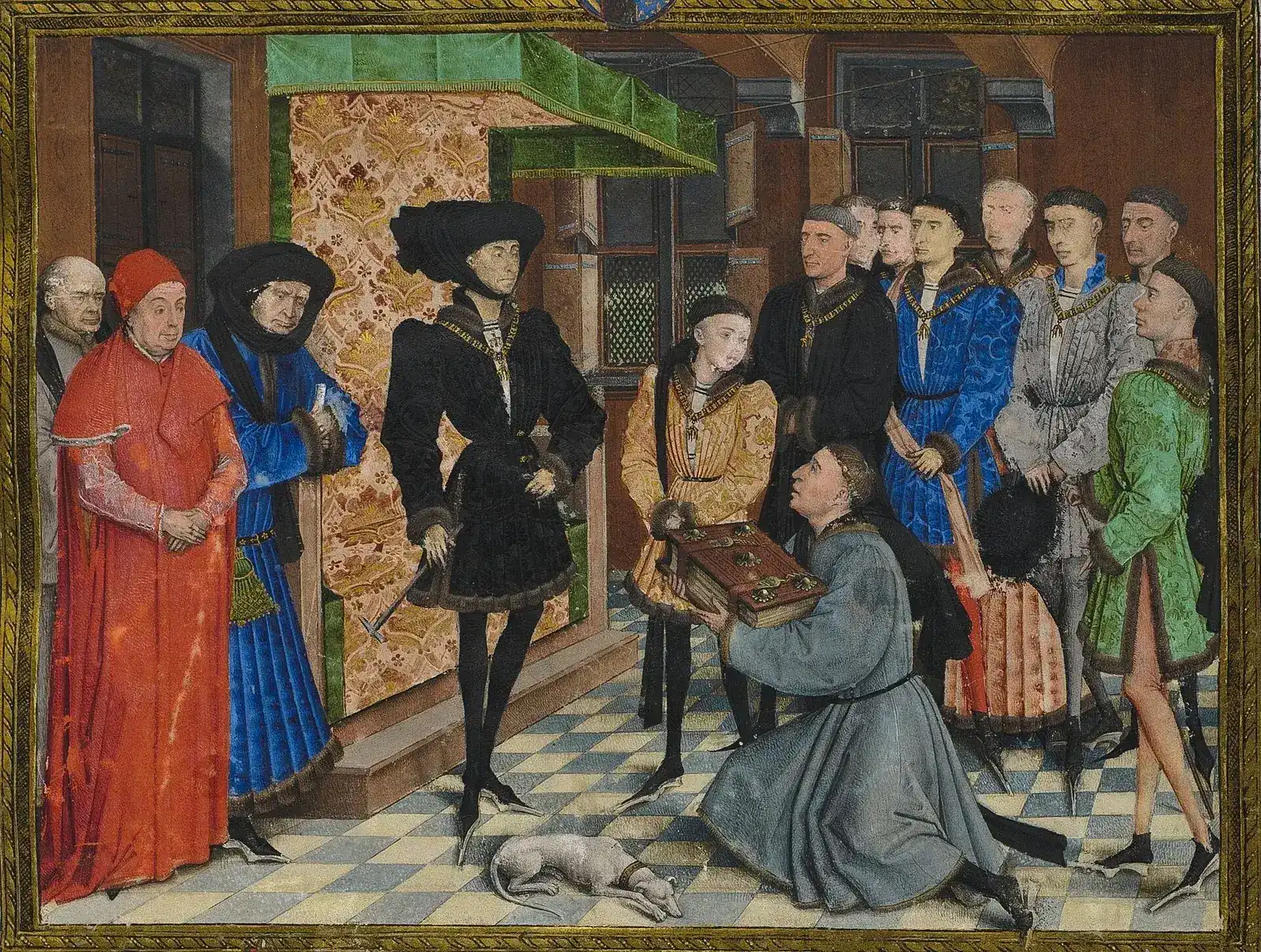
Alfarrobeira, retreat and death at Aire
Isabel never stopped acting for her Portuguese family. In May 1449 her brother Pedro, the former regent, was killed fighting the forces of his nephew Afonso V at Alfarrobeira, near Alverca; his body was left unburied and his children's property seized. She had a Mass said for him and sent an embassy under Jean Jouffroy to plead with the king. When that failed she took three of Pedro's children into Burgundy: Jaime, who reached Bruges in January 1450 and became a cardinal, João and Beatriz.
João, styled Duke of Coimbra, received the collar of the Golden Fleece at the chapter of 1456 in The Hague and married Charlotte of Lusignan, of the royal house of Cyprus, before dying suddenly in 1457. Beatriz married Adolf of Cleves, lord of Ravenstein, a nephew of the duke, in 1453, with Isabel paying for the wedding. None of the three reached the age of 30.
From the 1450s, once Charles's education was finished, she gave more of her time to charity and religious houses. In 1457 she withdrew from political life to La Motte-au-Bois, near Cassel, where she ran a kind of hospital for poor old women and the sick. Philip died in June 1467. She still came back for the big occasions, and in 1467 she negotiated the terms of Charles's marriage to Margaret of York.
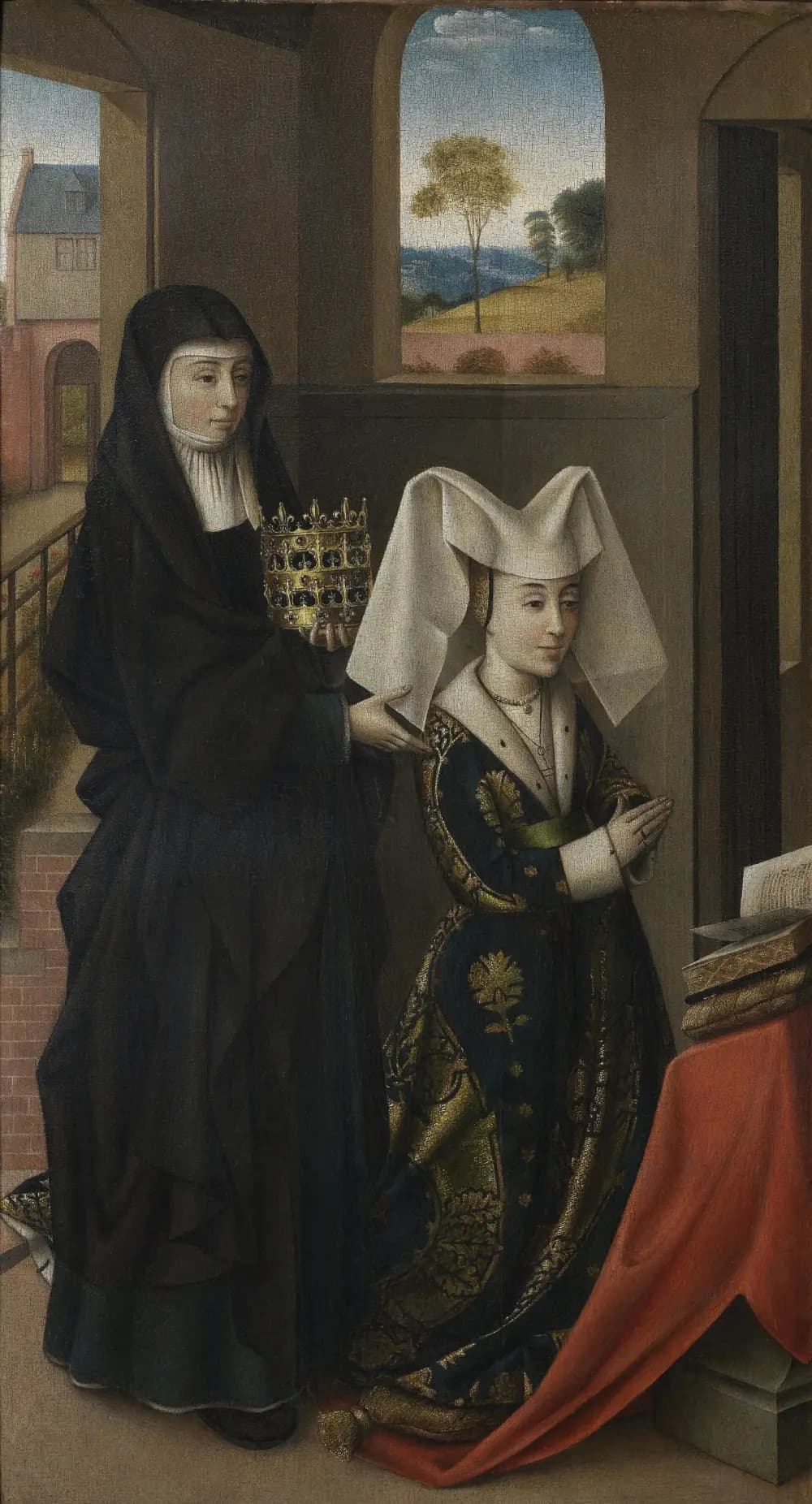
Isabel died at Aire, in Artois, on 17 December 1471, aged 74, and was buried, as the chroniclers record, in the corded habit of the Franciscans. She was laid to rest on 4 January 1472 in the Carthusian monastery of Gosnay, near Béthune. Two years later Charles had her moved to the dukes' burial place at the Charterhouse of Champmol in Dijon, beside Philip.
From Burgundy to the Habsburgs
Charles the Bold was killed at the battle of Nancy in 1477. His only legitimate daughter, Mary, married Archduke Maximilian of Austria, and the sovereignty of the order passed with her to the Habsburgs. The Imperial Treasury in Vienna, the Habsburgs' old treasure house, still holds the order's fifteenth-century vestments and its only surviving early collar.
Knights admitted at each chapter of the order, 1430–1461
knights
The founding promotion and the knights named at each of the first ten chapters, not counting Philip himself. The 1433 promotion included the infant Charles, and the 1456 one Isabel's nephew João of Portugal.
Show the data
| New knights | |
|---|---|
| 1430 Bruges | 24 |
| 1431 Lille | 2 |
| 1432 Bruges | 2 |
| 1433 Dijon | 8 |
| 1435 Brussels | 0 |
| 1436 Lille | 0 |
| 1440 Saint-Omer | 4 |
| 1445 Ghent | 6 |
| 1451 Mons | 6 |
| 1456 The Hague | 5 |
| 1461 Saint-Omer | 6 |
Under Charles V, Isabel's great-great-grandson, who took over the order in Brussels on 25 October 1516, the limit rose to 51 knights, and the collar went to kings across Europe, among them the kings of Portugal; Manuel I and João III were both members. Philip II moved its officers to Madrid.
When the last Spanish Habsburg, Charles II, died in 1700, both claimants to his throne, Philip V of Spain and the Habsburg Archduke Charles, later Emperor Charles VI, claimed to head the order. A treaty of 1725 tried to settle the matter, but after Charles VI died in 1740 his heirs ignored it, and the split has lasted ever since.
Both branches still exist. In Spain the king confers the collar; Felipe VI gave it to his daughter Leonor, heir to the throne, by royal decree of 30 October 2015. The Austrian branch is led by the head of the House of Habsburg: Otto von Habsburg until 2000, and since then his son Karl.
Why it still matters
Isabel's story shows the Illustrious Generation at work in northern Europe as well as at sea. While Henrique sent ships down the African coast, his sister negotiated at Arras, Gravelines and Laon. The Portuguese who followed her to Burgundy served as her ladies and servants, as soldiers in Philip's army and as shipwrights for his fleet.
Portuguese writers have complained since at least 1930 that she gets too little attention at home. The fullest modern study of her, by Monique Sommé, appeared in French in 1998, and a Coimbra dissertation of 2011 noted how rarely her name appeared in Portuguese university catalogues. The order founded at her wedding has outlasted both the Burgundian state and the Habsburg empire.
FAQs
Why is it called the Order of the Golden Fleece?
Its badge is a golden ram's fleece, recalling the fleece Jason and the Argonauts won in Colchis, a story Burgundians knew from the romances of Troy. Because Jason had broken his word to Medea, the order's chancellor later added the biblical Gideon, whose fleece was a sign from God, as a second model.
Was the order founded in 1429 or 1430?
On 10 January 1430 by modern reckoning. Writers in the Burgundian lands such as Monstrelet began the year at Easter, so for them a January date still belonged to 1429, which is why some books give that year.
Who was Isabel of Portugal?
The daughter of João I and Philippa of Lancaster, born in 1397 and sister of Duarte, Pedro and Henry the Navigator. She married Philip the Good in 1430, governed his lands in his absence, negotiated with France and England, and was the mother of Charles the Bold. She died at Aire-sur-la-Lys on 17 December 1471.
Does Jan van Eyck's portrait of Isabel survive?
No. The embassy's account records that van Eyck painted her ‘very much to the life’ at Avis early in 1429, and the portrait was sent to the duke in February, but it is lost. Later portraits of her as duchess, such as the workshop panel in the Getty Museum, show her some twenty years on.
Does the Order of the Golden Fleece still exist?
Yes, in two branches since the War of the Spanish Succession. The King of Spain heads the Spanish branch and confers its collar by royal decree; the head of the House of Habsburg leads the Austrian branch.
On the timeline
Open the timelineNearby moments from the age of discoveries (1415–1580).
Portuguese forces under King João I, accompanied by his sons including the young Prince Henry the Navigator, storm and capture the Moroccan city of Ceuta in a single day — the conquest that begins the Portuguese overseas empire.
At the request of King João I, the Pope appoints Prince Henry the Navigator administrator of the Order of Christ, the Portuguese successor to the Templars. The order's great wealth would help fund the voyages of exploration down the West African coast.
By royal charter, King João I abolishes the old Hispanic Era of Caesar and orders that documents in Portugal be dated by the Christian era of Anno Domini — the last Iberian kingdom to make the change.
Isabel and the Golden Fleece
In Bruges, Philip the Good, Duke of Burgundy, founds the Order of the Golden Fleece during the celebrations of his marriage to Isabel of Portugal, daughter of King João I and Philippa of Lancaster, who would become a leading figure of Burgundian diplomacy.
The future King Afonso V is born in Sintra, son of Duarte, then heir to the throne. Left king at the age of six, he would earn the nickname 'o Africano' for his conquests in Morocco.
King Duarte I of Portugal, known as 'the Eloquent' for his philosophical writings, dies of plague at Tomar. He was succeeded by his six-year-old son Afonso V, with Queen Leonor named regent under his will.
Death of Infante Fernando, 'the Constant Prince', in captivity in Fez, Morocco. Captured at the disastrous Tangier expedition of 1437 and offered as ransom for the Portuguese surrender of Ceuta, he chose to remain a prisoner rather than see his country lose its African foothold. His death after six years in chains turned him into a symbol of sacrificial chivalry, later immortalised in Calderón's play 'El príncipe constante'.
Coming up in history
All long reads
18 sources
Archives, scholarship and reporting this article was checked against.
- 1
Hubert and John van Eyck, their life and work (W. H. James Weale), with the contemporary narrative of the Burgundian embassy to Portugal, 1428–1430John Lane, London, 1908 (Internet Archive)
- 2
- 3
D. Isabel de Portugal, ínclita duquesa da Borgonha (1430-1471), diplomata europeia do século XV (Felipe Parisoto, MA dissertation)Faculdade de Letras, Universidade de Coimbra, 2011
- 4
L'ordre de la Toison d'orBnF Essentiels, Bibliothèque nationale de France (from the exhibition site Miniatures flamandes, 2011)
- 5
Statutes of the Order of the Golden Fleece, Low Countries, c. 1531 (manuscript description TM 538)Les Enluminures, Textmanuscripts
- 6
Review of M. Sommé, Isabelle de Portugal, duchesse de Bourgogne. Une femme au pouvoir au XVe siècle (Thérèse de Hemptinne)BMGN – Low Countries Historical Review
- 7
El Toisón de Oro: insignia heráldica y emblemática de la Monarquía Hispánica (Víctor Mínguez)Universitat Jaume I, in Anejos de Imago 1 (Studiolum)
- 8
O impacto de Alfarrobeira nas relações com o ducado da Borgonha (Manuel Ramos)História. Revista da FLUP, IV série, vol. 5 (2015), Universidade do Porto
- 9
D. Isabel, infanta de Portugal e duquesa de BorgonhaPortugal – Dicionário Histórico (Esteves Pereira and Guilherme Rodrigues, 1904–1915), arqnet.pt
- 10
Jan van Eyck and Portugal's ‘Illustrious Generation’, vol. 1 (Barbara von Barghahn), previewPindar Press, 2013 (publisher's preview)
- 11
Collane des Ordens vom Goldenen Vlies (collar of the Order of the Golden Fleece)Kunsthistorisches Museum Wien, Kaiserliche Schatzkammer
- 12
Representatives of the Order of the Golden Fleece visited our FoundationHabsburg Ottó Alapítvány (Otto von Habsburg Foundation), Budapest
- 13
- 14
Introduction (Cécile Vincent-Cassy and Murielle Gaude-Ferragu), in « La dame de cœur ». Patronage et mécénat religieux des femmes de pouvoir dans l'Europe des XIVe-XVIIe sièclesPresses universitaires de Rennes, 2016 (OpenEdition Books)
- 15
The Burgundian Inheritance and the Order of the Golden Fleece (selected masterpieces of the Secular Treasury)Kaiserliche Schatzkammer Wien, Kunsthistorisches Museum
- 16
Real Decreto 978/2015, de 30 de octubre, por el que se concede el Collar de la Insigne Orden del Toisón de Oro a Su Alteza Real doña Leonor de Borbón y Ortiz, Princesa de AsturiasBoletín Oficial del Estado, 31 October 2015
- 17
Portraits of Filips the Good and Isabella of Portugal (MSK Gent, inv. S-98)Art in Flanders (Flemish Art Collection)
- 18
Portrait of Isabella of Portugal, workshop of Rogier van der Weyden (J. Paul Getty Museum)Google Arts & Culture, from the J. Paul Getty Museum
Image credits
- Isabel of Portugal and Philip the Good, each under their coat of arms, in a double portrait painted in the Southern Netherlands in the sixteenth century, long after both had died. Museum of Fine Arts, Ghent. anonymous, Public domain, via Wikimedia Commons.
- Isabel as duchess, about 1450, painted in the workshop of Rogier van der Weyden, probably from a lost original; she did not sit for it. The inscription naming her the Persian Sibyl was added later. J. Paul Getty Museum, Los Angeles. Workshop of Rogier van der Weyden, Public domain, via Wikimedia Commons.
- A knight's collar of the Order of the Golden Fleece in the Imperial Treasury in Vienna: fire-steels alternate with enamelled flints, and the fleece hangs at the front. Photographed in 2023. Paul Hermans, CC BY-SA 4.0, via Wikimedia Commons.
- Philip the Good, in black and wearing the collar of the Golden Fleece, receives a translation of the Chronicles of Hainaut, around 1447–1448. The boy beside him is usually identified as Charles; several courtiers wear the collar too. Royal Library of Belgium. Rogier van der Weyden, Public domain, via Wikimedia Commons.
- Isabel at prayer, presented by Saint Elizabeth of Hungary, on a panel by Petrus Christus of about 1457–1460, the years of her retreat. Her features may be idealised. Petrus Christus, Public domain, via Wikimedia Commons.