

1807–1851
Invasions, Brazil and the Liberal Wars
As French troops invaded in November 1807, the royal family sailed for Brazil. Two more French invasions followed; the last was driven out in 1811, though the Peninsular War went on until 1814. A liberal revolution in Porto on 24 August 1820 led to the Constitution of 1822, and Brazil soon declared independence. Liberals then fought absolutists loyal to Dom Miguel in a civil war that ended at Évora-Monte in May 1834.
6 key moments · 67 in all
The fleet carrying the Portuguese royal family and court sails out of the Tagus for Brazil under British naval escort, a day before French troops reach Lisbon. Rio de Janeiro became the seat of the monarchy for thirteen years, the only time a European court ruled from one of its colonies.
The vanguard of General Junot's army, exhausted and ragged after a forced march through the hills of Beira, enters Lisbon unopposed the day after the royal fleet had sailed, beginning the first French occupation of Portugal, which ended after the defeat at Vimeiro the following August.
Two months after fleeing Napoleon's invasion, Prince Regent João signs a royal charter in Salvador da Bahia opening Brazil's ports to trade with friendly nations. The measure ends the colonial monopoly that obliged Brazil to trade only through Portugal and sets it on the road to independence.
The Portuguese Royal Family, having fled Lisbon to escape Napoleon's invasion, arrives in Rio de Janeiro aboard the royal fleet. Prince Regent João would govern the Portuguese Empire from Brazil for the next 13 years.
In Porto, the Spanish general Domingo Belestá, on hearing of the uprising against Napoleon in Spain, arrests the French governor, General Quesnel, and marches his 6,000 troops back to Galicia. The coup emboldens the Portuguese: revolt soon spreads across the north, and a Junta Provisional do Supremo Governo do Reino is formed in Porto under its Bishop, beginning organised resistance in the Peninsular War.
Fishermen and farmers of Olhão, in the Algarve, rise up against the French occupation force, forcing the small garrison to flee. A small caique crewed by 17 Olhão men — the 'Bom Sucesso' — would soon carry the news of the revolt across the Atlantic to the Portuguese court in Rio de Janeiro.
French troops under General Loison crush a Portuguese-Spanish force outside Évora and then brutally sack the city. Loison, who had lost an arm, was known as 'o Maneta' ('the one-handed'), and the savagery of his columns survives in the Portuguese expression 'ir para o Maneta' — to be done for.
An Anglo-Portuguese force under Sir Arthur Wellesley, the future Duke of Wellington, defeats General Delaborde's French troops at the Battle of Roliça — the first battle fought by the British army in the Peninsular War, on Portuguese soil north of Lisbon.
At the Battle of Vimeiro, Wellesley's Anglo-Portuguese army defeats General Junot's French forces, a victory that leads directly to the French evacuation of Portugal under the Convention of Sintra.
The Convention of Sintra is signed, by which the defeated French army under General Junot agrees to evacuate Portugal following the Battle of Vimeiro, ending the first French invasion — though its generous terms caused outrage in Britain.
As Marshal Soult's French army storms Porto during the second French invasion, panicking crowds fleeing across the Ponte das Barcas — the bridge of boats over the Douro — cause it to collapse, and thousands drown. A memorial on the Ribeira quay still recalls the disaster.
In a daring surprise attack, Arthur Wellesley — the future Duke of Wellington — ferries his troops across the Douro in commandeered wine barges and drives Marshal Soult's French army out of Porto in the Second Battle of Porto. The defeat ends Napoleon's second invasion of Portugal.
In Rio de Janeiro, the exiled Portuguese court signs the Strangford Treaty with Britain, its protector against Napoleon. British goods were to enter Brazil at a duty of just 15 per cent, less than the 16 per cent soon charged on goods from Portugal itself, an advantage that lasted until 1844.
Birth of Alexandre Herculano in Lisbon, who would become one of Portugal's greatest historians and novelists. His monumental 'History of Portugal' and historical novels helped define Portuguese national identity and historiography.
During the French siege of Almeida, a shell ignites a trail of gunpowder leading into the fortress's main magazine; the explosion kills some 600 defenders of the largely Portuguese garrison and forces its surrender the next day, opening the way for Masséna's invasion of Portugal.
At the Battle of Buçaco, Wellington's Anglo-Portuguese army repels repeated assaults by Marshal Masséna's invading French forces on the Buçaco ridge in central Portugal, inflicting some 4,500 casualties before withdrawing in good order to the Lines of Torres Vedras.
Masséna's invading French army comes up against the Lines of Torres Vedras near Sobral de Monte Agraço: a secret chain of forts and redoubts built on Wellington's orders to shield Lisbon. Unable to break through in a land stripped bare by scorched-earth tactics, the starving French held on for a month before falling back to Santarém.
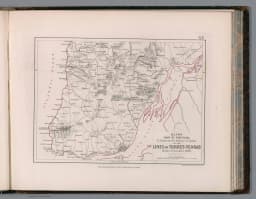 Long readThe Lines of Torres Vedras: where Masséna's march on Lisbon stopped, 1810
Marshal Masséna's starving French army abandons its lines at Santarém and begins its retreat from Portugal, pursued through central Portugal by Wellington's Anglo-Portuguese forces in a month of running rearguard fights.
In thick fog and driving rain on the Côa river, Wellington's Anglo-Portuguese army defeats General Reynier's corps at the Battle of Sabugal. Within days Masséna's exhausted army was back in Spain, ending the third French invasion of Portugal apart from the besieged garrison at Almeida.
At the Battle of Salamanca, an Anglo-Portuguese army of some 50,000 under the Earl of Wellington crushes Marshal Marmont's French Army of Portugal in roughly 40 minutes of devastating manoeuvre. Portuguese brigades — by now seasoned veterans of the Peninsular War — play a central role, and the victory clears the path for Wellington to liberate Madrid the following month.
At the Battle of Vitoria, in northern Spain, the Marquis of Wellington routs the army of King Joseph Bonaparte. The Anglo-Portuguese-Spanish force effectively ends French rule in Spain and opens the road to the invasion of France itself, with Portuguese brigades — veterans of six years of campaigning — playing a central role in the victory.
The Final Act of the Congress of Vienna is signed by every participating power except Spain. Article 105 expressly recognises Portugal's claim to Olivença and the other border territories ceded under the Treaty of Badajoz of 1801, though Madrid would never restore them.
With the royal court still in Rio de Janeiro after fleeing Napoleon, Prince Regent João raises Brazil from colony to kingdom, creating the United Kingdom of Portugal, Brazil and the Algarves. For a few years Rio was effectively the capital of the Portuguese world — until the 1820 revolution in Porto demanded the king's return and Brazil declared independence in 1822.
Queen Maria I dies aged 81 at the Carmo convent in Rio de Janeiro, where the court had fled from Napoleon. Portugal's first undisputed queen regnant is succeeded by her son João VI; in 1821 her remains are carried back to Lisbon and laid to rest in the Estrela Basilica.
Two years after the death of Queen Maria I, João VI is acclaimed King of the United Kingdom of Portugal, Brazil and the Algarves in Rio de Janeiro, home of the court since 1808. Ephemeral triumphal arches and days of festivities showcased Rio's transformation into a royal capital.
Birth of Queen Maria II (Maria da Glória) at the Palace of São Cristóvão in Rio de Janeiro — the only European queen born outside Europe. She reigned 1826–1828 and 1834–1853, and is remembered as 'Maria the Educator.'
Birth in Lisbon of Maria Severa Onofriana, the Mouraria singer regarded as the first great legend of fado. Her voice and her affair with the aristocratic Count of Vimioso made her a figure of popular myth; she died of tuberculosis at 26, and countless fados, a novel, a play and Portugal's first sound film, 'A Severa' (1931), tell her story.
The Liberal Revolution begins in Porto, where army officers and citizens demand a constitution and the return of King João VI from Brazil — the uprising that leads to Portugal's first constitutional monarchy.
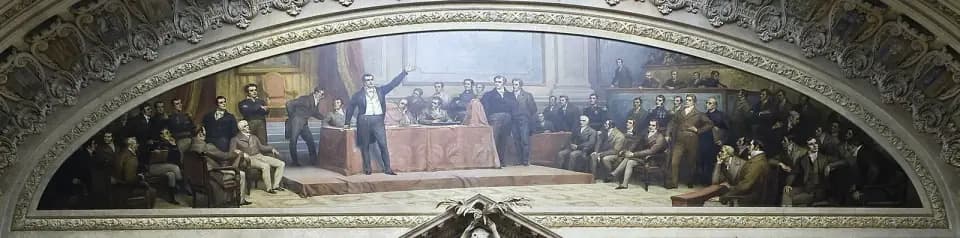
The Liberal Revolution that began in Porto on 24 August reaches Lisbon, where a military pronouncement backed by the populace rallies the capital to the constitutional cause, paving the way for Portugal's first constitution in 1822.
King João VI disembarks at Terreiro do Paço at noon and swears the bases of the new liberal constitution before the Cortes Gerais. The act formally extinguishes the Regency of the Kingdom and inaugurates Portugal's first constitutional period, which would unravel within two years.
On the 'Dia do Fico' (the 'I'm Staying' Day), Prince Regent Pedro defies orders from the Cortes in Lisbon to return to Portugal, reportedly declaring 'Diga ao povo que fico' — 'Tell the people I'm staying'. Eight months later he proclaimed Brazil's independence and became its first emperor.
On the banks of the Ipiranga stream near São Paulo, Prince Regent Dom Pedro proclaims Brazil's independence from Portugal with the celebrated 'Grito do Ipiranga', ending three centuries of Portuguese rule in Brazil.
The Constituent Cortes approve the Portuguese Constitution of 1822, the country's first constitution, which sought to end absolutism and establish a constitutional monarchy; King João VI swore his oath to it on 1 October.
On his twenty-fourth birthday, Prince Regent Pedro is acclaimed Constitutional Emperor and Perpetual Defender of Brazil at the Campo de Santana in Rio de Janeiro, a month after the Cry of Ipiranga had proclaimed the country's separation from Portugal.
At Pirajá, outside Salvador da Bahia, Brazilian independence forces defeat General Madeira de Melo's Portuguese troops in the biggest battle of Bahia's war of independence, involving some 10,000 men. Legend says the tide turned when the bugler Luís Lopes sounded 'cavalry, advance and behead' instead of the ordered retreat — though the Brazilians had no cavalry.
Prince Miguel launches the Vilafrancada in Vila Franca de Xira, an absolutist military coup against the liberal Constitution of 1822 that ends Portugal's first constitutional experiment and restores the traditional powers of King João VI.
The Abrilada (April Revolt): Infante Miguel, commander-in-chief of the army, leads an absolutist revolt in Lisbon against the liberal-leaning government, holding his own father, King João VI, under virtual siege. Within weeks the king, backed by the diplomatic corps, regained control and sent Miguel into exile.
By the Treaty of Rio de Janeiro, mediated by Britain, Portugal formally recognises the independence of Brazil, ending the Brazilian war of independence.
King João VI dies in Lisbon under suspicious circumstances (possible arsenic poisoning), triggering a succession crisis between his sons Pedro (Emperor of Brazil) and Miguel, which would lead to the Portuguese Civil War.
In Rio de Janeiro, Pedro IV — also Emperor Pedro I of Brazil — grants Portugal the Constitutional Charter, a more conservative liberal constitution with a hereditary Chamber of Peers. With interruptions, it would remain in force until the fall of the monarchy in 1910.
Death in Rio de Janeiro of Leopoldina of Austria, wife of Pedro I and Empress of Brazil, aged 29. A Habsburg archduchess with a passion for natural science, she is credited by many historians as one of the chief architects of Brazil's independence in 1822; she was the mother of Portugal's Queen Maria II and of Brazil's last emperor, Pedro II.
The 'Belfastada': the steamer 'Belfast' lands a party of 29 exiled liberals led by the Marquis of Palmela at Matosinhos, near Porto, to take charge of the city's revolt against the absolutist Miguel I. With Miguelist troops closing in, they soon abandon the rebellion and flee aboard the same ship — a fiasco that gives the episode its mocking name and begins years of Liberal exile.
The Cortes of the Three Estates, summoned by Miguel of Braganza, close with a formal act ('assento') declaring him the rightful King Miguel I, in defiance of the Constitutional Charter granted by his brother Pedro IV and of the claim of Pedro's daughter Maria. The usurpation leads to the Liberal Wars, which pit absolutists against constitutionalists until 1834.
Félix de Avelar Brotero, Portugal's foremost botanist, dies in Belém, Lisbon. Having fled to Paris when he fell under suspicion of the Inquisition, he returned to teach botany at Coimbra, wrote the landmark 'Flora Lusitanica' (1804) and later directed the Ajuda Botanical Garden.
Birth of João de Deus Ramos in São Bartolomeu de Messines, Algarve. He would become one of Portugal's greatest lyric poets and revolutionise literacy education with his 'Cartilha Maternal' method.
Pedro I abdicates the Imperial Crown of Brazil in favour of his five-year-old son Pedro II, adopting the title of Duke of Bragança. He returns to Portugal to lead the liberal cause in the Civil War against his brother Miguel.
Aboard the frigate 'Rainha de Portugal', the former Emperor of Brazil Pedro IV lands at Mindelo, north of Porto, with 7,500 men. The disembarkation, defended only by a handful of Miguelist patrols, opens the Liberal phase of the Portuguese Civil War that would end two years later at Evoramonte.
During the Liberal Wars, the Liberal squadron under the British-born Charles Napier inflicts a decisive defeat on the Miguelist fleet at the Battle of Cape St. Vincent. The victory opens the Algarve coast and the road to Lisbon to the constitutionalist forces of Pedro IV.
Battle of the Cova da Piedade (or Combat of Cacilhas). The Liberal forces of the Duke of Terceira, having marched up from the Algarve through the Alentejo, defeat the Miguelist army of General Telles Jordão on the south bank of the Tagus across from Lisbon. The victory leaves the capital undefended and decides the outcome of the Portuguese Civil War.
The day after the victory at Cova da Piedade, with the Miguelist forces having withdrawn from the capital, the Liberal commander Duke of Terceira enters Lisbon unopposed to the cheers of crowds. The fall of the capital restores the cause of Queen Maria II and effectively decides the Portuguese Civil War.
Liberal forces under the Duke of Terceira rout Dom Miguel's army on the heights of Asseiceira near Tomar, taking some 1,400 prisoners. The last and decisive battle of the Liberal Wars forces Miguel to capitulate ten days later at Évoramonte.
The Convention of Evoramonte is signed, ending the Portuguese Civil War (Liberal Wars). Miguel I agrees to abdicate and go into exile, securing the throne for the young Queen Maria II and establishing constitutional monarchy in Portugal.
The Liberal government publishes the decree, drafted by justice minister Joaquim António de Aguiar, abolishing all male religious orders in Portugal. The property of more than 500 monasteries passes to the state — which is why so many of Lisbon's old convents now house parliament, ministries and barracks — and earns Aguiar the nickname 'Mata-Frades' ('Friar-Killer').
Following his defeat in the Liberal Wars and the Convention of Evoramonte, the former King Miguel I embarks at Sines aboard a British warship bound for exile in Genoa. His departure ends absolutism in Portugal and consolidates the constitutional monarchy of his niece, Queen Maria II.
Pedro IV of Portugal, who had also reigned as Pedro I, first Emperor of Brazil, dies of tuberculosis at the Palace of Queluz aged 35, in the very room where he was born. His death came only months after the liberal victory in the Portuguese Civil War secured the throne for his daughter Maria II.
Queen Maria II, just turned 17, marries Prince Ferdinand of Saxe-Coburg and Gotha in Lisbon Cathedral, after a proxy wedding in Coburg. On the birth of their first son he became King Fernando II. Remembered as the 'artist king', he would rescue a ruined monastery above Sintra and turn it into the Pena Palace.
The September Revolution breaks out in Lisbon: as opposition deputies elected in the north, led by Passos Manuel, land in the capital to a cheering crowd, a peaceful popular movement, soon joined by the National Guard, forces the restoration of the liberal Constitution of 1822, opening the era of Setembrismo.
A decree issued under minister Passos Manuel creates Portugal's National Pantheon to honour the country's most distinguished figures. It was eventually installed in Lisbon's Church of Santa Engrácia, begun in 1682 and finished only in 1966 — hence 'obras de Santa Engrácia', Portuguese for a job that never ends.
The future King Pedro V, 'the Hopeful', is born at the Necessidades Palace in Lisbon. Acclaimed on his 18th birthday in 1855 — the day Lisbon's first electric telegraph line was inaugurated — the studious, modernising king died in an epidemic in 1861, aged just 24, along with two of his brothers.
Joaquim Guilherme Gomes Coelho, better known as Júlio Dinis, is born in Porto. A doctor who died of tuberculosis at 31, he wrote gentle novels of rural and provincial life such as 'As Pupilas do Senhor Reitor' and 'A Morgadinha dos Canaviais' that remain classics of Portuguese fiction.
Birth of Antero de Quental in Ponta Delgada, on the Azorean island of São Miguel. A charismatic student leader at Coimbra and a central figure of the Generation of '70, he is ranked by many critics as the greatest Portuguese poet after Camões, above all for his sonnets.
Porto's D. Maria II suspension bridge opens to traffic over the Douro, without ceremony — floods had forced the hasty dismantling of the old bridge of boats. Replaced by the Luís I bridge and demolished in 1887, it is still recalled by two stone pillars standing on the riverbank.
Teófilo Braga is born in Ponta Delgada, in the Azores. A prolific historian of Portuguese literature and positivist thinker, he headed the Provisional Government after the 5 October 1910 revolution and briefly served as President of the Republic in 1915.
Eça de Queirós is born in Póvoa de Varzim, the illegitimate son of parents who married only years later. The great realist novelist of 'O Crime do Padre Amaro' and 'Os Maias' spent much of his life as a consul abroad — in Havana, Newcastle, Bristol and Paris — turning a sharply ironic eye on Lisbon society.
Rafael Bordalo Pinheiro is born in Lisbon into a family of artists. In satirical papers such as 'O António Maria' he mocked kings, ministers and Britain alike, and in 1875 he gave the nation its enduring cartoon alter ego, Zé Povinho, the shrugging, put-upon everyman.
In the palace coup known as the Emboscada, Queen Maria II dismisses the Duke of Palmela's government and hands power to Marshal Saldanha, reigniting the unrest of the Maria da Fonte revolt and precipitating the Patuleia civil war.
Birth of Alfredo Keil in Lisbon. The painter and composer would write 'A Portuguesa', the patriotic song born of the 1890 British Ultimatum crisis that was adopted as Portugal's national anthem after the 1910 Republican Revolution.
Back to the full timeline of Portugal, with key moments, search and long reads.