

Expresso's first issue: a weekly that tested Caetano's censors, 1973
A liberal deputy with an inheritance and a taste for the British Sunday papers launched a weekly under a dictatorship. Its first front page reported that most Portuguese had never voted, and for 68 issues it fought the censors line by line.
At a glance
- Expresso went on sale on Saturday 6 January 1973, a broadsheet weekly modelled on the Sunday Times and the Observer and priced at 5 escudos, five times the price of a daily paper.
- Its founder, Francisco Pinto Balsemão, aged 35, was a journalist and a deputy of the Ala Liberal, the reformers elected on the regime's lists in 1969 who hoped to democratise the Estado Novo from inside.
- The first front page led with a poll, the first political poll published in the Portuguese press, under the headline “63 per cent of Portuguese have never voted”.
- All 68 issues up to 20 April 1974 went through the censors, renamed exame prévio (prior examination) in 1971; a study of 58 of them counted about 1,600 articles cut in whole or in part.
- Balsemão co-founded the PPD (today's PSD) in May 1974, was prime minister from 9 January 1981 to 9 June 1983, launched SIC, Portugal's first private television channel, in 1992, and died on 21 October 2025, aged 88.
A new paper on a Saturday morning
On Saturday 6 January 1973, Lisbon's newsstands carried a newspaper nobody had seen on sale before. It was big, about 55 centimetres tall, in two sections of 12 pages, and it cost 5 escudos when a daily cost 1. It was called Expresso.
The lead story was a poll. “63 per cent of Portuguese have never voted”, said the headline. Inside, an editorial argued that 18-year-olds, who could work, pay taxes, marry and do military service, should also be allowed to vote.
“To help achieve freedom of information in Portugal: the freedom to inform and to be informed.”
It had been made under the eye of the state's censors. The man behind it, Francisco Pinto Balsemão, was not an outsider to the regime. He sat in its National Assembly, elected on the government's own lists, and he was betting that the dictatorship had loosened enough to let a serious, independent paper live.
Caetano's spring and its limits
Portugal had been a dictatorship since 1926. The Estado Novo (New State), built by António de Oliveira Salazar, had no legal parties, a political police and a censorship office that read newspapers before they went to press. In September 1968 Marcelo Caetano replaced the ailing Salazar as head of government.
Caetano promised “renewal in continuity”. Exiles such as Mário Soares and the Bishop of Porto, António Ferreira Gomes, were allowed home. The PIDE, the political police, was renamed the Direcção-Geral de Segurança. For the 1969 election the regime's party recruited young reformist Catholics as independents on its lists. People called this opening the Primavera marcelista, the Marcelist Spring.
The spring was short. From 1970 the regime cracked down on student protest and backtracked on union freedoms, and the constitutional revision of 1971 kept the system intact. A bill from the liberal deputies that would have guaranteed civil liberties and removed the basis for prior censorship was set aside. The story of those deputies, the Ala Liberal, is told in our article on the 1969 election.
The deputy who wanted his own paper
Francisco José Pereira Pinto Balsemão was born in Lisbon on 1 September 1937 and took a law degree at the University of Lisbon. In 1963 he joined the Diário Popular, a pro-regime evening paper with a print run of about 100,000 that his uncle and his father owned. As secretary to the editor and then a director of the company, he set up specialised desks, a training course for young journalists and an archive of the censors' cuts, and brought the first women reporters into the newsroom.
In 1969 he was elected deputy for Guarda. In the Assembly he pressed for a press law and in November 1970, with Francisco Sá Carneiro, presented a liberal press bill. The regime's majority set it aside and passed the government's own bill instead. His speeches, interviews and a book, Informar ou Depender? (To inform or to depend?), did not please the regime. In the summer of 1971 his uncle sold the Diário Popular to Banco Borges, a bank-led group, over Balsemão's protests.
When his uncle died, Balsemão inherited his fortune. With the new press law he saw an opening. Censorship was weaker than under Salazar, he said later, and a new paper no longer needed the government to approve its editor. He put out feelers to see how the government would react. “They were not very positive, I must say, but I decided it was worth the risk.”
Building a British-style weekly
The company that owned the paper, Sojornal, was formed on 15 October 1972 with capital of 6,000 contos (6 million escudos). Balsemão held 51 per cent. The other shareholders included the Ruella Ramos family, owners of the Diário de Lisboa, which printed the paper; the banker Manuel Boullosa; Luiz Vasconcellos of the Sociedade Nacional de Sabões, whose agency ran the advertising; and the Botelho Moniz family of Rádio Clube Português. Among the small holders were two young men, António Guterres and Marcelo Rebelo de Sousa.
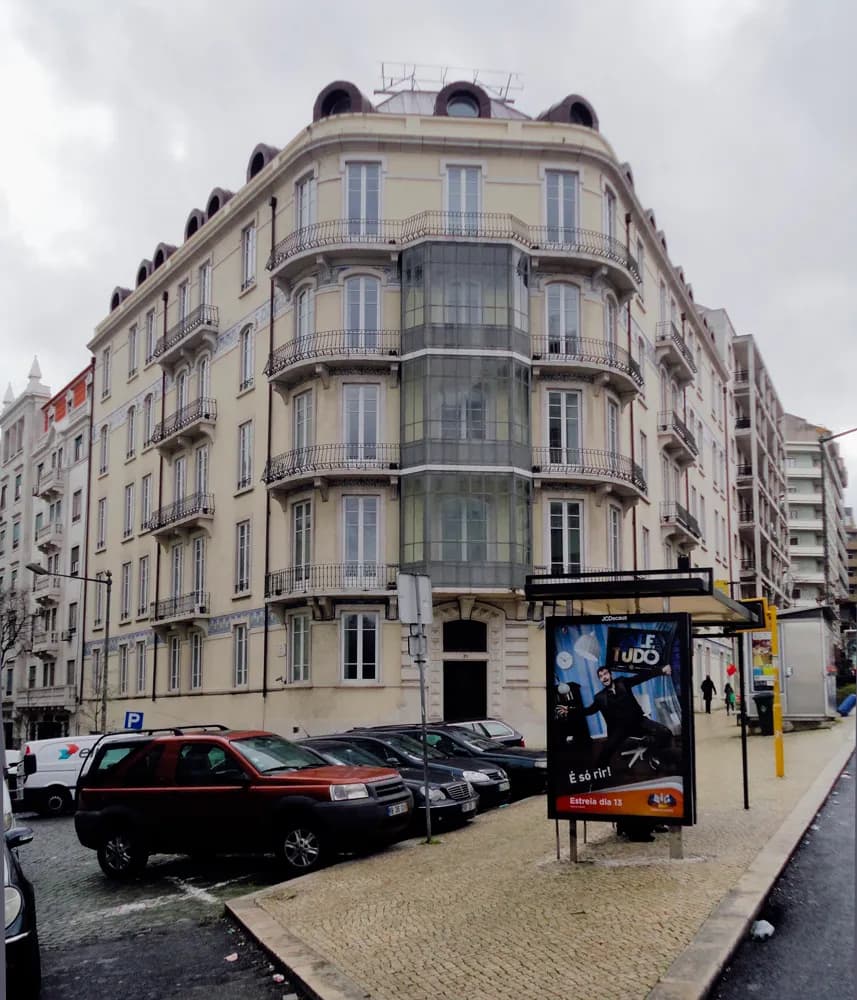
The newsroom, on the second floor of No. 37 Rua Duque de Palmela, started with about 15 people with an average age of around 30. Many came from the course Balsemão had taught at the Diário Popular. The first editor-in-chief was Augusto de Carvalho, 39, who had worked in Mozambique and at O Século. Three of the staff went on short placements in Britain to learn how its papers were made; one recalled three weeks in London and one in Newcastle.
The model was the British quality Sunday paper: the Sunday Times and the Observer. That meant a firmer line between news and opinion, Times typeface in the headlines, and things Portuguese papers barely did, such as business and stock-market news, best-seller lists and interviews. Even the rhythm was unusual: in the national press, Rosa notes, only magazines then came out once a week.
Balsemão presented the paper to about 300 guests at the Hotel Ritz in Lisbon on 21 December 1972. Two free trial editions, on 18 and 30 December, were given away with another paper, Época. Before launch he had tested the name in a survey. Asked what “Expresso” made them think of, people said a train. He kept it.
What the first issue said
- Date
- Saturday 6 January 1973
- Format
- Broadsheet, two sections of 12 pages
- Price
- 5 escudos (a daily cost 1)
- Founder and director
- Francisco Pinto Balsemão, 35
- Office
- 2nd floor, Rua Duque de Palmela 37, Lisbon
- Lead story
- Poll: “63 per cent of Portuguese have never voted”
- Sales
- More than 70,000 copies for each of the first two issues, by the paper's own account
The poll was carried out by a company called SERTE as the start of the paper's coverage of the parliamentary election due that autumn. It questioned people over 24, old enough to have had at least one chance to vote, and found the highest share of non-voters in the two big cities. Farmers and fishermen were the least likely to have voted. Of those asked, 49 per cent agreed that the voting age should come down from 21 to 18.
The politics came from inside the regime's own parliament. Page 13 printed the unpublished papers of José Pedro Pinto Leite, leader of the liberal deputies, who had been killed in an air crash in Guinea in 1970, with an introduction by Balsemão. On page 8 Sá Carneiro opened a weekly column called Visto (Seen). Other liberal deputies, Magalhães Mota, Miller Guerra and Mota Amaral, wrote for the paper too.
A note on page 2 said the paper lived in the house once lived in by Afonso Costa, a leader of the First Republic, who had been thrown out of it by force. “Yesterday as today, the democratic ideal,” it said. Readers responded. The third issue reported that the second had sold practically as many as the first, more than 70,000 copies, and in March the paper put its print run at about 75,000, with subscribers nearing 3,000. Rosa puts print runs in the first year at 60,000 to 75,000, with about 15,000 copies sold in Angola and Mozambique.
Sixty-eight issues under the blue pencil
Expresso went to press on Friday nights, and Friday nights became a battle. Galleys went to the censors, most of them retired army officers or officers between tours in the colonial wars, who worked to the rule “when in doubt, cut”. At first the paper only had to submit what it judged necessary, and Balsemão judged that very little was: he sent nothing, or only harmless pieces. Blank spaces were forbidden, so the paper kept a stock of approved, timeless articles to fill the holes.
Sometimes it filled them with an outsized advertisement for itself, such as “Expresso, a paper for knowing how to read” (translated from Portuguese), which also told readers that the censors had been at work. When only part of an article was cut, Balsemão had to decide whether what remained still made sense, since removing two lines or a single word could reverse its meaning.
The early latitude did not last. Six weeks after the launch, Balsemão complained in a private letter to Caetano.
“From now on not a single line of what appears in the 24 pages of Expresso can be published without the visa of the Exame Prévio. It also means that the paper can be delayed and cut to pieces with no chance of a timely defence.”
The journalist José Pedro Castanheira later went through the censored proofs of 58 of the 68 issues published under the exame prévio, from 6 January 1973 to 20 April 1974. He counted about 1,600 articles cut in part or in full. The worst week was 21 April 1973, with 42 articles hit. The Wiriyamu massacre in Mozambique, told in a separate article, and Caetano's visit to London drew the censors' closest attention: in the issues from 7 July to 4 August 1973, 35 or more articles were cut each week.
| Section | Articles affected | Cuts | Of which whole articles |
|---|---|---|---|
| Politics (government, liberal wing, opposition) | 280 | 667 | 134 |
| Opinion (columns, editorials, letters, cartoons) | Not given | 616 | 98 |
| International | 226 | 533 | Not given |
| Culture (part of the home news section) | 104 | 215 | Not given |
| Economy | 107 | 205 | Not given |
| People | 103 | 117 | Not given |
José Pedro Castanheira's count in O que a censura cortou (2009), covering 58 of the 68 censored issues (the proofs from 23 February 1974 onwards are not in the surviving collection), as summarised by Rosa (2014). An article could suffer several cuts.
Sá Carneiro's column was the most persecuted text in the paper. On 17 February 1973 it was cut entirely, and Expresso printed in its place one of his 1971 speeches to the Assembly. According to Balsemão, not one Visto ever appeared in full. Even layout was policed. Once, where a front-page article on Salazar sat beside one on eucalyptus trees, the censors banned Salazar's photograph at the last minute, and the designer replaced it with a eucalyptus found in an encyclopaedia.
Balsemão's tactic was to wear down the head of the exame prévio, Mário Bento Soares, with phone calls to his home on Friday nights. Marcelo Rebelo de Sousa, whose father was a minister and whose parents' wedding Caetano had witnessed, handled relations with the censors. In May 1973, standing in for Balsemão while he was in Spain, he ran 28 previously cut pieces in the issue of 2 June. The paper was punished with page proofs: whole pages, layout and captions included, now had to be approved, which delayed printing every week.
By early 1974 the strain showed. Sá Carneiro, who had resigned his seat in January 1973, gave up writing the column every week because of the cuts, and the print run fell sharply in the first months of 1974. Balsemão said many times afterwards that without the revolution of 25 April the paper would have closed: it had neither the money nor the stamina to keep fighting the censors and their page proofs for many more months.
Revolution and “the rag”
On 25 April 1974 a military coup by the Armed Forces Movement (MFA) brought down the dictatorship. Two days later, Expresso appeared without passing through the censors for the first time. Balsemão remembered sitting down on Friday the 26th to write the editorial and, for the first time, not needing to write between the lines.
“It is RARE for a right-wing government to be overthrown by its own Armed Forces. On 25 April 1974, that happened in Portugal. In the streets, in the cafés, on public transport, the mood is one of joy.”
On the morning of 27 April the MFA summoned newspaper directors to the Palácio da Cova da Moura. Balsemão later wrote that all but two of them hurried to declare themselves lifelong friends of a free press. The exceptions were Raul Rêgo and himself, who had always fought for it and had no position to change. On 6 May 1974 he, Sá Carneiro and Joaquim Magalhães Mota founded the Partido Popular Democrático (PPD), today's Social Democratic Party (PSD). In 1975 he was elected to the Constituent Assembly and became its vice-president.
Freedom brought new pressures. Balsemão wrote that the Communist Party and its allies in the MFA soon took positions in newsrooms, and that the leading papers were nationalised after 11 March 1975. At times, he wrote, Expresso was the only national news outlet outside the new system of control. The pressure was such that the paper put out two editions a week, adding an Expresso Extra on Wednesdays; he recalled a speech at Almada in which Vasco Gonçalves, then head of the government, called it “o pasquim”, the rag.
In 2025 the Portuguese government said the paper had played an important role during what it called the attempt to set up a communist dictatorship in 1975. The revolutionary period ended after 25 November 1975, the subject of a separate article.
From editor to prime minister
Balsemão directed Expresso until 1980, when he became minister of state and deputy to the prime minister, Sá Carneiro. On 4 December 1980 Sá Carneiro was killed in a plane crash at Camarate, the subject of a separate article. Balsemão succeeded him as prime minister, taking office on 9 January 1981, and as party leader.
He led two governments of the Democratic Alliance, a coalition of the PSD, the CDS and the monarchist PPM, until 9 June 1983, about two and a half years. In 2021 the Socialist prime minister António Costa credited them with completing the transition from revolution to democracy: the military Council of the Revolution was abolished and the armed forces were finally placed under civilian power. They also pushed on the negotiations to join the European Economic Community and passed the criminal law of a democratic state.
Costa recalled the economic hardship and political instability of those years: replacing Balsemão took six months, an election and a new coalition. Out of office, Balsemão went back to the media. He saw the main thread of his life as the fight for freedom of expression and the right to inform and be informed.
Impresa, SIC and a paper past fifty
Sojornal grew into the Impresa group. It founded VASP in 1975 to distribute Expresso, created the Prémio Pessoa, an annual cultural and scientific prize, in 1987, and moved into magazines in 1989. On 6 October 1992 it launched SIC, Portugal's first private television channel. Impresa joined the Lisbon stock exchange on 6 June 2000, the first Portuguese media group to do so, and started SIC Notícias, a 24-hour news channel, on 8 January 2001.
Expresso went online on 4 October 1997. Its audited paid circulation, in figures that start in 1985, rose from about 81,000 copies an issue that year to a peak annual average of around 142,000 in 1995, stayed above 125,000 every year from 1989 to 2006, and then fell as readers moved online. In 2022, for the first time over a whole year, paid digital copies outnumbered printed ones.
Expresso's paid circulation per issue, 1985 to 2025
copies per issue (annual average)
- Digital
Audited paid circulation per issue, print and digital, every fifth year. APCT publishes one figure per quarter; each bar is the mean of that year's four quarterly figures, rounded to the copy. APCT's online figures begin in 1985 and first show paid digital copies in the third quarter of 2008. In 2025 the total was about 83,190.
Show the data
| Digital | ||
|---|---|---|
| 1985 | 81,431 | 0 |
| 1990 | 130,174 | 0 |
| 1995 | 142,030 | 0 |
| 2000 | 136,615 | 0 |
| 2005 | 126,475 | 0 |
| 2010 | 108,203 | 895 |
| 2015 | 77,849 | 16,972 |
| 2020 | 56,588 | 42,325 |
| 2025 | 33,050 | 50,140 |
By Impresa's account, Expresso has been the best-selling publication in Portugal every year since 2017, with an average of 83,985 paid copies in 2024. APCT's figures for 2025 put it at about 33,000 printed and 50,000 digital copies an issue, more than half a century after its first Saturday on the stands.
1 September 1937
Francisco Pinto Balsemão born in Lisbon
1963
Joins the Diário Popular
26 October 1969
Elected deputy for Guarda on the regime's lists
15 October 1972
Sojornal, the company behind Expresso, is formed
6 January 1973
First issue of Expresso
20 April 1974
Last of 68 issues read by the censors
27 April 1974
First uncensored issue
6 May 1974
Balsemão, Sá Carneiro and Magalhães Mota found the PPD
9 January 1981
Balsemão becomes prime minister, serving until 9 June 1983
6 October 1992
SIC, the first private television channel, goes on air
15 March 2003
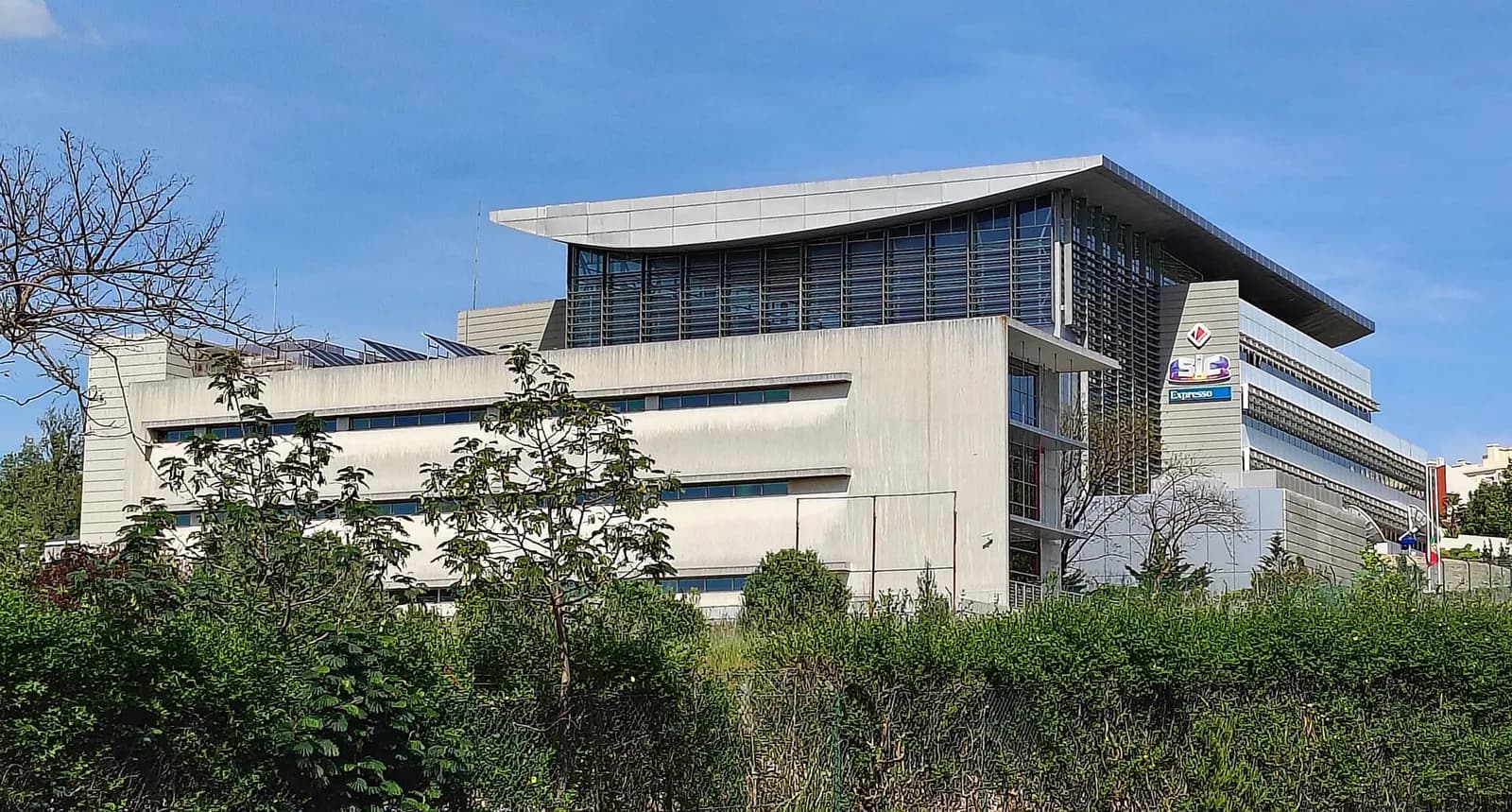
Expresso leaves Rua Duque de Palmela for Paço de Arcos
21 October 2025
Balsemão dies, aged 88
The founder's death
Francisco Pinto Balsemão died on Tuesday 21 October 2025, aged 88. Impresa said he died of natural causes and that his family was with him in his last moments. The news reached the PSD's National Council, then in session, where the party's leader and prime minister, Luís Montenegro, announced the death of the party's member number one.
A government statement the next day gave the date of death as 22 October, but Lusa and RTP had reported on the evening of the 21st that he died that day.
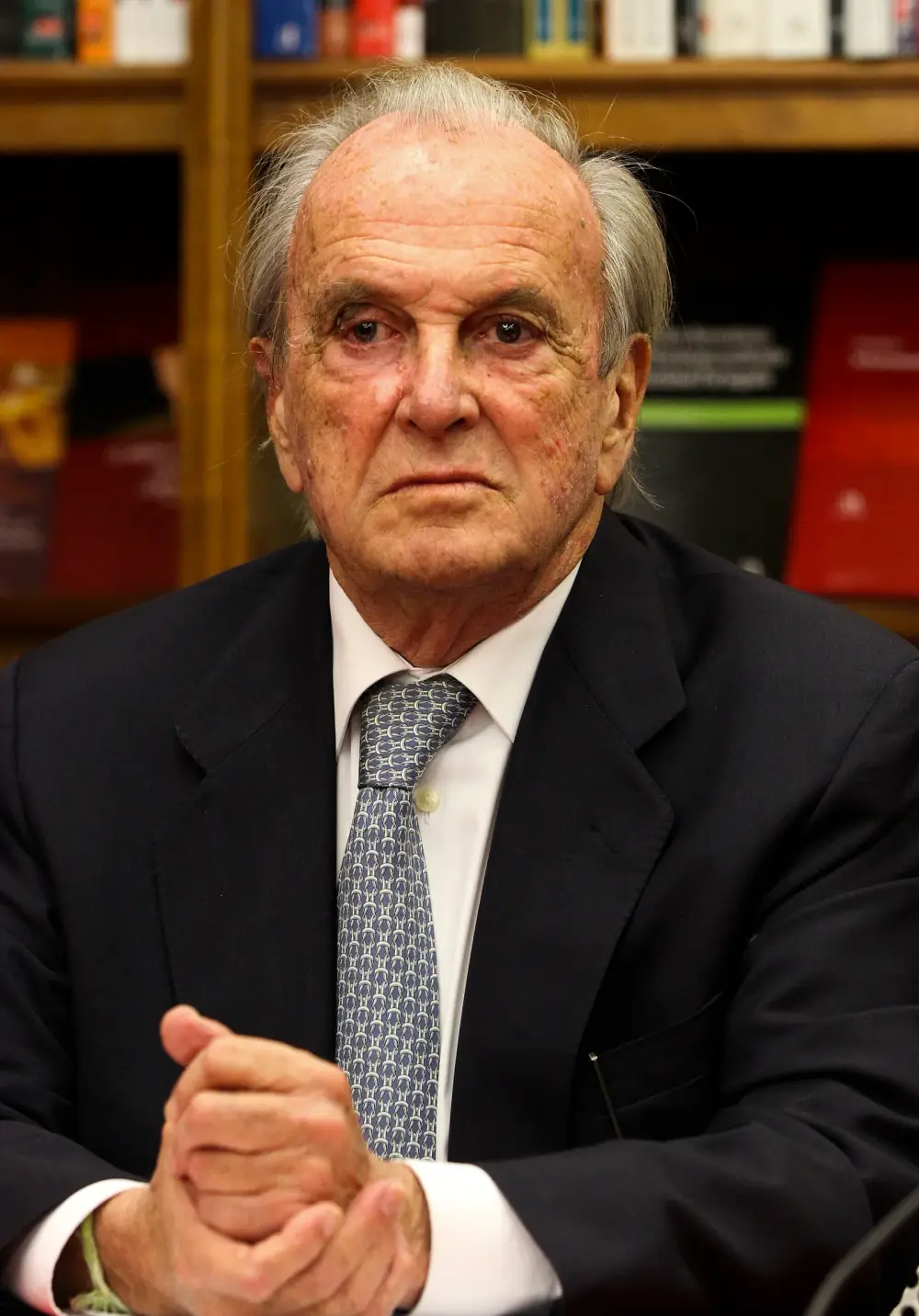
Montenegro called him “a democrat, a founder of our democracy”. President Marcelo Rebelo de Sousa, the young shareholder who had once negotiated with Expresso's censors, said Portugal would never forget him. The government declared two days of national mourning, on 22 and 23 October.
FAQs
When was Expresso founded, and by whom?
Francisco Pinto Balsemão, a journalist and liberal deputy, founded it. The owning company, Sojornal, was formed on 15 October 1972, and the first issue went on sale on Saturday 6 January 1973.
Was Expresso censored under the dictatorship?
Yes. All 68 issues from 6 January 1973 to 20 April 1974 went through the exame prévio, as censorship was called after 1971. José Pedro Castanheira counted about 1,600 articles cut in part or in full in 58 of those issues. The first uncensored issue came out on 27 April 1974.
What was the poll in Expresso's first issue?
A survey by the company SERTE, published under the headline “63 per cent of Portuguese have never voted”. It is regarded as the first political poll published in the Portuguese press, though the paper gave no details of its method.
What did Francisco Pinto Balsemão do after founding Expresso?
He co-founded the PPD, today's PSD, on 6 May 1974, sat in the Constituent Assembly, was prime minister from January 1981 to June 1983 after Sá Carneiro's death, and built the Impresa group, which launched SIC in 1992. He died on 21 October 2025, aged 88.
How many copies does Expresso sell today?
APCT's audited figures for 2025 average about 83,000 paid copies an issue: some 33,000 in print and 50,000 digital. Print sales peaked at around 142,000 in 1995.
On the timeline
Open the timelineNearby moments from dictatorship and the estado novo (1926–1974).
Jorge Costa is born in Porto. Nicknamed 'Bicho', the tough centre-back captained FC Porto to the UEFA Cup in 2003 and the Champions League under José Mourinho in 2004, and died in August 2025, aged 53, after collapsing at the club's training ground while serving as its director of football.
Luís Figo is born in Almada. The winger starred for Sporting, Barcelona, Real Madrid and Inter Milan, won a then-record 127 caps for Portugal and is regarded as one of the finest players of his generation.
Portuguese commandos, guided by DGS secret-police agents, kill villagers at Wiriyamu and the nearby settlements of Chawola and Juwau, in Mozambique's Tete district. The secret police's own report counted about 100 dead and the missionaries more than 400; the historian Mustafah Dhada later named 385. Lisbon denied it after the British priest Adrian Hastings exposed it in 'The Times' in 1973; in 2022 Prime Minister António Costa called it 'an inexcusable act that dishonours our history'.
The first issue of Expresso
The first issue of the weekly 'Expresso', founded by Francisco Pinto Balsemão, goes on sale. Testing the limits of Marcelo Caetano's censorship, it became one of Portugal's most influential newspapers and is still published weekly half a century later.
Amílcar Cabral, the Cape Verdean-Guinean agronomist who co-founded and led the PAIGC and its armed struggle against Portuguese rule in Guinea, is shot dead in Conakry by members of his own movement; the role of Portugal's PIDE secret police has long been debated. Guinea-Bissau declared independence eight months later.
In Bad Münstereifel, a spa town in West Germany, Mário Soares and fellow exiled and clandestine opponents of the Estado Novo turn the Acção Socialista Portuguesa into the Partido Socialista. A year later the PS would become one of the pillars of the new democracy.
The PAIGC unilaterally proclaims the independence of Guinea-Bissau from Portugal, after a decade of guerrilla war in the colony. Dozens of states recognised the new republic, though Portugal itself only did so after the Carnation Revolution of April 1974.
Coming up in history
All long reads 8 January 1455Romanus Pontifex: the papal bull that gave Portugal the African coast
 9 January 1822The Dia do Fico: the day Prince Pedro refused to leave Brazil, 9 January 1822
 10 January 1430Isabel of Portugal and the Golden Fleece: Bruges, 10 January 1430
 11 January 1890The British Ultimatum of 1890: how Portugal lost its Pink Map
20 sources
Archives, scholarship and reporting this article was checked against.
- 1
Expresso: um projeto de renovação no fim do Marcelismo (Joana Catarina Vieira da Rosa, MA dissertation)Escola Superior de Comunicação Social, Instituto Politécnico de Lisboa, 2014
- 2
Surgimento e condicionantes das sondagens em Portugal (Paula do Espírito Santo)Observatorio (OBS*) Journal, 7 (2008), pp. 153-179
- 3
25 de Abril: os dias da Revolução na imprensa portuguesaExpresso and Hemeroteca Municipal de Lisboa, 25 April 2014
- 4
Análise simples: circulação paga impressa e digital, Expresso, 1985-2026APCT, Associação Portuguesa para o Controlo de Tiragem e Circulação
- 5
A nossa história (cronologia IMPRESA)IMPRESA
- 6Morreu aos 88 anos Francisco Pinto BalsemãoDiário de Notícias, 21 October 2025
- 7
Francisco José Pereira Pinto Balsemão (Deputados da Assembleia Nacional 1935-1974)Assembleia da República
- 8
As eleições legislativas de 1969Assembleia da República (text by Ricardo Revez)
- 9
Diário do Governo, I série, n.º 229, 27 September 1968: Decreto n.º 48 597Imprensa Nacional, via Diário da República Eletrónico
- 10
- 11
- 12
- 13
O PartidoPartido Social Democrata
- 14
Documento Melo Antunes ou Documento dos «Nove», 6 de Agosto de 1975Marxists Internet Archive, transcribed from the Centro de Documentação 25 de Abril
- 15
Governo aprova dois dias de luto nacional pela morte de Pinto BalsemãoXXV Governo Constitucional, 22 October 2025
- 16
Morreu Francisco Pinto Balsemão (Lusa)DNoticias.pt, 21 October 2025
- 17
Loss of Portugal's premier leaves ruling alliance in turmoil (Richard Timsar)The Christian Science Monitor, 8 December 1980
- 18
- 19
O Conselho da Revolução (Maria do Céu Filipe)Arquivo Nacional Torre do Tombo, 2014
- 20Morreu Francisco Pinto Balsemão. Ex-primeiro-ministro tinha 88 anosRTP Notícias, 21 October 2025
Image credits
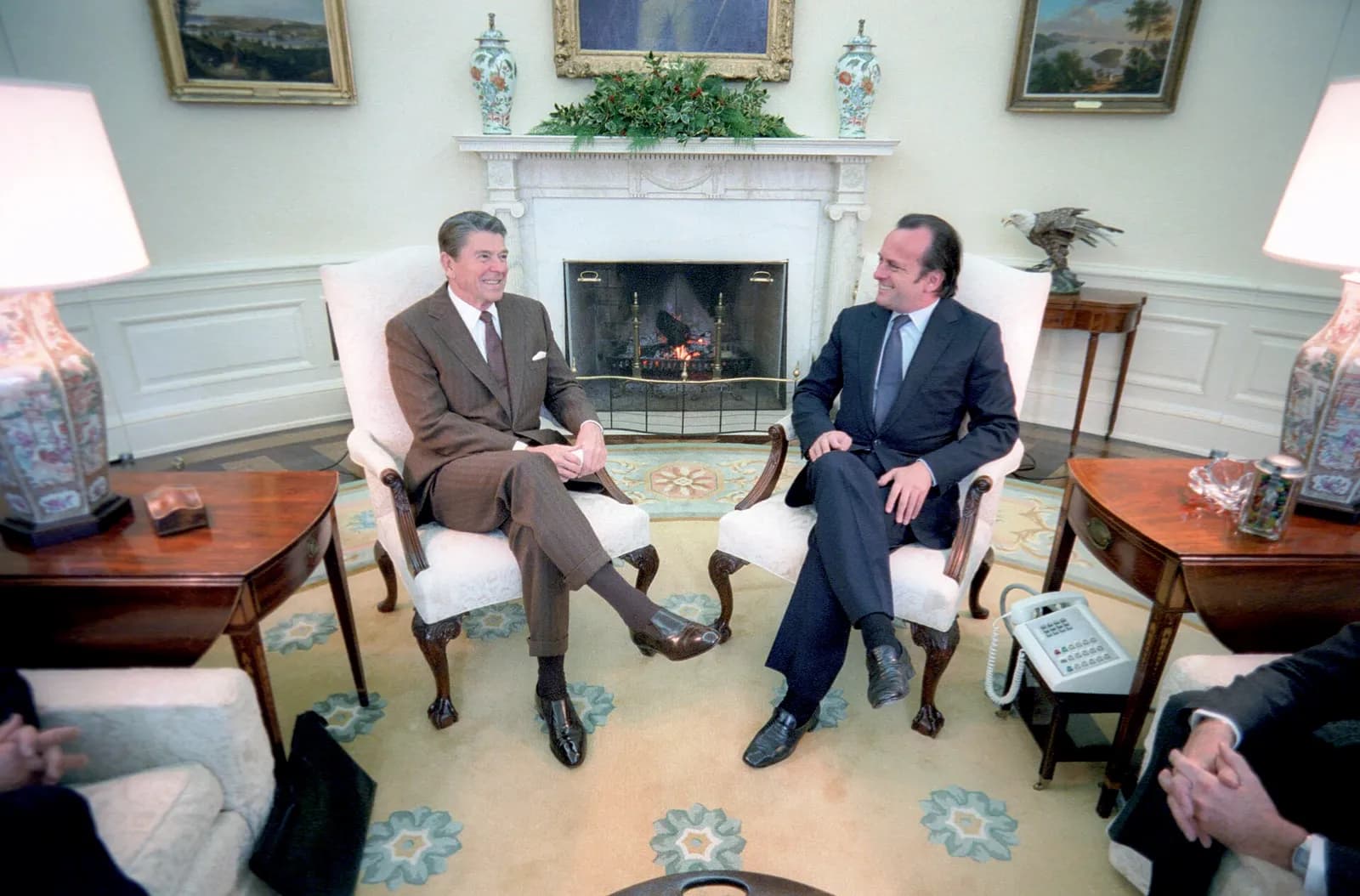
- Francisco Pinto Balsemão (right), Expresso's founder and its director until 1980, with US President Ronald Reagan in the Oval Office on 15 December 1982, on a working visit as Prime Minister of Portugal. Ten years earlier he had launched the paper as a deputy in the dictatorship's National Assembly. President (1981-1989 : Reagan). White House Photographic Office. 1981-1989, Public domain, via Wikimedia Commons.
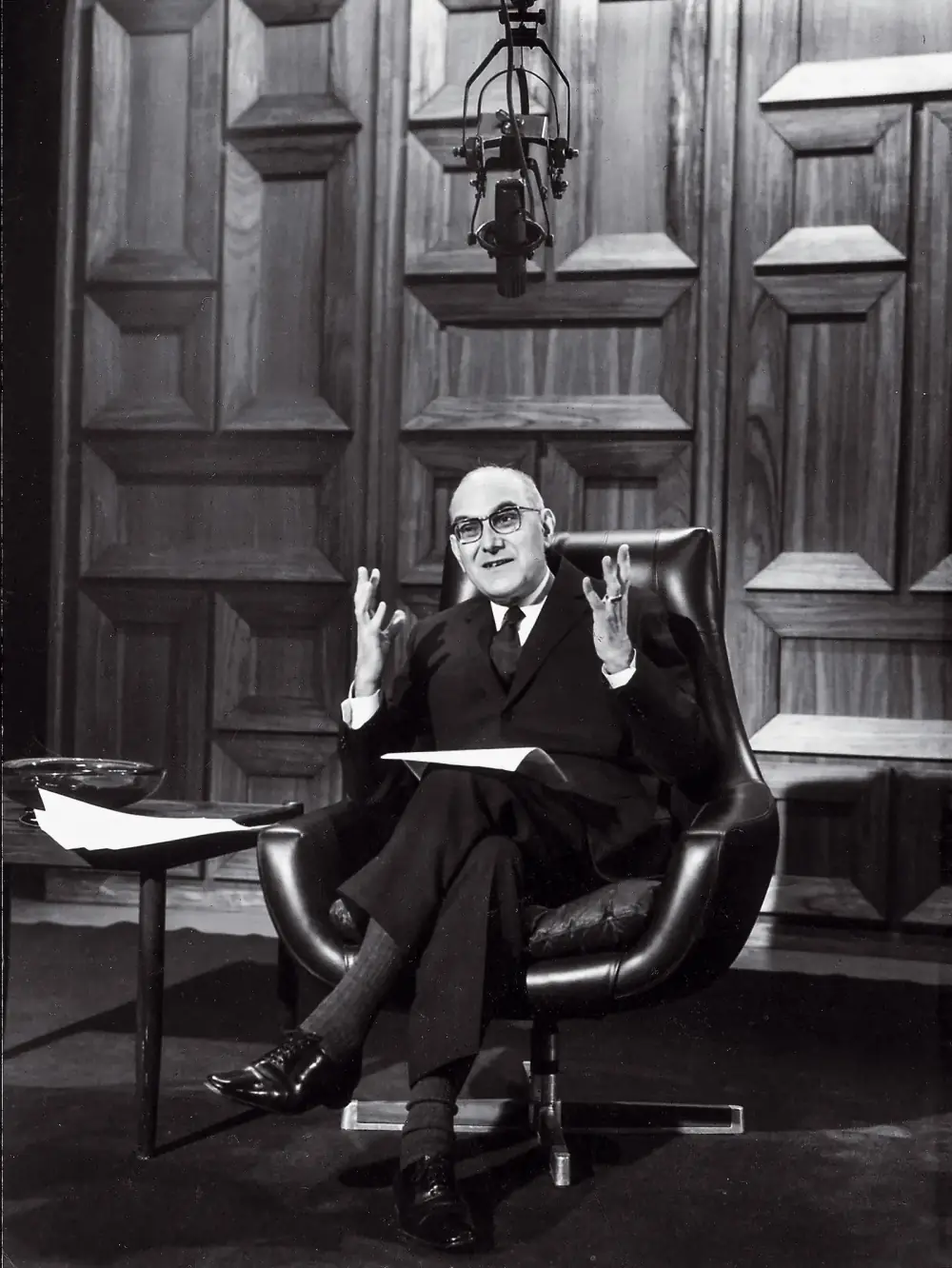
- Marcelo Caetano recording an episode of Conversa em Família, his televised “family chats” with the nation, in 1969. Unknown author, Public domain, via Wikimedia Commons.
- No. 37 Rua Duque de Palmela, Lisbon, designed by the architect Ventura Terra, photographed in 2013. Expresso started out on its second floor in 1973 and left the street in 2003. Manuelvbotelho, CC BY-SA 3.0, via Wikimedia Commons.
- The headquarters of SIC and the Impresa group at Paço de Arcos, west of Lisbon, in 2025. Expresso moved here from Rua Duque de Palmela on 15 March 2003. Vrsooo, CC0, via Wikimedia Commons.
- Francisco Pinto Balsemão in November 2012. Cruks, CC BY-SA 3.0, via Wikimedia Commons.