

Maria de Sousa, the immunologist who mapped where lymphocytes live
In London in 1966 a young Lisbon doctor helped show that cells from the thymus gather in their own territory inside the lymph nodes and spleen. She gave the homing instinct a name, ecotaxis, then returned to Portugal to study iron in Porto and train a generation of scientists. Covid-19 killed her in the first weeks of the pandemic.
At a glance
- Maria de Sousa, born in Lisbon in 1939, died of Covid-19 in the intensive care unit of Lisbon's Hospital de São José in the early hours of 14 April 2020, after a week in hospital.
- Working at Mill Hill in London with Delphine Parrott, she described in 1966 the 'thymus-dependent areas' of the lymph nodes and spleen, the zones now called T zones.
- In Glasgow in 1971 she showed that thymus cells and bone marrow cells home to different territories and named the phenomenon 'ecotaxis'.
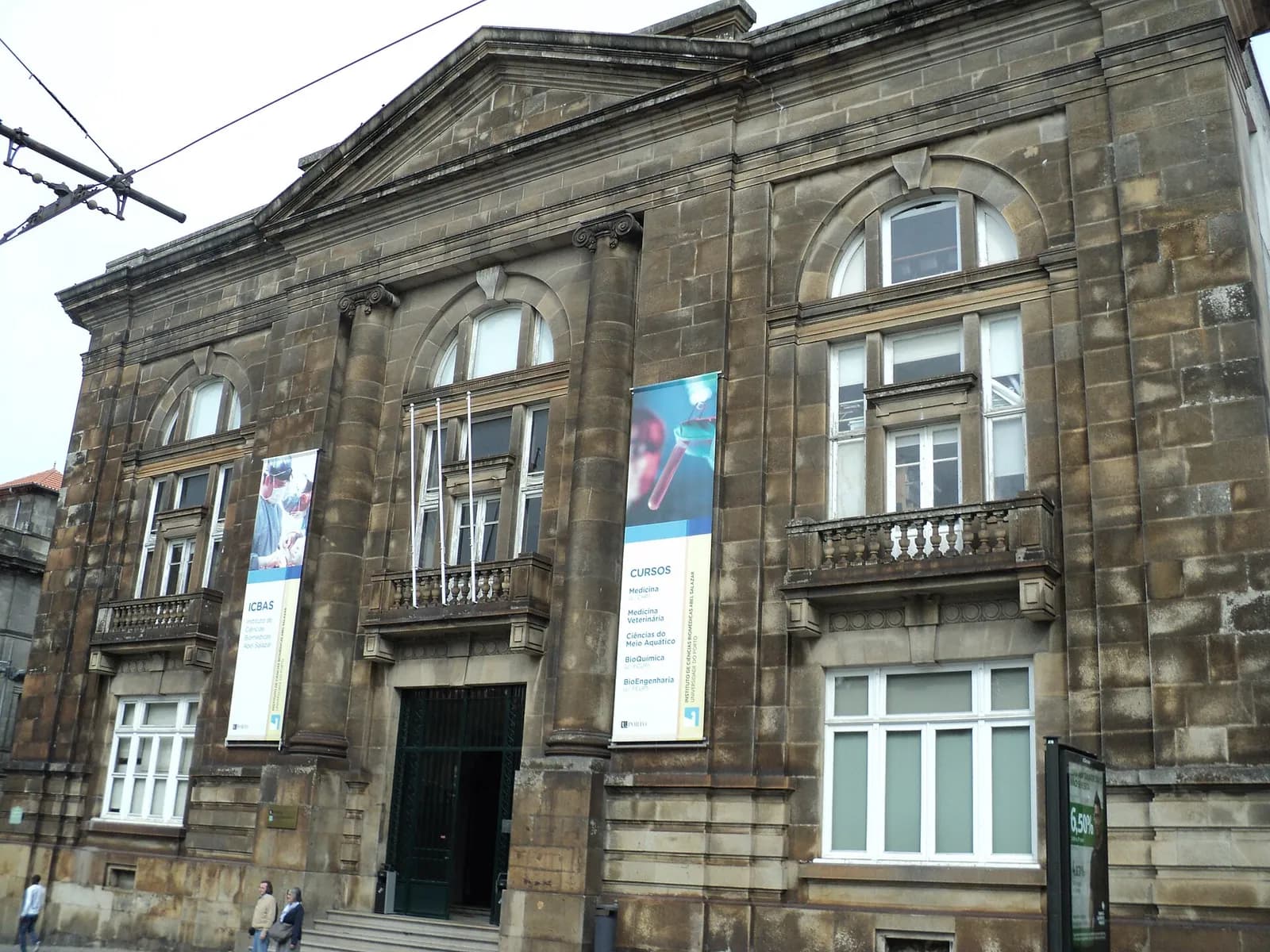
- After years at the Sloan Kettering Institute in New York she moved to Porto, where from 1985 she taught immunology at ICBAS and studied haemochromatosis, an iron-overload disease common in northern Portugal.
- She founded a master's in immunology in the mid-1980s and the GABBA doctoral programme in 1996, and helped bring external peer review to Portuguese research funding.
A death in the first wave
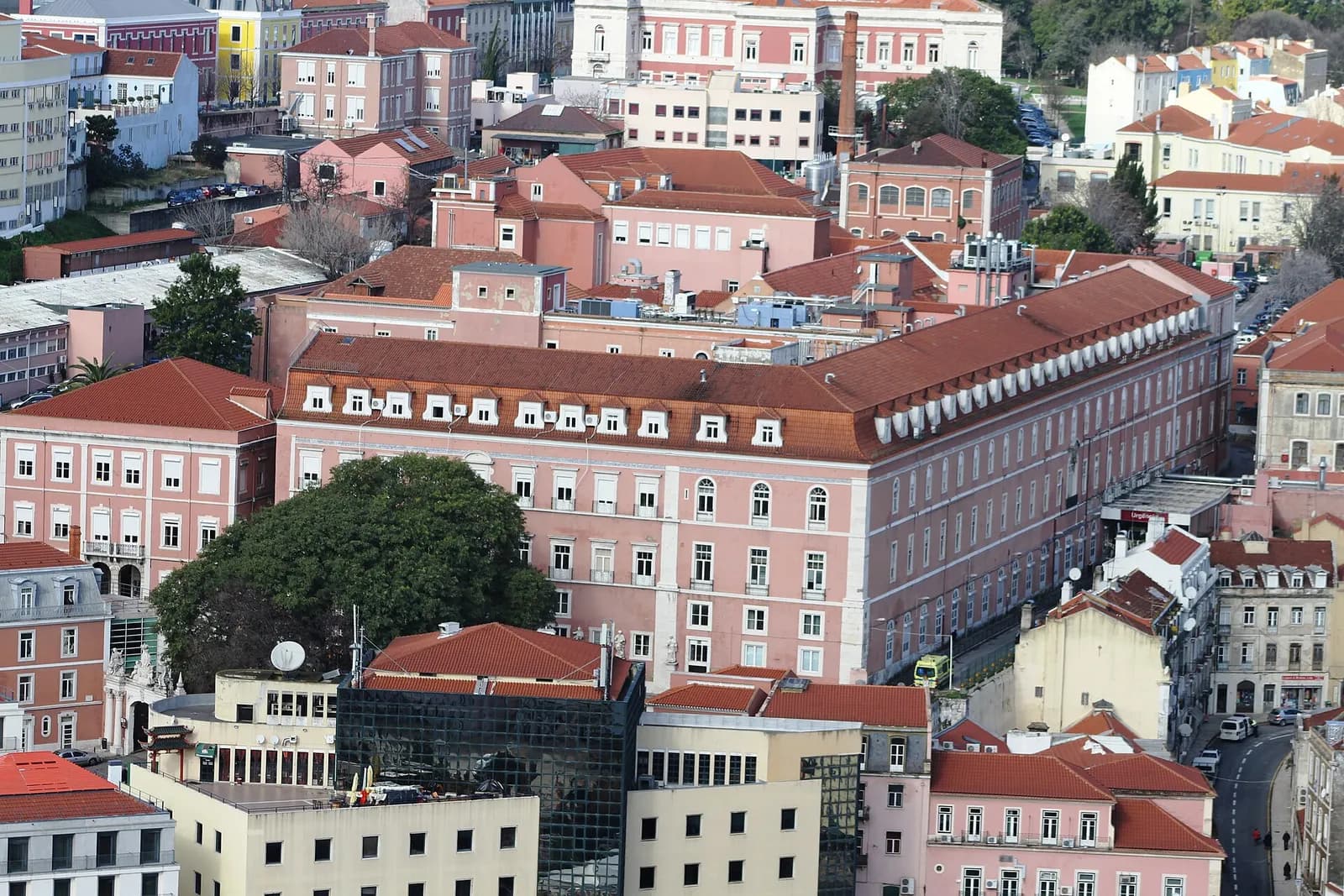
Maria de Sousa died in the early hours of Tuesday 14 April 2020 in the intensive care unit of the Hospital de São José in Lisbon. She had been admitted a week earlier with Covid-19, the disease caused by the new coronavirus, SARS-CoV-2.
That morning the University of Porto announced the death of its emeritus professor of immunology. The rector, António de Sousa Pereira, called it an enormous loss for the university. Henrique Cyrne Carvalho, director of ICBAS, the medical school where she had taught since 1985, was also her friend and doctor. He called her death one of the worst pieces of news of those days, and said they had spoken by phone every day until she was moved to intensive care. The university added that many of the scientists now at the front line of research on the virus had been her students.
Eleven days earlier, on 3 April, she had written a poem in English. After her death the publisher Quetzal Editores posted it in full on social media, in a Portuguese translation by the doctor and poet João Luís Barreto Guimarães. Her first two PhD students called it a touching farewell.
- Born
- Lisbon, 1939
- Died
- 14 April 2020, Hospital de São José, Lisbon, of Covid-19
- Trained
- Medicine, University of Lisbon, 1963; PhD in immunology, University of Glasgow (1971 or 1972, sources differ)
- Known for
- Thymus-dependent areas (1966, with Delphine Parrott); the word 'ecotaxis' (1971)
- In Porto
- Professor of immunology at ICBAS from 1985; founder of the GABBA doctoral programme (1996)
What you need to know first
Lymphocytes are the white blood cells that recognise germs. In 1959 James Gowans showed that they do not stay put: in rats they leave the blood, pass through the lymph nodes and return to the blood through the lymph, over and over.
The thymus, a small gland in the chest, was still a mystery. In 1961 Jacques Miller reported that mice whose thymus was removed just after birth grew up with poorly developed lymphoid tissue, weak immune responses and an unusual tendency to catch infections. Something made in the thymus was needed to build an immune system.
Maria de Sousa graduated in medicine from the University of Lisbon in 1963, after choosing medicine over a career as a pianist. Years later she said she turned to research because, as a young doctor, she had little to offer patients.
“It was difficult to see patients and have nothing to offer them but cortisone and antibiotics. The need for research was obvious, so I started doing research and was lucky enough to make a discovery in my first job.”
In 1964 she left Portugal, then still under the Estado Novo, the dictatorship founded by António de Oliveira Salazar, with a scholarship from the Calouste Gulbenkian Foundation. Her destination was the Experimental Biology Laboratories of the Imperial Cancer Research Fund at Mill Hill, in London.
Mill Hill, 1964 to 1966: the thymus-dependent areas
At Mill Hill she worked on Miller's puzzle with the immunologist Delphine Parrott and a third colleague, J. East. They removed the thymus from newborn mice of two strains and looked under the microscope at the spleen and the lymph nodes, the small bean-shaped glands where immune cells gather. The organs were not uniformly empty. Lymphocytes were missing from particular places.
In the spleen the depleted zone lay inside the lymphoid follicles, immediately around the small central arteries. In the lymph nodes it was the mid and deep cortex, the band below the round clusters of cells near the surface. The depletion showed as early as three weeks after the operation. The team called these places thymus-dependent areas.
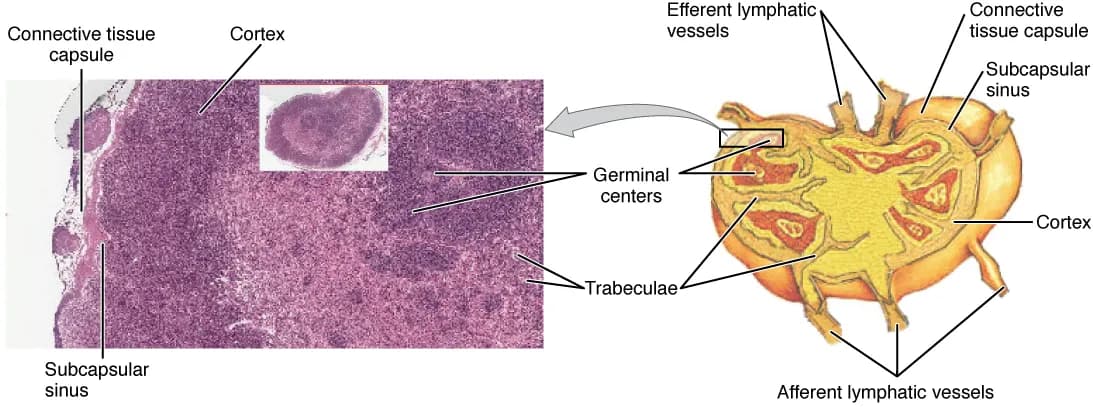
They then labelled thymus cells from healthy mice with radioactive adenosine and injected them into the blood of other mice of the same strain. The labelled cells settled preferentially in the thymus-dependent areas. Spleen cells, labelled the same way, went there too but also to the edges of the follicles and the outer cortex of the nodes.
“It is concluded that the normal thymus produces cells which contribute directly to the migratory or circulatory lymphocyte population but that there also exists another source of supply for the plasma cell series. These two systems may function synergistically so that the thymus may control, directly or indirectly, the balance of cell populations within the body.”
The paper appeared on 1 January 1966. A second, in Nature that December, followed the same areas in lymph nodes after the immune system was stimulated. Her students later wrote that with these papers the T and B cell zones had arrived, and that Parrott and de Sousa were the first to describe the thymus-dependent areas.
Glasgow, 1971: a name for the homing instinct
She moved to Scotland in 1967 or 1968 (Lusa gives the first year, the FCT the second) and took a teaching post at the University of Glasgow, where she also did her doctorate in immunology. The FCT and Lusa date the degree to 1972; her students give 1971.
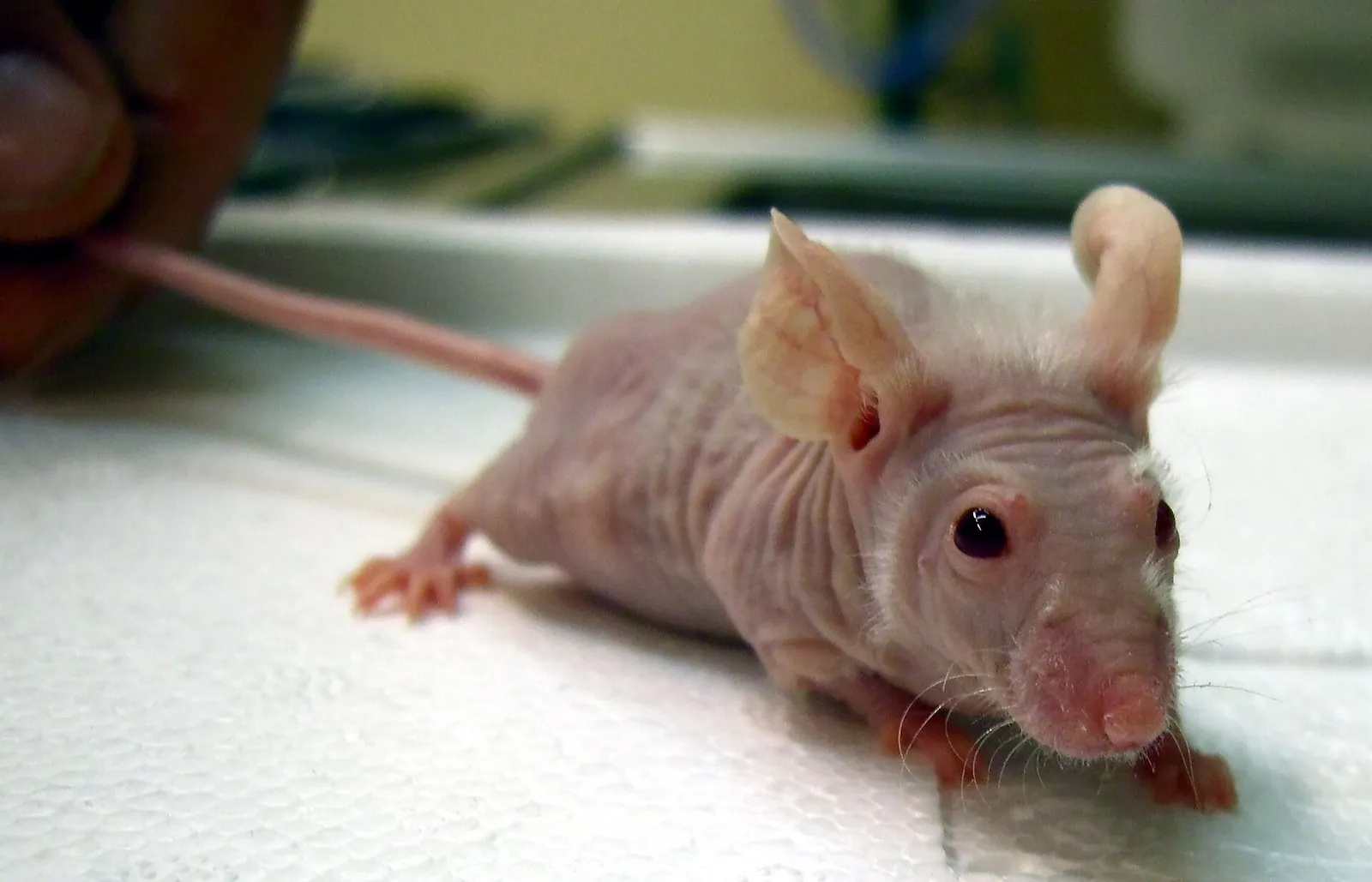
A new animal helped. In January 1968 E. M. Pantelouris reported that a mouse mutant, the nude mouse, has no thymus. De Sousa, Parrott and Pantelouris examined seven of them against eight normal littermates. In every lymph node from the nude mice the thymus-dependent areas were virtually empty of lymphocytes, as if nature had done the thymectomy.
Then she asked how the cells find their places. Working in the Department of Immunology at Glasgow's Western Infirmary, she labelled mouse thymus cells and bone marrow cells and injected them into the blood of matched mice. Thymus cells went mostly to the thymus-dependent territory. Most marrow cells went to the thymus-independent sites, and different kinds of marrow cell picked out different spots within them.
“In general, cell populations behave as if they have the ability to distinguish and home towards what is probably their usual environment. The word ‘ecotaxis’ is offered to define this phenomenon.”
The paper had one author. Earlier the same year she and Parrott had published a review setting out the idea in general terms: thymus-derived and marrow-derived lymphocytes look the same in the blood, yet they sort themselves into separate compartments of the lymph nodes, spleen and Peyer's patches in the gut.
Ecotaxis described the behaviour without explaining it. The mechanism came almost thirty years later, from mice engineered to lack single genes. Chemokines are chemical signals that attract cells, which detect them through receptors on their surface. Without the chemokine receptor CCR7, lymphocytes migrate poorly and every secondary lymphoid organ is badly disorganised. B cells need another receptor, CXCR5, and its chemical signal, BLC, to reach their follicles.
Her students, writing in 2020, called the 1971 paper visionary, and pointed out that it anticipated the cell niches that biologists now discuss for blood stem cells and plasma cells.
New York: from lymphocyte traffic to iron
In 1975, according to Lusa, she crossed the Atlantic. In New York she was an associate professor at Cornell Medical College and directed the Cell Ecology Laboratory of the Sloan Kettering Institute, part of Memorial Sloan Kettering Cancer Center; she also worked at Harvard Medical School. Her first two PhD students, Antonio Freitas and Benedita Rocha, followed her from Glasgow; they worked with her from 1973 to 1977.
She tried the ecotaxis idea on human disease. A 1977 study of five children with Hodgkin's disease, a cancer of the lymphatic system, argued that a shortage of lymphocytes in the blood did not always mean the body lacked them, and that failed ecotaxis could happen in people. A year later she went further, proposing that iron-binding proteins such as ferritin, transferrin and lactoferrin help control where lymphocytes go.
That link between iron and the immune system became the second half of her career.
Porto: iron, haemochromatosis and a school for scientists
She returned to Portugal in 1984, interrupting a rising career in the United States, and in 1985 became professor of immunology at ICBAS, the University of Porto's biomedical sciences institute. There she set up a research programme on haemochromatosis, a hereditary illness in which the body stores too much iron. Her students note that it is particularly common in the north of Portugal.
With the haematologist Graça Porto she built a team spanning ICBAS, the Hospital Geral de Santo António and the Institute for Molecular and Cell Biology (IBMC). In 1989 they reported that the disease in northern Portugal was associated with a particular combination of tissue-type (HLA) genes, A3 and B7. HLA genes are the markers matched between donor and patient in transplants.
Results in mice and patients followed in 1994. The Porto group reported that mice lacking beta-2-microglobulin, a protein of the immune system, built up iron in the liver in a pattern indistinguishable from the human disease. In 21 patients treated by repeated bloodletting, the standard treatment, the team found that each person's balance of two kinds of T cell, CD4 and CD8, stayed stable over time and correlated with the amount of iron removed.
In August 1996 an American team found the human haemochromatosis gene, later called HFE. It belongs to the same family as the immune system's MHC class I genes, whose molecules are assembled with beta-2-microglobulin. That November a study from Utrecht, with de Sousa among the authors, showed that mice without beta-2-microglobulin fail to limit the passage of iron from the gut into the blood, and concluded that a gene product depending on it is involved in iron balance.
| Year | Journal | Authors | What it showed |
|---|---|---|---|
| 1966 | Journal of Experimental Medicine | Parrott, de Sousa, East | Removing the thymus at birth empties specific areas of the lymph nodes and spleen; injected thymus cells settle there |
| 1969 | Clinical and Experimental Immunology | de Sousa, Parrott, Pantelouris | In nude mice, born without a thymus, the same areas are virtually empty |
| 1971 | Clinical and Experimental Immunology | de Sousa | Thymus and marrow cells home to different territories; the word ecotaxis |
| 1978 | American Journal of Pathology | de Sousa, Smithyman, Tan | Proposes that iron-binding proteins help steer lymphocyte migration |
| 1994 | Immunology Letters | de Sousa and others, with Porto | Mice lacking beta-2-microglobulin develop iron overload like human haemochromatosis |
| 1994 | European Journal of Haematology | Porto and others, with de Sousa | In 21 patients, the CD4 to CD8 ratio correlates with the iron removed by bloodletting |
Selected by Lisboeta from her published work; the first and third are the papers her students singled out in their 2020 obituary.
She also changed how Portuguese science was run. In 1987 José Mariano Gago, then president of JNICT, the national research board, and later science minister, asked her to coordinate the creation of research units in the health sciences. She chaired its committee for biomedical research and introduced external peer review of projects and institutions.
She then coordinated the health sciences in the first external and independent evaluation of Portuguese research centres. The FCT dates this to 1991, under JNICT; Lusa and RTP place it in the mid-1990s, when Gago was minister.
Her largest legacy was people. She created a master's programme in immunology, which her students date to 1984 and the University of Porto to her arrival at ICBAS in 1985. In 1996 it grew into GABBA, a doctoral programme in basic and applied biology run by ICBAS, the university's faculties of science and medicine, IBMC, INEB and IPATIMUP. Freitas and Rocha describe it as the first time a professor at a Portuguese university had set up a doctoral programme.
GABBA gave every student a four-year scholarship and let them choose their subject, supervisor and laboratory, in Portugal or abroad. She kept in touch with all of them, whatever their field. The University of Lisbon, awarding her its prize in 2017, said the two programmes had shaped the community of Portuguese researchers working at home and around the world.
The last weeks
She retired as a full professor on 16 October 2009 with a final lecture, Uma escola sem muros (A school without walls), in the great hall of the University of Porto's rectorate, and was later made an emeritus professor. She stayed on as an honorary researcher at i3S, the university's health research institute; its director said she had been with them for twenty years.
She also wrote. A pianist and poet, she published in 2014 a book of reflections on the history of biomedical research in Portugal, Meu dito meu escrito. In the first days of April 2020, as the pandemic spread, she wrote Love letter in a virus pandemic and dedicated it to the GABBA students. It ends with these words.
“As I may die and you must live / In your living the hope of my lasting”
Portugal's first Covid-19 death appeared in the daily report of 17 March 2020. Four weeks later, the report of 14 April counted 567. Maria de Sousa had several other illnesses that already made walking difficult. The University of Porto, RTP and Lusa gave her age as 81; none of them gave her exact date of birth.
Covid-19 deaths in Portugal, as counted in the daily DGS report
deaths (cumulative)
Cumulative deaths in the Direção-Geral da Saúde situation report published on each date in 2020, as compiled by Data Science for Social Good Portugal. Each report counts deaths up to midnight at the start of that day, so Maria de Sousa's death in the early hours of 14 April appears in later reports.
Show the data
| Deaths reported | |
|---|---|
| 17 Mar | 1 |
| 24 Mar | 33 |
| 31 Mar | 160 |
| 7 Apr | 345 |
| 14 Apr | 567 |
The tributes came quickly. On 15 April the Ordem dos Médicos, Portugal's medical association, created a research prize in her name for doctors who do research. On 14 July 2020 i3S named its library after her, and the science minister, Manuel Heitor, called her one of the pillars of modern science in Portugal. On the first anniversary of her death the FCT, the national research funder, announced a call for 50 doctoral fellowships in epidemiology and virology bearing her name.
1939
Born in Lisbon
1963
Graduates in medicine from the University of Lisbon
1964–1966
Gulbenkian scholar at Mill Hill, London
1 January 1966
Thymus-dependent areas paper, with Parrott and East
1967 or 1968
Moves to Glasgow
June 1969
Nude mice paper, with Parrott and Pantelouris
September 1971
Coins the word ecotaxis
1975
Moves to New York: Cornell Medical College and the Sloan Kettering Institute
1984–1985
Returns to Portugal; professor of immunology at ICBAS, Porto
1996
GABBA doctoral programme begins
16 October 2009
Final lecture on retirement
2016
Grand Cross of the Military Order of Sant'Iago da Espada
14 April 2020
Dies of Covid-19 in Lisbon
Why it still matters
The division of lymph nodes and spleen into B cell follicles and T cell zones began with Parrott, de Sousa and East's thymectomised mice in 1966, and the question she named in 1971, how a cell knows where it belongs, is still being answered gene by gene.
In Portugal her mark is mostly in people and habits: the scientists trained through the Porto master's and GABBA, and the external peer review she pushed for in research funding. Her students noted in 2020 that review was still not fully practised in every Portuguese university.
FAQs
Who was Maria de Sousa?
A Portuguese immunologist, born in Lisbon in 1939, who worked in London, Glasgow and New York before becoming professor of immunology at ICBAS in Porto in 1985. She co-described the thymus-dependent areas of lymphoid organs in 1966, coined the word ecotaxis in 1971, studied iron and haemochromatosis, and founded the GABBA doctoral programme. She died of Covid-19 in Lisbon on 14 April 2020.
What is ecotaxis?
Her name for the way lymphocytes of different origins home to their own territories in the lymph nodes, spleen and gut. In her 1971 paper thymus cells went mostly to thymus-dependent areas and bone marrow cells to other sites, as if each could recognise its usual environment.
Did Maria de Sousa discover T cells?
No. With Delphine Parrott and J. East she showed in 1966 where thymus-derived cells settle, in what are now called T zones. Proof that T and B cells are separate, cooperating kinds of lymphocyte came from Jacques Miller's laboratory in 1967, as Miller has recounted.
How did Maria de Sousa die?
She died of Covid-19 in the intensive care unit of the Hospital de São José in Lisbon in the early hours of 14 April 2020, a week after being admitted. The University of Porto, RTP and Lusa gave her age as 81.
What is the GABBA programme?
A doctoral programme in basic and applied biology at the University of Porto, created in 1996 from the immunology master's she founded in the mid-1980s. It gave students four-year scholarships and free choice of subject, supervisor and laboratory, in Portugal or abroad.
On the timeline
Open the timelineNearby moments from portugal in europe (1986–today).
At a ceremony in Lisbon closing his Diamond Jubilee year, the Aga Khan formally designates the Henrique de Mendonça Palace on Rua Marquês de Fronteira as the Seat of the Ismaili Imamat, making the city the global headquarters of the Shia Ismaili Muslim community. Tens of thousands of Ismailis from around the world gather in Lisbon for the celebrations.
Death in Lisbon of Odette Ferreira, aged 93, the microbiologist who helped identify HIV-2. In 1985 she flew to the Pasteur Institute in Paris with patients' blood samples hidden in her coat to keep them warm, and as head of the national AIDS programme she launched the pharmacy needle exchange 'Diz Não a Uma Seringa em Segunda Mão' ('Say no to a second-hand syringe').
Death of Agustina Bessa-Luís in Porto, aged 96. Her 1954 novel 'A Sibila' made her one of the great voices of 20th-century Portuguese fiction; she went on to win the Camões Prize in 2004, and her long creative partnership with the director Manoel de Oliveira produced films such as 'Francisca' and 'Vale Abraão'.
Maria de Sousa, immunologist
Death from Covid-19 of the immunologist Maria de Sousa, born in Lisbon in 1939. In London in 1966 she and Delphine Parrott described the 'thymus-dependent areas' of lymph nodes, now called T zones; in Glasgow in 1971 she coined 'ecotaxis'. Back in Portugal she trained a generation of scientists in Porto through the GABBA doctoral programme.
Portugal and the Portuguese-speaking world celebrate the first World Portuguese Language Day, proclaimed by UNESCO the previous November. Spoken by more than 260 million people across four continents, Portuguese is among the most widely spoken languages on Earth; with the pandemic raging, the celebrations move largely online.
Sculptor João Cutileiro dies in Lisbon aged 83. He scandalised traditionalists with his boyish, unheroic statue of King Sebastião in Lagos, and later with his stone monument to the 25 April revolution at the top of Lisbon's Parque Eduardo VII, still one of the city's most argued-over landmarks.
Porto's Estádio do Dragão hosts the Champions League final, moved from Istanbul because of Covid-19 travel restrictions. Chelsea beat Manchester City 1–0 with a goal from Kai Havertz to win the trophy for the second time.
Coming up in history
All long reads 16 April 1581Tomar, 16 April 1581: Philip II of Spain swears to rule as a Portuguese king
 17 April 2015José Mariano Gago: the physicist who put science into Portugal's government
 18 April 1842Antero de Quental, the Azorean poet who told Portugal why it had declined
 19 April 1506The Lisbon Massacre: three days of killing in April 1506
33 sources
Archives, scholarship and reporting this article was checked against.
- 1
Maria de Sousa, (1939-2020) (Antonio A. Freitas and Benedita Rocha)Sociedade Portuguesa de Imunologia, 9 June 2020, reprinting the obituary in European Journal of Immunology 50 (6): 768–769, 2020
- 2
Thymus-dependent areas in the lymphoid organs of neonatally thymectomized mice (Parrott DV, De Sousa MA, East J)Journal of Experimental Medicine 123 (1): 191–204, 1 January 1966 (PubMed record)
- 3
Kinetics of the distribution of thymus and marrow cells in the peripheral lymphoid organs of the mouse: ecotaxis (de Sousa M)Clinical and Experimental Immunology 9 (3): 371–380, September 1971 (PubMed Central)
- 4
Maria de Sousa (1939–2020)Fundação para a Ciência e a Tecnologia (FCT), 14 April 2020
- 5
Maria de Sousa (1939-2020): A mulher que pôs Portugal no mapa da ImunologiaNotícias U.Porto, University of Porto, 14 April 2020
- 6
- 7
Prémio Universidade de Lisboa 2017: Maria de Sousa (programme and citation)Universidade de Lisboa, 2017
- 8Covid-19. Morreu a imunologista Maria de SousaRTP Notícias, 14 April 2020
- 9"Mas antes de morrer; Quero que saibam; O quanto gosto de vós". O adeus da imunologista Maria de SousaDiário de Notícias, 16 April 2020
- 10
- 11
- 12
- 13
Imunologista Maria de Sousa morreu vítima da infeçãoDNoticias.pt (Lusa), 14 April 2020
- 14
- 15
- 16
- 17
- 18
- 19
- 20
- 21
- 22
- 23
- 24
- 25
- 26
- 27
- 28
- 29
- 30
Maria de Sousa's last(ing) poem: Love letter in a virus pandemicATG, University of Porto
- 31
covid19pt-data: daily Covid-19 data for Portugal (data.csv)Data Science for Social Good Portugal, compiled from the Direção-Geral da Saúde daily situation reports
- 32
- 33
Image credits
- The Instituto de Ciências Biomédicas Abel Salazar (ICBAS) of the University of Porto, photographed in September 2011. Maria de Sousa was professor of immunology at ICBAS from 1985 until she retired. Béria Lima de Rodríguez, CC BY-SA 3.0, via Wikimedia Commons.
- A lymph node and a stained section of its outer cortex, from the OpenStax Anatomy and Physiology textbook. The round follicles with germinal centres hold mostly B cells; the deeper cortex beneath them, not labelled here, is the thymus-dependent area described in 1966. OpenStax College, CC BY 3.0, via Wikimedia Commons.
- A nude mouse, photographed in a laboratory in 2008. The same mutation that leaves these mice hairless stops the thymus from forming, which made them a natural test of the thymus-dependent areas in 1969. Kuebi = Armin Kübelbeck, CC BY-SA 3.0, via Wikimedia Commons.
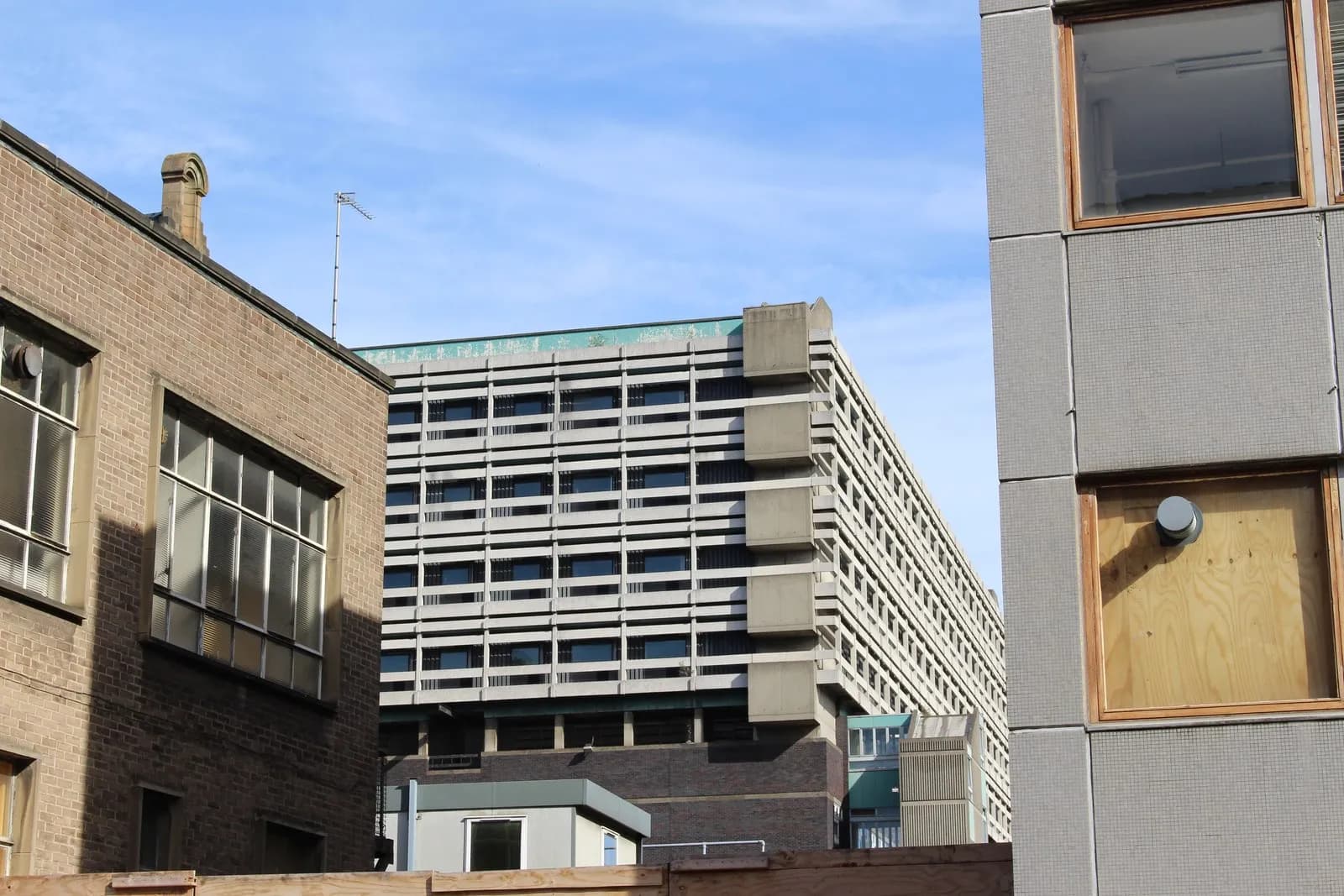
- Buildings of the Western Infirmary in Glasgow, photographed in September 2016. In 1971 Maria de Sousa was working in the hospital's Department of Immunology, where she coined the word ecotaxis. Graeme Yuill, CC BY-SA 2.0, via Wikimedia Commons.
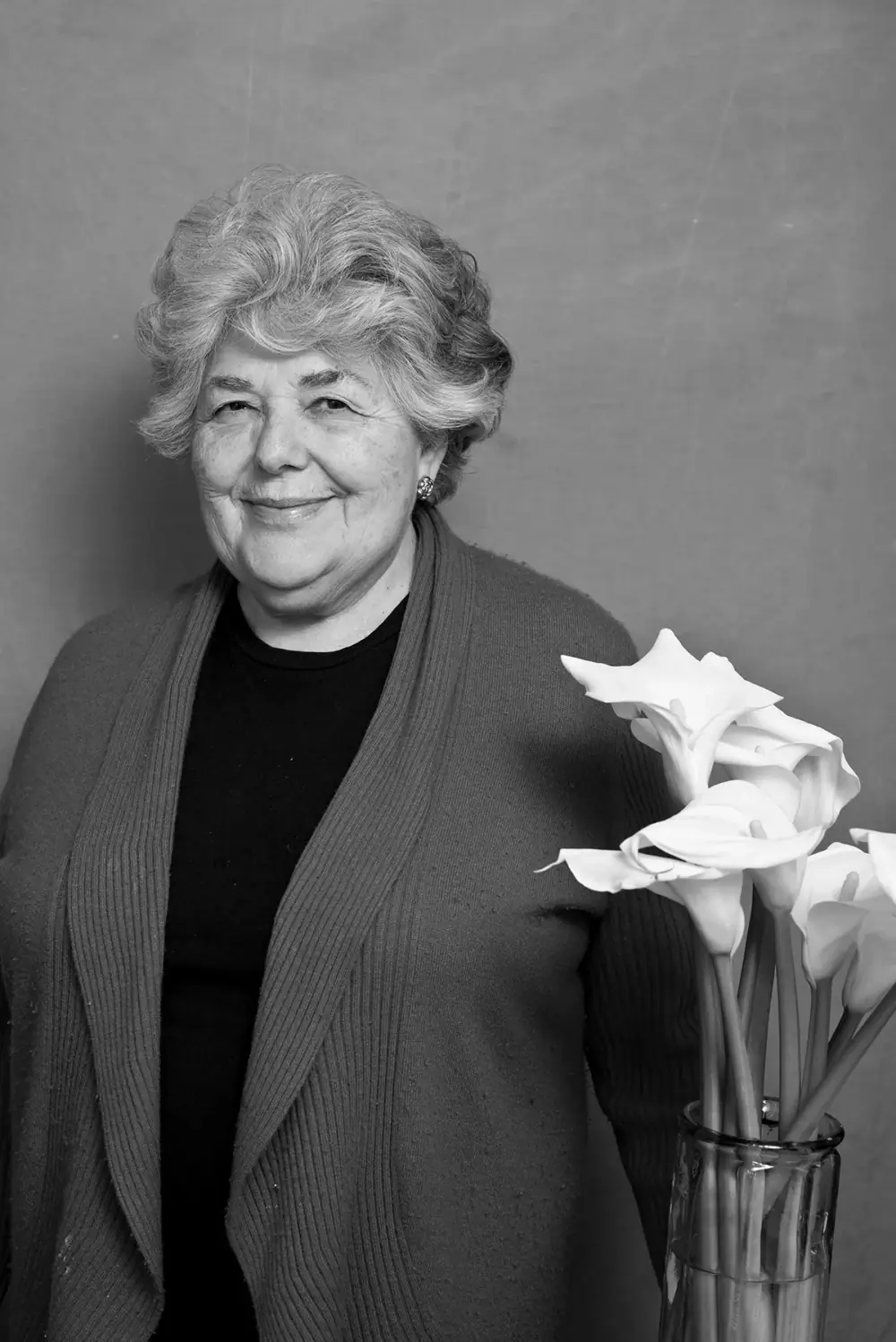
- Maria de Sousa, photographed by Luísa Ferreira for the book Mulheres na Ciência (Women in Science), published by Ciência Viva in 2016. Luísa Ferreira, CC BY-SA 4.0, via Wikimedia Commons.
- The Hospital de São José in central Lisbon, seen from the Castelo de São Jorge in January 2013. Maria de Sousa died in its intensive care unit on 14 April 2020. José Luiz, CC BY-SA 3.0, via Wikimedia Commons.