

Antero de Quental, the Azorean poet who told Portugal why it had declined
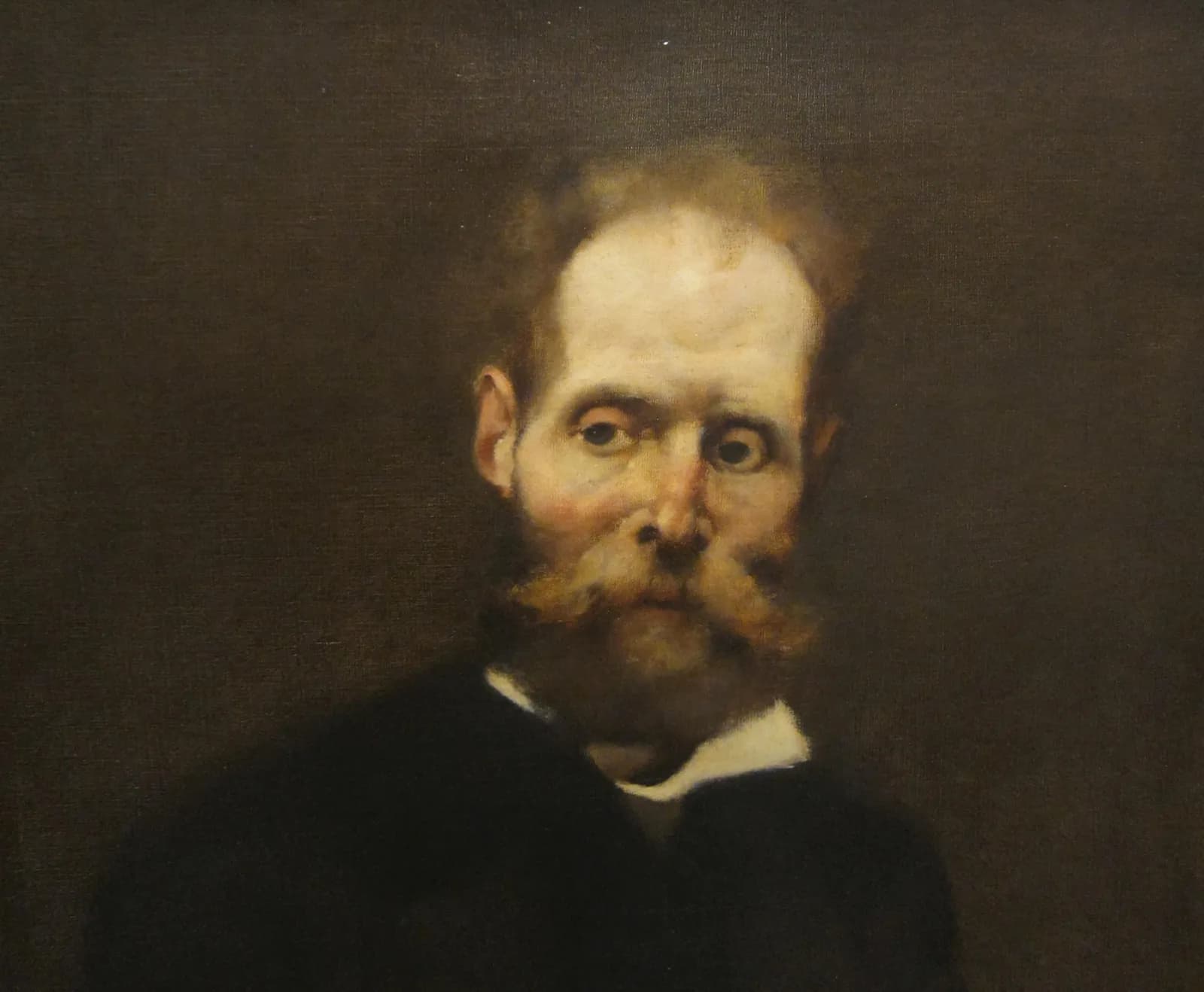
Born in the Azores on 18 April 1842, Antero de Quental led a revolt of young writers against Lisbon's literary establishment, blamed three centuries of decline on the Church, absolute kings and empire, and wrote sonnets that are still read as the record of a mind at war with itself. He shot himself on a bench in his home town in 1891.
At a glance
- Antero Tarquínio de Quental was born in Ponta Delgada, on the Azorean island of São Miguel, on 18 April 1842, into one of the island's oldest families.
- As a law student in Coimbra he led protests against the university and, in November 1865, started the Questão Coimbrã, a pamphlet war against the poet António Feliciano de Castilho and the Lisbon literary establishment.
- On 27 May 1871, at the Casino Conferences in Lisbon, he blamed Iberia's decline on the Council of Trent, absolute monarchy and overseas conquest. The government banned the lectures a month later.
- He helped bring the First International to Portugal and twice stood for parliament as a socialist. Seriously ill from 1874, he spent most of the 1880s in Vila do Conde, near Porto, and his sonnets were collected in 1886.
- After presiding over a patriotic league formed in Porto in 1890, he returned to Ponta Delgada and shot himself there on 11 September 1891.
A lecture in the Casino
On 27 May 1871 a 29-year-old Azorean stood up in the hall of the Casino Lisbonense, at number 10 Largo da Abegoaria, on the edge of the Chiado. Five days earlier he had opened a series of public lectures there. In the audience were deputies, writers and civil servants, and the organisers had set out tables for the press.
He began with his thesis, and said he was sorry to have to state it before an audience of fellow Iberians.
“The decline of the peoples of the Peninsula over the last three centuries is one of the most incontestable, most evident facts of our history.”
A little later he pointed to the press tables. The organisers did not ask anyone to agree, he said, only to discuss, and the journalists were there so that every word could be noted down and contradicted.
The speaker was Antero de Quental. Afterwards his friend Jaime Batalha Reis wrote to his fiancée: “My Celeste, I have just heard Antero. It was magnificent.” It was, he thought, the first time that the modern spirit had entered Portugal, and the first time anyone had proved that Catholicism was one of the causes, and the most terrible, of the decline of Portugal and Spain.
Within a month the government had shut the hall. Antero was already known for a literary quarrel and a book of verse. He would spend much of the next twenty years ill, and in 1891 he took his own life.
An island boy from an old family
Antero Tarquínio de Quental was born on 18 April 1842 in his family's house on Rua do Lameiro in Ponta Delgada, now Rua do Castilho. The Quentals claimed descent from the first settlers of São Miguel and owned land on the island. His father, Fernando de Quental, had been one of the “bravos do Mindelo”, the liberal volunteers who landed with Pedro IV at Mindelo, near Porto, in July 1832 to fight the absolutist King Miguel.
- Full name
- Antero Tarquínio de Quental
- Born
- 18 April 1842, Rua do Lameiro (now Rua do Castilho), Ponta Delgada, São Miguel, Azores
- Studied
- Law at the University of Coimbra, 1858–1864
- Best-known works
- Odes Modernas (1865), Bom-Senso e Bom-Gosto (1865), Causas da Decadência dos Povos Peninsulares (1871), Os Sonetos Completos (1886)
- Died
- 11 September 1891, Campo de São Francisco, Ponta Delgada
- Buried
- São Joaquim cemetery, Ponta Delgada
His first teacher of note was the poet António Feliciano de Castilho, who lived in Ponta Delgada in the late 1840s; the boy was in and out of his house. In August 1852 Antero was sent to Castilho's Colégio do Pórtico in Lisbon. After more schooling in Ponta Delgada and Lisbon he went to Coimbra in 1856 and enrolled in law at the university in September 1858.
Writing to a German translator in 1887, Antero said that the intellectual and moral revolution he went through on leaving a remote province “immersed in its placid historical sleep” for the agitation of Coimbra was probably the most decisive event of his life. His Catholic education was swept away “in an instant”. He read Goethe's Faust and Hegel in French translation, and of the French writers he preferred Proudhon and Michelet.
Coimbra: the walkout and the Coimbra Question
In Coimbra Antero became a leader of the students. On 8 December 1862, at the prize-giving in the university's great hall, the Sala dos Capelos, the students walked out as soon as the rector, the Viscount of São Jerónimo, began to speak. Antero wrote the manifesto that explained the protest to the country; 314 students signed it, and the rector was later replaced.
In 1864 he led a larger walkout. From 30 April to 13 May students left Coimbra and lodged in Porto, in protest at a decision of the government of the Duke of Loulé. Antero graduated that year, and his first collection of political verse, Odes Modernas, came out in Coimbra in the summer of 1865.
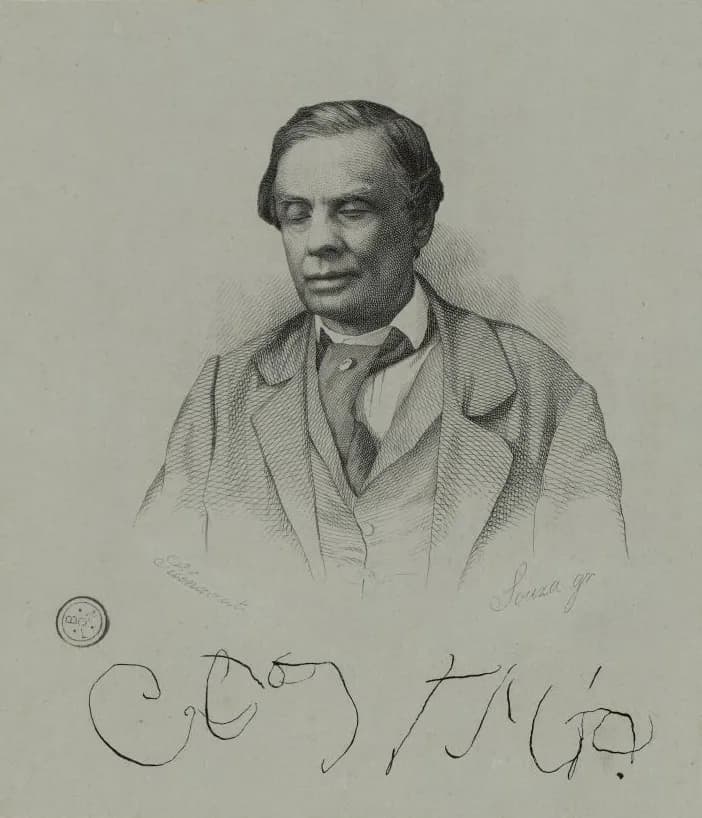
Later that year Castilho wrote an afterword, in the form of a letter to the publisher, for Poema da Mocidade by the young Pinheiro Chagas. He praised Chagas and mocked the “Coimbra school”, singling out Antero's Odes Modernas and Teófilo Braga's Tempestades Sonoras. Antero answered with an open letter dated Coimbra, 2 November 1865: Bom-Senso e Bom-Gosto, “Good Sense and Good Taste”.
The letter was rude on purpose. Castilho's verses had no ideal, Antero wrote, and his criticism had no ideas, only enough words for a dictionary of synonyms. He reminded his old teacher that he had put up with him at the Colégio do Pórtico when he was ten. He would stand up when Castilho's white hair passed, but what lay under it earned neither admiration nor respect, and he signed off “neither admirer nor respecter”.
“Your Excellency needs fifty years less of age, or else fifty more of reflection.”
Braga followed with a pamphlet of his own, and the quarrel became the Questão Coimbrã, the Coimbra Question. By one count it drew 44 further contributions; Castilho kept his promise not to reply in public. Antero later said the fight filled the winter of 1865 to 1866, and that when the smoke cleared Portugal had a group of 16 to 20 young men who were no longer Catholic or monarchist and talked of Goethe and Hegel.
Typesetter, traveller, federalist
Law did not interest him, and he called himself an insignificant lawyer. In the summer of 1866 he worked as a typesetter at the Imprensa Nacional in Lisbon, wanting to know the life of working men from the inside. In November he went to Paris to do the same job and came back in January 1867 disillusioned and unwell. On a second visit, on 2 August 1867, he called on Jules Michelet.
When revolution toppled the Spanish monarchy in 1868, he published Portugal perante a Revolução de Espanha, arguing for an Iberian union through a federal republic. He later called it a great illusion. In Lisbon he gathered a circle of friends, later called the Cenáculo, that included Eça de Queirós, Ramalho Ortigão and Jaime Batalha Reis. In the summer of 1869 he crossed the Atlantic to Halifax and New York.
The Casino Conferences of 1871
The Cenáculo became the Conferências Democráticas do Casino Lisbonense. Their programme promised to raise the great questions of modern philosophy and science and to study how Portuguese society could be transformed politically, economically and religiously. Europe had just seen the fall of the French Second Empire and, that spring, the Paris Commune.
| Date | Speaker | Lecture | What happened |
|---|---|---|---|
| 22 May | Antero de Quental | O espírito das conferências (the spirit of the conferences) | Opening lecture |
| 27 May | Antero de Quental | Causas da decadência dos povos peninsulares | Printed in Porto the same year |
| 6 June | Augusto Soromenho | A literatura portuguesa | Held |
| 12 June | Eça de Queirós | Realism as a new expression of art | Held; Eça never published it |
| 19 June | Adolfo Coelho | O ensino (education) | Held; reported to the government |
| 26 June | Next lecture due | Not given | Banned; the Casino closed by government order |
| Announced | Salomão Sáragga; Jaime Batalha Reis; Antero de Quental; Augusto Fuschini | Os historiadores críticos de Jesus; O socialismo; A república; A dedução positiva da ideia democrática | Never given |
Dates and titles from Oliveira Junior (Topoi, 2022), drawing on António Salgado Júnior's 1930 edition of the lectures; 22 and 27 May and 26 June also in the Azores government's chronology.
The Catholic paper A Nação called the speakers a dozen men led astray by liberal philosophy, preaching the doctrines that had brought disaster to France. What seems to have alarmed the government most was Adolfo Coelho's lecture of 19 June, which attacked Catholic teaching and the professors of Coimbra. The police commissioner present reported it, and the minister asked the Crown's attorney, João Baptista da Silva Ferrão de Carvalho Martens, for an opinion.
Martens argued that the lectures attacked the state religion and the constitutional Charter, and pointed to the destruction in Paris under the Commune. On 26 June, the day set for the next lecture, the Casino was closed on the orders of the Marquis of Ávila e Bolama, who headed the government, and a notice of the ban was posted on its door.
“In the name of freedom of thought, freedom of speech and freedom of assembly, the foundations of all public law and the only guarantees of social justice, we protest, more saddened than indignant, against the order that arbitrarily closes the hall of the Democratic Conferences.”
The veteran historian Alexandre Herculano supported the protest. Antero also published an open letter to the Marquis. He later claimed it was said to have helped bring the ministry down, though he added that it had been a caretaker government that could not last.
Three causes of decline
The lecture of 27 May was a sweeping history. In the Middle Ages, Antero argued, the Iberian peoples had been independent, inventive and free in their towns. In fifty or sixty years of the sixteenth century they fell into a dark, poor and ignorant world, and he named three causes: one moral, one political, one economic.
| Cause | Kind | What he said it did |
|---|---|---|
| Catholicism as reshaped by the Council of Trent | Moral | Made obedience, confession and the Inquisition rule private life; ended the medieval tolerance of Jews and Moors, whose expulsion he called almost a national calamity |
| Absolutism | Political | Destroyed the local liberties and town councils of the Middle Ages and governed through and for the nobility |
| Distant conquests | Economic | Drew farmers off the land to seek fortune overseas, sent the price of grain soaring, made Portugal import its food and goods and live off Eastern gold |
“Thus, while the other nations rose, we went down. They rose through the modern virtues; we descended through the old vices.”
His remedy was to break with the past: free conscience and science against Catholicism, a federal republic built on democratic town councils against centralised monarchy, and free, cooperative labour as a gradual passage to socialism. Revolution, he said, meant peace and order, not war. He ended by comparing it to early Christianity: “Christianity was the Revolution of the ancient world: the Revolution is nothing but the Christianity of the modern world.”
Some of the argument has aged badly. He judged conquests by whether they “civilised”, and called the British conquest of India just on those grounds. Antero himself said in 1887 that the speech still showed “preconceived political ideas” and history written with a purpose. It is still reprinted; in 2008 the essayist Eduardo Lourenço prefaced a new edition and called it a landmark of critical modern thought in Portugal.
“A sort of little Lassalle”
Antero's politics went beyond lecturing. In the early 1870s he founded workers' associations, wrote propaganda for working men and, as a follower of Marx and Engels, he said, brought the International Workingmen's Association, the First International, to Portugal. At the end of June 1871 he met emissaries of the International in secret. He was also among the founders of the Fraternidade Operária, a workers' association, but drifted away when his Proudhonian ideas were not adopted.
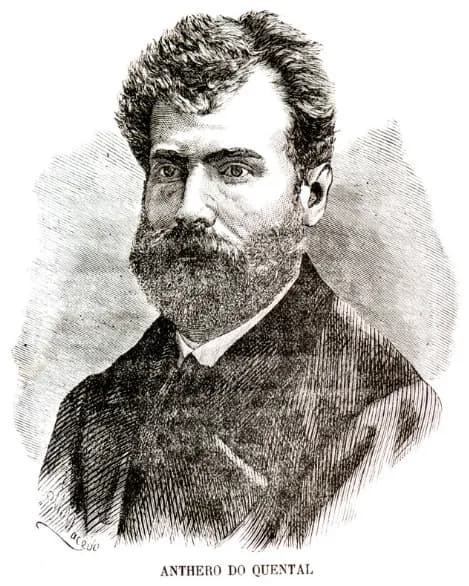
On 10 January 1875 he was named to the committee drafting the programme of the new socialist workers' party, and that year he ran the Revista Ocidental with Batalha Reis. He formally joined the Partido dos Operários Socialistas in July 1877 and stood for parliament as its candidate twice: in October 1879 and August 1881, according to the Azores government's chronology, or in 1879 and 1880, according to the Imprensa Nacional's biography.
“For some seven or eight years I was a sort of little Lassalle, and I had my hour of vain popularity.”
Illness, Vila do Conde and the sonnets
In 1874 he fell gravely ill with what he called a nervous illness from which he never fully recovered. Later biographers describe a manic-depressive illness. Enforced idleness and the prospect of death, he wrote, put him face to face with “the great problem of existence”. He read Schopenhauer and Hartmann, and wrote and destroyed many poems.
Portuguese doctors could not help. In June 1877 he went to Paris to consult the neurologist Jean-Martin Charcot, who prescribed a water cure at Bellevue; he went back for more treatment in 1878. Neither worked. He also took in the two young daughters of his Coimbra friend Germano Meireles, who died in 1877, and brought them up as his own.
In 1881 he left Lisbon for Vila do Conde, a small northern town near Porto, where he lived for most of the next decade with the girls. Oliveira Martins was close by in Porto and Alberto Sampaio in Famalicão. These were the calmest years of his life, and he wrote his last sonnets there.
Antero had taken up the sonnet as a student in Coimbra when, he said, nobody wrote them any more, and named Camões's sonnets as his “gospel of feeling”. In 1886 Oliveira Martins collected them as Os Sonetos Completos, in five sections dated from 1860 to 1884. Antero called the book “the autobiography of a thought” and “the memoirs of a conscience”.
Sonnets in Os Sonetos Completos (1886), by the period of each section
sonnets
Counted from the text of the 1886 edition, whose index lists 109 first lines. The 1874–1880 section holds the poems of his first years of illness; Antero said the last 21 sonnets reflected his final ideas about the world.
Show the data
| Sonnets in the section | |
|---|---|
| 1860–1862 | 20 |
| 1862–1866 | 28 |
| 1864–1874 | 17 |
| 1874–1880 | 23 |
| 1880–1884 | 21 |
The early sections are love poems and political verse. From 1874 the poems turn to death, night and nothingness. The last group moves towards a mystical peace: “Na mão de Deus, na sua mão direita, / Descançou a final meu coração” (“In the hand of God, in his right hand, / my heart at last has come to rest”).
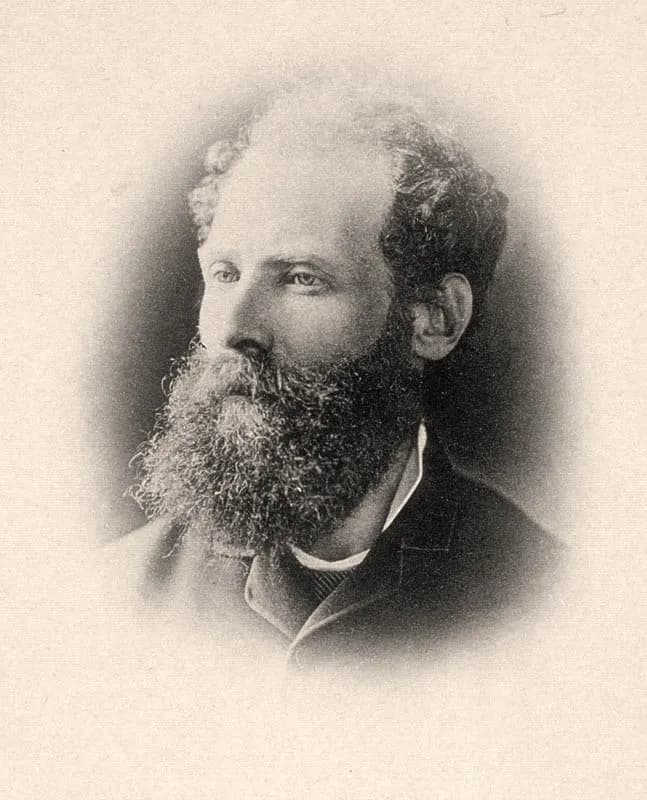
Wilhelm Storck, who had translated Camões into German, translated a selection of the sonnets in 1887 and asked for some biographical notes. Antero's reply, dated Ponta Delgada, 14 May 1887, is the main account of his own life. Teófilo Braga, publishing it after Antero's death, called its facts vague and exaggerated. In 1889 Columbano Bordalo Pinheiro painted the portrait now in the Museu do Chiado.
1890 to 1891: the League and the bench
On 11 January 1890 Britain sent Portugal an ultimatum over its claims in Africa, and the country rose in anger against Britain and its own government. In Porto a Liga Patriótica do Norte was formed, and on 6 February its founders chose Antero, a name trusted across the political factions, as president.
At a public session on 7 March 1890 he told the League that its founding would be “the first stone of the building of the restoration of the national forces”. Portugal, he said, was not truly independent, politically or economically. The party leaders soon saw a rival in the League, and Antero resigned rather than let it become a tool of their ambitions.
He decided to settle in São Miguel with his adopted daughters, and sailed on 5 June 1891. His first letters were cheerful. By mid-August his health was worse, and some of his family were cool towards the girls. On 26 August he moved into the house of his friend José Bensaúde.
2.30 pm
Leaves José Bensaúde's house
He walks up to the Civil Government building and sees his sister Ana, leaving her some money.
Next
Buys a revolver
He buys it at Benjamim Férin's shop on the corner of the Largo da Matriz.
Then
Second visit to his sister
He returns to the Civil Government, then calls at the house of his wards, his adopted daughters.
c. 7 to 8 pm
The bench
He sits on a bench by the wall of the Convento da Esperança in the Campo de São Francisco and shoots himself.
About an hour later
Dies
12 September
Buried in the São Joaquim cemetery
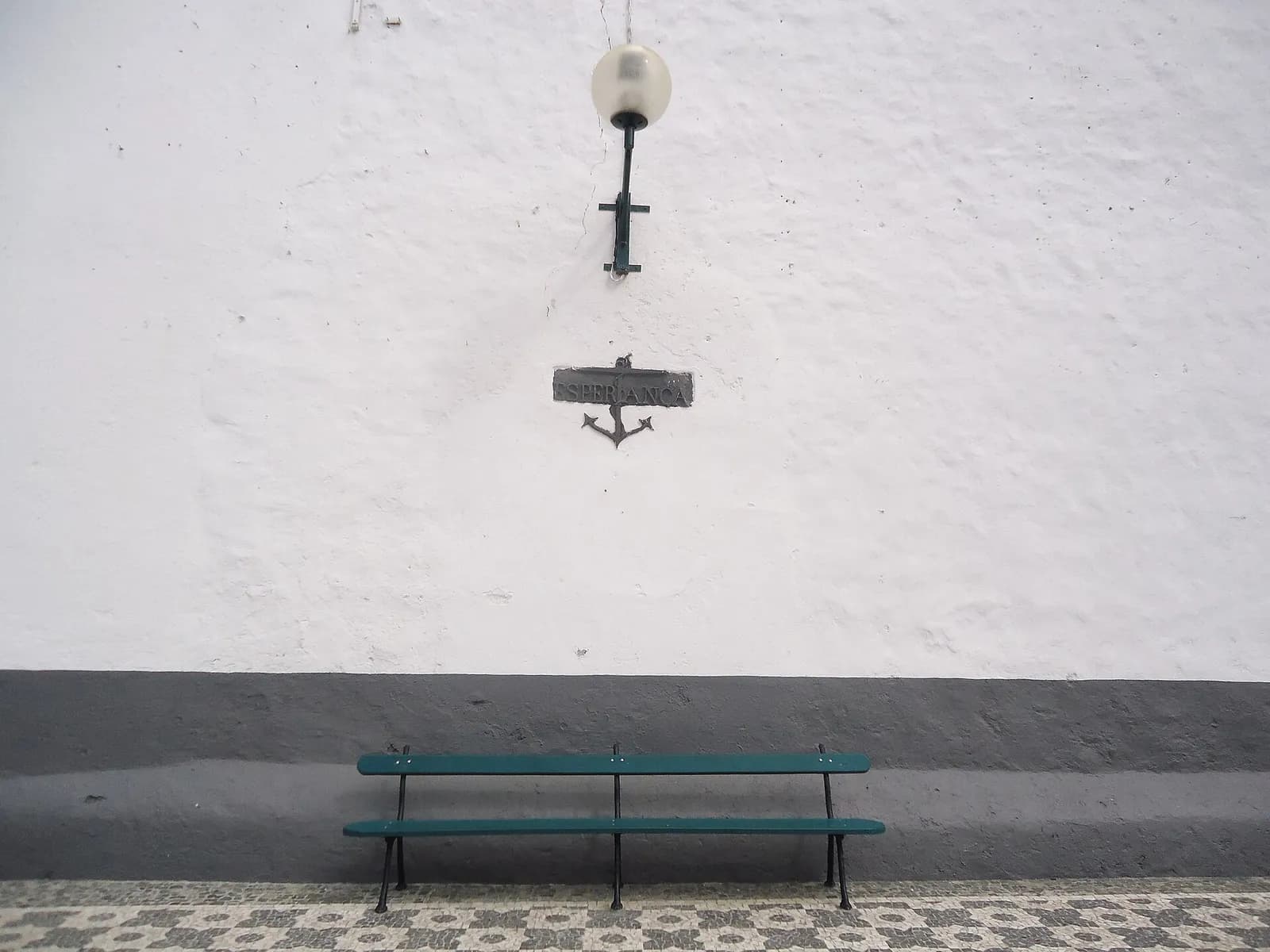
The accounts differ slightly on the hour. The Azores government's chronology gives 8 pm; the Imprensa Nacional's biography, based on Ana Maria Almeida Martins, gives 7 pm. Four years earlier he had told Storck he hoped to die “in the peace of the Lord”.
Why he still matters
Antero was the acknowledged leader of the writers later called the Generation of 1870, among them Eça de Queirós, Teófilo Braga, Oliveira Martins, Ramalho Ortigão and Batalha Reis. Five years after his death they wrote about him in a memorial volume, Antero de Quental: In Memoriam (1896). Eça, who had also drawn him as the activist Damião in an unfinished novel, called his essay “A genius who was a saint”.
The Causas, with its question of why Portugal fell behind the rest of Europe, was reissued in 2008 with a preface by Eduardo Lourenço. The sonnets were translated into German in his lifetime, and a second edition added Storck's German versions and some Italian ones. Until the late 1990s his face was on the green 5,000-escudo banknote.
FAQs
When and where was Antero de Quental born?
On 18 April 1842, in his family's house on Rua do Lameiro (now Rua do Castilho) in Ponta Delgada, on São Miguel in the Azores. He died in the same town on 11 September 1891.
What was the Coimbra Question?
A pamphlet war of 1865 and 1866 between young writers from Coimbra and António Feliciano de Castilho, the leading figure of Lisbon letters. Castilho mocked the Coimbra school in an afterword to Pinheiro Chagas's Poema da Mocidade; Antero answered with Bom-Senso e Bom-Gosto on 2 November 1865, Teófilo Braga followed, and dozens of other pamphlets joined in.
What were the Casino Conferences?
A series of public lectures on politics, religion, literature and education held at the Casino Lisbonense in Lisbon in May and June 1871 by Antero, Eça de Queirós, Adolfo Coelho, Augusto Soromenho and others. Antero gave the first two. The government banned them on 26 June 1871.
What did Antero say caused Portugal's decline?
In his lecture of 27 May 1871 he named three causes from the sixteenth century: Catholicism as reshaped by the Council of Trent, absolute monarchy, which destroyed local liberties, and distant conquests, which drew labour from the land and made the country live off imported goods and Eastern gold.
How did Antero de Quental die?
He shot himself on a bench by the wall of the Convento da Esperança in the Campo de São Francisco, Ponta Delgada, on the evening of 11 September 1891, after years of a nervous illness that later biographers describe as manic-depressive. He was buried the next day in the São Joaquim cemetery.
On the timeline
Open the timelineNearby moments from invasions, brazil and the liberal wars (1807–1851).
A decree issued under minister Passos Manuel creates Portugal's National Pantheon to honour the country's most distinguished figures. It was eventually installed in Lisbon's Church of Santa Engrácia, begun in 1682 and finished only in 1966 — hence 'obras de Santa Engrácia', Portuguese for a job that never ends.
The future King Pedro V, 'the Hopeful', is born at the Necessidades Palace in Lisbon. Acclaimed on his 18th birthday in 1855 — the day Lisbon's first electric telegraph line was inaugurated — the studious, modernising king died in an epidemic in 1861, aged just 24, along with two of his brothers.
Joaquim Guilherme Gomes Coelho, better known as Júlio Dinis, is born in Porto. A doctor who died of tuberculosis at 31, he wrote gentle novels of rural and provincial life such as 'As Pupilas do Senhor Reitor' and 'A Morgadinha dos Canaviais' that remain classics of Portuguese fiction.
Antero de Quental is born
Birth of Antero de Quental in Ponta Delgada, on the Azorean island of São Miguel. A charismatic student leader at Coimbra and a central figure of the Generation of '70, he is counted among the finest sonnet writers in the Portuguese language, taking Camões's sonnets as his model.
Porto's D. Maria II suspension bridge opens to traffic over the Douro as the river floods, four months after crowds had celebrated its first crossing. Replaced by the Luís I bridge and dismantled in 1887, it is still recalled by two stone obelisks on the Porto bank.
Teófilo Braga is born in Ponta Delgada, in the Azores. A prolific historian of Portuguese literature and positivist thinker, he headed the Provisional Government after the 5 October 1910 revolution and briefly served as President of the Republic in 1915.
Eça de Queirós is born in Póvoa de Varzim, the illegitimate son of parents who married only years later. The great realist novelist of 'O Crime do Padre Amaro' and 'Os Maias' spent much of his life as a consul abroad — in Havana, Newcastle, Bristol and Paris — turning a sharply ironic eye on Lisbon society.
Coming up in history
All long reads 20 April 1911Portugal's Law of Separation: how the Republic broke with the Church in 1911
 21 April 1985Senna's first Formula One win, in the Estoril rain, 1985
 22 April 1500Monte Pascoal on the horizon: Cabral's fleet reaches Brazil, 22 April 1500
 23 April 1909The Benavente earthquake: when the Tagus valley shook in 1909
15 sources
Archives, scholarship and reporting this article was checked against.
- 1
Raios de extincta luz: poesias ineditas (1859-1863), ed. Teófilo Braga (Lisbon, M. Gomes, 1892), with the “Carta autobiographica” to Wilhelm Storck of 14 May 1887Project Gutenberg, eBook 20874
- 2
A History of Antero / Anterian sites in Ponta Delgada / Antero de Quental chronology (route guide, English edition)Direção Regional da Cultura, Governo dos Açores (CulturAçores)
- 3
Antero de Quental (author biography, based on Ana Maria Martins, O Essencial sobre Antero de Quental)Imprensa Nacional-Casa da Moeda
- 4
Causas da decadência dos povos peninsulares (Antero de Quental; text of Porto, Tipografia Comercial, 1871)Projecto Adamastor (2015 ebook edition)
- 5
Por novos horizontes, por um novo Portugal: Eça de Queiroz e a “geração de 1870” nas Conferências do Casino (Virgílio Coelho de Oliveira Junior)Topoi. Revista de História, vol. 23, no. 49 (2022), pp. 284-306, Universidade Federal do Rio de Janeiro
- 6
- 7
- 8
8 July 1832: Pedro disembarks in Mindelo, near PortoParques de Sintra, Palácio Nacional de Queluz (D. Pedro IV chronology)
- 9
- 10
A arte de rimar e de versificar no parnasianismo e a arte poética de João Penha (Paulo J. Pedrosa S. Gomes)Faculdade de Letras da Universidade do Porto (2019)
- 11
- 12
Antero de Quental, Os Sonetos: o fim dos valores clássicos na literatura (Miguel Real)e-cultura, Centro Nacional de Cultura (Obras de referência da cultura portuguesa)
- 13
Retrato de Antero de Quental, 1889 (Inv. 1108): catalogue entry by Pedro LapaMuseu Nacional de Arte Contemporânea do Chiado
- 14
- 15Tem destas notas de escudo em casa? Pode ganhar dinheiro com elas até sexta-feiraObservador, 26 December 2017
Image credits
- Antero de Quental painted by Columbano Bordalo Pinheiro in 1889, two years before his death (detail). The portrait is in the Museu Nacional de Arte Contemporânea do Chiado, Lisbon. Bosc d'Anjou from New York, NY, USA, CC BY 2.0, via Wikimedia Commons.
- António Feliciano de Castilho (1800–1875), Antero's childhood teacher and the target of Bom-Senso e Bom-Gosto. Engraving by Joaquim Pedro de Sousa, 1860s. Joaquim Pedro de Sousa (1818-1878), Public domain, via Wikimedia Commons.
- Antero as the Lisbon press saw him in his socialist years: an engraving in the Diário Illustrado of 24 September 1875. Unknown author, Public domain, via Wikimedia Commons.
- Antero de Quental about 1887, the year he sent his autobiographical letter to Wilhelm Storck. Reproduced in the memorial volume Antero de Quental: In Memoriam (Lisbon, 1896). Unknown author, Public domain, via Wikimedia Commons.
- A bench against the wall of the Convento da Esperança, in the Campo de São Francisco, Ponta Delgada, at the spot where Antero died. Esperança means hope. Photographed in 2015. Carlos Luis M C da Cruz, CC BY-SA 4.0, via Wikimedia Commons.
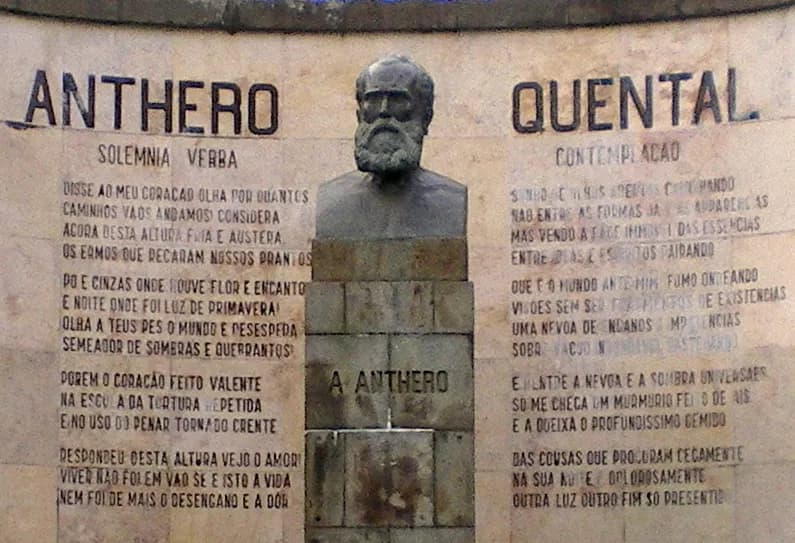
- A memorial to Antero in Ponta Delgada, photographed in 2013. The wall carries two of his sonnets, Solemnia Verba and Contemplação. Froth82, CC BY-SA 3.0, via Wikimedia Commons.