

Monte Pascoal on the horizon: Cabral's fleet reaches Brazil, 22 April 1500
Bound for India, Pedro Álvares Cabral's fleet swung so far west across the Atlantic that a mountain rose out of the sea. A clerk from Porto wrote down everything that happened over the next ten days.
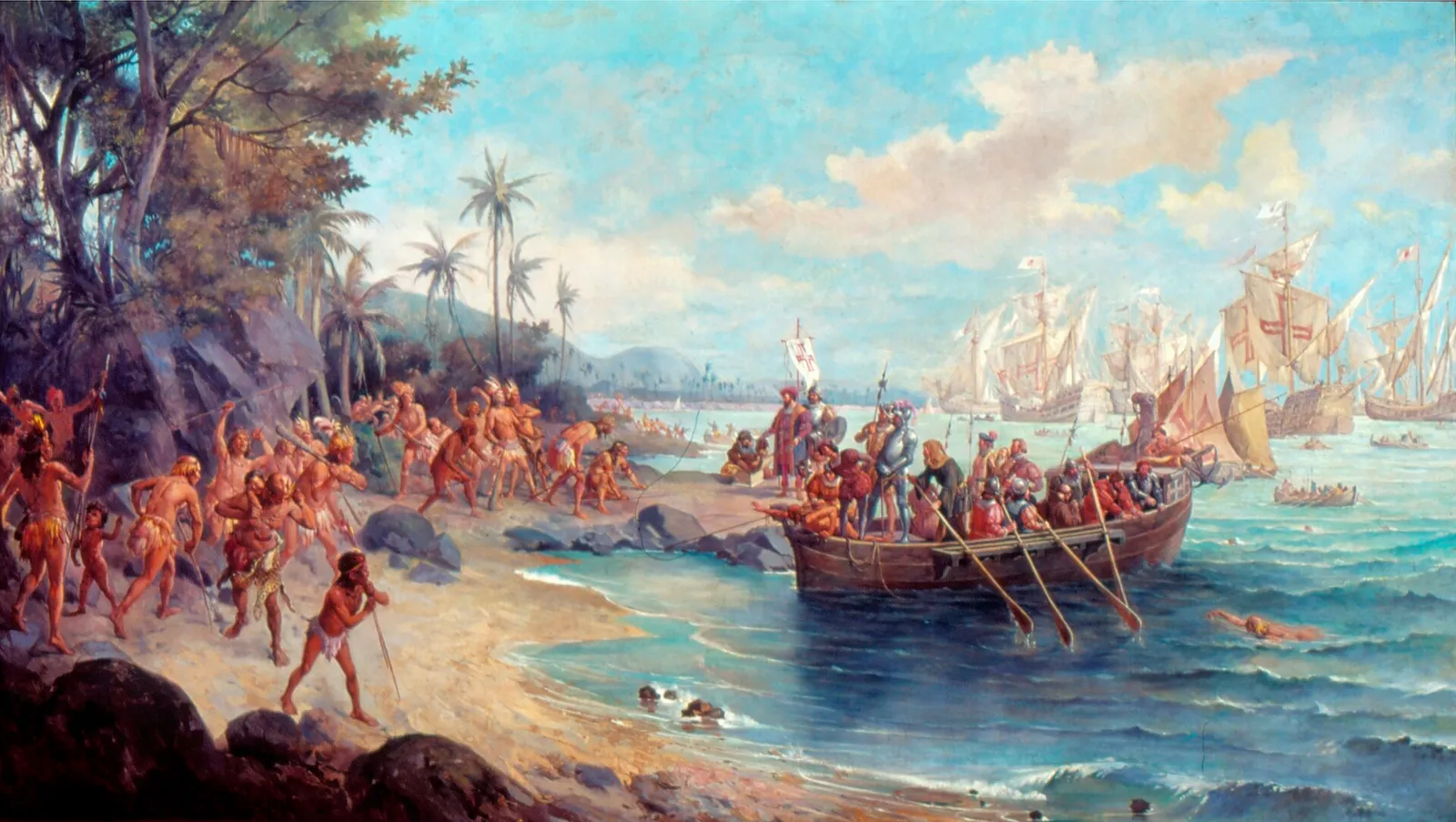
At a glance
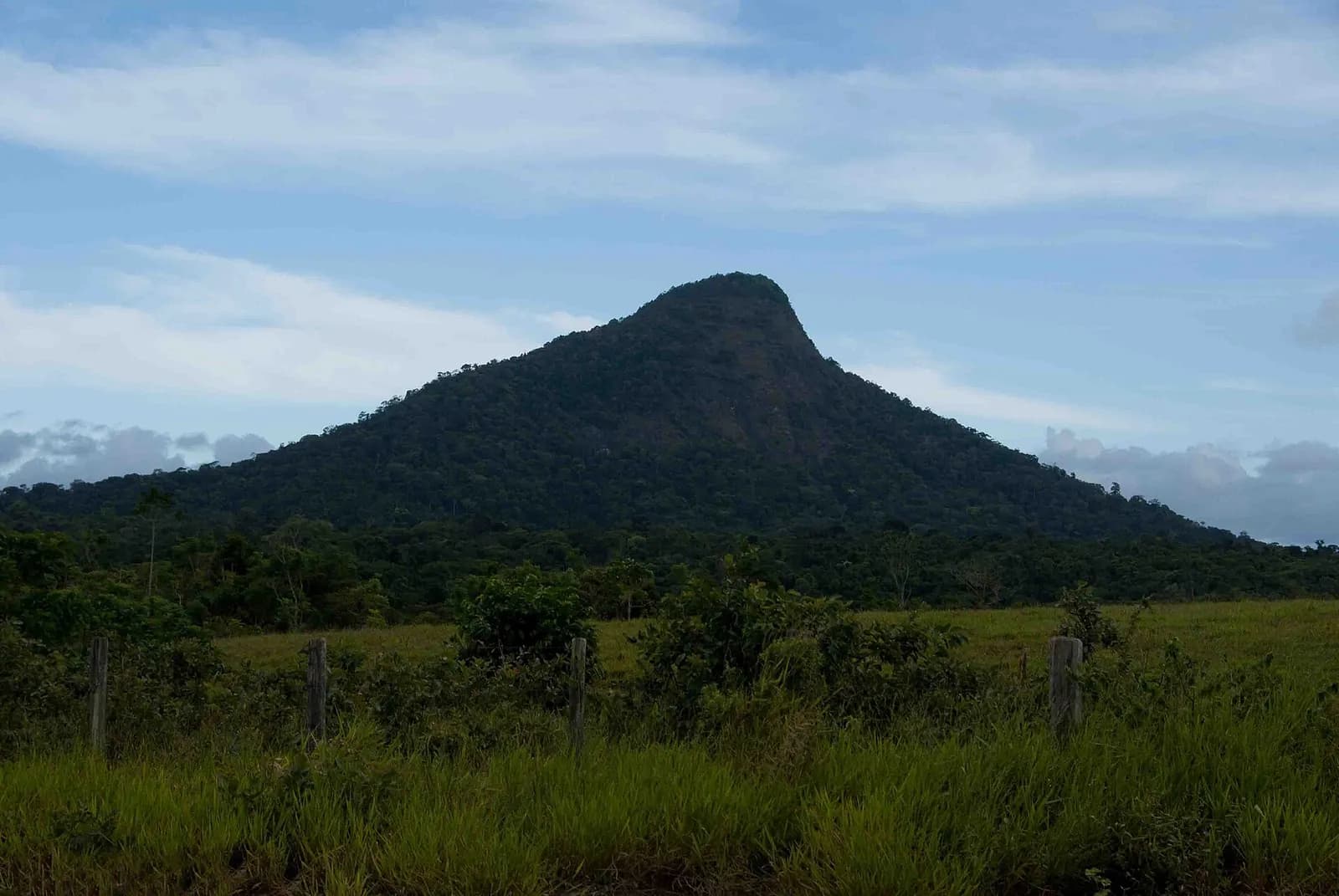
- On Wednesday 22 April 1500, in the late afternoon, the India fleet of Pedro Álvares Cabral sighted a high, round mountain on the coast of what is now Bahia. Cabral named it Monte Pascoal, after Easter, and the land Terra de Vera Cruz.
- The fleet had left the Tagus on 9 March with 13 ships and, by different chroniclers' counts, 1,200 to 1,500 men. One ship had already vanished near the Cape Verde islands.
- For ten days the Portuguese traded with the Tupiniquim people at a harbour they called Porto Seguro, held Mass twice and put up a large wooden cross, then sailed for India on 2 May.
- The clerk Pero Vaz de Caminha described those days in a letter to King Manuel I dated 1 May 1500. The original is in the Torre do Tombo archive in Lisbon.
- Whether Cabral steered west to look for land or found it while taking a wide route to the Cape of Good Hope has been argued over since the nineteenth century. No document settles it.
A mountain at vespers
The first sign was weed. On Tuesday 21 April 1500, two days after Easter, the lookouts of a Portuguese fleet in the South Atlantic saw long strands floating past, which the sailors called botelho and rabo-de-asno, donkey's tail. The pilots reckoned they were 660 or 670 leagues from the Cape Verde islands. On Wednesday morning birds the crews called fura-buchos flew over the ships.
Late that afternoon, at the hour of vespers, land rose on the western horizon. Pero Vaz de Caminha, a clerk on the flagship, wrote down what he saw.
“First of a great mountain, very high and round, and of other lower ridges to the south of it, and of flat land with great groves of trees. To this high mountain the captain gave the name Monte Pascoal, and to the land, the Land of Vera Cruz.”
Pascoal means “of Easter”. The captain-major, Pedro Álvares Cabral, had the lead thrown and found 25 fathoms of water. At sunset the twelve ships still with him anchored about six leagues offshore, in 19 fathoms on a clean bottom, and waited for morning. Their orders were for India.
The second India fleet
Vasco da Gama had come home from India in 1499 having reached Calicut, on the Malabar coast, but with little cargo. King Manuel I at once ordered a much larger fleet to follow. It was to set up a trading post, or factory, at Calicut, win over its ruler, the Zamorin, or make war on him if he refused, and send two ships under Bartolomeu Dias and his brother Diogo to Sofala, in today's Mozambique, where gold was traded.
Command went to Pedro Álvares Cabral, a nobleman in his early thirties from Belmonte, in the Beira, appointed by royal letter of 15 February 1500. His family had served the Order of Christ for a century, and he was a knight of the Order himself. Little is known of his career before 1500.
- Ships
- 13: carracks, smaller ships and caravels, eleven of them the Crown's and two owned by Portuguese and Italian partners
- Men
- About 1,200 (Barros) or 1,500 (Castanheda and Góis), sailors and men-at-arms
- Clergy
- Eight Franciscan friars under Frei Henrique, eight chaplains and a vicar
- Veterans
- Bartolomeu Dias, first round the Cape in 1488, and Nicolau Coelho, a captain under Gama
- Left Belém
- Monday 9 March 1500
- Goal
- Calicut, by way of the Cape of Good Hope
The commercial staff sailed in the flagship. The chief factor was Aires Correia, and one of his clerks was Pero Vaz de Caminha, a man of about fifty who had inherited from his father the post of master of the balance at the Porto mint. Another passenger was a royal physician and astronomer known as Master John, sent to fix the ships' position by the stars.
The fleet left the Tagus on Monday 9 March, the day after the king handed Cabral his banner at the chapel of Restelo, in Belém. It passed the Canaries on the 14th and São Nicolau, in the Cape Verde islands, on Sunday the 22nd. That night Vasco de Ataíde's ship disappeared. Caminha insists there was no heavy weather or contrary wind to explain it, and two days of searching found nothing.
The wide sweep west
To reach the Cape of Good Hope a sailing ship could not simply hug Africa. South of Guinea lay belts of calm and then the south-east trade wind, blowing against any ship trying to go south. In 1497 Gama had been the first to cross the open South Atlantic, far from the African coast. A memorandum attributed to him, written for Cabral, spells out the route.
“When they have the wind behind them make their way towards the south. And if they must vary their course let it be in the south-west direction. And as soon as they meet with a light wind they should take a circular course until they put the Cape of Good Hope directly east.”
Cabral's pilots kept to the south-west for a month, carried by the north-east trades and by westward currents they had no means of measuring, since longitude could not yet be found at sea. By Greenlee's reckoning the fleet crossed the equator around 30 degrees west and ran on south-south-west, well out from a coast nobody aboard knew was there.
Ten days at Porto Seguro
On Thursday 23 April the small ships led the fleet in, sounding as they went, and anchored half a league off the mouth of a river. Men were walking on the beach. Cabral sent Nicolau Coelho in a boat, and by the time he reached the river some 18 or 20 had gathered, naked and carrying bows. At his sign they laid the bows down. The surf made talk impossible, so Coelho handed over a red cap, a linen cap and a black hat, and received a headdress of long feathers and a string of small white beads.
That night a south-easterly gale made the anchors drag. On Friday the 24th the fleet ran about ten leagues north and found a reef with a sheltered harbour behind it, which Cabral named Porto Seguro, the safe port. It is today's Baía Cabrália. There the pilot Afonso Lopes took two young men from a canoe and brought them to the flagship after dark.
Cabral received them by torchlight, seated on a chair with a carpet at his feet and a heavy gold collar round his neck. One of the visitors looked at the collar, pointed to the land and back again; he did the same with a silver candlestick. Offered bread, honey and dried figs, they spat most of it out. Wine they tasted once and refused. Then they lay down on the carpet and went to sleep, and Cabral had cushions put under their heads.
“We took it in that sense because we wished it so. But if he meant that he would take the beads and the collar as well, that we did not want to understand, because we were not going to give it to him.”
On Saturday the ships moved inside the reef. Coelho and Bartolomeu Dias rowed the two men back, dressed in new shirts and red caps, with Caminha and a young convict, Afonso Ribeiro, who was to live among the Tupiniquim and learn their ways. Nearly 200 men waited on the shore with bows. The two guests ran off across a river into the palms, and before long people were wading out to help fill the water casks.
On Low Sunday, 26 April, Frei Henrique said Mass on an islet in the bay, the first in what became Brazil. Onlookers on the beach blew horns and danced. After the midday meal the captains agreed to send the supply ship home with the news, and not to carry anyone off by force. That afternoon Diogo Dias, Bartolomeu's brother, crossed the river with a bagpiper and danced with them, hand in hand, until they turned wary and went off upstream.
People on the shore, as Caminha counted them
people (upper figure of Caminha's estimate)
Caminha's own words: 18 or 20 at the river mouth on 23 April; 60 or 70 sitting by the river on the 24th; nearly 200 at Porto Seguro on the 25th; 60 or 70, then a good 200, on the 28th; nearly 300 on the 29th, by Sancho de Tovar's count; 400 or 450 on the 30th; and a good 150 or more at the cross on 1 May. He gives no figure for 26 and 27 April.
Show the data
| Caminha's estimate | |
|---|---|
| 23 Apr | 20 |
| 24 Apr | 70 |
| 25 Apr | 200 |
| 28 Apr | 200 |
| 29 Apr | 300 |
| 30 Apr | 450 |
| 1 May | 150 |
Over the next days the Portuguese cut wood and filled casks, and the two sides mixed more freely. On Monday Ribeiro, two other convicts and Diogo Dias walked a league and a half inland to a village of nine or ten houses, each as long as the flagship and home to thirty or forty people, who slept in hammocks slung between posts. The same day Master John went ashore with two pilots, measured the sun at noon with an astrolabe and put Porto Seguro at 17 degrees south, close to the true 16 degrees 21 minutes.
On Tuesday two carpenters made a large cross from a tree cut the day before, and the onlookers, Caminha thought, were more interested in the iron tools than the cross. They cut their own timber with stone wedges bound to handles. On Friday 1 May the cross went up near the river with the king's arms nailed to it, and a second Mass was said at its foot while some fifty or sixty Tupiniquim knelt and rose with the Portuguese.
Tue 21 April
Weed in the water: the first signs of land
Wed 22 April
Monte Pascoal sighted at vespers; the fleet anchors six leagues off
Thu 23 April
Nicolau Coelho exchanges hats for a feather headdress at a river mouth
Fri 24 April
A gale drives the fleet ten leagues north to the reef of Porto Seguro
Sat 25 April
Ships enter the harbour; two guests rowed ashore with the convict Afonso Ribeiro
Sun 26 April
Mass on the islet; captains agree to send the supply ship home
Mon 27 April
Visit to a village inland; Master John measures the latitude
Tue 28 April
Carpenters build the cross
Fri 1 May
Cross raised and second Mass; Caminha dates his letter
Sat 2 May
The fleet sails for the Cape of Good Hope
When the fleet sailed on Saturday 2 May it left two convicts behind with instructions to learn the language. Two ship's boys had slipped ashore in a skiff on the last night and did not come back. The supply ship under Gaspar de Lemos headed back to Lisbon with the letters, parrots and feather work.
Caminha's letter
Caminha wrote as the days passed, almost a diary, and dated the finished letter Friday 1 May 1500, "from this Porto Seguro of your island of Vera Cruz". He apologised for its length and ended by asking the king to bring home his son-in-law, Jorge de Osório, from exile on São Tomé.
“Its waters are many, endless. And it is so pleasing that if one cares to profit by it, everything will grow in it, because of the waters it has. But the best fruit that can be drawn from it, it seems to me, will be to save these people.”
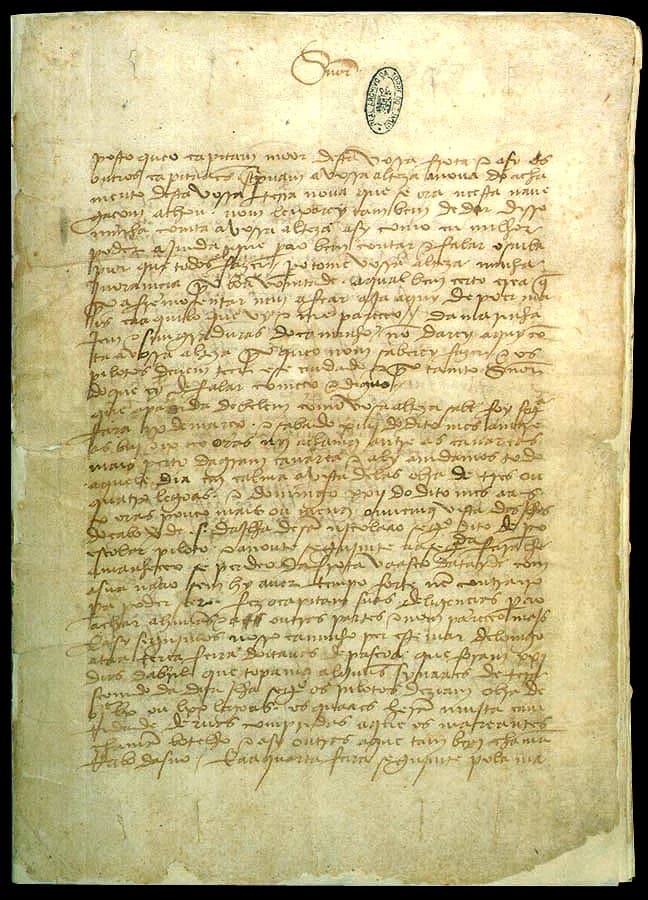
The letter is the fullest of three eyewitness accounts. Master John wrote a short one the same day, on his latitude and the stars, with a sketch of the Southern Cross; he noted that the pilot Pero Escolar put the fleet 150 leagues further on than he did. A third account, by an unnamed member of the fleet who lived to come home, survives only in Italian and was printed in 1507.
Caminha never saw his letter again. He was one of some fifty Portuguese killed when the factory at Calicut was stormed on 16 December 1500. The seven sheets stayed in the royal archive, little known, until the Spanish historian Juan Bautista Muñoz found them before 1790. They were first printed in 1817. The historian Jaime Cortesão called the letter the account of Brazil's birth.
Chance or design
Nobody in 1500 recorded a debate about why the fleet was so far west. King Manuel, announcing the news to Ferdinand and Isabella of Spain in 1501, put it down to Providence: the new land was very convenient for the India voyage, and it seemed that Our Lord had miraculously wished it to be found. Caminha wrote that God's bringing them there was not without cause.
The chroniclers of the next generation gave a seaman's reason. João de Barros wrote that Cabral stood far out to sea to avoid the calms off Guinea and make sure of doubling the Cape. Most of the pilots, he added, took the new coast for a large island like those Columbus had found.
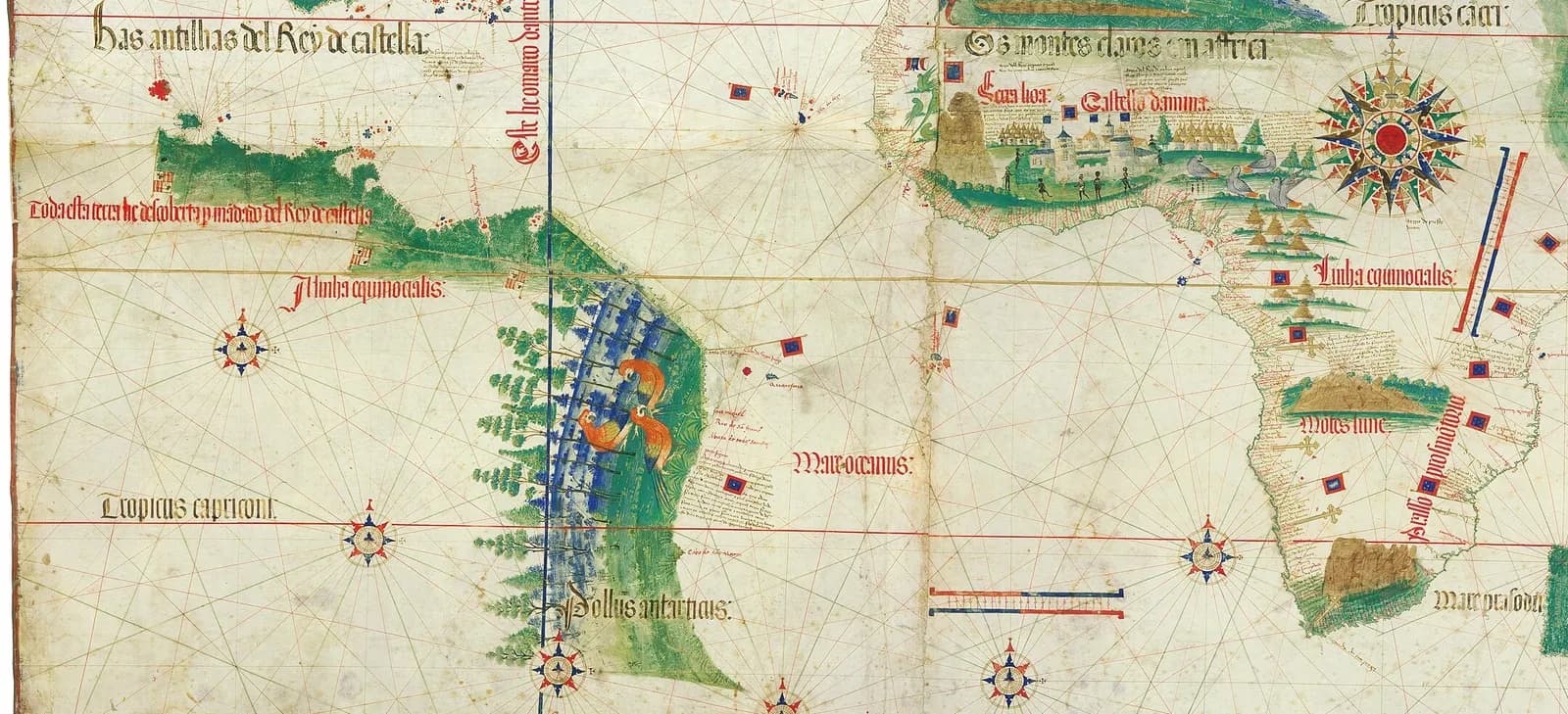
The case for design rests on what Lisbon may already have known. Portugal had insisted on a Tordesillas line 370 leagues out, and some historians read that as a sign that it suspected land lay there. Duarte Pacheco Pereira, a navigator who signed that treaty, later wrote in his Esmeraldo de situ orbis that King Manuel had sent him in 1498 to explore the western part of the ocean, where a great mainland lay. The Spaniard Vicente Yáñez Pinzón may have touched the north-east of Brazil in January 1500.
Historians still divide. João Paulo Oliveira e Costa writes that Cabral carried two missions, the first being a discreet search for land in the south-west. The supply ship reached Lisbon unnoticed, which he takes as proof that its crew had orders to keep quiet. William Brooks Greenlee, who translated the sources in 1938, saw no sign that Lisbon already knew the land. The fleet made no effort to explore, sent a ship home with news it would not have needed to send about a known coast, and no contemporary named any earlier discoverer. He allowed that the planners may have hoped to find land on the way, but thought the main motive was the safest route to the Cape.
| Event | Caminha (eyewitness) | Anonymous member of the fleet | Barros | Castanheda | Góis |
|---|---|---|---|---|---|
| Land sighted | Wednesday 22 April | 24 April, "Wednesday of the Easter octave" | 24 April | 24 April | 24 April |
| Fleet leaves Brazil | 2 May ("tomorrow", in a letter of 1 May) | 2 May | 3 May | 3 May | 2 May |
| Storm sinks four ships | (letter ends on 1 May) | Sunday 24 May | 23 May | Squall on Saturday 23 May; ships lost the next day | Sunday 24 May |
Easter fell on 19 April in 1500, so the Wednesday of Easter week was the 22nd, as Caminha says; the anonymous account contradicts itself. Gaspar Correia gives no date for the storm. Oliveira e Costa's chronology, built from the eyewitness documents, puts it on 20 May. Barros, Castanheda and Góis name Vasco de Ataíde among the four lost; the eyewitnesses lose him in March.
After Vera Cruz
The crossing to the Cape went badly. A comet hung in the sky for eight to ten nights from 12 May, and then a sudden squall struck the fleet with its sails half set. Four ships went down with everyone aboard, Bartolomeu Dias's among them. The sources disagree on the day: an eyewitness and Damião de Góis give Sunday 24 May, Barros the 23rd, and Oliveira e Costa's modern chronology the 20th.
| Captain | Fate |
|---|---|
| Pedro Álvares Cabral (flagship) | Reached Calicut; home in July 1501 |
| Sancho de Tovar | Reached Calicut; ship lost aground on the African coast on the way home, February 1501; Tovar came home in the caravel |
| Simão de Miranda | Reached Calicut; home in July 1501 |
| Nicolau Coelho | Reached Calicut; home in 1501 |
| Nuno Leitão da Cunha (Anunciada) | Reached Calicut; sent ahead and first home, 23 or 24 June 1501 |
| Pêro de Ataíde (caravel São Pedro) | Reached Calicut; home in 1501 |
| Vasco de Ataíde | Lost near the Cape Verde islands, 23 March 1500 |
| Gaspar de Lemos (supply ship) | Sent back from Brazil to Lisbon with the letters |
| Bartolomeu Dias | Sunk in the May storm |
| Aires Gomes da Silva | Sunk in the May storm |
| Simão de Pina | Sunk in the May storm |
| Luís Pires | Sunk in the May storm, or turned back to Lisbon in March, depending on the source |
| Diogo Dias | Separated in the storm; sighted Madagascar, reached the mouth of the Red Sea and limped home in 1501 |
Eyewitness evidence as set out by Greenlee and by Oliveira e Costa's chronology. Barros, Castanheda and Góis have Luís Pires turn back after a storm near Cape Verde and put Vasco de Ataíde among the ships lost in May. Greenlee has Nicolau Coelho command the Anunciada on the way home.
Six ships anchored off Calicut on 13 September. Talks with the Zamorin dragged on, and on 16 December a crowd stormed the Portuguese factory and killed more than fifty men. Cabral seized and burned ten Arab ships in the harbour and bombarded the city for a day, then loaded spices at Cochin, whose ruler welcomed a rival to Calicut. The survivors reached the Tagus between late June and late July 1501.
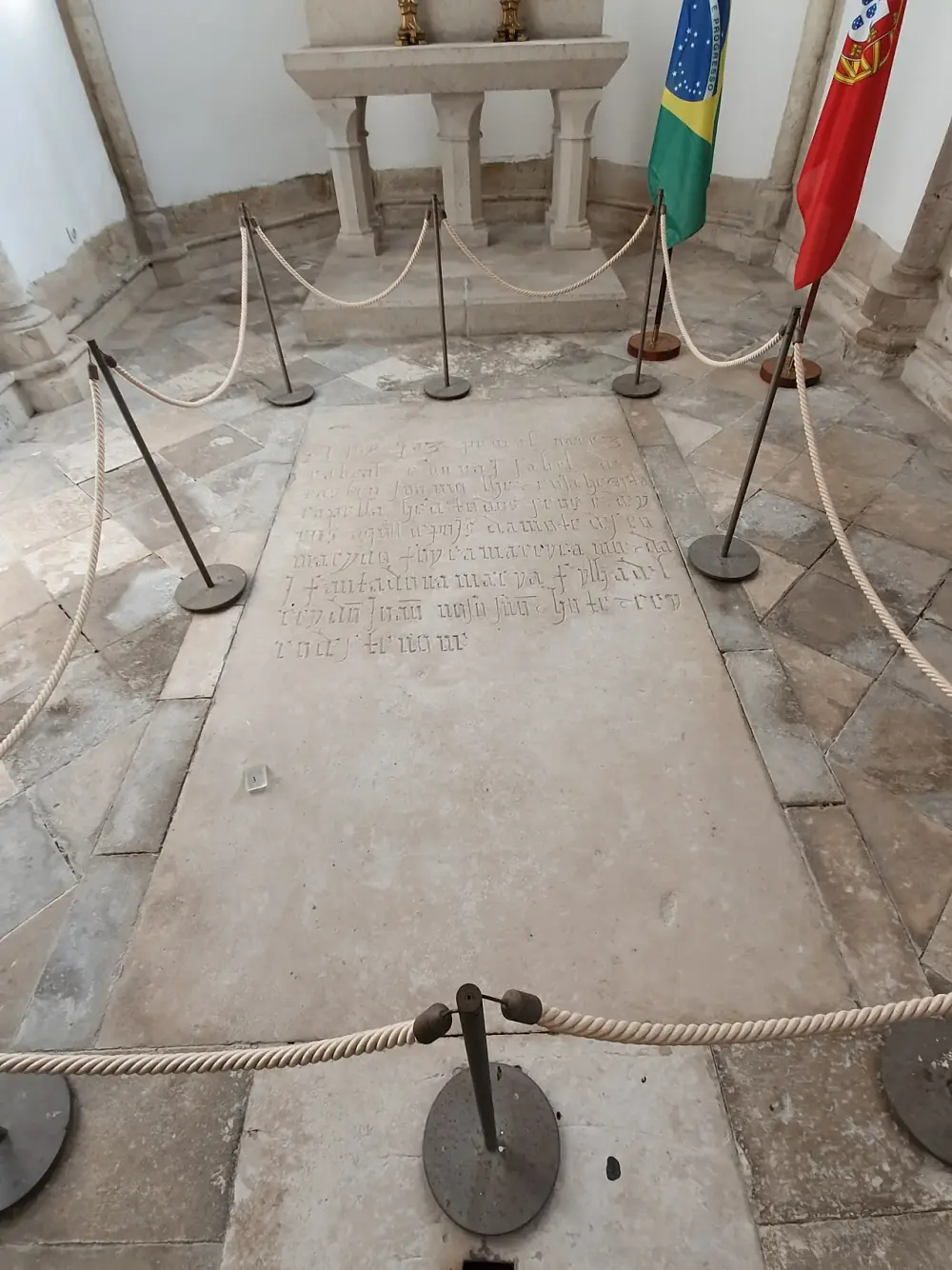
The king called the new land Santa Cruz, Holy Cross. Within a few years traders were shipping its red dyewood, pau-brasil, to Flanders, and the wood gave the country its name; Barros complained that the name of a wood for dyeing cloth had displaced the name of the Cross. In May 1501 Manuel sent ships under Gonçalo Coelho to find out how far the coast went. Cabral never commanded again after a quarrel over the 1502 fleet. He died in 1520 and was buried at Santarém.
Why it still matters
For centuries Brazil marked the discovery on 3 May, the feast of the Holy Cross, a date that goes back to chroniclers such as Gaspar Correia. The date now used is Caminha's 22 April; marking it in 2020, Portugal's navy museum called Cabral, officially, the first European to reach Brazil.
The anniversary has also become a day of argument. On 22 April 2000 the presidents of Brazil and Portugal led the 500th-anniversary ceremonies at Porto Seguro, and the government put up a huge metal cross at Coroa Vermelha, on Indigenous land, where the first Mass was said. Indigenous, Black and landless groups marched under the banner of the Other 500. Military police broke up the march with tear gas, rubber bullets and batons; Amnesty International reported 30 injured and 141 detained.
Monte Pascoal itself is now the centre of a national and historical park of about 22,400 hectares, created in 1961. Pataxó guides from the Barra Velha indigenous land lead walkers up a 1.7-kilometre trail to the 536-metre summit, the land the fleet saw first.
FAQs
When did Pedro Álvares Cabral reach Brazil?
His fleet sighted Monte Pascoal in the late afternoon of Wednesday 22 April 1500, anchored off the coast that evening and sent a boat in to the beach on 23 April. It stayed at Porto Seguro, today's Baía Cabrália in Bahia, until 2 May. Later chroniclers wrote 24 April, and Brazil long celebrated 3 May.
Did Cabral discover Brazil by accident?
Nobody knows for certain. The fleet was bound for India and took a wide south-westerly route recommended by Vasco da Gama to reach the Cape of Good Hope. Some historians think Cabral also had secret orders to look for land within the Portuguese side of the Tordesillas line; others see no evidence of it in the documents of 1500.
What is the letter of Pero Vaz de Caminha?
A letter to King Manuel I written by a clerk in Cabral's fleet, dated 1 May 1500 at Porto Seguro. It describes the sighting of land and ten days of contact with the Tupiniquim people, and is the oldest written description of Brazil. The original is in the Torre do Tombo archive in Lisbon.
Was Cabral the first European in Brazil?
Possibly not. The Spaniard Vicente Yáñez Pinzón claimed to have reached the north-east coast in January 1500, and the Portuguese navigator Duarte Pacheco Pereira wrote of a voyage west in 1498. Both claims are disputed. Cabral's landing is the one that led to the Portuguese claim.
On the timeline
Open the timelineNearby moments from the age of discoveries (1415–1580).
Vasco da Gama's fleet anchors off Calicut, India, after the first voyage from Europe to India by sea. Eight days later the Zamorin (ruler) receives him; the next day the king's officials laugh at his gifts of striped cloth, hats, coral, sugar, oil and honey and refuse to pass them on.
Queen Isabel of Portugal, wife of Manuel I and eldest daughter of Spain's Catholic Monarchs, dies in Zaragoza within an hour of giving birth to a son, Miguel da Paz. Sworn heir to Portugal, Castile and Aragon, the boy might have united the whole Iberian Peninsula under one crown, but he died before his second birthday.
Pedro Álvares Cabral's fleet of 13 ships sails from Lisbon for India, carrying about 1,500 men. Swinging far west into the Atlantic, it sighted Brazil on 22 April; historians still debate whether that landfall was chance or design.
Cabral reaches Brazil
Pedro Álvares Cabral's India fleet, swinging far west across the Atlantic, sights a high, round mountain that Cabral names Monte Pascoal: its first sight of Brazil. The clerk Pero Vaz de Caminha's letter on the next ten days has been called the account of Brazil's birth.
A boat under Nicolau Coelho from Pedro Álvares Cabral's fleet makes the first Portuguese contact with the indigenous people of Brazil, exchanging caps and a hat for a feathered headdress, as described by the scribe Pero Vaz de Caminha in his letter to King Manuel I.
Frei Henrique de Coimbra celebrates the first Catholic Mass in Brazil on the islet of Coroa Vermelha (now in Santa Cruz Cabrália, Bahia), four days after Cabral's fleet arrived.
Portuguese navigator Diogo Dias, blown off course during Pedro Álvares Cabral's voyage to India, becomes the first European to sight Madagascar, naming it Ilha de São Lourenço after the feast day of St Lawrence.
Coming up in history
All long reads
16 sources
Archives, scholarship and reporting this article was checked against.
- 1
A Carta de Pero Vaz de Caminha (text in modern Portuguese spelling)Núcleo de Educação a Distância, Universidade da Amazônia; copy hosted by the Universidade Estadual de Londrina
- 2
The Voyage of Pedro Álvares Cabral to Brazil and India, from contemporary documents and narratives (William Brooks Greenlee, trans. and ed.)Hakluyt Society, London, 1938 (digitised by the Internet Archive)
- 3
The Discovery of Brazil (José Luís Ferreira)Encyclopaedia of Portuguese Expansion, NOVA FCSH, 2009
- 4
- 5
- 6
- 7
Documentos fundamentais da história do Brasil no Arquivo Nacional Torre do Tombo (list for the CPLP)Direção-Geral do Livro, dos Arquivos e das Bibliotecas (DGLAB), 2014
- 8
Pedro Álvares CabralMunicípio de Belmonte
- 9
- 10
- 11
- 12
- 13
- 14
Efeméride: Descoberta do BrasilMuseu de Marinha, Direção Cultural da Marinha (Portuguese Navy), 22 April 2020
- 15
Brazil: Police violence and the 500th anniversary (AI Index AMR 19/29/00)Amnesty International, December 2000
- 16
Guias pataxós levam turistas ao Monte Pascoal – e agora contam com ajuda da tecnologiaNational Geographic Brasil, March 2019
Image credits
- Desembarque de Pedro Álvares Cabral em Porto Seguro em 1500, painted by Oscar Pereira da Silva in 1900 and now in the Museu Paulista of the University of São Paulo. It is a scene imagined four hundred years later; the letters written on the spot describe a calmer meeting. Oscar Pereira da Silva, Public domain, via Wikimedia Commons.
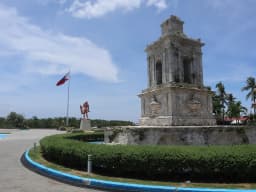
- Monte Pascoal in the south of Bahia, photographed in 2011. Seen from the sea in 1500 it was the first land the fleet made out. It is 536 metres high and lies inside a national park. Mário C. Bucci, CC BY-SA 2.0, via Wikimedia Commons.
- The South Atlantic on the Cantino planisphere, a Portuguese world map of 1502. Brazil, drawn with trees and parrots, straddles the blue line of Tordesillas, most of it on the Portuguese side to the east; West Africa and the fort of São Jorge da Mina are on the right. Its legend says the land was found by Pedro Álvares Cabral on his way to Calicut. anonymous Portuguese (1502), Public domain, via Wikimedia Commons.
- The first page of Caminha's letter, which opens with the word Senhor (Sire). The original, on seven folded sheets, is in the Torre do Tombo, Lisbon, at Gaveta 8, maço 2, no. 8. Pero Vaz de Caminha, Public domain, via Wikimedia Commons.
- The grave slab of Pedro Álvares Cabral and his wife, Isabel de Castro, in a side chapel of the Graça church in Santarém, photographed in 2022. GualdimG, CC BY-SA 4.0, via Wikimedia Commons.