

Cassiano Branco, Lisbon’s Art Deco dissenter, dies: 24 April 1970
He gave 1930s Lisbon some of its boldest façades, fell out with two of his biggest clients and was detained for opposing the dictatorship. Cassiano Branco died in 1970, four years before the regime fell.
At a glance
- The architect Cassiano Branco died of a heart attack in the Lisbon parish of São Mamede, where he lived, on 24 April 1970, aged 72, according to the civil death register.
- Born in Lisbon in 1897, he belonged to the generation that brought modern architecture to Portugal in the 1930s, under Salazar’s Estado Novo dictatorship.
- His best-known buildings are the Hotel Vitória on Avenida da Liberdade (opened 1936), the Éden cinema in Lisbon and the Coliseu do Porto (1941). He left the last two before they were finished.
- In a partnership his biographer puts at 28 years, he designed Portugal dos Pequenitos in Coimbra for the doctor Bissaya Barreto, a park of miniature buildings that opened on 8 June 1940.
- An opponent of the regime, he backed Norton de Matos for president in 1949 and Humberto Delgado in 1958, and was detained by the PIDE political police in June 1958.
A death in São Mamede
Cassiano Viriato Branco died at about two in the afternoon on Friday 24 April 1970, in the Lisbon parish of São Mamede. He lived there in a ground-floor flat at number 7 Travessa da Fábrica das Sedas. He was 72 and a widower. The cause written in the civil register was sclerosis of the heart muscle and an infarct: a heart attack.
The death was registered at a quarter past nine the next morning at Lisbon’s Third Civil Registry Office, and the entry noted that he would be buried in the Alto de São João cemetery. It named his parents as Cassiano José Branco and Maria da Assunção Viriato Branco, and his birthplace as the parish of São José. He had been born there in 1897, at number 51 Rua do Telhal, close to the Avenida da Liberdade.
The dictatorship he opposed outlived him by four years and a day: it fell on 25 April 1974. In 1976 the French magazine L’Architecture d’Aujourd’hui gave him a place in a special issue on the new Portugal and called him a gênant, or “inconvenient”, architect, for his politics and for his buildings.
- Born
- 1897, at 51 Rua do Telhal, parish of São José, Lisbon
- Died
- 24 April 1970, about 2 pm, parish of São Mamede, Lisbon, aged 72
- Cause
- Sclerosis of the heart muscle and infarct (heart attack)
- Burial
- Alto de São João cemetery, Lisbon
- Best-known works
- Hotel Vitória, Éden cinema, Coliseu do Porto, Portugal dos Pequenitos
- Papers
- Arquivo Municipal de Lisboa
Modern buildings under a conservative regime
The Estado Novo, or New State, was the authoritarian regime led by António de Oliveira Salazar. Its constitution was promulgated in 1933 and it lasted until the revolution of 1974. In the 1930s it kept a tight grip on public finances. Pinto links the economic and political stability that followed to a boom in cinemas and in blocks of flats built by private investors for a new Lisbon bourgeoisie.
Branco belonged to the first generation of modern architects to work under the regime. In 1976 the historian José-Augusto França placed him, Cristino da Silva, Pardal Monteiro and Cottinelli Telmo, all born in 1896 or 1897, among the pioneers of Portuguese modernity. They replaced the “neo-romantic” revival styles of the early century, which imitated the buildings of the past, with a new architectural language.
They had new materials. Reinforced concrete allowed cantilevered slabs, floors that jut out with no support beneath, and Portugal’s ceramics factories supplied tiles, bricks and sanitary porcelain. A Concrete Code arrived in 1935, and in the middle of the decade the building of flats to rent boomed.
The Avenida as a stage
The Avenida da Liberdade, Lisbon’s great boulevard, had opened about 15 years before Branco was born, to a plan by the engineer Ressano Garcia. He watched it fill up as a boy, and it became, in Pinto’s words, “the main stage for expressing his own visions of modernity”.
His first building there, in 1928, two years after he finished his degree, was a two-storey concrete garage for storing and selling cars. Two grooved pilasters, flat columns set into the wall, framed its façade and were meant to evoke flaming torches. In 1933 he added a terrace kiosk for the Café Palladium: a single concrete column held up a raised floor above the bar, with a view along the Avenida, and on top a neon sign advertised Martini vermouth under a comic pig. Both have been demolished.
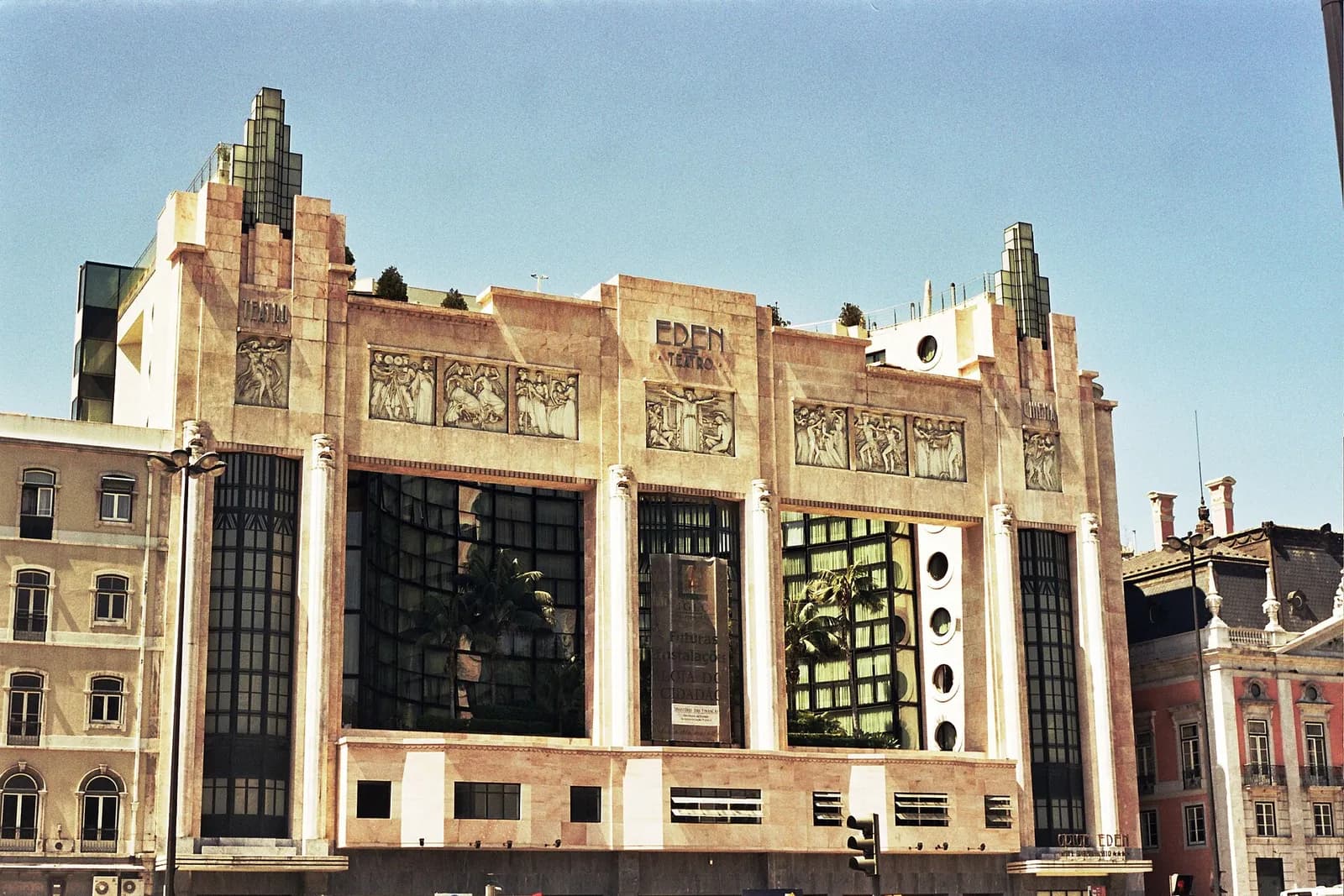
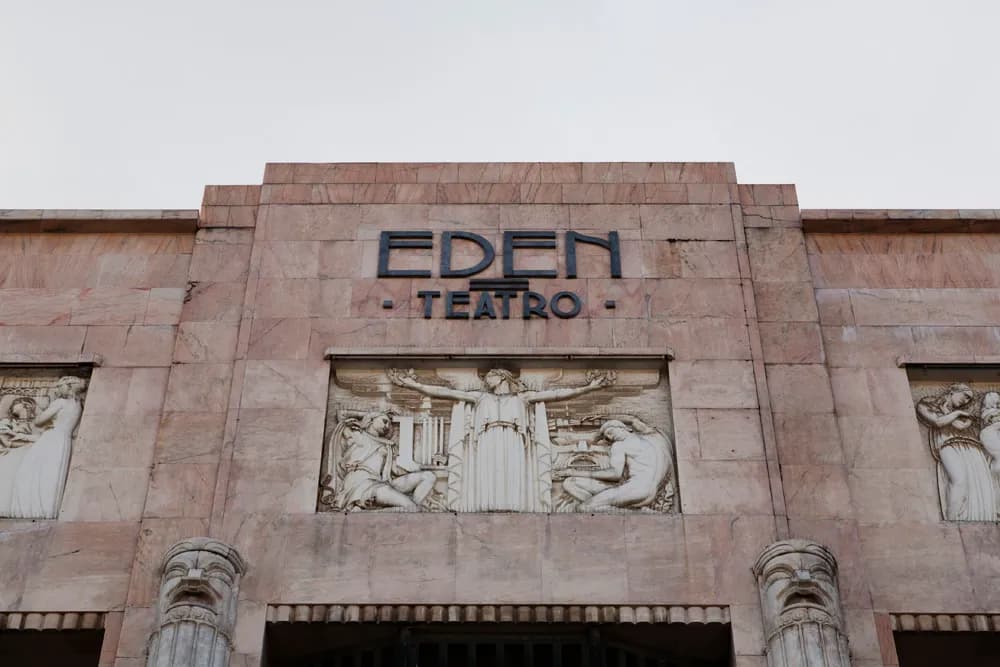
The bigger prize was the Éden, a theatre on Praça dos Restauradores, at the foot of the Avenida, owned by the industrial group Companhia União Fabril. From 1930 Branco worked on turning it into a large cinema for sound films. His last proposal put five tall bow windows, which project from the wall, and two steel-framed boxes of light like lanterns on the façade. Then his contract was terminated, and the architect Carlos Dias finished the job.
Pinto dates the opening of the new hall to 1937; Time Out Lisboa gives 1935. Branco’s main structure survived, and so did his entrance lobby under the projection room, where overlapping staircases led to the different parts of the house like a film set. The Éden closed in January 1989, and the building is now a hotel.
Round balconies on the Avenida
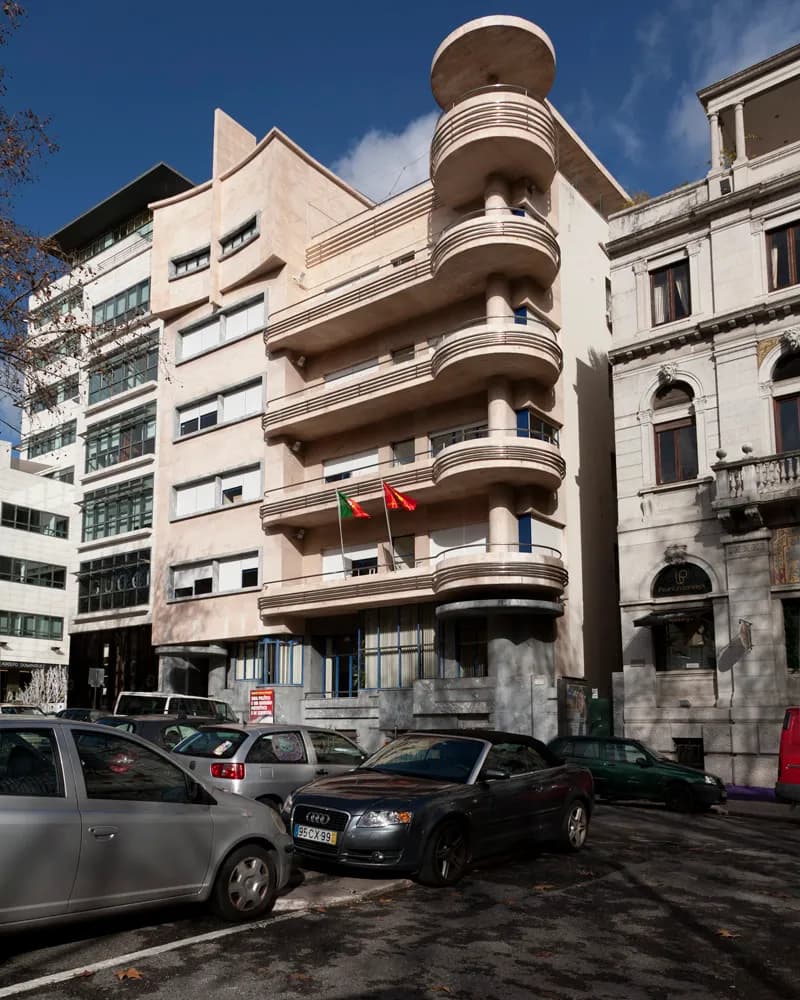
Branco designed the Hotel Vitória, at number 170 Avenida da Liberdade, in 1934 and 1935. It was drawn first as a residential building but opened as a hotel, on 1 July 1936. Only part of the design was built: the full scheme would have filled the empty plot between it and the neighbouring Hotel Liz, and several plans to finish it in the 1940s and 1950s came to nothing.
The façade is asymmetric. Horizontal bands of cantilevered floors end at the corner in round balconies stacked one above the other, faced in pink marble and trimmed with stainless steel. A concave top floor and a pergola, an open frame of beams, finish the roof. In the late 1930s the photographer Domingos Alvão used one of those balconies as a viewing platform for a picture of the boulevard below.
Inside, the rooms were furnished from the Grandes Armazéns Nascimento department store in Porto. During the Second World War, when Portugal was neutral, so many Germans stayed there that the Allies treated the hotel with suspicion, and it gained a reputation as a haunt of German spies.
The hotel closed in the 1960s, and by the revolution of 1974 the building had stood empty for several years. A hotel company tried to revive it and failed. Since 1976 it has housed the Portuguese Communist Party, as the Centro de Trabalho Vitória.
Most of his work in these years was less visible. He designed blocks of rented flats for private investors across Lisbon. One of the first, in 1932, was at number 3 Rua Almeida Brandão: four storeys with two flats on each floor. He treated each façade as scenery to be seen in movement, as in a cinema. His bathrooms, kitchens and ventilation were far better than most Lisboetas had.
Pinto counts the building at number 27 Avenida Defensores de Chaves, designed in 1937, as his masterpiece among the flats, with an undulating Art Deco façade of cantilevered volumes. Some of the plans from this period went to the city council over the signatures of the engineers he worked with, as at number 46 Avenida Álvares Cabral and number 7 Rua Nova de São Mamede, both designed in 1936 and 1937.
Portugal for the little ones
Tourism opened another line of work. In 1930 Branco drew an urban plan for Costa da Caparica, on the Atlantic coast south of Lisbon, then a poor fishing village, with hotels, casinos, cinemas, theatres and sports grounds for the capital’s new bourgeoisie.
Fernando Bissaya Barreto, born in 1886, was a surgeon and professor at the Coimbra medical school who had presided over the district council of Coimbra since 1927. He was also an administrator of the Luso water company, and in 1938 Branco designed the Grande Hotel das Termas do Luso for it, an L-shaped building around a pool fed by the spring, which opened in 1940.
Barreto’s conservative views pushed Branco to combine tradition with modernity. That suited the mood of 1940, when the regime celebrated 800 years since the founding of the nation and 300 since the restoration of independence with the Portuguese World Exhibition in Lisbon. Branco designed the surroundings of its Colonial Garden, but most of his attention went to Coimbra.
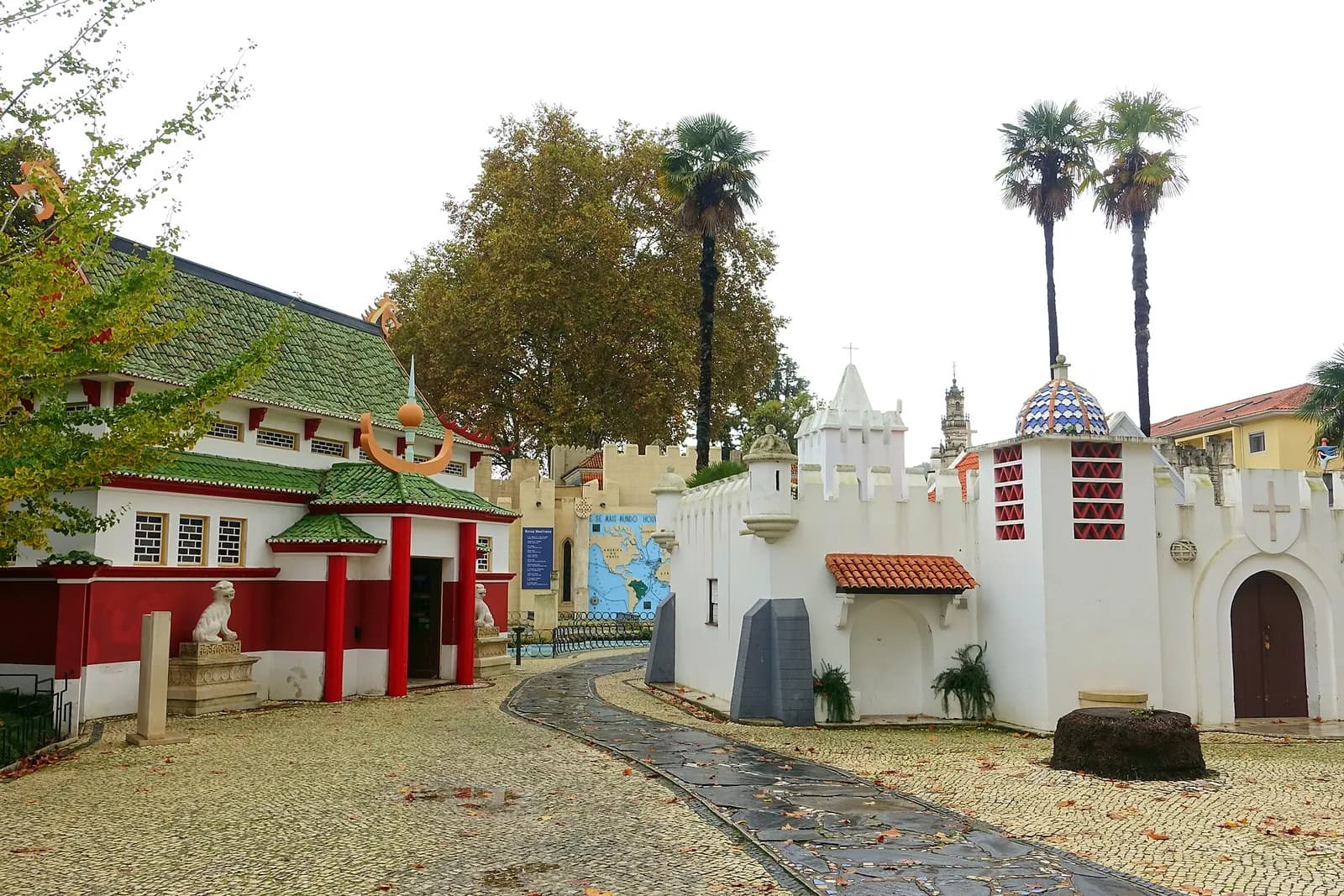
There Barreto wanted a park where children could see Portugal’s houses and monuments at their own scale. Portugal dos Pequenitos opened on 8 June 1940 as an extension of the Casa da Criança Rainha Santa Isabel, a nursery and kindergarten that still works on the site.
“Everything is tiny for us, but big for the children, and everything is true.”
The park was built in three sections. The first, a village of regional houses, was finished in 1940. The second, completed in 1951, held pavilions for the colonies of Angola, Mozambique, Guinea, São Tomé and Cape Verde, and for Brazil, Madeira and the Azores, with a Coimbra pavilion that stitched together copies of the Santa Cruz church, the Old Cathedral, the bishop’s palace and the university tower. The third, with pavilions for Portugal’s regions, followed in 1961.
Pinto puts the partnership of architect and doctor at 28 years. He argues that the surveys Branco made for the copies taught him Portugal’s building heritage and changed how he thought, and that the park became a laboratory where he collaged fragments of monuments into strange new hybrids.
A coliseum on Rua de Passos Manuel
In Porto, a concert hall was planned on the site of the old Passos Manuel garden, where music and plays had been staged in the open air. The site’s owner, the Garantia insurance company, closed the old garden hall in 1938 and began to build. Proposals came from 1937 onwards from José Porto, from the Dutch architect Jan Wils, whose Amsterdam City Theatre Branco studied, and from Júlio de Brito, whose scheme was rejected. In 1939 Branco was asked to resolve the project, reusing parts that had already been built.
Pinto says Branco had been working on it since 1937 and signed his contract with the Garantia insurance company in 1939. He put a wide, round auditorium in the middle of the block and split the street front in two: a blank wall bearing Porto’s coat of arms with a tall vertical slab announcing the hall, and beside it a commercial building with horizontal strip windows.
Once again he fell out with his client. His contract was terminated during construction, and the neon lighting he had drawn for the façade was never installed. The sequence of porch, foyers and curved corridors that funnels crowds to their seats is still his. The Coliseu opened with a gala evening on 19 December 1941.
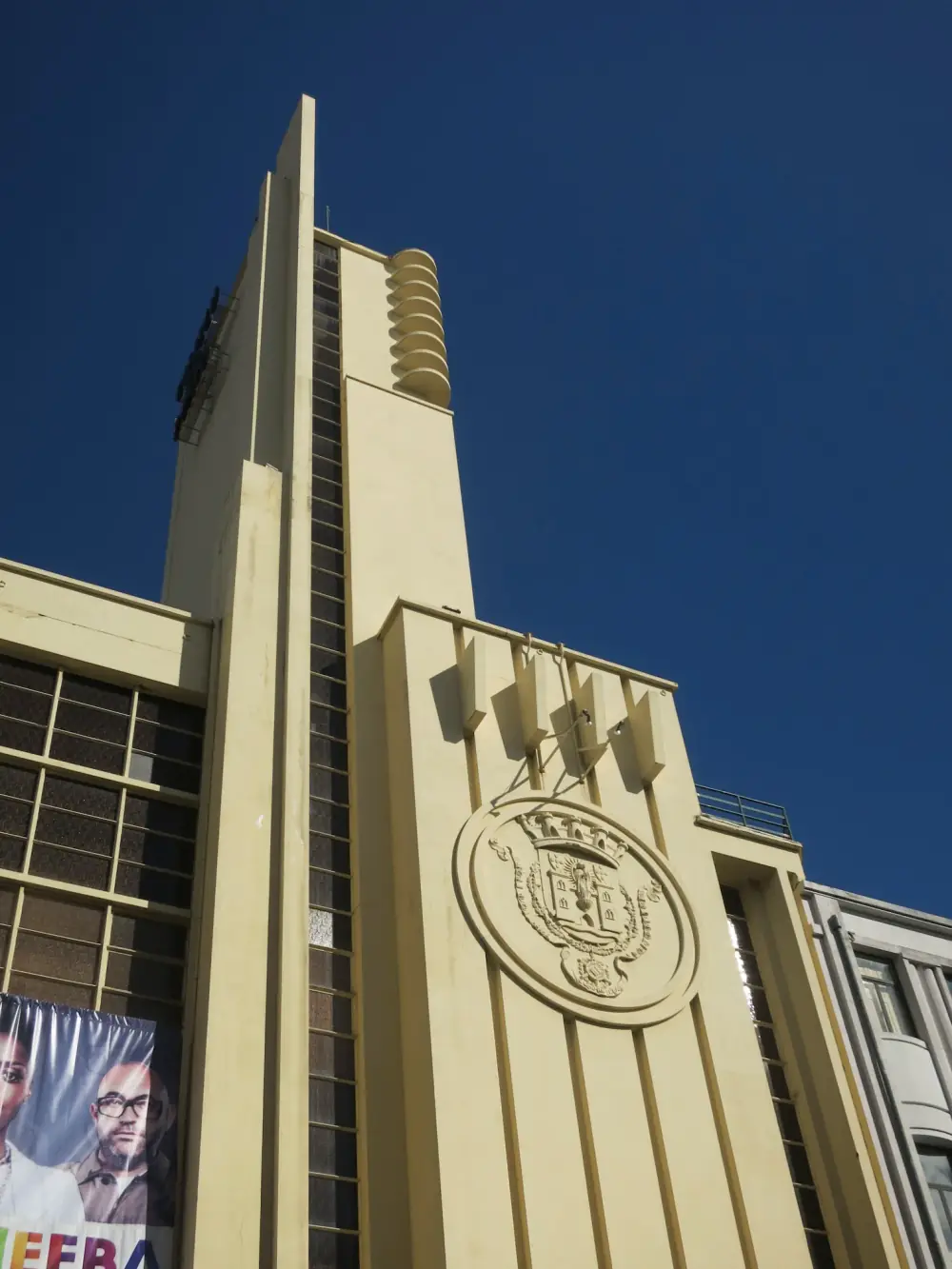
In 1995 the owners were close to selling the Coliseu to the Universal Church of the Kingdom of God. Porto protested, and an association of the Coliseu’s friends, the Associação Amigos do Coliseu, was formally set up on 17 November 1995. It bought the building on 2 August 1996 for 680,000 contos, or 680 million escudos, and still owns it.
An inconvenient man
Pinto writes that the discomfort Branco caused came from his personality and from his ideological opposition to the government. Twice he backed opposition candidates in presidential elections.
In 1949 he supported General Norton de Matos, who stood against the sitting president, Marshal Óscar Carmona, and withdrew days before the vote, saying his minimum political demands had not been met. In 1958 he backed Humberto Delgado, an air force general who had served the regime before breaking with it. The vote was held on 8 June 1958, and the official count gave Delgado 236,528 votes against 758,998 for Rear Admiral Américo Tomás.
Official result of the presidential election of 8 June 1958
votes
The official figures, which the opposition contested. The Panteão Nacional, where Delgado is now buried, calls the result fraudulent.
Show the data
| Votes | |
|---|---|
| Américo Tomás (regime) | 758,998 |
| Humberto Delgado (opposition) | 236,528 |
His open support for Delgado cost him. In June 1958 he was detained by the PIDE, the political police that the regime had set up in 1945 to replace an earlier force. The sources used here do not say how long he was held.
From the 1940s his style changed. The new architecture of the period tried to absorb the forms of Portugal’s past, and Branco’s Lisbon buildings of those years have towers, pinnacles, gargoyles, pointed arches and showy balconies. Pinto describes the problem of joining tradition with modernity as a dilemma that had no clear solution.
Rediscovery
The 1976 article in L’Architecture d’Aujourd’hui, by Fernando Gomes da Silva, called him “an exception to the rule” and used photographs from the family’s archive. In 1986 the Portuguese Architects Association held an exhibition of his work, and in 1991 Lisbon City Council published a book about him, Cassiano Branco, uma obra para o futuro. The film director Edgar Pêra made a documentary, A Cidade de Cassiano, in 1992.
Paulo Tormenta Pinto, an architect and professor at ISCTE, a university in Lisbon, published his study Cassiano Branco 1897-1970 in 2015. It runs to 600 pages and analyses more than 50 works and projects.
In 2020, for the 50th anniversary of the architect’s death, the Arquivo Municipal de Lisboa, which holds his papers, ran a programme called Olhar Cassiano: a photography competition, an exhibition by Daniel Blaufuks, a mural by the artist HUARIU at the corner of Avenida Almirante Reis and Rua do Desterro, less than a kilometre from his birthplace, and a colloquium at the Gulbenkian Foundation on 3 November. The competition’s prizes were to be handed out at another of his buildings, the Hotel Britania on Rua Rodrigues Sampaio, near the Avenida.
1897
Born at 51 Rua do Telhal, Lisbon
1925
Visits the Paris exhibition of decorative arts
1926
Finishes his degree in architecture
1928
First building on Avenida da Liberdade, a car garage
1930
Starts work on the Éden cinema, later finished by Carlos Dias
1 July 1936
Hotel Vitória opens on Avenida da Liberdade
8 June 1940
Portugal dos Pequenitos opens in Coimbra
19 December 1941
Coliseu do Porto opens
1949
Supports Norton de Matos for president
June 1958
Detained by the PIDE after backing Humberto Delgado
1961
Last section of Portugal dos Pequenitos completed
24 April 1970
Dies in the parish of São Mamede, Lisbon, aged 72
| Building | Place | Dates | Notes |
|---|---|---|---|
| Car garage | Avenida da Liberdade, Lisbon | 1928 | Demolished |
| Éden cinema | Praça dos Restauradores, Lisbon | From 1930; opened 1935 or 1937 | Finished by Carlos Dias; closed 1989; now a hotel |
| Café Palladium kiosk | Avenida da Liberdade, Lisbon | 1933 | Demolished |
| Hotel Vitória | Avenida da Liberdade 170, Lisbon | Designed 1934 to 1935; opened 1936 | Hotel until the 1960s; Communist Party offices since 1976 |
| Flats | Avenida Defensores de Chaves 27, Lisbon | 1937 | Pinto’s choice as his finest block of flats |
| Grande Hotel das Termas do Luso | Luso | Designed 1938; opened 1940 | Spa hotel for the Luso water company |
| Portugal dos Pequenitos | Coimbra | 1940, 1951, 1961 | Built in three sections; still open |
| Coliseu do Porto | Rua de Passos Manuel, Porto | 1937 to 1941 | Branco left during construction; now owned by the Associação Amigos do Coliseu |
Time Out Lisboa dates the new Éden to 1935; Pinto gives 1937. Branco left both the Éden and the Coliseu do Porto before they were completed.
“Despite all those issues, Cassiano Branco marked, with his cosmopolitan visions, the beginning of modernity in Portugal, during the traumatic period of the dictatorship.”
FAQs
When and where did Cassiano Branco die?
He died of a heart attack at about 2 pm on 24 April 1970 in the Lisbon parish of São Mamede, where he lived at 7 Travessa da Fábrica das Sedas. He was 72, and the civil register records that he was to be buried in the Alto de São João cemetery.
What buildings did Cassiano Branco design?
His best-known works are the Hotel Vitória on Avenida da Liberdade, the Éden cinema on Praça dos Restauradores, the tall block on Praça de Londres known as a skyscraper, the Hotel Britania and many other buildings across Lisbon, the Grande Hotel das Termas do Luso, Portugal dos Pequenitos in Coimbra and the Coliseu do Porto. He left the Éden and the Coliseu before they were finished.
Was Cassiano Branco arrested by the PIDE?
Yes. He supported the opposition candidates Norton de Matos in 1949 and Humberto Delgado in 1958, and was detained by the PIDE political police in June 1958.
Is the Hotel Vitória in Lisbon still a hotel?
No. It opened in 1936 and closed as a hotel in the 1960s. Since 1976 the building at Avenida da Liberdade 170 has been used by the Portuguese Communist Party.
Who designed Portugal dos Pequenitos?
Cassiano Branco designed it for the Coimbra doctor Bissaya Barreto, who conceived the park. It opened on 8 June 1940, and its last section was completed in 1961.
On the timeline
Open the timelineNearby moments from dictatorship and the estado novo (1926–1974).
Birth of Fernanda Ribeiro in Penafiel. The tenacious distance runner became world 10,000 m champion in Gothenburg in 1995 and won Olympic gold over the same distance in Atlanta in 1996, outkicking China's Wang Junxia in an Olympic record time.
The headquarters and museum of the Calouste Gulbenkian Foundation are inaugurated in Lisbon in the centenary year of the collector's birth, opening to the public a collection of some 6,000 works gathered from Paris, London and Washington. The modernist complex by Ruy d'Athouguia, Pedro Cid and Alberto Pessoa became one of the city's landmarks.
Portugal holds its first legislative election under Marcelo Caetano. Although no opposition candidate is elected, the vote brings into the National Assembly the 'liberal wing' of Sá Carneiro, Pinto Balsemão and Miller Guerra, who would press for reform from within.
Death of Cassiano Branco
Death of Cassiano Branco, one of the most inventive Portuguese architects of the Art Deco years, designer of Lisbon's Hotel Vitória on Avenida da Liberdade, the Coliseu do Porto and Coimbra's miniature park Portugal dos Pequenitos. An outspoken opponent of Salazar who worked mostly for private clients, he was detained by the PIDE in June 1958 for backing Humberto Delgado.
Death of José de Almada Negreiros in Lisbon. Born in São Tomé in 1893, painter, novelist, dramatist and provocateur, Almada was a co-founder of the magazine 'Orpheu' alongside Fernando Pessoa and Mário de Sá-Carneiro and is considered the most exuberant figure of Portuguese modernism. His murals at the Gare Marítima de Alcântara are among the great monuments of 20th-century Portuguese art.
Death of António de Oliveira Salazar at the São Bento residence in Lisbon, aged 81. Removed from office in September 1968 after suffering a brain haemorrhage, Salazar was nonetheless kept in the comforting illusion that he was still Prime Minister until his death. His passing closes the personal chapter of the Estado Novo, even as the regime would stagger on for almost four more years under Marcelo Caetano.
In Operation Green Sea (Operação Mar Verde), Portuguese commandos led by Alpoim Calvão land at Conakry, capital of the Republic of Guinea, and free 26 Portuguese soldiers captured by the PAIGC independence movement. The raid failed to topple President Sékou Touré and was condemned by the UN Security Council.
Coming up in history
All long reads
17 sources
Archives, scholarship and reporting this article was checked against.
- 1
Cassiano Branco. Modern Visions of an “Inconvenient” Architect (Paulo Tormenta Pinto)Docomomo Journal 55 (2016), pp. 30-37
- 2
Assento de óbito n.º 375 (Cassiano Viriato Branco), Livro de registo de óbitos da 3.ª Conservatória do Registo Civil de Lisboa, 1970, fl. 188Arquivo Nacional da Torre do Tombo, Digitarq
- 3
Livro do mês, Fevereiro 2016: Cassiano Branco 1897-1970, by Paulo Tormenta Pinto (introductory note)ISCTE – Instituto Universitário de Lisboa, Library
- 4
HistóriaPortugal dos Pequenitos, Fundação Bissaya Barreto
- 5
Former Vitória HotelLisboa Open House, Trienal de Arquitectura de Lisboa
- 6Coliseu do Porto entre a concessão a privados e o dinheiro do EstadoDiário de Notícias, 20 February 2020
- 7
Concurso de fotografia desvia o olhar para a obra de Cassiano BrancoTime Out Lisboa, August 2020
- 8
Art decoTate, Art Terms
- 9
- 10
- 11
Fernando Bissaya BarretoFundação Bissaya Barreto
- 12
Coliseu PortoOpen House Porto 2019
- 13
1949 ElectionsMuseu do Aljube Resistência e Liberdade, 13 February 2025
- 14
Matos, José Norton de (1867-1955): authority recordArquivo de História Social, Instituto de Ciências Sociais da Universidade de Lisboa
- 15
Humberto Delgado: biografia, by Rita CorreiaHemeroteca Municipal de Lisboa
- 16
Humberto DelgadoPanteão Nacional
- 17
O Essencial sobre a PIDE (Irene Flunser Pimentel)Imprensa Nacional, 2023
Image credits
- The Éden on Praça dos Restauradores, Lisbon, photographed in 2010, when the former cinema was already a hotel. Cassiano Branco worked on it from 1930, but another architect, Carlos Dias, finished it. Elisa.rolle, CC BY-SA 4.0, via Wikimedia Commons.
- Lettering and carved reliefs above the entrance of the Éden, photographed in 2012. Manuelvbotelho, CC BY-SA 3.0, via Wikimedia Commons.
- The former Hotel Vitória at Avenida da Liberdade 170, photographed in 2012. The Portuguese Communist Party has used the building since 1976. Manuelvbotelho, CC BY-SA 3.0, via Wikimedia Commons.
- Miniature buildings at Portugal dos Pequenitos, Coimbra, photographed in 2019. The pavilion on the left, in Chinese style, represents Macau. Daderot, CC0, via Wikimedia Commons.
- The tower and coat of arms of the Coliseu do Porto on Rua de Passos Manuel, photographed in 2013. Manuelvbotelho, CC BY-SA 3.0, via Wikimedia Commons.