

The death of Mário de Sá-Carneiro, Pessoa's friend, in Paris, 1916
For a month his letters to Fernando Pessoa had announced his death and then called it off. On 26 April 1916, in a hotel room near Pigalle, the 25-year-old poet of Orpheu took his own life.
At a glance
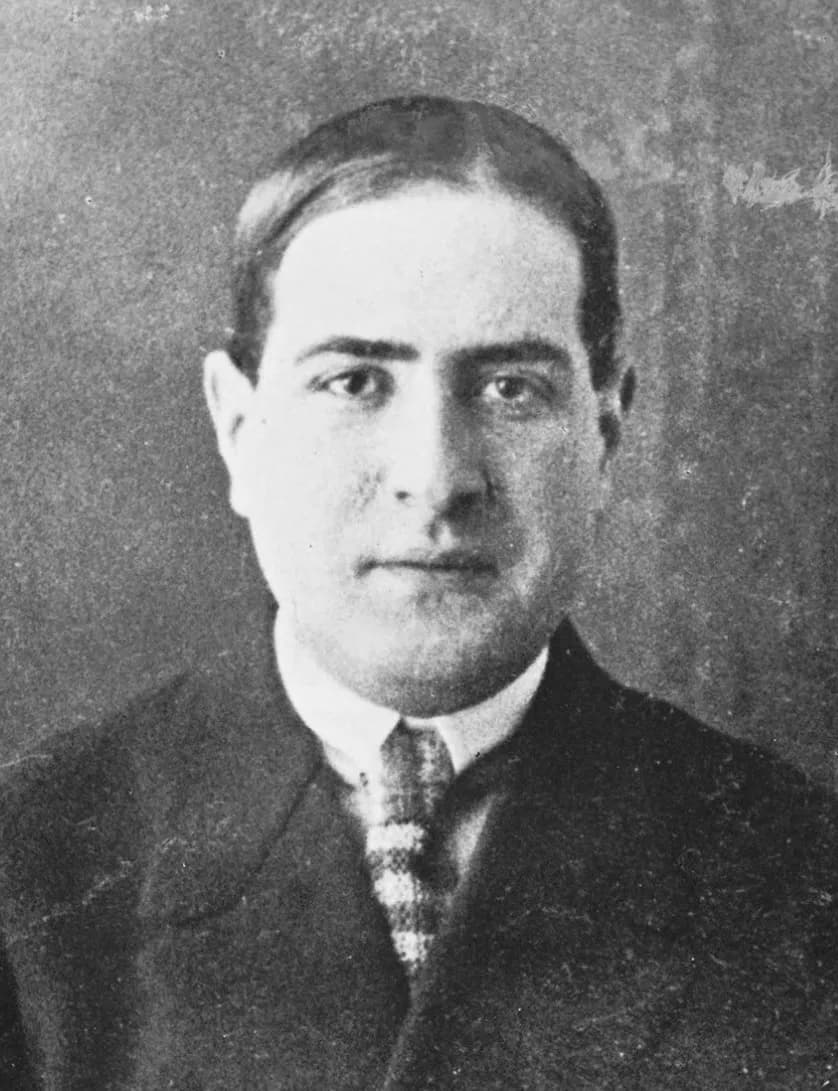
- Mário de Sá-Carneiro, a Lisbon-born poet and writer of fiction, took his own life in his room at the Hôtel de Nice, 29 rue Victor-Massé, in Paris, at about eight in the evening of 26 April 1916. He was 25.
- With Fernando Pessoa he directed the second issue of Orpheu (1915), the short-lived magazine that launched modernism in Portugal. His father's money paid the printer.
- In about four years he published a play, two books of novellas, the short novel A Confissão de Lúcio and the 12 poems of Dispersão (both 1914). His second book of poems, Indícios de Oiro, came out only in 1937.
- He sent Pessoa more than 200 letters, postcards and telegrams from 1912 to 1916. They are the main record of the friendship and of his last weeks, when he twice announced his suicide and called it off.
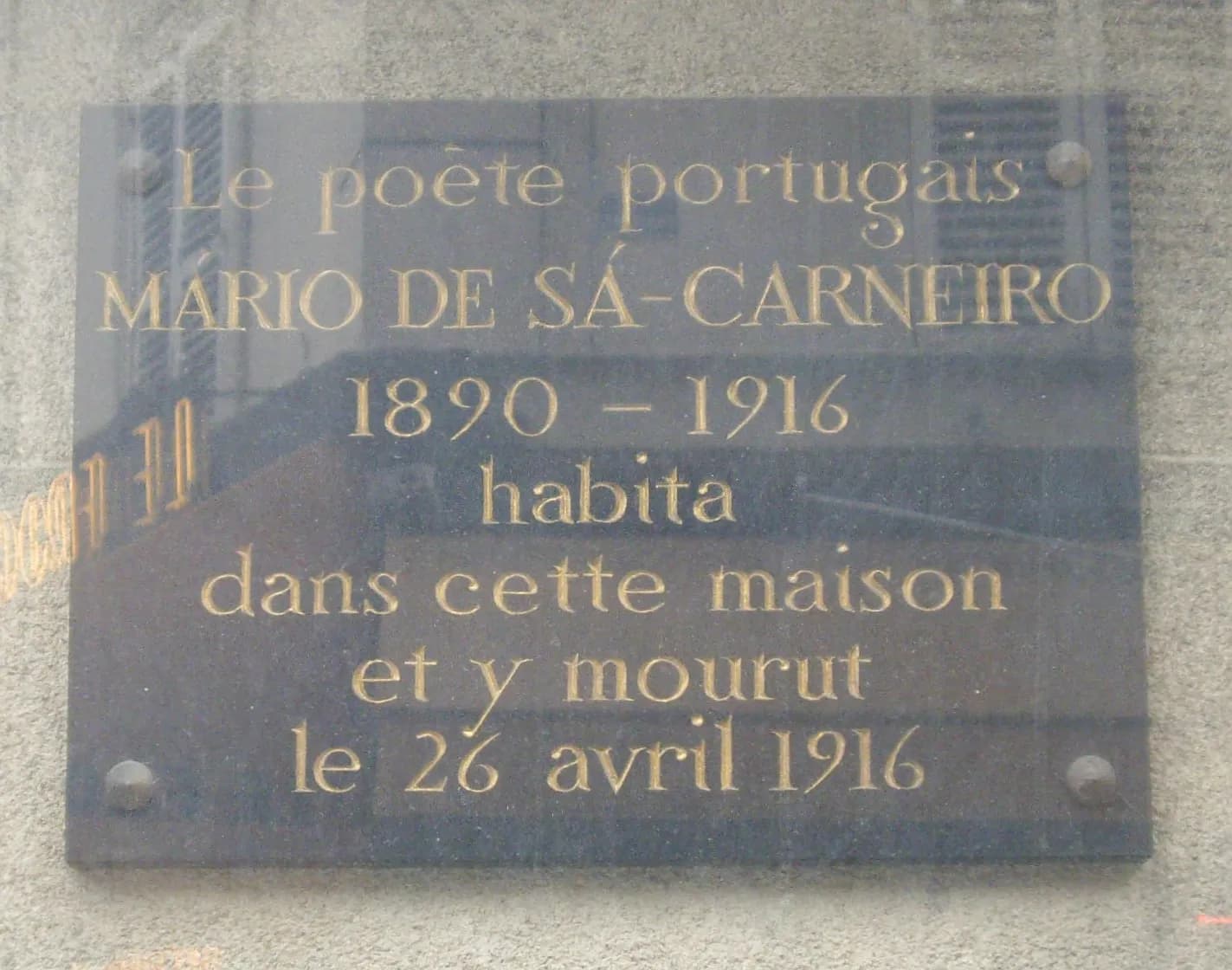
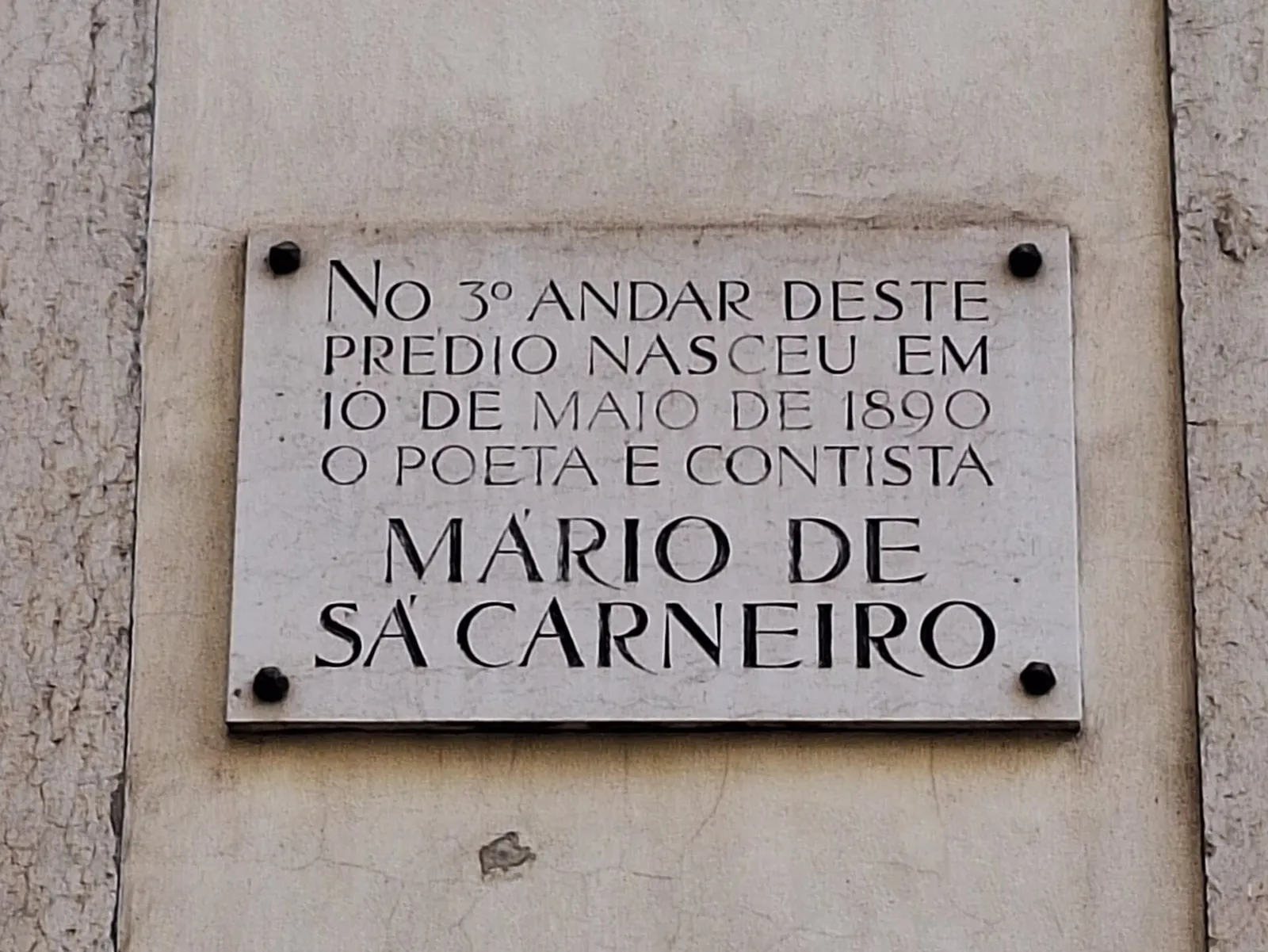
- His Paris papers, including Pessoa's letters to him, vanished from a trunk the hotel kept against his debts. A plaque now marks the building in Paris, and another marks his birthplace in Lisbon's Baixa.
Eight o'clock sharp
On the afternoon of Wednesday 26 April 1916, Mário de Sá-Carneiro asked José Araújo, a friend he had made in Paris, to come to his hotel at eight o'clock, sharp, without fail. The hotel was the Hôtel de Nice, at 29 rue Victor-Massé, in the ninth arrondissement near Pigalle, below the hill of Montmartre.
When Araújo arrived, Sá-Carneiro told him calmly that he had taken strychnine. Araújo could do nothing to save him, and stayed with him until he died. He later wrote to Fernando Pessoa in Lisbon about that evening, and his letters are the main account of it.
On the stove in the room he had left a bundle of letters for his family and friends. One last note was for Pessoa: “A great, great farewell from your poor Mário de Sá-Carneiro” (translated from Portuguese). He was three weeks short of his 26th birthday.
It cannot have come as a complete surprise to Pessoa. For a month Pessoa had been receiving letters from Paris announcing the death, cancelling it and announcing it again. Most of what we know about those weeks comes from those letters, which Pessoa kept and which are now in the Biblioteca Nacional in Lisbon.
A boy from the Baixa, raised in Camarate
Sá-Carneiro was born on 19 May 1890 on the third floor of number 93, Rua da Conceição, in Lisbon's Baixa, the grid of streets between the Rossio and the river. His father, Carlos Augusto de Sá Carneiro, was an army engineer from a family of officers. His mother, Águeda Maria Murinelo, died of typhoid fever at 23, when he was two.
His father was often away, so the boy grew up with his paternal grandfather, José Paulino de Sá Carneiro, at the Quinta da Vitória, a country house at Camarate on the northern edge of Lisbon. He was still staying there in his twenties; a letter to Pessoa of 23 October 1914 is headed “Camarate – Quinta da Vitória”, and the narrator of his story “A Grande Sombra” remembers a childhood there.
Money was never the problem in those years. His father took him on trips round Europe in 1904 and to Paris again in 1907. At school in Lisbon he ran a short-lived comic paper mocking his teachers, until his father had it withdrawn from the kiosk, and with a classmate, Tomás Cabreira Júnior, he wrote a play, Amizade (Friendship).
In January 1911 Cabreira took his own life at their school; the accounts differ on the day, the 8th or the 9th, and on the school. A fellow pupil remembered Sá-Carneiro going from classroom to classroom, white and trembling, to announce it. That October he enrolled to study law at Coimbra, Portugal's old university town, and gave it up in December.
Two friends, two cities
He probably met Fernando Pessoa in Lisbon early in 1912. Pessoa, two years older, was then known as a critic for the magazine A Águia. On 29 August Sá-Carneiro gave him a copy of his new book of novellas, Princípio (Beginning), with a dedication.
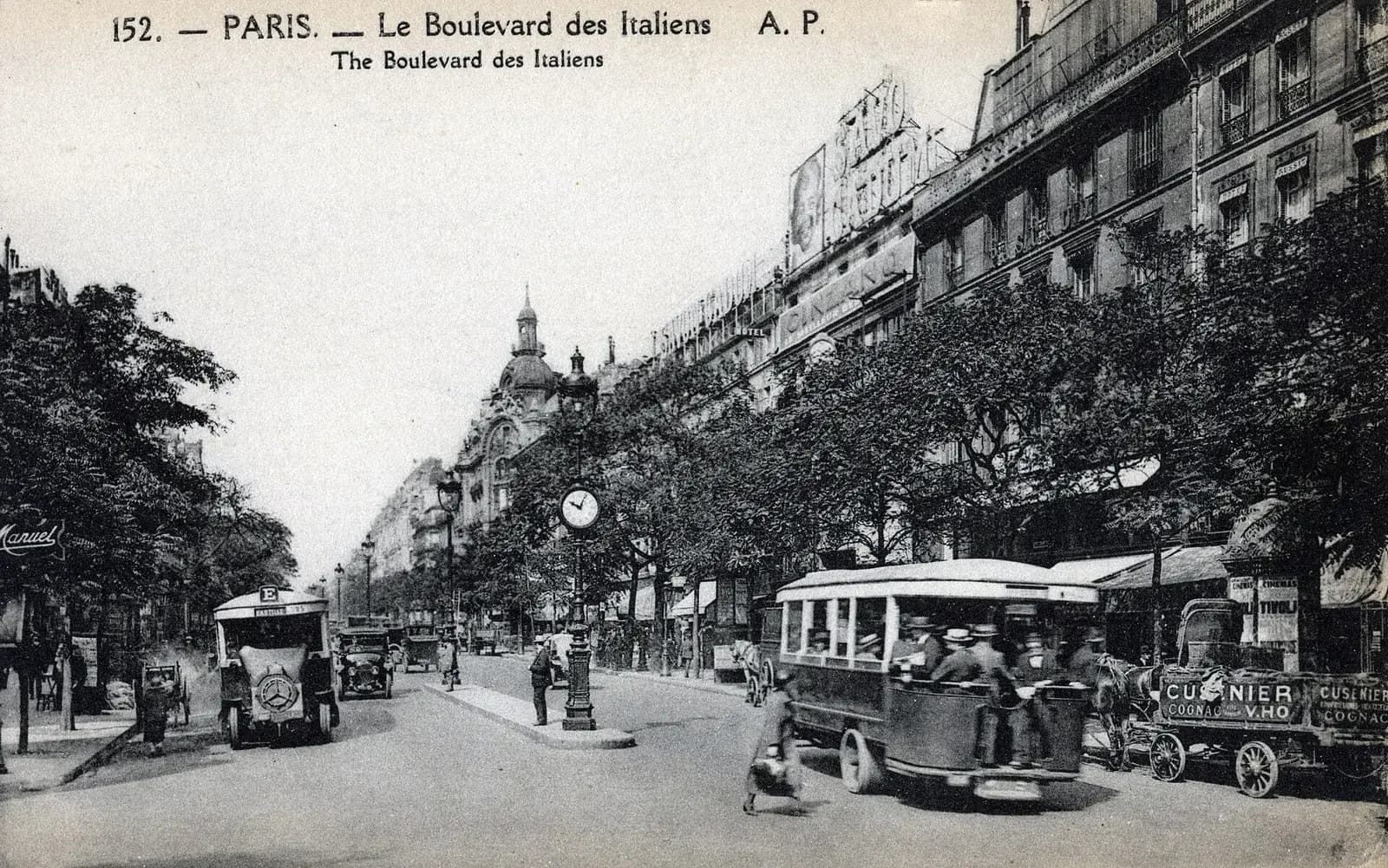
On 12 October 1912 he left Lisbon on the Sud-Express, the night train to Paris, to study law at the Sorbonne. He did not finish that course either. Four days later he sent Pessoa a postcard of the Champs-Élysées: “Just a great embrace for today.” By the end of the year he was telling him that the day they met had been “a beautiful day in my life” (both translated from Portuguese).
That was the pattern for the next three and a half years. Sá-Carneiro moved between Paris and Lisbon; Pessoa stayed in Lisbon. Sá-Carneiro sent him more than 200 letters, postcards and telegrams, about five a month, and more than 400 letters to all his correspondents over the same years. Pessoa's replies are almost all lost.
The letters are full of literary business: poems copied out for Pessoa's opinion, proofs, plans for magazines, requests to collect money from Lisbon booksellers. They are also funny. Sá-Carneiro called himself the “fat sphinx” and drew ever crueller caricatures of himself in words. The scholars who edited the letters, Ricardo Vasconcelos and Jerónimo Pizarro, set out to correct the picture of a lonely, melancholy flâneur drifting between cafés.
Pessoa had his own debt to the friendship. In a famous letter of 1935 he said that Alberto Caeiro, one of his main heteronyms, was born of a plan to play a trick on Sá-Carneiro by inventing a bucolic poet and passing him off as real.
Dispersão and Lúcio's confession
His first two years in Paris produced his best-known poems. The 12 poems of Dispersão (Dispersion) are dated Paris, February to May 1913. He published the book himself in Lisbon in 1914, “at the author's house” in the Travessa do Carmo, in 250 copies with a cover by the designer José Pacheco.
The poems keep returning to one idea: a self that has broken into pieces and cannot find itself. The title poem opens “I got lost inside myself / Because I was a labyrinth.” In “Quasi” (Almost) the speaker is always one step short of what he reaches for.
“A little more sun, and I'd have been an ember; a little more blue, and I'd have been beyond. To get there, I lacked one beat of the wing.”
The same year he published A Confissão de Lúcio (Lúcio's Confession), a short novel set in the art world of Paris and Lisbon. Its narrator, Lúcio Vaz, has served ten years in prison for killing the poet Ricardo de Loureiro, a crime he says he did not commit. In the climax Ricardo fires a revolver at his wife Marta, but it is Ricardo who falls dead, and Marta vanishes. Ricardo has told Lúcio that he “created” her.
Critics read the book as a story of doubles and of desire between two men; Ricardo tells Lúcio he could not “possess” a person of his own sex. Ricardo Vasconcelos points out that Sá-Carneiro's fiction was questioning, as early as 1912, whether there are only two sexes. The novel's epigraph came from a prose piece by Pessoa about two people unsure which of them is the other.
| Year | Title | What it is | Publisher |
|---|---|---|---|
| 1912 | Amizade (Friendship) | Play in three acts, written with Tomás Cabreira Júnior | Arnaldo Bordalo, Lisbon |
| 1912 | Princípio (Beginning) | Novellas | Livraria Ferreira, Lisbon |
| 1914 | A Confissão de Lúcio (Lúcio's Confession) | Short novel | Author's edition, Lisbon |
| 1914 | Dispersão (Dispersion) | 12 poems, 250 copies | Author's edition, Lisbon |
| 1915 | Céu em Fogo (Sky on Fire) | Eight novellas | Livraria Brazileira Monteiro & C.ª, Lisbon |
| 1937 | Indícios de Oiro (Traces of Gold) | Poems, published after his death | Edições presença |
Some of the poems for Indícios de Oiro first appeared in Orpheu no. 1 in 1915.
Orpheu, and the papers' favourite madman
The war brought him home. He went back to Paris in July 1914, and when the fighting began he returned to Lisbon in September. There he and Pessoa took up a plan they had made earlier that year for a new magazine.
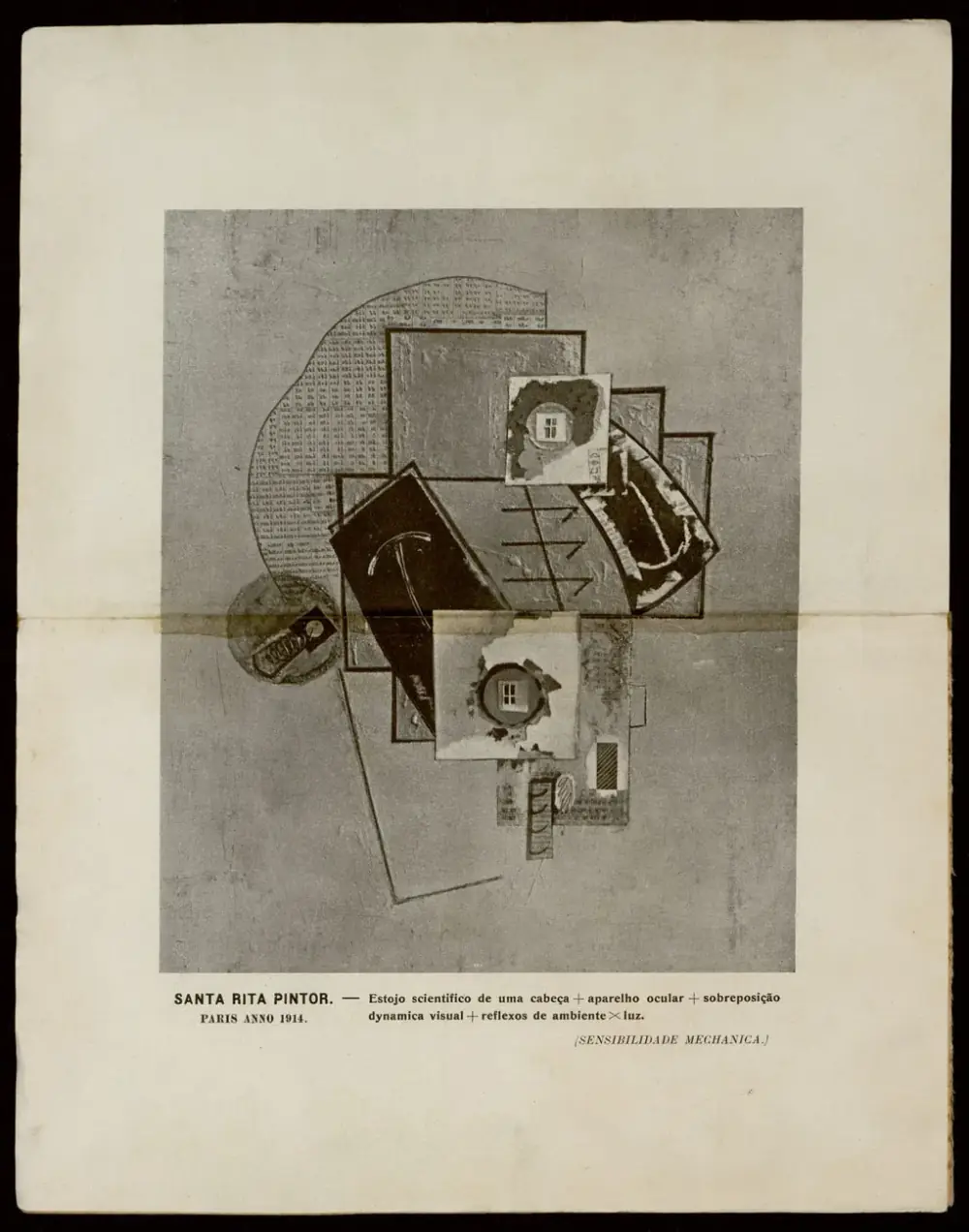
Orpheu came out in March 1915 and a second issue in June. The story of its launch and of the uproar in the Lisbon press is told in our article on Pessoa's death. Sá-Carneiro's part in it was larger than is often remembered: his father paid the printer, he and Pessoa were named as directors of the second issue, and Pessoa dedicated “Opiário”, a poem by his heteronym Álvaro de Campos, to him in the first.
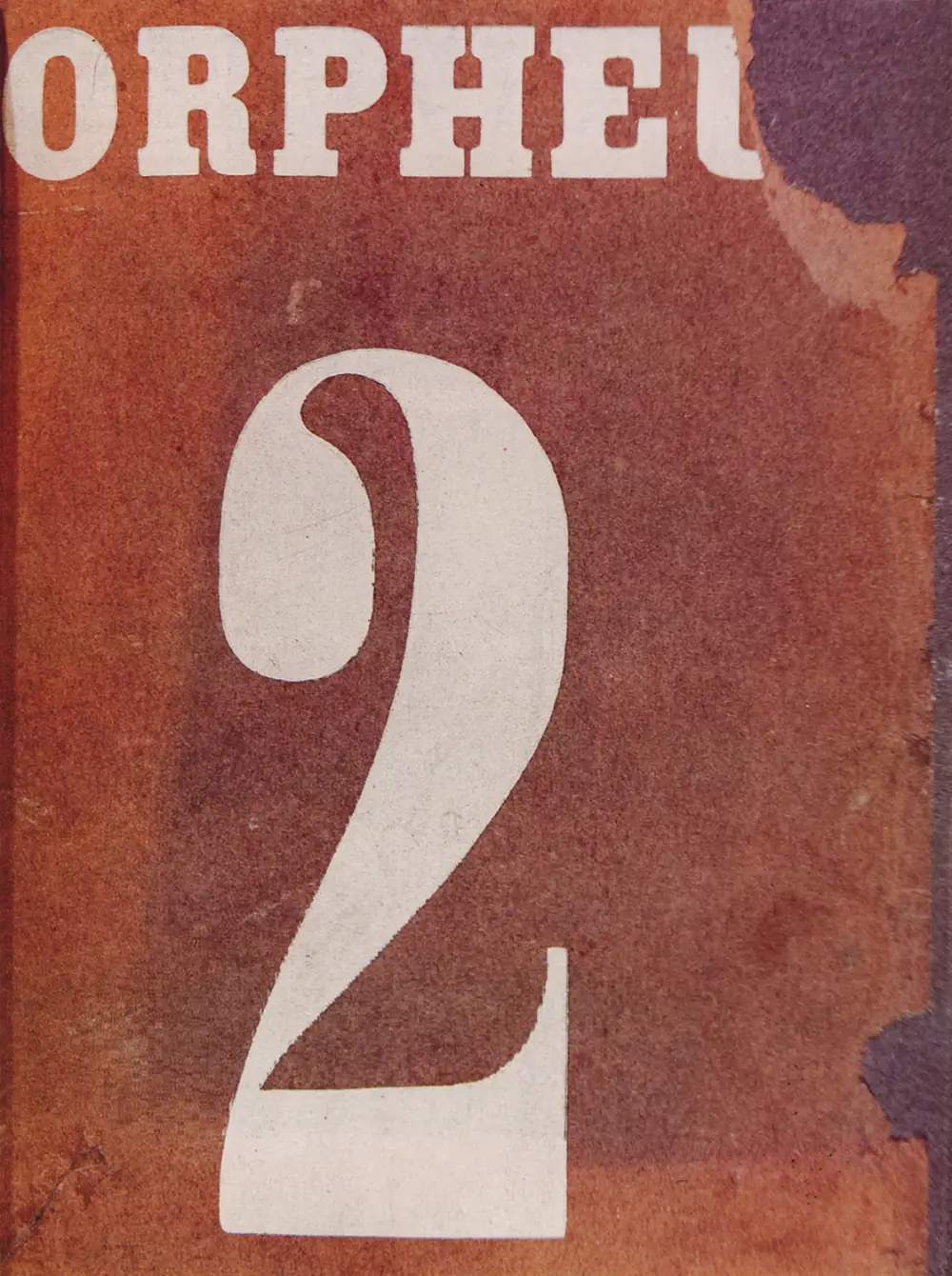
The papers made him their main target. Unlike Pessoa he already had books in print, and his poems had the strangest images. In Orpheu 2 he printed “Manucure”, a parody of Futurism. A Lisbon daily called him a “mastodontic lad with the soul of a child”, and to the press he was the most crackpot of all the crackpots.
On 11 July 1915 he left for Paris again, abruptly and without saying goodbye. A third issue of Orpheu was set in proof, but on 13 September he wrote that they would have to give it up. His father, angry at the “exorbitant bill”, had gone to work for the railways in Mozambique. Jerónimo Pizarro doubts that money was the real reason; he thinks the father no longer wanted to fund a magazine that made his son look mad.
Room at the Hôtel de Nice
In Paris he took a room at the Hôtel de Nice and asked Pessoa to keep the address to himself. Money was the subject of almost every letter. He asked Pessoa to chase the bookseller for the proceeds of Céu em Fogo, his new collection of novellas, and begged for an answer by telegram.
By early 1916 his tone had changed. “Didn't I tell you I was mad? I have been living for weeks in a nameless hell,” he wrote on 18 February. He had begun an affair with a woman whom his friends in Paris later blamed for his ruin. On 31 March he wrote the letter that made the end explicit.
“Unless there is a miracle next Monday the 3rd (or even the day before), your Mário de Sá-Carneiro will […] disappear from this world. That is just how it is, but it costs me so much to write this letter, because of how ridiculous I have always found “farewell letters”.”
He needed 500 francs by Monday, he explained, and a telegram to his father seemed to have gone astray. He would post Pessoa his notebook of poems, to publish as if it were his own, and asked him to add a quatrain that began “When I die, bang on tin cans”.
On Monday 3 April he wrote again: today was the day. He asked Pessoa to break the news to his grandfather and to his old nurse. The next day a postcard told Pessoa to ignore his letters. A long letter explained that the woman had gone looking for him, found him in a café and gone off to find him money. She had also tried the Portuguese consulate, where the consuls told her, smiling, not to worry: they knew who he was, the leader of “a certain magazine of madmen” (translated from Portuguese). On 6 April a one-word telegram followed: “Bien.”
It was a reprieve, not a recovery. “Money is not everything,” he wrote on 17 April. “Today, for example, I have money.” He was living, he said, “one of my characters... with one of my characters”. The next day he sent a few lines begging Pessoa to write: “Mad! Mad! Mad! Have great pity on me” (both translated from Portuguese). Eight days later he was dead.
18 February
“I have been living for weeks in a nameless hell”
31 March
Announces his death for Monday 3 April unless a miracle comes
2 April
Posts his notebook of poems to Pessoa, without stamps
3 April
Farewell letter: he will die that day
4 April
Postcard cancels it; a long letter tells what happened
6 April
Telegram to Pessoa: “Bien”
17–18 April
Last letters: “Mad! Mad! Mad!”
26 April, about 8 p.m.
Dies at the Hôtel de Nice, with José Araújo present
27 April
Carlos Ferreira writes to tell Pessoa
29 April
Buried at Pantin, outside Paris
4 May
The Diário de Notícias reports the death in Lisbon
A rented grave and a missing trunk
Pessoa heard the news from Carlos Ferreira, another Portuguese friend in Paris, who wrote the next day: “Fill yourself with courage... Mário killed himself yesterday” (translated from Portuguese). Sá-Carneiro was buried on 29 April in the suburban cemetery of Pantin, in a plot rented for five years. The grave no longer exists. Lisbon's Diário de Notícias carried a short notice on 4 May.
He left debts, so the hotel kept his trunk until they were paid. Inside, his friends believed, were his manuscripts, Pessoa's letters and the unfinished prose piece Mundo Interior. In September 1918 Pessoa wrote to the hotel manager asking for it. When his father, who had come from Mozambique, finally opened the trunk, it held only old clothes. Observador's two accounts date that visit to 1918 and to 1928.
Not everything went into the trunk. Letters published in 2017 show that on 2 May 1916 Ferreira and Araújo packed up his belongings and Ferreira quietly kept “the best unpublished pieces”. What became of them is unknown. In 1934 Pessoa still hoped the first chapter of Mundo Interior, which he had heard Sá-Carneiro read aloud in Lisbon, might turn up somewhere.
Pessoa keeps faith
Pessoa became his friend's editor. In November 1924 he printed six of Sá-Carneiro's unpublished poems in the Lisbon magazine Athena, as “The last poems of Mário de Sá-Carneiro”, beside a prose tribute of his own.
“Only art, which he made or felt, for moments troubled him with consolation. So it is with those the gods have destined as their own. Love does not want them, hope does not seek them, glory does not welcome them. Either they die young, or they outlive themselves, dwellers in incomprehension or indifference. This one died young, because the gods loved him greatly.”
On 26 April 1926, the tenth anniversary, Pessoa wrote as Álvaro de Campos the poem “Se te queres matar, porque não te queres matar?” (“If you want to kill yourself, why don't you want to kill yourself?”). In 1935, the year of his own death, he wrote a poem called “Sá-Carneiro”, meant for an issue of Orpheu that would be made “with suns and stars in a new world”.
The verses Sá-Carneiro wanted added to his poems, asking for tin cans, clowns and acrobats at his funeral, closed the Athena selection and became known as “Fim” (The End). The title is generally credited to Pessoa; Sá-Carneiro never gave it one, and the 2017 critical edition prints it untitled. Indícios de Oiro appeared as a book in 1937, two years after Pessoa died.
Age at death of six contributors to Orpheu
years
Ages worked out from the birth and death dates in the timelines of the Arquivo Virtual da Geração de Orpheu. Ronald de Carvalho co-directed the first issue, José Pacheco designed it, and Almada Negreiros and Armando Côrtes-Rodrigues wrote for it. Sá-Carneiro was the first of the group to die.
Show the data
| Age at death | |
|---|---|
| Sá-Carneiro (1916) | 25 |
| Ronald de Carvalho (1935) | 41 |
| Fernando Pessoa (1935) | 47 |
| José Pacheco (1934) | 49 |
| Almada Negreiros (1970) | 77 |
| Côrtes-Rodrigues (1971) | 80 |
Why he is read today
For decades his suicide shaped how he was read, as if every poem were a step towards the hotel room. Ricardo Vasconcelos, of San Diego State University, argues the other way: “We don't read Sá-Carneiro because of his suicidal character. We read him because he has an incredible power of imagery and metaphor” (translated from Portuguese).
The centenary brought him new editions. Tinta-da-China published the letters to Pessoa as Em Ouro e Alma in 2015 and the first critical edition of his complete poetry in 2017. In 2016 the Biblioteca Nacional held an exhibition, “o homem são louco” (“the sane madman”), named after Pessoa's phrase for him.
He also travels. Lúcio's Confession is available in English in Margaret Jull Costa's translation, and the poet Helder Macedo has recalled that Ted Hughes translated three of his poems in the early 1960s. In the late 1980s the Portuguese band Trovante set “Fim” to music.
FAQs
How did Mário de Sá-Carneiro die?
He took his own life in his room at the Hôtel de Nice, 29 rue Victor-Massé, Paris, at about eight in the evening of 26 April 1916. His friend José Araújo, whom he had asked to come at eight, was with him. He was 25, and since 31 March his letters to Pessoa had twice announced his death and then called it off.
What was his relationship with Fernando Pessoa?
They were close friends and literary allies from 1912. Sá-Carneiro lived mostly in Paris and Pessoa in Lisbon, so the friendship ran largely by post: Sá-Carneiro sent Pessoa more than 200 letters, postcards and telegrams. Together they directed the second issue of Orpheu in 1915, and after his death Pessoa published his last poems.
What was Orpheu?
A Lisbon literary magazine that published two issues in 1915, in March and June, and is taken as the start of modernism in Portugal. Its contributors became known as the Geração de Orpheu. Sá-Carneiro's father paid for it, and a third issue was abandoned in September 1915 when he stopped.
Which of his works should I read first?
The 12 poems of Dispersão (1914) and the short novel A Confissão de Lúcio (1914) are both short, and both are free online in Portuguese through Project Gutenberg. Lúcio's Confession is available in English in Margaret Jull Costa's translation.
Where is Mário de Sá-Carneiro buried?
He was buried on 29 April 1916 in the cemetery of Pantin, just outside Paris, in a plot rented for five years. The grave no longer exists. The places to remember him are the plaques in Paris and on his Lisbon birthplace.
On the timeline
Open the timelineNearby moments from the first republic (1910–1926).
A violent uprising in Lisbon, led by republicans including Álvaro de Castro, Sá Cardoso and Norton de Matos, topples the dictatorial government of General Pimenta de Castro and restores constitutional rule. One of the bloodiest episodes of the First Republic, it leaves between about 100 and more than 200 dead, depending on the estimate, and soon forces President Manuel de Arriaga to resign.
At Britain's request, Portugal begins seizing the German merchant ships, and two Austro-Hungarian ones, that had sheltered in its ports since 1914: between about 60 and 76 by different counts. Berlin answers by declaring war on 9 March, drawing Portugal into the First World War and, within a year, sending the Corpo Expedicionário Português to Flanders.
The German Empire declares war on Portugal, following Portugal's seizure of German and Austro-Hungarian ships sheltering in Portuguese ports. Portugal formally enters World War I on the side of the Allies.
The death of Mário de Sá-Carneiro
Death of Mário de Sá-Carneiro in Paris at age 25. He was a leading Portuguese modernist poet, a key figure of the 'Geração d'Orpheu' movement, and Fernando Pessoa's close friend and literary collaborator.
The Portuguese Parliament approves Portugal's active participation in the First World War alongside the Allies, following Britain's formal invitation, paving the way for the Portuguese Expeditionary Corps to fight on the Western Front.
Portugal and Britain sign a convention setting out how the Corpo Expedicionário Português (CEP) will serve on the Western Front, within the British army. The first contingent sailed from Lisbon on 30 January; by late October one tally counted 59,388 men sent to France, though other counts of the whole corps are lower, at about 55,000 to 57,000.
Three shepherd children — Lúcia Santos, Francisco Marto, and Jacinta Marto — report the first apparition of Our Lady of Fátima in the Cova da Iria. The events of 1917 would make Fátima one of the most important Catholic pilgrimage sites in the world, drawing millions of visitors annually.
Coming up in history
All long reads 28 April 1855José Malhoa, the painter of O Fado, born in Caldas da Rainha in 1855
 29 April 1826The Constitutional Charter of 1826: Portugal's constitution made in Rio
 30 April 1824The Abrilada: how Prince Miguel held his father captive in April 1824
 1 May 1865Santa Apolónia station opens on the Lisbon waterfront: 1 May 1865
42 sources
Archives, scholarship and reporting this article was checked against.
- 1
Mário de Sá-Carneiro, letter to Fernando Pessoa, Paris, 31 March 1916Arquivo Virtual da Geração de Orpheu (modernismo.pt), from the Biblioteca Nacional de Portugal
- 2Mário de Sá-Carneiro, o poeta que os deuses amaram, by Rita CiprianoObservador, 25 April 2016
- 3Há 101 anos à procura das cartas de Mário de Sá-Carneiro, by Rita CiprianoObservador, 1 May 2017
- 4
Mário de Sá-Carneiro: «o homem são louco», exhibition catalogue, ed. Ricardo Vasconcelos and Jerónimo Pizarro (sample pages)Biblioteca Nacional de Portugal, 2016 (hosted by Mário de Sá-Carneiro Online, San Diego State University)
- 5
- 6
Dispersão: 12 poesias (Lisbon, author's edition, 1914)Project Gutenberg, eBook 21799
- 7Orpheu: 100 anos da revista que escandalizou LisboaObservador, 25 March 2015
- 8
Ces personnalités portugaises auxquelles Paris rend hommageVille de Paris
- 9
- 10Do Orfeu a Sylvia Plath: Sá-Carneiro imortal, by Joana Emídio MarquesObservador, 1 May 2016
- 11
- 12
A grande sombra da infância, by Rafael SantanaAbril, revista do NEPA/UFF, vol. 6, no. 13 (2014), pp. 31–41
- 13
- 14
Cinco cartas inéditas de Mário de Sá-Carneiro a Augusto Cunha, by Ricardo VasconcelosSanta Barbara Portuguese Studies, vol. 1 (2017), University of California, Santa Barbara
- 15
Para lá do anticlericalismo: a separação das igrejas do Estado como embate cultural (Sérgio Ribeiro Pinto)Centro de Estudos de História Religiosa, Universidade Católica Portuguesa
- 16
Os portugueses na Grande Guerra: uma experiência de combate e de cativeiro (Carlos Jorge Alves Lopes, MA dissertation)Universidade Aberta, 2012
- 17
Sá-Carneiro, Mário de (1890–1916)Routledge Encyclopedia of Modernism
- 18
- 19
- 20Em Ouro e Alma, by Rita CiprianoObservador, 30 November 2015
- 21
LifeCasa Fernando Pessoa (Lisbon City Council, EGEAC)
- 22
- 23
- 24
- 25
- 26
- 27
- 28
- 29
- 30
- 31
- 32
- 33Linha de aconselhamento psicológico atendeu perto de meio milhão de chamadas em seis anosObservador / Lusa, 1 April 2026
- 34
Athena index: Fernando Pessoa, “Mario de Sá-Carneiro”, Athena no. 2, November 1924, pp. 41–42Revistas de Ideias e Cultura (RIC), Universidade Nova de Lisboa
- 35
- 36
No altar da arte: sobre alguns anseios na obra de Mário de Sá-Carneiro, by Bernardo Nascimento AmorimRevista Desassossego, no. 9 (June 2013), Universidade de São Paulo
- 37
Qualquer coisa de intermédio. Da estesia à astenia: o sono abúlico, a morte e outras derivas intertextuais na poesia de Mário de Sá-Carneiro, by José Rui TeixeiraIn Textualidade e memória: permanência, rotura, controvérsia, ed. John Greenfield and Francisco Topa (CITCEM, Universidade do Porto, 2018)
- 38
- 39
- 40
- 41
- 42
Image credits
- The Boulevard des Italiens in Paris on a postcard dated to about 1910. Days after arriving in October 1912, Sá-Carneiro told Pessoa he was strolling the boulevards as he used to stroll the Rossio and the Rua do Ouro in Lisbon. Claude LACOURARIE from Bretagne, FRANCE, CC0, via Wikimedia Commons.
- Mário de Sá-Carneiro in a photograph dated 1915, the year of Orpheu. Mário de Sá-Carneiro, Public domain, via Wikimedia Commons.
- The cover of Orpheu no. 2, which came out at the end of June 1915. Inside, Fernando Pessoa and Mário de Sá-Carneiro are named as its directors. Orpheu, Public domain, via Wikimedia Commons.
- A plate by the Futurist painter Santa-Rita Pintor, dated Paris 1914, printed in Orpheu no. 2. Sá-Carneiro knew him in Paris in 1912, and one of his last letters to Pessoa, on 18 April 1916, enclosed a card for him. Guilherme de Santa-Rita, Public domain, via Wikimedia Commons.
- The plaque at 29 rue Victor-Massé, in Paris's ninth arrondissement, on the building that housed the Hôtel de Nice: “The Portuguese poet Mário de Sá-Carneiro, 1890–1916, lived in this house and died here on 26 April 1916.” Photographed in 2010. Wikimedia Commons / Mu, CC BY-SA 3.0, via Wikimedia Commons.
- The plaque on his birthplace in Rua da Conceição, Lisbon: “On the third floor of this building was born on 10 May 1890 the poet and short-story writer Mário de Sá Carneiro.” Biographers give 19 May. Photographed in 2024. JnpoJuwan, CC0, via Wikimedia Commons.