

The Abrilada: how Prince Miguel held his father captive in April 1824
At dawn the king's 21-year-old son called out the troops, filled the prisons and sealed off the palace, claiming to save the crown from the Freemasons. Foreign diplomats and a British warship undid it within a fortnight.
At a glance
- Before dawn on 30 April 1824 the Infante Miguel, King João VI's younger son and commander-in-chief of the army, called the Lisbon garrison out to the Rossio square and ordered mass arrests in the name of saving the throne from the Freemasons.
- Between 200 and more than 300 people were arrested, among them the foreign minister, the Marquis of Palmela. Troops surrounded the Bemposta palace, where the king was held for several hours; he later called it a prison.
- The foreign diplomats in Lisbon, gathered by the French ambassador Hyde de Neuville and joined by the British minister Sir Edward Thornton, forced their way in to the king that morning, and Miguel withdrew the troops in the afternoon. The arrests went on for another nine days.
- On Sunday 9 May João VI went aboard the British ship of the line Windsor Castle in the Tagus, dismissed Miguel as commander-in-chief and ordered the prisoners freed. Miguel came aboard and begged forgiveness.
- Miguel sailed for Brest on the frigate Pérola on 13 May and went on to Vienna. He came back in 1828 as regent, made himself absolute king and lost the civil war of 1832 to 1834.
Dawn on the Rossio
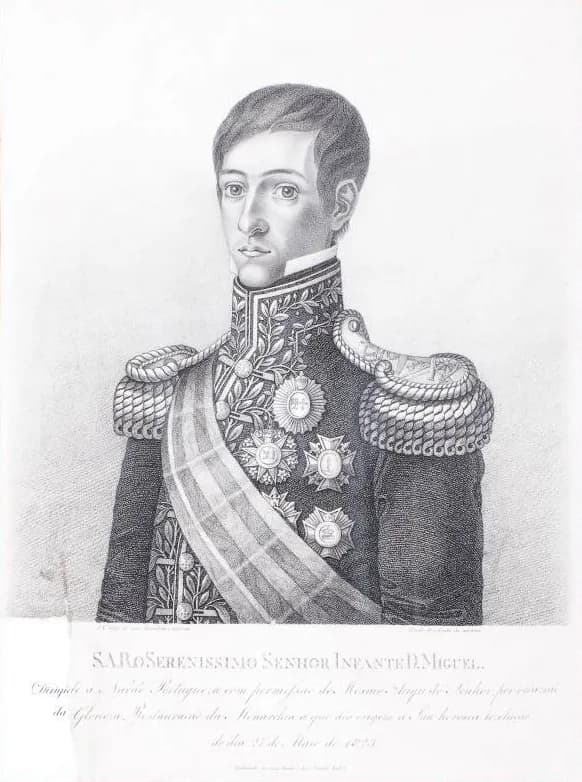
At four in the morning of Friday 30 April 1824, by the French ambassador's account, a young man was going from one barracks to the next through the streets of Lisbon, shouting “Death to the traitors!” He was the Infante Miguel, 21 years old, the younger son of King João VI and commander-in-chief of the Portuguese army.
The regiments obeyed. Soon about 2,000 regular troops stood on the Rossio, the city's main square, and militia companies were marching in to join them. Patrols fanned out across the city. Before the day was out, ministers, officers and noblemen were on their way to the prisons and forts of Lisbon; judges and businessmen followed in the days after.
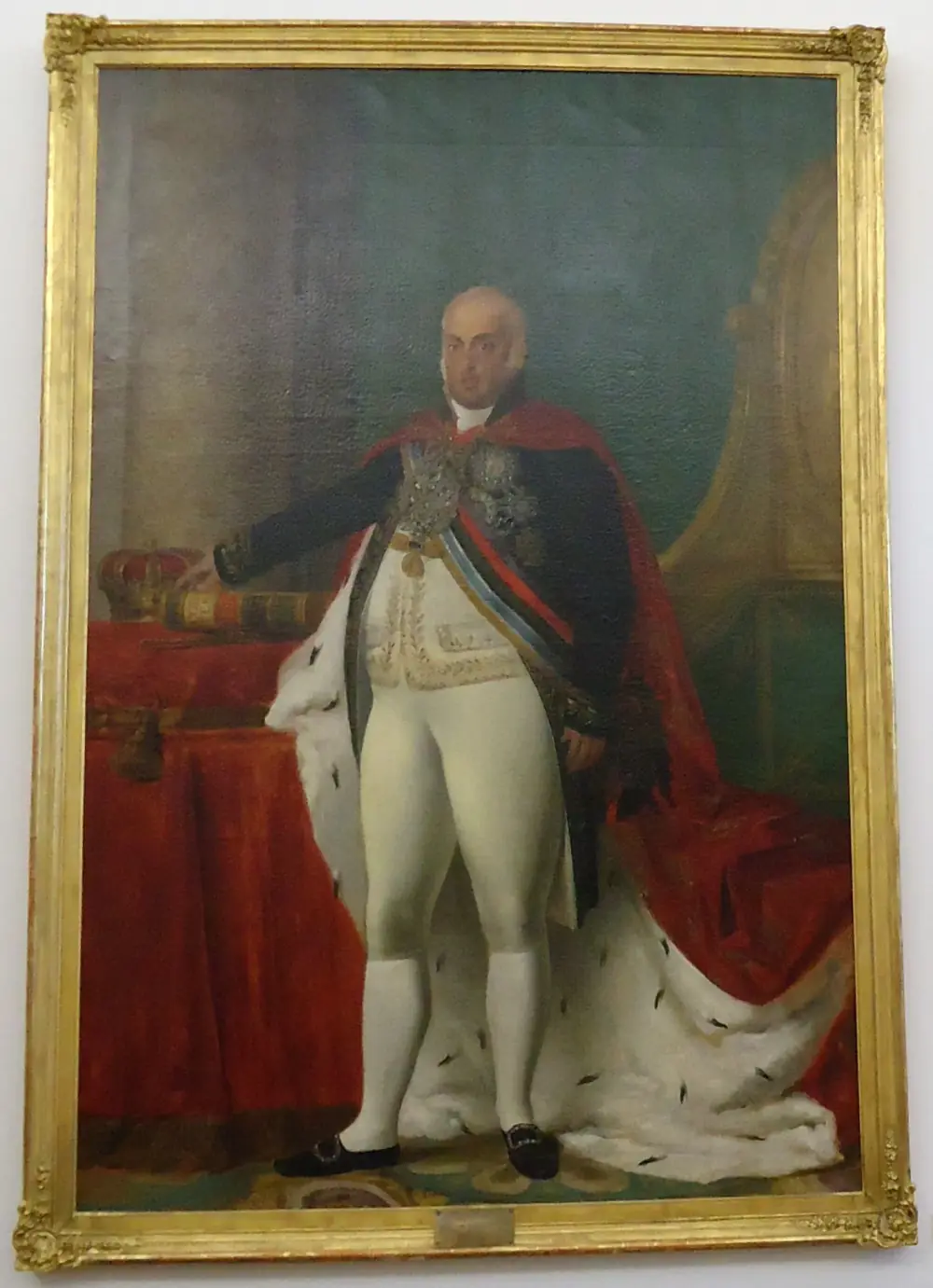
A rumour ran ahead of the soldiers: masked men had broken into the king's bedroom in the night to stab him, and the prince had saved his father just in time. None of it was true. The king himself was at the Bemposta palace, surrounded by troops who let nobody in without a pass from his son.
The episode is known in Portugal as the Abrilada, from abril, April. It was Miguel's second attempt in less than a year to take Portugal's politics into his own hands, and it ended with the prince on a ship bound for exile.
A king between two camps
Four years earlier, on 24 August 1820, a military rising in Porto had begun what the Portuguese call vintismo: a revolution that summoned a parliament, the Cortes, and gave the country its first written constitution in 1822. João VI came home from Brazil in July 1821 and swore to the constitution's founding principles.
On 27 May 1823 Miguel led regiments out of Lisbon to Vila Franca de Xira against the constitution, with the backing of his mother, Queen Carlota Joaquina, a Spanish princess and sister of King Fernando VII. The king put himself at the head of the movement and the constitution fell. That coup, the Vilafrancada, made Miguel a hero to the absolutists, who wanted the old monarchy back without a parliament to limit it, and left him in command of the army.
João VI did not hand the government to the absolutists, though. His leading ministers, the Count of Subserra and the Marquis of Palmela, were moderates. Palmela looked to Britain and Austria for support and Subserra to the continental powers, and a commission was drafting a new, milder constitution. By 1823 or 1824, in the historian Fátima Bonifácio's words, the absolutist party was already the party of Miguel. The queen, living apart from her husband at the palace of Queluz, was its other pole.
Then came a killing. On the night of 29 February 1824, while the court spent Carnival at the royal palace of Salvaterra de Magos, the king's chamberlain and friend, the Marquis of Loulé, was attacked in a dark gallery and killed. Palmela wrote a few days later that Loulé had “without doubt been murdered” (translated from Portuguese). The inquiry the king ordered pointed at men close to Miguel, among them the Marquis of Abrantes. Rumour at court blamed Miguel and his mother, but who gave the order has never been settled.
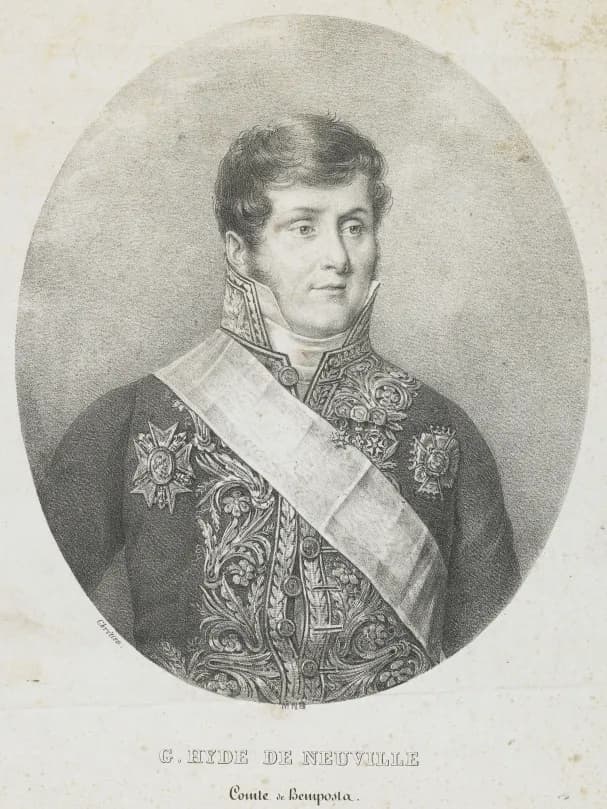
The French ambassador, Jean-Guillaume Hyde de Neuville, believed the two events were one plot. He wrote that the king told a servant at Salvaterra, “You saw the beginning of the 30th April. The first blow was struck at Salvaterra.” By his account, the men behind Loulé's death learned that the king meant to have them arrested at last, and struck first.
The thirtieth of April
The night before, the British minister, Sir Edward Thornton, had given a ball. Subserra, the leading minister, was warned at eight in the evening that men were waiting to ambush him on his way home from the palace. He slipped away by a roundabout route, and next morning hid in the house of a neighbour of the French embassy before Hyde de Neuville took him in. The ambassador was convinced the plan had been to kill him.
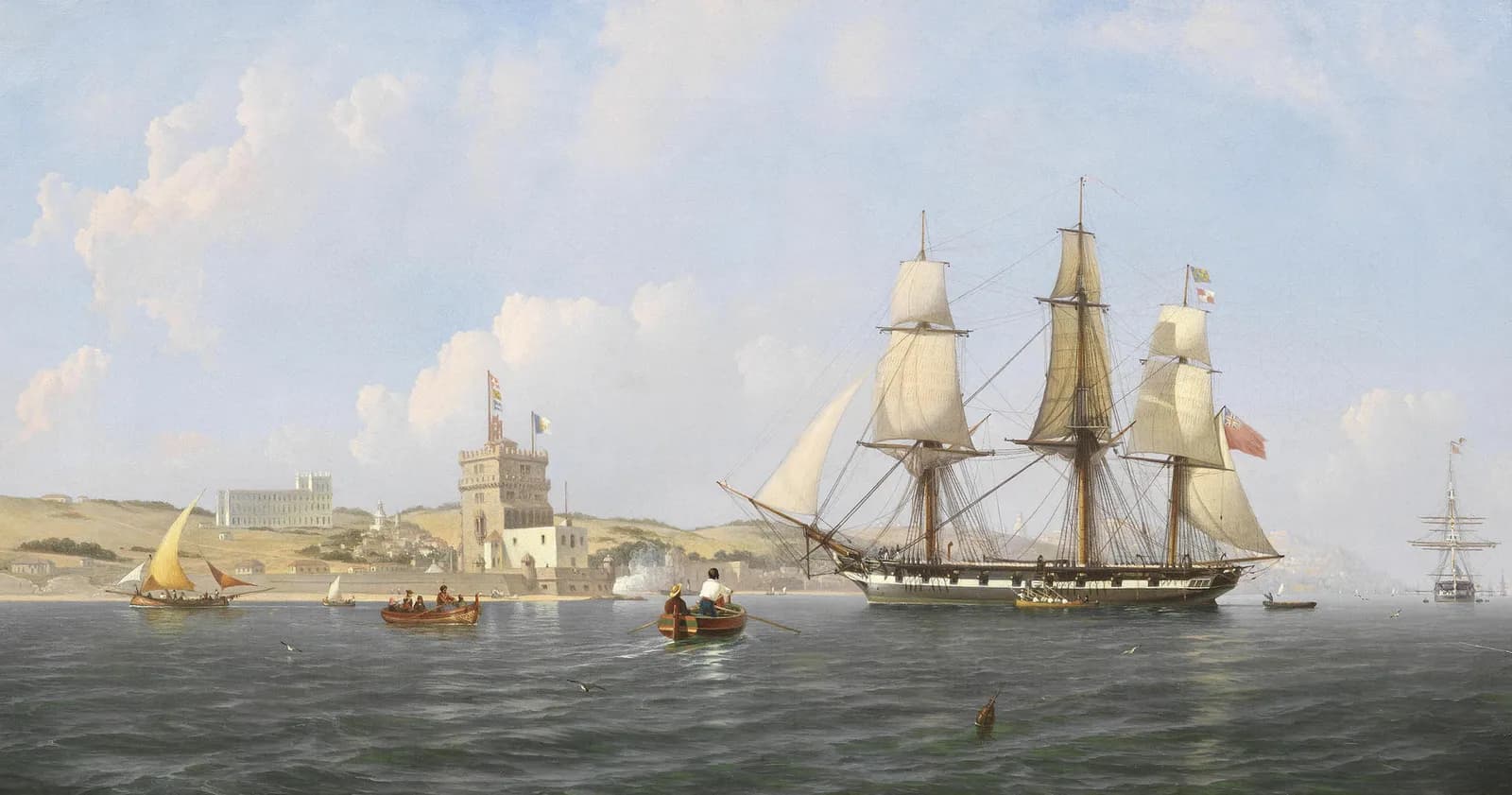
Palmela was less lucky. An officer came to say that the prince wished to speak to him at Belém; a short way down the road Palmela was told he was a prisoner and taken to the Tower of Belém. That is Hyde de Neuville's version; the Annual Register, the British yearbook of events, has him seized on his way home from the ball. The Register listed among those arrested the Marquises of Valença and Fronteira, the Count of Vila Flor, the Viscount of Santa Marta and senior officers. The finance minister, the Count of Póvoa, was seized at home and later released.
Miguel justified it all in print. In a proclamation to the troops dated at the Bemposta, he compared the day with the Vilafrancada and promised to finish the work begun then. A second proclamation, to the nation, claimed that the king had been kept a captive of his own ministers and that a Masonic plot threatened the House of Bragança. A letter to his father asked João VI to approve the “heroic resolution” after the event.
“In the present, I shall accomplish the triumph of the great work which was then begun, giving it a secure establishment, and exterminating at once the pestilential sect of freemasons, which, in the silence of its treason, projected the destruction and total extinction of the reigning house of Braganza.”
Next morning, 1 May, the Gazeta de Lisboa, the official newspaper, printed the proclamations and called the prince “this guardian angel of the Portuguese”. It reported that the queen had come in from Queluz, that the Council of State had met and that the troops had gone back to barracks between two and three in the afternoon. It also said the king had named new ministers, which Hyde de Neuville says he refused to do. It did not say that the king had been a prisoner for most of the day.
| Source | What it says | When written |
|---|---|---|
| Annual Register for 1824 | Between 200 and 300 people arrested in Lisbon on the night of 29 April and the morning of 30 April, including many officers and almost everyone in high office | Published in London, 1825 |
| Hyde de Neuville, French ambassador | More than 300 people taken to prison in less than two hours; later, more than 300 prisoners questioned by the prince himself | Memoirs, published in French from 1888 (English 1913) |
| Gazeta de Lisboa, 1 May | Many military men, some titled nobles and many other people | Next day |
| João VI, proclamation of 9 May | A vast number of people of every class, among them his own ministers and some of his chamberlains | Nine days later |
None of these sources gives a full list of the prisoners. Hyde de Neuville also wrote that on 5 May 47 carriages under cavalry escort took prisoners to the fortress of Peniche.
All Europe on the way to the Bemposta
The person who broke the spell, by his own account, was a foreigner. Hyde de Neuville sent his secretary round the embassies asking every envoy to meet him at the house of the papal nuncio. The envoys gathered there at about nine o'clock. After waiting half an hour for the others, the nuncio, Hyde de Neuville, the Spanish ambassador, the Duke of Villahermosa, and the Russian and Danish chargés d'affaires set off in their carriages. The American minister, Henry Dearborn, an old comrade of George Washington, hesitated, then followed.
On the way they met Thornton, in plain clothes and in a hired cab, and took him into the French ambassador's carriage. They drove deliberately through the Rossio so that the rebel officers would see them. The Austrian minister and the Dutch chargé joined on the road. At the gates of the Bemposta they were told carriages could not pass, so they walked in through the soldiers. A sentry grabbed Thornton by the collar and had to be pulled off him.
At the foot of the grand staircase a man told them nobody could go up without an order from the Infante. Hyde de Neuville replied, in French and then in what he called bad Portuguese, that Europe recognised no one but the king and would hold the man personally responsible for any delay.
“If an erring son is pardoned, his accomplices are hanged.”
One of Miguel's aides-de-camp, Tomás de Mascarenhas, called out that the king was not a prisoner and the ambassadors should be let through. In the throne room they found João VI almost alone, with the master of the palace, the Marquis of Torres Novas, and Marshal William Beresford, the British general who had commanded the Portuguese army from 1809. The king told them, quietly, that he was a prisoner in his own palace, that nobody had tried to kill him and that the queen was urging their son on.
Hyde de Neuville urged the king to send for Miguel and receive him in front of the diplomats. The prince came. He spoke alone with his father and Beresford, then appeared in the throne room, spoke of a conspiracy and of papers he had handed over, kissed his father's hand and rode off to stand the troops down. The soldiers left the Rossio at about two in the afternoon. The king stepped onto the balcony with his daughter Isabel Maria and Beresford to cheers from the crowd.
Nine days of fear
The troops had gone, but Miguel had told the officers to obey no orders but his own, and the arrests continued. Lisbon was lit up for three nights in honour of the prince. On 1 May he thanked the garrison in an order of the day. Palmela was freed, then went into hiding again when Miguel ordered him re-arrested, and later took refuge with the British.
On 3 May a decree in the king's name set up summary courts to try the accused conspirators and excused Miguel for the acts he had committed beyond his authority. It looked like surrender. The king later explained it as an attempt to calm things down that had failed, because arrests went on in the prince's name, some of the orders signed by people with no office at all.
By 5 May the jails were so full that prisoners were being sent on to the fortress of Peniche, up the coast. The British merchants of Lisbon complained to Thornton that their Portuguese partners had been torn from their families and thrown into prison. Thornton passed the protest to the government, and Hyde de Neuville sent one of his own. On the 5th, too, the diplomats met at the French embassy and agreed to urge the king to go aboard a ship, the only place where he could give orders freely.
Getting him there took four days, in Hyde de Neuville's telling. On 6 May Miguel heard that Subserra had left the embassy, rode to the fort of São Julião at the mouth of the Tagus and had sixteen shots fired at the departing British packet boat, which he believed was carrying him. That evening the boats were ready and Thornton was waiting at the quay, but the king saw the queen walking in the palace garden and lost his nerve. The 8th was lost too.
The king on the Windsor Castle
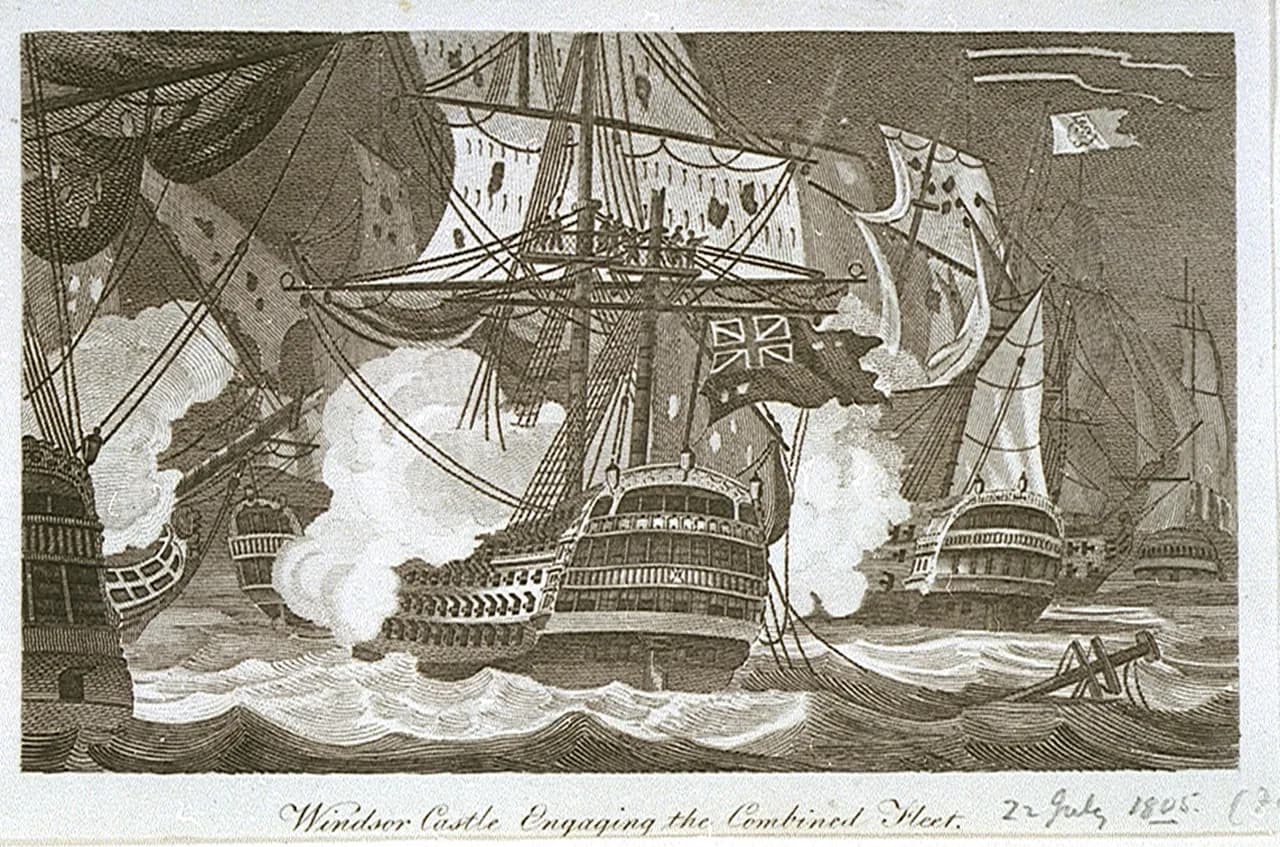
On Sunday 9 May João VI heard Mass at Belém with his daughters, let it be known that he was going on to dine at a country house, and instead stepped into the royal barge. Towards one in the afternoon he was rowed out between lines of marines to the Windsor Castle, a British ship of the line commanded by Captain Charles Dashwood. Launched in 1790 as a three-decker, she had been cut down in 1814 to a two-decker of 74 guns. The royal standard went up, and the diplomats raced out in whatever boats they could find.
From the ship the king acted fast. A decree dismissed Miguel as commander-in-chief and forbade anyone to obey his orders, on pain of being treated as a rebel. The Intendant of Police was told to free everyone arrested illegally since 30 April, and the commander at Peniche the same. A proclamation to the nation told the story of the day in the king's own words.
“At dawn on 30 April all the troops of the capital appeared under arms, and My Son was seen leaving My royal palace to put himself at their head and order, without My knowledge, the arbitrary arrest of a vast number of people of every class.”
A letter ordered Miguel to come aboard at once, with a promise of pardon. He obeyed. On deck he threw himself at his father's feet: “Ah! My Father! I would have hastened to you, if I had been at the other end of the world.” The king walked away without answering and kept him waiting an hour. When they spoke, Miguel blamed his advisers. Orders went out to arrest the Marquis of Abrantes and others of the prince's circle.
On 12 May Miguel wrote to ask leave “to travel for some time in Europe”, blaming the errors of youth and inexperience. The king granted it the same day in a letter that spoke only of a father's love and of the service his son had done the throne the year before. The word exile appears in neither letter.
The next day, 13 May, was the king's birthday. He held court on the ship and handed out rewards to the men who had stood by him. At four in the afternoon Miguel sailed for Brest, in France, on the Portuguese frigate Pérola, escorted by the British frigate Lively and a French brig, travelling under the title of Duke of Beja. The Annual Register dates his sailing to the 14th.
| Recipient | Role on 30 April | Reward |
|---|---|---|
| Baron Hyde de Neuville | French ambassador; gathered the diplomats | Title of Count of Bemposta |
| Sir Edward Thornton | British minister | Title of Count of Cacilhas and a Crown estate for three lives |
| Duke of Villahermosa | Spanish ambassador | Title of Count of Mouta |
| Archbishop of Nazianzus | Papal nuncio; host of the diplomats' meeting | Grand Cross of the Order of Our Lady of the Conception of Vila Viçosa |
| General Henry Dearborn | United States minister | Medal set with diamonds bearing the king's portrait |
| Captain Charles Dashwood | Commander of the Windsor Castle | Grand Cross of the Order of the Tower and Sword, with a diamond plaque |
The Gazeta de Lisboa of 14 May lists further honours for the Austrian minister, other diplomats and the officers of the Windsor Castle and the frigate Lively. The issue of 15 May adds a gift of 500 gold coins for the crews of both ships.
27 May 1823
The Vilafrancada
Miguel's rising ends the constitution of 1822; he becomes commander-in-chief.
29 February 1824
Loulé killed
The king's chamberlain is murdered at the palace of Salvaterra de Magos.
29 April, night
Ball at the British legation
Subserra is warned of an ambush and escapes.
30 April, 4 am
Miguel calls out the garrison
Mass arrests; the Bemposta is sealed off; the queen arrives from Queluz.
30 April, morning
The diplomats reach the king
Troops leave the Rossio at about 2 pm.
3 May
Decree of 3 May
Summary courts for the accused; Miguel excused.
5 May
Prisoners sent to Peniche
The diplomats agree to urge the king to go aboard ship.
9 May
João VI boards the Windsor Castle
Miguel dismissed and summoned aboard; prisoners ordered freed.
12 May
Miguel asks to travel
The king grants leave the same day.
13 May
Miguel sails for Brest
Honours for the diplomats on the king's birthday.
14 May
The king lands at the Navy Arsenal
The Annual Register gives 15 May.
João VI stayed on board one more day. According to the Gazeta, he came ashore at the Navy Arsenal at half past six on the evening of 14 May, to a salute from every warship in the river and a crowd that wept and embraced. The city was lit up again, this time for him.
Exile, and what came after
The queen was ordered to withdraw to Madeira or abroad. She took to her bed at Queluz, pleaded illness and refused three times to receive her own brother's ambassador. The king forbade her to appear at court, and she stayed at Queluz under watch. Beresford, whom the king now avoided, sailed for England on 18 July.
The restored ministers did not keep the promise of a new constitution. Instead, a royal law published in June 1824 declared the old constitution of the kingdom back in force, with the Cortes of the three estates of clergy, nobility and people, which had not met for more than a century. In August a special commission was set up to judge those behind 30 April, “observing only the limits of the natural law, without attention to civil forms”.
From France Miguel went on to Vienna, capital of the Austrian Empire. He was still there when his father died at the Bemposta on 10 March 1826. He accepted his elder brother, Pedro, Emperor of Brazil, as king, swore Pedro's new Constitutional Charter in Vienna on 4 October 1826 and agreed to marry Pedro's daughter, Maria, then seven.
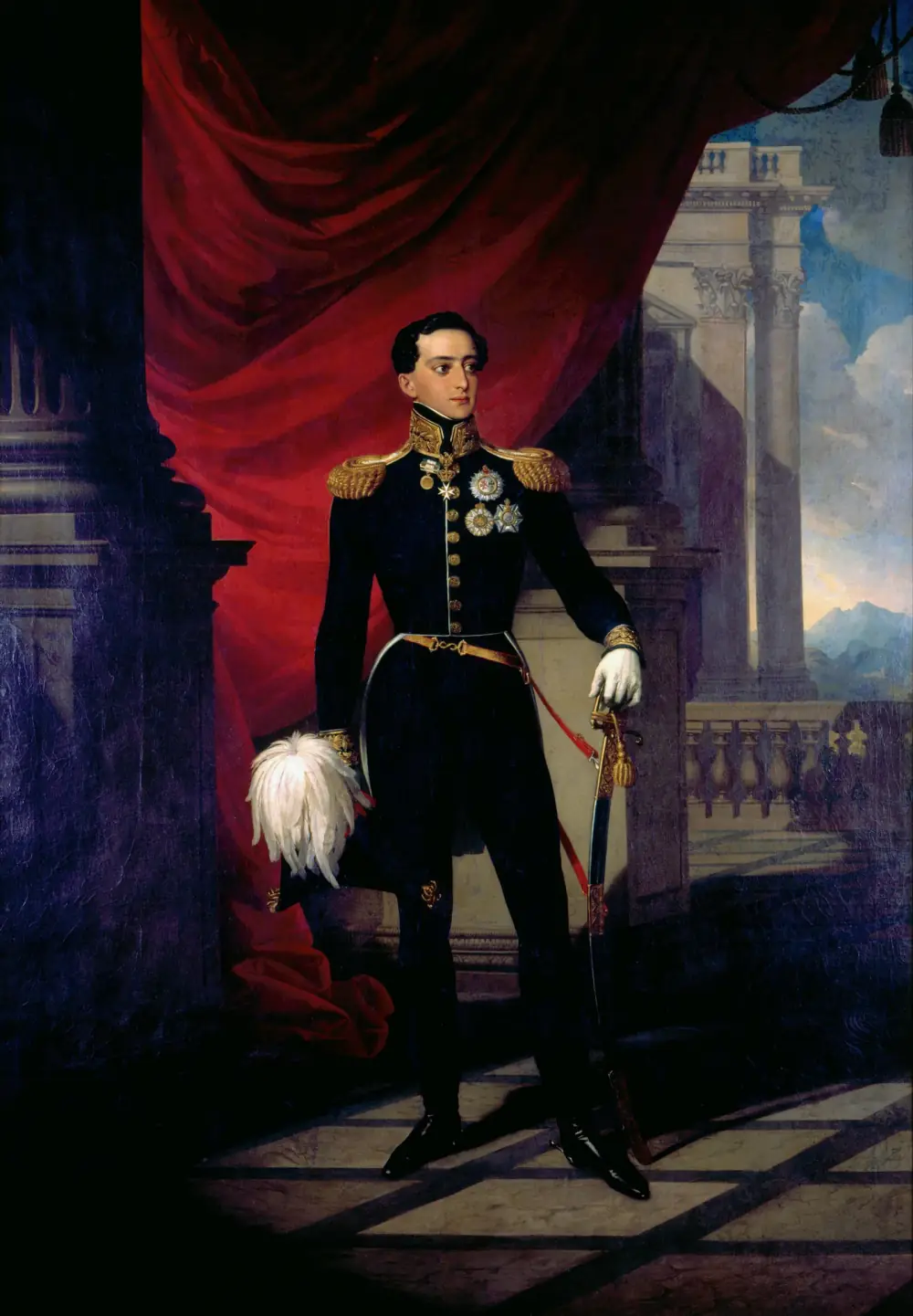
He landed in Lisbon as regent on 22 February 1828. Within months he had dissolved the Chamber of Deputies, been proclaimed king by the old Cortes and annulled the Charter. The civil war that followed, from 1832 to 1834, ended with his defeat and his final exile. Among the liberal commanders was the Count of Vila Flor, by then Duke of Terceira, one of the men arrested on 30 April and the son-in-law of the murdered Loulé.
Why it still matters
The Abrilada failed, and it was short. The organisers of a colloquium held in Porto in February 2024, two hundred years on, described it as the moment when the moderate middle ground broke, and as a rehearsal for the repressive system of Miguel's regency and reign from 1828. They also noted that research on the Abrilada and its archives is still incomplete.
It also showed where power lay. A king whose army had followed his son got his authority back because foreign envoys walked into his palace and a foreign warship took him in. Hyde de Neuville's memoirs are full of the rivalry between France and Britain for influence in Lisbon, and Thornton fell out of favour with his own government for having worked so closely with the French.
FAQs
What was the Abrilada?
The Abrilada was a coup attempt in Lisbon on 30 April 1824 by the Infante Miguel, commander-in-chief of the army and younger son of King João VI. Claiming to foil a Masonic plot, he ordered mass arrests and surrounded his father's palace. Foreign diplomats intervened, and on 9 May the king took refuge on a British warship, dismissed Miguel and sent him abroad.
Why is it called the Abrilada?
The name comes from abril, Portuguese for April, the month of the rising. It parallels the Vilafrancada of May 1823, named after Vila Franca de Xira, where Miguel led the rising that ended the constitution of 1822. A coup attempt against Salazar in April 1961 is also known as the Abrilada.
Did Miguel want to depose his father?
He denied it, saying he acted to save the king from a Masonic plot. Two stories went round Lisbon, the French ambassador wrote: that the prince had foiled an attempt on the king's life, and that he meant to depose his father. Hyde de Neuville himself believed the plan was to force João VI to abdicate, leaving the queen to govern, and the Annual Register also believed Miguel and the queen meant to depose the king. The king's own proclamation of 9 May said the prince had been led astray by treacherous advisers.
Where did Miguel go after the Abrilada?
He sailed from Lisbon for Brest, in France, on the frigate Pérola on 13 May 1824 and settled in Vienna. He returned to Portugal only in February 1828, as regent for his niece Maria, and had himself proclaimed absolute king that summer.
On the timeline
Open the timelineNearby moments from invasions, brazil and the liberal wars (1807–1851).
On his twenty-fourth birthday, Prince Regent Pedro is acclaimed Constitutional Emperor and Perpetual Defender of Brazil at the Campo de Santana in Rio de Janeiro, a month after the Cry of Ipiranga had proclaimed the country's separation from Portugal.
At Pirajá, outside Salvador da Bahia, Brazilian independence forces beat back General Madeira de Melo's Portuguese troops in the main battle of Bahia's war of independence. Tradition, first printed in the 1830s, says the tide turned when the bugler Luís Lopes, a Portuguese in Brazil's service, sounded 'cavalry, advance' and 'no quarter' instead of the ordered retreat, though no Brazilian cavalry was on its way.
Prince Miguel launches the Vilafrancada in Vila Franca de Xira, an absolutist military coup against the liberal Constitution of 1822 that ends Portugal's first constitutional experiment and restores the traditional powers of King João VI.
The Abrilada, 1824
The Abrilada (April Revolt): Infante Miguel, commander-in-chief of the army, turns the Lisbon garrison against his father's moderate ministers and holds King João VI in the Bemposta palace. Backed by the diplomatic corps, the king takes refuge on a British warship, strips Miguel of his command and sends him into exile.
By the Treaty of Rio de Janeiro, mediated by Britain, Portugal formally recognises the independence of Brazil, ending the Brazilian war of independence.
King João VI dies in Lisbon under suspicious circumstances (possible arsenic poisoning), triggering a succession crisis between his sons Pedro (Emperor of Brazil) and Miguel, which would lead to the Portuguese Civil War.
In Rio de Janeiro, Pedro IV — also Emperor Pedro I of Brazil — grants Portugal the Constitutional Charter, a more conservative liberal constitution with a hereditary Chamber of Peers. With interruptions, it would remain in force until the fall of the monarchy in 1910.
Coming up in history
All long reads
24 sources
Archives, scholarship and reporting this article was checked against.
- 1
Gazeta de Lisboa, January to July 1824 (bound volume), issues and supplements of 1, 10, 12, 14 and 15 May and 5 June 1824Impressão Régia, Lisbon; digitised by the Internet Archive
- 2
- 3
- 4
O Duque de Loulé: crónica de um percurso político, vol. I (Filipe Alberto Folque de Mendóça, PhD thesis)Faculdade de Letras, Universidade de Coimbra, 2016
- 5
Windsor Castle (1790): plan of the ship as cut down to a 74-gun two-decker, Plymouth Dockyard, 13 October 1814 (ZAZ0354)Royal Museums Greenwich, Ship Plans and Technical Records
- 6
30 April 1824: Abrilada coup d'état, led by MiguelParques de Sintra, Palácio Nacional de Queluz: King Pedro IV chronology
- 7
Iberian Colloquium Vilafrancada and Abrilada: from the Old Regime to the counter-revolution. Archival and historiographical readingsCITCEM, Universidade do Porto, February 2024
- 8
A «causa» de D. Maria II (1826-1834) (M. Fátima Bonifácio)Análise Social, vol. XXXIX (172), 2004
- 9
Miguel 1.Store norske leksikon
- 10
- 11
The Portuguese Constitution of 1822 (Ron B. Thomson)British Historical Society of Portugal
- 12
- 13
The Story of Portugal (H. Morse Stephens, 1891)Project Gutenberg
- 14
- 15
Dashwood, Charles, in A Naval Biographical Dictionary (William R. O'Byrne, 1849)Wikisource
- 16
- 17
- 18
- 19
- 20
- 21
D. João VI: um caso de envenenamento revisitado (Sandra Coelho)Arqueologia & História, vols. 71-72 (2022), Associação dos Arqueólogos Portugueses
- 22
Torre de BelémMuseus e Monumentos de Portugal
- 23
The Gardens and National Palace of QueluzParques de Sintra – Monte da Lua
- 24
Militares e política: a Abrilada de 1961 e a resistência do salazarismo (Luís Nuno Rodrigues)Ler História 65 (2013), pp. 39-56
Image credits
- An English frigate arriving in the Tagus off the Tower of Belém, a nineteenth-century oil painting attributed to Joseph Schranz. On 30 April 1824 Miguel's officers took the foreign minister, the Marquis of Palmela, to the tower as a prisoner; nine days later the king took refuge on a British warship anchored in the river. Joseph Schranz, Public domain, via Wikimedia Commons.
- The Infante Miguel in 1823, engraved by José Vicente de Sales. The inscription dedicates the print to the Portuguese nation in memory of the “glorious restoration of the monarchy” of 27 May 1823, the Vilafrancada. José Vicente de Sales, Public domain, via Wikimedia Commons.
- João VI painted by Domingos Sequeira in 1821, the year he returned from Brazil. The portrait hangs in the Palácio de São Bento, home of the Assembleia da República. Photographed in 2012. Carlos Luis M C da Cruz, CC BY-SA 3.0, via Wikimedia Commons.
- Jean-Guillaume Hyde de Neuville, French ambassador in Lisbon, in a nineteenth-century lithograph that gives him the Portuguese title João VI created for him on 13 May 1824: Count of Bemposta. Unknown author, Public domain, via Wikimedia Commons.
- The Windsor Castle, a three-decker launched in 1790, in action against the French and Spanish fleet off Cape Finisterre on 22 July 1805. Cut down to a 74-gun two-decker in 1814, she lay in the Tagus under Captain Charles Dashwood in 1824 and sheltered João VI from 9 to 14 May. Unknown author, Public domain, via Wikimedia Commons.
- Miguel in 1827, painted in Vienna by Johann Nepomuk Ender during the exile that followed the Abrilada. He left Austria the following winter to govern Portugal as his niece's regent. Johann Ender, Public domain, via Wikimedia Commons.