

Afonso III, born 5 May 1210: from count of Boulogne to king of the Algarve
A second son with no claim to the crown spent close to twenty years in France. He came home with a papal mandate against his own brother, finished the conquest of the Algarve, called the towns to the Cortes and died with his kingdom under the Church's interdict.
At a glance
- Afonso III was born on 5 May 1210, probably in Coimbra, the second son of King Afonso II and Urraca of Castile. As a younger son he was not expected to reign.
- He left for France as a young man, married Matilde, Countess of Boulogne, in 1238 and fought for Louis IX at Saintes in 1242, which is why Portuguese history calls him o Bolonhês.
- In July 1245 Pope Innocent IV handed him the government of Portugal in place of his brother Sancho II. After a civil war he became king when Sancho died in exile in Toledo on 4 January 1248.
- By March 1249 he held Faro, the last stage of the conquest of the Algarve, and the treaty of Badajoz of 16 February 1267 settled the border with Castile on the Guadiana.
- Town representatives sat in his Cortes at Leiria in 1254. He spent his last years in conflict with the bishops and died in Lisbon on 16 February 1279, after swearing obedience to Rome on his deathbed.
A feast at Saumur
In June 1241 the young King Louis IX of France held a great feast in the market halls of Saumur, on the Loire. The knight Jean de Joinville, who carved for the King of Navarre that day, remembered the scarlet and ermine, the twenty bishops and archbishops at one table and the 3,000 knights who were said to have dined in the halls.
At the far end sat the king's mother, Blanche of Castile, who had ruled France while he was a boy. Among the men who waited on her was a Portuguese prince of 31.
“And to serve the queen, there were the Count of Boulogne, who was afterwards King of Portugal, and the good Count of St. Pol.”
The count was Afonso, the younger brother of King Sancho II of Portugal, and Blanche was his aunt. He had been born on 5 May 1210, probably in Coimbra; Humberto Baquero Moreno, in the Spanish Royal Academy of History's biography, gives both the day and the town as presumed. Nothing in his birth suggested a crown. Within seven years of the feast he would be king of Portugal, and his elder brother would be dead in exile.
A second son in France
His father, Afonso II, became king in 1211 and died in 1223, excommunicated and with the kingdom under a papal interdict. The crown passed to the eldest son, Sancho, born in 1209 and only 13, while a council of his father's ministers governed in his name.
There was little for a second son at home. Afonso left for the French court, at 17 in 1227 according to Baquero Moreno and the Lisbon castle's history of the king. The nineteenth-century historian Alexandre Herculano could find no firm date, mentioned his going around 1229 and thought it might have been later still; the first proof of him in France is from 1238. Several Portuguese knights went with him.
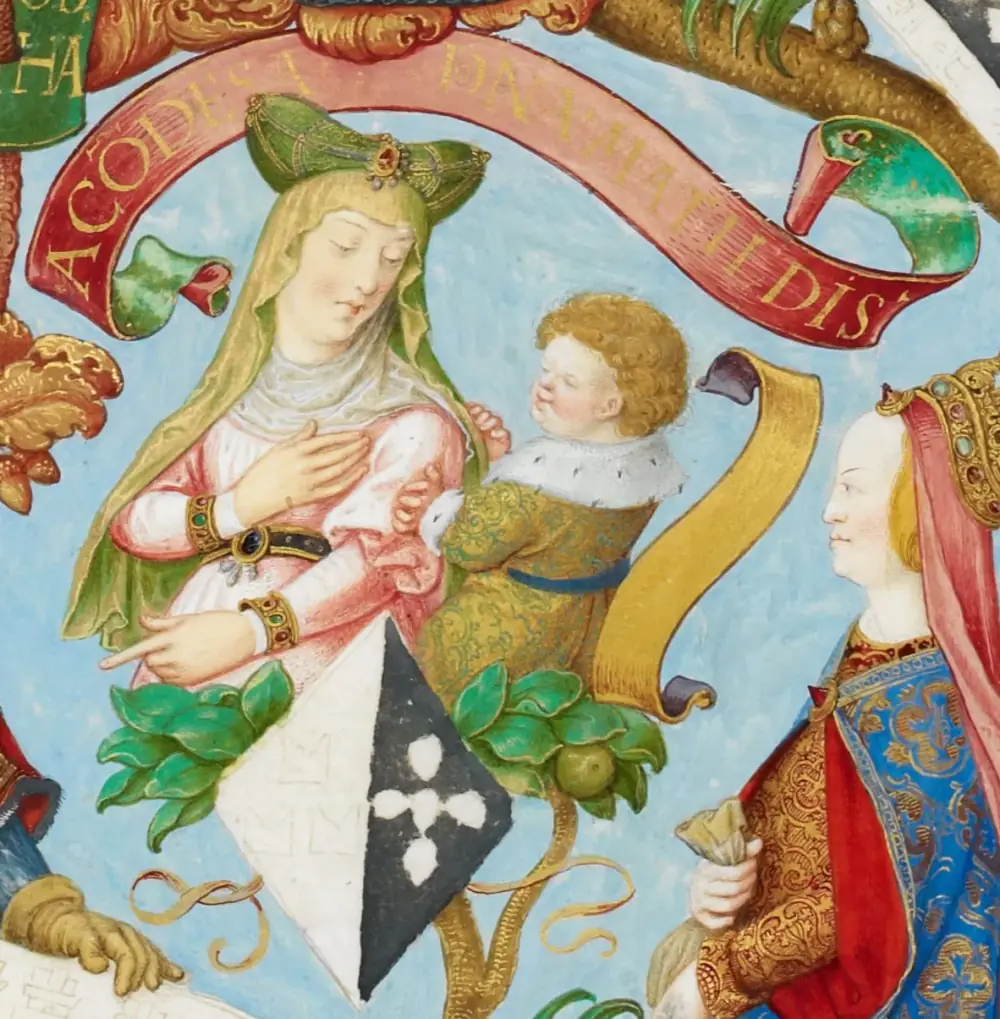
In 1238 he married Matilde, or Mahaut, Countess of Boulogne, an heiress who had been a widow since 1234. Her first husband, Philippe Hurepel, was a son of King Philip Augustus. Herculano thought Queen Blanche arranged the match. Through it Afonso became Count of Boulogne, on the Channel coast, and in Portuguese history he is still o Bolonhês, the man from Boulogne.
He was knighted in 1239. In July 1242, when Louis IX met Henry III of England near Saintes, Herculano records that the Count of Boulogne and his men were the first to break the English ranks. The English took the count's seneschal prisoner, and Herculano identified him as Pedro Ourigues, one of the Portuguese knights who had followed Afonso to France.
- Born
- 5 May 1210, probably in Coimbra (date and place as traditionally given)
- Parents
- King Afonso II of Portugal and Urraca of Castile
- Elder brother
- Sancho II, born 1209, king 1223 to 1248
- Wives
- Matilde, Countess of Boulogne (married 1238); Beatriz of Castile (married 1253)
- Ruled
- As regent from 1245 or 1246, as king from January 1248
- Died
- 16 February 1279, in Lisbon, aged 68
- Buried
- Monastery of Alcobaça
The pope and the two brothers
Sancho II was a successful soldier. He took Elvas, Juromenha, Serpa, Aljustrel and Mértola and pushed down the Guadiana to Ayamonte, Cacela and Tavira on the Algarve coast. At home he was weaker. Nobles feuded, royal officials and bishops clashed over rents and jurisdiction, and in 1238 a complaint by the bishop of Porto brought an interdict on the kingdom.
Rome began looking for a substitute. In late 1239 Pope Gregory IX issued twelve bulls in favour of the youngest brother, Fernando of Serpa, the last of them allowing for him to claim the throne if Sancho proved incapable. Nothing came of it. By 1245 the candidate was the Count of Boulogne, who was already corresponding with Innocent IV and who told the pope that Sancho's marriage to Mécia López de Haro was within the forbidden degrees of kinship.
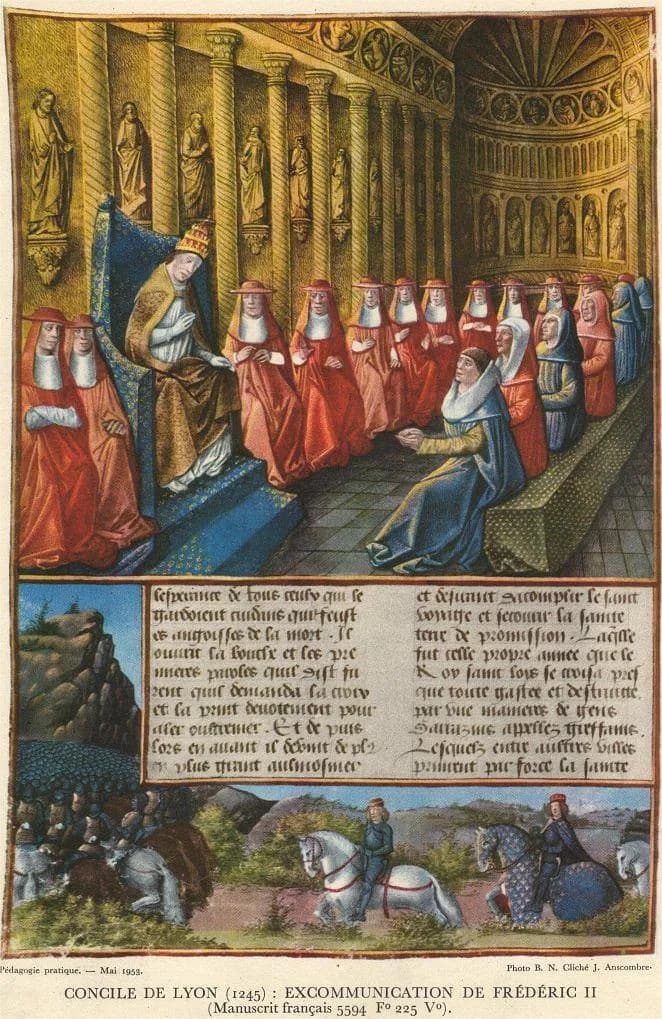
The archbishop of Braga and the bishops of Porto and Coimbra took their complaints to Rome, and then to the Council of Lyon. On 20 March 1245 the bull Inter alia desiderabilia blamed Sancho for the state of the kingdom. The council closed on 17 July, and a week later, on 24 July, the bull Grandi non immerito told the nobles and towns of Portugal to obey Afonso as governor; a copy for the prelates followed on 1 August. Sancho was removed from government rather than formally deposed. The same council deposed Emperor Frederick II for tyranny; the charge against Sancho was weakness.
On 6 September 1245, in the Paris house of the chancellor of the university, Afonso swore to the archbishop of Braga and to a representative of the bishop of Coimbra that he would protect the Church's liberties, punish those who had wronged clergy, take hospitality dues no larger and no more often than his grandfather had, and consult the prelates on the affairs of the kingdom. Fourteen seals were attached to the record.
“The act amounted almost to an abdication of royal authority at the feet of the episcopate.”
Afonso sailed for Lisbon at the end of 1245 or the very beginning of 1246. The city declared for him at once, and in February 1246 he confirmed its old privileges. He took the title of visitor, curator and defender of the kingdom, and the war that followed was fought castle by castle, with sieges, payments and defections.
Sancho turned to Castile. Its heir, the future Alfonso X, led troops into Portugal and, by the chroniclers' account, came as far as Leiria, but could not restore him, and Innocent IV took care to keep the Castilian prince out of the excommunications that fell on Sancho's other supporters. Sancho withdrew to Toledo, where he died on 4 January 1248. His will asked for burial at Alcobaça, beside his father. It was not carried out. Afonso now took the title of king.
Faro and the Algarve question
The new king finished what his brother had begun. Early in 1249 he marched south with his uncle Pedro, the master of Avis, the knights of the military orders and a few close followers. In February he was still at Ourém. By March he was dating documents at Santa Maria de Faro, the old Muslim town on the lagoon, which had surrendered. Albufeira, Porches and the remaining places followed.
Little is known of the fighting. The main narrative, the so-called chronicle of the conquest of the Algarve, is an extract from a chronicle of 1419. It places the fall of nearby Loulé after the surrender of Faro, following a short siege by Paio Peres Correia and the knights of Santiago. The historian Luís Filipe Oliveira notes that by March Paio Peres was already at Alcácer do Sal and that by May the king was at Crato, heading north. He argues that Loulé fell soon after Faro and probably negotiated its surrender.
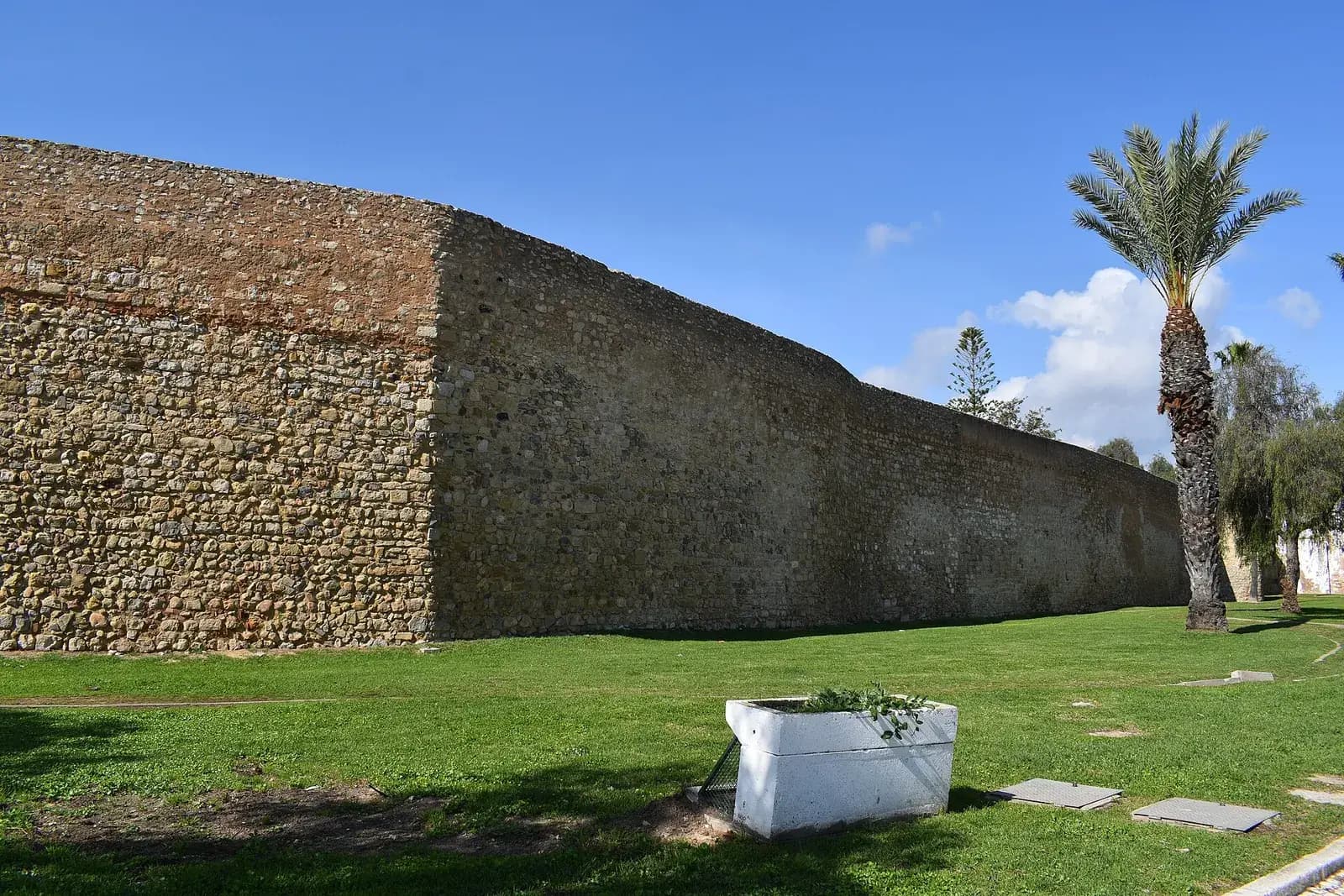
Castile objected. Its heir Alfonso argued that Ibn Mahfuz, the Muslim ruler of Niebla, had handed him the rights to the Algarve, and war followed. A truce was agreed at the end of 1250; fighting resumed after Alfonso became king in 1252, until Innocent IV pressed both sides to make peace.
The price was a marriage. At Chaves in May 1253 Afonso III, then about 43 and still married to Matilde, took as his wife Beatriz, an illegitimate daughter of Alfonso X who was still a child. Castile was to enjoy the Algarve, and the lands east of the Guadiana, until the first son of the marriage reached the age of seven.
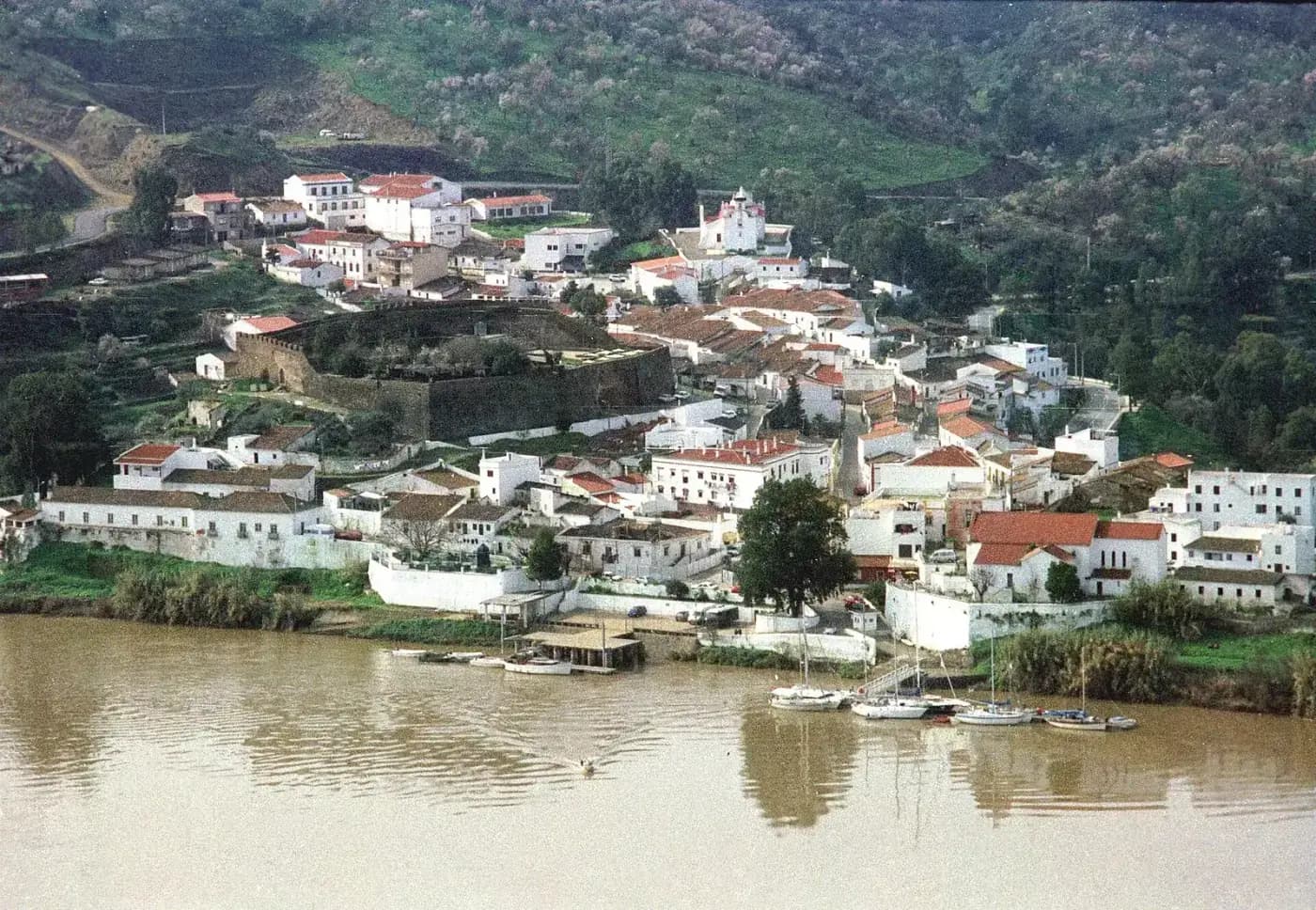
That son, Dinis, was born in Lisbon on 9 October 1261, and the arrangement began to unwind. At Badajoz, on 16 February 1267, Alfonso X gave up all his rights in the Algarve and ordered the knights who held its royal castles to hand them to the king of Portugal. Afonso III in turn gave his father-in-law Aroche and Aracena, east of the Guadiana. The river became the border from its meeting with the Caia down to the sea, and Arronches and Alegrete stayed Portuguese.
| Date | Title | Where it is recorded |
|---|---|---|
| 1246 | Visitor, curator and defender of the kingdom | Title taken as regent after landing in Lisbon |
| March 1254 | Rex Portugaliae et comes Boloniae (king of Portugal and Count of Boulogne) | Chancery register entry on the Cortes of Leiria |
| 1271 | Rex Portugaliae et Algarbii (king of Portugal and the Algarve) | His will, made in Lisbon |
| 16 February 1279 | Rex Portugalie et Algarbii | Notice of his death |
Herculano found that 'Count of Boulogne' disappeared from his documents in 1259 and 'the Algarve' appeared in 1268.
Towns, coins and the Cortes
Afonso III had promised the bishops a great deal in Paris. He also needed money, and the usual way for a medieval king to raise it was to 'break' the coinage: recall the silver pennies, recast them with more copper and reissue them at the same face value. Prices rose at the mere rumour. By the end of 1253 the court had tried to hold them down with a fixed schedule of prices.
In the spring of 1254 he called a solemn assembly at Leiria. It met from late February to early April and dealt with complaints from towns and monasteries, confirmed privileges and settled the trade of the river Douro between Porto, which belonged to its bishop, and the royal town of Gaia across the water. His chancery register recorded who came.
“Lord Afonso, King of Portugal and Count of Boulogne, held his court at Leiria in the month of March, with the bishops, the nobles, the prelates and the orders, and with the good men of the towns of his kingdom.”
The good men of the towns were the novelty. Herculano, writing in the 1840s, held that before 1254 town procurators had never sat in a Portuguese assembly, and called their summons the event that would make the reign worth remembering if nothing else did. Torquato de Sousa Soares later argued that they may already have attended an assembly at Guimarães in 1250, though Herculano himself would not affirm it. Leiria in 1254 is the first where their presence is certain.
The coinage came back again and again. Around this time Afonso promised to leave the money unchanged for seven years in return for a one-off levy, which in practice only commoners paid. When the term ran out in 1261 he began to issue debased coins. Prelates, barons, orders and towns together demanded Cortes, which met at Coimbra and produced a settlement dated 11 April 1261.
The old coins were to be restored, the new and weaker ones would circulate at a fixed rate of four to three against them, and the king gave up any right to alter the old money again, in exchange for a single tax on property. The new coin could be struck again only after four years, for two years, and never after that in his lifetime. The scale fell hardest on modest owners, and bishops, the masters of the orders, the clergy and knights were exempted outright.
| Value of a person's property | Paid once to the king |
|---|---|
| 10 to 20 libras | Half a libra |
| 20 to 100 libras | 1 libra |
| 100 to 1,000 libras | 3 libras |
| Above 1,000 libras | 3 libras; nothing on the excess |
Bishops and some of their households, the masters of the military orders, the religious, belted knights and their sons, noblewomen not married to commoners, and cathedral canons were exempt. Herculano called the inequality of the scale monstrous.
He also sent out inquiries into crown rights in 1258, and in 1265 took legal steps to recover royal property that the inquiries had shown was lost. Those inquiries touched the estates of the Church as well as the nobility, and the historian Ofélia Carvalho suggests they may have triggered the bishops' revolt that followed.
His court spent more and more time in Lisbon. The city had taken his side in 1246, his heir was born there, he made his will there in 1271, and in 1277 a papal legate found him living in the palace inside the castle. The castle's own history of the king is careful: he kept travelling between the main towns, and Lisbon gradually asserted itself as the head of the kingdom.
Two wives and the Church
The Chaves marriage left Afonso with two wives. Matilde complained to Pope Alexander IV and asked for her dowry back. In May 1255 the pope had the archbishop of Compostela summon the king to Rome within four months; he neither came nor sent anyone. In July 1256 Alexander ruled against him in his absence, and a bull of 2 April 1258 shows the dowry still unpaid. Beatriz was also related to him within the forbidden degrees, so the Church saw the union as both bigamous and incestuous.
Afonso stayed with Beatriz, and under the interdict church services stopped wherever the couple went. Matilde died in 1258. A daughter, Branca, was born early in 1259 and Dinis in 1261. In May 1262 the Portuguese bishops asked the new pope, Urban IV, to regularise the marriage, and Louis IX of France, Theobald of Navarre and Charles of Anjou wrote in support. On 19 June 1263 the bull Qui celestia simul legitimised it.
Peace with the bishops did not last. In 1267 and 1268 the archbishop of Braga and the bishops of Coimbra, Viseu, Lisbon, Porto and Idanha, with procurators for Lamego and Évora, went to Rome. Each laid an interdict on his diocese, which put almost the whole kingdom under censure, and they presented 43 articles of complaint: bishops imprisoned or threatened with death, clergy harassed by royal officials, tithes refused, excommunications ignored.
Popes came and went, and the case dragged on. Gregory X demanded amends in 1273, and on 4 September 1275 issued the bull De regno Portugaliae, which reminded Afonso of the oath he had sworn in Paris and set out the penalties if he did not swear again. Gregory died on 10 January 1276, before the deadline ran out. In 1277 the legate Friar Nicolau reached Lisbon and found the king in his castle palace. He would not yield.
He gave way only when he believed he was dying. On 27 January 1279, before the bishop of Évora, a former abbot of Alcobaça and other clergy, he swore without conditions to obey the Holy See and to restore what he had taken. His son Dinis, standing by, promised to carry out whatever his father could not. Herculano prints the date as 17 January but says the king lived another twenty days, which fits the 27th.
“In the era 1317, on the fifth day of the week, the 16th day of February, the lord king of Portugal and the Algarve died, before cockcrow.”
Afonso III died in Lisbon, aged 68. Dinis, 17, inherited a kingdom still under interdict and a quarrel with Rome that he would settle only with the concordat of 1289.
5 May 1210
Born, probably in Coimbra
1223
His father dies; his brother Sancho II becomes king at 13
1227 (or later)
Leaves for the French court
1238
Marries Matilde, Countess of Boulogne
June 1241
Serves Queen Blanche at the feast of Saumur
July 1242
Fights for Louis IX at Saintes
24 July 1245
Bull Grandi non immerito hands him the government of Portugal
6 September 1245
Swears his oath to the bishops in Paris
Early 1246
Lands at Lisbon; civil war
4 January 1248
Sancho II dies in Toledo; Afonso becomes king
March 1249
Faro is in his hands
May 1253
Treaty of Chaves and marriage to Beatriz
February to April 1254
Cortes of Leiria, with town representatives
11 April 1261
Cortes of Coimbra settle the coinage
19 June 1263
Pope Urban IV legitimises his second marriage
16 February 1267
Treaty of Badajoz fixes the Guadiana border
1267 to 1268
The bishops take 43 complaints to Rome
4 September 1275
Bull De regno Portugaliae
16 February 1279
Dies in Lisbon
Why it still matters
The map is the plainest legacy. After Faro there was no more Muslim territory for Portugal to conquer at home, and the last stretch of the Guadiana, past Alcoutim to the sea, is still the border he agreed at Badajoz. His son redrew much of the rest of the frontier at Alcañices in 1297.
So is the place of the towns in the Cortes. They kept it: the assembly that elected João I at Coimbra in 1385 included some fifty town procurators.
Herculano, no admirer of the way Afonso won the throne, still judged the reign a time of real social progress, and summed up the man in one sentence.
“In war less illustrious than his brother, and in peace less far-sighted than his father, he nonetheless combined the gifts of both to a high degree.”
FAQs
When and where was Afonso III of Portugal born?
On 5 May 1210, probably in Coimbra, where the royal palace then stood. He was the second son of King Afonso II and Urraca of Castile. The day and the town are the ones traditionally given; his scholarly biographer in the Spanish Royal Academy of History presents them as presumed.
Why is Afonso III called o Bolonhês?
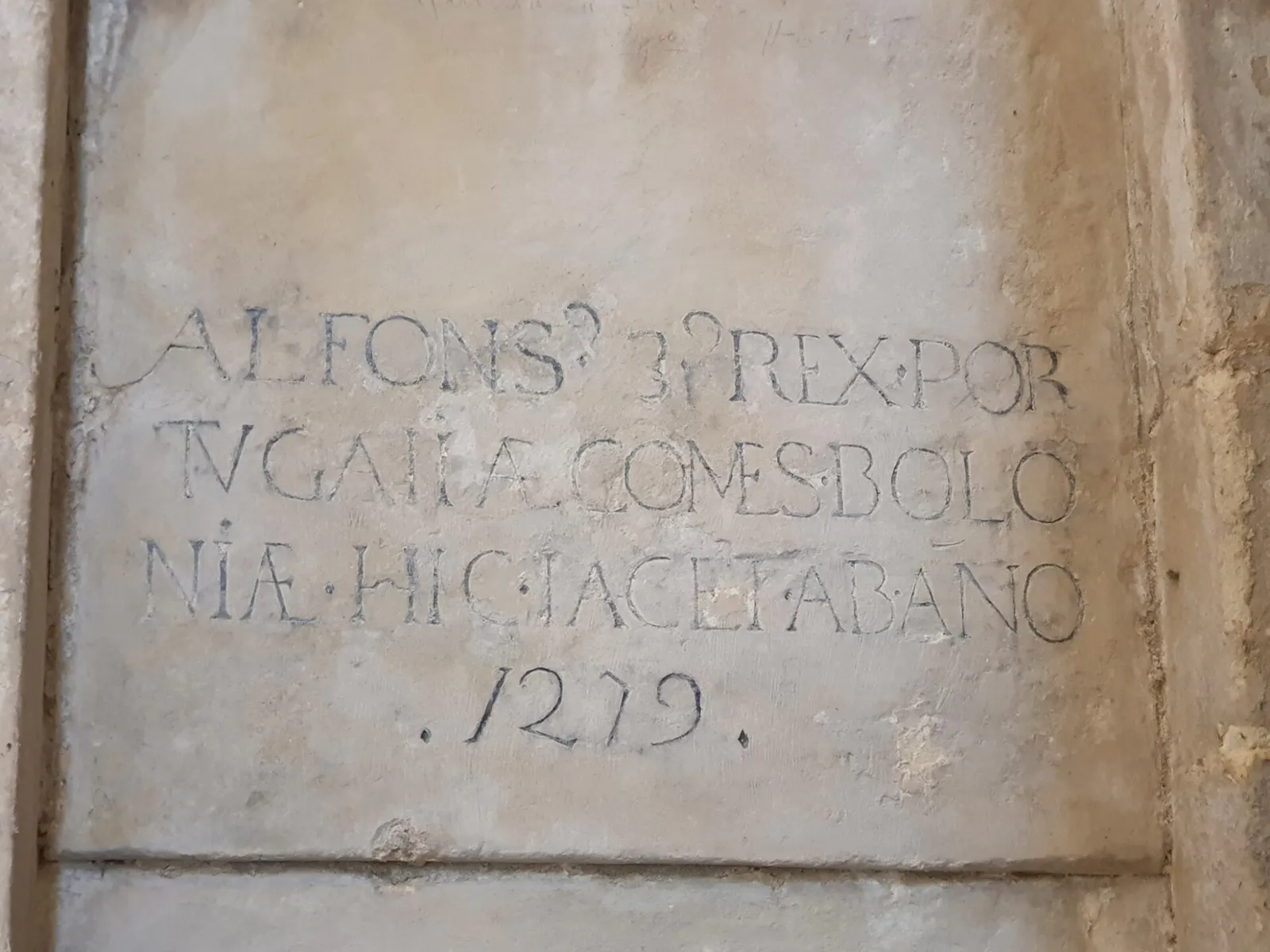
Because he was Count of Boulogne, in northern France. He went to the French court as a young man and in 1238 married Matilde, the heiress of Boulogne. He was still styled Count of Boulogne in 1254, and his epitaph at Alcobaça gives him the title.
How did Afonso III become king?
Pope Innocent IV, at the end of the Council of Lyon, issued the bull Grandi non immerito on 24 July 1245, transferring the government of Portugal from Sancho II to his brother. Afonso swore to protect the Church in Paris that September, landed at Lisbon and won the civil war that followed. He took the title of king when Sancho died in Toledo on 4 January 1248.
Was Afonso III the first king of Portugal and the Algarve?
No. Sancho I already used the title after taking Silves in 1189, though the Algarve was soon lost. Afonso III completed the conquest in 1249 and adopted the title in his documents in 1268, after the treaty of Badajoz of 1267. His will of 1271 opens with it.
Where is Afonso III buried?
In the monastery of Alcobaça. Since the early sixteenth century his tomb has been in a chapel of the abbey church, now dedicated to São Bernardo, opposite the tomb of his father, Afonso II.
On the timeline
Open the timelineNearby moments from from county to kingdom (1096–1249).
After a siege of about four months, Afonso Henriques and his crusader allies enter Lisbon, whose starving Muslim defenders had agreed to surrender. The capture was the main success of the Second Crusade, and Sintra and Palmela soon surrendered too.
First naval battle in Portuguese history. Off Cape Espichel, a small fleet assembled by King Afonso Henriques and commanded by Dom Fuas Roupinho intercepts an Almohad squadron returning to Andalusia, kills its admiral and captures several of its galleys. The victory marks the modest birth of Portuguese seapower.
Death in Coimbra of Afonso Henriques, the first King of Portugal, who had ruled for more than half a century, first as prince of the County of Portugal and from about 1140 as king. He is buried in the Monastery of Santa Cruz in Coimbra; in July 2006 a scientific plan to open his tomb and study his remains was halted at the last minute by the state heritage institute, and the culture minister refused it in 2007.
The birth of Afonso III
Birth, probably in Coimbra, of Afonso III, the king who completed Portugal's share of the Reconquista by taking Faro in 1249 and fixed the Guadiana border with Castile in 1267. Under him Lisbon gradually became the court's main seat, though the king kept travelling.
King Sancho I of Portugal dies in Coimbra. Remembered as 'the Populator' (o Povoador) for resettling the frontier, he granted charters to towns such as Guarda (1199) and briefly took Silves from the Almohads in 1189.
Battle of Las Navas de Tolosa. The combined armies of Castile, Aragon and Navarre crush the Almohad Caliph al-Nasir on a plain in the Sierra Morena. Afonso II cannot come in person, but a Portuguese contingent fights in the Christian ranks, its town militias praised by the chronicler Rodrigo of Toledo; the victory tips the Iberian balance decisively against the Almohads.
King Afonso II of Portugal dictates his last will and testament in Coimbra. Drafted in the vernacular rather than Latin, the document is one of the oldest surviving texts written in Galician-Portuguese and a cornerstone of the history of the Portuguese language.
Coming up in history
All long reads 7 May 1487Pêro da Covilhã's secret journey to India and Ethiopia, 1487
 8 May 1782Questioned, condemned, spared: the Marquis of Pombal's last years, 1777–1782
 9 May 1386The Treaty of Windsor, 1386: Portugal and England's perpetual league
 10 May 1984Joaquim Agostinho: the farm boy who climbed Alpe d'Huez
18 sources
Archives, scholarship and reporting this article was checked against.
- 1
Alfonso III de Portugal (Humberto Baquero Moreno)Real Academia de la Historia, Diccionario Biográfico Español (Historia Hispánica)
- 2
História de Portugal, tomo III (Alexandre Herculano)Viúva Bertrand e Filhos, Lisbon, 1849 (Internet Archive)
- 3
- 4
Disputatio Crucis: as querelas eclesiásticas nos reinados de D. Afonso III e de D. Dinis (1245-1325) (Ofélia Carvalho)In Omni Tempore: Atas dos Encontros da Primavera 2019, Faculdade de Letras da Universidade do Porto, 2020, pp. 86-119
- 5
A conquista, o padroeiro e os priores de LouléLuís Filipe Oliveira, Universidade do Algarve (via NOVA FCSH)
- 6
- 7
King Afonso IIICastelo de São Jorge (EGEAC, Lisbon City Council)
- 8
- 9
O retábulo do Trânsito de São Bernardo do Real Mosteiro de Santa Maria de Alcobaça: história, execução e conservação (André Varela Remígio)Conservar Património, 15-16, 2012 (Associação Profissional de Conservadores-Restauradores de Portugal)
- 10
Nascimento de D. DinisArquivo Nacional Torre do Tombo
- 11
- 12
As Cortes de Leiria 1254 (Court of Leiria 1254), 1958-1961Mural in Motion, Instituto de História da Arte, NOVA FCSH
- 13
The wills of the kings of Portugal between the 12th and 14th centuries, pp. 247-248 (Saul António Gomes)Rättshistoriska studier 33, Institutet för rättshistorisk forskning (Olin Foundation), Stockholm, 2025
- 14
As primeiras Cortes Gerais da Monarquia Portuguesa, realizadas em Guimarães em 1250 (Torquato de Sousa Soares)Revista de Guimarães, 93, 1983, pp. 345-349 (Casa de Sarmento, Universidade do Minho)
- 15
D. DinisA. J. da Costa Pimpão, Enciclopédia Luso-Brasileira da Cultura, vol. 23 (Verbo), reproduced by the Câmara Municipal de Odivelas
- 16
- 17
- 181821, O Regresso do Rei: a história de uma viagem estratégica “à frente do seu tempo” (Andreia Martins, interview with Armando Seixas Ferreira)RTP Notícias, 2021
Image credits
- Alcoutim, on the Portuguese bank of the Guadiana, seen from Sanlúcar de Guadiana in Spain in 1996. Afonso III's treaty of Badajoz of 1267 made the river the border from the Caia to the sea. Dguendel, CC BY 3.0, via Wikimedia Commons.
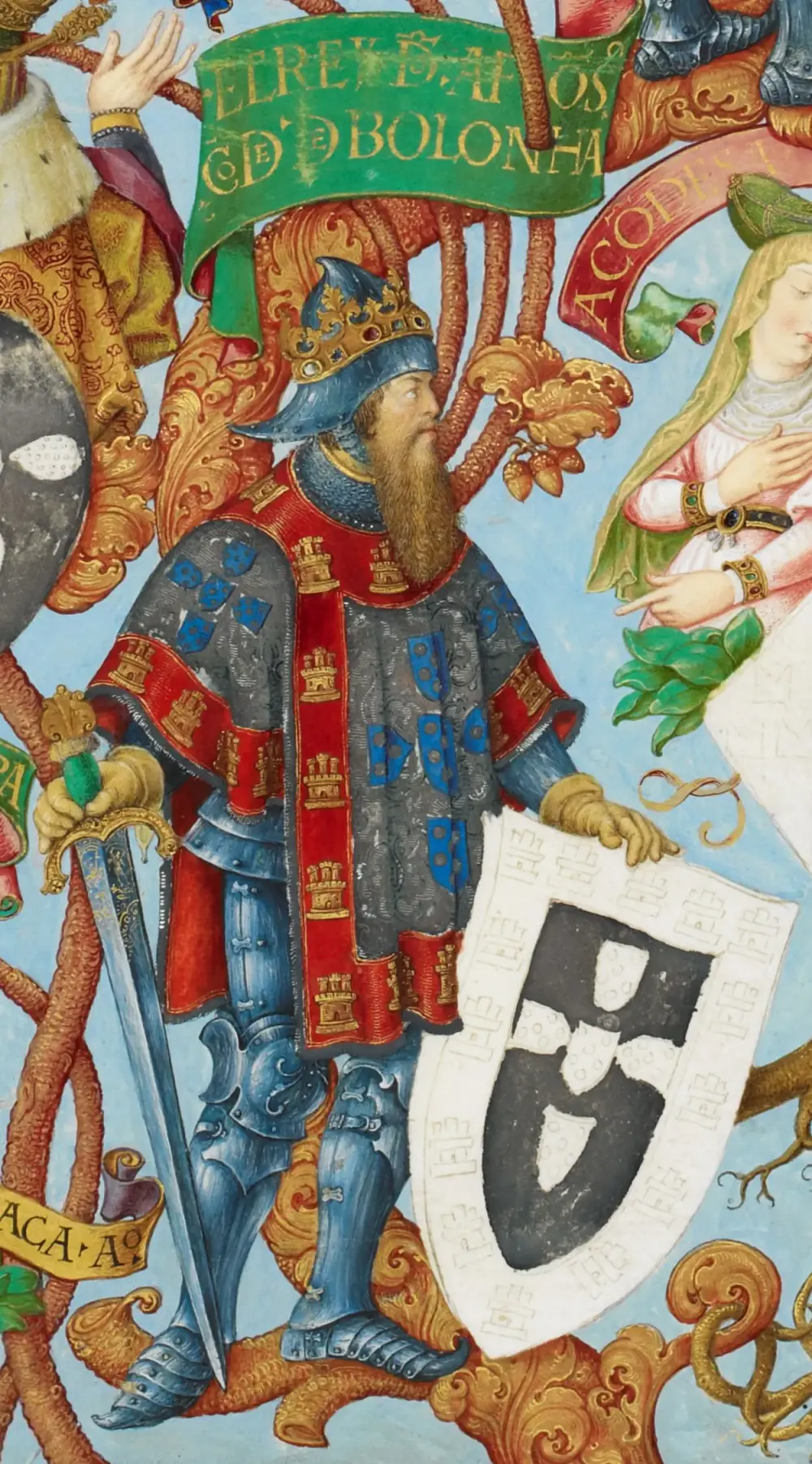
- Afonso III as António de Holanda imagined him around 1530, in the illuminated Genealogia dos Reis de Portugal. The banner calls him 'el-rei D. Afonso, conde de Bolonha'. No portrait from his lifetime survives. António de Holanda, Public domain, via Wikimedia Commons.
- Matilde, Countess of Boulogne, Afonso's first wife, in António de Holanda's Genealogia dos Reis de Portugal, painted around 1530, three centuries after her lifetime. António de Holanda, Public domain, via Wikimedia Commons.
- Pope Innocent IV at the Council of Lyon in 1245, which also deposed Emperor Frederick II, in a late medieval French manuscript (Bibliothèque nationale de France, Français 5594), as reproduced in a French teaching magazine in 1953. Unknown author, Public domain, via Wikimedia Commons.
- Part of the walls of Faro's old town, photographed in 2025. Faro had surrendered to Afonso III by March 1249. The walls have been rebuilt many times since. Bextrel, CC BY 4.0, via Wikimedia Commons.
- The epitaph marking Afonso III's tomb at Alcobaça, photographed in 2022. In Latin it names him king of Portugal and Count of Boulogne, lying here since 1279. The tomb was moved into this chapel in the early sixteenth century; the epitaph was carved later, with the chapel's retable of 1639. GualdimG, CC BY-SA 4.0, via Wikimedia Commons.