

The Treaty of Windsor, 1386: Portugal and England's perpetual league
A year after Aljubarrota, two Portuguese envoys and three English negotiators agreed a 'perpetual league' at Windsor Castle. It promised help against all comers, let each nation trade and settle in the other, and has been invoked from the Napoleonic wars to the Falklands.
At a glance
- On 9 May 1386, at Windsor Castle, two envoys of João I of Portugal and three commissioners of Richard II of England sealed a treaty of perpetual alliance between the two kingdoms.
- Each king promised to help the other against anyone who attacked him, at the cost of the king who asked, and their subjects could trade, live and settle in each other's lands as freely as at home.
- The treaty built on the Anglo-Portuguese treaty of 16 June 1373 and came a year after the Portuguese victory at Aljubarrota, where English archers fought for João I.
- It was sealed as England prepared John of Gaunt's invasion of Castile. A Portuguese fleet with ten galleys joined his expedition, and in February 1387 João I married Gaunt's daughter, Philippa of Lancaster.
- João I ratified it at Coimbra on 12 August 1387. Britain and Portugal still regard the alliance as in force, and have invoked it in wars from 1762 to 1982.
Seven leagues from London
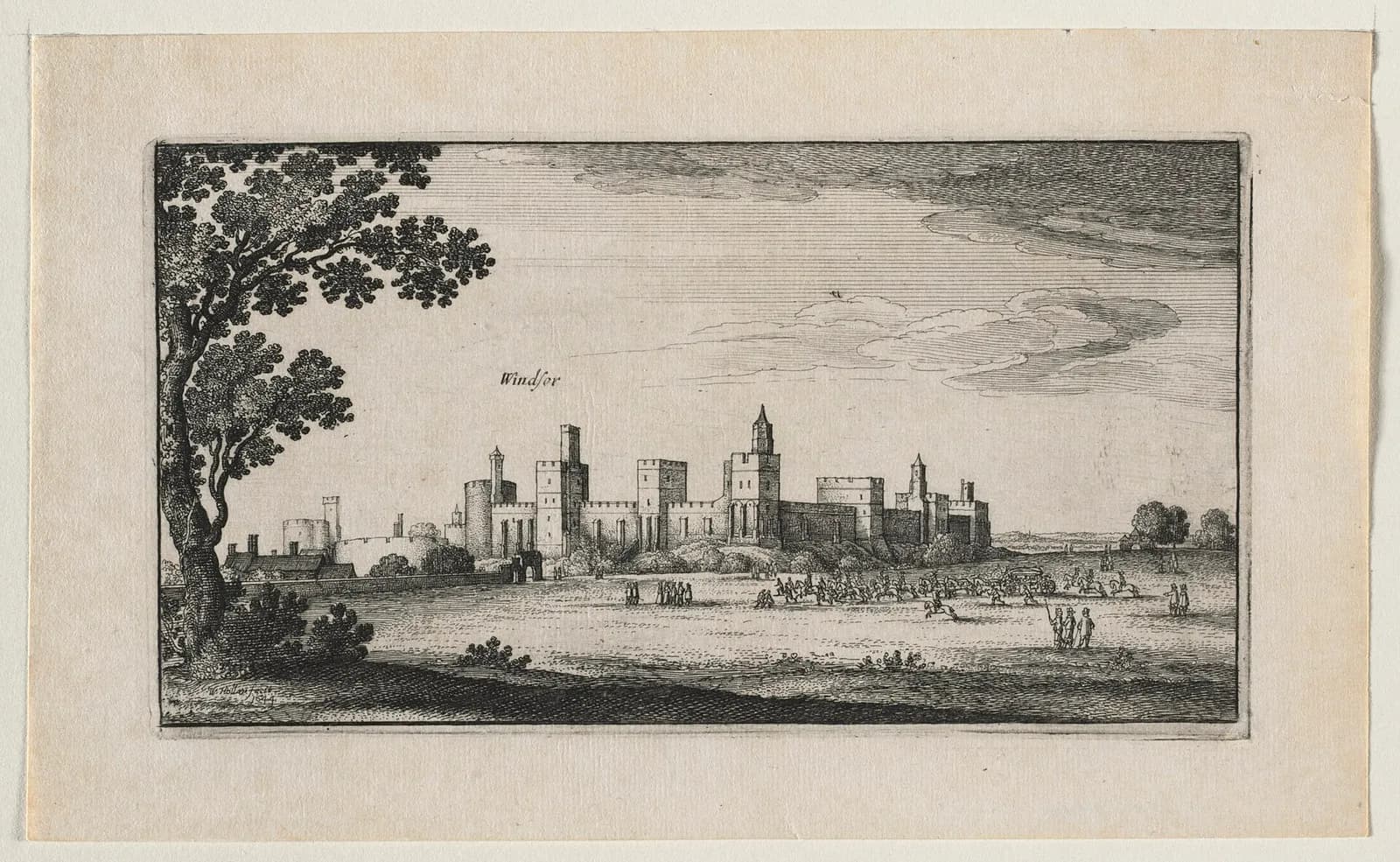
On 9 May 1386, in the castle of Windsor, a doctor of laws named Richard Ronhale set out 'in a loud and clear voice', before all present, the terms of an alliance between Richard II of England and João I of Portugal. That is how Fernão Lopes, Portugal's royal chronicler, told it half a century later. He placed the castle seven leagues from London, and said three bishops and the king's uncle, the Duke of York, had been called in to hear it.
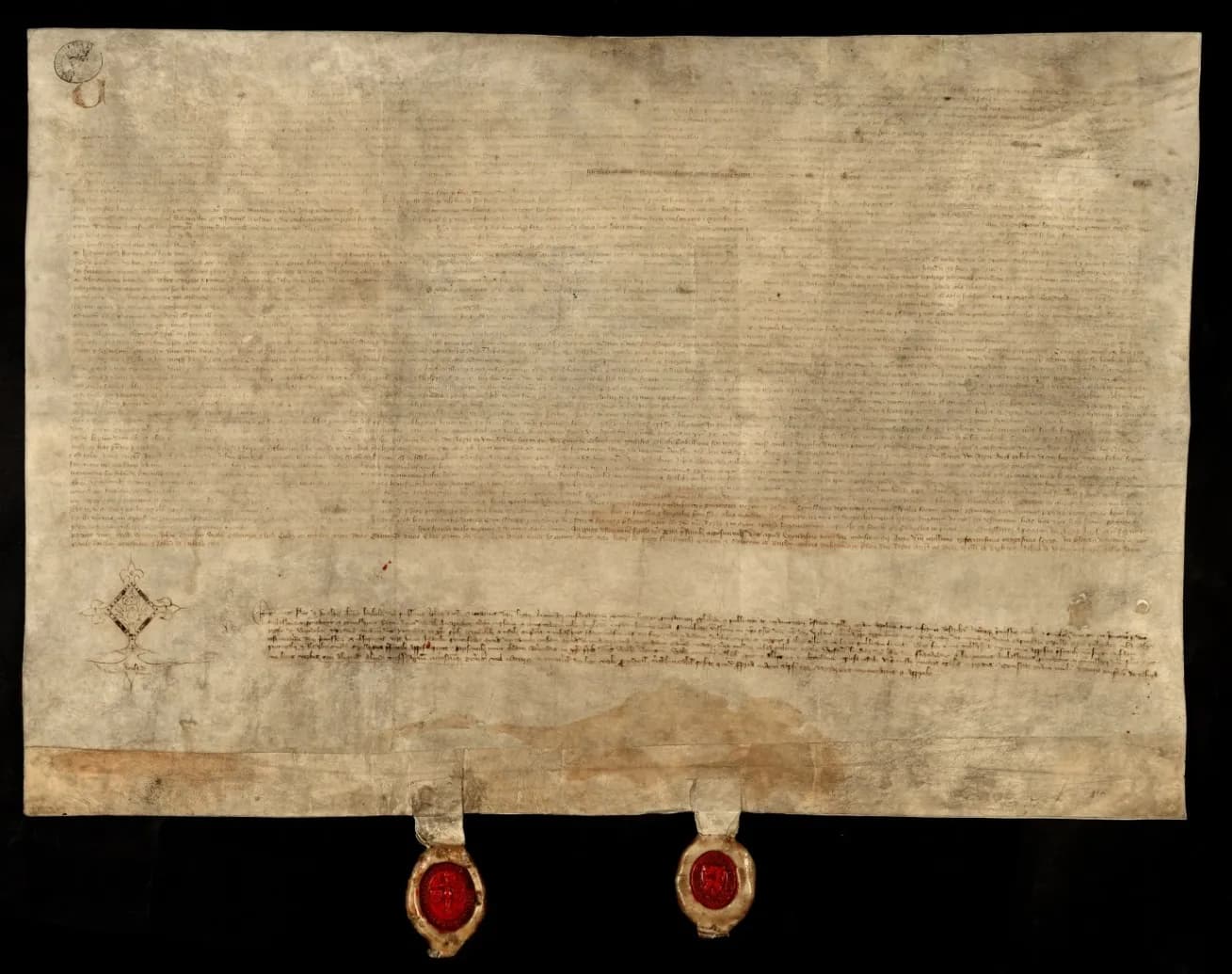
The parchment itself survives. Its list of witnesses names William, Bishop of Winchester, John, Bishop of Durham, Edmund, Duke of York, the earls of Salisbury and Northumberland, and Sir Simon Burley, the king's under-chamberlain. On the Portuguese side stood Fernando Afonso de Albuquerque, Master of the military Order of Santiago, and Lourenço Anes Fogaça, chancellor of Portugal. The notary who drew it up, John de Bouland, recorded that it was done in the chapter house of the royal chapel below the castle. The envoys' two seals still hang from the foot of the sheet.
The two men had been in England for more than a year, raising soldiers and loans for a king whose crown was barely a year old. What they sealed that day was a perpetual league. Each king would help the other against anyone who attacked him, and their subjects could trade and settle in each other's countries as freely as at home.
The alliance it confirmed has never been ended. Britain and Portugal call it the oldest diplomatic alliance in the world still in force, and date it from an earlier treaty of 1373. The National Archives in London, which keeps both documents, says the one sealed at Windsor helped turn a fledgling alliance into a lasting one.
What you need to know first: Castile, France and a claim to a crown
In the 1370s and 1380s England was fighting the Hundred Years War with France. In 1369 France allied with Castile, the largest kingdom in Spain, whose fleet was one of the largest in western Europe. English strategists looked for a way round it, and found one on Castile's western border: Portugal.
There was a family stake too. King Pedro of Castile had been killed in 1369, at war with his half-brother Enrique of Trastámara, who took his throne with French support. In 1371 John of Gaunt, Duke of Lancaster and son of Edward III of England, married Pedro's daughter Constance, and from then on called himself King of Castile in her right.
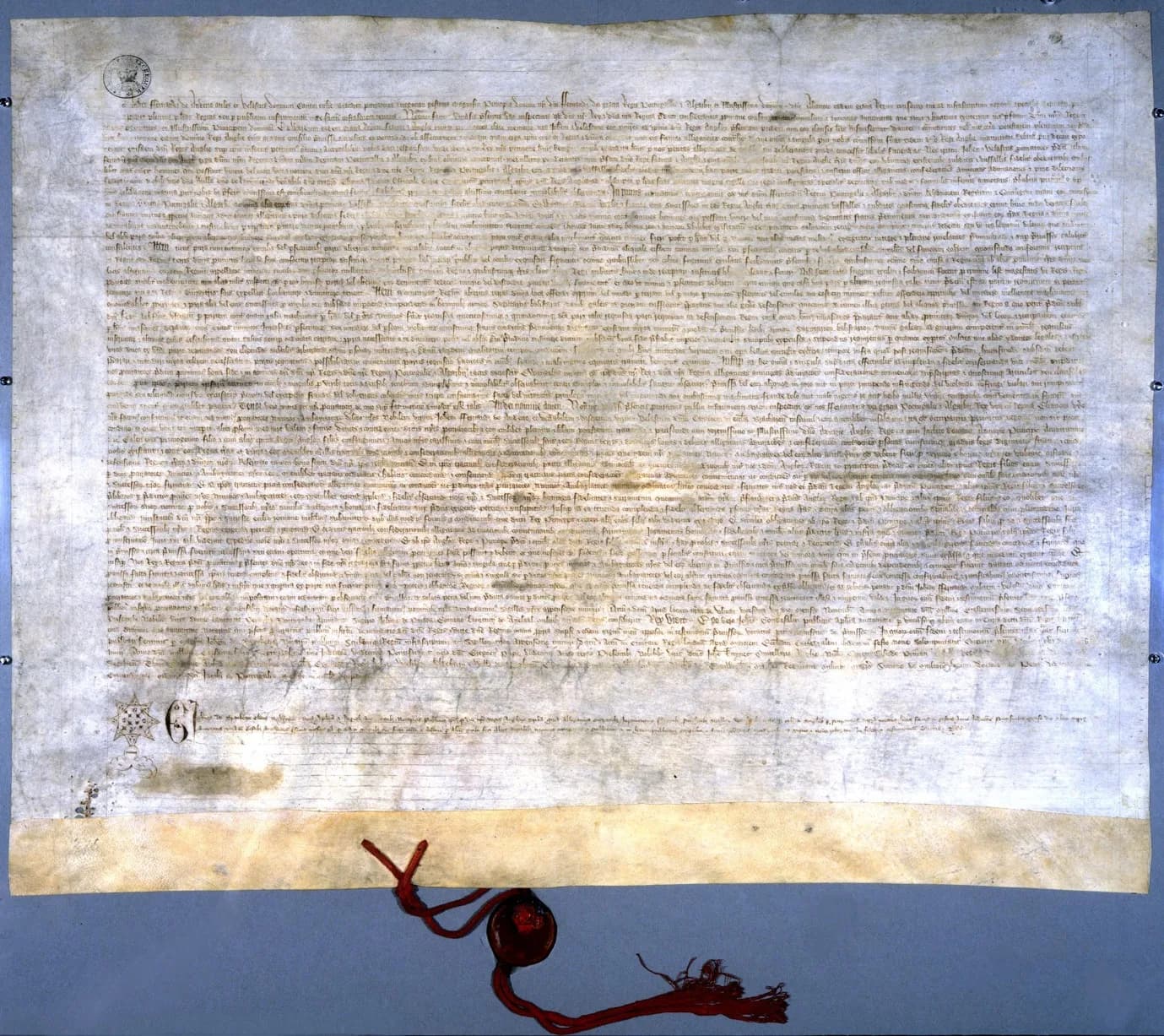
Portugal's King Fernando I was at war with Enrique as well. On 10 July 1372, at the church of São Salvador de Tagilde in the Minho, he made a treaty with Gaunt's envoys to fight Castile together. His ambassadors then went to London, and on 16 June 1373, at St Paul's Cathedral, they agreed a treaty of perpetual friendship and alliance with Edward III. One of them was João Fernandes Andeiro, the Galician knight whom João of Avis would kill in Lisbon ten years later.
“As true and faithful friends the contracting parties shall henceforth reciprocally be friends to friends and enemies to enemies and shall assist, maintain and uphold each other mutually by sea and by land against all men that may live or die.”
The friendship soon soured. In 1381 and 1382 an English army under Gaunt's brother Edmund, Earl of Cambridge, came to Portugal to fight Castile. Its undisciplined troops raided Portuguese towns and killed their people, and in 1382 Fernando made peace with Castile, leaving the English out of the talks.
Then the Portuguese crown itself was in play. Fernando died in October 1383, leaving an only daughter, Beatriz, married to Juan I of Castile. Lisbon rose for João, Master of the Order of Avis, Fernando's illegitimate half-brother. The Cortes of Coimbra proclaimed him king on 6 April 1385, and on 14 August that year his army beat the Castilians at Aljubarrota. Each of those episodes has its own Lisboeta article.
Envoys in London
João had sent envoys to England in December 1383, within weeks of taking power in Lisbon. Richard II let them hire men-at-arms and archers in his kingdom. On 15 April 1385, nine days after the Cortes made him king, João gave the Master of Santiago and Fogaça new powers at Coimbra: to make an alliance with Richard II and with John of Gaunt, and to borrow money in England to pay his troops.
That commission, sealed with João's lead seal, is still at Kew. Among the witnesses at Coimbra was João das Regras, the lawyer who had argued João's case before the Cortes. The money came slowly and at a price. On 16 April 1386 the envoys signed a bond to repay £1,000 lent to the King of Portugal by Sir Thomas Moreaux, Sir Henry Grene and other London merchants, and in 1404 Henry IV had to promise Portuguese traders they would not be harassed over debts the two envoys had left behind.
England took its time. According to The National Archives, the turn came in early 1386, when a French and Castilian invasion of England looked likely and Gaunt began planning a summer expedition to Castile. For that he would need Portuguese help.
Lopes gives the moment a family scene. When the Master of Santiago called on the duke, Constance and her daughter Catherine wept and begged him to win back the kingdom that was theirs by right; the Master told Gaunt that the ladies' request was entirely reasonable. Gaunt promised to go. He then laid his case before the king and council, who gave him leave, and decided that a firm alliance with Portugal had to come first.
On 28 April 1386, at Westminster, Richard II sealed a treaty of perpetual alliance with Gaunt himself as King of Castile and León. Eleven days later the Portuguese treaty followed at Windsor. Gaunt's biographer Sydney Armitage-Smith, writing in 1904, called the Portuguese alliance 'the Duke's own creation'.
What the treaty said
The treaty is written in Latin as a notarial instrument issued by the two Portuguese envoys. It records that they had negotiated 'after various sittings' with Richard II's commissioners: two knights, Sir Richard Abberbury (spelt Atterbury in the printed text) and Sir John Clanvowe, and Master Richard Ronhale, doctor of laws, the man Lopes has reading it aloud.
Its first article set up a league between the two kings, their heirs, successors and subjects, to last for ever. It named three exceptions: Pope Urban VI, Wenceslas, King of the Romans and of Bohemia, and, on England's side only, John of Gaunt as King of Castile.
“Each of them shall be bound to give the other succour and help against all men who may live and die, who should in any way seek to injure the peace of the other or to harm his estate.”
The papal exception mattered. The Church then had two rival popes. England and João's Portugal obeyed Urban VI in Rome, while Juan I of Castile followed the pope at Avignon, and Urban granted indulgences to those who joined Gaunt's expedition. The treaty's preamble praised kings who stood together 'in true unity and obedience' to the Roman Church.
| Article | What it said | Conditions |
|---|---|---|
| Perpetual league | Peace and alliance for ever between the kings, their heirs, successors and subjects; each to help the other against anyone attacking his peace or estate | Except Pope Urban VI, King Wenceslas and, for England only, John of Gaunt |
| Trade and residence | Subjects of every rank, from prelates to merchants, may enter, trade, live in and leave the other's lands 'as freely and peacefully' as in their own country | They pay the usual customs and obey the local laws |
| No help to enemies | Neither king nor any subject may give counsel, help, ships or galleys to the other's enemies or rebels | Offenders are punished at the will of the injured king |
| Military aid | A king who needs help asks for it; the other sends what he can, given the dangers he faces himself | The king who asks pays reasonable costs and gives six months' notice |
| Spoils of war | Movable booty goes to the king who sent help and his men; at sea a third goes to the king who bore the main costs | Captured towns and castles go to the king with a right to them |
| Warnings | Each king must warn the other of any plot against him, by land or sea, as fast as possible | |
| Truces | Neither king may make a truce unless the other and his lands are included | |
| Breaches | Raids or seizures by subjects are to be repaired and punished within six months; the alliance stays in force regardless | A king who makes open war on the other loses the treaty's benefit |
| Renewal | Every future king must swear to, renew and confirm the treaty within a year of his coronation | He sends sealed letters of confirmation to the other king |
Summarised and translated from the Latin text in Rymer's Foedera, vol. VII (1726), pp. 515 to 518. Lopes gives a shorter Portuguese summary of the first four articles.
The trade and residence article went further than the treaty of 1373, which had dealt with friendship, enemies and military help. It was used. The National Archives notes Portuguese records of English cloth and other goods passing through Porto, and 20 people identified as Portuguese in English tax lists of aliens from the 1440s.
Galleys, oaths and seals
The envoys signed a second document at Windsor the same day. In it they undertook, on João's behalf, to supply ten vessels for Richard II's use during the coming summer. The National Archives describes them as galleys to be stationed in English waters to protect English shipping and the south coast, a sign that João meant to be a useful ally.
At Windsor the envoys swore on the Gospels, in their king's name, to keep the league. The business did not end there. The notary's record goes on to a second sitting on 17 May, in the Star Chamber of the palace of Westminster, and Armitage-Smith dates the conclusion of the treaty to both days.
Ratification took longer. The National Archives says the English ratification was enrolled on the Treaty Rolls on 1 December 1386, though a later English copy, listed in Thomas Duffus Hardy's 1873 guide to Rymer's Foedera, dates Richard II's ratification at Westminster to 24 February 1387. João I approved the treaty 'with royal mouth' and swore to it on the Gospels in his palace at Coimbra on 12 August 1387, and sent it to England under his lead seal. That document is at Kew too, as E 30/311.
- Sealed
- 9 May 1386, Windsor Castle
- For Portugal
- Fernando Afonso de Albuquerque, Master of Santiago, and Lourenço Anes Fogaça, chancellor
- For England
- Sir Richard Abberbury, Sir John Clanvowe and Master Richard Ronhale
- Language
- Latin
- Ratified by João I
- Coimbra, 12 August 1387
- Where it is now
- The National Archives, Kew, E 30/310
10 July 1372
Treaty of Tagilde
Fernando I and John of Gaunt's envoys agree to fight Castile together.
16 June 1373
Treaty of London
Perpetual alliance between Edward III and Fernando I, agreed at St Paul's.
December 1383
First envoys to England
João, Master of Avis, asks Richard II for help.
15 April 1385
Powers signed at Coimbra
The Master of Santiago and Fogaça are sent to make the alliance.
14 August 1385
Aljubarrota
English archers fight on the Portuguese right wing.
16 April 1386
£1,000 loan
London merchants lend money to the King of Portugal.
28 April 1386
Richard II and Gaunt
Treaty of perpetual alliance with Gaunt as King of Castile.
9 May 1386
Treaty of Windsor
Sealed at the castle, with the pledge of ten galleys.
17 May 1386
Star Chamber, Westminster
Second sitting to conclude the treaty.
1 December 1386
English ratification enrolled
A later copy dates Richard II's ratification to 24 February 1387.
12 August 1387
João I ratifies at Coimbra
John of Gaunt's war
Portuguese ships were already on their way. On 30 June 1386, by Armitage-Smith's account, João's admiral Afonso Furtado reached Plymouth with ten galleys and half a dozen smaller ships for Gaunt's use, help that Armitage-Smith counts as separate from the naval force the envoys had promised Richard II. Lopes has Furtado landing first in Cornwall. Gaunt sailed on Sunday 7 July, turned aside to relieve the English garrison besieged at Brest in Brittany, and came into Corunna, in Galicia, on 25 July, the feast of Santiago.
He brought his wife Constance and his two unmarried daughters, Philippa and Catherine. Nobody knows exactly how many soldiers came with them, and the chroniclers disagree widely.
| Source | Figure given | Comment |
|---|---|---|
| Henry Knighton, English chronicler | 20,000 men | Armitage-Smith calls it 'a wild exaggeration' |
| Pero López de Ayala, Castilian chronicler | 1,500 men-at-arms and 1,500 archers | Armitage-Smith thinks Gaunt certainly had more |
| Fernão Lopes, Portuguese chronicler | 2,000 lances and 3,000 archers, in 130 ships | Armitage-Smith thinks this 'near the mark', some 10,000 men in all |
A lance was a mounted man-at-arms with his followers, so it counted for more than one man. Lopes's 130 ships include the twelve large Portuguese ships that came with the galleys.
On 1 November 1386 Gaunt and João met at Ponte do Mouro, on the Minho border, and agreed a joint invasion of Castile. João also chose one of the duke's daughters as his bride, and on 2 February 1387 he married Philippa of Lancaster in Porto cathedral, with the public feast on 14 February, a story told in Lisboeta's article on the queen.
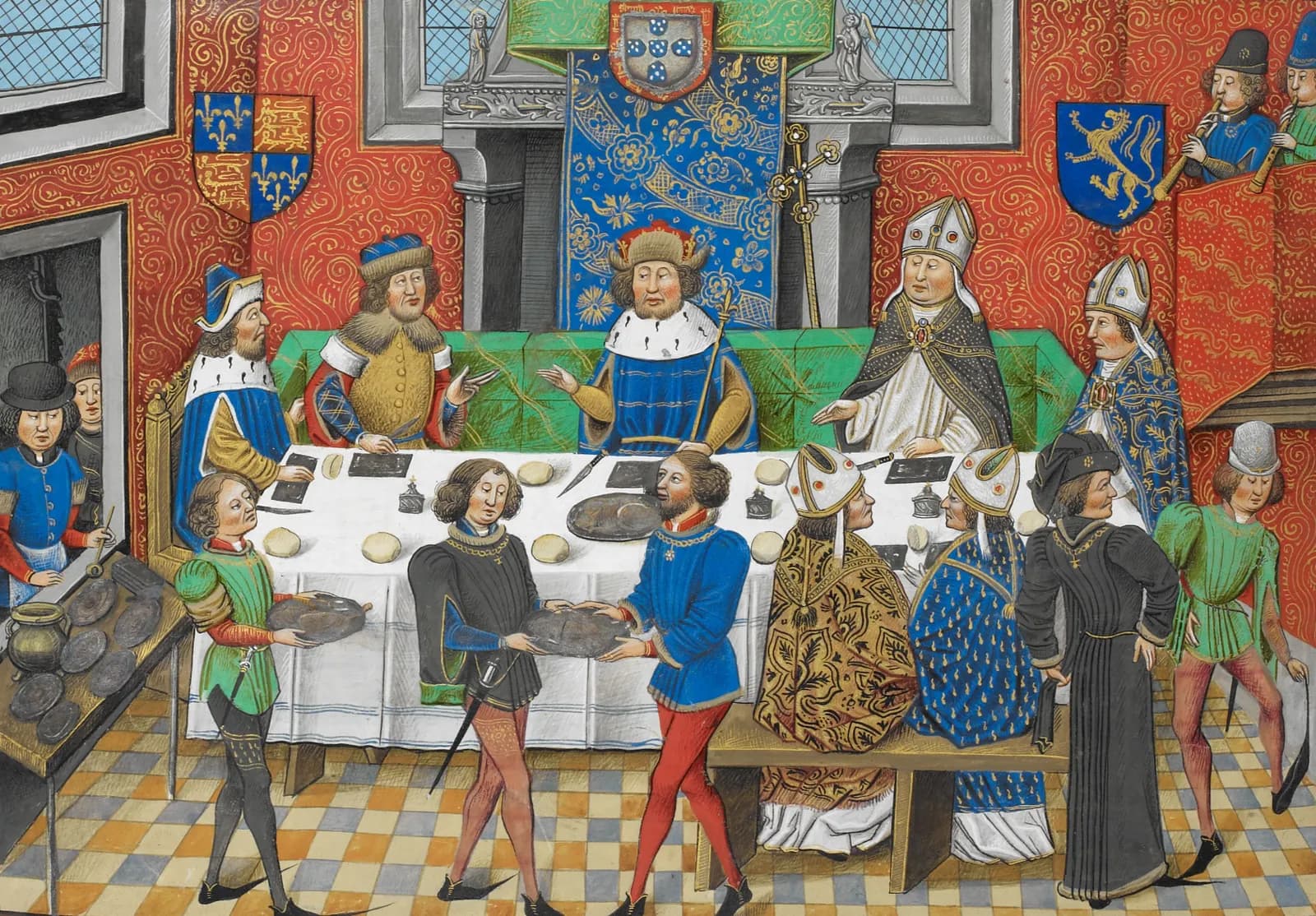
The campaign of 1387 failed. Disease swept through the English army that summer, killing lords, knights and great numbers of archers, while the Portuguese troops were spared. João told Gaunt he must either raise a new army in England or accept the terms Castile was offering. At Trancoso, in Portugal, the duke accepted them.
The final treaty, agreed at Bayonne in 1388, was generous to the loser. Gaunt and Constance gave up their claim to Castile. In return Juan I agreed to pay 600,000 gold francs in instalments over three years and an annuity of 40,000 francs for their lifetimes, and Catherine of Lancaster married Juan's heir Enrique. Armitage-Smith made her fourteen, but the historian Óscar Villarroel González dates her birth to the late spring of 1372, which made her sixteen. Philippa became Queen of Portugal and her half-sister, in time, Queen of Castile.
For England, The National Archives notes, the strategic reason for the alliance had gone, and it was sidelined for a time. What kept it alive was Philippa's marriage, which tied it to the English royal family, and the trade that the treaty protected.
Six centuries of calling on it
Later kings did renew it. Gaunt's son, who became Henry IV of England in 1399, confirmed the treaty 'dated 9 May 1386' in 1404, and when João I died his son and successor Duarte promised to keep his father's treaties with England. In 1400 João I became the first foreign monarch made a Knight of the Garter.
Later treaties wrote the old promise into new circumstances. In 1642 Charles I and João IV agreed that neither would join any war or treaty against the other; the marriage treaty of Charles II and Catherine of Braganza in 1661 added a secret promise to defend Portugal's colonies; and in May 1703, during the War of the Spanish Succession, Portugal signed treaties of alliance with England and the Dutch Republic.
Then it was invoked in war. In 1762 British and Portuguese troops drove back a Spanish invasion. In the Peninsular War an Anglo-Portuguese army under Wellington, about 50,000 strong, held Bussaco ridge against some 65,000 French troops on 27 September 1810. In 1916 Portugal's minister in Washington said his country had been drawn into the First World War by its alliance with England.
In October 1943 Winston Churchill told the House of Commons that Britain, basing itself on the ancient alliance, had asked neutral Portugal for facilities in the Azores, and Portugal had agreed. In 1982, during the Falklands War, Portugal agreed in principle to let an RAF Nimrod stage through Lajes in the Azores up to once a day.
“The Anglo-Portuguese Treaty of 1373 has never been revised and it has been confirmed in later treaties on a number of occasions. The Treaty is couched in general terms and under it the two partners undertake to give one another mutual aid and assistance.”
1386–1387
Gaunt's invasion of Castile
Portuguese galleys and troops support the English claimant.
1400
João I joins the Order of the Garter
29 January 1642
Treaty of Charles I and João IV
Neither king to join any war or treaty against the other.
23 June 1661
Catherine of Braganza's marriage treaty
England promises to defend Portugal's colonies.
16 May 1703
Treaties of alliance signed in Lisbon
Portugal, England and the Dutch Republic ally in the War of the Spanish Succession.
1762
Spanish invasion repulsed
British and Portuguese troops fight together.
27 September 1810
Bussaco
Wellington's Anglo-Portuguese army holds the ridge.
14 October 1899
Secret declaration
The old treaties restated during the Boer War.
1916
First World War
Portugal enters the war on the Allied side.
12 October 1943
Azores facilities
Churchill announces the agreement in Parliament.
1982
Falklands War
Britain seeks the use of Lajes in the Azores.
16 June 2023
650th anniversary
Service at the Queen's Chapel in London.
Why it still matters
The National Archives calls the alliance a valid agreement still endorsed by both countries, and the British government describes it as the oldest diplomatic alliance in the world in force. The two countries are now also NATO allies.
On 16 June 2023 the two states marked 650 years since the 1373 treaty with a service at the Queen's Chapel in London, attended by King Charles III and Portugal's president, with an original of the 1373 treaty lent by The National Archives. 'No other relationship on the planet has survived the test of time as well as ours,' said the Foreign Secretary, James Cleverly.
For Portugal the treaty had a more immediate meaning in 1386. A king who had won his throne by revolt and battle had English archers in his army and loans from London merchants, and he married into England's royal family. The alliance gave the new House of Avis a powerful friend while the war with Castile dragged on; a final peace was signed only in 1411.
FAQs
What was the Treaty of Windsor of 1386?
A treaty of perpetual alliance between Richard II of England and João I of Portugal, sealed at Windsor Castle on 9 May 1386 by João's envoys and Richard's commissioners. Each king promised to help the other against attackers, and their subjects could trade and live in each other's lands freely.
Is the Anglo-Portuguese alliance still in force?
Yes. The British government describes it as the oldest diplomatic alliance in the world still in force, and in 1952 a Foreign Office minister told Parliament that the 1373 treaty had never been revised. Britain invoked it in 1943 to ask for facilities in the Azores.
What is the difference between the treaties of 1373 and 1386?
The Treaty of London of 16 June 1373, between Edward III and Fernando I, set up a perpetual alliance of mutual help. The Treaty of Windsor of 1386, made with the new Avis king João I, renewed it and added a right for each nation's subjects to trade, live and settle in the other's lands.
Did the Treaty of Windsor arrange the marriage of João I and Philippa of Lancaster?
No. The treaty does not mention a marriage, though Portugal-UK 650 sees the marriage talks as one of its first results. João chose Philippa when he met her father, John of Gaunt, at Ponte do Mouro on 1 November 1386, and married her in Porto cathedral on 2 February 1387, with the public feast on 14 February.
Who signed the Treaty of Windsor?
It was sealed by João I's envoys, Fernando Afonso de Albuquerque, Master of the Order of Santiago, and Lourenço Anes Fogaça, chancellor of Portugal, with Richard II's commissioners Sir Richard Abberbury, Sir John Clanvowe and Richard Ronhale. João I ratified it at Coimbra on 12 August 1387.
On the timeline
Open the timelineNearby moments from crisis and the house of avis (1383–1415).
The Cortes of Coimbra elect João, Master of the Order of Avis, as King João I of Portugal, founding the House of Avis. Nuno Álvares Pereira is made Constable of the Kingdom the next day, and the succession war is decided at Aljubarrota that August.
Just over 300 Portuguese men-at-arms and local levies, under Beira nobles who had just settled a feud, rout a Castilian raiding force near Trancoso as it heads home with captives and plunder from the sack of Viseu; nearly all its men-at-arms die. In the midst of the 1383–85 succession crisis, the victory is a prelude to Aljubarrota that August.
King João I and his constable Nuno Álvares Pereira rout the invading Castilian army at the Battle of Aljubarrota, ending the crisis of 1383–85, securing Portuguese independence and establishing the House of Avis on the throne.
The Treaty of Windsor, 1386
The Treaty of Windsor is signed, sealing the Anglo-Portuguese Alliance first agreed in 1373 — the oldest diplomatic alliance in the world still in force. The following year João I married John of Gaunt's daughter, Philippa of Lancaster.
The future King Duarte, 'o Eloquente', is born in Viseu, son and from 1400 heir of João I and Philippa of Lancaster. A scholar-king and author of the 'Leal Conselheiro', his short reign was marked by the disastrous expedition to Tangier in 1437.
Birth in Lisbon of the Infante Pedro, Duke of Coimbra, son of João I and Philippa of Lancaster. Called 'Pedro of the Seven Parts of the World', he toured Europe from 1425 to 1428, served in Emperor Sigismund's army in Hungary and, by tradition, brought home from Venice a copy of Marco Polo's book. Regent from 1439, he was killed at Alfarrobeira in 1449 fighting his nephew Afonso V's army.
Birth of Prince Henry the Navigator (Infante Dom Henrique) in Porto. He would become the driving force behind Portugal's Age of Discoveries, sponsoring expeditions along the West African coast.
Coming up in history
All long reads 11 May 1937Afonso Costa dies in Paris: the First Republic's strongman in exile, 1937
 12 May 1982A blade on the basilica steps: John Paul II at Fátima, 12 May 1982
 13 May 1798Porto's Real Teatro de São João opens on a prince's birthday, 1798
 14 May 191514 May 1915: the navy rising that brought down Pimenta de Castro
27 sources
Archives, scholarship and reporting this article was checked against.
- 1
Foedera, conventiones, literae, et cujuscunque generis acta publica (Thomas Rymer), vol. VII, 3rd editionLondon, 1726 (digitised by Internet Archive)
- 2
History's unparalleled alliance: the Anglo-Portuguese Treaty of Windsor, 9th May 1386The National Archives (UK), History blog
- 3
- 4
- 5
The Beginnings of the Anglo-Portuguese AlliancePortugal-UK 650
- 6
Treaty of perpetual alliance between Richard II and John, King of Portugal. Windsor, 1386 May 9 (E 30/310)The National Archives (UK), catalogue
- 7
Anglo-Portuguese Treaty, 1373, HC Deb 12 May 1952 vol 500 cc844-5UK Parliament, Hansard
- 8
UK and Portugal celebrate the world's longest diplomatic allianceForeign, Commonwealth & Development Office (GOV.UK), 15 June 2023
- 9
Fernão Lopes, guardador das escrituras do Tombo (1418-1454): exhibition leafletArquivo Nacional Torre do Tombo, October 2018
- 10
A Batalha de Trancoso (with the political background and a narrative of 1383 to 1385)Fundação Batalha de Aljubarrota, Centro de Interpretação da Batalha de Aljubarrota
- 11
- 12
- 13
- 14
- 15
- 16
- 17
- 18
- 19
- 20
De peón a reina: el poder femenino y la diplomacia de la reina Catalina de Lancaster (Óscar Villarroel González)En la España Medieval 48 (2025), Universidad Complutense de Madrid
- 21
- 22
Marriage contract of Charles II of Great Britain and Catherine of Portugal, London, 23 June 1661Dynastic Marriage Contracts in the Early Modern Period, Philipps-Universität Marburg
- 23
Treaty of alliance between Great Britain, Portugal and the States General, 1703 May 5 OS / 16 NS (SP 108/340)The National Archives (UK), State Papers Foreign, Treaties
- 24
The Entry of Portugal into the European War (editorial comment)American Journal of International Law, vol. 10 (1916), Cambridge University Press
- 25
- 26
Foreign Relations of the United States, 1981–1988, Vol. XIII, Document 300: UK Use of US Facilities at Lajes, 26 May 1982Office of the Historian, US Department of State
- 27
British and Portuguese Attitudes Towards the British Ultimatum of 1890, by Maria Teresa Pinto CoelhoBritish Historical Society of Portugal, Report 21 (1994)
Image credits
- The Treaty of Windsor, dated 9 May 1386, with the seals of the two Portuguese envoys. The National Archives at Kew holds it as E 30/310. English and Portuguese diplomats, Public domain, via Wikimedia Commons.
- Windsor Castle from the south-east, etched by Wenceslaus Hollar in 1644. The treaty had been sealed there 258 years earlier, on 9 May 1386. Wenceslaus Hollar, CC0, via Wikimedia Commons.
- The treaty of 16 June 1373 between Edward III and King Fernando and Queen Leonor of Portugal, agreed in London. The National Archives holds it as E 30/275. English and Portuguese diplomats, Public domain, via Wikimedia Commons.
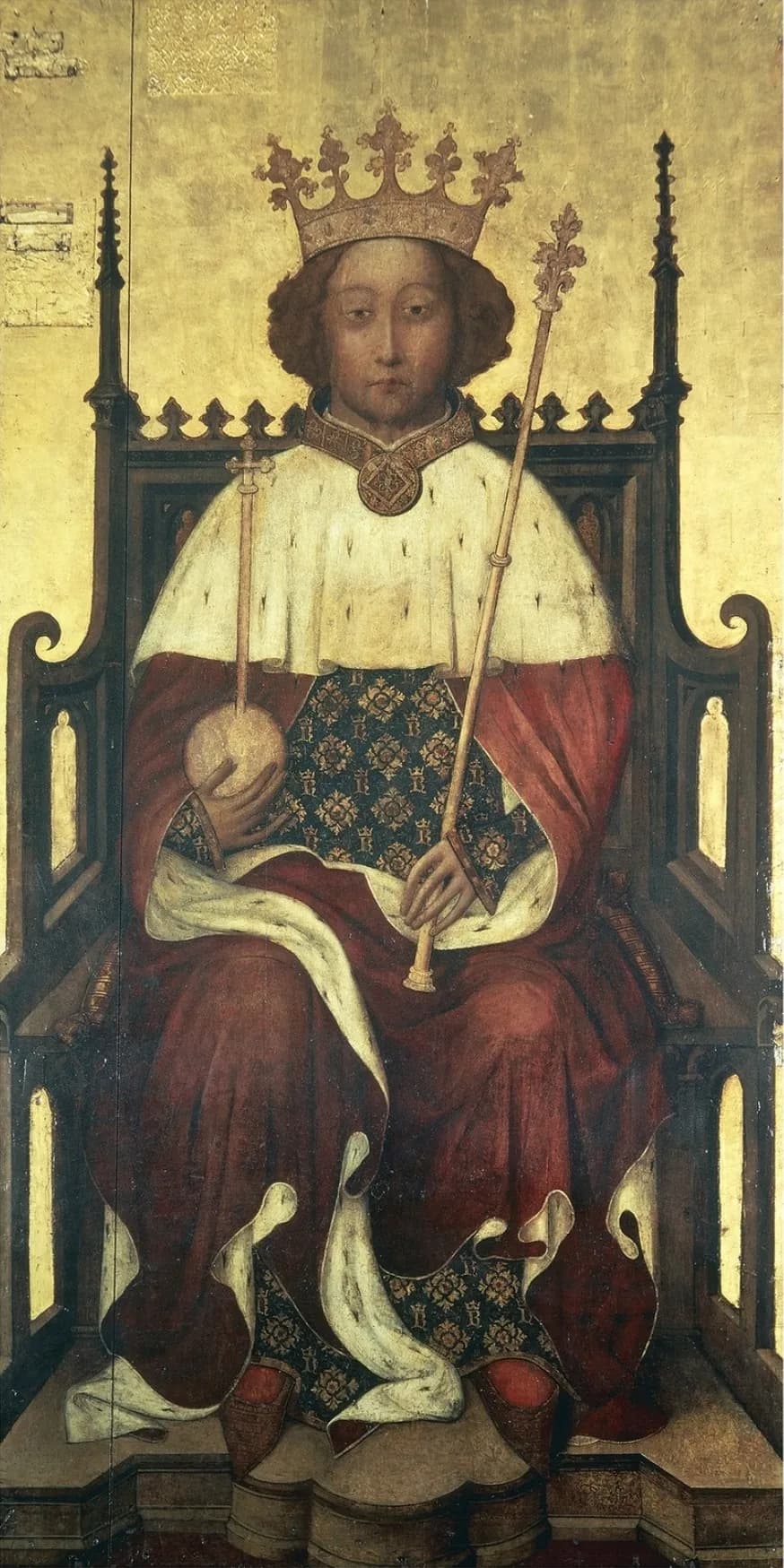
- Richard II enthroned, in the portrait painted in the 1390s that hangs in Westminster Abbey. The Treaty of Windsor was made in his name in May 1386. anonymous / Possibly André Beauneveu, Public domain, via Wikimedia Commons.
- John of Gaunt dining with João I of Portugal in 1386, as painted for Jean de Wavrin's Chronique d'Angleterre in the late fifteenth century (British Library, Royal MS 14 E IV, f. 244v). Jean de Wavrin; Seigneur de Forestel, Public domain, via Wikimedia Commons.