

Joaquim Agostinho: the farm boy who climbed Alpe d'Huez
He bought his first bicycle to get to work after three years in the colonial war, and ten years later stood on the podium in Paris. In April 1984, aged 41 and still racing, he fell 300 metres from a finish line in the Algarve.
At a glance
- Joaquim Agostinho was born on 7 April 1943 at Brejenjas, Torres Vedras, did three years of military service in Mozambique and only took up racing in 1968, joining Sporting that February, two months before his 25th birthday.
- He rode the Tour de France 13 times between 1969 and 1983, finished in the top ten eight times and was third in 1978 and 1979, both times behind Bernard Hinault and Joop Zoetemelk.
- On 15 July 1979 he won the Tour stage to L'Alpe d'Huez, which crossed the Madeleine, Télégraphe and Galibier, by almost two minutes. Bend 17 of the climb now bears his name, and a memorial to him stands at bend 14.
- He won the Volta a Portugal in 1970, 1971 and 1972, and was second in the 1974 Vuelta a España by 11 seconds. He was also disqualified for doping from two Voltas and penalised twice in the Tour.
- On 30 April 1984, leading the Volta ao Algarve at 41, he fell when dogs ran across the sprint 300 metres from the finish at Quarteira. He was operated on in Lisbon about ten hours later and died on 10 May without waking.
Three hundred metres from the line
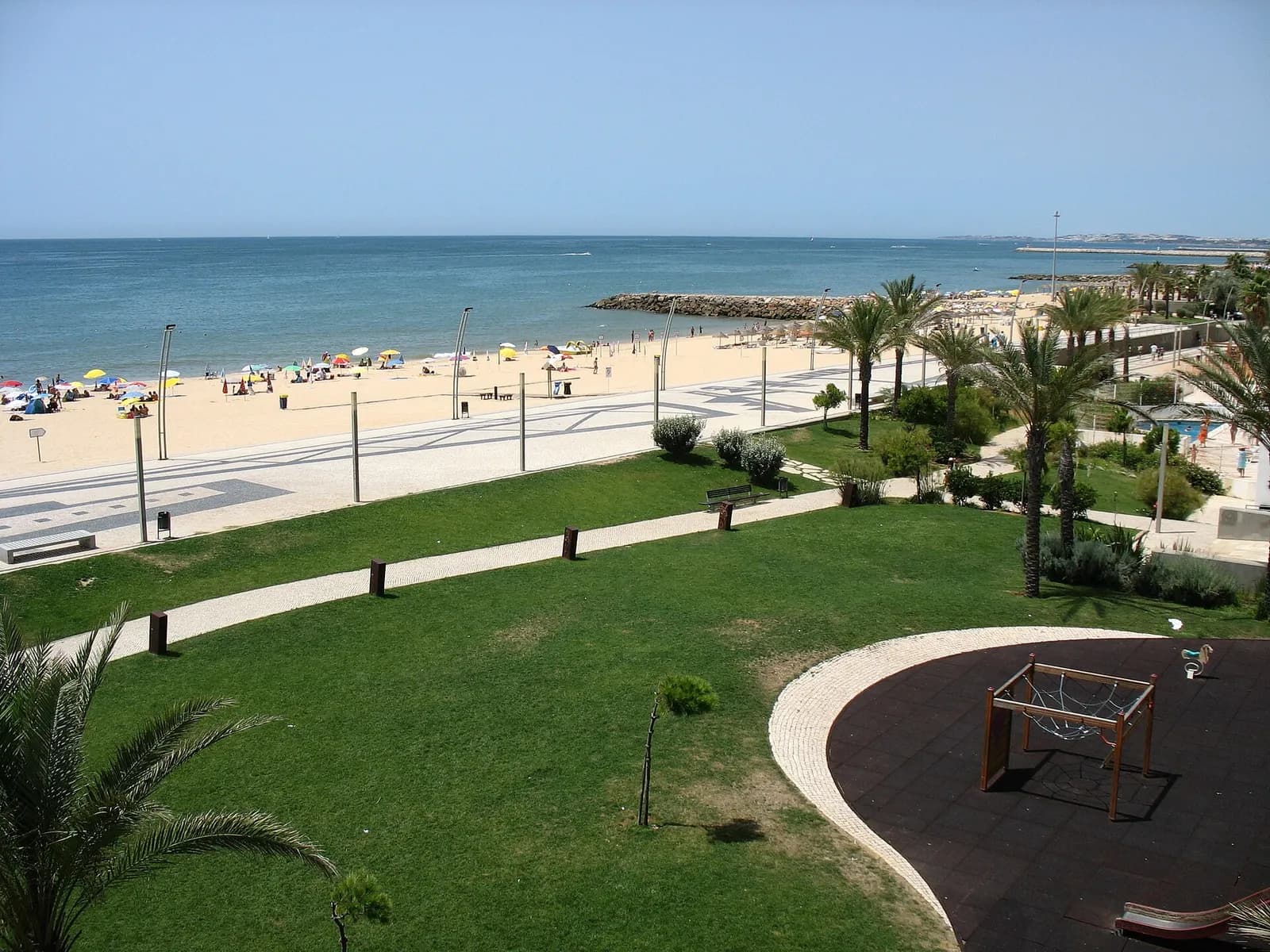
The fifth stage of the tenth Volta ao Algarve was a short one: 77 kilometres from Faro to Quarteira, on Monday 30 April 1984. Shortly before 11 in the morning the bunch came into town for a sprint along the Avenida Infante de Sagres. In the middle of it, wearing the leader's yellow jersey, rode a 41-year-old who had been on the podium of the Tour de France.
About 300 metres from the line two dogs ran across the road. Joaquim Agostinho could not avoid one of them. He went down hard and his head struck the ground.
He tried to stand, then insisted on finishing. Two Sporting team-mates, Zé Mário and Benjamim Carvalho, rode beside him to the line, which he crossed about a minute and twenty seconds after the stage winner, his team-mate Marco Chagas. He told everyone he was fine and refused the ambulance.
Ten days later, on 10 May, he died in a Lisbon hospital without having woken from the operation. Many Portuguese still call him the best rider the country has produced.
The farm, the army and a bicycle
Joaquim Francisco Agostinho was born on 7 April 1943 at Brejenjas, a hamlet in the parish of Silveira, in the municipality of Torres Vedras, north of Lisbon. His parents were poor farmers, and by the age of eight he was working with them in the fields.
In the 1960s Portugal's dictatorship, the Estado Novo, was fighting independence movements in its African colonies, and young men were called up in their thousands. Agostinho was sent to the war in Mozambique and stayed three years. The Vuelta's organisers tell a story from those years: an army captain noticed him because he covered in two hours, on a heavy courier bicycle, a distance that took other soldiers five.
Back home, he bought a bicycle with money saved in the army, to get to work. On Sundays he rode the village races of the area west of Lisbon. João Roque, a former Sporting rider from the same parish who had won the Volta a Portugal in 1963, saw him in the 1968 village races. Another former rider, António Marta, pushed him to enter and urged Sporting not to give up on him.
Sporting Clube de Portugal, one of Lisbon's two big sports clubs, signed him in February 1968, two months before his 25th birthday. That summer he rode his first Volta a Portugal, the national stage race, and finished second.
“Win the Volta, me? No, I don't think about that. To win a race like this, strength isn't enough. You need a bit of cunning, and I have none of that. I just want to reach the end.”
He wore the yellow jersey for three days in that Volta before the team handed the lead to his team-mate Leonel Miranda. Later that year he rode the world road championship at Imola, in Italy, finished 16th and was the only Portuguese rider to complete the course. He also won the Volta ao Estado de São Paulo, in Brazil, his first victory abroad.
A French viscount and the Tour
The São Paulo win caught the eye of Jean de Gribaldy, a French team manager known as the Viscount, who took him onto his Frimatic team in 1969. For the next few years Agostinho raced abroad for Gribaldy while still riding the Volta and the national championships for Sporting. The Diário de Notícias later called him a “luxury emigrant”.
His first Tour de France was Eddy Merckx's first win. On 3 July 1969 Agostinho won the fifth stage, Nancy to Mulhouse over the Vosges, and on 12 July the 234.5-kilometre stage from La Grande Motte to Revel. He finished eighth overall, 51 minutes behind Merckx.
At home he was untouchable. He won the Volta a Portugal in 1970, 1971 and 1972; in 1971 he led from start to finish, won eight of 25 stages and beat the runner-up by almost 11 minutes. He took 22 Volta stages in all by A Bola's count (another tally gives 24) and won the national road championship six years in a row.
He could afford to play. In 1971, near Ponte de Sor, he dropped back on purpose to collect a 100-escudo prize offered to the last rider on the road, shouted that the money was his, and rode on.
The Volta of 1973 showed what he could do when provoked. On the stage from Abrantes to Figueira da Foz the riders had agreed to take it easy. Agostinho, 13 seconds ahead of Benfica's Fernando Mendes, got off to relieve himself and saw Mendes ride away. He chased him down and, as he went past, told him to keep up if he could. The organiser, Artur Agostinho, begged him to slow down. He finished 12 minutes ahead.
His record also has stains. He crossed the line first in the Voltas of 1969 and 1973 but was disqualified both times for doping, and the titles went to Joaquim Andrade and the Spaniard Jesús Manzaneque. In the Tour he was penalised ten minutes after a positive test in 1972, and in 1977 he lost a stage win and ten more minutes for the same reason. He was not alone: the Dutchman Joop Zoetemelk, a Tour winner, took the same ten-minute penalty in 1977, 1979 and 1983.
In 1974 he came closest to winning a Grand Tour. He won two stages of the Vuelta a España and finished second, 11 seconds behind the Spanish climber José Manuel Fuente. The Vuelta's organisers say he was probably the first Portuguese rider on the final podium of a Grand Tour. That July he was sixth in the Tour de France.
Two podiums and a mountain
In 1978 Agostinho rode for the Velda-Flandria team. The Tour that year went to the Frenchman Bernard Hinault. Joop Zoetemelk of the Netherlands was second, 3 minutes 56 seconds down, and Agostinho third at 6 minutes 54 seconds. He was 35.
His best day came a year later. Stage 17 of the 1979 Tour, on Sunday 15 July, ran 166.5 kilometres from Les Ménuires over three Alpine passes, the Madeleine, the Télégraphe and the Galibier, before the final climb to the ski station of L'Alpe d'Huez. Agostinho, riding for Flandria-Ca Va Seul, reached the top alone.
- Date
- Sunday 15 July 1979, stage 17 of the Tour de France
- Route
- Les Ménuires to L'Alpe d'Huez, 166.5 km, over the Madeleine, Télégraphe and Galibier
- Winner's time
- 6 h 12 min 55 s
- Margin
- 1 min 57 s over Robert Alban; Hinault and Zoetemelk at 3 min 19 s
- Final climb
- 13.2 km at an average of 8.1%, through 21 numbered hairpins
He beat the Frenchman Robert Alban by 1 minute 57 seconds and the two race leaders, Hinault and Zoetemelk, by 3 minutes 19 seconds. The next day the race climbed the Alpe again, and Zoetemelk won there, with Agostinho fourth.
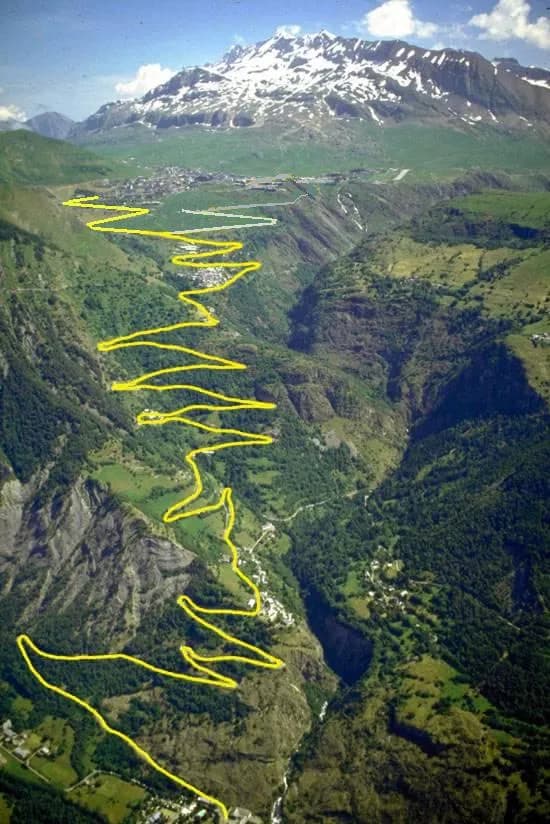
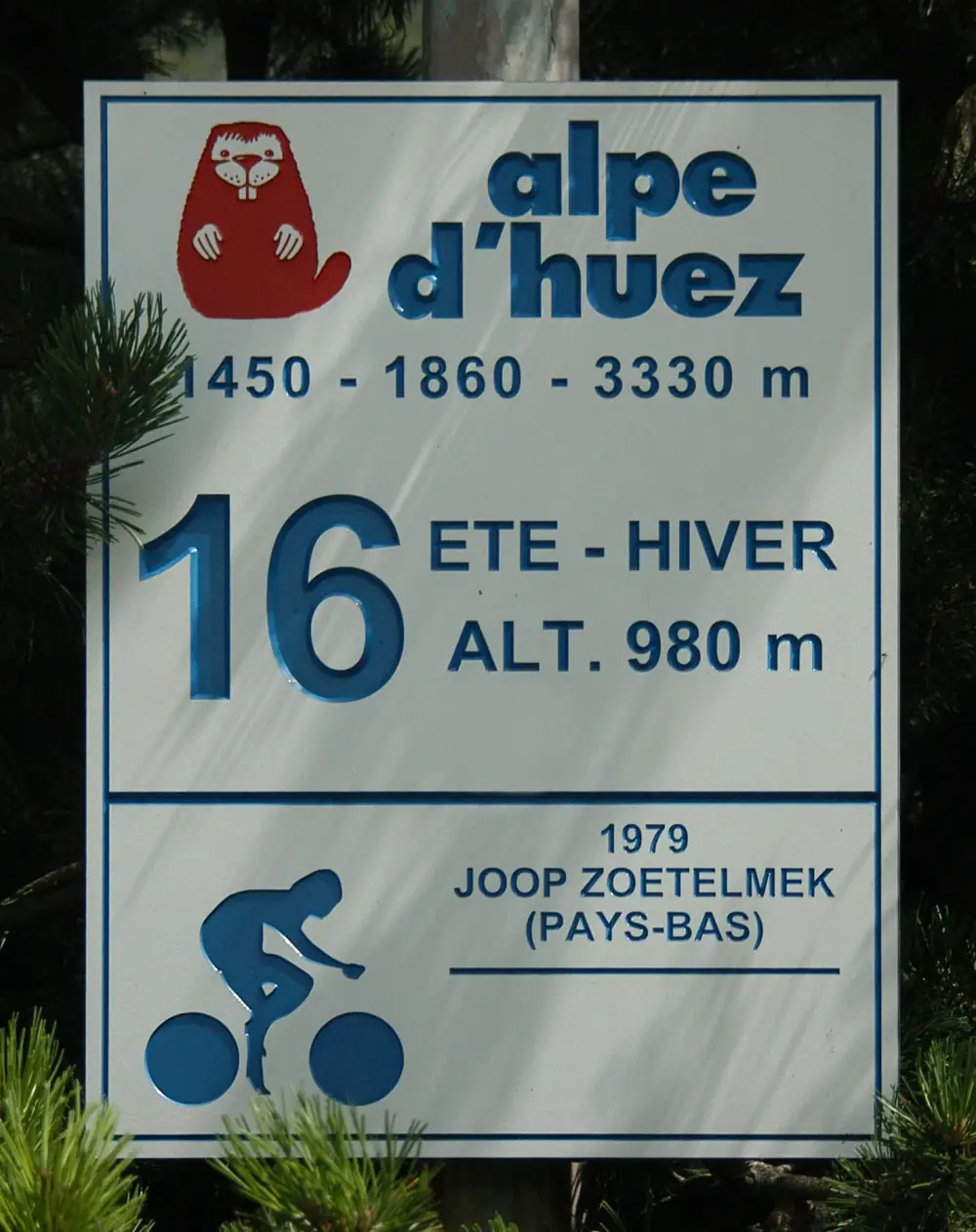
Hinault won again, and Zoetemelk was second despite a ten-minute penalty for a positive dope test. Agostinho finished third once more, 26 minutes 53 seconds behind. Each of the Alpe's 21 hairpins is named after one or two of the riders who won there. Bend 17 carries Agostinho's, shared since 2008 with Carlos Sastre. A memorial to him stands farther up at bend 14, the bend named for Beat Breu and Thibaut Pinot.
| Year | Team | Final place | Notes |
|---|---|---|---|
| 1969 | Frimatic-De Gribaldy | 8th | Won stages to Mulhouse and Revel |
| 1970 | Frimatic-De Gribaldy | 14th | |
| 1971 | Hoover-De Gribaldy | 5th | |
| 1972 | Magniflex-De Gribaldy | 8th | Ten-minute penalty after a positive dope test |
| 1973 | Bic | 8th | Won the 12.4 km time trial at Bordeaux |
| 1974 | Bic | 6th | |
| 1975 | Sporting-Sotto Mayor-Lejeune | 15th | |
| 1977 | Teka | 13th | First across the line on stage 18; win revoked and ten-minute penalty after a positive test |
| 1978 | Velda-Flandria | 3rd | 6 min 54 s behind Hinault |
| 1979 | Flandria-Ca Va Seul | 3rd | Won at L'Alpe d'Huez; 26 min 53 s behind Hinault |
| 1980 | Puch-Sem-Campagnolo | 5th | |
| 1981 | Sem-France Loire | Did not finish | |
| 1983 | SEM-Mavic-Reydel | 11th | Aged 40 |
He did not ride in 1976 or 1982. Places and teams from BikeRaceInfo's results for each year; the 1981 team from A Bola. He is not in BikeRaceInfo's final classification for 1981.
One more season, at 41
Agostinho was fifth in the 1980 Tour and, at 40, eleventh in 1983. On stage 11 that year his early attack worried the Peugeot team of the race leader, Pascal Simon, so much that it chased him down; in the scramble Simon crashed and broke his shoulder blade.
For 1984 he went back to Sporting, to help the club in its first season of racing in France, which was to include the Tour de France. In late April he was racing the Volta ao Algarve. On 29 April, in the rain at Barreiras Brancas near Loulé, he won the time trial and took the yellow jersey. He had been afraid of the slippery road, his mechanic Francisco Araújo recalled, until Araújo begged two lemons from a nearby farm and rubbed them on the tyres. The crash came the next day.
Ten hours, ten days
After the stage he went back, still in the yellow jersey, to the Nosso Paraíso guesthouse, where the team was staying. He began to feel dizzy and vomited in the bathroom. “Silva, I need to go to hospital because I don't feel well,” he told his masseur, Francisco Silva.
An ambulance took him to the hospital at Loulé and then to the central hospital in Faro, where an X-ray showed a fractured skull. Faro had no neurology service, and no neurosurgeon was available. After hours of waiting he was put in an ambulance for Lisbon. Near Alcácer do Sal, in the Alentejo, he fell into a coma.
At the Hospital da CUF in Lisbon the neurosurgeon João Lobo Antunes drained an epidural haematoma, a clot pressing on the brain from between the skull and its outer membrane. By then ten or eleven hours had passed since the fall. A helicopter was stationed at Tancos, in central Portugal, and it was not used. Faro hospital's department heads said at the time that requests for air evacuation took two to three hours to be met; A Bola later blamed the paperwork. Araújo was sure that if Agostinho had been flown out at once, he would have lived.
“Certainly a faster transfer could have led to a different outcome.”
29 April 1984
Yellow jersey
Agostinho wins the time trial of the Volta ao Algarve and takes the race lead.
30 April, before 11 am
The crash
On the 77 km stage from Faro to Quarteira, dogs cross the sprint about 300 metres from the line. He falls, remounts and finishes with two team-mates.
30 April, from midday
Loulé and Faro
Dizzy and vomiting, he is taken to hospital at Loulé, then Faro, where a skull fracture is diagnosed.
Later on 30 April
Road to Lisbon
With no neurosurgeon available in Faro, he travels by ambulance and falls into a coma near Alcácer do Sal.
That night
Surgery
João Lobo Antunes operates at the Hospital da CUF, about ten to eleven hours after the fall.
10 May, 9.37 am
Death
He dies without regaining consciousness, aged 41.
11 May
Funeral
The cortège leaves the Basílica da Estrela in Lisbon for Torres Vedras; thousands line the way.
He never woke up. He died at 9.37 on the morning of 10 May 1984, at 41, while his Sporting team-mates were away racing in Colombia. To many Portuguese he was the “homem de ferro”, the iron man. The next day his coffin left the Basílica da Estrela in Lisbon for Torres Vedras, and thousands of people came out to see it pass.
Sporting goes to the Tour without him
The Tour's organisers kept Sporting's invitation in his honour, and the team started the 1984 Tour de France on 29 June. On 3 July its rider Paulo Ferreira won the fifth stage, from Béthune to Cergy-Pontoise, out of a long breakaway.
Marco Chagas, a younger rider from the same municipality whom Agostinho had taken under his wing, won the Volta a Portugal four times, in 1982, 1983, 1985 and 1986. He rode the 1984 Tour for Sporting too. Forty years after the crash he still called Agostinho the best Portuguese rider ever and the person who had marked his life most.
“Agostinho was my hero, and he still is.”
Chagas also argued that Portuguese cycling lost years when Agostinho died. Four decades on, the Vuelta's organisers name Rui Costa, the country's only world road champion, and João Almeida as the riders who carry that tradition.
How he is remembered
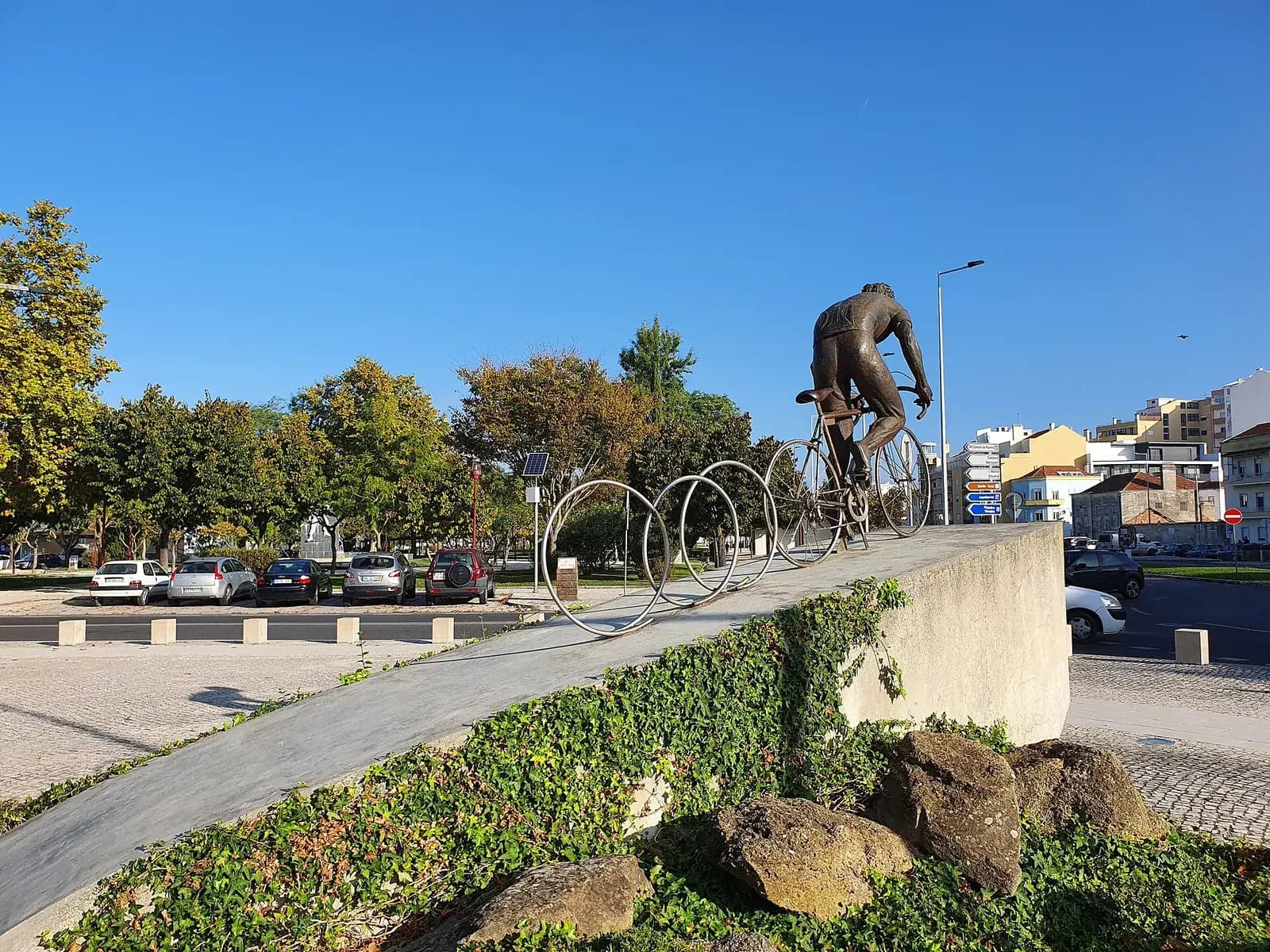
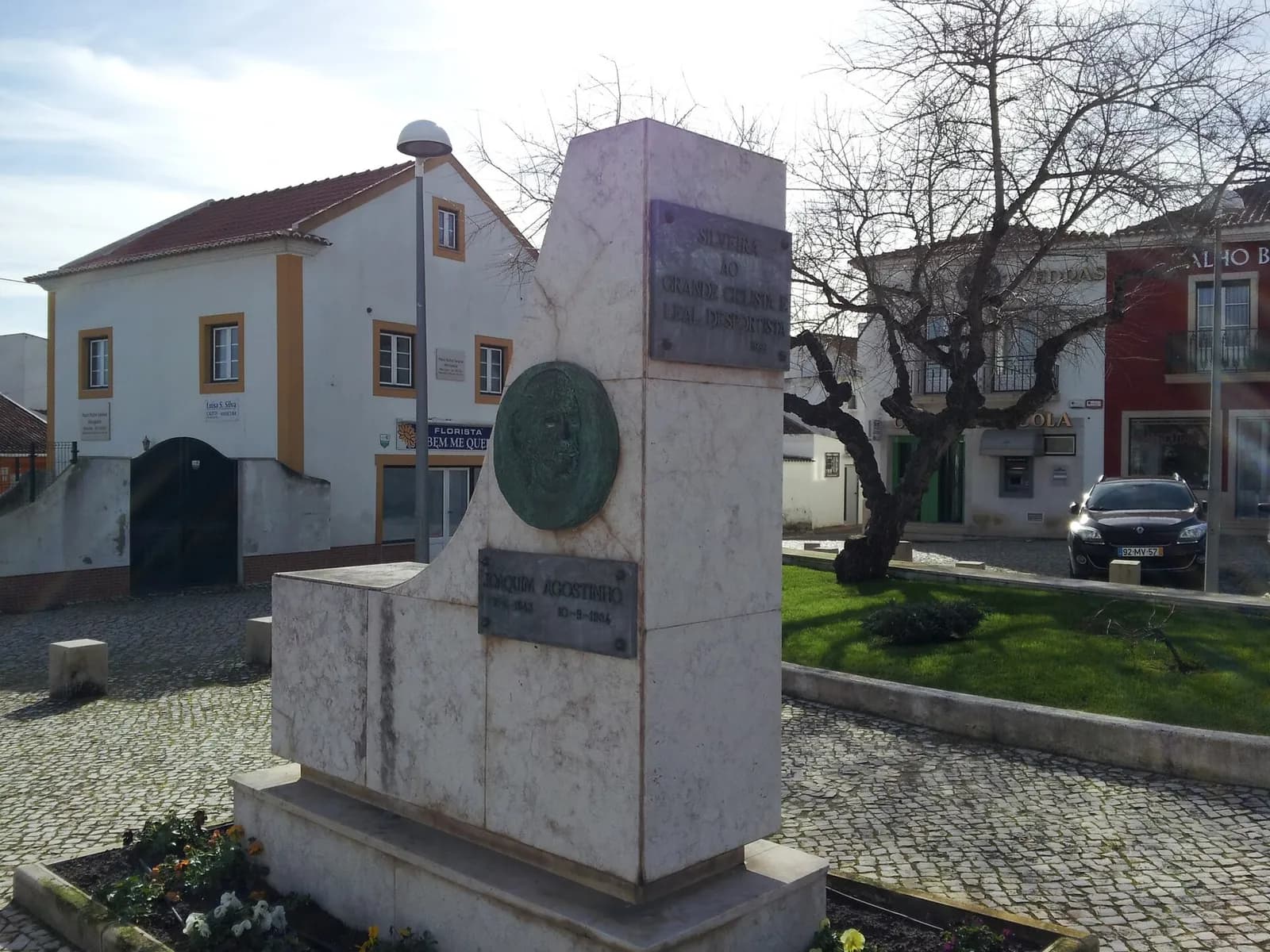
In Silveira, his home parish, a stone memorial with a bronze portrait medallion is dedicated by the parish to the “great cyclist and loyal sportsman”. In Torres Vedras a bronze statue shows him riding up a ramp lined with giant wheels. The town's international race, the Grande Prémio Internacional de Torres Vedras, carries his name as the Troféu Joaquim Agostinho; the 2020 edition was the 43rd.
In July 2024 the town's football club, Torreense, launched a yellow alternative shirt in his honour during that race, with a black mountain across it for the Alpe d'Huez win. The club said it could only be yellow, for the leadership he so often showed, and that he stood for humility, effort and sportsmanship. His family backed the design.
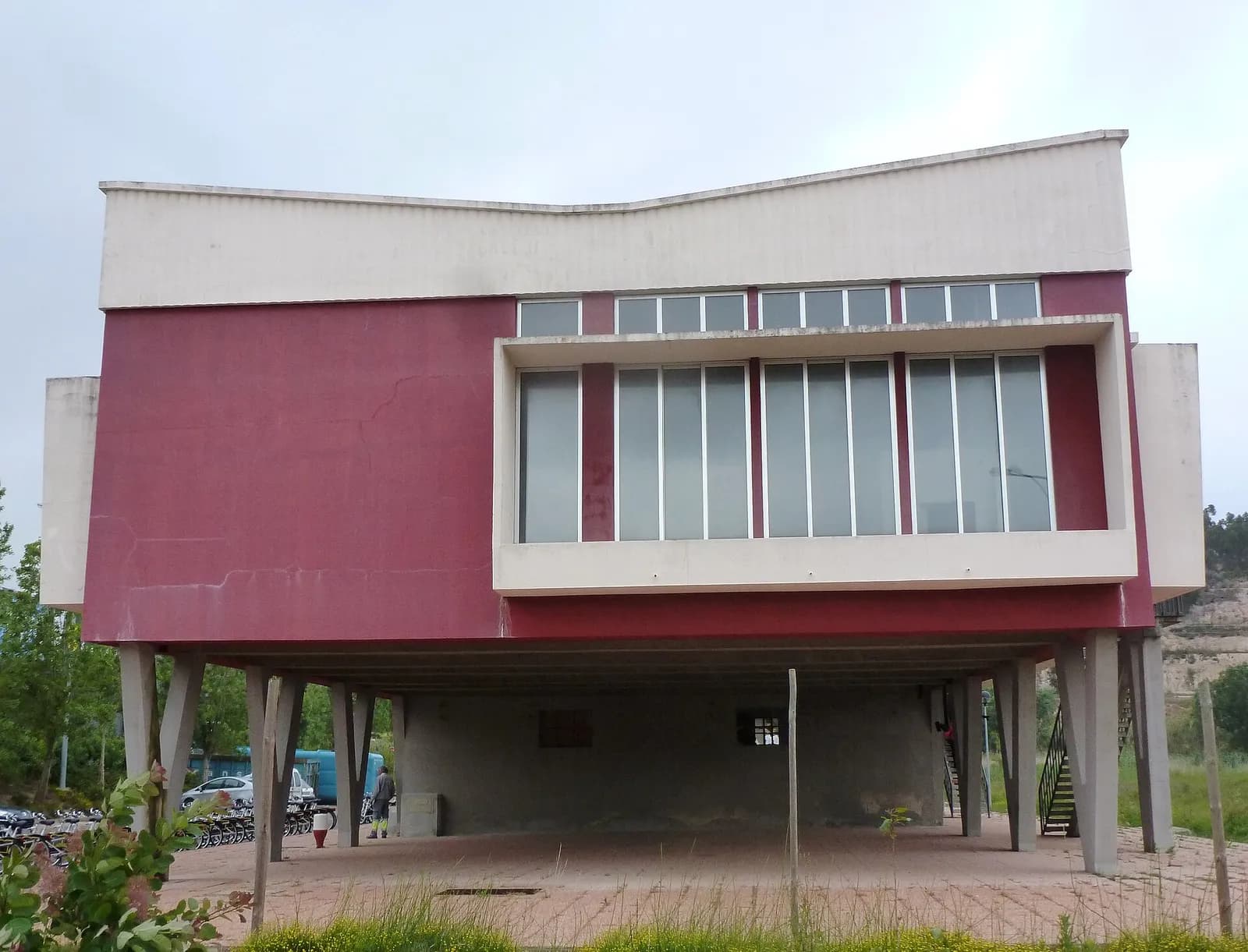
On 5 August 2021 Torres Vedras opened the Museu do Ciclismo Joaquim Agostinho in the former canteen of the Casa Hipólito factory, a modernist building of 1966 and 1967 that the council bought and converted for about €600,000. Its permanent exhibition covers the history of the bicycle and of cycling, in Portugal and abroad, with a section on Agostinho's life and races.
When the 2024 Vuelta a España started in Portugal, its second stage passed through Torres Vedras, and the race's organisers used the occasion to retell his story.
FAQs
How did Joaquim Agostinho die?
On 30 April 1984, while leading the Volta ao Algarve, he fell when dogs ran across the sprint about 300 metres from the stage finish at Quarteira and fractured his skull. He finished the stage, but was only operated on in Lisbon some ten hours later, after transfers through Loulé and Faro. He died in a coma on 10 May 1984, aged 41.
Did Joaquim Agostinho ever win the Tour de France?
No. His best results were third place in 1978 and 1979, both times behind Bernard Hinault and Joop Zoetemelk. He rode 13 Tours, finished eight in the top ten and won four stages, including L'Alpe d'Huez on 15 July 1979.
How many times did Agostinho win the Volta a Portugal?
Three: 1970, 1971 and 1972, all for Sporting. He also crossed the line first in 1969 and 1973 but was disqualified for doping both times.
Where was Joaquim Agostinho from?
He was born on 7 April 1943 at Brejenjas, in the parish of Silveira, Torres Vedras, north of Lisbon. The town has a statue of him and, since 2021, the Museu do Ciclismo Joaquim Agostinho.
On the timeline
Open the timelineNearby moments from revolution and democracy (1974–1986).
Death in Lisbon of Artur Paredes, aged 81. The Coimbra guitarist gave the 'guitarra de Coimbra' its own sound, distinct from the Lisbon guitar, and taught his son Carlos Paredes, who would become Portugal's most celebrated guitar virtuoso.
A Spanish traditionalist priest, Juan María Fernández y Krohn, lunges at Pope John Paul II with a bayonet at the Fátima shrine, where the Pope is marking the first anniversary of the 1981 Rome assassination attempt. The Pope continues the visit and Fernández y Krohn is convicted of attempted murder by a Portuguese court.
Adriano Correia de Oliveira, the Coimbra-trained singer whose ballads such as 'Trova do Vento que Passa' became anthems of resistance to the dictatorship, dies aged 40 in Avintes, Vila Nova de Gaia, the town where he grew up.
Death of Joaquim Agostinho
Cyclist Joaquim Agostinho dies in Lisbon, ten days after hitting a dog that ran across the sprint about 300 metres from the stage finish at Quarteira while he led the Volta ao Algarve. Twice third in the Tour de France and a stage winner on Alpe d'Huez in 1979, he is widely regarded as Portugal's greatest cyclist.
Carlos Lopes wins the Olympic marathon in Los Angeles in an Olympic record of 2:09:21, claiming Portugal's first ever Olympic gold medal at the age of 37.
Niki Lauda finishes second behind his McLaren team-mate Alain Prost at the Portuguese Grand Prix in Estoril, the circuit's first world championship race, and takes the Formula One title by half a point, still the narrowest margin in the sport's history.
Cristiano Ronaldo is born in Funchal, Madeira. The forward would win five Ballon d'Or awards and five Champions League titles, become the all-time leading goalscorer in men's international football, and captain Portugal to victory at Euro 2016.
Coming up in history
All long reads 12 May 1982A blade on the basilica steps: John Paul II at Fátima, 12 May 1982
 13 May 1798Porto's Real Teatro de São João opens on a prince's birthday, 1798
 14 May 191514 May 1915: the navy rising that brought down Pimenta de Castro
 15 May 1964Morais's corner: how Sporting won the Cup Winners' Cup in 1964
37 sources
Archives, scholarship and reporting this article was checked against.
- 1O dia em que Agostinho deixou o povo órfãoCorreio da Manhã (Domingo magazine)
- 2
Joaquim Agostinho: 40 anos de saudadeA Bola, 9 May 2024
- 3Joaquim Agostinho (profile)Diário de Notícias
- 4
1979 Tour de France: final results and stage resultsBikeRaceInfo (Bill and Carol McGann)
- 5
- 6
- 7Jogo? Não! É o Agostinho! (Rui Alves)RTP Memória
- 8
La Vuelta in Portugal: Joao Almeida and Rui Costa in the loving memory of Joaquim AgostinhoLa Vuelta (official race website), 2024
- 9
Volta a Portugal: sexta etapa vai homenagear hoje Joaquim AgostinhoPostal do Algarve, 3 October 2020
- 10
Início da Guerra ColonialArquivo Nacional Torre do Tombo
- 11
- 12Volta a Portugal: a history in stories (Agostinho, Chagas, Venceslau, Plaza)Observador
- 13Há 50 anos, um visconde deu fama mundial a Joaquim AgostinhoDiário de Notícias, 1 August 2018
- 14
- 15
- 16
- 17
- 18
- 19
- 20
- 21Há montanhas que falam e escutam o grito de quem quer antecipar a festaObservador, 24 July 2026
- 22
The 21 hairpins of Alpe d'Huez: every bend and Tour de France winner explainedProCyclingUK, 24 July 2026
- 23
La légende de l'Alpe d'Huez et ses chiffres affolantsblue News / Keystone-ATS, 23 July 2026
- 24
The climb up Alpe d'HuezOisans Tourisme (Bike Oisans)
- 25
- 26
- 27
- 28
- 29
- 30
- 31
- 32
Museu dedicado a Joaquim Agostinho abre em agosto em Torres VedrasRecord, with Lusa, 16 July 2021
- 33
Homenagem ao Ciclista Joaquim Agostinho, Silveira (photograph, January 2013)Wikimedia Commons
- 34
- 35
- 36
- 37
Museu do Ciclismo Joaquim Agostinho inaugurado em Torres VedrasEcho Boomer, 5 August 2021


Image credits
- The monument to Joaquim Agostinho in Torres Vedras, the municipality where he was born, photographed in October 2021. GualdimG, CC BY-SA 4.0, via Wikimedia Commons.
- The seafront at Quarteira in August 2007. The stage of 30 April 1984 finished in the town. Cocacolalover, CC BY-SA 3.0, via Wikimedia Commons.
- The road to L'Alpe d'Huez, its hairpins traced in yellow on a photograph of the mountainside. VerTdeTerre, CC BY-SA 3.0, via Wikimedia Commons.
- The sign at bend 16 of the climb in 2007. It honours Joop Zoetemelk, who won the second Alpe d'Huez stage of 1979 the day after Agostinho; bend 17, just below it, carries Agostinho's name. McSmit, CC BY-SA 3.0, via Wikimedia Commons.
- The memorial to Agostinho in Silveira, Torres Vedras, in January 2013. The upper plaque reads “Silveira ao grande ciclista e leal desportista”; the lower one gives his name and his dates of birth and death. Peter Gpetr, CC BY 3.0, via Wikimedia Commons.
- The former Casa Hipólito canteen in Torres Vedras in May 2013, before it was converted into the Museu do Ciclismo Joaquim Agostinho. Nicola, CC BY-SA 3.0, via Wikimedia Commons.