

A blade on the basilica steps: John Paul II at Fátima, 12 May 1982
The Pope came to Fátima to thank Our Lady for his life, one year after a gunman nearly killed him in St Peter's Square. On his first night there, a priest who believed the Pope was the Antichrist broke through the crowd with a 37-centimetre blade.
At a glance
- On the night of 12 May 1982, at about 10.40 pm, the Spanish priest Juan Fernández Krohn broke through the crowd at the Fátima sanctuary and went for John Paul II with a 37-centimetre blade. Police overpowered him.
- The Pope had come to Portugal to thank Our Lady of Fátima for his survival a year earlier, when Mehmet Ali Ağca shot him in St Peter's Square on 13 May 1981, the anniversary of the first Fátima apparition.
- He carried on with the visit: Mass at Fátima on 13 May, then Lisbon, Vila Viçosa, Coimbra, Braga and Porto. The Vatican said at the time that he was unhurt; in 2008 his former secretary, Cardinal Stanisław Dziwisz, said he had been cut and had bled. Krohn denies it.
- On 2 May 1983 a Portuguese court sentenced Krohn to six and a half years for attempted homicide and use of a prohibited weapon, seven in all after he insulted the judges. He was paroled in November 1985 and later settled in Belgium.
- In March 1984 John Paul II gave the Santuário a bullet from the 1981 shooting. Since 1989 it has been set in the precious crown that the statue of Our Lady of Fátima wears on great pilgrimage days.
Candles, a cassock and a briefcase
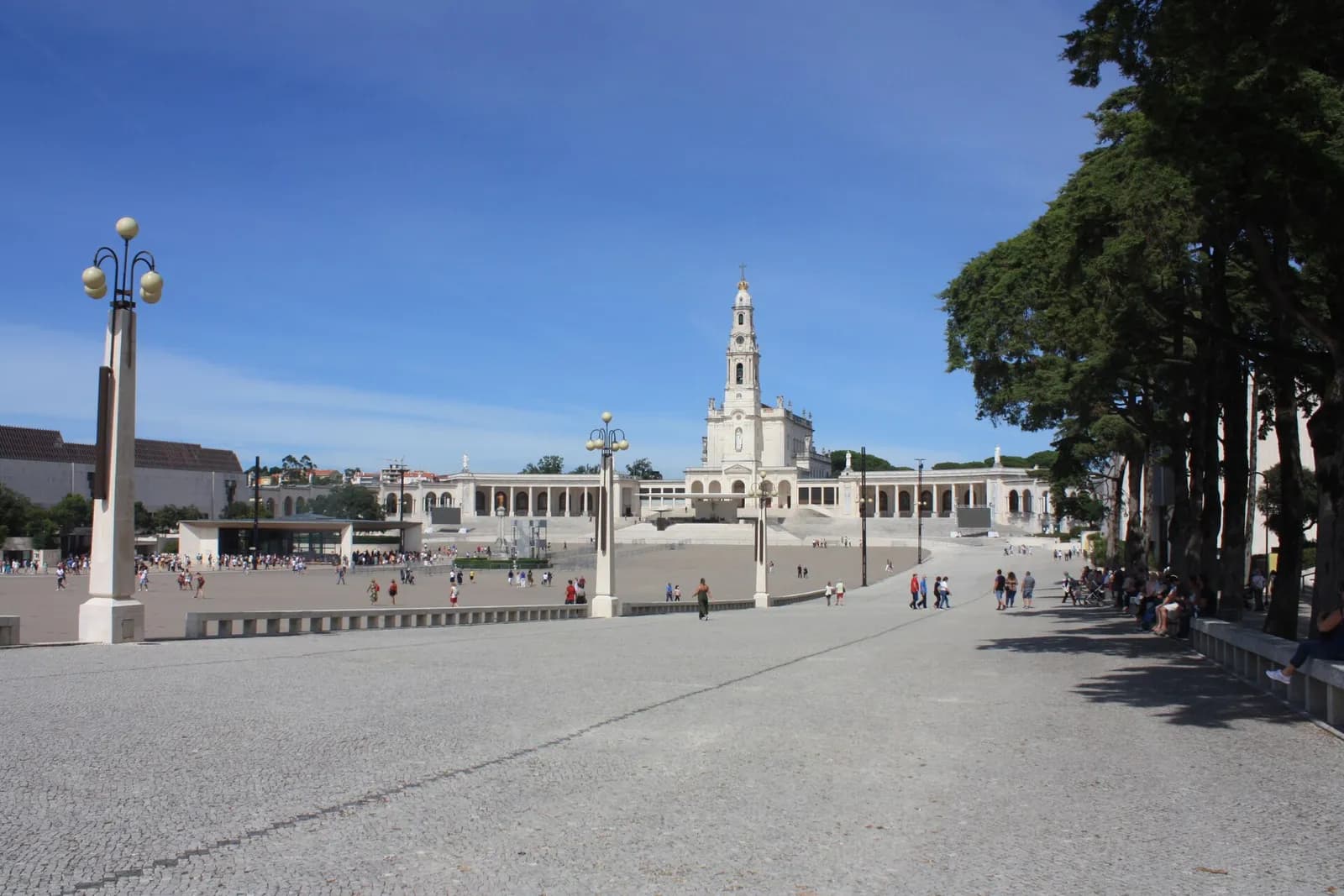
It was about 10.40 on the night of Wednesday 12 May 1982. John Paul II was climbing the steps of the basilica at the Fátima sanctuary after the evening vigil, with the square below him full of pilgrims holding candles. A man in a cassock pushed through the crowd, jumped the security barriers and ran at him, claiming that he only wanted to kiss the Pope.
Manuel Cardoso Ramalhete, the officer of the PSP (Public Security Police) in charge of the Pope's personal protection at Fátima and Coimbra, saw his “aggressive and nervous expression” and stopped him, and the Pope's bodyguards threw him to the ground. The man had carried a blade 37 centimetres long in his leather briefcase. News reports at the time called it a bayonet; the book João Paulo II – Peregrino de Fátima and Observador call it a sharpened sabre.
Few in the crowd understood what had happened. The Pope was told that a priest had been taken ill, and he came back down the steps to bless him. Over the loudspeakers the rector of the sanctuary explained that the Holy Father had gone to see a priest who had fallen on the stairs and would return to the altar. As John Paul II raised his hand a second time, the man on the ground shouted at him.
“I accuse you of destroying the Church! Death to the Second Vatican Council!”
Marcelo Rebelo de Sousa, then a 33-year-old secretary of state in the government and later President of the Republic, was among the Catholic ministers watching from the colonnade. He saw nothing. “It escaped me,” he told Observador in 2024. Like most people there, he learned only the next day that the Pope had survived a second attempt on his life, a year after the first.
Shots in St Peter's Square
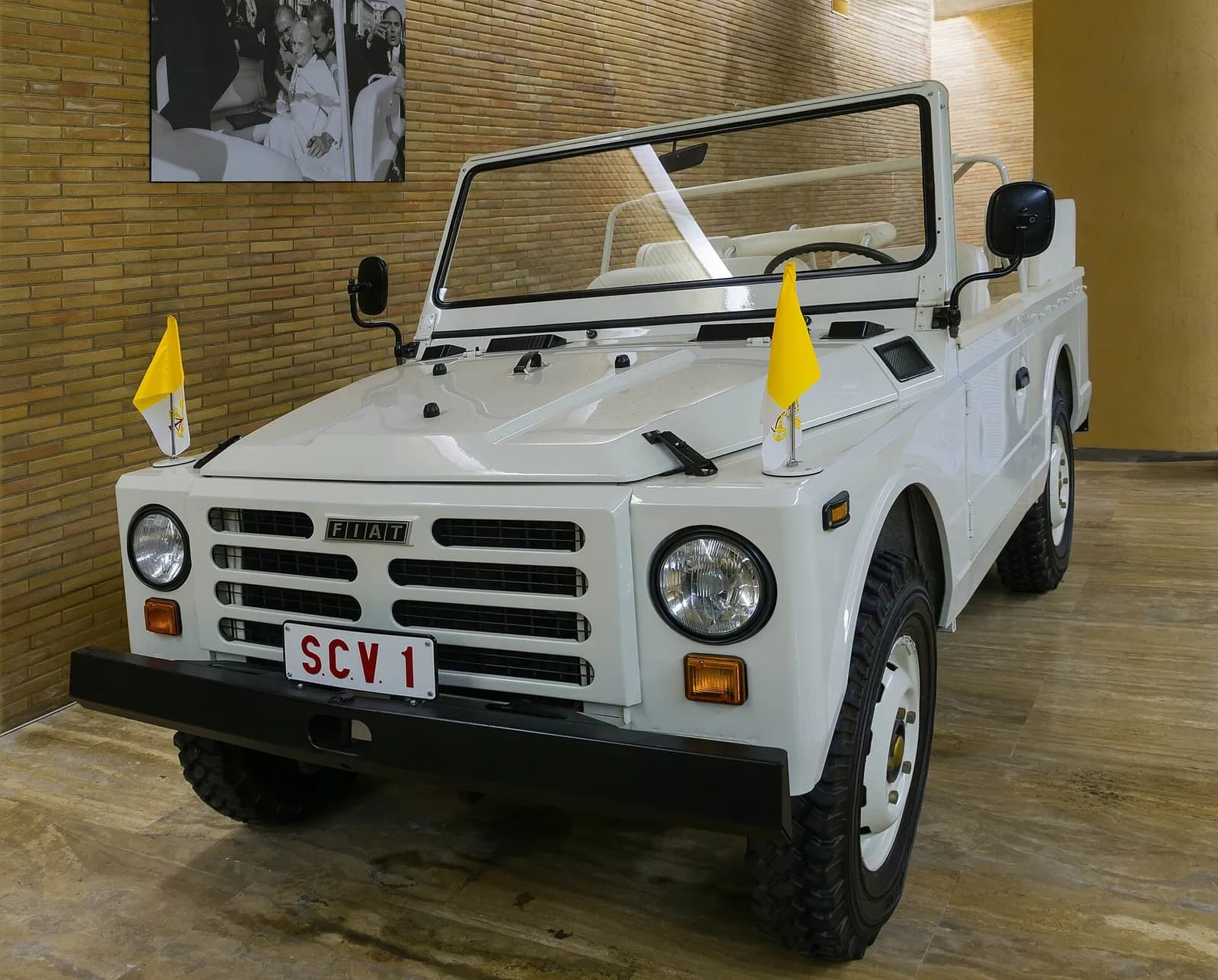
At 5.19 pm on Wednesday 13 May 1981, John Paul II was riding in an open vehicle through the crowd at his weekly general audience in St Peter's Square. He had just handed a little girl back to her parents when shots rang out. He collapsed, hit in the abdomen, and was rushed to the Gemelli hospital, where for days his life was in danger. The gunman, Mehmet Ali Ağca, a Turk linked to the far-right Grey Wolves, was arrested on the spot.
Four days later, reciting the Regina Caeli prayer from his hospital room, the Pope forgave “the brother who struck me”. Ağca's motives have never been settled. He gave so many contradictory explanations that theories about the Soviet KGB, an internal conspiracy and even Ayatollah Khomeini have all had their supporters.
The date mattered to him. On 13 May 1917, three shepherd children at the Cova da Iria, near Fátima, had reported the first of the apparitions that made the village one of the great Catholic shrines (the story of October 1917 is told in a separate article). John Paul II came to believe that “a mother's hand” had guided the bullet's path and stopped him at the threshold of death.
From his sickbed he asked to see the third part of the “secret” that Lúcia dos Santos, the last surviving seer, had written down in 1944 and sealed. On 18 July 1981 the envelopes were brought from the archives of the Holy Office, the Vatican's doctrinal office; they went back on 11 August. The text describes a “bishop dressed in white” killed by soldiers on a mountain. The Vatican did not publish it until 2000, and in 1982 its contents were the subject of fevered speculation.
A pilgrim come to give thanks
The papal plane landed at Lisbon's Portela airport at about lunchtime on 12 May. John Paul II kissed the ground and told President Eanes why he had come. His journey had “one dominant meaning: Fátima”, and he carried in his heart Mary's song of thanksgiving “for God having saved my life” in the attack of the year before.
He spent the afternoon in Lisbon. He received the members of the government at the Apostolic Nunciature, met lay Catholics in the cathedral and the Franciscans at the church of Santo António, then went on to Fátima, arriving late in the afternoon. In the evening he presided over the prayer vigil at the Chapel of the Apparitions, whose new porch was opened for the visit, and spoke to the pilgrims about why he was there.
“Since the well-known attack in St Peter's Square a year ago, on regaining consciousness, my thoughts turned at once to this sanctuary, to lay in the heart of the heavenly Mother my thanks for having saved me from danger. In everything that followed I saw ... a special motherly protection of Our Lady. And in the coincidence, and there are no mere coincidences in the designs of divine Providence, I also saw an appeal and, perhaps, a call to attention to the message that went out from here sixty-five years ago.”
Nobody counted the crowd. Observador puts it at perhaps a million people. Marcelo Rebelo de Sousa remembers a sanctuary packed to its far end, and the streets around it full, at a time when security “was not what it is today”. During the same visit Lúcia, by then a Carmelite nun in Coimbra, met the Polish Pope for the first time.
| Date | Where | Main events |
|---|---|---|
| Wed 12 May | Lisbon, then Fátima | Welcome by President Eanes at Portela airport; meetings with the government, lay Catholics at the cathedral and the Franciscans at Santo António; evening vigil at the Chapel of the Apparitions |
| Thu 13 May | Fátima, then Lisbon | Mass in the sanctuary and act of entrustment to Our Lady; meetings with the bishops, clergy and shrine workers; farewell to Fátima; diplomatic corps at the Queluz Palace |
| Fri 14 May | Lisbon and Vila Viçosa | Ecumenical meeting and visit to the Catholic University; Mass for farmers at Vila Viçosa; Mass for young people in Lisbon |
| Sat 15 May | Coimbra, Braga and Porto | University of Coimbra; Mass for families in Braga; speech to workers in the Praça dos Aliados; farewell ceremony in Porto |
From the dates and places of the Pope's speeches and homilies published by the Holy See. Exact times are not given there.
The priest who thought the Pope was the Antichrist
Juan Fernández Krohn was born in Madrid in 1948 or 1949, into a devout family under Franco's dictatorship, and grew up on stories of the “reds” of the Civil War. After studying economics he drifted towards traditionalist circles. In the mid-1970s (1974 or 1975, depending on the account) he joined the Society of St Pius X at Écône, in Switzerland.
The Society's founder, the French Archbishop Marcel Lefebvre, rejected the reforms of the Second Vatican Council, the 1960s gathering of the world's bishops that ended the all-Latin Mass and opened the Church to dialogue with other religions, and had been suspended by Paul VI. Lefebvre ordained Krohn in 1978.
He went further than his teacher. According to the Society itself, it expelled him in 1979 for signs of instability and for saying that Lefebvre was too soft on the Pope and the council. He moved towards sedevacantist groups, who hold that the popes since the council are not legitimate. In his eyes John Paul II, a Pole celebrated in the West as an enemy of communism, was a Marxist infiltrator and an Antichrist; the Pope's 1981 encyclical on human work, Laborem Exercens, shocked him in particular.
Fátima gave his theory its focus. Among ultra-conservatives it was widely believed that the unpublished third secret condemned the council's reforms, and Krohn was sure the Pope was hiding it for that reason. He told investigators that he had been inspired by the murder of the Egyptian president Anwar Sadat in 1981, that he wanted to save the Church from “demolition” and to become a martyr, and that he acted “in legitimate defence of the Church”.
He arrived at Lisbon's Santa Apolónia station on the train from Paris, where he lived, early on 12 May, a few hours before the papal plane. He had no suitcase and no hotel. In a small brown briefcase he carried the blade, chosen to recall the lance that pierced Christ on the cross, and messages to the Pope written in blue marker. He had spent six months planning and expected to be shot by the police.
- Date and time
- Wednesday 12 May 1982, about 10.40 pm
- Place
- Steps of the Basilica of Our Lady of the Rosary, Santuário de Fátima
- Attacker
- Juan Fernández Krohn, Spanish priest, aged about 32
- Weapon
- Blade 37 cm long, called a bayonet in most reports and a sabre in some Portuguese accounts
- Stopped by
- PSP officers led by Manuel Cardoso Ramalhete
- Charges
- Attempted aggravated homicide of a head of state; use and possession of a prohibited weapon
Was the Pope hurt?
At the time, the official answer was no. The Vatican insisted that the Pope had not been touched, although Portuguese television pictures suggested otherwise. Dennis Redmont, who covered papal journeys for the Associated Press, recalls confronting the bishop's aide with the footage and being told not to believe everything he saw on video. The next morning the Pope looked shaken, but he kept to his programme.
On 13 May he said Mass in the sanctuary and explained, again, why he was there: on the same day a year before, in St Peter's Square, the attempt on his life had “mysteriously coincided” with the anniversary of the first apparition, and he had taken it as a special call to come. He then entrusted the world to the Immaculate Heart of Mary, repeating an act of entrustment of 7 June 1981 that he had been too ill to attend in person.
For two more days he travelled the country, from Vila Viçosa to Coimbra, Braga and Porto, and said goodbye to Portugal in Porto on 15 May.
Twenty-six years later the story changed. In Testimony, a film about John Paul II shown at the Vatican in October 2008 and based on the memoir of his secretary of almost 40 years, Cardinal Stanisław Dziwisz said the blade had reached the Pope and cut him, and that he had finished the ceremony without telling anyone.
“I can now reveal that the Holy Father was wounded. When we got back to the room there was blood.”
The Santuário said it had learned of the account only from the press, on 15 October 2008. Krohn denies it. “What Dziwisz said is a lie,” he told Redmont: the bodyguards threw him to the ground at once, and although he was face to face with the Pope, John Paul II gave no sign of being hurt. He has also said that the police who followed him never saw him holding the weapon, and that he was convicted only because he confessed.
There is a coda in Lúcia's hand. On the day of the attack, 12 May 1982, she wrote to the Pope that the third part of the secret referred to the words she attributed to Our Lady in July 1917: that Russia would spread its errors through the world, and that “the Holy Father will have much to suffer”. The Vatican quoted the letter when it published the secret in 2000.
“Puppets, murderers, communists”
Krohn spent his first night in the hands of the Polícia Judiciária, the criminal investigation police, in Lisbon. He later called it the best night's sleep of his life. In August 1982 the public prosecutor charged him with attempted aggravated homicide of a head of state and with using and carrying a prohibited weapon.
For the first time a Portuguese court had a case the whole world was watching. The three judges had to decide whether Krohn was mad or responsible for his actions, and spent months working through his theological arguments. “My colleagues and I were aware that this trial was the first trial with a very large international repercussion,” the retired judge José Santos Cabral, one of the three, told Observador. On 7 February 1983 the court's experts found Krohn criminally responsible; his act, they wrote, had been driven “by an individual mystical and political evolution”.
The court read its judgment on 2 May 1983. Krohn answered the judges with “puppets, murderers, communists”, and he was tried again the same day, in his absence, for insulting the court. He went to the Vale de Judeus prison at Alcoentre on 9 August 1983. Under canon law he had also incurred excommunication, the penalty for anyone who uses physical violence against the Pope.
| Offence | Sentence |
|---|---|
| Attempted aggravated homicide, and possession and use of a prohibited weapon | Six years and six months in prison (single sentence) |
| Three counts of insulting the court, judged summarily the same day | Three more months in prison and 90 days' fine, or 60 days in prison |
| Combined sentence | Seven years in prison and 90 days' fine, or 60 days in prison |
Other accounts round the main sentence to six years. Krohn was paroled on 21 November 1985, after about three and a half years in custody. CBC reported that he was expelled from Portugal in 1985; the case file, as summarised by 24notícias, records his final release, with expulsion from the country, on 21 May 1989.
From Vale de Judeus to Brussels
In prison Krohn gave up the priesthood and married in a civil ceremony; he has a son. By 2020 he had lived in Belgium for more than three decades. He described Vale de Judeus as “a horrible hell”, but said he bore no grudge against Portugal or the Portuguese, and that his worst problems there were with Spanish inmates.
He came to the attention of the police again. He was acquitted of a charge of setting fire to the Brussels headquarters of the Basque separatist party Herri Batasuna in 1996. In May 2000 he breached security to approach King Juan Carlos and Queen Sofía of Spain during their visit to Belgium, and was sentenced to four months in prison for resisting arrest.
In 2020 he told El País that he did not regret what he calls his “gesture of Fátima”, but would not do it again. In 2022, for the 40th anniversary, he spoke to RTP for a documentary, and in remarks reported by 24notícias he said again that he regretted nothing: it was not a crime, he said, but a violent act, “politically incorrect”. In 2024, aged 74, he gave Observador a long interview in a hotel in central Brussels for its podcast series “Matar o Papa” (“Killing the Pope”).
The bullet in the crown
On 25 March 1984, in St Peter's Square, John Paul II consecrated the world to the Immaculate Heart of Mary in union with the bishops of the world, an act that Lúcia later said was the consecration Our Lady had asked for. The statue from the Chapel of the Apparitions had been taken to the Vatican for the first time, and the Bishop of Leiria-Fátima, Alberto Cosme do Amaral, was in Rome with it. The next day the Pope handed the bishop a bullet. “I have a present here for Our Lady,” he told him.
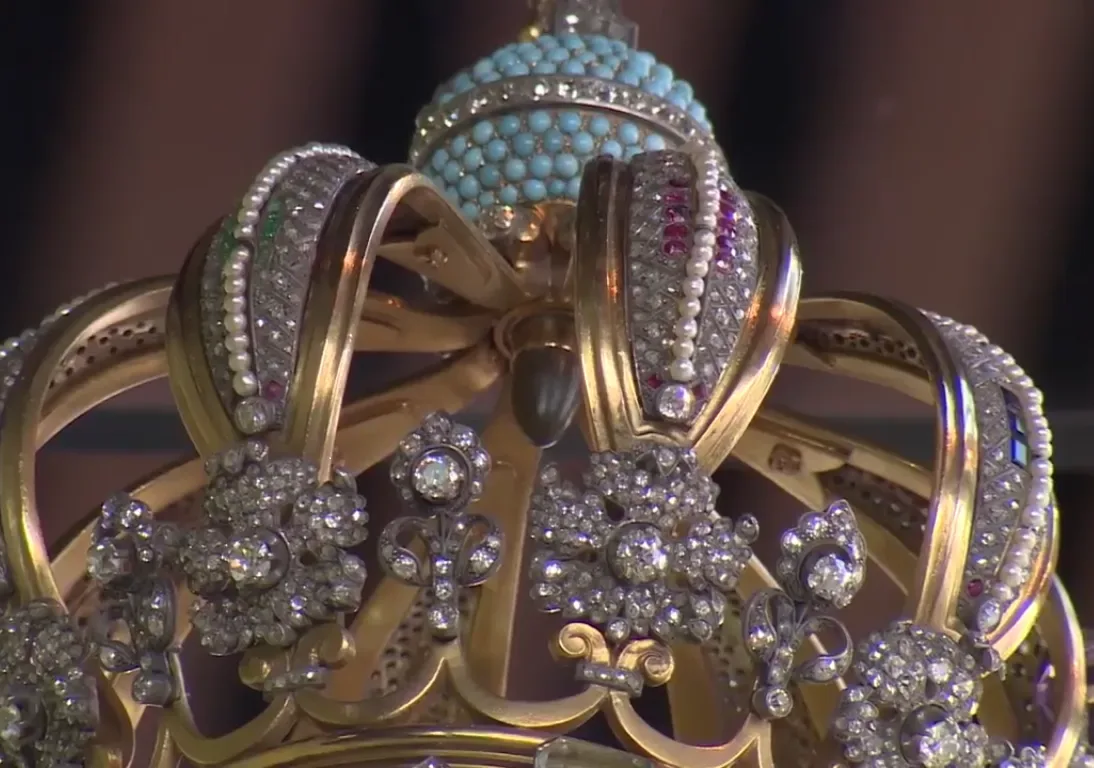
For a while nobody at the Santuário knew what to do with it. In 1989, by decision of the bishop and the rector, it was set in the precious crown, under the small globe of turquoises. The historian Marco Daniel Duarte says that when it came to fitting it, the hole turned out to match the bullet's diameter exactly: chance, or, as many devotees read it, a sign that the place had been waiting for it.
The crown itself was a gift from the women of Portugal, who gave their jewellery on 13 October 1942 in thanks for the country's escape from the Second World War. Because the world was still at war, the bishop waited until 13 May 1946, when Cardinal Benedetto Aloisi Masella, Pius XII's legate, crowned the statue. The statue wears it only on the great pilgrimage days; on other days it has a simpler crown, and the precious one is on display.
- Offered
- 13 October 1942, by the women of Portugal
- Coronation
- 13 May 1946, by the papal legate Cardinal Aloisi Masella
- Material
- Gold, about 1.2 kilograms
- Stones
- 313 pearls and 2,679 precious stones
- Bullet given
- 26 March 1984, by John Paul II to the Bishop of Leiria-Fátima
- Bullet set
- 1989, beneath the globe of turquoises
On 27 December 1983 John Paul II visited Ağca in Rome's Rebibbia prison. “We met as fellow human beings and as brothers,” he said afterwards. Ağca spent 29 years in prison and was released on 18 January 2010.
“It is deeply consoling to know that you are crowned ... with the bullet of our worries and sufferings.”
Why it still matters
John Paul II came back to Fátima twice. He returned on 12 and 13 May 1991, ten years after the shooting; on 13 May 2000 he beatified Francisco and Jacinta Marto, and that June the Vatican published the third secret, reading the “bishop dressed in white” as a vision of the century's persecutions and of the attack in St Peter's Square. On the eve of the beatification he gave Our Lady the gold ring with the words Totus Tuus he had worn for much of his pontificate.
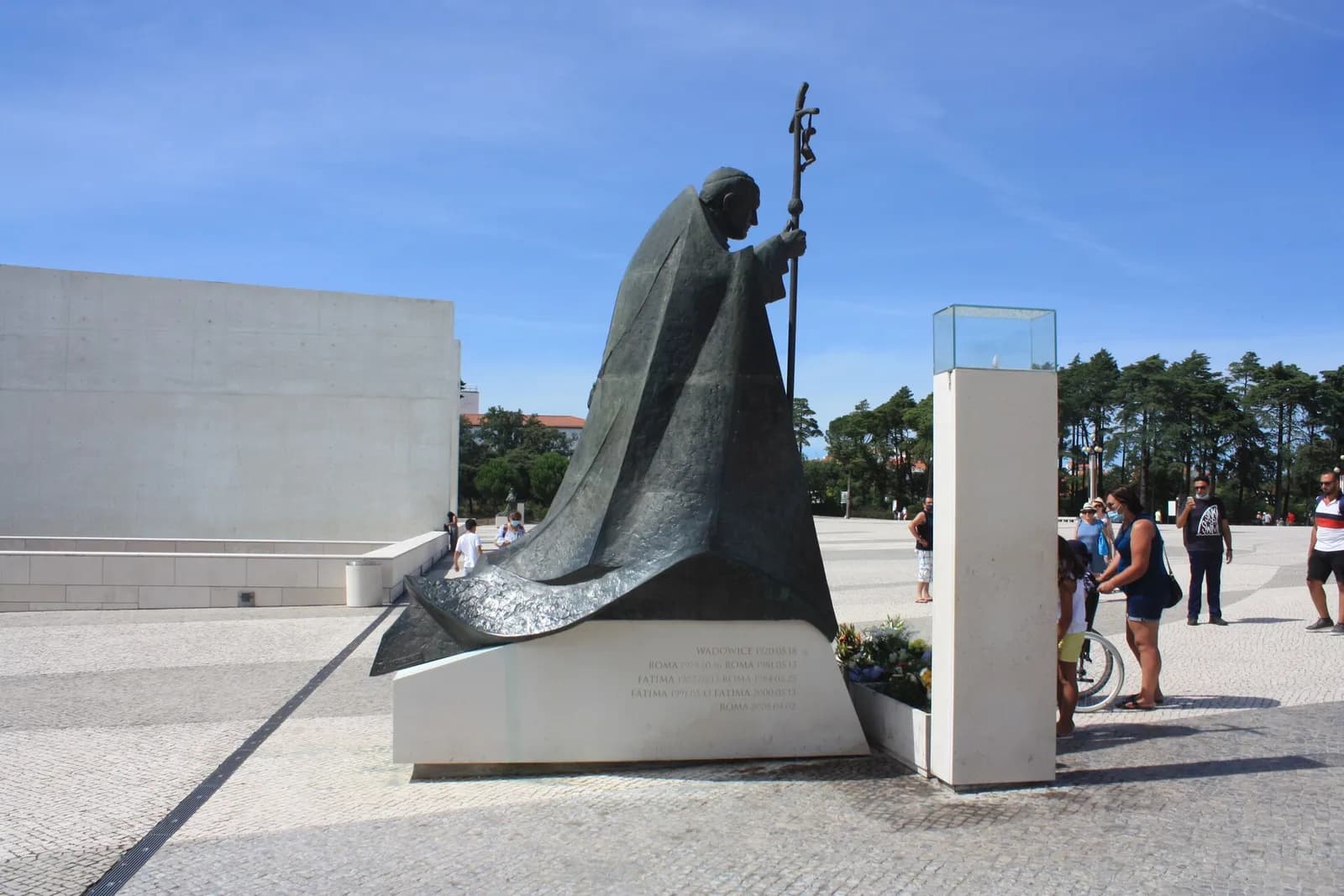
The Santuário still carries marks of John Paul II: the porch of the Chapel of the Apparitions opened for his 1982 visit, the bullet in the crown and a square named after him. The night on the steps is less remembered. Krohn told investigators he alone was responsible. He came from the Catholic far right and saw a communist agent in a Pope admired across the West as an enemy of communism, and he struck at a shrine whose message had long been read as a prophecy against communism.
FAQs
Was John Paul II wounded in the attack at Fátima in 1982?
The Vatican said at the time that he was not touched. In 2008 his former secretary, Cardinal Stanisław Dziwisz, said in the film Testimony that the blade had cut him and that there was blood when they got back to his room. The attacker, Juan Fernández Krohn, denies wounding him.
Who was Juan Fernández Krohn?
A Spanish priest ordained in 1978 by Archbishop Marcel Lefebvre of the traditionalist Society of St Pius X, which expelled him in 1979. He believed John Paul II was a communist infiltrator and an Antichrist, and on 12 May 1982 he tried to kill him at Fátima. He later left the priesthood and settled in Belgium.
What sentence did Krohn receive in Portugal?
On 2 May 1983 the court sentenced him to six years and six months for attempted aggravated homicide and use of a prohibited weapon, and three more months for insulting the judges, seven years in all. He was paroled in November 1985 after about three and a half years in custody.
Is a bullet from the 1981 shooting really in the crown of Our Lady of Fátima?
Yes. John Paul II gave a bullet from the 1981 shooting to the Bishop of Leiria-Fátima in Rome in March 1984, and in 1989 it was set in the gold crown, under its globe of turquoises. Accounts differ on whether it was the bullet removed from his body or one found in his vehicle. The statue wears that crown on the great pilgrimage days.
Why did John Paul II go to Fátima in May 1982?
To give thanks for surviving the shooting in St Peter's Square on 13 May 1981, which fell on the anniversary of the first Fátima apparition. He said he saw in the coincidence a special motherly protection of Our Lady and a call to come to the sanctuary.
On the timeline
Open the timelineNearby moments from revolution and democracy (1974–1986).
Marcelo Caetano, last Prime Minister of the Estado Novo, dies of a heart attack in Rio de Janeiro aged 74, in exile in Brazil since the Carnation Revolution.
Prime Minister Francisco Sá Carneiro and Defence Minister Adelino Amaro da Costa are killed, with five others, when their Cessna crashes in Camarate seconds after taking off from Lisbon airport for an election rally in Porto. First ruled an accident, the crash has been the subject of ten parliamentary inquiries, some concluding it was a bomb — one of Portugal's most enduring political mysteries.
Death in Lisbon of Artur Paredes, aged 81. The Coimbra guitarist gave the 'guitarra de Coimbra' its own sound, distinct from the Lisbon guitar, and taught his son Carlos Paredes, who would become Portugal's most celebrated guitar virtuoso.
John Paul II attacked at Fátima
A Spanish traditionalist priest, Juan María Fernández y Krohn, lunges at Pope John Paul II with a bayonet at the Fátima shrine, where the Pope is marking the first anniversary of the 1981 Rome assassination attempt. The Pope continues the visit and Fernández y Krohn is convicted of attempted murder by a Portuguese court.
Adriano Correia de Oliveira, the Coimbra-trained singer whose ballads such as 'Trova do Vento que Passa' became anthems of resistance to the dictatorship, dies aged 40 in Avintes, Vila Nova de Gaia, the town where he grew up.
Cyclist Joaquim Agostinho dies in Lisbon, ten days after hitting a dog that ran across the sprint about 300 metres from the stage finish at Quarteira while he led the Volta ao Algarve. Twice third in the Tour de France and a stage winner on Alpe d'Huez in 1979, he is widely regarded as Portugal's greatest cyclist.
Carlos Lopes wins the Olympic marathon in Los Angeles in an Olympic record of 2:09:21, claiming Portugal's first ever Olympic gold medal at the age of 37.
Coming up in history
All long reads 14 May 191514 May 1915: the navy rising that brought down Pimenta de Castro
 15 May 1964Morais's corner: how Sporting won the Cup Winners' Cup in 1964
 16 May 1919Through the fog to Horta: the NC-4 and the first flight across the Atlantic
 17 May 1959Cristo Rei: the bishops' wartime vow that rose over the Tagus in 1959
25 sources
Archives, scholarship and reporting this article was checked against.
- 1
Discurso do Papa João Paulo II ao Bispo de Leiria na Capela das Aparições em Fátima, 12 de Maio de 1982Holy See (vatican.va)
- 2
- 3
Juan Fernández Krohn: padre que tentou matar João Paulo II em Fátima fez parte da fraternidade excomungada pelo Vaticano24notícias (Alexandra Antunes, 2 July 2026)
- 4O comunismo, o segredo de Fátima e um padre radical: a história de “Matar o Papa”, o plano para assassinar João Paulo II em PortugalObservador (João Francisco Gomes, 18 May 2024)
- 5
- 6
Places of the ApparitionsSantuário de Fátima
- 7
Pope John Paul injured in 1982 knife attack, says aideCBC News (16 October 2008)
- 8
La historia poco conocida del atentado contra San Juan Pablo II en el Santuario de FátimaACI Prensa (13 May 2020)
- 9Um olhar além das viagens papais que parecem thrillersDiário de Notícias (Dennis Redmont, 31 July 2023)
- 10“Matar o Papa”. Marcelo tinha sido recebido por João Paulo II horas antes do atentado em Fátima. E “estava lá” quando tudo aconteceuObservador (Tânia Pereirinha, 17 May 2024)
- 11
May 13th, 1981: Remembering that fateful dayVatican News (Alessandro Gisotti, 13 May 2021)
- 12
- 13
- 14
- 15
- 16
- 17
- 18
- 19
JPII injured in 1982 by knife-wielding priest, new documentary disclosesCatholic News Agency (16 October 2008)
- 20
- 21
Onde está o autor do atentado no santuário de FátimaSábado (29 October 2020)
- 22Bala e anel de ouro foram as maiores prendasCorreio da Manhã (23 April 2011)
- 23Bala que feriu João Paulo II é a mais valiosa joia na coroa de FátimaObservador / Agência Lusa (8 March 2022)
- 24
- 25
Image credits
- The Basilica of Our Lady of the Rosary at the head of the prayer square in Fátima, in August 2020. Juan Fernández Krohn was overpowered on its steps on the night of 12 May 1982. Reis Quarteu, CC BY-SA 4.0, via Wikimedia Commons.
- The Fiat Campagnola in which John Paul II was riding when Mehmet Ali Ağca shot him on 13 May 1981, now in the Vatican's carriage museum. Jebulon, CC0, via Wikimedia Commons.
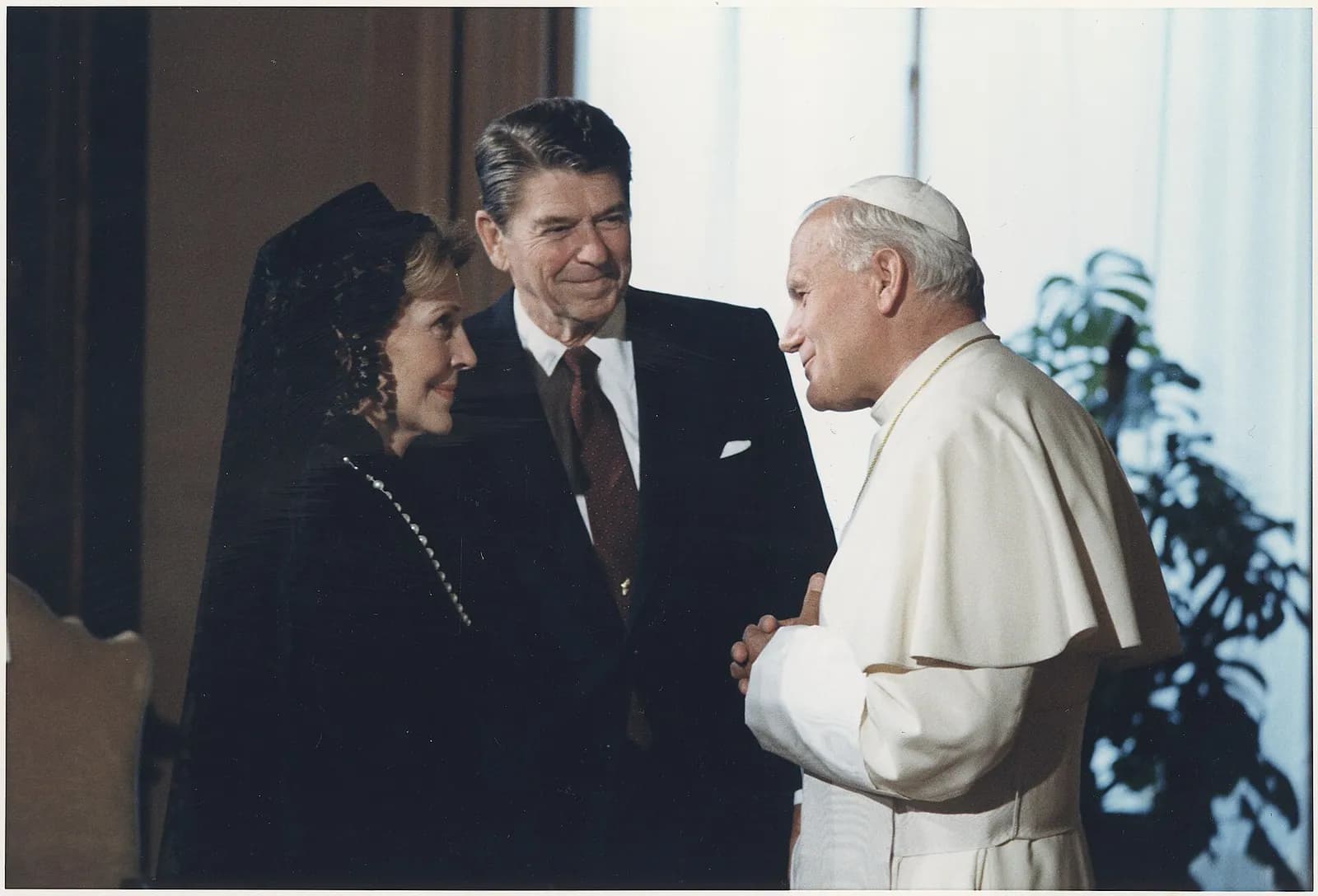
- John Paul II receives Ronald and Nancy Reagan at the Vatican on 7 June 1982, less than four weeks after the night at Fátima. White House Photographic Office, Public domain, via Wikimedia Commons.
- The precious crown of Our Lady of Fátima, filmed by Vatican television on 12 May 2017. The bullet given by John Paul II is the small grey object set beneath the globe of turquoises. Centro Televisivo Vaticano, CC BY 3.0, via Wikimedia Commons.
- The statue of John Paul II in the square named after him at the Santuário de Fátima, beside the Basilica of the Most Holy Trinity, in August 2020. Reis Quarteu, CC BY-SA 4.0, via Wikimedia Commons.