

Morais's corner: how Sporting won the Cup Winners' Cup in 1964
Twelve matches, a 16–1 that is still a European record and a 5–0 against Manchester United took Sporting to Belgium. A replay in Antwerp was settled by a defender's corner kick.
At a glance
- On Friday 15 May 1964 Sporting Clube de Portugal beat MTK Budapest 1–0 at the Bosuil stadium in Antwerp to win the European Cup Winners' Cup, a competition for the winners of national cups.
- The only goal came after 19 or 20 minutes, depending on the record, when the defender João Morais scored straight from a corner kick. Portuguese fans still call it the “cantinho do Morais”, Morais's little corner.
- The replay was needed because the final in Brussels two days earlier had ended 3–3 after extra time, in front of only 3,000 to 3,200 people.
- On the way Sporting beat APOEL of Nicosia 16–1, still described as the biggest win in UEFA club competition, and overturned a 4–1 defeat at Manchester United with a 5–0 win in Lisbon.
- The run took twelve matches and two coaches: Gentil Cardoso started it, and the architect Anselmo Fernández, who had worked on Sporting's stadium, finished it. It is still the club's only European trophy in football.
A corner kick at the Bosuil
The kick-off at the Bosuil stadium in Deurne, on the edge of Antwerp, was at 7.30 in the evening of Friday 15 May 1964. Sporting Clube de Portugal and MTK of Budapest were playing the final of the European Cup Winners' Cup for the second time in three days. In Brussels on the Wednesday they had drawn 3–3 after extra time, and the rules of the day said the final had to be replayed.
Some twenty minutes in, Sporting won a corner. João Morais, a 29-year-old defender who had played left-back in Brussels, turned to the bench to check that he should take it. The coach nodded. Morais put the ball down by the flag and, as he told it later, spoke to it and kissed it. In another telling he gave it two kisses, and in it went.
“As soon as I felt my foot strike it, I had the feeling it would be a goal. It was as if time stood still. I watched the flight of the ball, saw Figueiredo running to the near post and the goalkeeper behind him to cut out a possible header, but fate had been decided. The ball went over both of them and went in by the far post.”
Nobody scored again. When the Belgian referee, Gérard Versyp, blew the final whistle, Sporting's supporters ran onto the pitch. Pedro Gomes said sixty years later that the players were “swallowed up” by the crowd, and that he left the field in his underpants after giving his shirt to the first fan he met.
Portugal, Benfica's shadow and a cup for cup winners
Portugal in 1963 was a dictatorship, the Estado Novo (New State) of António de Oliveira Salazar. Its army was fighting independence movements in Angola, and from January 1963 in Guinea. The regime tried to put football's heroes to its own use, as the historian Nuno Domingos has shown in the case of Eusébio.
In Europe, Portugal's club successes had so far belonged to Benfica, Sporting's neighbour and rival in Lisbon. Benfica won the European Cup, the competition for national champions, in 1961 and 1962, and reached the final again in 1963. Sporting had played in the very first European Cup in 1955, by invitation, and gone out to Partizan Belgrade in the first round. The story of Benfica's second title is told in our article on the Amsterdam final of 1962.
Sporting qualified by winning the Portuguese Cup. In the final in Lisbon on 30 June 1963 they beat Vitória de Guimarães 4–0, with a goal from Mascarenhas, a forward born in Angola who had come to Sporting from Barreirense.
At home the 1963–64 season went badly. Benfica won the league with 103 goals in 26 games, and Sporting finished third, behind FC Porto. The coach was a Brazilian, Gentil Cardoso, known at home as the “philosopher-coach”; A Bola credits him with first calling football “a little box of surprises”. Hilário, the first-choice left-back, was born in the Mafalala district of Lourenço Marques (now Maputo) in Mozambique, the same neighbourhood as Eusébio.
From Bergamo to sixteen goals
Sporting had looked abroad for stars in the summer of 1963. A Bola recalled that attempts to sign Pelé and Garrincha came to nothing; the club's football manager, António Abrantes Mendes, brought a forward called Bé from Brazil instead. Gentil Cardoso nearly dropped his goalkeeper, Joaquim Carvalho, after Sporting conceded six goals to Athletic Bilbao at a tournament in Santander, just before the trip to Bergamo. Some of the players, among them the captain, Hilário, talked him out of it.
The run nearly ended at once. Atalanta beat Sporting 2–0 in Bergamo. Sporting won the return 3–1 at the Estádio José Alvalade, their home since 1956, and the tie went to a play-off at the Sarrià, Espanyol's ground in Barcelona. It was 1–1 after ninety minutes; Lúcio and Mascarenhas scored in extra time. Each Sporting player had been promised a bonus of 20 contos, 20,000 escudos, for getting past the Italians; A Bola reckons that was about five months' wages.
The return in Lisbon had turned on an injury. After eight minutes Atalanta's goalkeeper, Pizzaballa, broke his left arm in a collision with Figueiredo, who knocked in the rebound. Substitutes were not yet allowed, so the centre-forward, Calvanese, went in goal for the rest of the match. Atalanta equalised, and Mascarenhas and Bé scored in the second half.
News of the Vajont dam disaster in northern Italy, which killed some 2,000 people that night, reached Alvalade at the end of the game. Before the play-off in Barcelona, Sporting's masseur, Manuel Marques, collected about 2,500 escudos from the players and coaches and asked Atalanta's president to pass it on to the victims.
The second round brought APOEL of Nicosia, who had just beaten Gjøvik-Lyn of Norway 7–0 on aggregate. Both legs were played at Alvalade; according to Portugoal, APOEL accepted Sporting's offer to pay their expenses for a week in Portugal. On 13 November 1963, with the English referee Jim Finney in charge, Sporting won 16–1.
- Match
- Sporting 16–1 APOEL, second round, first leg
- Date and place
- 13 November 1963, Estádio José Alvalade, Lisbon
- Sporting scorers
- Mascarenhas 6, Ernesto Figueiredo 3, Ferreira Pinto 2, Augusto Martins 2, Mário Lino, Louro and Pérides 1 each
- APOEL scorer
- Solis Andreou
- Sporting coach
- Gentil Cardoso
- Second leg
- Sporting 2–0, also in Lisbon; 18–1 on aggregate
Mascarenhas's six goals were, in UEFA's words when he died in 2015, “a record for a UEFA club competition game”. He remembered scoring “in every way possible: with my right foot, my left foot and with my head”. UEFA called the fifteen-goal margin the widest in the competition's history. A Bola, marking the anniversary in 2025, called it the biggest win ever in UEFA's competitions and noted that nobody had matched it since.
Four goals down to Manchester United
In the quarter-final Sporting drew Manchester United, with Bobby Charlton, Denis Law and a young George Best. At Old Trafford Law scored a hat-trick and Charlton added another; Osvaldo Silva's goal for Sporting made it 4–1. At the Santander tournament before the first round, Gentil Cardoso had given Osvaldo a dressing-down after a defeat by Lazio; A Bola's reporter found him in tears, and he started the first match in Bergamo on the bench. The return leg against United would be his night.
Sporting changed coach between the legs. Gentil Cardoso was suspended, and the team passed to Anselmo Fernández, born in Lisbon in 1918 to Spanish parents from Zamora. He had played for the club as a young man, trained as an architect and helped design the Estádio José Alvalade; Record adds the Hotel Tivoli and the Lisbon faculties of Letters and Law to his buildings. He refused to be paid, for the stadium or for coaching, and he was known for showing his players films of their opponents.
On 18 March 1964, at Alvalade, United nearly scored at once: Hilário remembered Denis Law hitting the post within 30 seconds. Instead Osvaldo Silva scored after three minutes, from a penalty, and again after twelve. Géo, Morais and Osvaldo added three more early in the second half, and Sporting won 5–0 and went through 6–4 on aggregate. According to RTP's archive, Matt Busby, United's manager, said afterwards that Sporting would win the cup.
“We put five past Manchester United, who were the best team in the world. Whoever beat them had to win the Cup Winners' Cup.”
Three games against Lyon, and a broken leg
The semi-final against Olympique Lyonnais also took three matches. It finished 0–0 in Lyon and 1–1 in Lisbon. UEFA's review points out that under the away-goals rule, which did not yet exist, Sporting would have gone out. Instead the clubs met again in Madrid, and Sporting won 1–0.
Their opponents in the final had an even narrower road. MTK of Budapest became the first side from eastern Europe to reach the final. They beat Slavia Sofia and Motor Zwickau by a goal on aggregate, needed a play-off in Rome to get past Fenerbahçe, and then lost 3–0 to Celtic in Glasgow before winning 4–0 at home.
Sporting lost a key player days before the final. Their league match against Vitória de Setúbal was brought forward to make room for the trip to Belgium, and Hilário broke his leg in a collision. The club's own account says it was a double fracture of the tibia and fibula, five days before the final, and that “fate summoned Morais”.
| Round | Opponent | Where | Score |
|---|---|---|---|
| First round, first leg | Atalanta (Italy) | Bergamo | 0–2 |
| First round, second leg | Atalanta | Alvalade, Lisbon | 3–1 |
| First round, play-off | Atalanta | Sarrià, Barcelona | 3–1 after extra time |
| Second round, first leg | APOEL (Cyprus) | Alvalade, Lisbon | 16–1 |
| Second round, second leg | APOEL | Alvalade, Lisbon | 2–0 |
| Quarter-final, first leg | Manchester United (England) | Old Trafford, Manchester | 1–4 |
| Quarter-final, second leg | Manchester United | Alvalade, Lisbon | 5–0 |
| Semi-final, first leg | Olympique Lyonnais (France) | Lyon | 0–0 |
| Semi-final, second leg | Olympique Lyonnais | Alvalade, Lisbon | 1–1 |
| Semi-final, play-off | Olympique Lyonnais | Madrid | 1–0 |
| Final | MTK (Hungary) | Heysel, Brussels | 3–3 after extra time |
| Final replay | MTK | Bosuil, Antwerp | 1–0 |
Scores from RSSSF; venues from RSSSF, A Bola, Lusa and UEFA. APOEL's home leg was also played in Lisbon.
Sporting's goals for and against, round by round
goals
- Scored
- Conceded
Totals for each tie, including play-offs and the final replay: 36 goals scored and 13 conceded in twelve matches. Eighteen of the 36 came against APOEL.
Show the data
| Scored | Conceded | |
|---|---|---|
| Atalanta | 6 | 4 |
| APOEL | 18 | 1 |
| Man. United | 6 | 4 |
| Lyon | 2 | 1 |
| MTK (final) | 4 | 3 |
Two finals in three days
The final was played on Wednesday 13 May at the Heysel stadium in Brussels, and hardly anyone came. UEFA's match table gives a crowd of 3,208; RSSSF rounds it to 3,000. Without Hilário, Morais played at left-back, and Bé, a forward the club had brought from Brazil, was in the attack.
It was a wild game. Károly Sándor put MTK ahead, Mascarenhas equalised before half-time and Ernesto Figueiredo scored early in the second half. MTK then scored twice in a few minutes, through István Kuti and Sándor again, before Figueiredo made it 3–3 with about ten minutes left. Extra time brought no goals.
19'
Sándor
MTK lead 1–0
40'
Mascarenhas
1–1
48'
Figueiredo
Sporting lead 2–1
70'
Kuti
2–2
72'
Sándor
MTK lead 3–2
81'
Figueiredo
3–3, the final score after extra time
The minutes above are UEFA's. RSSSF gives slightly different times (45, 73, 75 and 80 for the last four goals), which would mean Sporting led 2–1 at half-time rather than 1–1.
There were no penalty shoot-outs yet, so the teams went to Antwerp for a replay 48 hours later. Sporting made one change. Bé was injured, José Pérides came into the side and Morais moved forward to the left wing. Figures for the Antwerp crowd vary: UEFA's table gives 13,924 and its text about 14,000, RSSSF has 19,000 and Portugoal about 15,000.
The replay was tighter. Pedro Gomes summed up the team's plan as “defend well and attack better”, and chances were rare at both ends. After the corner, Sporting held on for seventy minutes. Morais insisted afterwards that it had not been a lucky goal: he had scored a few more the same way in his career. Portugoal's account adds that he had asked Anselmo Fernández to let him take the corners, because he had noticed where the Hungarian goalkeeper, Ferenc Kovalik, stood.
- Match
- Cup Winners' Cup final replay, Sporting 1–0 MTK
- Date
- Friday 15 May 1964, 7.30 pm
- Ground
- Bosuil, Deurne, Antwerp (Belgium)
- Goal
- João Morais, direct from a corner, 19th or 20th minute
- Referee
- Gérard Versyp (Belgium)
- Crowd
- 13,924 to 19,000, depending on the source
- Coaches
- Anselmo Fernández (Sporting), Béla Volentik (MTK)
| Player | Note |
|---|---|
| Joaquim Carvalho | Goalkeeper, from Barreiro; at Sporting from 1958 |
| Pedro Gomes | Gave his shirt to a fan after the replay |
| Alexandre Baptista | Central defender |
| José Carlos | Defender |
| José Pérides | Came in for the replay |
| Fernando Mendes | Captain |
| Osvaldo Silva | Hat-trick against Manchester United |
| Mascarenhas | 11 goals in the competition, six of them against APOEL |
| Ernesto Figueiredo | Two goals in Brussels |
| Géo | Scored in the 5–0 against Manchester United |
| João Morais | A defender, moved to the left wing; scored the winner |
Line-up as listed in UEFA's match table. Coach: Anselmo Fernández. Hilário, the regular left-back, missed both finals with a broken leg.
Back in Lisbon
The team flew home with the cup. José Pérides, interviewed for the club's sixtieth-anniversary documentary, said the welcome at the airport was beyond measure, and that he had never seen anything like it since. Pedro Gomes remembered driving to the Sé, Lisbon's cathedral, in an endless line of cars, all sounding their horns, with thousands of people waiting.
The players had not forgotten Hilário. As he told Record in 2003, his team-mates brought the trophy to him as soon as they landed, followed by a procession of some 10,000 people, and he had to go to the window to thank them.
Anselmo Fernández did not stay long. He left Alvalade soon afterwards, at odds with a club director who interfered in picking the team, and later coached CUF before a road accident ended his career. He died in Madrid in January 2000, aged 81.
Several of the players went on to the 1966 World Cup in England, where Portugal finished third. The goalkeeper Joaquim Carvalho started the first match, against Hungary. Morais, who won ten caps, played at right-back, and Alexandre Baptista and Hilário were in the squad.
Why Sporting fans still talk about it
Sporting have not won a European trophy in football since. In May 2005 UEFA noted that the club had been waiting 41 years for a second one, on the eve of a UEFA Cup final against CSKA Moscow at Sporting's own stadium. Sporting lost it. In 2024 A Bola still called 1964 the club's only European title in football.
The goal outlived its scorer. Morais was born in Cascais, played for Caldas and Torreense, joined Sporting in 1958 and stayed until 1969. He later settled in Vila do Conde, worked for the town council and died on 27 April 2010, aged 75. UEFA's obituary remembered him above all for the corner.
The club keeps returning to that week. For the sixtieth anniversary it released a documentary with Pérides, Hilário and Mário Lino, and it has issued a commemorative shirt. Mário Casquilho, a former director of the club's museum, said in the documentary that “we always had hope in Morais”, because he was “an expert taker of corners” (translated from Portuguese).
FAQs
Who scored Sporting's winning goal in the 1964 Cup Winners' Cup final?
João Morais, a defender, scored straight from a corner kick after 19 or 20 minutes of the replay against MTK Budapest in Antwerp on 15 May 1964. Sporting won 1–0. The goal is known in Portugal as the “cantinho do Morais”.
Why was the 1964 Cup Winners' Cup final replayed?
The first match, at the Heysel stadium in Brussels on 13 May 1964, ended 3–3 after extra time. Penalty shoot-outs did not yet exist, so the final was replayed two days later at the Bosuil in Antwerp.
Is Sporting's 16–1 against APOEL still a record?
Yes. Sporting beat APOEL of Nicosia 16–1 in Lisbon on 13 November 1963, and the fifteen-goal margin is still the largest in a UEFA club competition match. Mascarenhas scored six of the goals.
Who coached Sporting when they won the Cup Winners' Cup?
Two men. The Brazilian Gentil Cardoso led the team until the quarter-final against Manchester United, when he was suspended. Anselmo Fernández, an architect who had worked on the design of the Estádio José Alvalade, took over between the two legs and coached the team in the final, unpaid.
Has Sporting won any other European trophy?
Not in football. The 1964 Cup Winners' Cup is the club's only European football trophy. Sporting reached the UEFA Cup final in 2005, at their own stadium, and lost to CSKA Moscow.
On the timeline
Open the timelineNearby moments from dictatorship and the estado novo (1926–1974).
Benfica retain the European Cup, beating Real Madrid 5–3 in the final at Amsterdam's Olympic Stadium. Despite a Puskás hat-trick for the five-time champions, two goals from the 20-year-old Eusébio seal Benfica's second consecutive title.
Before dawn, PAIGC guerrillas fire on the Portuguese barracks at Tite, in Portuguese Guinea. The PAIGC and Portuguese military historians date the war from that night, though there had been smaller clashes in 1961 and 1962.
Birth in Beira, Mozambique, of José Rodrigues dos Santos, who became one of Portugal's best-known television journalists as an RTP news anchor and, alongside it, one of the country's best-selling novelists.
Sporting's Cup Winners' Cup, 1964
Sporting CP win the European Cup Winners' Cup, beating MTK Budapest 1–0 in a replay in Antwerp after a 3–3 draw in Brussels two days earlier. The winner is João Morais's celebrated goal scored direct from a corner.
Death in Lisbon, aged 70, of Marshal Francisco Craveiro Lopes, President of the Republic from 1951 to 1958. His cool relations with Salazar and his sympathy for opponents of the regime cost him a second term, and he was later linked to the failed Botelho Moniz coup attempt of April 1961.
FRELIMO guerrillas attack the Portuguese administrative post at Chai in Cabo Delgado province, launching the Mozambican War of Independence. The conflict lasted a decade, ending only after the Carnation Revolution opened the way to Mozambican independence.
Fire guts the Teatro Nacional D. Maria II on Lisbon's Rossio in the early hours, sparing little more than the outer walls, entrance hall and Salão Nobre; Columbano Bordalo Pinheiro's painted ceiling and the company's wardrobe are lost. Superstition blames 'Macbeth', performed there that evening. Rebuilt behind its neoclassical façade, the national theatre only reopened in 1978.
Coming up in history
All long reads 17 May 1959Cristo Rei: the bishops' wartime vow that rose over the Tagus in 1959
 18 May 1881Carvalho Araújo: the deputy who took a trawler against a U-boat
 19 May 1954Catarina Eufémia, the harvest worker shot at Baleizão in 1954
 20 May 1498Vasco da Gama reaches Calicut: the first fleet from Europe to India
30 sources
Archives, scholarship and reporting this article was checked against.
- 1
1963/64: Sporting at the second attemptUEFA.com
- 2
European Competitions 1963-64RSSSF (Rec.Sport.Soccer Statistics Foundation)
- 3
Há 62 anos o Sporting ganhou 16-1 na Europa e nunca mais ninguém o fezA Bola, 13 November 2025
- 4
- 5
Morreu Anselmo Fernandez, o arquitecto da Taça das TaçasRecord, 21 January 2000
- 6
- 7
Sporting replica reviravolta europeia de há 60 anos com nova 'manita' (Lusa)Notícias ao Minuto, 17 March 2026
- 8
- 9
UEFA Cup Winners' Cup conquest revisited: Cantinho de Morais propels Sporting to European glory vs MTK Budapest in 1964Portugoal
- 10O cantinho do Morais (Rui Alves)RTP Memória
- 11
The death of a football player. Eusébio and the struggle for Portuguese HistoryNuno Domingos, Práticas da História, n.º 8 (2019), 163–197
- 12
Guiné-Bissau: a causa do nacionalismo e a fundação do PAIGC (António E. Duarte Silva)Cadernos de Estudos Africanos 9/10 (2006), ISCTE-IUL
- 13
- 14Liga dos Campeões: João Martins, o corticeiro alentejano que marcou o primeiro golo da prova em 1955Observador, 3 June 2017
- 15
European Champions' Cup 1955-56: detailsRSSSF
- 16
- 17Sporting esmaga Manchester (Rui Alves)RTP Memória
- 18
- 19
- 20
- 21
- 22
- 23
José Travassos, futebolista, 1926-2002 (Rua José Travassos)Câmara Municipal de Lisboa, Comissão Municipal de Toponímia (text by Isménia Neves), March 2015
- 24
- 25
Sporting lança equipamento em homenagem à conquista da Taça das TaçasSoccerway (Portugal)
- 26Morreu Joaquim Carvalho, guarda-redes do Sporting na final da Taça das Taças e da seleção no Mundial 1966Observador, 5 April 2022
- 27
- 28
- 29
- 30
Little to Luz (Phil Town)When Saturday Comes, issue 195, May 2003
Image credits
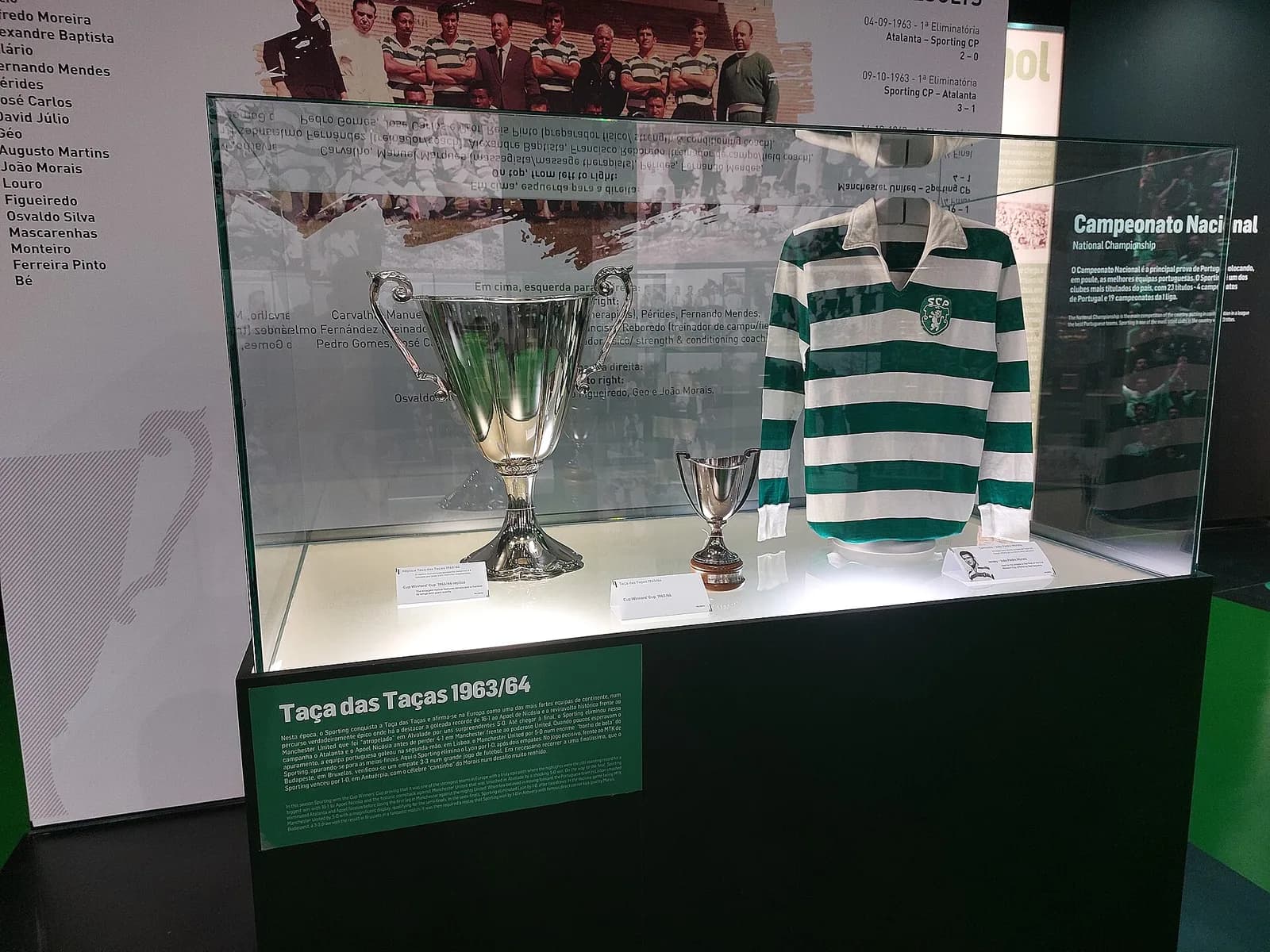
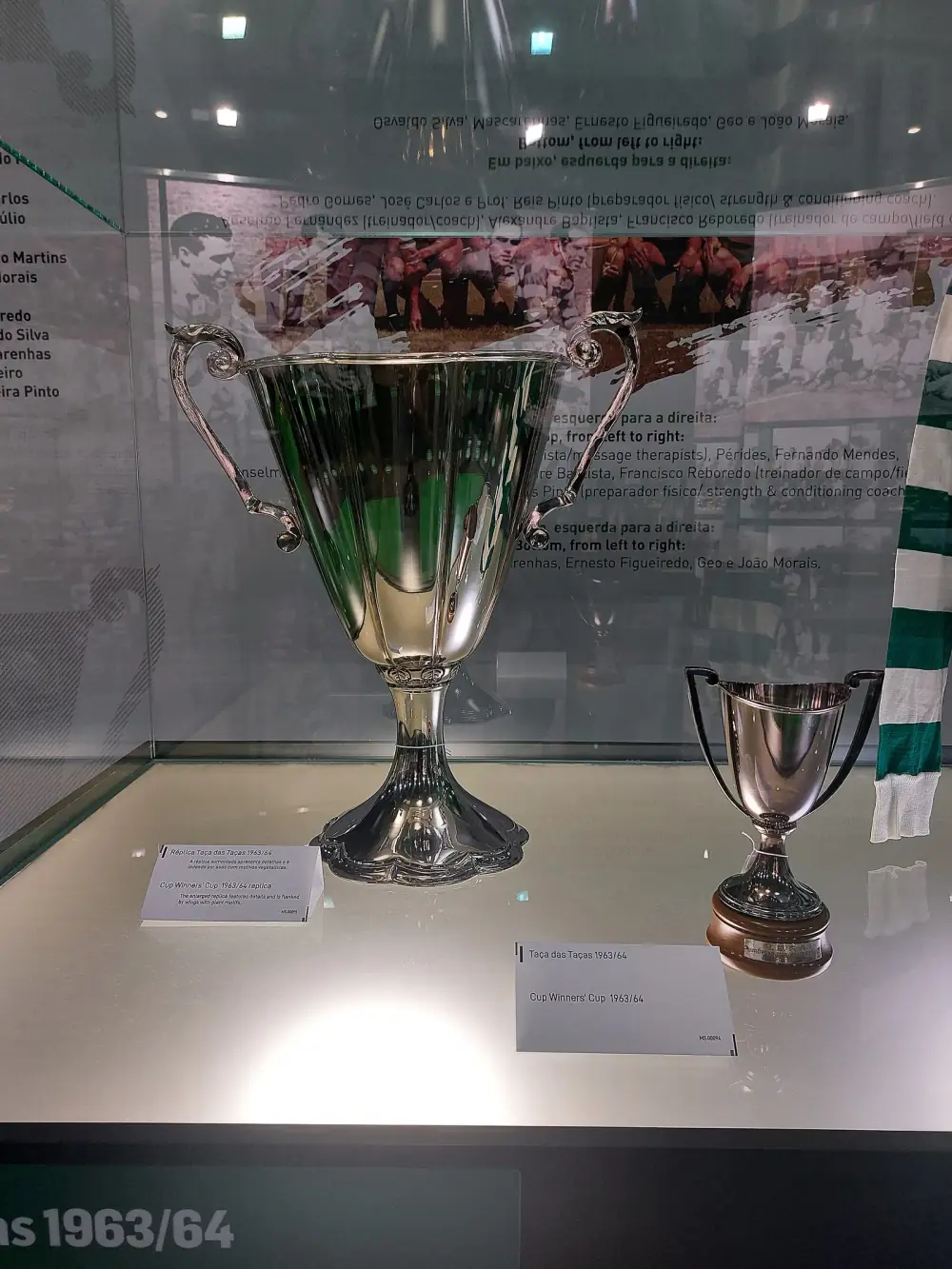
- The 1963–64 Cup Winners' Cup display in Sporting's museum at the Estádio José Alvalade, photographed in 2023: an enlarged replica of the trophy, the smaller cup labelled as the 1963–64 trophy, and a hooped shirt of the period. Threeohsix, CC BY-SA 4.0, via Wikimedia Commons.
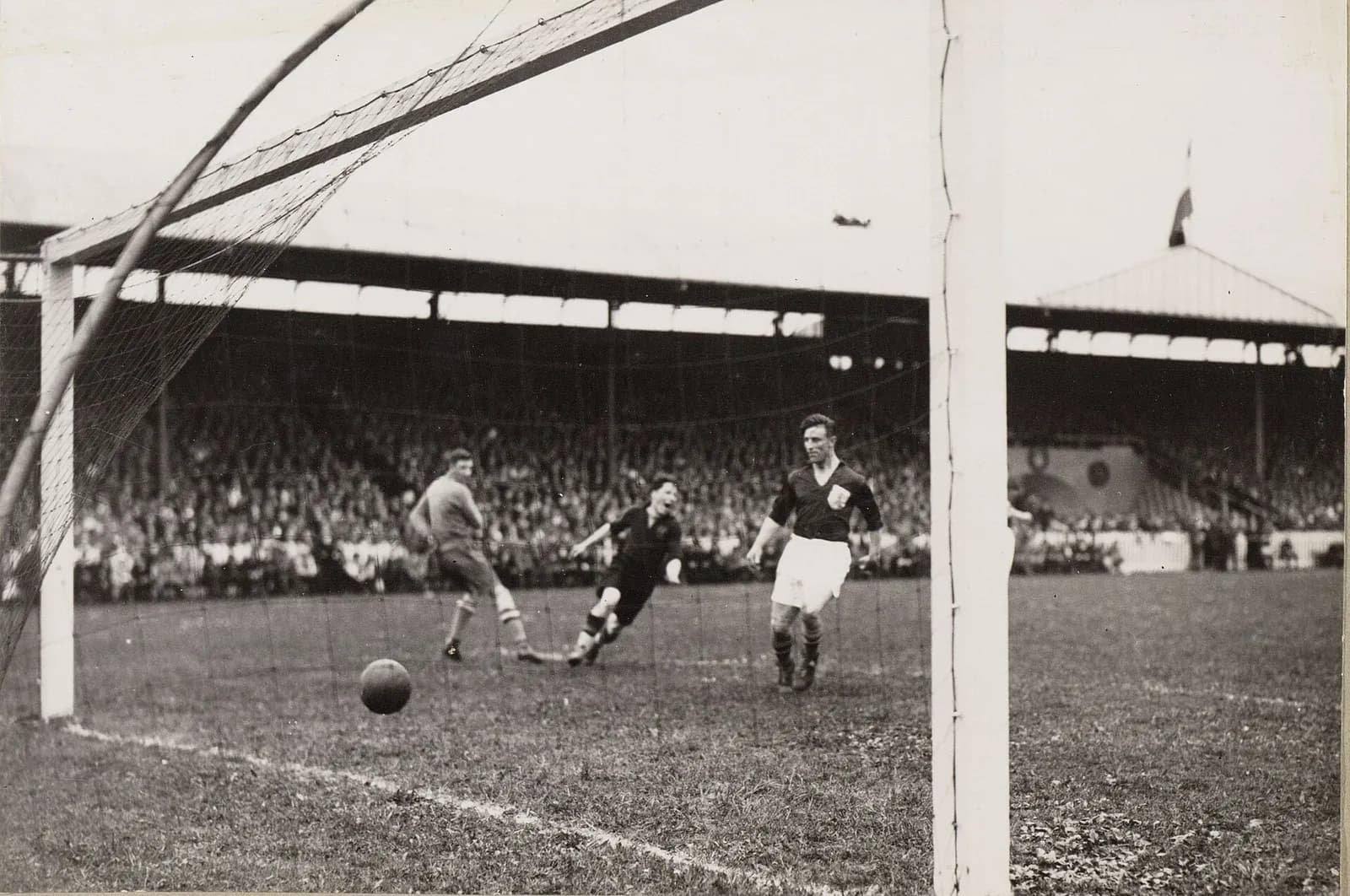
- The Bosuil in Antwerp in its early years: Belgium score against the Netherlands there on 3 May 1931. Sporting won the 1964 replay at the same ground. Nationaal Archief, Den Haag, Rijksfotoarchief: KNVB Fotocollectie, Fotograaf Onbekend, nummer toegang 2.19.123, inventarisnummer 3928, CC BY 3.0, via Wikimedia Commons.
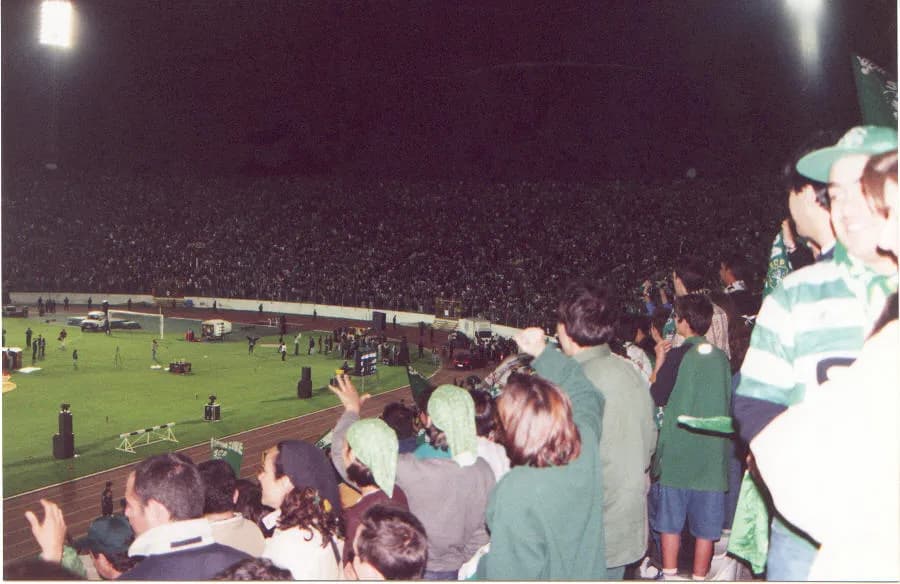
- The old Estádio José Alvalade, opened in 1956, full of Sporting supporters on a night in its later years (the photograph was published in 2006). Sporting played the 16–1 against APOEL and the 5–0 against Manchester United here. Sacavem, Public domain, via Wikimedia Commons.
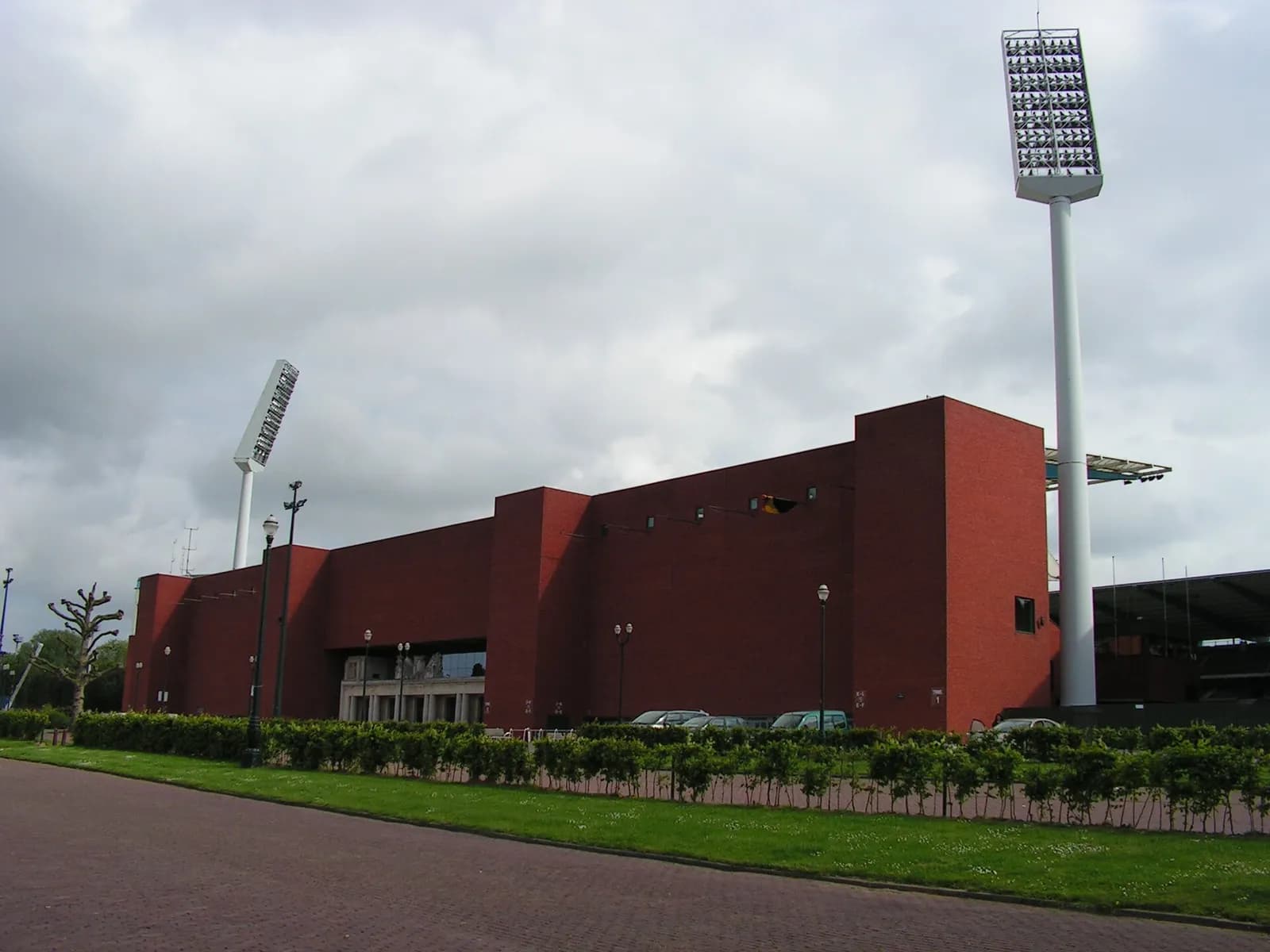
- The stadium at Heysel, Brussels, where the first final was played, photographed in 2005. It had been rebuilt in the 1990s and renamed the King Baudouin Stadium. Snowdog, Public domain, via Wikimedia Commons.
- In Sporting's museum, the small cup labelled as the 1963–64 Cup Winners' Cup (right) beside the enlarged replica made for the club (left), photographed in 2023. Threeohsix, CC BY-SA 4.0, via Wikimedia Commons.