

Carvalho Araújo: the deputy who took a trawler against a U-boat
José Botelho de Carvalho Araújo was a naval officer, a republican deputy and a colonial governor. He is remembered for nearly two hours off the Azores in October 1918, when he turned a converted fishing trawler towards the most successful U-boat commander of the war so that a crowded passenger steamer could get away.
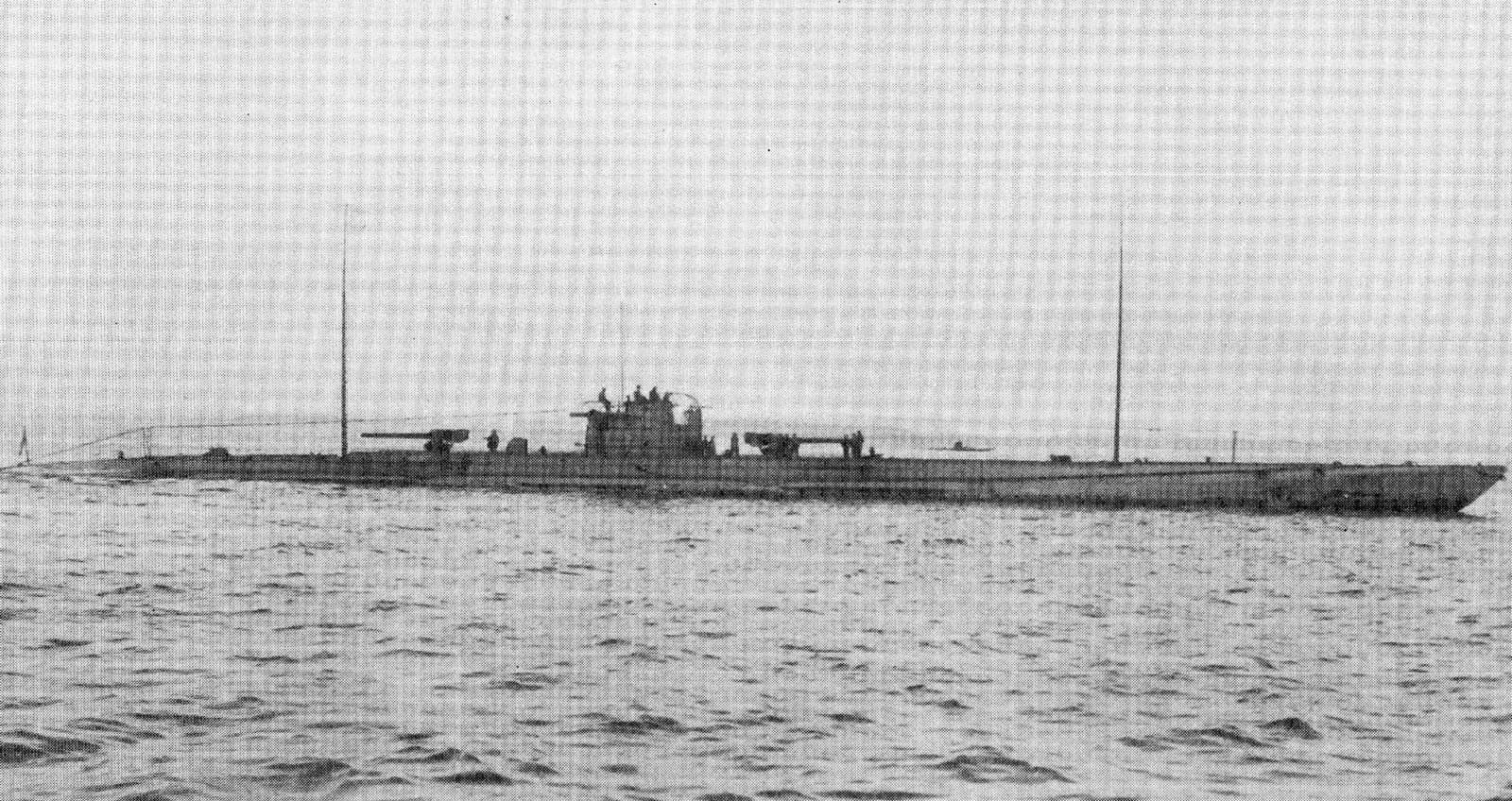
At a glance
- José Botelho de Carvalho Araújo was born in Porto on 18 May 1881 and grew up in Vila Real; two Navy publications give the year as 1880.
- A republican naval officer, he sat in the Constituent Assembly of 1911 for Vila Real and governed the district of Inhambane, in Mozambique, until June 1918.
- On 14 October 1918 he commanded the Augusto de Castilho, a converted fishing trawler with a 65 mm and a 47 mm gun, escorting the steamer São Miguel from Funchal to Ponta Delgada with 206 passengers.
- Attacked by U-139, which had two 150 mm guns, he fought for nearly two hours while the steamer escaped. He and five or six of his men were killed and the trawler was sunk.
- Parliament raised his widow's pension in 1920, the Navy gave his name to a ship, and by a 2018 parliamentary count 45 localities in 34 municipalities had named streets or places after him.
Dawn, two hundred miles from São Miguel
Around six in the morning of 14 October 1918, the passenger steamer São Miguel was on her way from Funchal, in Madeira, to Ponta Delgada, in the Azores. She carried 206 passengers and 54 crew. At about 35°35'N 22°10'W a submarine of enormous size, as the survivors described it, surfaced and opened fire.
The steamer's escort was the Augusto de Castilho, a deep-sea fishing trawler that the Navy had requisitioned in 1916 and armed with two small guns. Her commander, First Lieutenant José Botelho de Carvalho Araújo, had taken the watch shortly before. He opened fire with the 47 mm gun on his stern and had smoke boxes thrown out to screen the liner. When they ran out, he turned towards the submarine.
The submarine was U-139, commanded by Lothar von Arnauld de la Perière, who had sunk more ships than any other submarine captain of the war. The fight lasted nearly two hours by the Navy's accounts, at least two by the Diário de Notícias's. By the end, the São Miguel was out of sight and Carvalho Araújo was dead.
From Vila Real to the Navy
Carvalho Araújo was born in the parish of São Nicolau, in central Porto, on 18 May 1881, into a family from Trás-os-Montes, the mountainous north-east. He grew up in Vila Real, the district capital, and studied there. In 1981 a deputy told Parliament that he was born in Porto only by chance and was a man of Trás-os-Montes, since he had spent his childhood and youth in Vila Real.
After preparatory courses at the Academia Politécnica in Porto he entered the Escola Naval, the officers' school, in 1899, and was made a midshipman in 1903. He served on the frigate Dom Fernando II e Glória, the cruisers Vasco da Gama, Adamastor and São Rafael and a string of gunboats, with the Indian Ocean naval division and at the naval stations of Cape Verde and Macau.
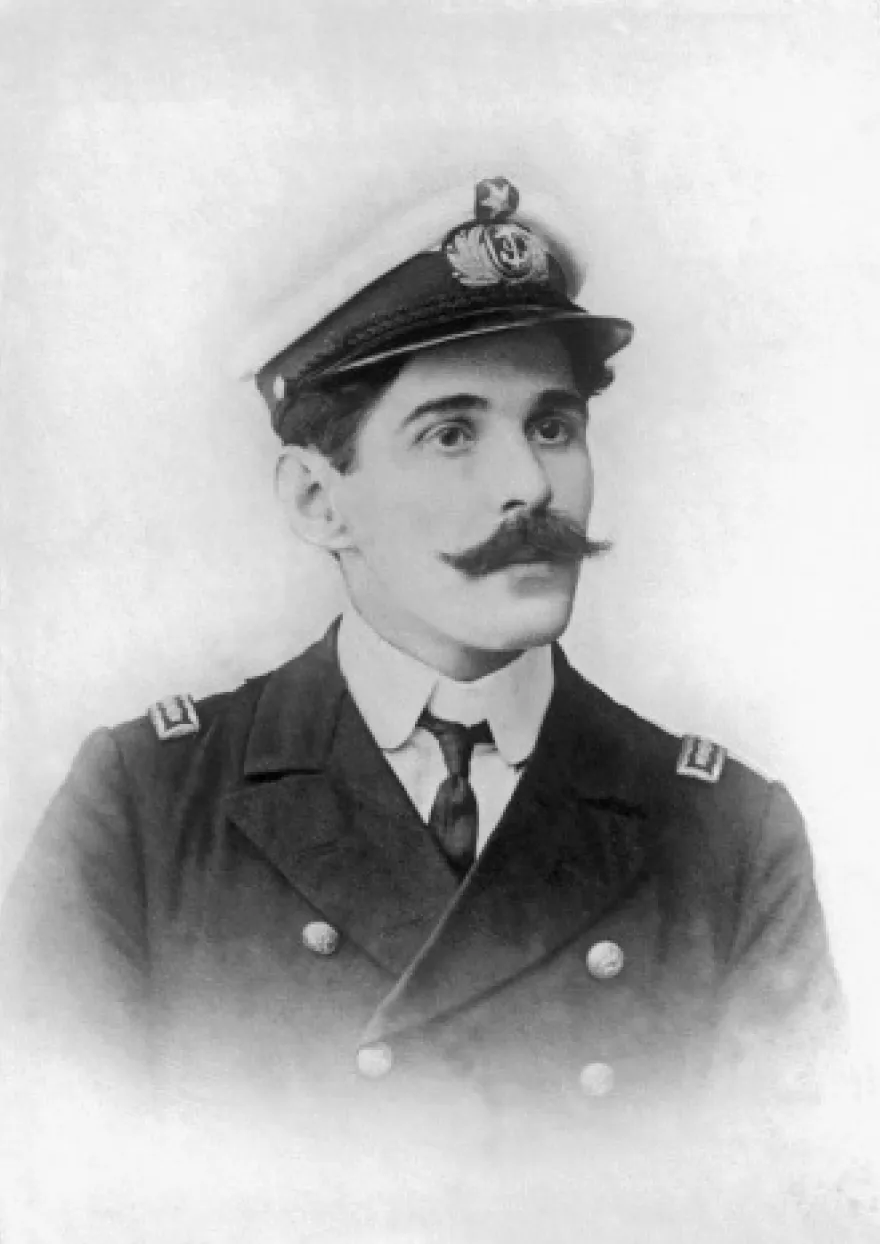
Republican, deputy and governor
He was a convinced republican. The Museu de Marinha places him close to Admiral Cândido dos Reis, who led the republicans' military committee, and says he took part in some of the key moments that led to the Republic of October 1910. When the new Republic elected a Constituent Assembly to write its constitution, he was proclaimed deputy for Vila Real on 30 June 1911.
He also wrote for newspapers: República Portuguesa, the Vilarealense, and the Notícias de Vila Real, where he was an editor. In 1915 he was elected to Congress again for the Democratic Party.
He wanted Portugal in the war. In 1914 he joined the Navy's expeditionary battalion in southern Angola and came home months later because of illness. He also commanded the minesweeper Manuel de Azevedo Gomes, and in 1916 he served on the Navy staff.
In 1917 he went back to Africa as governor of the district of Inhambane, on the coast of Mozambique, and stayed until June 1918. His report on the district's administration in 1917 was due to be reprinted for the centenary of his death. On his return he was given command of the Augusto de Castilho.
18 May 1881
Born in São Nicolau parish, Porto; grows up in Vila Real
1899
Enters the Escola Naval
1903
Made a midshipman; later serves in the Indian Ocean, Cape Verde and Macau
30 June 1911
Proclaimed deputy for Vila Real to the Constituent Assembly
1914
Serves with the Navy battalion in southern Angola; sent home ill
1915
Elected to Congress for the Democratic Party
1917 to June 1918
Governor of the district of Inhambane, Mozambique
14 October 1918
Killed in command of the Augusto de Castilho
What you need to know first: the war around the islands
Portugal had been at war with Germany since March 1916, when Germany declared war after Lisbon seized the German merchant ships sheltering in its harbours. While Portuguese troops went to Flanders, the Atlantic islands lay open to German submarines. On 3 December 1916 U-38 torpedoed three ships at anchor off Funchal, among them the French gunboat Surprise, and shelled the town. In December 1917 U-156 shelled Funchal again.
The historian Mathias Saecker argues that once the Royal Navy withdrew, Portuguese forces could not protect Madeira, partly because the budget could not pay for a proper defence. The Navy made do with what it had, including fishing trawlers: by the Museu de Marinha's count it requisitioned eleven of them.
The Augusto de Castilho was one. Built in 1909 by Cochrane & Sons at Selby, in Yorkshire, as the trawler Elite, she belonged to the Lisbon fishing company Parceria Geral de Pescarias, owned by Bensaude & Co. The Navy requisitioned her in June 1916, gave her a 65 mm gun forward and a 47 mm gun aft, and named her after Augusto de Castilho, the naval officer who, during the Brazilian navy's revolt of 1893-94, had given asylum aboard Portuguese warships to rebels in Rio de Janeiro.
She saw more of German submarines than most Portuguese ships. On 21 August 1918, under another commander and escorting the same São Miguel from Funchal to Lisbon in thick fog, she opened fire on a large submarine off Cabo Raso, near Lisbon, and claimed three hits before it disappeared. Two days later she chased another. In 20 months of naval service she escorted 22 ships and steamed 7,020 miles.
| Augusto de Castilho | U-139 | |
|---|---|---|
| Origin | Steam trawler Elite, Selby, 1909; requisitioned June 1916 | Germaniawerft, Kiel; launched 3 December 1917, commissioned 18 May 1918 |
| Size | 487 gross tons | About 92 m long; 1,930 tons surfaced |
| Guns | One 65 mm, one 47 mm | Two 150 mm, six torpedo tubes |
| Crew | 47 or 48 | 80 |
| Commander | First Lieutenant Carvalho Araújo | Kapitänleutnant Lothar von Arnauld de la Perière |
U-139 was commissioned on 18 May 1918, Carvalho Araújo's birthday. Her length is uboat.net's overall figure for the class; the Biblioteca Central de Marinha gives 335 feet (102 m).
Gun calibre on each ship
millimetres
The trawler's two guns against the submarine's two 150 mm guns, which could also outrange them. In the Senate in 1920 Rodrigues Gaspar gave the bow gun as 60 mm.
Show the data
| Calibre | |
|---|---|
| Castilho, bow gun | 65 |
| Castilho, stern gun | 47 |
| U-139, gun 1 | 150 |
| U-139, gun 2 | 150 |
Nearly two hours against U-139
U-139 was one of Germany's new submarine cruisers, with guns that a senator later compared to a good cruiser's. Arnauld de la Perière had sunk close to 200 ships, almost all of them with U-35, often using its deck gun. He took over U-139 in May 1918. Early in October, on her only patrol, she sank two steamers, damaged a British armed boarding steamer and sank the Portuguese sailing ship Rio Cavado.
The submarine's guns outranged the trawler's, and, by Senator Rodrigues Gaspar's account in 1920, it kept its distance where it could not be hit. Carvalho Araújo steered towards it anyway, to keep its fire on him while the São Miguel ran. Shells wrecked the trawler and men began to fall. Over almost two hours, according to the Navy library's account, the Portuguese fired until there was no ammunition left.
By then the engines had stopped, the telegraph was gone and the guns were damaged. With no ammunition left and the São Miguel far off, Carvalho Araújo ordered the white flag raised, Rodrigues Gaspar told the Senate, but the Germans kept firing. By the Diário de Notícias's account six men had already died when a last shot from the submarine killed the commander; the Museu de Marinha says he was hit by shell fragments. Command passed to Midshipman Manuel Armando Ferraz, his second in command, who ordered the crew to abandon ship.
“On board, beside the commander, were a student; the second in command, a midshipman with hardly any sea training; and two cadets.”
The Germans boarded the trawler, reportedly looted her, and sank her with demolition charges. The dead were still aboard. The Museu de Marinha records his last words as “I die as a Portuguese”; in the Senate in 1920 Rodrigues Gaspar put it as a saying of his, that he would die as a Portuguese.
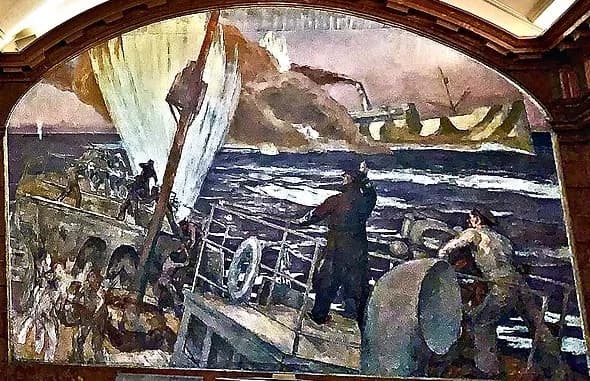
Two boats and two hundred miles
The survivors, several of them wounded, got away in the ship's lifeboat and a smaller boat, about 200 miles from São Miguel. Rodrigues Gaspar told the Senate that the Germans refused them water and even a compass, answering only “c'est la guerre”, it is war.
The lifeboat reached the island of Santa Maria after about 48 hours, by the Diário de Notícias's account, and one wounded sailor died on the way and was put over the side. The paper puts 36 men in it; a Museu de Marinha photograph of it is captioned as showing 29 survivors. The smaller boat, with 12 men, was rowed to Ponta do Arnel, on São Miguel, and landed on 20 October.
The São Miguel, meanwhile, met the gunboat Ibo about 30 miles from Ponta Delgada; alerted by radio, the Ibo had put to sea towards the fight. The steamer came into port with her passengers unharmed. Her master was the merchant officer Caetano Moniz de Vasconcelos. In 1920 the deputy Jacinto de Freitas proposed him for the Order of the Tower and Sword for keeping the islands' link with Lisbon open through the war, but a member of the naval committee asked for the bill to be withdrawn and left to the order's own council, and the Chamber agreed.
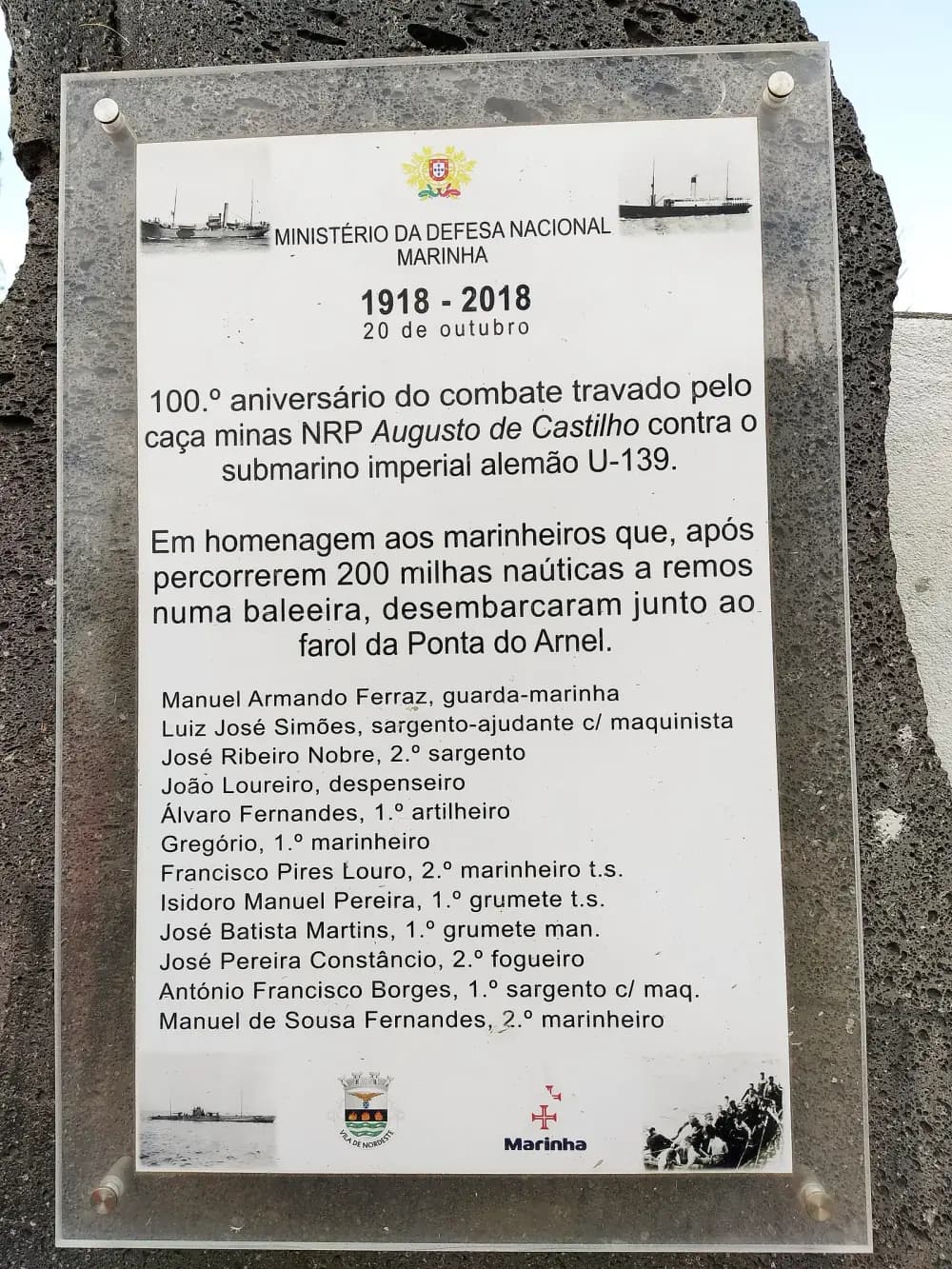
14 October, about 6 am
U-139 attacks the São Miguel and her escort at 35°35'N 22°10'W
14 October, morning
Nearly two hours of fighting; the steamer escapes
The white flag is raised but the firing goes on, and Carvalho Araújo is killed. The Germans sink the trawler with charges.
14 October
The São Miguel meets the gunboat Ibo about 30 miles from Ponta Delgada and reaches port
About 48 hours later
The lifeboat reaches Santa Maria; one wounded sailor has died
17 October
The Diário de Notícias reports the attack; part of the text is cut by the censor
20 October
Twelve men in the second boat land at Ponta do Arnel, São Miguel
Counting the dead
Sources agree on the outcome but not on the toll. The Navy names six dead, Carvalho Araújo included: Cadet Carlos Eloy da Mota Freitas, the telegraphist Elísio Martins da Nova, the seaman Manuel da Cruz Branco, the stoker Manuel Joaquim Oliveira and the coal trimmer Manuel Tomé. The Museu de Marinha counts seven, and the Revista da Armada's seven include a civilian who was travelling aboard. The Diário de Notícias counts seven killed in the fight and a sailor who died later in the lifeboat.
| Source | Killed | Wounded | Aboard |
|---|---|---|---|
| Portuguese Navy, Combates navais | 6, named, including the commander | Not given | Not given |
| Biblioteca Central de Marinha | 6, named, including the commander | 17 | 47 |
| Assembleia da República, vote of 2018 | The commander and 5 crew | Not given | Not given |
| Museu de Marinha, 2020 | The commander and 6 others | 20 | 48 |
| Revista da Armada, December 2018 | The commander, 5 servicemen and 1 civilian | Not given | Not given |
| Diário de Notícias, 2019 | 6 in the fight, then the commander; 1 more in the lifeboat | Not given | Not given |
Aftermath
News came slowly. On 17 October the Diário de Notícias ran his photograph on its front page with a confused report of two submarines with 16 cm guns, and the article ended in a blank space where the censor had cut it. Sidónio Pais, who had taken power in a coup in December 1917, was then president.
Carvalho Araújo was promoted posthumously to captain-lieutenant for distinguished conduct and given the Military Order of the Tower and Sword and the War Cross, 1st class. In June 1920 the Senate took up a bill to raise the pension already granted to his widow, which would pass to their children. Rodrigues Gaspar pointed out that there were three sons and three daughters, and moved an amendment so that the daughters would not be left without it. In August the Chamber took up a government bill, based on the second in command's report, to promote the surviving ratings.
Part of the push came from the other side. In the Senate, Rodrigues Gaspar cited the reports of U-139's commander and second officer, who wrote that they had never met such courage in an enemy. Fifty years on, a deputy in the Assembleia Nacional, the parliament of the Estado Novo dictatorship, quoted Arnauld de la Perière.
“I must confess that the attack was made with a spirit and tenacity never seen in other enemies, and that the bravery with which this ship (the weaker in artillery) threw itself at my submarine aroused my admiration.”
The Augusto de Castilho was U-139's last victim. The submarine was surrendered on 24 November 1918, handed to France and served as the French submarine Halbronn until 1935. Arnauld de la Perière served on in the German navy after the war and with the Turkish navy in the 1930s, returned to German service in 1939 and was a vice-admiral when he died in an air crash at Le Bourget, outside Paris, in February 1941.
Why he is still remembered
In 1920 the Navy bought a British Flower-class sloop, HMS Jonquil, and named it Carvalho Araújo, as a former navy minister, Rocha e Cunha, had planned. Called a cruiser at the time, it carried the seaplane that let Gago Coutinho and Sacadura Cabral finish the first flight across the South Atlantic in 1922. On 31 January 1923 its visit to Ponta Delgada was the occasion of a public homage to the commander, with schools, traders and the district's leading citizens taking part. It served until 1959, from 1937 as a survey ship.
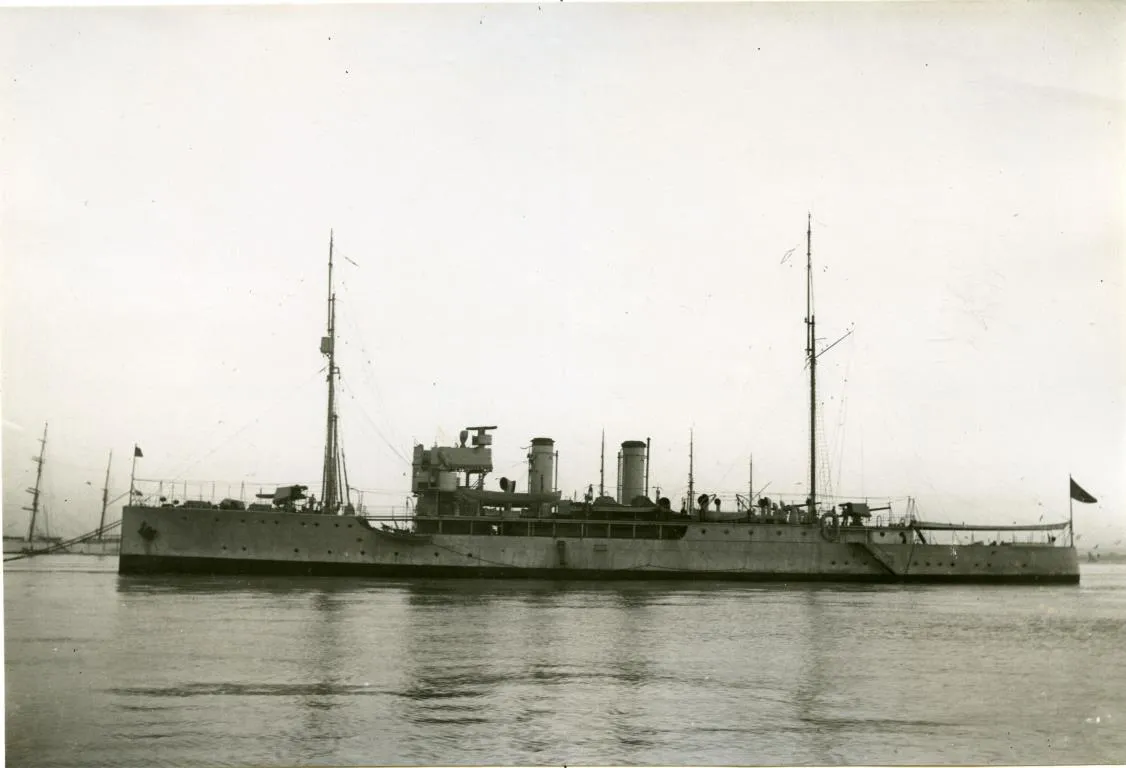
A passenger steamer also carried his name. In September 1939, days into the Second World War, that Carvalho Araújo picked up 16 survivors of the British freighter Manaar, sunk by the German submarine U-38, and landed them in Lisbon.
The dictatorship that replaced the Republic in 1926 kept his memory alive. In Vila Real a bronze statue by the sculptor Anjos Teixeira stands on the Avenida Carvalho Araújo. On the fiftieth anniversary in 1968 the minister of the Navy came for a parade, and eight air force jets flew over. In 1981 the town marked the centenary of his birth and fifty years since the monument was unveiled.
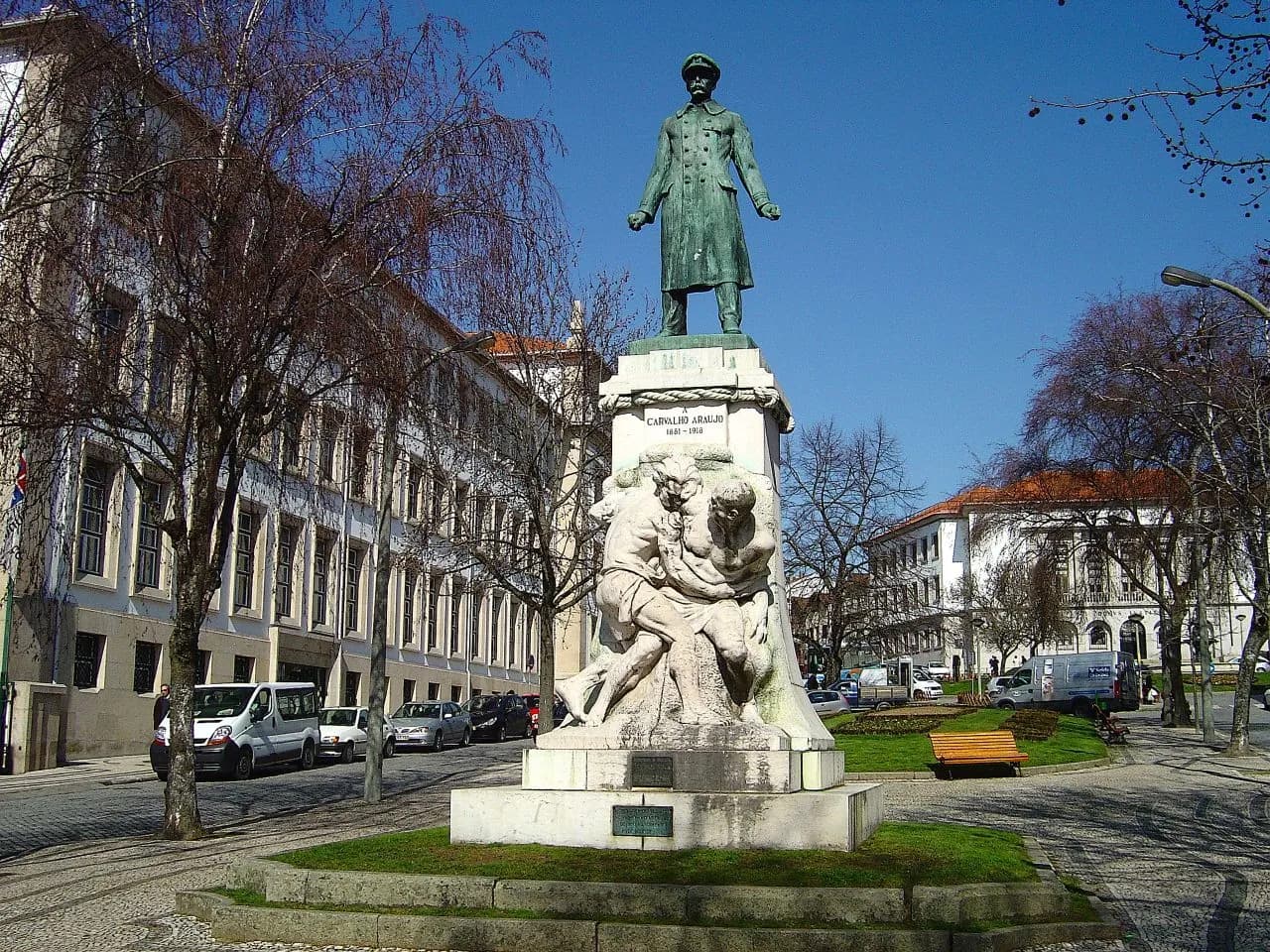
Democracy kept him too. For the centenary in 2018, Socialist deputies, joined by a Social Democrat, put a vote of tribute to the crew before the Assembleia da República. It called him one of the least disputed heroes of the twentieth century and noted that 45 localities in 34 municipalities had named streets or places after him. It also said his act had in some way made up for the trauma of La Lys, the rout of the Portuguese 2nd Division in Flanders on 9 April 1918.
The centenary also brought the crew back into view. Plaques went up at Vila do Porto, on Santa Maria, and at Ponta do Arnel, where the boats landed. Póvoa de Varzim restored its 1963 monument to the telegraphist Elísio da Nova, one of the dead. Exhibitions opened in Lisbon, Ponta Delgada and Vila Real.
FAQs
Who was Carvalho Araújo?
José Botelho de Carvalho Araújo (1881-1918) was a Portuguese naval officer and republican politician from Vila Real. He sat in the Constituent Assembly of 1911, governed the district of Inhambane in Mozambique, and was killed on 14 October 1918 commanding the armed trawler Augusto de Castilho against the German submarine U-139.
Was he born in 1880 or 1881?
Most sources, including the Assembleia da República, the Portugal 1914-1918 project and the pedestal of his statue in Vila Real, give 1881, and Vila Real celebrated the centenary of his birth in 1981. Two Navy sources, the Museu de Marinha and the Biblioteca Central de Marinha, give 18 May 1880.
How many people did the São Miguel carry?
The Revista da Armada and the Diário de Notícias give 206 passengers, and the Diário de Notícias adds 54 crew. The steamer reached Ponta Delgada unharmed.
How many men died on the Augusto de Castilho?
The Navy names six dead, including the commander. Other accounts give seven, and one adds a sailor who died in the lifeboat. Between 17 and 20 men were wounded, out of a crew of 47 or 48.
Who commanded U-139?
Kapitänleutnant Lothar von Arnauld de la Perière, the most successful submarine commander of the First World War, with around 194 ships sunk. U-139 was his second command; he took it over in May 1918.
On the timeline
Open the timelineNearby moments from regeneration and the last kings (1851–1910).
The Dona Maria Pia railway bridge over the Douro between Porto and Vila Nova de Gaia is inaugurated. Built by Gustave Eiffel's Paris firm, its wrought-iron crescent arch, 160 metres across, was then the longest iron arch in the world; it carried trains until 1991 and is a National Monument.
Birth in Guarda of Carolina Beatriz Ângelo, Portugal's first woman surgeon. In 1911, as a widow and 'head of household', she won a court case that let her become the first woman to vote in Portugal — prompting the Republic to rewrite the electoral law in 1913 to bar women explicitly.
Lisbon marks the tercentenary of Camões's death with a great 'cortejo cívico' through its streets, organised by a commission of the Portuguese press and echoed by processions in towns across the country. The first large civic commemoration of its kind in Portugal turns 10 June into a national symbol and lays the foundations of today's Dia de Portugal.
Carvalho Araújo
Birth in Porto of naval officer José Carvalho Araújo (two Navy sources say 1880). In October 1918, commanding the small patrol boat 'Augusto de Castilho', he fought the German submarine U-139 for nearly two hours so that the steamer 'São Miguel', carrying 206 passengers from Madeira to the Azores, could escape. He died in the fight, and his ship was sunk.
Birth of Carlos Sampaio Garrido, Portugal's envoy in Budapest during the Nazi occupation of Hungary. In 1944 he sheltered Jews in the legation's country house, among them relatives of the actress Zsa Zsa Gabor; after he left, his successor Teixeira Branquinho extended Portuguese protection to about 1,000 people. Yad Vashem named him Righteous Among the Nations in 2010.
Birth in Loulé of José Mendes Cabeçadas, the naval officer who helped both to make and to unmake the First Republic. A leader of the mutiny aboard the cruiser Adamastor in the 1910 revolution, he raised the 1926 revolt in Lisbon that toppled the Republic and was briefly head of state, until the generals pushed him aside. He spent his last decades conspiring against Salazar.
The Berlin Conference ends with 14 nations, Portugal among them, signing its General Act on trade and claims in Africa. Its rule that new coastal claims needed 'effective occupation' pushed Lisbon to back its claims with expeditions and the 'Pink Map' plan to link Angola and Mozambique, crushed by Britain's 1890 ultimatum.
Coming up in history
All long reads 20 May 1498Vasco da Gama reaches Calicut: the first fleet from Europe to India
 21 May 1662Catherine of Braganza marries Charles II: Portsmouth, 21 May 1662
 22 May 1886Carlos and Amélie: the royal wedding of 22 May 1886 in Lisbon
 23 May 1536Cum ad nihil magis: the papal bull that founded the Portuguese Inquisition
35 sources
Archives, scholarship and reporting this article was checked against.
- 1
Combates navais: Combate do “Augusto de Castilho” (21 August and 14 October 1918)Marinha Portuguesa
- 2
Senate debate on the pension for Carvalho Araújo's widow, 16 June 1920Senado da República, Diário das Sessões n.º 93, 16 June 1920, pp. 19-21
- 3
- 4
Araújo, José Botelho de Carvalho (biography)Portugal 1914-1918, Instituto de História Contemporânea, Universidade Nova de Lisboa
- 5
The immortal naval combat of Augusto de CastilhoBiblioteca Central de Marinha, on Google Arts & Culture
- 6O deputado que salvou a vida a 260 pessoas e outros dois que morreram em combateDiário de Notícias, 14 January 2019
- 7
- 8
WWI U-boats: U 139uboat.net
- 9
Efeméride: Combate do caça-minas Augusto de Castilho (14 October 2020)Direção Cultural da Marinha, Museu de Marinha
- 10
- 11
- 12
- 13
- 14
- 15
- 16
- 17
- 18Porquê e como foram apresados os navios alemães em 1916 (Graça Andrade Ramos)RTP, Portugal na I Grande Guerra
- 19Bombardeamento do FunchalRTP, Portugal na I Grande Guerra
- 20
- 21
O ataque do submarino alemão U 156 ao Funchal à luz das alterações na guerra naval em 1917 (Mathias Saecker)Arquivo Histórico da Madeira, Nova Série, n.º 3, 2021
- 22
- 23
- 24
Augusto Castilho e a revolta da Marinha Brasileira em 1893-94 (João Freire)Academia de Marinha, 2018
- 25
- 26
- 27
- 28
Sidónio Pais (biography)Museu da Presidência da República
- 29
- 30
Carvalho Araujo (ex-Jonquil) sloopNavypedia
- 31
- 32
- 33
Manaar's crew members arriving in LisbonPortugal 1939-1945
- 34
Old Vila RealVisit Portugal (Turismo de Portugal)
- 35
The Portuguese Expeditionary Corps in World War I: From Inception to Destruction, 1914-1918 (Jesse Pyles, MA thesis)University of North Texas, 2012 (UNT Digital Library)
Image credits
- U-139, the German submarine cruiser that sank the Augusto de Castilho on 14 October 1918. The place and date of the photograph are not recorded. Unknown author, Public domain, via Wikimedia Commons.
- Carvalho Araújo in naval uniform, in an undated portrait from the early twentieth century. Unknown author, Public domain, via Wikimedia Commons.
- The fight of the Augusto de Castilho in the First World War room of the Museu Militar in Lisbon, painted by Adriano de Sousa Lopes in the 1930s. Photographed in 2020. Vitor Oliveira from Torres Vedras, PORTUGAL, CC BY-SA 4.0, via Wikimedia Commons.
- The plaque unveiled at Ponta do Arnel, São Miguel, on 20 October 2018. It honours the twelve men who rowed a whaleboat about 200 nautical miles and landed by the lighthouse; the list begins with Midshipman Manuel Armando Ferraz. Dvdme, CC BY-SA 4.0, via Wikimedia Commons.
- The Navy's Carvalho Araújo, a former British sloop bought in 1920, on the Tagus in 1933. Unknown author, Public domain, via Wikimedia Commons.
- The monument to Carvalho Araújo in Vila Real, by the sculptor Anjos Teixeira, photographed in 2006. The pedestal gives his dates as 1881-1918. Vitor Oliveira from Torres Vedras, PORTUGAL, CC BY-SA 2.0, via Wikimedia Commons.