

Carlos and Amélie: the royal wedding of 22 May 1886 in Lisbon
A French princess born in exile married the heir to the Portuguese throne at the church of São Domingos. Lisbon celebrated for a week; in Paris the party cost her father his country.
At a glance
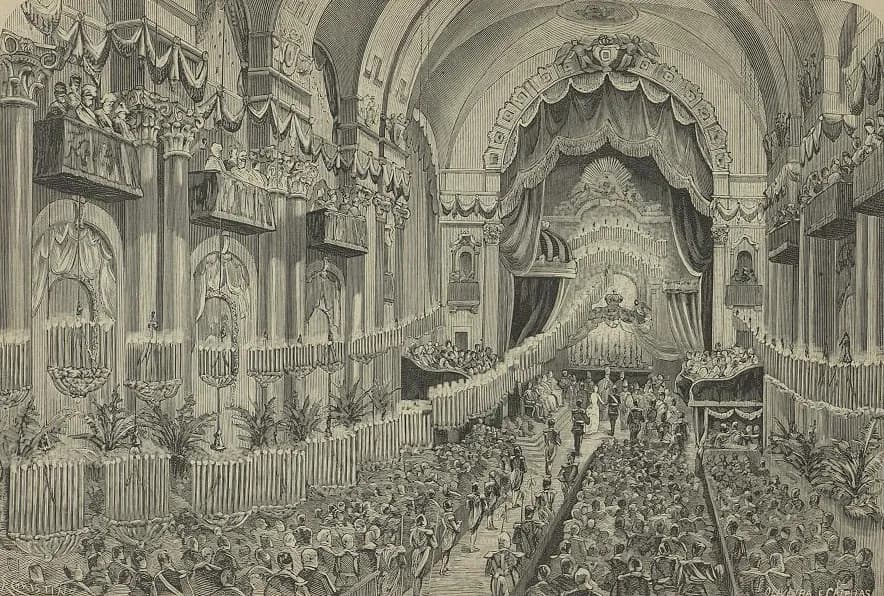
- At two in the afternoon of Saturday 22 May 1886, Crown Prince Carlos of Portugal married Princess Amélie of Orléans, aged 20, in the church of São Domingos in Lisbon.
- Amélie was the eldest child of the Count of Paris, who claimed the French throne for the Orléans family; she met Carlos at the Duc d'Aumale's château of Chantilly early in 1886.
- Lisbon celebrated for eight days, with illuminations, a gala at the São Carlos opera house, a military parade, a ball for 2,700 invited guests at the Ajuda palace and fireworks on the Tagus.
- A crowded reception for the bride in Paris on 15 May alarmed French republicans, and in June 1886 France expelled the heads of its former ruling houses and their heirs; her father went into exile in England.
- As queen from 1889, Amélia founded the National Assistance for the Tuberculous in 1899 and a museum of royal coaches in 1905. Exiled in 1910, she died in France in 1951 and was buried in Lisbon.
Two o'clock at São Domingos
At one o'clock on Saturday 22 May 1886 the gala coaches left the Ajuda palace, high above Belém. They carried King Luís, Queen Maria Pia, their son Carlos, the king's brother Infante Augusto and two foreign guests, the Duke of Aosta and Prince George of Wales, with lancers, heralds and kings of arms riding ahead. A little later a second procession set out from the Necessidades palace with the bride, her parents, her brother and sister and her great-uncle the Duc d'Aumale.
Both processions were bound for the church of São Domingos, beside the Rossio. Carlos waited for his bride at the church door. The ceremony began at two in the afternoon, under decorations that had cost a great deal of money. Gervásio Lobato, who wrote the chronicle of the illustrated review O Occidente, found them rich but muddled, “without unity, without idea, without style” (translated from Portuguese).
A memoir of the bride by the French monarchist writer Lucien Corpechot, drawing partly on the Marquis de Beauvoir, puts the Cardinal-Patriarch of Lisbon and six mitred bishops at the altar. Queen Maria Pia wore a dress copied from one in a Rubens painting of Marie de Médicis, with a peacock-blue train. The bride, Princess Amélie of Orléans, was in plain white.
When it was over the two processions joined into one and drove to the Belém palace, where the couple would live. The crowd was so thick that the streets could barely be crossed, and people cheered the newly married pair as they passed in the great glass coach.
- Date
- Saturday 22 May 1886, 2 pm
- Place
- Church of São Domingos, Lisbon (parish of Santa Justa)
- Groom
- Carlos, Prince Royal and Duke of Braganza, heir of King Luís I
- Bride
- Amélie of Orléans, born 28 September 1865 at York House, Twickenham
- Her parents
- The Count and Countess of Paris
- Foreign envoys
- Prince George of Wales for Queen Victoria; a Spanish embassy; the French ambassador for the President of the Republic
- Home after the wedding
- The Belém palace
A princess born in exile
Portugal in 1886 was a constitutional monarchy, governed under the Constitutional Charter of 1826, and its king was Luís I. His heir, Carlos, carried the title Duke of Braganza. A Catholic bride of royal blood had to be found for him, and in Catholic Europe the choice was short.
Amélie was born on 28 September 1865 at York House in Twickenham, west of London, the first child of the Count and Countess of Paris. Her father, a grandson of King Louis-Philippe, had grown up in exile in England. After the fall of Napoleon III the French National Assembly lifted the laws that barred the family, and they moved back to France, dividing their time between Paris and the château of Eu in Normandy.
The match made at Chantilly
According to Corpechot, the idea came from a French countess, Madame de la Ferronnays, who talked it over with the Marquis de Beauvoir, a confidant of the Count of Paris. The plan was for Carlos to tour Europe early in 1886 and see three candidates before he chose: an archduchess in Vienna, a princess in Saxony and Amélie in Paris.
Her father was so unsure, Corpechot writes, that on the morning of Carlos's arrival in Paris he sent a trusted servant to the Hôtel Bristol with a choice of two messages. Carlos was said to be very short and Amélie was very tall. If the pair would look ridiculous together, the servant was to say the family was leaving for Cannes that evening. He gave the other message, and the next day the family received Carlos at Chantilly, the château of her great-uncle, the Duc d'Aumale.
Carlos was taken with her at once. Before dawn he sent his aide, the Count of Seisal, to Paris for the embassy's cipher, so that he could telegraph Lisbon that he would travel no further. The family took him to Eu for a week, then went to Cannes on 22 February; Corpechot says he stayed with them there until 6 May. When Amélie left Eu, Corpechot says more than 10,000 people came to the park to say goodbye.
On 15 May the Count of Paris gave a farewell reception for her in the Hôtel Galliera, the mansion in the Rue de Varenne that the Duchess of Galliera had lent the family. Royalist supporters came in such numbers that it looked like a show of loyalty to the old dynasty, and the Republic took offence.
Eight days of festivities
The bride travelled by night train through the Spanish border mountains, past bonfires lit on the peaks. At Pampilhosa, about five hours from Lisbon, Carlos was waiting for her with ministers sent to greet their future queen. On 19 May she reached the station of the Norte and Leste railway, now Santa Apolónia, hung with flags, coats of arms and garlands for her arrival.
Prince George, son of the Prince of Wales and the future George V, came to represent his grandmother, Queen Victoria. The Duke of Aosta came too. The queen regent of Spain sent an extraordinary embassy, and the French Republic was represented by its ambassador, Billot.
19 May
Amélie arrives at the Norte and Leste station
She and her family lodge at the Necessidades palace.
20 May
Prince George arrives
He also stays at the Necessidades.
21 May
King Luís receives the Spanish and French envoys
22 May, 2 pm
Wedding at São Domingos
Procession to Belém; illuminations across Lisbon at night.
23 May
Reception at Belém; gala at the São Carlos opera house
The theatre was lit by electricity for the night.
24 May
Official reception at Ajuda
Gala dinner for more than 200.
25 May
Military parade
The Avenida lit by gas arches; about 100,000 people.
26 May
Horse races; ball at the Ajuda palace
2,700 invitations.
27 May
Bullfight; fireworks on the Tagus
The Count and Countess of Paris leave for Paris.
28 May
Races; gala at the Dona Maria II theatre
End of the official festivities.
On the wedding night the town hall, its façade outlined in gas jets, was the finest of the illuminations. The Terreiro do Paço had 12,000 lights, though Lobato thought them arranged in very bad taste. The Avenida da Liberdade stayed dark, to the annoyance of the crowd that had come to see its 48 gas arches. It was lit three nights later, after the parade, and O Occidente put the crowd there at 100,000 people, in the street, on the stands and at the windows.
“It looked like a fairy tale, a dream from the Thousand and One Nights, that square all covered with Venetian lanterns and coloured glass.”
The gala at São Carlos was the high point. The impresario had replaced the gas with electric light, and Lobato wrote that without it no one could have stayed in the hall for the heat. When the royal family entered at half past nine, the whole audience stood. At the end the president of the city council, Fernando Palha, led cheers for the family and its guests, and the house went on cheering the royal family and the new princess for several minutes.
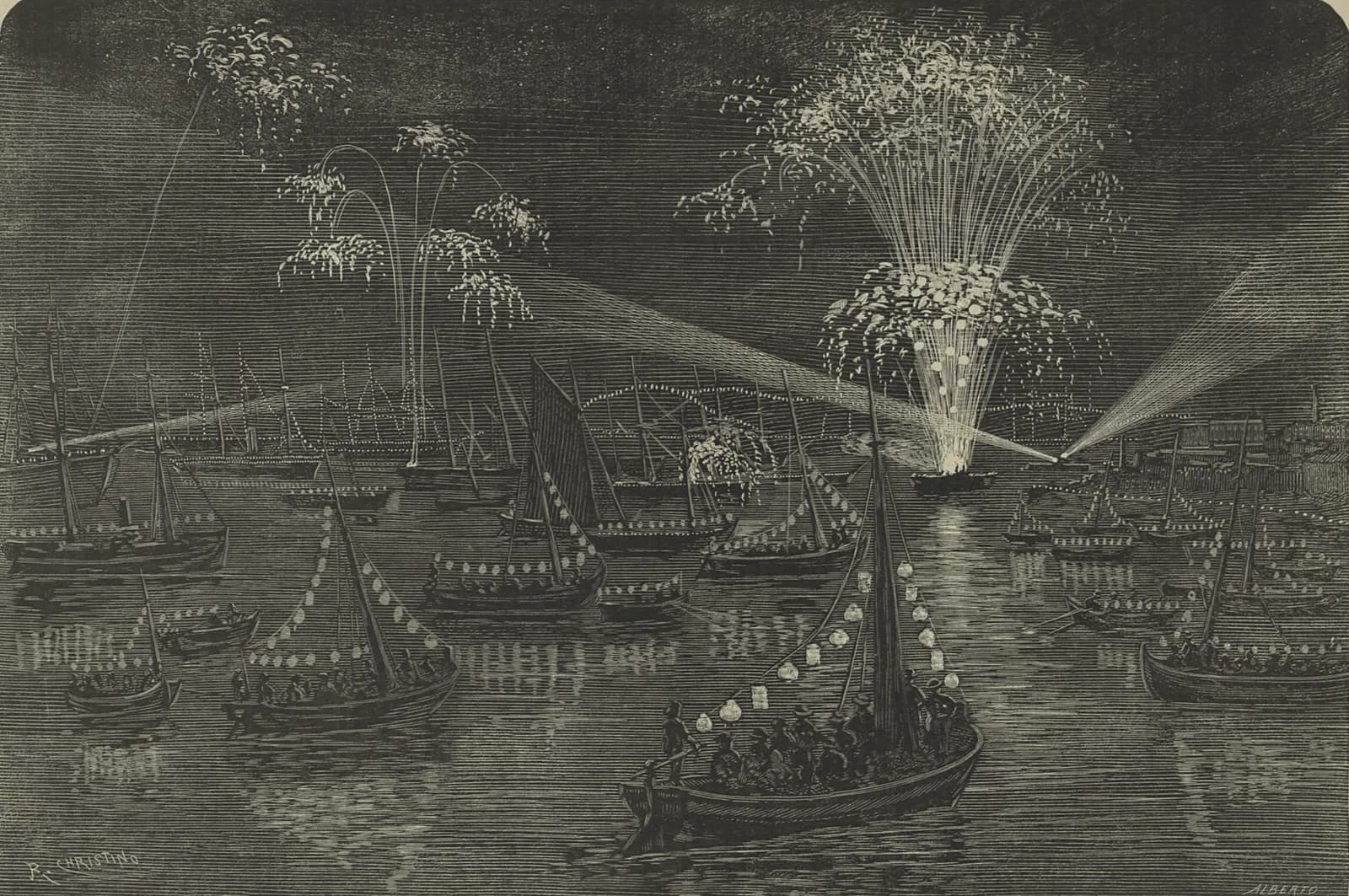
On the 27th, halfway through a bullfight given by the Turf Club, the Count and Countess of Paris left for the railway station and Paris. Their daughter watched the fireworks that night from the Museu de Belas-Artes with the king and queen, her husband and the infantes. Lobato wrote that the festivities had brought visitors from the whole kingdom, the islands and abroad, and changed the face of the city for eight days.
The price in France
Within weeks the reception at the Hôtel Galliera had its answer. In June 1886 the French parliament passed a law expelling from France the direct claimants to the throne and their heirs. The Count of Paris and his son had to go. He returned to England and leased Sheen House, near Richmond Park, from 1886 until 1892.
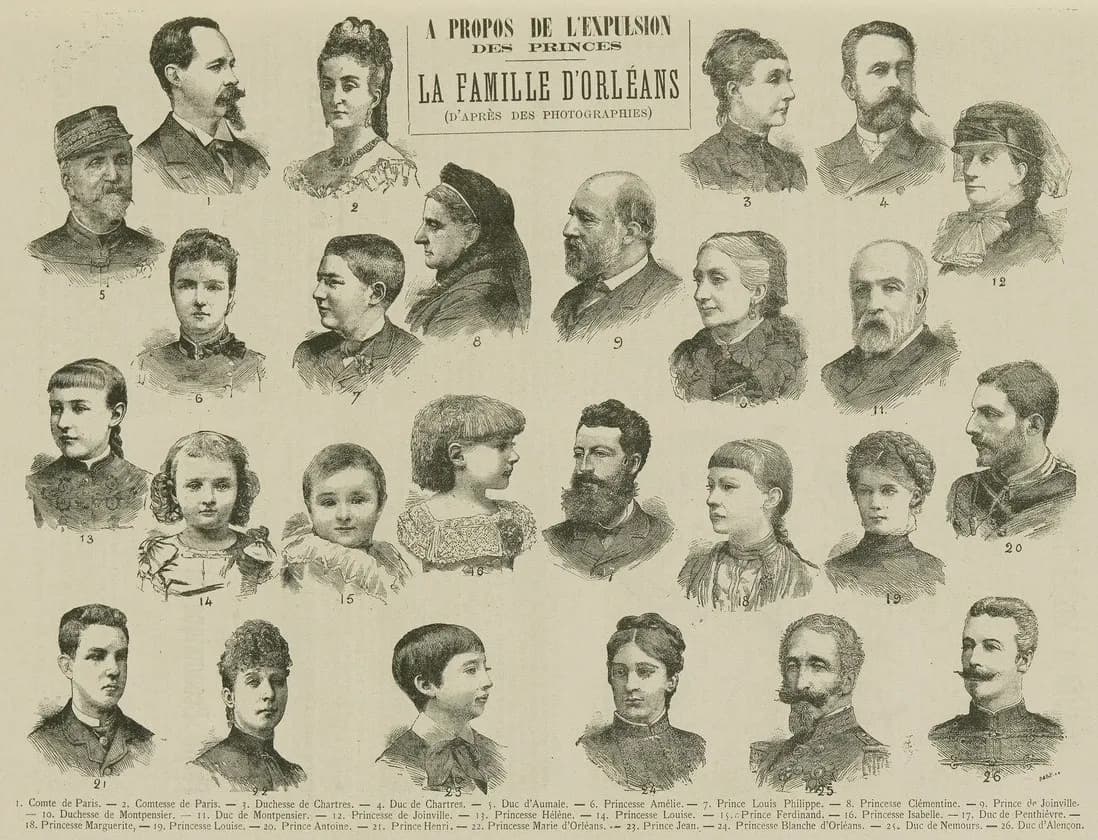
The news reached Amélie in Lisbon, in her first weeks of married life. She had been born in exile, and now, in the wake of her wedding, her father was going back into it. Her confidante in France, at the château of Dampierre, wrote that she was glad Amélie was far away from all the sadness. Amélie answered:
“You don't know what I suffer at feeling myself so far away, at thinking that while I was happy here my father was going into exile.”
Princess, then queen
Carlos chose the Belém palace, then little used, as the couple's home. Painters including Columbano Bordalo Pinheiro, João Vaz and José Malhoa worked for nearly three months on the rooms, and Leandro Braga carved the woodwork. From its windows you could see the Tagus as far as the bar.
Corpechot describes a simple life there that surprised a court used to display. The couple breakfasted alone, rode together, painted the same views, went to the opera incognito and kept a small boat they rowed themselves. “I have found the most absolute happiness one could dream of,” Amélie wrote.
Their first son, Luís Filipe, was born at Belém on 21 March 1887. Corpechot tells how, at Vila Viçosa, Amélie snatched him from his cot as it caught fire, and how the shock brought on the birth of a daughter who died. King Luís died on 19 October 1889, and the 24-year-old princess became Queen Amélia of Portugal. A second son, Manuel, was born on 15 November 1889.
The queen's causes
Amélia began with poor children. She founded a dispensary in Alcântara, in a wing of the former convent of the Sacramento, paid for at first with a charity bazaar and her own income. Sick children were treated there, vaccinated and sent home with milk, bread and soup, and a branch on the same model opened in Porto in 1894 or 1895.
In 1892 she founded a lifesaving institute for the whole coast, the Instituto de Socorros a Náufragos, helped by the navy minister, Admiral Ferreira do Amaral. Before then Portugal had four independent lifeboat stations, at Póvoa de Varzim, Viana do Castelo, Porto and Paço de Arcos. Growth was slow at first; by 1926 the institute had fifty life-saving stations, and between 1900 and March 1926 they rescued 12,996 people.
Rescue stations on the Portuguese coast
stations
Before Amélia founded the lifesaving institute in 1892 there were four lifeboat stations. By March 1926 it had fifty life-saving stations, with 43 rowing lifeboats, one motor lifeboat and 30 carriages for rescue gear; its inspector wrote that most of the growth came in his own time in charge.
Show the data
| Stations | |
|---|---|
| Before 1892 | 4 |
| By 1926 | 50 |
At the turn of the century tuberculosis killed an estimated 15,000 to 20,000 people a year in Portugal, and the country had no national campaign against it. On 11 June 1899 Amélia called a large meeting in the building of the Ministry of the Kingdom and told it why.
“I will simply say that I have gathered you here today so that we may found an association which I should like to see every Portuguese join, and which I shall call the National Assistance for the Tuberculous.”
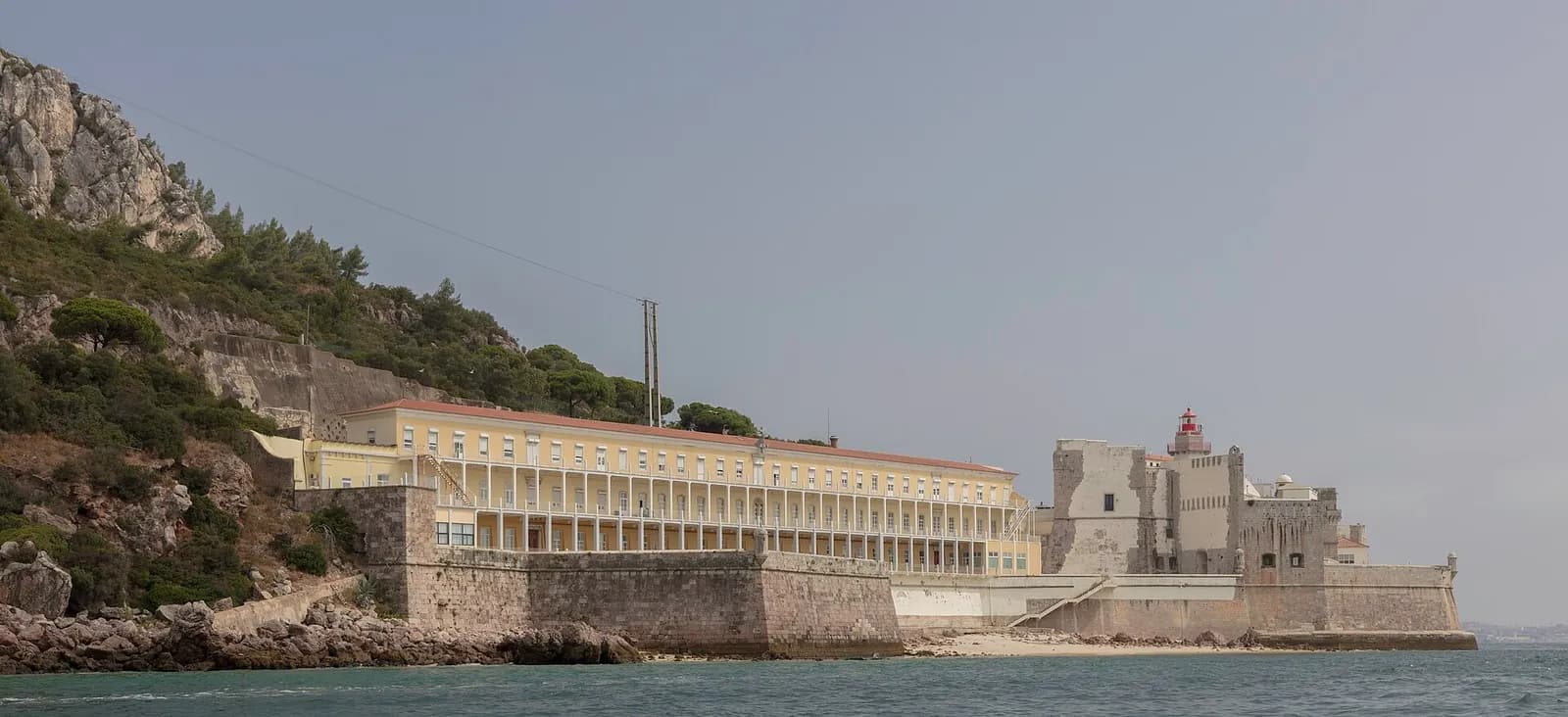
The Assistência Nacional aos Tuberculosos was run by the physician António de Lancastre, with Curry Cabral and others on its board. On 6 June 1900 it opened its first house in the old fort of Outão, at the mouth of the Sado near Setúbal, which had been the royal family's summer residence and which the queen gave up for it. It began as a preventorium for 36 frail girls, daughters of tuberculosis patients, and became a sanatorium proper in 1912; five years after opening it had 126 children.
Dispensaries followed in Lisbon and other towns. The largest project was a mountain sanatorium at Guarda, on 27 hectares, designed by the young architect Raúl Lino and opened on 18 May 1907 as the Sanatório Sousa Martins. It was the association's first purpose-built hospital.
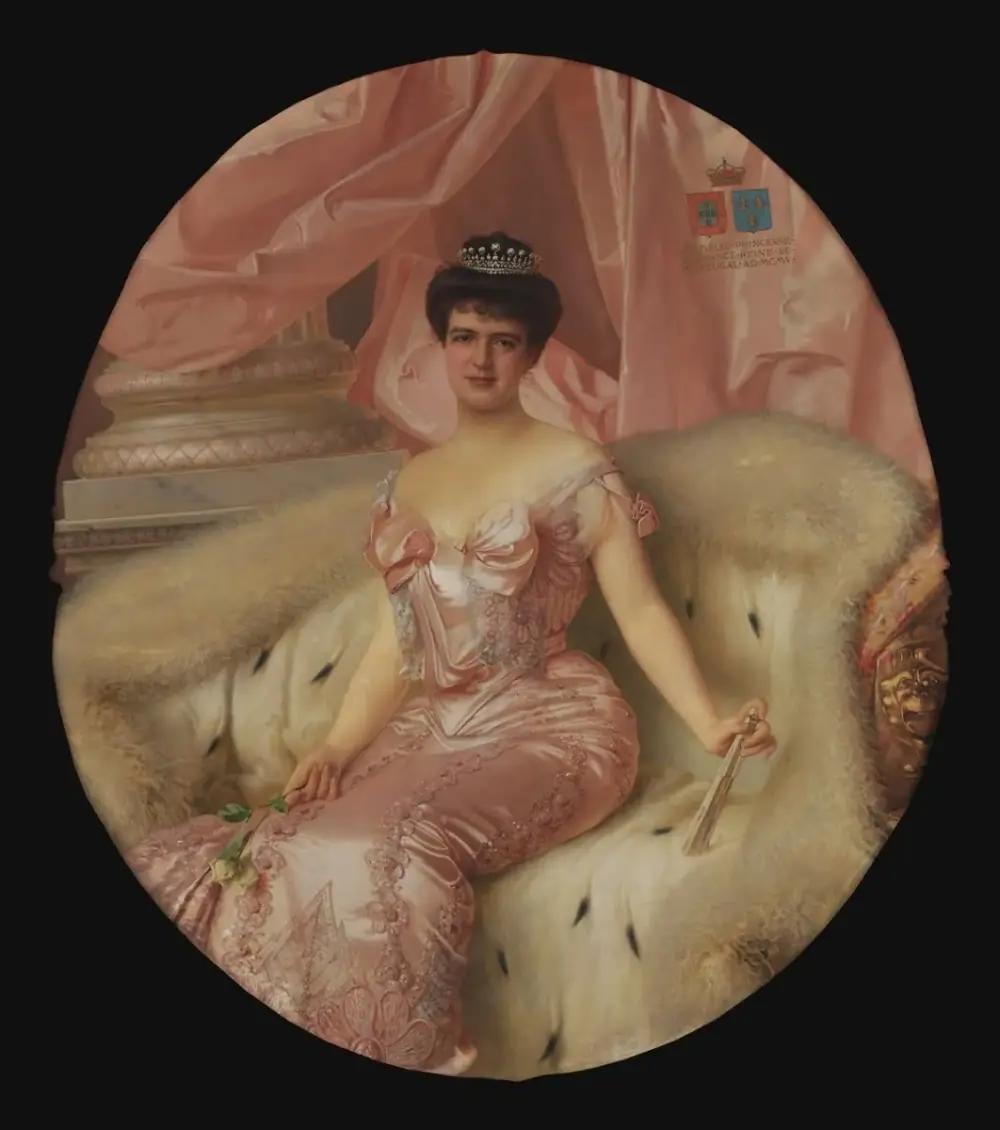
In 1905 Amélia turned the old royal riding school of the Belém palace into a museum for the royal coaches. Her husband's own passion was the sea. Between 1896 and 1907 Carlos led 12 oceanographic expeditions on a series of yachts named Amélia, starting off Cascais on 1 September 1896, and his collection is now in the Navy's Aquário Vasco da Gama.
| Year | Institution | What it did |
|---|---|---|
| 1892 | Lifesaving institute (Socorros a Náufragos) | Lifeboats and rescue stations along the coast |
| By 1894–95 | Children's dispensary, Alcântara | Free care, vaccination and food for poor children; a Porto branch followed |
| 1899 | Assistência Nacional aos Tuberculosos | National campaign against tuberculosis, with dispensaries and sanatoriums |
| 1900 | Outão maritime sanatorium | The association's first house, for girls; a preventorium until 1912 |
| 1905 | Museu dos Coches | Royal coaches shown in the Belém riding school |
| 1907 | Sanatório Sousa Martins, Guarda | Mountain sanatorium designed by Raúl Lino |
The Alcântara dispensary's founding year is not given in the sources used; it existed by 1894 or 1895, when a Porto branch opened on its model.
1908, 1910 and exile
On 1 February 1908 gunmen killed Carlos and Luís Filipe in their open carriage on the Terreiro do Paço; Amélia, who struck at one of the attackers with her bouquet, survived, and Manuel became king. That day is told in our article on the regicide.
Amélia was at the Pena palace in Sintra on 3 October 1910 when Manuel warned her of the revolt in Lisbon. On the morning of 5 October she left Pena for Ericeira, where she and Queen Maria Pia embarked with the king on the royal yacht Amélia. The Republic was proclaimed the same day.
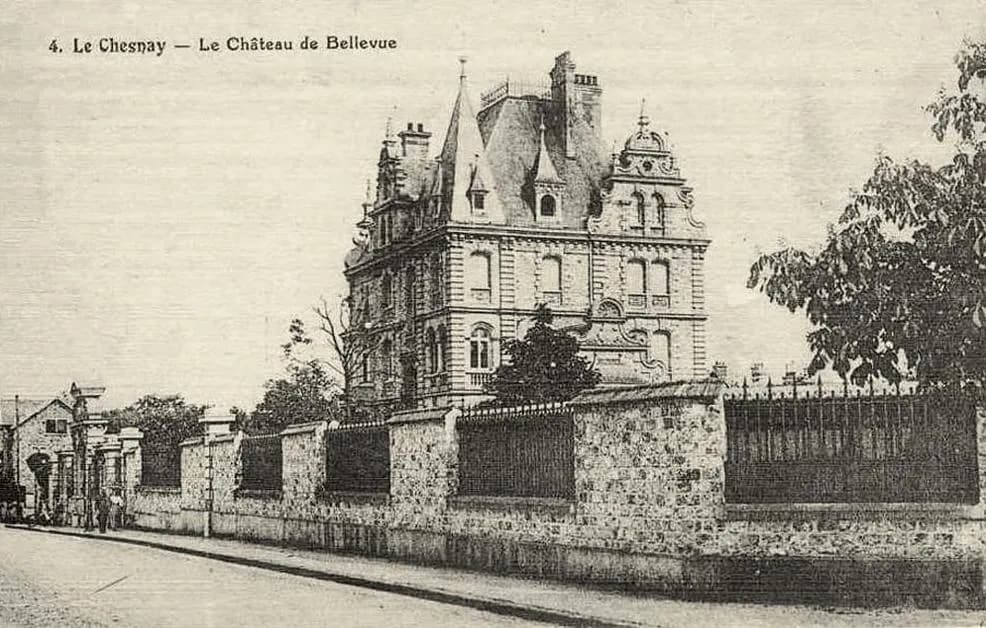
After a time in England, Amélia settled in France at the Château de Bellevue at Le Chesnay, near Versailles. The country that had expelled her father now became her home in exile.
She came back once. In 1945, at the invitation of the dictator António de Oliveira Salazar, she visited Portugal and was received by him and by President Carmona. The historian José Alberto Ribeiro says the crowd at Santa Apolónia gave her a triumphant welcome. She made a point of visiting the Pena palace on her own, and spent a moment alone at the tomb of her husband and sons.
Her train stopped at Pampilhosa, where Carlos had waited for her in 1886. The Count of Vilas Boas, a monarchist who went to meet her there, was called into her saloon carriage. He remembered railwaymen's wives on the platform lifting their children to the windows and shouting “Long live our queen!” (translated from Portuguese).
Amélia died in the district of Versailles on 25 October 1951, aged 86. Her body was brought to Lisbon for a state funeral at the end of that year. She is buried in the Braganza pantheon at São Vicente de Fora, beside Carlos, Luís Filipe and Manuel II.
Why it still matters
Amélia was the last queen of Portugal. Her wedding week of illuminations and galas, recorded engraving by engraving in O Occidente, filled the Avenida da Liberdade with an estimated 100,000 people in a single night. Twenty-two years later the groom was shot in the Terreiro do Paço, and two years after that the monarchy was gone.
Amélia's work outlived the crown. Sixteen years after the Republic, the lifesaving institute she founded was running fifty stations, and the Outão and Guarda sanatoriums treated patients for decades; nearly 5,000 children passed through Outão between 1900 and 1950. The problem she took on was huge: until 1930 Portugal had the second-highest tuberculosis death rate in Europe.
FAQs
When and where did Carlos I marry Amélie of Orléans?
On Saturday 22 May 1886, at two in the afternoon, in the church of São Domingos in Lisbon. Carlos was then Crown Prince; he became king on his father's death in October 1889.
Why did the wedding lead to the exile of the Orléans family?
A crowded farewell reception for Amélie in Paris on 15 May 1886 looked to the French republican government like a royalist demonstration. In June 1886 parliament expelled the claimants to the throne and their heirs, and her father, the Count of Paris, went to England.
What is Queen Amélia remembered for in Portugal?
Above all for her campaign against tuberculosis: she founded the Assistência Nacional aos Tuberculosos in 1899, which opened sanatoriums at Outão and Guarda. She also founded a lifesaving institute in 1892, a children's dispensary in Alcântara and the museum of royal coaches in 1905.
Where did Queen Amélia die and where is she buried?
She died at the Château de Bellevue at Le Chesnay, near Versailles, on 25 October 1951, aged 86. She is buried in the Braganza pantheon at São Vicente de Fora in Lisbon, beside her husband and sons.
On the timeline
Open the timelineNearby moments from regeneration and the last kings (1851–1910).
The Elevador da Glória opens in Lisbon, linking the Restauradores to the Bairro Alto. Designed by the engineer Raoul Mesnier du Ponsard and electrified in 1915, the funicular became one of the city's best-loved symbols; its derailment on 3 September 2025 killed 16 people.
Cosme Damião is born in Lumiar, Lisbon. A former Casa Pia pupil, he was the driving force among the young founders of Sport Lisboa in 1904, the club that became Benfica, and served it as captain, coach and journalist for two decades — yet always refused to become its president.
Death in Lisbon of Fernando II, the 'King-Artist' and widower of Maria II, who turned a ruined monastery above Sintra into the fairy-tale Pena Palace. Seeing double from facial cancer, he had tripped on a step leaving his box at the São Carlos opera two days earlier; his will, leaving all he could, Pena included, to his second wife, the singer Elise Hensler, caused a scandal.
The wedding of Carlos and Amélie
Crown Prince Carlos, the future King Carlos I, marries Amélie of Orléans at the Church of São Domingos in Lisbon; as Queen Amélia she would be the last queen consort of Portugal.
The upper deck of the Ponte Luís I over the Douro, designed by Théophile Seyrig and built by the Belgian Société de Willebroeck, is inaugurated in Porto on the king's birthday. The lower deck followed in 1888, and the two-tier iron arch became the enduring emblem of the city.
Birth in Lisbon of Luís Filipe, heir of King Carlos I. In 1907 he became the first heir to the throne to tour the African colonies; less than a year later, on 1 February 1908, he was shot alongside his father in the Lisbon Regicide and died moments after him.
The Associação Académica de Coimbra is founded, the oldest students' union in Portugal. Every student of the University of Coimbra automatically becomes a member, and its football team, Académica, became one of the country's best-loved clubs.
Coming up in history
All long reads 24 May 1898Ferreira de Castro, the boy from Ossela who wrote the Amazon
 25 May 1942José Mário Branco, the Porto singer who fled a war and came back to sing
 26 May 1834The Convention of Evoramonte: how Portugal's war of two brothers ended
 27 May 1987Madjer's back-heel: FC Porto beat Bayern to win the 1987 European Cup
22 sources
Archives, scholarship and reporting this article was checked against.
- 1
Chronica Occidental, O Occidente: revista illustrada de Portugal e do extrangeiro, n.º 268 (1 June 1886)O Occidente, digitised by the Hemeroteca Municipal de Lisboa
- 2
- 3
Memories of Queen Amélie of Portugal (Lucien Corpechot)Eveleigh Nash, London, 1915 (Internet Archive, University of California Libraries copy)
- 4
- 5
Prince Philippe, Comte de Paris (Leone Botes)The Elmbridge Hundred (Elmbridge Borough Council)
- 6Outão: 50 anos do grande sanatório (Vasco Rosa)Observador, 30 March 2025
- 7
“Morreu Sua Majestade a Rainha D. Amélia”, O Barcelense, no. 2117, 3 November 1951Aqualibri, Comunidade Intermunicipal do Cávado
- 8
Carta Constitucional de 29 de Abril de 1826 (full text)NOVA School of Law, Universidade Nova de Lisboa
- 9
Portrait of King Manuel II (José Nunes Ribeiro Júnior, 1909), collection notePaço dos Duques de Bragança, Guimarães
- 10
O manto da rainha D. Amélia precisa de fundosTime Out Lisboa
- 11
The Life-boat Services of the World: PortugalThe Lifeboat (journal of the Royal National Lifeboat Institution), vol. 26, no. 286, March 1926
- 12
Luta antituberculosa em Portugal: o contributo da Armada (José Filipe Moreira Braga)Ordem dos Médicos
- 13
O Sanatório Sousa Martins e a transversalidade da doutrina arquitetónica de Raúl Lino (Dulce Helena Pires Borges)Anais do Instituto de Higiene e Medicina Tropical
- 14O primeiro coche já mora no novo MuseuObservador, 23 March 2015
- 15
Plataforma Tesouros do ReiMarinha Portuguesa, Aquário Vasco da Gama
- 16Portugal assinala 130 anos de primeira campanha oceanográfica com missão ao largo de OeirasRTP Notícias (Lusa), 2026
- 17
The Tragedy of Lisbon: graphic account, incidents and details of the King's death. Statement made by Senhor Guilherme Pinto BastoBritish Historical Society of Portugal, 24th Annual Report and Review (1997), reprinting The Standard of 18 February 1908
- 18
Sir Francis Villiers and the End of the Portuguese Monarchy (John Villiers)The Treaty of Windsor (1386) and 620 Years of Anglo-Portuguese Relations, papers of a conference held at St Peter's College, Oxford, 18 October 2006
- 19
D. Amélia and Maria Pia, the last inhabitants of the palaces of SintraParques de Sintra, 5 October 2023
- 20
- 21D. Amélia (Leonídio Paulo Ferreira)Diário de Notícias, 20 August 2026
- 22
Igreja de São DomingosVisit Lisboa (Turismo de Lisboa)
Image credits
- The wedding ceremony of Crown Prince Carlos and Princess Amélie of Orléans in the church of São Domingos, Lisbon, on 22 May 1886, engraved from a drawing by J. Christino for O Occidente. The magazine called the church by its parish name, Santa Justa. J. Christino, Public domain, via Wikimedia Commons.
- Fireworks and illuminated boats on the Tagus on the night of 27 May 1886, a festival given by the Commercial Association of Lisbon, engraved for O Occidente. The beams came from searchlights on the Italian ironclad Italia and the Portuguese corvette Afonso de Albuquerque. J. Christino, Public domain, via Wikimedia Commons.
- “On the expulsion of the princes: the Orléans family”, Gazette de Paris illustrée, 26 June 1886. Number 1 is the Count of Paris, number 2 the Countess and number 6 Princess Amélie. Unknown author, Public domain, via Wikimedia Commons.
- The fort of Santiago do Outão at the mouth of the Sado, seen from the water in 2020. The queen's tuberculosis association opened its first sanatorium in the old fort in June 1900. Diego Delso, CC BY-SA 4.0, via Wikimedia Commons.
- Queen Amélia painted by the Italian artist Vittorio Matteo Corcos in 1905, the year she founded the coach museum that now owns the portrait. The inscription calls her princess of France and queen of Portugal. Vittorio Matteo Corcos, Public domain, via Wikimedia Commons.
- The Château de Bellevue at Le Chesnay, near Versailles, on a postcard of the early 1900s. Amélia lived here in exile and died here in 1951. Unknown author, Public domain, via Wikimedia Commons.