

Ferreira de Castro, the boy from Ossela who wrote the Amazon
He sailed for Brazil alone at the age of twelve and came home eight years later with almost nothing. Out of those years came Emigrantes and A Selva, two novels that made a self-taught journalist the most translated Portuguese writer of his day.
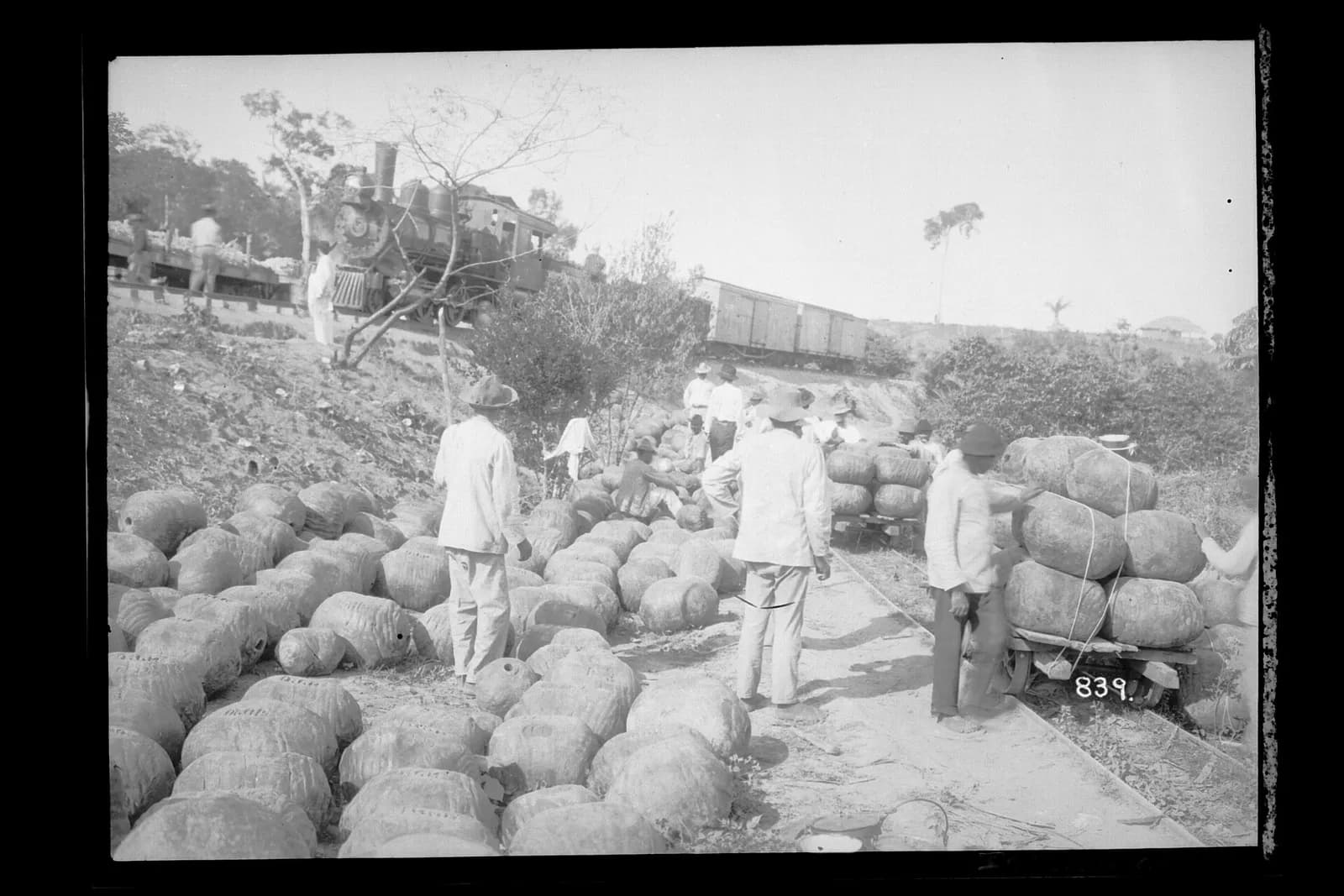
At a glance
- José Maria Ferreira de Castro was born on 24 May 1898 in Salgueiros, in the parish of Ossela, Oliveira de Azeméis, the son of tenant farmers. His father died when he was eight.
- On 7 January 1911, aged 12, he sailed alone from Leixões to Belém do Pará. From early 1911 to 28 October 1914 he lived on the Paraíso rubber estate on the Madeira river, deep in the Amazon.
- He came back to Portugal in September 1919 with 400 escudos, went hungry for a time in Lisbon and made his name as a journalist before publishing Emigrantes (1928) and A Selva (1930).
- A Selva was translated into Spanish, German, English, French and many other languages; by 1945 it had sold half a million copies, 42,000 of them in Portugal.
- An opponent of the Estado Novo who belonged to no party, he was watched by the political police but never jailed. He was nominated seven times for the Nobel Prize and died in Porto on 29 June 1974.
A boy of twelve on the Jerôme
On 6 January 1911 a boy of twelve left the hamlet of Salgueiros, in the parish of Ossela, for the port of Leixões, outside Porto. José Maria Ferreira de Castro carried a passport issued on 6 December 1910 and the primary-school certificate he had earned that August. The next day he boarded the Jerôme, a British steamer bound for Belém do Pará, at the mouth of the Amazon.
He went to take his father's place as the family's breadwinner. His parents, José Eustáquio Ferreira de Castro and Maria Rosa de Castro, were tenant farmers, and his father had died in 1906, when the boy was eight. Belém, still living off the fortunes of the rubber trade, looked like the place to earn a living. The Jerôme reached it on 22 January 1911.
The family acquaintance who was supposed to look after him kept him for 28 days and then shipped him upriver on the steamer Justo Chermont, to a rubber estate called Paraíso on the banks of the Madeira, one of the great tributaries of the Amazon. He did not see Portugal again for more than eight years.
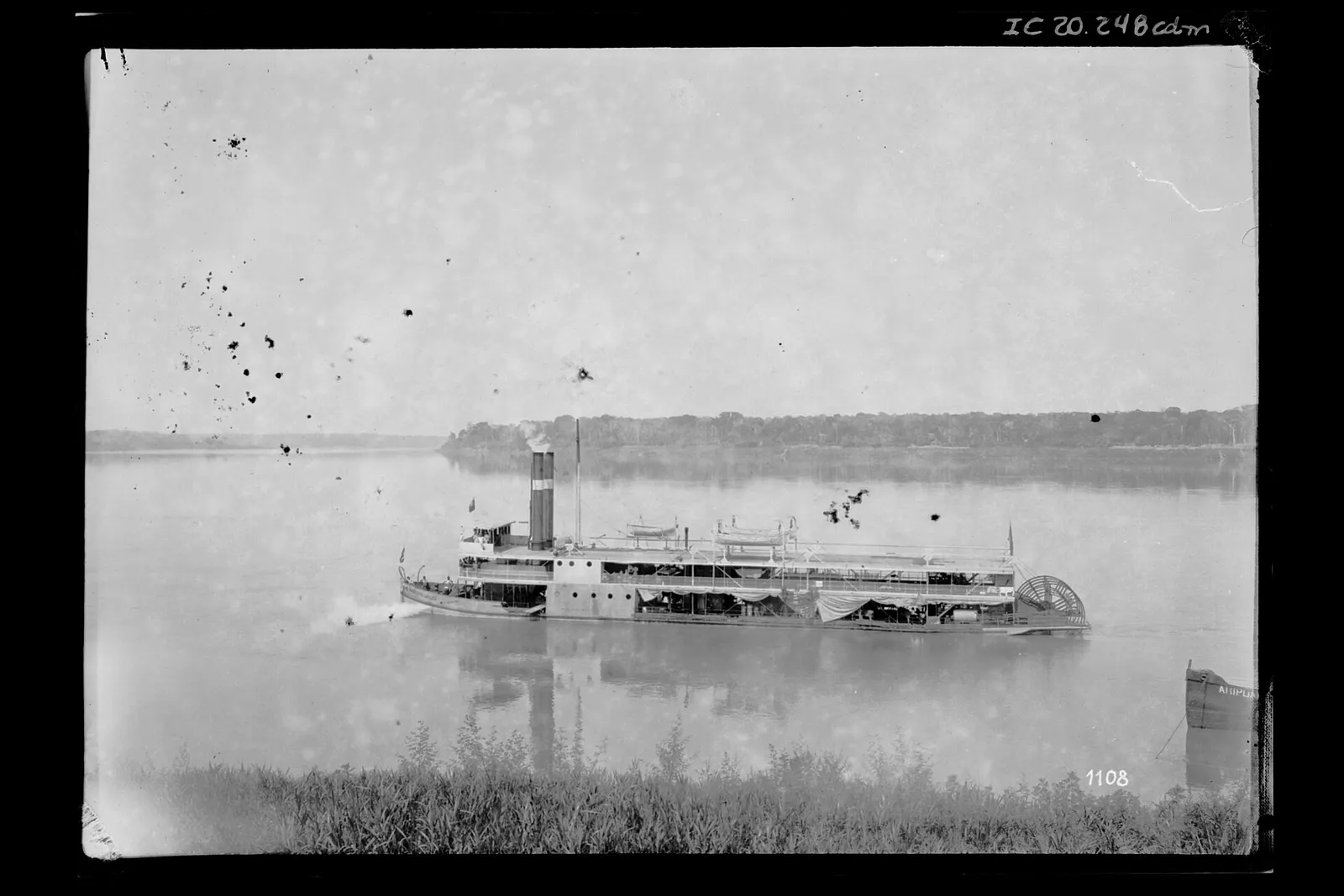
He went back to that journey in his best-known books. He said later that the germ of Emigrantes, his first major novel, came from the voyage. The forest at the end of it gave him A Selva (The Jungle), the book that carried his name from Rio de Janeiro to Tokyo.
- Born
- 24 May 1898, Salgueiros, Ossela (Oliveira de Azeméis)
- In Brazil
- January 1911 to September 1919
- Major novels
- Emigrantes (1928), A Selva (1930), Terra Fria (1934), A Lã e a Neve (1947), A Missão (1954)
- Nobel nominations
- 7, between 1951 and 1973
- Died
- 29 June 1974, Porto
- Buried
- Serra de Sintra, on the way to the Castelo dos Mouros (31 May 1975)
A country that sent its sons to Brazil
Ferreira de Castro was born under the constitutional monarchy and sailed three months after the Republic was proclaimed on 5 October 1910. Under both, the poor kept leaving. Since 1855 the Ministry of Finance had counted emigrants from the passport registers, which recorded only legal departures; nobody tried to count the people who slipped away without papers.
Even the official figures climbed steeply. In the year of his birth 23,510 Portuguese citizens took out emigrant passports. In 1911 the number was 59,652, of whom 12,134 were children under 14, like him. In 1912 it reached 88,920, nearly all of them bound for the Americas. In 1913, of 77,633 emigrants, 64,402 went to Brazil.
Emigrants from Portugal with passports, 1898 to 1924
emigrants
Official count of Portuguese citizens who took out emigrant passports, from Portuguese government statistics as tabulated by Walter Willcox in 1929. Clandestine emigrants are not included. Highlighted: 1911, when Ferreira de Castro sailed, and 1919, when he came home. The numbers fell sharply during the First World War (1914 to 1918).
Show the data
| Citizen emigrants | |
|---|---|
| 1898 | 23,510 |
| 1899 | 17,776 |
| 1900 | 21,306 |
| 1901 | 20,646 |
| 1902 | 24,170 |
| 1903 | 21,611 |
| 1904 | 28,311 |
| 1905 | 33,622 |
| 1906 | 38,094 |
| 1907 | 41,944 |
| 1908 | 40,056 |
| 1909 | 38,213 |
| 1910 | 39,502 |
| 1911 | 59,652 |
| 1912 | 88,920 |
| 1913 | 77,633 |
| 1914 | 25,722 |
| 1915 | 19,298 |
| 1916 | 24,721 |
| 1917 | 15,689 |
| 1918 | 11,672 |
| 1919 | 36,901 |
| 1920 | 64,651 |
| 1921 | 24,523 |
| 1922 | 39,709 |
| 1923 | 40,072 |
| 1924 | 29,644 |
Belém and Manaus were the capitals of the Amazon rubber boom. Export firms financed trading houses in Belém that supplied the estates upriver on credit, to be paid in balls of rubber. The estates recruited their tappers among the poor of Ceará and Maranhão, in north-eastern Brazil. By one historian's count the rush lasted at most 32 years, from 1880 to 1912, and it was ending as the boy arrived.
Nearly four years at Paraíso
Paraíso stood on the banks of the Madeira; the nearest town was Humaitá. By one account he first gathered latex like the tappers. Later, in 1912 and 1913 according to the Centro de Estudos chronology, he worked as a caixeiro, a clerk in the estate store, where the tappers drew their supplies on credit against the rubber they would bring in.
The store was how an estate held its workers. Tappers arrived already owing for their passage, their food and any money advanced to their families. In A Selva, the estate's foreman misses the days of the stocks and grumbles that nowadays nobody is jailed for debt and that, so they say, there are no more slaves. The anthropologist Christian Geffray called the arrangement an imaginary debt that kept a captive market.
In the forest the boy began to write. He sent stories and short pieces to newspapers in Brazil and Portugal and drafted a novel, O Amor de Simão, later retitled Criminoso por Ambição. On 28 October 1914 the owner of Paraíso forgave his debt and let him go. He went back to Belém with the manuscript.
The next years were hard. He pasted up posters, then shipped as a deckhand on the Cassiporé, a coaster that ran between Belém and Oiapoque on the border with French Guiana. In 1916, at eighteen, he brought out Criminoso por Ambição in instalments. In March 1917 he and another emigrant, João Pinto Monteiro, founded a weekly, Portugal, for the Portuguese of Belém, and in 1918 the Portuguese community of Manaus paid tribute to him as a journalist.
“When, in my adolescence, I had a great thirst for culture and no material means of buying books, the Public Library of Belém do Pará was immensely useful to me.”
On 9 September 1919 he landed back in Portugal from the steamer Desna, with 400 escudos in his pocket. “From the material point of view, the one that sent so many men off to the Americas, I was a defeated emigrant,” he wrote decades later (translated from Portuguese).
24 May 1898
Born in Salgueiros, Ossela
Son of the tenant farmers José Eustáquio Ferreira de Castro and Maria Rosa de Castro.
1906
His father dies
22 August 1910
Passes the primary-school examination
7 January 1911
Sails from Leixões on the Jerôme
He reaches Belém do Pará on 22 January.
1911 to 1914
Lives on the Paraíso rubber estate on the Madeira river
He leaves on 28 October 1914, his debt forgiven.
1915
Odd jobs in Belém and a deckhand's berth on the Cassiporé
1916
Publishes Criminoso por Ambição in instalments
1917
Founds the weekly Portugal in Belém
9 September 1919
Lands back in Portugal on the Desna
Hunger and newsprint in Lisbon
After a short stay with his family in Ossela he went to Lisbon, where he knew nobody in the newspapers. A paper he founded to bring Portugal and Brazil closer, O Luso, lasted a few months, and at times he went hungry.
He wrote for whoever would print him. In 1921 it was Imprensa Livre, the paper of the libertarian writer Campos Lima; in 1922 he founded a magazine of his own, A Hora. By 1925 he was writing much of the literary supplement of A Batalha, the daily of the anarcho-syndicalist trade union confederation, the CGT. He joined the Lisbon press union that April and was elected its president in 1926.
That was the year the military coup of 28 May 1926 ended the First Republic, and press censorship followed. Ferreira de Castro fell out with his colleagues in the union, whose protest he wanted to be tougher. In 1927 he joined O Século, Lisbon's big daily, to run its foreign pages, and the journalist and writer Diana de Lis became his companion.
He wrote fast in those years: stories, novellas, a satire under a pseudonym. Later he disowned almost all of it. In 1949, when his publisher began his collected works, he refused to include anything written before Emigrantes, and turned down 300 contos, a large sum, for the rights.
Emigrantes and A Selva
Emigrantes (1928) follows Manuel da Bouça, an illiterate peasant from a village called Frágua, above a stretch of the river Caima lined with willows and alders; the scholar José Maria Silva Rosa notes that it could just as well be called Ossela. He mortgages his fields to pay the agent, sails third class on the Darro and ends up on a coffee estate in the interior of São Paulo state, where the wages barely keep him alive.
Letters from home bring news that his daughter has married the man he least wanted and then that his wife has died. He pays his passage back with jewels stolen from a dead man, finds he is a stranger in his own village and leaves again on a bus to nobody knows where. The Centro de Estudos Ferreira de Castro, in Ossela, calls the book a turning point in his work and in the Portuguese novel; it had reached its 24th edition by 1988.
A Selva (1930) goes back to Paraíso. Its hero, Alberto, is a law student from a comfortable family and a monarchist who has taken part in the failed royalist rising of Monsanto, in Lisbon, in 1919. He flees to an uncle in Belém, cannot find work and is sent upriver as a tapper, on the same Justo Chermont that had carried the author. At the estate he lands among men from Ceará and Maranhão, under the owner, Juca Tristão.
The novel ends in fire. After runaway tappers are caught and beaten, Tiago, an old freed slave from Maranhão who had served Juca Tristão for years, sets the main house alight and shuts the doors so that his master cannot get out. Then he asks to be taken to the jail at Humaitá.
“The struggle of the men of Ceará and Maranhão in the forests of the Amazon is an epic that cannot be judged by those who, in the rest of the world, are driven swiftly and comfortably in a car on rubber wheels.”
The year of A Selva was also the year Diana de Lis died, on 30 May 1930. In November 1931, gravely ill with septicaemia, he tried to take his own life; the surgeon Reinaldo dos Santos treated him, and he spent 1932 convalescing in Madeira.
Meanwhile the book travelled. A German translation of 1933 by Richard A. Bermann, a friend of Stefan Zweig, drew international attention to it, and in 1938 the writer Blaise Cendrars translated it into French for Grasset, which still publishes it. By May 1945 A Selva was in its tenth Portuguese edition and had sold half a million copies around the world, 42,000 of them in Portugal.
| Year | Language or country | Translator |
|---|---|---|
| 1931 | Spanish (Spain) | Amado Herrero and Rodríguez de León |
| 1933 | German | Richard A. Bermann |
| 1934 | Italian; Czech | G. de Medici and G. Beccari; Milada Fliederová |
| 1935 | English (Britain and the United States) | Charles Duff |
| 1935 | Brazil (Portuguese) | Edition with a preface by Afrânio Peixoto |
| 1936 | Swedish | Aslög Davidson |
| 1938 | French; Croatian | Blaise Cendrars; Dragutín Biscan |
| 1944 | Romanian | Al. Popescu-Telega |
| 1948 | Slovak | Stefan Jamsky |
| 1953 | Norwegian | Leif Sletsjoe |
| 1957 | Flemish (Belgium) | L. Roelandt |
| 1973 | Japanese | Kikuo Furano |
First appearance in each language as listed in the Centro de Estudos chronology; later and revised translations are left out. Translators' names follow the chronology.
Recent critics read the book less kindly on one point. The Brazilian scholar Adriana Rodrigues argues that its Black characters fall into old stereotypes. Filipe, a cheerful fellow passenger on the boat upriver, fits the type of the loyal, cordial Black companion. Tiago, whom the narrator calls an ebony Mephistopheles and likens to a straw puppet, is the demon figure, even though the plot makes him the one man who acts against the estate's cruelty.
A writer against the censor
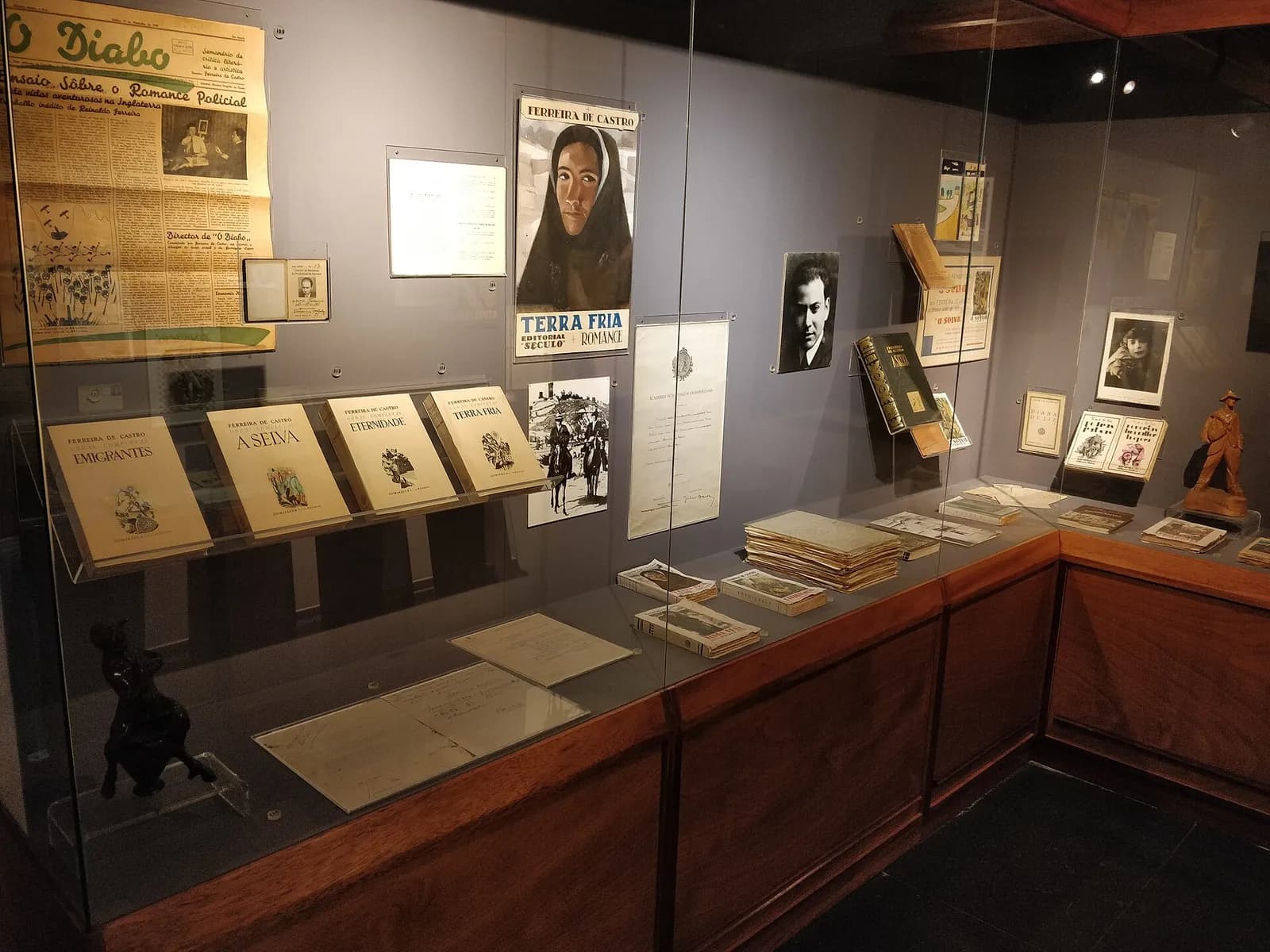
Terra Fria (1934), drawn from long stays in the Barroso highlands of the far north, won the Academy of Sciences' Ricardo Malheiros prize. At the end of that year, worn down by the censors, he gave up journalism in Portugal. In 1935 he edited the paper O Diabo for two months, from 8 September to 10 November. In March 1936 a government order banned his play about the Lindbergh kidnapping case, written for the National Theatre; it stayed unpublished until 1994.
On 17 November 1945, the eve of a parliamentary election the opposition had called on voters to boycott, he gave the Diário de Lisboa an interview denouncing the harm censorship did to Portuguese writers. He sat on committees of the Movement of Democratic Unity (MUD), the broad opposition front formed that October, and on 30 November 1946 he was at its meeting at the Voz do Operário, where a message for freedom and against the Estado Novo was read out.
In 1949 he campaigned for the opposition presidential candidate, General Norton de Matos. In 1958 a group of opponents asked him to stand himself; he refused, and also declined to join Humberto Delgado's honorary committee, critical of an opposition divided between two candidates, Delgado and his friend Arlindo Vicente. He told the Lisbon paper República that May that the regime had always been the enemy of the country's intellectuals. “I belong to no political party,” he said (translated from Portuguese).
The political police, known from 1945 as the PIDE, opened his mail and filed reports from informers on his travels, the petitions he signed and the tributes paid to him. The historian Luís Reis Torgal, who read the files in the Torre do Tombo, found that he was never arrested. When the PIDE summoned him to its Lisbon headquarters on 1 August 1962, the file notes that he did not come because he was taking the waters at Melgaço.
“He has good moral standing and, politically, is disaffected with the present situation, it being known that he signed the MUD lists in 1945.”
Torgal puts this down to his good name as a writer, at home and abroad. He places him among the opposition intellectuals whom the historians Irene Flunser Pimentel and Fernando Rosas call “untouchables”, a word Torgal finds perhaps too strong: watched all the time, but free to speak more or less openly. In 1962 the Portuguese Writers' Society elected him its president unanimously, and he led it until 1964.
Fame abroad and the Nobel that never came
In October 1959, forty years after he had left Brazil, he went back at the invitation of the Brazilian Writers' Union. Rio de Janeiro made him an honorary citizen and gave him the key to the city, and President Juscelino Kubitschek took him to see Brasília. In 1970 he won the Golden Eagle at the Nice book festival, from a jury chaired by Isaac Bashevis Singer, and in 1971 a stretch of the Trans-Amazonian Highway was named after him.
The Nobel Prize nomination archive, now open for those years, lists seven nominations for him. The first came in 1951 from the Danish scholar Holger Sten. From 1969 every nomination paired him with the Brazilian novelist Jorge Amado, and three of them came from the Brazilian writer and professor Antônio Olinto. The Centro de Estudos dates the Brazilian Writers' Union's joint proposal to 1968; the archive records the first joint nominations for the 1969 prize. The prize never came.
| Year | Nominated by | Shared with |
|---|---|---|
| 1951 | Holger Sten, University of Copenhagen | None |
| 1952 | João de Barros, Portuguese Academy | None |
| 1969 | Vitorino Nemésio, University of Lisbon | Jorge Amado |
| 1969 | Antônio Olinto, Federal University of Rio de Janeiro | Jorge Amado |
| 1969 | Joracy Camargo, Brazilian Society of Theatre Authors | Jorge Amado |
| 1970 | Antônio Olinto | Jorge Amado |
| 1973 | Antônio Olinto | Jorge Amado |
From the Nobel Prize nomination archive, which gives the nominators' full names as Antônio Olinto Marques da Rocha and Joracy Schafflor Camargo, and lists Olinto under the Association of Brazilian Writers in 1970 and 1973.
Death in Porto, a grave in Sintra
He lived to see the Estado Novo fall on 25 April 1974 and joined the first free May Day. On 5 June he suffered a stroke at Macieira de Cambra, and he died in the Hospital de Santo António in Porto on 29 June 1974, aged 76.
In 1970 he had asked to be buried beside one of the paths that climb to the Castelo dos Mouros in the hills above Sintra, where he had spent long stretches of his life. On 31 May 1975 his remains were laid in a hillside of the Serra de Sintra on the way to the castle.
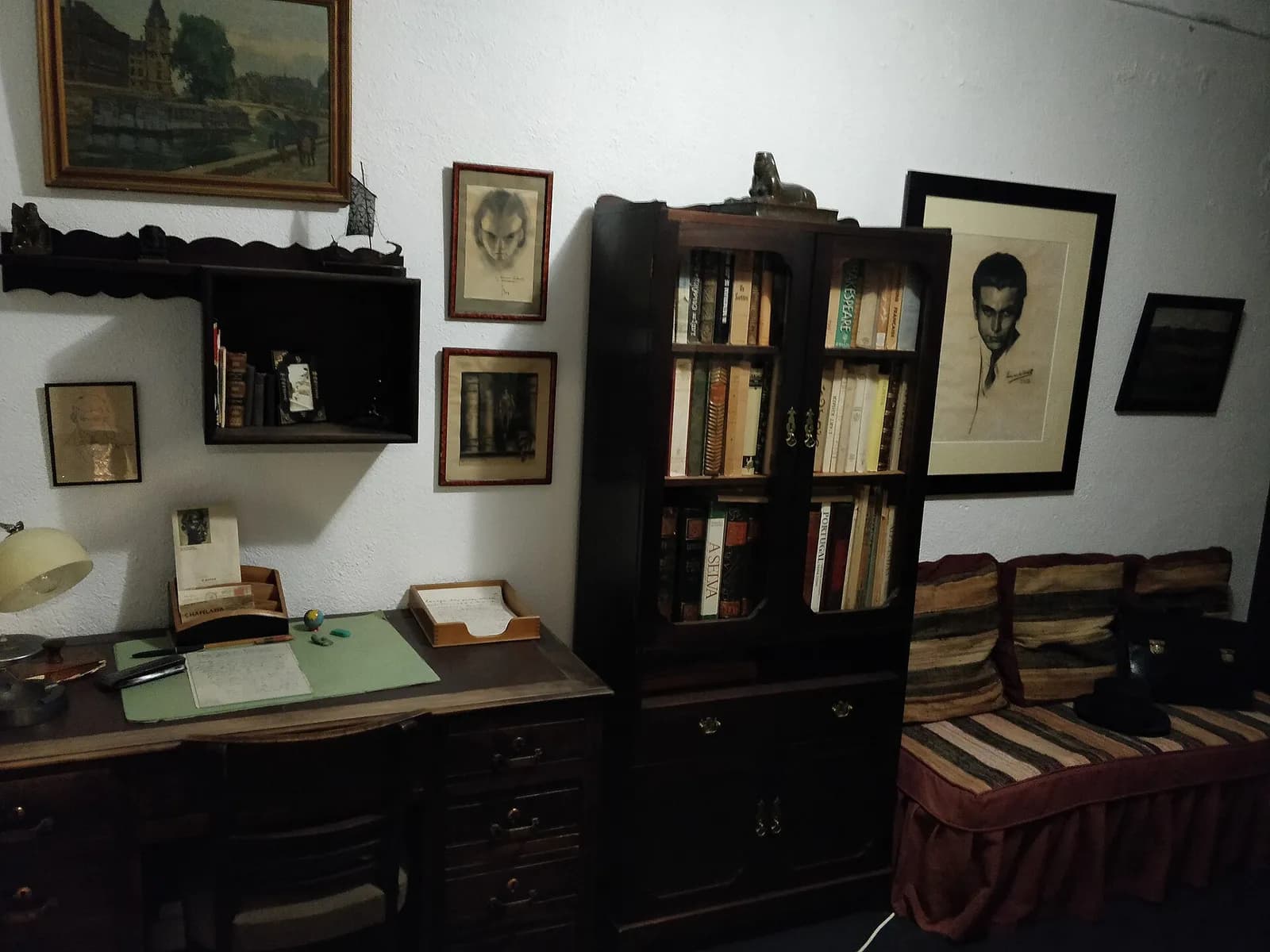
He had given his things away before he died. In 1967 he handed the house where he was born to the people of Oliveira de Azeméis. With the money from two French prizes in 1970 and 1971 he built a library at Ossela for the village. In April 1973 he gave most of his papers and possessions to Sintra, and the town's Museu Ferreira de Castro opened on 6 June 1982.
Why he is still read
Few Portuguese writers of the twentieth century travelled as far in translation. The museum in Sintra ends its displays with a room of his translations, and the town council's guide to it calls him the most translated Portuguese writer of his day. In 2014 A Selva was put on the list of books suggested for reading in the tenth year of Portuguese secondary schools.
His subject has not gone away either. Emigrantes describes a man who mortgages his land to leave and finds, when he comes back, that there is no home to return to. In April 2018 the council of Oliveira de Azeméis bought a lot of his photographs, letters and manuscripts at auction for the house museum in Ossela, among them the original of a proposal for the Nobel Prize signed by Portuguese writers and journalists.
FAQs
Where was Ferreira de Castro born?
In the hamlet of Salgueiros, in the parish of Ossela, in the municipality of Oliveira de Azeméis (Aveiro district), on 24 May 1898. His parents, José Eustáquio Ferreira de Castro and Maria Rosa de Castro, were tenant farmers.
Is A Selva based on Ferreira de Castro's own life?
Partly. He lived on the Paraíso rubber estate on the Madeira river from 1911 to 1914, from the age of twelve, and the novel keeps the estate's name and setting. Its hero, Alberto, is invented: an adult monarchist student who flees Portugal after the Monsanto rising of 1919.
Was Ferreira de Castro nominated for the Nobel Prize?
Yes. The Nobel nomination archive records seven nominations for the literature prize: in 1951, 1952, three in 1969, 1970 and 1973. The last five named him jointly with the Brazilian novelist Jorge Amado. He never won.
Was Ferreira de Castro arrested by the Estado Novo?
No. He opposed the regime openly, signed the MUD lists in 1945 and backed Norton de Matos in 1949, and the political police watched him closely. The historian Luís Reis Torgal, who studied his PIDE files, concludes that his prestige as a writer, at home and abroad, kept him out of the regime's prisons.
Where is Ferreira de Castro buried?
In the Serra de Sintra, on a hillside beside the way up to the Castelo dos Mouros, as he had asked in 1970. His remains were laid there on 31 May 1975. The Museu Ferreira de Castro is in the town of Sintra.
On the timeline
Open the timelineNearby moments from regeneration and the last kings (1851–1910).
Death of José Tomás de Sousa Martins, the Lisbon physician revered for treating the poor and for promoting the Serra da Estrela as a refuge for tuberculosis patients. His statue on the Campo dos Mártires da Pátria is still surrounded by candles, flowers and marble ex-voto plaques from people who credit him with cures.
The architect José Ângelo Cottinelli Telmo is born in Lisbon. He designed the modernist Sul e Sueste ferry station on the Terreiro do Paço, directed the hit comedy 'A Canção de Lisboa' and was chief architect of the 1940 Exposição do Mundo Português. As architect to the regime's prison-building commission from 1934, he is also credited with plans for the Tarrafal prison camp in Cape Verde.
Birth in Lisbon of Amélia Rey Colaço, a towering figure of 20th-century Portuguese theatre. With her husband Robles Monteiro she ran a company that held the concession of the Teatro Nacional D. Maria II from 1929 to 1974, staging Lorca and Tennessee Williams despite the censors and training actors such as Eunice Muñoz.
Ferreira de Castro is born
Birth of novelist José Maria Ferreira de Castro in Ossela, near Oliveira de Azeméis. Emigrating to Brazil at the age of 12, he spent almost four years on an Amazon rubber estate on the Madeira river, the experience behind his novel 'A Selva' (1930). A pioneer of Portuguese social realism, he was nominated seven times for the Nobel Prize.
António Aleixo is born in Vila Real de Santo António. A barely literate weaver's son who sold lottery tickets and sang his verses at Algarve fairs, he became one of Portugal's best-loved popular poets, his ironic four-line 'quadras' written down and published by a friend, Joaquim de Magalhães.
In a secret declaration signed in London by Lord Salisbury and Portugal's minister Luís de Soveral, Britain and Portugal reaffirm their ancient alliance, including the treaties of 1642 and 1661. Portugal undertakes to stop arms reaching the Boers through its territory and not to declare neutrality, while Britain's old pledge to defend Portugal's colonies is restated.
The poet António Nobre dies of tuberculosis at Foz do Douro, aged just 32. His book 'Só' (1892), with its homesick, saudade-steeped verses about his native north, later made him one of the defining voices of Portuguese symbolist poetry.
Coming up in history
All long reads 26 May 1834The Convention of Evoramonte: how Portugal's war of two brothers ended
 27 May 1987Madjer's back-heel: FC Porto beat Bayern to win the 1987 European Cup
 28 May 1926The coup of 28 May 1926: how a rising in Braga ended the First Republic
 29 May 1385The Battle of Trancoso: how feuding Beira lords stopped a Castilian raid
15 sources
Archives, scholarship and reporting this article was checked against.
- 1
Cronologia (chronology of Ferreira de Castro's life and work)Centro de Estudos Ferreira de Castro, Ossela
- 2
O Portugal amazônico de Ferreira de Castro e a Amazônia nordestina de Paulo Jacob (Karina Marques)Cadernos de Literatura Comparada 39 (2018), Instituto de Literatura Comparada Margarida Losa, Universidade do Porto
- 3
Ferreira de Castro, Manuel da Bouça e Manuel António Júnior: “O universal drama” (José Maria Silva Rosa)In Migrações: inquietações e desafios, XXVII Jornadas Culturais de Balsamão (2025); Universidade da Beira Interior repository
- 4
A importância de se chamar Ferreira de Castro… A repressão no Estado Novo, o escritor e a oposição dos “intelectuais” (Luís Reis Torgal)Revista de Estudos Literários 10 (2020), Universidade de Coimbra
- 5
Statistics of Migrations, National Tables: Portugal (Walter F. Willcox, ed., International Migrations, vol. I)National Bureau of Economic Research, 1929
- 6
Nomination archive: José-Maria Ferreira de CastroNobel Prize Outreach, nobelprize.org
- 7
Ferreira de Castro MuseumVisit Sintra
- 8
- 9
A 1.ª República (1910-1926)Assembleia da República
- 10
- 11
Língua e representação afrodescendente no romance A Selva (Adriana Cristina Aguiar Rodrigues)Muiraquitã, Universidade Federal do Acre, 2024
- 12
O discurso iconográfico da Ilustração Portuguesa sobre a Revolta Monárquica de Monsanto (1919), by Jorge Pedro Sousa, Fátima Lopes Cardoso and Celiana AzevedoDiscursos Fotográficos, vol. 19, no. 33 (2022), Universidade Estadual de Londrina
- 13
1945-1959: O pós-guerra e o início da aventura europeia (chronology by Maria Fernanda Rollo)CVCE.eu, University of Luxembourg, from the Faculdade de Ciências Sociais e Humanas, Universidade Nova de Lisboa
- 14Casa-Museu do escritor Ferreira de Castro com novo espólio para atrair mais públicoDiário de Notícias / Lusa, 1 June 2018
- 15
Roteiro literário “Caminhos de Ferreira de Castro”iPorto, Área Metropolitana do Porto
Image credits
- Balls of raw rubber waiting to be loaded onto the Madeira-Mamoré railway, on the upper Madeira river, around 1910, photographed by Dana Merrill. Rubber like this was what estates such as Paraíso, further downstream, existed to produce. Dana B. Merrill; reproduction by José Rosael/Hélio Nobre, Museu Paulista da USP, Public domain, via Wikimedia Commons.
- A paddle steamer on the Madeira river around 1910, photographed by Dana Merrill. Boats like this carried men and supplies up to the rubber estates and brought the rubber down; Ferreira de Castro reached Paraíso aboard another river steamer, the Justo Chermont. Dana B. Merrill; reproduction by José Rosael/Hélio Nobre, Museu Paulista da USP, Public domain, via Wikimedia Commons.
- A display case at the Museu Ferreira de Castro in Sintra, photographed in 2024: four of his novels of 1928 to 1934 in his collected works, a poster for Terra Fria and a front page of O Diabo, the paper he edited for two months in 1935. Roundtheworld, CC BY-SA 4.0, via Wikimedia Commons.
- The reconstruction of his study at the Museu Ferreira de Castro in Sintra, photographed in 2024. Roundtheworld, CC BY-SA 4.0, via Wikimedia Commons.