

The Battle of Trancoso: how feuding Beira lords stopped a Castilian raid
A Castilian column was heading home from the sack of Viseu with hundreds of captives and more than 700 laden mules. The local lords who should have stopped it had not been on speaking terms for some time.
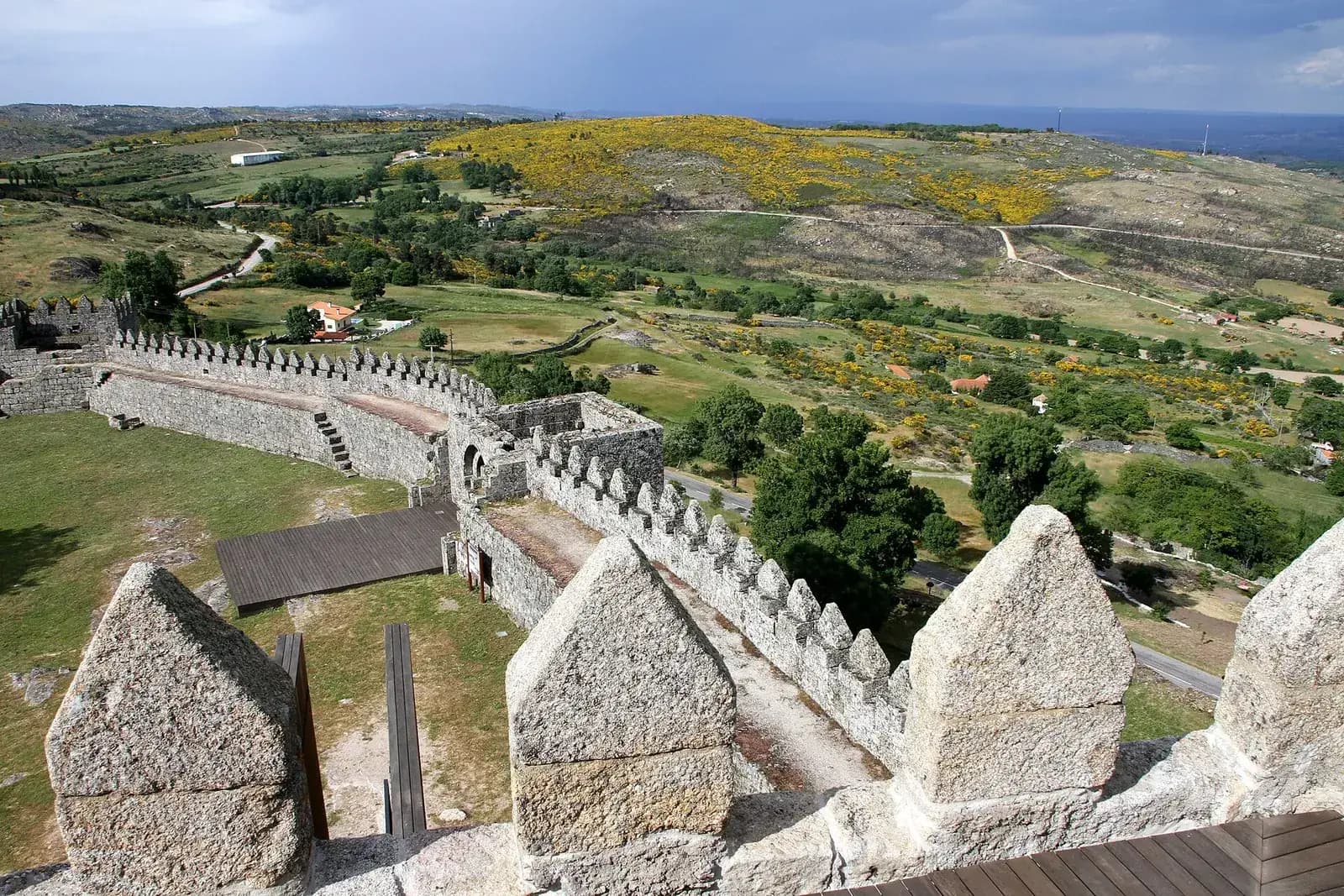
At a glance
- In May 1385 a Castilian raiding force entered the Beira from Ciudad Rodrigo, plundered the country around Pinhel and Trancoso and sacked Viseu.
- The Beira lords loyal to the newly acclaimed João I were feuding; João Fernandes Pacheco reconciled them, and Martim Vasques da Cunha agreed to serve under his rival Gonçalo Vasques Coutinho.
- They met the column on its way home at the chapel of São Marcos, near Trancoso, with a little over 300 lances and a mass of local foot soldiers.
- Fernão Lopes says every Castilian man-at-arms was killed or taken, and that only one of the captains he names escaped. The captives and the plunder were recovered.
- The date comes from a Castilian captain's epitaph: 29 May 1385, though the weekday it gives points to the 30th. Aljubarrota followed 77 days later.
Seven hundred mules on the Trancoso road
The Castilians came into sight at the head of the valley in no hurry. For days they had ridden through the Beira, the high country of north-central Portugal, without meeting resistance. Behind the horsemen came their plunder: men, women and boys taken captive, cattle and beasts of burden, and a baggage train that Fernão Lopes, the Portuguese royal chronicler, put at more than seven hundred pack mules.
Across the road, a short half-league from Trancoso, stood a Portuguese line on foot. Earlier its leaders had sent a squire to the Castilian commander, Juan Rodríguez de Castañeda, inviting him to come their way, where dinner would be ready for him. Castañeda had been delighted, and promised the messenger a good horse as a reward if the Portuguese kept their word.
Seeing them now, Lopes wrote, the Castilians “were not much pleased”. They tried to slip past along the side of the valley. By the end of the day almost all their men-at-arms lay dead around a small hermitage dedicated to Saint Mark.
A kingdom at war over its crown
Portugal had been at war since the death of King Fernando I in October 1383. His only daughter, Beatriz, was married to Juan I of Castile, and Juan claimed the throne through her. Against him stood João, Master of the Order of Avis, Fernando's illegitimate half-brother, who had taken power in Lisbon in December 1383 and held the city through a Castilian siege in 1384.
On 6 April 1385 the Cortes, the assembly of the kingdom's estates, met at Coimbra and acclaimed the Master as King João I. That did not settle the war. Many castles still held for Beatriz, and João I spent April and May besieging them with his constable, Nuno Álvares Pereira. In early May they were before Guimarães, where the town fell on 6, 7 or 8 May and the castle held out into June.
Juan I of Castile was in Córdoba gathering a new army. His fleet was already blockading Lisbon. He planned to invade from the south-east, by Badajoz, and meanwhile ordered Pedro Tenorio, Archbishop of Toledo, to assemble men at Ciudad Rodrigo, just across the border from the Beira, and send them in to cut down the vines and the grain and do all the damage they could.
The raid on the Beira
The captains at Ciudad Rodrigo did not wait for the archbishop. Lopes names six of them: Juan Rodríguez de Castañeda, the senior captain; Pero Suárez de Toledo, chief magistrate of Toledo; Álvar García de Albornoz, the king's chief cupbearer; João Rodrigues Maldorme, as the 1897 edition prints his name; Pero Suárez de Quiñones, captain of the ginetes; and Juan Alfonso de Trujillo. Some of their companions warned that the Beira was full of lords who would fight for it. Castañeda answered that this was exactly why he wanted to go there, to measure nobles against nobles.
He had a second argument. The Portuguese, he said, had sworn homage to Beatriz as heir in her father's lifetime and now broke their word, “and as they fail in this, so their feet and hands will fail them”. Lopes thought the real reason for the Castilians' boldness was simpler: they knew the Portuguese captains of the district were at odds and would not join forces, and none could stop them alone.
The Fundação Batalha de Aljubarrota, which runs the Aljubarrota battlefield centre, reconstructs the route. The column left Ciudad Rodrigo around 14 May, crossed the border near Almeida, which held for Castile, and began burning crops, vineyards and houses once it reached land loyal to João I. It skirted Pinhel, ravaged the plain of Trancoso and plundered the villages on the road to Viseu.
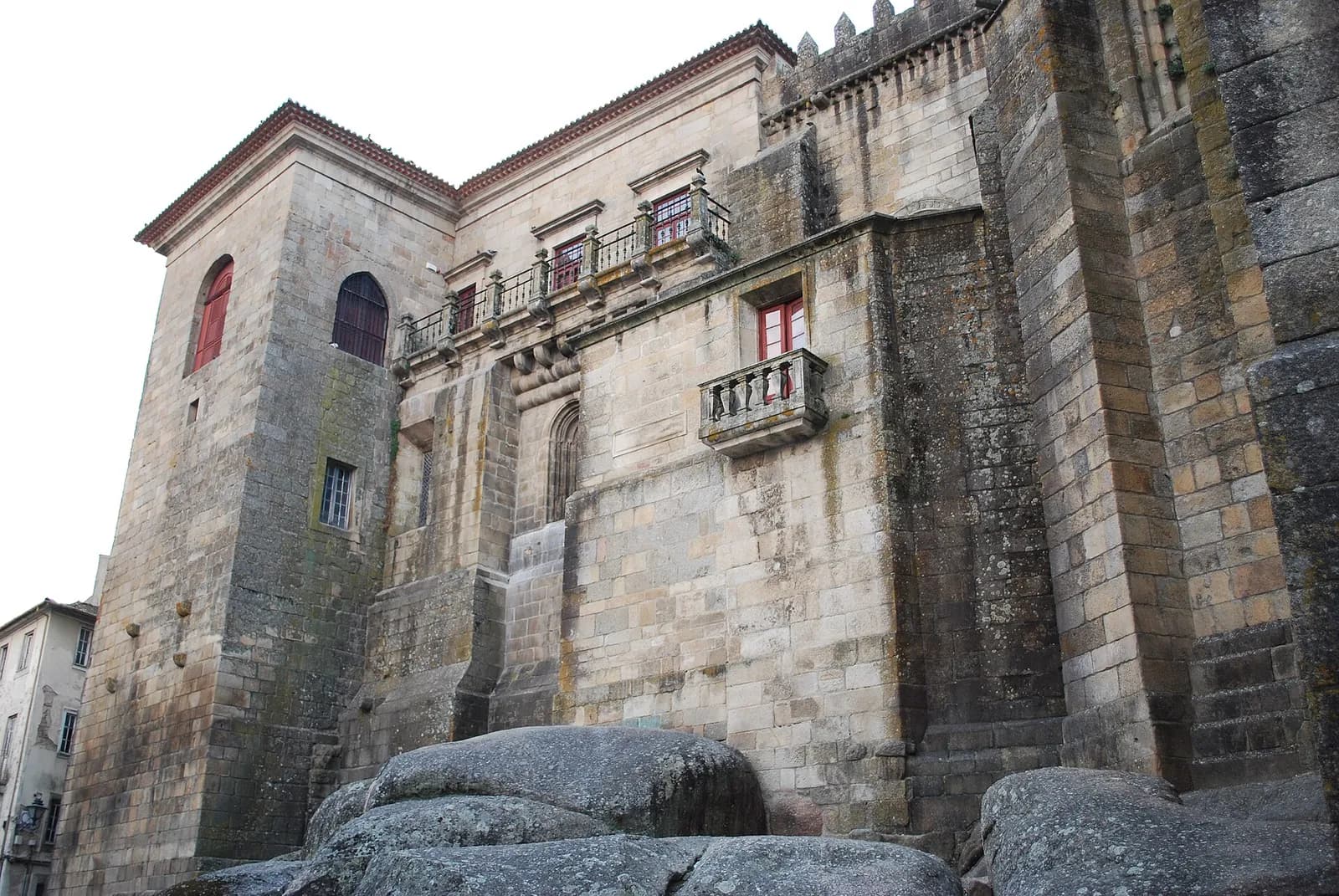
Viseu, 22 leagues from Ciudad Rodrigo by Lopes's reckoning, was one of the main towns of the Beira; the Fundação puts its population at about 6,000. It had no wall or fortress except its cathedral. Many townspeople crowded into the cathedral and the churches with what they could carry; others fled to the hills. The raiders stripped the churches of their silver but did not take captive those who had sheltered inside. The Fundação adds that they burned the town and stayed about three days.
“Who will drive the donkey?”
The lords who should have stopped them were close at hand. Gonçalo Vasques Coutinho was alcaide, or royal governor, of Trancoso castle. The brothers Martim Vasques da Cunha and Gil Vasques da Cunha were at Linhares, and João Fernandes Pacheco at Ferreira de Aves. Coutinho and the Cunhas had not spoken to each other for some time, each accusing the other of seizing goods on his lands.
Neither side was strong enough to attack alone, and neither would give way. Lopes summed up their attitude with a proverb: “you're good and I'm good, so who will drive the donkey?” Their politics were no more settled. When Juan I first invaded, at the end of 1383, Martim Vasques had paid him homage at Guarda, while Coutinho waited to see who would win. At Coimbra in March 1385 Martim Vasques argued for the imprisoned Infante João, a son of Pedro I and Inês de Castro, before giving way to the Master.
“I marvel at Gonçalo Vasques and Martim Vasques, and at those lords of the Beira who are there, that they let the enemy go about in front of them as if in their own house, doing as much damage as they say they do, and do not offer them battle, but let them rob and go off safe. It seems they care little for the land they are to enjoy, and with which they support their honours and estates.”
João Fernandes Pacheco, the king's chief guard and the son of the old courtier Diogo Lopes Pacheco, rode the two leagues to Martim Vasques's house and told him it was shameful to let the Castilians rob the land before their eyes. Martim Vasques talked of his enmity with Coutinho, then gave way. Coutinho refused. Pacheco guessed why: he would not serve under Martim Vasques, who by rank should have led, and let him take the credit.
So Martim Vasques gave up the command. Coutinho could lead and keep the honour of whatever God granted them, he said, and to show he meant it he would come to dinner at Coutinho's house and they would all set out from there. Coutinho ordered a good meal. Martim Vasques, Gil Vasques, Pacheco and Egas Coelho, lord of Folgosinho, sat down with him, and Coutinho's wife, Leonor Gonçalves, moved among the guests visibly pleased.
Money helped too. People in Porto sent sums to Coutinho and Martim Vasques, with Pacheco as go-between and the king's knowledge. The historian Salvador Dias Arnaut, who wrote a book-length study of the battle, left the purpose open: to move consciences, to pay the usual costs of a campaign, or both.
The battle at São Marcos
The lords swore to help each other faithfully and decided to block the Castilians' road home. Their squire, Afonso Rodrigues Baticela, carried the challenge. Knowing the column would return past Trancoso, they drew up on the veiga, the flat farmland south of the town, where the Castilians had to pass. Lopes gives the Portuguese a little more than 300 lances: 150 under Martim Vasques's banner, 120 under Coutinho's, 30 under Pacheco's, and the rest with Gil Vasques and Egas Coelho.
Portuguese lances at Trancoso by banner, as given by Fernão Lopes
lances
Lopes says the total was a little more than 300 lances and gives no figure for Gil Vasques da Cunha and Egas Coelho, who had “the others”. The Fundação Batalha de Aljubarrota estimates their share at one or two dozen.
Show the data
| Lances | |
|---|---|
| Martim Vasques da Cunha | 150 |
| Gonçalo Vasques Coutinho | 120 |
| João Fernandes Pacheco | 30 |
There had been no time to raise trained foot soldiers, so the lords filled their ranks with men from the councils and farmers of the district. The Fundação puts them at a little over 1,000, most with no experience of arms, and without crossbowmen. The Castilians had the better men-at-arms and the ginetes; the Portuguese had more men on foot.
| Fernão Lopes (c. 1440s) | López de Ayala (Castilian chronicle) | Fundação Batalha de Aljubarrota (modern) | |
|---|---|---|---|
| Castilian men-at-arms | 400 lances | 300 lances | 400 horsemen |
| Castilian light horse (ginetes) | 200 | Some ginetes, no number | 200 |
| Castilian foot | A number of foot, some of them crossbowmen | Not given | A few hundred, plus about 400 grooms and servants |
| Portuguese men-at-arms | A little over 300 lances | Some knights under three captains | A little over 300 horsemen |
| Portuguese foot | Many men from the councils and farmers | A good body of foot | A little over 1,000, mostly untrained |
| Time the raiders spent in Portugal | “Days” | Three nights | About 15 days |
Lopes knew Ayala's chronicle and drew on it for the crisis, but his figures for the Castilians are higher. Neither chronicler gives a total for either army.
When the Castilians saw the Portuguese, they veered right towards the stream of Freches, hoping to pass between the Portuguese line and the rocky hillside. The Portuguese moved forward to face them by the hermitage of São Marcos. The Castilian captains held a council. Some said they should keep going with their booty and fight only if attacked. Others said that to avoid battle with an enemy in plain sight would be mocked as cowardice in Castile. The second view won, though Lopes thought it came from necessity more than courage.
According to the Fundação, Castañeda had fought at Atoleiros the year before and seen Castilian cavalry fail against Portuguese spearmen on foot, so he ordered his men-at-arms to dismount. Only the ginetes stayed in the saddle. As the lines formed, the farmers on the Portuguese flanks lost their nerve and ran for the town. The Castilians took it as the start of a victory, sounded their trumpets and charged on foot, shouting “Castile! Santiago!” and the names of their families.
The Portuguese answered “Portugal and Saint George!”; Martim Vasques shouted “Cunha, Cunha!” and Pacheco “Ferreira!”. The ginetes rode down the fleeing peasants and killed many, which drove the survivors back into the line. The men-at-arms at the front never saw any of this. Lopes says the fight lasted a great part of the day and the blows were so heavy and thick that they could be heard in Trancoso. The Fundação reckons it began between ten and eleven in the morning and lasted about eight hours.
“And with the great heat there was, for it was in the month of July, and because the ground was ploughed and threw up much dust, they fell out of order, and were badly arrayed, and not closed up as they should have been.”
Ayala, later chancellor of Castile, who was himself taken prisoner at Aljubarrota, blamed that disorder. In his account the Portuguese stood still, let the Castilians come to them across the ploughland, and broke them. The Fundação thinks many of the captives freed themselves and joined in the fighting.
Counting the dead
Lopes says no Castilian man-at-arms escaped. Only the ginetes got away, with many of the men left holding the knights' horses, who in the Fundação's reading mounted them and fled, and some foot soldiers who ran into the hills. Of the captains he named, only Quiñones, the leader of the ginetes, survived. He names more of the dead, among them a knight commander he calls the comendador das Olgas, Lopo Gonçalves “Iron Foot”, Ruy García de Salazar, adelantado of Cazorla, Álvaro Cansado and Guterre de Ferreira, with sons and brothers of some of them. He counts twelve leading men killed.
| Captain | Office | Fate in Lopes | Fate in Ayala |
|---|---|---|---|
| Juan Rodríguez de Castañeda | Senior captain of the raid | Killed | Killed |
| Pero Suárez de Toledo | Chief magistrate (alcalde mayor) of Toledo | Killed | Killed |
| Álvar García de Albornoz | Chief cupbearer to Juan I | Killed | Escaped wounded |
| João Rodrigues Maldorme | Not given | Killed | Not named |
| Juan Alfonso de Trujillo | Not given | Killed | Not named |
| Pero Suárez de Quiñones | Captain of the ginetes | Escaped | Not named |
Names as given in the chronicles. Ayala names only Castañeda, Pero Suárez and Albornoz, and says most of the men-at-arms died.
Gil Vasques took one knight, Garcia Guterres, alive so that he could say who had died and how it had all happened. On the Portuguese side, Lopes found no captain or man of any standing killed, only the village farmers cut down by the ginetes. The baggage train and the plunder were taken; many of the captives took back their own goods and more, and seized some of the men who had been leading them away. The lords went home with their men, “very friendly,” Lopes noted, “and afterwards wholly at odds.”
“But be sure that, of a small and good company, no better battle was fought between the Portuguese and the Castilians in the whole war than this one.”
A date from a tombstone
Neither chronicle dates the battle. Lopes puts the raid in May. Ayala has the raid ordered around Saint John's Day, 24 June, and the battle fought in July heat. In his book A Batalha de Trancoso, dated 1947 but published in 1951, Arnaut concluded that it was fought between 6 May and 8 June 1385, most probably in the first days of June.
Two finds narrowed it down. The Livro das Lembranças of the monastery of Santa Cruz in Coimbra, published in 1968, records that Martim Vasques, Gonçalo Vasques and João Fernandes fought Castañeda near Trancoso “in the month of May” of the year 1423 of the Spanish era, which is 1385. And in 1966 the Spanish historian Carmen Batlle published the epitaph of Pero Suárez de Toledo, whose tomb had come from a Toledo convent to the Museu Marès in Barcelona.
The inscription says he died in the service of King Juan “in the battle of Troncoso” on Tuesday 29 May 1385. Arnaut then checked the calendar and found a snag: 29 May 1385 was a Monday, and the Tuesday was the 30th. One of the two is a slip, and no one can say which. Trancoso and the Fundação Batalha de Aljubarrota use 29 May.
- Date
- 29 May 1385 by the epitaph's day of the month; 30 May by its weekday
- Place
- The veiga by the hermitage of São Marcos, about 2 km south of Trancoso, Guarda district
- Portuguese leaders
- Gonçalo Vasques Coutinho in command, with Martim Vasques da Cunha, Gil Vasques da Cunha, João Fernandes Pacheco and Egas Coelho
- Castilian leader
- Juan Rodríguez de Castañeda, killed
- Result
- Castilian force destroyed; captives and plunder from Viseu recovered
From Trancoso to Aljubarrota
João I was still at Guimarães when the news arrived. Told that Pacheco had brought the lords together, he said: “I knew good João Fernandes would do that.” Juan I, by both chronicles, was besieging Elvas on the Alentejo border. Lopes says he had stayed there 25 days in all, longer than he had been told the hungry town could hold out, and on hearing of the defeat he gave up his plan of invading from that side and went north to Ciudad Rodrigo.
The losses weighed on Castile. When Juan's council debated the invasion, some advisers argued that most of the captains who knew how to run a war had died in the plague outside Lisbon in 1384, at Trancoso or in other setbacks, a good three thousand men by their count, and that those left were young men who had never seen a battle. The Fundação reads the episode as a gain of time for João I, who could gather his army instead of facing two Castilian attacks at once.
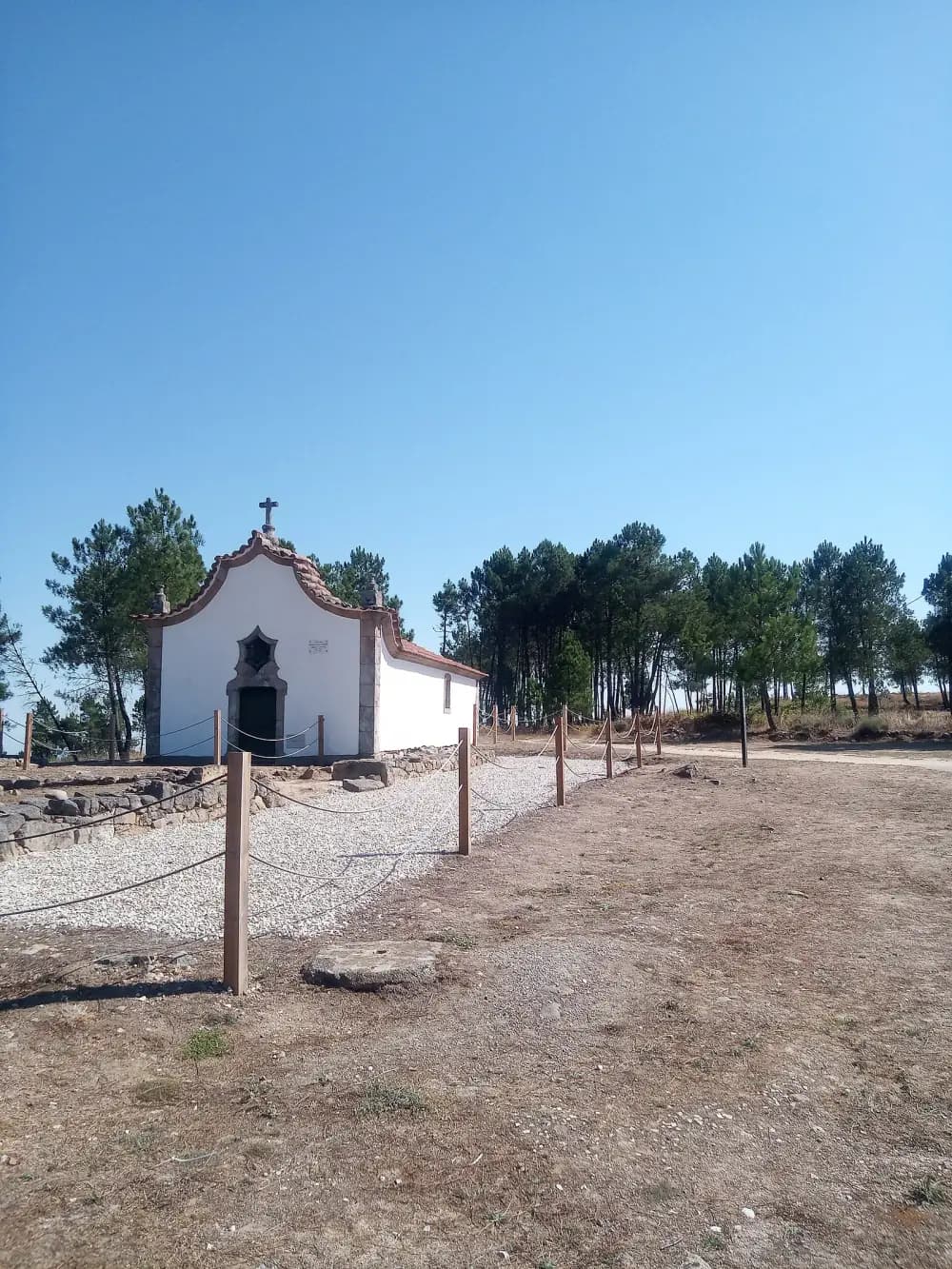
On 8 July Juan I invaded by Almeida and marched by Trancoso and Celorico towards Coimbra and Leiria. On the way, Lopes says, citing a writer he calls Doctor Christoforus, he ordered churches burned, especially São Marcos, “where the battle of Trancoso was”. Excavations at the site in 2005 found the position and plan of that first chapel.
João I summoned the victors of Trancoso to join him. Lopes reckoned they could have brought at least 400 lances and 2,000 foot. Coutinho, Martim Vasques and Gil Vasques sent excuses for more than a month. Lopes believed they expected Castile to win and thought they would bargain better from their castles; Martim Vasques told Juan's envoy at Guarda that whoever God gave the verdict to would have Guarda and every other place.
Only Pacheco and Egas Coelho came, with 60 lances and 100 foot. Pacheco, his father had promised the king, would not fail him, and he reportedly rode 20 leagues through a day and a night, outpacing his own men, to reach the field as the armies were drawn up. Aljubarrota was fought on 14 August 1385, 77 days after Trancoso, and secured João I's crown.
6 April
João I acclaimed at Coimbra
The Cortes make the Master of Avis king.
Early May
João I at Guimarães
The town falls on 6, 7 or 8 May; the castle holds out into June.
c. 14 May
The raid begins
Castañeda's column leaves Ciudad Rodrigo and enters the Beira by Almeida.
Second half of May
Viseu sacked
The raiders plunder the city and turn for home with captives and booty.
29 May (or 30)
Battle at São Marcos
The Beira lords destroy the column near Trancoso.
June
Juan I leaves Elvas
He abandons the siege and goes to Ciudad Rodrigo.
8 July
Juan I invades
His main army enters by Almeida and passes Trancoso.
14 August
Aljubarrota
Pacheco and Egas Coelho fight in João I's army; the other Beira lords stay away.
Why it still matters
Trancoso was a fight between local lords defending their own lands, and it did not decide the war. It did show again, after Atoleiros, that a Portuguese force with fewer and less well-equipped men-at-arms could beat the Castilians by standing on the defensive, in a formation much like the one used later at Aljubarrota. The news travelled through the whole kingdom weeks after the Cortes of Coimbra had made João I king.
The town has kept the memory. Trancoso's municipal holiday falls on 29 May and commemorates the battle, which locals also call the Battle of São Marcos. The town's official history lists Coutinho, alcaide of Trancoso and second marshal of Portugal, among its famous sons, and records that João I had Trancoso's walls rebuilt and confirmed its privileges on 12 January 1391.
The battlefield was about to be built on and crossed by a new road when, in 2003, the Portuguese Army proposed it for protection. In 2004 the heritage institute IPPAR approved it as a national monument, with the whole field a non-building zone, a decision the culture minister endorsed that October, according to the municipality.
FAQs
When was the Battle of Trancoso?
It is dated 29 May 1385, from the epitaph of the Castilian captain Pero Suárez de Toledo, who was killed in it. The epitaph also calls the day a Tuesday, which in 1385 was 30 May, so the battle was fought on the 29th or the 30th.
Who won the Battle of Trancoso?
Portugal. The lords of the Beira loyal to João I, led by Gonçalo Vasques Coutinho, alcaide of Trancoso, destroyed a Castilian raiding force under Juan Rodríguez de Castañeda and recovered the captives and plunder it had taken at Viseu.
How many men fought at Trancoso?
Fernão Lopes gives the Portuguese a little more than 300 lances plus many local foot soldiers, and the Castilians 400 lances and 200 light horsemen plus foot. The Castilian chronicler Ayala gives the Castilians 300 lances. No source gives a full total for either side.
How is Trancoso connected to Aljubarrota?
It was fought 77 days earlier, with the Portuguese on foot in a defensive formation much like the one used at Aljubarrota. Castile lost experienced captains, and Juan I abandoned his attack from Elvas and invaded through the Beira in July instead. Of the Trancoso victors, only João Fernandes Pacheco and Egas Coelho fought at Aljubarrota.
Where was the Battle of Trancoso fought?
On the open farmland about 2 km south of Trancoso, in the Guarda district, by the chapel of São Marcos. The municipality reports that the field was approved for protection as a national monument in 2004.
On the timeline
Open the timelineNearby moments from crisis and the house of avis (1383–1415).
King Fernando I, 'o Formoso', dies in Lisbon aged 37, the last king of the House of Burgundy. His death, leaving the crown to his daughter Beatriz and her husband Juan I of Castile, triggers the crisis of 1383–85 that ended with João I on the throne.
Battle of Atoleiros: near Fronteira in the Alentejo, Nuno Álvares Pereira has his roughly 1,400 men fight on foot in a tight formation that breaks the mounted charges of a Castilian army of some 5,000. The victory, early in the 1383–1385 crisis, showed that Castile could be beaten.
The Cortes of Coimbra elect João, Master of the Order of Avis, as King João I of Portugal, founding the House of Avis. Nuno Álvares Pereira is made Constable of the Kingdom the next day, and the succession war is decided at Aljubarrota that August.
The Battle of Trancoso, 1385
Just over 300 Portuguese men-at-arms and local levies, under Beira nobles who had just settled a feud, rout a Castilian raiding force near Trancoso as it heads home with captives and plunder from the sack of Viseu; nearly all its men-at-arms die. In the midst of the 1383–85 succession crisis, the victory is a prelude to Aljubarrota that August.
King João I and his constable Nuno Álvares Pereira rout the invading Castilian army at the Battle of Aljubarrota, ending the crisis of 1383–85, securing Portuguese independence and establishing the House of Avis on the throne.
The Treaty of Windsor is signed, sealing the Anglo-Portuguese Alliance first agreed in 1373 — the oldest diplomatic alliance in the world still in force. The following year João I married John of Gaunt's daughter, Philippa of Lancaster.
The future King Duarte, 'o Eloquente', is born in Viseu, son and from 1400 heir of João I and Philippa of Lancaster. A scholar-king and author of the 'Leal Conselheiro', his short reign was marked by the disastrous expedition to Tangier in 1437.
Coming up in history
All long reads 31 May 1991The Bicesse Accords: Angola's peace signed in Lisbon, 31 May 1991
 1 October 1777The Treaty of San Ildefonso: Portugal and Spain redraw South America, 1777
 2 October 1969Mr Five Per Cent's museum: the Gulbenkian opens in Lisbon, 1969
 3 October 1910Miguel Bombarda: the shooting at Rilhafoles on the eve of the Republic
10 sources
Archives, scholarship and reporting this article was checked against.
- 1
Chronica de el-rei D. João I, Part II (Fernão Lopes), volumes 4 to 6Bibliotheca de Classicos Portuguezes, Lisbon, 1897 (digitised by Internet Archive)
- 2
- 3
A Batalha de Trancoso (with the political background and a narrative of 1383 to 1385)Fundação Batalha de Aljubarrota, Centro de Interpretação da Batalha de Aljubarrota
- 4
Batalha de TrancosoCâmara Municipal de Trancoso
- 5
- 6
Trancoso BattlefieldAldeias Históricas de Portugal
- 7
- 8
A crise dinástica de 1383-1385 em Fernão Lopes, Pero López de Ayala e Jean Froissart: a construção de uma narrativa histórica (Rute Russo)Incipit 10: Workshop de Estudos Medievais da Universidade do Porto, 2021 (Faculdade de Letras da Universidade do Porto, 2022)
- 9
- 10
Image credits
- The walls of Trancoso and the farmland around the town, seen from the castle in May 2011. The battle of 1385 was fought on open ground about 2 km south of the town, by the chapel of São Marcos. Gerd Eichmann, CC BY-SA 4.0, via Wikimedia Commons.
- The back of Viseu cathedral in 2010. When the raiders arrived in 1385 the city had no walls, and the cathedral and the churches were the only refuge. The building was much altered in later centuries. Concierge.2C, CC BY-SA 3.0, via Wikimedia Commons.
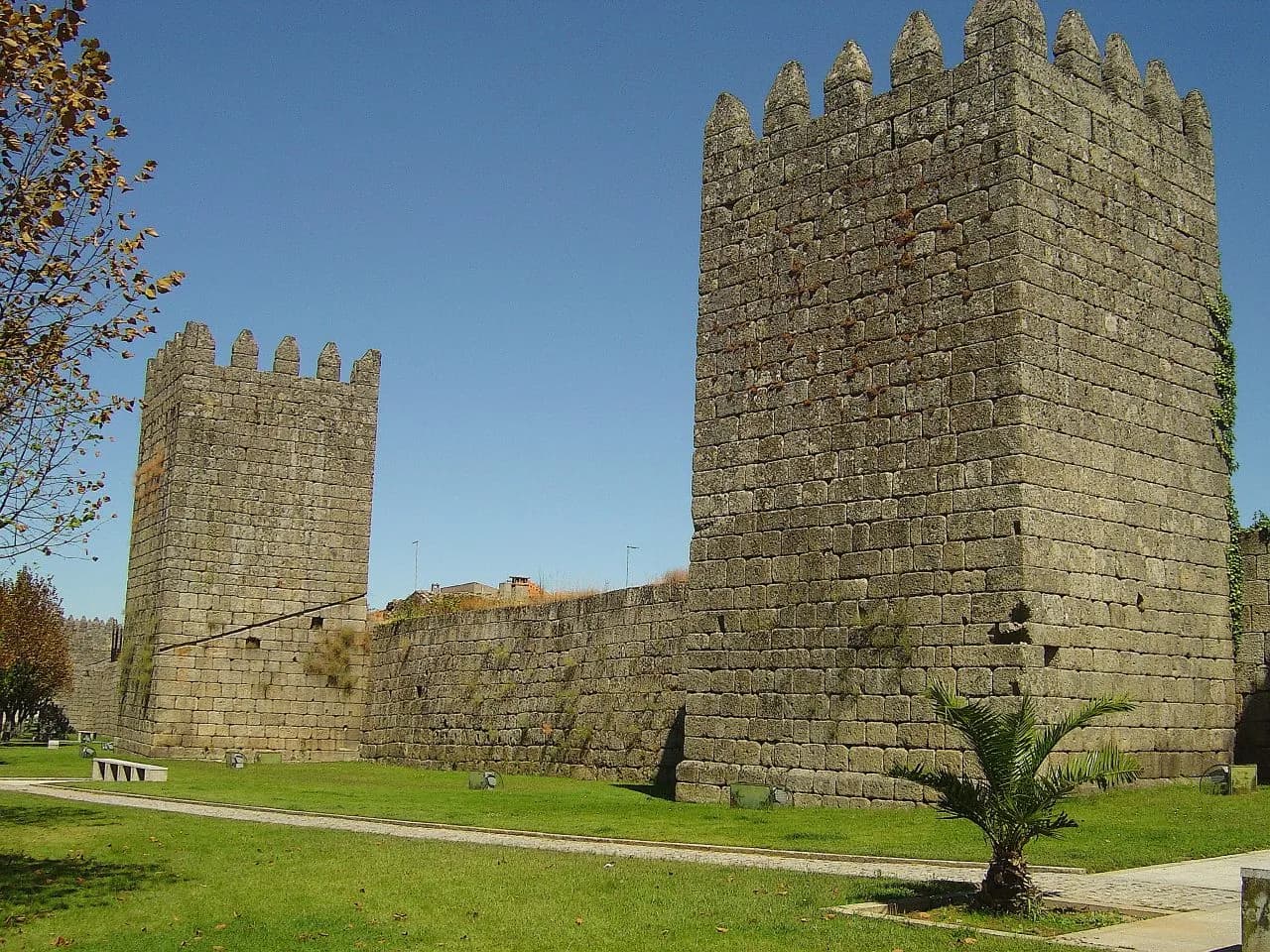
- Trancoso castle in 2005. Gonçalo Vasques Coutinho, who led the Portuguese in 1385, was its alcaide, and the Portuguese baggage was probably kept inside its walls during the battle. Vitor Oliveira from Torres Vedras, Portugal, CC BY-SA 2.0, via Wikimedia Commons.
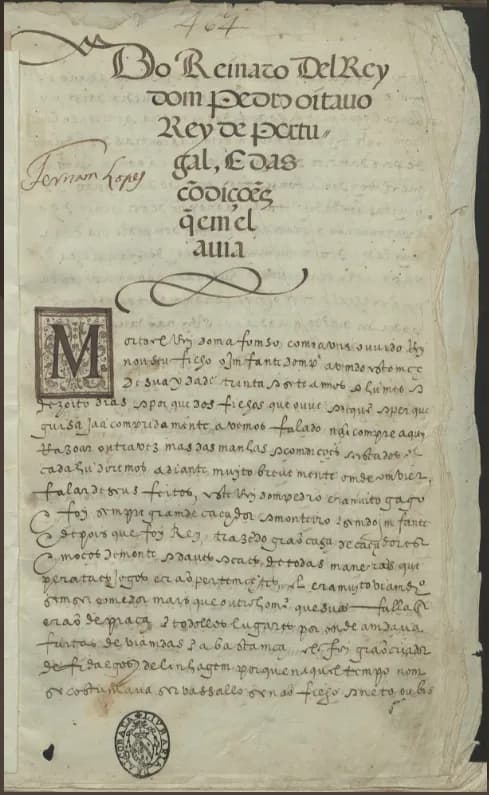
- The opening of Fernão Lopes's chronicle of Pedro I, in a sixteenth-century copy of his chronicles of Pedro I, Fernando and João I at the Biblioteca Nacional de Portugal. Lopes wrote them in the fifteenth century, about two generations after the battle. Fernão Lopes, Public domain, via Wikimedia Commons.
- The chapel of São Marcos in September 2020, with low stone foundations roped off in front of it. Excavations here in 2005 traced the plan of the earlier chapel that Juan I had burned in 1385. Filipept1, CC BY-SA 4.0, via Wikimedia Commons.
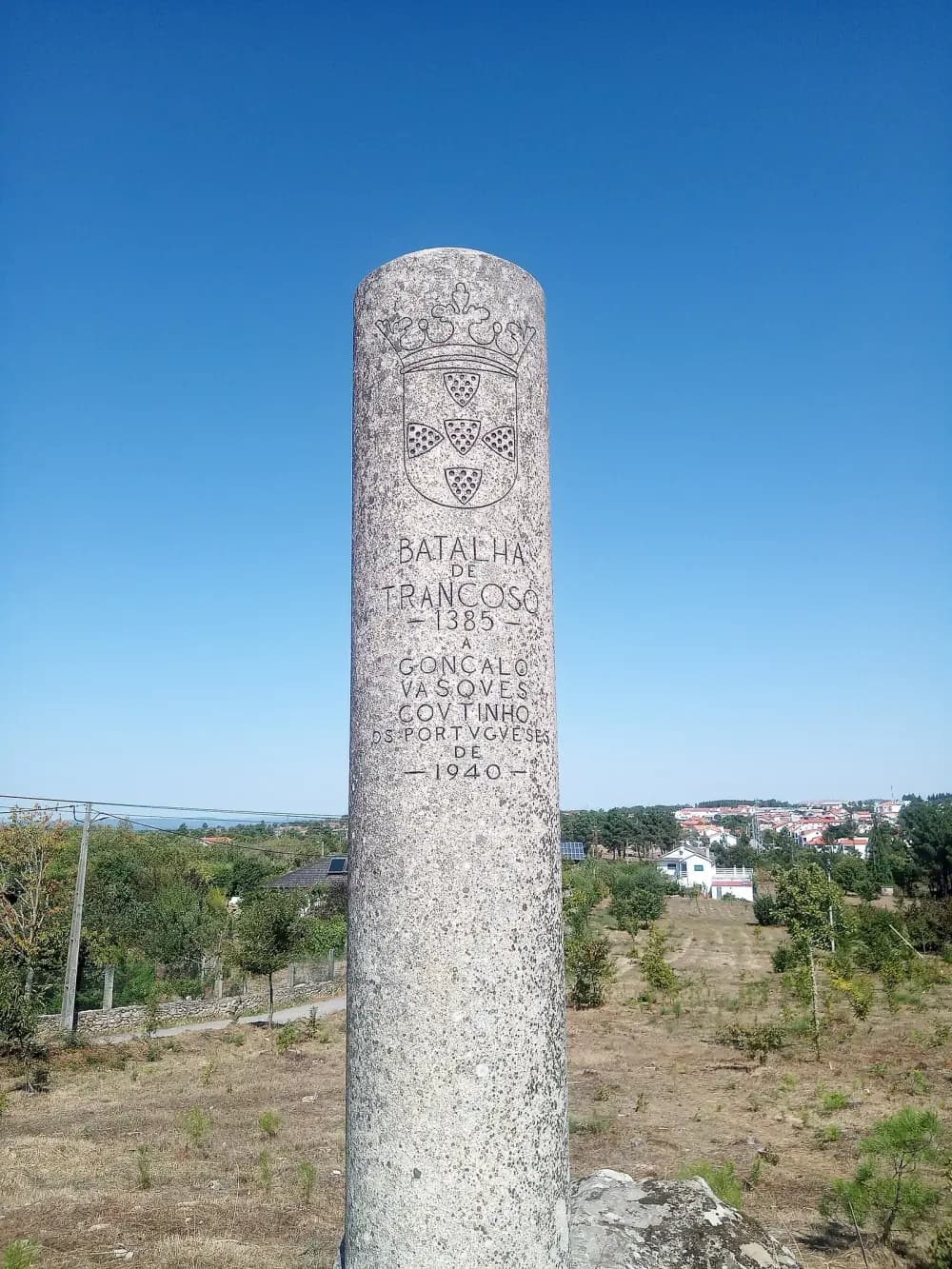
- The column on the battlefield, photographed in 2020. Its inscription reads: “Battle of Trancoso, 1385. To Gonçalo Vasques Coutinho, the Portuguese of 1940.” Filipept1, CC BY-SA 4.0, via Wikimedia Commons.