

The decree that shut Portugal's monasteries: 30 May 1834
Days after the civil war ended, the liberal government abolished every house of monks and friars in Portugal and took their property. The minister who drafted the decree was nicknamed the Friar-Killer.
At a glance
- A decree of the liberal regency abolished every convent, monastery, college and hospice of the male religious orders in Portugal, its islands and its overseas territories, and gave all their property to the state.
- The text was signed at the Necessidades palace by Dom Pedro, regent for his daughter Maria II, and by Joaquim António de Aguiar, minister of justice. The signature is dated 28 May 1834, the report printed with it 30 May, and it appeared in the government gazette on 31 May.
- The government itself called it the decree of 30 May, the date most of the literature still uses. The measure earned Aguiar the nickname “Mata-Frades”, the Friar-Killer.
- Friars and monks were promised a state pension, except those who had fought, preached or served for the defeated Dom Miguel. Nunneries were not closed but could take no novices, so they died out one by one; the last extinction file in the national archive is from 1961.
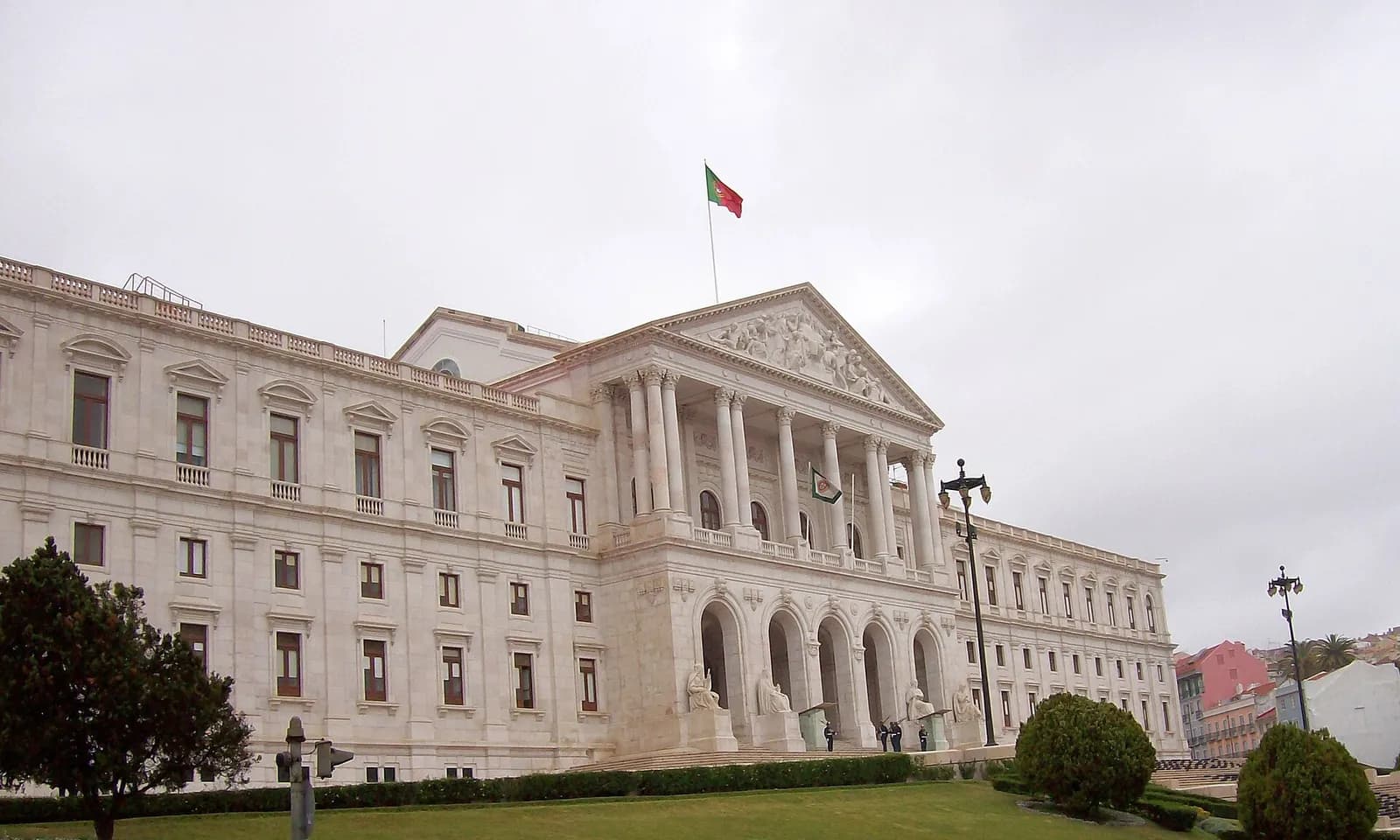
- The buildings became parliament, schools, barracks, offices and museums: the Benedictine monastery of São Bento became the seat of Portugal's parliament in August 1834.
A Saturday paper in Lisbon
Number 127 of the Crónica Constitucional de Lisboa, the government's gazette, came out on Saturday 31 May 1834. Its first page carried the bulletin from the Necessidades palace: Their Majesties and His Imperial Highness were in good health, and the day before, the regent had held a Council of State with his ministers of finance, justice and the kingdom present. Five days earlier the army of the absolutist pretender, Dom Miguel, had surrendered in the Alentejo, and the civil war was over.
Inside, the paper printed a long report addressed to the regent, Dom Pedro, by his minister of justice and ecclesiastical affairs, Joaquim António de Aguiar. It ran across three pages. It began by declaring that a prejudice that had lasted for centuries was now dead: the belief that the religious orders were indispensable to the Catholic religion and useful to the state.
Then came the decree. Its first article read: “There are hereby extinguished in Portugal, the Algarve, the adjacent islands and the Portuguese dominions all convents, monasteries, colleges, hospices and any houses of religious of all the regular orders, whatever their denomination, institute or rule.” Further down the same page, after a Treasury list of chapel lands for auction, an unsigned editorial told readers what they had just read.
“Two most important measures have just been decreed by the Government: one, the extinction of the regular religious orders; the other, the abolition of the Port wine company. Both bring the nation real benefits that it has called for.”
Friars, monks and a war between brothers
Portugal had been at war with itself since 1832. Dom Pedro, the former emperor of Brazil, was fighting for his daughter, Queen Maria II, and for the Constitutional Charter he had given Portugal in 1826. His brother Miguel had been acclaimed absolute king in 1828. Many friars and monks preached for Miguel, and the liberals saw the orders as his allies.
The liberals did not wait for victory to act. After they entered Lisbon on 24 July 1833, a Commission of General Ecclesiastical Reform was created on 31 July. On 5 August decrees banned all admissions to holy orders and to monastic novitiates, sent home the novices already in the convents and stripped of their posts any clergy who had abandoned them to follow Miguel. Another decree closed every house with fewer than twelve professed members.
The quarrel with the clergy lasted to the end. On 30 May 1834 the gazette printed an order of the ecclesiastical reform board, dated 26 May: a great number of priests, monks and friars, it said, had left their churches and convents to follow the rebel troops from town to town and province to province, trying by every means to keep the war going. No cleric was to exercise his orders without proof that he had been appointed by the regent or by the church authorities the regent had installed.
Some houses went one at a time. In April 1834 the gazette printed the reform board's sentence of 22 March suppressing the great Hieronymite monastery at Belém, today's Jerónimos. Its debts, the board found, came partly from “vicious causes and fraudulent administrations” going back to 1796 and partly from the general calamities of the times. In December 1833 the regent had already ordered the orphans of the Casa Pia, Lisbon's charity school, moved there from the Desterro monastery.
The board's file weighed the number of monks, their “services or disservices” to religion and the state and the value of keeping the house, with statements from witnesses. It also noted that most of the monks supported the liberal government.
The war ended with the Convention of Evoramonte, signed on 26 May 1834, the subject of its own article. Two days later Pedro signed the general decree.
Five articles and a report
- Signed
- Paço das Necessidades, Lisbon; the signature is dated 28 May 1834
- Signatories
- Dom Pedro, Duke of Bragança, regent for Maria II; Joaquim António de Aguiar, minister of ecclesiastical affairs and justice
- Published
- Crónica Constitucional de Lisboa, no. 127, 31 May 1834
- Usual name
- Decree of 30 May 1834, as the government cited it from the following days
- Scope
- Every house of the male regular orders in Portugal, the islands and the overseas territories
- Property
- Incorporated into the national estate (Fazenda Nacional)
The decree was short. After the first article closed the houses, the second made their property part of the national estate. The third handed the sacred vessels and vestments to the bishops, to be shared out among the neediest churches of each diocese. The fifth repealed every law to the contrary. Pedro issued it, the preamble said, after hearing the Council of State.
The fourth article dealt with the people. Every member of the closed houses would receive an annual pension from the Treasury for his keep, as long as he had no church living or public post that paid as much.
Six groups were excluded: men who had taken up arms against the legitimate throne or national liberty; who had abused their ministry in the confessional or the pulpit for the “usurpation”; who had accepted a living or a post from Miguel's government; who had denounced or persecuted their neighbours for loyalty to the Charter; who had marched with Miguel's troops; or who had abandoned their convents when the queen's authority returned.
Aguiar's report made the case at length. Jesus Christ had not created the orders and the Apostles had not known them, he wrote; communities born as refuges from persecution had fallen into laxity that no reform had cured. He blamed the mendicant friars, from the thirteenth century on, for weakening the authority of bishops and parish priests. Then came economics: a nation's strength depended on its population and population on marriages, and putting the orders' property to use would bring wealth and more people.
“In conclusion, Sire, it is necessary to extinguish the regular orders and to find a use for the property they hold. … To try to reform them any further is useless.”
The Friar-Killer
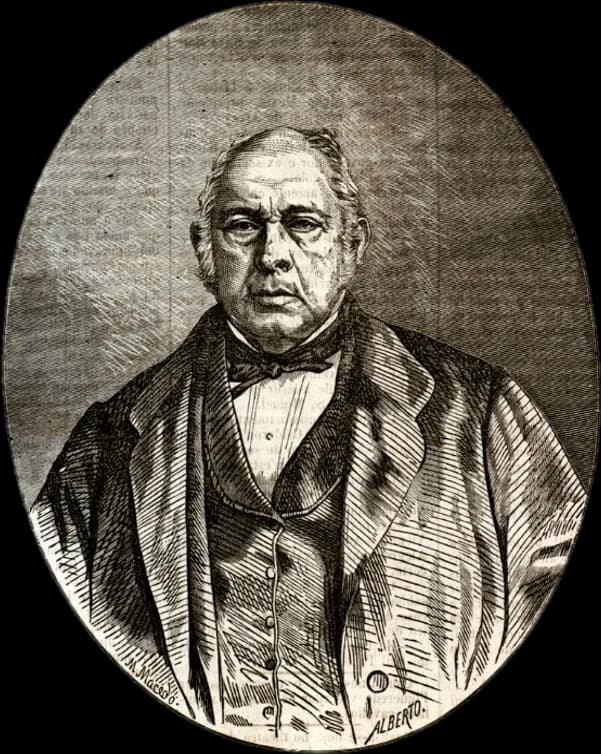
Aguiar was born in Coimbra on 24 August 1792, the son of a surgeon, and left his studies as a teenager to join the student battalion raised against Napoleon's invasion. He became a doctor of law and a lecturer at the university. His liberal opinions cost him his college place in 1823, and in 1828, when Miguel dissolved parliament, he was ordered out of Coimbra and went into exile in London.
He sailed with the liberal expeditions to Terceira in the Azores and landed with Pedro's army at Mindelo in July 1832, the same landing as the young Alexandre Herculano. In besieged Porto he was a judge of the war tribunal and sat on the commission drafting new penal and commercial codes. Pedro made him minister of the kingdom on 15 October 1833 and minister of justice on 23 April 1834, a post he held until Pedro's death.
The orders decree, a dictionary of 1904 noted, “earned him the nickname of Mata frades”, the Friar-Killer. It stuck through a long career. He was prime minister three times, in 1841–1842, in 1860 and from 1865 to January 1868. He turned down the titles and favours he was offered and never wore his foreign decorations. He died on 26 May 1874 and was buried in a plain grave in the Conchada cemetery in Coimbra.
Inventories, libraries and paintings
The state moved fast. By early June the Ministry of Justice was sending copies of the decree to the dioceses, asking the vicar capitular of Coimbra for an exact list of the religious of the closed houses, with notes on each man's circumstances. The Treasury told provincial authorities to take possession of the property of every house.
Instructions signed on 20 June 1834 set the procedure. Before taking over a house, the prefect was to warn the bishop, who would name trusted clergy to receive the church and the objects of worship. Everything else went into inventories drawn up in the presence of a fiscal official, and livestock was to be auctioned at once. On 14 July the decree was extended to the military orders.
A decree of the same day fixed the pensions. A professed member of the endowed orders was to get 12,000 réis a month and a mendicant friar 7,200 réis, raised to 18,000 and 10,800 réis for men over seventy or invalids. To claim it, each man had to prove before the prefect that he fell under none of the exclusions and had sold none of his house's property.
Those inventories still exist. The Torre do Tombo, the national archive, keeps 454 extinction files for male houses, the last from 1919, and 124 for female houses, which run until 1961. The historian Paulo Barata counted 563 religious houses at the time of the extinction. Fewer than half, 243, had libraries, and the inventories list more than 150,000 books.
Extinction files for religious houses in the Torre do Tombo
files
Each file records the closure and inventory of one house. Female houses were closed only when their last nun died, so their files run on for decades longer. Figures from Maria João Oliveira e Silva (2024), citing the archive's finding aids.
Show the data
| Files | |
|---|---|
| Male houses (1834–1919) | 454 |
| Female houses (1834–1961) | 124 |
Books had been on the liberals' minds since the siege. A decree of 3 July 1833 founded a public library in Porto from the libraries of its closed convents and of defeated absolutists, opening with the claim that “ignorance is the most irreconcilable enemy of liberty”. Alexandre Herculano, the future historian, worked there as a librarian. In Coimbra, the libraries of the university colleges run by the orders were broken up.
In Lisbon a depot for the books, archives and paintings of the closed convents was set up on 16 October 1834 in the Franciscan convent of São Francisco da Cidade, in the Chiado. By 1836 it held more than 300,000 books and over 6,000 paintings. The new Academy of Fine Arts picked the best pictures, and the depot was merged into the national library in 1841.
Much of the art arrived in poor shape. Altarpieces had been darkened by candle smoke and incense or damaged by damp walls and leaking roofs, and others were later harmed by unskilled restorers. Many important works, a vice-inspector of the Academy wrote in 1868, never reached the depot at all.
The nuns who were left to die out
The decree spoke only of religiosos, male religious. Nunneries were not closed in 1834. They were placed under the authority of their bishops and left to run down: since August 1833 no novice could be admitted, so each house was closed only when its last nun died. That is why extinction files for women's convents in the national archive run until 1961.
Parliament in a monastery
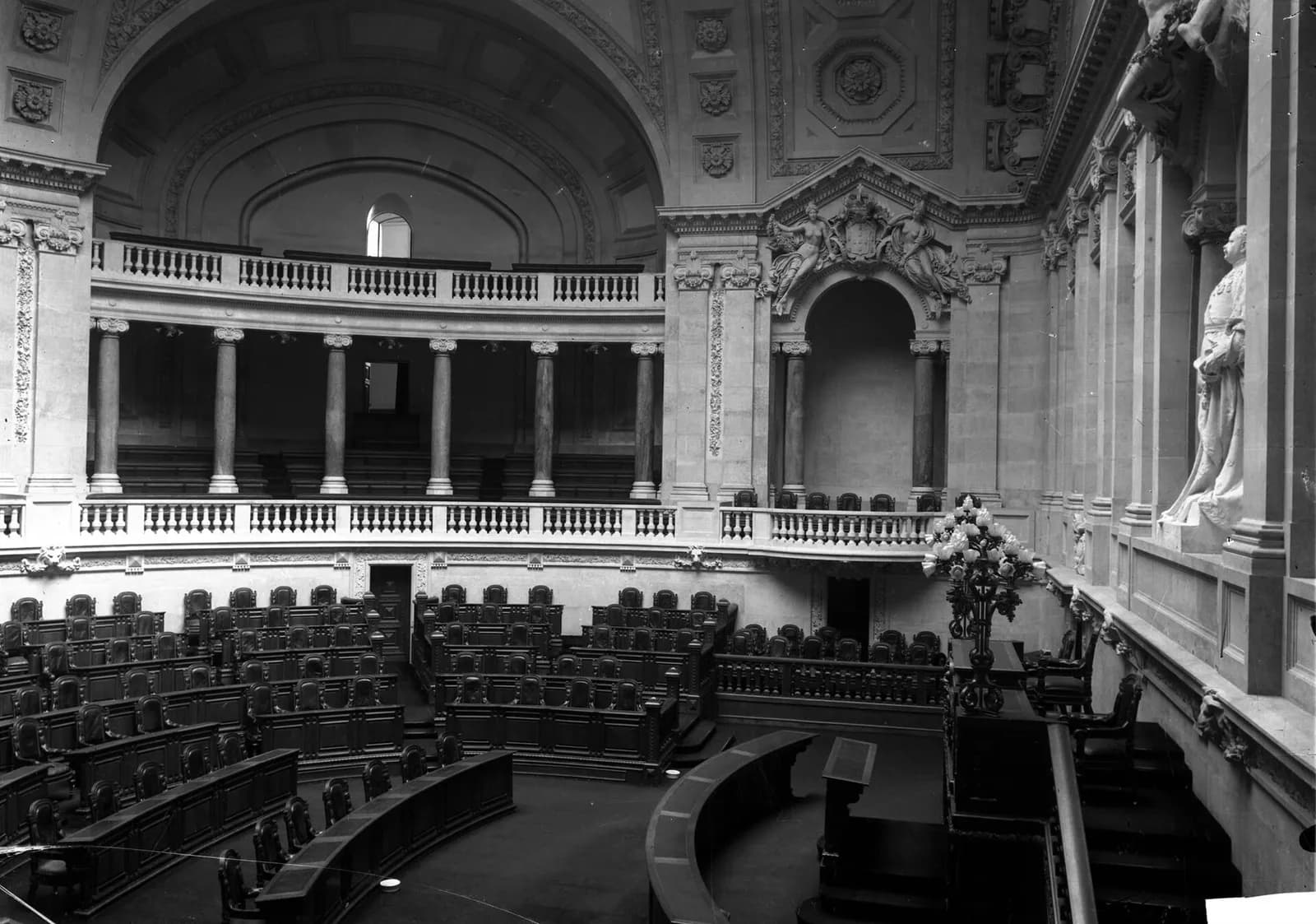
Lisbon was full of empty religious buildings, and the new state needed offices. On 20 July 1834 Pedro went to “the extinct Monastery of São Bento da Saúde”, a Benedictine house, to inspect the work on chambers for the two houses of parliament. An order of 9 August renamed it the Palácio das Cortes, and there, on 15 August, he read the speech from the throne that opened the new Cortes.
The work had begun early. The public works accounts for May 1834, printed in the gazette in July, already list money for the Cortes chamber at São Bento, for the Royal Academy of Sciences in the Convento de Jesus and for branch post offices in the convents of the Barbadinhos and São Domingos.
| House | New use | Recorded |
|---|---|---|
| Mosteiro de São Bento da Saúde (Benedictines) | Palácio das Cortes, seat of parliament | May–August 1834 |
| Mosteiro de Nossa Senhora de Belém, the Jerónimos (Hieronymites) | Home for the orphans of the Casa Pia | Ordered December 1833; monastery suppressed March 1834 |
| Convento de Jesus | Royal Academy of Sciences | May 1834 |
| Convento dos Barbadinhos, Esperança | Branch post office | May 1834 |
| Convento de São Francisco da Cidade (Franciscans) | Depot of the convents' books and paintings, then the national library | 1834–1836 |
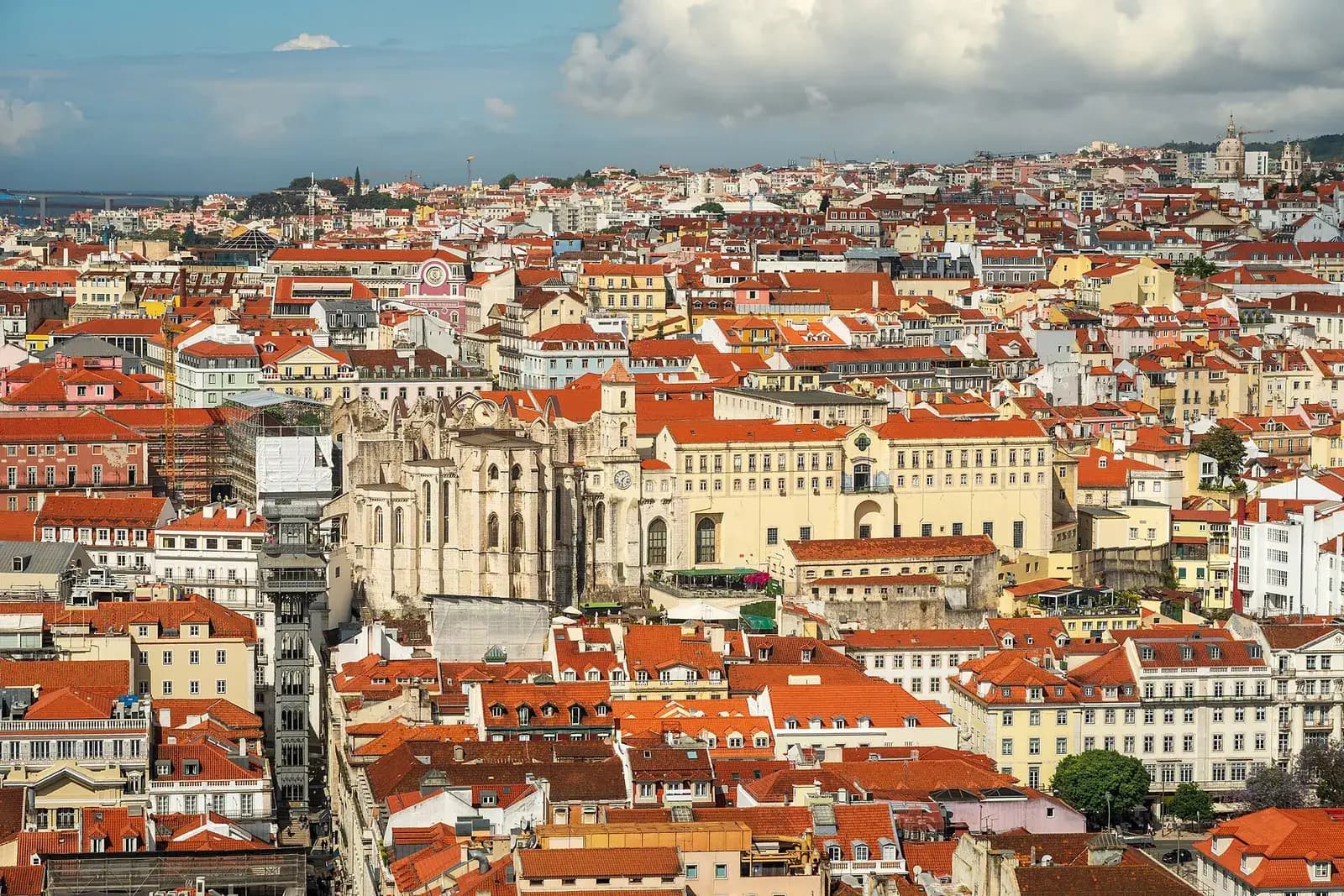
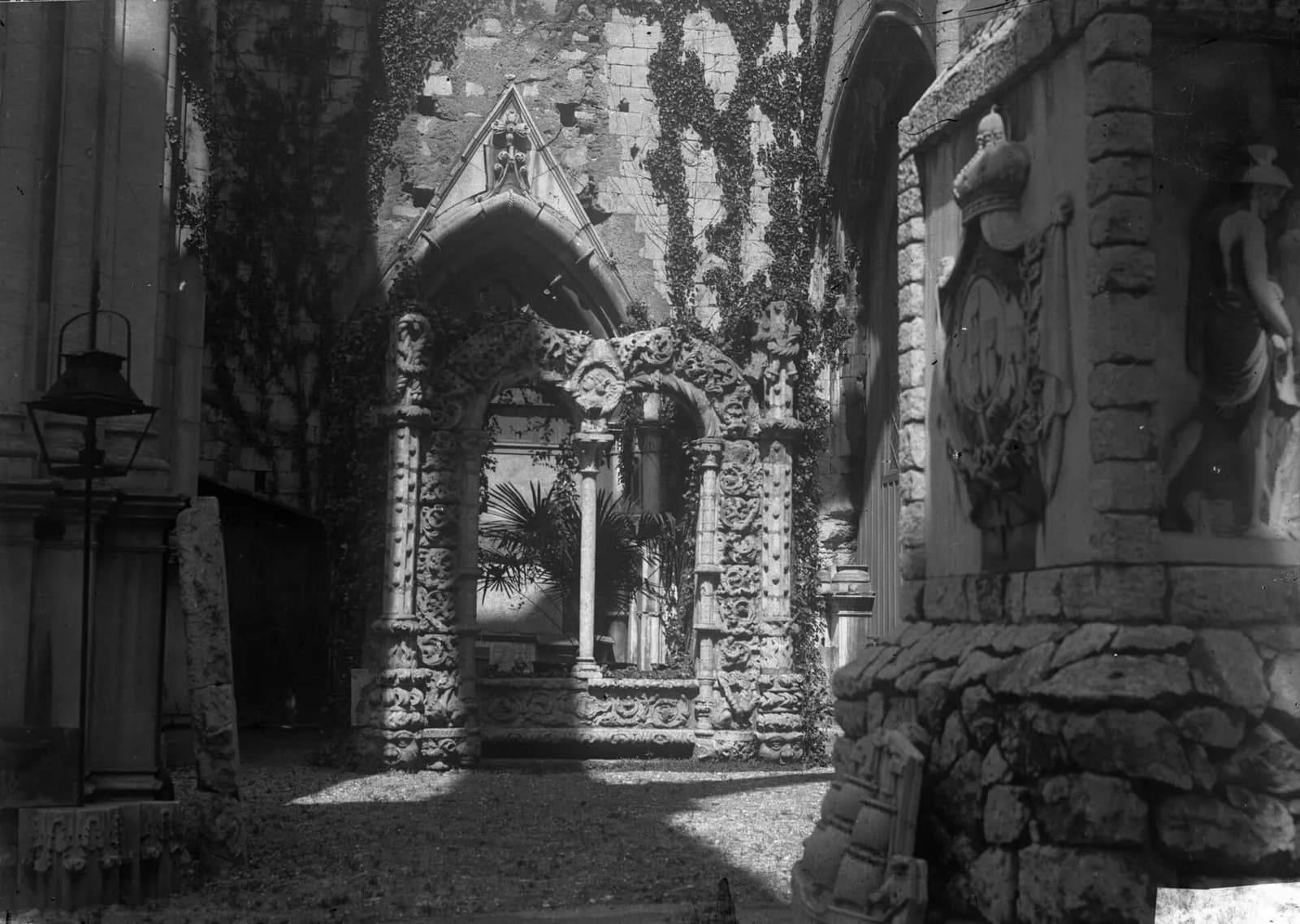
| Convento do Carmo (Carmelites) | Municipal Guard barracks; the ruined church became the Archaeological Museum | 1836; 1864 |
The dates are those of the first gazette notices or institutional records found, not of formal transfer deeds. The works accounts for May 1834 were printed in July.
Outside Lisbon the story was often harsher. At Sintra the Hieronymite friars left the monastery of Pena in 1834 and it was abandoned until King Fernando II bought the ruin in 1838 and built his palace there. At Batalha, when the Dominicans left, the Founder's Chapel, where Henry the Navigator lies, was stripped of everything used for worship. The convent at Vidigueira where Vasco da Gama was buried was auctioned by the state in 1841; around 1840 looters had broken open his vault.
Not everyone admired Pedro's government by decree. The Annual Register in London, reviewing his decrees of 1834, quoted the order for “the total extinction of all convents, monasteries, colleges, and religious houses of monks of the regular orders” among the acts of what it called a “wide, though well meant despotism”.
From the first decrees to the last nun
3 July 1833
Porto public library founded
Built from the libraries of the city's convents.
24 July 1833
Liberal troops enter Lisbon
31 July 1833
Commission of General Ecclesiastical Reform created
5 August 1833
Novitiates closed
No more admissions to holy orders or to monastic novitiates; novices sent home.
22 March 1834
Belém monastery suppressed
The building becomes the home of the Casa Pia orphans.
26 May 1834
Convention of Evoramonte ends the civil war
28 May 1834
Date on the decree's signature
30 May 1834
Date on Aguiar's report; Council of State meets
31 May 1834
Decree and report published
The government cites it as the decree of 30 May.
20 June 1834
Pensions fixed; instructions for taking over the houses
15 August 1834
Royal opening of the Cortes in the former monastery of São Bento
16 October 1834
Depot of the convents' books set up at São Francisco
1864
Archaeological Museum founded in the Carmo ruins
8 October 1910
The Republic declares the 1834 law still in force
1961
Last extinction file for a female house
Why it still matters
The law outlived the monarchy that made it. When the Republic was proclaimed in 1910, its Provisional Government decreed on 8 October that the laws of 1759 and 1767 against the Jesuits and the 1834 abolition of the orders remained in force.
Its most visible legacy is in stone. The monastery of São Bento became parliament's home in 1834, and the Constituent Assembly that finished the Constitution of 1976 sat there too. Lisbon's archaeological museum stands in the Carmo ruins, founded in 1864 partly to rescue the carved stone being lost from closed convents. The extinction inventories in the Torre do Tombo are now used to rebuild the lost libraries and archives of individual houses, one catalogue at a time.
FAQs
What did the decree of 30 May 1834 do?
It abolished every convent, monastery, college and hospice of the male religious orders in Portugal, the islands and the overseas territories, made their property part of the national estate, gave the sacred vessels and vestments to the bishops for poor churches, and promised a pension to friars and monks who had not sided with Dom Miguel.
Why was Joaquim António de Aguiar called “Mata-Frades”?
As minister of justice in 1834 he signed, with the regent Dom Pedro, the decree that closed all the houses of the male religious orders. A dictionary of 1904 records that the measure “earned him the nickname of Mata frades”, the Friar-Killer. He later served three times as prime minister.
Was the decree dated 28 May or 30 May?
Both dates appear. The signature on the printed decree is dated 28 May 1834 and Aguiar's report printed with it 30 May. It was published in the government gazette on 31 May, and the ministries referred to it as the decree of 30 May from the first days, which is the date most of the literature uses. The Republic's decree of 8 October 1910 called it the law of 28 May.
Were nuns expelled in 1834?
No. The decree applied to male religious. Women's convents were placed under their bishops and, since novices had been banned in August 1833, each was closed only when its last nun died. The national archive's extinction files for female houses run until 1961.
What happened to the convents' books and paintings?
They were inventoried and gathered into depots. In Lisbon the depot in the convent of São Francisco held more than 300,000 books and over 6,000 paintings by 1836 and was merged into the national library in 1841. In Porto the convent libraries became the city's public library, founded in 1833.
On the timeline
Open the timelineNearby moments from invasions, brazil and the liberal wars (1807–1851).
The day after the victory at Cova da Piedade, with the Miguelist forces having withdrawn from the capital, the Liberal commander Duke of Terceira enters Lisbon unopposed to the cheers of crowds. The fall of the capital restores the cause of Queen Maria II and effectively decides the Portuguese Civil War.
Liberal forces under the Duke of Terceira rout Dom Miguel's army on the heights of Asseiceira near Tomar, taking some 1,400 prisoners. The last and decisive battle of the Liberal Wars forces Miguel to capitulate ten days later at Évoramonte.
The Convention of Evoramonte is signed, ending the Portuguese Civil War (Liberal Wars). Miguel's army lays down its arms and he agrees to leave Portugal for good, securing the throne of the young Queen Maria II and the constitutional monarchy.
Abolition of the religious orders
The decree of 30 May, as the Liberal government cited it, abolishes all male religious orders in Portugal. Drafted by justice minister Joaquim António de Aguiar, it hands hundreds of monasteries and friaries to the state — which is why so many of Lisbon's old convents now house parliament, museums and barracks. It earns Aguiar the nickname 'Mata-Frades' ('Friar-Killer').
Following his defeat in the Liberal Wars and the Convention of Evoramonte, the former King Miguel I embarks at Sines aboard a British warship bound for exile in Genoa. His departure ends absolutism in Portugal and consolidates the constitutional monarchy of his niece, Queen Maria II.
Pedro IV of Portugal, who had also reigned as Pedro I, first Emperor of Brazil, dies of tuberculosis at the Palace of Queluz aged 35, in the very room where he was born. His death came only months after the liberal victory in the Portuguese Civil War secured the throne for his daughter Maria II.
Queen Maria II, just turned 17, marries Prince Ferdinand of Saxe-Coburg and Gotha in Lisbon Cathedral, after a proxy wedding in Coburg. On the birth of their first son he became King Fernando II. Remembered as the 'artist king', he would rescue a ruined monastery above Sintra and turn it into the Pena Palace.
Coming up in history
All long reads 1 October 1777The Treaty of San Ildefonso: Portugal and Spain redraw South America, 1777
 2 October 1969Mr Five Per Cent's museum: the Gulbenkian opens in Lisbon, 1969
 3 October 1910Miguel Bombarda: the shooting at Rilhafoles on the eve of the Republic
 4 October 1582The ten days Portugal never had: the calendar change of October 1582
34 sources
Archives, scholarship and reporting this article was checked against.
- 1
Crónica Constitucional de Lisboa, no. 127, Saturday 31 May 1834, p. 4: decree extinguishing the houses of the regular orders, and editorialCEPESE, Universidade do Porto (DigiGov digitised official gazette)
- 2
- 3
Os inventários de extinção dos conventos em 1834: uma tentativa de reconstituição de dois cartórios de instituições religiosas de cariz beneditino, Rendufe e Tomar (Maria João Oliveira e Silva)Boletim do Arquivo da Universidade de Coimbra, 37-1 (2024), pp. 157–174
- 4
Portugal: diccionario historico, chorographico, heraldico, biographico, bibliographico, numismatico e artistico, vol. 1, entry “Aguiar (Joaquim Antonio de)” (Esteves Pereira and Guilherme Rodrigues)João Romano Torres, Lisbon, 1904 (digitised by the Internet Archive)
- 5
- 6
O restauro das pinturas conventuais à guarda da Biblioteca Nacional (1835-1913) (Clara Moura Soares)ARTis ON, special issue no. 3 (2016), Faculdade de Letras da Universidade de Lisboa
- 7
- 8
[Convenção de Évora Monte, estabelecida entre os Comandantes dos Exércitos de Dona Maria II e de Dom Miguel, a 26 de Maio de 1834] (manuscript, 4 folios, MSS 250, n.º 23)Biblioteca Nacional de Portugal, Biblioteca Nacional Digital
- 9
8 July 1832: Pedro disembarks in Mindelo, near PortoParques de Sintra, Palácio Nacional de Queluz (D. Pedro IV chronology)
- 10
Herculano, Alexandre (Lisbon, 1810 - Azóia de Baixo, Santarém, 1877) (Arthur Alfaix Assis)Dicionário de Historiadores Portugueses, Biblioteca Nacional de Portugal
- 11
- 12
- 13
- 14
- 15
- 16
- 17
- 18
Divórcio e casamento na I República: questões fraturantes como arma de conquista e de manutenção do poder pessoal?, by António Menezes CordeiroOrdem dos Advogados
- 19
- 20
O imediato estabelecimento e constituição da Biblioteca Pública: os primórdios da Biblioteca Pública de Braga (Henrique Barreto Nunes)Páginas a&b, series 3, no. 21 (2024), pp. 221–225
- 21
Herculano de Carvalho e Araujo, AlexandreEncyclopædia Britannica, 11th edition (1911), via Wikisource
- 22
- 23
- 24
- 25
- 26
- 27
Museu Arqueológico do Carmo: história do edifício e do museuAssociação dos Arqueólogos Portugueses
- 28
History of the Park and National Palace of PenaParques de Sintra – Monte da Lua
- 29
Parque e Palácio Nacional da Pena (visitor leaflet with chronology)Parques de Sintra – Monte da Lua
- 30
História do Mosteiro da BatalhaMosteiro da Batalha (Museus e Monumentos de Portugal)
- 31
- 32
- 33
Diário da Assembleia Constituinte n.º 132, sessão n.º 131 de 2 de Abril de 1976Assembleia da República, Debates Parlamentares
- 34
Largo e Quartel do Carmo, 25 April 1974 (Lugares de Abril)Associação 25 de Abril
Image credits
- The roofless church of the Carmo convent and the former convent buildings beside it, above Lisbon's Baixa, in May 2026. Rebuilding after the 1755 earthquake stopped for good when the religious orders were abolished in 1834. NorbertNagel, CC BY-SA 4.0, via Wikimedia Commons.
- Joaquim António de Aguiar in a portrait published in the Diário Illustrado on 29 April 1873, the year before he died. Unknown author, Public domain, via Wikimedia Commons.
- The Palácio de São Bento, seat of Portugal's parliament, in 2009. The former Benedictine monastery of São Bento da Saúde was named the Palácio das Cortes in August 1834. Stefan Didam - Schmallenberg, CC BY-SA 3.0, via Wikimedia Commons.
- The chamber of the Câmara dos Deputados in the Palácio de São Bento, photographed by José Artur Leitão Bárcia in January 1909. José Artur Leitão Bárcia, Public domain, via Wikimedia Commons.
- Carved stonework inside the ruined Carmo church, home of the Archaeological Museum, photographed by José Artur Leitão Bárcia around 1900. José Artur Leitão Bárcia, Public domain, via Wikimedia Commons.