

The coup of 28 May 1926: how a rising in Braga ended the First Republic
At six in the morning a general who had arrived the night before raised the Braga garrison. Within four days the government had resigned, the President had handed over his powers and soldiers had shut parliament. The men who won then spent six weeks fighting each other.
At a glance
- On 28 May 1926, at about 6 a.m., General Manuel Gomes da Costa launched a military rising in Braga that units across Portugal joined within two days.
- The government of António Maria da Silva resigned on 29 May; on 31 May President Bernardino Machado handed his powers to the coup's Lisbon leader, Commander José Mendes Cabeçadas, and soldiers closed parliament.
- The victors fell out at once: Cabeçadas was forced out on 17 June and Gomes da Costa was arrested on 9 July and sent to the Azores.
- General Óscar Carmona took over on 9 July 1926, was elected president unopposed in 1928 and stayed head of state until his death in 1951.
- A government under General Vicente de Freitas brought in António de Oliveira Salazar as finance minister in April 1928; Salazar became head of government in 1932 and founded the Estado Novo, which lasted until 1974.
A general in Braga
General Manuel Gomes da Costa reached Braga at ten o'clock on the night of 27 May 1926. He was 63, had made his name commanding Portuguese troops in Flanders in the First World War, and had left Lisbon by car the day before. Braga was hosting a Marian congress, a large Catholic gathering. A month earlier, on 26 April, the opposition politician Francisco Cunha Leal had used a speech in the city to call on the army to save the Republic.
At six the next morning the garrison rose. The divisional commander, General José Domingos Peres, heard the general's emissary, refused to join and withdrew without a fight. In Lisbon the government issued a note claiming that the country was calm and only part of the Braga garrison had rebelled.
It was wrong. Within four days the government had resigned, the President had renounced his office and a cavalry squadron had closed the doors of parliament. No battle was fought. The Lisbon magazine Ilustração rushed out a supplement saying the rising had triumphed without spilling blood.
“The revolt began in Braga, in the 8th division, and from there spread to the other units, so that it is considered fully triumphant, having reached its goal without the least shedding of blood and without a single shot being fired.”
The coup of 28 May ended the First Republic, the parliamentary regime born in the revolution of 5 October 1910. It did not yet create a new one. The officers who made it agreed on what they were against and on little else, and the next six weeks were a contest between them.
A republic that could not govern
The Republic lasted a little under 16 years. Its constitution of 1911 made parliament supreme: the Congress made the laws, with no presidential veto, and elected the President, who until a 1919 amendment could not dissolve it. One party, the Democrats, came to dominate, and its rivals and many officers came to resent that dominance.
“Forty-odd governments, … parliamentary elections on average every two years, twenty-five revolts and riots.”
Portugal's Parliament describes the 1920s as years of constant changes of government, of feuds between the Democrats' left and right wings, of fear of anarchism and Bolshevism, and of growing sympathy in the army for authoritarian solutions. Force had already decided who governed more than once: Sidónio Pais seized power in December 1917, and on the Bloody Night of October 1921 sailors and Republican Guards murdered António Granjo, who had been prime minister that morning.
On 18 April 1925 officers of the military and monarchist right, among them Sinel de Cordes, Raul Esteves and Filomeno da Câmara, tried a coup in Lisbon. It failed, and General Óscar Carmona was named prosecutor at the trial of the plotters. Instead of attacking them, he turned on the regime in a sentence that became famous.
“The sick Fatherland orders its most beloved sons to be accused and tried in this court!”
In July 1925 a conservative republican naval officer, Commander José Mendes Cabeçadas, led a revolt on the cruiser Vasco da Gama and went to prison for it. In December parliament chose Bernardino Machado, aged 74, as President, and he swore in another Democratic government under António Maria da Silva, his sixth as head of government.
That government spent the spring of 1926 in a bitter fight over the state tobacco monopoly. Crowds shouted “Down with the Democratic dictatorship!”, and on 25 May the ministers stopped attending the Chamber of Deputies. Regional military juntas had formed since early 1926 in Braga, Coimbra, Lisbon and Évora.
Three conspiracies, one coup
What happened in May 1926 was several plots running at once. Cabeçadas spoke for republican officers who wanted to clean up the Republic, not abolish it. A second group, around Sinel de Cordes, Raul Esteves and Filomeno da Câmara, came from the military right that had failed in April 1925. Around them gathered monarchists, conservative republicans and admirers of the dictatorships of Primo de Rivera in Spain and Mussolini in Italy.
The plotters wanted a famous general at their head. Their first choice, General Alves Roçadas, the last commander of the Portuguese force in Flanders, accepted, but was too ill to lead and died in 1926. They turned to Gomes da Costa, decorated for the Battle of La Lys in 1918, who had twice been sentenced to 20 days' arrest for attacking Democratic governments in the press.
On 26 May Cabeçadas met the other members of the Lisbon revolutionary committee, Captain Jaime Baptista, Commander Armando Gama Ochoa and Lieutenant Carlos de Vilhena. They agreed that after victory Cabeçadas would head a government. Gomes da Costa would raise the north.
| Who | In 1926 | What became of him |
|---|---|---|
| José Mendes Cabeçadas Júnior (1883-1965) | Naval captain; led the coup in Lisbon; head of government and acting head of state, 30 May to 17 June | Joined the opposition to Salazar; forcibly retired after a failed plot in 1947 |
| Manuel Gomes da Costa (1863-1929) | General; led the rising in Braga; head of government 17 June to 9 July | Exiled to the Azores; made a marshal in September 1926; died in Lisbon in 1929 |
| Óscar Carmona (1869-1951) | General; joined on 30 May; foreign minister in June; head of government from 9 July | Elected President in 1928 and re-elected until his death |
| João Sinel de Cordes | General; leader of the military right; with Raul Esteves, confronted Gomes da Costa on 8 July | Finance minister from July 1926; left office in March 1928 over a foreign loan |
| Bernardino Machado (1851-1944) | President since December 1925; handed his powers to Cabeçadas on 31 May | Expelled from Portugal in February 1927; 13 years in exile |
Four days in May
On 28 May Cabeçadas went to the President with a letter, on behalf of a group of officers, asking for a government above the parties made up of republicans who had the country's confidence. Then he set off for Santarém, where he expected troops to have risen. Instead, troops loyal to the government arrested him and the officers with him.
It made no difference. On 29 May the Lisbon garrison declared for the movement, with the backing of the city's police chief, João Maria Ferreira do Amaral. That evening the President accepted the government's resignation. Before it went, the government ordered Cabeçadas freed: he was the one rebel the old regime trusted to keep the Republic going.
On Sunday 30 May Bernardino Machado appointed Cabeçadas head of government, minister of the navy and acting holder of every other ministry. In the Palácio de Belém, the presidential palace, the President's private secretary, Bourbon e Meneses, watched the coup arrive. He later wrote that Machado, at 75, slept a quarter of an hour by the clock on the night of 30 to 31 May. He also recorded what one of the Lisbon junta, Lieutenant Vilhena, said with a smile on leaving the President's office.
“He is clinging to the Constitution. Now, if we have the force, what do we need the Constitution for?”
On 31 May the two chambers of Congress met for the last time. Only 37 deputies and 24 senators came, too few for a quorum. At a quarter past four a squadron of Republican Guard cavalry arrived and shut the doors of the parliament building. The same day the President wrote to Cabeçadas and went home to Cruz Quebrada, outside Lisbon.
“Public order having been restored without violent clashes, and the formation of a National Ministry having been entrusted to Your Excellency, in whom the Republic places such trust, my mission is accomplished. From today I can no longer continue to exercise the Supreme Magistracy of the Nation.”
Under the 1911 constitution, when the presidency fell vacant the ministry as a whole held the full executive power until Congress elected a new president. The ministry, at that moment, was Cabeçadas alone. For 17 days a naval captain was head of state and head of government at once.
26 May
Gomes da Costa leaves Lisbon
He travels north by car; the Lisbon committee meets the same day.
27 May, 22:00
Arrival in Braga
The city is hosting a Marian congress.
28 May, 06:00
The Braga garrison rises
In Lisbon, Cabeçadas goes to the President; he is then arrested at Santarém.
29 May
The government resigns
The Lisbon garrison joins the movement; the President accepts the resignation that evening.
30 May
Cabeçadas appointed
He becomes head of government and acting minister of every department.
31 May
Parliament shut, President resigns
Republican Guard cavalry close the Congress at 16:15; Bernardino Machado hands his powers to the ministry.
The victors fall out
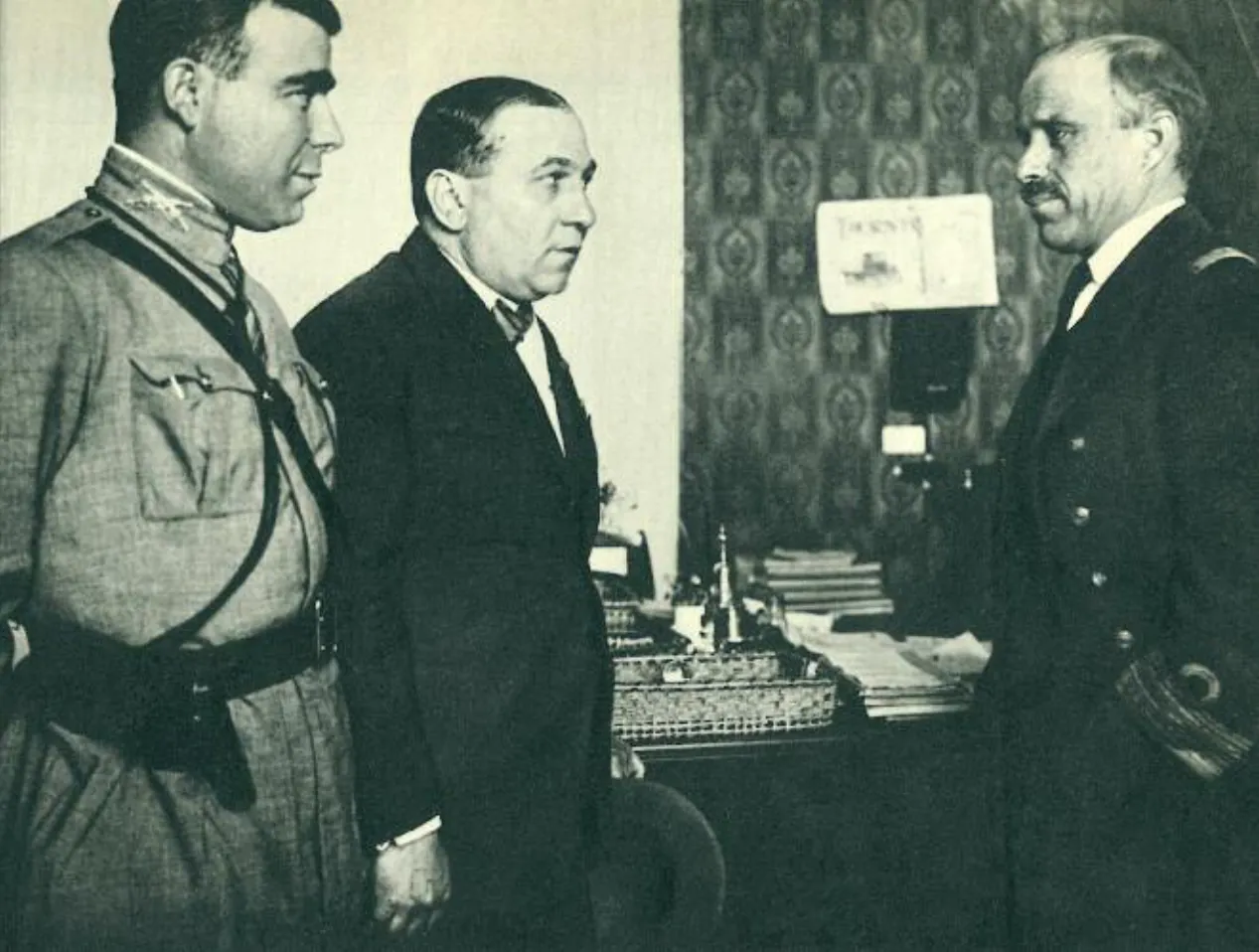
Gomes da Costa did not accept a government he had not chosen. From Porto he declared that Cabeçadas's ministry did not have the army's confidence and ordered his troops to march on Lisbon. Most of the country's military divisions were behind him; Cabeçadas had the Lisbon garrison.
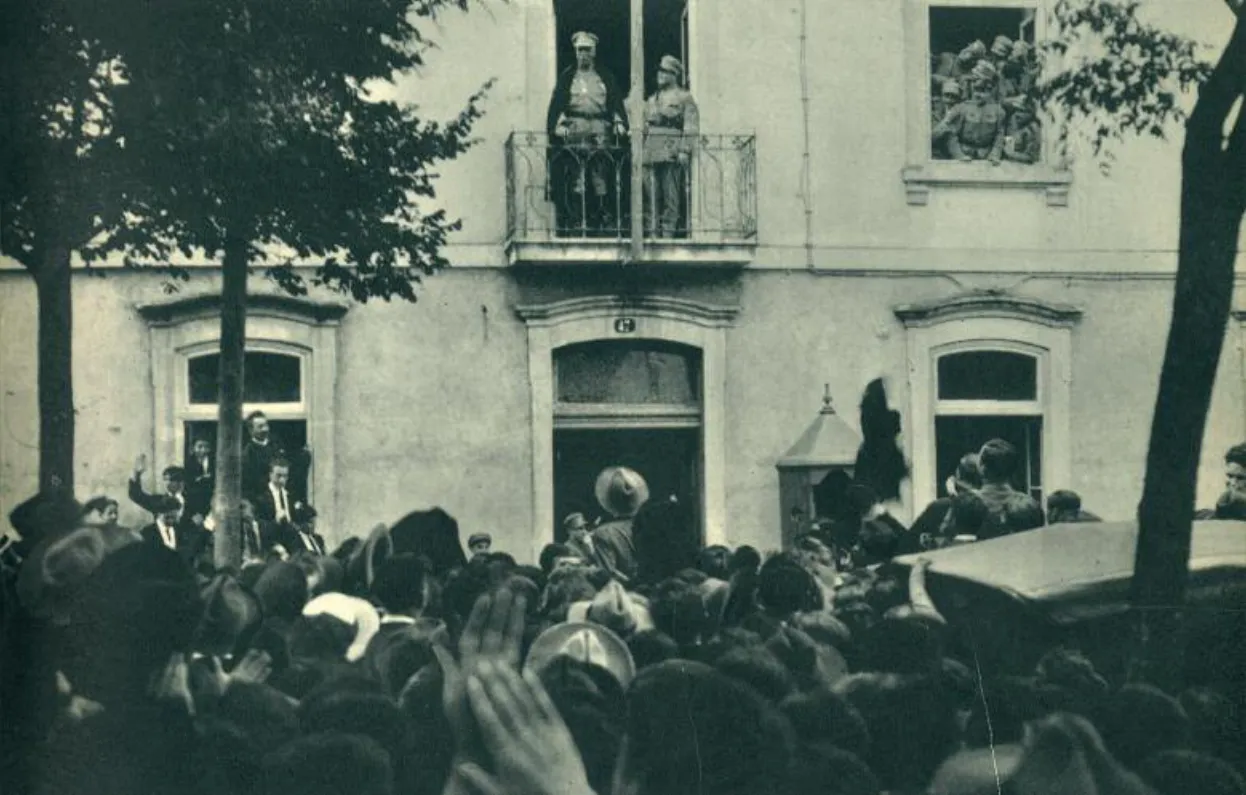
A meeting at Coimbra on 1 June produced a triumvirate of Cabeçadas, Gomes da Costa and Gama Ochoa. Pressed by Sinel de Cordes's group, Gomes da Costa rejected it within a day. At Sacavém, on the edge of Lisbon, before dawn on 3 June, a new junta was agreed: Cabeçadas, Gomes da Costa and Carmona, who had joined the movement only on 30 May, when Sinel de Cordes's group gave the signal.
The new cabinet included three Coimbra professors. One, the economist António de Oliveira Salazar, was named finance minister. He came to Lisbon on 4 June, met Gomes da Costa at Amadora and went home the next day, citing his health. He returned to take the oath on 12 June and was out of office within the week.
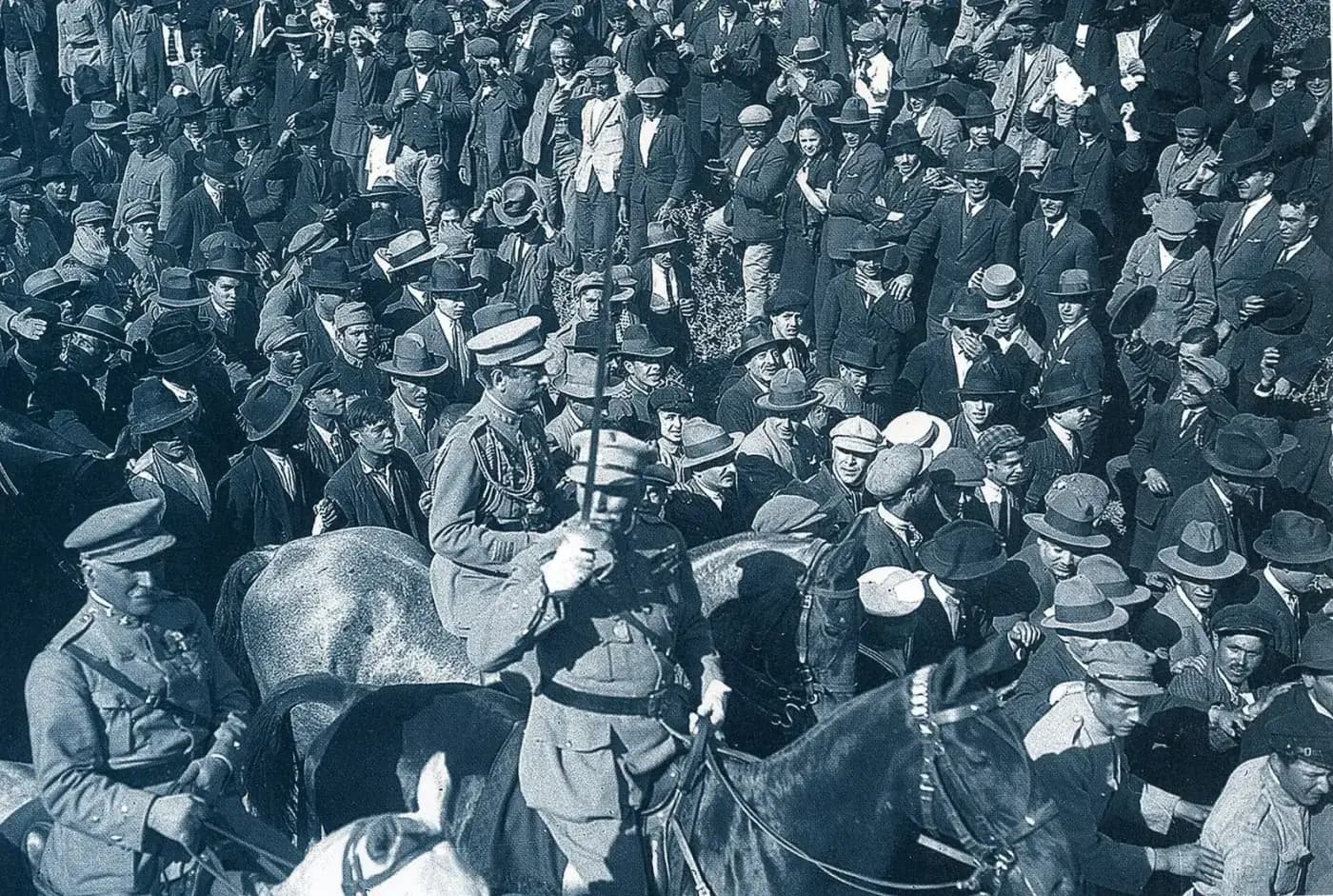
On 6 June, according to the Presidency Museum, Gomes da Costa entered Lisbon on horseback, sword raised, at the head of 15,000 men drawn from units across the country. José Adelino Maltez's chronology puts the victory parade on the Avenida da República, watched by foreign diplomats, on 7 June. On 9 June a decree signed by Cabeçadas, Gomes da Costa, Carmona and four other ministers dissolved the Congress of the Republic and abolished every right of its members.
On 14 June Gomes da Costa put a programme to the cabinet: stronger powers for the President, decentralisation, an economy organised by corporations of employers and workers, protection against foreign competition and a revision of the laws on the family and the Church. He wanted a new constitution with no individual voting and no parties.
“National representation by direct delegation from the municipalities, the economic unions and the educational and spiritual bodies, with the absolute exclusion of individualist suffrage and the consequent party representation.”
Cabeçadas refused. On 17 June Gomes da Costa sent him an ultimatum; isolated, and avoiding a fight to the last, Cabeçadas signed his own dismissal and Gomes da Costa's appointment. The general's cabinet took office on 19 June. On 22 June the government imposed prior censorship on the press. A decree dated 19 June and published on 29 June gave the head of government the powers and privileges of head of state until a president was elected.
His turn lasted 22 days. At a stormy cabinet meeting on 6 July he dismissed Carmona, Gama Ochoa and the interior minister António Claro, who had protested when he forced a change to a decree on religious matters. Most of the other ministers walked out with them. On the night of 8 July Sinel de Cordes and Raul Esteves came to Belém with the commanders of the Lisbon garrison and the Republican Guard and told him to give up the government, though he could stay on as head of state.
He refused and toured the barracks looking for support. None came. Early on 9 July a decree dismissed him and he was arrested, held at Caxias and Cascais, and on 11 July shipped to Angra do Heroísmo in the Azores. Carmona became head of government and minister of war on 9 July and took on the functions of head of state. The museum's biography of Gomes da Costa dates Carmona's swearing-in to 11 July.
Days in office of Portugal's heads of government, December 1925 to January 1930
days
Days between the start and end dates in the Portuguese government's official list of heads of government since 1821. Vicente de Freitas's two governments (April to November 1928 and November 1928 to July 1929) are added together. José Adelino Maltez's chronology gives the same 18, 22 and 649 days.
Show the data
| Days in office | |
|---|---|
| A. M. da Silva (1925-26) | 164 |
| Cabeçadas (1926) | 18 |
| Gomes da Costa (1926) | 22 |
| Carmona (1926-28) | 649 |
| Vicente de Freitas (1928-29) | 446 |
| Ivens Ferraz (1929-30) | 197 |
The road to Salazar
Carmona was a cavalry officer who had long presented himself as standing above politics, which eased his dealings with the rival factions. He kept the dictatorship together. A decree of 26 November 1926 made his powers as head of state official, and on 29 November he took office as interim President in the old parliament building at São Bento.
The regime he led was a military dictatorship that ruled by decree. Republicans who had welcomed a short clean-up soon found themselves its enemies. In February 1927 soldiers and civilians rose against it in Porto and Lisbon and were crushed. Machado, who had advised the plotters, was expelled from Portugal that month.
Money was the regime's weakest point. Sinel de Cordes, finance minister from July 1926, sought a large foreign loan through the League of Nations. The League's conditions were seen in Lisbon as humiliating, the exiled republicans campaigned against it, and in March 1928 Sinel de Cordes left office.
On 25 March 1928 Carmona was elected President by direct vote of men over 21. He was the only candidate. The new head of government, General Vicente de Freitas, proposed Salazar for finance, and this time the professor named his price: every ministry would live within a total budget set by the finance ministry, and the finance minister could veto any increase in spending.
“I know very well what I want and where I am going, but let no one demand that I reach the end in a few months. For the rest, let the country study, make representations, complain and discuss, but let it obey when the time comes to give orders.”
Carmona protected him from attacks from within the military dictatorship. In 1930 the regime created the União Nacional (National Union), a single party built from above out of the conservative elites of the parties that backed the dictatorship. On 5 July 1932 Salazar became head of government, and in 1933 a constitution drafted under him founded the Estado Novo (New State).
18 April 1925
Failed coup of the military right
Carmona, as prosecutor, puts the regime itself in the dock.
28 May 1926
Rising in Braga
31 May 1926
Parliament closed; Machado renounces the presidency
17 June 1926
Gomes da Costa ousts Cabeçadas
9 July 1926
Carmona ousts Gomes da Costa
February 1927
Republican revolt in Porto and Lisbon defeated
25 March 1928
Carmona elected President unopposed
27 April 1928
Salazar becomes finance minister
5 July 1932
Salazar becomes head of government
1933
New constitution founds the Estado Novo
What became of the men of May
Gomes da Costa was made a marshal by decree on 30 September 1926 while still in exile in the Azores. He came back to Lisbon in November 1927, kept plotting, was sent to Rome for a month in 1928 and lived for a while in Nice. He returned to Portugal for good in May 1928 and died in Lisbon on 17 December 1929.
Cabeçadas went back to the navy and supervised the building of the Alfeite naval yard. After the Second World War he became a familiar name in the opposition to Salazar, took part in failed plots in 1946 and 1947, and was forced to retire. He backed Humberto Delgado's presidential campaign in 1958. When he died in 1965, inspectors of the political police listed the cars in his funeral procession.
Carmona was re-elected in 1935, 1942 and 1949 and died in office on 18 April 1951, after almost 25 years as head of state. Bernardino Machado spent 13 years in exile, much of it in France, working with Afonso Costa to unite the opposition.
Why it still matters
The coup of 28 May opened 48 years of dictatorship, which ended with the revolution of 25 April 1974. Parliament did not sit again until the Estado Novo's National Assembly met in 1935. Portugal's own Parliament describes the years 1926 to 1935 as a time when the 1911 constitution applied only in theory, amended by one government decree after another.
The Estado Novo called the coup the Revolução Nacional, the National Revolution, and made it the regime's founding date. Salazar marked its anniversaries with speeches to the army. The Museu da Presidência da República, which opened an exhibition for the centenary in 2026, argues that this adoption still makes the coup hard to understand: the date is identified at once with the Estado Novo, although the three men who ran Portugal in its first weeks wanted different things.
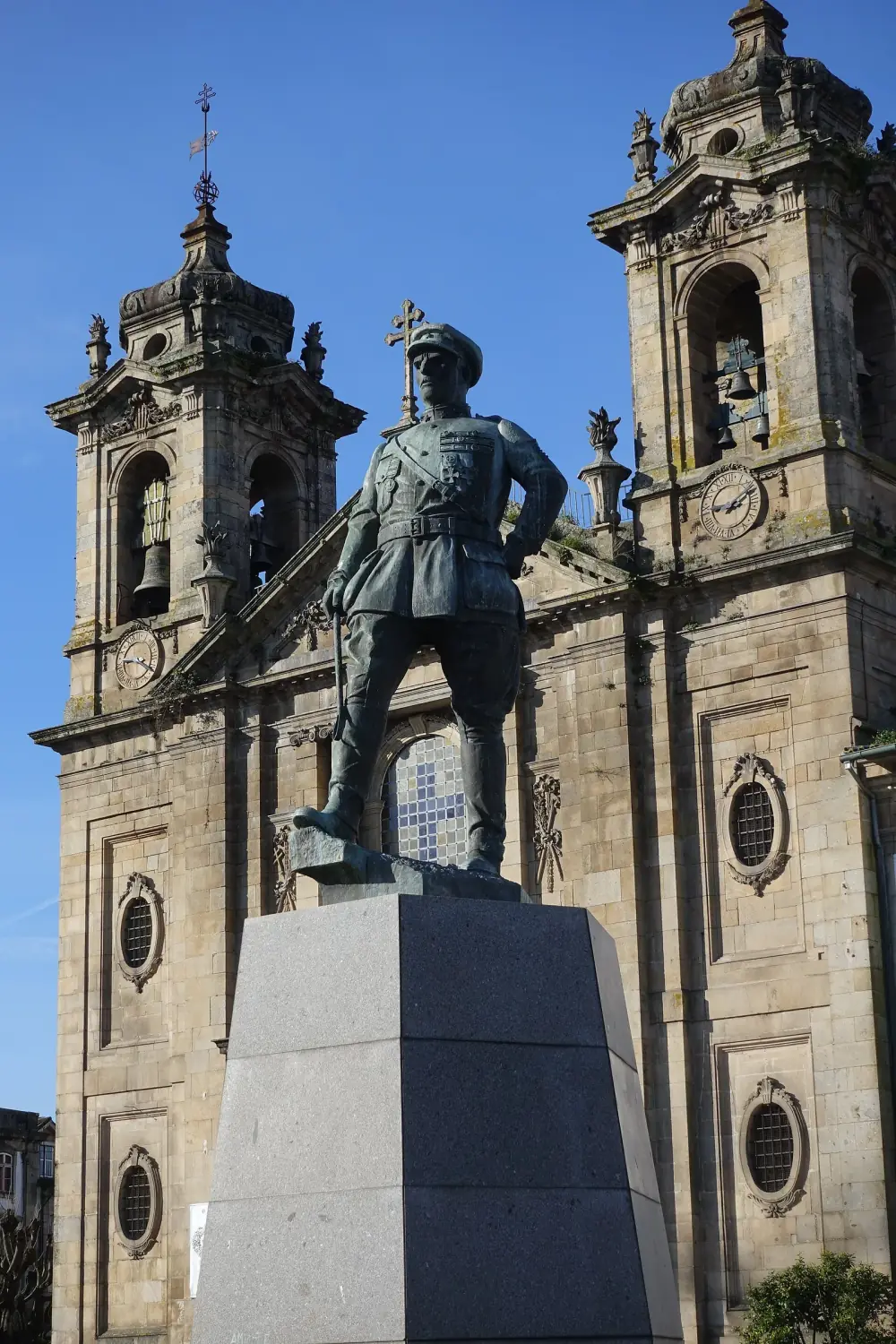
The arguments go on in stone. Braga has had a statue of Gomes da Costa since 1966. On 25 April 2018, the anniversary of the 1974 revolution, Left Bloc activists covered it, calling it a symbol of the start of the dictatorship, and the party said it would ask the municipal assembly to debate whether such monuments should stay.
FAQs
Who led the 28 May 1926 coup in Portugal?
General Manuel Gomes da Costa raised the garrison of Braga, and Commander José Mendes Cabeçadas led the movement in Lisbon. They represented different factions: Cabeçadas wanted to reform the Republic, Gomes da Costa had the backing of the military right. General Óscar Carmona joined on 30 May and emerged as the winner in July.
Was anyone killed in the 28 May coup?
None of the sources used here records a death. The government resigned on 29 May without a fight, and the Lisbon magazine Ilustração reported on 1 June that the rising had succeeded without the least bloodshed and without a single shot.
Did the 28 May coup bring Salazar to power?
Not directly. Salazar was briefly named finance minister in June 1926 but left within days. He joined General Vicente de Freitas's government as finance minister on 27 April 1928, with control over the other ministries' spending, became head of government on 5 July 1932 and founded the Estado Novo with the constitution of 1933.
What happened to parliament after 28 May 1926?
Republican Guard cavalry closed the Congress on 31 May, after a last sitting without a quorum, and a decree of 9 June 1926 dissolved it. No parliament met again until the Estado Novo's National Assembly in 1935.
On the timeline
Open the timelineNearby moments from dictatorship and the estado novo (1926–1974).
The 28 May 1926 coup
General Manuel Gomes da Costa launches a military uprising in Braga that spreads quickly through the army. Within days the government falls, President Bernardino Machado resigns and parliament is shut, ending almost 16 years of unstable parliamentary rule and opening the way to the military dictatorship that became Salazar's Estado Novo.
The February Revolt, the first serious attempt to topple the military dictatorship installed in 1926, ends with the surrender of the last rebels in Lisbon, a day after Porto, shelled from across the Douro, gave in. Estimates put the dead at about 100 in Porto and about 90 in Lisbon.
Fernando Pessoa makes his debut in 'Presença', the Coimbra magazine of the second wave of Portuguese modernism. Issue no. 5 carries his poem 'Marinha', signed under his own name, alongside 'Ambiente', a set of aphorisms signed by his heteronym Álvaro de Campos — the start of a collaboration that would run until 1934 and bring the still little-known poet to a new generation of readers.
At Lisbon's Santa Marta Hospital, the neurologist Egas Moniz obtains the first successful cerebral angiogram, injecting contrast into the carotid artery so that the brain's blood vessels show up on X-ray — a technique still at the heart of neuroradiology. His 1949 Nobel Prize, by contrast, honoured the lobotomy, a procedure now discredited.
Coming up in history
All long reads 30 May 1834The decree that shut Portugal's monasteries: 30 May 1834
 31 May 1991The Bicesse Accords: Angola's peace signed in Lisbon, 31 May 1991
 1 October 1777The Treaty of San Ildefonso: Portugal and Spain redraw South America, 1777
 2 October 1969Mr Five Per Cent's museum: the Gulbenkian opens in Lisbon, 1969
24 sources
Archives, scholarship and reporting this article was checked against.
- 1
José Mendes Cabeçadas Júnior (biography)Museu da Presidência da República
- 2
- 3
- 4
1926 (Respublica: chronology of Portuguese politics), José Adelino MaltezRespublica, Repertório Português de Ciência Política (maltez.info)
- 5
“A revolução no Palácio de Belém” (Bourbon e Meneses), Ilustração, no. 12, 16 June 1926, p. 28Ilustração (Lisbon); Hemeroteca Digital, Câmara Municipal de Lisboa
- 6
Letter from Bernardino Machado to José Mendes Cabeçadas Júnior, 31 May 1926Diário do Governo, I série, no. 124, 12 June 1926
- 7
Discursos e notas políticas, 1928 a 1966 (António de Oliveira Salazar)Coimbra Editora; digitised copy on the Internet Archive
- 8
- 9
- 10
- 11
A 1.ª República (1910-1926)Assembleia da República
- 12
- 13
A Primeira República Portuguesa (1910-1926): educação, ruptura e continuidade, um balanço crítico (António Candeias)Faculdade de Letras da Universidade do Porto (ler.letras.up.pt)
- 14
Chefes do Governo desde 1821República Portuguesa, Governo de Portugal
- 15
- 16
A resistência republicana à Ditadura (1926-1938): as redes conspiratórias do Norte (Daniel Filipe Soares da Silva, MA dissertation)Faculdade de Letras da Universidade do Porto, 2025
- 17
- 18
The Corporatist Wave: corporatism and the diffusion of “organic representation” in European dictatorships (António Costa Pinto), p. 16ICS Working Papers 2/2016, Instituto de Ciências Sociais da Universidade de Lisboa
- 19
- 20
- 21
- 22
- 23
- 24Ativistas do BE cobrem estátua de Gomes da CostaDiário de Notícias (with Lusa), 25 April 2018
Image credits
- Mounted officers ride through a dense crowd in a procession of General Gomes da Costa and his troops after the coup, probably the Lisbon victory parade of June 1926. Commons dates it 28 May, when Gomes da Costa was still in Braga. Attributed to Joshua Benoliel, Public domain, via Wikimedia Commons.
- Mendes Cabeçadas (right, in naval uniform) being interviewed by the newspaper O Século in the days after the coup, May 1926. Unknown author, Public domain, via Wikimedia Commons.
- Crowds cheer Gomes da Costa on the balcony of the civil governor's building in Coimbra during his journey south, June 1926. Unknown author, Public domain, via Wikimedia Commons.
- The statue of Gomes da Costa in Braga, in front of the church of the Pópulo, photographed in 2016. Joseolgon, CC BY-SA 4.0, via Wikimedia Commons.