

Catarina Eufémia, the harvest worker shot at Baleizão in 1954
She was a landless harvest worker with three small children, killed on an estate near Beja during a strike for better pay. A GNR report said the gun went off by itself. The Communist Party made her its martyr, and the poets followed.

At a glance
- Catarina Eufémia, a landless farmworker from Baleizão, near Beja, was shot dead on 19 May 1954 by Lieutenant João Tomás Carrajola of the GNR, the regime's rural police, during a strike for higher harvest wages.
- She was 26 and had three children. The Museu do Aljube and the Communist Party say she was carrying her youngest son, whom the party gives as eight months old, when she fell.
- The Communist Party says she was shot three times at point-blank range; a GNR report of 1960 says the officer's weapon fired by itself. The Museu do Aljube says Carrajola was transferred and never faced any legal consequence.
- The authorities had her coffin taken to Quintos, about ten kilometres away, rather than to Baleizão. Her remains were moved to Baleizão in May 1974, after the Carnation Revolution.
- The Communist Party adopted her as a martyr. José Afonso recorded ‘Cantar Alentejano’ about her in 1971, and Sophia de Mello Breyner Andresen and other poets wrote poems about her.
Eleven in the morning at the Olival estate
On the morning of 19 May 1954 a crowd from Baleizão, a village of farmworkers near Beja, walked out to the Olival estate. They had been on strike for four days. The landowner had brought in a gang of harvesters from another village to do their work for less, and the strikers wanted to talk them into downing tools.
Armed guards of the GNR, the Guarda Nacional Republicana, blocked the road. A group of about fifteen women went forward anyway, towards the outside workers. Among them was Catarina Eufémia, 26 years old and the mother of three small children.
A GNR lieutenant called Carrajola stopped them. According to the account of the Museu do Aljube, Lisbon's museum of the resistance, he fired a burst into the air, then struck Catarina, who fell to the ground with the son she was carrying in her arms. He then fired again and hit her with three shots. The wounds were fatal.
That is the bare story. Almost every other detail of that morning, from what she said to whether she was pregnant, has been told in more than one way. The fullest accounts come from the Communist Party, which made her its martyr, and from the GNR, whose officer fired the shots.
A village of day labourers
In the 1950s Portugal was ruled by the Estado Novo (New State), the dictatorship led by António de Oliveira Salazar. In the southern Alentejo most of the land belonged to a few owners of very large estates. The people who worked it owned nothing and were hired by the day, for a daily wage called the jorna.
Catarina Efigénia Sabino Eufémia was born in Baleizão on 13 February 1928 to parents who had no land of their own. She never went to school. As a teenager she worked on the big estates and learned every task in the fields, from sowing to harvest.
At 17 she married António Joaquim, a worker at the CUF chemical company, and moved with him to Barreiro, across the river from Lisbon. When he lost that job they went back to Baleizão. He found work as a road-mender at Quintos, a neighbouring village, but his pay could not feed the family, so Catarina went back to the fields.
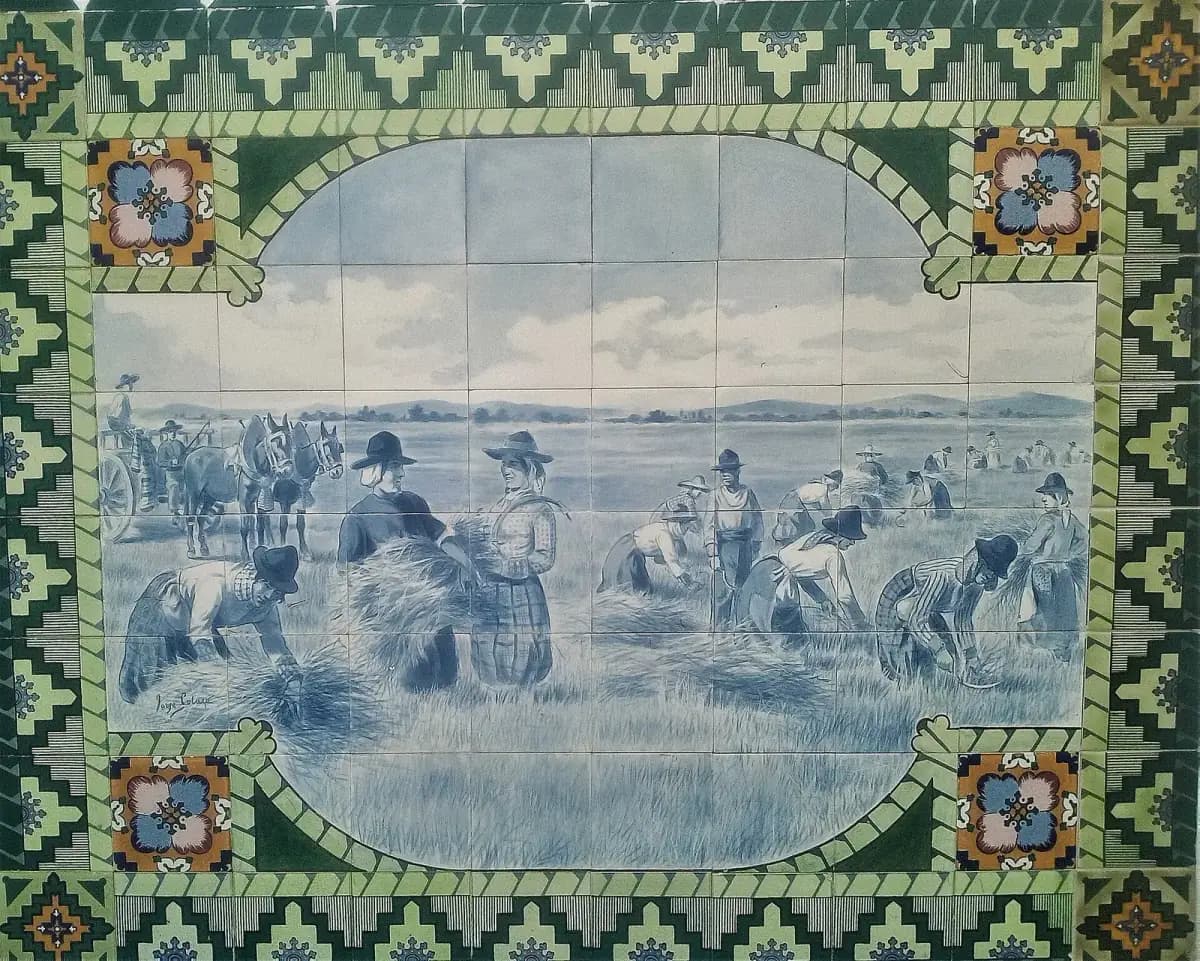
The clandestine Communist Party was organising among the Alentejo labourers. In March 1954 its paper for farmworkers, O Camponês, urged women to go to the hiring squares and join the committees fighting for better harvest wages. In February, according to the party, the GNR had insulted a committee of 25 women at Vale de Vargo and beaten one of them, and a court at Serpa sent three women to prison for 18 days.
Catarina had refused to accept a poor wage from the steward of the Olival estate, the party's account says, and walked 12 kilometres a day to another estate where the jorna was higher. In the autumn of 1953 she had her third child, a boy called José Adolfo.
Four days of strike
The labourers of Baleizão stopped work as the wheat harvest began, to press for better pay. The Communist Party's account gives the most detail: the strike started on Saturday 15 May, after the owner of the Olival estate, Fernando Nunes, refused the day wage they asked for picking broad beans, and on Tuesday 18 May a group including Catarina went to the estate to bargain with his steward, without success.
Even the size of the claim depends on who tells it. The Museu do Aljube says the strikers demanded 52 escudos a day for men and 32 for women. Esquerda, the website of the Left Bloc, says the women wanted two escudos more on the day's wage. The Communist Party says the owner hired a gang from the village of Penedo Gordo at 18 escudos for men and 12 for women.
Bringing in outsiders was common during strikes: owners hired labourers from elsewhere in the Alentejo, from the Beiras or from the Algarve, who accepted lower pay. On 19 May the people of Baleizão set out to persuade the gang from Penedo Gordo to join them. The party's account puts the crowd at 300 and says the owner had called the GNR, who made the gang work under the threat of their rifles.
Sat 15 May
Strike begins
Labourers refuse to work for the wage offered on the Olival estate (Communist Party account).
Tue 18 May
Talks fail
A group including Catarina Eufémia tries to bargain with the estate's steward.
Wed 19 May, morning
Strike-breakers and the GNR
A gang hired from Penedo Gordo works the estate under GNR guard; villagers march out to win them over.
19 May, about 11am
Catarina Eufémia is shot
The party gives the time as 11 in the morning.
Following days
Curfew, funeral and arrests
The GNR occupies the village; the funeral is brought forward and the coffin taken to Quintos.
- Date
- 19 May 1954
- Place
- Olival estate, Baleizão, municipality of Beja
- Killed
- Catarina Eufémia, 26, farmworker
- Shot by
- Lieutenant João Tomás Carrajola, GNR
- Children
- Three; the youngest about eight months old
- Buried
- Quintos, 1954; Baleizão, 1974
One death, three versions
The Communist Party's version, as told in its magazine O Militante in 1989, is the most dramatic. In it, the guards let through 15 women led by Catarina. Carrajola, newly arrived from Beja with reinforcements, jumped out from behind a heap of beans with a submachine gun and asked her what she wanted, calling her a brute. She answered that she wanted bread to feed her hungry children. He fired three shots at point-blank range, and she fell, mortally wounded.
“O que eu quero é pão para matar a fome aos meus filhos! (What I want is bread to feed my hungry children!)”
The 1989 article names its sources: José Dias Coelho's book A Resistência em Portugal (second edition, 1974) and Cunhal's speech of May 1974. It also gives the name of the estate's steward, José Vedor. Its last lines are taken from the song ‘Cantar Alentejano’.
The regime's version survives in a report written on 1 November 1960, six years after the shooting, by the commander of the GNR post at Baleizão. Only the passages quoted by the Algarve paper Barlavento in 2016 are published. The report describes the people of the village as of “bad character” with “quite advanced subversive ideas”, and says the harvest women had been “instigated by communist agents” to make the other gang stop work by threats and to demand “exaggerated wages”.
“When he tried to persuade the rioters to disperse, owing to the automatism of the weapon, it went off without any interference from the said officer.”
A third account comes from the Museu do Aljube, Lisbon's municipal museum of the resistance. It calls her a farmworker “with links to” the Communist Party. In its version the lieutenant fires a burst into the air and strikes her before the three shots, and it says nothing about her last words or a pregnancy.
| Detail | Communist Party (O Militante, 1989) | GNR report (1960) | Museu do Aljube |
|---|---|---|---|
| Why the women went to the estate | To win over the Penedo Gordo gang and keep the strikers united | To force another gang, by threats, to stop work and to demand exaggerated wages | To persuade workers from elsewhere to refuse the work and join the strike |
| The group | 15 women led by Catarina | A group of women, Catarina among them, approaches the commander using threatening words | About fifteen women |
| Before the shots | Carrajola asks what she wants; she asks for bread | The lieutenant tries to persuade them to disperse | A burst in the air; he strikes her and she falls |
| The shots | Three, at point-blank range | The weapon fired by itself | Three |
| The child | José Adolfo, eight months, in her arms | Not mentioned in the passages quoted | The son she carried in her arms |
| Pregnant | Yes | Not mentioned in the passages quoted | Not mentioned |
The GNR column uses only the passages of the report quoted by Barlavento. RTP Ensina, the public broadcaster's education site, also has the baby in her arms and says she was pregnant with a fourth child; it and Esquerda give the group as 14 women.
A coffin sent to Quintos
The GNR occupied Baleizão and imposed a curfew. The authorities brought the funeral forward, but they could not stop the protests, and the police broke them up with force and made several arrests in the following days. Esquerda says the guards dispersed the mourners with batons and that nine farmworkers were arrested, tried and sentenced to two years in prison.
The coffin was meant for the cemetery at Baleizão. Instead it was taken in haste, under police escort, to Quintos, about ten kilometres away. Esquerda says the order came from the GNR, to prevent “subversive pilgrimages” to her grave.
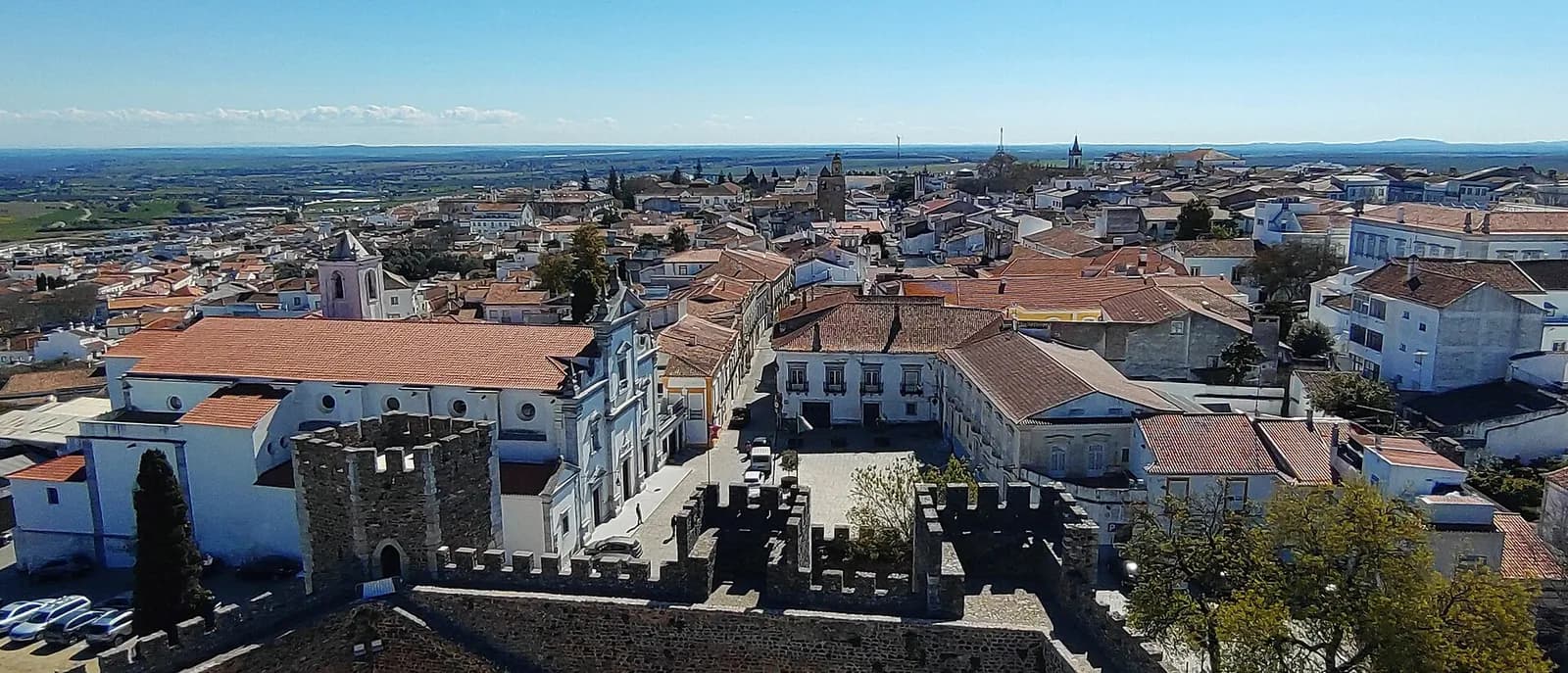
The lieutenant, João Tomás Carrajola, was transferred and never suffered any legal consequence, the Museu do Aljube says. According to Esquerda he never went to court, was moved from Baleizão to Aljustrel, a mining town in the same district, and died there of natural causes in 1964. Barlavento says the GNR's 1960 report cleared him of responsibility for her death.
Under censorship, her death could be told in full only underground. The clandestine Communist paper Avante! reported it with an engraving by José Dias Coelho, an artist who was himself killed by the political police years later.
A martyr in May 1974
Twenty years on, the dictatorship was gone. The Carnation Revolution of 25 April 1974 had ended it less than a month before, and the anniversary of her death became the first chance to honour her in public. On 18 May 1974 RTP's programme Ensaio marked it with interviews with her mother and with a worker who had taken her to hospital.
On 19 May Álvaro Cunhal, secretary-general of the Communist Party, back from exile only weeks before and now a minister without portfolio, spoke at a rally in Baleizão. Diário do Alentejo, the Beja paper, put his photograph on its front page, and days later it showed her remains being moved from Quintos to the cemetery of Baleizão.
The paper's front page of 28 May said that after twenty years her remains had left their “exile” at Quintos, imposed by the regime, for the village where “the militant of the P.C.P.” had lived. The regional paper was already using the party's own description of her.
“Catarina died as a member of the Party should know how to die. She died at the head of the masses, leading the class struggle.”
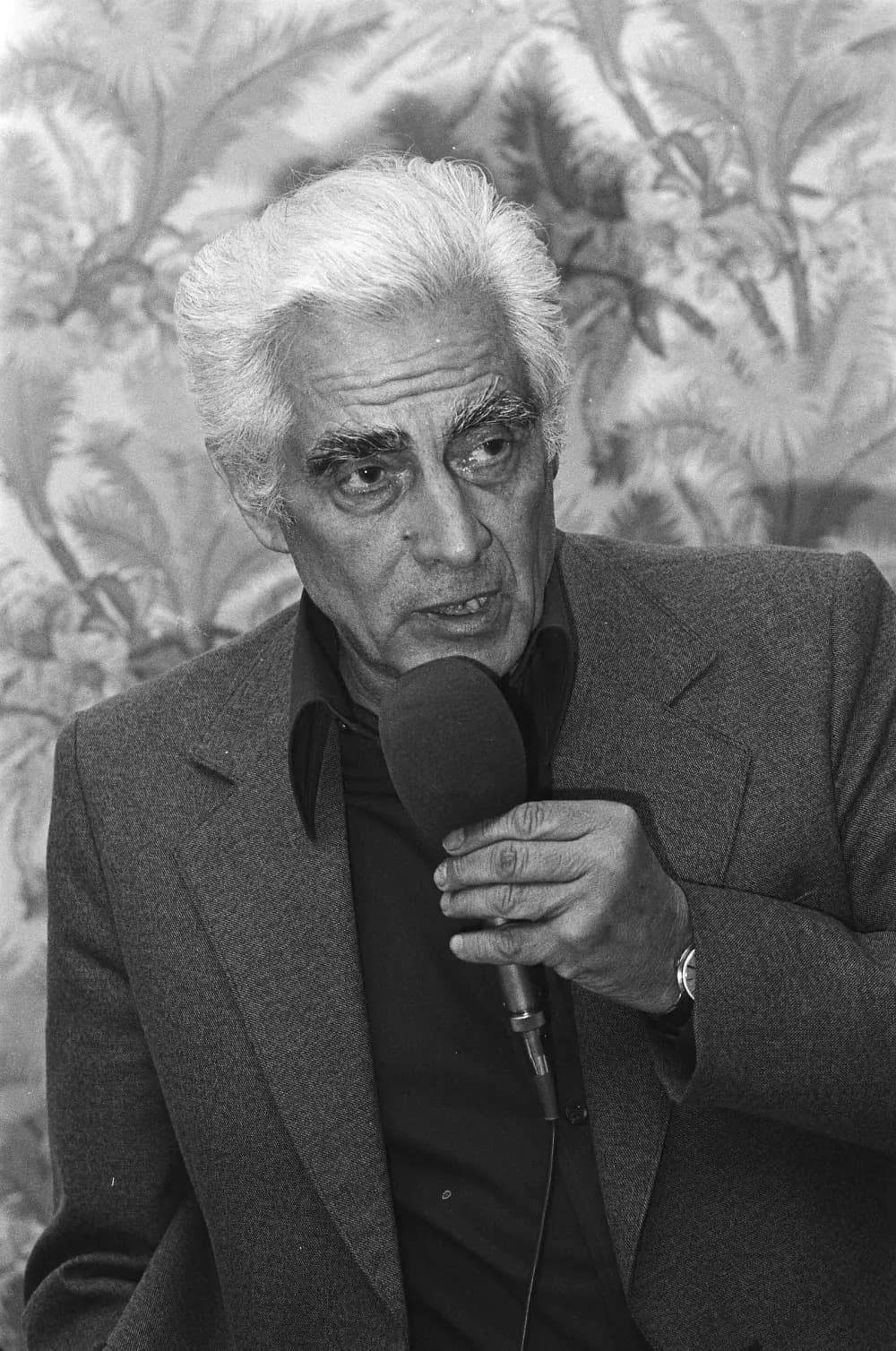
The party's version of her life made her a militant. It says she joined the party at 24 and led the women's organisation in her village as a member of the local committee. Cunhal called her “the communist militant” in his speech. Other accounts are more cautious: the Museu do Aljube speaks only of links to the party, and Esquerda and RTP Ensina do not mention membership at all.
The party has gone on holding homages to her in Baleizão. In 2017 its general secretary, Jerónimo de Sousa, used it to speak about the agrarian reform that followed the revolution in the Alentejo, under the slogan “the land to those who work it”.
Songs, poems and a play
Her story reached its widest audience through a song. ‘Cantar Alentejano’ (Alentejo song), the fourth track on José Afonso's album Cantigas do Maio, released by the Orfeu label in 1971, was written about her killing. Esquerda and the Communist Party's list of poems for her credit the words to the poet Vicente Campinas; Afonso set them to music and sang them.
José Mário Branco, who arranged the album at a studio in a country house outside Paris, remembered Afonso putting off the song all afternoon and going out to look at the cows. He came back at nightfall and said: “Let's record Catarina.” The arrangement was only his voice and the guitar of Carlos Correia, known as Bóris.
“Zeca, in the middle of the studio, alone and in the dark, sang. Just once. That is the one on the record.”
“Quem viu morrer Catarina / Não perdoa a quem matou (Whoever saw Catarina die / does not forgive the one who killed)”
Poets wrote for her too. Sophia de Mello Breyner Andresen wrote a poem called ‘Catarina Eufémia’ in which, as the classicist Frederico Lourenço has noted, she turned to Antigone, the heroine of Greek tragedy who defied a king, to stand for Catarina. Carlos Aboim Inglez, Eduardo Valente da Fonseca, Francisco Miguel Duarte and José Carlos Ary dos Santos also dedicated poems to her.
The story keeps finding new forms. In 2016 the Algarve company ACTA staged a dramatic poem by Jacinto Lucas Pires about her at the Teatro Lethes in Faro, and its director remarked that some of his young cast had never heard of her. In September 2020 Tiago Rodrigues opened Catarina and the Beauty of Killing Fascists in Guimarães, about a family that kills a fascist every year to avenge her; it was programmed at the National Theatre in London for 19 to 26 September 2026.
Why it still matters
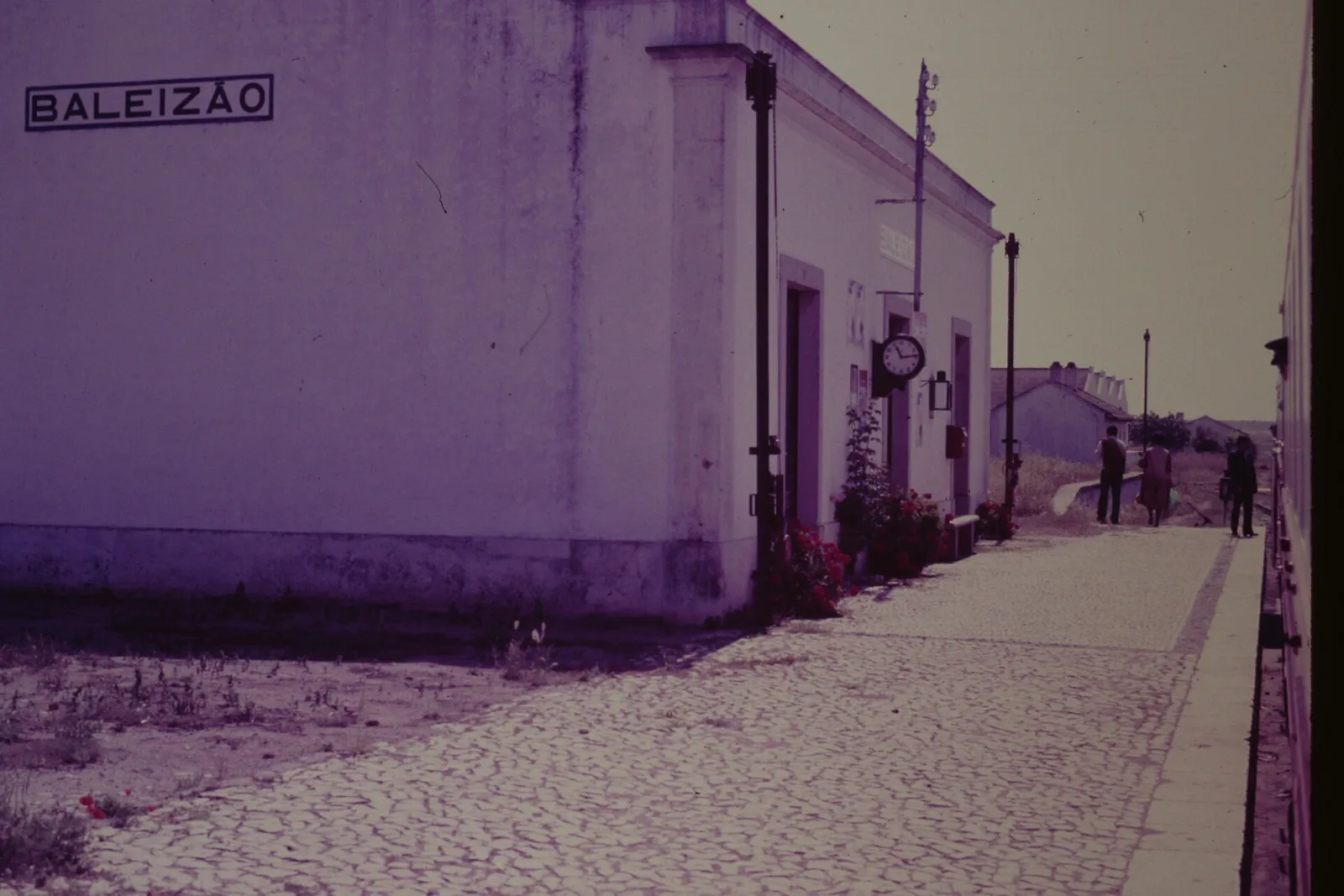
Catarina Eufémia's death shows how the regime worked in the countryside: a strike broken with outside labour, the rural police on the landowner's side, a burial moved to stop a pilgrimage, and a report that blamed the gun. The museum of the resistance in Lisbon calls her a lasting myth of resistance to the dictatorship and a reference for many later mobilisations.
She also shows how a life gets rewritten. Almost all of her public story concerns one morning, and two of its best-known details, the pregnancy and the words about bread, come from the party that adopted her. The director of the 2016 Faro production thought hers the name most often given to streets, squares and gardens in Portugal.
FAQs
Who was Catarina Eufémia?
A landless farmworker from Baleizão, near Beja, born on 13 February 1928. On 19 May 1954, aged 26, she was shot dead by a GNR lieutenant during a strike for higher harvest wages, and she became a symbol of resistance to the Estado Novo.
Was she holding a baby when she was shot?
The Museu do Aljube says she fell with the son she carried in her arms, and the Communist Party names him as José Adolfo, eight months old; RTP Ensina also has the baby in her arms. The passages of the 1960 GNR report published by Barlavento do not mention a child. The party and RTP Ensina also say she was pregnant, which other accounts do not mention.
What happened to the officer who shot her?
According to the Museu do Aljube, Lieutenant João Tomás Carrajola was transferred and never suffered any legal consequence. A GNR report of 1960 said his weapon fired by itself. Esquerda says he was moved to Aljustrel and died there in 1964.
Was Catarina Eufémia a communist?
The Communist Party says she joined at 24 and sat on its local committee, and Álvaro Cunhal hailed her in 1974 as a party member who died at the head of the masses. The Museu do Aljube describes her more cautiously as a farmworker with links to the party.
Which song is about Catarina Eufémia?
‘Cantar Alentejano’, the fourth track on José Afonso's album Cantigas do Maio (1971), with words credited to the poet Vicente Campinas. Sophia de Mello Breyner Andresen, Ary dos Santos and others wrote poems about her.
On the timeline
Open the timelineNearby moments from dictatorship and the estado novo (1926–1974).
Poet and teacher Sebastião da Gama dies of tuberculosis in Lisbon, aged just 27. The bard of the Serra da Arrábida, he wrote a letter in 1947 pleading for the hills' protection that led to the founding of the Liga para a Protecção da Natureza, Portugal's first environmental association.
The Batepá Massacre begins in São Tomé, as Portuguese colonial authorities and plantation interests unleash deadly violence against the native forro population; 3 February is commemorated in São Tomé and Príncipe as the Day of the Martyrs of Liberty.
Aristides de Sousa Mendes dies in poverty and disgrace at the Franciscan Hospital in Lisbon. As consul in Bordeaux in June 1940 he had defied Salazar's orders and issued visas to thousands of refugees fleeing the Nazis — 'perhaps the largest rescue action by a single individual during the Holocaust', in historian Yehuda Bauer's words.
Catarina Eufémia, Baleizão 1954
Catarina Eufémia, a 26-year-old harvest worker from Baleizão in the Alentejo, is shot dead by a GNR lieutenant during a strike for higher wages, as she and other women approach workers brought in to break it. Most accounts say she was carrying her baby son. She became a symbol of resistance to the Estado Novo.
The Ponte de Santa Clara over the Mondego at Coimbra, designed by the engineers Edgar Cardoso and António Franco de Abreu, is inaugurated by Salazar, replacing the iron bridge of 1875.
General José Norton de Matos dies in his home town of Ponte de Lima aged 87. As war minister he built the expeditionary force sent to Flanders in 1917, as governor of Angola he founded the city of Huambo, and in 1949 he stood as the first opposition candidate for president against the Estado Novo, withdrawing before the vote.
Death of Artur Alves dos Reis, author of one of history's boldest frauds. In 1925, with forged contracts, he persuaded the London printers Waterlow & Sons to print genuine-looking Bank of Portugal 500-escudo notes, flooding the country with money worth about 1% of GDP. The scandal shook the First Republic months before the 1926 coup.
Coming up in history
All long reads 21 May 1662Catherine of Braganza marries Charles II: Portsmouth, 21 May 1662
 22 May 1886Carlos and Amélie: the royal wedding of 22 May 1886 in Lisbon
 23 May 1536Cum ad nihil magis: the papal bull that founded the Portuguese Inquisition
 24 May 1898Ferreira de Castro, the boy from Ossela who wrote the Amazon
16 sources
Archives, scholarship and reporting this article was checked against.
- 1
Catarina Efigénia Sabino EufémiaMuseu do Aljube Resistência e Liberdade, Lisbon
- 2
Catarina Eufémia (from O Militante no. 172, 1989)Partido Comunista Português, Organização Regional de Lisboa (PDF)
- 3
Catarina Eufémia segundo a ACTA (Bruno Filipe Pires)Barlavento, 11 November 2016
- 4
Memórias: Catarina Eufémia (António José André)Esquerda.net, 19 May 2015
- 5
Catarina morreu como deve saber morrer um membro do Partido (Álvaro Cunhal, speech in Baleizão, 19 May 1974)Marxists Internet Archive, from Avante!, 24 May 1974
- 6
A afirmação do PCP na região em tempo de reorganização social (Marco Monteiro Cândido)Diário do Alentejo, 31 May 2024
- 7
Chamava-se Catarina (José Mário Branco, from Revista da AJA no. 1, 1988)Associação José Afonso
- 8
Speech by Jerónimo de Sousa, General Secretary, honoring Catarina Eufémia (Baleizão, 21 May 2017)Partido Comunista Português
- 9
História da GNRGuarda Nacional Republicana
- 10
Catarina Eufémia, símbolo da revoluçãoRTP Ensina
- 11
Catarina Eufémia, parte I (Ensaio, RTP1, 18 May 1974)RTP Arquivos
- 12
Songwriting and ‘Service’ Gatefold Sleeve: An Italian Edition of Cantigas do Maio (Andrea Ragusa)Rassegna iberistica 48 (124), Edizioni Ca' Foscari, 2025
- 13
Poemas em memória de Catarina EufémiaPartido Comunista Português
- 14
- 15Sophia pela filha Sofia, Mário Soares, Gageiro e Frederico Lourenço (João Céu e Silva)Diário de Notícias, 6 November 2019
- 16
Jeers, walkouts, stage invasions: will Catarina and the Beauty of Killing Fascists trigger British audiences too? (Philip Oltermann)The Guardian, 27 August 2026
Image credits
- A wheat field after the harvest near Campilhas, in the west of the Alentejo, in July 2015. Catarina Eufémia was killed at harvest time in 1954 on an estate outside Baleizão, near Beja. Alvesgaspar, CC BY-SA 4.0, via Wikimedia Commons.
- Harvest in the Alentejo, an azulejo panel by Jorge Colaço at Évora railway station, photographed in 2017. Until machines arrived, the wheat was cut by hand by gangs of hired men and women. JP Ribeiro, CC BY-SA 4.0, via Wikimedia Commons.
- Beja from its castle keep in March 2022, with the cathedral on the left. Baleizão lies in the plain outside the city, in the same municipality. The Communist Party says Carrajola came from Beja with reinforcements on 19 May 1954. Descobrimentos novos, CC BY-SA 4.0, via Wikimedia Commons.
- Álvaro Cunhal, leader of the Portuguese Communist Party, at a press conference in Amsterdam on 17 April 1980. In May 1974 he spoke at the first rally in her memory held in Baleizão after the revolution. Fernando Pereira / Anefo, CC0, via Wikimedia Commons.
- Baleizão station on the railway from Beja to Moura, photographed from a train in about 1986. Fernando Moital from Évora, Portugal, CC BY 2.0, via Wikimedia Commons.