

Manuel II swears his oath: the acclamation of Portugal's last king, 1908
Three months after gunmen killed his father and brother, an 18-year-old naval cadet swore to uphold the constitution before both chambers of parliament. He reigned for two years and spent the rest of his life in England, cataloguing Portugal's earliest printed books.
At a glance
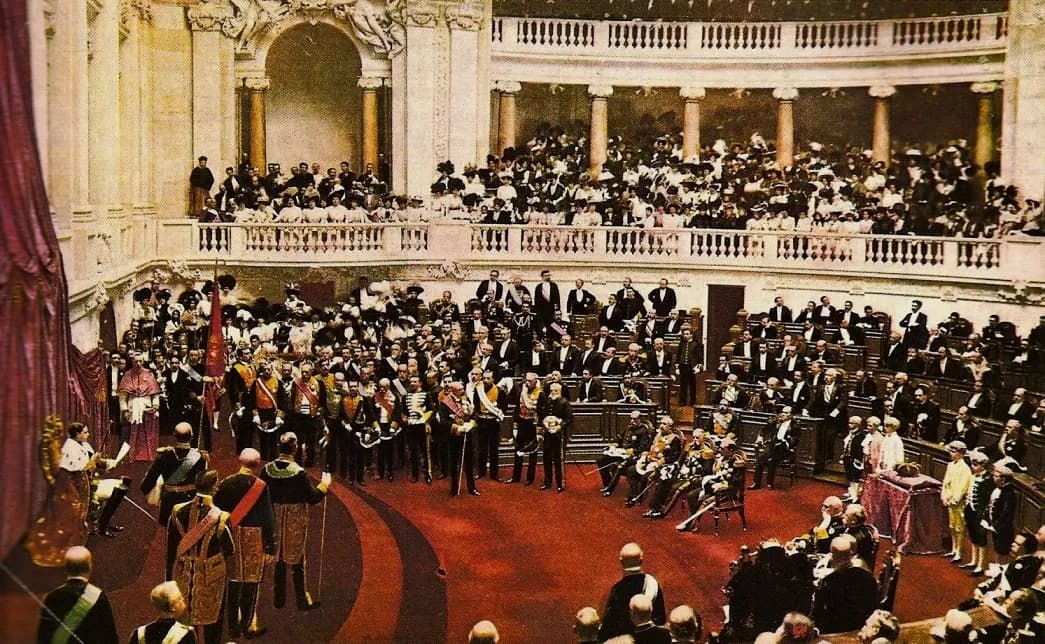
- On Wednesday 6 May 1908, Manuel II swore the oath laid down in the Constitutional Charter before both chambers of the Cortes in Lisbon and was formally acclaimed king.
- He was 18. He had become king on 1 February 1908, when gunmen shot dead his father, Carlos I, and his elder brother, Luís Filipe, and had been proclaimed the next afternoon.
- His first government, under Admiral Ferreira do Amaral, set out to calm the country: it restored press freedom, freed republican leaders and amnestied the sailors who had mutinied in 1906.
- Six governments followed one another in his reign of two years and eight months. The Republic was proclaimed on 5 October 1910 and he left for exile in England.
- At Fulwell Park, Twickenham, he built one of the finest collections of sixteenth-century Portuguese books. He died on 2 July 1932, and his library is now at the Ducal Palace of Vila Viçosa.
An oath in a crowded hall
On Monday 4 May 1908 the president of the Chamber of Deputies reminded members that the acclamation of King Manuel would take place on Wednesday, and asked leave for the hall to be made ready for the ceremony. The same afternoon the Chamber of Peers agreed that both houses would meet together that day for what its record called the ratification of the king's oath.
Security was tight. For the first time, peers and deputies had to sign the tickets they handed out for the gala sittings, and the tickets could not be passed on. Sebastião Baracho, a peer, refused to accept his on those terms. On 9 May he protested in the chamber that the rule treated members of parliament as suspects, and mocked the prime minister for keeping the troops in their barracks, after rumours of a military plot, as proof that all was calm.
Manuel had been king for three months, since the afternoon his father and brother were shot dead in Lisbon. Now, aged 18, he swore the oath that the Constitutional Charter of 1826 required of every king before his acclamation, given into the hands of the president of the Chamber of Peers with both chambers assembled.
“I swear to maintain the Roman Catholic Apostolic Religion and the integrity of the Kingdom, to observe and cause to be observed the Political Constitution of the Portuguese Nation and the other laws of the Kingdom, and to provide for the general good of the Nation, as far as lies in me.”
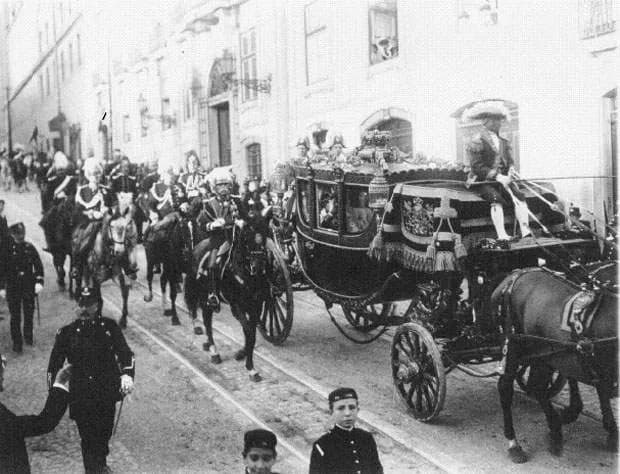
The king used the day to reward two soldiers who had been wounded trying to protect the royal family on 1 February. On 9 May the Conde de Arnoso complained to the peers that the government had done nothing for them until the king himself took the initiative on the day of his acclamation.
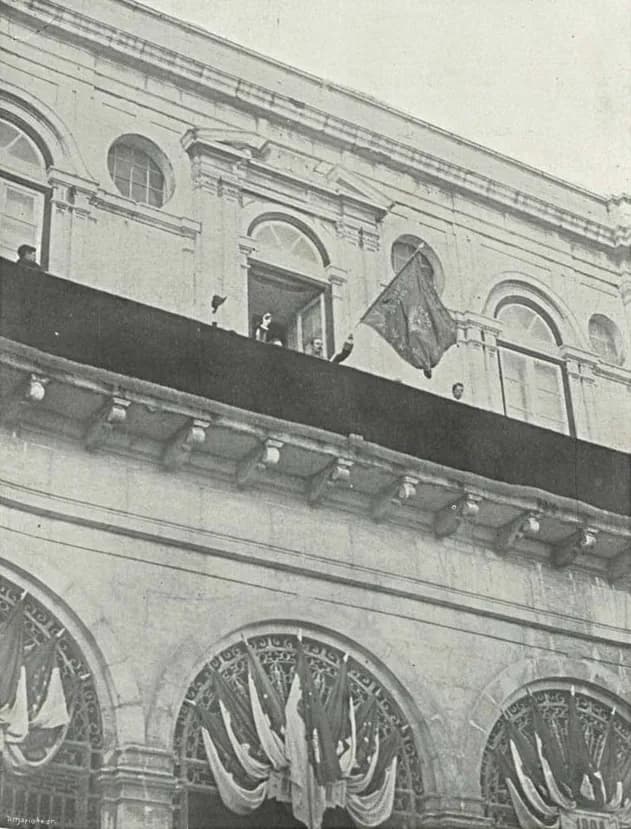
Not everyone at São Bento believed in the oaths they swore. Deputies took an oath of their own on taking their seats, and two days later Manuel de Brito Camacho, one of the seven republican deputies, rose to protest that he had been made to swear to a religion he did not profess and to be faithful to institutions he fought. He tabled a one-line bill abolishing the political oath, first proposed by monarchist reformers in 1873.
A second son, not raised to rule
Manuel was born in Lisbon on 15 November 1889, the younger son of King Carlos and Queen Amélia. The throne was meant for his brother, Luís Filipe. Manuel had a thorough education, spoke French from the age of six, played the organ and loved history and literature. In June 1904, aged 14, he took his oath as a cadet at the Naval School.
On 1 February 1908 he was in the open carriage crossing the Terreiro do Paço when two gunmen killed his father and brother, a story told in our article on the Lisbon regicide. A bullet hit him in the arm. He was proclaimed King Manuel II at three o'clock the next afternoon.
Sir Francis Villiers, the British minister, called on him soon after the killings and found him plunged in grief but composed and dignified. Those around the new king praised his intelligence and judgement. A republican writer in the magazine Ocidente reported that Manuel had told the Council of State his age and knowledge were not yet enough to decide affairs of state, and that he put his trust in the Crown's old counsellors.
A government to calm the country
The royal family blamed João Franco, the prime minister who had governed by decree since 1907, for the catastrophe. Manuel dismissed him almost at once. On 4 February Admiral Francisco Ferreira do Amaral formed a cabinet of the two old parties and independents, known as the government of acalmação, or calming down.
It did what its name promised. Press freedom returned and suspended newspapers reappeared. Republican leaders were released, the sailors of the naval mutinies of April 1906 were amnestied, and the prime minister agreed with the Progressive and Republican leaders to hold parliamentary and municipal elections that year.
Not everyone approved. Edward VII of Britain, Portugal's oldest ally, was irritated by a government that left out Franco's party, which he read as weakness and as giving the regicides what they wanted. O Século, then the most influential paper in Lisbon, set out its own terms for the young king.
“The first acts of the young sovereign have calmed the democracy, but have not disarmed it... Senhor Dom Manuel... has a kingdom to conquer; let him conquer it if he can with the only weapon which disarms a Portuguese – with the heart.”
Two years, six governments
The calm did not last. Disturbances in Lisbon went on through 1908, and the monarchist parties soon fell back into their quarrels. In December the Regenerador leader Júlio de Vilhena turned against Ferreira do Amaral, and the cabinet fell. Counting Franco's, Portugal had three governments in 1908 alone, each under a different leader.
| Head of government | From | To |
|---|---|---|
| Francisco Joaquim Ferreira do Amaral | 4 February 1908 | 25 December 1908 |
| Artur Alberto de Campos Henriques | 25 December 1908 | 11 April 1909 |
| Sebastião Custódio de Sousa Teles | 11 April 1909 | 14 May 1909 |
| Venceslau de Sousa Pereira de Lima | 14 May 1909 | 22 December 1909 |
| Francisco António da Veiga Beirão | 22 December 1909 | 26 June 1910 |
| António Teixeira de Sousa | 26 June 1910 | 5 October 1910 |
Dates from the Portuguese government's list of heads of government. Jorge Couto's account has Ferreira do Amaral's cabinet falling on 19 December and Campos Henriques taking office on 26 December 1908. The British minister wrote that Teles resigned after only 22 days.
How long each government of Manuel II's reign lasted
days in office
Days counted between the start and end dates in the Portuguese government's official list of heads of government. The last government ended with the revolution of 5 October 1910.
Show the data
| Days in office | |
|---|---|
| Ferreira do Amaral | 325 |
| Campos Henriques | 107 |
| Sousa Teles | 33 |
| Venceslau de Lima | 222 |
| Veiga Beirão | 186 |
| Teixeira de Sousa | 101 |
Parliament was no steadier. One sitting ended with the 72-year-old finance minister fighting a duel with a deputy who had accused him of fraud; two shots were fired and both missed. At another, most deputies walked out when a speaker they disapproved of rose, leaving too few for a quorum. After more chaotic sittings, at which desks were smashed, General Sebastião Teles resigned.
Meanwhile the republicans grew. The election of 5 April 1908 raised their group in the chamber to seven deputies. On 1 November they won every seat on Lisbon's city council, though they stayed weak in most of the country. At the last election of the monarchy, in August 1910, they won 14 seats.
They mocked the king's youth without mercy. In August 1909 the republican deputy Afonso Costa told the chamber during a debate on a trade treaty with Germany that what Senhor Dom Manuel understood about sugar was that sweets taste good, because he was at the age when one eats sweet things behind mama's back.
Showing the young king to the country
The court answered with publicity. Queen Amélia sponsored a campaign to make the new king known. The illustrated weekly Ilustração Portuguesa led the way, and the monarchist press followed, celebrating him in prose and verse. He was nicknamed “o Reizinho”, the little king.
His first official journey was to Porto. He left Lisbon by train on Sunday 8 November 1908 and was cheered by large crowds; the tour of Porto, the Minho and the coastal Beira lasted until 22 November. Ilustração Portuguesa sent Joshua Benoliel, the pioneer of Portuguese press photography, who took 134 of the 147 pictures it printed of the visit.
Not every republican was impressed. In a public letter to the king dated 10 December 1908, the journalist João Chagas warned that the warm welcome in Porto was an illusion and that the throne was already lost.
“Your Majesty has been thwarted by history, and no human effort can make you prevail.”
In February 1909 Manuel received Alfonso XIII of Spain at the ducal palace of Vila Viçosa. Brito Camacho dismissed the two monarchs as two lads, heads of state at an age when most men are not yet even head of a government department. Two months later, on 24 April, Manuel toured the ruins left by the Benavente earthquake, which has its own article.
In November 1909 he paid a state visit to England, where, Villiers reported, he made “an extraordinarily favourable impression” and was invested with the Order of the Garter. The Portuguese government hoped a British bride would steady the throne, and two princesses were considered; nothing came of it.
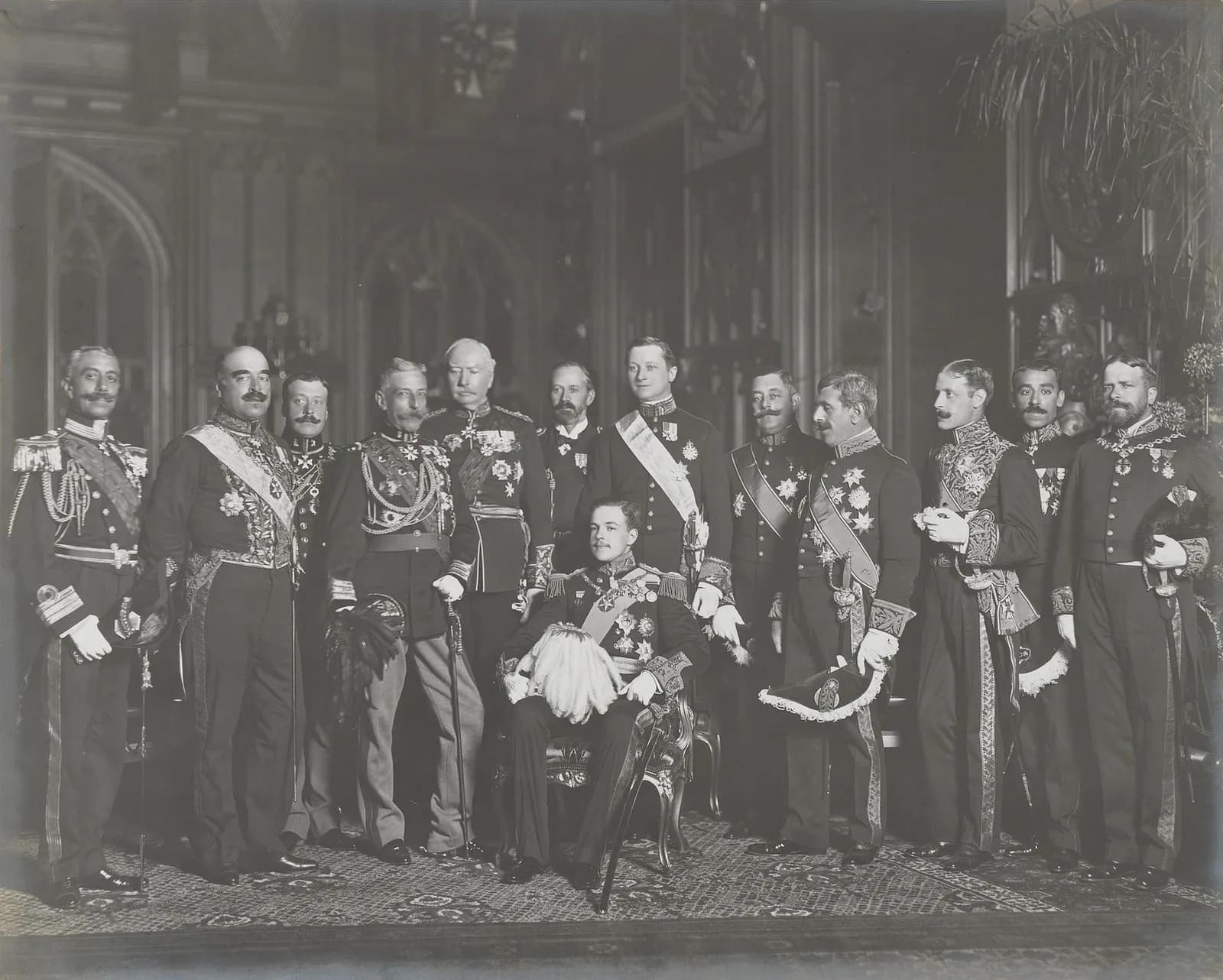
Edward VII died on 6 May 1910, two years to the day after Manuel's acclamation. Manuel called at the British legation to offer his condolences in person, the first time a king of Portugal had done so at a foreign legation, and went to the funeral at Windsor.
Deserted at the Necessidades
When Manuel opened the new Cortes on 23 September 1910, no opposition peers or deputies attended, an attempt to cheer him drew only a faint response, and his reception in the streets was markedly cold. Less than a fortnight later the revolution began.
On 4 October, Villiers wrote, the king was deserted by all but his household. Not a single army or navy officer came to the Necessidades palace while warships shelled it from the river. Manuel left by car for Mafra, and on 5 October he sailed from Ericeira with his mother and grandmother on the royal yacht Amélia. The revolution itself is told in our article on 5 October 1910.
“So finally the conviction grew even in the army and the Court that he did not have the qualities of a leader that might have saved his throne, and this conviction was confirmed by the circumstances attending his departure from the country.”
Exile in Twickenham
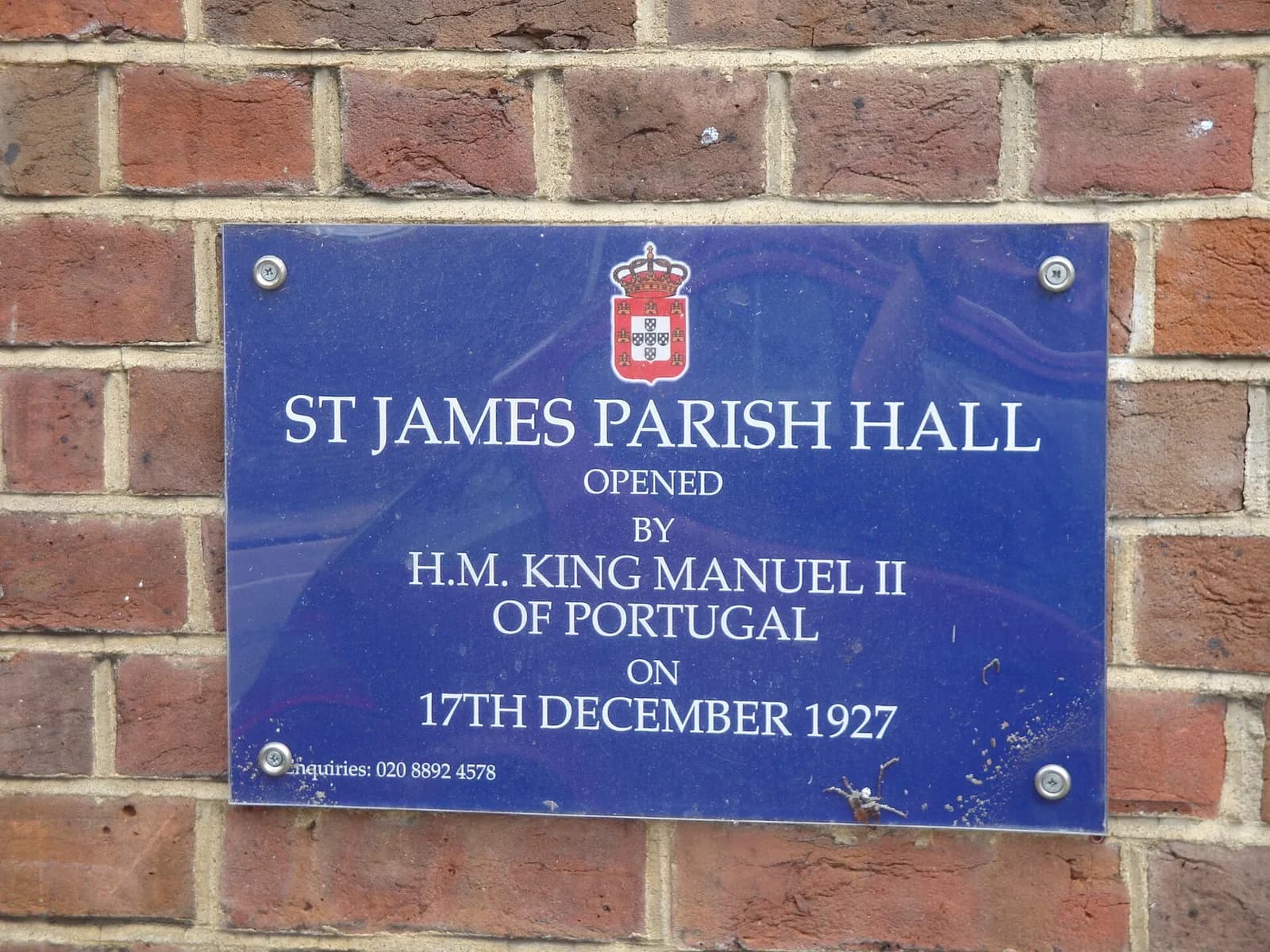
The yacht reached Gibraltar on the night of 6 October. Manuel and his mother went on to England, staying first with her brother, the Duke of Orléans, at Wood Norton near Evesham. In January 1911 they rented Abercorn House in Richmond. He later settled at Fulwell Park in Twickenham, west of London, with his wife, Queen Augusta Victoria.
During the First World War he joined and funded Red Cross work for the wounded. On Sundays he and the queen often lunched at Buckingham Palace with George V and Queen Mary. He played tennis each week with the professionals at Queen's Club and sat in the committee box at Wimbledon.
Monarchists at home still plotted in his name. When Henrique Paiva Couceiro restored the monarchy in Porto in January 1919, Manuel had not been consulted, stayed in England and later condemned the rising, as our article on the Monarchy of the North explains.
The king's library
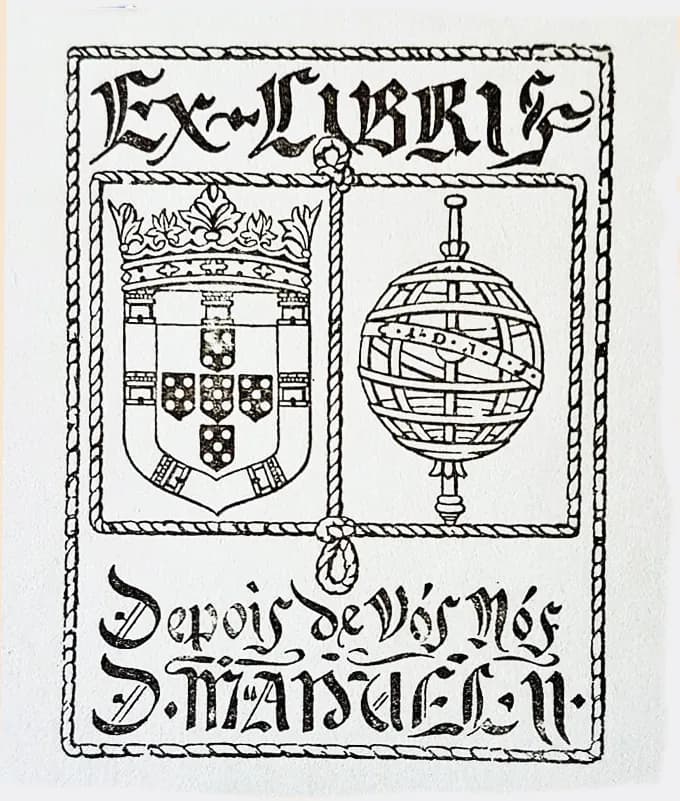
In 1920 Manuel began gathering books and documents for a history of his namesake, King Manuel I, hoping to shed new light on the expulsion of the Jews. The biography was never written. Instead the project grew into a collection of Portuguese books of the fifteenth and sixteenth centuries rivalled in size only by the National Library in Lisbon and the Public Library of Évora.
Old private libraries were coming onto the market in Portugal in the first quarter of the century, and Manuel is said to have bought six trunks of books from the heirs of António Augusto de Carvalho Monteiro, whose collection of Camões was the most complete then known. In London the antiquarian booksellers Maggs Bros searched for books for him; his main contact there was the bibliographer Maurice Ettinghausen.
In 1924 Maggs found him a librarian. Margery Withers was 18, had just come back from a year in Switzerland, and could read Portuguese because she spoke Spanish, learned in Patagonia, where she was born. She started on £3 a week. The king's books were then valued at about £32,000.
Manuel decided to describe every book in a catalogue with historical notes, in Portuguese and English side by side. He wrote every word of his entries by hand; Withers made the bibliographical descriptions and drafted the translations. He hated cuts. “I will not delete a single more line!”, he wrote to her of one article.
- Title
- Livros Antigos Portuguezes 1489-1600 / Early Portuguese Books 1489-1600
- Printed and published
- Cambridge University Press, for Maggs Bros, London
- Volumes
- I (1929), II (1932), III completed after the king's death
- Volume I
- 38 books, one manuscript and one illuminated miniature, 1489 to 1539
- Copies
- 45 numbered and initialled by the king, 650 others and 3 not for sale
His introduction to the first volume explains why he did it. He wanted to show the achievements of the Portuguese in the age of the voyages, and to offer “sincere and grateful homage to the country where we live and where we have been so kindly welcomed”. Then the exile shows through.
“To realise what the love of one's country can be, it is necessary to be compelled to live far away from it, and deprived of its atmosphere!”
One of the last signatures
On Thursday 30 June 1932, Withers found the king at his desk with the first bound copy of the second volume. He asked whether she would like it or would rather wait for one with a proper wrapper, and when she took it he signed it “Manuel R.” He gave her the next day off to watch the tennis at Wimbledon, where she saw him leave the committee box in the late afternoon.
He died at Twickenham the next day, 2 July 1932, of oedema of the throat. He was 42 and had no children. As his will asked, his body was taken to Lisbon and buried in the pantheon of the Braganzas at the monastery of São Vicente de Fora.
Queen Augusta Victoria kept Withers on to finish the bibliographical part of the third volume, which Manuel had barely begun and which was to have covered his collection of Camões. Fulwell Park was sold in 1934 and the books were packed for Vila Viçosa. The house was pulled down, and the streets built on its grounds include Manoel Road, Portugal Gardens and Lisbon Avenue.
15 November 1889
Born in Lisbon, second son of Carlos and Amélia
1 June 1904
Takes his oath as a cadet at the Naval School
1 February 1908
His father and brother are killed; he is wounded in the arm
2 February 1908
Proclaimed King Manuel II
4 February 1908
Ferreira do Amaral forms the government of acalmação
6 May 1908
Swears his oath before the Cortes and is acclaimed
November 1908
First official journey, to Porto and the north
November 1909
State visit to England; invested with the Garter
5 October 1910
The Republic is proclaimed; he sails from Ericeira
1929
First volume of Early Portuguese Books
2 July 1932
Dies at Twickenham, aged 42
1933
The Fundação da Casa de Bragança is set up under his will
Why it still matters
The oath of 6 May 1908 was the last a Portuguese king swore. The Republic came 882 days later.
What Manuel left behind outlasted the crown. In a will written in 1915 he left his personal artistic and cultural heritage to the Portuguese people. The state and his heirs, his mother and his widow, turned it into the Fundação da Casa de Bragança, set up in 1933, which the director of its museum-library calls the first foundation in Portugal. It runs the Ducal Palace of Vila Viçosa, several churches and five castles.
His books are the heart of its library. They include the Vita Christi printed in Lisbon in 1495, the Manueline Ordinances of 1514, early works by the mathematician Pedro Nunes and the historian Damião de Góis, and a Camões collection the foundation describes as perhaps the most complete of sixteenth-century editions.
FAQs
When was Manuel II acclaimed King of Portugal?
On Wednesday 6 May 1908, at a joint session of the Chamber of Peers and the Chamber of Deputies in Lisbon, where he swore the oath laid down in article 76 of the Constitutional Charter. He had been king since 1 February 1908 and was proclaimed on 2 February.
Why did Manuel II swear an oath three months after becoming king?
The Charter of 1826 required every king to swear, before both chambers of the Cortes sitting together, to uphold the Catholic religion, the integrity of the kingdom and the constitution before he was acclaimed. Parliament had been dissolved in 1907, so the oath had to wait for the elections of April 1908 and the new Cortes.
How long did Manuel II reign?
Two years and eight months, from 1 February 1908 to the proclamation of the Republic on 5 October 1910. Six governments held office in that time, the shortest, under Sebastião Teles, for about a month in 1909.
What happened to Manuel II after 1910?
He went into exile in England and settled at Fulwell Park, Twickenham, where he collected and catalogued early Portuguese books. He died at Twickenham on 2 July 1932, aged 42, and was buried in the Braganza pantheon at São Vicente de Fora in Lisbon.
Where is Manuel II's library today?
At the Ducal Palace of Vila Viçosa, run by the Fundação da Casa de Bragança, which was set up in 1933 under his will. Its sixteenth-century Portuguese books are rivalled in number only by the National Library and the Évora Public Library.
On the timeline
Open the timelineNearby moments from regeneration and the last kings (1851–1910).
Hermínia Silva, the fado singer and revue actress whose humorous style made her one of the most beloved performers of Lisbon's stage in the 1930s and 1940s, is born at the Hospital de São José in Lisbon.
Republicans and dissident monarchists attempt a coup against João Franco's dictatorship, the 'Elevador da Biblioteca' plot, but it is betrayed and leaders including Afonso Costa are arrested. The crackdown that followed helped set the stage for the regicide four days later.
King Carlos I and Crown Prince Luís Filipe are assassinated by republican revolutionaries at Terreiro do Paço in Lisbon, in what became known as the Lisbon Regicide.
The acclamation of Manuel II
Manuel II takes his oath before the Cortes in Lisbon at his formal acclamation as King of Portugal, three months after inheriting the throne through the assassination of his father Carlos I and elder brother Luís Filipe. He would be Portugal's last king.
Birth in Funchal of Fernão de Ornelas, the lawyer who as president of the city council from 1935 to 1946 led a sweeping programme of public works that modernised Madeira's capital. Ousted after a clash with the island's governor, he was posthumously awarded Funchal's Medal of Honour in 2008.
An earthquake centred near Benavente strikes the Tagus valley at about 5 pm, wrecking much of Benavente, Samora Correia, Santo Estêvão and Salvaterra de Magos and killing 46 or 47 people. Aid poured in from across the country, but in 1913 Benavente still had a camp of wooden huts.
Club Sport Marítimo, one of Portugal's historic football clubs, is founded in Funchal on the island of Madeira; it would go on to win the national Campeonato de Portugal in 1926.
Coming up in history
All long reads 8 May 1782Questioned, condemned, spared: the Marquis of Pombal's last years, 1777–1782
 9 May 1386The Treaty of Windsor, 1386: Portugal and England's perpetual league
 10 May 1984Joaquim Agostinho: the farm boy who climbed Alpe d'Huez
 11 May 1937Afonso Costa dies in Paris: the First Republic's strongman in exile, 1937
24 sources
Archives, scholarship and reporting this article was checked against.
- 1
Carta Constitucional de 29 de Abril de 1826 (full text)NOVA School of Law, Universidade Nova de Lisboa
- 2
Diário da Câmara dos Dignos Pares do Reino, session no. 2, 4 May 1908Assembleia da República, Debates Parlamentares
- 3
Sir Francis Villiers and the End of the Portuguese Monarchy (John Villiers)The Treaty of Windsor (1386) and 620 Years of Anglo-Portuguese Relations, papers of a conference held at St Peter's College, Oxford, 18 October 2006
- 4
1908: do Regicídio à ascensão do Republicanismo (exhibition catalogue, with an essay by Jorge Couto and a chronology of January 1908)Biblioteca Nacional de Portugal, 2008
- 5
Alfonso XIII e Manuel II: as duas faces da mesma moeda no discurso republicano português (1908-1910) (Teresa Nunes)Pasado y Memoria. Revista de Historia Contemporánea 18 (2019), Universidad de Alicante
- 6
Working for King Manuel at Twickenham (Margery Withers)British Historical Society of Portugal, 25th Annual Report and Review (1998), pp. 12-21
- 7
Livros Antigos Portuguezes 1489-1600 da Bibliotheca de Sua Majestade Fidelissima / Early Portuguese Books 1489-1600 in the Library of His Majesty the King of Portugal, vol. I (King Manuel II)Cambridge University Press for Maggs Bros, London, 1929 (Internet Archive, from the Wellcome Collection)
- 8
Ducal Palace LibraryFundação da Casa de Bragança
- 9
- 10
- 11
Minister Bryan to the Secretary of State, Lisbon, 3 February 1908 (No. 375)Office of the Historian, US Department of State: Papers Relating to the Foreign Relations of the United States, 1908, document 670
- 12
- 13
Portrait of King Manuel II (José Nunes Ribeiro Júnior, 1909), collection notePaço dos Duques de Bragança, Guimarães
- 14
Revista da Armada no. 316, January 1999: “Juramento do Infante D. Manuel, na sala do Risco na Escola Naval em 1 de Junho de 1904” (photograph and caption)Marinha Portuguesa
- 15
A Monarquia Constitucional (1820-1910)Assembleia da República
- 16
Chefes do Governo desde 1821República Portuguesa, Governo de Portugal
- 17
A cobertura fotojornalística da visita de D. Manuel II ao Porto, em novembro de 1908, pela Ilustração Portuguesa: informação e propaganda (Jorge Pedro Sousa and Celiana Azevedo)Estudos em Comunicação 41 (December 2025), LabCom, Universidade da Beira Interior
- 18
Quando as águas e a terra se revoltam. Calamidades naturais no Ribatejo: as cheias e os terramotos (1901–1920) (Maria Gabriela Mota Marques)Revista Portuguesa de História, vol. XXXIV (2000), Universidade de Coimbra
- 19Segredos do Paço Ducal nos 90 anos da Fundação Casa de Bragança (Helena Tecedeiro)Diário de Notícias, 3 June 2023
- 20Sem rei nem roque? Os 100 anos da Monarquia do Norte, by Rui RamosObservador, 19 January 2019
- 21
¿Un Portugal con corona o gorro frigio? Perspectivas españolas de A Monarquia do Norte (1919), by Alfredo ComesañaCuadernos de Historia Contemporánea, vol. 44 (2022), Universidad Complutense de Madrid
- 22
Manuscritos (Biblioteca D. Manuel II), Museu-Biblioteca da Casa de Bragança: collection description (Carla Vieira)Western Sephardic Diaspora Roadmap, DHLab, NOVA FCSH
- 23
A divulgação da Camoniana da Fundação da Casa de Bragança (Elodie Noruegas and Joana Nascimento)15.º Congresso Nacional BAD
- 24
Image credits
- The joint session of the Cortes in the deputies' hall at São Bento on 6 May 1908, the day Manuel II swore his oath, in a coloured print of a photograph by Joshua Benoliel. Who coloured it, and when, is not recorded. Joshua Benoliel, Public domain, via Wikimedia Commons.
- The royal procession in the Rua do Alecrim, Lisbon, at the time of Manuel II's oath and acclamation in May 1908. Photograph by Joshua Benoliel, Arquivo Municipal de Lisboa. Joshua Benoliel, Public domain, via Wikimedia Commons.
- The Conde de São Lourenço, holding the royal standard, announces the acclamation of Manuel II to the crowd from a balcony of the São Bento palace. Photograph by A. C. Lima, published in Brasil-Portugal on 16 May 1908. A.C. Lima, Public domain, via Wikimedia Commons.
- Manuel II, seated, with his suite in the Queen's Guard Chamber at Windsor Castle during his state visit to England in November 1909. The Marquis of Soveral, Portugal's long-serving minister in London, stands second from left. Unknown author, Public domain, via Wikimedia Commons.
- A plaque on the parish hall of St James's church in Twickenham, which Manuel II opened on 17 December 1927. Photographed in 2011. Rob Gill, CC BY-SA 2.0, via Wikimedia Commons.
- The bookplate printed for Manuel II's library at Fulwell Park around 1915, with the royal arms and the motto “Depois de Vós Nós”. Fundação da Casa de Bragança, Vila Viçosa. Unknown author, Public domain, via Wikimedia Commons.