

The Abrilada: how Salazar outmanoeuvred his generals in April 1961
Portugal's top soldiers wanted Salazar out and a political way through the crisis in Angola. He fired them first, took over the defence ministry himself and told the country the answer was to move rapidly and in force.
At a glance
- In the spring of 1961 Portugal's defence minister, General Júlio Botelho Moniz, led a plot by the country's military chiefs to have President Américo Tomás dismiss the dictator António de Oliveira Salazar.
- The plotters wanted a broader government and a political answer in Africa after risings in Angola, and they kept the US embassy informed as Washington turned against Portugal's colonial policy.
- Tomás stayed loyal. On the morning of 13 April 1961 Salazar dismissed Botelho Moniz, the army minister and the army's under-secretary of state, and the chief of the armed forces general staff was replaced the same day.
- That night Salazar took the defence ministry himself and declared on radio and television that the aim was to move “rapidly and in force” to defend Angola.
- The historian Luís Nuno Rodrigues calls the failed coup, known as the Abrilada, the last significant military intervention in Portuguese politics before 1974. Within a week the first large contingents were leaving for Angola, where the war lasted until 1974.
Five o'clock at Cova da Moura
By the afternoon of 13 April 1961 General Júlio Botelho Moniz was no longer Portugal's minister of national defence. A letter from the President of the Republic had reached his home that morning, followed by a letter of dismissal signed by Salazar. He went ahead with his meeting anyway.
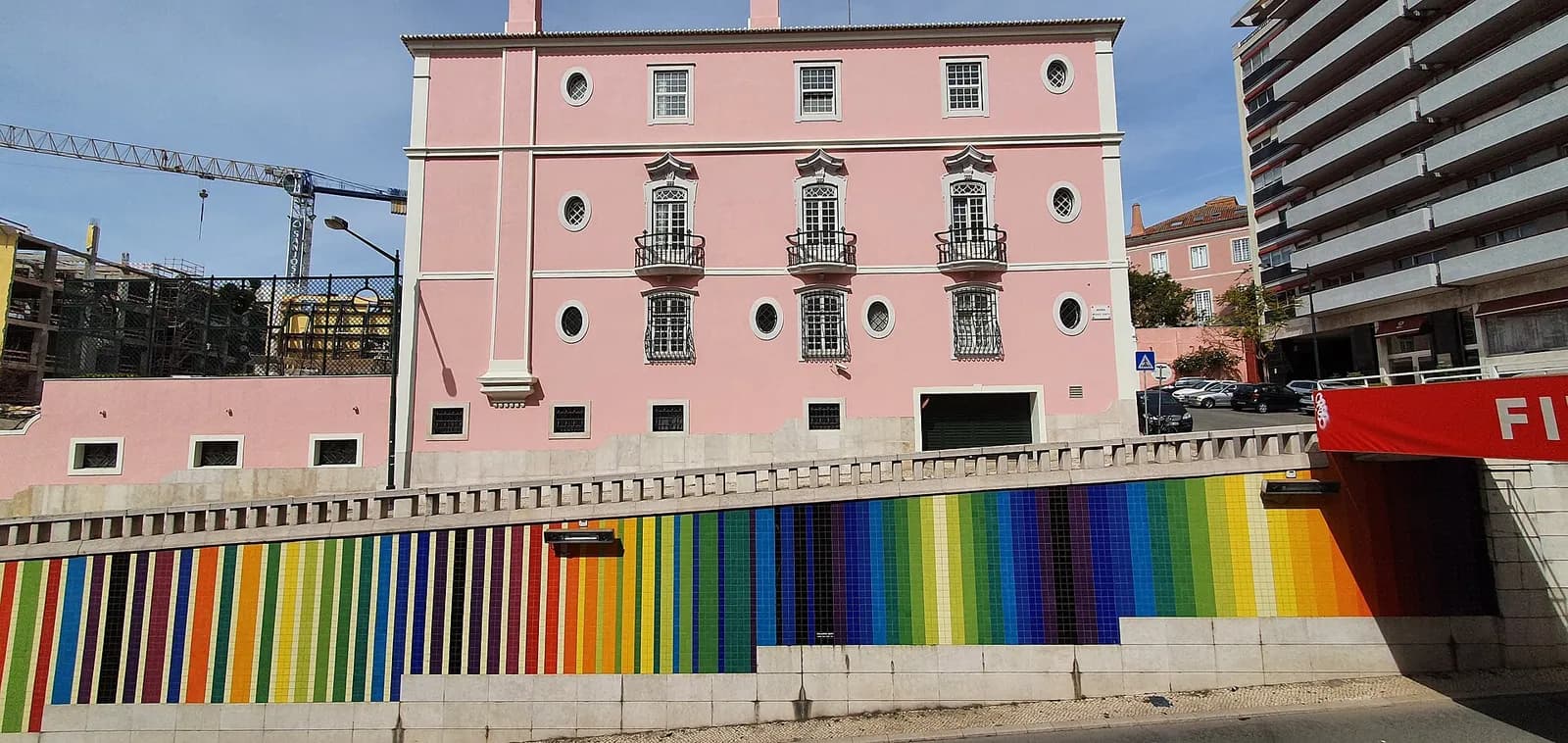
The commanders were to gather at five in the Palácio da Cova da Moura in Lisbon. The plan was to present the regime with a united front of generals and force Salazar out, perhaps President Américo Tomás too. A former president, Marshal Francisco Craveiro Lopes, came to the meeting; Costa Gomes later said he was with them “heart and soul”.
At three o'clock the state radio, the Emissora Nacional, had interrupted its programmes to read out the dismissals and the names of the men replacing them. Most of the army's senior commanders stayed away from the meeting. The navy minister had forbidden the navy's commanders to attend.
General Albuquerque de Freitas, chief of staff of the air force, told the room what that meant. Legally, Botelho Moniz was no longer minister. The army and navy staffs would not follow them, nor would any other air force general. To go on they would need to bring troops into the street, and that had never been the plan. He withdrew, and the coup was over before it began.
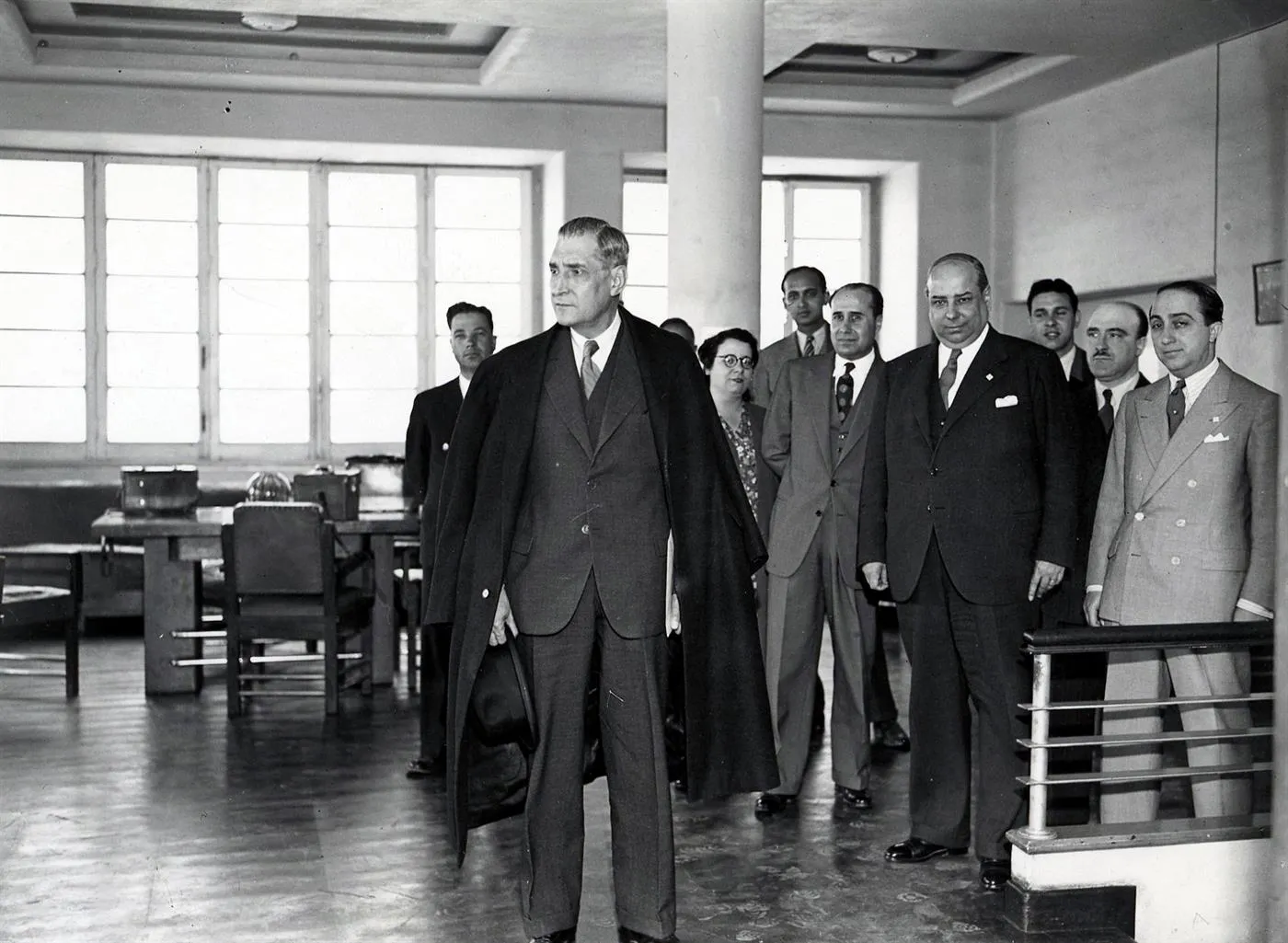
That night Salazar appeared on television. He gave one reason for taking over the defence ministry himself, and it was Angola.
A regime that rested on the army
In 1961 Salazar had led Portugal's government for almost three decades. His Estado Novo, or New State, was a dictatorship, and the armed forces were its main support. Formally the President of the Republic appointed and could dismiss the head of government, and since 1958 the president had been Admiral Américo Tomás, a candidate Salazar had put forward himself.
In August 1958, after a presidential election in which the opposition candidate Humberto Delgado had frightened the regime, Salazar brought a group of reforming staff officers into government: Botelho Moniz at Defence, Colonel Afonso Magalhães de Almeida Fernandes at the Army ministry and Francisco da Costa Gomes as under-secretary of state for the army.
They were technocrats, many of whom had spent time in the United States or with NATO bodies, and they found the army in what Almeida Fernandes called “total inefficiency”. In August 1959 the Supreme Council of National Defence approved their plan to reorganise the forces in Guinea, Angola and Mozambique for counter-guerrilla war. The money never came. Salazar and the finance ministry kept refusing the funds.
The generals lose patience
Between 1958 and 1961, Costa Gomes admitted later, none of the measures needed to “prevent a war overseas” had been carried out. The hijacking of the liner Santa Maria in January and the attacks in Luanda turned frustration into alarm. At a meeting of the Supreme Military Council in late February 1961, Albuquerque de Freitas tabled a memorandum asking the chiefs to discuss “the continuation of political life in Portugal beyond the disappearance of the current head of government”.
After the northern rising of 15 March, Botelho Moniz called the Supreme Army Council and told it he had written to Salazar. His letter asked for “a psychological shock” to clear the air at home and abroad. The government's political base, he wrote, had narrowed to “worn-out political figures”, and it should bring in new men, including some who had lost faith.
“an untenable situation, where we may be at the mercy of a frontal attack, with forces scattered across four continents, without sufficient means and with a suicide mission from which we shall not be able to escape, since politics finds no solution for it nor seems able to look for one.”
Salazar saw him on 28 and 29 March. Viana de Lemos, an officer on the minister's staff, remembered Botelho Moniz coming back from the first meeting tired but smiling, sure he had convinced Salazar. That night regime loyalists leaned on Salazar, and the second meeting was harder. Botelho Moniz felt the door closing again.
Washington changes sides
The plotters were also watching Washington. John F. Kennedy had taken office in January 1961 determined to court the new African states, even at the cost of irritating European allies. On 4 March Secretary of State Dean Rusk told the US ambassador in Lisbon, C. Burke Elbrick, to warn Salazar that Washington could no longer back his African policy and would vote to put Angola on the Security Council's agenda.
“In short inaction to us seems likely to lead to catastrophic upheavals of Congo type or worse.”
Before he saw Salazar, Elbrick had lunch with Botelho Moniz and told him what was coming, according to the embassy's cable of 6 March. The minister agreed that colonial policy had to change. His solution was a broad government including “non-communist opposition” figures, and in time autonomous, multiracial provinces linked to Portugal in a Commonwealth-type relationship. Any change, he warned, had to look Portuguese, not imposed by Washington or the UN.
Elbrick then saw Salazar for an hour and a half, he reported on 7 March, and found him relaxed, friendly and “deeply concerned” at what he saw as a self-defeating American policy. In mid-March the United States voted with the Soviet Union for a Liberian draft resolution urging reforms in Angola. It failed, with 5 votes in favour and 6 abstentions, Britain and France among them.
Portugal answered in the street. On 27 March, by Soromenho-Marques's account, more than 20,000 demonstrators, many of them regime dignitaries, marched on the US embassy on Avenida Duque de Loulé and broke 47 windows with stones. He notes that Botelho Moniz made no effort to hide his frequent meetings with Elbrick. The northern massacres had also rallied opinion behind the government just as Salazar looked weakest.
Twelve days in April
Salazar's old defence minister, Fernando Santos Costa, pushed from the other side. Dismissed in 1958 but still close to Salazar, he wrote to him on 3 April accusing the new men of ineptitude and demanding 10,000 properly armed men for Angola at once, with another 10,000 ready for Mozambique. Three days later he wrote again: Salazar must stop suggesting and start ordering.
“You must not be content with ‘suggesting’, but must order: ‘I want’, ‘I demand’, ‘I determine’. All in the name of the Nation.”
Botelho Moniz now tried what Rodrigues calls a constitutional coup. On 5 April he told President Tomás that Salazar would probably have to go. If a second audience failed, he meant to tell Tomás that the armed forces would take control and back a broader government under Marcelo Caetano or António Pinto Barbosa. On 9 April they briefed the commanders of the Lisbon military region and sent instructions to the command of the 2nd Military Region. The next day the military governor of Lisbon put the question of replacing Salazar openly to his officers.
15 March
UPA rising in northern Angola
Botelho Moniz then calls the Supreme Army Council and writes to Salazar.
Mid-March
US votes against Portugal at the UN
The Liberian draft on Angola fails with 5 votes in favour and 6 abstentions.
27 March
Crowd attacks the US embassy in Lisbon
28 and 29 March
Salazar sees Botelho Moniz twice
3 and 6 April
Santos Costa's letters urge Salazar to act
5 April
Botelho Moniz asks Tomás to consider removing Salazar
9 and 10 April
Plotters brief military commanders
The military governor of Lisbon openly raises replacing Salazar with his officers.
11 April, night
Tomás warns Salazar; the air force goes on alert
At about 11pm Tomás receives Botelho Moniz and Almeida Fernandes and turns them down.
12 April
Salazar and Tomás agree the dismissals
They meet for more than two hours.
13 April, morning
Letters of dismissal reach the plotters
13 April, 3pm
Emissora Nacional announces the changes
13 April, 5pm
The meeting at Cova da Moura breaks up
13 April, night
Salazar's declaration on radio and television
The president holds the line
On the night of 11 April Botelho Moniz and Almeida Fernandes asked for an urgent audience. Before granting it, Tomás saw Salazar at the president's home in Restelo, told him everything, renewed his confidence in him and urged “rapid and drastic action”. He then told Kaúlza de Arriaga, under-secretary of state for the air force, to take precautions. Kaúlza put the air force on alert.
At about 11pm the two ministers asked Tomás whether the time had come to replace the head of government himself, whose qualities were “much weakened”. Tomás was struck by what he took for an indirect ultimatum. He answered that this was not the only solution, that the navy and air force had not spoken for it, and that he knew the army was not unanimous either.
On 12 April Salazar concluded that he had to act before the military movement broke out. He and Tomás agreed that the dismissals would appear in the official gazette the next morning. On the 13th Kaúlza warned that if nothing was done by early afternoon, by five o'clock the President and the head of government could both be under arrest or the country at civil war. He also lined up General Gomes de Araújo, the incoming chief of the general staff, to keep the army's commanders away from Cova da Moura.
Officially, nobody had been sacked. The Diário do Governo of 13 April recorded that Botelho Moniz, Almeida Fernandes and the overseas minister, Rear Admiral Vasco Lopes Alves, had been granted the exoneration they had asked for, and a second decree did the same for Costa Gomes. Salazar, Brigadier Mário Silva and Adriano Moreira were appointed to Defence, the Army and the Overseas.
The Museu da Presidência's biographies of Tomás and Craveiro Lopes add that forces of the Portuguese Legion, the regime's militia, commanded by Santos Costa surrounded the rebels. Rodrigues, working from the participants' memoirs and letters, mentions no such operation, and Santos Costa had been out of government since 1958. In his account the plot fell apart from inside.
Most of the generals had wanted a pronouncement that would persuade the president, not a fight. Almeida Fernandes had already told Kaúlza he would not follow a coup by force. Costa Gomes said they did not want to start a movement without the whole of the armed forces, because civil war was the cruellest thing he knew. By the Presidency Museum's account, Craveiro Lopes was one of the few who argued for defying the government.
At the end of the day Salazar received Kaúlza and remarked that he looked tired. Kaúlza said he had slept little the previous nights.
“Naturally. You gentlemen have been going about conspiring.”
“Rapidly and in force”
That night the normal television programmes were interrupted for Salazar. He announced that he was taking the defence portfolio and that there were changes at the head of the armed forces, and he explained why. The whole declaration, broadcast on radio and television, runs to four short paragraphs in his collected speeches.
“If an explanation is needed for my taking over the National Defence portfolio even before the government reshuffle that will follow, the explanation can be summed up in one word, and that word is Angola. […] To move rapidly and in force is the objective that will put our capacity for decision to the test.”
The last paragraph asked the country not to waste a single hour, since one day could spare sacrifices and lives, so that Portugal would make every effort needed to defend Angola “and with it the integrity of the Nation”. The coup was not mentioned.
Not everyone believed the explanation. On 16 April Albuquerque de Freitas wrote to Brigadier Pinto Resende, who commanded the military region of Angola.
“Let it be quite clear, Resende: the reason the ministers were replaced was not Angola, as the chief announced, but a purge in the face of an imminent coup, which did not go ahead […] only because those responsible for the use of force decided not to, thinking of you, of Mozambique, Guinea, etc.”
Aftermath: new men and a war
The purge was thorough. Botelho Moniz went into the reserve. Almeida Fernandes was parked on the army staff without duties. Costa Gomes was sent to Beja to run a recruiting district, and Albuquerque de Freitas asked to be placed in the reserve. Their posts went to men Santos Costa had recommended days earlier.
| Person | Post in April 1961 | Side | What happened next |
|---|---|---|---|
| Júlio Botelho Moniz | Minister of national defence | Led the plot | Dismissed; placed in the reserve |
| Afonso de Almeida Fernandes | Minister of the army | Plotter, but against using force | Dismissed; army staff without duties |
| Francisco da Costa Gomes | Under-secretary of state for the army | Plotter | Dismissed; sent to Beja; President of the Republic 1974 to 1976 |
| Beleza Ferraz | Chief of the armed forces general staff | Removed with the plotters | Replaced by General Gomes de Araújo |
| Albuquerque de Freitas | Chief of staff of the air force | Plotter; withdrew on 13 April | Asked to go into the reserve |
| Francisco Craveiro Lopes | Former president (1951 to 1958) | Backed the plotters | Expected to return as head of state if the coup succeeded |
| Américo Tomás | President of the Republic | Loyal to Salazar | Kept Salazar in office |
| Kaúlza de Arriaga | Under-secretary of state for the air force | Loyal; put the air force on alert and worked against the plot | Among the new generation of war leaders |
| António de Oliveira Salazar | Head of government | Target of the plot | Took the defence ministry himself |
The army ministry went to Brigadier Mário Silva and the under-secretaryship to Lieutenant-Colonel Jaime da Fonseca. Costa Gomes later commanded in Mozambique and Angola before reaching the top of the armed forces; he became president on 30 September 1974.
The reshuffle went beyond the army. Adriano Moreira, until then an under-secretary of state, replaced Lopes Alves at the Overseas ministry on 13 April and launched reforms in Africa. In the wider reshuffle Salazar had promised, Alberto Franco Nogueira became foreign minister. Soromenho-Marques sees the changes as giving new life to a government that had seemed exhausted. Salazar kept the defence ministry until 4 December 1962.
The troops followed quickly. The first large contingents left Lisbon for Luanda by air on 19 April and by sea on 21 April, when the liner Niassa sailed packed with soldiers; it reached Luanda on 1 May. By September more than 20,000 men had been shipped, and the reoccupation of the north was declared complete on 3 October 1961. By the end of the year about 33,000 soldiers were in Angola.
The defeated generals had never argued for abandoning Africa. Their grievance was that Salazar had denied them the money to reinforce it, and Rodrigues points out that the troops could only leave six days after the Abrilada because of the preparation they had done. Their anger, Rodrigues suggests, must have been all the greater when they heard Salazar promise on television, on the day of their dismissal, to move rapidly and in force.
Angola at the UN Security Council, 1961
votes
- In favour
- Abstentions
No member voted against either text, and the United States voted in favour both times. In March the abstainers included Britain and France; in June only they abstained, and the Council deplored “the large-scale killings and the severely repressive measures in Angola”.
Show the data
| In favour | Abstentions | |
|---|---|---|
| March (draft rejected) | 5 | 6 |
| 9 June (resolution 163) | 9 | 2 |
Salazar answered Washington before the National Assembly on 30 June 1961, saying that since the Security Council meeting of March the United States had openly backed the Afro-Asian group. The pressure eased later. By 1963, in the words of the historian António Telo quoted by Soromenho-Marques, the United States had stopped voting against Portugal at the UN and was abstaining instead.
Why it still matters
Rodrigues calls the Abrilada the last significant attempt at military intervention in Portuguese politics before 1974. Its failure, he argues, closed off political change and a different colonial policy at a time when both were still possible. The war that followed lasted 13 years and spread to Guinea and Mozambique; at its height the three fronts held about 150,000 men.
“[By beheading the armed forces, Salazar was able to impose the war in Africa,] but in doing so he did not only make his colonial policy viable: he secured the loyalty of the new commands to the Estado Novo (and to the policy of war).”
It also showed where power lay. The historian José Medeiros Ferreira, cited by Rodrigues, gave Américo Tomás the decisive role: by keeping a loyal military man as head of state, Salazar forced any rebel general to put himself outside the law. In 1968, after Salazar fell ill, the same president chose Marcelo Caetano, one of the two men the plotters had wanted to lead a new government, to succeed him.
Some of the losers came back. Costa Gomes, the under-secretary who would not risk civil war in 1961, rose to be chief of the armed forces general staff in 1972 and was dismissed in March 1974 after he and António de Spínola refused to attend a ceremony of loyalty to the regime. After the revolution of 25 April 1974 he became President of the Republic, expected, the Presidency Museum says, to keep the armed forces united.
FAQs
What was the Abrilada of 1961?
It was a failed attempt by Portugal's military leaders, led by the defence minister General Júlio Botelho Moniz, to have President Américo Tomás dismiss Salazar in April 1961, and if necessary to remove both men. Tomás stayed loyal, and on 13 April Salazar dismissed the plotters before their meeting of commanders could act.
Did Salazar really say “Para Angola, rapidamente e em força”?
Not in those words. In his declaration of 13 April 1961 he said that “to move rapidly and in force is the objective that will put our capacity for decision to the test”, in order to defend Angola. The shorter slogan is a popular compression of it.
Was the United States behind the coup?
The Kennedy administration had turned against Portugal's colonial policy and its ambassador, C. Burke Elbrick, met Botelho Moniz openly. US cables show the minister keeping the embassy informed and asking Washington to stay quiet, but the plot was organised by Portuguese officers for their own reasons.
Why did the coup fail?
The plotters wanted a constitutional change through the president, not a fight. When Tomás sided with Salazar and the dismissals were announced, the chain of command broke, most commanders stayed away from the meeting and those present would not bring troops into the streets.
On the timeline
Open the timelineNearby moments from dictatorship and the estado novo (1926–1974).
Exiled opposition leader Henrique Galvão and a band of Portuguese and Spanish rebels seize the liner 'Santa Maria' in 'Operation Dulcineia', killing one officer. Broadcasting denunciations of Salazar's dictatorship from the ship, they hold the world's attention for eleven days before landing at Recife on 2 February and receiving asylum in Brazil.
About 200 men armed mostly with machetes attack the São Paulo prison, the military prison and a police barracks in Luanda, trying to free political prisoners. Claimed by the MPLA, whose role historians dispute, the attack is regarded as the start of the Angolan War of Independence and of Portugal's 13-year Colonial War.
The UPA (Union of the Peoples of Angola) launches a large-scale uprising in northern Angola, killing settlers and African workers on the coffee farms. Six weeks after the Luanda attacks of 4 February, it turns the revolt into full-scale war, the first front of Portugal's 13-year Colonial War.
The Botelho Moniz coup of 1961
After seeing off an attempted coup by his defence minister, Júlio Botelho Moniz, Salazar takes over the defence portfolio himself and, in a broadcast address, says the aim is to move 'rapidamente e em força' — rapidly and in force — to defend Angola, at the start of 13 years of colonial war.
Benfica win the European Cup for the first time, beating Barcelona 3–2 at the Wankdorf Stadium in Bern. It is the first final not won by Real Madrid, and Benfica would retain the trophy the following year.
Hermínio da Palma Inácio and fellow opponents of the Salazar regime hijack a TAP Super Constellation flying from Casablanca to Lisbon, throw thousands of anti-regime leaflets over Lisbon and other parts of the country, then make the crew fly on to Tangier, in Morocco. It was the first political hijacking of a plane in Portugal.
Governor-General Manuel Vassalo e Silva surrenders Goa, Daman and Diu to the Indian army, which had crossed the borders on 17 and 18 December, ending 451 years of Portuguese rule in Goa. Salazar had ordered his roughly 3,500 soldiers to fight to the death against an Indian force put at 30,000 to 45,000 or more; Vassalo e Silva chose to save lives and was later expelled from the army.
Coming up in history
All long reads 15 April 2022Eunice Muñoz, the actress who spent eighty years on stage, dies at 93
 16 April 1581Tomar, 16 April 1581: Philip II of Spain swears to rule as a Portuguese king
 17 April 2015José Mariano Gago: the physicist who put science into Portugal's government
 18 April 1842Antero de Quental, the Azorean poet who told Portugal why it had declined
12 sources
Archives, scholarship and reporting this article was checked against.
- 1
Militares e política: a Abrilada de 1961 e a resistência do salazarismo (Luís Nuno Rodrigues)Ler História 65 (2013), pp. 39-56
- 2
Discursos e notas políticas, 1928 a 1966 (António de Oliveira Salazar)Coimbra Editora; digitised copy on the Internet Archive
- 3
Telegram from the Department of State to the Embassy in Portugal, 4 March 1961 (FRUS 1961-1963, vol. XIII, doc. 324)Office of the Historian, US Department of State
- 4
- 527 de março de 1961: o duelo aberto de Salazar contra Kennedy (Viriato Soromenho-Marques)Diário de Notícias, 27 March 2021
- 6
Os 60 anos do início da guerra colonial em Angola (César Rodrigues)Anais: Colóquio de Estudos Luso-Brasileiros 49 (2022), Osaka University
- 7
Américo Tomás (biography)Museu da Presidência da República
- 8
- 9
- 10
Diário do Governo, I série, n.º 86, 13 April 1961: decrees 43 590 to 43 593 (exoneration of the ministers of National Defence, the Army and the Overseas and of their under-secretaries; appointment of successors)Imprensa Nacional; scan on Diário da República Eletrónico
- 11A última guerra de Portugal (Xavier de Figueiredo)Observador, March 2021
- 12
Security Council resolution 163 (1961) of 9 June 1961: Question relating to AngolaUnited Nations
Image credits
- The Palácio da Cova da Moura in Lisbon, photographed in 2022. Here, late on the afternoon of 13 April 1961, the sacked defence minister Júlio Botelho Moniz met the officers he still hoped would help him remove Salazar. Yair Haklai, CC BY-SA 4.0, via Wikimedia Commons.
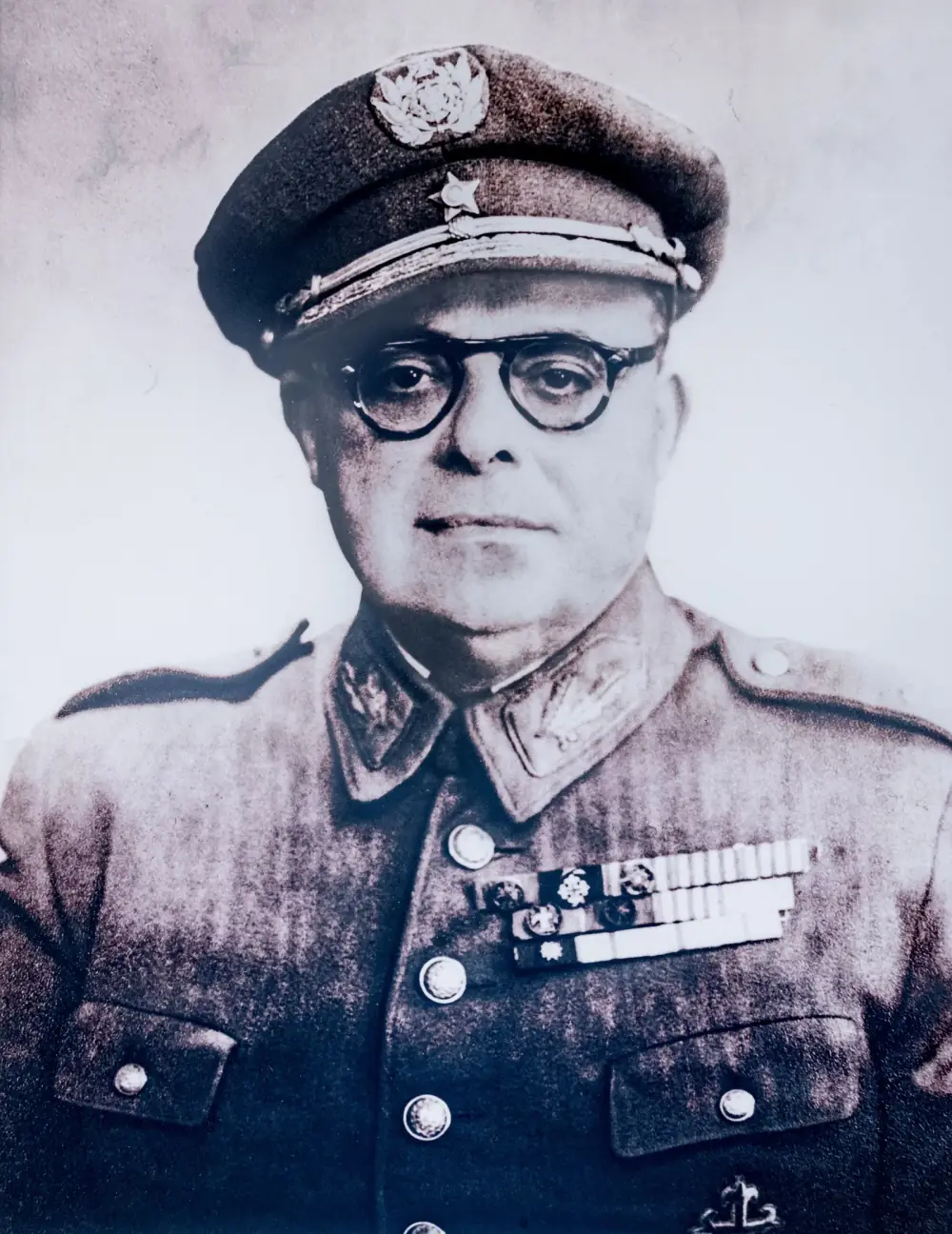
- General Júlio Botelho Moniz in an official portrait dated 1955. He became minister of national defence in August 1958. Unknown author, Public domain, via Wikimedia Commons.
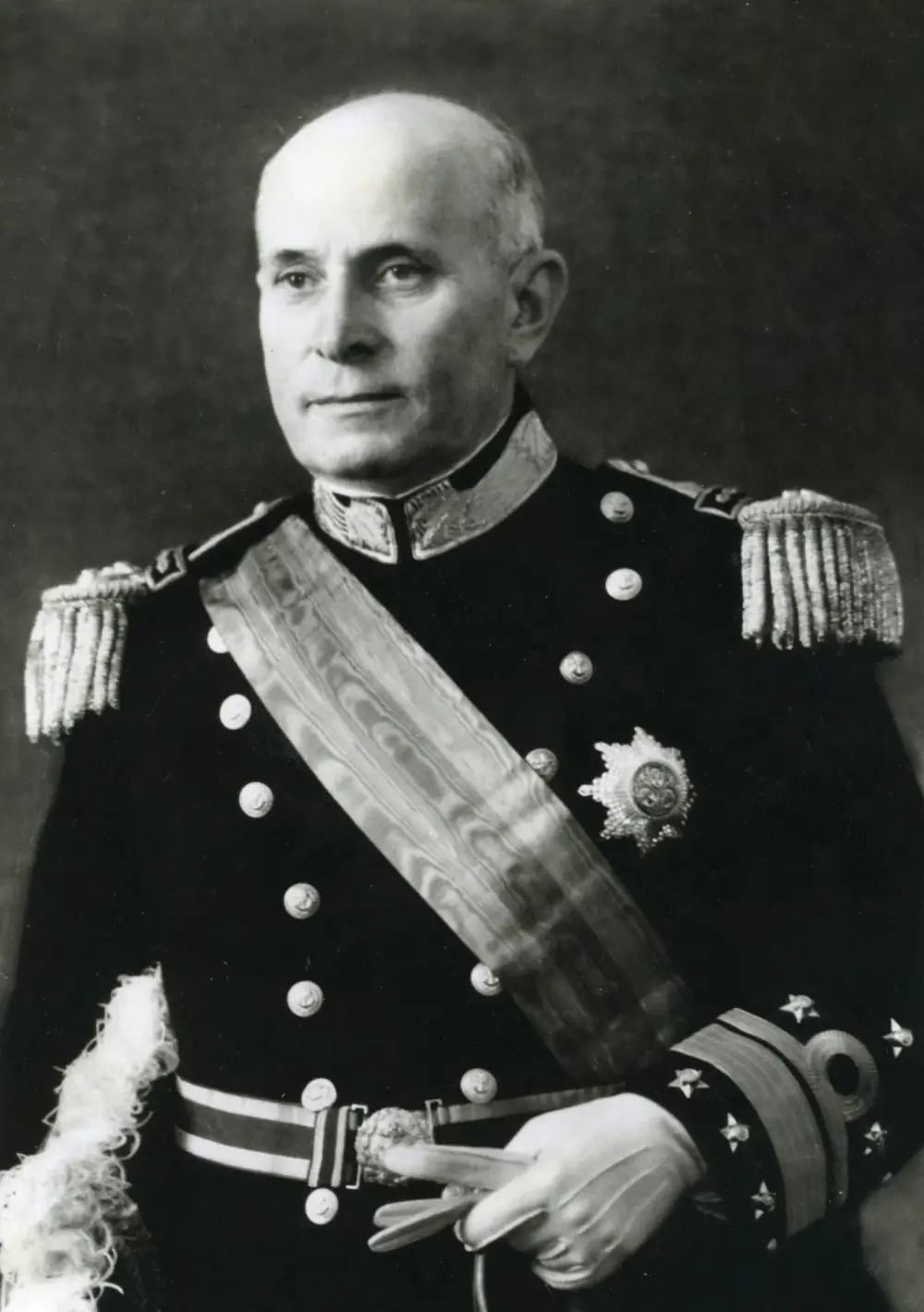
- Admiral Américo Tomás in his official photograph as President of the Republic, taken between 1958 and 1960 by Manuel Alves de San Payo. His refusal to drop Salazar decided the outcome. Manuel Alves de San Payo, Public domain, via Wikimedia Commons.
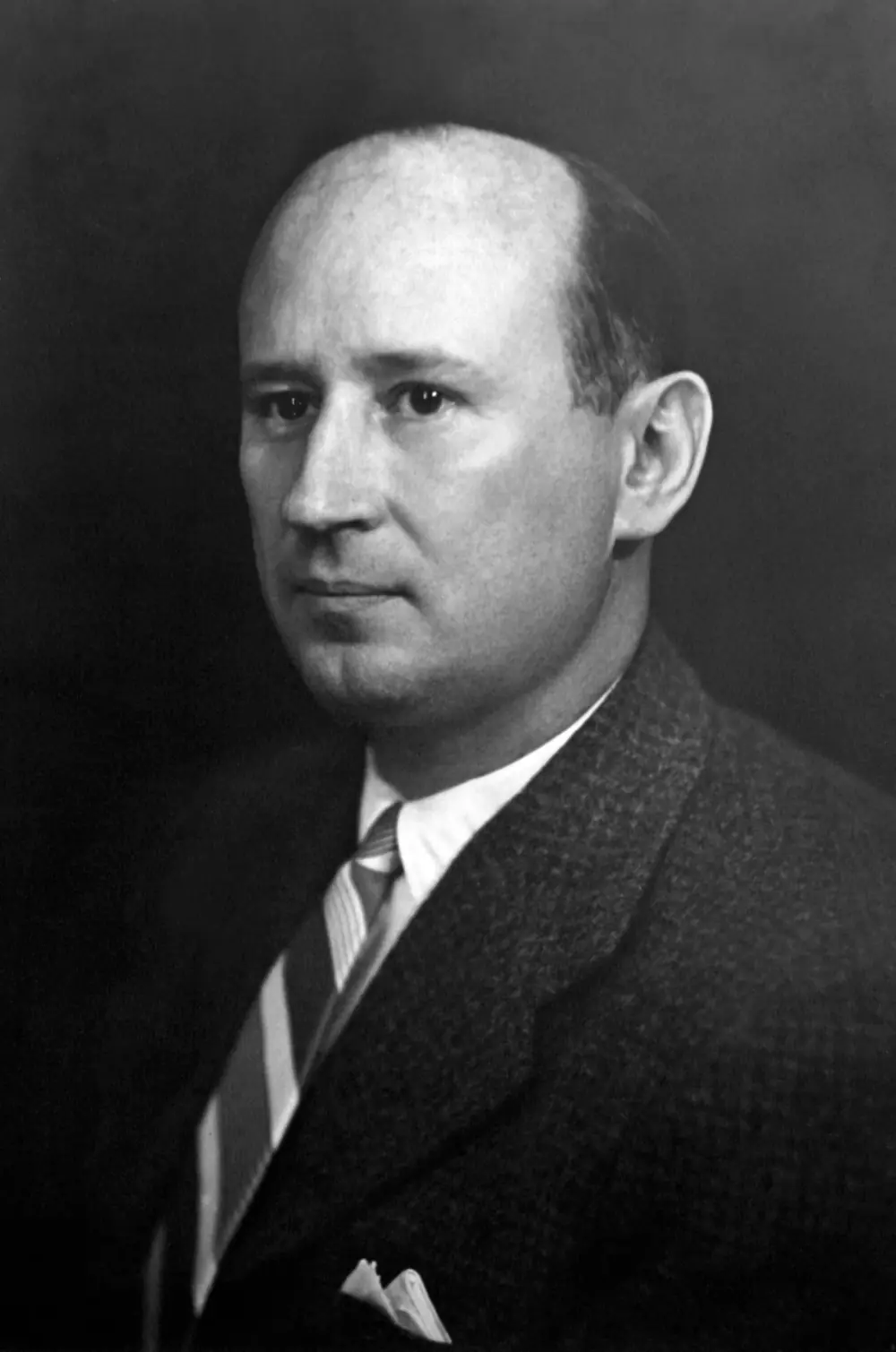
- Kaúlza de Arriaga, under-secretary of state for the air force, in a portrait dated around 1961. He put the air force on alert on 11 April and advised Salazar throughout the crisis. Unknown author, Public domain, via Wikimedia Commons.
- Salazar at the Emissora Nacional, the state broadcaster, on 27 April 1943, the 15th anniversary of his entry into government. In April 1961 the same station announced the dismissals of the plotters. Unknown author, Public domain, via Wikimedia Commons.