

Francisco Nicholson, the revue writer who gave Portugal its own telenovela
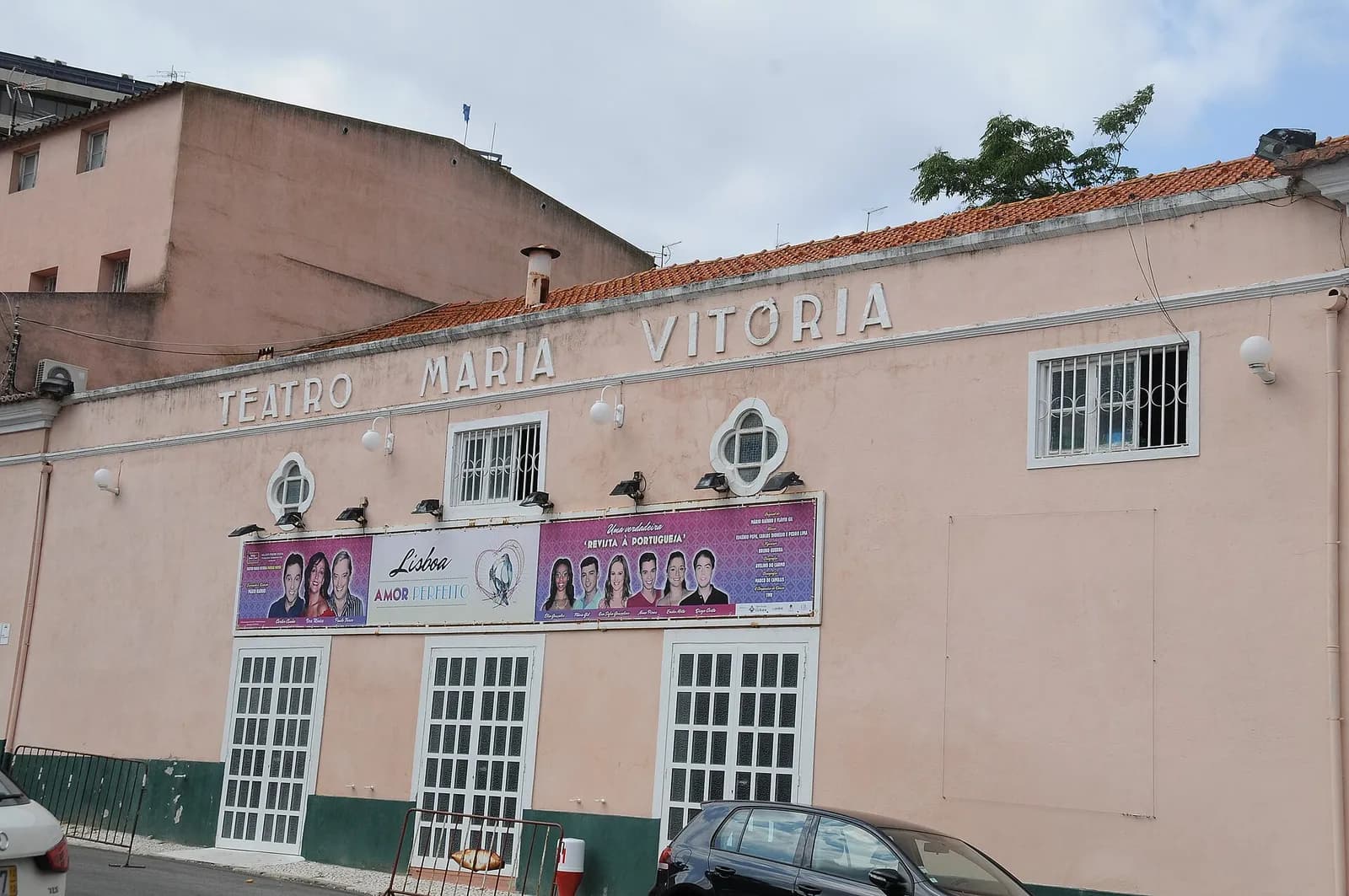
He learned his craft on Lisbon's stages, among them the revue theatres of Parque Mayer. In 1982, five years after a Brazilian soap opera had the whole country watching, he co-wrote the first telenovela made in Portugal.
At a glance
- Francisco Nicholson, actor, revue author, lyricist and television writer, died in Lisbon on 12 April 2016, aged 77.
- In 1964 he co-wrote the words of “Oração”, sung by António Calvário, which won RTP's first song contest and became Portugal's first Eurovision entry. It scored no points in Copenhagen.
- Gabriela, Cravo e Canela, the first telenovela shown in Portugal, began on RTP on 16 May 1977 and ran to 16 November. RTP's historian reckons at least four million people followed it.
- Vila Faia, the first Portuguese telenovela, began on RTP-1 on 10 May 1982. Nicholson and João Alves da Costa developed an idea by Nicolau Breyner and Thilo Krasmann and wrote the dialogue; it ran to 100 episodes.
- RTP's own surveys in 1982 found that 23% of viewers rated Vila Faia better than the Brazilian telenovelas, 55% as good and 24% worse.
A name on the news ticker
On the morning of 12 April 2016, António Calvário was having breakfast in a café near his home, watching a programme on the television, when a line of text began to run along the bottom of the screen. Francisco Nicholson had died. The two men had met on a revue stage in 1963, and the next year Calvário had sung Nicholson's words to the whole country.
“I just sat there staring like an idiot. I was watching a television programme, and suddenly I start seeing it along the bottom of the screen. It's terrible, you don't expect it.”
Nicholson was 77. He had been ill for years after liver transplant surgery; his friend Herman José, the comedian, said he had survived two. The first news agency reports said he died at home, but by the evening Diário de Notícias reported that he had died at the Curry Cabral hospital, where he had been admitted the previous Thursday.
The obituaries listed more than fifty years of work as actor, revue author, director, lyricist and television writer. The President, Marcelo Rebelo de Sousa, spoke of a friend and of “a fighter for democracy”. Diário de Notícias put one title first: Vila Faia, the first Portuguese telenovela, which RTP began showing in May 1982, five years after a Brazilian soap opera had held the country in front of its television sets every weeknight.
26 June 1938
Born in Lisbon
Early 1950s
First acting, aged 14, at the Liceu Camões
1963
Revue Chapéu Alto at the Teatro ABC, with António Calvário
2 February 1964
“Oração”, with his words, wins RTP's song contest
1964
Creates Riso e Ritmo for RTP with Armando Cortez
September 1974
The Ádóque cooperative opens with Pides na Grelha, a revue he co-wrote
16 May 1977
Gabriela, the first telenovela on Portuguese television, begins on RTP
10 May 1982
Vila Faia begins on RTP-1
April 1983
Origens, his second telenovela, begins
1998
Os Lobos, one of several later telenovelas
12 April 2016
Dies in Lisbon, aged 77
From the Liceu Camões to Parque Mayer
Francisco António de Vasconcelos Nicholson was born in Lisbon on 26 June 1938. His surname came from English ancestors on his father's side. That side of the family was also noble, and in interviews he liked to recall that it linked him to the Count of Farrobo and the Baron of Quintela.
He started acting at 14 at the Liceu Camões, a Lisbon secondary school, under the poet and director António Manuel Couto Viana, who took him into the theatre group of the Mocidade Portuguesa, the regime's youth movement. His classmate Rui Mendes, later a well-known actor, started there too. His family opposed a stage career, so he spent three years in the merchant navy before short spells of training at the National Conservatory in Lisbon and in Paris.
Back in Lisbon he made his professional debut with O Gerifalto, Couto Viana's children's theatre company. Then came comedy and revue at the ABC, Variedades, Monumental and Villaret theatres, as actor and director. In 1963, in the ABC revue Chapéu Alto, he met Calvário, a young singer already voted “King of the Radio” by magazine readers. They toured the country together and, Calvário remembered, went to every party going after the show.
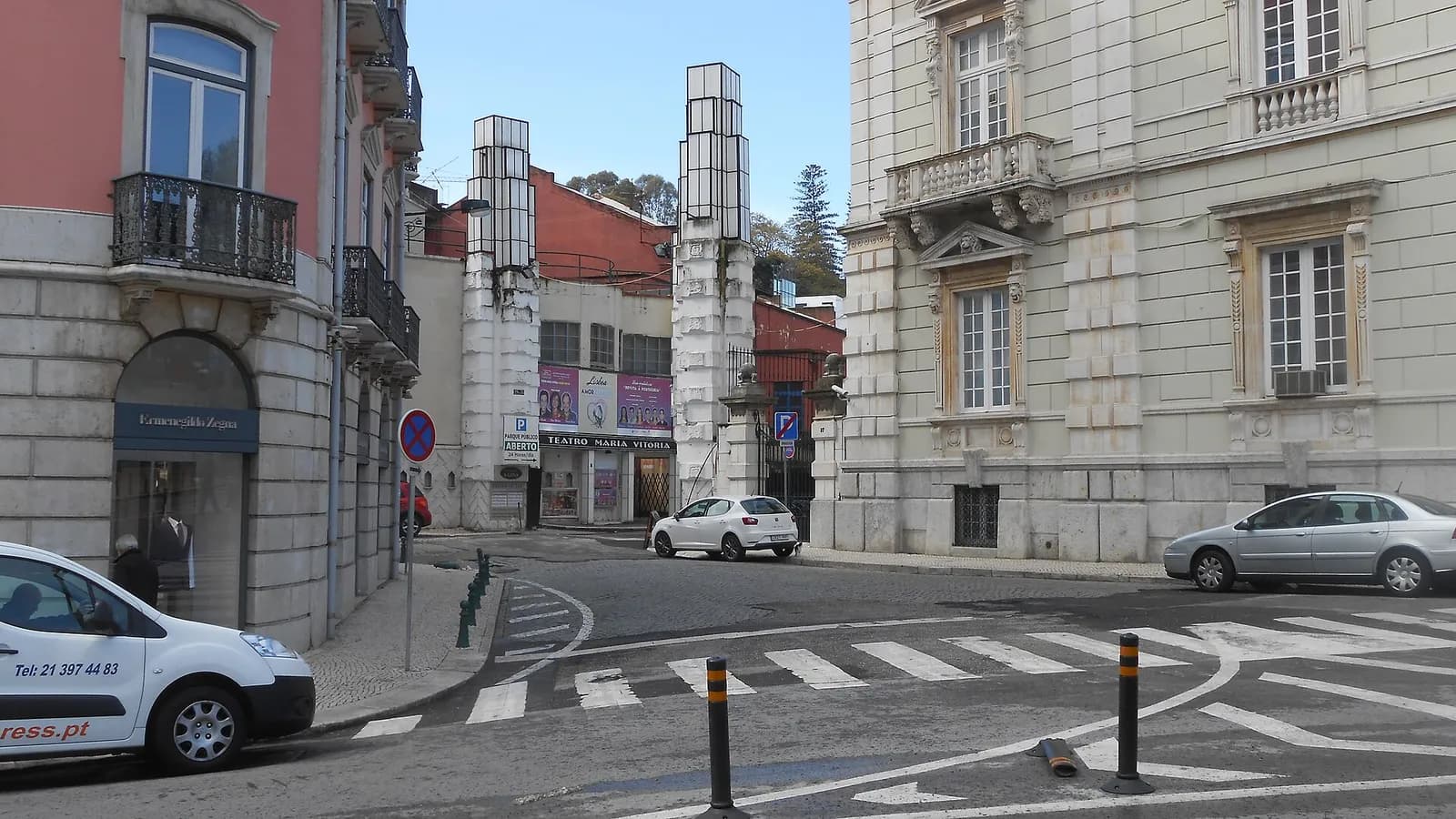
Revue lived with the censor. Under the Estado Novo, the dictatorship that ruled Portugal until 25 April 1974, every number had to go to the Secretariado Nacional de Informação at the Palácio Foz. Texts came back with words and lines struck out, were rewritten and sent again while rehearsals went on, and before opening night a group of censors, church representatives among them, watched a dress rehearsal. Freire Costa remembers them coming back unannounced during the run, to sit in what theatres called the authorities' box.
A prayer for Eurovision, and comedy for RTP
In 1964 RTP, the state television service that had been on the air since 1957, needed a song for the Eurovision Song Contest. On 2 February it staged the Grande Prémio TV da Canção Portuguesa in a studio it had just rented from the Tóbis film company at Lumiar. A jury had chosen 12 songs from 127 entries, six singers sang two each, and juries in the district capitals voted by telephone.
The winner was “Oração” (Prayer), with music by João Nobre and words by Francisco Nicholson and Rogério Bracinha, sung by Calvário. RTP counts the contest as the first Festival RTP da Canção, and Calvário as its first winner; a 2024 Diário de Notícias profile calls it the festival's forerunner.
“Lord, I confess the perjury of so many promises”
In Copenhagen on 21 March 1964, Portugal's first Eurovision entry scored no points. It shared last place, 13th, with West Germany, Switzerland and Yugoslavia. The Diário de Notícias profile says the song was met with whistles and boos aimed at Salazar's regime, not at the singer. Teves, RTP's historian, writes that there is no record of the audience reacting either way.
The same year Nicholson and the actor Armando Cortez created Riso e Ritmo (Laughter and Rhythm) for RTP: comedy sketches between musical numbers. It led to a New Year's Eve special that made famous the line “Já é uma hora? Que grande banquete!” (“One o'clock already? What a feast!”). RTP's own history records the show still on the air in 1969, though by then its quality and time slot were irregular.
Revue without a censor
The military coup of 25 April 1974 ended the dictatorship and, with it, the censorship of the stage. Within months Nicholson, the set designer Mário Alberto and the choreographer Fernando Lima were among the founders of the Ádóque, a theatre workers' cooperative. It was self-managed, which Luciano Reis, its historian, says was a first for musical theatre in Portugal. It played in a demountable theatre in the Largo do Martim Moniz that had belonged to the company of Rafael Oliveira.
It opened in September 1974 with Pides na Grelha (roughly, “PIDE men on the grill”), a revue by Nicholson, Edgar Gonsalves Preto and Mário Alberto. The PIDE was the dictatorship's political police. Diário de Notícias called the Ádóque a company of the left, set against the conservative line of Parque Mayer; another of its revues was A CIA dos Cardeais.
“We believed in new paths for revue theatre, freed from every form of censorship: political, ideological, economic, prejudiced, religious, conservative, I don't know how many, so cunning and subtle were they.”
By Reis's count the Ádóque staged 21 shows, seen by more than 1.2 million people in Lisbon and more than 70 other towns, and its songs filled 15 records, before it closed in 1982. Actors such as Virgílio Castelo and Maria Vieira started there.
1977, the year of Gabriela
In 1977 Portugal was three years out of its revolution. The first constitutional government, elected in 1976, faced strikes, party feuds and IMF austerity packages, and there were only two television channels, both run by RTP. On the evening of 16 May, RTP broadcast a “Brazilian night” from the Hotel Ritz in Lisbon: an interview with the novelist Jorge Amado, songs by Vinicius de Moraes and Toquinho, and the first episode of Gabriela, Cravo e Canela, introduced by the comedian Raul Solnado.
TV Globo had made it in 1975, for its tenth anniversary, from Amado's 1958 novel about the cocoa town of Ilhéus in 1925. Carlos Cruz, briefly RTP's director of programmes, had beaten Globo down from 500 to 300 dollars an episode. RTP showed it five nights a week from about 8.35 pm, and no programme had held the same prime-time slot every weeknight before.
Vasco Hogan Teves, RTP's historian, reckons that at least four million people followed it for six months. Sets were scarce, about 150 for every 1,000 inhabitants, so people watched in cafés, neighbourhood clubs and residents' associations. The media historian Isabel Ferin Cunha points out that this made Gabriela, unusually for a telenovela, a programme followed mainly by men, because the evening café was a male routine while women cooked and cleared up at home.
“Eclipsing the crisis that is shaking the political parties, the serial “Gabriela” paralyses Portugal every evening at 8.30.”
Its phrases passed into everyday Portuguese, from Gabriela's “sapato não!” to Colonel Ramiro Bastos's “ô, xente!”. Young women copied Malvina's short hair and fringe, and when the actors who played Malvina and Tonico Bastos flew in that November, hundreds of people met them at Portela airport. Expresso reported that Álvaro Cunhal, leader of the Communist Party, arrived late at RTP's Lumiar studios for a programme because he had stayed to see the end of an episode.
The last episode, the 130th, went out on Wednesday 16 November 1977. That day the Diário de Lisboa protested on its front page that “they took 30 episodes away from Gabriela”, asking why a serial shown in full under Brazil's dictatorship had been cut in democratic Portugal. The figure rested on RTP's early announcement of 160 episodes, which RTP called a slip; Rodrigues counts 135 in Globo's original.
RTP repeated Gabriela from August 1977 to February 1978, partly overlapping the first run, and showed it again, in colour, on its second channel in 1983.
Making Vila Faia
After Gabriela, Brazilian telenovelas never left Portuguese screens. Cunha counts about 37 on RTP's two channels in the 1980s, and RTP built its evenings around them: Brazilian telenovela, news, Brazilian telenovela. As early as February 1981 a Diário de Notícias headline asked the obvious question: “And the Portuguese telenovela?”
The answer came from outside RTP. The production company EDIPIM, run by Thilo Krasmann and Victor Mamede, was invited to make one, though it had no studio. They found an unfinished industrial shed at Abrunheira, near Sintra, and fitted out 1,000 square metres. The studio's cost was put at around 30,000 contos, or 30 million escudos, which Teves suspects was an underestimate.
RTP lent a director, Nuno Teixeira, and video equipment. Krasmann and Teixeira went to Globo's studios in Brazil to see how it was done, and Teixeira later called the difference abysmal.
“When we accepted, we knew it would not be easy, because we had nothing. We could not count on practically anything from the television, apart from the video equipment.”
The story was first called João Gudunha, after its hero (Observador spells the name Godunha). Nicolau Breyner, who would play him and direct the actors, and Krasmann passed the idea to Francisco Nicholson and João Alves da Costa, who developed it and wrote the dialogue; the writer Odete de Saint-Maurice had tried first and given up. Observador's obituary of Breyner gives a shorter version: he wrote it with Krasmann and Nicholson.
Breyner gave a six-week acting course to a cast that included newcomers found at auditions, among them Luís Esparteiro and Nuno Homem de Sá.
The plot turned on Marques Vila, a respected wine firm. Gudunha was a lonely former boxer who had killed a rival in the ring, spent 14 years in Africa and came home to drive the firm's lorries, and he fell for Mariette, a prostitute played by Margarida Carpinteiro. Ruy de Carvalho, Mariana Rey Monteiro and Varela Silva were in the cast, and Nicholson played a policeman.
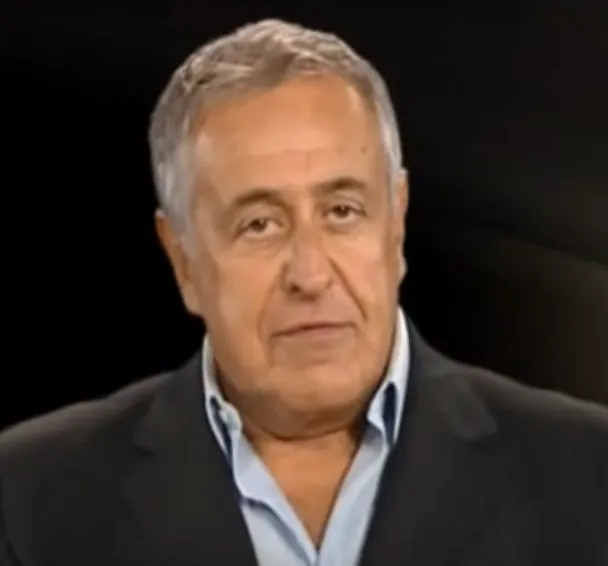
Vila Faia began on RTP-1 on 10 May 1982. Its 100 episodes ran for almost five months, against four Brazilian telenovelas that year. At one point 30 different sets stood in the Abrunheira studio, and on good days the crew recorded 40 minutes, or two episodes. About 70 technicians and actors worked on it for nine months.
- First episode
- 10 May 1982, RTP-1
- Episodes
- 100, over almost five months
- Producer
- EDIPIM (Thilo Krasmann and Victor Mamede), studio at Abrunheira, near Sintra
- Director
- Nuno Teixeira, lent by RTP
- Writers
- Francisco Nicholson and João Alves da Costa, from an idea by Nicolau Breyner and Thilo Krasmann
- Lead
- Nicolau Breyner as João Gudunha; Breyner also directed the actors
What viewers made of it
RTP's audience studies found that Vila Faia was its most watched programme from the first episode. The share of viewers who said they liked it rose from 71% after the first five episodes to 91% after 78. A separate survey asked viewers to compare it with the Brazilian telenovelas.
How viewers rated Vila Faia against Brazilian telenovelas, 1982
% of viewers
RTP survey of viewers in 1982, as reported in Vasco Hogan Teves's history of RTP. The published figures add up to 102%.
Show the data
| Share of viewers | |
|---|---|
| Better | 23 |
| As good | 55 |
| Worse | 24 |
“Although it is a first attempt and means are clearly scarce, nothing in it embarrasses us, unlike some Portuguese copies of foreign programmes.”
Teves thought it stayed the best Portuguese telenovela for many years. Cunha describes Vila Faia and the four that followed by 1988 as a pioneering cycle that copied Globo's model while looking for Portuguese themes and characters. Episodes were about 30 minutes, written day by day. The writers were used to the language of theatre or revue, she writes, and the actors moved as if they were on stage and could not forget the cameras.
Television sets registered for the licence fee in Portugal
registered sets
End-of-year figures for 1968, 1970 and 1971, and the 1982 total of licence subscribers after 70,662 new sets that year, all from Vasco Hogan Teves's history of RTP. Many more people watched than paid: in 1977 there were about 150 sets per 1,000 inhabitants.
Show the data
| Registered sets | |
|---|---|
| 1968 | 305,623 |
| 1970 | 388,776 |
| 1971 | 476,961 |
| 1982 | 1,500,519 |
After Vila Faia
Nicholson wrote the next one too. Origens began in early April 1983 and its 120 episodes ran, sometimes painfully in Teves's view, to the end of September, with Breyner again directing the actors and Teixeira directing. It aimed at a close portrait of the urban middle class, and it was said at the time that it had not made viewers forget Vila Faia. EDIPIM made no more telenovelas and turned to series instead.
RTP's monopoly ended when the private channels SIC and TVI went on air, on 6 October 1992 and 20 February 1993. In 1994 SIC signed an exclusive deal with Globo, which took 15% of its capital, and at times Globo's telenovelas on SIC took 85% of the audience. Experienced Brazilian professionals, almost all from Globo, came to work in Portugal, helping production companies such as NBP, which Breyner had founded and TVI later bought.
| Period | Brazilian telenovelas and series shown | Portuguese telenovelas |
|---|---|---|
| 1977 | Gabriela, the first, on RTP1 | None |
| 1980 to 1989 | About 37, on RTP1 and RTP2 | 5: Vila Faia (1982), Origens (1983), Chuva na Areia (1985), Palavras Cruzadas (1987), Passerelle (1988) |
| 1990 to 1999 | 48 on RTP1 and RTP2, 67 on SIC, 7 on TVI | At least 14, from Cinzas (1992) to Os Lobos (1998) and A Lenda da Garça (1999) |
Counts from Isabel Ferin Cunha (2010), drawing on J. P. da Costa, Telenovela: um modo de produção (2002). The 1990s Brazilian figures include series; the 1990s Portuguese count is the list Cunha singles out. In the same decade Portuguese channels also showed 16 Venezuelan and 22 Mexican telenovelas.
Nicholson kept writing for the screen, including Cinzas, Os Lobos, Ajuste de Contas, Ganância and O Olhar da Serpente, and was one of the founders, with Armando Cortez, Manuela Maria and Raul Solnado, of the Casa do Artista. From 1999, after its purchase by Media Capital, TVI built its evenings on Portuguese telenovelas and audiences moved with it, away from the Brazilian productions on SIC.
Why it still matters
Vila Faia showed that a small Portuguese company could make a telenovela that viewers rated alongside Globo's. RTP remade it in 2008, with Albano Jerónimo as Gudunha, and in 2026 it was offering advertisers a weekday afternoon run of that remake, 120 episodes, under the line “in 1982 RTP launched the first novela made in Portugal”.
Nicholson also stayed with revue to the end, taking part in shows such as Piratada à Portuguesa!, Agarra, que é Honesto! and A Escuta que os Pariu! in his last decade. Herman José, whom he had first met in 1978 in a play with the revue star Ivone Silva, predicted that he would be remembered as a great author, much more than as an actor.
“Oração” is still Portugal's first Eurovision song. The country did not win the contest until 2017, 53 years after Calvário came home from Copenhagen without a point.
FAQs
What was the first Portuguese telenovela?
Vila Faia, which began on RTP-1 on 10 May 1982 and ran to 100 episodes. It was produced by EDIPIM at a studio in Abrunheira, near Sintra, directed by Nuno Teixeira and written by Francisco Nicholson and João Alves da Costa from an idea by Nicolau Breyner and Thilo Krasmann.
Who was Francisco Nicholson?
A Lisbon actor, revue author, director and television writer, born on 26 June 1938 and died on 12 April 2016. He co-wrote the words of “Oração”, Portugal's first Eurovision song, co-founded the Ádóque revue cooperative in 1974, co-wrote Vila Faia and wrote Origens and later telenovelas.
When was Gabriela shown in Portugal?
Gabriela, Cravo e Canela, made by TV Globo in 1975, began on RTP on 16 May 1977 and ended on 16 November 1977 after 130 episodes. It was the first telenovela on Portuguese television, and RTP repeated it in 1977 to 1978 and in colour in 1983.
Did parliament or the government really stop for Gabriela?
It is a popular story, but unproven. RTP's own historian says a Council of Ministers interrupted for the last episode can be neither confirmed nor denied. What the press did report in 1977 was that the Communist leader Álvaro Cunhal arrived late at RTP's studios because he stayed to watch an episode, though Teves treats even that as unconfirmed.
How did Portugal do with “Oração” at Eurovision?
Sung by António Calvário in Copenhagen on 21 March 1964, Portugal's first entry scored no points and shared 13th and last place with West Germany, Switzerland and Yugoslavia.
On the timeline
Open the timelineNearby moments from portugal in europe (1986–today).
Death of José Mariano Gago, the particle physicist who founded the LIP laboratory in Lisbon and Coimbra and, as science minister in the 1990s and 2000s, launched the Ciência Viva programme and drove a rapid expansion of Portuguese research. Days later, labs and universities across the country stopped work for five minutes in his honour.
António Costa's Socialist minority government is sworn in, backed in parliament by the Left Bloc, the Communists and the Greens after the right-wing coalition that won the most seats was voted down. Nicknamed the 'geringonça' (contraption), the arrangement was the first of its kind since the revolution and lasted the full four-year term.
Law professor and long-time television commentator Marcelo Rebelo de Sousa is elected President of the Republic in the first round with 52 per cent of the vote. His informal style — selfies, sea swims and constant walkabouts — made him one of Portugal's most popular presidents.
Francisco Nicholson and Vila Faia
Death of Francisco Nicholson, aged 77. Actor, revue writer and lyricist, he co-created and co-wrote 'Vila Faia' (1982), the first Portuguese telenovela, at a time when Brazilian soaps ruled the country's screens; he also co-wrote 'Oração', winner of the first Festival RTP da Canção in 1964.
Cristiano Ronaldo scores twice in a breathless 3–3 draw with Hungary in Lyon, becoming the first player to score at four European Championships. The result lets Portugal scrape into the Euro 2016 knockout rounds as one of the best third-placed teams without winning a group game — the unlikely start of a run that would end with the country's first major trophy.
Portugal win the UEFA European Championship final 1–0 against France at the Stade de France in Saint-Denis, with an extra-time strike by Éder. After Cristiano Ronaldo limps off injured early in the match, the team holds firm to claim Portugal's first major senior international title.
The United Nations General Assembly appoints António Guterres, former Portuguese Prime Minister and UN High Commissioner for Refugees, as Secretary-General by acclamation, following the Security Council's recommendation a week earlier. He took office on 1 January 2017.
Coming up in history
All long reads 14 April 2020Maria de Sousa, the immunologist who mapped where lymphocytes live
 15 April 2022Eunice Muñoz, the actress who spent eighty years on stage, dies at 93
 16 April 1581Tomar, 16 April 1581: Philip II of Spain swears to rule as a Portuguese king
 17 April 2015José Mariano Gago: the physicist who put science into Portugal's government
26 sources
Archives, scholarship and reporting this article was checked against.
- 1
Década de 80: “A RTP aos 25 anos, as primeiras telenovelas portuguesas” (page 4)RTP 50 Anos de História (text by Vasco Hogan Teves, 2007), Museu Virtual RTP
- 2
- 3
- 4
Audiências e recepção das telenovelas brasileiras em Portugal (Isabel Ferin Cunha)Comunicação, Mídia e Consumo, vol. 7, no. 20 (2010), ESPM São Paulo
- 5
A revolução da Gabriela: o ano de 1977 em Portugal (Isabel Ferin Cunha)Biblioteca On-line de Ciências da Comunicação, Universidade da Beira Interior; also in Cadernos Pagu 21 (2003)
- 6Morreu o ator Francisco NicholsonDiário de Notícias (with Lusa), 12 April 2016
- 7Francisco Nicholson “inovou em todo o lado”Diário de Notícias, 12 April 2016
- 8
- 9Obra sobre o Teatro Ádóque, de Luciano Reis, apresentada no sábadoRTP Notícias (Lusa), 15 April 2016
- 10
- 11António Calvário: a idade da inocênciaDiário de Notícias, March 2024
- 12Hélder Freire Costa e o teatro de revista: “Ninguém calava o Nicolau Breyner, nem a censura” (Bruno Horta)Observador, 9 December 2018
- 13
Parque Mayer: memória e renovação (presentation, 2016)Junta de Freguesia de Santo António, Lisbon
- 14
O Estado Novo (1933-1974)Assembleia da República
- 15
- 16António Calvário e Simone de Oliveira, por João Carlos CallixtoRTP Memória, Gramofone
- 17Portugal, 12 pontos: do melhor ao pior na EurovisãoObservador, May 2018
- 18
- 19
Pides na Grelha/A Ceia dos PidesTime Out Lisboa
- 20
O Essencial sobre a PIDE (Irene Flunser Pimentel)Imprensa Nacional, 2023
- 21Gabriela, 1977, a novela que mudou a televisãoDiário de Notícias, 12 May 2017
- 22
Os efeitos de Gabriela em Portugal (Ernesto Rodrigues)Miscelânea, vol. 18 (2015), pp. 145-154, UNESP Assis
- 23Morreu Nicolau BreynerObservador, 14 March 2016
- 24O inesquecível Nicolau na TVObservador, 14 March 2016
- 25
Vila Faia: proposta comercial 2026RTP Publicidade
- 26
Teatro VariedadesLisboa Cultura (EGEAC), Lisbon City Council
Image credits
- The Teatro Maria Vitória in Parque Mayer, Lisbon, in July 2014, with banners for a “revista à portuguesa”. It opened in 1922, the first of the park's revue theatres. Nicholson worked in two of its neighbours, the ABC and the Variedades. Joseolgon, CC BY-SA 4.0, via Wikimedia Commons.
- The entrance to Parque Mayer, seen from the Avenida da Liberdade side in March 2014, with the sign of the Teatro Maria Vitória at the end of the drive. 69joehawkins, CC BY-SA 3.0, via Wikimedia Commons.
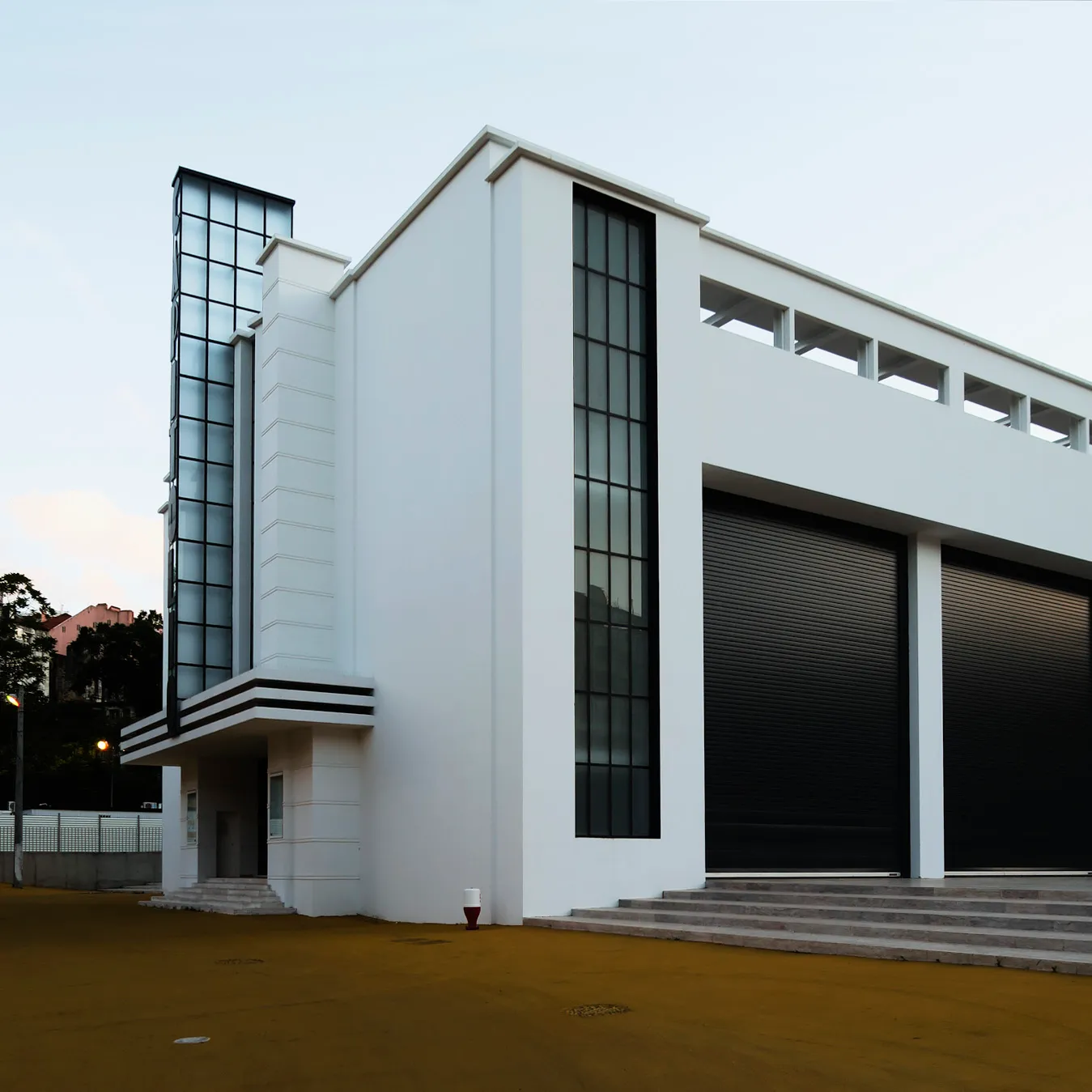
- The Capitólio, the modernist cinema and theatre designed by Luís Cristino da Silva, which opened in Parque Mayer in 1931 and staged revue among films and circus. Photographed in 2017. Manuelvbotelho, CC BY-SA 4.0, via Wikimedia Commons.
- Nicolau Breyner, who played João Gudunha and directed the actors in Vila Faia, presenting the astronomy series 1 Minuto de Astronomia in 2013. He died on 14 March 2016, four weeks before Nicholson. Science Office, CC BY 3.0, via Wikimedia Commons.
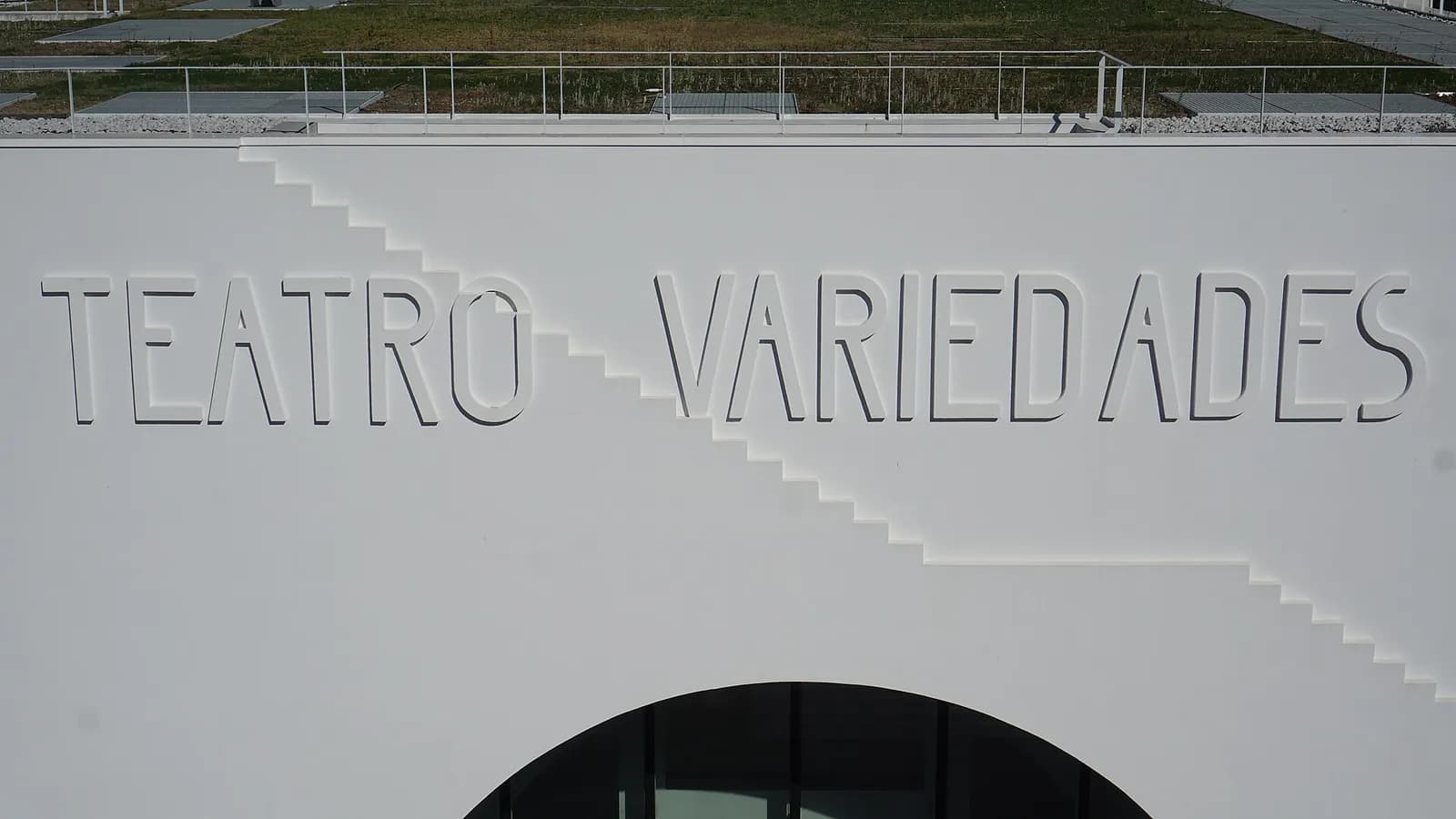
- The renovated Teatro Variedades in Parque Mayer, photographed on a guided tour on 28 March 2026. The original theatre opened in 1926. Swaeliiiii, CC BY 4.0, via Wikimedia Commons.