

Bento de Góis: the Azorean Jesuit who walked from India to China
Disguised as an Armenian merchant, a lay brother from São Miguel crossed the Hindu Kush, the Pamirs and the oasis towns of Central Asia to find Marco Polo's Cathay. He found China, and died waiting at its edge.
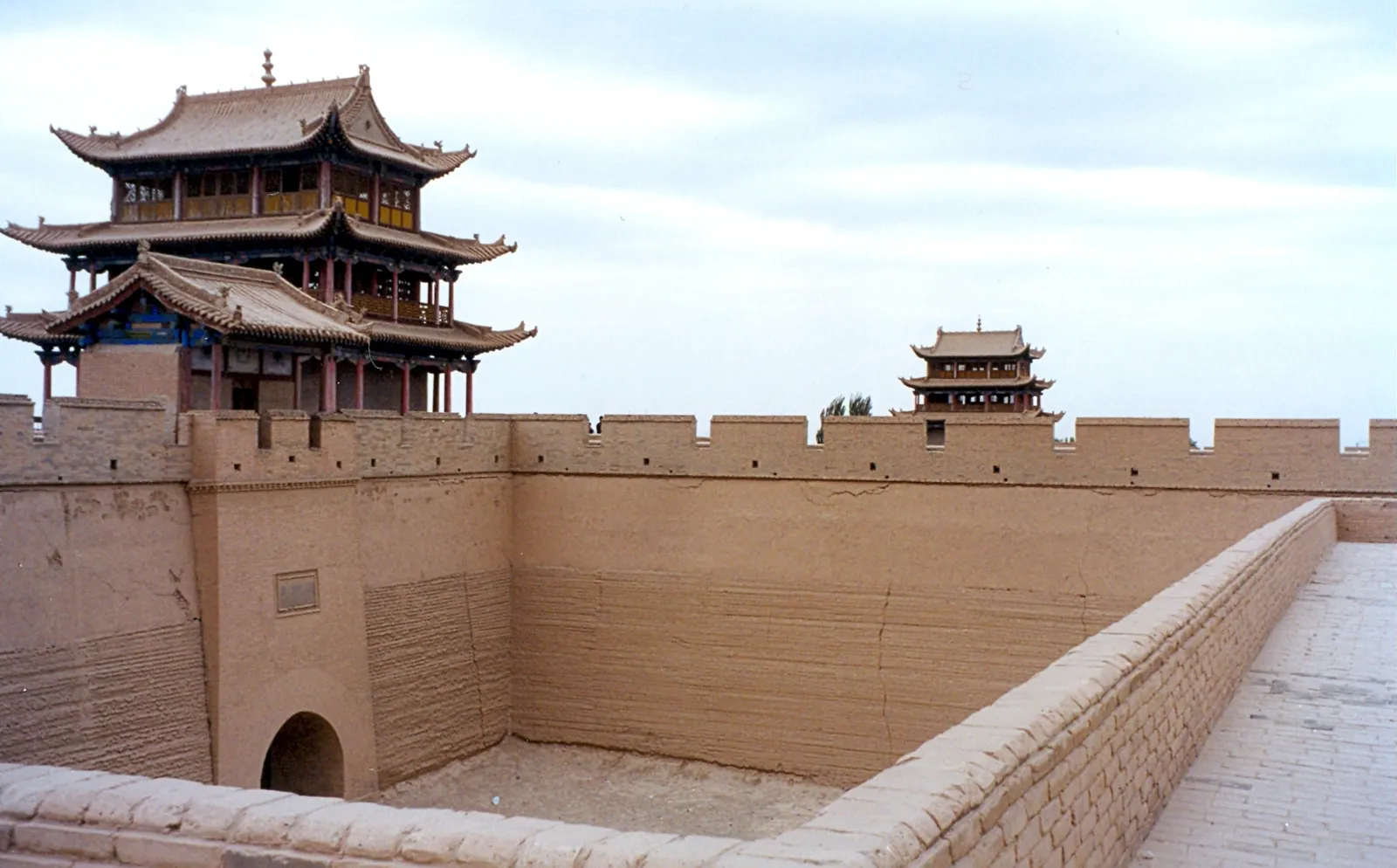
At a glance
- Bento de Góis, a Jesuit lay brother born in 1562 at Vila Franca do Campo on São Miguel in the Azores, died on 11 April 1607 at Suzhou, now Jiuquan in Gansu, at the western end of the Great Wall of China.
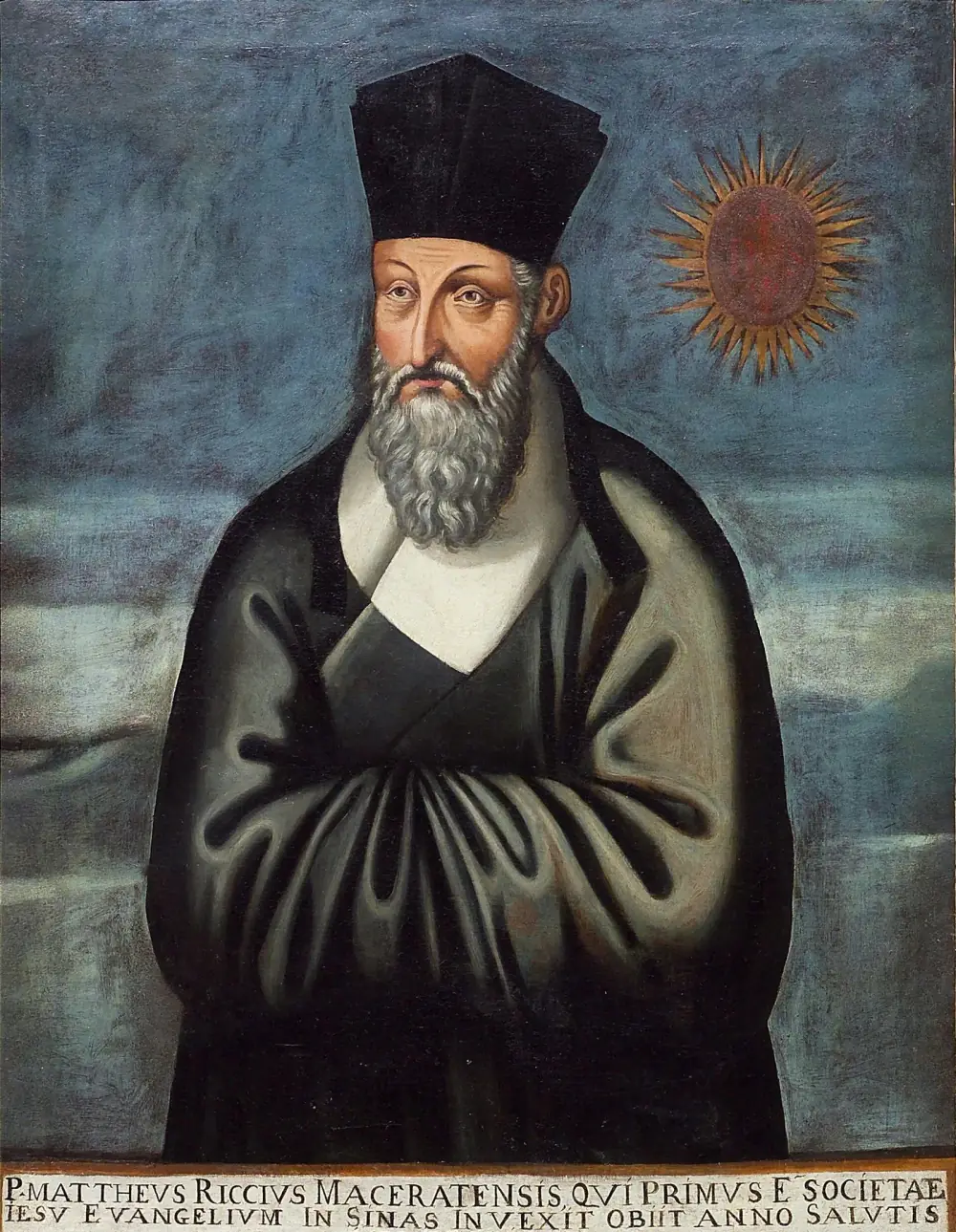
- His Jesuit superiors in India sent him to find Cathay, the empire described by Marco Polo, where Muslim traders said many Christians lived. Matteo Ricci in China had already argued that Cathay was simply China.
- Dressed as an Armenian merchant and calling himself Abdullah Isai, Abdullah the Christian, he left Agra in October 1602 and travelled by caravan through Kabul, the Pamirs, Yarkand and Turfan, reaching Suzhou at the end of 1605.
- At Chalis, in what is now Xinjiang, merchants returning from Peking told him about the Jesuits living there. That settled it: Cathay was China, and its capital Cambaluc was Peking.
- Held at Suzhou for some sixteen months, he died eleven days after a messenger from Ricci reached him. His diary was destroyed, and his story survives through Ricci's account, published in 1615.
A greeting in Portuguese at the end of the road
At the end of March 1607, in the frontier city of Suzhou, near the western end of the Great Wall of China, a sick man had a dream. Bento de Góis, a Jesuit lay brother from the Azores, had been ill for a month, and he dreamed that someone had come from Peking to find him. In the morning he sent his companion, an Armenian called Isaac, to the bazaar to buy things to give to the poor.
In the market someone pointed out a traveller just arrived from the capital. He followed Isaac home and greeted the sick man in Portuguese. He was Zhong Mingli, a young Chinese Christian from Macau whom the Jesuits called João Fernandes, and he carried letters from Matteo Ricci, the Italian who led the Jesuit mission in Peking.
“Taking the letters he raised them aloft with tears of joy in his eyes, and burst into the hymn of Nunc dimittis servum tuum, Domine. For now it seemed to him that indeed his commission was accomplished, and his pilgrimage at an end.”
Nunc dimittis is Simeon's prayer in Luke's Gospel: now, Lord, you let your servant go in peace. Góis had quoted it in a letter from Lahore in 1602. Eleven days after Fernandes arrived, on 11 April 1607, he died.
Cathay or China?
Cathay entered European books after the Mongol conquests of the thirteenth century. The name came from the Khitan, a people of northern China, and Marco Polo used it for northern China under Kublai Khan, whose capital was Cambaluc. When the Portuguese reached southern China by sea in the 1510s, they did not at first match its cities to the places in the old travellers' books.
Ricci had made the connection. In a letter of 13 October 1596 he wrote that China and Cathay were one country, and he warned his brethren in India two or three times that Cathay and Cambaluc were only old names for northern China and Peking.
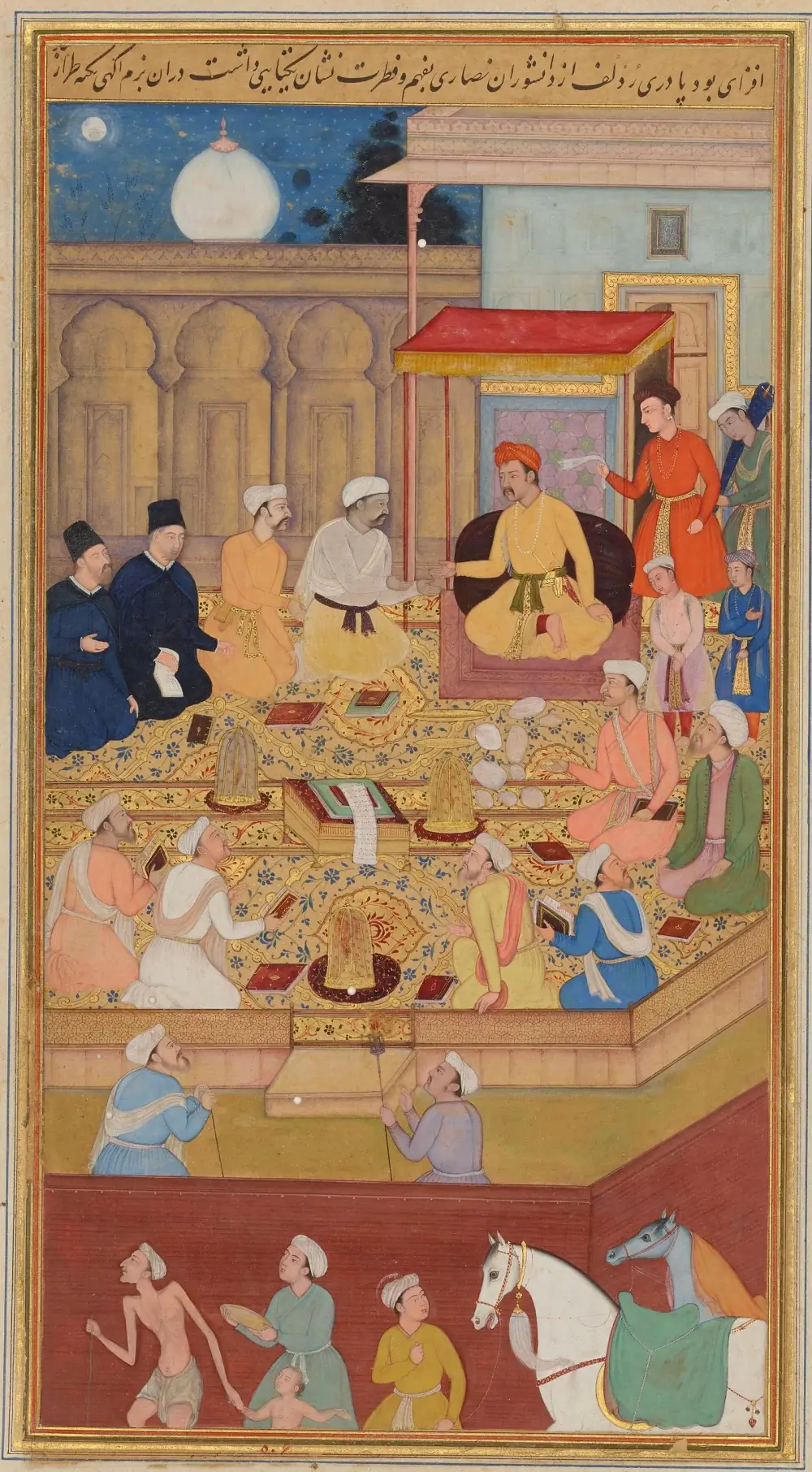
The Jesuits at the court of the Mughal emperor Akbar heard another story. In 1598, at Lahore, a Muslim merchant of about sixty said he had spent 13 years in Xambalu, capital of Xetay, that is Khitai. Its king ruled 1,500 cities, and most of its people were Isauites, followers of Jesus, with churches, images of the crucified Christ and celibate priests in black. Jerónimo Xavier, head of the Jesuit mission, reported this on 26 July 1598.
Ricci's account suggests the traders had seen Chinese temples, with images, candles, robed priests and chanting, and taken them for churches. But if Cathay was a separate country of Christians cut off from Rome, the Jesuits wanted to reach them, and a land route to China might also be shorter than the sea.
From the Azores to Akbar's court
Góis was born at Vila Franca do Campo, on São Miguel, probably in 1562. Nothing certain is known of his family or why he went to India as a soldier. Jesuit tradition says that after a wild youth he knelt before an image of the Virgin and Child in a church at Colachel, on the Travancore coast, and was overcome with remorse.
Jesuit records at Goa show that he entered the novitiate there in February 1584, aged about 23. He left for Hormuz before finishing it, asked to come back, and by the spring of 1588 was a novice again. He remained a lay brother, refusing repeated suggestions that he study for the priesthood.
At the end of 1594 he joined Xavier and a priest from São Miguel, Manuel Pinheiro, on the third Jesuit mission to Akbar, reaching Lahore on 5 May 1595. Góis learned Persian, the language of the Mughal court, travelled with Akbar to Kashmir and the Deccan, and in 1601 went to Goa with an embassy from the emperor.
That visit decided his future. The Provincial at Goa was looking for a man for Cathay, and Góis had judgement, nerve, fluent Persian and long experience of Muslim customs. He accepted, and in 1602 he went back to Agra, where the court had moved, to prepare.
Abdullah the Christian sets out
A subject of the Iberian kings would be stopped on the road; an Armenian Christian merchant could travel freely. So Góis took the Armenian costume of a long coat and turban, with a scimitar, bow and quiver, let his hair and beard grow and called himself Abdullah Isai: Abdullah, servant of God, and Isai, the Christian. On the road he was often taken for a sayyid, a descendant of the Prophet.
Akbar gave him passports addressed to friendly rulers and, according to the Jesuit historian Pierre du Jarric, 400 pieces of gold. The viceroy paid for a stock of trade goods. Xavier gave him four servants and two companions: a merchant called Demetrius and a Greek, Leo Grimon, whom Ricci calls a priest.
Góis's own letter from Lahore says he took leave of Xavier at Agra on 29 October 1602. Du Jarric gives 31 October, and Ricci's account 6 January 1603. At Lahore he took on Isaac, an Armenian with a wife and children there, who stayed with him to the end. The yearly caravan for Kashgar, 400 to 500 people with horses, camels and carts, left Lahore in Lent 1603.
Over the Hindu Kush and the Pamirs
The caravan crossed the Indus at Attock and went on through Peshawar. On the way a wandering holy man told Góis of Capperstam, Kafiristan, where no Muslim might enter and people wore black to their temples, and gave him a cup of its wine. It tasted like European wine, and Góis wondered whether the people were Christians. His note is probably one of the earliest surviving references to the Kafirs.
In the passes before Kabul robbers attacked the caravan, and Góis fled into the scrub with the rest. At Kabul, still a Mughal city, the caravan broke up for a time. Grimon, worn out, went back to Lahore, and Demetrius stayed behind on business.
At Kabul Góis met Hajji Khanum, sister of Muhammad Khan, king of Kashgar, and mother of the ruler of Khotan, on her way home from Mecca and out of money. He lent her about 600 pieces of gold without interest. She repaid him in jade, which the Chinese prized highly, and her son later spoke for him at Yarkand.
Beyond Parwan, the last Mughal town, Akbar's passports counted for little. In one ambush rebels plundered the packs; Góis lost a horse and bought it back with two pieces of cloth. Another time four brigands caught him behind the caravan. He threw his turban at them, and while they kicked it about he galloped off.
On the Pamir plateau the cold and thin air killed five of his horses; the men ate garlic, leeks and dried apples as a remedy and rubbed garlic on the horses' gums. Crossing the Chichiklik pass the caravan spent six days in the snow, and many travellers froze to death. Below it, in the Tangitar gorge, Isaac fell into a river and lay as if dead for some eight hours until Góis revived him.
Góis rode ahead into Yarkand, the capital of the kingdom of Kashgar, and they arrived in November 1603. Ricci's account says the caravan had halted eight months at Kabul, but Henry Yule, who edited the text in 1866, showed that its stages add up to a year more than the known dates allow.
| In the 1615 account | Place today | Country today |
|---|---|---|
| Lahor | Lahore | Pakistan |
| Athec | Attock, on the Indus | Pakistan |
| Passaur | Peshawar | Pakistan |
| Cabul | Kabul | Afghanistan |
| Paruan | Parwan, below the Hindu Kush passes | Afghanistan |
| Talhan | Talikhan (Taloqan) | Afghanistan |
| Ciecialith | Chichiklik pass, near Tashkurgan | China (Xinjiang) |
| Hiarchan | Yarkand (Shache) | China (Xinjiang) |
| Cotan | Khotan (Hotan) | China (Xinjiang) |
| Acsu, Cucia | Aksu, Kucha | China (Xinjiang) |
| Cialis | Probably Karashahr | China (Xinjiang) |
| Turphan, Camul | Turpan, Hami | China (Xinjiang) |
| Chiaicuon | Jiayuguan, the pass at the western end of the Great Wall | China (Gansu) |
| Sucieu | Suzhou, now Jiuquan | China (Gansu) |
Identifications follow Yule and Cordier, who drew on Aurel Stein and Paul Pelliot; some smaller stages named by Ricci cannot be placed with confidence.
From Yarkand to the Great Wall
At Yarkand a new caravan had to be formed for Cathay, and that took a year: the king sold its leadership, and it left only when enough merchants had joined and they knew China would let them in. The great trade good was jade, fished from the river of Khotan or quarried in the mountains, carried to the Chinese emperor.
Góis won over the king, Muhammad Khan, with a pocket watch and looking glasses, and went to Khotan to collect his debt in jade. At a dinner a man drew a sword and ordered him to invoke the Prophet; Góis refused, and the other guests threw the man out.
The new caravan left on 14 November 1604. At Aksu Góis danced for the twelve-year-old governor, a nephew of the king, to show how people danced in his country. At Chalis, probably Karashahr, the ruler summoned him at night to debate with Muslim scholars. He went expecting to die, and came back the next day after a supper and a night at the palace.
As he prepared to leave Chalis after three months, the answer arrived. A caravan came back from Peking whose members had lodged in the same hostel as Ricci's Jesuits. They described their faces and the clocks and clavichord they had given the emperor, and showed a scrap of paper with Portuguese writing picked up from the sweepings of their rooms. Cathay was China, and Cambaluc was Peking.
When the prince wrote his safe-conduct and asked whether to describe him as a Christian, Góis said yes. An old Muslim cleric threw his cap on the ground and said this man was faithful to his religion, unlike their own people, who changed theirs with their place of residence.
“For having travelled thus far bearing the name of Jesus, I would surely bear it unto the end.”
With Isaac and a few others he went on through Turfan and Hami. The road to the frontier was raided by Tatar horsemen, so the travellers moved by night, past the bodies of murdered traders. One night Góis fell from his horse and was left behind; Isaac rode back in the dark and found him by his voice calling on the name of Jesus.
By Ricci's count they reached the Great Wall at Jiayuguan nine days from Hami and waited 25 days for permission to enter; a later Jesuit account says 20. One more day brought them to Suzhou, at the end of 1605. Góis arrived with 13 animals, five hired servants, two boys he had bought as slaves and property worth about 2,500 pieces of gold.
Sixteen months at Suzhou
Suzhou, then in the province of Shaanxi and now the city of Jiuquan in Gansu, guarded the western gap in the Great Wall. Its Muslim traders from Kashgar and further west lived in their own quarter, locked in every night. Every sixth year 72 of them went on to Peking as ambassadors bringing tribute from seven or eight western kingdoms.
The tribute was a fiction everyone understood: the emperor paid more for the jade than anyone else would, so places in the embassy were sold. With food dear, Góis sold his best piece of jade for 1,200 pieces of gold, about half its value. Named one of the 72, he then had to buy more jade, and borrowed to feed his party.
His first letter to Ricci never arrived, addressed in European script to a name nobody in Peking knew; in China Ricci was called Li Mateu. A second, sent at Easter 1606 with a Muslim who slipped out of the city, reached Peking in November. Góis asked the fathers to rescue him from what he called his prison at Suzhou.
Another foreigner would only make things harder, so the Jesuits sent Fernandes, a Chinese candidate for the Society. He left Peking on 11 December 1606, in the depth of winter. At Xi'an his companion ran off with half his money, and he reached Suzhou on the last day of March 1607 with almost nothing.
Where the time went: the main halts in Ricci's account
months
Halts of a month or more as given in Ricci's account (Trigault, 1615): eight months at Kabul, a year at Yarkand, a month each at Talikhan, Kucha, Turfan and Hami, three months at Chalis, and 25 days at Jiayuguan, shown as 0.8 months. The later account of the Polish Jesuit Tomasz Dunin Szpot gives 20 days at Jiayuguan, and the translator C. H. Payne suspected Ricci's nine days' march from Hami and 25 days' wait had been swapped. Yule doubted the eight months at Kabul. Suzhou runs from the end of 1605 to Góis's death on 11 April 1607: Aurel Stein called it sixteen months, Yule some seventeen.
Show the data
| Length of halt | |
|---|---|
| Kabul | 8 |
| Talikhan | 1 |
| Yarkand | 12 |
| Kucha | 1 |
| Chalis | 3 |
| Turfan | 1 |
| Hami | 1 |
| Jiayuguan | 0.8 |
| Suzhou | 16 |
Fernandes found him dying, with no doctor or medicine to be had. According to Trigault, Góis said that although he had not been able to confess for years, his conscience did not trouble him. He had already warned the fathers in Peking never to trust the Muslim merchants and never to send anyone by his route, which was dangerous and useless.
He died on 11 April 1607, aged about 45. Ricci suspected poison. The merchants seized his goods and destroyed his diary, which also recorded what they owed him, and wanted to bury him as a Muslim. Fernandes kept their clerics out, bought a wooden coffin and buried him where the grave could be found again, while he and Isaac recited the rosary.
Isaac's escape and Ricci's book
By the merchants' custom the goods of anyone who died on the road were shared out, and they now seized Isaac and threatened to kill him unless he invoked the Prophet. Fernandes petitioned the viceroy at Ganzhou, but the governor of Suzhou took a bribe from 30 or 40 merchants, threatened Fernandes with a flogging and jailed him for three days.
The case dragged on for five months; Fernandes and Isaac had no common language until Fernandes learned some Persian. In the end Fernandes told the court that Isaac was no Muslim, pulled a piece of pork from his sleeve, and the two of them ate it in front of the judge. The merchants gave up. Only the jade Góis had buried was recovered; it paid his debts and most of the journey to Peking.
They reached Peking at the end of October 1607. For a month Isaac told Ricci what he remembered, helped by fragments of Góis's notes, and Fernandes handed over the safe-conducts of the kings of Kashgar, Khotan and Chalis and a painted paper cross, the only one Góis had dared to carry. On his way back to India, Isaac was captured by Dutch corsairs in the Singapore Strait, ransomed by the Portuguese of Malacca, and settled at Chaul, south of Bombay.
Ricci wrote the story into his history of the China mission, unfinished when he died in 1610. The Jesuit Nicolas Trigault published it in Latin at Augsburg in 1615 as De Christiana expeditione apud Sinas; Ricci's Italian manuscript was printed only in 1911. Góis's letters from the road were used separately by the Jesuit chronicler Fernão Guerreiro.
1562
Born at Vila Franca do Campo, São Miguel
February 1584
Enters the Jesuit novitiate at Goa
Readmitted in 1588 after leaving for Hormuz.
5 May 1595
Reaches Akbar's court at Lahore with Jerónimo Xavier
26 July 1598
Xavier reports the merchant from Cathay
29 October 1602
Leaves Agra
The date in his own letter; du Jarric gives 31 October, Ricci's account 6 January 1603. Reaches Lahore on 8 December.
Lent 1603
The caravan leaves Lahore for Kashgar
November 1603
Arrives at Yarkand
14 November 1604
Leaves Yarkand with the Cathay caravan
1605
At Chalis, learns that the Jesuits are in Peking
End of 1605
Enters China at Jiayuguan and reaches Suzhou
November 1606
His second letter reaches Ricci in Peking
11 December 1606
João Fernandes leaves Peking
31 March 1607
Fernandes reaches Suzhou
11 April 1607
Góis dies at Suzhou
28 October 1607
Fernandes and Isaac reach Peking
1615
Trigault publishes Ricci's account at Augsburg
Why he is remembered
He is usually counted as the first European known to have travelled overland from India to China across Central Asia, more than 4,000 kilometres. Yule wrote in 1866 that for the country between Badakhshan and Yarkand, Góis was the only European since Marco Polo whose journey had left a narrative.
The archaeologist Aurel Stein, who followed much of his route, recalled Góis's account when he crossed the snowy Chichiklik plateau in 1906. At Suzhou he noted that nothing marked the place where Góis was buried.
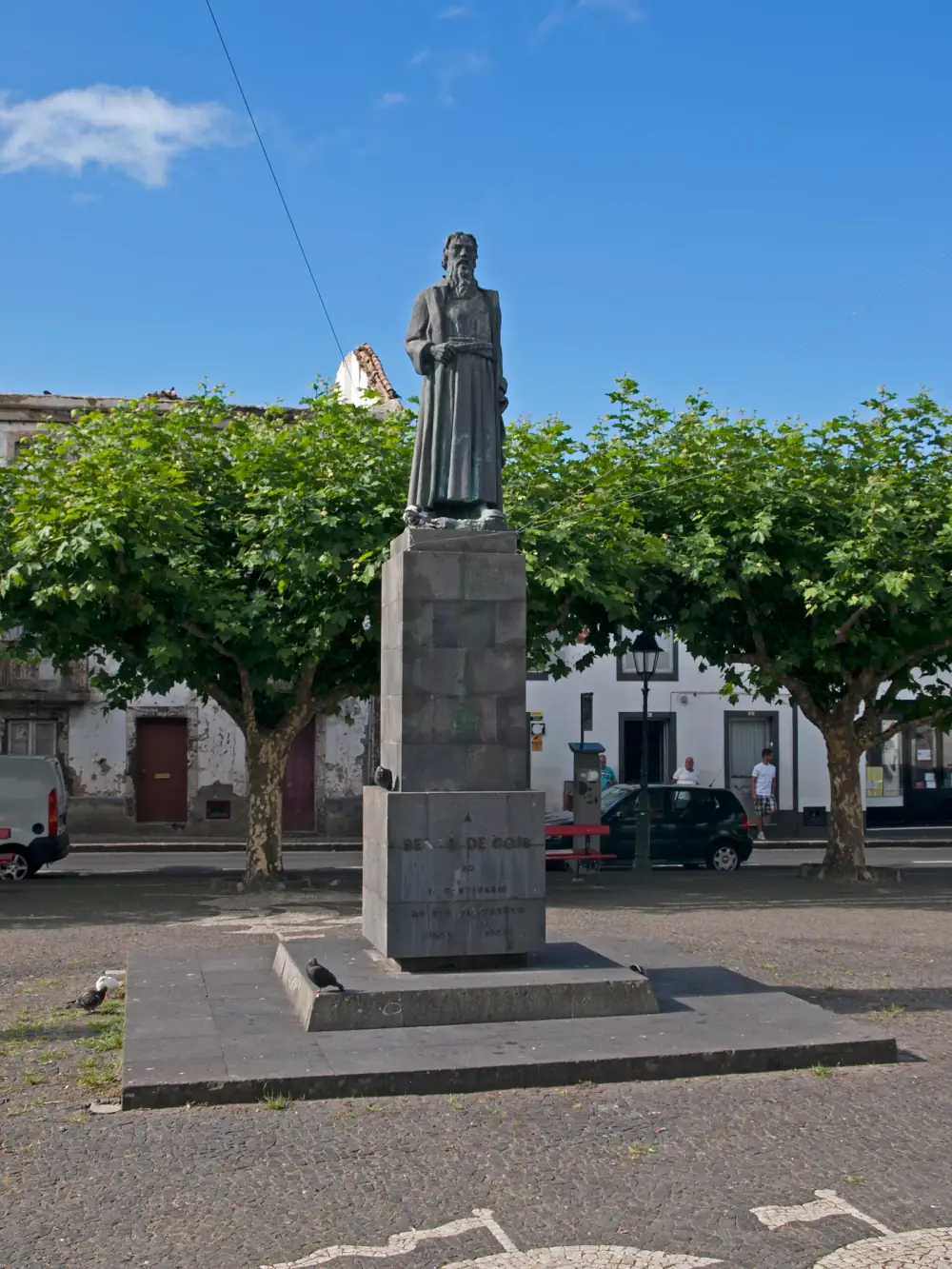
In Portugal he was nearly forgotten until Yule's edition and the French Jesuit Joseph Brucker revived interest. On 11 April 1907, the tercentenary of his death, the Lisbon Geographical Society held a tribute and a Te Deum was sung in the parish church of Vila Franca do Campo. Burkiewicz notes that the four hundredth anniversary in 2007 was marked only in his home town.
In 2025 the historian Joaquim Magalhães de Castro announced a tour for Portuguese travellers called O Caminho de Bento de Góis, and in 2026 the Polish historian Łukasz Burkiewicz published an overlooked Latin account of the journey by Tomasz Dunin Szpot, a Jesuit who wrote in Rome before 1713. Yule quoted the epitaph one of Góis's fellow Jesuits gave him: seeking Cathay, he found heaven.
FAQs
Who was Bento de Góis?
A Portuguese Jesuit lay brother, born in 1562 at Vila Franca do Campo on São Miguel in the Azores. A former soldier in India, he served at the court of the Mughal emperor Akbar and was sent overland from Agra to find Cathay. He reached China at the end of 1605 and died at Suzhou, now Jiuquan, on 11 April 1607.
Why did Bento de Góis disguise himself as an Armenian?
A European travelling through Muslim Central Asia would have been stopped, but Armenian Christian merchants were allowed to travel freely. He wore Armenian dress, carried trade goods and used the name Abdullah Isai, Abdullah the Christian, so he never hid his religion.
How did his journey show that Cathay was China?
At Chalis, probably Karashahr in Xinjiang, he met merchants returning from Cambaluc who had lodged beside Ricci's Jesuits in Peking and carried a scrap of their Portuguese writing. At Suzhou he heard the same. He had followed the caravan road to Cathay and arrived in China.
How did Bento de Góis die?
He was held at Suzhou for some sixteen months while waiting for permission to go on. Worn out and in debt, he fell ill and died eleven days after João Fernandes arrived from Peking. Ricci suspected he had been poisoned. He was buried at Suzhou, and no one knows where the grave is.
How do we know about his journey if his diary was destroyed?
Matteo Ricci wrote it up in Peking from the surviving fragments of the diary and from the memory of Isaac, his Armenian companion, and Nicolas Trigault published it in 1615. Góis's letters from Lahore and Yarkand were used by Fernão Guerreiro and Pierre du Jarric.
On the timeline
Open the timelineNearby moments from the iberian union (1580–1640).
The Dutch East India Company (VOC) is formally established in the Netherlands, creating a powerful rival to Portugal's Estado da Índia trading empire. The VOC would systematically challenge Portuguese dominance in the Indian Ocean, capturing key fortresses in the Spice Islands, Malacca, and Ceylon.
The Battle of Sesimbra Bay — an English squadron under Sir Richard Leveson and William Monson defeats a fleet of Spanish galleys and captures a large Portuguese carrack returning from the East Indies. The engagement takes place during the Anglo-Spanish War, while Portugal is bound to Spain under the Iberian Union.
Birth of João, future Duke of Braganza, at Vila Viçosa (some sources give 18 March). In 1640 the Restoration conspirators proclaimed him King João IV, ending 60 years of Spanish rule and founding the Braganza dynasty that reigned until 1910.
Bento de Góis reaches China
Bento de Góis, a Jesuit lay brother from the Azores, dies at Suzhou (now Jiuquan) on China's western frontier. Disguised as an Armenian merchant, he had trekked for three years from Agra across Afghanistan and the Pamirs, proving that Marco Polo's 'Cathay' and China were one and the same country.
Father António Vieira is born in Lisbon, in a house near the Sé. The Jesuit preacher, diplomat and royal adviser became the great prose stylist of the Portuguese Baroque — Pessoa's 'emperor of the Portuguese language' — and a fierce defender of Brazil's indigenous peoples.
Captain Francisco Caldeira Castelo Branco's expedition from São Luís founds the Forte do Presépio on Guajará Bay, near the mouth of the Amazon, the nucleus of Belém do Pará; 12 January is the traditional date, reckoned from a report that the voyage took 18 days.
Death in Goa of the chronicler Diogo do Couto, aged about 74. Sent to India as a teenage soldier, he found his friend Luís de Camões stranded and penniless on the Island of Mozambique in 1569 and, with others, helped him get home with the manuscript of 'Os Lusíadas'. Later keeper of the Goa archives, he continued João de Barros's 'Décadas da Ásia'.
Coming up in history
All long reads 13 April 1961The Abrilada: how Salazar outmanoeuvred his generals in April 1961
 14 April 2020Maria de Sousa, the immunologist who mapped where lymphocytes live
 15 April 2022Eunice Muñoz, the actress who spent eighty years on stage, dies at 93
 16 April 1581Tomar, 16 April 1581: Philip II of Spain swears to rule as a Portuguese king
7 sources
Archives, scholarship and reporting this article was checked against.
- 1
Cathay and the Way Thither, vol. IV: Ibn Batuta, The Journey of Benedict Goës from Agra to Cathay (ed. Henry Yule, revised by Henri Cordier)Hakluyt Society, London, 1916 (Internet Archive)
- 2
Bento de Goës SJ (1562–1607) and his journey from India to China in search of Cathay (1602–1607) according to Historiae Sinarum Imperii by Tomasz Ignacy Dunin Szpot SJ (Łukasz Burkiewicz)Rocznik Filozoficzny Ignatianum 32, no. 1 (2026), Ignatianum University in Cracow
- 3
- 4
- 5
Goes, Bento de (John W. Witek)Biographical Dictionary of Chinese Christianity, reprinted from the Biographical Dictionary of Christian Missions (1998)
- 6
A short story of 1st December (José Miguel Sardica)Universidade Católica Portuguesa
- 7“Bento de Góis protagonizou uma das mais admiráveis epopeias terrestres de todos os tempos” (interview with Joaquim Magalhães de Castro)Diário de Notícias, 11 May 2025
Image credits
- The fort at Jiayuguan, in Gansu, where the Great Wall ends in the west, photographed in 2000. At the end of 1605 Góis waited here for several weeks for permission to enter China. User:Doron, CC BY-SA 3.0, via Wikimedia Commons.
- Matteo Ricci, painted around 1610, the year of his death, by the Chinese Jesuit brother Emmanuel Pereira (You Wenhui). Ricci wore the dress of a Chinese scholar. It was his letters, and his envoy, that Góis waited for at Suzhou. Chinese brother Emmanuel Pereira (born Yu Wen-hui 游文辉), Public domain, via Wikimedia Commons.
- Akbar presides over a debate between scholars of different faiths at Fatehpur Sikri, in an illustration to the Akbarnama painted by Nar Singh around 1605. The two men in black on the left are Jesuits; the Persian inscription at the top names Padre Rudolf, Rodolfo Acquaviva of the first Jesuit mission (1580 to 1583). Góis arrived with the third mission in 1595. Nar Singh, Public domain, via Wikimedia Commons.
- The monument to Bento de Góis in the Largo Bento de Góis, Vila Franca do Campo, São Miguel, photographed in 2018. The inscription marks the fourth centenary of his birth, 1562 to 1962. Ymblanter, CC BY-SA 4.0, via Wikimedia Commons.