

Domitila de Carvalho, the first woman to study at Coimbra since 1772
In 1891 a teacher's daughter from a village near Santa Maria da Feira was let into Portugal's only university on condition that she always wore black. She left with three degrees, ran Lisbon's first girls' lyceum and became one of Salazar's first three women deputies.
At a glance
- Domitila Hormizinda Miranda de Carvalho was born on 10 April 1871 in Travanca, in the municipality of Santa Maria da Feira, and died in Lisbon on 11 November 1966, aged 95.
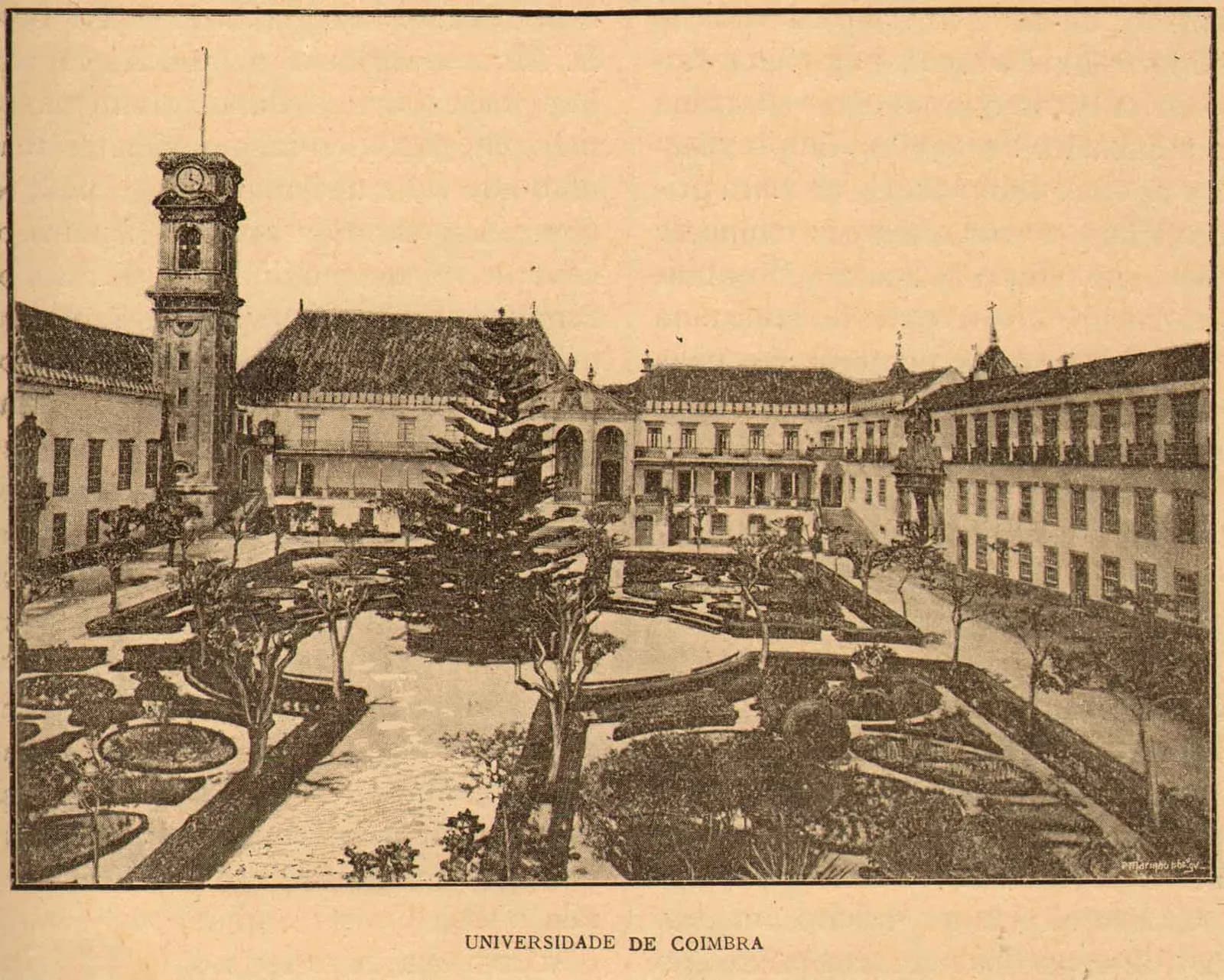
- In October 1891 she enrolled in mathematics at the University of Coimbra, then Portugal's only university, as its first woman student since the reform of 1772; the rector ruled that she must always dress in black so as not to stand out among the men.
- She graduated in mathematics (1894), philosophy, which at Coimbra meant the natural sciences (1895), and medicine (1904), and was the university's only woman student until 1896.
- From 1906 to 1912 she was the first rector of the Liceu Maria Pia in Lisbon, the country's first girls' lyceum, and she taught mathematics there until she retired.
- Elected in December 1934 on the Estado Novo's single list, she was one of the first three women in a Portuguese parliament and sat until 1942. Parliament's biographical record describes her as a monarchist, an admirer of Salazar and an unbeliever in feminism.
A woman in black among the capes
In October 1891 a 20-year-old woman enrolled in the Faculty of Mathematics of the University of Coimbra. Domitila Hormizinda Miranda de Carvalho, a primary teacher's daughter from a village near Santa Maria da Feira, had just finished secondary school with excellent marks and had written to the rector asking to be admitted.
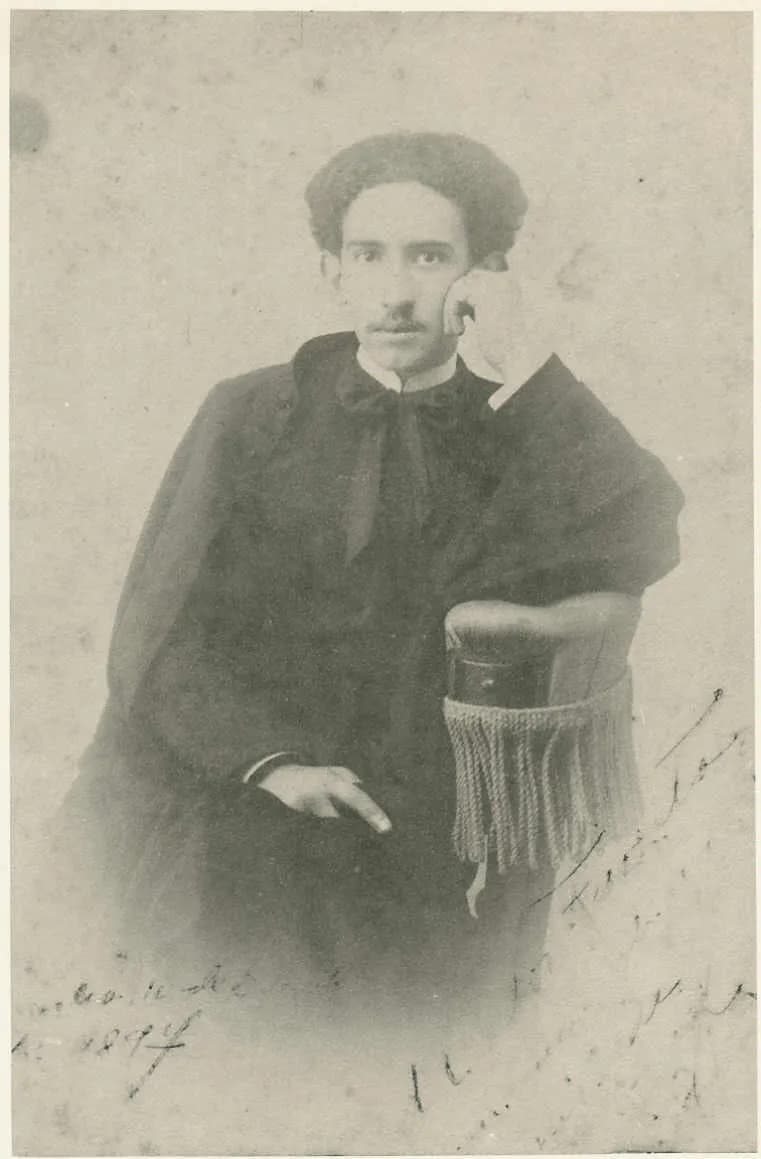
The rector, António dos Santos Viegas, a professor of physics, let her in. He also laid down how she was to look. She was always to dress in black, wear a discreet hat and keep a sober manner, so that she would not stand out among her fellow students, all men, who were obliged to wear the black cape and closed cassock of Coimbra's academic dress.
She is usually called the first woman to study at Coimbra. Maria do Carmo Martins, a mathematician who has written about her, puts it more carefully: the first woman admitted there since the university's great reform of 1772. Either way she was alone. Until 1896 she was the only woman student in the whole institution, and the university's yearbooks first name a woman on its course for midwives in 1896–97.
Over the next 13 years she took degrees in mathematics, philosophy and medicine. She went on to run Lisbon's first girls' lyceum and, at 63, to sit in the National Assembly of António de Oliveira Salazar's Estado Novo as one of its first three women deputies. Her life spanned the last kings, the First Republic and the dictatorship.
Portugal's only university
In 1891 Coimbra was the only university in Portugal. The country's university had moved there for good in 1537 and settled in the old royal palace in 1544. Lisbon and Porto had medical schools and other higher schools, but they became universities only in 1911, when the young Republic created the universities of Lisbon and Porto.
The Marquis of Pombal's statutes of 1772 had added two scientific faculties to the older ones. One was mathematics. The other, Natural Philosophy, taught physics, chemistry and natural history; the degree she later took there is recorded simply as philosophy. A philosophy degree from Coimbra was therefore a science degree. The two faculties lasted until 1911, when the Republic merged them into a single Faculty of Sciences.
No rule seems to have kept women out of the university, but nothing drew them in either. The careers a mathematics degree led to, the army, the navy and teaching, were men's careers. Girls' schooling was meant to prepare them for motherhood, and in practice it meant moral education, reading, writing, simple arithmetic and needlework.
A teacher's daughter from Travanca
Domitila de Carvalho was born on 10 April 1871 in Travanca, a parish of Santa Maria da Feira in the district of Aveiro, south of Porto. Her father, Manuel Rodrigues de Carvalho, was a primary schoolteacher. He died when she was one year old, leaving her mother, Margarida Miranda de Carvalho, with three small children.
She went to the lyceum, the state secondary school, in Castelo Branco, and continued at the lyceums of Bragança and Leiria. There was not yet a single lyceum for girls in Portugal. She finished in 1891, with marks good enough to try for Coimbra.
- Born
- 10 April 1871, Travanca, Santa Maria da Feira (Aveiro)
- Died
- 11 November 1966, Lisbon, aged 95
- Degrees
- Mathematics 1894, Philosophy 1895, Medicine 1904, all at Coimbra
- Teaching
- Rector of the Liceu Maria Pia, Lisbon, 1906–1912; mathematics teacher there until she retired
- Parliament
- Deputy in the National Assembly, I and II legislatures (1935–1942)
- Politics
- Monarchist, Catholic, admirer of Salazar
Mathematics, philosophy, medicine
She finished the mathematics course in 1894 and the philosophy course a year later, both with distinction. Then she went on studying.
Next came medicine. Other women followed her to Coimbra only slowly: from 1896 she was no longer the only one, but until the Republic was proclaimed in 1910 just 23 women attended the university, seven of them on the course for midwives. In the academic year 1910–11 not a single woman worked on its staff.
She finished medicine in 1904, with a final mark of 16 out of 20. According to Martins, Queen Amélia, wife of King Carlos, was her madrinha, or sponsor, for the degree. The press of the day praised her achievements, seeing them as a promising sign for other women who wanted to follow her.
| Course | Faculty | Completed | Note |
|---|---|---|---|
| Mathematics | Mathematics | 1894 | With distinction; enrolled October 1891 |
| Philosophy | Philosophy (physics, chemistry, natural history) | 1895 | With distinction |
| Medicine | Medicine | 1904 | Final mark 16 out of 20 |
Years from parliament's biographical record; marks and distinctions as given by Maria do Carmo Martins.
Lisbon's first girls' lyceum
After graduating she worked as a doctor in Lisbon for the Assistência Nacional aos Tuberculosos, the national tuberculosis charity, and, according to She Thought It, at a centre for mothers and infants. Alongside this she took up teaching. In 1906 a royal decree created the Liceu Maria Pia in Lisbon, the first girls' lyceum in the country, and she became a permanent teacher there.
She was also its rector, from its foundation on 23 February 1906 until November 1912, and taught mathematics. Martins and the She Thought It project, which documents women in the sciences and arts from the University of Porto, both call her the first Portuguese woman to teach the subject. The new school offered only the general course. Girls who wanted the complementary course that led to university still had to go to a boys' lyceum.
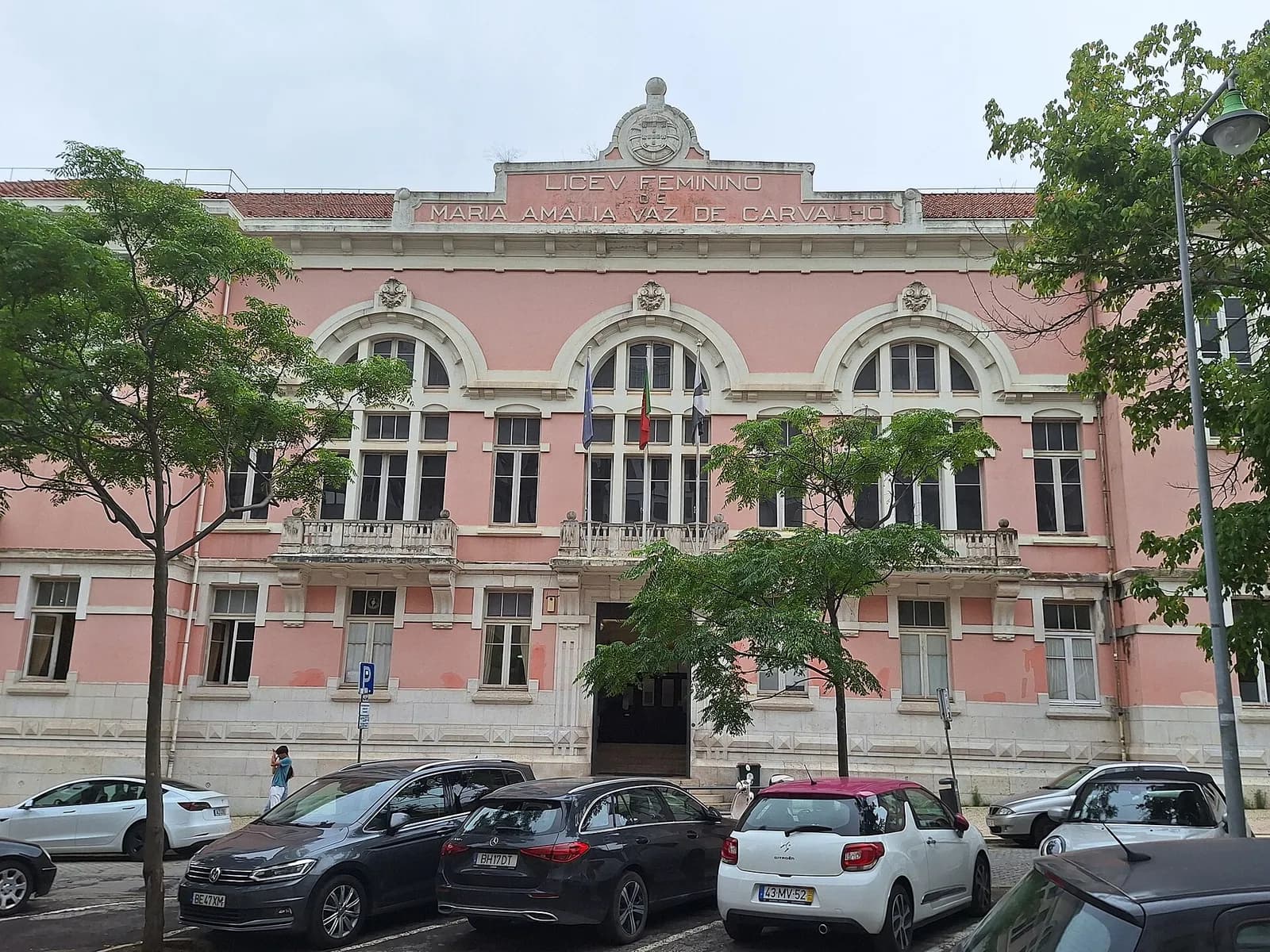
She went on teaching mathematics at the same school until she retired, as its name changed: Liceu de Almeida Garrett in 1917, then Liceu Maria Amália Vaz de Carvalho, after the writer about whom she published a book in 1930. From 1933 the school had a building of its own on Rua Rodrigo da Fonseca, designed by Miguel Ventura Terra, the first in Portugal built for a girls' lyceum.
“Women must devote themselves to study and make the most of it to be respected as the intelligent and free beings they are.”
In those years she worked with women of other camps. In 1906 she joined the Feminist Section of the Portuguese League for Peace. In 1909, although she was a Catholic who held marriage to be indissoluble, she signed the list supporting a divorce law put forward by the Republican League of Portuguese Women. The same year she published a book of poems, Versos.
Over her career she became a corresponding member of the Lisbon Academy of Sciences and a member of the Conselho Superior de Instrução Pública, the government's advisory council on education, and joined the association of Portuguese Catholic doctors. In 1919 she published the lesson she had given her pupils on the thirtieth day after the death of Sidónio Pais, the army major and Coimbra mathematics professor who had seized power in December 1917 and was assassinated a year later.
One of three women at São Bento
The First Republic never gave women the vote. The dictatorship did, on its own terms. Decree 19 694 of 5 May 1931 let some women vote, under stricter conditions than men, and Decree-Law 23 406 of 27 December 1933 allowed women to stand. The União Nacional, the regime's only party, put three women on its list for the first elections to the new National Assembly.
The election was held in December 1934. Men over 21 could vote if they could read or paid at least 100 escudos in tax; women needed a secondary, higher or special diploma. Domitila de Carvalho was 63. On 10 January 1935, at the Assembly's preparatory session, her name was in the roll of deputies present, and all 90 members were proclaimed elected.
| Deputy | Lived | Degree | Profession |
|---|---|---|---|
| Domitila de Carvalho | 1871–1966 | Mathematics, philosophy and medicine, Coimbra | Doctor and lyceum teacher |
| Maria Baptista dos Santos Guardiola | 1895–1987 | Mathematical sciences, Coimbra | Rector of the Liceu Maria Amália Vaz de Carvalho |
| Maria Cândida Parreira | 1877–1942 | Law, Lisbon | Lawyer |
Guardiola was still a deputy in 1945; Parreira sat only in the first legislature (1935–1938).
On 21 February 1935, in the time before the order of the day, she rose to table a bill. It made a course in general hygiene and puericultura, the care of infants, compulsory in every girls' lyceum, taught by a woman doctor on the staff or, failing one, by the school doctor, with two one-hour lessons a week in the third to fifth years and one of an hour and a half in the sixth and seventh. Her justification was one statistic.
“The infant mortality figures for the years 1930 to 1934 lead us to the conclusion that in mainland Portugal a child under five dies every twelve minutes.”
Most of those deaths, she said, were due to mothers' ignorance, and the future mothers had to be prepared. The written bill added that diarrhoea and enteritis were the first cause of death among children under two, at 37.5 per cent. The historians Áurea Adão and Maria José Remédios note that such courses already existed at the Instituto de Odivelas, the school for officers' daughters, and that the idea, common in Europe, made women alone answerable for infant deaths.
Parliament's record lists her other interventions. In her first term she spoke on the reform of secondary schooling, a statue to Sidónio Pais, the winter relief campaign for the poor, the reorganisation of the education ministry, the Casas dos Pescadores, the regime's fishermen's welfare houses, and new courthouses. Re-elected in 1938, she spoke on children at cinemas and theatres, primary teachers' qualifications and university fees. None of the women deputies of those years was chosen for the Assembly's presidency or as one of its secretaries.
Even the forms of address set them apart. Adão and Remédios point out that male deputies were called by their titles, Sr. Engenheiro or Sr. Conselheiro, while the women, all of them graduates, were addressed only as Dona, the word for a lady of standing. In the Diário das Sessões, the Assembly's record, the doctor with three degrees appears as “a Sr.ª D. Domitila de Carvalho”.
Women deputies in the National Assembly, 1935 to 1974
women deputies
Domitila de Carvalho sat in the first two legislatures (highlighted). The Assembly had 90 seats until 1945, 120 from 1945, 130 from 1961 and 148 in 1973, so women never held more than about 6 per cent of them. Figures from Adão and Remédios (2005), Annex 2.
Show the data
| Women deputies in each legislature | |
|---|---|
| 1935–38 | 3 |
| 1938–42 | 3 |
| 1942–45 | 2 |
| 1945–49 | 2 |
| 1949–53 | 2 |
| 1953–57 | 2 |
| 1957–61 | 2 |
| 1961–65 | 3 |
| 1965–69 | 4 |
| 1969–73 | 4 |
| 1973–74 | 9 |
A pioneer who did not believe in feminism
Parliament's biographical record sums up her politics in five lines: a monarchist and friend of Queen Amélia; a convinced Catholic; fascinated by Sidónio Pais; a devoted admirer of Salazar; and descrente do feminismo, an unbeliever in feminism. Martins adds that she acted as a go-between for Salazar and the exiled queen.
Her speeches fit that portrait. In the debate on putting crucifixes in schools she condemned the secular state school for feeding, as she saw it, one of the great evils of modern societies, the falling birth rate, and asked whether teaching without God could satisfy the soul. Speaking for a statue to Sidónio Pais, she held him up as the model statesman, in words quoted by Adão and Remédios and translated here, “lit by his dream of redemption, eyes fixed on God and the Fatherland”.
In 1936 she joined the board of the Obra das Mães pela Educação Nacional, the regime's organisation for mothers, and in May that year gave a lecture, “Communism against childhood”, that condemned the “fanaticism of the collectivist state” for taking children from their parents.
Susana Mota, writing on women under the Estado Novo, points out that being among the first women in politics did not mean breaking the codes that governed women's conduct: the three deputies kept to the regime's line of “God, Fatherland and Family”. Yet all three had university degrees and careers, and none had children. Their lives were not the ones the regime held up for women.
Her second term ended with the legislature in 1942, although Martins and She Thought It give 1941. Her last recorded speech, on university fees, was in November 1941. She kept writing, and published Para o alto in 1957. She never married. She died in Lisbon on 11 November 1966, aged 95.
10 April 1871
Born in Travanca, Santa Maria da Feira
October 1891
Enrols in mathematics at Coimbra, the university's only woman student
1894
Graduates in mathematics
1895
Graduates in philosophy (natural sciences)
1904
Completes the medical course
23 February 1906
Becomes the first rector of the Liceu Maria Pia, Lisbon's first girls' lyceum
1909
Signs a list supporting a divorce law and publishes Versos
November 1912
Leaves the post of rector but goes on teaching mathematics
December 1934
Elected to the National Assembly on the União Nacional list
21 February 1935
Tables her bill on hygiene and childcare in girls' schools
1938
Re-elected for the second legislature, which ran until 1942
11 November 1966
Dies in Lisbon, aged 95
Why she still matters
Coimbra changed slowly after her. In 1911 the German-born philologist Carolina Michaëlis de Vasconcelos, then 60, became the university's first woman professor, and she was its only one until her death in 1925. Another woman held a teaching post there only in 1938. The physicists Gilberto Pereira, Décio Martins and Carlos Fiolhais describe women's presence at Coimbra in those decades, as students or teachers, as “always residual”.
Parliament was slower still. In the almost 40 years of the National Assembly, the number of women deputies never went above three until 1965, and the last Assembly, elected in 1973, had nine among 148 deputies. Domitila de Carvalho's career sits uneasily in both stories: a woman who opened a door at Coimbra, then used her seat to press for girls to be trained as mothers.
The school she ran is still a school. In 2020 the state classified the building of the former Liceu Feminino de Maria Amália Vaz de Carvalho as a monument of public interest, noting that it keeps its original plan almost intact, with furniture, archives and its collections of scientific instruments.
FAQs
Who was the first woman to study at the University of Coimbra?
Domitila de Carvalho, who enrolled in the Faculty of Mathematics in October 1891. Some sources add that she was the first since the reform of 1772. She was the only woman student until 1896.
What conditions were imposed on Domitila de Carvalho at Coimbra?
The rector, António dos Santos Viegas, ruled that she must always dress in black, wear a discreet hat and behave soberly so as not to stand out among the male students, who wore the cape and closed cassock.
What degrees did Domitila de Carvalho take?
Three, all at Coimbra: mathematics in 1894, philosophy, which there meant physics, chemistry and natural history, in 1895, and medicine in 1904.
Who were Portugal's first women deputies?
Domitila de Carvalho, Maria Guardiola and Maria Cândida Parreira, elected in December 1934 on the União Nacional's single list. They took their seats in the Estado Novo's National Assembly in January 1935.
On the timeline
Open the timelineNearby moments from regeneration and the last kings (1851–1910).
A decree championed by the Marquis of Sá da Bandeira abolishes slavery throughout the Portuguese empire. But the people it freed became 'libertos', still obliged to serve their former masters until a further law in 1875, and forced labour persisted in the African colonies well into the 20th century.
Óscar Carmona is born in Lisbon. The general who emerged as the leading figure of the military dictatorship after the 1926 coup, he remained head of state until his death in 1951, the figurehead under whom Salazar built the Estado Novo.
King Luís I raises Covilhã, the wool-manufacturing town on the slopes of the Serra da Estrela, to the status of city. The date remains the municipal holiday.
Domitila de Carvalho
Birth of Domitila de Carvalho in Travanca, near Santa Maria da Feira. In 1891 she became the first woman admitted to the University of Coimbra since its 1772 reform — on condition that she always dress in black — and graduated in mathematics, philosophy and medicine; in 1934 she was one of the first three women elected to Portugal's parliament.
The novelist Júlio Dinis, author of 'As Pupilas do Senhor Reitor', dies of tuberculosis in Porto at only 31 years of age.
The submarine telegraph cable from Carcavelos beach, west of Lisbon, to Recife — via Madeira and Cape Verde — is completed, and its arrival is cabled to Emperor Pedro II of Brazil. News that had taken 15 to 40 days to cross the Atlantic by steamer can now appear in Brazilian papers the next day.
António Egas Moniz is born in Avanca, near Estarreja. Neurologist, foreign minister and head of Portugal's delegation to the Paris Peace Conference, he pioneered cerebral angiography and the prefrontal leucotomy, which brought him Portugal's first Nobel Prize, in 1949.
Coming up in history
All long reads 12 April 2016Francisco Nicholson, the revue writer who gave Portugal its own telenovela
 13 April 1961The Abrilada: how Salazar outmanoeuvred his generals in April 1961
 14 April 2020Maria de Sousa, the immunologist who mapped where lymphocytes live
 15 April 2022Eunice Muñoz, the actress who spent eighty years on stage, dies at 93
17 sources
Archives, scholarship and reporting this article was checked against.
- 1
Domitila Hormizinda Miranda de Carvalho (biographical record)Assembleia da República, Deputados da Assembleia Nacional 1935–1974
- 2
Domitila Carvalho: a primeira mulher licenciada em Portugal (Maria do Carmo Martins)Correio dos Açores, 8 January 2015; Repositório da Universidade dos Açores
- 3
Domitila de CarvalhoShe Thought It, Instituto de Literatura Comparada Margarida Losa, Universidade do Porto
- 4
As Pioneiras: Mulheres no Laboratório de Física da Universidade de Coimbra (1911–1972) (Gilberto Pereira, Décio Martins and Carlos Fiolhais)Gazeta de Física, vol. 48, n.º 1, Sociedade Portuguesa de Física
- 5
A narratividade educativa na 1.ª fase da governação de Oliveira Salazar. A voz das mulheres na Assembleia Nacional portuguesa (1935–1945) (Áurea Adão and Maria José Remédios)Revista Lusófona de Educação, n.º 5 (2005), pp. 85–109
- 6
Diário das Sessões n.º 17, 22 February 1935: session of 21 February 1935Assembleia da República, Debates Parlamentares
- 7
Enfermeiros e escolas de enfermagem nos anuários da Universidade de Coimbra, de 1866 a 1956 (Paulo Queirós et al.)Revista de Enfermagem Referência, série V, n.º 4 (2020), e20061
- 8
What to visitUniversidade de Coimbra, UC Tourism
- 9
HistóriaUniversidade de Lisboa
- 10
The origins of the University of PortoUniversidade do Porto
- 11
A APDH celebra o Dia Internacional da MulherAssociação Portuguesa para o Desenvolvimento Hospitalar, 4 March 2021
- 12
Review of História da Ciência na Universidade de Coimbra, ed. C. Fiolhais, C. Simões and D. Martins (2013)Llull, Revista de la Sociedad Española de Historia de las Ciencias y de las Técnicas, vol. 37, n.º 79 (2014)
- 13
Portaria n.º 610/2020: classifies the former Liceu Feminino de Maria Amália Vaz de Carvalho as a monument of public interestDiário da República, 2.ª série, n.º 203, 19 October 2020
- 14
Sidónio Pais (biography)Museu da Presidência da República
- 15
Maria de Lourdes Pintasilgo e a sociedade portuguesa (Susana Mota)E-Revista de Estudos Interculturais, n.º 3, CEI–ISCAP, Politécnico do Porto, May 2015
- 16
O Estado Novo (1933-1974)Assembleia da República
- 17
Image credits
- The University of Coimbra, with its clock tower, in an illustration credited to Alfredo Roque Gameiro for Manuel Pinheiro Chagas's História de Portugal, popular e ilustrada, published from 1899. Domitila de Carvalho studied here from 1891 to 1904. Roque Gameiro, Public domain, via Wikimedia Commons.
- The poet João Lúcio as a student at Coimbra in 1897, in the cape and closed cassock that male students wore. The rector required Domitila de Carvalho to wear plain black instead. Unknown author, Public domain, via Wikimedia Commons.
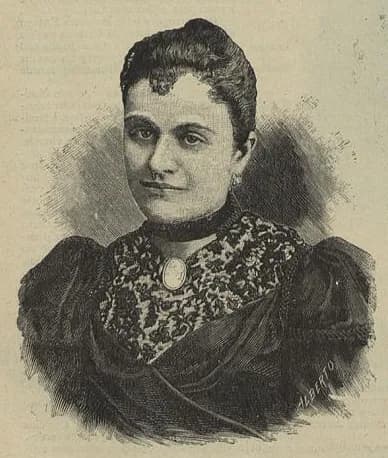
- Domitila de Carvalho in an engraving by Caetano Alberto da Silva published in the illustrated magazine O Ocidente on 10 August 1904, the year she completed her medical degree. Caetano Alberto da Silva, Public domain, via Wikimedia Commons.
- The building of the Liceu Feminino de Maria Amália Vaz de Carvalho on Rua Rodrigo da Fonseca, Lisbon, in 2024. The school began in 1906 as the Liceu Maria Pia, with Domitila de Carvalho as rector, and moved here in 1933. JnpoJuwan, CC0, via Wikimedia Commons.
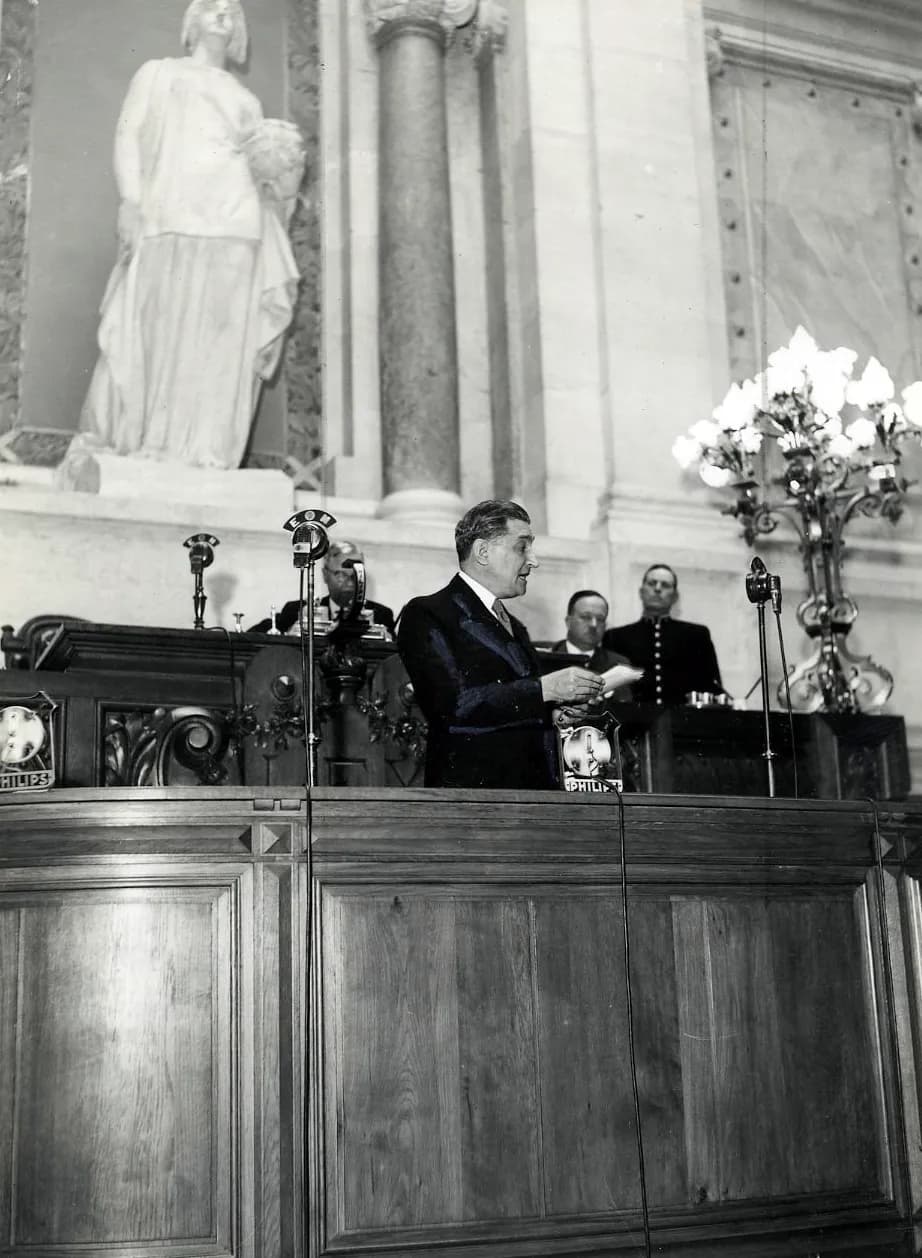
- Salazar speaks in the chamber of the Palácio de São Bento at the close of the National Assembly's first legislature, 28 April 1938. The day before, Domitila de Carvalho had spoken there on building new courthouses and prisons. Unknown author, Public domain, via Wikimedia Commons.