

Sócrates resigns and Portugal heads for a bailout: 23 March 2011
Parliament threw out the minority government's fourth austerity plan in a year, and the prime minister quit the same evening. Fifteen days later Portugal asked Europe and the IMF for help that came to €78 billion.
At a glance
- On 23 March 2011 all five opposition parties in Portugal's parliament voted to reject PEC IV, the Socialist minority government's fourth austerity package in a year.
- Prime Minister José Sócrates resigned that evening and stayed on as caretaker; President Aníbal Cavaco Silva called an early election for 5 June.
- On 6 April, with two-year borrowing costs above 10 per cent, Sócrates announced a request for help; the formal request to the EU, the euro area and the IMF followed on 7 April.
- The €78 billion programme, a third each from the EU, the euro area's rescue fund and the IMF, was agreed in May 2011 and ended in June 2014.
- Unemployment peaked in 2013 at 16.4 to 17.2 per cent, depending on the series, and about 150,000 people left Portugal for a year or more between 2011 and 2013.
A Wednesday at São Bento
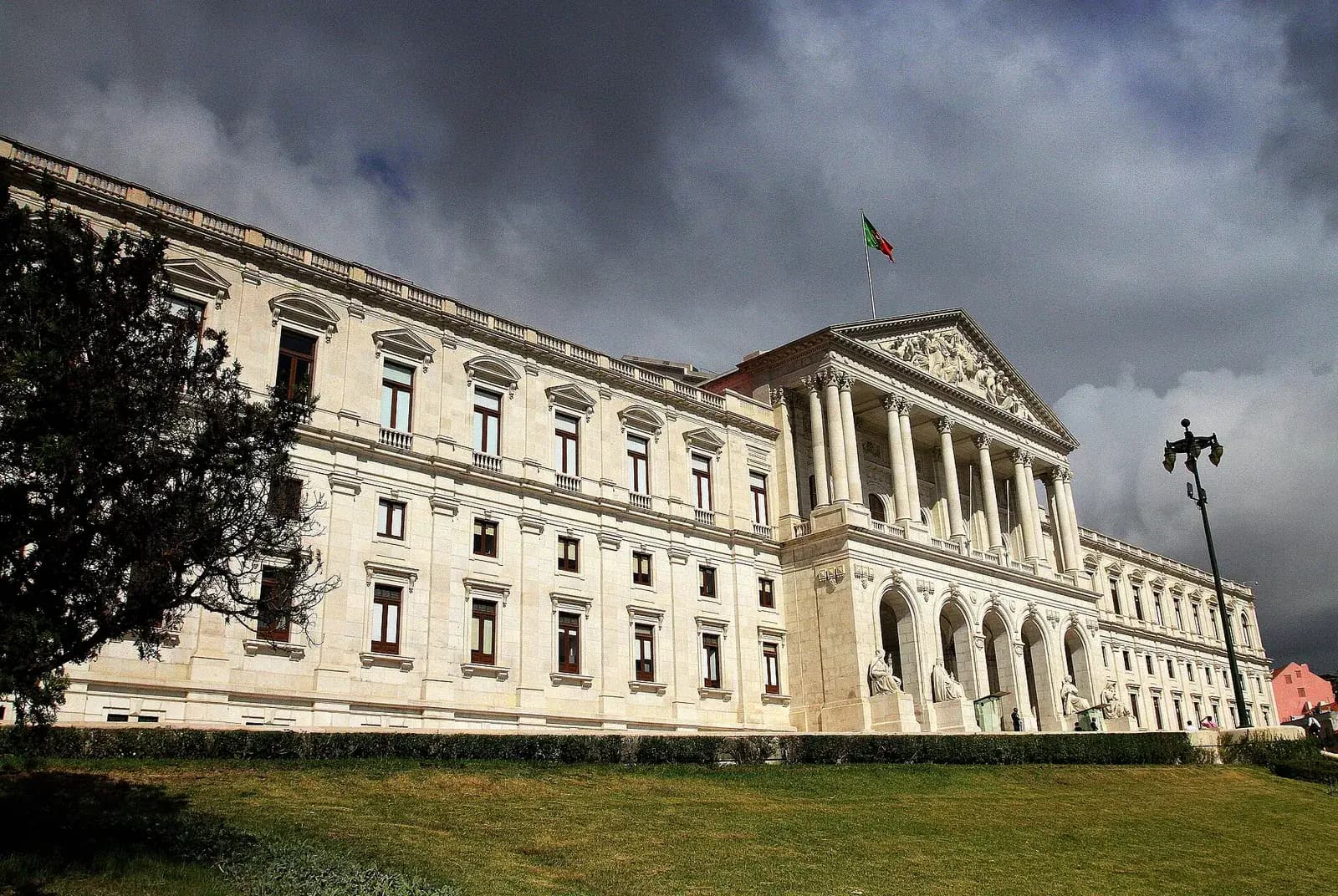
On Wednesday 23 March 2011 the deputies of the Assembleia da República, Portugal's parliament, met in the Palácio de São Bento in Lisbon to vote on the government's latest plan for the public finances. Officially it was the Stability and Growth Programme for 2011 to 2014. Everyone called it PEC IV, the fourth austerity package in a year.
José Sócrates, the Socialist prime minister, had warned that he would resign if it was rejected. His Socialist Party (PS) held 97 of the 230 seats. All five opposition parties, from the centre-right Social Democrats (PSD) and the conservative CDS-PP to the Left Bloc, the Communists and the Greens, voted for resolutions rejecting the plan.
That evening Sócrates went to the Palácio de Belém and spent about 20 minutes with President Aníbal Cavaco Silva. Back at São Bento, he told the country that he had resigned.
“Today the parties took away from the government all the conditions to carry on governing.”
He said the crisis had come at the worst possible moment and blamed the opposition's impatience for power. Outside help, he warned, would bring much harsher measures than his own plan. Fifteen days later his caretaker government asked the European Union and the International Monetary Fund (IMF) for a loan. It came to €78 billion, and its conditions governed Portugal's economic policy until 2014.
A country running short of credit
Portugal's trouble was older than the global crash. The IMF's staff summed it up in 2011: growth had averaged only 1 per cent a year since 2000, wages had outpaced the euro-area average while productivity growth slowed, the current account deficit was still close to 10 per cent of GDP in 2010, and public debt had climbed from about 48 per cent of GDP in 2000 to 93 per cent in 2010. Banks and companies were heavily in debt too, much of it owed abroad.
The financial crisis of 2008 made it worse. The budget deficit reached about 10 per cent of GDP in 2009, and in December that year the EU Council told Portugal to bring it back below 3 per cent by 2013. During 2010 lenders began to doubt that it could, and Greece and Ireland had already needed rescues. The state's borrowing costs climbed to the highest levels since the euro began, and banks lost access to the wholesale markets they relied on.
Sócrates, prime minister since 2005, had come first again in the election of 27 September 2009, with 36.6 per cent of the vote and 97 seats, short of the 116 needed for a majority. He governed alone, so every budget needed another party's votes or abstention, in practice those of the PSD.
Four packages in twelve months
The March 2010 update of the PEC set out a path back to a 3 per cent deficit by 2013. It did not calm the markets. In May 2010 the government brought its targets forward, aiming at 7.3 per cent of GDP for 2010 and 4.6 per cent for 2011, and raised taxes from the middle of the year. The PSD, under Pedro Passos Coelho, negotiated the package with the government.
On 29 September 2010 came the third. Public-sector pay above €1,500 a month would be cut on a sliding scale, from 3.5 per cent at the bottom to 10 per cent at the top, for an average cut of 5 per cent. Pensions, promotions and hiring were frozen, the standard rate of VAT rose from 21 to 23 per cent, and child benefit and the minimum income scheme were cut back. The measures went into the 2011 budget, which passed in November 2010 because the PSD abstained.
On 11 March 2011 the government sent the European Commission and the European Central Bank (ECB) a note promising more, and both welcomed it. It became PEC IV: extra savings worth 0.8 per cent of GDP in 2011, mostly spending cuts in health, state companies, social security and other public bodies; a two-year suspension of the rule that raised pensions each year, with a small rise kept for the lowest; a solidarity levy on pensions above €1,500; and a review of tax breaks and VAT rates for 2012 and 2013.
| Package | Announced | Main measures | What happened |
|---|---|---|---|
| PEC I | March 2010 | Stability programme for 2010 to 2013, aiming to bring the deficit under 3% of GDP by 2013 | Sent to Brussels; borrowing costs kept rising |
| PEC II | May 2010 | Deficit targets of 7.3% of GDP for 2010 and 4.6% for 2011; tax rises from mid-2010 | Negotiated with the PSD |
| PEC III | 29 September 2010 | Cuts of 3.5% to 10% in public pay above €1,500 a month; VAT from 21% to 23%; pensions frozen | Built into the 2011 budget, passed in November 2010 with the PSD abstaining |
| PEC IV | 11 March 2011 | Extra savings of 0.8% of GDP in 2011; pension indexation suspended; levy on pensions above €1,500 | Rejected by parliament on 23 March 2011 |
Only the March 2010 and March 2011 documents were formal updates of the Stability Programme; the May and September 2010 packages were announced as additional measures. The labels PEC II and PEC III are the ones Portuguese politicians and press used.
The opposition said it had been ignored. Sócrates met Passos Coelho once before the plan went to Brussels and did not discuss it with the President beforehand. The political scientist Pedro Magalhães noted at the time that the PSD's best poll ratings in years, and pressure inside the party for an early election, also pushed Passos Coelho towards a no.
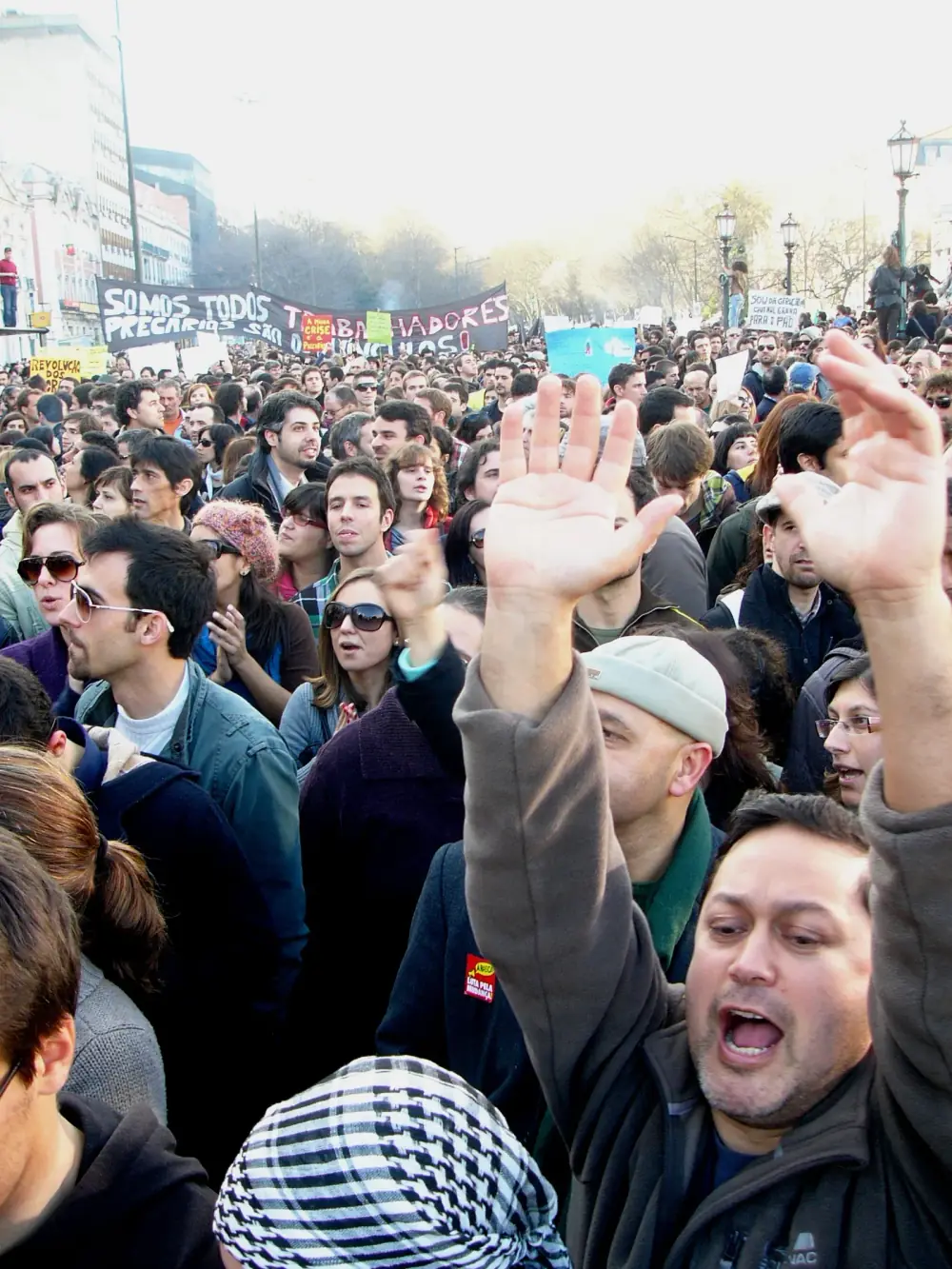
The street was restless too. On 12 March, the day after the note went to Brussels, a rally called on social media by four citizens under the name Geração à Rasca, roughly the generation in a fix, marched in Lisbon against job insecurity and austerity. By then Passos Coelho had made clear that the PSD would back no more austerity measures.
The vote and the resignation
On 23 March the opposition's resolutions rejecting PEC IV were carried by the votes of all five opposition parties. The Socialists voted alone. The PSD said the measures hit the weakest hardest, and the government warned that without them Portugal would be pushed closer to a bailout.
In his statement that evening Sócrates said the political crisis could be settled only by the sovereign decision of the Portuguese, a call for an election. He would stay on at the head of a caretaker government. The next day EU leaders were due to meet in Brussels for a summit on the debt crisis.
The two big parties kept their stories for years. The Socialists blamed contagion from Greece, unregulated financial markets and unfair rating downgrades, and said Passos Coelho had thrown the country into the hands of the IMF. The PSD said the Socialists had lost all credibility, and once the bailout terms were agreed it claimed that the opposition had helped make them better for the Portuguese.
The parties to the left of the PS rejected both PEC IV and outside help. On 6 April the Left Bloc's leader, Francisco Louçã, blamed the banks for withdrawing support from a state that had helped them, and argued that IMF remedies would not solve the crisis. The Communists called for the debt to be renegotiated and later described the memorandum signed by the PS, PSD and CDS as a pact of aggression.
Fifteen days to a bailout
23 March 2011
Parliament rejects PEC IV
Sócrates presents his resignation to the President.
24 March
EU summit in Brussels
The European Commission's chronology dates the government's formal resignation to this day; it stays on as caretaker.
25 March
The President hears the parties
All agree that no other government can be formed in this parliament.
29 March
A bigger deficit
The statistics office, INE, puts the 2010 deficit at 8.6% of GDP, against a target of 7.3%.
31 March
Election called
Standard & Poor's cuts Portugal's rating to BBB-. The Council of State backs dissolution, and Cavaco Silva announces an election for 5 June.
6 April
Sócrates announces a request for help
Two-year bond yields pass 10%.
7 April
Formal request
Portugal asks the EU, the euro area and the IMF for assistance. A presidential decree dissolves parliament and sets the election date.
Lenders drew their own conclusions. IMF staff wrote that after the resignation and the call for elections Portugal's access to external markets had been virtually closed. Moody's cut the state's rating on 5 April, and then the ratings of several banks and public companies.
On 6 April the Treasury sold about €1 billion of six- and twelve-month bills, at rates above 5 per cent. Late that afternoon the finance minister, Fernando Teixeira dos Santos, told the business daily Jornal de Negócios that the country had to turn to the European financing mechanisms at once. That evening Sócrates spoke to the nation.
“The government decided today to send the European Commission a request for financial assistance, so as to guarantee the financing conditions of our country, our financial system and our economy.”
He blamed the vote of 23 March, calling the rejection of the PEC the wrong signal at the wrong moment, and said he had always seen outside help as a last resort. In Brussels the Commission's president, José Manuel Durão Barroso, promised to deal with the request as fast as possible.
The memorandum and the €78 billion
A joint mission of the European Commission, the ECB and the IMF, soon known simply as the troika, began talks in Lisbon on 11 April. The caretaker government negotiated. The troika also met the opposition: the PSD sent a team led by Eduardo Catroga, while the Communists and the Left Bloc refused to sit down with it.
A technical agreement was reached on 3 May. On 17 May EU and euro-area finance ministers approved the programme, the date the Commission's 2011 report gives for the signing of the memorandum of understanding. The IMF board approved its share on 20 May and the EU Council on 30 May. The PSD and the CDS-PP wrote to the troika committing themselves to the targets, while asking for room to change some measures after the election.
| Lender | Instrument | Committed | Drawn |
|---|---|---|---|
| European Union | European Financial Stabilisation Mechanism (EFSM) | Up to €26 billion | €24.3 billion |
| Euro-area countries | European Financial Stability Facility (EFSF) | Up to €26 billion | €26 billion |
| International Monetary Fund | Extended Fund Facility, 20 May 2011 to 30 June 2014 | SDR 23.742 billion (about €26 billion) | SDR 22.942 billion |
Up to €12 billion of the total was set aside to recapitalise banks. The SDR (special drawing right) is the IMF's unit of account. EU figures are the Commission's totals for the end of 2014.
The deficit targets were loosened to 5.9 per cent of GDP for 2011, 4.6 per cent for 2012 and 3 per cent for 2013, but the effort over three years came to around 10 per cent of GDP. Two thirds was to come from spending: pay and promotion freezes, fewer public employees, pensions frozen except the lowest, a levy on pensions above €1,500, and shorter, smaller unemployment benefits. Taxes on consumption rose. Labour law, the courts, rents, energy and transport were all to be reformed.
Sócrates said the deal avoided the measures people feared most, and Catroga claimed the PSD had shaped it. Observador's later fact-check found that the government ran the talks with very little influence from the opposition, and that the memorandum held little more austerity than PEC IV.
The election of 5 June
The campaign was fought over blame. Nearly 80 per cent of voters rated the government's performance as bad or very bad, yet fewer than half blamed the PS for the need for foreign help, and the PSD's lead in the polls, never more than about 10 points on average, shrank after the request for help.
| Party | 2009 vote | 2009 seats | 2011 vote | 2011 seats |
|---|---|---|---|---|
| PSD | 29.11% | 81 | 38.66% | 108 |
| PS | 36.56% | 97 | 28.05% | 74 |
| CDS-PP | 10.43% | 21 | 11.71% | 24 |
| PCP-PEV (CDU) | 7.86% | 15 | 7.90% | 16 |
| Left Bloc (BE) | 9.81% | 16 | 5.17% | 8 |
| Turnout | 59.68% | 230 in all | 58.03% | 230 in all |
Official results published by the Comissão Nacional de Eleições. A majority needs 116 seats.
The PSD won 108 seats and, with the CDS-PP's 24, had a majority. The Left Bloc lost half its seats. That night Sócrates resigned as leader of the PS. On 21 June he handed over the prime minister's office to Passos Coelho, whose coalition with the CDS-PP would carry out the programme.
“This electoral defeat is mine, and I want to take it on entirely tonight.”
Three years under the troika
The new government's 2012 budget suspended the holiday and Christmas payments, the 13th and 14th monthly salaries that are part of Portuguese pay, for public employees and pensioners on more than €1,100 a month, and cut them for those on €600 to €1,100. On 5 July 2012 the Constitutional Court ruled that this broke the principle of equality, because it loaded the cost on people paid from public funds. To protect the state's finances it let the cuts stand for 2012.
Later rulings in 2013 and 2014 struck down other cuts to pay and pensions. The Commission's own review in 2016 listed them, with a weaker economy than forecast, among the reasons the deficit targets had to be revised twice.
Unemployment rose from 12.6 per cent in 2010 to a peak in 2013: 16.4 per cent in the figures available when the programme ended, 17.2 per cent in Eurostat's current, revised series. Among young people it reached 38.1 per cent. About 150,000 people left Portugal for a year or more between 2011 and 2013, and the Commission called that emigration a hidden cost of the crisis.
| Year | Budget balance (% of GDP) | Public debt (% of GDP) | Unemployment (% of labour force aged 15-74) |
|---|---|---|---|
| 2010 | -11.4 | 99.9 | 12.6 |
| 2011 | -7.7 | 114.0 | 13.5 |
| 2012 | -6.2 | 128.6 | 16.6 |
| 2013 | -5.2 | 130.8 | 17.2 |
| 2014 | -7.4 | 132.5 | 14.6 |
| 2015 | -4.5 | 131.0 | 13.0 |
Eurostat's current series, which include later statistical revisions. Figures published at the time were lower: the 2010 deficit was first put at 8.6% and then 9.1% of GDP, debt for 2010 at 93%, and unemployment for 2013 at 16.4%.
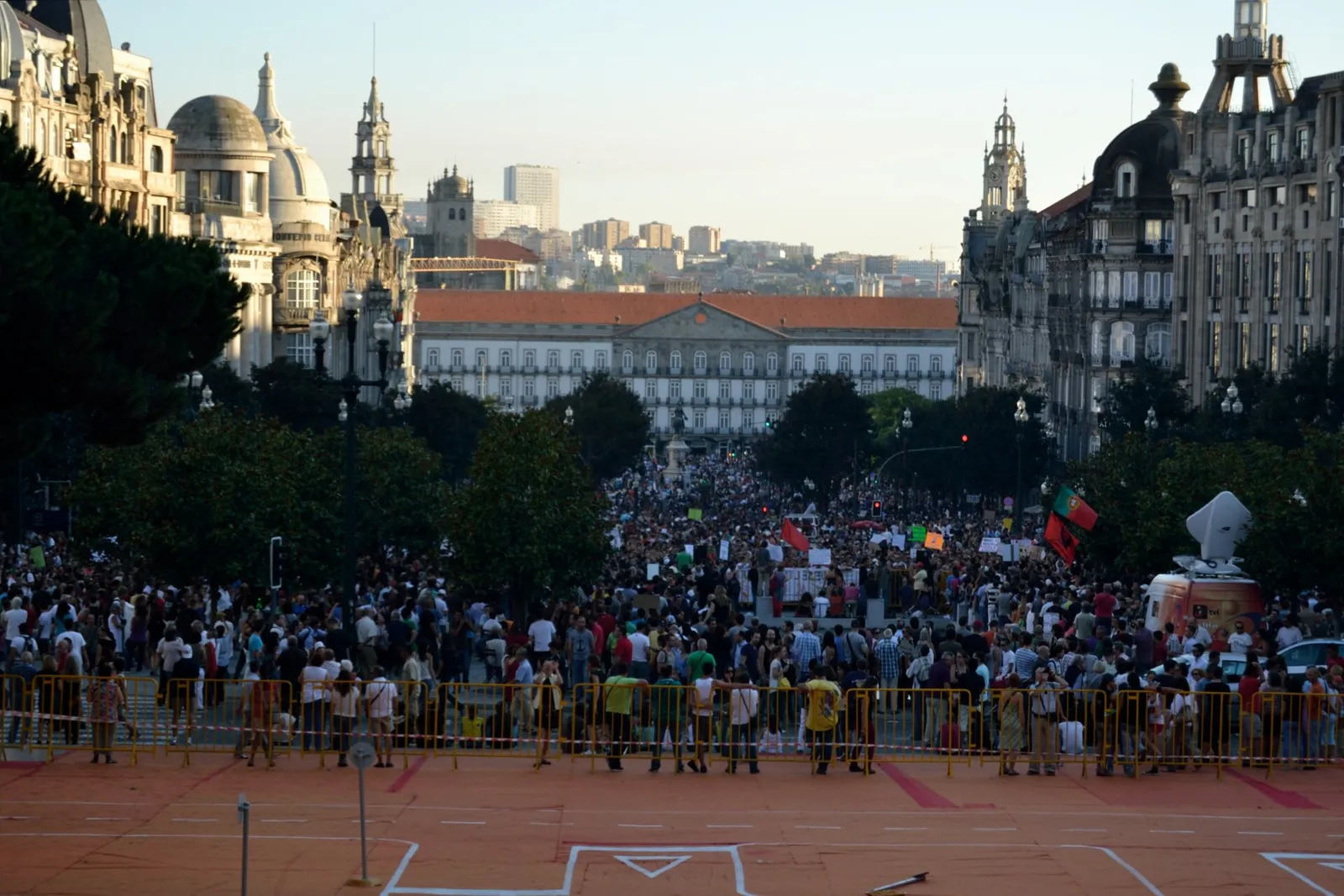
Protest grew. On 7 September 2012 Passos Coelho announced a rise in workers' social security contributions matched by a cut for employers. On 15 September demonstrations under the slogan Que se lixe a troika, roughly to hell with the troika, took place in 42 towns and cities, according to an account by one of the activists involved.
The programme ran its course. Helped by calmer markets after decisions by the monetary authorities, Portugal was back selling bonds before the end and built up a cash buffer of €15.6 billion. The programme ended in June 2014 (the Commission's evaluation also gives May), and Portugal left without drawing the last €2.5 billion tranche and without asking for a precautionary credit line. The Commission's evaluation also found that the easing pressure slowed reforms, and that cuts to pay and pensions had mostly been temporary.
Portugal's public debt, 2005 to 2025
% of GDP
General government gross debt (Maastricht definition) as a percentage of GDP. Highlighted: the request for help (2011) and the end of the programme (2014). The 2020 rise came with the pandemic. Source: Eurostat, gov_10dd_edpt1, data updated 22 April 2026.
Show the data
| General government gross debt | |
|---|---|
| 2005 | 72.2 |
| 2006 | 73.7 |
| 2007 | 72.7 |
| 2008 | 75.5 |
| 2009 | 87.6 |
| 2010 | 99.9 |
| 2011 | 114 |
| 2012 | 128.6 |
| 2013 | 130.8 |
| 2014 | 132.5 |
| 2015 | 131 |
| 2016 | 131.2 |
| 2017 | 126 |
| 2018 | 121.1 |
| 2019 | 116.1 |
| 2020 | 134.1 |
| 2021 | 123.9 |
| 2022 | 111.2 |
| 2023 | 96.9 |
| 2024 | 93.5 |
| 2025 | 89.7 |
Why it still matters
The argument over 23 March has outlived both leaders' governments. Observador's fact-checkers rated as misleading a Socialist claim that the PSD had brought in the bailout: Portugal's borrowing conditions had been tightening since mid-2010, and most economists doubted that PEC IV would have brought yields down far enough. Writing in May 2011, the political scientist Pedro Magalhães judged that a rescue would have been needed at some point whether or not the package passed.
In 2015 the same fact-checkers rated as misleading the claim that Passos Coelho had wanted the troika: the PSD supported the request, but it was not the PSD's initiative. They added that the Socialists had some grounds for arguing that the rejection of PEC IV precipitated the bailout, since the government's fall set off the downgrades and the rise in borrowing costs that followed.
The loans are still being repaid. From 2015, when market borrowing became cheaper than the IMF's loans, Portugal began repaying the IMF early, with the euro-area governments' consent. The European loans run for decades, and Portugal stays under the Commission's post-programme surveillance until it has repaid 75 per cent of them, which is expected around 2035.
Public debt, 132.5 per cent of GDP in 2014, fell to 89.7 per cent in 2025, and the budget has been in surplus since 2023. Unemployment, 17.2 per cent at its peak in Eurostat's series, was 6.0 per cent in 2025.
FAQs
Why did José Sócrates resign in March 2011?
On 23 March 2011 all five opposition parties voted to reject PEC IV, his minority government's fourth austerity package in a year. Sócrates had said he would resign if it was rejected, and he did so that evening, saying the parties had removed the conditions for him to govern. He stayed on as caretaker until the election of 5 June.
Did the rejection of PEC IV cause the 2011 bailout?
It triggered the final steps but was not the only cause. Borrowing costs had been rising since mid-2010. After the government fell, lenders shut Portugal out and two-year yields passed 10 per cent; on 6 April the caretaker government announced a request for help. Fact-checkers at Observador rated misleading both the Socialist claim that the PSD caused the bailout and the claim that Passos Coelho wanted it, and the political scientist Pedro Magalhães judged in May 2011 that a rescue would have been needed at some point anyway.
How big was Portugal's bailout and who lent the money?
Up to €78 billion, agreed in May 2011: about €26 billion each from the EU's European Financial Stabilisation Mechanism, the euro area's European Financial Stability Facility and the IMF. Up to €12 billion was set aside for the banks.
When did Portugal leave the troika programme?
The programme ended in June 2014; the Commission's evaluation gives May in one place and June in another. Portugal left without drawing the last €2.5 billion tranche and without a precautionary credit line, and remains under EU post-programme surveillance until it has repaid 75 per cent of the European loans, expected around 2035.
On the timeline
Open the timelineNearby moments from portugal in europe (1986–today).
Death in Lisbon of Matilde Rosa Araújo, aged 89, the teacher and writer who did more than anyone to give Portugal a modern literature for children. Winner of the Gulbenkian Foundation's Grande Prémio de Literatura para Crianças in 1980, she has a lusophone children's-book prize named after her.
José Mourinho is named the first FIFA World Coach of the Year at a gala in Zurich, after leading Inter Milan to a historic treble of Serie A, the Coppa Italia and the Champions League.
The 'Geração à Rasca' ('Struggling Generation') protest, called on Facebook without parties or unions, fills the streets of Lisbon, Porto and other cities against job insecurity and austerity. Press estimates put the crowds in Lisbon and Porto alone at between 200,000 and 300,000.
The fall of Sócrates, 2011
Prime Minister José Sócrates resigns after parliament rejects his minority government's fourth austerity package (PEC IV), triggering early elections. On 6 and 7 April his caretaker government asks the EU, the euro area and the IMF for a bailout.
FC Porto beat Sporting de Braga 1–0 in Dublin to win the Europa League, with Radamel Falcao heading the only goal. It is the first all-Portuguese final in UEFA competition history, between clubs barely 50 km apart.
The American surfer Garrett McNamara rides a wave of about 23.8 metres (78 feet) off Praia do Norte in Nazaré, a Guinness world record that put the fishing town's giant winter swells, funnelled by the Nazaré Canyon, on the global surfing map.
Fado is inscribed on UNESCO's Representative List of the Intangible Cultural Heritage of Humanity at a meeting in Bali. On the same date three years later, in 2014, the polyphonic cante alentejano of the Alentejo's choirs was added to the list too.
Coming up in history
All long reads 25 March 1505Francisco de Almeida sails as Portugal's first viceroy of India, 1505
 26 March 1211The death of Sancho I, 1211: the king who settled Portugal's frontier
 27 March 1905Kaiser Wilhelm II in Lisbon, 1905: three days on the way to Tangier
 28 March 1810Alexandre Herculano: the soldier-historian who took the miracle out of Ourique
30 sources
Archives, scholarship and reporting this article was checked against.
- 1
The Economic Adjustment Programme for Portugal (European Economy Occasional Papers 79)European Commission, Directorate-General for Economic and Financial Affairs, June 2011
- 2
Programa de Estabilidade e Crescimento 2011-2014 (PEC IV)Ministério das Finanças e da Administração Pública, March 2011 (copy held by the Observatório sobre Crises e Alternativas, CES, Universidade de Coimbra)
- 3
Portugal: Request for a Three-Year Arrangement Under the Extended Fund Facility (IMF Country Report No. 11/127)International Monetary Fund, June 2011
- 4
Ex post evaluation of the Economic Adjustment Programme: Portugal, 2011-2014 (European Economy Institutional Paper 040)European Commission, Directorate-General for Economic and Financial Affairs, November 2016
- 5
June 2011 Portuguese Parliamentary Elections: Pre-Election Report (Pedro Magalhães, Instituto de Ciências Sociais, Universidade de Lisboa)The Monkey Cage, 4 May 2011 (archive now at Good Authority)
- 6Fact check: Quem trouxe a troika? Quem negociou com ela?Observador, 2015
- 7
Mapa Oficial n.º 6-A/2011: deputies elected and official results of the election to the Assembleia da República of 5 June 2011Comissão Nacional de Eleições (Diário da República, 1.ª série, 17 June 2011)
- 8
- 9As oito anteriores dissoluções da Assembleia da RepúblicaObservador, 9 November 2023
- 10
José Sócrates (political biography)CIDOB, Barcelona Centre for International Affairs
- 11
Portugal PM quits after losing austerity voteAl Jazeera, 23 March 2011
- 12
Portugal: premier José Sócrates pede demissãoExame, 23 March 2011
- 13Sócrates demite-seCorreio da Manhã, 23 March 2011
- 14Sócrates pede demissão e responsabiliza oposiçãoRTP Notícias, 23 March 2011
- 15
- 16
- 17
- 18Governo corta nos salários do sector públicoRTP Notícias, September 2010
- 19
Não à Troika em Portugal: movimentos e resistências (João Camargo)Kult-ur 1 (2), 2014, pp. 135-154
- 20Francisco Louçã defende medidas inovadoras como alternativa às políticas do FMIRTP Notícias, 6 April 2011
- 21
Renegociar a dívida, rejeitar o pacto de agressão: dois anos depoisPartido Comunista Português, April 2013 (party leaflet)
- 22
- 23Sócrates confirma pedido de ajuda a BruxelasRTP Notícias, 6 April 2011
- 24
Portugal pediu ajuda externa há cinco anosSábado, 6 April 2016
- 25
- 26José Sócrates abandona liderança do PSRTP Notícias, 5 June 2011
- 27
Acórdão n.º 353/2012 (suspension of holiday and Christmas payments in the 2012 budget)Tribunal Constitucional, 5 July 2012
- 28
- 29Pode explicar de novo? Esmiuçando as declarações mais polémicas do dueloObservador, 10 September 2015
- 30
Visitas ao PalácioAssembleia da República
Image credits
- The Palácio de São Bento in Lisbon, seat of the Assembleia da República, photographed in September 2011. The vote that brought down José Sócrates's government took place here on 23 March that year. Joaomartinho63, CC BY-SA 3.0, via Wikimedia Commons.
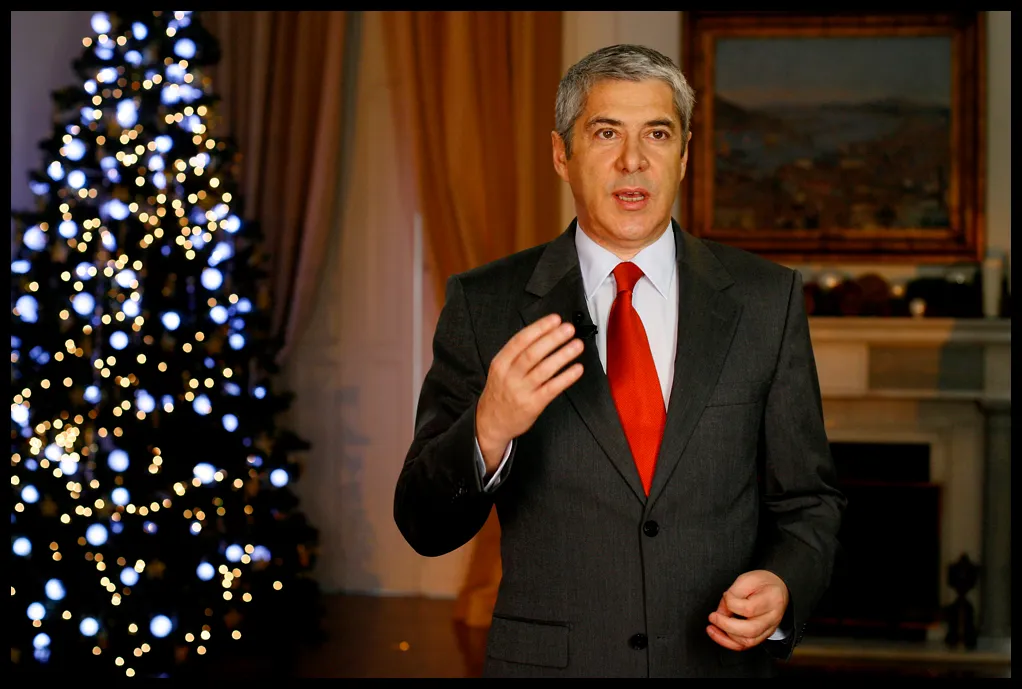
- José Sócrates recording his Christmas message at São Bento on 24 December 2008. He had been prime minister since 2005. José Goulão, CC BY-SA 2.0, via Wikimedia Commons.
- Protesters on the Avenida da Liberdade in Lisbon during the Geração à Rasca rally of 12 March 2011, eleven days before the vote on PEC IV. Anasofiapaixao, CC BY 3.0, via Wikimedia Commons.
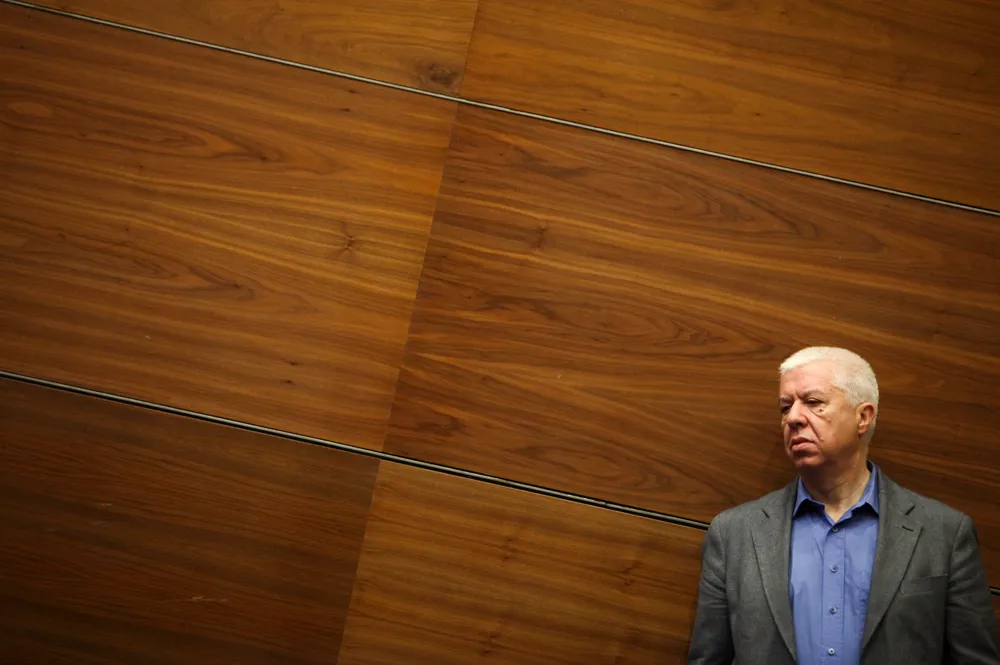
- Fernando Teixeira dos Santos, Sócrates's finance minister, at a forum on the economy at the FIL exhibition centre in Lisbon in July 2009. José Goulão from Lisbon, Portugal, CC BY-SA 2.0, via Wikimedia Commons.
- The Que se lixe a troika demonstration on the Avenida dos Aliados in Porto, 15 September 2012. Carlos Pinto from Porto, Portugal, CC BY-SA 2.0, via Wikimedia Commons.