

Alexandre Herculano: the soldier-historian who took the miracle out of Ourique
He landed at Mindelo with a rifle, wrote the first Portuguese historical novels and a history built on documents, and picked a fight with the Church over a miracle. Then he went off to make olive oil.
At a glance
- Alexandre Herculano was born on 28 March 1810 in the Pátio do Gil, on the Rua de São Bento in Lisbon, the son of a minor civil servant.
- After a failed liberal revolt in August 1831 he fled into exile, and in July 1832 he landed at Mindelo with Dom Pedro's army of about 7,500 men and fought in the siege of Porto.
- His novel Eurico, o Presbítero (1844) and the tales later gathered in Lendas e Narrativas (1851) were among the first Portuguese historical fiction.
- His four-volume História de Portugal (1846 to 1853) rested on documents and dismissed the legend that Christ appeared to Afonso Henriques at Ourique, which set off a bitter quarrel with the clergy.
- He launched the Portugaliae Monumenta Historica in 1856, retired to his farm at Vale de Lobos near Santarém, died there in September 1877 (on the 13th, by most accounts) and has lain in the Jerónimos Monastery since 1888.
A volunteer on the beach at Mindelo
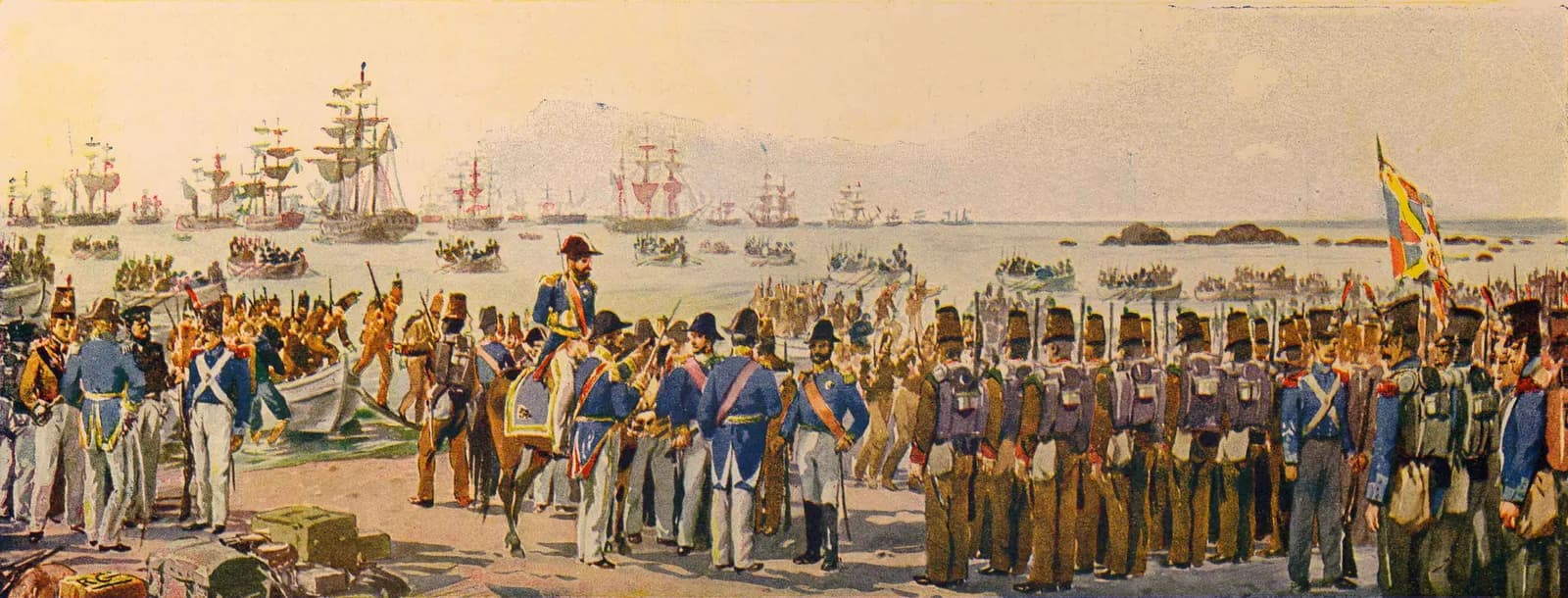
On 8 July 1832 a liberal fleet put an army ashore near Mindelo, not far from Porto. It numbered about 7,500 men, led by Dom Pedro, the former emperor of Brazil, against the absolutist king Dom Miguel. The next day Pedro marched into Porto at its head.
In the ranks was a 22-year-old volunteer from Lisbon who had joined the Queen's Volunteer Battalion in the Azores that March. Alexandre Herculano had no university degree and no fortune, and he had spent the past year as a refugee. He fought through the siege of Porto that followed, which lasted about a year and brought hunger, cholera and typhoid to the city.
By the mid-1840s he was a celebrity. He wrote the country's first historical novels and a history of its first two centuries built on the documents themselves, and he told the clergy that one of the nation's founding miracles was a forgery. In 1880 the critic Teófilo Braga wrote that in Portugal there had been a man who was listened to “as if he were an oracle”.
- Born
- 28 March 1810, Pátio do Gil, Rua de São Bento, Lisbon
- Full name
- Alexandre Herculano de Carvalho e Araújo
- Died
- 13 September 1877 (most accounts), Vale de Lobos, Azóia de Baixo (Santarém)
- Buried
- Chapter house of the Jerónimos Monastery, Lisbon, since 1888
- Best-known books
- Eurico, o Presbítero; Lendas e Narrativas; História de Portugal; the history of the Inquisition
- Day jobs
- Soldier, librarian in Porto and at the royal libraries of Ajuda and Necessidades, editor, deputy, president of Belém council, farmer
A clerk's son in a country splitting in two
Herculano's family was modest. His father, Teodoro Cândido de Araújo, was a clerk at the Junta dos Juros, the office that handled the state's loans, and the son of a grain trader. On his mother's side the family were builders; a great-grandfather had been a foreman on the palace-convent of Mafra.
He learned to read with his father and studied with the Oratorian fathers at Necessidades between about the ages of 10 and 15, then took mathematics at the Royal Naval Academy. In 1827 his father went blind, and plans for the University of Coimbra were dropped. Herculano took commercial classes instead and, in 1830 and 1831, the course in diplomatics, the reading of old documents, at the Torre do Tombo, the royal archive.
Before he was 18 he had found his way into Lisbon's literary circles, where he met the poet António Feliciano de Castilho and won the patronage of the elderly poet Leonor de Almeida, Marchioness of Alorna. He read Walter Scott, Chateaubriand, Lamartine and the German poets of the Sturm und Drang.
Which side the young Herculano was on is still argued over. A hostile bibliographer, Inocêncio Francisco da Silva, later claimed he had written paid verses for the Miguelists at about 18. His biographers find little proof of the detail, though some sympathy for Miguel seems real. A poem, A Semana Santa (Holy Week), probably written in the spring of 1829, already puts him in the liberal camp.
Revolt, exile and the siege of Porto
In August 1831, probably after joining the freemasons, Herculano took part in a rising of the 4th Infantry Regiment in Lisbon, led by one of his former teachers at the Naval Academy. (One modern biography names the 4th Cavalry instead.) The Miguelist forces crushed it, at the cost of much blood. Herculano escaped on board the French frigate Melpomène.
From there an English ship took him to Plymouth. He passed through Falmouth, Jersey, Saint-Malo and Granville and settled for a time in Rennes, in Brittany, to study history, part of the network of Portuguese liberal exiles gathering for a return. In March 1832 he reached the Azores, the liberal base, and enlisted.
After Mindelo the liberals were shut up in Porto by Miguel's army. Herculano fought in the actions of the siege and in 1833 was appointed second librarian of the new public library of Porto. There he learned the archivist's trade. One of his first editions was the chronicle of King Sebastião by Friar Bernardo da Cruz, published in 1837 after he compared six manuscripts.
Novels for a new reading public
Herculano's politics were liberal but never radical. When the September Revolution of 1836 brought back the Constitution of 1822, he refused to swear to it and resigned his post in Porto. He attacked the new government in a fierce anonymous pamphlet, A Voz do Profeta (The Voice of the Prophet), which caught the public mood.
In 1837 he became editor of O Panorama, a Lisbon weekly modelled on the London Penny Magazine and published under royal patronage by the Society for the Spread of Useful Knowledge. In 1839, with the backing of the king consort, Fernando II, he was made director of the royal libraries of Ajuda and Necessidades. The post gave him a secure income for life and let him live close to his work.
He sat in parliament for the Chartists in 1840 and 1841 and left disgusted after he was pushed off the public instruction committee. Years later he called his time as a deputy a “beastly sin”, for which he had done penance by writing the history of the country “with loyalty and conscience”.
Between 1838 and 1848 he wrote historical tales for O Panorama and other papers, later collected as Lendas e Narrativas (Legends and Narratives, 1851). They range from O Alcaide de Santarém, set in Moorish Santarém in the tenth century, to A Abóbada, the story of the vault of the Batalha monastery in 1401. In his preface he called them “the first attempts at the historical novel” in Portuguese.
His novel Eurico, o Presbítero (Eurico the Priest) came out in 1844, its preface signed at Ajuda in November 1843. Eurico is a Visigothic noble who, refused the hand of Hermengarda, sister of the future Christian leader Pelagius, becomes the priest of Carteia near Gibraltar. When the Muslim armies invade Spain he fights them as an unknown knight in black armour. The book's real subject, Herculano said, was the loneliness of priests forbidden to marry.
“Do you know the meaning of the word monk in its remote origin, in its first form? It is: alone and sad.”
O Monge de Cister (The Monk of Cîteaux), set in the reign of João I, followed in 1848, and O Bobo (The Jester) ran as a serial in 1843 but only became a book in 1878. The 1911 Britannica found his novels laboured and his dialogue weak, but judged their influence to be as great as their imitators were many.
| Work | First published | What it is |
|---|---|---|
| A Voz do Profeta | 1836 | Anonymous pamphlet against the September revolutionaries |
| A Harpa do Crente | 1838 | Poems of his youth |
| Eurico, o Presbítero | 1844 | Novel of the fall of Visigothic Spain |
| História de Portugal, 4 vols | 1846, 1847, 1849, 1853 | History from the County of Portugal to the death of Afonso III in 1279 |
| O Monge de Cister | 1848 | Novel set in the time of João I |
| Eu e o Clero | 1850 | Open letter to the Patriarch of Lisbon |
| Lendas e Narrativas, 2 vols | 1851 | Historical tales first printed in magazines |
| História da Origem e Estabelecimento da Inquisição em Portugal, 3 vols | 1854, 1855, 1859 | How the Inquisition came to Portugal |
| Portugaliae Monumenta Historica | From 1856 | Edition of medieval sources for the Academy of Sciences |
| Letters and studies on civil marriage | 1865 to 1866 | Case for civil marriage; placed on the Church's Index |
| O Bobo | Serial 1843, book 1878 | Historical novel |
Dates of first publication in book form unless stated.
A history from documents, and a miracle thrown out
In 1842 Herculano set out his plan in a series of Letters on the History of Portugal. History, he argued, should cover institutions and whole classes of people, not only battles and kings. Four years later the first volume of his História de Portugal appeared. The other three followed in 1847, 1849 and 1853.
The book starts with the grant of the County of Portugal to Henry of Burgundy in 1096 and ends with the death of Afonso III in 1279. Each volume closed with notes weighing the authenticity of the sources. He meant to go further: in 1871 the emperor of Brazil, Pedro II, noted after meeting him that most of a fifth volume was written, but it never appeared.
The trouble came from a few pages in volume one. For centuries the Portuguese had been taught that before the battle of Ourique in 1139, Christ appeared to Afonso Henriques and promised him victory, and that his men then acclaimed him king. The miracle was not in the twelfth-century chronicles. It took shape in the Chronicle of 1419 and was later backed by a supposed sworn statement by the king, “discovered” in the late sixteenth century.
Herculano gave the battle little space. He wrote that it was wrapped in “fables no less absurd than brilliant” and that the Arab chroniclers did not mention it, and in a note he called the king's sworn statement “poorly forged”. He also rejected the Cortes of Lamego, the record of a supposed founding assembly, first published in 1632, that had long been used to justify the Bragança dynasty.
The clergy answered from the pulpit. After his second volume came out, a preacher in Braga called him a heretic and impious for what he had written about the medieval popes. In Lisbon the sermons were about Ourique: first at a feast in one of the city's busiest churches, then in his own parish church and, two days later, in another. In June 1850 he answered with an open letter to the Cardinal Patriarch of Lisbon, Eu e o Clero (The Clergy and I).
“The truth remains, and prejudices pass. … I left out the fable of the appearance of Christ, as a thing unworthy of the gravity of history.”
A pamphlet war followed. Herculano answered his critics in long letters such as the Solemnia verba of October and November 1850, addressed to A. L. Magessi Tavares, a courteous opponent who had written two pamphlets against him. Lisbon's professor of Arabic accused him and his Spanish ally, the Arabist Pascual de Gayangos, of not knowing the Arab sources. The 1911 Britannica thought the quarrel did credit to no one, but that Herculano's version of the facts had been universally accepted.
The Inquisition, the archives and a reluctant politician
The quarrel led straight to his next book. The three volumes of his history of the origin and establishment of the Inquisition in Portugal appeared in 1854, 1855 and 1859. They follow more than twenty years of bargaining between Lisbon and Rome that led to the tribunal of 1536. King João III is the chief villain, and the New Christians, Jews who had been forced to convert, try to block the deal, often with bribes.
Herculano made no secret of his aim. He wrote that he wanted “to strengthen the liberal faith of the half-hearted”, and he feared an alliance between the centralising papacy of Pius IX and the governments in Lisbon. The book was translated into English by John C. Branner for Stanford University in 1926; Branner noted that the historian of the Spanish Inquisition, Henry Charles Lea, had called it a classic.
His largest project was an edition of the medieval sources themselves. In 1853 he was put in charge of publishing the oldest documents of Portugal, with a grant of 1,000$000 réis (one conto, or a million réis) a year. He made two long tours of the archives of central and northern Portugal choosing documents, many of which were then gathered in the Torre do Tombo.
| Series | Contents | First volume |
|---|---|---|
| Scriptores (Writers) | Chronicles and other narrative sources | 1856 |
| Leges et Consuetudines (Laws and Customs) | Laws, town charters and customs | 1856 |
| Diplomata et Chartae (Diplomas and Charters) | Deeds and charters | 1867 |
| Inquisitiones (Inquiries) | Records of royal inquiries | 1888, after his death |
Dates from the title pages of the volumes digitised on the Internet Archive and from the Dicionário de Historiadores Portugueses.
The work absorbed him for about two decades, and it was stormy. In 1856 a man he detested, Joaquim José da Costa Macedo, was made keeper of the Torre do Tombo. Herculano resigned as a member and perpetual secretary of the Academy, saying that since he could not enter the archive he could not work on the Monumenta. He held to that even when the Academy re-elected him in October and made him vice-president in December.
He kept being drawn into politics and kept walking away. He helped plan the 1851 coup that ended the government of Costa Cabral and began the period called the Regeneration, but turned down the post of minister of the kingdom.
He later won a municipal election as an opposition candidate and became president of the new council of Belém, a separate municipality west of Lisbon that was abolished later in the century. One biography dates his election to November 1853, another to 1854. He resigned in October 1855 after a clash with Rodrigo da Fonseca Magalhães, the minister of the kingdom.
He opposed the 1857 concordat with the Holy See and the arrival of the Sisters of Charity, and argued for civil marriage while sitting on the commission revising the Civil Code from 1860. His letters on civil marriage were put on the Church's Index of forbidden books. He refused a peerage in 1861 and the Grand Cross of the Order of Santiago in 1862.
“In the immense consumption that is being made, that has been made for 30 years, of distinctions, ribbons, insignia, embroidered uniforms, titles, ranks, honorifics and noble labels, the man of the people who wishes and is able to die with that description must acquire, in less than half a century, extreme celebrity.”
Olive oil at Vale de Lobos
He had always disliked Lisbon and liked the land. In the late 1840s he rented a plot near his house at Ajuda and made dairy produce, and from 1855 to 1863 he farmed in the Arrábida hills with two friends. In 1859 he bought the Quinta de Vale de Lobos, a farm on the outskirts of Santarém.
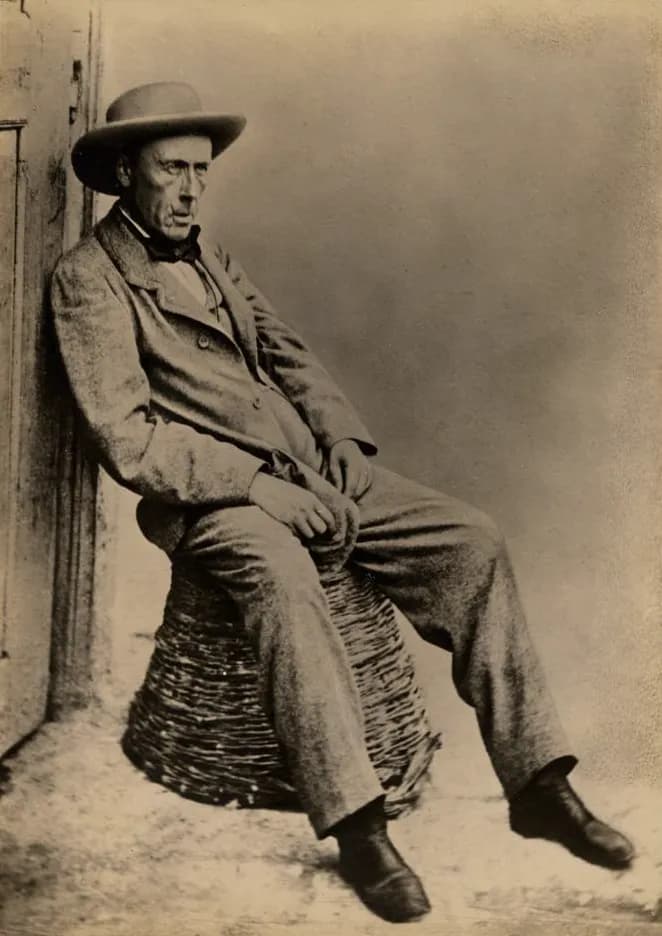
After a late marriage in 1867 he made the farm his home, and threw himself into making olive oil. The writer Ramalho Ortigão remarked that he had stopped “making history to make olive oil”. He kept writing all the same: letters by the hundred, pamphlets, new editions, a translation of Ariosto's Orlando Furioso and more pages of the História.
“I have no illusion that it was useless to seek refuge here. My fate is to die tethered to an inkpot. I accept the inevitable.”
He died at Vale de Lobos in September 1877, aged 67, of pneumonia according to an 1894 sketch of his life. His early biographers give the date as 13 September. Ortigão's obituary in As Farpas says he had died “at ten o'clock last night, 14 September 1877”, which can be read as dating either the death or the article, and some modern reference works give 18 September. The obituary was less a eulogy than a reproach for twenty years of silence.
“The second of the citizens who passed through the world under the name of Alexandre Herculano is simply the illustrious recluse of Vale de Lobos.”
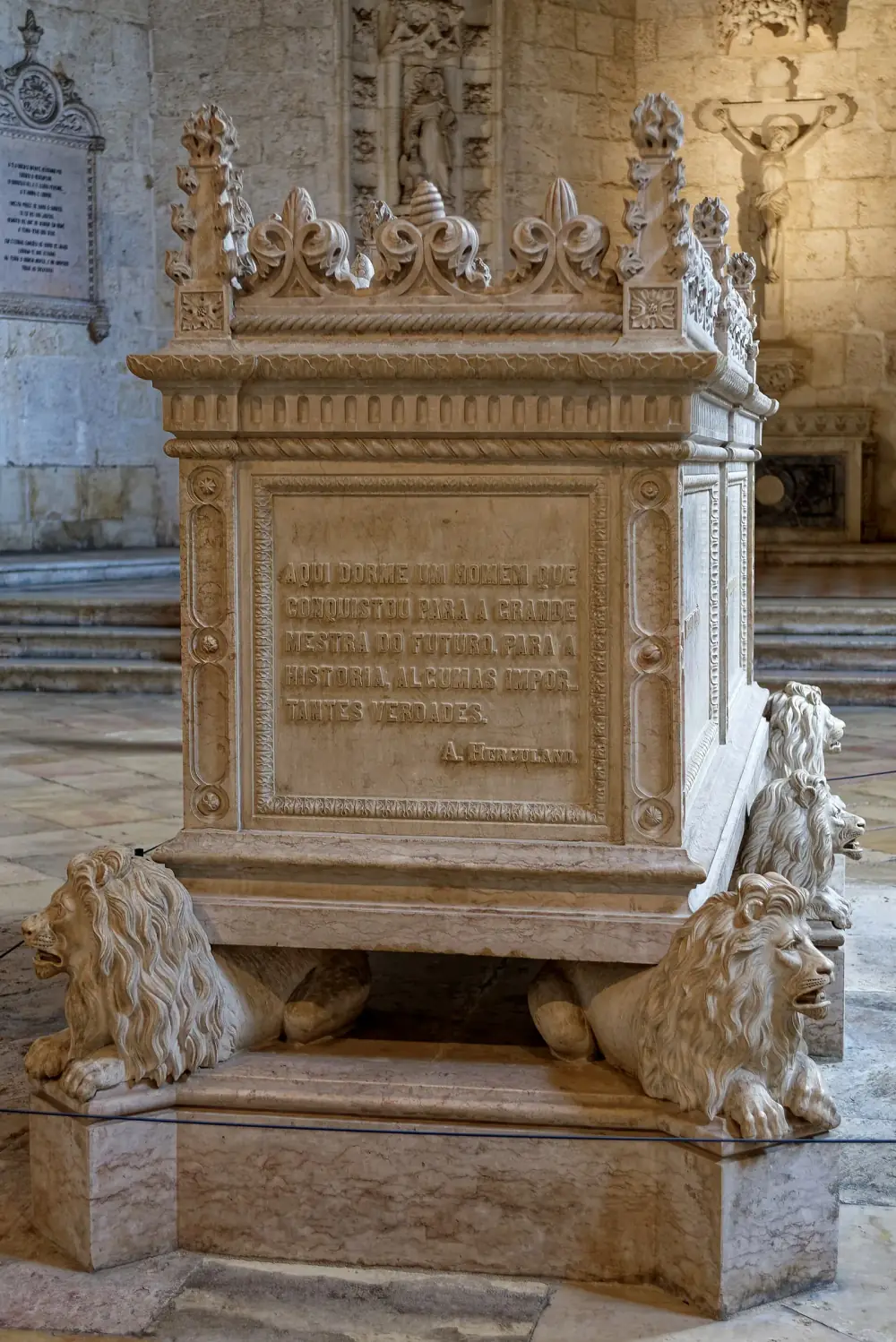
He was buried in the parish church of Azóia de Baixo. In 1888 his remains were moved to the chapter house of the Jerónimos Monastery in Lisbon, prepared for him with a tomb paid for by public subscription. The monastery also holds the tombs of Vasco da Gama and Camões.
28 March 1810
Born in the Pátio do Gil, Rua de São Bento, Lisbon
August 1831
Takes part in the failed revolt of the 4th Infantry; flees into exile
March 1832
Joins the Queen's Volunteer Battalion in the Azores
8 July 1832
Lands at Mindelo with Dom Pedro's army; the siege of Porto follows
1833
Second librarian of the public library of Porto
1836
Resigns rather than swear to the 1822 Constitution; A Voz do Profeta
1837
Editor of O Panorama
1839
Director of the royal libraries of Ajuda and Necessidades
1844
Eurico, o Presbítero
1846
First volume of the História de Portugal
June 1850
Eu e o Clero, open letter to the Patriarch of Lisbon
1854
First volume of the history of the Inquisition
1856
First volumes of the Portugaliae Monumenta Historica
1859
Buys the Quinta de Vale de Lobos
1867
Marries and settles at Vale de Lobos
13 September 1877
Dies at Vale de Lobos
1888
Remains moved to the Jerónimos Monastery
Why he still matters
He was famous in his own lifetime. A German Protestant theologian, Rudolf Baxmann, back from a missionary journey to Lisbon, wrote in 1863 that even ships were named after him. In March 1910 the centenary of his birth was marked with a public homage that turned the man into a national symbol.
Historians still call him the father of Portuguese historiography, though the scholar Arthur Assis warns that the title is often exaggerated: Herculano built on a century of document work by the Academy of Sciences and scholars such as João Pedro Ribeiro. Assis sees his critical method as the maturing of a long collective effort rather than a one-man revolution.
His birthday has been the National Day of Historic Centres since 1993, chosen because he defended old buildings and monuments. His poem Tristezas do Desterro (Sorrows of Exile) inspired O Desterrado (The Exile), the sculpture by António Soares dos Reis that is the best-known work in the Soares dos Reis National Museum in Porto.
His papers are still turning up. In May 2021 the Santarém town council bought a lot of them at auction for the base price of €30,000, subject to the National Library's right to buy first: drafts, research notes, letters and part of a diary about his exile in France and the Azores. Among the manuscripts was a poem called O Desembarque (The Landing). The rest of his papers are in the Porto municipal library and the National Library.
FAQs
When and where was Alexandre Herculano born?
He was born on 28 March 1810 in Lisbon, in the Pátio do Gil on the Rua de São Bento. His father was a minor civil servant at the office that managed the state's loans.
Why was Herculano's History of Portugal so controversial?
In the first volume, published in 1846, he treated the battle of Ourique of 1139 as a small encounter and dismissed the story that Christ appeared to Afonso Henriques before it, calling the document behind it a forgery. Preachers denounced him as a heretic, and in 1850 he replied with the open letter Eu e o Clero, which began years of pamphlet warfare.
What are Alexandre Herculano's best-known books?
The novel Eurico, o Presbítero (1844), the tales of Lendas e Narrativas (1851), the four-volume História de Portugal (1846 to 1853) and the History of the Origin and Establishment of the Inquisition in Portugal (1854 to 1859). He also launched the Portugaliae Monumenta Historica, an edition of medieval Portuguese sources, in 1856.
Did Herculano fight in the Liberal Wars?
Yes. After a failed liberal revolt in Lisbon in August 1831 he fled to England and France, joined the liberal volunteers in the Azores in March 1832, landed at Mindelo with Dom Pedro's army in July 1832 and fought in the siege of Porto.
Where is Alexandre Herculano buried?
He died at his farm at Vale de Lobos, near Santarém, on 13 September 1877 and was first buried at Azóia de Baixo. Since 1888 he has lain in a tomb paid for by public subscription in the chapter house of the Jerónimos Monastery in Lisbon.
On the timeline
Open the timelineNearby moments from invasions, brazil and the liberal wars (1807–1851).
As Marshal Soult's French army storms Porto during the second French invasion, crowds fleeing across the Ponte das Barcas, the bridge of boats over the Douro, are pushed into a gap in its middle, and hundreds or thousands drown. A shrine on the Ribeira quay still recalls the disaster.
In a daring surprise attack, Arthur Wellesley — the future Duke of Wellington — ferries his troops across the Douro in commandeered wine barges and drives Marshal Soult's French army out of Porto in the Second Battle of Porto. The defeat ends Napoleon's second invasion of Portugal.
In Rio de Janeiro, the exiled Portuguese court signs the Strangford Treaty with Britain, its protector against Napoleon. British goods were to enter Brazil at a duty of just 15 per cent, less than the 16 per cent then charged on goods from Portugal itself; the two rates were equalised almost a year later, but Britain kept its low tariff in Brazil until the 1840s.
Alexandre Herculano born
Birth of Alexandre Herculano in Lisbon, who would become one of Portugal's greatest historians and novelists. His monumental 'History of Portugal' and historical novels helped define Portuguese national identity and historiography.
During the French siege of Almeida, a shell ignites a trail of gunpowder leading into the fortress's main magazine; the explosion kills some 600 defenders of the largely Portuguese garrison and forces its surrender the next day, opening the way for Masséna's invasion of Portugal.
At the Battle of Buçaco, Wellington's Anglo-Portuguese army repels repeated assaults by Marshal Masséna's invading French forces on the Buçaco ridge in central Portugal, inflicting some 4,500 casualties before withdrawing in good order to the Lines of Torres Vedras.
Masséna's invading French army comes up against the Lines of Torres Vedras near Sobral de Monte Agraço: a secret chain of forts and redoubts built on Wellington's orders to shield Lisbon. Unable to break through in a land stripped bare by scorched-earth tactics, the starving French held on for a month before falling back to Santarém.
Coming up in history
All long reads 30 March 1904Alexandrina of Balasar: the bedridden mystic said to live without food
 31 March 1360Philippa of Lancaster, the English queen who raised Portugal's princes
 1 April 1996Mário Viegas, the actor who said Portugal's poems aloud, dies at 47
 2 April 1976The Constitution of 2 April 1976: how Portugal wrote down its democracy
19 sources
Archives, scholarship and reporting this article was checked against.
- 1
Herculano, Alexandre (Lisbon, 1810 - Azóia de Baixo, Santarém, 1877) (Arthur Alfaix Assis)Dicionário de Historiadores Portugueses, Biblioteca Nacional de Portugal
- 2
Alexandre Herculano de Carvalho Araújo (1810-1877) (Rita Correia)Hemeroteca Digital, Câmara Municipal de Lisboa
- 3
Opúsculos, tomo III: Controvérsias e estudos históricos (Alexandre Herculano, Lisbon, Bertrand, 1876)Project Gutenberg
- 4
- 5
- 6
Herculano de Carvalho e Araujo, AlexandreEncyclopædia Britannica, 11th edition (1911), via Wikisource
- 7
Who rests in the tombs of the monastery?Mosteiro dos Jerónimos, on Google Arts & Culture
- 8
8 July 1832: Pedro disembarks in Mindelo, near PortoParques de Sintra, Palácio Nacional de Queluz (D. Pedro IV chronology)
- 9
History of the Origin and Establishment of the Inquisition in Portugal, translated by John C. BrannerStanford University Publications, 1926 (Internet Archive)
- 10
- 11
- 12
António Brandão y la invención de las «Cortes de Lamego» de 1143 (Matthias Gloël)Revista de historiografía 33 (2020), Universidad Carlos III de Madrid
- 13
- 14
- 15
- 16
- 17
- 18
Alexandre Herculano: one of the greatest defenders of national heritageMuseu Nacional Soares dos Reis, 28 March 2024
- 19Do diário à carta ao imperador do Brasil. Santarém adquire espólio de Alexandre HerculanoDiário de Notícias (Lusa), 25 May 2021
Image credits
- The liberal army comes ashore near Mindelo, north of Porto, in July 1832, as Roque Gameiro imagined it for Quadros da História de Portugal in 1917. Herculano, then 22, was one of the volunteers. Roque Gameiro, Public domain, via Wikimedia Commons.
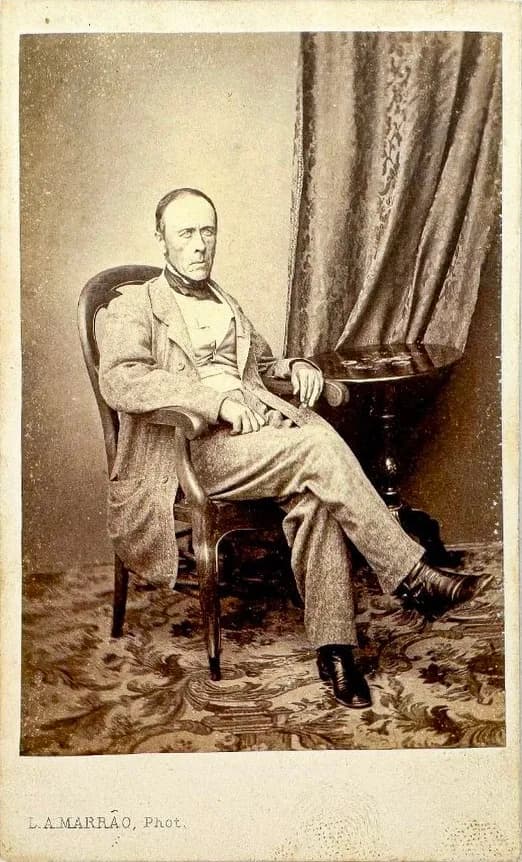
- Herculano in middle age, in a carte-de-visite photograph by Lucas de Almeida Marrão. The card is undated. Lucas de Almeida Marrão, Public domain, via Wikimedia Commons.
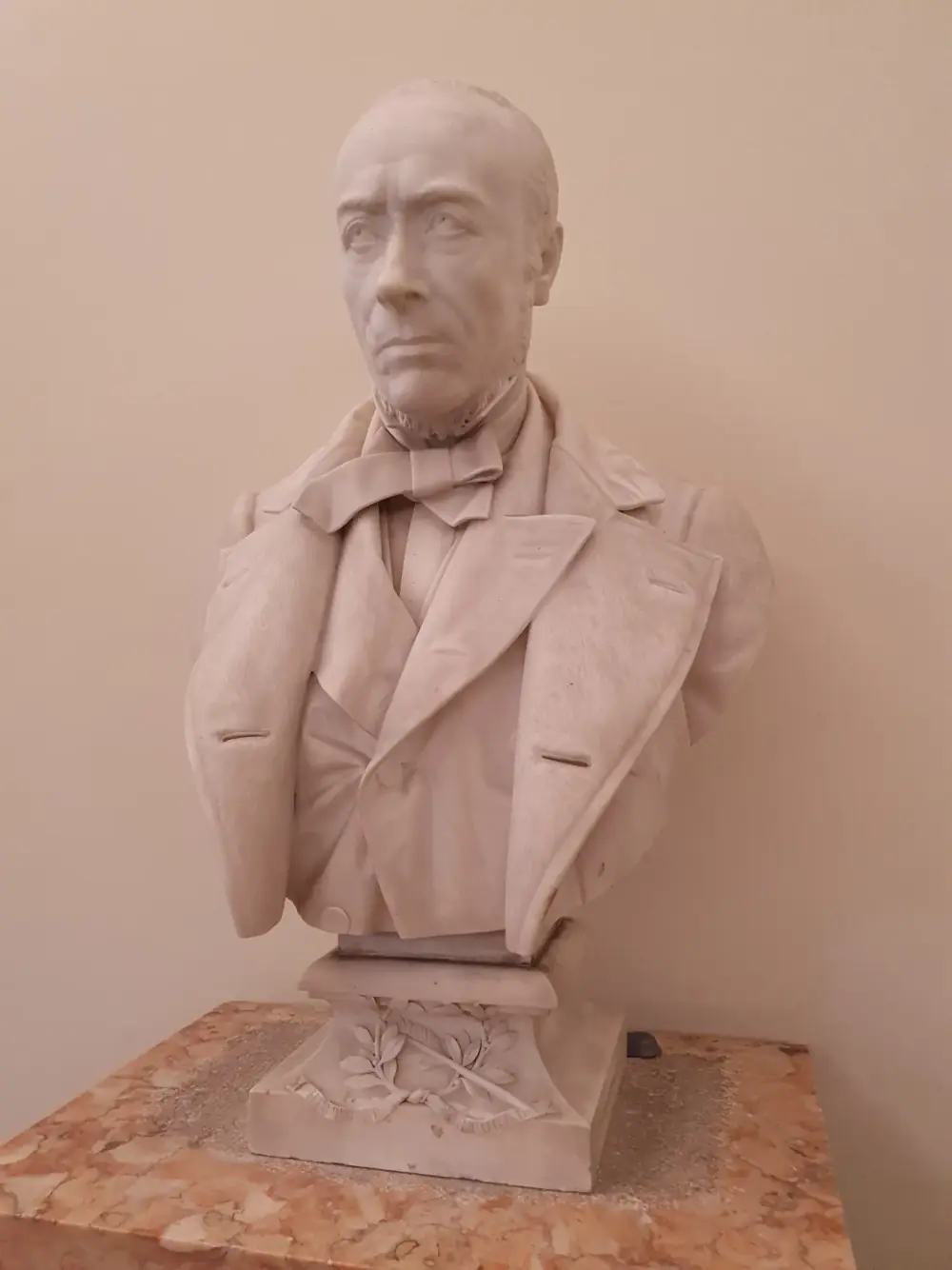
- A bust of Herculano at the Academia das Ciências de Lisboa, the body for which he edited the Portugaliae Monumenta Historica. The pedestal names his História de Portugal. Photographed in 2022. GualdimG, CC BY-SA 4.0, via Wikimedia Commons.
- Herculano sitting on a basket at his farm at Vale de Lobos, near Santarém, where he lived from 1867 until his death in 1877. The photograph is undated. Unknown author, Public domain, via Wikimedia Commons.
- Herculano's tomb in the chapter house of the Jerónimos Monastery, photographed in 2025. The inscription, signed with his name, reads: “Here sleeps a man who won for the great teacher of the future, for history, some important truths.” Jakub Hałun, CC BY 4.0, via Wikimedia Commons.