

Mário Viegas, the actor who said Portugal's poems aloud, dies at 47
He started reciting poets the dictatorship disliked in Santarém at 17 and ended by announcing a run for president. In between he made poetry a television event and founded three theatre companies.
At a glance
- Mário Viegas, actor, director and reciter of poetry, died in Lisbon on 1 April 1996, aged 47, of AIDS.
- Born in Santarém on 10 November 1948, he first recited poetry in public there in March 1966 and made his professional stage debut at the Teatro Experimental de Cascais in 1968.
- He recorded about ten albums of poems between 1969 and 1990, from Palavras Ditas (1972) to a double LP of Fernando Pessoa's Alberto Caeiro, and presented the RTP poetry series Palavras Ditas and Palavras Vivas.
- He was in the group that founded A Barraca in 1975 and co-founded the Companhia Teatral do Chiado in 1990 or 1991, the last of the three companies sources credit him with.
- In 1995 he stood for parliament as an independent on the far-left UDP's list and announced a presidential bid under the slogan “O Sonho ao Poder”; illness ended it before the 1996 election.
A death on the day of lies
Mário Viegas died in Lisbon on Monday 1 April 1996. He was 47, and the cause was AIDS. In Portugal 1 April is the Dia das Mentiras, the day of lies. Mário Tomé, a former deputy of the far-left UDP, the party Viegas had campaigned for six months earlier, began a tribute with the date: Viegas had died on the day of lies, so needless to say he had not died, and never would.
In 1995 he had been on stage in Europa Não! Portugal Nunca!, a satire on the politics of the day that became his last hit. A sign at the front of the stage told the audience that nobody in the company had signed anything for the man calling himself Secretary of State for Culture. That year he also ran for parliament and announced that he would run for president, before he fell too ill to go on.
Many Portuguese knew him first as a voice. For three decades he recited poetry on records, in halls and on RTP, the public television channel, and the public often took him for the author of the poems he said. A doctoral thesis on poetry recordings in Portugal names him, with João Villaret, as one of the two actors who between them almost entirely dominated the art of saying poetry for half a century.
- Full name
- António Mário Lopes Pereira Viegas
- Born
- 10 November 1948, Santarém
- Died
- 1 April 1996, Lisbon, aged 47
- Known for
- Reciting poetry on record and television; stage and film acting; directing
- Companies
- Companhia Teatral do Chiado (1990 or 1991), the last of three he founded; among the founders of A Barraca (1975)
- State honour
- Commander of the Order of Prince Henry, 9 June 1994
Reciting against the dictatorship
Viegas grew up in Santarém, a town on the Tagus north-east of Lisbon, in a family of pharmacists with a republican tradition. His mother, Mariana Lopes Viegas, taught Greek and Latin, and his maternal uncle António Cardoso Lopes had founded the children's comic O Mosquito. As a boy Viegas made paper puppets on strings and acted out his own stories with them.
Reciting was his way onto a stage. He told Simone de Oliveira on RTP that in Santarém poetry was the only way he could perform in public, and gave the date of his debut as 12 March 1966. He was 17. His first pieces were two poems by Alexandre O'Neill, among them “O Poema Pouco Original do Medo” (The Not Very Original Poem of Fear), a bold choice under the dictatorship.
He went to Lisbon to study history at the Faculty of Letters, then enrolled in the theatre school of the Conservatório Nacional. His professional debut came in 1968 at the Teatro Experimental de Cascais, under the director Carlos Avilez. In October 1968 he moved to Porto and joined the Teatro Universitário do Porto, returning to Cascais in 1970.
His months in Porto, in 1969, were the busiest of his “reciter-agitator” period, as he later called it. He said he gave hundreds of shows with José Afonso, Adriano Correia de Oliveira, Manuel Freire, the guitarist Carlos Paredes and others. In 2021 the family of a Vila Real doctor, Jorge Ginja, who had died the year before, made public tapes Viegas had recorded for him that year to take to the war in Angola: 40 poems, 29 of which he never recorded again, and two scenes from Gorky and Chekhov.
The regime caught up with him in 1971. By his own account he was sent to the army camp at Mafra on PIDE orders, to a basic training designed for students punished after the academic crisis of 1969. He was then posted to the army's psychological action service and the General Staff, until his police file arrived and an alarmed colonel moved him to harmless duties.
A new way of saying poems
His first record, Mário Viegas diz poemas, came out on the Orfeu label in 1969. The second, Palavras Ditas (Spoken Words), in 1972, set out what he was trying to do. He told a joke, read a Jorge de Sena poem and ended with a melodramatic reading of a weather forecast. In the sleeve notes he wrote that the same tricks, the whispers, sobs and shouts of actors and demagogues, served for a poem by Camões, one by Herberto Helder or a recipe.
The critic José Jorge Letria wrote in 1972 that Viegas had drastically recast the art of declamation, with Brecht's lessons in mind. The thesis's author, José António Silva, calls it one of the most important poetry records ever made in Portugal. In 1973 Viegas put his voice beside a home recording that the poet Daniel Filipe, who had died in 1964, made of his “A Invenção do Amor” in 1953. Silva says it is the oldest recording of a poet's voice ever issued in Portugal.
| Year | Title | Notes |
|---|---|---|
| 1969 | Mário Viegas diz poemas | First record, on the Orfeu label |
| 1972 | Palavras Ditas | LP, Orfeu; his statement of method |
| 1973 | A Invenção do Amor e outros poemas de Daniel Filipe | With the poet's own 1953 recording |
| 1974 | País de Abril | |
| 1975 | O Operário em Construção e 3 poemas de Brecht | |
| 1976 | 3 Poemas de Amor, Ódio e Alguma Amargura | |
| 1978 | Pretextos para dizer… | |
| 1980 | Humores | |
| 1983 | O Guardador de Rebanhos | Double LP of Fernando Pessoa's heteronym Alberto Caeiro |
| 1990 | Poemas de Bibe | With Manuela de Freitas |
From the discography in José António Silva's 2016 thesis. Some online lists date O Guardador de Rebanhos to 1973; the thesis and Inês Pedrosa's 1984 interview with Viegas place it in 1983. In 2006 the newspaper Público issued a Discografia Completa in 14 books and CDs, adding four discs of unreleased recordings.
Looking back on the agitator years of 1969, he said that afterwards everything changed: the reciter-agitator no longer seemed justified, and he began to care more about the quality of the texts. He still chose poems that were simple to hear and quickly understood, and on the sleeve of Pretextos para dizer in 1978 he put it bluntly.
“Art does not escape the class struggle. I read for workers and students.”
His readings were slow. Silva timed three versions of Álvaro de Campos's long poem “Tabacaria” (Tobacco Shop), one of Pessoa's best known, and found that Viegas took half as long again as Villaret. Most of the difference lay in the silences. Viegas's pauses ran from a fraction of a beat to six beats, where Villaret's were almost all one or two, and Viegas spoke more slowly, at 67 beats a minute to Villaret's 80.
How long it takes to say “Tabacaria”
minutes
Running times measured by José António Silva: 600 seconds for João Villaret (Valentim de Carvalho, 1957), 912 seconds for Viegas on Inéditos III of the 2006 Discografia Completa, recorded on 30 August 1990, and 935 seconds for the 1991 television version, which Silva says reused that 1990 recording.
Show the data
| Length of recording | |
|---|---|
| Villaret, LP 1957 | 10 |
| Viegas, 1990 tape (issued 2006) | 15.2 |
| Viegas, Palavras Vivas, RTP 1991 | 15.6 |
Three companies and a king
He saw the revolution of 25 April 1974 from the front row, he said: in the Largo do Carmo, and in the afternoon in Rua António Maria Cardoso, where a crowd shouting death to the PIDE came under fire. The São Luiz theatre has its main entrance in the same street. In May 1974 he was sent to the service set up to wind up the PIDE.
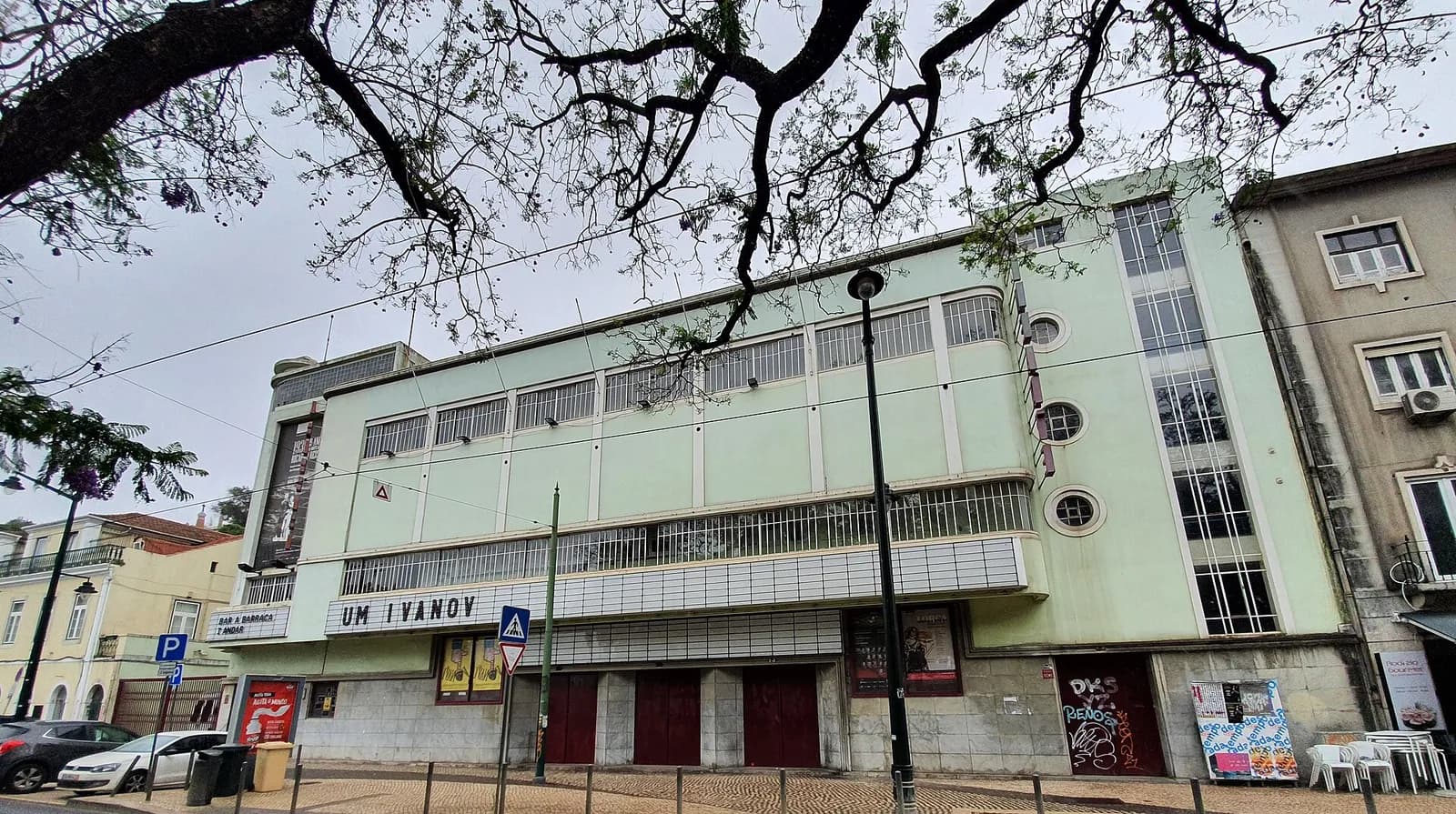
In 1975 he was among the actors, writers and musicians who met to set up A Barraca, a company that wanted popular, improvised theatre to provoke debate. Maria do Céu Guerra was among the first members, and the group gave its first show on 4 March 1976 at the Incrível Almadense, a club in Almada. There Viegas played the title role in Hélder Costa's D. João VI, and won a prize for it at the Sitges theatre festival in Spain in 1979.
Cinema came at the same time. His first film was Eduardo Geada's O Funeral do Patrão in 1975, and he was filming Artur Semedo's O Rei das Berlengas in Leiria on 25 November 1975, the day of that year's military coup. The film won him best actor at a European festival of comic cinema in A Coruña in 1978.
He became a favourite actor of the director José Fonseca e Costa, starring in Kilas, o Mau da Fita (dated 1980 in some accounts and 1981 in others) and later in Sem Sombra de Pecado and A Mulher do Próximo. He worked with Manoel de Oliveira on A Divina Comédia (1991) and beside Marcello Mastroianni in Roberto Faenza's Afirma Pereira (1996). He made more than 15 feature films in all.
As a director he staged Beckett, Chekhov, Strindberg, Pirandello, Eduardo De Filippo and Peter Shaffer. Sources agree that he founded three companies, the last being the Companhia Teatral do Chiado, set up with the younger actor Juvenal Garcês in 1990 by one account and 1991 by another. They do not agree on the other two. A 2006 Jornal de Notícias report names the Novo Grupo and the Grupo 4, while other accounts count him among the founders of A Barraca.
The awards followed the work. The Associação Portuguesa de Críticos de Teatro honoured him four times and the Casa da Imprensa twice, and the state's Secretariat for Culture gave him the Prémio Garrett in 1987. On 9 June 1994 he was made a Commander of the Order of Prince Henry, presented by President Mário Soares.
Poetry at prime time
In the mid-1980s RTP gave him a series of his own, Palavras Ditas. RTP's own record dates it to 1984; the biography reproduced by Voz Online gives 1986. The first of its 12 programmes, “A dificuldade está na escolha” (the hard part is choosing), featured visual poems by E. M. de Melo e Castro and António Aragão, and the second was on Pessoa's Alberto Caeiro.
Later programmes were built around a theme or a poet: Camões with the singer Manuel Freire, poems by and about women, Eugénio de Andrade, and the humorist Mário-Henrique Leiria's Contos do Gin-Tonic, read with the broadcaster Manuela de Melo.
He brought in other actors, among them Eunice Muñoz, Carmen Dolores, Ruy de Carvalho and João Perry. The format was simple, with the camera close on his face. Not everyone liked the intensity of his delivery, and he once answered critics on air that some poems could only be said well that way.
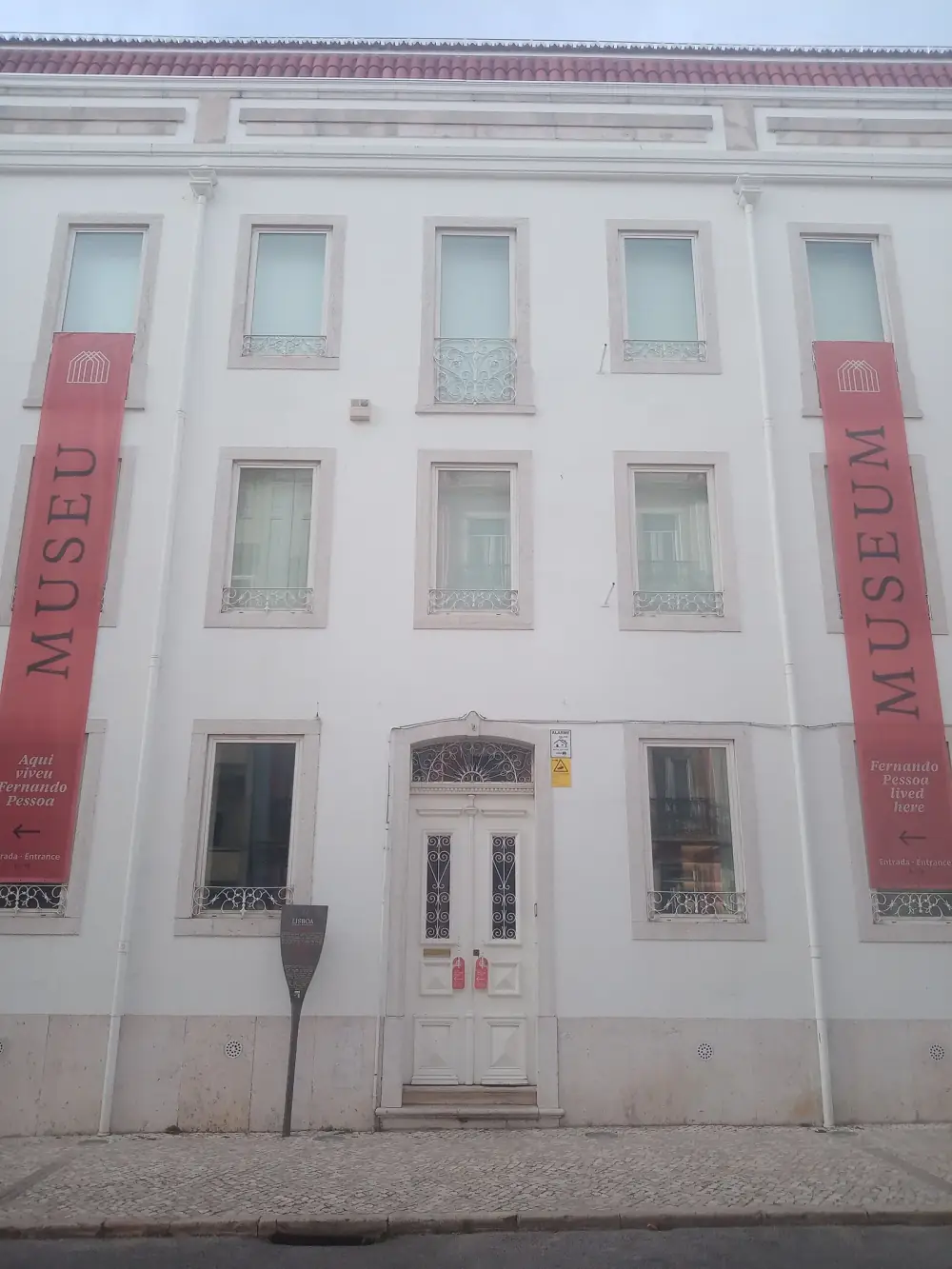
The second series, Palavras Vivas, which RTP calls poetry for everyone, was a set of documentaries, mostly on a single writer each. One programme on Fernando Pessoa begins with Viegas sitting on the stairs of number 16 Rua Coelho da Rocha, where Pessoa lived. Others covered Mário de Sá-Carneiro, Camilo Pessanha, Cesário Verde, Almada Negreiros, António Aleixo and lesser-known figures such as Pedro Oom. RTP dates the series to 1991, as does Silva for the Pessoa programme with its long reading of “Tabacaria”; Voz Online gives 1990.
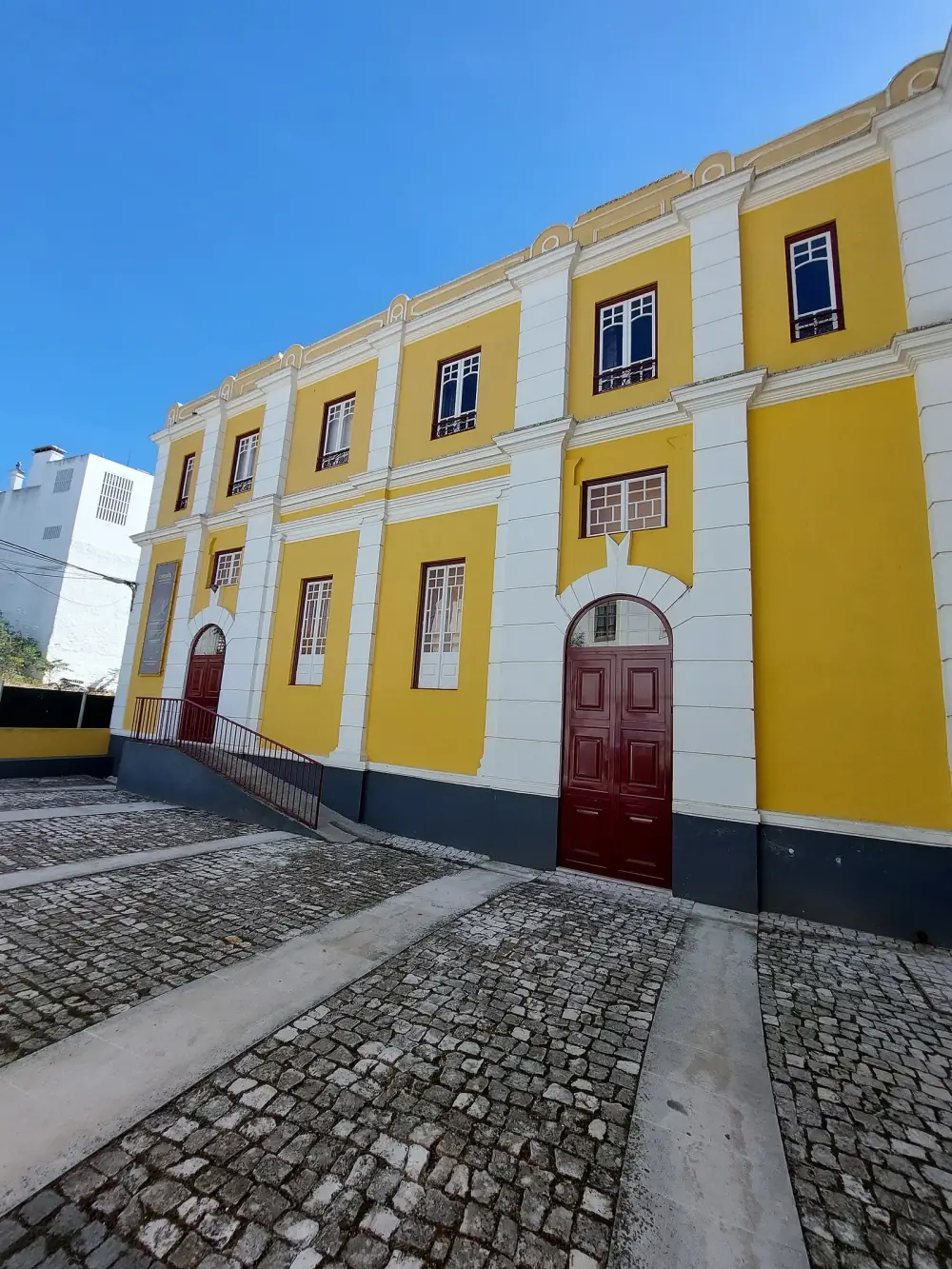
Two programmes went home to Santarém. One was on the poet Ruy Belo, born there like Viegas. The other, recorded in the Teatro Taborda, where RTP says Viegas had made his debut, was on three poets he had known: José Gomes Ferreira, the singer José Afonso and Raul de Carvalho.
“Saying poetry is 80 per cent of what I have done.”
“The dream to power”
By the 1990s his politics were aimed at the government of Aníbal Cavaco Silva, prime minister since 1985. He adapted Almada Negreiros's modernist Manifesto Anti-Dantas, putting Cavaco's name in place of the writer Júlio Dantas. The UDP's Mário Tomé recalled the cover he gave it, which rebranded the UDP as a union of poets, humorists, futurists, revolutionaries and good people.
Europa Não! Portugal Nunca!, staged by the Companhia Teatral do Chiado in 1995, was his last theatrical success. Tomé described it as an attack on the last gasps of Cavaco's government and on Pedro Santana Lopes, the Secretary of State for Culture it mocked from the stage.
For the general election of October 1995 he joined the UDP's list as an independent, third in line. In the same year he announced that he would stand for President of the Republic under the slogan “O Sonho ao Poder”, the dream to power, and found some support among Lisbon university students. His illness made it impossible to go to the polls.
He was also openly gay. The Lusa report on a 2015 photobiography says the book shows him as openly homosexual at a “difficult” time. Biographies give AIDS as the cause of his death.
What happened to his name
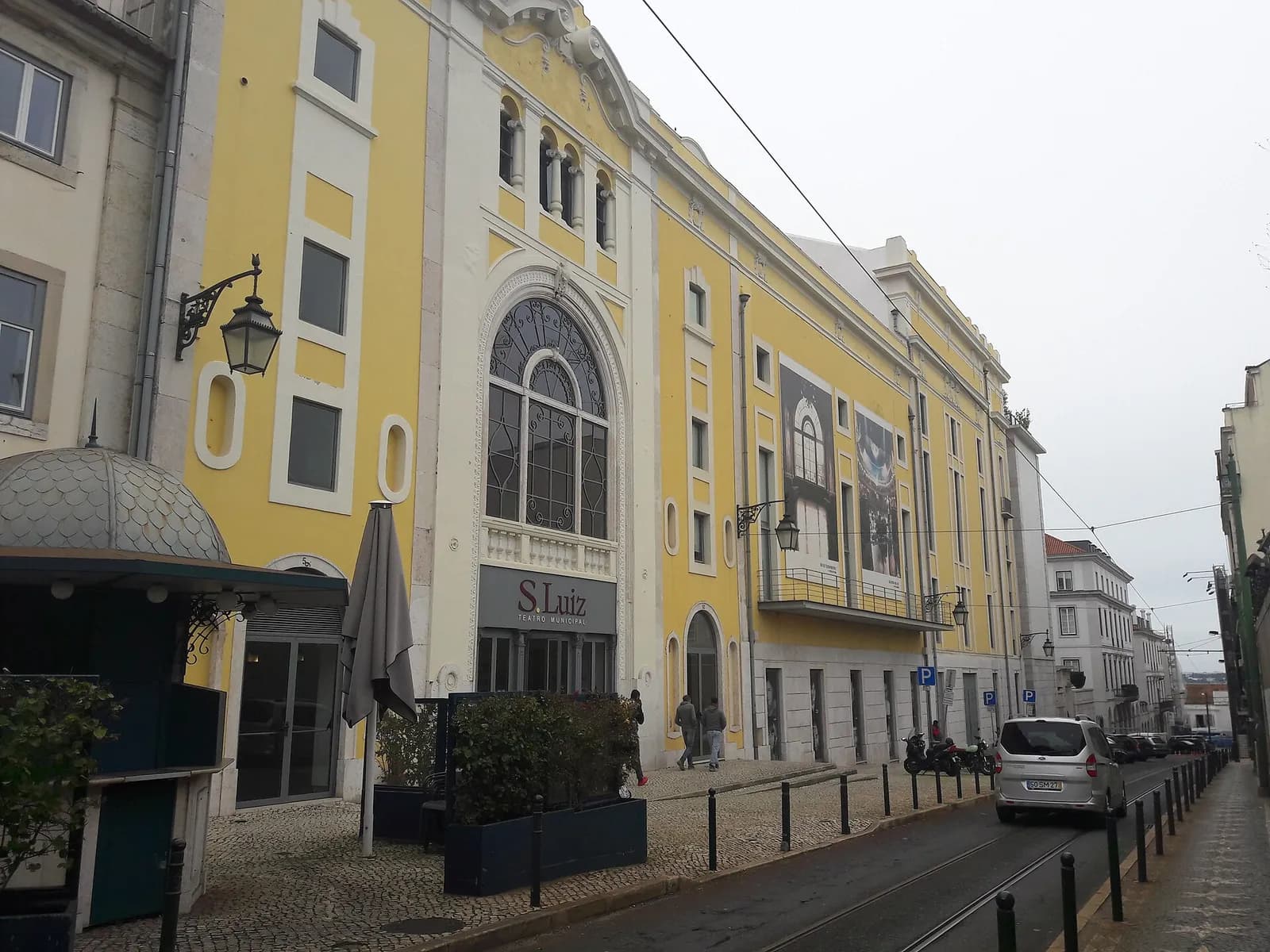
Juvenal Garcês took over the Companhia Teatral do Chiado. Low after Viegas's death, he staged The Complete Works of William Shakespeare (Abridged) in 1996, cheaply and on purpose, and it ran for years. The company's home was a studio theatre annexed to the São Luiz, the Teatro-Estúdio Mário Viegas, owned by Lisbon City Council.
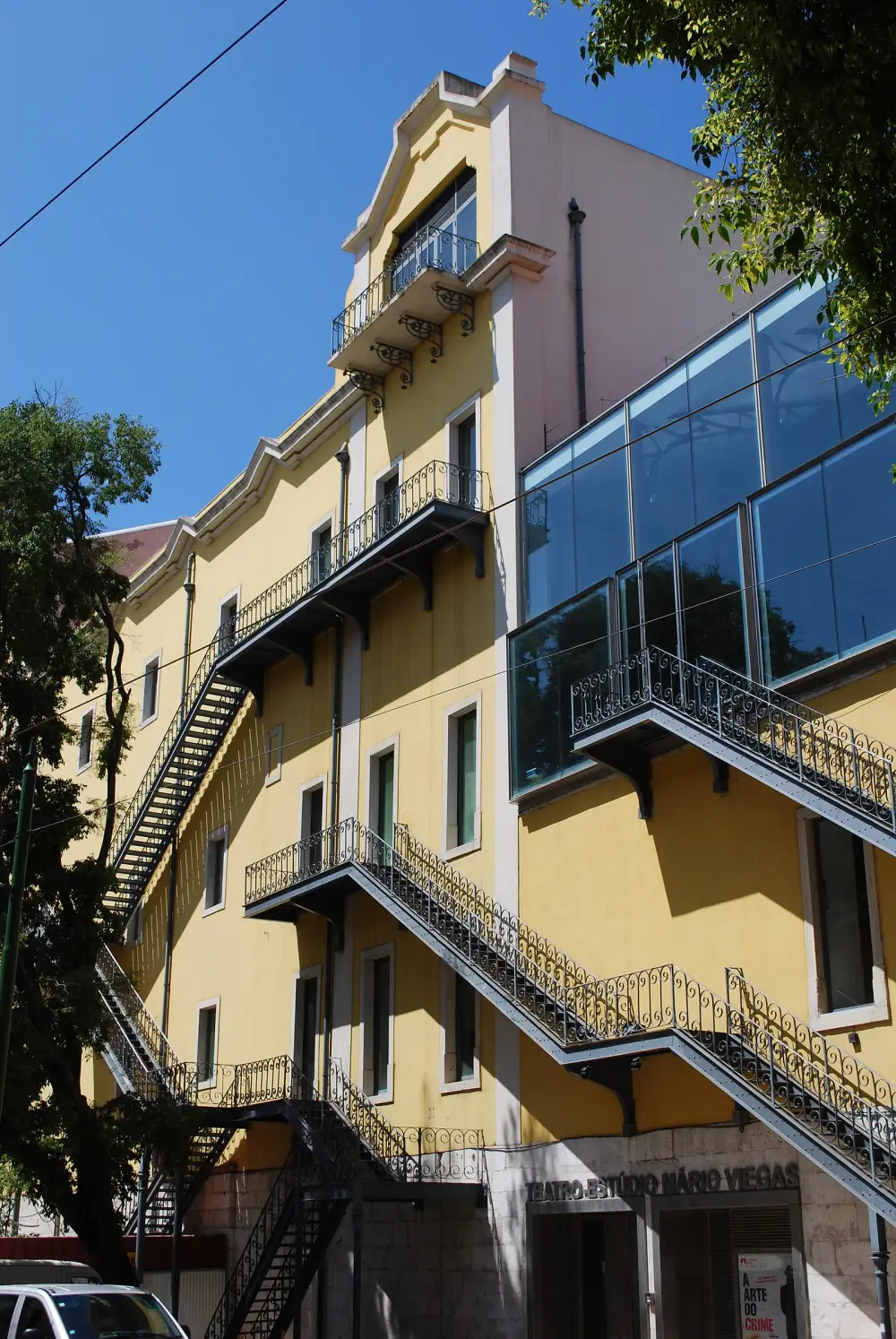
Garcês lost that space after closures for building work and disputes with the council, and the company eventually dissolved; he died in 2020. The council's decision forced the removal of Viegas's papers, which belonged to the company. The room survives as the Sala Mário Viegas, the São Luiz's black box, with 102 seats.
10 November 1948
Born in Santarém
12 March 1966
First public poetry recital, in Santarém
1968
Professional debut at the Teatro Experimental de Cascais
1969
First record, Mário Viegas diz poemas; recitals in Porto
1971
Sent to the army camp at Mafra on PIDE orders
1972
LP Palavras Ditas
1975 to 1976
Helps found A Barraca; first show on 4 March 1976
1979
Prize at Sitges for D. João VI
1984
RTP series Palavras Ditas (some sources say 1986)
1990 or 1991
Founds the Companhia Teatral do Chiado with Juvenal Garcês
1991
RTP series Palavras Vivas, including Fernando Pessoa (some sources say 1990)
9 June 1994
Commander of the Order of Prince Henry
1995
Europa Não! Portugal Nunca!; UDP candidate for parliament; presidential bid announced
1 April 1996
Dies in Lisbon, aged 47
2001
Exhibition at the Museu Nacional do Teatro
2003
Santarém creates a national poetry prize in his name
2006
Público issues his complete recordings in 14 volumes
The memorials came steadily. The Museu Nacional do Teatro showed his photographs and manuscripts in 2001, and the Sociedade Portuguesa de Autores showed them again in 2006, when Público issued his complete recordings. In 2003 the Centro Cultural Regional de Santarém created the Prémio Nacional de Poesia Actor Mário Viegas for unpublished poetry, though money troubles meant only four editions by 2018.
Other tributes followed. His “Auto-Photo Biografia (não autorizada)”, a scrapbook memoir he made before he died, was published by his sister. A photobiography, Sonho ao Poder, appeared in 2015, the 1969 tapes were being edited as an audiobook in 2021, and in late 2025 the Teatro Municipal Joaquim Benite in Almada showed photographs from the archive he gave the Museu Nacional do Teatro e da Dança.
“Few people in Portugal have been worth as much.”
Why he is still heard
His voice is easy to find. RTP keeps episodes of Palavras Ditas and Palavras Vivas online, among them the Pessoa programme that opens on the stairs of Rua Coelho da Rocha.
His manner of saying poetry also outlived him. Silva's thesis argues that Viegas, like Villaret, founded a “school” of reciting with many imitators, and that the two were alone in doing it everywhere at once: television, film, theatre, radio, recitals and records.
FAQs
Who was Mário Viegas?
A Portuguese actor, stage director and reciter of poetry, born in Santarém in 1948. He recorded about ten albums of poetry, presented the RTP series Palavras Ditas and Palavras Vivas, acted in more than 15 films and founded three theatre companies, the last the Companhia Teatral do Chiado.
When and how did Mário Viegas die?
He died in Lisbon on 1 April 1996, aged 47. Biographies give AIDS as the cause of death.
Did Mário Viegas run for President of Portugal?
He announced a presidential bid in 1995 with the slogan “O Sonho ao Poder”, the year he stood for parliament on the UDP's list. Illness stopped him, and he was not on the ballot in 1996, when Jorge Sampaio was elected.
Which poets did Mário Viegas record?
Many, from Camões to his contemporaries. His records include a double LP of Fernando Pessoa's Alberto Caeiro, O Guardador de Rebanhos (1983), and an album with the poet Daniel Filipe. On television he devoted programmes to Pessoa, Sá-Carneiro, Cesário Verde, Camilo Pessanha, Almada Negreiros, Eugénio de Andrade and Mário-Henrique Leiria, among others.
Is there a theatre named after Mário Viegas?
Yes, a hall rather than a building. The studio theatre of the São Luiz in Lisbon, once the Teatro-Estúdio Mário Viegas where his company worked, is now the Sala Mário Viegas, a 102-seat black box. Santarém has the Fórum Actor Mário Viegas.
On the timeline
Open the timelineNearby moments from portugal in europe (1986–today).
Miguel Torga, pen name of the Coimbra doctor Adolfo Correia da Rocha, dies aged 87. The fiercely independent author of 'Bichos' and of a 16-volume 'Diário' was the first winner of the Camões Prize, in 1989, and lies in a simple grave in his native village of São Martinho de Anta, in Trás-os-Montes.
The Schengen Convention takes effect for Portugal and six other countries — Spain, France, Germany and the Benelux states — lifting routine passport checks at their shared borders, including Portugal's long frontier with Spain.
The Socialist Party under António Guterres wins the legislative election with 43.8 per cent of the vote, ending ten years of Social Democrat government under Aníbal Cavaco Silva, though falling short of an absolute majority.
The death of Mário Viegas
Death of Mário Viegas, aged 47, one of Portugal's greatest actors and poetry reciters. He founded three theatre companies and was celebrated for his recordings of Fernando Pessoa and other major Portuguese poets. A hall of Lisbon's São Luiz theatre bears his name.
Marshal António de Spínola, the first President of the Republic after the Carnation Revolution of 25 April 1974, dies in Lisbon aged 86.
Expo '98 opens in Lisbon on the theme 'The Oceans, a Heritage for the Future,' celebrating the 500th anniversary of Vasco da Gama's voyage. The exposition transforms the eastern waterfront into the modern Parque das Nações neighbourhood.
Portuguese voters narrowly reject the decriminalisation of abortion in the country's first national referendum since the 1933 Estado Novo constitution. With turnout below the 50% threshold, the result is constitutionally non-binding, but the political debate it opens shapes a decade of family-law reform leading to the 2007 referendum that finally liberalises the law.
Coming up in history
All long reads 3 April 1954Aristides de Sousa Mendes: the consul who defied Salazar dies poor, 1954
 4 April 1819Maria II: the queen born in Rio who fought for her throne
 5 April 1883Sampaio Garrido: the Portuguese envoy who sheltered Jews in Budapest
 6 April 1385The Cortes of Coimbra elect João I king of Portugal, April 1385
24 sources
Archives, scholarship and reporting this article was checked against.
- 1
Registos sonoros de interpretação poética: análise dos modos de dizer poesia em Portugal, a partir das gravações em disco (José António Geraldo Marques da Silva, PhD thesis)Universidade de Coimbra, Faculdade de Letras, 2016
- 2
Mário Viegas: biografiaTKB Knowledge Base for the Performing Arts, Faculdade de Ciências Sociais e Humanas, Universidade NOVA de Lisboa
- 3
25 anos sem Mário ViegasVoz Online, April 2021
- 4A Barraca: há 40 anos a sobreviver ao “austeritarismo”Diário de Notícias, 4 March 2016
- 5Palavras Vivas (Mário Viegas): episódiosRTP
- 6
“Falharam os três D” (testimony of Mário Viegas), in O Futuro Era Agora: o movimento popular do 25 de AbrilEdições Dinossauro, 1994, coordinated by Francisco Martins Rodrigues (transcribed by the Marxists Internet Archive)
- 7Morreu o ator e encenador Juvenal GarcêsDiário de Notícias, 4 August 2020
- 8
Exposição “A Graça da Desgraça” sobre Mário Viegas até dezembro em AlmadaNotícias ao Minuto / Lusa, 30 October 2025
- 9
Europa não, Portugal nunca. Viegas sempre! (Mário Tomé)A Comuna, magazine of the UDP
- 10Bloco de Esquerda (explainer)Observador
- 11
Mário Viegas, “o actor em estado geral de graça”Comunidade Cultura e Arte, 5 August 2020
- 12Mário Viegas (documentary)RTP
- 13
Entidades nacionais agraciadas com ordens portuguesas (search: Maria Odette Santos Ferreira)Presidência da República, Ordens Honoríficas Portuguesas
- 14Fotobiografia de Mário Viegas, “Sonho ao Poder”, lançada no Museu do TeatroObservador / Lusa, 25 June 2015
- 15Gravações inéditas de Mário Viegas levadas para a guerra, descobertas e editadasRTP Notícias / Lusa, March 2021
- 16
Virtual tour: the spaces of the São LuizSão Luiz Teatro Municipal
- 17Nuno Figueiredo venceu o Prémio Nacional de Poesia Mário Viegas com “Epifanias”RTP Notícias / Lusa, October 2018
- 18
Descobrir Mário Viegas como autorJornal de Notícias, 5 April 2006
- 19Palavras Ditas (por Mário Viegas)RTP
- 20A Dificuldade está na Escolha: Poesia Portuguesa I (Palavras Ditas, episode 1 of 12)RTP
- 21Palavras Ditas (por Mário Viegas): episódiosRTP
- 22Palavras Vivas (Mário Viegas)RTP
- 23Os Amigos (Palavras Vivas, episode 5)RTP
- 24Sampaio e o discurso do diálogo e da estabilidadeRTP Notícias / Lusa
Image credits
- The Teatro São Luiz in Chiado, Lisbon, in 2018. Its small studio theatre, once the home of Mário Viegas's last company, is now called the Sala Mário Viegas. Hipersyl, CC BY-SA 4.0, via Wikimedia Commons.
- The Teatro Cinearte in Largo de Santos, Lisbon, in 2021. A Barraca, the company Viegas helped found, has worked here since 1989. GualdimG, CC BY-SA 4.0, via Wikimedia Commons.
- The Casa Fernando Pessoa museum in Rua Coelho da Rocha, Campo de Ourique, in 2024. Viegas began his Palavras Vivas programme on Pessoa sitting on the stairs of number 16 in this street, the building where the poet lived. JnpoJuwan, CC0, via Wikimedia Commons.
- The Teatro Taborda in Santarém, in 2023. Viegas, who had made his debut here, came back to record a Palavras Vivas programme on José Gomes Ferreira, José Afonso and Raul de Carvalho. Threeohsix, CC BY-SA 4.0, via Wikimedia Commons.
- The side entrance of the São Luiz in Chiado with the sign of the Teatro-Estúdio Mário Viegas, in May 2009. Concierge.2C, CC BY-SA 3.0, via Wikimedia Commons.