

Aristides de Sousa Mendes: the consul who defied Salazar dies poor, 1954
In June 1940 Portugal's consul in Bordeaux stamped visas for anyone who asked, against his government's orders. Salazar ended his career, and he died in a charity hospital in Lisbon fourteen years later, still in disgrace.
At a glance
- Aristides de Sousa Mendes (1885 to 1954) was a career consul of the Estado Novo. In June 1940, as consul in Bordeaux, he gave Portuguese transit visas to refugees fleeing the German advance, against the rules of Circular 14 of 11 November 1939.
- Circular 14 barred consuls from granting visas without Lisbon's prior consent to stateless people, holders of Nansen passports, Russians, people who could not return home and Jews expelled from their countries.
- Nobody knows how many visas he signed. The Bordeaux register records 2,862 visas from January to 22 June 1940, but visas given in Bayonne, Hendaye and on the street were not written down. The often-quoted 30,000 people saved cannot be confirmed.
- Salazar, who was also foreign minister, sentenced him on 30 October 1940 to a year of inactivity on half pay followed by compulsory retirement. He died poor on 3 April 1954 in the Lisbon hospital of the Franciscan Third Order.
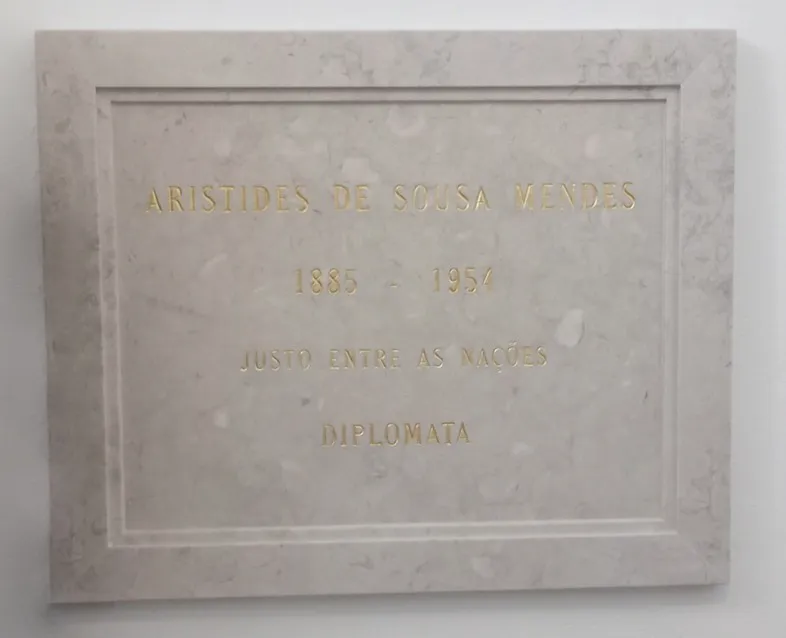
- Yad Vashem recognised him as Righteous Among the Nations in 1966. Portugal's parliament reinstated him in the diplomatic service in 1988, and a plaque in his name was unveiled in the National Pantheon on 19 October 2021.
Three days in a darkened room
For three days in June 1940, his family later said, the consul did not leave his bedroom. The Portuguese consulate in Bordeaux was at No. 14 Quai Louis XVIII, on the river front, and Aristides de Sousa Mendes lived in the same building with his wife, Angelina, and several of their children. Outside, the streets were full of people who had fled the German armies and wanted one thing from him: a stamp in their passports that would let them cross Spain to Lisbon.
His son Pedro Nuno remembered how it ended, on the morning of 17 June. His father got up calmer and full of energy, washed, shaved and dressed, opened the door of the chancery and said in a loud voice that from then on he would give visas to everyone who asked, whatever their nationality, race or religion.
“I declare that I will give, free of charge, a visa to whoever requests it.”
For about a week he and his staff signed visas for anyone who came, first in Bordeaux and then at the border. It cost him his career. Fourteen years later, on 3 April 1954, he died in Lisbon in the hospital of the Franciscan Third Order, a charity hospital for the poor, partly paralysed and with most of his children abroad.
A Catholic gentleman in Salazar's service
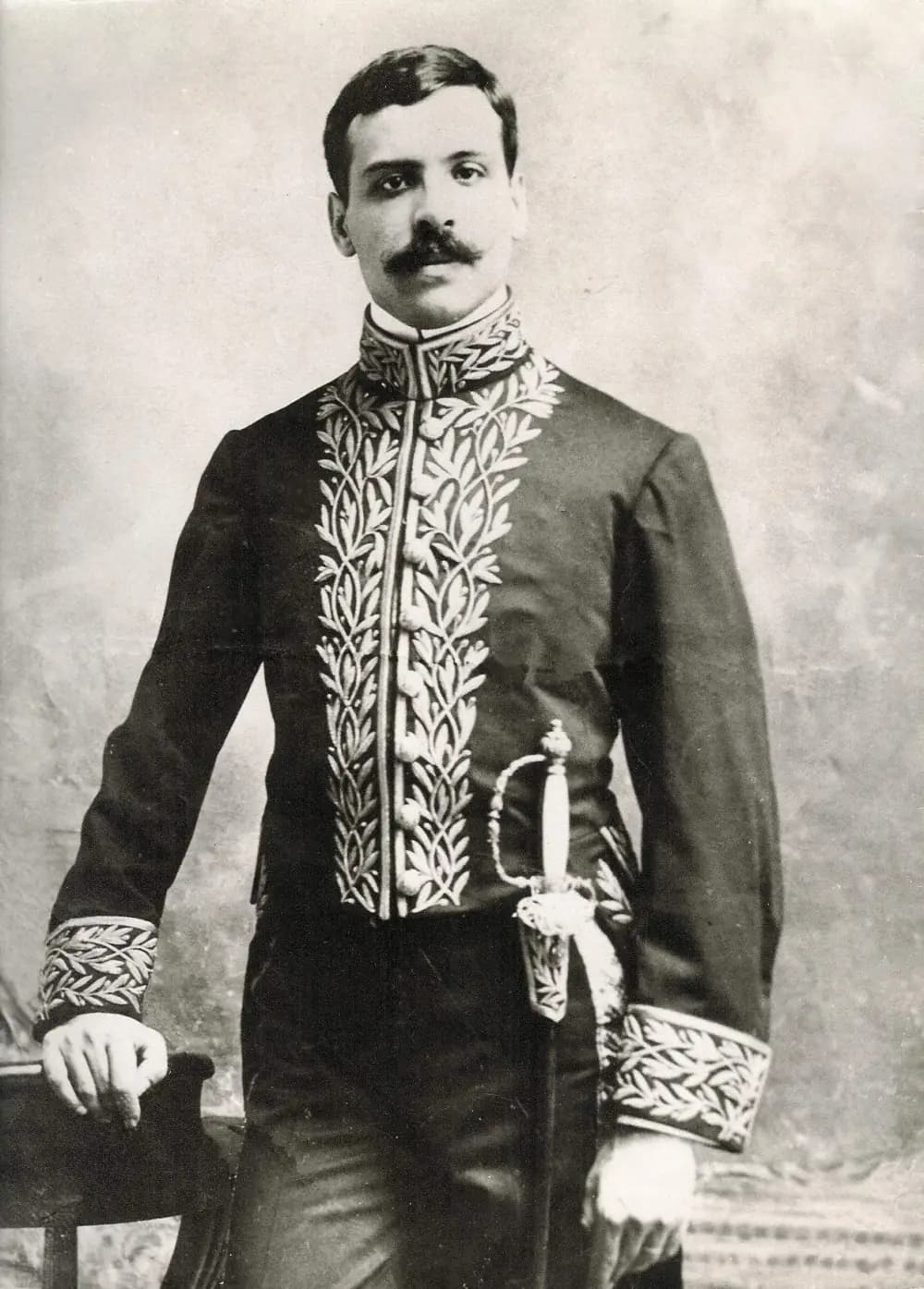
Sousa Mendes was an unlikely rebel. He was born on 19 July 1885 in Cabanas, now Cabanas de Viriato, a village near Viseu in the Beira Alta, a few hours after his twin brother César. The family was Catholic and aristocratic, and their father was an appeal court judge in Coimbra. Both twins studied law at the University of Coimbra, graduated in 1907 and entered the foreign service in 1910, in the last months of the monarchy.
His career took him around the world. He was consul in Demerara in British Guiana, Zanzibar, Curitiba, San Francisco, São Luís do Maranhão and Porto Alegre, then Vigo from 1927 and Antwerp from 1929 to 1938. He had fifteen children, fourteen of them with Angelina, and the family travelled with him from post to post. The money never stretched far enough, and he often wrote to Lisbon asking for allowances.
He was a conservative and a devout Catholic. In 1927 he told a Spanish newspaper that the military coup of 1926 had answered a national aspiration, and in Vigo he watched Portuguese republicans plotting in Galicia. His brother César was foreign minister in 1932. Two disciplinary cases in Belgium were dropped, and in 1938 the ministry sent him to Bordeaux.
Circular 14 and the first broken rules
Portugal wanted refugees to pass through, not stay. From 1936 Russians, stateless people and holders of Nansen passports, the travel papers the League of Nations issued to refugees, could no longer get residence permits. In October 1938, after Germany annexed Austria, a ministry directive said Jewish emigrants could enter only as tourists, and only for 30 days.
Two months after the war began, the ministry sent its posts Circular 14, dated 11 November 1939. Its stated aim was to prevent abuses that the PVDE judged inconvenient or dangerous. Career consuls could no longer give a visa without the ministry's prior authorisation to the groups it listed.
| Category in the circular | What it meant in practice |
|---|---|
| Foreigners of undefined, contested or disputed nationality, the stateless, holders of Nansen passports and Russians | Covered refugees stripped of their nationality, such as many Jews expelled from Germany |
| Foreigners who could not give the consul a satisfactory reason for coming, or whose passports showed they could not return freely to the country they came from | Consuls were also told to check that foreigners had the means to live |
| Jews expelled from the countries of their nationality or from those they came from | Jews were named as a group |
| People going to embark at a Portuguese port without a visa for their destination, a ticket or a shipping company's guarantee | Transit was meant to be short |
The same circular told consuls to take great care not to hinder passengers bound for other countries, especially on the transatlantic air routes or to the East.
Sousa Mendes broke the rule within days. On 21 November 1939 he stamped the passport of Arnold Wiznitzer, an Austrian Jew, and asked Lisbon for permission afterwards, on 27 November and 6 December. The family reached Portugal and sailed for Brazil. In March 1940 the police turned back at Lisbon a Spanish Republican doctor, Eduardo Neira Laporte, holding a visa from Bordeaux. In April the ministry warned the consul that any new offence would be treated as disobedience.
As Germany overran the Low Countries in May 1940, Lisbon tightened again. Circular 17 of 17 May said no visa at all could be given without prior authorisation. A telegram to Bordeaux on 22 May, signed by the minister, warned that requests would be granted only in exceptional cases and that quick decisions should not be expected.
Bordeaux and Bayonne, 17 to 24 June 1940
In June the French government itself retreated to Bordeaux, followed by millions of people on the roads. Accounts of the city's swollen population vary: from about 300,000 to more than 700,000 in Rui Afonso's biography, and to some two million in Maria Raquel Andrade's. Many of those queueing at the consulates were Jews; others were Belgians, Dutch, French, Poles and Czechs.
On 13 June Sousa Mendes asked Lisbon for a visa for Chaim Kruger, a Polish rabbi whom he had taken into his home with the rabbi's wife and children, and was refused. Kruger, the family remembered, told him that help for himself alone was not enough while all his brethren were in danger. The next day the Germans entered Paris, and Circular 23 ordered consuls to send visa requests straight to the PVDE.
On 16 June Francisco de Calheiros e Menezes, Portugal's minister to Belgium, called on his way home and found the consul in his room, visibly tired and shaken. The consulate still seemed to work normally. Accounts differ. His son dated the days in bed from 14 June. The historian Cláudia Ninhos dates the decision to disobey to after Calheiros's visit, while Manuela Franco reads the register's drop to 40 visas on the 16th as the day he called in sick and stopped waiting for Lisbon.
From the 17th the work went on from morning until the small hours. The chancery secretary, José de Seabra, one of the consul's sons and a nephew helped, and many surviving visas carry Seabra's signature. Rabbi Kruger collected passports in batches. In the last days names were no longer written down, and in the end nothing was recorded.
Visas entered in the Bordeaux consulate's register, 11 to 22 June 1940
visas per day
Daily entries in the register of visas kept at the Bordeaux consulate, as counted by Manuela Franco for the Foreign Ministry's Spared Lives exhibition (2000). For 19 to 22 June she gives only an average. Visas signed in Bayonne, Hendaye or on the street were never registered, so the true numbers were higher.
Show the data
| Visas registered | |
|---|---|
| 11 June | 67 |
| 12 June | 47 |
| 13 June | 6 |
| 14 June | 173 |
| 15 June | 112 |
| 16 June | 40 |
| 17 June | 247 |
| 18 June | 216 |
| 19 to 22 June (daily average) | 350 |
Bayonne, more than 200 kilometres away by road, had its own crowd. Sousa Mendes drove there on 18 or 19 June. He later said the consul, Faria Machado, had been phoning for instructions for days, with about 5,000 people waiting in the street. He proposed that Machado visa every passport without charging fees or registering it. Calheiros, who was there, testified that Sousa Mendes claimed Lisbon's authority and that Machado resisted before giving way. Sousa Mendes also let the honorary vice-consul in Toulouse give transit visas to anyone with a visa for the Americas, and he signed more himself at Hendaye, on the border.
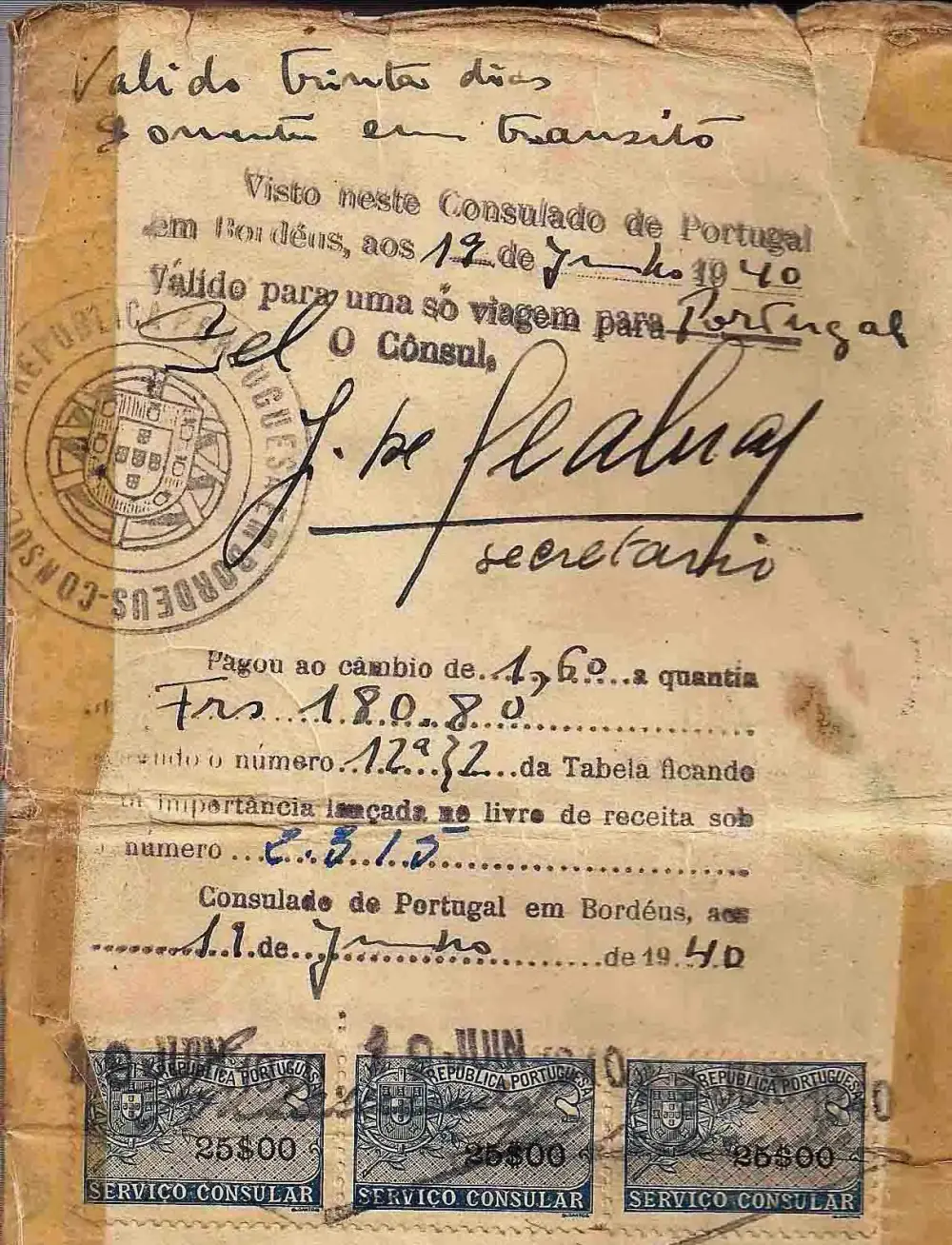
“He gave the visas without any formality, sometimes without the consulate's stamp, others written in French, many in his own car, outside his district, at the station, at the frontier itself.”
Lisbon caught up quickly. On 20 June the British embassy complained that the Bordeaux consulate was charging extra for visas issued after hours. On the 21st Faria Machado telegraphed from Bayonne, reporting Sousa Mendes's orders and asking for instructions. On the 22nd the ministry stripped Sousa Mendes of the power to issue visas. Armando Lopo Simeão, a ministry official, was sent to Bayonne, and the ambassador in Madrid, Pedro Teotónio Pereira, reached the border on the night of the 22nd.
On Sunday 23 June the two men met the consul by chance at Hendaye. Teotónio Pereira later described a disturbed man who had lost the use of reason; Simeão called the visas an act of madness and the refugees an ignoble mass, largely undesirable from a social point of view. Teotónio Pereira told the Spanish authorities that Lisbon had annulled the visas Sousa Mendes had signed, and on 24 June the ministry ordered him home. He stayed until 9 July and, witnesses said, helped more refugees across the border.
11 November 1939
Circular 14 restricts visas for refugees, the stateless and Jews
21 November 1939
First known breach: a visa for Arnold Wiznitzer before Lisbon's reply
17 May 1940
Circular 17: no visa at all without prior authorisation
13 June 1940
Lisbon refuses a visa for Rabbi Chaim Kruger
14 June 1940
Germans enter Paris; Circular 23 hands visa requests to the PVDE
17 June 1940
Sousa Mendes begins issuing visas to all who ask
18 or 19 June 1940
He orders free visas at the Bayonne consulate
20 to 22 June 1940
British complaint, telegram from Bayonne, power to issue visas withdrawn
23 June 1940
Teotónio Pereira and Lopo Simeão find him at Hendaye
24 June 1940
Ordered back to Lisbon; his visas are annulled
How many visas? Thousands, not a known number
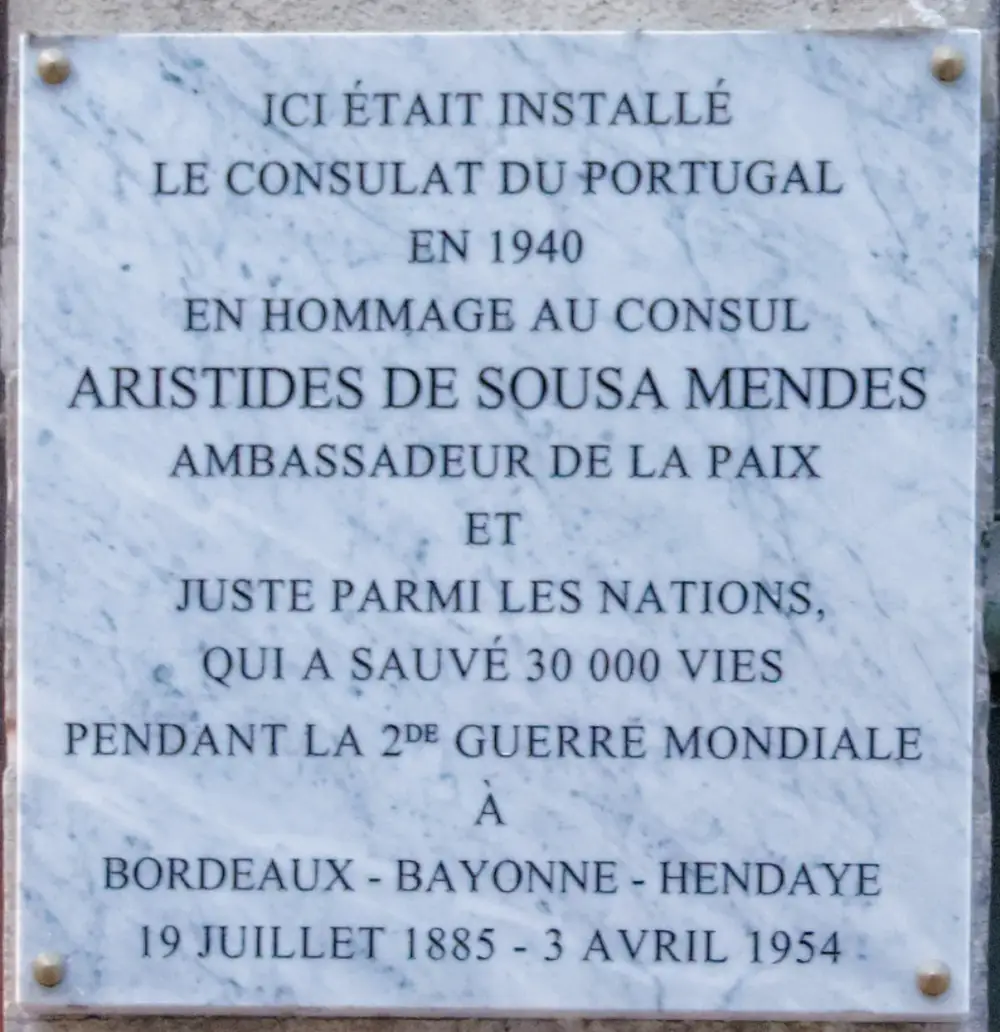
The figure most often repeated is that Sousa Mendes saved 30,000 people, 10,000 of them Jews. The historian Avraham Milgram traced its spread to an article by Harry Ezratty in the magazine Jewish Life in 1964. Olivia Mattis, president of the Sousa Mendes Foundation, writes that the figure is impossible to confirm but can be traced back to the 1940s, and argues that it is of the right order of magnitude.
The firmest number comes from the Bordeaux register of visas. A vice-consul found it at the consulate in 1987; it is now in the Foreign Ministry's archive and, since 2017, on UNESCO's Memory of the World register. Milgram counted 2,862 visas in it between the start of 1940 and 22 June, most of them in June. That count misses whatever was signed in Bayonne, Hendaye and Toulouse. One visa could also cover a whole family, because children travelled on a parent's passport.
| Figure | What it counts | Source |
|---|---|---|
| 30,000 people, 10,000 of them Jews | People said to have been saved; impossible to confirm | Harry Ezratty, Jewish Life, 1964, per Milgram; Mattis traces it to the 1940s |
| 2,862 visas | Visas in the Bordeaux register, 1 January to 22 June 1940, excluding Bayonne, Hendaye and Toulouse | Avraham Milgram's count, cited by Cláudia Ninhos |
| About 2,000 names | Passport holders listed in the register, without family members | Olivia Mattis, 2015 |
| About 3,900 people | Visa recipients identified by name by the Sousa Mendes Foundation by 2015 | Olivia Mattis, 2015 |
| “Many hundreds” | Visas he remembered being signed, in Bordeaux and Hendaye | José de Seabra, chancery secretary in 1940, interviewed in 1987 |
| About 5,000 | People waiting in the street outside the Bayonne consulate | Sousa Mendes's own defence, August 1940 |
Manuela Franco, who studied the register for the Foreign Ministry, concluded that we will never know how many visas he issued.
What the evidence supports is thousands of visas in a few days, many of them for people the rules shut out. How many people crossed on them is still argued over. The refugees who reached Portugal were mostly let in: Spain would not take them back, and the PVDE chief, Agostinho Lourenço, testified that most of those he saw at Vilar Formoso held visas from Bordeaux. Others, still in France when Teotónio Pereira annulled the visas, were stranded.
“perhaps the largest rescue action by a single individual during the Holocaust”
Tried for disobedience
On 30 June the ministry's director-general of economic and consular affairs, the Count of Tovar, listed the consul's offences and proposed a disciplinary process. Salazar ordered it in a note he signed on 4 July. The charges were four: disobedience, forgery of documents, abandoning his post and extortion.
His written defence, dated 10 August, did not use the chaos or his own exhaustion as an excuse. He answered each charge in turn. He said the chancery had worked from nine in the morning until the small hours without charging the after-hours fee, apart from one payment from Robert Rothschild, whose passport he stamped on a Sunday. Then he set out why he had done it.
“It was indeed my aim to save all these people, whose suffering was indescribable: some had lost their spouses, others had no news of missing children, others had seen their loved ones succumb to the German bombings…”
He could not, he wrote, make distinctions between nationalities, because he obeyed reasons of humanity that distinguish neither race nor nationality. The investigating officer, Francisco de Paula Brito Júnior, proposed a suspension of 30 to 180 days and noted that the consul had acted under obvious nervous depression. Tovar wanted inactivity and demotion. On 29 October the ministry's disciplinary council proposed demoting him one grade.
The decision was Salazar's. On 30 October 1940 he sentenced Sousa Mendes to a year of inactivity on half pay, to be followed by compulsory retirement from the diplomatic service. The sentence was published in the official gazette days later. The file ended up in a sealed envelope in the ministry's archive, where it stayed until 1976.
- Process ordered
- 4 July 1940, by Salazar as foreign minister
- Charges
- Disobedience, forgery of documents, abandoning his post, extortion
- Investigator's proposal
- Suspension of 30 to 180 days
- Disciplinary council, 29 October
- Demotion by one grade
- Sentence, 30 October 1940
- One year of inactivity on half pay, then compulsory retirement
- Overturned
- A ministerial ruling of 1977 called the penalty illegal but was never published; parliament reinstated him in 1988
Fourteen years of letters, debts and silence
Half pay for a year, then a small pension, could not keep a family of his size. In 1941 he was allowed to register as a lawyer, but he never practised. In May 1945 a brain haemorrhage left him paralysed on his right side. His retirement pension of 1,595.30 escudos was, he told the Bar Association, not enough to feed the people who depended on him.
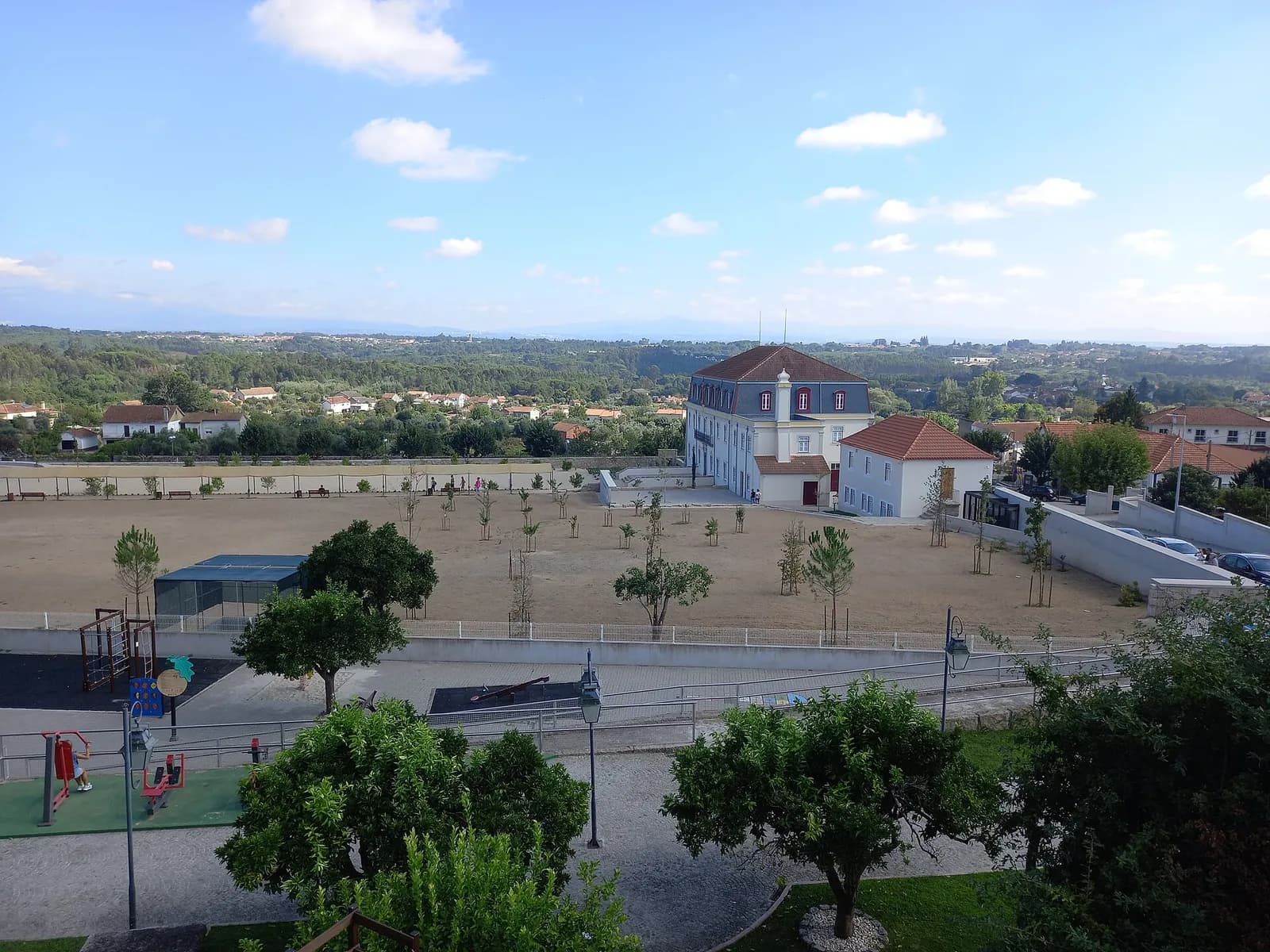
The family took meals at the soup kitchen run in Lisbon by the Jewish community's refugee aid organisation, which was paid for by the American Jewish Joint Distribution Committee. One by one his children left the country; the two sons born in California fought for the Allies. The family house in Cabanas, the Casa do Passal, had to be given up to pay debts.
He never stopped asking for his case to be reopened. He wrote to President Óscar Carmona, to Salazar and to the National Assembly. In a long letter of December 1945 he argued that the orders against Jews broke article 8 of the 1933 constitution, which guaranteed freedom of belief, and called the government's policy unconstitutional, unneutral and contrary to humanity. A British embassy note of October 1945 describing his poverty was marked at the ministry with one word in the margin: arquivar, “file it”.
Salazar, meanwhile, told the National Assembly on 18 May 1945 that anyone in Portugal's place would have taken in refugees, and added: “Pena foi não termos podido fazer mais” (“It was a pity we could not have done more”). The regime presented the welcome given to the refugees as its own work. A school textbook of 1960 still called Portugal an oasis of peace that had taken in 38,697 foreigners in 1940 alone.
Angelina died in 1948. In 1949 he married Andrée Cibial, the Frenchwoman with whom he had a daughter born in 1940, and asked to emigrate to California to join five of his children; he never went. He died on 3 April 1954. The Sousa Mendes Foundation says he was buried in a Franciscan habit because he had no suitable clothes of his own. His grave is in the family vault at Cabanas de Viriato.
Jerusalem first, Lisbon much later
Recognition came first from abroad. In 1966 Yad Vashem, the Holocaust memorial in Jerusalem, recognised him as one of the Righteous Among the Nations, after a campaign by his children and Rabbi Kruger. His daughter Joana wrote to Salazar about it in February 1968 and to the ministry that August.
After the revolution of 25 April 1974 the case moved slowly. In May 1976 a diplomat, Nuno Bessa Lopes, opened the sealed envelope that held the disciplinary file and called it a case of high significance in Portuguese diplomatic history. The foreign minister, Melo Antunes, ordered the case treated urgently. A ministerial ruling of 19 January 1977 found the forced retirement illegal and reinstated him posthumously, but it was never published.
President Mário Soares made him an officer of the Order of Liberty posthumously, in 1986 according to the government and in 1987 according to Ninhos. On a bill brought by the opposition deputy Jaime Gama, the Assembleia da República voted unanimously in 1988 to reinstate Sousa Mendes in the diplomatic career with the rank of ambassador and to compensate his direct heirs. The Grand Cross of the Order of Christ followed in 1995 and the Grand Cross of the Order of Liberty in 2016.
In 2020 parliament approved a proposal by the independent deputy Joacine Katar Moreira to grant him the honours of the National Pantheon. Nobody voted against: in the final vote on 3 July every other party was in favour and André Ventura, Chega's only deputy, abstained. On 19 October 2021 President Marcelo Rebelo de Sousa and the speaker, Eduardo Ferro Rodrigues, unveiled a plaque in room 2 of the Pantheon, the former church of Santa Engrácia, giving his name, his dates, “Justo entre as Nações” (Righteous Among the Nations) and “diplomata”. No tomb was installed, and his body stayed at Cabanas de Viriato.
Why he is remembered
His story contradicts the regime's account of Portugal's wartime neutrality. For decades the official version was that the country had opened its arms to refugees; the files show a government that tried to keep most of them out, and a consul who let them in against orders. In December 2021 the Foreign Ministry put an olive tree and a plaque to its rescuing diplomats in the cloister of its headquarters, the Palácio das Necessidades.
Manuela Franco argued that the visas he signed opened the door to most of the roughly 40,000 refugees who passed through Portugal in 1940. Many sailed from Lisbon to the Americas. Their descendants are still being traced by the Sousa Mendes Foundation, which by 2015 had identified about 3,900 visa recipients by name.
FAQs
How many people did Aristides de Sousa Mendes save?
Nobody knows exactly. The Bordeaux visa register records 2,862 visas from January to 22 June 1940, but visas signed in Bayonne, Hendaye and Toulouse were not entered in it, and one visa often covered a family. The Sousa Mendes Foundation has named about 3,900 recipients. The popular figure of 30,000 people cannot be confirmed.
What was Circular 14?
A Foreign Ministry instruction of 11 November 1939 that barred Portuguese consuls from granting visas without Lisbon's prior consent to stateless people, Nansen passport holders, Russians, people who could not return home and Jews expelled from their countries, among others.
How was Sousa Mendes punished?
After a disciplinary process for disobedience, Salazar sentenced him on 30 October 1940 to a year of inactivity on half pay followed by compulsory retirement. The disciplinary council had proposed a lesser penalty, demotion by one grade.
When and where did Aristides de Sousa Mendes die?
On 3 April 1954, in Lisbon, at the hospital of the Franciscan Third Order, a charity hospital for the poor. He is buried in the family vault at Cabanas de Viriato, where he was born.
Is Sousa Mendes buried in the National Pantheon?
No. Parliament granted him Pantheon honours in 2020, and on 19 October 2021 a plaque with his name was unveiled in room 2 of the Pantheon in Lisbon. His remains stayed in Cabanas de Viriato.
On the timeline
Open the timelineNearby moments from dictatorship and the estado novo (1926–1974).
Portugal and the United States sign the defence agreement in Lisbon granting the US Air Force use of the Lajes base in the Azores, cementing the islands' strategic role in the early Cold War.
Poet and teacher Sebastião da Gama dies of tuberculosis in Lisbon, aged just 27. The bard of the Serra da Arrábida, he wrote a letter in 1947 pleading for the hills' protection that led to the founding of the Liga para a Protecção da Natureza, Portugal's first environmental association.
The Batepá Massacre begins in São Tomé, as Portuguese colonial authorities and plantation interests unleash deadly violence against the native forro population; 3 February is commemorated in São Tomé and Príncipe as the Day of the Martyrs of Liberty.
Aristides de Sousa Mendes
Aristides de Sousa Mendes dies in poverty and disgrace at the Franciscan Hospital in Lisbon. As consul in Bordeaux in June 1940 he had defied Salazar's orders and issued visas to thousands of refugees fleeing the Nazis — 'perhaps the largest rescue action by a single individual during the Holocaust', in historian Yehuda Bauer's words.
Catarina Eufémia, a 26-year-old harvest worker from Baleizão in the Alentejo, is shot dead by a GNR lieutenant during a strike for higher wages, as she and other women approach workers brought in to break it. Most accounts say she was carrying her baby son. She became a symbol of resistance to the Estado Novo.
The Ponte de Santa Clara over the Mondego at Coimbra, designed by the engineers Edgar Cardoso and António Franco de Abreu, is inaugurated by Salazar, replacing the iron bridge of 1875.
General José Norton de Matos dies in his home town of Ponte de Lima aged 87. As war minister he built the expeditionary force sent to Flanders in 1917, as governor of Angola he founded the city of Huambo, and in 1949 he stood as the first opposition candidate for president against the Estado Novo, withdrawing before the vote.
Coming up in history
All long reads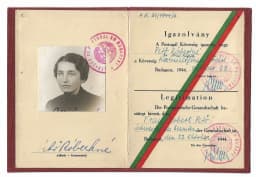 5 April 1883Sampaio Garrido: the Portuguese envoy who sheltered Jews in Budapest
 6 April 1385The Cortes of Coimbra elect João I king of Portugal, April 1385
 7 April 1541Francis Xavier sails from Lisbon for Asia, 7 April 1541
 8 April 1484Diogo Cão, the mouth of the Congo and João II's reward of 8 April 1484
16 sources
Archives, scholarship and reporting this article was checked against.
- 1
O Essencial sobre Aristides de Sousa MendesCláudia Ninhos, Imprensa Nacional-Casa da Moeda, Lisbon, 2021
- 2
Tribute to Dr. Aristides de Sousa Mendes (lecture, Embassy of Portugal, Washington, 30 November 2000)Manuela Franco, published by the Instituto Diplomático, Ministério dos Negócios Estrangeiros
- 3
- 4AristidesCláudia Ninhos, Diário de Notícias, 19 October 2021
- 5
Sousa Mendes's List: The Search for SurvivorsOlivia Mattis, Avotaynu Online, 9 May 2015 (adapted from PRISM, Yeshiva University, vol. 7, 2015)
- 6
Aristides de Sousa Mendes no Panteão NacionalXXII Governo Constitucional, portugal.gov.pt, 19 October 2021
- 7“São raras as pessoas que na hora decisiva arriscam assim”: Aristides de Sousa Mendes é homenageado no Panteão NacionalObservador, 19 October 2021
- 8
De Diplomata a Refugiado ou o Intraduzível no Gesto de Aristides de Sousa MendesMaria Raquel Andrade, Babilónia n.º 5, Universidade Lusófona
- 9
- 10
Review of António Moncada S. Mendes, Aristides de Sousa Mendes: Memórias de um Neto (2017)Revista de História da Sociedade e da Cultura, n.º 18, Universidade de Coimbra
- 11
Aristides de Sousa Mendes: His Life and LegacySousa Mendes Foundation
- 12
O diplomata que desobedeceu ordens: review of Rui Afonso, Um Homem Bom (2011)Bruno Leal Pastor de Carvalho, Revista Historiar, vol. 4, n.º 7, 2012, Universidade Estadual Vale do Acaraú
- 13
Portugal: Aristides de Sousa Mendes (exhibition panel)Yad Vashem, published by the Direção-Geral da Educação, Ministério da Educação
- 14
- 15Parlamento aprova homenagem a Aristides de Sousa Mendes no Panteão Nacional (Lusa)Observador, 3 July 2020
- 16Museu Aristides de Sousa Mendes em Carregal do Sal é inaugurado no dia 19Observador (Lusa), 12 July 2024
Image credits
- The Casa do Passal in Cabanas de Viriato, the family house Sousa Mendes had to give up to pay his debts, seen from behind in September 2024. It is now the Museu Aristides de Sousa Mendes. Hipersyl, CC0, via Wikimedia Commons.
- Sousa Mendes in consular dress uniform in 1910, the year he and his twin brother entered the foreign service. The photograph is in the Foreign Ministry's historical archive. Unknown author, Public domain, via Wikimedia Commons.
- A transit visa stamped at the Bordeaux consulate on 19 June 1940. The handwritten note at the top reads “valid thirty days, only in transit”; it is signed for the consul by the chancery secretary, José de Seabra, and a fee of 180.80 francs was paid. Aristides de Sousa Mendes, Public domain, via Wikimedia Commons.
- The plaque at 8 rue du Pilori in Bayonne, where the Portuguese consulate stood in 1940, photographed in 2014. It repeats the figure of 30,000 lives saved, which historians have not been able to confirm. Jvillafruela, CC BY-SA 4.0, via Wikimedia Commons.
- The plaque to Sousa Mendes in room 2 of the National Pantheon in Lisbon, photographed in February 2022, four months after it was unveiled. António Fragoso, CC BY 2.0, via Wikimedia Commons.