

The Constitution of 2 April 1976: how Portugal wrote down its democracy
After ten months of work, a siege and a military crisis, Portugal's elected deputies stood up to vote on 2 April 1976. Only fifteen deputies, all from one party, voted against a text that promised both liberty and socialism.
At a glance
- On 2 April 1976 Portugal's Constituent Assembly, elected on 25 April 1975, approved the Constitution of the Portuguese Republic by standing vote. Only the fifteen CDS deputies present voted against, and nobody abstained.
- President Francisco da Costa Gomes promulgated the text that night at São Bento. It came into force on 25 April 1976, the day of the first elections to the Assembly of the Republic.
- The original text of 312 articles combined a long list of rights with the aim of a “transition to socialism”, declared the nationalisations of 1975 irreversible and kept the military Council of the Revolution as an organ of sovereignty.
- The revision of 1982 abolished the Council of the Revolution and created the Constitutional Court; the revision of 1989 ended the irreversibility of nationalisations and removed the “classless society” and the “transition to socialism”.
- The Constitution has been revised seven times, most recently in 2005. Its 1976 preamble, which still speaks of opening the way to a socialist society, has never been changed.
Reading the Constitution aloud
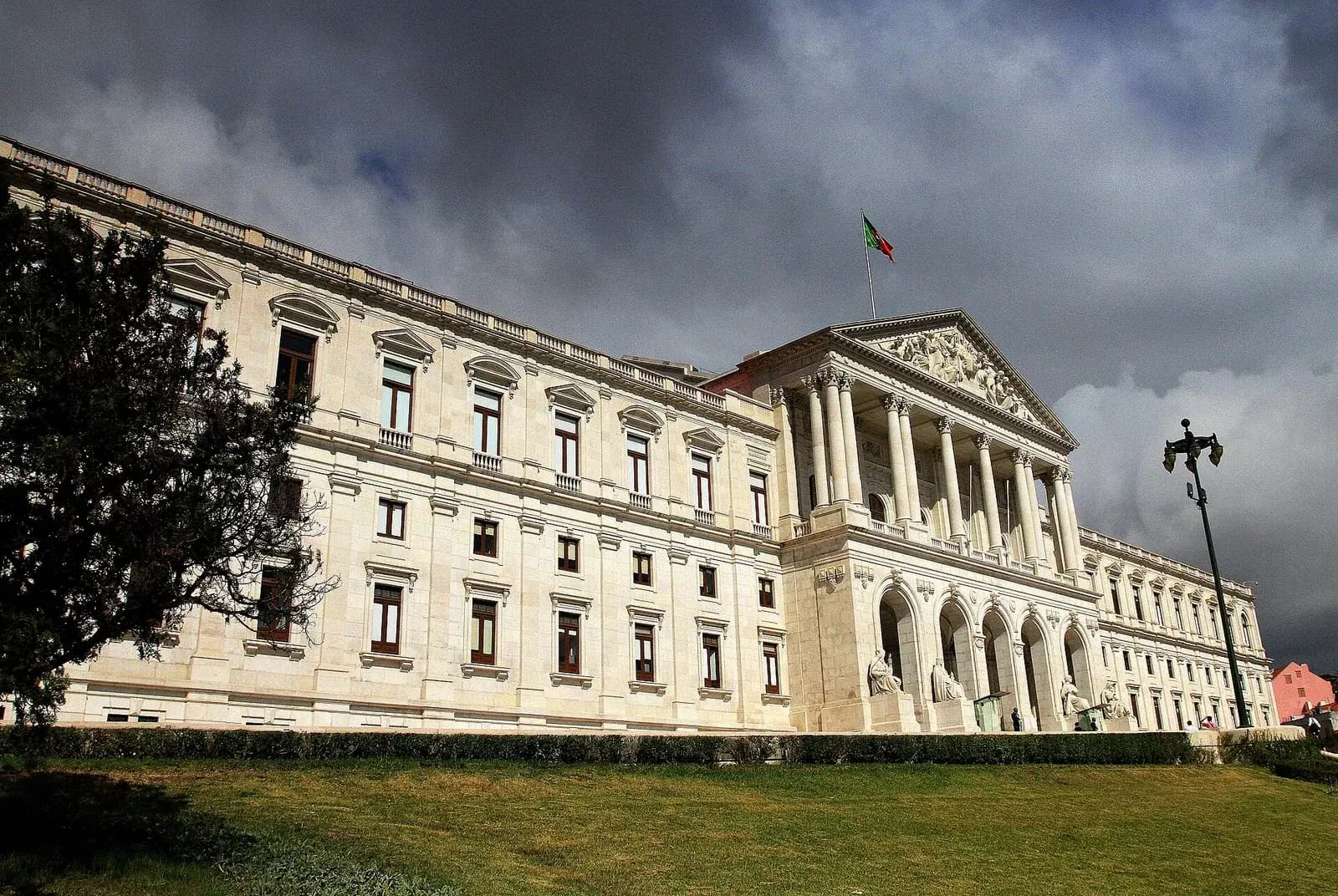
At a quarter to ten on the morning of Friday 2 April 1976, Henrique de Barros opened the last working session of Portugal's Constituent Assembly in the Palácio de São Bento in Lisbon. The morning's main business was unusual. The three secretaries of the chair took turns to read out the whole text of the new Constitution, article by article, that the deputies had spent ten months writing.
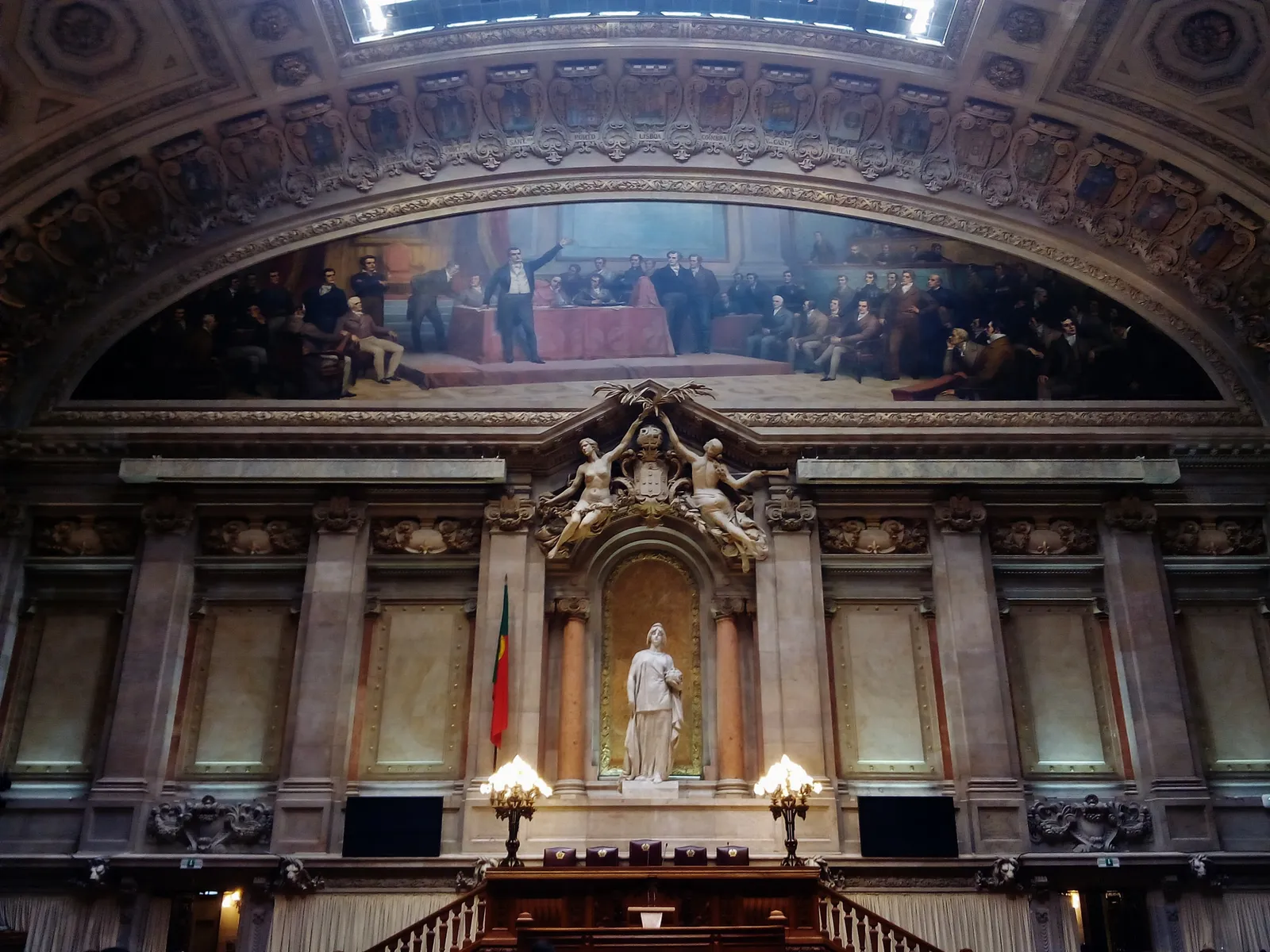
When the session resumed at five past three, one deputy from each party read a political statement, ending with the Socialist leader Mário Soares. Then Barros put the text to a single vote, taken as the Assembly's rules required, with deputies rising from their seats. He asked those against to stand first. The deputies of the CDS, the Christian democrat party, got up.
A voice in the chamber shouted “Reactionaries!”. Barros asked for the Assembly's attention: it was, he said, a moment emotional enough without such interjections. Nobody stood to abstain. When he called for those in favour, every other deputy in the room rose, and the minutes record long standing applause, cheers for the Constitution and the whole chamber singing the national anthem.
The secretary António Arnaut then read the result. Fifteen CDS deputies had voted against and there were no abstentions. All the others, including the independents and the deputy for Macau, had voted for the Constitution of the Portuguese Republic.
A revolution, an election and a pact
The Constitution was a child of the revolution of 25 April 1974, when the Armed Forces Movement (MFA), a group of military officers, overthrew the Estado Novo, the dictatorship that had governed Portugal under a constitution adopted in 1933. The MFA's programme promised a Constituent Assembly elected by universal, direct and secret suffrage within twelve months.
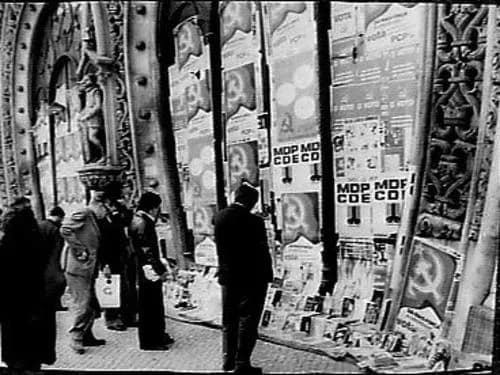
That election took place on 25 April 1975, a year to the day after the coup, and 91.66 per cent of registered voters turned out. The Socialist Party (PS) won 116 of the 250 seats, the centre-right Popular Democrats (PPD) 81, the Communists (PCP) 30 and the CDS 16. The campaign and the vote have their own article in this series.
Seats in the Constituent Assembly elected on 25 April 1975
seats
250 seats in all. The PS and PPD together held 197. Seat numbers as published by the Assembleia da República.
Show the data
| Seats | |
|---|---|
| PS | 116 |
| PPD | 81 |
| PCP | 30 |
| CDS | 16 |
| MDP/CDE | 5 |
| UDP | 1 |
| ADIM (Macau) | 1 |
The deputies were not free to write whatever they wanted. On 11 April 1975 the MFA and the main parties had signed a Constitutional Agreement Platform, known as the first MFA-parties pact. It laid down principles the new text had to contain and, whatever the election result, kept the Council of the Revolution, the MFA's ruling body, at the top of the state.
The Assembly's only task was to draft and approve the Constitution. Unlike Portugal's earlier constituent assemblies, it had no power to make ordinary laws or to oversee the government. Under the pact the President of the Republic would be chosen indirectly, by an electoral college formed by the MFA Assembly and the future legislative assembly.
Ten months at São Bento
The Assembly opened on 2 June 1975. Each of the six parties with seats presented its own draft constitution. A committee proposed how the text should be organised, and the Assembly then set up special committees, each writing one part and sending its articles to the plenary for debate and vote.
In his closing report Barros counted 132 plenary sessions taking almost 500 hours, 280 of them spent discussing and voting the Constitution, and 327 meetings of 13 committees, about 1,000 hours behind closed doors. He named the committees, above all the Drafting Committee, as the real authors of the text. That committee, which harmonised the chapters and fixed the final wording from February 1976, was chaired by the Socialist António Macedo; its main rapporteur was the Communist deputy Vital Moreira.
Politics kept breaking in. The rules set aside a period “before the order of the day” for current affairs. Deputies of the PCP and the small MDP/CDE opposed it, arguing that under the pact the Assembly existed only to write a constitution. The Socialists, the PPD, the CDS and the UDP defended it, and deputies used it to question the government and debate the crisis of the day.
In November the crisis reached the building itself. On 12 November 1975 striking construction workers gathered outside São Bento and would not let most of the deputies leave. “We couldn't get out,” the Socialist deputy Helena Roseta recalled fifty years later.
The military crisis of 25 November 1975, told in another article, ended the revolutionary period. In December, with the PS and the PPD pressing for it, the new Council of the Revolution reopened the pact. The second MFA-parties pact, signed on 26 February 1976, abolished the MFA Assembly as an organ of sovereignty and provided for a President elected directly by the voters, which the Constituent Assembly approved on 4 March.
25 April 1974
The MFA overthrows the Estado Novo
Its programme promises a Constituent Assembly within a year.
11 April 1975
First MFA-parties pact
The parties accept the Council of the Revolution's supremacy and a limited Assembly.
25 April 1975
Constituent Assembly elected
Turnout of 91.66 per cent; the PS wins 116 of 250 seats.
2 June 1975
First session at São Bento
12 November 1975
Construction workers surround the Assembly
25 November 1975
Military crisis ends the revolutionary period
26 February 1976
Second MFA-parties pact
Direct election of the President; the MFA Assembly disappears.
2 April 1976
Constitution approved and promulgated
25 April 1976
Constitution in force
First election to the Assembly of the Republic.
The Assembly changed as it worked. Barros reported that 62 deputies had resigned their seats, most of them to take up public posts, and that the Communist Herculano de Carvalho had died suddenly. Sixty of the 63 vacancies were filled, so 247 deputies sat at the end.
Liberty, socialism and soldiers
The finished text ran to 312 articles. Its preamble said that the MFA had “overthrown the fascist regime” and that the Assembly affirmed the people's decision to defend national independence, guarantee fundamental rights, establish the principles of democracy, secure the rule of law and “open the way to a socialist society”.
“Portugal is a sovereign Republic, based on the dignity of the human person and on the will of the people and committed to its transformation into a classless society.”
Article 2 gave the democratic state the goal of ensuring “the transition to socialism” by creating the conditions for the working classes to exercise power democratically. Article 83 declared every nationalisation carried out after 25 April 1974 an “irreversible conquest of the working classes”. Agrarian reform, which was to expropriate the great landed estates, was “one of the fundamental instruments for the construction of the socialist society”.
The soldiers kept a formal place. Article 3 said the MFA, “as guarantor of the democratic conquests and of the revolutionary process”, took part in the exercise of sovereignty “in alliance with the people”. The Council of the Revolution, made up of the President, the armed forces chiefs and fourteen officers chosen by the army, navy and air force, became an organ of sovereignty. It advised the President, judged whether laws were constitutional and legislated on military matters.
For legal questions the Council relied on a Constitutional Commission of judges and jurists, chaired by one of its own members, which also acted as the final court of appeal in constitutional cases. Ernesto Melo Antunes presided over it for its whole life, from 1976 to 1983, with Vítor Alves standing in now and then.
The same text was also a long charter of liberties. It banned the death penalty “in any case” and torture, guaranteed the right to strike, gave spouses equal rights and forbade discrimination against children born outside marriage. It promised a national health service that was “universal, general and free” and basic schooling that was universal, compulsory and free.
- Approved
- 2 April 1976, by the Constituent Assembly
- In force
- 25 April 1976
- Vote
- 15 CDS deputies against, no abstentions, all others present in favour
- Length
- 312 articles in 1976; 296 today
- Revisions
- Seven: 1982, 1989, 1992, 1997, 2001, 2004 and 2005
Fifteen votes against, and a promulgation at night
The CDS stood alone. In its declaration of vote, Vítor Sá Machado said the party was proud to have helped write the rights and the break with dictatorship into the text, and that it voted no because “only in democracy is it possible to say no”. Its objection was that a constitution written in one revolutionary year tied the hands of later voters.
“Let us not be afraid of words, Mr President and Members: our Constitution is paternalistic.”
At 22:13 the Assembly met again in the presence of President Francisco da Costa Gomes, the prime minister, members of the Council of the Revolution and the diplomatic corps, after a band of the Republican National Guard played the anthem. Barros gave a short report on the Assembly's work, ending with the wish that the deputies had given their country a constitution that could, in its essence, withstand the test of time. The decree approving the Constitution was read and he signed it. Costa Gomes then promulgated it in the chamber.
“This was the first time, even counting the short-lived and generous republican Constitution of 1911, that the Portuguese people had the right and the possibility truly to take part, through their legitimate representatives, in drawing up the fundamental law of the State.”
Costa Gomes reminded the deputies that, under Law 3/74 of 14 May 1974, the revolution's provisional constitutional law, their Assembly would now dissolve automatically. The session ended at 22:50 with the anthem. The Constitution had to be published by 10 April, and it came into force on 25 April 1976, the day Portugal elected its first Assembly of the Republic.
Seven revisions
The text set its own first test. It gave the Assembly of the Republic's second legislature power to revise it, with two-thirds of the deputies present. Later revisions could follow every five years, or at any time if four-fifths of the deputies agreed.
The first revision was approved on 12 August 1982 with 195 votes, from the PSD, the CDS, the PS and three small parties, against the votes of the PCP and the UDP, and published on 30 September.
It abolished the Council of the Revolution and struck out the MFA's share in sovereignty, though the preamble still names the MFA. Portugal became a “democratic state based on the rule of law”. Article 2 kept the transition to socialism, but the democratic exercise of power by the working classes gave way to “economic, social and cultural democracy”.
The 1982 revision also created a Council of State to advise the President, and a Constitutional Court of 13 judges, ten elected by parliament and three co-opted by them. The President could now dismiss a government only when needed to ensure the regular functioning of democratic institutions. The judges took office on 6 April 1983 and gave their first ruling on 31 May. The state had bought the Palácio Ratton in Lisbon for the court in 1982.
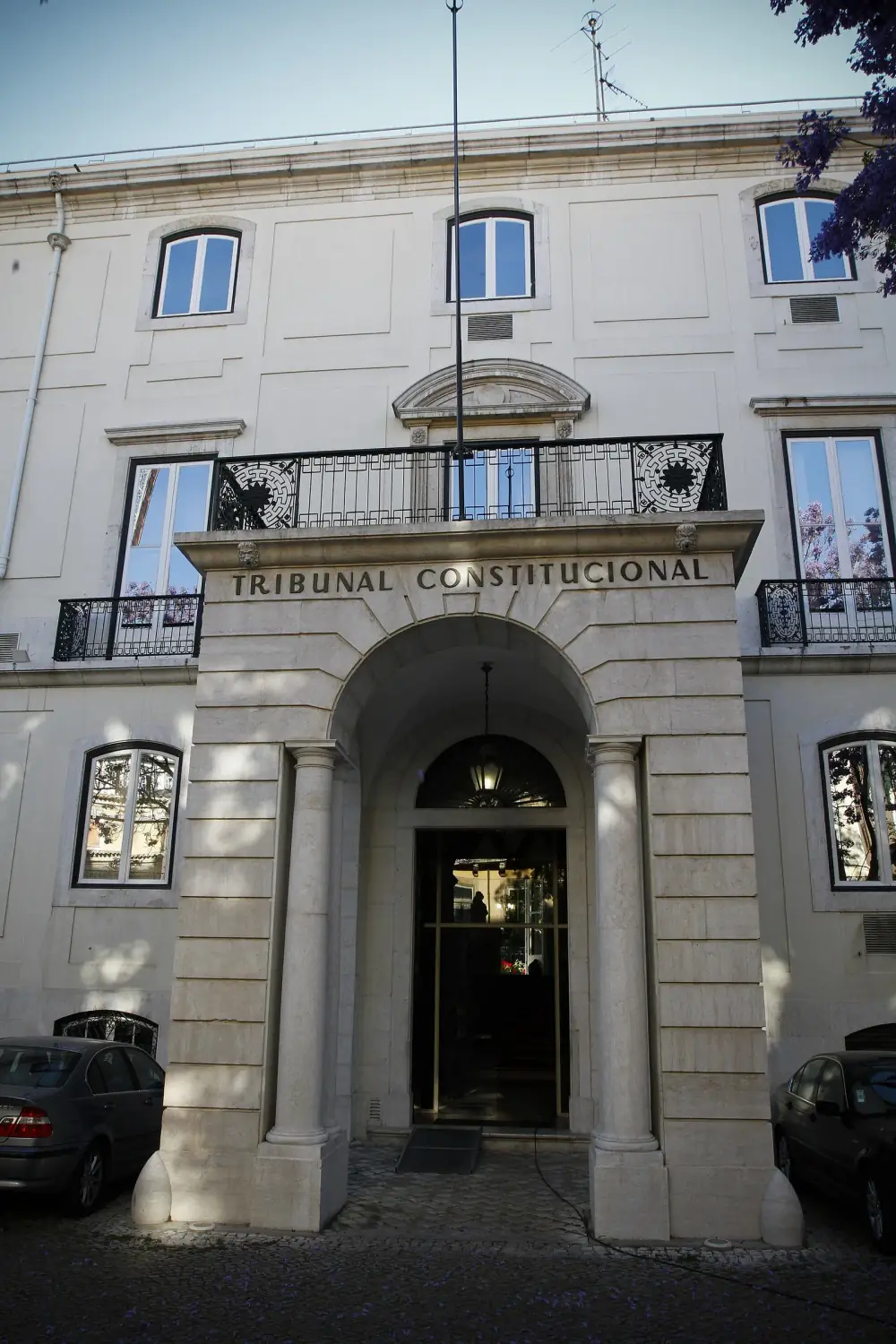
The second revision, approved on 1 June 1989 and published on 8 July, opened the economy. It ended the irreversibility of the nationalisations and let state firms be reprivatised under a framework law. Article 1 lost its “classless society” in favour of “a free, just and solidary society”, Article 2 dropped the transition to socialism, the health service became “tending to be free” according to citizens' means, and national referendums entered the Constitution.
| Revision | Law | Approved | Main changes |
|---|---|---|---|
| 1st, 1982 | Constitutional Law 1/82 | 12 August 1982 | Council of the Revolution abolished; Constitutional Court and Council of State created; MFA's role in sovereignty ended |
| 2nd, 1989 | Constitutional Law 1/89 | 1 June 1989 | “Classless society” and “transition to socialism” removed; nationalisations no longer irreversible; reprivatisation allowed; referendums introduced |
| 3rd, 1992 | Constitutional Law 1/92 | 17 November 1992 | Text adapted to the Maastricht Treaty, including voting rights for other EU citizens and the single currency |
| 4th, 1997 | Constitutional Law 1/97 | 3 September 1997 | Amsterdam Treaty; citizens' legislative initiative; option of single-member constituencies; groups of citizens allowed to stand in local elections |
| 5th, 2001 | Constitutional Law 1/2001 | 4 October 2001 | Extraordinary revision so Portugal could ratify the International Criminal Court treaty; extradition rules changed |
| 6th, 2004 | Constitutional Law 1/2004 | 23 April 2004 | More autonomy for the Azores and Madeira; limits on successive terms allowed; sexual orientation added to the ban on discrimination |
| 7th, 2005 | Constitutional Law 1/2005 | 22 June 2005 | New article allowing a referendum on European Union treaties |
Approval dates as printed in each constitutional law. Laws 1/82, 1/89, 1/92, 1/97, 1/2001, 1/2004 and 1/2005 were published on 30 September 1982, 8 July 1989, 25 November 1992, 20 September 1997, 12 December 2001, 24 July 2004 and 12 August 2005.
What the Constitution says now
The text in force has 296 articles. It still opens with the preamble of 1976, unchanged apart from capitalisation, including the promise to “open the way to a socialist society”. Article 1 now commits the Republic to building a free, just and solidary society, and Article 2 describes a democratic state based on the rule of law.
Many of the 1976 guarantees are still there. Article 24 says that “in no case will there be the death penalty”. Article 13 forbids discrimination on grounds including sex, race, religion, political conviction and sexual orientation. Article 64 promises a national health service that is universal and general and, taking account of citizens' economic and social conditions, tending to be free.
Changing it is deliberately hard. A revision needs two-thirds of the deputies in office, and the President cannot refuse to promulgate it. Article 288 still bars any revision that touches national independence, the republican form of government, the separation of church and state, citizens' rights and freedoms, universal suffrage, proportional representation or the independence of the courts.
No revision has been completed since 2005. A process opened in 2010 lapsed when the government of José Sócrates fell in 2011 and parliament was dissolved. In May 2026 Chega handed in a revision project. In June it and the PSD asked to put off the deadline for projects until December (reports give both 20 and 30 December), saying they wanted to finish a revision by the summer of 2027. The Assembly's president, José Pedro Aguiar-Branco, then returned Chega's project before formally admitting it, so the 30 days in which other parties may table their own projects had not started.
Parliament marked the fiftieth anniversary on 2 April 2026. President António José Seguro called the Constitution the country's “compass”, and Aguiar-Branco said it was not untouchable.
André Ventura of Chega opened by honouring the victims of the FP-25, a far-left armed group of the 1980s, accused many of the constituent deputies of their deaths and said the text was “not a sacred bible”. Several former constituent deputies in the galleries, among them Helena Roseta and Jerónimo de Sousa, walked out. Speaking for the CDS, Paulo Núncio recalled that his party had voted against in 1976.
FAQs
When was the Portuguese Constitution approved and when did it come into force?
The Constituent Assembly approved it on 2 April 1976 and President Francisco da Costa Gomes promulgated it the same night. It came into force on 25 April 1976, the second anniversary of the revolution and the day of the first elections to the Assembly of the Republic.
Who voted against the 1976 Constitution?
Only the CDS. Fifteen of its deputies stood to vote against, nobody abstained, and every other deputy present voted in favour. The CDS said the text was paternalistic and tied future voters to the choices of 1975.
Does the Portuguese Constitution still mention socialism?
Yes, in its preamble, which has not been changed since 1976 and still speaks of opening the way to a socialist society. The articles themselves no longer do: the 1989 revision removed the transition to socialism, the classless society and the irreversibility of the nationalisations, after the 1982 revision had abolished the Council of the Revolution.
What was the Council of the Revolution?
It was the ruling body of the Armed Forces Movement, made an organ of sovereignty by the 1976 Constitution. It advised the President, ruled on whether laws were constitutional and legislated on military affairs until the 1982 revision abolished it and shared its powers among the new Constitutional Court, the new Council of State, the government and parliament.
How many times has the Portuguese Constitution been revised?
Seven times, in 1982, 1989, 1992, 1997, 2001, 2004 and 2005. A revision needs a two-thirds majority of the deputies in office. A process begun in 2010 was never finished.
On the timeline
Open the timelineNearby moments from revolution and democracy (1974–1986).
Units loyal to the moderate wing of the Armed Forces Movement, with Lieutenant-Colonel Ramalho Eanes directing operations, put down an uprising by left-wing paratroopers who had seized air bases. A state of siege is declared in the Lisbon region, and the defeat of the radical left ends the revolutionary period and sets Portugal on course for parliamentary democracy.
Fretilin unilaterally proclaims the independence of the Democratic Republic of East Timor in Dili, with Francisco Xavier do Amaral as president. Nine days later Indonesia launched its full-scale invasion, and the territory regained its independence only in 2002, after a 24-year occupation.
Nine days after Fretilin declared East Timor's independence, Indonesia launches a full-scale invasion of the former Portuguese colony with an assault on Dili. The occupation lasted 24 years; East Timor's truth commission later documented at least 102,000 conflict-related deaths between 1974 and 1999, most from hunger and disease.
The Constitution of 1976
The Constituent Assembly approves the Constitution of the Portuguese Republic, founding the democratic regime that followed the Carnation Revolution. It enters into force on 25 April.
General Ramalho Eanes, Chief of Staff of the Army and architect of the 25 de Novembro 1975 intervention that ended the radical phase of the revolution, is elected first President of the Portuguese Republic under the new democratic constitution, winning more than 60% of the vote in the first round.
General António Ramalho Eanes, aged 41, is sworn in as President of the Republic after winning 61.6% of the vote in the first round — the first head of state elected by universal suffrage after the Carnation Revolution. The career soldier would serve two terms until 1986, overseeing the end of military tutelage over Portugal's new democracy.
The first Regional Government of the Azores, led by João Bosco Mota Amaral, takes office in Ponta Delgada, inaugurating the autonomous government of the archipelago under Portugal's new democratic constitution.
Coming up in history
All long reads
20 sources
Archives, scholarship and reporting this article was checked against.
- 1
Diário da Assembleia Constituinte n.º 132, sessão n.º 131 de 2 de Abril de 1976Assembleia da República, Debates Parlamentares
- 2
Constituição da República Portuguesa, texto original de 1976Assembleia da República
- 3
Constituição da República Portuguesa (current text), articles 80 and 82Tribunal Constitucional
- 4
- 5
- 6
“Antes da ordem do dia”: a revolução na Assembleia Constituinte (Maria Inácia Rezola)Revista Língua-lugar 3 (2021), Université de Genève
- 7
A influência do pacto MFA-Partidos na formação da eleição do Presidente da República (António Manuel Lopes Tavares and Rui Albuquerque)European Public & Social Innovation Review 10 (2025)
- 8
- 9
- 10
Cerco à Assembleia Constituinte, parte 1RTP and Instituto de História Contemporânea (NOVA FCSH), Memórias da Revolução
- 11
- 12Os 50 anos da Constituição que saiu do tumulto (Alexandra Tavares-Teles)Diário de Notícias, 2 April 2026
- 13
- 14Nos 40 anos da Constituição portuguesa, já aprovadas sete revisões ao textoObservador, 1 April 2016
- 15
- 16
- 17PSD e Chega acordam entrega de projetos de revisão constitucional até 30 de dezembroECO, 2 June 2026
- 18Depois do pedido de adiamento, Aguiar-Branco devolve projeto de revisão constitucional do Chega e aguarda clarificação (Miguel Viterbo Dias)Observador, 2 June 2026
- 19Parlamento assinala os 50 anos da Constituição PortuguesaRTP Notícias, 2 April 2026
- 20
Image credits
- The Palácio de São Bento in Lisbon, photographed in 2011. The Constituent Assembly met here from June 1975 to April 1976, and the Assembly of the Republic it created sits here today. Joaomartinho63, CC BY-SA 3.0, via Wikimedia Commons.
- The Sala das Sessões of the Palácio de São Bento in 2017, under Veloso Salgado's painting of the constituent Cortes of 1821. The Constituent Assembly debated and voted the Constitution here; it is now the plenary hall of the Assembly of the Republic. RickMorais, CC BY-SA 4.0, via Wikimedia Commons.
- Lisbon, 24 April 1975, the day before the Constituent Assembly election: passers-by read the party posters pasted over the façade of Rossio station. ASL, CC BY-SA 3.0, via Wikimedia Commons.
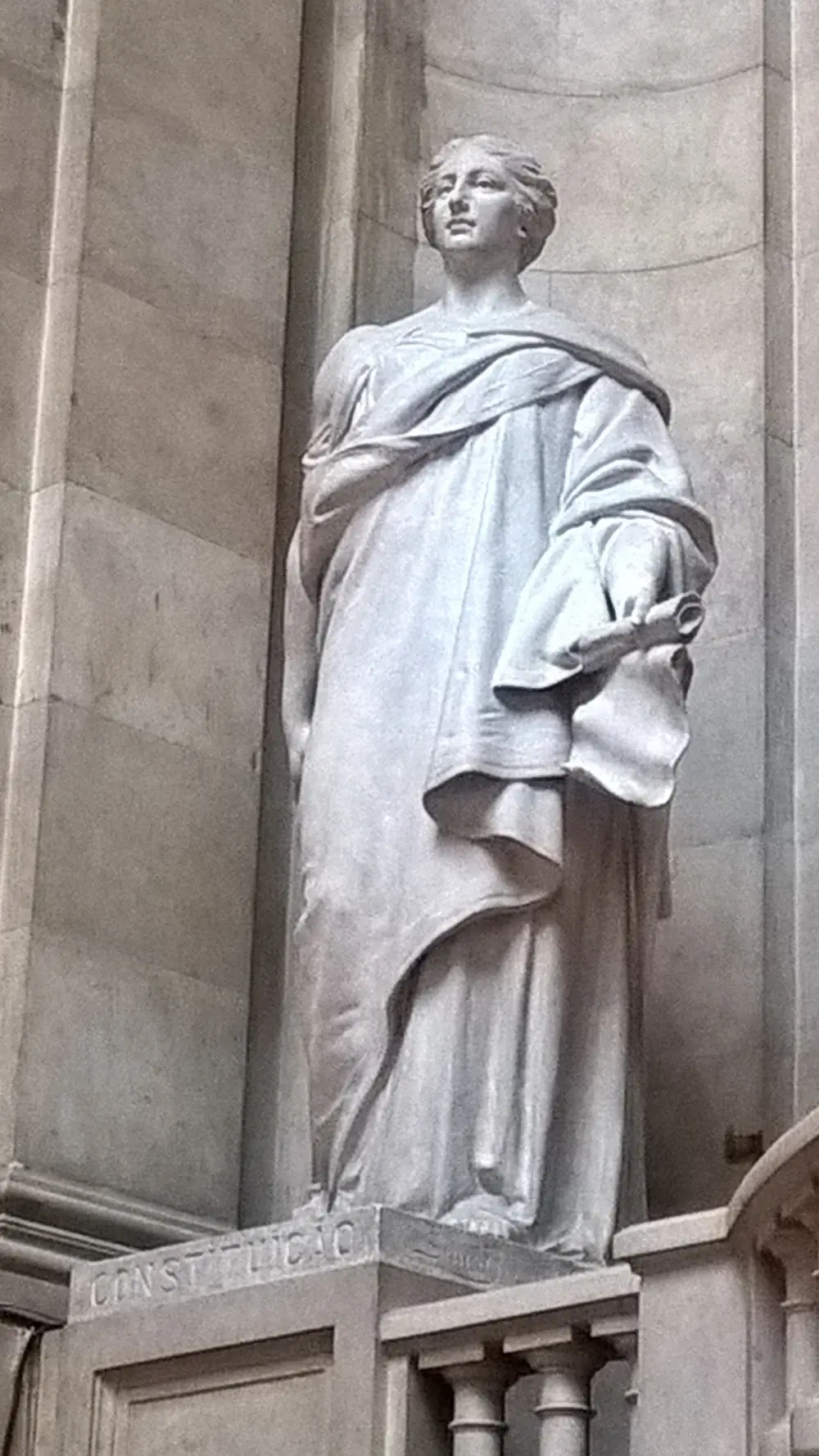
- “A Constituição”, a plaster allegory of the Constitution by Simões de Almeida (sobrinho), in the Sala das Sessões of the Palácio de São Bento. Photographed in 2019. GualdimG, CC BY-SA 4.0, via Wikimedia Commons.
- The entrance of the Palácio Ratton in Lisbon, seat of the Constitutional Court since 1983, photographed in 2014. Cruks, CC BY-SA 4.0, via Wikimedia Commons.