

Maria II: the queen born in Rio who fought for her throne
Maria da Glória was made Queen of Portugal at seven, in a country she had never seen. She spent eight years waiting for it, then nineteen reigning over coups, revolutions and a second civil war, and died at 34 giving birth to her eleventh child.
At a glance
- Maria da Glória, the future Maria II, was born on 4 April 1819 in the palace of São Cristóvão in Rio de Janeiro, where the Portuguese court had taken refuge from the French invasion of 1807.
- Her father, Pedro, Emperor of Brazil, abdicated the Portuguese crown in her favour on 2 May 1826, when she was seven, on condition that she marry her uncle Miguel.
- Miguel had himself proclaimed absolute king in 1828. Maria spent the next five years in London, Rio and Paris while her father's liberals fought for her, and reached Lisbon only in September 1833.
- Declared of age at 15 in September 1834, she reigned through the September Revolution of 1836, Costa Cabral's coup of 1842, the Maria da Fonte revolt and the Patuleia civil war of 1846 to 1847.
- She died at the Necessidades palace in Lisbon on 15 November 1853, aged 34, after giving birth to her eleventh child. No woman has headed the Portuguese state since.
A princess in Rio
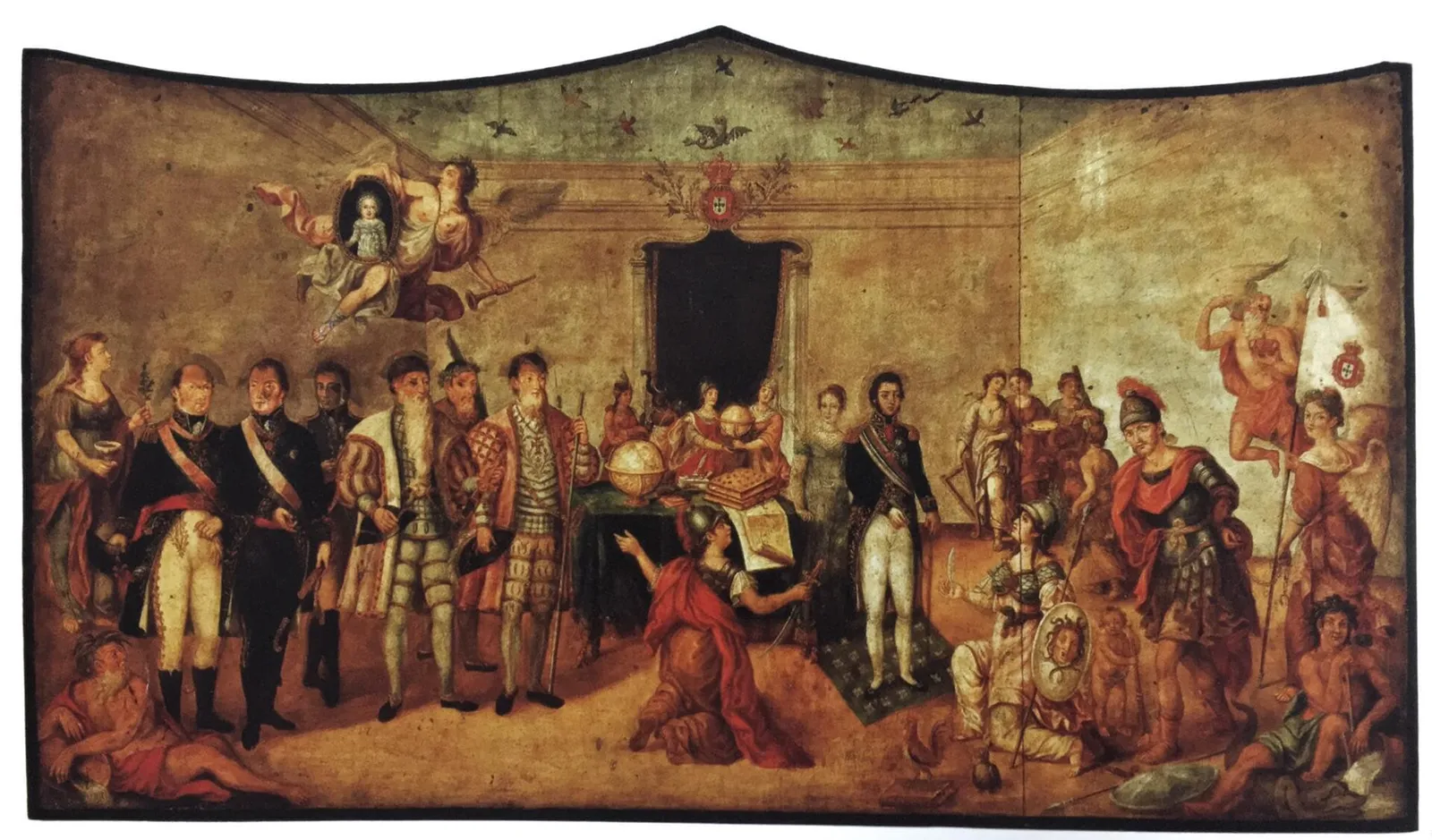
On 4 April 1819, in the palace of São Cristóvão in Rio de Janeiro, Leopoldina of Austria gave birth to her first child, a girl. She was named Maria da Glória. Her father was Pedro, the eldest son and heir of King João VI, so the baby was styled Princess of Beira, the title of the heir's eldest child.
The court was in Brazil because the royal family had sailed for Rio when Napoleon's armies invaded Portugal in 1807, and it was still there. So Lisbon learned of the birth months late. On 26 July 1819 the Gazeta de Lisboa, the official newspaper, announced the birth of a Princess of Beira and ordered the celebrations.
“His Majesty has determined that on this occasion of such plausible motive there be three days of festivities, peals of bells and artillery salutes in this Capital and in every City and Town of these Kingdoms, as well as in their Castles, Towers and Fortresses.”
Nobody in Rio could have guessed that this child would be the only Portuguese monarch born in the Americas, or that she would spend her life crossing the Atlantic and fighting for a crown. She was, in turn, Princess of Beira, Princess Imperial of Brazil, Princess of Grão-Pará and, from the age of seven, Queen of Portugal.
- Born
- 4 April 1819, palace of São Cristóvão, Rio de Janeiro
- Parents
- Pedro (Pedro I of Brazil, Pedro IV of Portugal) and Leopoldina of Austria
- Queen of Portugal
- Named in May 1826; displaced 1828; reigned in person 1834 to 1853
- Husbands
- Auguste de Leuchtenberg (1835); Fernando of Saxe-Coburg-Gotha (1836)
- Children
- Eleven born; seven reached adulthood
- Died
- 15 November 1853, Necessidades palace, Lisbon, aged 34
Two crowns and one father
By the time Maria was three, the empire had split. João VI went home to Lisbon in 1821 and swore to the bases of a liberal constitution. Pedro, left behind as regent, declared Brazil independent in 1822 and became its emperor, and his daughter became Princess Imperial. Portugal recognised the new state in 1825.
When João VI died on 10 March 1826, nobody publicly disputed that Pedro was his heir. But Pedro could not wear both crowns: Brazil, jealous of its new independence, would not accept a king of Portugal as its emperor. On 29 April he granted the Portuguese a Constitutional Charter, and on 2 May he abdicated the Portuguese crown in favour of his daughter. The succession crisis has its own article; here what matters is the small print.
The abdication had two conditions. The kingdom, and Miguel himself, must swear the Charter, and Miguel must marry Maria, his niece. Until both were met she was queen in name only, and the historian Fátima Bonifácio calls it a half-abdication, or not even that.
“This my abdication and cession shall not take effect if either of these two conditions is lacking.”
Miguel, living in Vienna, swore the Charter there on 4 October 1826, and on 29 October the marriage contract between the seven-year-old queen and her uncle was signed, once the Pope had granted a dispensation for their close kinship. Leopoldina worried about her daughter's future. If only she could go to Austria, she wrote to her own father, the Emperor Francis, in May 1826: “she is a good girl and has excellent qualities, but I deeply fear the flatteries.” Leopoldina died before the year was out, an event with its own article.
The plan was for Miguel to govern as regent from 1827, when he turned 25, and marry Maria when she came of age. He landed in Lisbon on 22 February 1828 and four days later swore loyalty to his niece and the Charter. On 13 March he dissolved the Chamber of Deputies. The old Cortes of the three estates, meeting at the Ajuda palace from 23 June, proclaimed him king, and in early July he took the crown as an absolute monarch and annulled the Charter.
A queen without a kingdom
Maria had already left Rio. On 5 July 1828, aged nine, she sailed for Europe with the Marquis of Barbacena, bound for Vienna and her uncle. At Gibraltar on 3 September an emissary told them what Miguel had done. Barbacena, fearing that taking her on to Vienna might compromise the liberal cause, took her to Britain instead, where many exiled liberals had gathered. She reached London on 7 October.
King George IV received her on 22 December 1828 with the honours due to a reigning queen, a reception that Miguel's Gazeta de Lisboa tried to play down. His ministers were cooler. The Foreign Secretary, Lord Aberdeen, insisted that her marriage to Miguel was a condition for any settlement. Barbacena wrote to Pedro that consenting to it would be consenting to the murder of his daughter, of the Charter and of the loyal Portuguese who had followed her.
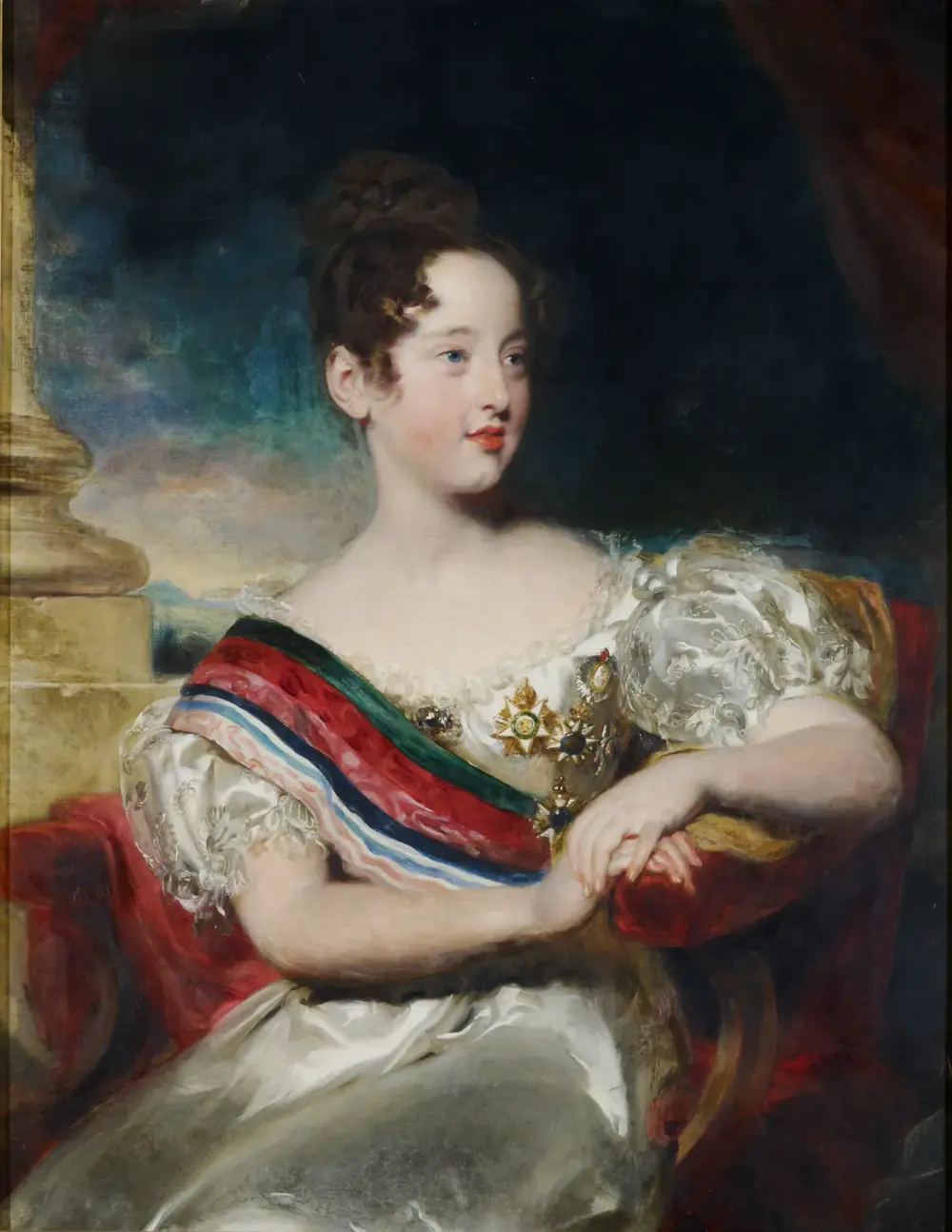
Only one corner of the kingdom held out for her: the island of Terceira, in the Azores, defended by the 5th Battalion of Caçadores. Once a month she travelled to the Portuguese embassy in London, where diplomats paid their respects and exiles, among them the writer Almeida Garrett, kissed her hand. In England, aged ten, she embroidered a large blue and white standard for the battalion on Terceira. It is now owned by the town council of Angra do Heroísmo, and blue and white remained the colours of the constitutional monarchy until 1910.
With the diplomacy stuck, Barbacena decided she was better off back in Brazil. On 30 August 1829 she sailed from Portsmouth with his new bride, Amélie of Leuchtenberg, and Amélie's brother Auguste, and reached Rio on 16 October. Meanwhile a liberal regency, appointed by Pedro in June 1829, finally installed itself on Terceira in March 1830.
Brazil turned against its Portuguese-born emperor. On 7 April 1831 Pedro abdicated in favour of his five-year-old son, Pedro II, and six days later he left for Europe with Amélie and Maria to fight for his daughter. He never saw his Brazilian children again. The family landed at Cherbourg in June (Parques de Sintra gives the 10th, Fátima Bonifácio the 19th), and after a stay in London Maria settled in Paris with her stepmother and, later, her baby half-sister Maria Amélia.
With an army raised among the exiles and on Terceira, Pedro landed at Mindelo, north of Porto, on 8 July 1832. Miguel's troops besieged him in Porto for about a year, through hunger, cholera and typhoid. In July 1833 a liberal force under the Duke of Terceira marched up from the Algarve, beat Miguel's troops on the south bank of the Tagus and entered Lisbon unopposed on the 24th. Maria arrived from France on 22 September.
“I wish that you, brother, may find in your subjects as much loyalty and as much love as I have found in those who defend my rights.”
The war ended the next spring. On 22 April 1834 Britain, France, Spain and Portugal signed the Quadruple Alliance to defend the thrones of Maria II and of the young Isabel II of Spain, and on 26 May Miguel's commanders accepted the Convention of Évoramonte, the subject of its own article. Miguel went into exile for good.
4 April 1819
Born in the palace of São Cristóvão, Rio de Janeiro
2 May 1826
Pedro abdicates the Portuguese crown in her favour, on conditions
29 October 1826
Marriage contract with her uncle Miguel signed in Vienna
22 February 1828
Miguel lands in Lisbon as regent
5 July 1828
Maria sails from Rio for Europe
July 1828
Miguel takes the crown as absolute king
22 December 1828
George IV receives her as Queen of Portugal
16 October 1829
Back in Rio de Janeiro
13 April 1831
Leaves Brazil with her father for the last time
8 July 1832
Pedro's army lands at Mindelo
24 July 1833
Liberal troops enter Lisbon
22 September 1833
Maria arrives in Lisbon
26 May 1834
Convention of Évoramonte ends the civil war
18 September 1834
The Cortes declare her of age, at 15
Orphaned and married at fifteen
Pedro governed as regent, but his health was failing. On 18 September 1834 the Cortes declared his daughter of age, at 15, and the next day she presided over her first council of ministers at Queluz. On 24 September Pedro died at Queluz, in the room where he had been born. His daughter had lost her mother at seven and her father at fifteen.
A queen regnant needed heirs. The Patriarch of Lisbon annulled the betrothal to Miguel, and in September 1834 both chambers let the government set aside the article of the Charter that forbade the queen to marry a foreigner. The Duke of Palmela later wrote that when he raised the matter in council, she answered at once, of her own accord, that she wanted to marry Auguste de Leuchtenberg, her stepmother's brother, as her father had intended.
They were married by proxy on 1 December 1834 and in person in Lisbon on 26 January 1835. Auguste, a grandson of the Empress Joséphine, died that March of a severe throat infection, two months after the wedding. On 1 January 1836 Maria was married by proxy to Prince Fernando of Saxe-Coburg-Gotha, who reached Lisbon that April; his life, from king consort to builder of the Pena palace, has its own article.
By every account the second marriage was happy. Maria wrote before the wedding that she seemed to like him already without knowing him, and the couple exchanged letters with pressed flowers when apart. Over 17 years she gave birth eleven times. Seven children reached adulthood, among them two kings, Pedro V and Luís I, and the queen took a close interest in their education.
Coups, revolutions and a second civil war
Victory did not bring peace. The liberals split into a moderate wing, loyal to Pedro's Charter, and a radical wing that wanted something closer to the Constitution of 1822. On 9 September 1836 a revolution restored the 1822 Constitution, and its supporters became known as setembristas. In November the queen backed a palace coup to undo it, the Belenzada, which failed.
A constituent Cortes, sitting from January 1837, wrote a compromise between the 1822 Constitution and the Charter. The queen swore the Constitution of 1838 at a solemn session on 4 April 1838, her nineteenth birthday. It lasted less than four years. On 27 January 1842 António Bernardo da Costa Cabral staged a coup to restore the Charter, which came back into force on 10 February.
| Text | In force | How it ended |
|---|---|---|
| Constitutional Charter of 1826 | August 1834 to September 1836 | September Revolution of 9 September 1836 |
| Constitution of 1822, restored | 10 September 1836 to 4 April 1838 | Replaced by the Constitution of 1838 |
| Constitution of 1838 | 4 April 1838 to early 1842 | Costa Cabral's coup of 27 January 1842; the Charter was formally restored on 10 February |
| Constitutional Charter of 1826, restored | 1842 to 5 October 1910 | Proclamation of the Republic; amended by the Additional Act of 1852 and later acts |
Dates as given by the Assembleia da República and Júlio Rodrigues da Silva (2012). Silva dates the Charter's formal return to 10 February 1842; the Assembleia counts from the January coup. The Charter had first lapsed in May 1828, when Miguel summoned the three estates that acclaimed him absolute king.
Costa Cabral, as minister of the kingdom, in effect the interior minister, dominated government from 1842 to 1846 and tried to modernise a country with archaic institutions. His reforms reached deep into village life: roads paid for by local councils and taxpayers, a new land register for taxation, and public health rules that required burial in cemeteries outside the towns.
In the spring of 1846 the peasants of the Minho, in the far north, rose against them, in the revolt known as the Maria da Fonte. The army would not crush it, the Duke of Terceira deserted Costa Cabral, and in May 1846 the government fell and the Cabral brothers fled abroad. Fátima Bonifácio argues that the revolt was less the direct cause of the fall than the army's defection and a bankrupt treasury.
A government under the Duke of Palmela followed. On the night of 5 to 6 October 1846, in the palace coup remembered as the Emboscada, the ambush, the queen dismissed Palmela and handed power to Marshal Saldanha. The north rose again, this time under a revolutionary junta in Porto, and a second civil war began, the Patuleia. Miguelist bands joined in from Spain.
It was ended from outside. The queen's government invoked the Quadruple Alliance. After a failed attempt at mediation, Britain and Spain blockaded Porto by sea while a Spanish army under General Manuel Gutiérrez de la Concha crossed the border, with French ships also in Portuguese waters. On 29 June 1847 the junta's delegates accepted the Convention of Gramido, which granted an amnesty and restored the status quo.
Maria II was no figurehead. The Charter gave the monarch an active role, and she used it, choosing and dismissing ministers. The historian Ron Thomson judges that she had more power than later constitutional monarchs, perhaps even more than Queen Victoria, and that the fault, if any, lay with the constitution. Her contemporaries were less kind: many found her haughty and arrogant, and some called for her removal.
Costa Cabral, now Count of Tomar, returned to power on 19 June 1849, and the queen was again his main source of power. Saldanha, who had long behaved as if he held a father's authority over her, wrote to her in December 1849 that the minister was exposing her to general hatred.
“If Your Majesty wishes to go on reigning in Portugal; if Your Majesty wishes your Dynasty to continue its reign; do not wait, to dismiss the Count of Tomar, for an armed cry to be raised against him in some part of the kingdom.”
She did not listen. On 7 April 1851 Saldanha rode out of Lisbon to raise the army himself, refusing civilian help. The pronunciamento brought down Costa Cabral and opened the Regeneration, which brought the country political stability at last. The queen had once told Victoria, in a letter of 8 May 1842, that she longed for a country where everything ran quietly, a routine of identical, serene days.
Schools, theatres and a camera
Her nickname, a Educadora, the Educator, points to the other side of the reign. Ministers and men of letters such as Passos Manuel, Rodrigo da Fonseca Magalhães, Almeida Garrett and the musician Domingos Bontempo reformed teaching and founded schools and institutes, the national conservatoires of music and drama and new museums. The old convent of São Francisco became the seat of the Academy of Fine Arts and the National Library.
The national theatre on Lisbon's Rossio, built on the ruins of the Inquisition's old palace to a design by Fortunato Lodi, opened on 13 April 1846, during the celebrations of her 27th birthday, and still bears her name.
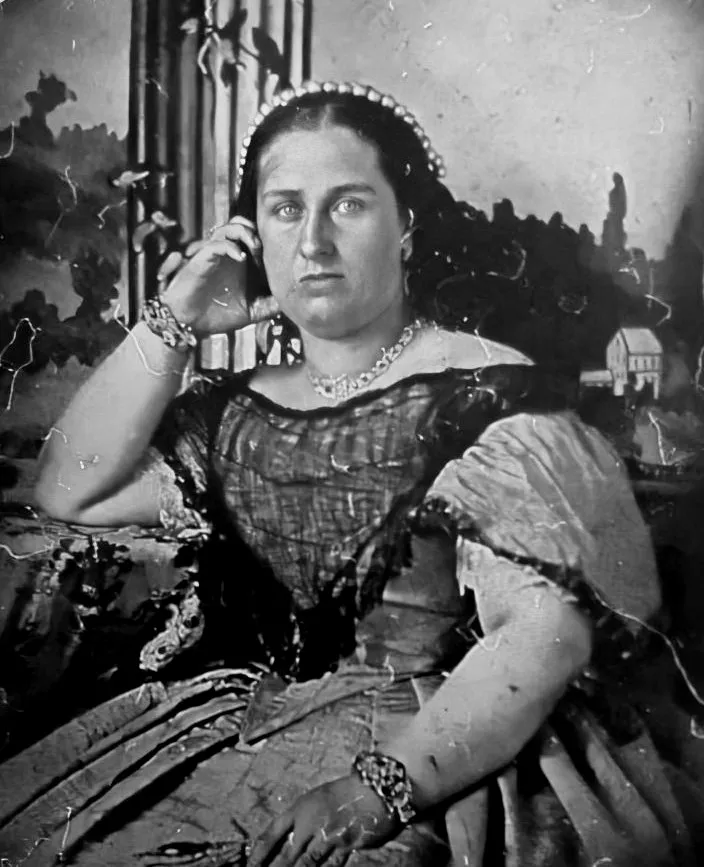
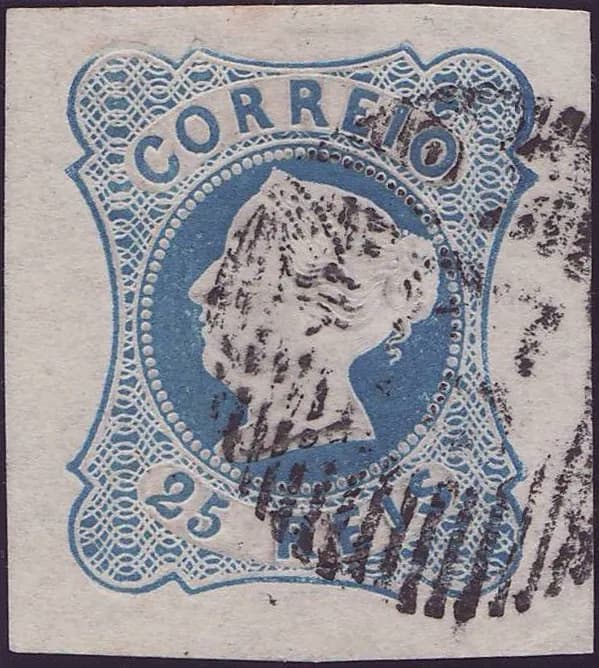
She was the first Portuguese monarch to pose for a camera. Her profile also appeared on Portugal's first postage stamps, issued in 1853 and designed by Francisco de Borja Freire, chief engraver of the Mint, on the British model of 1840; one of the values was printed in blue, her favourite colour.
Death at the Necessidades
The births grew harder. By the early 1850s the queen had put on weight and her recent deliveries had gone badly. When she became pregnant again in 1853, her doctors prescribed a diet and a light binding of the belly so that the baby would not grow too large, and told her to stop riding in carriages after the seventh month. She agreed only to a partial diet, and went on going to the opera, the theatre and Sintra for the summer.
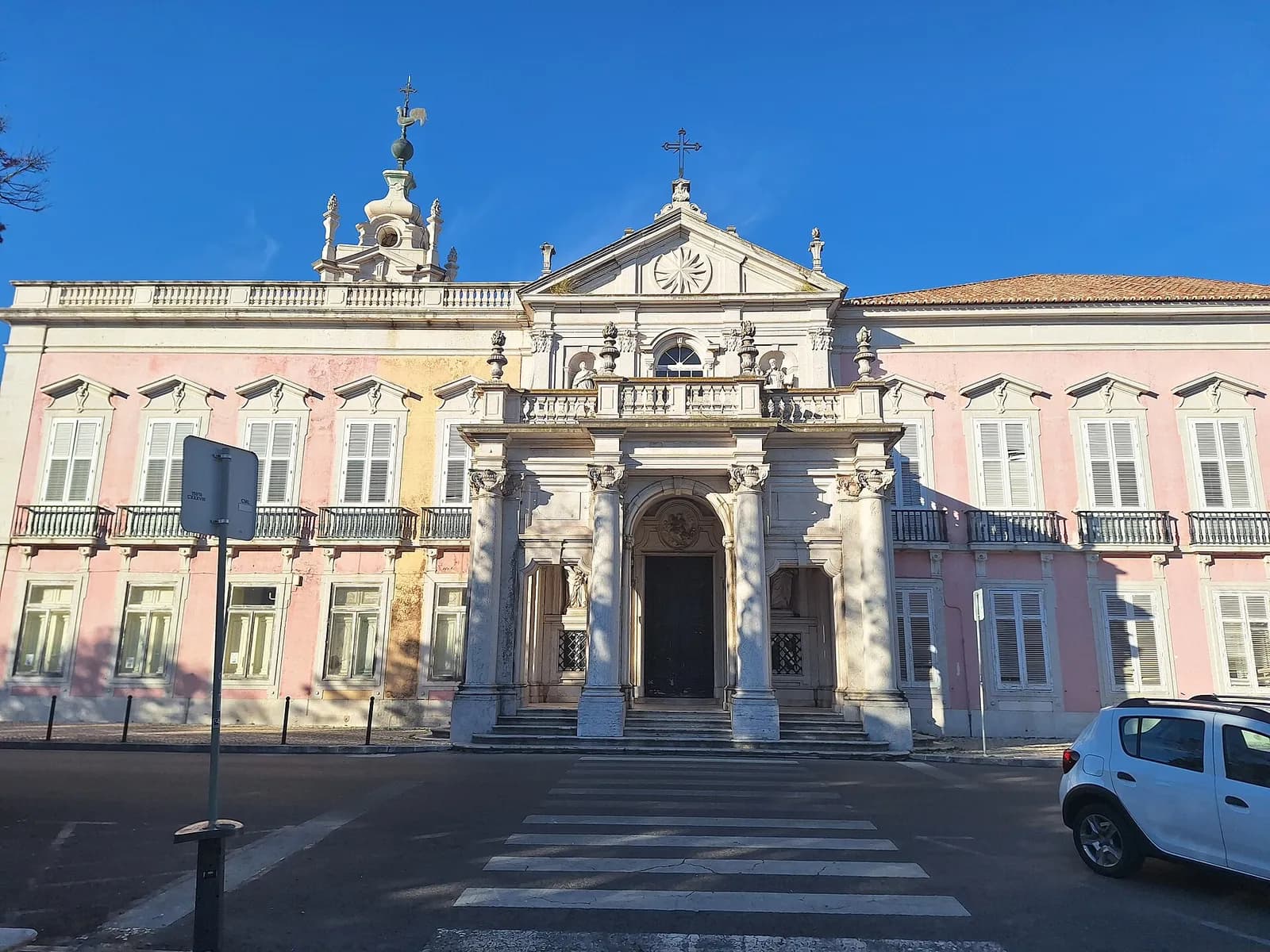
Labour began on 14 November 1853 at the Necessidades palace, her Lisbon home. “It's nothing like the other times,” she is reported to have said. At about half past eleven the next morning she laid her head on the pillow and died. The baby, a boy named Eugénio, did not survive. She was 34.
Fernando wept at her bedside and later wrote to his cousin Queen Victoria that such broken affections left a terrible void. He had her bedroom closed. Their eldest son, born in 1837, became king as Pedro V, and Fernando ruled as regent for two years until he came of age.
Why she still matters
Portugal has had two queens regnant, Maria I and Maria II, and Maria II was the last woman to head the Portuguese state. Neither the later monarchy nor the Republic, the dictatorship or the democracy since 1974 has had a woman in the top post. She was born under absolute monarchy and died as the Regeneration was bringing Portuguese politics closer to the rest of Europe.
Her cause was the cause of the Charter, and the Charter outlasted her. Restored in 1842 and amended by Additional Acts from 1852 onwards, it stayed in force until the Republic was proclaimed on 5 October 1910. The historian Paulo Drumond Braga, writing for the bicentenary stamp issue of 2019, links her name both to the triumph of liberalism and to the political turmoil of the first half of the nineteenth century.
FAQs
Where and when was Queen Maria II of Portugal born?
Maria da Glória, later Maria II, was born on 4 April 1819 in the palace of São Cristóvão in Rio de Janeiro, where the Portuguese court had moved during the French invasions. She is the only Portuguese monarch born in the Americas.
How did Maria II become queen at seven?
When João VI died in 1826, his heir Pedro was Emperor of Brazil and could not keep both crowns. On 2 May 1826 he abdicated the Portuguese throne in favour of his daughter, on condition that the Charter be sworn and that she marry her uncle Miguel.
Why did Maria II not reign until 1834?
Her uncle Miguel, who came to Lisbon as regent in 1828, had himself proclaimed absolute king that summer. Maria lived in exile in London, Rio and Paris until her father's liberal army won the civil war of 1832 to 1834. The Cortes declared her of age in September 1834.
How did Maria II die?
She died at the Necessidades palace in Lisbon on 15 November 1853, aged 34, after a difficult labour with her eleventh child, a son who also died. Her doctors had warned her about the risks of another pregnancy.
On the timeline
Open the timelineNearby moments from invasions, brazil and the liberal wars (1807–1851).
With the royal court still in Rio de Janeiro after fleeing Napoleon, Prince Regent João raises Brazil from colony to kingdom, creating the United Kingdom of Portugal, Brazil and the Algarves. For a few years Rio was effectively the capital of the Portuguese world — until the 1820 revolution in Porto demanded the king's return and Brazil declared independence in 1822.
Queen Maria I dies aged 81 at the Carmo convent in Rio de Janeiro, where the court had fled from Napoleon. Portugal's first undisputed queen regnant is succeeded by her son João VI; her remains are carried back to Lisbon in 1821 and laid to rest in the Estrela Basilica in 1822.
Two years after the death of Queen Maria I, João VI is acclaimed King of the United Kingdom of Portugal, Brazil and the Algarves in Rio de Janeiro, home of the court since 1808. A temporary triumphal arch, a Greek temple and an obelisk, put up for days of festivities, marked Rio's new role as a royal capital.
Queen Maria II is born
Birth of Queen Maria II (Maria da Glória) at the Palace of São Cristóvão in Rio de Janeiro, the only Portuguese monarch born outside Europe. Named queen in 1826, she was displaced by her uncle Miguel in 1828 and reigned in person 1834–1853; she is remembered as 'the Educator'.
Birth in Lisbon of Maria Severa Onofriana, the Mouraria singer regarded as the first great legend of fado. Her voice and her affair with the aristocratic Count of Vimioso made her a figure of popular myth; she died of tuberculosis at 26, and countless fados, a novel, a play and Portugal's first sound film, 'A Severa' (1931), tell her story.
The Liberal Revolution begins in Porto, where army officers and citizens demand a constitution and the return of King João VI from Brazil — the uprising that leads to Portugal's first constitutional monarchy.
The Liberal Revolution that began in Porto on 24 August reaches Lisbon, where a military pronouncement backed by the populace rallies the capital to the constitutional cause, paving the way for Portugal's first constitution in 1822.
Coming up in history
All long reads 6 April 1385The Cortes of Coimbra elect João I king of Portugal, April 1385
 7 April 1541Francis Xavier sails from Lisbon for Asia, 7 April 1541
 8 April 1484Diogo Cão, the mouth of the Congo and João II's reward of 8 April 1484
 9 April 1918La Lys, 9 April 1918: the morning Portugal’s army in France was overrun
40 sources
Archives, scholarship and reporting this article was checked against.
- 1
A «causa» de D. Maria II (1826-1834) (M. Fátima Bonifácio)Análise Social, vol. XXXIX (172), 2004
- 2
- 3
200 anos do nascimento de D. Maria II / Queen Maria II of Portugal (stamp issue brochure, text by Paulo Drumond Braga)CTT Correios de Portugal, 25 February 2019
- 4
- 5
4 April 1819: Born in Rio de Janeiro, Princess Maria da Glória (future Queen Maria II)Parques de Sintra, Palácio Nacional de Queluz (D. Pedro IV chronology)
- 6
A Constituição de 1838 (Júlio Rodrigues da Silva)Historia Constitucional, no. 13 (2012), Universidad de Oviedo
- 7
La intervención española en Portugal en 1847 (Cristóbal Robles Jaén)Anales de Historia Contemporánea, 15 (1999), Universidad de Murcia
- 8
Dona Maria II (1819-1853) (Ron B. Thomson)The British Historical Society of Portugal
- 9D. Maria II: a rainha e o país no Palácio da Ajuda (Vasco Rosa)Observador, 24 May 2021
- 10À descoberta da carioca que cruzou o oceano para ser rainha de Portugal (Leonídio Paulo Ferreira)Diário de Notícias, 26 May 2021
- 11
- 12
The death of Queen Maria II: the end of a true love storyParques de Sintra (blog), November 2023
- 13
- 14
2nd September 1822 – Brazil becomes an independent empire (Gloria Kaiser)Die Welt der Habsburger (Schönbrunn Group)
- 15
- 16
- 17
- 18
- 19
- 20
- 21
- 22
- 23
- 24
- 25
- 26
- 27
- 28
- 29
- 30
- 31
- 32
- 33
- 34
A Monarquia Constitucional (1820-1910)Assembleia da República
- 35
- 36
- 37
Teatro Nacional D. Maria II, uma casa com 180 anos, que volta a abrir portas em setembro de 202624 Notícias, 2026
- 38
HistóriaTeatro Nacional D. Maria II
- 39Aqui turista não entra: a alta diplomacia portuguesa acontece nestas salas das Necessidades (Hugo Amaral)ECO, July 2021
- 40
“Morte de El-Rei D. Fernando: a câmara ardente, o funeral, as exéquias”, O Occidente, no. 253, 1 January 1886Hemeroteca Digital, Câmara Municipal de Lisboa
Image credits
- Allegory of the birth of Maria da Glória, painted by Manuel Dias de Oliveira around 1819. A winged figure carries the infant princess's portrait in a medallion over an assembly of allegorical and historical figures. Manuel Dias de Oliveira, Public domain, via Wikimedia Commons.
- Maria II at the age of ten, painted by Sir Thomas Lawrence during her stay in England in 1828 to 1829. The portrait is in the British Royal Collection. Thomas Lawrence, Public domain, via Wikimedia Commons.
- Maria II in a daguerreotype from the last years of her life, one of the earliest photographs of a Portuguese monarch. Unknown author, Public domain, via Wikimedia Commons.
- The blue 25 réis stamp of 1853, one of Portugal's first postage stamps, with the embossed profile of Maria II. F. de Borja Freire, CC BY-SA 3.0, via Wikimedia Commons.
- The Necessidades palace in Lisbon in 2024. Maria II made it her residence and died there in 1853; since 1916 it has housed the Ministry of Foreign Affairs. JnpoJuwan, CC0, via Wikimedia Commons.