

The death of Sancho I, 1211: the king who settled Portugal's frontier
Portugal's second king spent 26 years granting charters to frontier towns, fighting the Almohads and León, and quarrelling with his bishops. The will he left behind set his heir against his own sisters.
At a glance
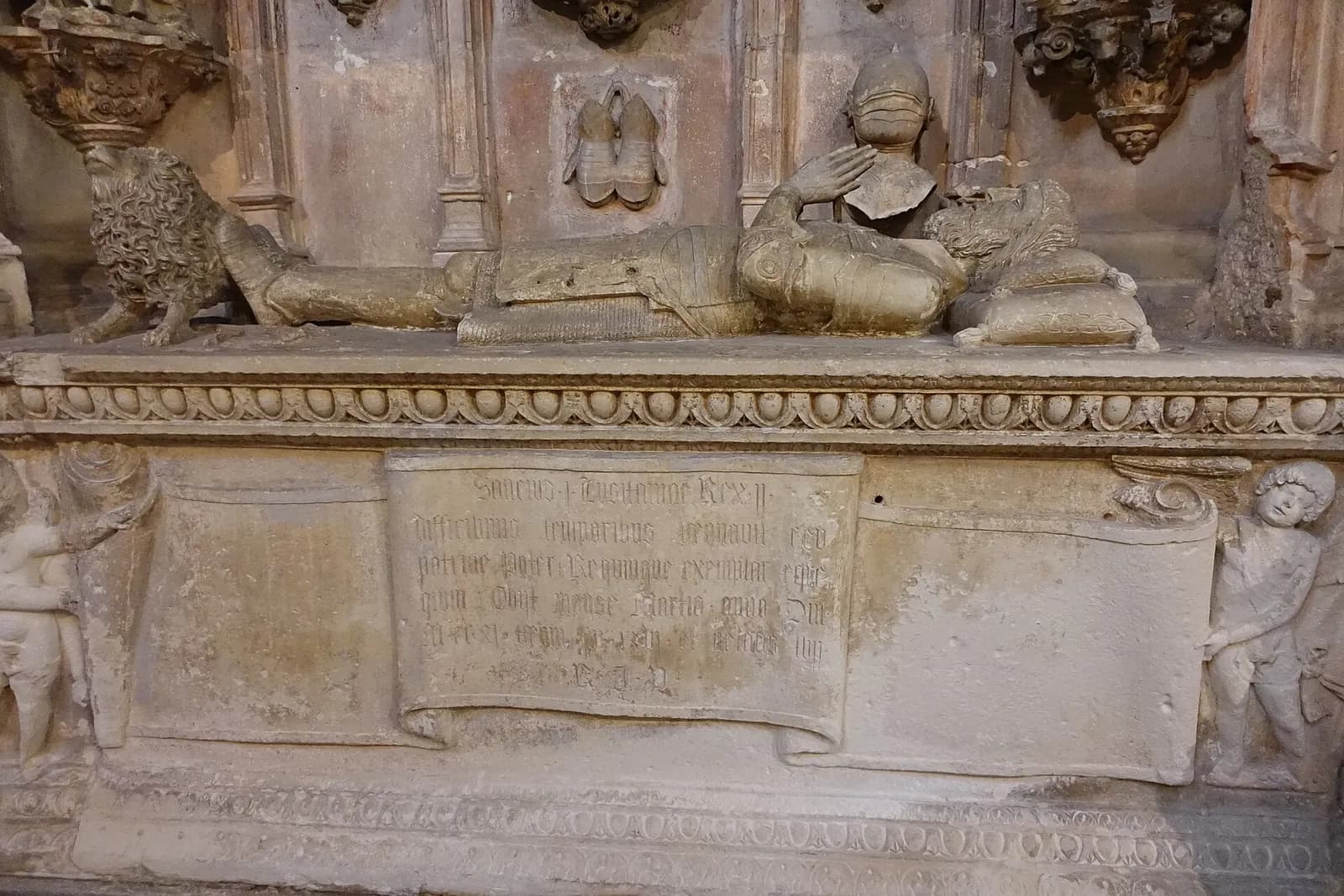
- Sancho I, the second king of Portugal, died in Coimbra on 26 March 1211, aged 56, and was buried beside his father, Afonso Henriques, in the monastery of Santa Cruz.
- Born in Coimbra on 11 November 1154, he reigned from December 1185 and is remembered as o Povoador, the Populator, for the charters (forais) he gave to frontier towns such as Guarda in 1199.
- With crusaders on their way to the Holy Land he took Silves in the Algarve on 3 September 1189, after a siege of six weeks and three days, but the Almohads recovered it in 1191.
- In his last years he clashed with the bishops of Porto and Coimbra; Pope Innocent III intervened, and the king gave way in the winter of 1210.
- His will of October 1210 left lordships to his daughters and only money to his younger sons, and his heir, Afonso II, went to war with his sisters over it.
A will in six copies
In October 1210 the king of Portugal had his will written out in Coimbra. Six identical copies were made and sealed. One went to the archbishop of Braga and another to the abbot of Alcobaça, so that, in the will's own words, its terms would be more firmly kept.
Sancho I was probably ill. At the end of December, at Santarém, he added a further text, for the health of his soul, he said, and for the good of his children and of the whole kingdom. The historian Saul António Gomes thinks the illness is what prompted the will.
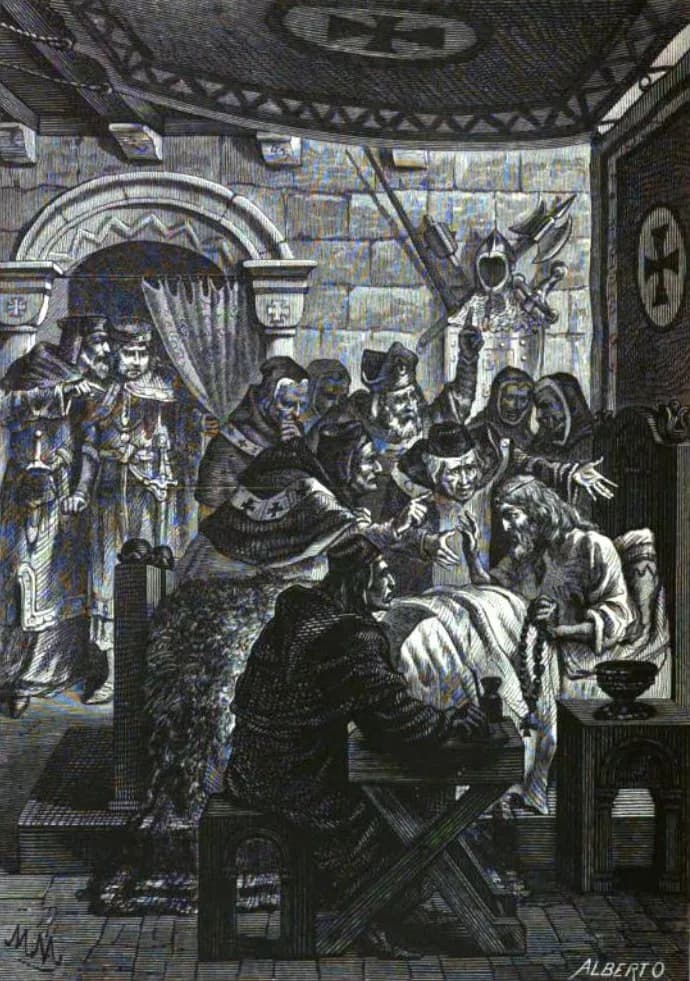
He died in Coimbra, the city where he was born, at the end of March 1211, with his eldest son, Afonso, at his side. He was 56 and had reigned for more than 25 years, after some 15 years of sharing power with his ageing father.
The usual date, 26 March, goes back to the seventeenth-century chronicler António Brandão, who said he took it from the original of the Coimbra chronicle. Alexandre Herculano, the leading nineteenth-century historian of medieval Portugal, accepted it, and a grant by the new king dated 30 June 1211 speaks of three months of his reign.
A short Latin chronicle from the abbey of Alcobaça, printed in the Portugaliae Monumenta Historica, records that he was buried in the monastery of Santa Cruz in Coimbra with his queen, Dulce of Aragon.
The kingdom he left was smaller than the one he had inherited. The military historian Miguel Gomes Martins describes it as more fragile and less extensive than the kingdom Afonso Henriques had passed on in 1185, split by quarrels among the clergy and the great nobles and pressed by León on one side and the Almohads on the other.
What you need to know first
Portugal was barely a generation old. Afonso Henriques had made himself king of a county on the edge of León, and the pope had accepted his title only in 1179. His raids and sieges had carried the frontier south of the Tagus, to Alcácer do Sal and Évora. Beyond lay al-Andalus, Muslim Iberia, then ruled by the Almohads, whose caliph also ruled Morocco.
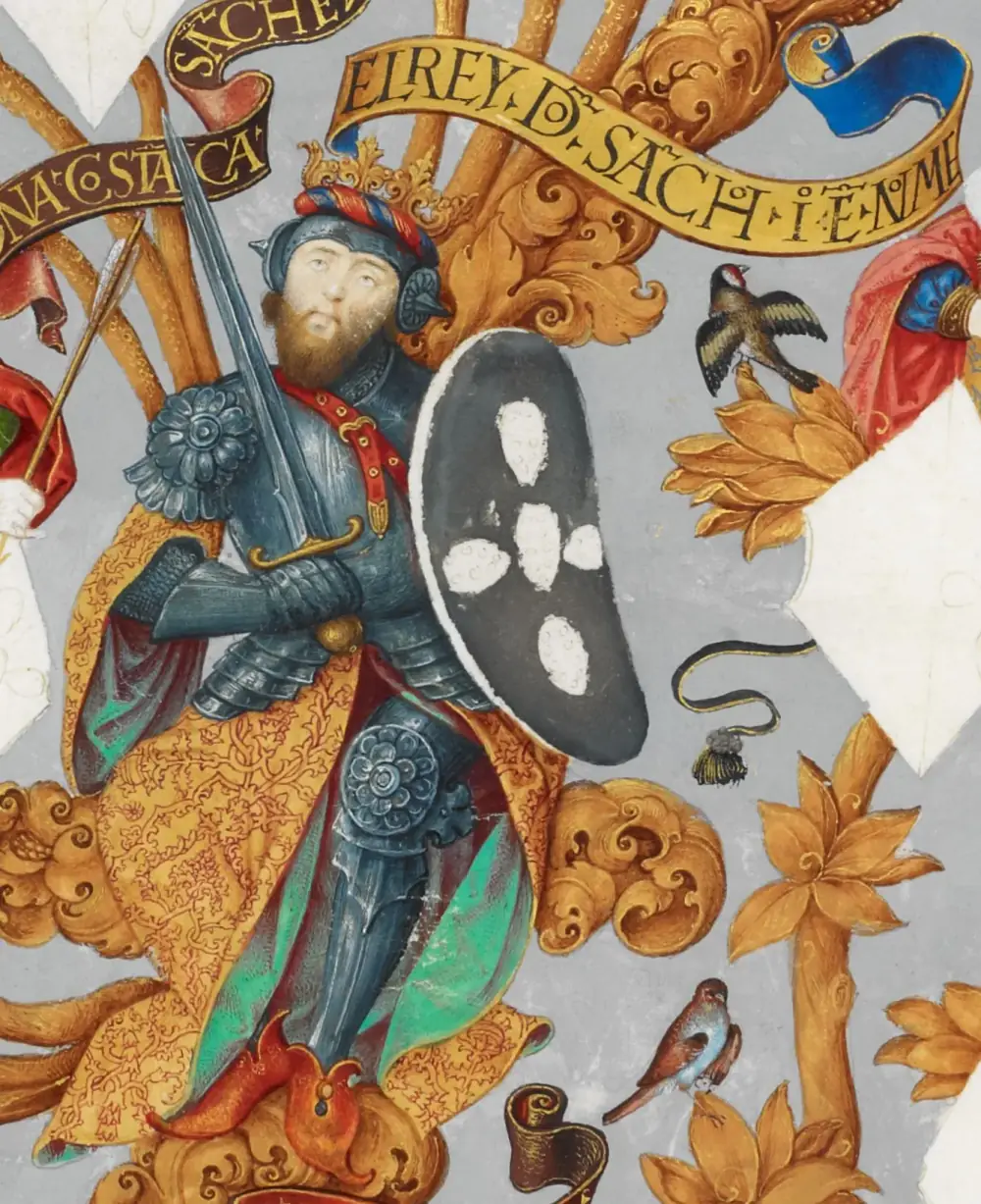
Sancho was born on the night of Saint Martin, 11 November 1154, and baptised Martinho, according to medieval Latin annals; he took the name Sancho later. An elder brother, Henrique, died young and left him as heir. His father knighted him at Coimbra on 15 August 1170, the year after Afonso was captured with a broken leg at Badajoz, and from then on the son signed royal documents alongside the father.
In 1174 he married Dulce, a daughter of Ramon Berenguer IV, count of Barcelona, and sister of the king of Aragon. In 1178 he led a raid deep into al-Andalus and, the annals say, entered Triana, the suburb of Seville across the river, and broke down its walls.
- Born
- 11 November 1154, Coimbra
- Parents
- Afonso Henriques and Mafalda of Savoy
- Married
- Dulce of Aragon, in 1174 (she died in 1198)
- King
- December 1185 to March 1211
- Died
- 26 March 1211, Coimbra, aged 56
- Buried
- Monastery of Santa Cruz, Coimbra
- Successor
- His son Afonso II
Silves, 1189
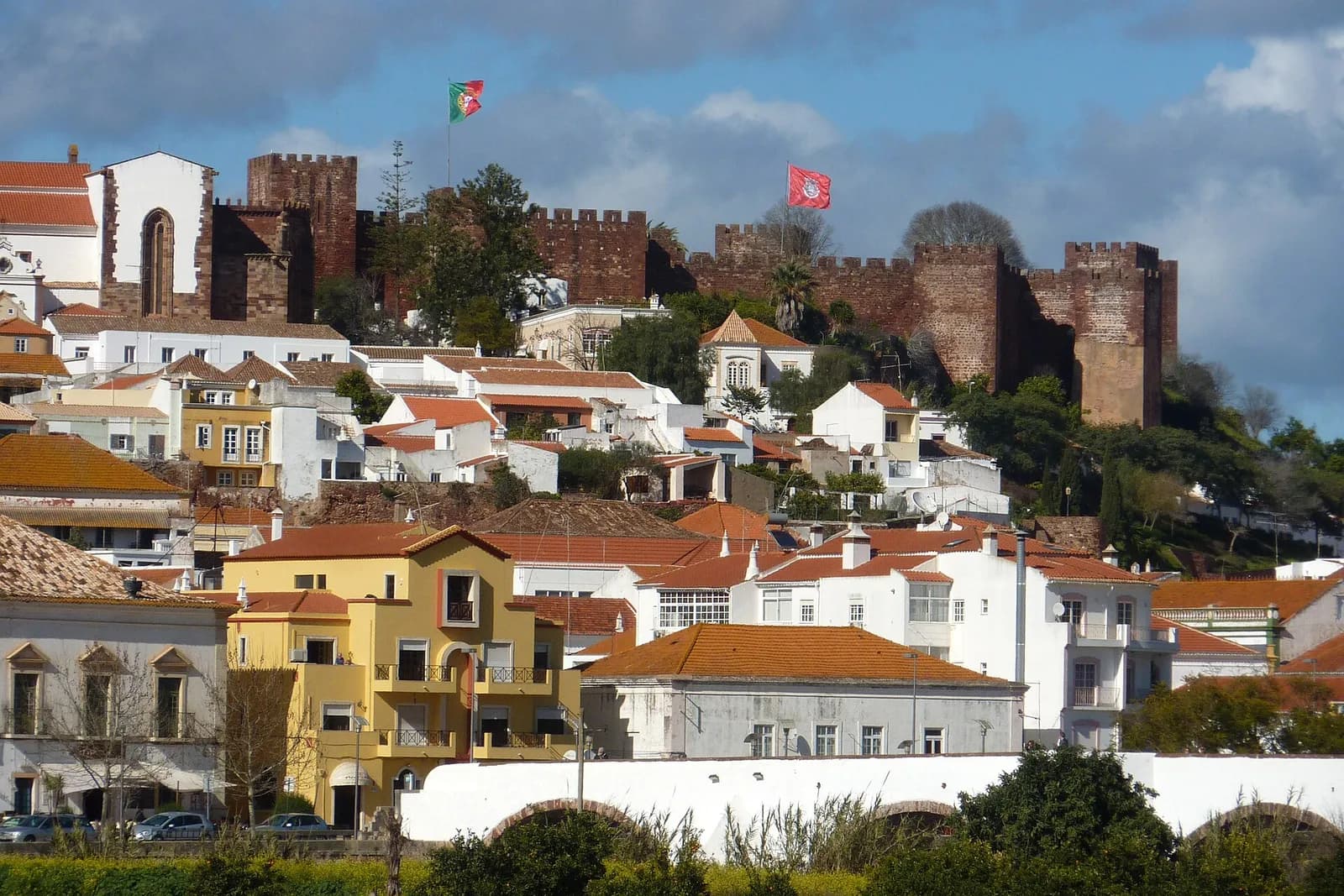
The great chance of the reign came by sea. In 1189 fleets of northern crusaders, heading for the Holy Land, put in at Lisbon. Sancho persuaded some of them to help him attack Silves in the Algarve, which the Portuguese told them was the strongest town in all Spain.
One of the crusaders, an anonymous German, kept a Latin diary. It gives the siege from 21 July to 3 September 1189. The crusaders and the Portuguese took the lower town in the first rush, but the crusaders failed to scale the walls of the upper town and dug in for a siege. The king arrived on 29 July with his army, his baggage and knights of three military orders.
The crusaders mined under the walls while the defenders dug counter-mines. On 1 September the besieged called out to the king's men to talk terms. Sancho wanted to let them leave with their goods and offered the crusaders 10,000 gold pieces, then 20,000, to agree. They refused. In the end the inhabitants left with only the clothes they wore, the king took the town and the crusaders took the plunder.
On 3 September the governor rode out alone, his people on foot behind him. Some crusaders robbed and beat them in breach of the agreement, which caused a serious quarrel with the king. Inside, the narrator found people barely able to stand, Christian captives who said they had been given no more than an eggshell of water in four days, and a stench of dead people and animals.
“Silves was much stronger than Lisbon, ten times richer, and with more costly buildings.”
Silves in 1189, as counted by a crusader eyewitness
people
Figures from the anonymous crusader's account. He says his own force was about 3,500 or slightly fewer and that the king's army was much larger; he gives no number for it. A modern Spanish biography puts the town's population at more than 20,000.
Show the data
| People | |
|---|---|
| Crusader army at the start | 3,500 |
| Inhabitants at the surrender | 15,800 |
| Christian captives on arrival | 450 |
| Captives found alive | 200 |
The victory soured quickly. The crusaders, the Flemish especially, sold grain to the Portuguese behind their leaders' backs, the king complained that he would rather not have taken the town than lose it for lack of food, and in the end he kept everything. The fleet sailed on 7 September, its men, the narrator says, less friendly to the king than before.
Sancho now styled himself king of Portugal and of the Algarve. The crusader's 1844 editor, João Baptista da Silva Lopes, found no earlier document with that title than a gift of the castle of Alvor to Santa Cruz de Coimbra in October 1189.
Losing the south, fighting the north
The Almohad caliph, al-Mansur, answered with two campaigns, in 1190 and 1191. His armies reached Leiria and Alcobaça and came near Coimbra. In 1191 Silves fell back into Muslim hands, along with Alcácer do Sal, Palmela and Almada, across the river from Lisbon.
The frontier was pushed back to the Tagus. South of the river only Évora and its lands stayed Christian. A five-year truce signed in 1191 ended the immediate danger.
The other enemy was León. Sancho's daughter Teresa had married its king, Alfonso IX, but the marriage was undone, and the two kingdoms fought over their border for the rest of the decade. Sancho invaded Galicia and took Tui in 1197. His army was beaten at Ervas Tenras, near Pinhel, in 1198 or 1199, and in 1199 the Leonese took Bragança and threw back his offensive against Ciudad Rodrigo, where the master of the Templars, Lopo Fernandes, was killed. The Coimbra annals date his death to February 1198.
11 November 1154
Birth
Born in Coimbra and baptised Martinho.
15 August 1170
Knighted
Armed as a knight by his father at Coimbra.
1174
Marriage
Marries Dulce, sister of the king of Aragon.
1178
Seville
Raids al-Andalus and enters Triana.
December 1185
King
Succeeds Afonso Henriques.
3 September 1189
Silves
Silves surrenders after a siege of six weeks and three days.
1191
Almohad reconquest
Silves, Alcácer, Palmela and Almada lost; five-year truce.
1197 to 1199
War with León
Tui taken; defeat at Ervas Tenras; Bragança lost.
26 August 1198
Queen dies
Dulce of Aragon dies in Coimbra.
1199
Guarda
Charter for the new frontier town of Guarda.
1208 to 1210
Bishops
Conflicts with the bishops of Porto and Coimbra; the pope intervenes.
October 1210
Last will
Will made in Coimbra; addition at Santarém on 29 December.
26 March 1211
Death
Dies in Coimbra; Afonso II succeeds.
The Populator
Later generations called him o Povoador, the Populator. The name is not from his lifetime: Herculano wrote in 1846 that posterity gave it to Sancho for his constant efforts to settle the emptiest districts with foreigners and natives and to found or restore towns.
Both Portugal and León tried to fill their border lands while they fought. Sancho granted a large number of charters to towns on the frontier, drew foreign settlers who took up much land in the Ribatejo, and endowed the military orders.
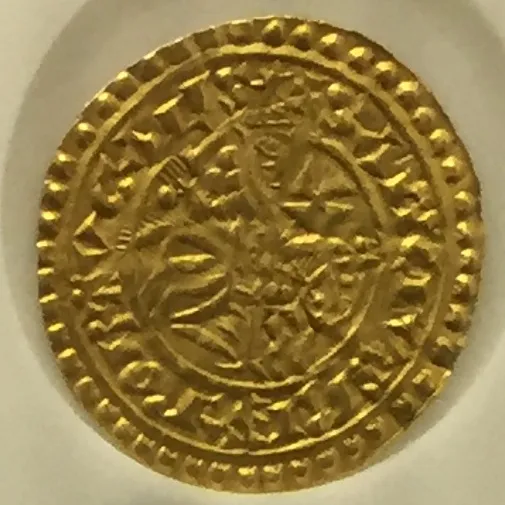
Penamacor, a frontier town facing León, shows how it worked. Its Latin charter names among its witnesses an official, an archdeacon and a doorkeeper, each of whom “began to settle”. A killer paid 30 morabitinos to the victim's side, and a knight who stayed away from the king's yearly campaign paid 10 soldos.
Even the dates are slippery. The Torre do Tombo holds two copies of the Penamacor charter, dated 1189 and 1209. Modern historians generally give 1209; the 2020 municipal edition argues that 1209 is a revision of a charter of 1189; and Alexandre Herculano, in the nineteenth century, proposed 1199.
| Town | Date | Model |
|---|---|---|
| Covilhã | 1186 | Ávila |
| Gouveia | 1186 | Salamanca |
| Folgosinho | 1187 | Salamanca |
| Valhelhas | 1188 | Salamanca |
| Almada | 1190 | Santarém |
| Leiria | 1195 | Santarém |
| São Vicente da Beira | 1195 | Ávila |
| Guarda | 1199 | Salamanca |
| Sesimbra | 1201 | Ávila |
| Montemor-o-Novo | 1203 | Ávila |
| Penamacor | 1209 (or 1189) | Ávila |
Models and dates as grouped by Mário Alberto Nunes Costa. Charters copied the customs of an older town; Herculano classed Penamacor's as of the Salamanca type instead.
The military orders received whole districts to hold and defend. The chronicle tradition summarised by Silva Lopes lists Idanha for the Templars, Valhelhas, Alcanede and Juromenha for the knights of Évora (later Avis), and Alcácer do Sal, Palmela and Almada for the order of Santiago. The Hospitallers held the castle of Belver, where the king kept part of his money.
A king against his bishops
The last decade was hard. Between 1199 and 1208 famine and epidemics struck, and the kingdom filled with disputes: townsmen against royal officials in Lisbon, knights against craftsmen in Penamacor, nobles against the king, and the king against the bishops of Coimbra and Porto.
In Porto the bishop, Martinho Rodrigues, refused at the end of 1208 to attend the wedding of the king's heir, Afonso, to Urraca of Castile, because the couple were distantly related. The townsmen, egged on by royal officials, plundered the property of canons loyal to him. He laid an interdict on the city, made a settlement with the king and fled to Rome. Royal officials then seized his estates.
In Coimbra a quarrel over the dues owed to the king from one of the bishop's estates ended with royal officials attacking the houses of the bishop and his canons. The bishop, Pedro Soares, laid an interdict on the city. Fearing he would follow his colleague to Rome, the king had him arrested.
Herculano told the story more darkly. In his account the king ordered priests to ignore the interdict, seized the property of those who refused and, it was said, had some of them blinded in front of their families. When Innocent III wrote in the bishop's defence, Sancho replied that the clergy's wealth would be better given to his sons and to the kingdom's defenders. The pope's answer warned that such talk smacked of heresy.
In May 1210 Innocent III appointed judges to look into the Porto affair and ordered the excommunication of the 20 townsmen who had led the attack on the bishop. That winter the king, afraid to die out of communion with the Church, backed down. He returned the bishop of Porto's property, made the citizens pay their lordship dues to the bishop again, and ordered the bishop of Coimbra freed.
The will and the family
Sancho made two wills that survive. The first is undated; its editors put it in 1188, and the historian Maria João Branco links it to the preparations for the Algarve campaign of July to September 1189. The second is the one he made in October 1210, with its addition of 29 December.
In the last one he left his daughters lordships. Teresa, the eldest, received Montemor-o-Velho and Esgueira, Sancha received Alenquer, and Mafalda the monasteries of Bouças, Arouca and Tuias. His sons Pedro and Fernando received large sums of money but no land. Martins notes that the old king seems to have done this against the wishes of his eldest son.
Rui de Pina's royal chronicle, written some three centuries later and summarised by Silva Lopes, also lists pious legacies: 10,000 gold maravedis to the Templars and 10,000 to the Hospital of Jerusalem, 15,000 for ransoming captives, 3,000 to the cathedral of Tui and 100 marks of gold to Pope Innocent III; Herculano also records the gift to the pope.
Two silver-gilt chalices now in Lisbon's national museum of ancient art are thought to come from his legacy to Alcobaça, which paid for chalices of silver rather than gold, as Saint Bernard had wanted.
There were many children. Dulce, who died in Coimbra on 26 August 1198, bore him eleven. After her death he had two more with Maria Aires de Fornelos and six with Maria Pais Ribeiro, remembered as a Ribeirinha. Several of them went far.
| Child | Born | What became of them |
|---|---|---|
| Afonso II | 23 April 1185 or 1186 | King of Portugal 1211 to 1223 |
| Pedro | 23 March 1187 | Received money but no land; went into exile in León |
| Fernando | 24 March 1188 | Count of Flanders by marriage in 1212; captured at Bouvines in 1214 |
| Teresa | Not recorded | Married to Alfonso IX of León until 1194; inherited Montemor-o-Velho and Esgueira |
| Sancha | Not recorded | Inherited Alenquer |
| Mafalda | Not recorded | Inherited Bouças, Arouca and Tuias |
| Berengária | About 1198 | Queen of Denmark from 1214; mother of three Danish kings; died 1221 |
| Constança Sanches | Not recorded | Born outside marriage; canoness and prioress of São João das Donas; later laid in his tomb |
Birth dates of Pedro and Fernando and Saint George's day for Afonso from the Coimbra annals, which give 1186 for Afonso; the Danish encyclopedia gives about 1185.
A song for Guarda
One short poem has given Sancho a second reputation, as a troubadour. It is a cantiga de amigo, a song in a woman's voice for her absent lover, in Galician-Portuguese, the shared literary language of the western Iberian courts. It is preserved in the songbook known as the Cancioneiro da Biblioteca Nacional.
“Ai eu coitada, como vivo em gram cuidado por meu amigo que hei alongado; muito me tarda o meu amigo na Guarda.”
In English: “Ah, poor me, in what great worry I live for my beloved, who is far away. He is long in coming, my beloved in Guarda.” Guarda was the frontier town Sancho chartered in 1199, which fits a soldier's absence on the border.
Modern composers have set it to music, and one setting, by Cláudio Carneyro, is called A Ribeirinha, after the king's mistress.
Aftermath: a son against his sisters
Afonso II took over in March 1211. He was ill, perhaps with leprosy, and he would not accept that his sisters should rule their lordships free of royal authority. The princesses asked Rome to confirm their inheritance as soon as their father died, and Innocent III did so in two bulls in October 1211.
Rome had been slow. Letters from Innocent III dated 26 and 27 May 1211 confirmed the will and urged Sancho to pay his pious legacies while he was still alive. By the time they reached Portugal, Herculano notes, the king had been dead for months.
The October bulls made little difference. The quarrel over Montemor-o-Velho and Alenquer became the first armed conflict of the new reign, with parts of the nobility backing the sisters. Pedro went into exile in León and Fernando to France. Afonso refused to send troops when his father-in-law, Alfonso VIII of Castile, gathered the army that won at Las Navas de Tolosa in 1212.
Fernando did well abroad: he married into the county of Flanders in 1212. The Danish encyclopedia Lex says Afonso II tried to keep all his siblings from a share of their father's inheritance, which would have divided Portugal, so their young sister Berengária followed Fernando to Flanders. In 1214 she married Valdemar II of Denmark as part of his alliances against France. The alliance ended badly, with Fernando a prisoner after the battle of Bouvines that same year.
Why it still matters
Some Portuguese towns still date their municipal history from a charter of Sancho's reign. Penamacor's council reprinted its charters in 2020, calling the town more than eight centuries old. Herculano called such charters standards of popular liberty.
His troubles outlived him too. Alcácer do Sal, lost in 1191, was still the main Muslim base in the west of the peninsula when his son came to the throne. The quarrels between kings and bishops over land and jurisdiction went on until the concordats of the late thirteenth century.
In 1502 Manuel I found the graves of the first two kings unworthy of them and had new tombs made. Sancho's, carved between 1518 and 1522, describes him in Latin as the father of his country, who reigned in very difficult times and died in 1211 at the age of 57, a year more than his true age.
The remains of Queen Dulce and of his daughter Constança Sanches were put in it too, and a canon of the monastery later wrote that it held the bones of several more of his children.
FAQs
When and where did Sancho I of Portugal die?
He died in Coimbra on 26 March 1211, aged 56, after an illness that probably prompted the will he made in October 1210. The day comes from the chronicler António Brandão, who cited the Coimbra chronicle. He was buried in the monastery of Santa Cruz in Coimbra, where his father also lies.
Why was Sancho I called the Populator?
The name was given by later generations for his work settling the kingdom's frontiers. He granted charters (forais) to frontier towns, such as Guarda in 1199, attracted foreign settlers to the Ribatejo and gave land to the military orders.
Did Portugal keep Silves after 1189?
No. Sancho took Silves on 3 September 1189 with northern crusaders, but the Almohad caliph recovered it in 1191, together with Alcácer do Sal, Palmela and Almada, pushing the frontier back to the Tagus.
Did Sancho I write poetry?
Possibly one poem, the cantiga de amigo “Ai eu coitada”, about a woman whose lover is away in Guarda. A note in the only manuscript links it to a King Sancho of Portugal, but the song stands among works of Alfonso X of Castile, and many scholars now credit him.
What did Sancho I's will leave his children?
His will of October 1210 gave his daughters lordships: Montemor-o-Velho and Esgueira to Teresa, Alenquer to Sancha, and Bouças, Arouca and Tuias to Mafalda. His sons Pedro and Fernando got money only. His heir, Afonso II, fought his sisters over the castles.
On the timeline
Open the timelineNearby moments from from county to kingdom (1096–1249).
First naval battle in Portuguese history. Off Cape Espichel, a small fleet assembled by King Afonso Henriques and commanded by Dom Fuas Roupinho intercepts an Almohad squadron returning to Andalusia, kills its admiral and captures several of its galleys. The victory marks the modest birth of Portuguese seapower.
Death in Coimbra of Afonso Henriques, the first King of Portugal, who had ruled for more than half a century, first as prince of the County of Portugal and from about 1140 as king. He is buried in the Monastery of Santa Cruz in Coimbra; in July 2006 a scientific plan to open his tomb and study his remains was halted at the last minute by the state heritage institute, and the culture minister refused it in 2007.
Birth, probably in Coimbra, of Afonso III, the king who completed Portugal's share of the Reconquista by taking Faro in 1249 and fixed the Guadiana border with Castile in 1267. Under him Lisbon gradually became the court's main seat, though the king kept travelling.
Death of Sancho I, 1211
King Sancho I of Portugal dies in Coimbra. Remembered as 'the Populator' (o Povoador) for resettling the frontier, he granted charters to towns such as Guarda (1199) and briefly took Silves from the Almohads in 1189.
Battle of Las Navas de Tolosa. The combined armies of Castile, Aragon and Navarre crush the Almohad Caliph al-Nasir on a plain in the Sierra Morena. Afonso II cannot come in person, but a Portuguese contingent fights in the Christian ranks, its town militias praised by the chronicler Rodrigo of Toledo; the victory tips the Iberian balance decisively against the Almohads.
King Afonso II of Portugal dictates his last will and testament in Coimbra. Drafted in the vernacular rather than Latin, the document is one of the oldest surviving texts written in Galician-Portuguese and a cornerstone of the history of the Portuguese language.
King Afonso II of Portugal dies in Coimbra. Known as 'the Fat' (o Gordo), he issued the kingdom's first general laws at an assembly in Coimbra in 1211, often counted as the first Cortes (parliament).
Coming up in history
All long reads 28 March 1810Alexandre Herculano: the soldier-historian who took the miracle out of Ourique
 29 March 1809The Ponte das Barcas disaster: Porto's bridge of boats, 29 March 1809
 30 March 1904Alexandrina of Balasar: the bedridden mystic said to live without food
 31 March 1360Philippa of Lancaster, the English queen who raised Portugal's princes
16 sources
Archives, scholarship and reporting this article was checked against.
- 1
Sancho I de Portugal (Humberto Baquero Moreno)Real Academia de la Historia, Diccionario Biográfico Español (Historia Hispánica)
- 2
História de Portugal, vol. II (Alexandre Herculano)Bertrand, Lisbon, 1846 (Internet Archive)
- 3
- 4
The wills of the kings of Portugal between the 12th and 14th centuries (Saul António Gomes)Rättshistoriska studier 33, Institutet för rättshistorisk forskning (Olin Foundation), Stockholm, 2025
- 5
A guerra em Portugal no reinado de Afonso II, no contexto de las Navas de Tolosa (Miguel Gomes Martins)La Península Ibérica en tiempos de Las Navas de Tolosa, Madrid, 2014, pp. 443-458 (via medievalistas.es)
- 6
Disputatio Crucis: as querelas eclesiásticas nos reinados de D. Afonso III e de D. Dinis (1245-1325) (Ofélia Carvalho)In Omni Tempore: Atas dos Encontros da Primavera 2019, Faculdade de Letras da Universidade do Porto, 2020, pp. 86-119
- 7
- 8
“Ai eu coitada, como vivo em gram cuidado” (Afonso X or Sancho I), with authorship noteCantigas Medievais Galego-Portuguesas, Instituto de Estudos Medievais, FCSH, Universidade NOVA de Lisboa
- 9
- 10
As cortes de 1211 (Damião Peres)Universidade de Coimbra, Digitalis repository
- 11
- 12
- 13
Forais de Penamacor (ed. Maria Antonieta Garcia; Sancho I charter transcribed and translated by Henrique Manso)Câmara Municipal de Penamacor, 2nd edition, 2020
- 14
- 15
Berengaria, dronning af Danmark fra 1214 (Stefan Pajung and Michael H. Gelting)Lex (Den Store Danske)
- 16
O Mosteiro de Santa Cruz de Coimbra: uma história arquitetónica (Rui Lobo), in Projetos para o Mosteiro de Santa Cruz de Coimbra e área envolventeDepartamento de Arquitetura, Universidade de Coimbra, 2022
Image credits
- The tomb of Sancho I in the church of Santa Cruz, Coimbra, made for Manuel I between 1518 and 1522. Its epitaph gives his death as 1211. Photographed in 2018. Joseolgon, CC BY-SA 4.0, via Wikimedia Commons.
- Sancho I as imagined by António de Holanda in the Genealogia dos Reis de Portugal, painted between 1530 and 1534. No portrait from his lifetime survives, and the armour is of the sixteenth century. António de Holanda, Public domain, via Wikimedia Commons.
- The castle of Silves above the town, photographed in 2016. Its red sandstone walls were largely shaped under Muslim rule, before and after Sancho's brief conquest. muffinn from Worcester, UK, CC BY 2.0, via Wikimedia Commons.
- A gold morabitino struck for Sancho I, showing the king on horseback, in the Museu do Dinheiro in Lisbon. Fines in his charters were counted in this coin. Photographed in 2017. Hispalois, CC BY-SA 4.0, via Wikimedia Commons.
- A nineteenth-century imagining of Sancho I's deathbed, with prelates promising to carry out his will. Drawn by Manuel Maria de Macedo for Bernardino Pinheiro's Historia de Portugal, 1876. Manuel Maria de Macedo, Public domain, via Wikimedia Commons.