

Students against Salazar: the academic crisis of 1962
The regime banned a student festival and sent the riot police to the university. Three months of strikes, plenaries and arrests followed, and a generation that would govern democratic Portugal learned its politics.
At a glance
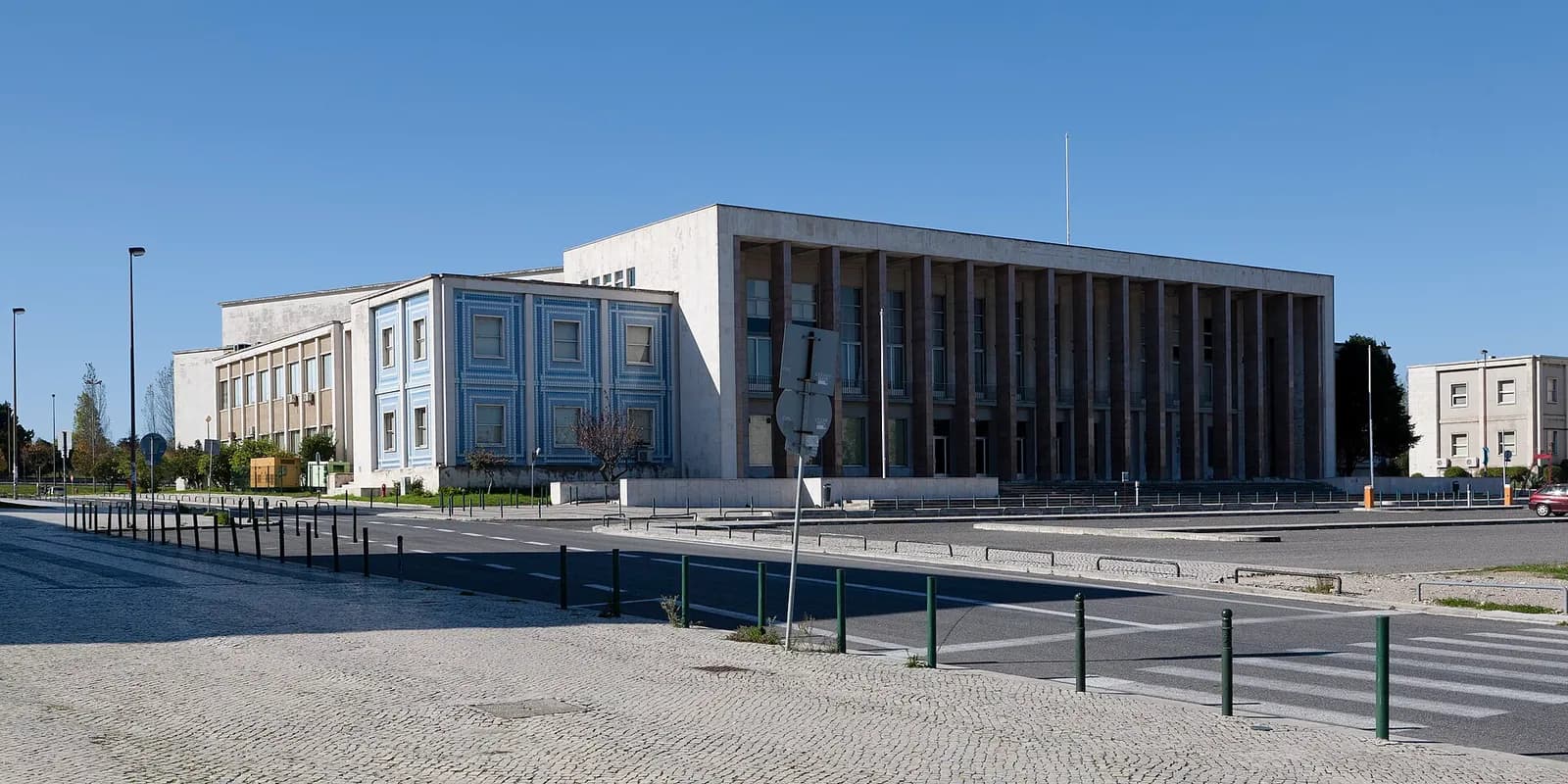
- On Saturday 24 March 1962 the Salazar government stopped the Dia do Estudante (Students' Day) in Lisbon and sent riot police to occupy the Cidade Universitária, where they charged students.
- Student leaders replied with a luto académico, or academic mourning: a boycott of classes, since strikes were illegal. It began on 26 March and, with pauses, lasted until 14 June.
- When Salazar's Council of Ministers banned a rescheduled Students' Day on 5 April, Marcelo Caetano, rector of the University of Lisbon, resigned. Six years later he succeeded Salazar as head of government.
- On 9 May about 80 students began a hunger strike in the university canteen; in the early hours of 11 May police cleared it and detained hundreds of students, about 1,500 in one count.
- On 29 June the ministry barred 21 Lisbon hunger strikers from every school in the city and 34 Coimbra students were punished. Since 1987, 24 March has been National Student Day.
Pebbles at the window
On Saturday 24 March 1962, a student of agronomy called Berta threw pebbles at a bedroom window on Avenida do Brasil in Lisbon. It was her boyfriend's 23rd birthday, but she had come to warn him. Eurico Figueiredo, a medical student who led the provisional students' association of the Faculty of Medicine, ran with her to the Cidade Universitária, the university campus nearby. The riot police had got there first.
That day was meant to be the Dia do Estudante, Students' Day, a programme of events ending in a dinner that the student associations organised. The associations had asked the Ministry of National Education and the rectorate for permission and heard nothing. When they went ahead, the ministry banned the event, saying the programme had not been handed in on time, and the police occupied the campus.
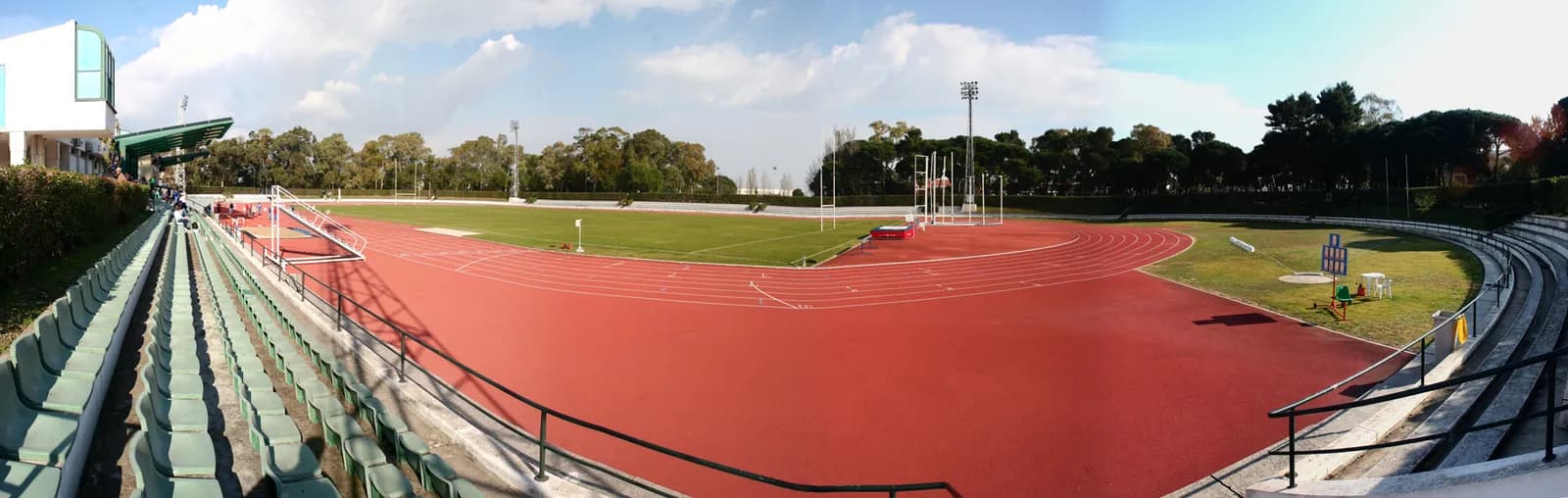
The student leaders went to the rector of the University of Lisbon, Marcelo Caetano, who asked the Minister of Education, Manuel Lopes de Almeida, to see them that afternoon. Thousands of students waited at the Estádio Universitário, where youth championships of the Mocidade Portuguesa, the regime's youth organisation, were under way. They turned their backs on the games. The minister did not receive the delegation, and two of its four members tried and failed to reach Salazar. By the time they got back, the police had charged.
Caetano arrived at the stadium in his official car, calm, in a hat and dark overcoat. With the police still in place, he proposed that students and teachers meet at the Castanheira de Moura restaurant in Lumiar instead of holding the Students' Day dinner. As the crowd walked down the Campo Grande towards it, the riot police charged again, injuring and arresting students. “They split my head open, which gave me a lot of credit,” Figueiredo recalled fifty years later (in translation).
A dictatorship and its students
Portugal in 1962 was a dictatorship, the Estado Novo (New State) of António de Oliveira Salazar, with censorship, a political police, the PIDE, riot police, and no right to strike, demonstrate or form free associations. University students were a small elite. About 30,000 of them studied at the country's four universities, and a Catholic Action survey directed by the sociologist Adérito Sedas Nunes found that only 5 to 6 per cent came from working-class or peasant families.
Students' Day had no fixed date. Associations had tried to hold and institutionalise it since the 1950s, and the authorities had let it go ahead from 16 to 19 March 1961, when the closing dinner, with hundreds of students, was held in the canteen of the Instituto Superior Técnico. In Lisbon the associations coordinated through the RIA (Reunião Inter-Associações), a semi-clandestine body whose secretary-general in 1962 was Jorge Sampaio, a sixth-year law student.
The regime was also under strain. The year 1961 had brought the seizure of the liner Santa Maria by opposition rebels, the start of the war in Angola, a failed coup involving the Defence Minister, Botelho Moniz, and India's invasion of Goa, and on New Year's Eve rebels attacked the barracks at Beja. In February 1962 the associations of Lisbon, Coimbra and Porto decided to set up a National Secretariat of Portuguese Students, and on 9 to 11 March they held a first National Students' Meeting in Coimbra, although the authorities had banned it.
Mourning, not striking
On Sunday 25 March the student leaders met at the association of the Instituto Superior de Ciências Económicas e Financeiras and declared a luto académico, an academic mourning. Strikes were illegal, so the word described a boycott of classes. Figueiredo remembered the decision being taken the evening before, on the restaurant steps. On Monday 26 March the Técnico's association was handing out leaflets calling for it, under a slogan the Communist Party later recalled as “ofenderam-te, enluta-te!” (“they offended you, go into mourning!”). Most faculties in Lisbon stopped, and Coimbra's students backed them.
At first the government gave way. On 27 March Lopes de Almeida received a delegation and lifted the ban, and Students' Day was rescheduled for 7 and 8 April. The students suspended the mourning. Then, after a Council of Ministers on Thursday 5 April, Salazar made his minister go back on his word: the new Students' Day was banned as well.
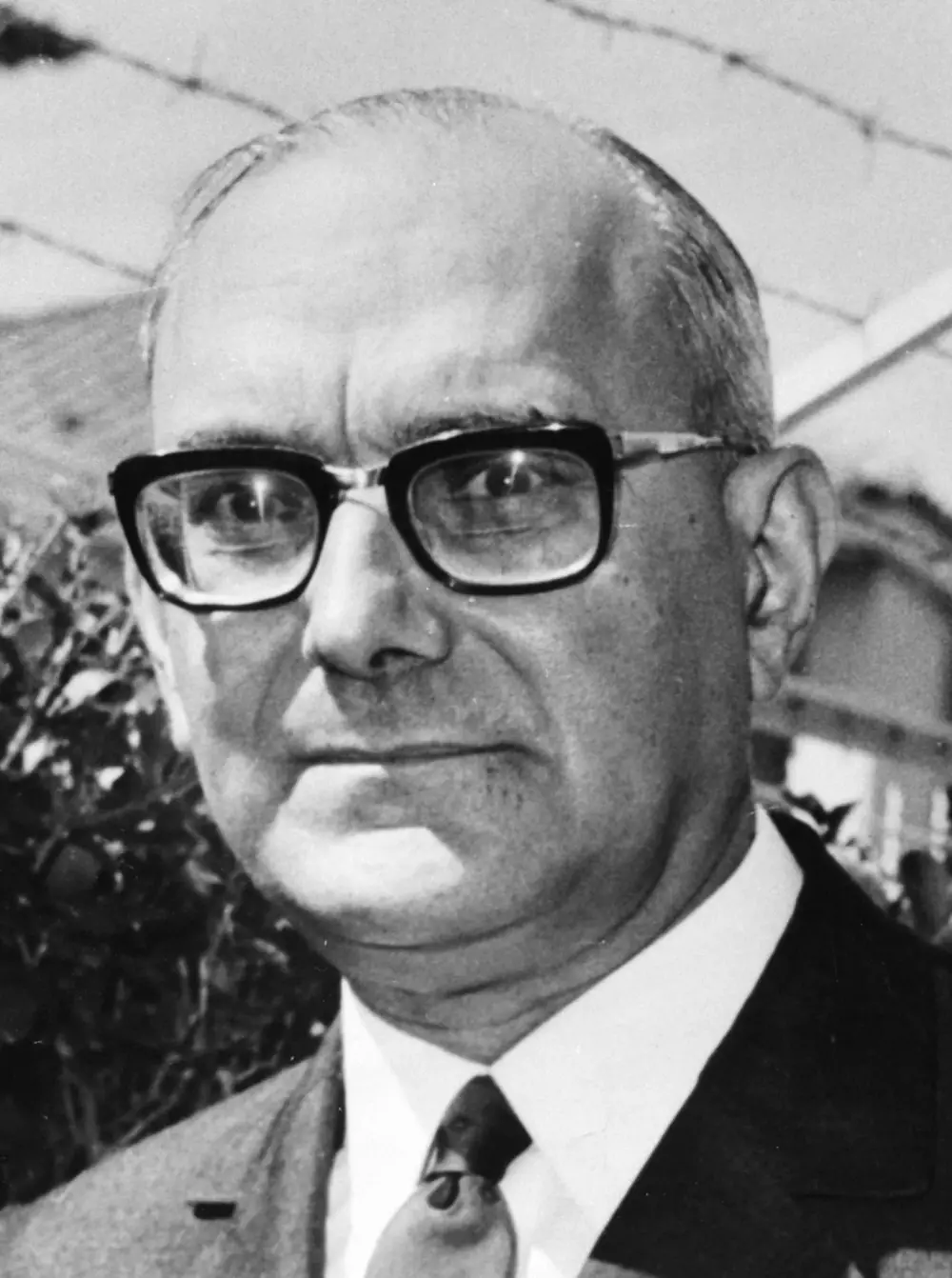
The decision also overruled the rector. Caetano had already asked to be relieved of his post on 25 March, according to a chronology published by Correio da Manhã in 2012. On 5 April, in the words of José Medeiros Ferreira, a student leader in 1962 and later a historian, he resigned “irreversibly and immediately” (in translation). Some faculty directors resigned with him. The University of Lisbon lists his rectorship as 1959 to 1962. His successor, from 1962, was Paulo Cunha.
The crackdown widened. On 7 April a student march to the Ministry of Education was broken up, and on 13 April the ministry suspended the elected boards of the Lisbon associations. In Coimbra the police surrounded students in the Academic Association on 20 April. Medeiros Ferreira noted that the director-general of the PIDE, Colonel Homero de Matos, also left his post that April.
Coimbra had its own fight. The rector there, Braga da Cruz, refused to speak to the students, who called for his resignation. The minister revoked the statutes of the Academic Association and named new presidents for its general assembly, its women's council and even its football section. All of them refused the posts, and a football match between Académica and Beira-Mar was called off.
The hunger strike in the canteen
Students were not the only people protesting. In late April two miners were killed when the GNR, the rural gendarmerie, broke up a protest at Aljustrel, and on May Day in Lisbon a 25-year-old, Estêvão Giro, was killed by the PSP, the public security police, near the Largo do Caldas. Farm workers in the Alentejo would soon stop work in their thousands to demand an eight-hour day.
The censored press printed mostly the ministry's official notes, so the students made their own news. Leaflets were handed out by hand, and open-air plenaries took decisions by majority vote. Maria João Gerardo, then a second-year student of Germanic languages, remembered that Carris conductors on Lisbon's buses and trams often let students ride free as a sign of support. The journalist Maria Antónia Fiadeiro, then a philosophy student, recalled wearing flat shoes to outrun the police, who sprayed blue ink at demonstrators to identify them.
On Wednesday 9 May about 6,000 students met in a plenary at the Estádio Universitário. They voted to extend the mourning to tests and final exams, and dozens of them began a hunger strike in the canteen of the Cidade Universitária. The idea came from Eurico Figueiredo. Hundreds of other students stayed in the canteen with them, partly because of rumours that the right-wing group Jovem Portugal meant to break in.
- Students at Portugal's four universities
- About 30,000
- Plenary of 9 May at the Estádio Universitário
- About 6,000 students
- Hunger strikers
- 80 or 81, by different counts
- Students removed from the canteen on 11 May
- About 1,500, in the highest count
- Women among those detained
- 70, in one press account
Accounts differ. Correio da Manhã's 2012 feature counts 81 hunger strikers, six of them women, and 1,500 supporters in the canteen; a Communist Party account gives 80 and “more than a thousand”. Most sources date the start of the strike to 9 May, but the main text of the 2012 feature gives 10 May.
On 10 May the University Senate asked the government to have the canteen cleared without force. At about three in the morning of Friday 11 May the police went in. According to the historian Luísa Tiago de Oliveira, the authorities took about 1,500 students out, identified them and held them for some time. The Museu do Aljube speaks of hundreds of arrests, and the party account puts the mass arrest on 10 May.
Men and women were taken to different places, the women to the Governo Civil, Lisbon's civil government building, with one of their teachers, Professor Lindley Cintra, at their side. Fiadeiro was among them. “I was arrested and I was happy,” she remembered (in translation). The women were released the next morning.
Lisbon talked of little else. University students were well regarded, since a degree was hard and expensive to get, and “seeing the police beat that elite was shocking,” said (in translation) the historian Fernando Rosas, who had been clubbed on 24 March as a secondary-school pupil. Medeiros Ferreira quoted the British ambassador as reporting on 11 May that most observers thought the situation more serious for the regime than the communists' street agitation.
Arrests, expulsions and the end of the mourning
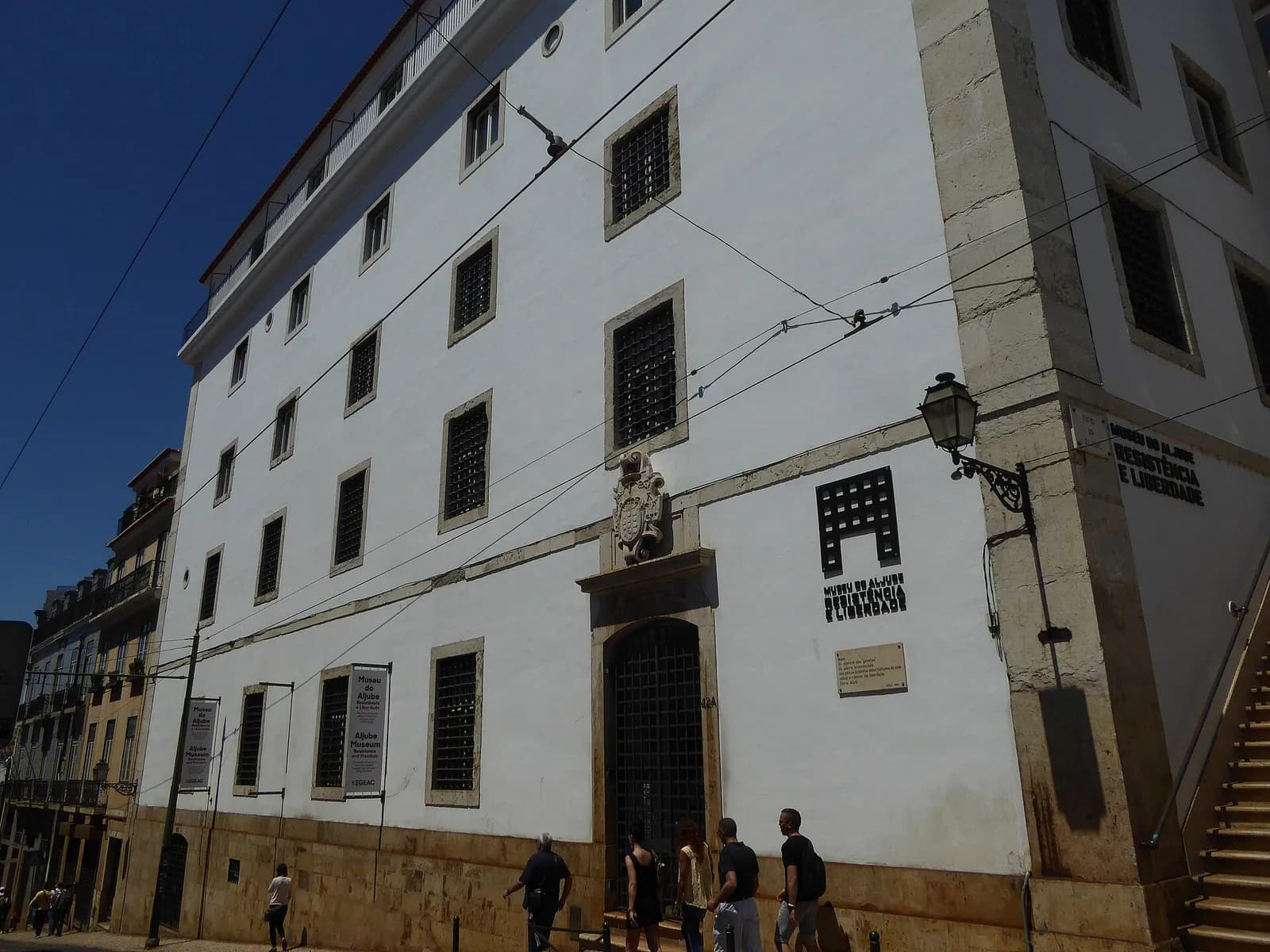
The regime now presented the movement as communist-led. On 21 May it published Decree-Law 44 357, which gave the Ministry of Education stronger disciplinary powers. Between 24 and 28 May the police arrested Communist students, among them José Bernardino of the Instituto Superior Técnico and, on 28 May, Eurico Figueiredo, whose face had appeared on “Wanted” posters around Lisbon. He was held in the Aljube, a political prison beside Lisbon Cathedral, until late July and expelled from the University of Lisbon.
On 4 June the police charged students and teachers at the Faculty of Medicine, and Lindley Cintra was badly beaten. But a strike that included exams was a heavy cost for students and their families: it could mean losing a grant, or being called up and sent to the war in Angola. The Catholic students of the JUC (Juventude Universitária Católica) and many others did not support it, and on 14 June a plenary at the Instituto Superior Técnico called the mourning off.
The protests did not stop at once. On 20 June students marched towards the Aljube to support Figueiredo; riot police charged them near the cathedral, and they went on down to the Baixa shouting “Liberdade! Autonomia!” (“Freedom! Autonomy!”).
The punishments came at the end of the academic year. By a ministerial order of 29 June, 21 students who had taken part in the hunger strike were barred from every school in Lisbon. In Coimbra, 34 students received sentences ranging from six months' expulsion from the university to two years' exclusion from every school in the country. Medeiros Ferreira counted about 50 students expelled across the three university cities. According to the 2012 feature, Isabel Vila Maior, a married arts student, was the only one of the women hunger strikers to be expelled in Lisbon. Some of those expelled in Lisbon went on to study in Coimbra.
| When | Who | Penalty |
|---|---|---|
| 29 June 1962 | 21 Lisbon hunger strikers | Excluded from all schools in Lisbon |
| 1962 | 34 Coimbra students | From six months' expulsion from the university to two years' exclusion from all schools in Portugal |
| 1964 | 22 members of Lisbon association boards | Expelled from the University of Lisbon for various periods, over a new Students' Day set for 14 and 15 March |
| 1965 | 53 students | Excluded from all schools in Portugal for three months to eight years |
| 1965 | 124 students | Suspended for shorter periods |
Figures as given by José Medeiros Ferreira, a student leader in 1962 and later a historian.
9 to 11 March 1962
First National Students' Meeting held in Coimbra despite a ban
24 March
Students' Day banned; riot police occupy the Cidade Universitária and charge
26 March
Academic mourning (class boycott) begins in Lisbon
27 March
Minister lifts the ban; Students' Day reset for 7 and 8 April
5 April
Council of Ministers bans it again; Caetano resigns as rector
13 April
Ministry suspends the boards of Lisbon's student associations
9 May
Plenary of about 6,000; hunger strike begins in the university canteen
11 May, about 3 a.m.
Police clear the canteen and detain about 1,500 people
28 May
Eurico Figueiredo arrested and taken to the Aljube
4 June
Police charge at the Faculty of Medicine; Lindley Cintra beaten
14 June
Plenary at the Técnico ends the mourning
29 June
Ministerial order bars 21 hunger strikers from all Lisbon schools
After 1962
The expulsions closed the academic year, but student protest did not end. Arrests of students followed every year, according to Fernando Rosas. Students tried again to hold Students' Day and were refused; in 1964 the president of the Técnico's association, Jorge Dias de Deus, was among those expelled. In 1965, after a Communist Party official informed on them, the PIDE got hold of about 500 names of communists and association activists and arrested dozens of students in a few days.
The movement also changed character. Before 1962, one association leader told Oliveira, students had fought to improve the system; afterwards, many concluded that it could not be improved and had to be brought down. The researcher Guya Accornero describes the crisis as the moment the student movement moved beyond the corporate demands that had dominated it until then.
In September 1968, after a fall had left Salazar unable to govern, Marcelo Caetano, the rector who had resigned in 1962, replaced him as head of government. Under him the next great student revolt broke out in Coimbra, where on 17 April 1969 the president of the Academic Association, Alberto Martins, was refused the floor at the opening of the new Mathematics building. He was arrested that night.
The generation of 1962
Several students of 1962 held high office after the revolution of 25 April 1974. Jorge Sampaio became mayor of Lisbon and was President of the Republic from 1996 to 2006; when he died in 2021, the government's statement declaring national mourning recalled him as one of the leaders of the 1962 crisis. José Medeiros Ferreira, who followed him at the head of the RIA, became foreign minister. João Cravinho was later a minister, and so was António Correia de Campos, who had joined the hunger strike. The doctor Isabel do Carmo was another student of 1962.
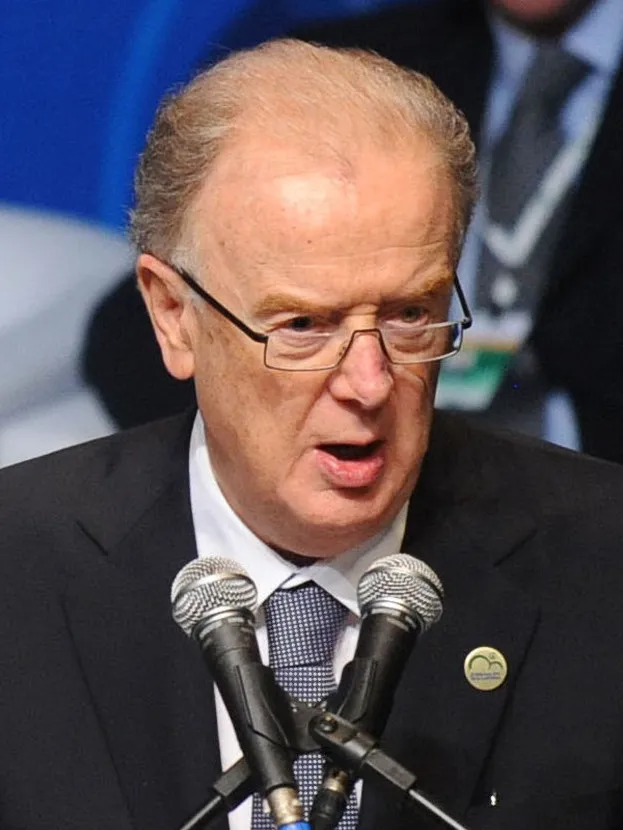
“The 1962 crisis marked my life for ever and made me a different person from the one I was before. You cannot live through an experience like that and stay the same.”
Others who were there go further. For Fernando Rosas, the students of 1962 became the first permanent source of opposition to the regime: “That was where the regime lost its youth, lost its elites and lost its future” (in translation). Correia de Campos called the academic mourning a seedbed of the political leaders of democratic Portugal.
Students enrolled in higher education in Portugal, 1950 to 1980
students
University students were still a small elite in 1962, but their numbers were growing fast. National figures as given by Luísa Tiago de Oliveira in her history of student activism at the Instituto Superior Técnico.
Show the data
| Enrolled students | |
|---|---|
| 1950 | 13,489 |
| 1960 | 23,877 |
| 1970 | 46,019 |
| 1980 | 81,379 |
In 1987 the Assembly of the Republic made 24 March the Dia Nacional do Estudante, National Student Day, in homage to the student movement of the early 1960s. Law 19/87 of 1 June fixed the date, and a 1988 decree-law gave student associations the job of organising it. The Museu do Aljube calls it a day of struggle for the right to education and for students' rights. On 24 March 2024 the University of Lisbon held a colloquium on the crisis at its Reitoria; the programme listed President Marcelo Rebelo de Sousa at the opening session and a screening of RTP's documentary about 1962.
See it today
FAQs
Why is 24 March National Student Day in Portugal?
On 24 March 1962 the Salazar government banned the Students' Day organised by the student associations and riot police charged students at the Cidade Universitária in Lisbon. The months of protest that followed are known as the academic crisis of 1962. In 1987 the Assembly of the Republic made 24 March the Dia Nacional do Estudante in homage to that movement.
What was the luto académico?
Literally “academic mourning”, it was a boycott of classes declared by the Lisbon student leaders on 25 March 1962 and begun the next day. Strikes were illegal under the Estado Novo, so the students avoided the word. It was suspended and resumed as negotiations rose and fell, extended to exams on 9 May and called off on 14 June 1962.
Why did Marcelo Caetano resign as rector?
Caetano, rector of the University of Lisbon since 1959, had authorised Students' Day and tried to mediate. When the Council of Ministers banned it again on 5 April 1962, overruling him, he resigned. According to a chronology published in 2012, he had already asked to be relieved on 25 March, the day after the police occupied the campus. In 1968 he succeeded Salazar as head of government.
How many students were arrested in the 1962 hunger strike?
Counts differ. On 9 May 1962 about 80 students began a hunger strike in the canteen of the Cidade Universitária, supported by more than a thousand others. In the early hours of 11 May the police cleared the canteen; the historian Luísa Tiago de Oliveira says about 1,500 students were detained for some time, while the Museu do Aljube speaks of hundreds of arrests. On 29 June 21 of the hunger strikers were barred from every school in Lisbon.
Who led the 1962 student protests?
The Lisbon associations coordinated through the RIA, whose secretary-general was the law student Jorge Sampaio, later President of Portugal. Other leaders included Eurico Figueiredo of Medicine, who proposed the hunger strike, the Catholic student leader Vítor Wengorovius and José Medeiros Ferreira, who succeeded Sampaio at the RIA.
On the timeline
Open the timelineNearby moments from dictatorship and the estado novo (1926–1974).
Hermínio da Palma Inácio and fellow opponents of the Salazar regime hijack a TAP Super Constellation flying from Casablanca to Lisbon, throw thousands of anti-regime leaflets over Lisbon and other parts of the country, then make the crew fly on to Tangier, in Morocco. It was the first political hijacking of a plane in Portugal.
Governor-General Manuel Vassalo e Silva surrenders Goa, Daman and Diu to the Indian army, which had crossed the borders on 17 and 18 December, ending 451 years of Portuguese rule in Goa. Salazar had ordered his roughly 3,500 soldiers to fight to the death against an Indian force put at 30,000 to 45,000 or more; Vassalo e Silva chose to save lives and was later expelled from the army.
In the early hours of New Year's Day, several dozen civilian and military rebels led by Captain João Varela Gomes and Manuel Serra storm the 3rd Infantry Regiment barracks in Beja, hoping to spark a rising against Salazar. General Humberto Delgado had slipped secretly into Portugal to lead it, but the assault fails and Varela Gomes is gravely wounded.
The 1962 academic crisis
The Salazar regime bans the 'Dia do Estudante' (Students' Day) celebrations in Lisbon, setting off the 1962 academic crisis — months of strikes, protests and police charges that shaped a generation of opponents of the dictatorship. Portugal still marks 24 March as National Student Day.
Benfica retain the European Cup, beating Real Madrid 5–3 in the final at Amsterdam's Olympic Stadium. Despite a Puskás hat-trick for the five-time champions, two goals from the 20-year-old Eusébio seal Benfica's second consecutive title.
Before dawn, PAIGC guerrillas fire on the Portuguese barracks at Tite, in Portuguese Guinea. The PAIGC and Portuguese military historians date the war from that night, though there had been smaller clashes in 1961 and 1962.
Birth in Beira, Mozambique, of José Rodrigues dos Santos, who became one of Portugal's best-known television journalists as an RTP news anchor and, alongside it, one of the country's best-selling novelists.
Coming up in history
All long reads 26 March 1211The death of Sancho I, 1211: the king who settled Portugal's frontier
 27 March 1905Kaiser Wilhelm II in Lisbon, 1905: three days on the way to Tangier
 28 March 1810Alexandre Herculano: the soldier-historian who took the miracle out of Ourique
 29 March 1809The Ponte das Barcas disaster: Porto's bridge of boats, 29 March 1809
17 sources
Archives, scholarship and reporting this article was checked against.
- 1
O ativismo estudantil no IST (1945-80) (Luísa Tiago de Oliveira, with Marta Silva)Repositório ISCTE-IUL, 2013 (book chapter, ISBN 978-989-732-153-5)
- 2O dia em que o regime perdeu o futuro (with “A Universidade contra o regime” by José Medeiros Ferreira and a chronology of 1962)Correio da Manhã, Domingo magazine, 18 March 2012
- 3
Manifestação de apoio a Eurico FigueiredoMuseu do Aljube Resistência e Liberdade
- 4Sampaio, Salazar e Caetano: O Confronto de 1962, episode 2 (documentary by Jacinto Godinho and Carlos Oliveira)RTP Play, first shown on RTP1 on 28 March 2022
- 5
Review of Guya Accornero, The Revolution before the Revolution: Late Authoritarianism and Student Protest in Portugal (Elísio Estanque and Dora Fonseca)Análise Social, vol. 53, no. 227 (2018), pp. 491-495
- 6
Comunicado do Conselho de Ministros de 24 de março de 2016: Dia Nacional do EstudanteGovernment of Portugal
- 7Estudantes desafiaram Salazar há 60 anosRTP Notícias (Lusa), 22 March 2022
- 8Crise académica de 1962 revelou impreparação das autoridades, afirma Correia de CamposObservador (Lusa), 22 March 2022
- 9Sampaio, Salazar e Caetano: O Confronto de 1962, episode 1 (documentary by Jacinto Godinho and Carlos Oliveira)RTP Play, first shown on RTP1 on 21 March 2022
- 10
A crise académica de 1962: notas sobre o contexto histórico (Albano Nunes)O Militante, no. 257, March/April 2002 (Portuguese Communist Party)
- 11
Reitores da ULisboaUniversidade de Lisboa
- 12
Diário do Governo, I série, n.º 229, 27 September 1968: Decreto n.º 48 597Imprensa Nacional, via Diário da República Eletrónico
- 13
Forte de Santo António da BarraCâmara Municipal de Cascais, Cascais Cultura
- 14
- 15
Decreto-Lei n.º 400/88, de 9 de novembro (regulates Lei n.º 19/87, de 1 de junho, Dia Nacional do Estudante)Diário da República
- 16
- 17
Image credits
- The Reitoria (rectorate) of the University of Lisbon at the Cidade Universitária, designed by the architect Pardal Monteiro, in 2012. In March 1962 students gathered in front of it to protest when the police occupied the campus. Manuelvbotelho, CC BY-SA 3.0, via Wikimedia Commons.
- The Estádio de Honra of the Estádio Universitário de Lisboa in 2012. Students gathered at the university stadium on 24 March 1962, and about 6,000 met there on 9 May for the plenary that launched the hunger strike. stadionpanorama, CC BY-SA 2.0, via Wikimedia Commons.
- Marcelo Caetano in a photograph the Dutch agency Anefo dated 4 October 1968, a week after he succeeded Salazar. Six years earlier he had resigned as rector of the University of Lisbon over the 1962 ban. Anefo, CC0, via Wikimedia Commons.
- The former Aljube prison near Lisbon Cathedral, where Eurico Figueiredo was held from late May to late July 1962. It is now the Museu do Aljube, a museum of resistance and freedom (photographed in 2017). Ardfern, CC BY-SA 4.0, via Wikimedia Commons.
- Jorge Sampaio speaking at the UN Alliance of Civilizations forum in Rio de Janeiro in May 2010. In 1962 he was the secretary-general of the RIA, which coordinated Lisbon's student associations; he was President of Portugal from 1996 to 2006. Wilson Dias/ABr, CC BY 3.0, via Wikimedia Commons.