

Lagoa Henriques, the sculptor who sat Pessoa down in the Chiado
He trained under Barata Feyo, changed how drawing was taught in Porto and Lisbon, and made monuments to poets across Portugal. The one everybody knows is a bronze Pessoa at a café table, with a chair left free for you.
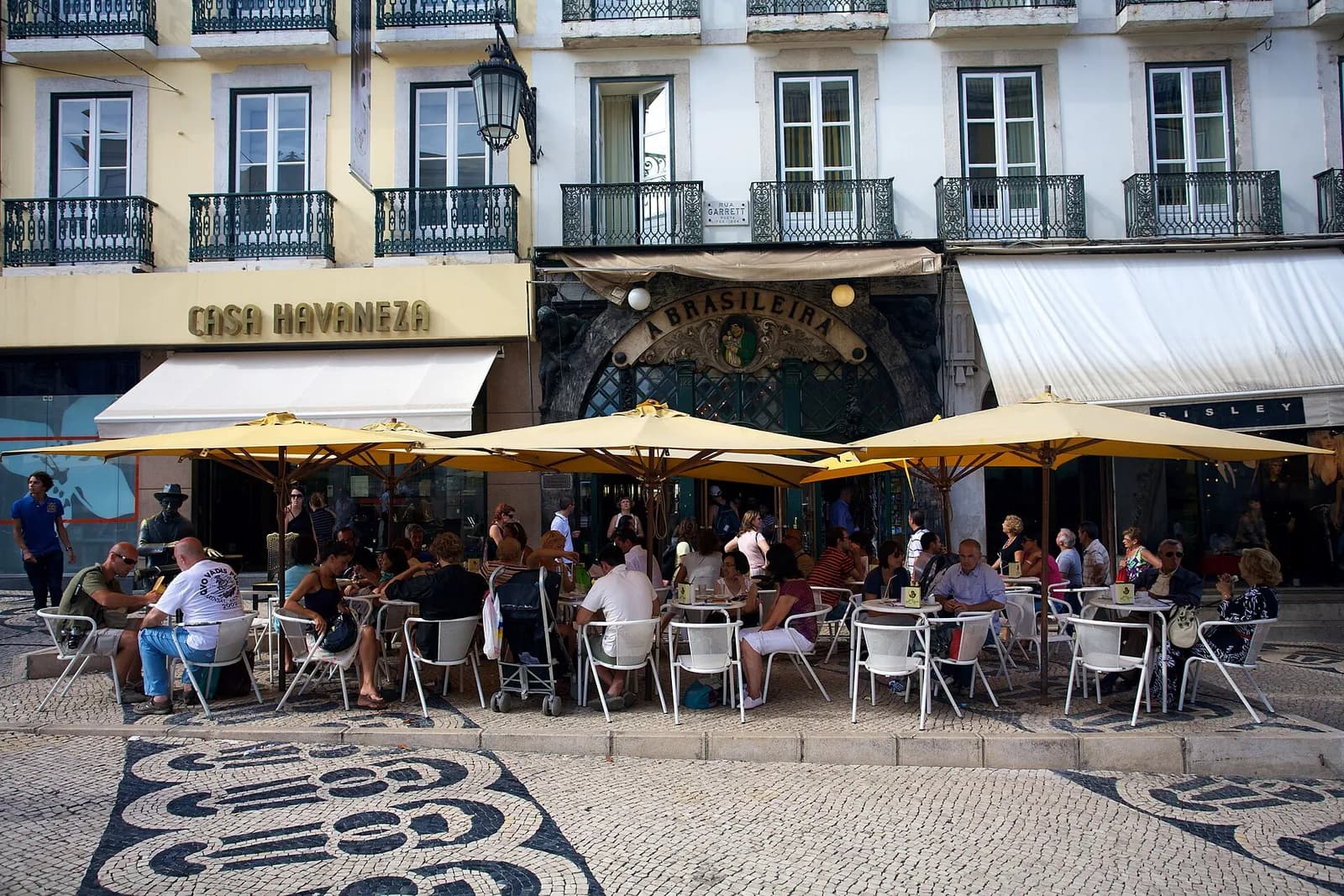
At a glance
- António Augusto Lagoa Henriques, born in Lisbon on 27 December 1923, died there on 21 February 2009, aged 85, after a long illness.
- He studied sculpture in Lisbon and Porto, where he was a pupil of Barata Feyo, and finished the course in 1954 with the top mark of 20.
- As a teacher of drawing in Porto and, from 1966, in Lisbon, he took students out of the classroom and in 1974 created a new subject, Visual Communication.
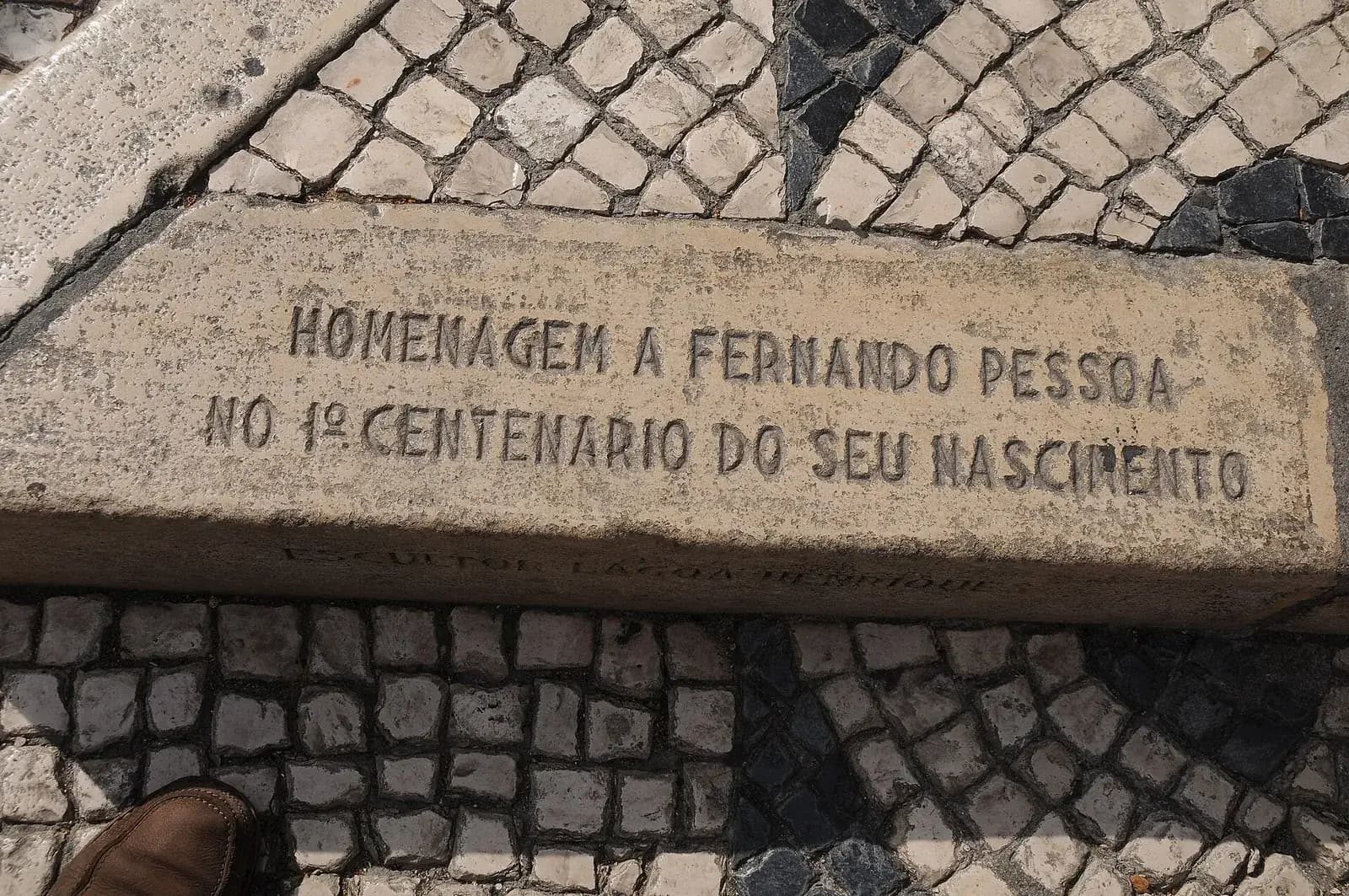
- His bronze Fernando Pessoa, seated at a café table outside A Brasileira in the Chiado, was put in place in 1988, a hundred years after the poet's birth.
- He left his studio, collections and library of more than 3,000 publications to the Lisbon Faculty of Fine Arts, which named its auditorium after him in April 2009.
A chair left free on Rua Garrett
On the pavement outside A Brasileira, at the top of Rua Garrett, a thin man in a hat and bow tie sits with his legs crossed at a small round table. He is made of bronze, and so are his chair, the table and a second, empty chair across from him. There is no pedestal. Visitors sit in the empty chair to have their picture taken with Fernando Pessoa.
The man who made him, the sculptor Lagoa Henriques, died in Lisbon on 21 February 2009, aged 85, after a long illness. Tributes lead with the Pessoa. In 2024 the Museu Nacional Soares dos Reis in Porto, which owns one of his early bronzes, introduced him as the author of “the iconic statue of Fernando Pessoa in Lisbon’s Chiado district”.
That one statue hides a long working life. Lagoa Henriques spent more than 25 years teaching drawing at the fine arts schools of Porto and Lisbon, made monuments to poets from Constância to Loulé, presented arts programmes on television and filled a studio on the Avenida da Índia, in Belém, with shells, masks, tree trunks and books.
The poet and the café
Fernando Pessoa was born on 13 June 1888 on the fourth floor of a building in the Largo de São Carlos, a short walk from where the statue now sits. He died at the Hospital de São Luís dos Franceses on 30 November 1935. In between he earned his living drafting letters in English and French for Portuguese firms, and wrote poetry under his own name and under invented poets with their own biographies and styles, which he called heteronyms.
Most of that work was unknown when he died, and his reputation grew afterwards. In 1979 the state bought his papers, and in 1985 his remains were moved to the Jerónimos Monastery. The story of his death and posthumous fame is told in our article on 30 November 1935.
A Brasileira opened in 1905 in a former shirt maker’s shop at Rua Garrett 120. Its founder, Adriano Telles, had made his money in the coffee trade in Brazil and set out to teach the Portuguese to drink coffee; after a remodelling in 1908 the café sold it by the cup, and for a time gave it away. By the 1920s it was a meeting place for writers and artists, and in 1925 its walls were hung with paintings by modernists including Almada Negreiros and Eduardo Viana.
Pessoa was one of the regulars. His biographer Richard Zenith dates his café habit to his two years on the arts course at the Curso Superior de Letras, which he began in 1905. He went to more than one café every day: A Brasileira in the Chiado, its sister branch on the Rossio and the Martinho da Arcada on the Praça do Comércio. From 1920, Zenith says, it was always the Martinho da Arcada.
From the Baixa to Barata Feyo
António Augusto Lagoa Henriques was born in Lisbon on 27 December 1923, the son of Delfim Augusto Henriques and Palmira C. de Almeida Lagoa Henriques. The family lived first in the Bairro dos Açores, in Rua da Ilha Terceira, and moved after his grandmother’s death to his grandfather’s second-floor flat at Rua dos Douradores 21, in the Baixa. He spent his holidays in Nazaré until he was about 20.
The philosopher and teacher Agostinho da Silva, who gave him private lessons, advised him to take up art. In 1945 he enrolled in the special sculpture course at the Lisbon School of Fine Arts, and he first exhibited in 1946. Three years after enrolling he asked to transfer to Porto to study under the sculptor Barata Feyo, and there he was also taught by the architect Carlos Ramos and the painter Dórdio Gomes.
He finished the higher course in sculpture at the Porto school in 1954, and his final work was given 20 out of 20, the top of the Portuguese scale. Before that he had already won Soares dos Reis sculpture prizes in 1950, 1952 and 1953, and in 1953 he made his international debut at the second São Paulo Biennial in Brazil.
The Museu Nacional Soares dos Reis in Porto has his Cabeça de Rapariga (Head of a Girl) of 1953 on show: a young woman’s head in bronze on a granite cylinder, the hair cut at chin height under a small beret. His work is also in the Chiado Museum and the Gulbenkian in Lisbon and the Museum of Modern Art in São Paulo. In 1958 he won a medal of honour at the Brussels World’s Fair.
A teacher who took drawing outside
He began teaching at the Porto school in 1959 and taught drawing there until 1966. Under the 1957 reform he gave his students exercises in drawing tree bark, fruit skins, the grain of sawn wood, cloth and stones, to explore texture, form, space and light.
In 1966 he moved, at his own request, to the Lisbon School of Fine Arts, and taught there until the late 1980s. He took the drawing class out of the building and into the street, using everyday life as the model. In 1974, when the school’s courses were restructured, he created a new subject, Visual Communication, which joined gesture and word, writing and drawing. From 6 June 1981 he chaired the school’s scientific and teaching council.
Sources differ slightly on the dates: a 2024 study based on his papers gives 1959 to 1966 in Porto and 1966 to 1988 in Lisbon, while Lisbon City Council’s toponymy office gives 1960 to 1965 and 1966 to 1987. In the 1990s he taught drawing at the Lisbon School of Conservation and Restoration, in 2000 he became a guest professor at the Faculty of Fine Arts of the University of Lisbon, and in 2008 an emeritus professor at the Universidade Autónoma de Lisboa.
Heritage became a second career. In 1982 the Portuguese Institute of Cultural Heritage brought him in to coordinate a project to make the country’s heritage better known. The toponymy office says the work ran until 1984, the Serigrafia biography that it ended in 1983. In 1984 he sat on the jury of a competition for a medal in honour of the modernist Almada Negreiros.
He also taught on television. His programmes, some of which survive in the archives of RTP, then the country’s only broadcaster, included Desenho: Risco Inadiável, Pare, Escute e Olhe, Lisboa Revisitada and, in 1985, Portugal Passado Presente. In it he travelled the country looking at folk architecture, crafts, customs and farm work alongside fine art.
An episode of the second series on the Alto Alentejo dwelt on the clay figures of Estremoz, Arraiolos rugs and the pottery of Redondo. “It is interesting how birds appear as a motif, as inspiration for a whole series of works of craft and even of fine art,” he told viewers (translated from Portuguese). Mateus also quotes him on what the programme was for.
“Our programme sought above all to make you aware of the quality of life, artistic values and the beauty of everyday life, and to make us answer for our passivity and unawareness in the face of a heritage that is decaying.”
Poets in bronze
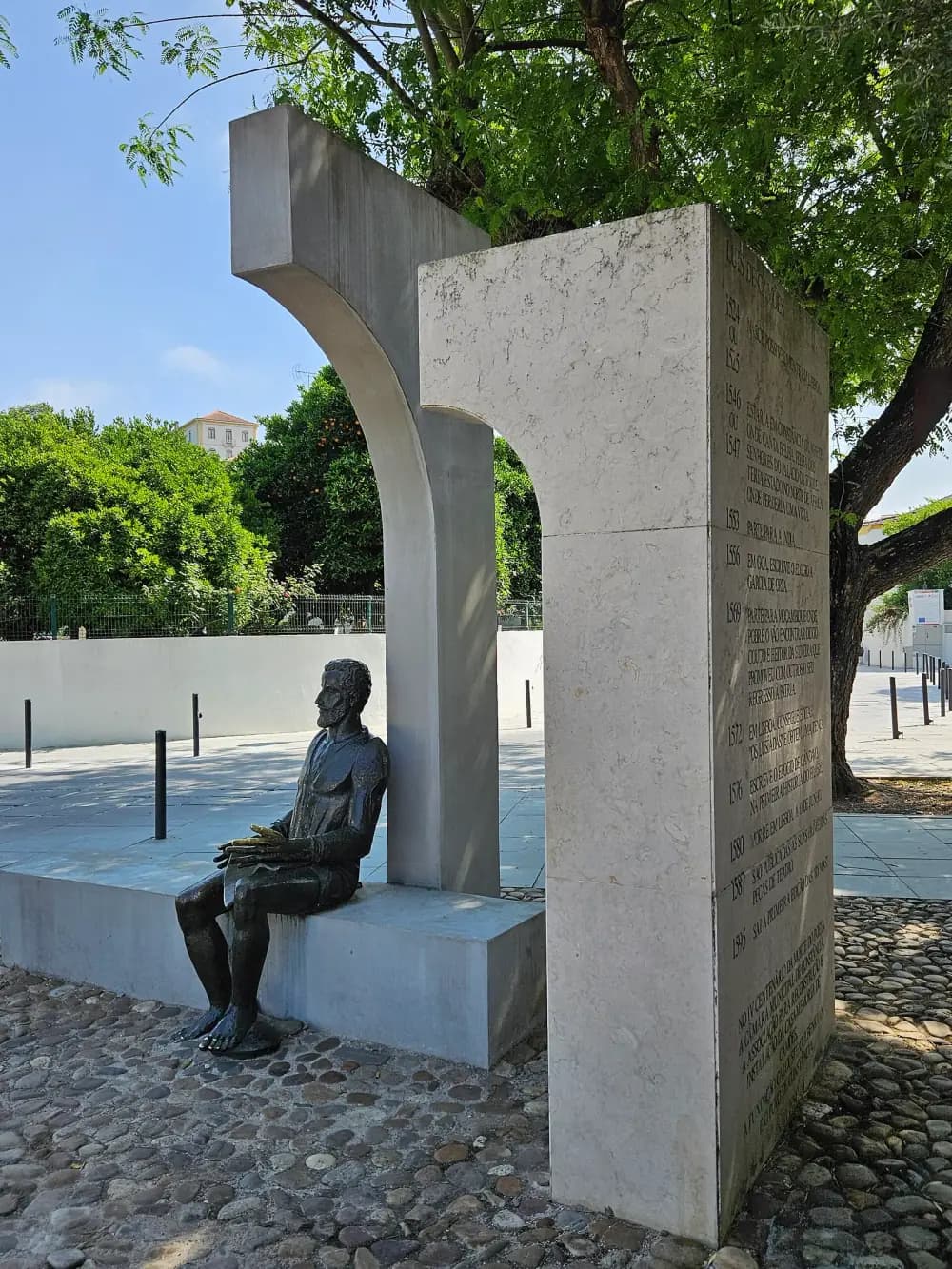
Much of his public work honours writers. Joana Souto Mateus, a librarian at the Lisbon Faculty of Fine Arts who studies his bequest, notes that most of his many public sculptures depict poets. Before the Pessoa there was a Camões in Constância, on the Tagus, in 1981; after it came the folk poet António Aleixo in Loulé in 1989 and the novelist Alves Redol in Vila Franca de Xira in 2004.
| Work | Place | Year |
|---|---|---|
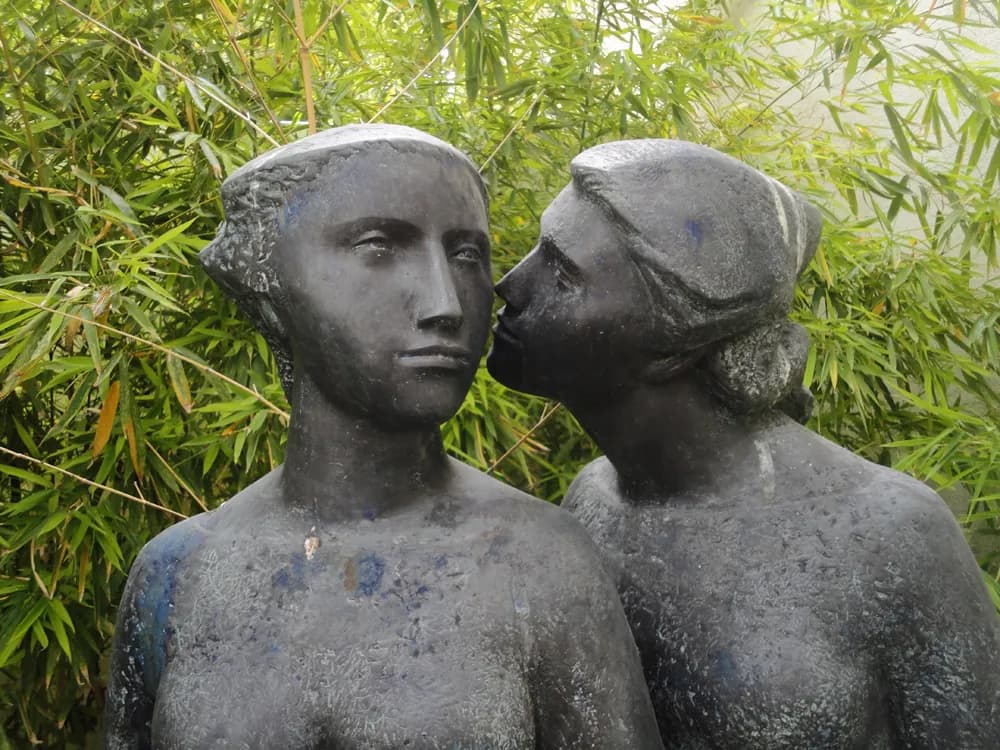
| O Segredo (The Secret), bronze | Jardim Amália Rodrigues, Lisbon | 1961 or 1972 (sources differ) |
| Leda e o Cisne (Leda and the Swan) | Portuguese Embassy, Brasília | 1977 |
| Monument to Camões | Constância | 1981 |
| Tomb of Fernando Pessoa | Jerónimos Monastery, Lisbon | 1985 |
| Fernando Pessoa | Outside A Brasileira, Chiado, Lisbon | 1988 |
| António Aleixo | Loulé | 1989 |
| Memorial to Antero de Quental | Jardim do Príncipe Real, Lisbon | 1991 |
| Alves Redol | Vila Franca de Xira | 2004 |
| Guerra Junqueiro | Praça de Londres, Lisbon | Not dated in the sources |
Years as given by Mateus (2024), the Lisbon toponymy office (2018) and the Centro Português de Serigrafia. The toponymy office dates O Segredo to 1961, the Serigrafia biography to 1972. The Pessoa tomb date is from the Jerónimos Monastery.
In 1985, the fiftieth anniversary of Pessoa’s death, the poet’s remains were moved to the cloister of the Jerónimos Monastery in Belém, and Lagoa Henriques made the tomb. Three years later he came back to Pessoa for the Chiado.
The Aleixo shows how he worked. His copy of the folk poet’s Inéditos carries a dedication from Aleixo’s son dated 1984, when work on the Loulé monument began. Tucked inside are photocopies of Aleixo’s poem “A arte”, with Lagoa Henriques’s notes on the back about olive presses and oil-making in Loulé.
There was decorative work too: sculptural motifs for the Rex, Ritz and Altis hotels in Lisbon, bas-reliefs for the law courts of Lisbon and Gouveia, and statues of the Empress Sissi and Pope John Paul II in Madeira. In Macau he made Year of the Dog and a piece called Encounter between West and East, near the ruins of São Paulo.
Pessoa at A Brasileira, 1988
The Pessoa was made in the 1980s and put in place outside A Brasileira in 1988, a hundred years after the poet’s birth. A 2022 graduation project at the Royal Academy of Art in The Hague says the city council commissioned it; the council sources consulted for this article do not say. None of them gives the day of the unveiling either. The Centro Nacional de Cultura’s guide to the Chiado calls it a stop nobody should miss.
- Sculptor
- Lagoa Henriques (1923–2009)
- Subject
- Fernando Pessoa (1888–1935)
- Material
- Bronze: figure, chair, table and a second, empty chair
- Placed
- 1988, the centenary of Pessoa’s birth
- Where
- Outside A Brasileira, Rua Garrett 120, Chiado, Lisbon
- Pedestal
- None: it sits on the pavement
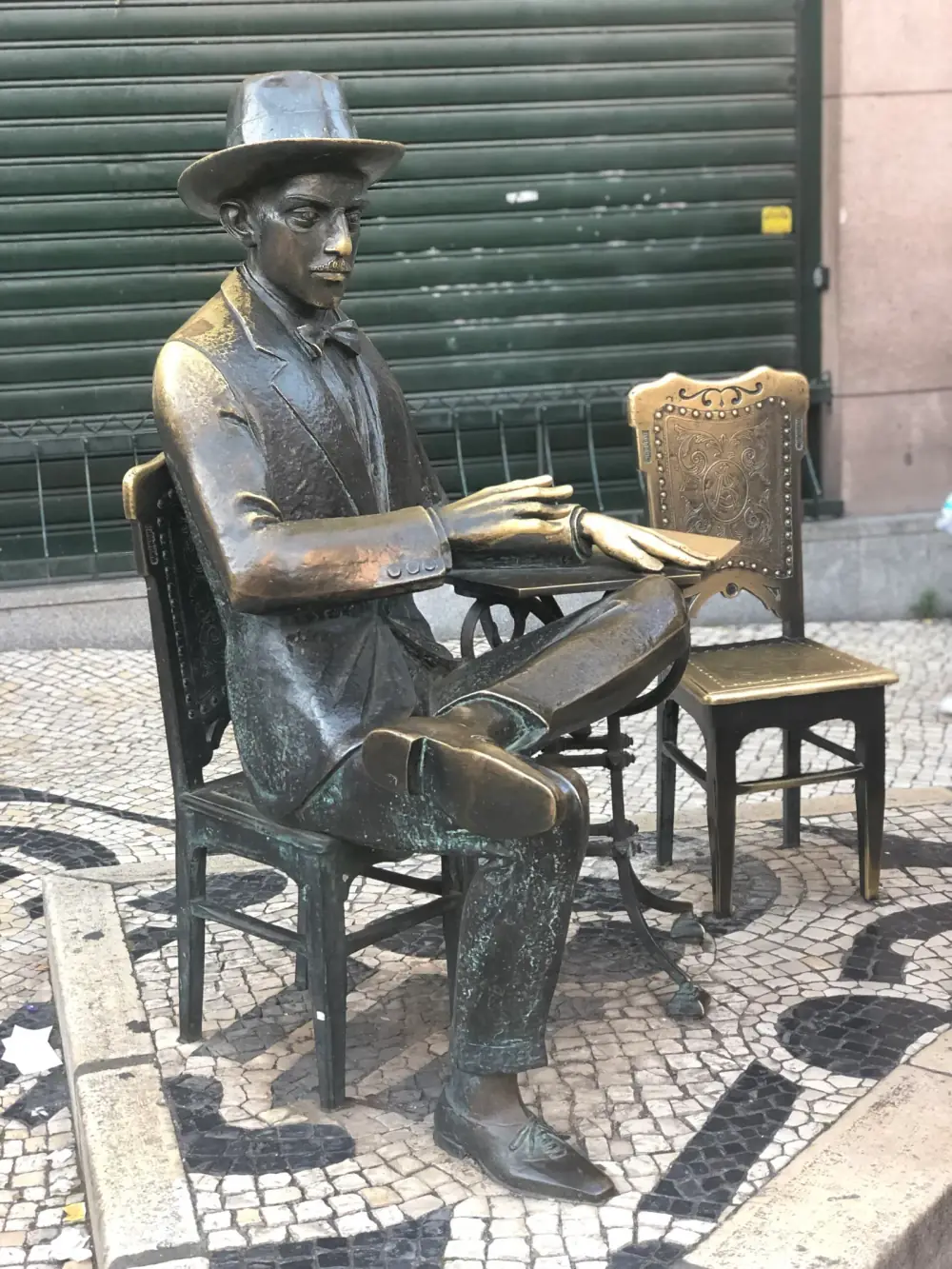
Lagoa Henriques gave Pessoa no plinth. He put him at street level, at a table, with an empty chair that a visitor can take. A student at the Royal Academy of Art in The Hague, writing in 2022, called the result a statue with “one where the poet sits and one for you, the viewer turned participant”.
The council’s Lojas com História programme, which lists the city’s historic shops, says Lagoa Henriques “probably had no idea” his bronze would become the most photographed in the country. Visit Lisboa, the city’s tourism body, calls it one of the most photographed spots in Lisbon. Neither gives a figure.
1988 was also the year of the Chiado fire. On 25 August a fire that broke out in the Grandella department store destroyed 18 buildings in Rua Garrett, Rua do Carmo and Rua Nova do Almada, killed a firefighter and a resident and injured at least 50 people. A Brasileira, higher up Rua Garrett, is still open.
Death in 2009 and a studio given away
Lagoa Henriques died in Lisbon on 21 February 2009, aged 85, after a long illness. In his will he left everything to the Faculty of Fine Arts of the University of Lisbon, the successor of the school where he had taught: his sculpture and drawings, his collections, his papers and his library. In April 2009, the faculty named its auditorium after him.
His last studio was his second. The first was in the riverside pavilions at Belém left over from the Exposição do Mundo Português, the regime’s great exhibition of 1940. After a fire there in the early 1970s the city council gave the sculptors who had lost their studios new spaces, and Lagoa Henriques got warehouses on the Avenida da Índia. The building now houses the CAL, the Lisbon Archaeology Centre.
He collected as widely as he taught: shells, nautilus and whelk, folk pottery, African and Japanese masks, Chinese and Japanese fans, musical instruments, old wooden statues, paintings and tree trunks. His library alone ran to more than 3,000 publications, many still being catalogued in 2024. In 2019 the faculty’s gallery showed part of the collection in an exhibition that evoked his studio.
27 December 1923
Born in Lisbon
1945
Enrols in the sculpture course at the Lisbon School of Fine Arts
1948
Transfers to Porto to study under Barata Feyo
1953
Shows at the second São Paulo Biennial
1954
Completes the higher sculpture course in Porto with 20 out of 20
1959
Begins teaching at the Porto school
1966
Moves to the Lisbon School of Fine Arts to teach drawing
1974
Creates the subject of Visual Communication
1985
Pessoa's tomb at the Jerónimos; Portugal Passado Presente on RTP
1988
The Pessoa is placed outside A Brasileira
4 February 1989
Grand Cross of the Order of Merit
21 February 2009
Dies in Lisbon, aged 85
April 2009
The Lisbon Faculty of Fine Arts names its auditorium after him
24 July 2015
Lisbon names Rua Lagoa Henriques, beside his old studio
Why it still matters
The state honoured him in his lifetime. The presidency’s register of honours lists him as a Grand Cross of the Order of Merit from 4 February 1989; the toponymy office dates the award to 1988.
The street name came in 2015. By a municipal notice of 24 July that year, Lisbon named Rua Lagoa Henriques, the street beside his old studio on the Avenida da Índia, in Belém. The proposal came from Maria Calado, a member of the city’s toponymy commission. Nazaré, where he spent his childhood holidays, also has a street in his name.
The Soares dos Reis museum calls him a master and motivator of successive generations of artists. In Lisbon he sent his drawing students into the streets, and the subject he created in 1974 put words and images in the same class.
His poets are approachable. Camões in Constância, Pessoa in the Chiado and Aleixo in Loulé all sit, close to the ground. The Aleixo was unveiled in Loulé in 1989, and in 1996 a replica was set up outside the Café Calcinha, where the folk poet wrote many of his verses.
FAQs
Who made the Fernando Pessoa statue outside A Brasileira?
The Lisbon sculptor Lagoa Henriques (1923–2009). The bronze, with the poet seated at a café table beside an empty chair, was placed outside A Brasileira in Rua Garrett in 1988, the centenary of Pessoa's birth.
When did Lagoa Henriques die?
He died in Lisbon on 21 February 2009, aged 85, after a long illness. He had been born in Lisbon on 27 December 1923.
Why is there an empty chair next to the Pessoa statue?
Lagoa Henriques set the poet at a table at pavement level, with no pedestal and a second bronze chair, so that passers-by can sit with him. It has become one of the most photographed spots in Lisbon.
Did Fernando Pessoa go to A Brasileira?
Yes, though how often is disputed. His biographer Richard Zenith says that as a student, from 1905, he went every day to A Brasileira in the Chiado, the Brasileira on the Rossio and the Martinho da Arcada, and from 1920 kept to the Martinho da Arcada. Lisbon's tourism body says he rarely sat at A Brasileira.
What else did Lagoa Henriques make?
Pessoa's tomb at the Jerónimos Monastery (1985), monuments to Camões in Constância (1981), António Aleixo in Loulé (1989) and Alves Redol in Vila Franca de Xira (2004), the bronze O Segredo in Lisbon's Jardim Amália Rodrigues, and works in Madeira, Macau and Brasília.
On the timeline
Open the timelineNearby moments from portugal in europe (1986–today).
In Portugal's second referendum on abortion, 59.25 per cent of valid votes back decriminalising terminations in the first ten weeks of pregnancy. Turnout of 43.6 per cent left the result non-binding, but Parliament legislated anyway, and the new law was promulgated that April.
European leaders sign the Treaty of Lisbon at the close of Portugal's presidency of the EU, in a ceremony in the Jerónimos Monastery at Belém. Britain's prime minister missed the ceremony and signed later the same day. Rescuing most of the failed European Constitution, the treaty created a permanent President of the European Council and a stronger EU foreign-policy chief, and entered into force on 1 December 2009.
Cristiano Ronaldo is named FIFA World Player of the Year in Zurich after winning the Premier League and the Champions League with Manchester United — the first Portuguese winner since Luís Figo in 2001.
Lagoa Henriques and the Pessoa statue
Sculptor Lagoa Henriques dies in Lisbon. His best-known work is the bronze Fernando Pessoa seated at a café table outside A Brasileira in the Chiado, unveiled in 1988 for the poet's centenary — the empty chair beside him has made it a favourite photo stop for visitors.
Raul Solnado, one of Portugal's most beloved comedians and actors and a defining figure of Lisbon's Parque Mayer theatre scene, dies in Lisbon aged 79.
Torrential rain unleashes flash floods and mudslides on Madeira, sending torrents of water, boulders and mud through Funchal and other towns. Funchal recorded 108 mm of rain in five hours, more than a normal February's total; 51 people were killed or left missing and around 600 lost their homes.
Pope Benedict XVI arrives in Lisbon for a four-day visit to Portugal, celebrating an open-air Mass on the Terreiro do Paço before travelling on to Fátima for the anniversary of the apparitions and ending his trip in Porto.
Coming up in history
All long reads 23 February 1987Zeca Afonso, the singer of ‘Grândola’, dies in Setúbal: 23 February 1987
 24 February 1843Teófilo Braga, the Azorean scholar who led the Republic’s first government
 25 February 1869The 1869 decree that abolished slavery in the Portuguese empire, on paper
 26 February 1885The Berlin Conference of 1885 and Portugal's lost Congo mouth
17 sources
Archives, scholarship and reporting this article was checked against.
- 1
Sculptor Lagoa Henriques died 15 years agoMuseu Nacional Soares dos Reis, 21 February 2024
- 2
A Rua do Mestre Lagoa Henriques, autor do Fernando Pessoa de A BrasileiraToponímia de Lisboa, Câmara Municipal de Lisboa, 29 June 2018
- 3
A arte popular no espólio bibliográfico do escultor Lagoa Henriques (1923-2009) (Joana Souto Mateus)Revista Estado da Arte (Universidade Federal de Uberlândia), vol. 5, no. 1, 2024
- 4
Lagoa Henriques: biographyCentro Português de Serigrafia
- 5
A BrasileiraLojas com História, Câmara Municipal de Lisboa
- 6
“Lisboa era a família de Fernando Pessoa”: Richard Zenith desvenda a relação do poeta com a cidade, by Ana da CunhaMensagem de Lisboa, 13 June 2022
- 7
The Ubiquitous Statue of Fernando Pessoa (João Henrique Viegas)Royal Academy of Art (KABK), The Hague, graduation catalogue 2022
- 8
Rota EstatuáriaTurismo de Lisboa (Visit Lisboa)
- 9
Fernando Pessoa: chronologyArquivo Virtual da Geração de Orpheu (modernismo.pt), IELT, Universidade Nova de Lisboa
- 10
LifeCasa Fernando Pessoa (Lisbon City Council, EGEAC)
- 11
- 12
Espólios: PESSOA, Fernando, 1888-1935 (BNP Esp. E3)Biblioteca Nacional de Portugal, Arquivo de Cultura Portuguesa Contemporânea
- 13
Who rests in the tombs of the monastery?Mosteiro dos Jerónimos, on Google Arts & Culture
- 14Um fogo no coração de Lisboa. O incêndio do Chiado foi há 30 anos (Andreia Martins, Sara Piteira)RTP Notícias, 25 August 2018
- 15
Fernando Pessoa (escultura de Lagoa Henriques)e-Chiado, Centro Nacional de Cultura
- 16
Entidades nacionais agraciadas com ordens portuguesas (search: Lagoa Henriques)Presidência da República, Ordens Honoríficas Portuguesas
- 17
Loulé: Café Calcinha reabriu com nova gerência e novidadesPostal do Algarve, 3 January 2023
Image credits
- The terrace of A Brasileira in Rua Garrett, in the Chiado, in September 2010. Lagoa Henriques's bronze Pessoa sits at the far left, in front of the Casa Havaneza tobacconist's. dirk.olbertz, CC BY 2.0, via Wikimedia Commons.
- Lagoa Henriques's monument to Luís de Camões in Constância, from 1981: the epic poet sits on a bench at ground level, as Pessoa would seven years later. The slab is carved with dates from Camões's life. Photographed in 2025. GualdimG, CC BY-SA 4.0, via Wikimedia Commons.
- Detail of O Segredo (The Secret), Lagoa Henriques's bronze of one young woman whispering to another, photographed in 2013. Manuelvbotelho, CC BY-SA 3.0, via Wikimedia Commons.
- Lagoa Henriques's Pessoa, photographed in May 2019 with the café's shutter down: the poet, his chair, the table and the empty chair across from him are all cast in bronze and set straight on the cobbles. Padaguan, CC BY-SA 4.0, via Wikimedia Commons.
- The inscription in front of the statue: “Homage to Fernando Pessoa on the first centenary of his birth”, with “Escultor Lagoa Henriques” more faintly below. Photographed in 2014. Joseolgon, CC BY-SA 4.0, via Wikimedia Commons.