

Zeca Afonso, the singer of ‘Grândola’, dies in Setúbal: 23 February 1987
He turned down a state honour, asked for a plain grave and was carried to it under a red cloth with no emblem. Thirteen years earlier, a song he wrote about a small Alentejo town had told the army to move.
At a glance
- José ‘Zeca’ Afonso died in the hospital at Setúbal at about 3am on 23 February 1987, aged 57, about five years after he was found to have amyotrophic lateral sclerosis (ALS).
- Born in Aveiro on 2 August 1929, he spent parts of his childhood in Angola and Mozambique, sang Coimbra fado as a student and then broke with it to write his own ‘ballads’.
- The Estado Novo dictatorship sacked him as a teacher, kept his songs off the radio, expelled him from Mozambique in 1971 and held him in Caxias prison for three weeks in 1973.
- His ‘Grândola, Vila Morena’, written after a concert in Grândola in 1964, was played on Rádio Renascença just after midnight on 25 April 1974 as the second signal for the coup that ended the dictatorship.
- He refused the Order of Liberty, and his family refused a place in the National Pantheon in 2018. He lies in a plain grave in Setúbal.
A red cloth with no emblem
José Afonso died at three in the morning on Monday 23 February 1987, in the hospital at Setúbal, the port town south of Lisbon where he had settled in 1967. He was 57. Since 1982 he had known he had amyotrophic lateral sclerosis, a disease that wastes the muscles, and by the end he could no longer sing. A hospital spokesman said, according to the news agency UPI, that his heart had stopped repeatedly before he died.
He was buried the next day. The coffin left the São Julião secondary school for the cemetery of Nossa Senhora da Piedade, a walk of 1,300 metres that took two hours because of the crowd. The Associação José Afonso, founded later that year, puts the mourners at more than 30,000; its own chronology says only “some tens of thousands”.
As he had asked, the coffin was wrapped in a plain red cloth with no symbol on it. Among the men who carried it were the singers Sérgio Godinho, José Mário Branco, Luís Cília and Francisco Fanhais, and the musician Júlio Pereira. At 5.30 in the afternoon it went into grave 1606 in plot 19, a flat grave level with the ground.
Most Portuguese knew him as Zeca, and knew one song of his above all: ‘Grândola, Vila Morena’, which a Catholic radio station had played just after midnight on 25 April 1974 as the signal for the officers who overthrew the dictatorship. Its author had been sacked as a teacher by the state and jailed by the political police.
- Full name
- José Manuel Cerqueira Afonso dos Santos
- Born
- 2 August 1929, Aveiro
- Died
- 23 February 1987, Setúbal, aged 57
- Cause
- Amyotrophic lateral sclerosis, first symptoms in 1982
- Best-known song
- ‘Grândola, Vila Morena’ (album Cantigas do Maio, 1971)
- Buried
- Cemitério de Nossa Senhora da Piedade, Setúbal
What you need to know first
Lyrics went to the censors, who could cut a verse or ban a song; concerts could be called off and records kept off the radio. From the 1960s a group of singers, several of them from the student song scene of Coimbra, wrote songs that took on the regime. They became known as cantores de intervenção, “intervention singers”.
José Afonso was the name most often attached to that label. The editors of his complete songbook dislike it: in their view calling him “our greatest intervention singer” reduces a body of work they rank with the most important popular music of the twentieth century to political song.
Aveiro, Africa and Coimbra
José Manuel Cerqueira Afonso dos Santos was born in Aveiro on 2 August 1929, the son of José Nepomuceno Afonso dos Santos, a magistrate, and Maria das Dores Dantas Cerqueira, a primary school teacher. In 1930 his father was posted to Angola. The baby stayed behind in Aveiro with an aunt and an uncle for his health, and followed his parents at three and a half, spending three years in Angola.
He went back to Aveiro in 1936, joined his parents in Mozambique in 1937 and returned in 1938 to live with an uncle, Filomeno, who was mayor of Belmonte and a convinced supporter of Salazar. The uncle made him wear the uniform of the Mocidade Portuguesa, the regime's youth movement.
In 1940 he was sent to secondary school in Coimbra. His parents moved on to Timor, where his father became a judge, and when Japan occupied the island in the Second World War the boy had no news of them for three years. In 1945 he began singing in the student serenades of Coimbra, where a schoolboy who sang well was spared having his head shaved by the student gangs.
He failed two years at school, married a seamstress, Maria Amália de Oliveira, in secret against his parents' wishes, and in 1949 enrolled in history and philosophy at the University of Coimbra. That year he toured Angola and Mozambique with the university choir, the Orfeão Académico. His first records, two 78s of Coimbra fados made in 1953, are lost: no copy is known to survive.
Military service, two children and very little money followed. From 1957 he taught as a temporary teacher wherever he was placed: Mangualde, Lagos, Faro, Aljustrel, Alcobaça. He finished his degree only in 1963, with a thesis on Jean-Paul Sartre marked 11 out of 20, the year his first marriage ended in divorce.
His music was changing too. In 1960 he recorded ‘Balada do Outono’, words and music his own, and in 1962 he dropped the Portuguese guitar of Coimbra fado altogether, singing ‘Minha Mãe’ and ‘Balada Aleixo’ with only two acoustic guitars behind him. The musicologist Maria de São José Corte-Real dates a new tradition in Portuguese song, the balada, from the first of these records.
“I called my first songs ballads not because I knew exactly what the word meant, but to tell them apart from the Coimbra fado I had started out singing, which, as far as I was concerned, had reached saturation point.”
A night in Grândola, and three years in Mozambique
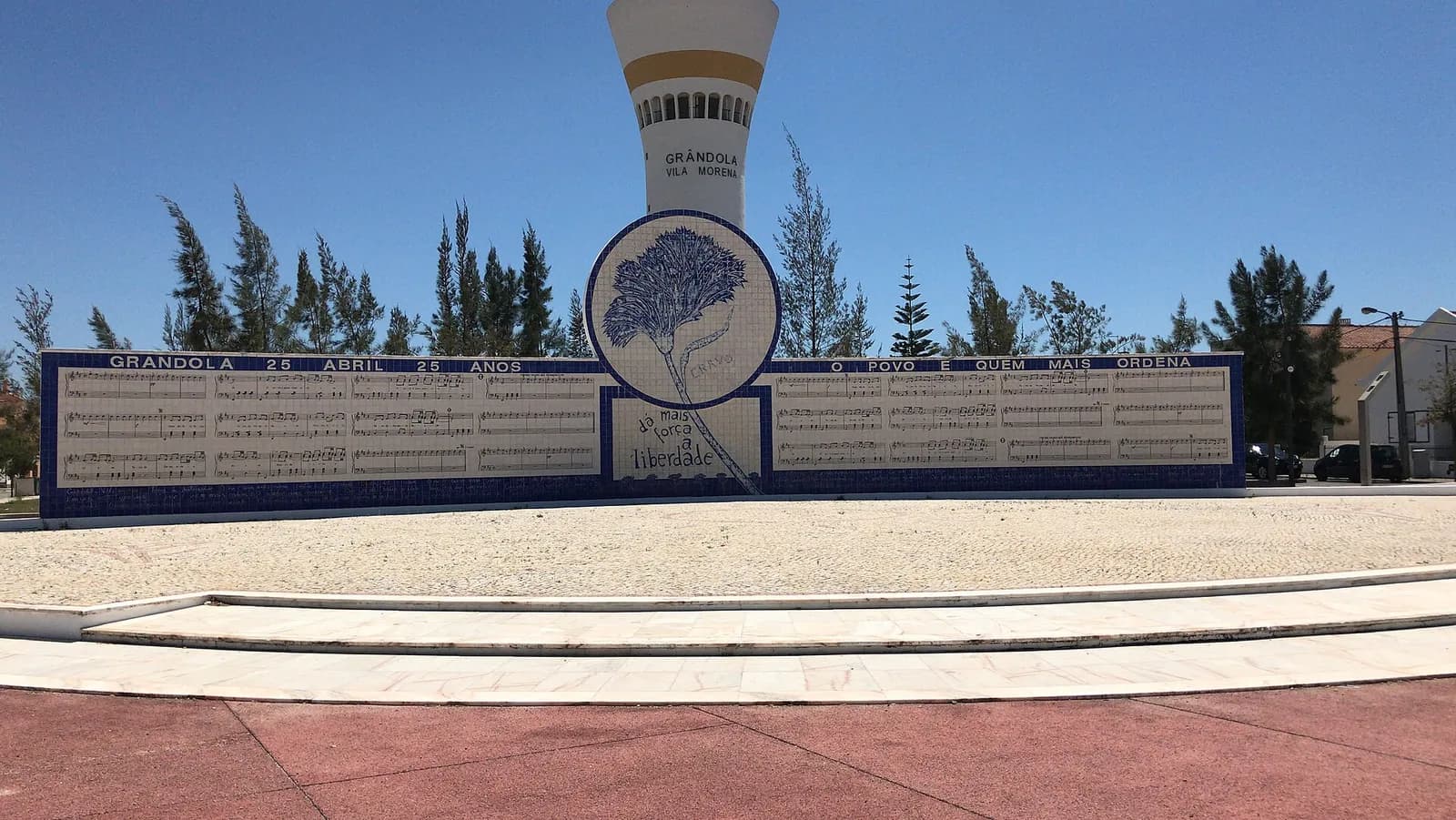
In May 1964 he sang at the Sociedade Musical Fraternidade Operária Grandolense, a workers' music society in Grândola, a small town in the Alentejo, with the guitarist Carlos Paredes. Out of that evening came a poem dedicated to the society, which he set to music. Its first verse calls the town a land of fraternity where “o povo é quem mais ordena”: the people are the ones in command.
“Zeca felt inside that music society a very great spirit of freedom and solidarity, and a great unity among everyone, in contrast with everything you could feel in the country, politically speaking.”
The same year he married Zélia Agostinho, whom he had met in the Algarve, released his first LP, Baladas e Canções, and left for Mozambique to teach and to rejoin his two older children, who were living there with his parents. In Lourenço Marques, now Maputo, he taught geography at the Liceu Salazar and gave free night classes at an association for Black Mozambicans, after which he was moved to Beira.
“My political baptism begins in Africa. I was two steps away from the oppressed.”
He came back in 1967, worn out by the colonial system, in his biographers' words, and was given a post at the secondary school in Setúbal. There he fell seriously ill and spent 20 days in a clinic at Belas. In his first week at the clinic he was told he had been dismissed “for the convenience of the service”, and he went back to private tutoring. A last post in 1969, teaching natural sciences outside his subject, ended when his next application was refused.
Records, bans and Caxias
Out of a job, he sang more. He toured the clubs and workers' societies south of the Tagus and in December 1968 signed an exclusive contract with Arnaldo Trindade's label, Orfeu, to deliver a fixed number of albums. The first, Cantares do Andarilho, came out that Christmas. The police stepped up the pressure: questioning, cancelled concerts and a ban on playing his records on the radio.
From 1970 the albums were recorded abroad. That year his guitarist Rui Pato could not go to the London sessions because his passport had been taken from him. In June 1971 Afonso flew to Lourenço Marques and was arrested the next morning and put back on a plane the same day; in 1972 the overseas minister barred him from all the colonies.
On 4 October 1971 the PIDE arrested him at Lisbon airport as he was leaving for Paris. Released, he went on to France, and between 11 October and 4 November recorded Cantigas do Maio at the Strawberry Studio in the Château d'Hérouville, about 30 kilometres from Paris, with arrangements by José Mário Branco. ‘Grândola, Vila Morena’ was on it.
Branco wanted no instruments on ‘Grândola’, only voices and the tread of feet, like Alentejo farmworkers walking home singing at the end of the day. The studio floor was smooth, so they looked for gravel outside, and because the spot was by a road they waited for the traffic to stop. At three in the morning Branco, Afonso, the guitarist Carlos Correia and Francisco Fanhais walked on the gravel while the tape ran.
He first sang the song in public in May 1972, for students in Santiago de Compostela, in Galicia. On 30 April 1973 the political police took him to Caxias prison, west of Lisbon, and held him until 21 May without charge, refusing him a lawyer at his interrogation. He came out on bail. In prison he wrote the poem ‘Era um Redondo Vocábulo’.
| Year | Album | Notes |
|---|---|---|
| 1964 | Baladas e Canções | First LP, for the Ofir label |
| 1968 | Cantares do Andarilho | First album for Orfeu, with Rui Pato on guitar |
| 1969 | Contos Velhos Rumos Novos | Last album with Rui Pato; first with instruments beyond guitars |
| 1970 | Traz Outro Amigo Também | Recorded at Pye studios, London |
| 1971 | Cantigas do Maio | Recorded at Hérouville, near Paris; includes ‘Grândola, Vila Morena’ |
| 1972 | Eu Vou Ser Como a Toupeira | Recorded in Madrid |
| 1973 | Venham Mais Cinco | Recorded in Paris |
| 1974 | Coro dos Tribunais | Recorded in London, arranged by Fausto |
| 1976 | Com as Minhas Tamanquinhas | Topical songs from the revolution's aftermath |
| 1978 | Enquanto Há Força | With Fausto |
| 1979 | Fura Fura | Includes eight theatre songs; with Júlio Pereira and Trovante |
| 1981 | Fados de Coimbra e Outras Canções | A return to Coimbra fado |
| 1983 | Ao Vivo no Coliseu; Como Se Fora Seu Filho | Live double album from 29 January 1983; studio album |
| 1985 | Galinhas do Mato | Last album; other singers take several songs |
LPs only; EPs, singles, foreign editions and the 1975 Italian album República are left out.
The song the censor let through
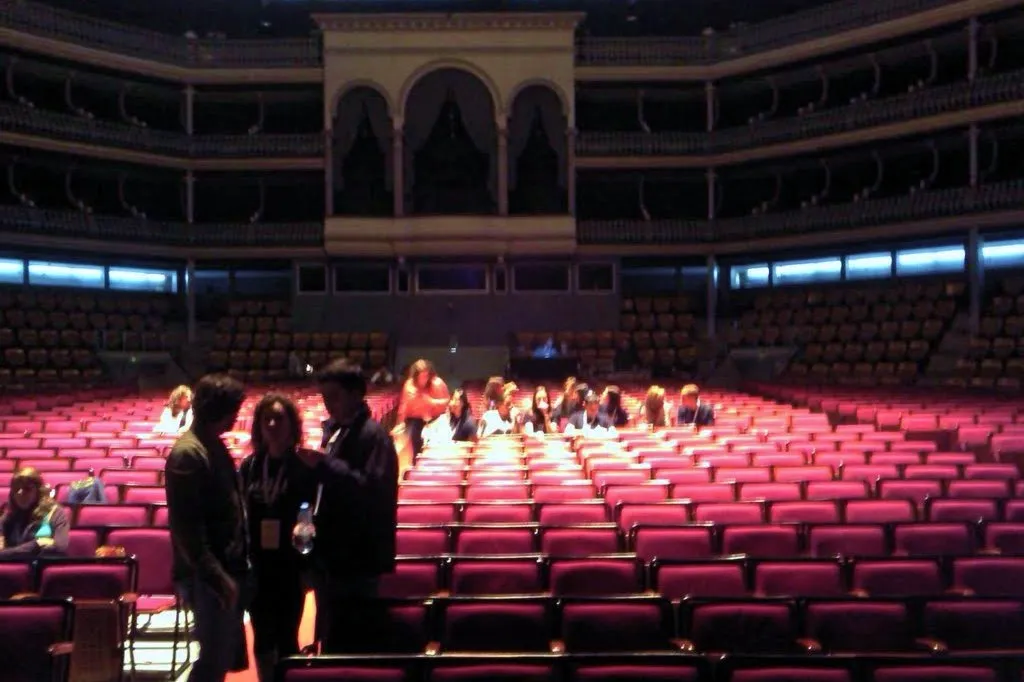
On 29 March 1974 the Coliseu dos Recreios in Lisbon filled for the first Encontro da Canção Portuguesa, a concert of the intervention singers organised by the Casa da Imprensa, the press club. That day the censors banned four songs from Afonso's repertoire, among them ‘Venham Mais Cinco’ and ‘A Morte Saiu à Rua’. ‘Grândola, Vila Morena’ was allowed. The association's chronology dates the concert 28 March; its biography, RTP and the 2026 heritage decree give the 29th.
The censor in the hall, Filipe Malta Ramires, filed his report two days later. Singers hummed the verses they had been forbidden to sing, and the audience knew the words. Afonso closed the night. All the performers linked arms and swayed from side to side, the censor wrote, and the audience did the same.
“The audience bawled, we believe intentionally, the line ‘o povo é quem mais ordena’.”
How the song became a military signal is told two ways. The Associação José Afonso says officers of the Armed Forces Movement (MFA) were in the Coliseu audience and chose it there. The navy officer Carlos de Almada Contreiras, who arranged the radio signal for the movement, says the plan was to play ‘Venham Mais Cinco’ on Rádio Renascença at 12.20am on 25 April, until word came that the censors had banned it. In one interview he dates that news to the 22nd, in another to the afternoon of the 24th.
Contreiras, an Alentejo man, thought of ‘Grândola’ and passed the change to the journalist Álvaro Guerra, the go-between with the station. At 10.55pm on 24 April a Lisbon station played the first signal, Paulo de Carvalho's ‘E Depois do Adeus’. Shortly after midnight, on Renascença's late programme Limite, heard across the country, the first verse of ‘Grândola’ was read in the voice of Leite de Vasconcelos (a recording he had made earlier, by the Associação 25 de Abril's account), and then the song played.
Sources disagree on the minute: 12.20am in the plan Contreiras describes, 12.25am in other Renascença reports and 12.30am in Corte-Real's 1996 article. The rest of that day, in which a nearly bloodless coup ended 48 years of dictatorship, is another story.
After April
The revolutionary period of 1974 and 1975, known in Portugal as the PREC, was in his biographers' word his passion. He sang for soldiers, trade unions and neighbourhood committees, and for the LUAR, a revolutionary group whose leaders included his friend Camilo Mortágua. In 1975 he recorded an album in Rome, República, whose proceeds were meant to support the workers' committee of the Lisbon newspaper República.
In the presidential elections of 1976 and 1980 he backed Otelo Saraiva de Carvalho, the officer who had planned the coup; Otelo won 16.5% of the vote in 1976. His albums of those years commented on the news, the colonies and the Church. In 1981 he went back to where he started, with Fados de Coimbra e Outras Canções, dedicated to his father.
May 1964
Concert at the Fraternidade Operária Grandolense
Afonso writes the song afterwards.
October 1971
Recorded at Hérouville, France
Released on Cantigas do Maio.
May 1972
First public performance
For students in Santiago de Compostela.
29 March 1974
Coliseu dos Recreios, Lisbon
Passed by the censor; the whole hall sings it.
25 April 1974, after midnight
Broadcast on Rádio Renascença
The second signal for the MFA's coup.
15 February 2013
Sung in the parliament gallery
Protesters drown out the prime minister's speech.
16 February 2026
Tapes declared national treasures
The Limite broadcast and the Coliseu concert recordings.
The last concerts
The first signs of his illness appeared in 1982, the year he toured Mozambique at its government's invitation. He went to London to see doctors, and the diagnosis that year was amyotrophic lateral sclerosis.
On 29 January 1983 he played the Coliseu in Lisbon, already struggling, with a large band of friends; the concert came out as a double live album. There were four more concerts that year, the last in Beja on 1 June, and Coimbra gave him its gold medal.
President Ramalho Eanes awarded him the Order of Liberty, a state honour, but he would not fill in the form and the award lapsed. In 1983 the state also took him back as a teacher and posted him to a school in Azeitão. His illness got worse.
In April 1984 singers gathered in Managua, among them Chico Buarque, Mercedes Sosa and Pete Seeger, signed a telegram to him. By the time of his last album, Galinhas do Mato (1985), he could not sing all of it, and Janita Salomé, Luís Represas, Né Ladeiras, José Mário Branco and others took several songs.
In 1986 he backed Maria de Lourdes Pintasilgo, a progressive Catholic, for president. He died the following February.
“What's needed is to stir up unrest. When we start making up alibis to justify our conformism, then we're done for!”
Honours refused, tapes lost
Two weeks after his death the label Transmédia issued Agora e Sempre, which the association calls the first Portuguese triple album. On 18 November 1987 the Associação José Afonso was founded, a cultural association that now has branches across Portugal and in Galicia.
The state kept trying to honour him. In 1994 President Mário Soares offered the Order of Liberty again, posthumously, and his widow, Zélia, said no: he had not wanted it in life. In August 2018 the Portuguese Society of Authors (SPA) proposed moving his remains to the National Pantheon in Lisbon, the church where the state buries its most honoured citizens.
“José Afonso rejected in life the official decorations that had been proposed to him. He was, at his own request, buried in a plain grave and without official ceremonies, entirely in keeping with his life and thought.”
President Marcelo Rebelo de Sousa said he could only recognise the “moral standing” of the family's answer, and the remains stayed in Setúbal. The next dispute was over the recordings. When the association launched a petition to protect them, the company that held the commercial rights, Movieplay, was insolvent and nobody could say where the master tapes were.
After that petition, signed by more than 11,000 people, and a parliamentary resolution in 2019, the heritage directorate opened a process on 2 September 2020 to classify 30 of his recordings, with copies of masters, cassettes and interviews, as property of national interest: the first such process for recorded music. It lapsed in September 2021, when the heritage directorate let its deadline pass: the owners of the recordings had not agreed to let them be inspected. It was formally closed in 2025.
Orfeu had reissued the eleven albums of 1968 to 1981 in 2012 and 2013, but by 2021 they had been unavailable for several years. From that year his family reissued his work on a new label, Mais 5, set up with Lusitanian Music. In February 2026 the government declared two sets of tapes national treasures: the Limite broadcast of 25 April 1974, owned by the Fundação Mário Soares e Maria Barroso, and RTP's two reels of the Coliseu concert of 29 March 1974.
Why it still matters
On 15 February 2013, during the austerity of the troika years, a group led by the singer Carlos Mendes began singing ‘Grândola’ in the public gallery of parliament, and Prime Minister Pedro Passos Coelho had to stop speaking. In the following weeks ministers were interrupted by the song in public around the country.
Singers as different as Joan Baez, the Brazilian Nara Leão, the French musician Pascal Comelade and the fado singer Amália Rodrigues have performed it, and it has been sung at a large demonstration in central Madrid.
The centenary of his birth falls in 2029. In June 2026 the Associação José Afonso launched the celebrations with a manifesto signed by more than a hundred people from music, film, theatre, journalism and research, among them April captains, and said it would ask for a new attempt to classify his recordings.
FAQs
When and how did Zeca Afonso die?
He died at about 3am on 23 February 1987 in the hospital at Setúbal, aged 57. He had amyotrophic lateral sclerosis, a muscle-wasting disease whose first symptoms appeared in 1982; a hospital spokesman said his heart stopped repeatedly before he died.
Why was ‘Grândola, Vila Morena’ chosen as the signal for 25 April 1974?
The officers' first choice, Afonso's ‘Venham Mais Cinco’, had been banned by the censors, so it could not be played safely on the radio. ‘Grândola’ had been allowed at a Lisbon concert on 29 March 1974, where the whole audience sang it. The navy officer Carlos de Almada Contreiras says he picked it as the replacement; the Associação José Afonso says officers chose it at that concert.
What does ‘Grândola, Vila Morena’ mean?
Grândola is a small town, a vila, in the Alentejo. Afonso wrote the song after singing at a workers' music society there in May 1964, and dedicated it to that society. It praises the town as a land of fraternity where “the people are the ones in command”.
Where is Zeca Afonso buried, and why is he not in the National Pantheon?
He is buried in a plain grave in the Nossa Senhora da Piedade cemetery in Setúbal. When the Portuguese Society of Authors proposed moving him to the National Pantheon in 2018, his family refused, saying he had rejected official honours in life and asked to be buried without ceremony.
On the timeline
Open the timelineNearby moments from portugal in europe (1986–today).
Portugal and Spain join the European Economic Community (today's European Union) — a historic turning point for a country that had shed its dictatorship and its African empire barely a decade earlier.
Mário Soares beats Diogo Freitas do Amaral in the presidential run-off by just over two points, becoming Portugal's first civilian president in six decades. The founder of the Socialist Party would serve two terms, until 1996.
The death of Zeca Afonso
José 'Zeca' Afonso dies in Setúbal of amyotrophic lateral sclerosis, aged 57. The singer-songwriter's 'Grândola, Vila Morena', broadcast on the radio as a signal to the rebel troops on 25 April 1974, made him the voice of the Carnation Revolution.
Prime Minister Cavaco Silva and Premier Zhao Ziyang sign the Sino-Portuguese Joint Declaration in Beijing, agreeing that Macau is Chinese territory under Portuguese administration and that sovereignty would pass to China on 20 December 1999, under the 'one country, two systems' principle.
FC Porto win the European Cup, coming from behind to beat Bayern Munich 2–1 at Vienna's Praterstadion with Rabah Madjer's famous back-heel and a Juary volley — the first European Cup for a Portuguese club since Benfica's in 1962.
Death of Fernando Van Zeller Guedes, the Porto wine-maker behind Mateus Rosé. Launched in 1942 by the company that became Sogrape, the lightly sparkling pink wine in its flask-shaped bottle — with the baroque Mateus Palace near Vila Real on the label — became one of the world's best-selling wines, shifting millions of cases a year at its peak.
Coming up in history
All long reads 25 February 1869The 1869 decree that abolished slavery in the Portuguese empire, on paper
 26 February 1885The Berlin Conference of 1885 and Portugal's lost Congo mouth
 27 February 1666Luísa de Gusmão: the Andalusian duchess who ruled Restoration Portugal
 28 February 1969The earthquake of 28 February 1969: Portugal’s strongest of the century
19 sources
Archives, scholarship and reporting this article was checked against.
- 1
José Afonso: biografiaAssociação José Afonso
- 2
- 3
Sons de Abril: estilos musicais e movimentos de intervenção político-cultural na Revolução de 1974 (Maria de São José Corte-Real)Revista Portuguesa de Musicologia 6 (1996), pp. 141-171
- 4Grândola: a canção que a censura deixou passarRTP Notícias, April 2014
- 5
De “Venham mais cinco” a “Grândola”: a “ditadura” de um capitão mudou senha da revoluçãoRenascença, 25 April 2022
- 6
- 7
Portuguese musician diesUnited Press International, 23 February 1987
- 8
Família de José Afonso rejeita trasladação para PanteãoSábado (Lusa), 23 August 2018
- 9
- 10
Protests in Portugal get creative (Mario Queiroz)Inter Press Service, March 2013
- 11
- 12
Álbuns de Zeca Afonso lançados entre 1968 e 1981 vão ser reeditadosDiário de Notícias da Madeira (Lusa), 25 April 2021
- 13SPA quer Zeca Afonso no PanteãoDiário de Notícias (Lusa), 21 August 2018
- 14
- 15
Rádio Renascença, 25 April 1974 (chronology entry)Associação 25 de Abril
- 16
- 17
- 18Arquivamento da classificação da obra de José Afonso confirmado em Diário da RepúblicaRTP Notícias (Lusa), 8 July 2025
- 19Comemorações dos cem anos de José Afonso em 2029 terão “cunho popular forte”RTP Notícias (Lusa), June 2026
Image credits
- The score of ‘Grândola, Vila Morena’ in tiles in Grândola, on a wall marking 25 years since 25 April 1974. Its top line quotes the song: “o povo é quem mais ordena”, the people are the ones in command. Photographed in 2018. Txo, CC BY-SA 4.0, via Wikimedia Commons.
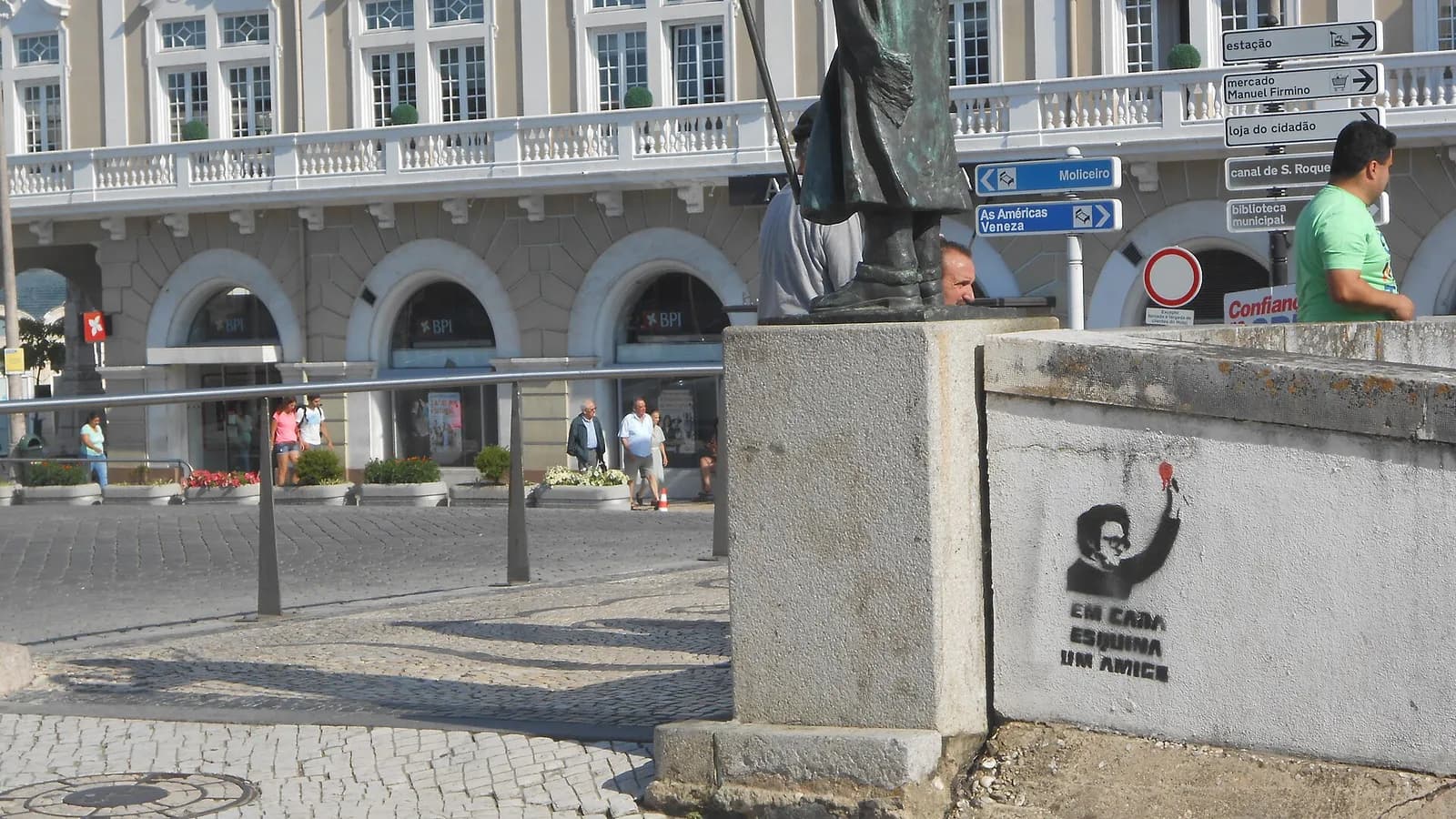
- A stencil of José Afonso in central Aveiro, the town where he was born, photographed in 2013. The words, “em cada esquina um amigo” (a friend on every corner), are a line from ‘Grândola, Vila Morena’. 69joehawkins, CC BY-SA 3.0, via Wikimedia Commons.
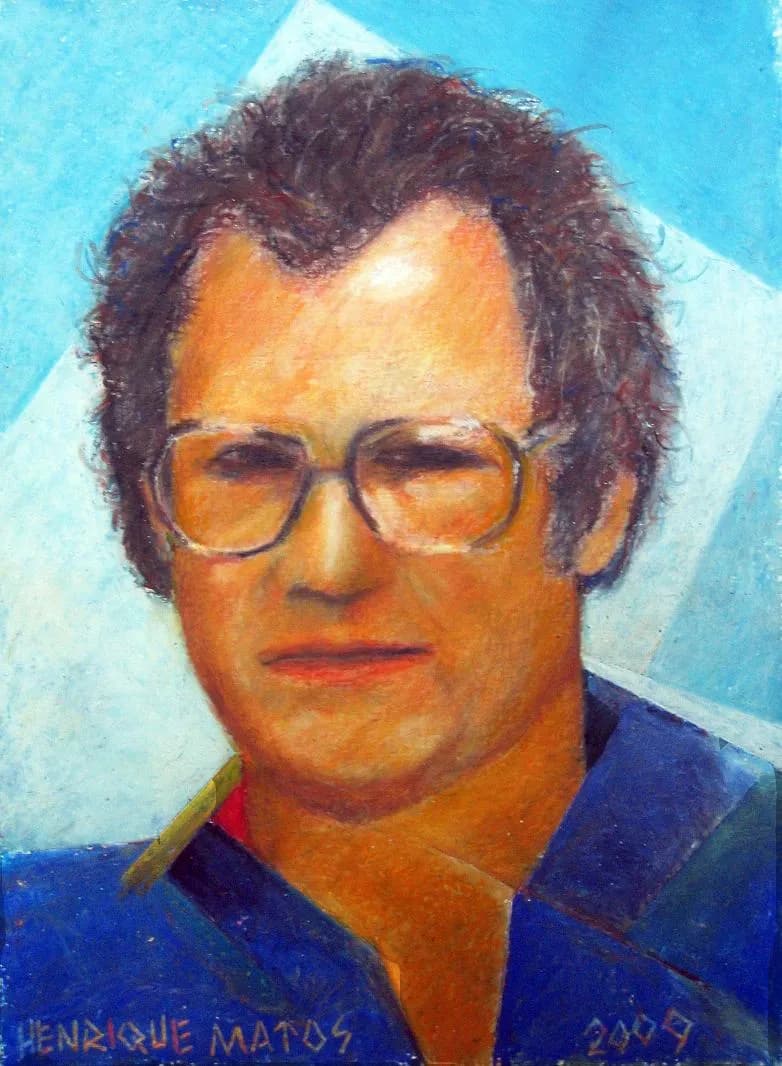
- José Afonso in an oil pastel portrait by the painter Henrique Matos, made in 2009, more than twenty years after the singer's death. Henrique José Teixeira Matos, CC BY-SA 3.0, via Wikimedia Commons.
- The stalls and balconies of the Coliseu dos Recreios in Lisbon in 2010. On 29 March 1974 the hall was full for the Encontro da Canção Portuguesa, which ended with the audience singing ‘Grândola’. Diogomedina, CC0, via Wikimedia Commons.
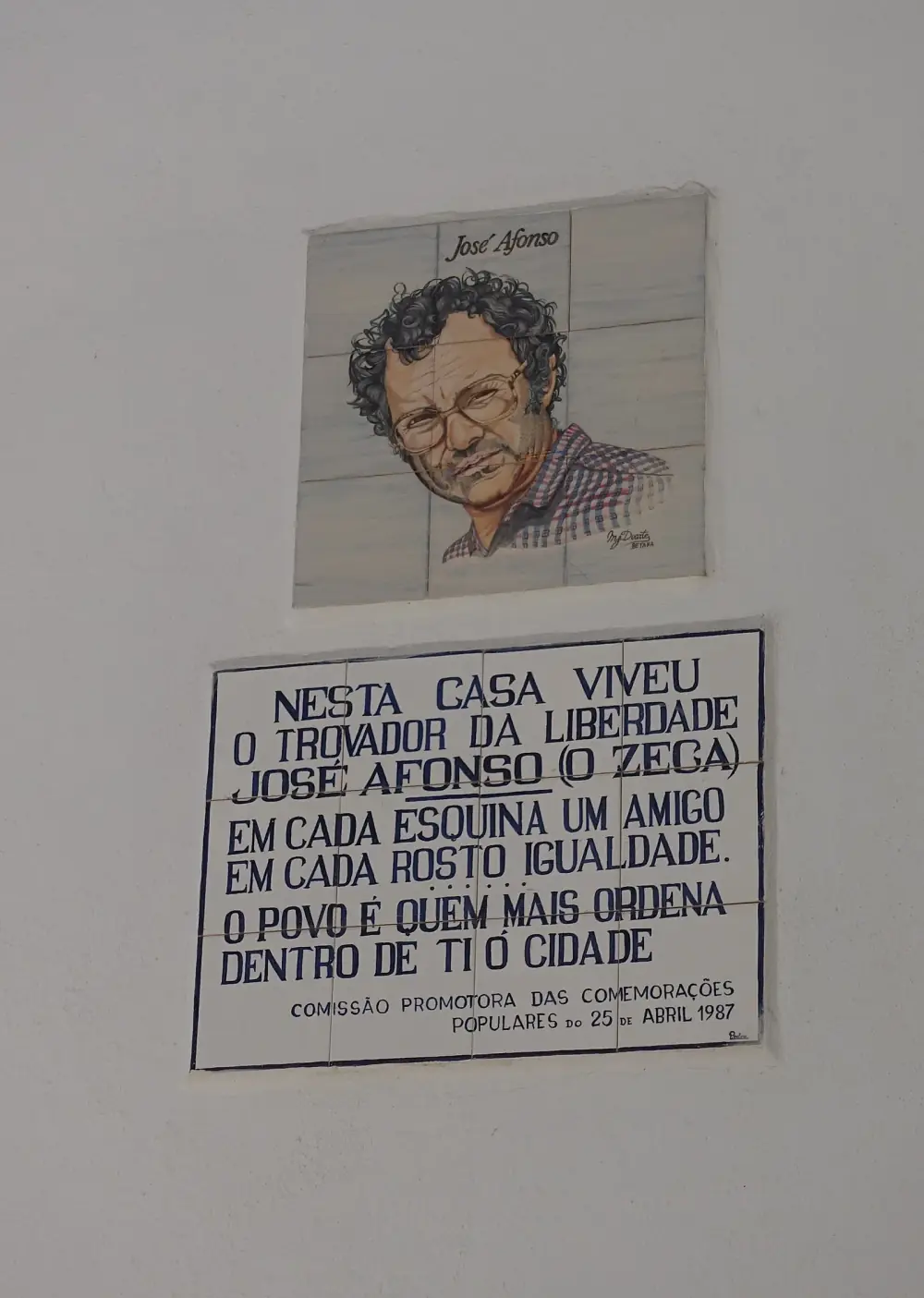
- A tiled plaque, photographed in 2021, on a house in Coimbra where José Afonso lived, put up in 1987 by a committee organising popular 25 April celebrations. It calls him “o trovador da liberdade”, the troubadour of liberty, and quotes ‘Grândola’. Joseolgon, CC BY-SA 4.0, via Wikimedia Commons.